RSS

Author Archives: George Rogers

Unknown's avatar

About George Rogers

Florida botanist

Pectis

Cinchweed

Pectis glaucescens

Asteraceae

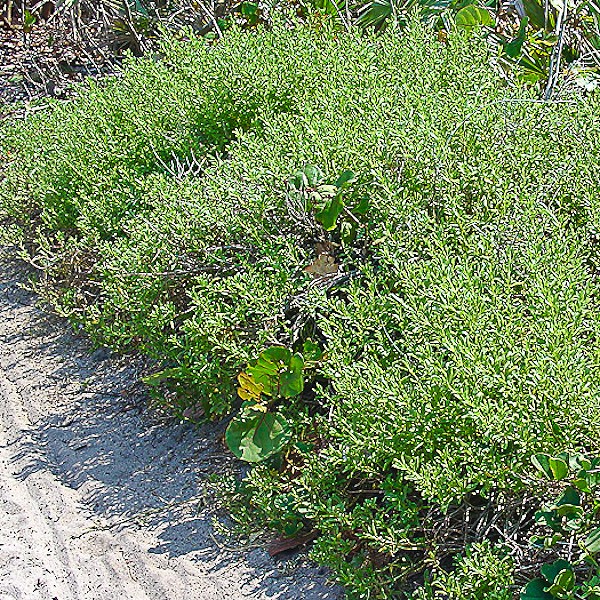
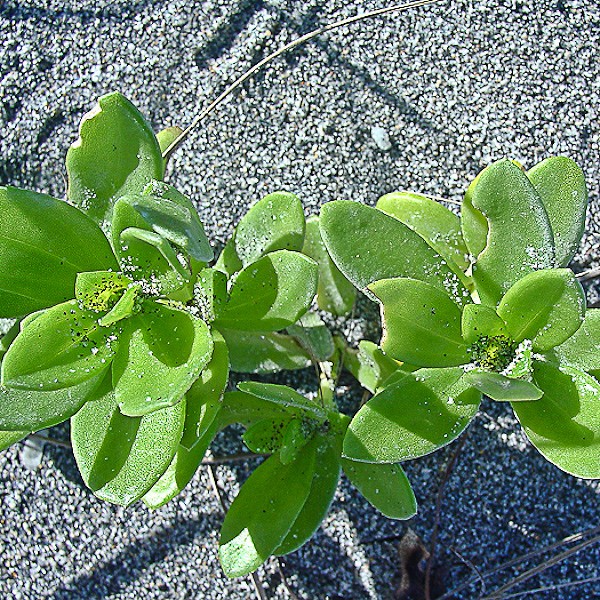
Friday John and George invaded the historic site of the demolished LORAN station at Jupiter Inlet, now known as Jupiter Inlet Natural Area, a beautiful and botanically rich scrub moonscape extending down from the sugar sand dunes to the Intracoastal Waterway, with the Jupiter Lighthouse rising above the distant trees.  The best-smelling species in full bloom was the Willow-Bustic buzzing with bees.  Its flowers  are curious, but for another day.  More subtle and underfoot, likewise in full bloom in a mat on the sand was Cinchweed, Pectis glaucescens, a curious tiny representative of the Aster Family.  This little wildflower may tower to an inch tall with a golden flower head a quarter-inch in diameter.
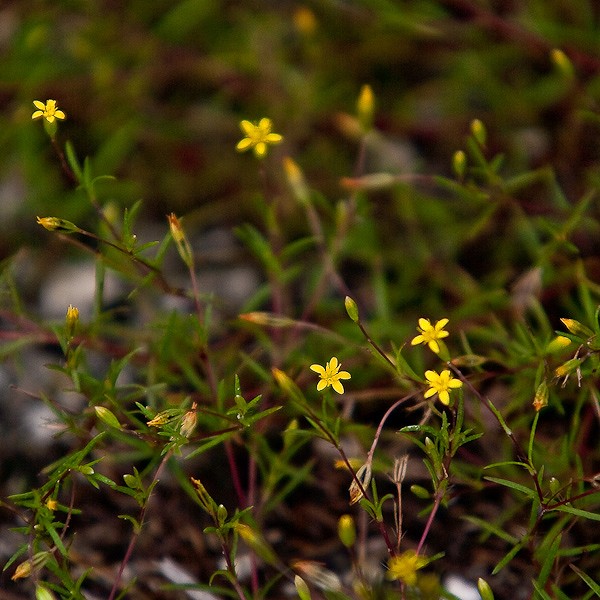
Pectis flowers (by JB)

Pectis flowers (by JB)

When not in flower you might notice Pectis by its fragrance as you crush it underfoot, pungent and pleasant (to my nose).  Some folks compare it to Citrus, although to me it smells like “Asteraceae.”   Hold the leaves up to the light and see the oil glands big and translucent, in this way reminiscent of Citrus in appearance as well as aroma.  In at least one species of Pectis the fragrant oils are apparently the same as those derived commercially from cumin, caraway, and dill seed, and thus of potential commercial interest.  Anything that smelly has had medicinal uses, and Pectis has served against ailments ranging from fevers to  eye ailment.    They’ve also been used as food flavorings, and even as perfumes.
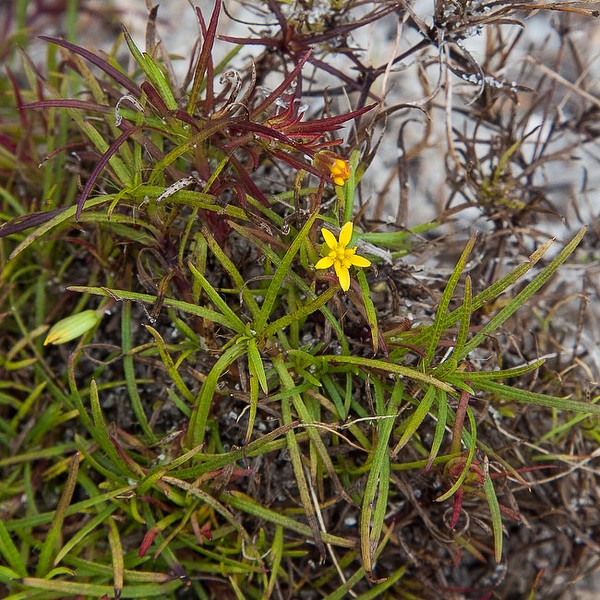
Pectis on the sand (by JB). See how the colony spreads.

Pectis on the sand (by JB). See how the colony spreads.

The leaves give the genus its name, because they are “pectinate,”  meaning resembling a comb, or a fish skeleton in outline.  (Not always conspicuous on P. glaucescens.)

This sand-dweller has specializations worth mentioning.  Certain plants of hot sunny places have what’s called “C4 Photosynthesis.”  Setting the biochemical physiology aside, this is a mechanism with associated cellular anatomy to overcome photosynthetic impairment most plants suffer under hot conditions.  Most C4 species are hot-climate grasses, such as Sugar Cane.  The adaptation is uncommon in broadleaf plants, but here we have an example, encountered fittingly in hot sunbaked habitats.  Some Pectis species live in deserts.

Uproot a Pectis mat and it has a curious structure, shaped like a big green tack.  The top of the tack is the green spreading foliage mat almost flat against the sand.  The pointy part of the tack is a single (or few) taproot(s) at the center of the mat and drilling down into the sand.   The outer fringes of the mat spawn  little satellite colonies able to root and take hold on their own.  Clone-colonization is significant in the sterile Pectis Xfloridana mentioned below.  Stay tuned a moment.
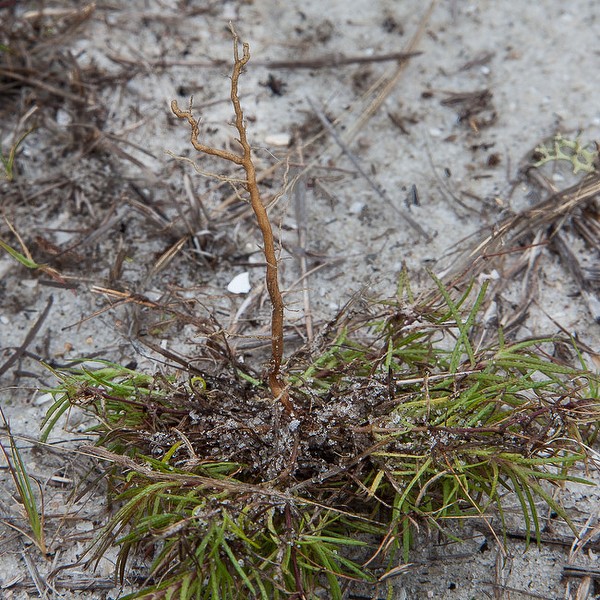
Upside down Pectis.   Check out that taproot!  (By JB)

Upside down Pectis. Check out that taproot! (By JB)

Florida is home to multiple Pectis species, one of which has a special relationship with today’s PectisPectis prostrata (flower heads not on a stalk, vs. the long stalk in P. glaucescens)  hybridizes with P. glaucescens to make a sterile hybrid with abnormal chromosomes called Pectis Xfloridana.  Pectis prostrata gets around, being an invasive weed in China.
 
4 Comments

Posted by on April 7, 2013 in Cinchweed


Tags: , ,

Salt Bushes

Saltbushes, Groundsel-Trees
Baccharis species

Asteraceae

Yesterday John and George joined a nature walk led by State Park Volunteer Jay Barnhart in Sebastian Inlet State Park near Vero Beach, enjoying a coastal hammock-dune-marsh with gnarly ancient Live Oaks and postcard views to the sea. You learn something every day. Yesterday we learned how the leaves of Cherrylaurel (Prunus caroliniana) snap audibly when creased, and then smell like almonds. And we learned pig farmers use the forked bases of Cabbage Palm petioles as reverse shoehorns for removing smelly boots (like a claw hammer pulling a nail).

Among the botanical attractions were Saltbushes, species of Baccharis. Within our botanical radius are three Baccharis species: B. halimifolia with flower heads in loose clusters, B. glomeruliflora with the heads in compact clusters, and B. angustifolia with distinctively narrow and non-toothed leaves. Baccharis species have a confusing array of English names. And to complicate classification, some of the species hybridize. It is not a goal at this moment to sort out the variations and names. We’ll be generic today.

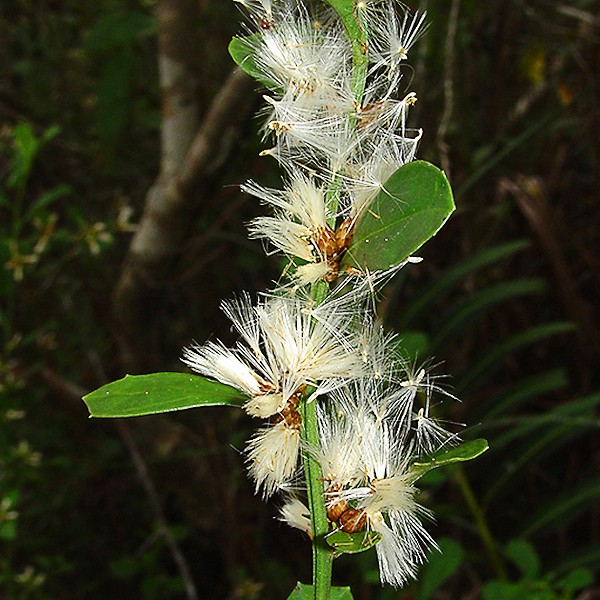
Unless you see the parachute-fruits, it might be tough to recognize Salt Bushes as members of the Aster Family. After all, how many woody Asters do you see in Florida? (Answer: not many.) The little white unisexual flowers are clustered in un-showy flower heads. The female flowers transform into parachuted fruits resembling those of dandelions or thistles.

Baccharis glomeruliflora parachute fruits (by JB).

Baccharis glomeruliflora parachute fruits (by JB).

Salt Bushes are standard green companions in everyday Florida botanizing, although their vulgarity is a mixed blessing. Despite being native, the shrubs have weedy ways, to the point of being invasive exotics in continents where they don’t belong. And they can be replacement plants here in Florida as natural marshes are drained and altered. Like good weeds, Salt Bushes produce massive masses of wind-dispersed happy-to-germinate seeds. Oddly for weeds, the seedling growth can be shade tolerant. Depending on the species, they tolerate also awful soils, varied water regimes, salt, and abuse. The plants contain heart poisons, so livestock leave them alone, or else! After a fire in some habitats, hello Salt Bushes. Being easy to grow (!) and good looking, Baccharis species have a small market for cultivation.

After a fire, here come the Salt Bushes (by JB).

After a fire, here come the Salt Bushes (by JB).

Baccharis halimifolia is one of those hot-climate to north-woods species distributed from Nova Scotia to Alaska to Florida to Mexico. In Europe, New Zealand, and Australia it is an invader. And the invasion events present a head-scratcher Emily Dickinson would have understood, in her words:

To make a prairie it takes a clover
 And one bee.
 One clover, and a bee, and reverie.

Now let’s extend that to Salt Bush. They come as separate male and female plants, so to make a prairie on foreign continents it takes TWO Salt Bushes, not to mention lots of bees (of the right kinds). How does a species that needs a male plant to pollinate the female manage to arrive in Australia as a legally married couple to begin the invasion? How do female plants Salt Bushes in a Florida roadside ditch manage a huge fruit-set, and seeds with high germination rates? (I am not certain that occurs but informal observation seems to indicate it does.) Such saturation-pollination would require a lot of bees and even more reverie . Every one of those millions of parachute fruits on a single female Salt Bush would require its own pollination event. Inquiring minds want to know, how can it bee?

Baccharis glomeruliflora (by JB).

Baccharis glomeruliflora (by JB).

Splitting a species into separate males and females is one step in evolution, but another step is then possible to compensate for iffy pollination, a “plan B” to make seeds without benefit of those male plants and super-bees. Such seeds are clones of the mother plant, and are called apomictic seeds (ap-oh-MICK-tic). Is that true of Baccharis halimifolia? Probably, but if it has been shown experimentally I’m not aware of it. (Always a big possibility!) Apomixis has been demonstrated in different Baccharis species. It would be interesting to isolate a female Baccharis halimifolia from all possible outside pollination and see if the usual bazillion fertile fruits form.

Baccharis halimiflora (by JB).

Baccharis halimifolia(by JB).

 
6 Comments

Posted by on March 10, 2013 in Groundel-Trees, Saltbushes


Tags: , , ,

Getting a Bang Out of Lycopodiella

Club-Moss

Lycopodiella species

Fern Allies

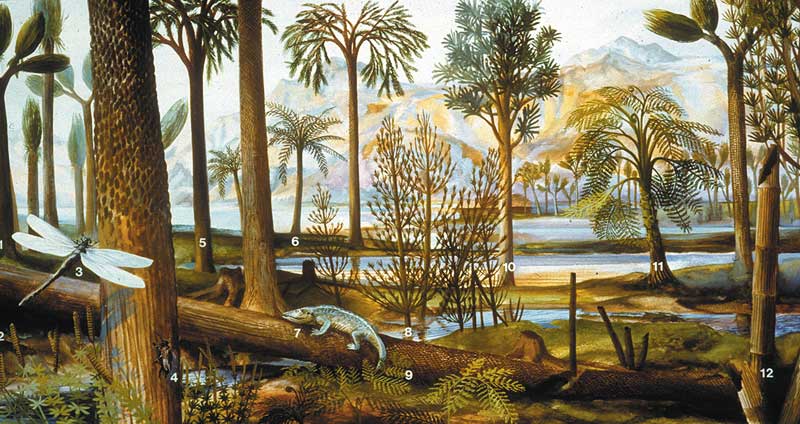
Two fun things occurred in recent days. I had the good fortune to tour the University of Michigan Natural History Museum in Ann Arbor, Michigan, and went botanizing in the West Jupiter Wetlands with John. And the two experiences overlapped. Natural History museums are full of dioramas showing past geological periods, such as the Carboniferous Period 360-300 million years ago, and the West Jupiter Wetlands has living fossils reminiscent of those times still rising from the mud. Every time I see Lycopodiella my mind’s eye goes to Coal Age forests.

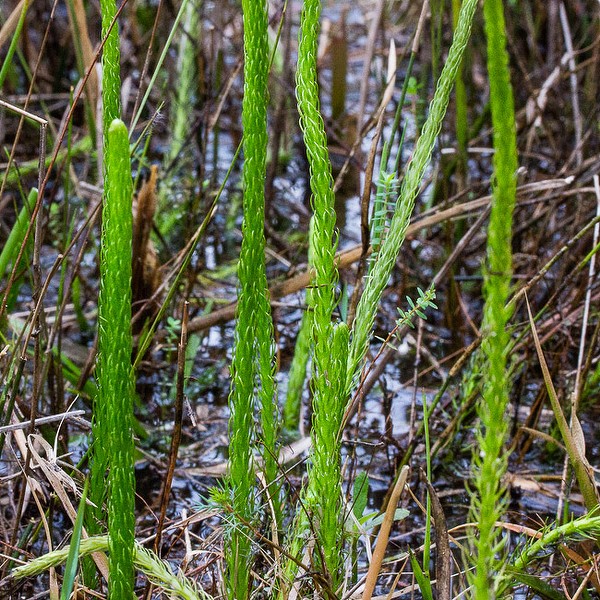
Lycopodiella cernua, Nodding Clubmoss (by JB)

Lycopodiella cernua, Nodding Clubmoss (by JB)

We’re talking about an odd assortment of plants known as Fern Allies, not particularly related to each other, and not particularly related to ferns, but all very primitive dating back hundreds of millions of year before Flowering Plants and mammals, even before dinosaurs. Floridians know many Fern Allies, including the Spikemosses (Selaginella) we see natively in scrub habitats and non-natively in cultivation; the Horsetails and Scouring-Rushes (Equisetum) seen likewise native and not; the Whisk-Fern (Psilotum) hanging out of Cabbage Palm boots and out of plant containers, the Quillworts (Isoetes) familiar to some freshwater plant enthusiasts and to aquarium owners, Hanging Clubmoss (Huperzia dichotoma, a rare epiphytic species), and the Clubmosses of the genus Lycopodiella, which are the main topic for today. All of these Fern Allies share an overall simplicity in structure, a primitive life cycle based on spores with no seeds or flowers, and ancient ancestors. Let’s get specific now and talk about today’s Lycopodiella.

LycoJB
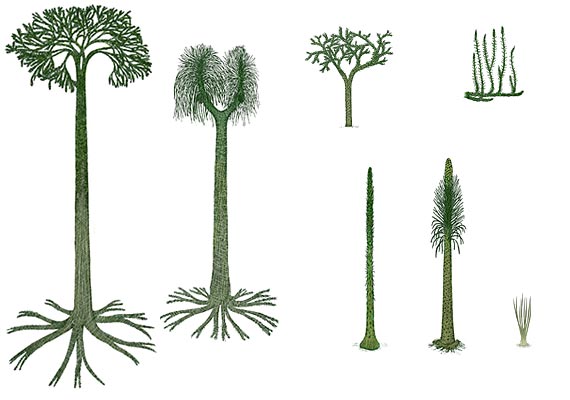
To quit listing species and to get to something interesting, I can’t see a Lycopodiella and not think of a museum diorama showing prehistoric swamps forest. In the Carboniferous Period and before there were Lycopodiella-ancestors (Lycophytes) and ancestors of other Fern Allies similar to today’s, except that “back in the day” they were dominant forest trees, and for the most part today’s humble Fern Allies are inches to a couple feet tall. Compare John’s photo of Lycopodiella above with the ancient tree-sized Fern Allies pictured below. It stirs the imagination. Living fossils.

Carboniferous and older Fern Allies.  The ones on the left were 70 feet tall. (From Stanford University)

Carboniferous and older Fern Allies. The ones on the left were 70 feet tall.

That reproduction is by spores has come up already. Most Lycopdiellas have spores cases in clusters in small leafy cones made of slightly modified leaves. Reverting to an older broader name, Lycopodium spores have a remarkable history in human affairs. They are oily, slippery, and unwettable like a duck. They once served to lubricate rubber gloves and pills. And if that does not excite you, maybe fireworks will.

Sprinkled in the air the spores are explosive. Before the days of smoke detectors and liability, setting them off was a good old botany class gimmick to build class enrollment. The spores once served in pyrotechnics and in old-time photographic flash powder. Even now they are sold as “Dragon’s Breath.” How they harvested the spores in industrial quantities would be interesting to know. But don’t take it from me—see the exploding Clubmoss spores on the Ellen Degeneres Show.    CLICK (Skip the add and jump ahead to about the middle of the Youtube.)

Carboniferous forest with ancient Fern Allies (Stanford University)

Carboniferous forest with ancient Fern Allies


Diorama Alan Singer http://web.stanford.edu/group/stanfordbirds/SAN/AAAS-DC/J/Singer-DC.html

 
2 Comments

Posted by on March 5, 2013 in Club-Moss, Fern Allies


Tags: , , ,

Respect Your Elders

Marsh Elders

Sumpweeds

Iva imbricata, I. frutescens and additional species

Asteraceae

A class trip to Blowing Rocks Preserve today on Jupiter Island reminded me that sometimes broad plant groups are collectively interesting—we live in a plant world of genera and families, not just individual species. At Blowing Rocks separated by a couple hundred yards are two representatives of the nine-species genus Iva, which is an odd little bunch in the Aster Family.

Iva imbricata on the beach (JB)

Iva imbricata on the beach (JB)

Locally the dominant beach plant is Marsh Elder, Iva imbricata. You can’t miss it. On most local beaches it comprises 90% of the vegetation in great green perennial patches  on the beach just above the waves and just below (or on) the dunes. The leaves are succulent, mostly opposite, slightly toothy, and fragrant when crushed. The fragrance perhaps accounts for the name Iva in reference to a mint Ajuga iva, although the paper trail on this notion goes cold fast. You scarcely see flowers, because the Iva flower heads are greenish and inconspicuous like those of its relative Ragweed.

Iva imbricata (by JB)

Iva imbricata (by JB)

I’m always fascinated with the adaptations of beach species. How can they establish and survive on hot, windblown, stormy, abrasive, shifting salty sand? A relevant adaptation of Iva imbricata is the ability of its seeds to sprout anchored far deeper in the sand than typical seed-sprouting depths. The seedlings burrow up from subterrranean safety below the maritime perils to break through to the sunny surface like little skyscrapers drilled basally into the bedrock.

Walk 200 yards to the lee side of Jupiter Island to protected salt flat and there’s a different Iva. Iva frutescens is taller, woody, toothier-margined, and less succulent. Books call it Bigleaf Sumpweed, although I’ve never heard that silly handle in conversation. Other authors call this species Jesuit’s Bark, a name applied more to quinine used to quell fevers and as an antimalarial and promoted by Jesuit missionaries. Applying the name Jesuit’s Bark for Iva frutescens may refer to historical applications against fevers, although few data are handy. Iva species do contain phytochemicals vaguely compatible with such benefits.

There are other Ivas in Florida, including two local annual species Iva angustifolia (outer bracts on flower head fused) and Iva microcephala (outer bracts separate, the clusters < 2 mm long).

Iva microcephala (by JB)

Iva microcephala (by JB)

Iva annua, is arguably the most interesting species. It ranges across much of eastern North America, including northern Florida. I recall it fondly from living in St. Louis across the Mississippi from the ancient Native American center known as Cahokia. CLICK
Cahokia dates back to the transitional era when maize and beans gained prominence as Native American staples very roughly speaking a little less than a thousand years ago. What grains were important in the pre-maize era? Among them were the “seeds” (achenes) of Iva annua. Now here is the good part: archaeological remains going back some 5000 years show Iva to have been an early staple. Even more remarkable, there were large-seeded “improved” cultivars of Iva annua by 2000 BC in caves, kitchens, and storage for planting. In short, ancient horticulturists developed it as a domesticated crop named by modern botanists Iva annua var. macrocarpa. As a young botanist not long ago I enjoyed searching the wild Iva populations around Cahokia for the macrocarpous strains persisting into modern times. Found some large ones but nothing convincingly “improved and persistent.” The large-seeded strains are presently regarded as extinct, having been elbowed aside by corn around the year 1200. Iva seeds are easy to harvest, are produced abundantly, are easy to prepare, and are nutritious high in nutritious oils. Once so important, now so forgotten. That seems worth knowing.

—————————————————————————————————————-

Note:

[Readers interested in ancient large-fruited Iva will enjoy this detailed illustrated account  CLICK.]

 
6 Comments

Posted by on February 28, 2013 in Marsh Elders, Sumpweed


Tags:

Roses are Red, Violets are Cleistogamous, Sugar is Sweet, and Vultures Monogamous

Bog White Violet

Viola lanceolata

Violaceae

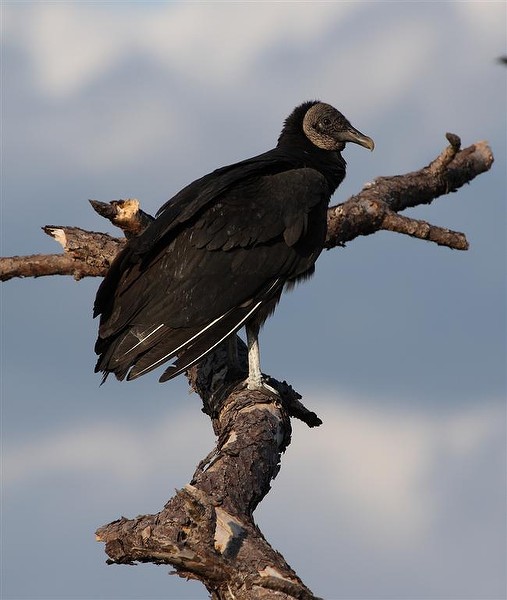
The tidbit about (Black) Vultures just goes to show you, table manners do not matter in dating. What do vultures have to do with violets other than starting with the letter V? Answer: They’re both gregarious but have oddly restricted genetic exchange. Genetic testing shows black vultures to limit genetic exchange to one partner, despite apparent opportunities for side-stepping at a road kill party.

Happily married vulture by JB

Happily married vulture by JB

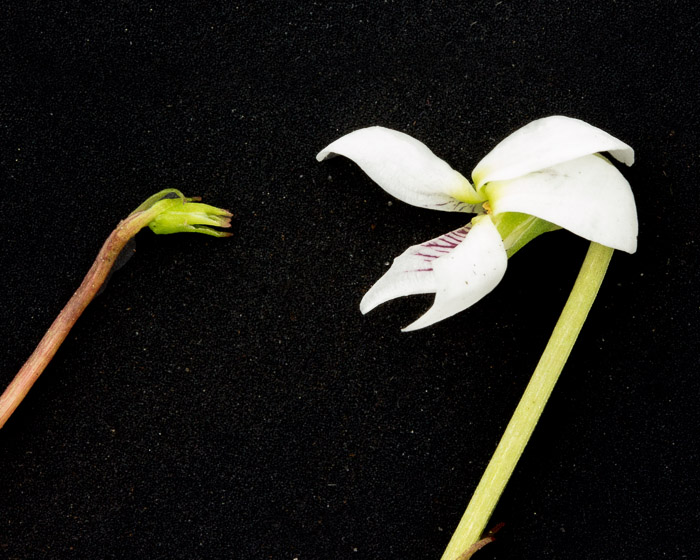
Violets, which having beautiful broadly pollinated blossoms, have also “cleistogamous” (kleist-OG-ah-muss) flowers, which are small, inconspicuous flowers that bear fruit without ever opening. They often look like buds. Most cleistogamous flowers are self-pollinated, thus creating clones or near-clones of the parent plant. Cleistogamous flowers occur in a lot of plants; they are sort of a plan B. That is, in addition to mixing genes broadly helped by the birds and bees visiting regular flowers, use also cleistogamous flowers to make backup copies of the parent plant. Look for cleistogamous flowers low on violet plants.

Cleistogamous flower and regular flower (by JB)

Cleistogamous flower and regular flower (by JB)

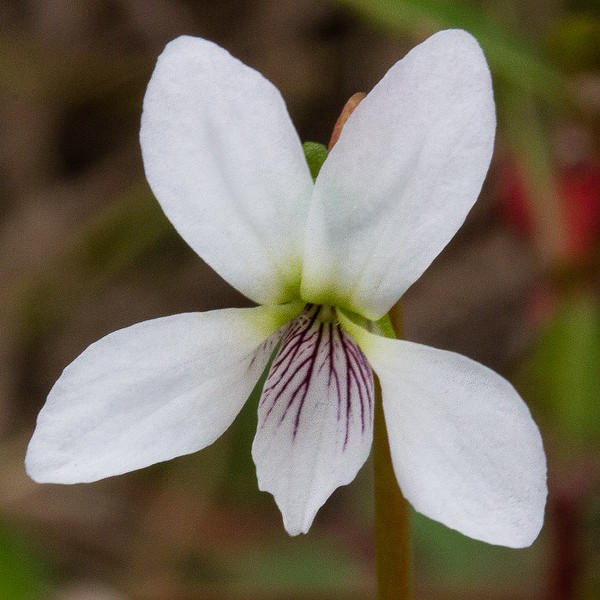
There are 500-600 violet species in the world. Three species inhabit our usual Treasure-Coast haunts, with Bog White Violet, Viola lanceolata, common and conspicuous. It has white flowers with purple nectar guides (tracks) leading into the floral center.

The purple nectar guides correspond with the veins (JB)

The purple nectar guides correspond with the veins (JB)

The purple pigments are called anthocyanins, and interestingly, anthocyanin colors change with acidity and alkalinity. Might be fun to try with some violets. More interestingly, in violets and in many other plants, the coloration corresponds with the petal veins. Why? When you think it over, that is weird. How can a pigment be confined in veins, which are made of dead water-conducting cells and highly specialized sap-carrying cells? I mean, plumbing with running water is no good place to sequester a pigment. But:
The color is not actually in the plumbing. To explore this further we have to go to other plants and extrapolate speculatively to today’s case. In other species with similar colored-vein patterns there is a gene called “venosa.” Responding to some mysterious cue, the venosa gene turns on pigment-making genes in the leaf cells overlying veins. In short, something about being near a comparatively large vein turns on a gene. That gene is a switch to turn on different genes, and those second genes case pigment formation.
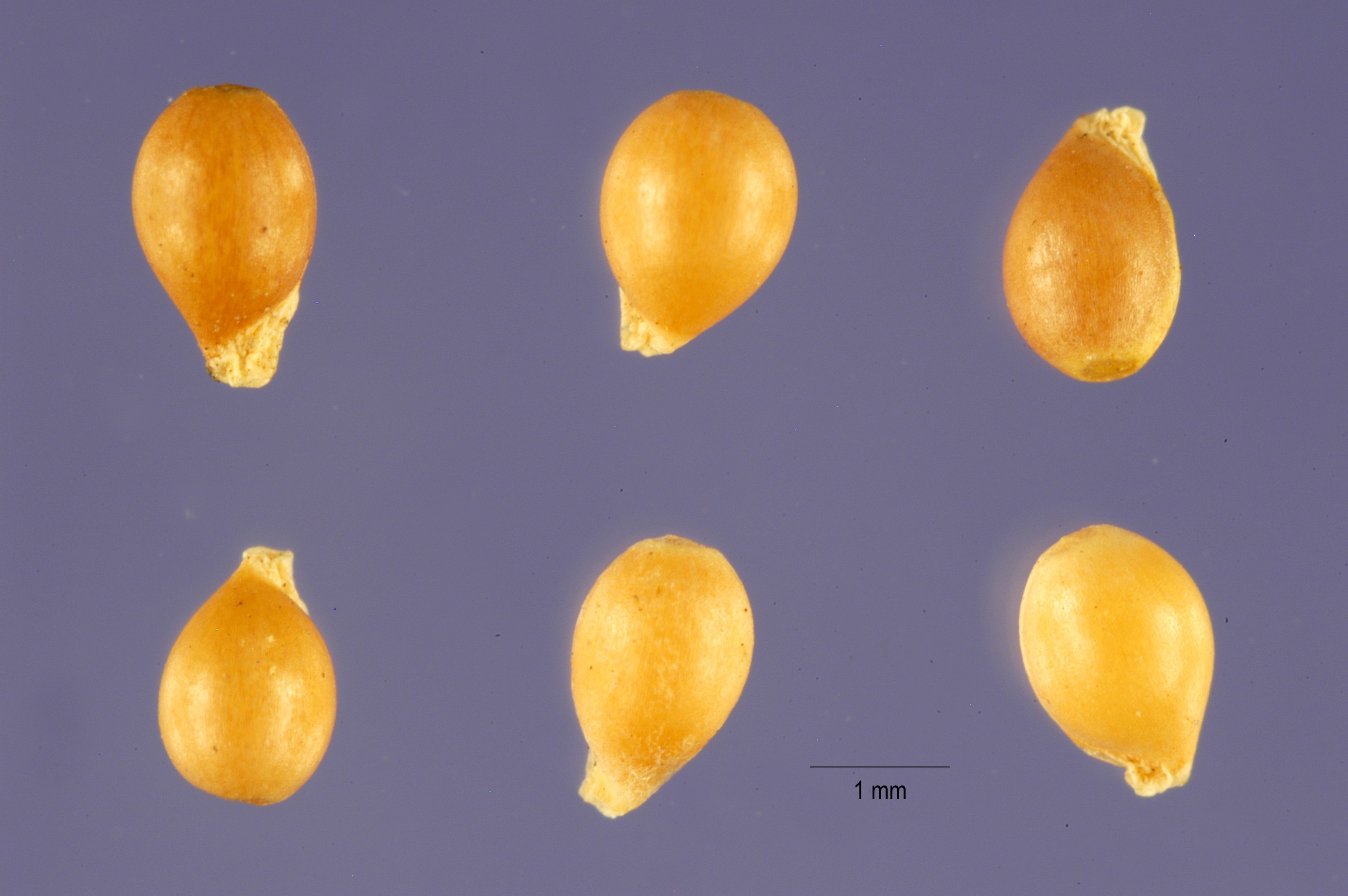
Violets enjoy a little help from ants in dispersing their seeds. The seeds have a small food packet attached.. Hungry ants drag the candy bar with that pesky seed attached back to their well-tilled, fertilized, and armed-guarded nests. Great place for the violet to grow, and make more seeds for more ants.

Violet seeds with food packets for ants. (By Jose Hernandez, USDA Database, permitted use.)

Violet seeds with food packets for ants. (By Jose Hernandez, USDA Database, permitted use.)

 
6 Comments

Posted by on February 20, 2013 in Violet


Tags: , , ,

Purple Thistle

Cirsium horridulum
Asteraceae

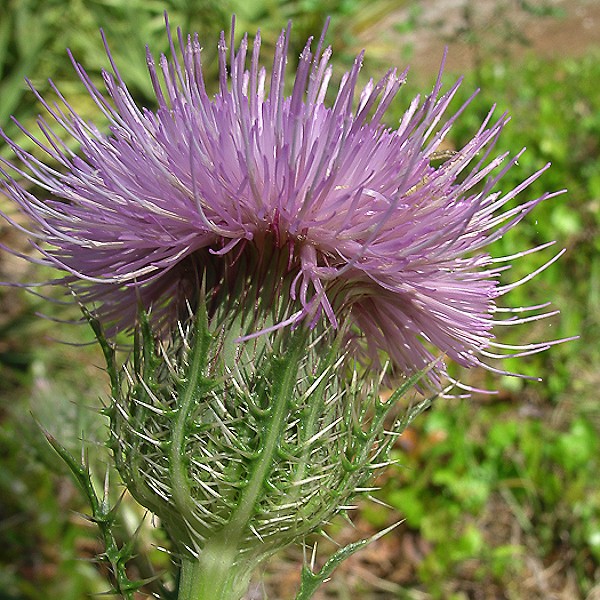
John and George last week explored a low pine woods with marshes, ponds, and Sandhill Cranes in the West Jupiter Wetland. The site was a floral  showplace of White Violets, Pineland Daisies, Yellow Sneezeweeds, Orange Milkworts, and more in colorful bloom. The trailside all-stars were native Purple Thistles, Cirsium horridulum.

Cirsium horridulum (by JB)

Cirsium horridulum (by JB)

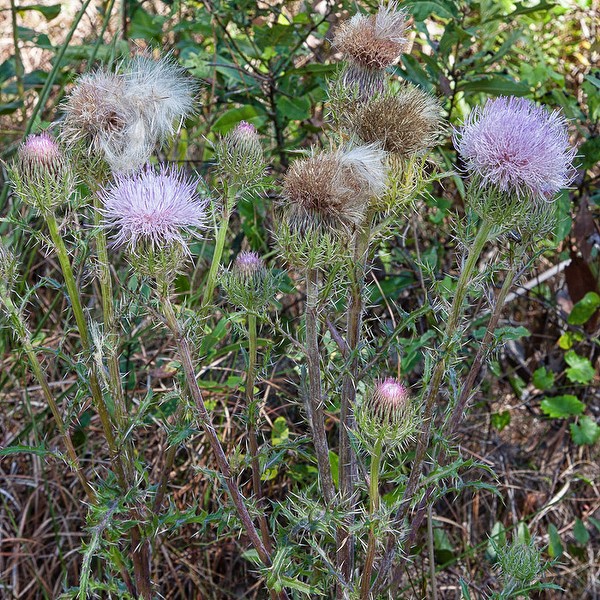
Nothing could be less horrid than this proud wildflower. (The “horridulum” presumably relates to the thorns on the foliage and on the bracts under the flower head.) Thistles are especially happy plants for me, evoking childhood memories of bike rides, railroad tracks, and cows in the pasture.

Purple Thistle (by JB)

Purple Thistle (by JB)

The broad term “thistle” embraces several thorny members of the Composite Family. The name is ancient, as are writings about thistles. They’re the symbol of Scotland, according to lesson, due to the painful spines tipping the fate of battle. You can scarcely find a plant group applied medicinally in more ways. Uses include treating swollen veins, controlling blood sugar, and relieving gastrointestinal discomforts.

Thistle-of-Scotland
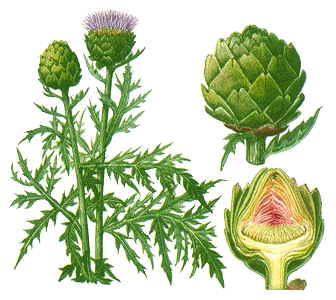
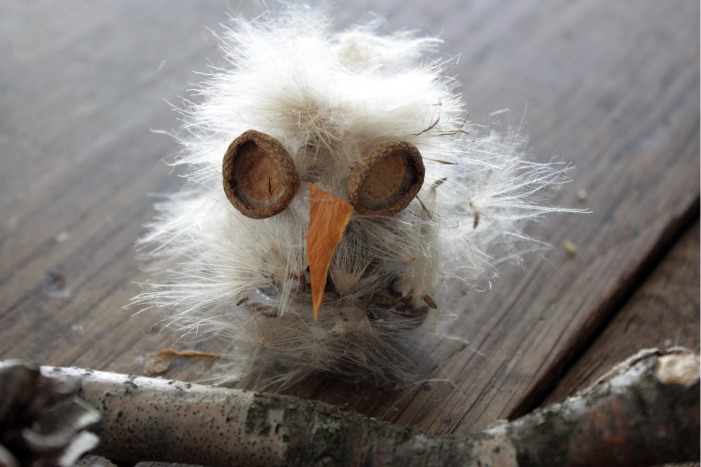
Thistle uses extend beyond medicine. Thistles solidify cheese as a vegetable rennet. And there’s nothing cozier than a goldfinch nest lined with thistledown. Thistledown provides the poofy end for blowgun darts. CLICK  Ever notice the similarity between artichokes and thistles? Artichokes are thistles of sorts, and weedy thistles, including C. horridulum, have had their soft inner regions served in foods.

artichoke-info0
What do you do if your pastures invaded by exotic thistles? Find a natural enemy of course and introduce it to smite those uninvited botanical guests. But watch out…that can backfire if the pest plant has native relatives. A weevil introduced from the Old World to control Old World Thistles in American pastures broadened its palette to native thistles, including our own Cirsium horridulum. The full extent of the problem remains to be seen.

Thistle weevil(From 5 orange potatoes ETSY site)

Thistle weevil
(From 5 orange potatoes ETSY site)

 
7 Comments

Posted by on February 15, 2013 in Thistle


Tags: , ,

Hooked on Cheesytoes

Stylosanthes hamata and additional species
Fabaceae

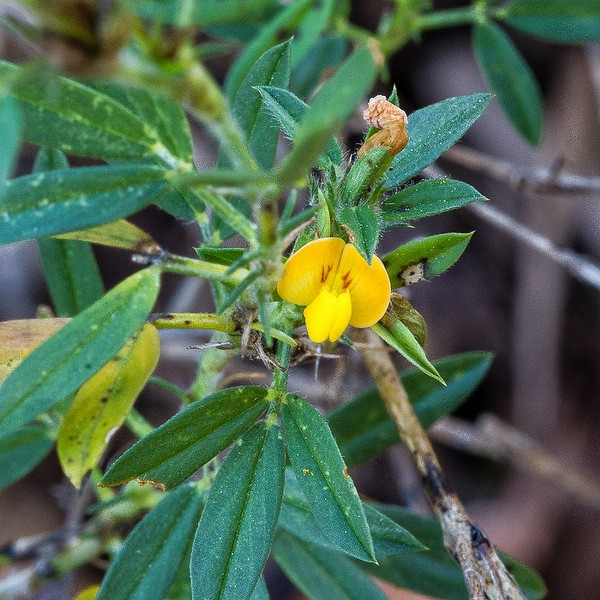
The first time I saw Cheesytoes (what a name!) was on a rough roadside a few years ago—the kind of scratchy place you change a flat tire. The Cheesytoes seemed to fit in among the coarse exotic weeds there. Not recognizing the posie, I keyed it out and was pleased to greet a native species. Who knows, maybe it was rising defiantly from the original scrubby soil seedbank underlying the thoroughfare. At least cultivar ‘Verano’ (see below) withstands herbicide attack, which may help explain the roadside living of today’s plants.

Photo by John Bradford.

Photo by John Bradford.

Rising from an old seedbank is plausible, because species of Stylosanthes have particularly hard durable seeds. This matters in a crop plant when you wish to reap and sow, and a recent (2011) study in Grass and Forage Science suggests microwaves to get the party started with one Stylosanthes species.
Styloanthes is an odd little genus. There are more or less 25 species, 23 of them in warm America and two in the tropical Old World. Florida has three species, more or less: Stylosanthes biflora is widespread rom Central to North Florida. Some native plant nurseries sell it. Why not? Tough, undemanding, and attractive in a rascally way. Stylosanthes calcicola occupies the very southern tip of Florida and is state-listed as endangered. Native to our botanical home range is S. hamata.

Species of Stylosanthes interface with human activity mainly in the pasture. They are legumes for varied and trying circumstances. They fix nitrogen and have an unusual ability to extract phosphorus from the substrate. Not bad, let’s see, fix nitrogen, extract phosphorus, and oh yes, as an added rancher bonus the plants repel ticks. All of these things have prompted fodder plantings from China and Australia to Brazil.

Our own Stylosanthes hamata is historically a broadly defined species, or “species plus some.” Taxonomic studies, chromosomal observations, biochemical data, and  DNA work have combined over the years to show the “species” to be a mix of diploid plants (having one set of chromosomes) and hybrid strains with extra chromosome sets derived from other species, in other words a genetic hodgepodge. TheStylosanthes hamata” cultivar ‘Verano’ is a combination of two species. So then, cryptic genetic pollution of a native population by alien cultivated material is possible, similar to the situation in Phragmites reeds.

In Florida both diploid (two chromosome sets) and tetraploid (four chromosome sets, probable hybrids) occur. Wouldn’t it be fun to look into that in detail? Diploid and tetraploid “S. hamata” strains behave differently: the diploids require alkaline soil but the tetraploids do not; the diploids seem to be less drought tolerant; the diploids seem to require long days for flowering; and at least some tetraploids seem to be herbicide-resistant. This, however, is all based on narrow data with the knowledge that there are multiple tetraploid strains. So overgeneralization is very possible, but maybe those extra chromosomes confer added protections against adversities. 

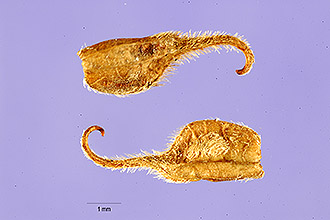
Not long ago in this blog we looked at fruits on Sea Rocket, finding that they snap into two segments, one remaining on the parent plant on a proven favorable habitat, and the other hitting the road dispersal-wise.  Here it is again. In Sea Rocket the wandering brother floats away. In Cheesytoes, the wanderer has a hook to snag a passerby and saying farewell to the homebound segment. Oh, btw, “hamata” means hooked.

Hooked Stylosanthes segments, by Tracey Slotta, USDA (permitted use).

Hooked Stylosanthes segments, by Tracey Slotta, USDA (permitted use).

 
3 Comments

Posted by on February 7, 2013 in Cheesytoes


Tags: , ,

Pinweeds, Frostweeds, and the Family Fungus

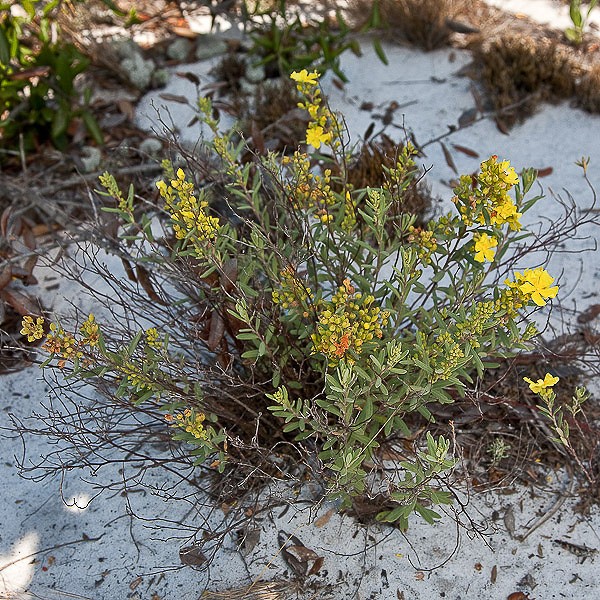
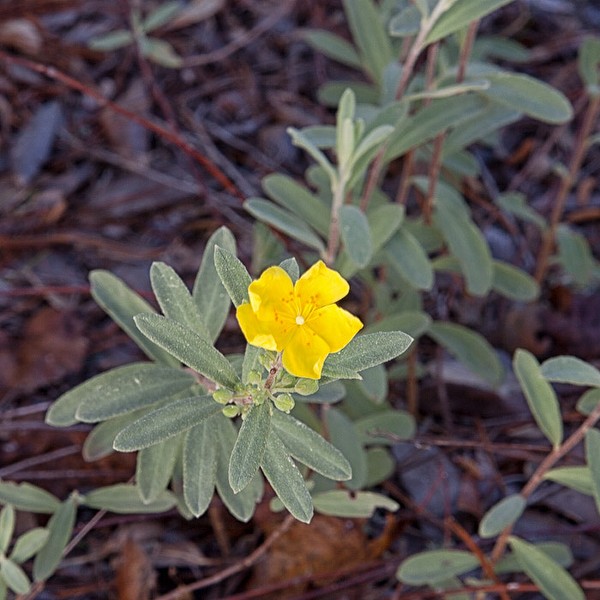
Frostweeds (Helianthemum species)

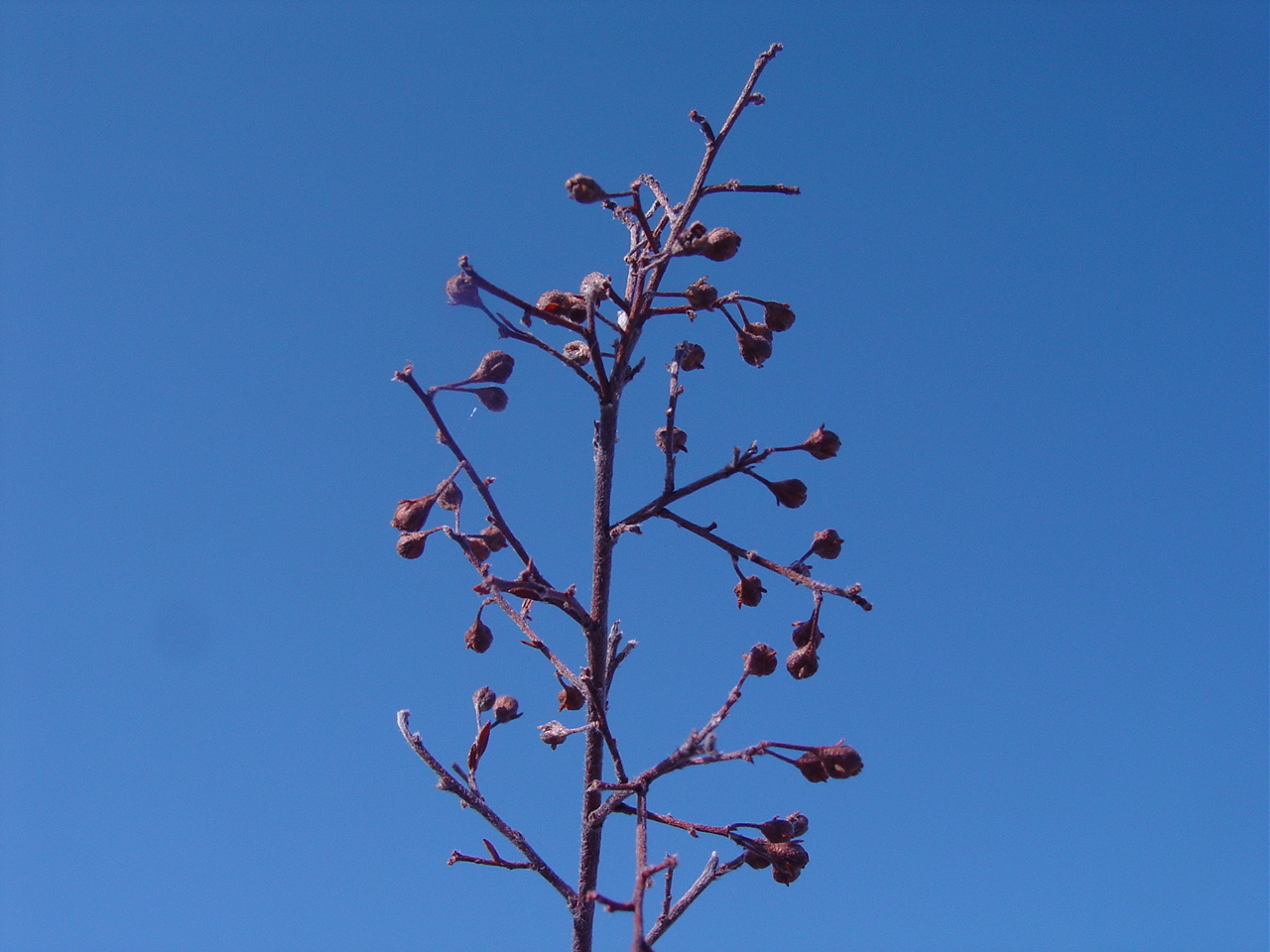
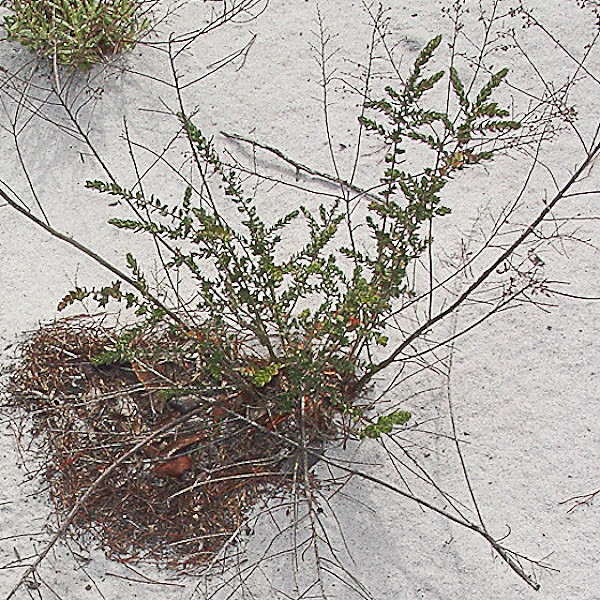
Pinweeds (Lechea species)

Cistaceae

Helianthemum nashii on the sugar sand (by JB)

Helianthemum nashii on the sugar sand (by JB)

Scrub is arguably (but let’s be agreeable) the most botanico-rific Florida habitat. Here is the oddest, oldest, and most diverse ecosystem in town. No space here to wax lengthy on scrub, so let’s knuckle down and concentrate on four interrelated mysteries of the sugary sands:
1. How can clumps of Frostweeds (Helianthemum species) abide in in the middle of parched, sun-baked, nutrient-poor, almost-lifeless white sand patches?
2. How can Pinweeds (Lechea species) do the same thing?
3. Why do the two do it together?
4. Why is there always broken glass in those habitats?

All scrub plants tolerate an extreme habitat, but helianthemums and lecheas occupy the extreme of the extreme where cacti might seem comfortable and to some extent are, yet these brave little plants don’t look like tough cacti at all. Lechea is extreme-looking in a different way, but helianthemums look like pretty garden flowers with yellow blossoms above silvery-tinted foliage. Some Helianthemum species are commercial garden flowers.

I can’t speak about broader geography, but in my favorite scrub sites, Helianthemum and Lechea hang out together like Fred and Barney. Remember that—it’s important.

Frostweed flowers (by JB)

Frostweed flowers (by JB)

The togetherness becoems more interesting with the knowledge that the two are related, both belonging to the Rockrose Family.  : The kinship helps explain their mutual affinity for Sahara conditions. It’s a family trait. In fact, species of Helianthemum are native to the Sahara itself.

Lechea flowers, sort-of---as big as pinheads

Lechea flowers, sort-of—as big as pinheads

Sometimes, as I hammer to students, when a single species puzzles you, look to its relatives for insights. You can’t generalize 100%, but you can make great educated guesses. If I know a child is a Rockefellar, there’s probably a trust fund. If a critter belongs to the Canine Family it is not likely vegan. If a plant belongs to the Cistaceae, seek it on sunny sand and stones. A center of diversity for Cistaceae is the dryish, sandish, rockish, sunnyish Mediterranean Region, and wherever else you find them from the Yukon to Chile, they are probably in the local “desert.” Even in the garden world, Cistaceae are known as rock garden dwellers. This is the Rockrose Family after al.  Want to learn a new vocabulary word? Chamaephytes (KAM-eh-fights) are plants that hide buds safely underground, and many Cistaceae are chamaephytic. Many grow in clumps that catch debris in the wind to become self-mulching, as in the photo below.

Pinweed (by JB)

Pinweed (by JB)

A particularly noteworthy adaptation to harsh living prominent among Cistaceae are mycorrhizal fungal helpers. Mycorrhizae (my-coe-RIZE-ee) are fungi sharing symbiotic relationships with plant roots, helping the roots snag nutrients and even water. Ever wonder why so few scrub plants succeed in gardens? I don’t really know but suspect most require a soil-mycorrhizae context difficult to simulate in the back yard. In Cistaceae some of the mycorrhizal fungi are truffles. Not the chocolate candies, but the fungal tubers so beloved by hogs and gourmets. Now truffles are costly, so there’s always been interest in truffle farms. Cistaceae, including Helianthemum, have received serious research as possible host plants for the tasty tubers. Hey there’s an idea, Florida is open for business!  Boot out the scrub jay deadbeats and convert all that useless scrub to tax-paying truffle farms.

No e-mails please (pro or con)—-Just kidding you know.

All this said, a question emerges. If Cistaceae depend on mycorrhizae to live where nobody else will, and if two of our most extreme open-sand scrub dwellers both belong to Cistaceae, is their togetherness rooted in mutual mycorrhizae? Does Helianthemum arrive with mycorrhizae in its seeds (yes—stay tuned), and thus set the stage for its cousin Lechea to tag along? Do the two share a single mycorrhizal network?

In species of Helianthemum the seed coat has a gummy outer layer inhabited by the friendly fungus which rides along with the seed. The relationship is so intimate and necessary that seedlings of Helianthemum do not even form root hairs, as the fungus apparently assumes their function.

By the way, Helianthemum is othewise adapted to extremes; it has silvery reflective foliage bearing star-shaped hairs, thus the “frost” in the name. It looks a little hoary. Some self-propagate from subterranean rhizome fragments. Species of Helianthemum make “cleistogamous” (kleist-OG-ah-mus) flowers in addition to their conventional yellow blossoms.  Cleistogamous flowers are tiny and non-showy, and self-pollinate without opening.

Lechea is just odd. The small variably fuzzy leaves appear fairly drought-proof. The flowers are tiny pinheads. I never see them open. Maybe they do not have to open much, as Lechea has a reputation for self-pollination.  My personal point of origin, the University of Michigan Herbarium, has an interesting Lechea comment on their web site: “The flowers rarely open, but are reported to do so in early morning on bright days.” I just don’t get up early enough.

 
6 Comments

Posted by on January 30, 2013 in Frostweed


Tags: , , , , ,

Mighty Oaks and Tiny Tyloses

Mighty Oaks and Tiny Tyloses

Live Oak

Quercus virginiana

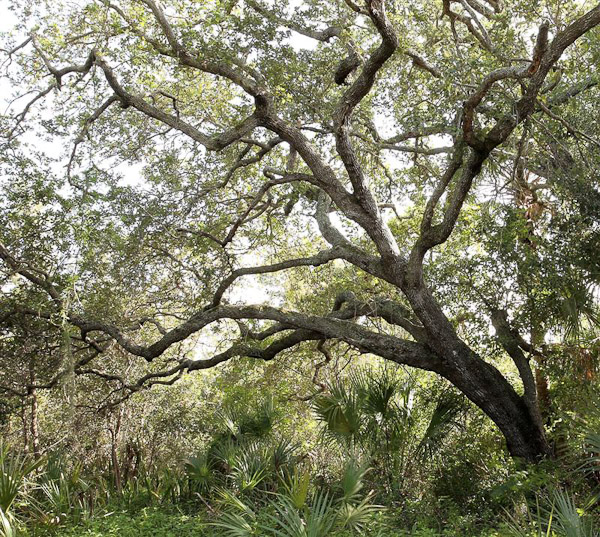
Live Oak by John Bradford

Live Oak by John Bradford

Over the weekend I sat in bittersweet contemplation outside my mother’s nursing home during a golden twilight waiting for nurses to complete their dinnertime tasks and permit a visit. My company during that quiet wait was a massive old Live Oak guarding with solemn dignity its human contemporaries likewise confined to the premises.

On a subsequent visit I brought a measuring tape. The trunk swells at about four feet above the ground as the branches begin to diverge. Beneath the swelling the diameter is about 28 inches. To estimate the corresponding age I’ll borrow data from another Live Oak, one felled in a hurricane with 196 annual rings and 50 inches of diameter, giving its growth rate from acorn to chipper as about 3.92 years per inch. If that can be generalized, then the nursing home oak dates back to the year the Wright Brothers flew at Kitty Hawk, conceivably roughly the same age as the oldest resident in the nursing home.

The tree is thus an apt living memorial to the representatives of the Great Generation facing the end of life in its shadows—dating from their first days and witnessing with them the Depression, WWII, Elvis, Viet Nam, and their Baby Boomer children, and weathering the storms with scars as did they. This memorial knows what it is commemorating.Why do a tiny minority of plant species become the aged giants? Why do Oaks become mighty? And to underscore mighty: According to “Big Trees, The Florida Register,” The state champion Live Oak, of unknown age  is the Cellon Oak in Alachua County with a trunk diameter of almost 10 feet.

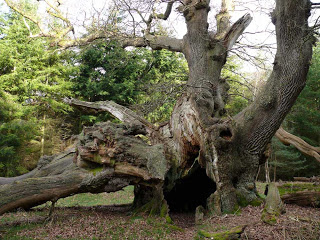
[After the blog was posted, our blog-friend Mary Hart in worcester UK added a comment—see below—on a truly ancient Oak: The King of Limbs i nthe UK.  I’ve inserted the photo below.]

The King of limbs.  See comment below by Mary Hart.

The King of Limbs. See comment below by Mary Hart.

So to repeat the question, why can Oaks live for centuries? I do not know, but it is time to speculate. And one way to attack the question is to ask, the converse bassackwards: what kills other woody species in a shorter timeframe? Well, yea, sure, storms, insects, chainsaws, and competitors, but those are not interesting answers. How about wood decay, becoming hollow and rotting? Do Oaks have an advantage there? Yes.

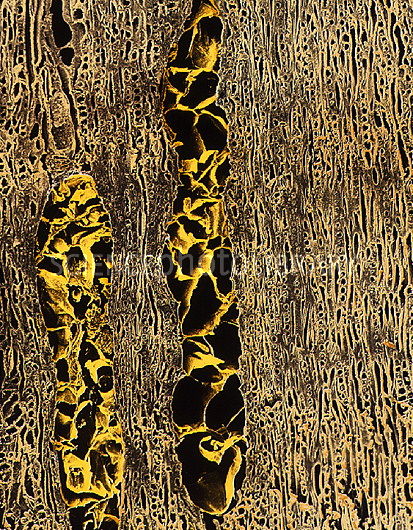
Be patient. This photo will become relevant to that advantage.

Be patient. This photo will become relevant to that advantage.

To dig in on this and explain the bubblegum, we need to talk a moment about wood structure. Water passes upward in trees through tiny tubes called tracheids and vessels. Tracheids are small in diameter and we’ll ignore them (some trees, such as pines have tracheids only and no vessels). Most trees have larger-diameter pipes known as vessels. As a tree grows in diameter often the only vessels actively involved in carrying water are the younger ones in the outer part of the wood, the sapwood.

The older vessels deeper in the trunk lose their water transport function and can become passageways and breeding cavities for decay. It pays to plug these older vessels to strengthen the heartwood and to block decay, just as communities block old mineshafts. The blockages look like balloons inflated inside the vessels and are called tyloses (tie-LOW-seas). Oaks are not the only trees that have them; in fact, tyloses are likewise common in other long-lived alpha trees. But Oaks are particularly good at it, which is why Oak wood is waterproof and strong for wooden ships and barrels. CLICK

barrel-of-monkeys-721072
The picture below, taken by Dr. Jeremy Burgess and Science Photo Library, shows a vessel in Oak wood plugged with tyloses. How tyloses grow is fascinating. Vessels are made of dead cells unable to grow, so they cannot make their own tyloses. To grow tyloses, nearby living cells have to push little bubbles of cytoplasm into the dead vessels through tiny keyholes called pits, and then the tyloses expand within the vessel. That is, the tyloses in a vessel are not part of it, but rather are balloons extended from adjacent cells. That’s pretty fancy for a dumb hammer handle. If I wanted to block a PVC pipe with bubblegum, I’d drill a hole into the pipe then blow a bubble to the inside of the pipe.

Vessel in Oak wood filled wiht balloonlike tyloses.  (By Dr. Jeremy Burgess, Science Photo Library)

Vessel in Oak wood filled with balloonlike tyloses. (By Dr. Jeremy Burgess, Science Photo Library)

 
5 Comments

Posted by on January 21, 2013 in Live Oak


Tags: , ,

What Does Florida Have in Common with Ireland? Blue-Eyed Grass and Palms

Blue-Eyed Grass
Sisyrinchium species
Iridaceae

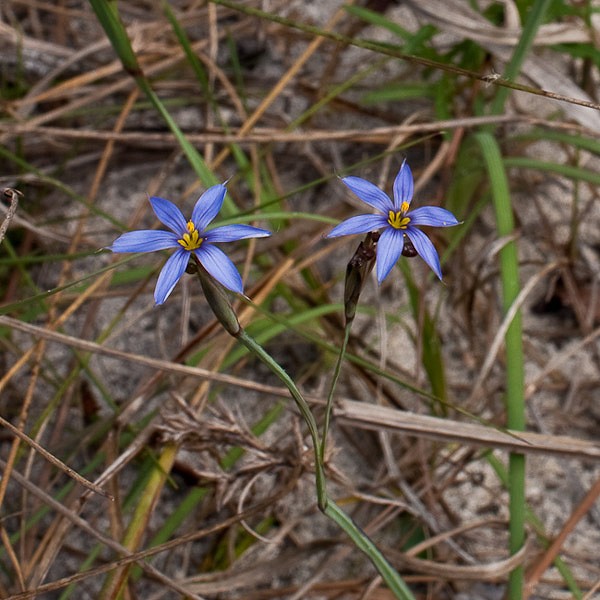
Last Friday John and George visited the Kiplinger Natural Area in Stuart.  (See John’s latest Halpatioke Trail photos: CLICK)  There’s always something botanical to enjoy at Kiplinger, and a treat this week was Blue-Eyed Grass, Sisyrinchium angustifolium (base not fibrous, moist habitats).  Also locally we have Sisyrinchium nashii (base fibrous, leaf blade < 4 mm wide, capsule < 5 mm long), and in scrubby dry sites Sisyrinchium xerophyllum (base fibrous, leaf blade usually > 4 mm wide, capsule to 8 mm long).

Well, maybe.  Sisyrinchium species are in the eye of the beholder, controversial and weakly defined in many cases.  If you don’t believe that, select a geographic area and compare the Sisyrinchium species definitions and nomenclature in a couple of botanical references, but I don’t really want to go there.

Taken by John Bradford.  In Bermuda? In Ireland? In Kiplinger?  You decide.

Taken by John Bradford. In Bermuda? In Ireland? In Kiplinger? You decide.

Where I do want to go is Ireland, Bermuda, and Greenland.  The natural distribution of Sisyrinchium, with about 80 species, is almost entirely in the Americas, but go off-shore and it gets interesting, and go all the way to Ireland and it gets weird.  When I first learned of allegedly natural Sisyrinchium occurring in northern North America, and Greenland, and Ireland I imagined Vikings relocating pretty Blue-Eyed Grasses between pillages and plunders.  No dice.  More credibly, botanists have implicated migrating geese as the perps, but the honkers went down in the botanical literature.

And that brings us to today’s mystery.  And here it is: Sisyrinchium bermudiana is the (unofficial) National Flower of Bermuda.  But hold the phone:  The Irish species is Sisyrinchium bermudiana. [ A two-island natural distribution Bermuda and Ireland?  Geese and Vikings didn’t do that!  BTW, it’s been documented in both places since the 19th Century.

Before we go on, may it please the court stipulate a few facts:  First of all, remember what I said about the wobbly status of Sisyrinchium species.  Second, we in this blog are not the first people to notice this odd pattern, and others have “resolved” it by decree and edict.  You can find various statements “settling” the case…but the verdicts disagree.  A crime has occurred but the jury is hung.  Figuring out the irrefutable relationships of those dual island populations is a problem for DNA analysis, and if that’s been done I’m not aware of it.  [Plausible scenario: a doctoral student doing this somewhere now has the computer set to snag all on-line mention of Sisyrinchium.  This blog pops up much to their disgust and annoyance.  If that is you, hi there, send me an e-mail.]  There’s ever-so-much I’m not aware of, and our purpose here is not to resolve the mystery but merely to savor it.  Just like OJ, who really wants to know?  We’ll leave resolution to smart people in hi-tech labs.

Let’s visit Bermuda first.  With dissidents, there’s a sense among even contemporary authorities that the (unofficial) national flower of Bermuda is Sisyrinchium bermudiana.  Who could be more authoritative on this than the Bermuda Botanical Society?  As recently as their most recent (Fall 2012) Newsletter they have a manifesto asserting the validity of Sisyrinchium bermudiana.  For your enjoyment that article is plagiarized in its entirety below.  Take that, Ireland.

Just like CNN, fair and balanced reporting now requires input from the Emerald Isle:

Can Sisyrinchium bermudiana actually occur in Ireland, and natively?  Leprechauns as well as stodgy botanical references think it’s not malarkey.  The venerable Flora Europaea is thumbs up.  Ditto (as”probably native”) for the Ecological Flora of the British Isles.  Even better, CLICK HERE  to see Irish endorsement with details. The plant is an official Priority Threatened Species listed with the no-nonsense International Union for the Conservation of Nature.  The habitats are shores, wet spots, and moist grasslands.

So here we have either the world’s wackiest plant distribution, or serial errors by serious authorities.  Who cares?  As Kahlil Gibran spake with profundity, “Say not I have discovered the truth, but rather I have discovered a truth.”

——————————————————————————-

From the Fall 2012 Newsletter of the Bermuda Botanical Society:
ENDEMIC PERENNIAL – BERMUDIANA
(Sisyrinchium bermudiana)

The Bermudiana is one of the few endemic
species left in Bermuda and is part of the
Iridaceae family.  It is a small herbaceous
perennial and is the unofficial national
flower of Bermuda.  The leaves grow from
six to nine inches long and its flowers have
six purple petals and are yellow at the base,
which gives the plant a beautiful yellow
glow.  (Flora, 2005; Forbes 2005).

Also known as Bermuda iris (or blue-eyed
grass), for many years before botanists knew
of more continental species of Sisyrinchium,
the Bermuda variety was considered as a
North American type.  It was thought that
our Bermudian species does not grow in the
wild anywhere else in the world, as pointed
out by Hemsley in 1884 (Journ. Bot. 22:
108-110).  It is interesting to note that plants
which were taken to the New York
Botanical Gardens grew easily and flowered
well when grown under glass. (Flora of
Bermuda, 1865).

Although this pretty little blue Iris is found
growing in the wild in dry sunny places all
over Bermuda, there is also a place for it in a
cultivated home garden.  It has typical Iris
shaped leaves, and flowers throughout the
month of April and sometimes even longer.

Sisyrinchium bermudiana will flourish in
any open, sunny position and is propagated
by seed. The seed is produced in the pods
on top of the plant after the end of its
flowering period. (Whitney, 1955).  The
seeds can be sown directly in the ground in
early spring.

 
8 Comments

Posted by on January 15, 2013 in Blue-Eyed Grass


Tags: , ,