RSS

Tag Archives: Bog White Violet

Roses are Red, Violets are Cleistogamous, Sugar is Sweet, and Vultures Monogamous

Bog White Violet

Viola lanceolata

Violaceae

The tidbit about (Black) Vultures just goes to show you, table manners do not matter in dating. What do vultures have to do with violets other than starting with the letter V? Answer: They’re both gregarious but have oddly restricted genetic exchange. Genetic testing shows black vultures to limit genetic exchange to one partner, despite apparent opportunities for side-stepping at a road kill party.
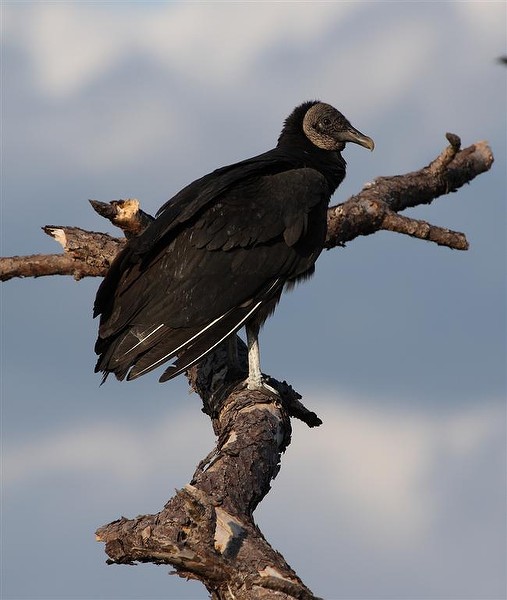
Happily married vulture by JB

Happily married vulture by JB

Violets, which having beautiful broadly pollinated blossoms, have also “cleistogamous” (kleist-OG-ah-muss) flowers, which are small, inconspicuous flowers that bear fruit without ever opening. They often look like buds. Most cleistogamous flowers are self-pollinated, thus creating clones or near-clones of the parent plant. Cleistogamous flowers occur in a lot of plants; they are sort of a plan B. That is, in addition to mixing genes broadly helped by the birds and bees visiting regular flowers, use also cleistogamous flowers to make backup copies of the parent plant. Look for cleistogamous flowers low on violet plants.
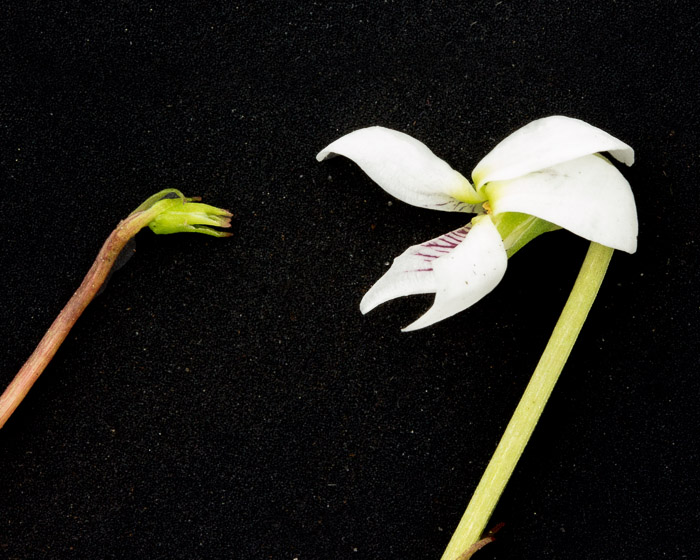
Cleistogamous flower and regular flower (by JB)

Cleistogamous flower and regular flower (by JB)

There are 500-600 violet species in the world. Three species inhabit our usual Treasure-Coast haunts, with Bog White Violet, Viola lanceolata, common and conspicuous. It has white flowers with purple nectar guides (tracks) leading into the floral center.
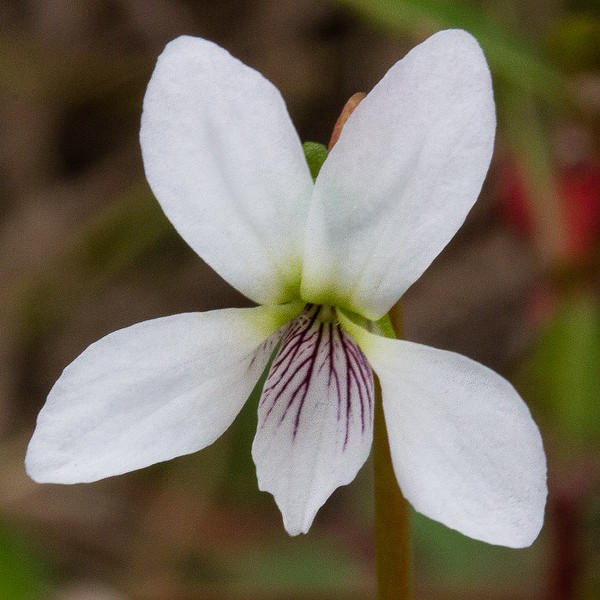
The purple nectar guides correspond with the veins (JB)

The purple nectar guides correspond with the veins (JB)

The purple pigments are called anthocyanins, and interestingly, anthocyanin colors change with acidity and alkalinity. Might be fun to try with some violets. More interestingly, in violets and in many other plants, the coloration corresponds with the petal veins. Why? When you think it over, that is weird. How can a pigment be confined in veins, which are made of dead water-conducting cells and highly specialized sap-carrying cells? I mean, plumbing with running water is no good place to sequester a pigment. But:
The color is not actually in the plumbing. To explore this further we have to go to other plants and extrapolate speculatively to today’s case. In other species with similar colored-vein patterns there is a gene called “venosa.” Responding to some mysterious cue, the venosa gene turns on pigment-making genes in the leaf cells overlying veins. In short, something about being near a comparatively large vein turns on a gene. That gene is a switch to turn on different genes, and those second genes case pigment formation.
Violets enjoy a little help from ants in dispersing their seeds. The seeds have a small food packet attached.. Hungry ants drag the candy bar with that pesky seed attached back to their well-tilled, fertilized, and armed-guarded nests. Great place for the violet to grow, and make more seeds for more ants.
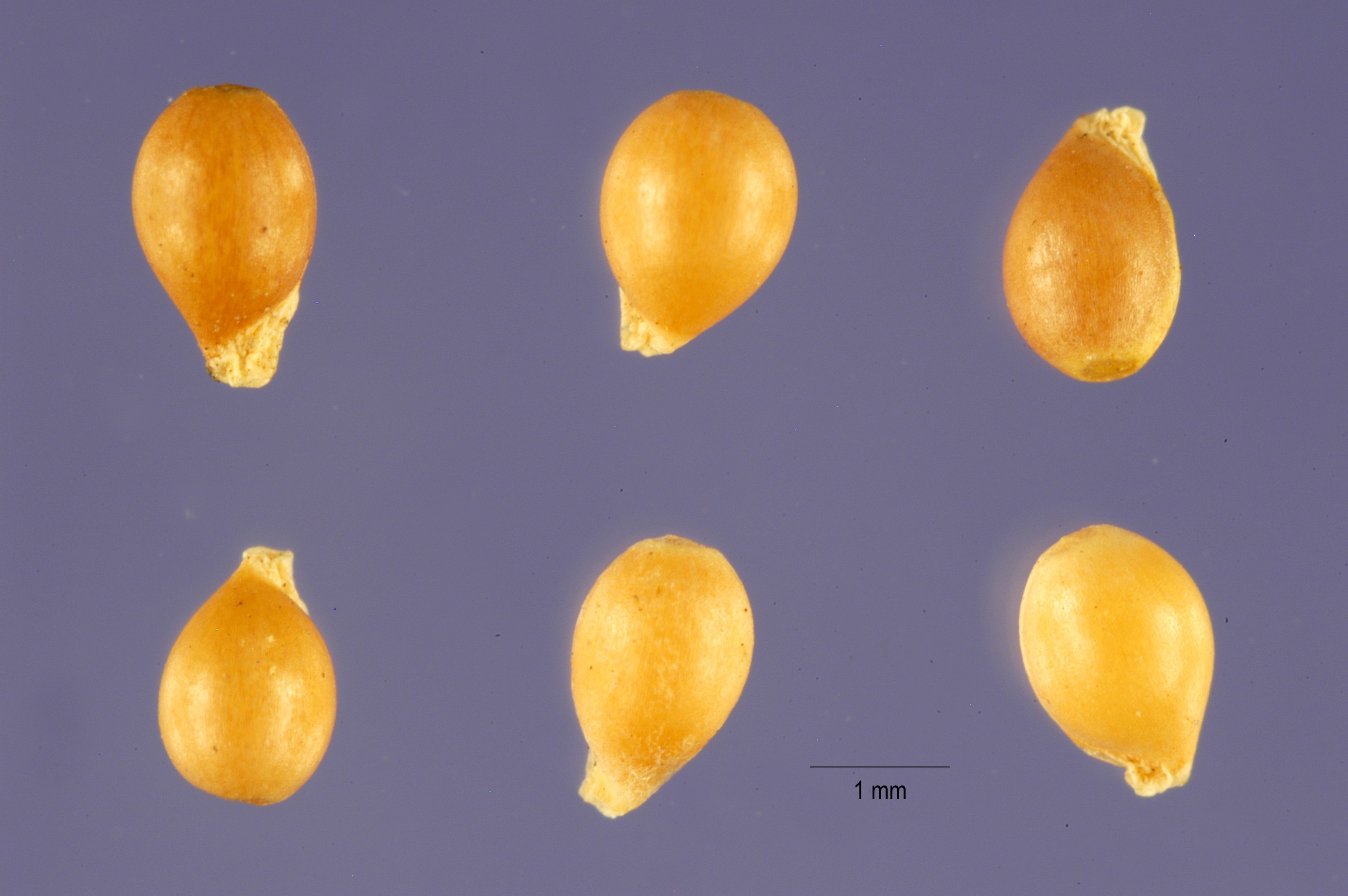
Violet seeds with food packets for ants. (By Jose Hernandez, USDA Database, permitted use.)
Violet seeds with food packets for ants. (By Jose Hernandez, USDA Database, permitted use.)
 
6 Comments

Posted by on February 20, 2013 in Violet


Tags: , , ,

Underground Botany: Hidden Flowers and Buried Fruits

What do Innocence, Blue Maidencane Grass, Bog White Violet, and Beach-Peanut have in common? Hint: Look at the title of the post. They all have “funny” flowers and fruits doing things you don’t expect where you don’t expect them.

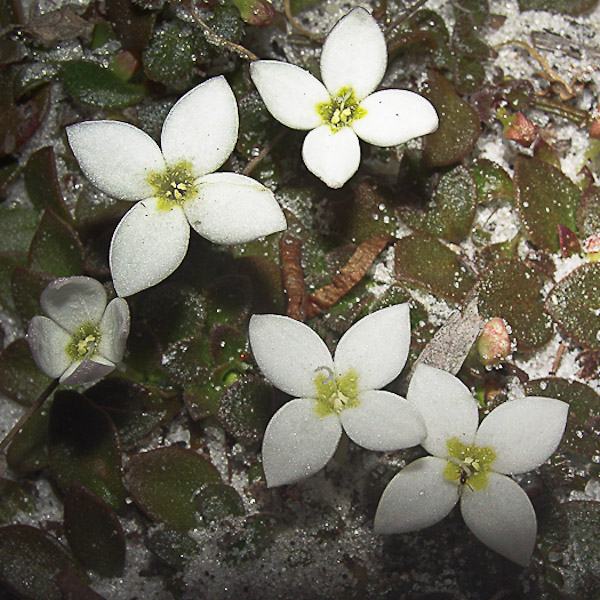
Houstonia procumbens 2

Innocence

Innocence (Hedyotis procumbens) is a petite member of the Coffee Family (Rubiaceae) related to the Bluets familiar to readers with more northern exposures. In South Florida the species turns up on sun-baked dry sugar sand in scrub or near-scrub habitats. The small white flowers often appear to spawn directly on the sand, as the vegetative plant body is low, trailing, and frequently more or less covered with sand. After flowering, the flower stalk bends earthward burying the developing fruit protectively for subterranean maturation. To be speculative, it looks like ants might disperse the resulting fruits and seeds. And there is more to the story: Innocence is not so innocent. In addition to the showy flowers, it hides secret inconspicuous flowers underground. These either self-pollinate or do not require pollination, and they produce fruits without seeing light of day. Such flowers are a “back-up” on the sexual process and are called cleistogamous (kleist-OG-ah-mus) flowers. Cleistogamous comes from Greek for, roughly speaking, “hidden husband.”

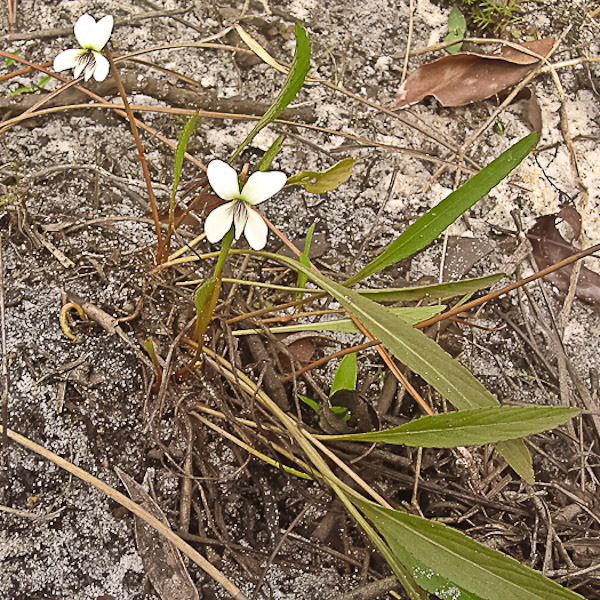
The most famous owners of cleistogamous flowers are violets, and our native Bog White Violet (Viola lanceolata) is no exception. Look for the hidden flowers or the resulting fruits near the base of the plant.

Bog White Violet

Bog White Violet

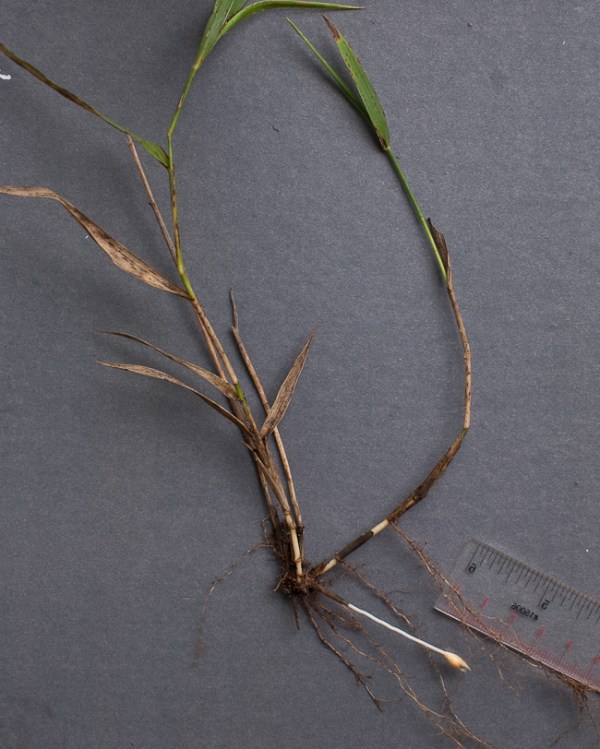
A more surprising case is the grass Blue Maidencane (Amphicarpum muhlenbergianum, see http://www.floridagrasses.org). Amphicarpum translates as “fruits on both sides“, in this case, both sides of the ground surface. In addition to normal (chasmogamous) flowers and fruits in the sunshine, cleistogamous flowers in the rhizome make buried fruits. John and I saw these first and most easily in an area rooted up by feral hogs.

Blue Maidencane

Blue Maidencane

Blue Maidencane Buried Fruit

Blue Maidencane Buried Fruit

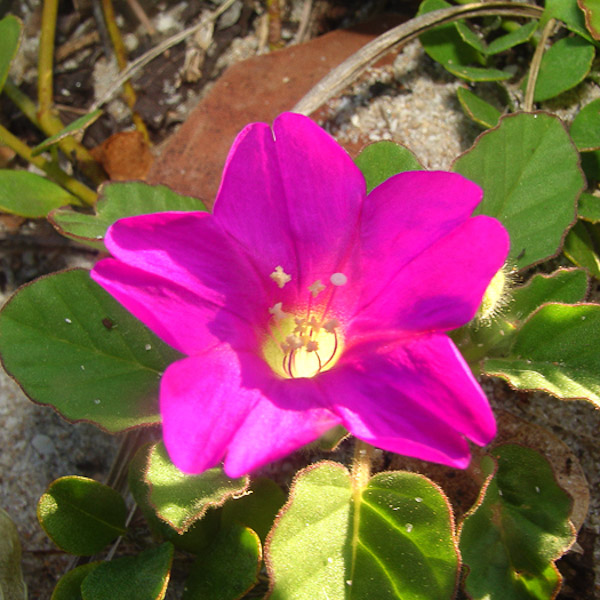
Buried fruits are hidden from some menace, and what could be more menacing than clinging to life on Florida seashores and seaside dunes. You can guess now how Beach-Peanut (Okenia hypogaea) got its name. Not for being a type of goober. The Beach-Peanut is no legume, but rather a member of the Four O’Clock Family (Nyctaginaceae), as you might guess from its vibrant floral display. The prettiest flower on the beach buries its fruits in the sand on a downward peg potentially mistaken for a root. It too produces cleistogamous flowers, but the relative roles of the cleistogamous flowers and showy flowers remain poorly studied.

Beach-Peanut

Beach-Peanut


Tags: , , , , , ,