RSS

Tag Archives: plant

Santa Maria Feverfew Packs a Punch

Santa Maria Feverfew

Parthenium hysterophorus

Asteraceae or Compositae
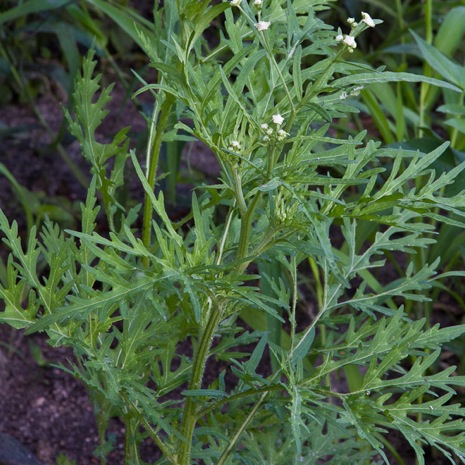
Parthenium (Today's photos by JB)

Continuing our exploration of the eastern shore of Lake Okeechobee today, John and George wallowed in invasive exotics, eating guavas, tripping over Syngonium vines, and admiring the tallest Johnson Grass we’ve ever seen.  (Billy is in North Carolina.)  Part of the fun was spotting one isolated little Coontie, which is native.  Has it been there a millennium? Did Native Americans bring it?  Did a seed float across Lake Okeechobee in a storm?  Does it date from someone dumping garden refuse?  Why is a Cycad the opening act for a post on Parthenium anyhow?  Well, they are both bioactive and toxic.

Let’s get on-topic.  An intriguing non-native plant loitering around the agricultural field borders is Santa Maria Feverfew (Parthenium hysterophorus), probably native from Mexico to South America.  It is now a worldwide weed, which tends to obscure the precise point of origin.

A clue to the strange brew within, the foliage has a distinctive odor when you crush it, which is a bad idea, as the itchy-scratchy sap can raise a few blisters.  Despite the hazard, it is fun to sniff weedy members of the Composite Family, because they tend to contain sesquiterpenoid lactones.

Huh?  Back up a second here.  Terpenoids (TURP-ah-noids) are usually pleasantly fragrant botanical essences, such as pine, lemon,  citronella,  and menthol.  They are based on 10-carbon “terpene” chains.  Just as a sesquicentennial is  150 years, a sesquiterpenoid (SES-kwa-turp-ah-noid) is a terpenoid-and-a-half, that is 15 carbons, and the term “lactone” (LACK-tone) refers to specific molecular configuration beyond the scope of our little e-chat. All right now,  don’t get hung up on the chemistry—the point here is what the chemicals do.   Sesquiterpenoid lactones tend to have a characteristic bitter or medicinal odor, not necessarily unpleasant, and, although found in multiple plant families, they are the flagship anti-herbivory arsenal of Composites, including Feverfew.  Parthenium contains a medicine cabinet of sesquiterpene lactones as well as other toxins.  The best-known lactone in today’s species is named for it, parthenin.
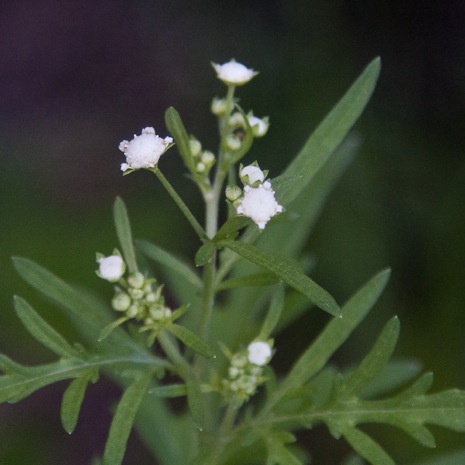
Pretty little snow white flower heads on Parthenium. It looks better than it smells.

Sesquiterpenoid lactones are a veterinarian’s (and butcher’s) nightmare.  Especially hard on sheep and goats, they’re not so great for cattle and horses either.  The compounds attack vegetarians in varied nasty ways—they are neurotoxic, and able to bind to animal tissues interfering with varied functions, and prone to cause digestive lesions.  They cause “spewing sickness,” where the animal can drown in its own vomit.  These toxins spoil the meat of livestock who eat them.

And here is an odd effect with possible benefits in human medicine: antimicrobial activity.  What would a plant do with antibiotic capability?  Apparently the sesquiterpenoids interfere with the microbe symbionts in the animal rumen, adding even more injury to the error of eating the wrong weed.

The compounds have insecticidal characteristics too, harnessed in some regions where Parthenium helps with flea control.

A fine line separates scary poison and useful medicine.  Species of Parthenium have served historically against diarrhea, bacterial infections, malaria (some partheniums are called “wild quinine”), female troubles, pain, and fevers.   But watch out, Parthenium derivatives reportedly damage human chromosomes.

If you are a plant, who do you want to suppress in addition to hungry grasshoppers and goats?  Answer: competition from other weeds.  One study showed parthenin, mentioned above, to thwart germination, to diminish the chlorophyll content, and to sabotage enzymes in a species of Ageratum.  Maybe it has commercial value as a natural herbicide, but we don’t really want to handle it!

The botanical name is just plain odd.  The name Parthenium is of debatable origins that we’ll ignore.  The weirder part, hysterophorus means womb-bearing.  What was Linnaeus thinking?  Not clear, but the flower heads do look like the ends of the fallopian tubes.

Many members of the Composite Family contain latex.  A related species, Parthenium argentatum, is the source of the rubber substitute guayule.

What a plant: it’ll cure your cooties, mutate your offspring, make the goat barf, give a horse a crummy in his tummy, sour the lamb vindaloo, irritate your skin, and self-weed the garden.  Yet it looks so white-flowery innocent by the side of the canal.  (This post is a team effort by John Bradford and George Rogers.)
 
Leave a comment

Posted by on July 30, 2011 in Santa Maria Feverfew


Tags: , , , , ,

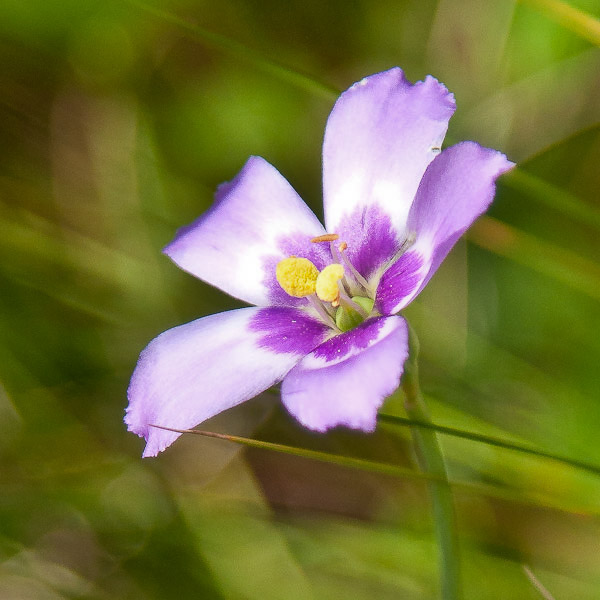
Marsh Gentian

Marsh Gentian
Eustoma exaltatum
Gentianaceae
 
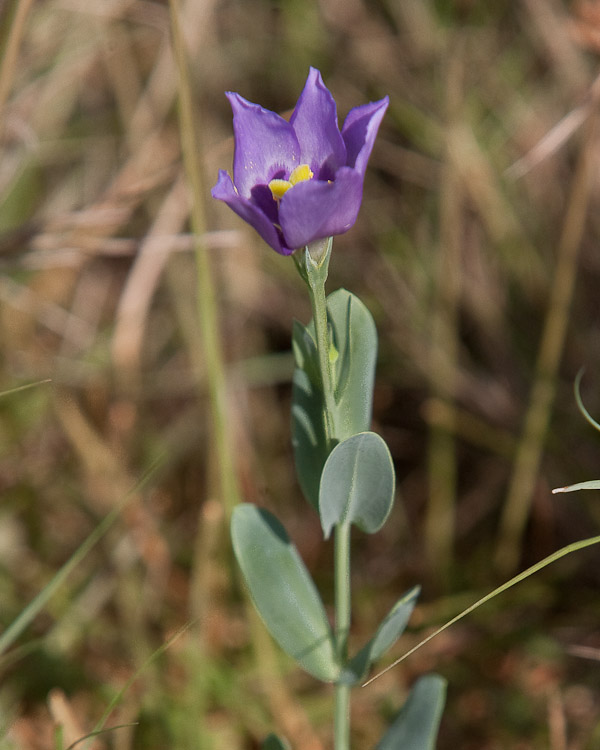
Some wildflowers are so big, colorful, and assertive, they look like they came right out of a Garden Club flower show. That is not far from the truth. This eye-grabbing species is, according to contemporary taxonomy, the lone species of the genus Eustoma, a member of the Gentian Family. In South Florida we may think of it as a marsh or coastal species, but amazingly, this beauty inhabits diverse moist habitats from South America to Florida and even ranges as far as Montana. Ladybird Johnson would have called it “Texas Bluebells.”

The species tolerates salty and alkaline conditions. The photo on our blog was taken just steps from the Intracoastal Waterway at the edge of a mangrove stand, a stone’s throw from Tiger Wood’s home.

Marsh Gentain

Marsh Gentain


These plants have a complex taxonomic and horticultural history. The garden Eustomas are best known under the names Eustoma grandiflorum or E. russellianum, or under the genus name Lisianthus. They are so well established under the last-mentioned name, that “Lisianthus” lives on as their handle in the commercial trade. Current classifications tend to regard all of these names as synonyms of E. exaltatum, making our wildflower and the vast array of garden Lisianthus one and the same species.

The plants are highly modified horticulturally and inter-crossed, yielding numerous cultivars with purple, violet, bluish, pink, white, single, and doubled blossoms. They are valued as garden selections, as potted plants, and especially as cut flowers. Many of the doubled cultivars resemble roses. Starting with attention in Japan in the 1930s, this species came (back) commercially to the U.S. in the 1980s and quickly became the number one cut flower in the U.S. although production problems emerged. Several cultivars have been developed in Florida, but Japan remains the capital of Lisianthus.

Marsh Gentain

Marsh Gentain

The flowers are self-compatible, and an example of “protandry,” that is, with pollen released days before the stigma becomes receptive.

Personally, we regard native wildflowers as more beautiful than any artificial garden, but the “Marsh Gentian” is a species that graces everyone’s world from Florida natural areas to the Japanese cut flower industry.

 
Leave a comment

Posted by on July 18, 2011 in Marsh Gentian


Tags: , , , ,

Underground Botany: Hidden Flowers and Buried Fruits

What do Innocence, Blue Maidencane Grass, Bog White Violet, and Beach-Peanut have in common? Hint: Look at the title of the post. They all have “funny” flowers and fruits doing things you don’t expect where you don’t expect them.

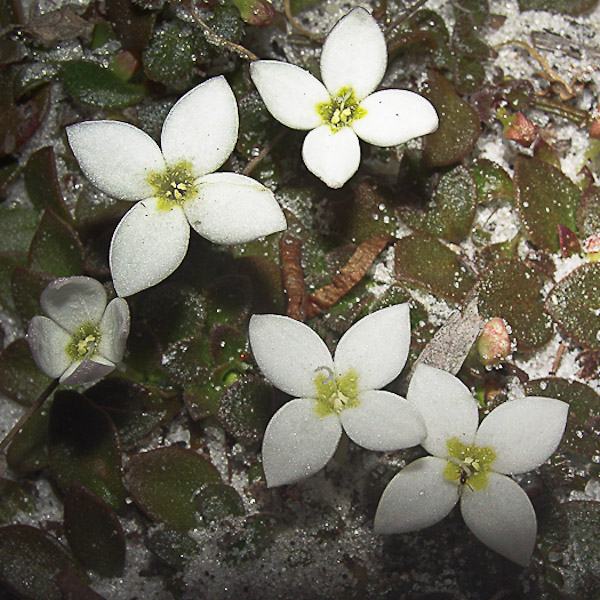
Houstonia procumbens 2

Innocence

Innocence (Hedyotis procumbens) is a petite member of the Coffee Family (Rubiaceae) related to the Bluets familiar to readers with more northern exposures. In South Florida the species turns up on sun-baked dry sugar sand in scrub or near-scrub habitats. The small white flowers often appear to spawn directly on the sand, as the vegetative plant body is low, trailing, and frequently more or less covered with sand. After flowering, the flower stalk bends earthward burying the developing fruit protectively for subterranean maturation. To be speculative, it looks like ants might disperse the resulting fruits and seeds. And there is more to the story: Innocence is not so innocent. In addition to the showy flowers, it hides secret inconspicuous flowers underground. These either self-pollinate or do not require pollination, and they produce fruits without seeing light of day. Such flowers are a “back-up” on the sexual process and are called cleistogamous (kleist-OG-ah-mus) flowers. Cleistogamous comes from Greek for, roughly speaking, “hidden husband.”

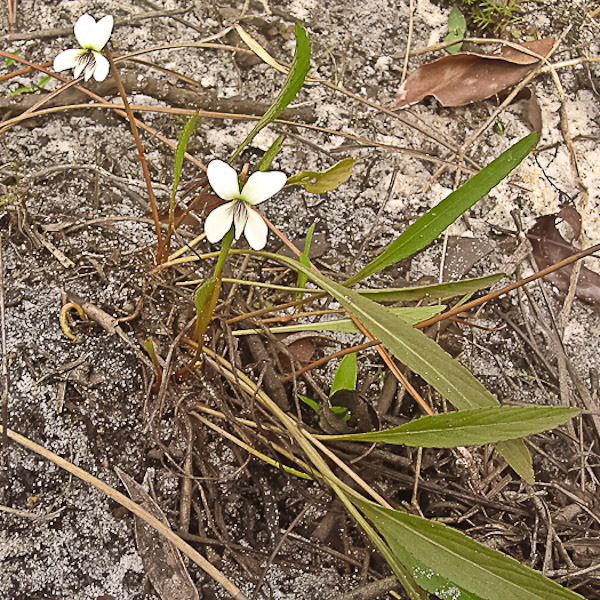
The most famous owners of cleistogamous flowers are violets, and our native Bog White Violet (Viola lanceolata) is no exception. Look for the hidden flowers or the resulting fruits near the base of the plant.

Bog White Violet

Bog White Violet

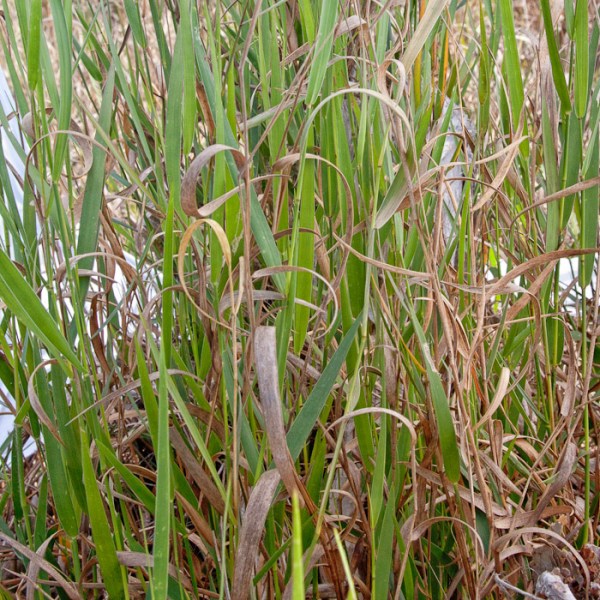
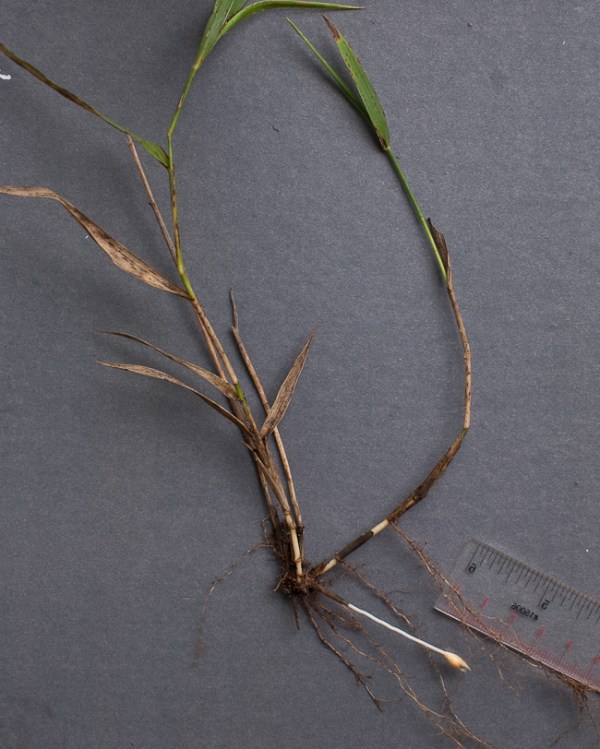
A more surprising case is the grass Blue Maidencane (Amphicarpum muhlenbergianum, see http://www.floridagrasses.org). Amphicarpum translates as “fruits on both sides“, in this case, both sides of the ground surface. In addition to normal (chasmogamous) flowers and fruits in the sunshine, cleistogamous flowers in the rhizome make buried fruits. John and I saw these first and most easily in an area rooted up by feral hogs.

Blue Maidencane

Blue Maidencane

Blue Maidencane Buried Fruit

Blue Maidencane Buried Fruit

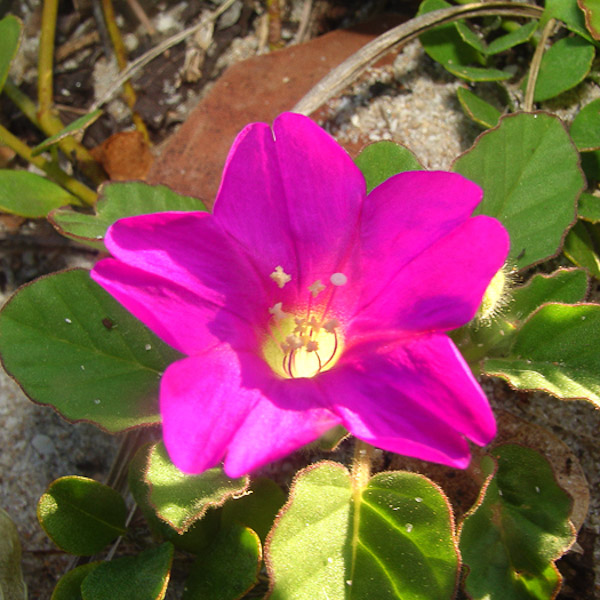
Buried fruits are hidden from some menace, and what could be more menacing than clinging to life on Florida seashores and seaside dunes. You can guess now how Beach-Peanut (Okenia hypogaea) got its name. Not for being a type of goober. The Beach-Peanut is no legume, but rather a member of the Four O’Clock Family (Nyctaginaceae), as you might guess from its vibrant floral display. The prettiest flower on the beach buries its fruits in the sand on a downward peg potentially mistaken for a root. It too produces cleistogamous flowers, but the relative roles of the cleistogamous flowers and showy flowers remain poorly studied.

Beach-Peanut

Beach-Peanut


Tags: , , , , , ,

American Crinum and the Lubber Grasshopper

Crinum americanum 2

American Crinum

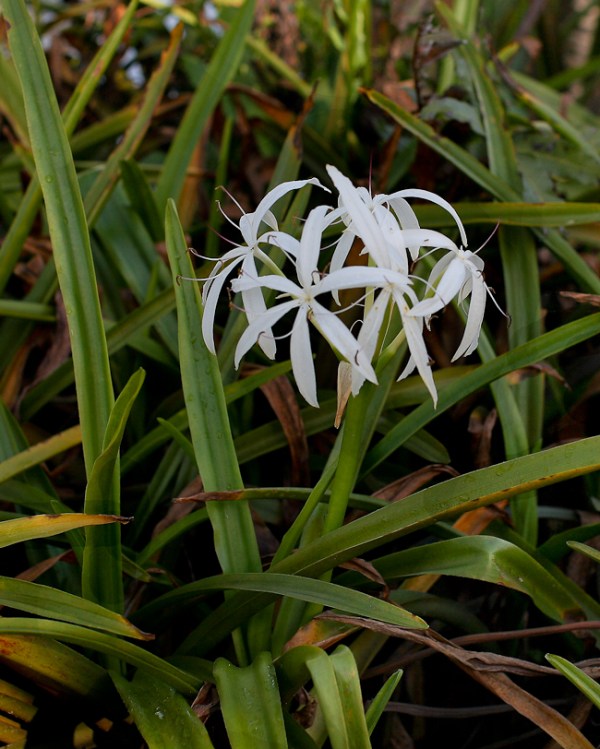
Some of the largest and most eye-catching wildflowers in Florida are aquatic, and the American Crinum is in that category, featuring garden-worthy fragrant blossoms a couple inches in diameter, having 6 long white“petals” and a long narrow tube.

Big white long-tubular flowers are pollinated by sphinx moths (also called hawk moths), which are nocturnal and are drawn by scent instead of by bright colors. There are two species of sphinx moths in South Florida and their relative importance with respect to Crinum sex is unclear. They hover when they visit the flower and unroll a long proboscis that matches the narrow floral tube like a key in the lock. The larva of the Tersa Sphinx Moth resembles a snake.

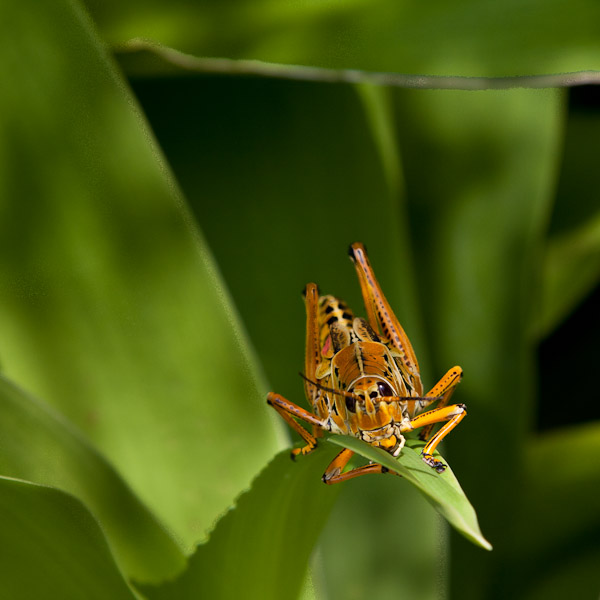
The insect relations of Crinums run deeper than pollination assistance. As is true of many members of the Lily Family, Crinums contain bioactive alkaloids. Alkaloids are familiar as drugs, such as nicotine, caffeine, heroin, morphine, cocaine, and colchicine. Crinum americanum is a one-species chemical factory with at least 11 known alkaloids. It and other Crinums are the subjects of optimistic drug research, and our species may well wind up saving somebody from something someday. Looking back, Crinums have rich histories in traditional and local medical practices around the world. One Lily alkaloid is already useful against gout. Actually American Crinum poison does save somebody from something already: Lubber Grasshoppers from being bird snacks. Eating the drug-laden foliage on wild and garden crinums, Lubber Grasshoppers render themselves toxic, revealing their acquired threat to hungry birds with bright warning coloration.

Lubber 5 (small)

Lubber grasshopper eating Crinum folage

Crinum americanum is the U.S. representative of the 100-species genus Crinum, which comes mostly from the Old World Tropics. DNA study shows the closest relatives of the American Crinum to be the other Crinums from Tropical America, leaving their relationship with the bulk of the genus in Africa and beyond unclear. How did they cross the sea? And when?

Crinums are prominent and diverse in warm-climate gardens, with numerous species and cultivars having white to reddish and purplish flowers. They are hybridized and highly modified horticulturally, making the exact taxonomy of the garden crinums tangled and puzzling.

 
2 Comments

Posted by on July 15, 2011 in Lubber Grasshopper, String Lily


Tags: , , ,