Urena lobata, and Apis mellifera too Malvaceae (Hibiscus Family)
A botany class kinda truism is: Question: Why do leaves of many species have nectar glands? Answer: To attract nasty ants who quard the host in exchange for lunch. But exceptions are fun. One exception appears to be plants that have ant food also on the seeds, so that the nectar on the leaves draws ants near enough to find the seeds with benefits, which the insects then disperse beneficially for all. See that here.
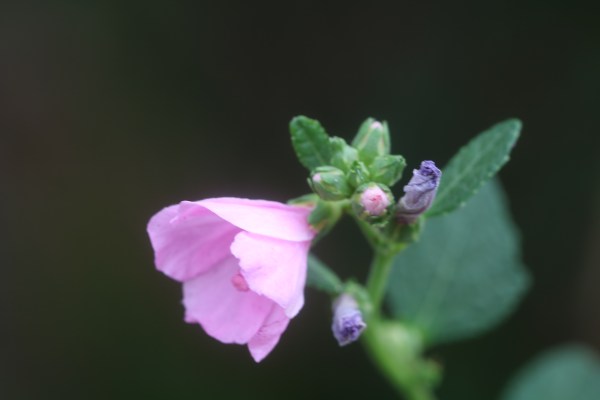
Today’s exception, extends beyond ants. Abundant locally is non-native Caesarweed (Urena lobata). They probably brought it here back when one of the many ideas of “how to make money in Florida” was growing fiber plants, before the more lucrative idea of opening an Assisted Living Facility. When I’m sitting in the garden of my Assisted Living Facility, I want them to have Caesarweed. Then I can watch the bees, and wonder why it is called “Caesarweed.”
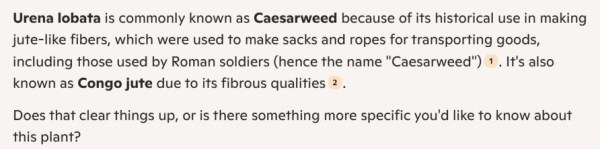
Let’s see if AI knows!
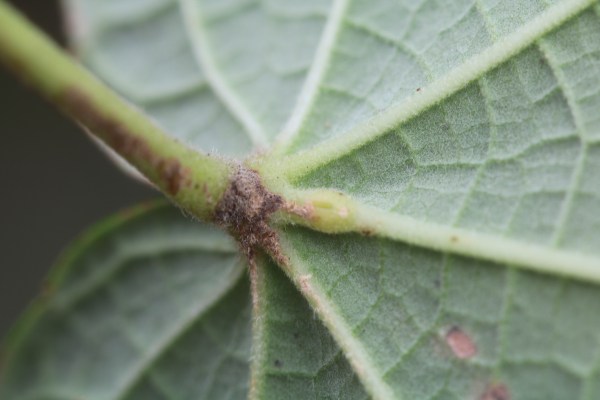
How’s that for instant expertise? Thank you Hal. And, yes, while watching the Caesarweed in the meditation garden, I’d like to know if its nectar glands under the leaves are good for anything?
The gland is shiny green, on the leaf vein, to the right of the dark blotch.
That brings us to another invasive exotic: Honeybees. Hey, don’t we hate invasive exotics that out- compete native species? Don’t we love Honeybees! Cognitive dissonance strikes hard! To get to the point, have you ever seen how bees tend to start at the bottom of an upright flower cluster then work upward? If not, take it on faith. Enjoy the video clip below. The bees work their way up the leafy Caesarweed as though the leaves were flowers in a spike. Then, at the top—well there IS a flower. I’ll bet a jar of honey that the leafy nectar glands help Caesarweed achieve pollination. Bee in action on Caesarweed CLICK
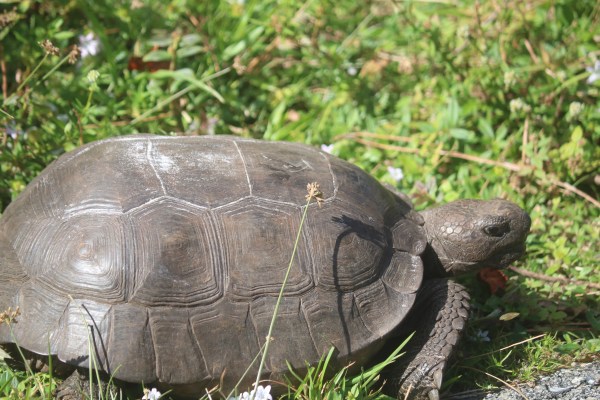
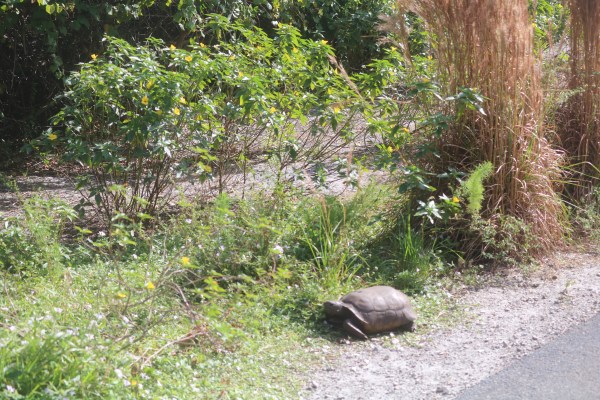
Today I went a’wandering around a small neglected urban scrubby remnant under power lines along a railroad track. What distinguishes the site is an exceptionally high population of gopher tortoises, perhaps with somebody officially and/or unofficially relocating them there, or concentrating them by habitat reduction. (A weedy ditch seems to keep them away from the lethal tracks.) A place to study tortoise crowding. (I saw a dead youngster.)
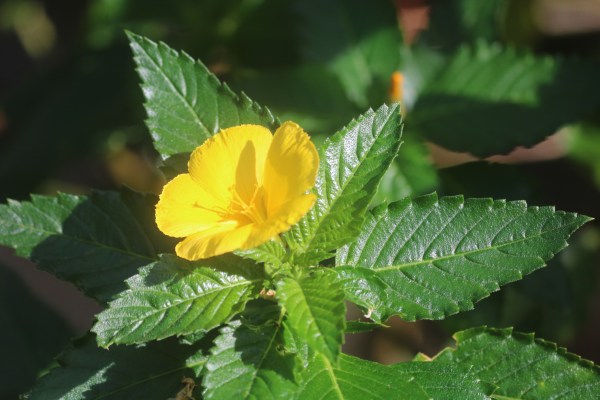
But being a plant blog, let us cross the fence from zoology to botany. . Today’s main plant, as plentiful as the tortoises, could be native having moved northward from the American Tropics, or quite possibly introduced, or both; hard to say, and unimportant for now. What seems interesting is some form of apparent relationship between Yellow-Alder (Turnera ulmifolia) and the Gophers.
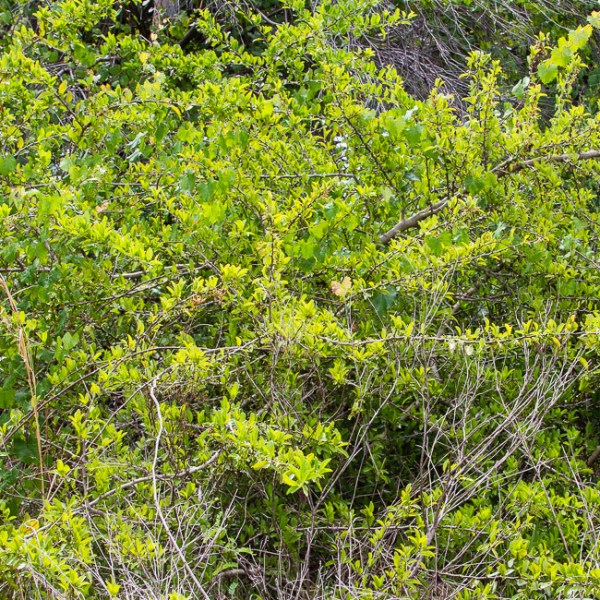
The shrubs are Yellow-Alder.
Is the super-abundance of the Yellow-Alder and likewise of the tortoises merely coincidental…mutually preferring the same conditions? Or is there more to it? The Alder and the Tortoises seem to have overlapping microdistributions , the plant along the Tortoises thoroughfares and decorating some of the burrows. So let’s say for the sake of fun that the correspondence is real. Do Tortoises somehow eat Yellow Alder and disperse it through their digestive systems? Possible, but I doubt that’s important. Do the the Tortoises eat everything else but avoid the Alder, allowing it to survive like untouched thistles in a cowpasture? Seems so to a point. But the interesting answer might tie in vaguely with other features of the plant.
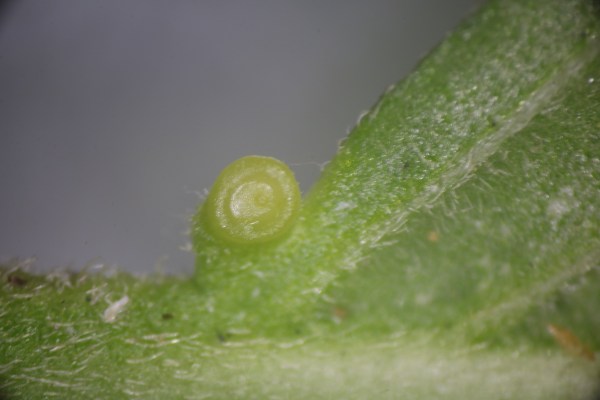
Nectar gland on leaf.
Yellow-Alder leaves have nectar glands. These nectaries attract ants. Although the ants no doubt defend the plant from herbivores, biologist Mariana Cuautle and collaborators in 2004 found the nectar glands to draw ants for a second benefit—to spread the seeds. Each seed has an edible wrapper (called an elaiosome) which ants drag back to their nest, spreading the seeds about.
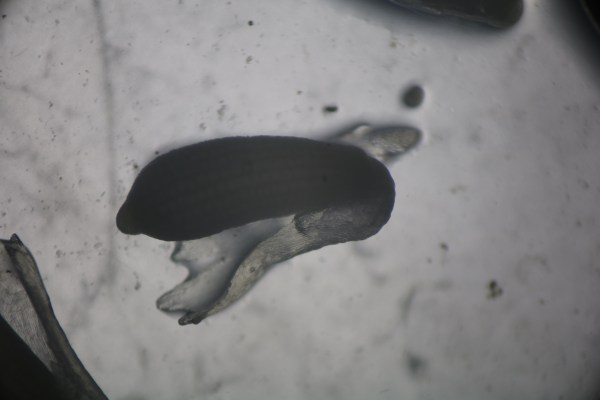
Candy wrapper (elaiosome) on seed.
Funny thing though, today every Yellow-Alder pod I examined had the candy wrappers removed prematurely by some tiny non-ant insect thieves before release from the fruits. Seems the early larva gets the elaiosomes.
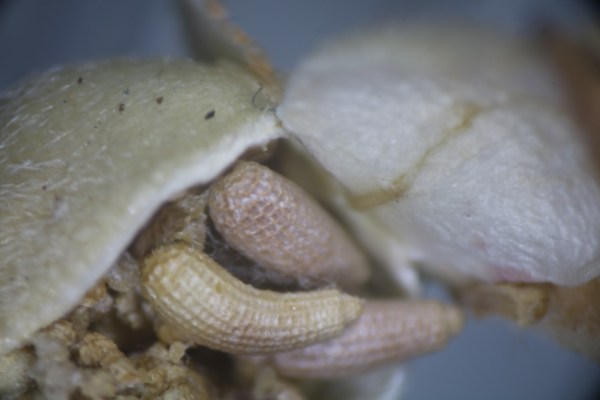
Pitted surfaces on Yellow-Alder seeds in pod. Frass from insect seed-pests on left.
Do gophers behave like enormous lumbering ants and seek Alder nectar and food bodies? Naw, but the seed coats have pitted “waffle” (‘aveolate’) coats. In the plant world in general, botanists tend to regard such coats as helping small seeds cling to mud on birds and other dispersers, you know, such as Tortoise shells. The honeycomb seed coats might be rendered even stickier (or more likely to Gopher-snag) by the starchy elaiosomes. So it seems Tortoises waddling through Yellow-Alder probably spread its seeds along the path of life. Moreover, Gopher Tortoises have a lot of camp followers animals who use their burrows, and those associates too may snag and drag seeds.
The Yellow-Alders tolerate turtle-munching-&-tromping, but most other plants there do not seem to, so smashing and eating competitors may be another way tortoises facilitate the Alders. The limited number of species on the menu poses a problem for the crowded Tortoises. One plant that is abundant where the Tortoises roam is Mexican-Clover, aka “Florida Snow” (Richardia grandiflora) in the Coffee Family. As anyone around here knows, that introduced groundcover grows like gangbusters. The Tortoises eat it. Looks like a case of an aggressive invasive exotic helping to sustain a Threatened native Keystone Species crowded into a urban postage stamp habitat.
Plants that “make their own luck” are a fascinating bunch. Many improve their own circumstances, or, an ecologist might say, generate “autogenic positive feedback.” Today’s example from a windy walk in the scrub is the way single plants, or even better, clumps, capture blowing leaf litter and make their own compost. Any gardener worth their snippers can list the marvels of compost.
A natural mulch volcano around Varnishleaf.
Clump of Gopher Apple acting like a leaf catcher brush.
Peelbark St. Johnswort catches waterborne debris.
Have the actual benefits of this sort of thing ever been tested and demonstrated? Yea, but what’s more fun than digging around in in Google is walking around in nature. Often if you think about an ecological possibility—making it “the theme” of a stroll— you can make your own comparative assessments. Does the plant send roots into its personal compost? Do this with compost look healthier than those without?
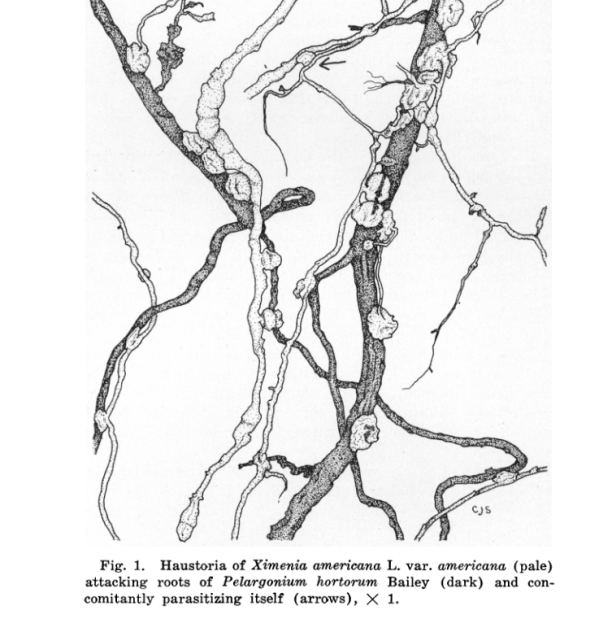
A twist in this topic is root-parasitic plants, one’s that grow alongside hosts and divert goodies from the host roots. The downside for the hosts is obvious, but maybe paying rent too? Observers have shown or speculated that while host helps the parasite grow nice and leafy, the parasite sheds its leaves into the shared compost zone. It might even help block wind. Maybe free compost benefits the host more than the cost of the root mischief. Not that I have any proof, but locally the scrub-dwelling root parasite Hogplum (Ximenia americana) comes to mind.
Hogplum growing a leafy contribution. By John Bradford.
Hogplum underground thievery. By R DeFilipps (1969).
Carnivores suffer pests who swipe the kill or scrounge leftovers. Dolphins steal from Sperm Whales. Hyenas rob lions. Remoras clean up shark scraps. Food theft is called “kleptoparasitism,” and it is not that rare in the animal kingdom. A great example of abominable culinary larceny plays out in our local natural areas with a little big carnivore, the Banana Spider.
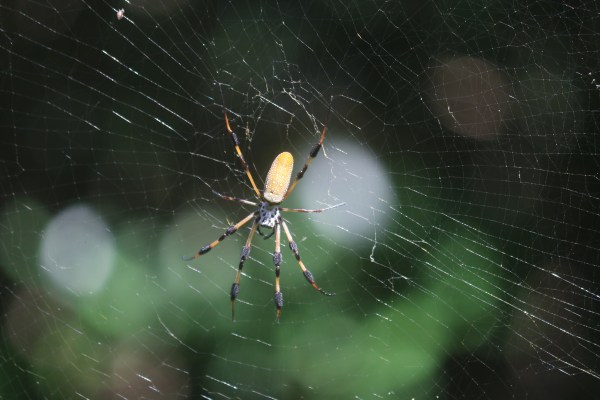
The Juno Dunes Natural Area adjacent to the Loggerhead Marine Life Center in Juno Beach is home to a village of ferocious-looking Banana Spiders on webs the size of tablecloths. Wonder why they like that site so much. Do ocean breezes bring victims to the killzone? No doubt mere coincidence, but the webs are associated often with an odd coastline semi-vine in the Coffee Family, “Redgal,” Morinda royoc, but back to arachnid true crime.
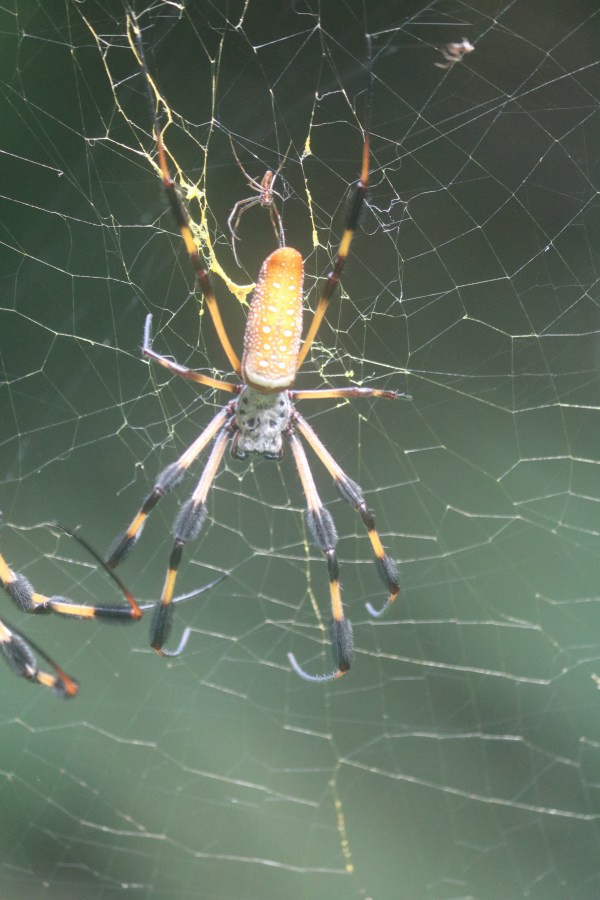
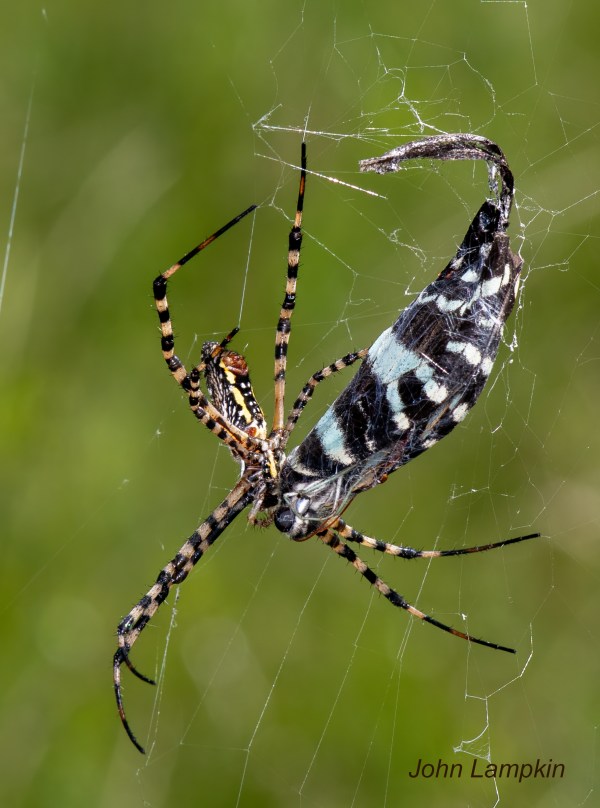
Female (big) and male (above his main squeeze). That’s a Dewdrop near the upper right corner.
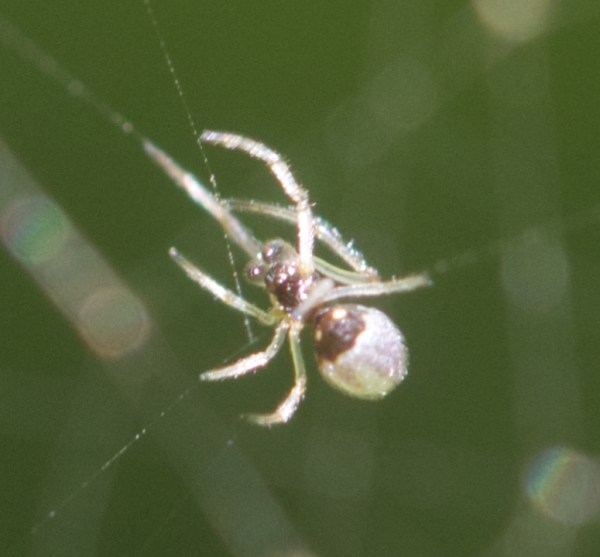
Look closely at a Banana Spider web, if you dare. In addition to the jumbo Queen of the Web, there are little spiders too. Some are pale males much smaller than the hunky yellow females. Some wee spidies are juveniles. But the truly interesting tiny ones are called Dewdrop Spiders (aka Robber Spiders). They are rip off artists.
They do look like dewdrops, especially the females. Varying in color, most around here are shiny white toward the rear. Some are so silvery you can see mirror images on their scales. Are the shiny Dewdrops disguised from birds as water drops on the web? Or does the reflective coloration make it difficult for PO’ed Bananas to nab them? Or do they look like Banana egg cases? Or is the glossy surface temperature regulation? (In ignorance, I vote for birdproofing.)
Dew Drop Inn. Highly magnified. Really less then 1/4 inch across.
In any event, they thievin’ little rascals are unpopular with the Banana Clan, although enforcing “get off of my lawn” may not be worth the Banana’s energy. The dynamics are not well studied, and are confounded by multiple species of Dewdrop Spiders. Fact is, so little is known, all I can do is list disjointed observations by various biologists. Some observations are on different Dewdrop species..
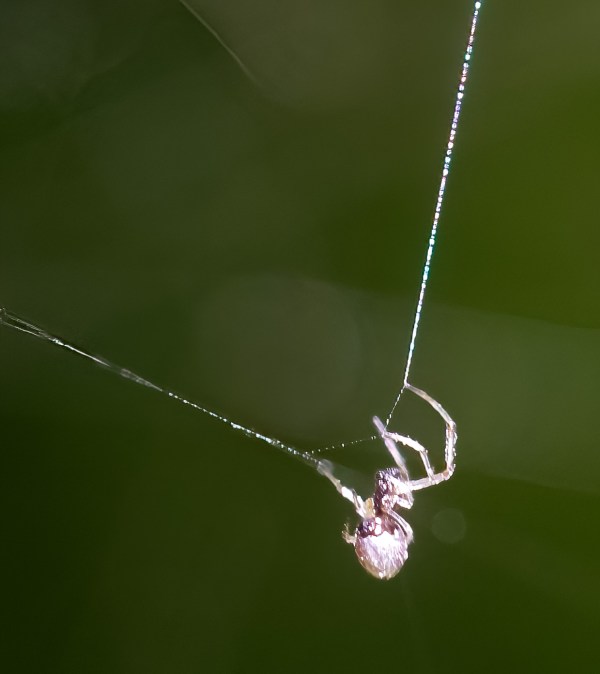
Dewdrop….on its own filament?
Kinda relevant stuff I kleptoparasitized from online articles:
Banana webs are toxic, obviously to subdue prey, but maybe also to discourage trespassing? Dewdrops can eat the web as a source of protein. Are they immune to the poisons?
Dewdrops loiter at the margin of the Banana Spider’s web, where the big spiders seldom go.
Dewdrops “know” when and where the Banana wraps prey by vibrations in the web.
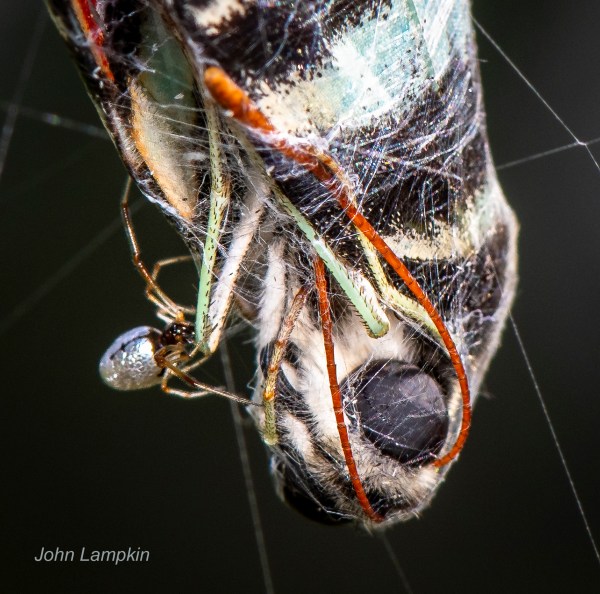
Brave Dewdrops approach the Banana for a quick scoop and score. Cowards steal prey from the web with the guard is away.
Dewdrops can snip the stolen merch from the web allowing the morsel to swing free on a single filament the Banana can’t navigate but the tiny Dewdrop can.
I have not read this, but I suspect I’ve seen Dewdrops on “their own” filaments safely isolated from Big Bad Banana .
It gets better. John Lampkin contributed the two photos below of an Argiope Spider with a captured Zebra Longwing. Check out the mirror-surface Dewdrop in the 2nd photo. Thank you, John:
Trapped home today, car in shop post-mishap , so limited to walking distance behind the house. There is a “September plant” on the back fence: Florida native Grapes!
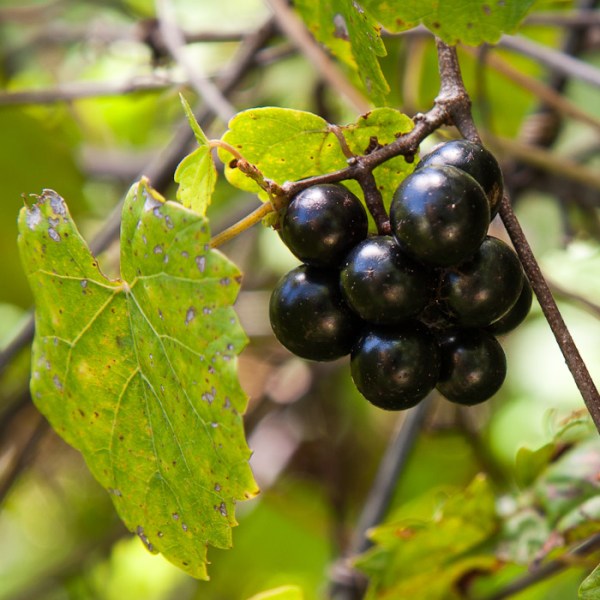
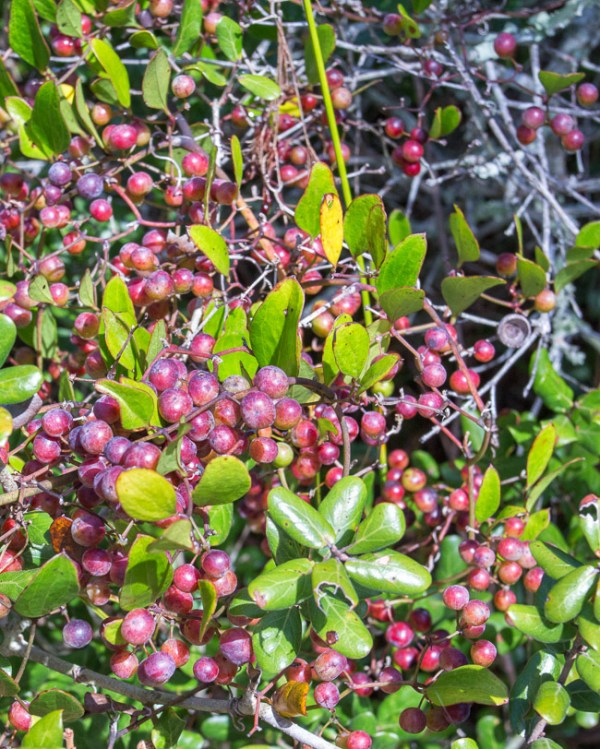
Around here and far beyond we have two different groups of vines that: wander, climb, and sprawl abundantly; cling with tendrils; have small greeny -yellowish insect-pollinated flowers with males and females on separate individuals; and bunches of “grapes” used to make jelly. The cool part is the two groups are green examples convergent evolution, unrelated species evolving striking similarities, like bats and birds, sharks and porpoises. The two unrelated groups are grapes and smilax. Grapes are Dicots, loosely speaking “woody plants,” and smilaxes (catbriers) are woodless Monocots.
Grapes top photo. Smilax bottom photo. All photos today by John Bradford (except the cut stem).
The South Florida Grape Family includes several species, mostly Muscadine Grape (Vitis rotundifolia). We don’t these days seem much interested in wild grapes for eating or drinking, although wildlife feels otherwise. The wild plentitude of grape vines makes a sommelier wonder if past people tapped into the easy abundance. Oh yea. According to botanist Earl Core, not only did indigenous residents of the Southeast gather grapes, they made raisins. In fact, wrote Core, the alternative name for Muscadine Grape and its wines, scuppernong, comes from the pre-European name “askuponong.” Archaeological pottery shards from Texas have chemical traces of ancient wines.
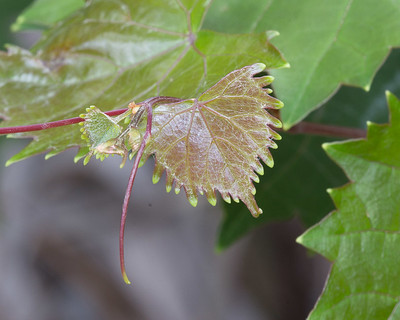
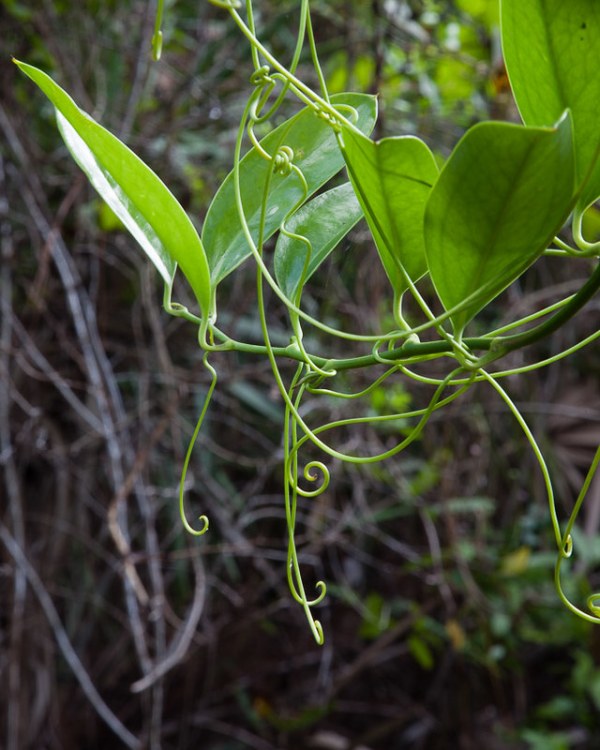
Top photo: grape tendril. Bottom photo: Smilax tendrils
Later, people of European ancestry, including Thomas Jefferson, developed various Scuppernong wines, although less popular than the countless vintages available from around the world. I actually like scuppernong wine. Muscadine’s greater contribution to the wine industry, in addition to other American grapes, is as a disease-resistant rootstock for grafting delicate Old World varieties.
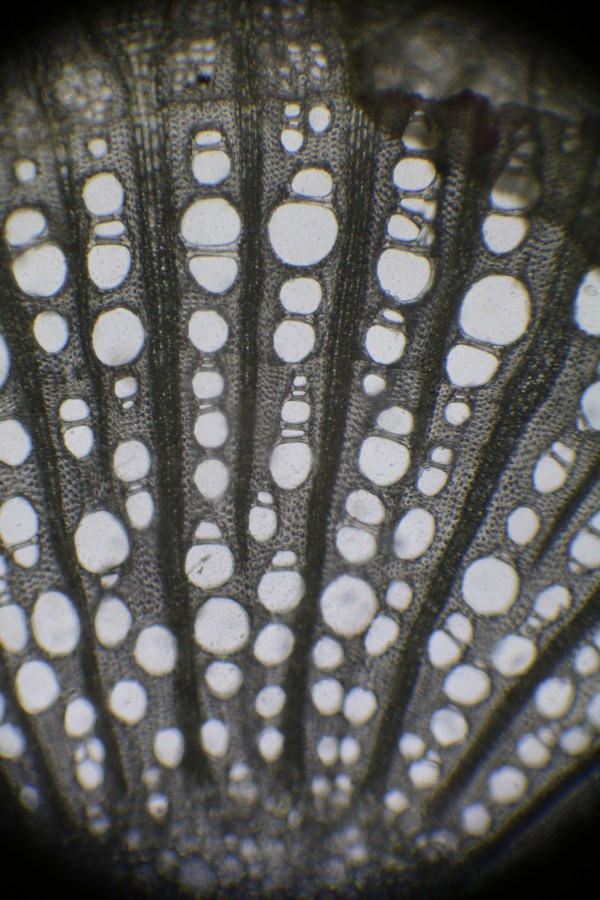
Speaking of grape beverages, here’s a “new” one. As described on the FAU environmental science website, “a foot long [Muscadine Grape] stem that is cut and inverted could give up to a liter of drinking water. “ As much as I’d like to go cut a big old grape stem, I’d shun killing a massive vine for a potential blog photo (and besides, the lady in the Publix parking lot trapped me home). I did, however, cut across a pencil-sized grape stem to see where that drinking water hides. Look at those storage pipes even in a twig! How can a long climbing vine store and replenish great quantities of water? How does it fill those pipes (technically, “vessels”)? “Sucking” by evaporation from foliage far above in a 90-foot vine is not an adequate explanation.
A grape mystery! With feeble evidence, the traditional explanation was, well, perhaps the roots push new water up from below The evidence was feeble because it was mostly wrong. Being valuable, wine grapes get high-tech research, which produced a surprising new finding undiscovered by 500 years of academic botany. It turned out that the living stem tissues surrounding the pipes can refill the pipes all along their length, like little streams feeding a big river along its length.
A glass of (ancient indigenous scuppernong) wine would sure taste good now.
Some pest might ask. If grape has those big pipes, And if smilax is so whoop-tee-do similar, does smilax have the huge pipes too? (yes)
Handy definition: Rhizomes are underground stems, not roots. Roots grow from them.
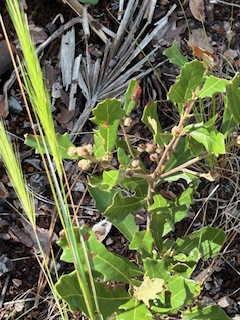
Great oaks from little acorns grow. Quercus minima is great, although not great big. About knee takk tall, the mini “tree” isn’t as puny as it appears at a glance. It is hidden mostly underground as a rhizome system.
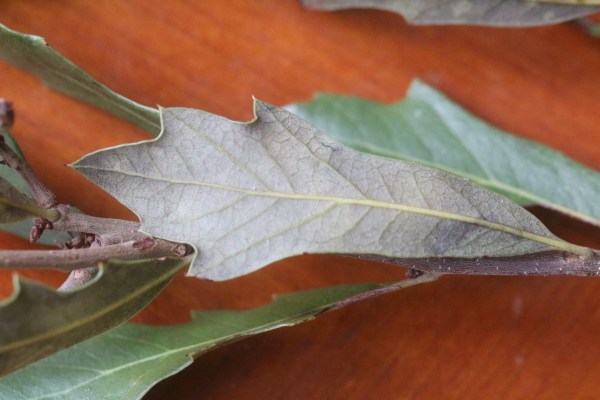
Its subterranean tastes tie in with its kinship. The closest relative to Dwarf Live Oak is Sand Live Oak (Quercus geminata) one of the dominant local scrub oaks. Capable of becoming a midsized tree, Sand Live Oak is most often encountered as a rhizomatous shrub. It and its sister Dwarf Live Oak have the leaves fuzzy beneath. The closest relative of this pair is Southern Live Oak (Quercus virginiana) we all know as ultimately a huge stately tree. Southern Live Oak often has root sprouts around the base, these often oddly similar to Dwarf Life Oak.
The species trio forms a progression of decreasing above-ground size and increasing rhizomes. Southern Live Oak, obviously the biggest, is not very tolerant of fire except for its invulnerable size, its under-canopy conditions, and its ability to resprout from roots. Does Southern LO have rhizomes? Big Southern LO don’t, but small shrubby ones can. That brings us to Sand Live Oak, ranging size-wise from trees to small shrubs, and they do have rhizomes. In the event of fire, Sand LO sprouts anew from its rhizomes. Sand LO bridges the gap between Southern LO and Dwarf LO. Rising from a sprawling rhizome system, Dwarf LO is a sand submarine with little green leafy periscopes with acorns.
Immature acorns seem well protected.
Yes, rhizomes are fire insurance, as many observers keenly point out. Stipulated, but are flames the whole truth? Oh, the things we don’t know! Dwarf LO grows in pine woods where burns are risky business, and it grows in scrub where fire is less dire, but where access to water is. Species in scrub have to drink from quick-dry sand, and/or from deep roots. Maybe the wandering Dwarf LO rhizome system is a dynamic water-gathering network?
Or maybe a fungus-assisted nutrient network? Fungal root associates (aka mycorrhizal fungi) help procure soil nutrients, and what better place to need nutritional facilitation than sterile sands? Oaks in general are well known for root-fungal symbioses, so is Dwarf LO underground a fungal-food network?
A person could say accurately that fire removes competition so that rhizome species can resurface open space after Armageddon. Yup, and another way to avoid bad circumstances is to relocate. A complex of wandering rhizomes allows for that—-drop away here, pop up there whac-a-moleishly.
In short, there’s no doubt of the obvious fact that going underground thwarts fire, cyclones, and meteor strikes. But the progression of the three oak sisters toward shrinking aboveground and increasing belowground also goes hand in hand with decreasing habitat quality in terms of water and nutrition. Which is more important…defense or infrastructure?
Really no take-home point to the short blog today, merely what it’s all about: joy in mingling this steamy afternoon in the Mangroves with Sulfur Butterflies dancing cheek to cheek in the sunflecks. A reminder to go out and cherish Creation even when it reeks like Mangrove mud.
Photos above by John Bradford
Whenever you get around mangroves you see Sulfur Butterflies (Statira Sulfur I think). Mangroves don’t actually attract these pale yellowish flutterbys, but rather the Coinvines (Dalbergia ecastaphyllum) around the Mangrove habitats are the points of interest. Coinvines may be sprawling prone on a brackish shore, or a tangly shrub all mixed up with grapevines and whoknowswhat, or when among large trees, large woody climbing lianas. Why are they so often by brackish water—even if not necessarily so?
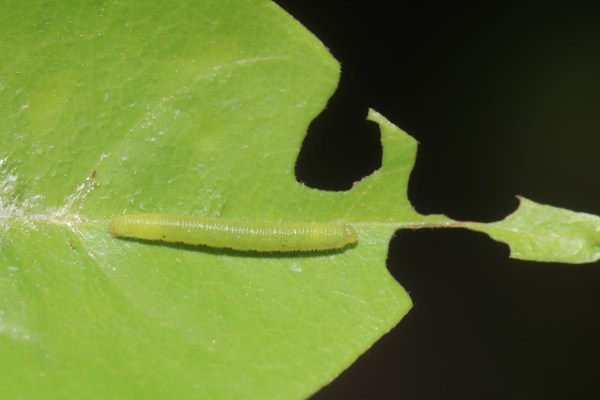
Coinvines are Legumes, even though they don’t look like it. Not sure about the Sulfur Butterfly Family collectively around the world, but the Sulfurs I know prefer Legumes as larval hosts. For the Statira Sulfur (if it is that species) caterpillars, the Coinvines seem to be a preferred salad.
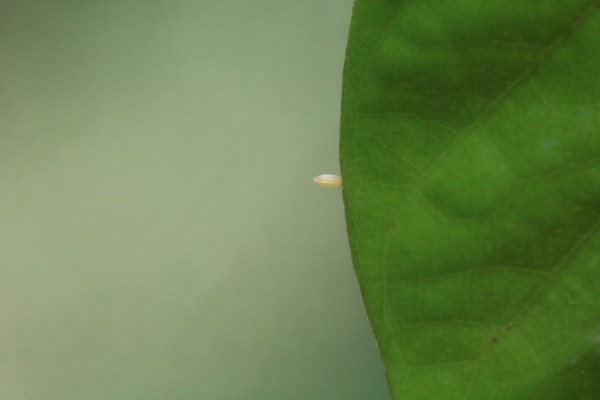
Walking where the Coinvines grow, look for ragged chewed Coinvine leaves. Aside from the present suspects, not much else eats Coinvine, it seems. At the edge of the munched area you can find the muncher loitering. Or maybe eggs.
Hurry up, and lay some more eggs!
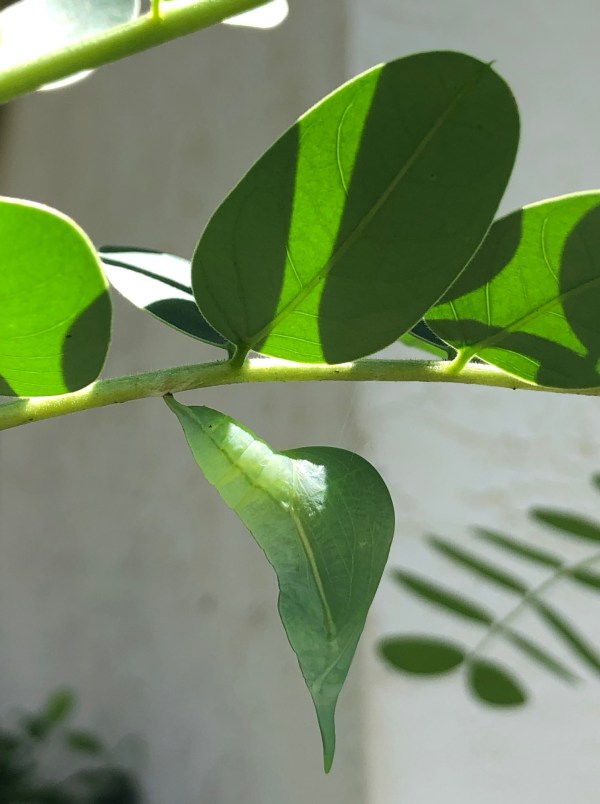
BTW…added value extra bonus, not today, not the same species, but Sulfur chrysalids can be well disguised:
(Polygala smallii is a very similar rare species in SE Florida.)
Polygalaceae
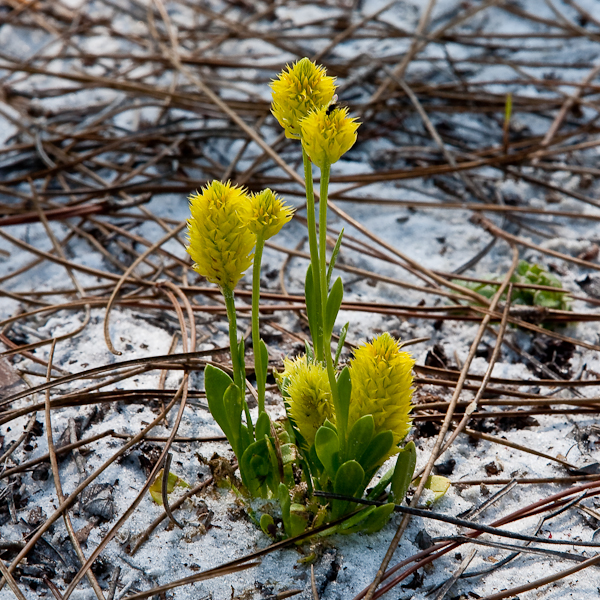
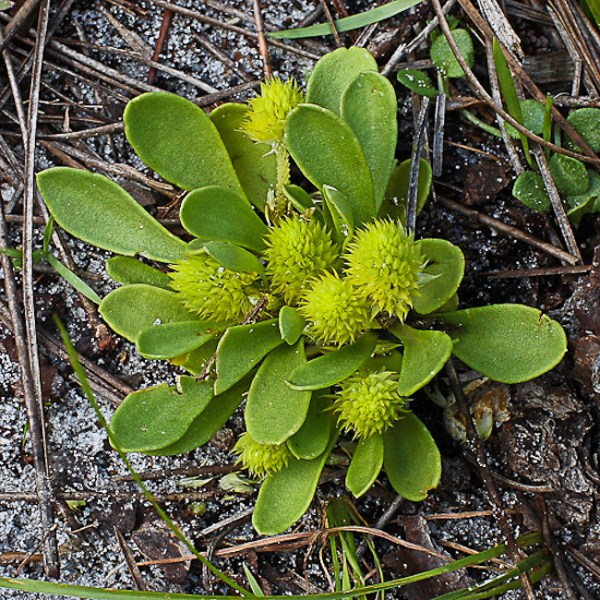
Time for a fetching little wildflower in bloom now (and otherwise often) on exposed sands, mostly in moist shallow depressions. It’s a sunny eye-grabber out where much of the beauty is of a slightly harsher flavor.
Today’s photos by John Bradford.
Speaking of flavor, why the name “Candyroot”? The bruised root smells licorice- -ish. And how do we know that? The Seneca Tribe used similar Polygala species as medicines, most notably to treat snakebite. The flower clusters can look like rattler tails, thus the name “Seneca Snakeroot,” giving the genus Polygala the synonymous name “Senega.” That the fragrant roots are bioactive has long been known, involving the plants in commercial patent medicines. Don’t eat ‘em—polygalas contain toxins, including ones that irritate the digestive and respiratory system. The irritants include compounds known as “saponins”, and there’re is evidence of these stimulating milk production, potentially (speculatively) explaining the name “Poly-gala,” meaning “lotsa moo juice.”
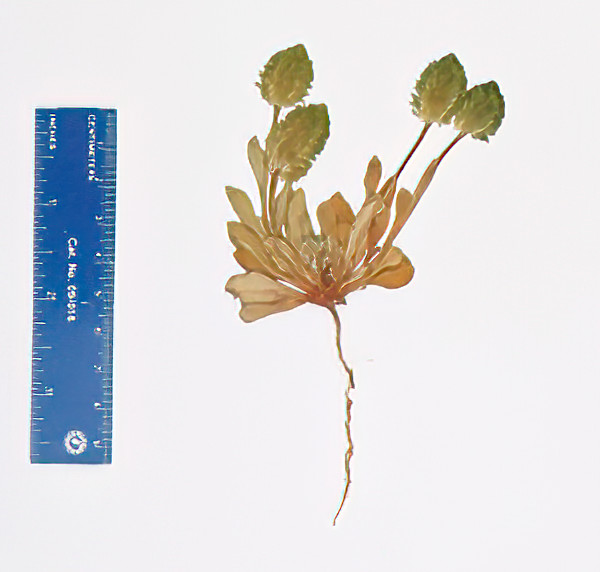
What fascinates me about these little plants is their leafy rosette and skinny taproot. No need to dig one up….below is a photo of a museum specimen. Nobody to my knowledge has looked into Polygala rosette functions directly. So let’s play a natural history game. What is known about similar plants we can stretch extremely speculatively to today’s charmers?
Puny little root!
Does that spindly little taproot look capable of meeting the water and nutritional needs of all those rosette leaves? Accomplishing that is difficult in sterile loose sand drying quickly after rain. But maybe there is a supplement. Better known in deserts than in Florida scrub, some harsh habitat rosette plants harvest airborne water (including fog, mist, seaspray, dew, and drizzle) through their foliage. The rosette capturing water resembles The Dish capturing CNN, and the flattened leaves protect each other and the immediate ground from exposure. Some rosette water-catchers have tissue called “hydrenchyma,” expandable for hydro-storage. Polygala nana does have a hint of succulence.
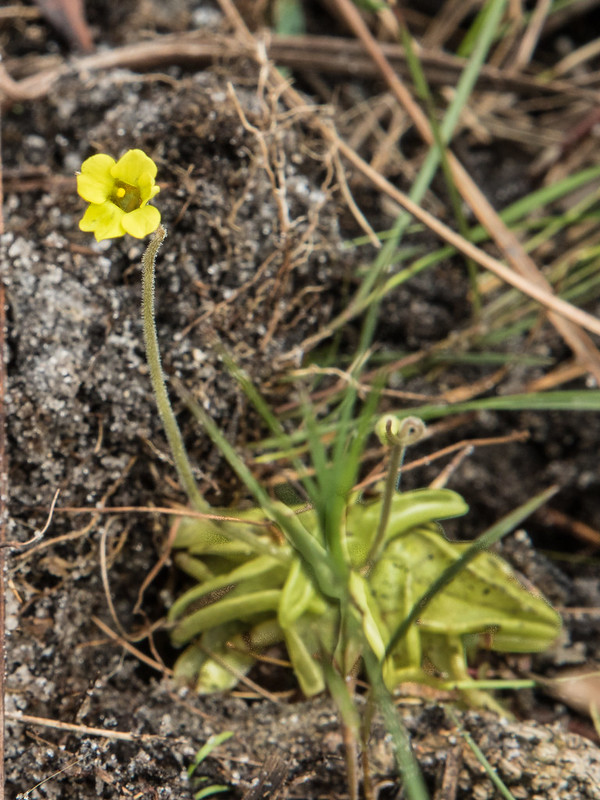
Don’t get me wrong—I’m not suggesting Polygalas have any known carnivory (they do not), but come to think of it, the idea of taking in water and nutrients through rosette leaves brings to mind carnivorous rosette plants such as sundews and butterworts. Maybe these carnivores started out long ago in evolution absorbing water with dissolved nutrients, and became “so good at it” they expanded to taking in dissolved bugs.
Butterwort with its carnivorous rosette.
To sum it up, I’m just “trippin’” with all this, but even so, I’d bet a couple bucks that Polygala nana supplements its water and nutrient elements via the leafy rosette.
For a minor medical reason I’ve been housebound for several days. So no fieldtrips, but, then again, plenty of “fieldtrips” on the bookshelf and file photos in the archives. A mystifying new book is titled, “Unsolved Problems in Ecology.*” One of the head-scratcher chapters in it is, “What Determines the Abundance of Lianas and Vines”?
Oh yea, ha, ha, our little blog shall now answer answer one of the “Unsolved Problems in Ecology,” Not actually within our reach, but still fun to poke the conundrum here in vine-tangled South Florida.
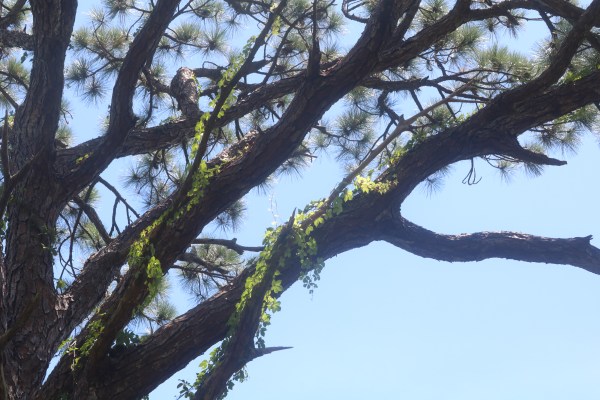
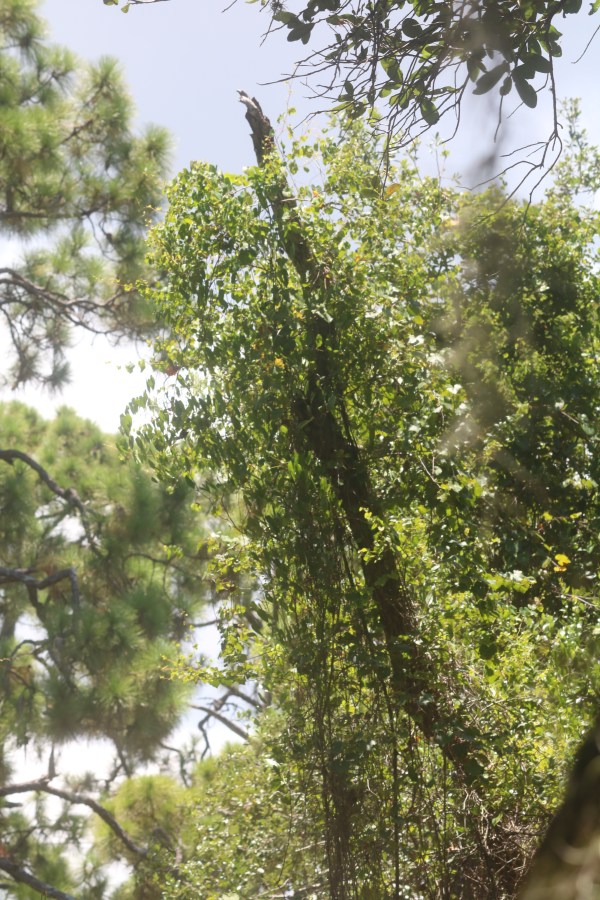
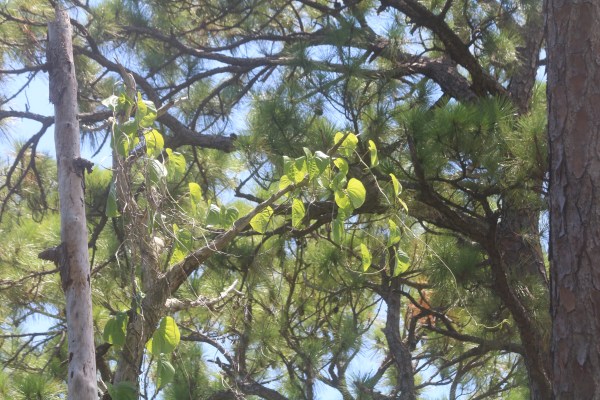
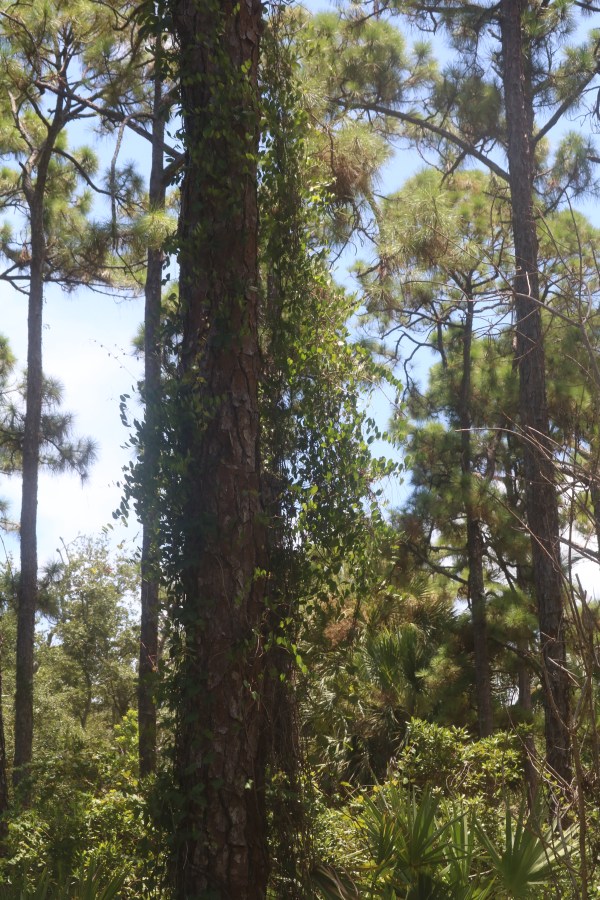
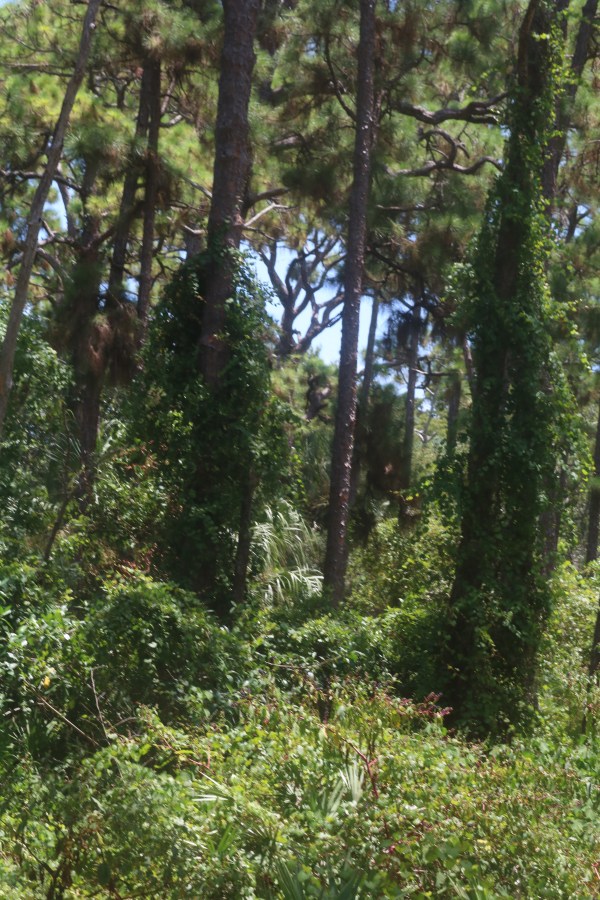
Being a vine** is a great deal. You get a free ride up a tree into the life-giving sunshine without all the blood, sweat, and sap invested in building a tree. Vines can adjust their growth to seize the best canopy real estate. The puzzler is, if being a vine is such a bully deal, why aren’t there even more of them? Why do only some trees have climbers. What limits their abundance. It’s not from failing to get around, given that most Florida climbers have seeds rained down from perched birds. How convenient is bird delivery for establishing around tree bases?
Do vines help trees? The general consensus is, not much. There are some conceivable minor benefits, but most observers believe the net effect is negative.
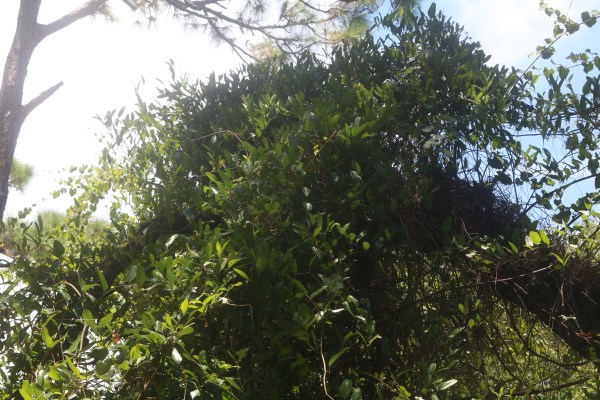
Do vines hurt their trees? Yes, by stealing light, by root competition, as physical burdens, as wind-catchers, as entanglements with other trees, and sometimes as fire conduits. From a tree’s standpoint vines are green tapeworms. In fact, people who study vine infestations borrow statistical methods from medical parasitology.
Do some trees have more than one type of vine? Yes, frequently and dramatically. Inter-vine competition has never been studied much though. Hard to measure!
In a forest, do different tree species have different hosting tendencies? Yes but long story short, perhaps not as much as we might think, and trunk diameter matters too. Even Gumbo Limbo gets vines.
Do trees have defenses against vines? Yes, although not enough to answer today’s big question, especially because defenses can be bypassed by vine trickery. Examples of defensive measures please:
1. Death. When a tree dies it is no longer bothered by vines.
2. Fire. If you are a lucky tree, a passing fire may fry your vines but spare you. Even so, many vines can resprout from their bases, Smilax being a prominent example.
2. Bark that flakes off or sheds frequently, such as Gumbo Limbo, or Slash Pine. That’s a big help with vines that climb by clinging to bark, such as Poison Ivy or Virginia Creeper, less help with twining or scandent species such as Air-Potato or Cat’s Claw. Vines with tendrils, such as Grapes and Smilax, can defeat shedding bark by getting a “toehold” on branches or on neighboring trees and then spread all over, sometimes in great masses climbing their own older stems.
3. Shedding of low branches, and of old palm petiole bases. Dropping branches is not likely to help much in preventing vines altogether, but may reduce their volume.
4. Symbiosis. There are cases of useful ants snipping vines from trees.
NOW HERE WE ARE. NONE OF THE ABOVE IS ENOUGH TO ANSWER TODAY’S BIG QUESTION. THEREFORE WE HAVE NO CHOICE BUT TO VENTURE BRAVELY INTO THE SPECULATION ZONE. LET US GUESS:
If birds rain multiple species of vine seeds at the base of a tree, what might prevent those seeds from spawning an invasion of the trunk?
A. One partial answer is that life is tough for all young things (except rats) to establish, so maybe those baby vines often succumb to fire, to herbivores big and small, to flooding or drying, to competition from non-vine species, and to the many perils that allow only one seed in a zillion to mature.
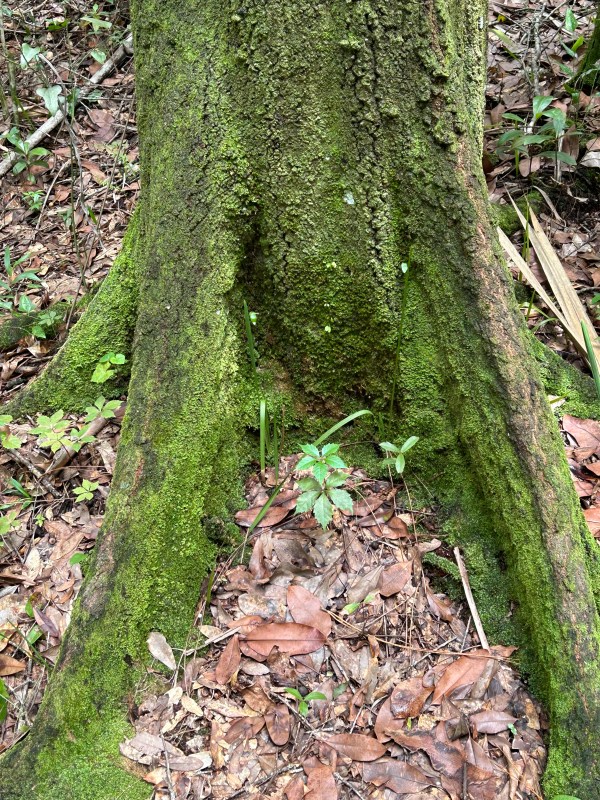
B. Underground competition. Baby vines at the tree base need to compete with the massive established root systems of host the tree and its mycorrhizae. Additionally, most forest tree bases are sheathed with moss. Vines don’t seem to like that.
Hmmmm…moss vs. baby Virginia Creeper.
C. Shade. Tree bases are shady. Although variably shade-tolerant, vines do ultimately need light. A sign that shade matters is that you see more vines on dead trees than on living ones, and more vines on trees out in the open. I think shade is important.
D. Chemical warfare. You have “allelopathy” when one plant poisons competitors. I am aware of no studies testing trees poisoning vines, but why not? Those little baby vines are positioned directly where stemwash and fallen bark collect.
D. Basic life history. A big fundamental difference between trees and climbing vines is their plumbing. In relation to stem diameter, vines move vastly more water upward than trees. Fire hose vs. waterpik. For a rapidly climbing vine spreading hither and thither, making flowers, feeding berries to birds, taking over a tree, it must be great to have a high-volume pipeline in that skinny vine stem. But when the vine is young is that greedy tendency a liability? Maybe the immature roots, competing with the tree, can’t satisfy the demanding stem pipes.
E. Carbon dioxide? Temperature? Disturbance? Here is the actual major mystery for today. It is that climbing vines are increasing in prevalence around the tropical world. We can guess but nobody knows what was keeping them in check, and now isn’t. If we automatically say, “climate change,” we’re still left with the question of why that would favor vines over trees. There is one possible answer to that we already know—that special big-pipe plumbing. Without getting into boring details, vines store water and other resources better than trees, and also can repair drought damage. They tolerate drought and disturbance. Could the explanation be as simple as increasing drought and disturbance?
That was fun. If you have any new ideas of your own, chime in! I’ll tell the editors of “Unsolved Problems in Ecology” they can omit the vine chapter in the next edition.
*Dobson, A., R. Holt, D. Tilman. 2020. Unsolved Problems in Ecology. Princeton University Press.
Chapter: Muller-Landau, S. Pacala. What determines the abundance of lianas and vines. P 239-264.
**I’m using the term “vine” for any of what we think of locally as climbers, most of them woody: Air Potato (not native), Cats Claw, Cissus, Coinvine (can be a climbing vine), Old World Climbing Fern (not native), Grapes, Peppervine, Poison Ivy, Smilax, Snowberry (can be a climbing vine), Trumpet-Creeper, Virginia Creeper
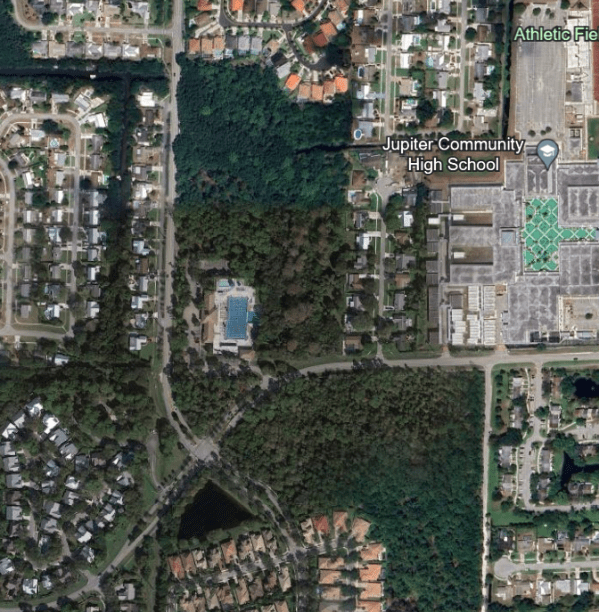
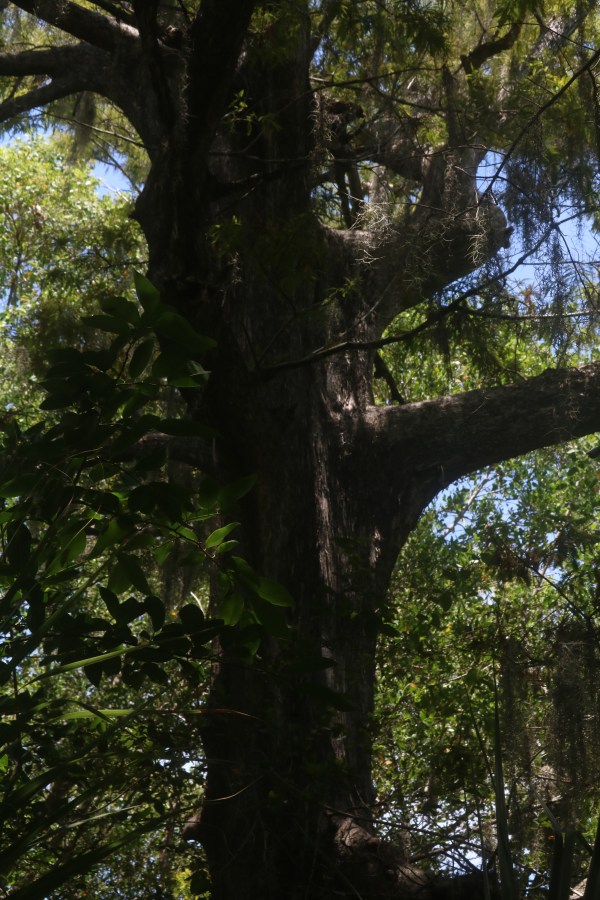
Bald Cypress has to be one of the most beautiful and fascinating trees in Florida, in many ways. Thanks to sprawl, drainage, harvesting, hurricanes, and who knows what, you don’t see many large examples in eastern Palm Beach County. But there are a few, and a surprising little “micro-forest” is hidden in the bosom of Jupiter along Jones Creek just west of Jupiter High School.
The Bald Cypresses are the gray-colored treetops to the right of the swimming pool. A postage stamp urban habitat remnant. The darker area between the cypress and the orange rooftops is mangrove swamp.
The swampy nature of the habitat may be why the magnificent bald cypress and their associates are still there. The associates include pileated woodpeckers today, and two barred owls on the previous visit. Also notable, although all hard to find: Golden-Clubs (Orontium) and Jack in the Pulpit (Arisaema)
OK, how old are the Bald Cypress? Tough to figure, too many variables, and no way to measure precisely noninvasively.
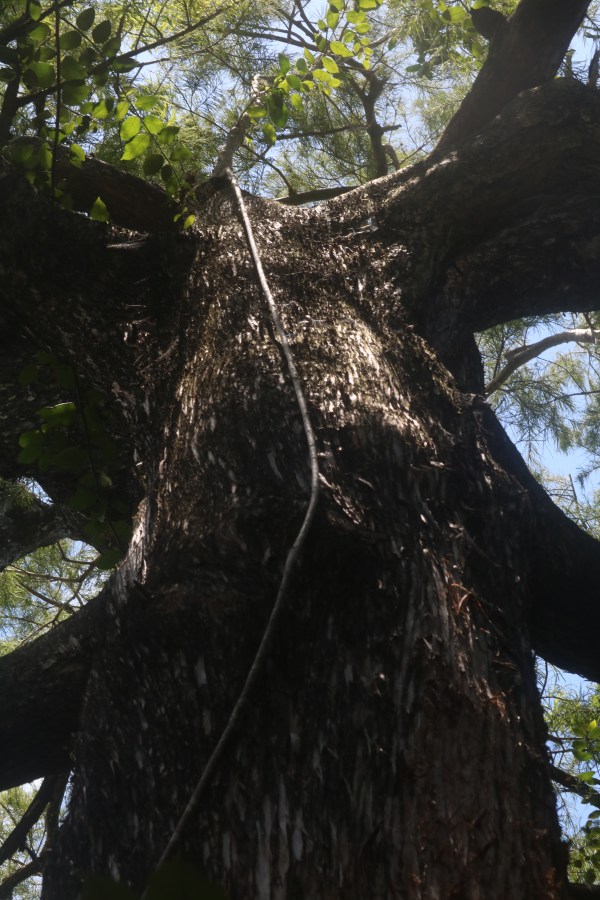
The “cable” on the trunk is Coinvine (Dalbergia).
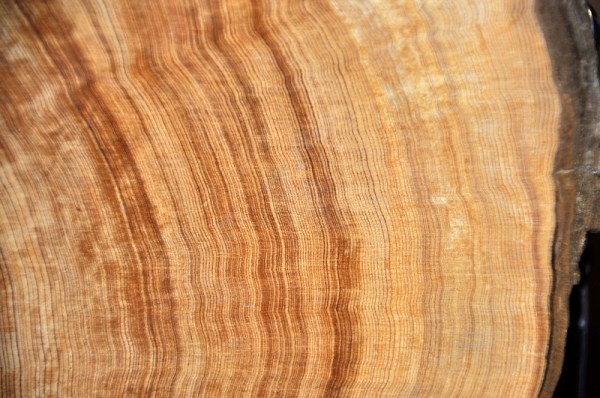
Disclaimer: my estimate is rough. UF biologists Katherine Ewel and William Mitsch estimated wild Bald Cypress diameter (not radius) to increase 1-3.3 mm per year. Let’s go arbitrarily with 2.5 mm per year.
Bald Cypress growth rings, by John St. John. Although tree rings generally represent years, that is not strictly so in Bald Cypress where water levels influence ring formation.
Today I measured the diameter of one jumbo trunk at 1200 mm, about 5 feet above the dilated base. That gives approximately 500 years, give or take a wide margin of error, but you get the idea. What was going on in the year 1524? By coincidence, I happen to know an answer. Last week I visited the Museo Nacional de Antropología in Mexico City and learned about Aztecs in the 1500s. The BC trees in Jupiter were young at the time of the nasty Aztec Conquest. Boggles my mind to know that today’s diehard urban Cypresses predate DeSoto and the Fountain of Youth. Seems that immortal Bald Cypress does not need a Fountain of Youth. The site then probably looked much as it looks now, just a whole lot bigger. Hope it is still there in 500 more years.
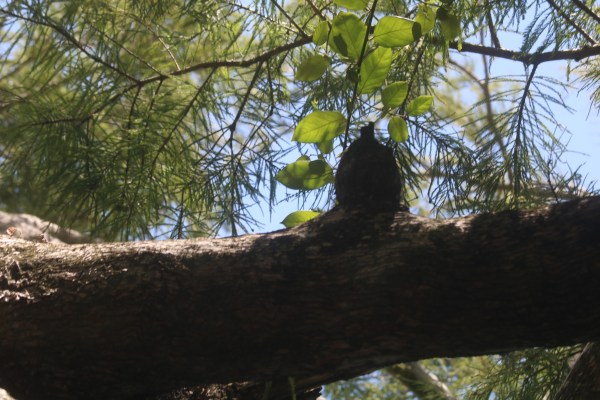
Aren’t the knees supposed to sit down in the mud and water? Knee-ish things sprout on massive horizontal branches. Rats—at first,from a distance I thought that might be an owl.
*There is a trail, and a short boardwalk connecting the parking lot just N of the Aquatic Center with the Cypress, but you may not want to go there. The site is tiny, and like most urban woods, there are human-related occurrences ranging from “unaesthetic,” to questionable people in the shadows. Don’t go there alone, and be aware that the entire visit will take under 20 minutes.

 John Bradford
 George Rogers
 George Rogers
 Dee Staley
 Treasure Coast Natives