RSS

Author Archives: John Bradford

Unknown's avatar

About John Bradford

Avid naturalist, amateur taxonomist, and photographer.

If  A Bee Buzzes in the Forest, and Evening-Primrose is There to Hear It, Does it Make a Sound?

Evening-Primroses, lovely members of the big genus Oenothera with almost 100 species in North America, are well represented as mostly bright yellow wildflowers in Florida,  some in  open sandy habitats. One cosmopolitan beach species, arguably native to Florida, Beach Evening-Primrose (O. drummondii), found itself called out recently as listening for  pollinators.  Yes, listening.
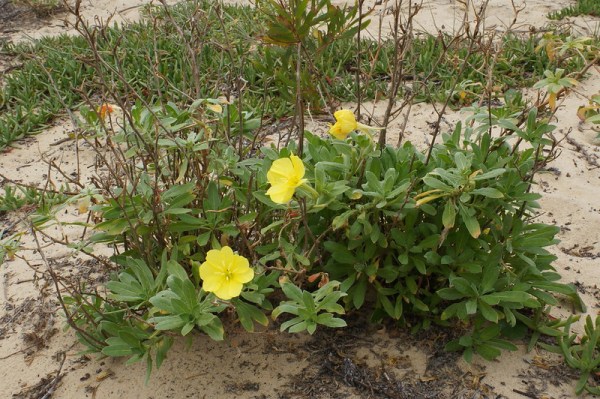
Photo courtesy of Harry Rose.

Biologist Marine Veits and a group of collaborators in 2019 reported honeybee buzz and similar vibes, but not other tones, to induce increased sugar concentration in the nectar.   In their interpretation, this ability sweetens the pot  upon demand, promoting bee pollination yet conserving sugar when there are no customers.   What’s more, the petals resemble one of those parabolic microphones they use to focus birdsongs, to capture frog calls, and to eavesdrop on conversations.

It may all be just as reported and interpreted, but questions come to mind:

  1. Are bees meaningful pollinators for evening-primroses?   The flowers are (actually) textbook examples of moth-pollinated blossoms, having long tubes producing nectar way down deep exclusively reached by a moth’s long proboscis.   But bees are known to visit the flowers, perhaps merely gathering pollen, as bees do.   That could result in pollination without nectar consumption.   Then again, who is to say the long tube can’t fill with sweet nectar, allowing an occasional bee sip.  
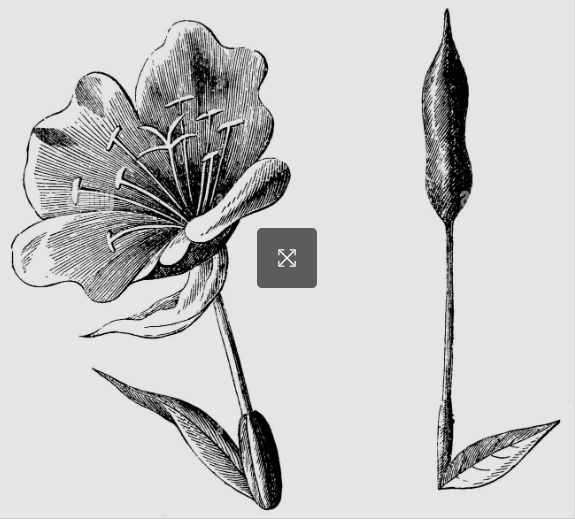
Nectar is produced at the bottom of the long skinny tube. Bee can’t reach there.

  • Would a small increase in sugar content boost pollination?  Not if the bees are there just for pollen. And even if they are obtaining some nectar, it’s not been shown (pretty hard to accomplish!) that marginally raising sugar concentration leads to more pollen deposited by more bees on more stigmas.  
  • In 2017 botanist Sebastian Anton and collaborators studied the floral dynamics of several evening-primrose species in Europe and found the flowers to not just release nectar into the tube, but also to suck it back in dynamically, depending on circumstances.  The nectar level waxes and wanes.  As the flowers reduce the nectar volume, the sugar concentration increases.  That is, sugar concentration increases when the flower is stashing away nectar, not dishing it out.   Does buzzing set off a flower alarm:  “Hey, non-moth invaders detected, hide the goodies!”   After all, some types of bees drill into flowers and steal nectar like mosquitoes stealing blood from my elbow.
  • Yet another concern is that the flowers don’t have any identified “nervous tissue,” whatever that could be in a plant.   Absence of detection does not prove absence of some subtle signal, duh, but it doesn’t help either.  Plant cells live within extremely thin delicate membranes with their own innate molecular movements and unimaginably delicate processes.  Whether or not buzz detection is usefully adaptive, vibrating cell membranes could conceivably change cross-membrane transfer dynamics, maybe even make membranes “leaky.”   That is, could vibrational sugar leakage take place with no purpose?

Who knows?   The idea is new and fascinating and plausible, and that is how science works.  Taking another look at the same question with additional bee and flower species is joyous future grist for the mill.   The original research was in the Mediterranean. Now somebody should try in Florida.

to see more:

DOI 10.1007/s00425-017-2748-y

DOI 10.1111/ele.13331
 
2 Comments

Posted by on December 13, 2025 in Uncategorized


The Dry Cypress Swamp…Hey, Something is Missing

Until today I thought the blog was defunct due to technical reasons. But through a stroke of record-keeping genius, John found the key to salvation so here we are, bullett dodged.

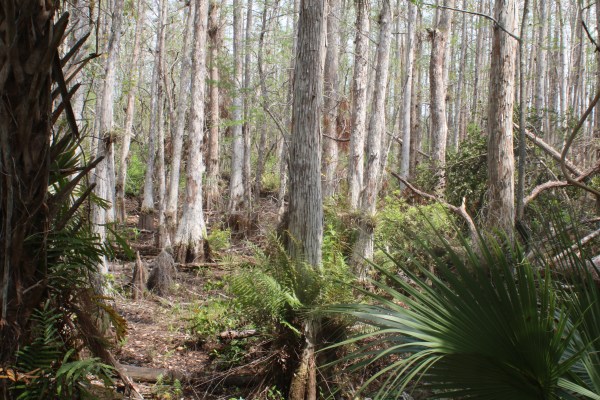
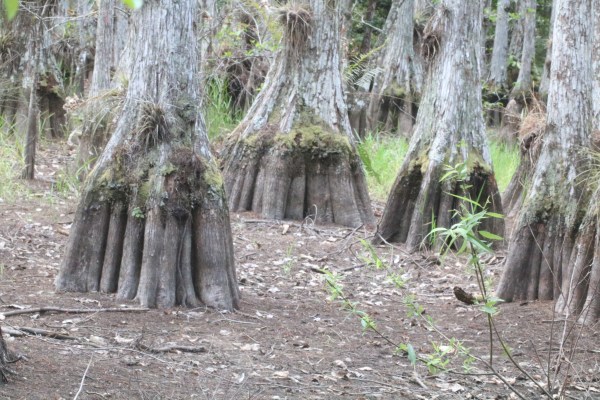
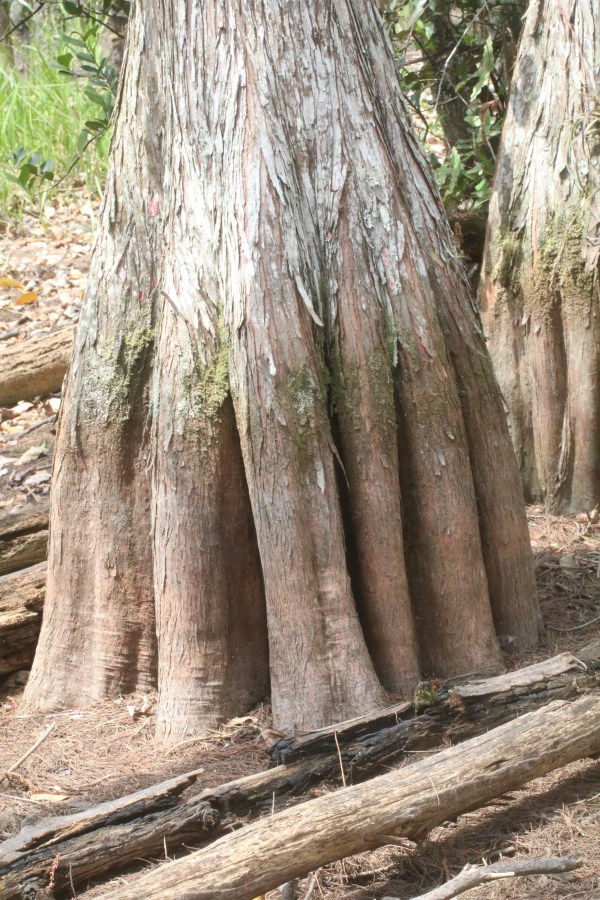
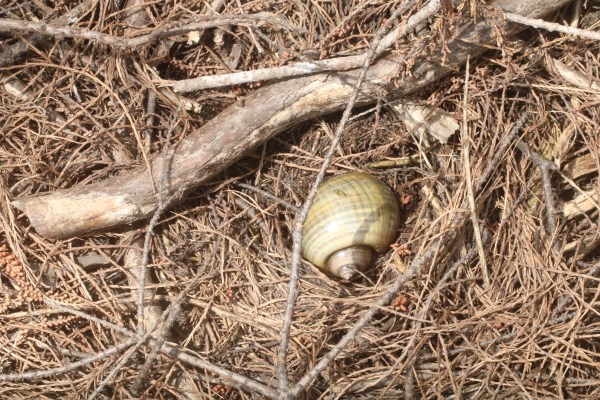
Today I did something I enjoy excessively—walked through a mostly dry Bald Cypress Swamp. Met an otter ‘long the way, also to my surprise hog scat deep in the swampy shadows, and an apple snail mobile home.

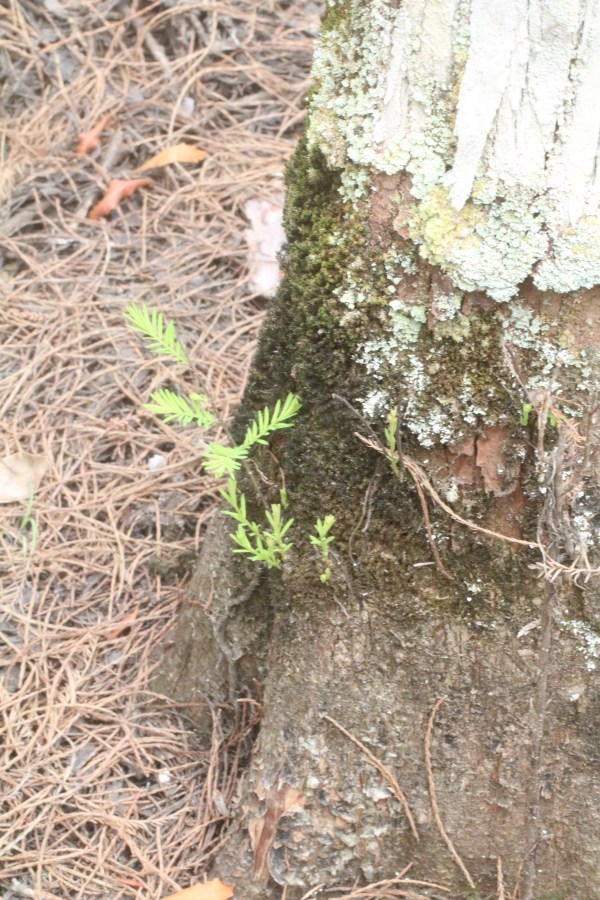
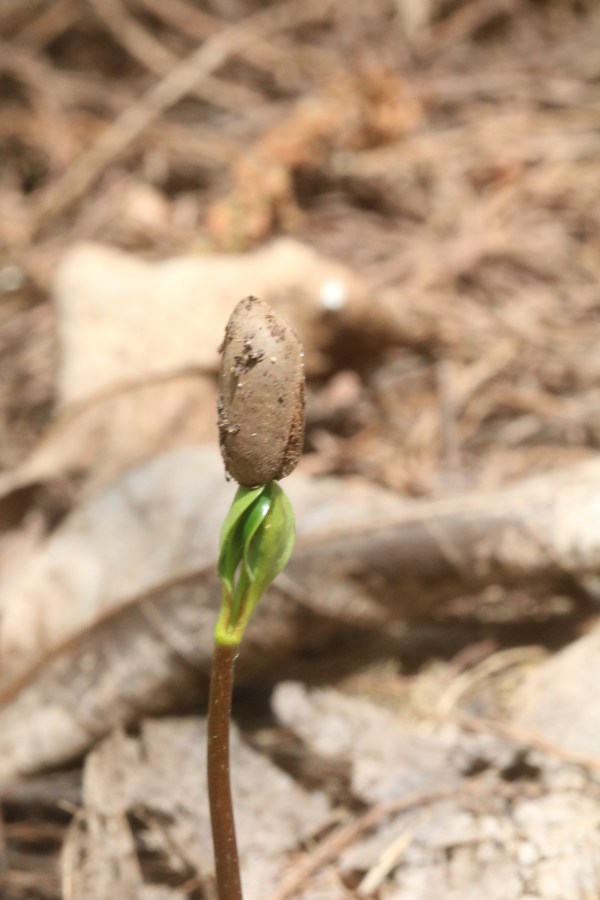
But entirely absent were young Bald Cypress, seedlings of saplings. None, not one, in a swamp spanning acres. Bald Cypress does make seeds, and they germinate in wet places where they blow….but not where the older trees drop their needles.


Something a crowded Bald Cypress swamp generally does not need is more trees . Those roots are already competing fiercely in awful waterlogged soil. Making competing youngsters underfoot would be suicidal, not a plus. Arboreal family planning, in fact, is well known among conifers, although I have not seen seed-o-cide reported for Bald Cypress itself. But I sure saw it in practice today.


Poisoning your own seedlings is called autotoxicity. And if you can do, you might as well knock off other species’ seedlings as well, known as allelopathy. And of course Cypresses get extra help via annual flooding.
If a Bald Cypress topples is the swamp, who fills the void? This is one of the few conifers able to regrow from basal stump sprouts. It can begin anew, but only when regrowth is necessary.


Think how many species of woody wetland plants most have their seeds blow, float, or ride inside animals or birds into a swamp. You do see some “outside” woody youngsters growing on cypress trunks, on knees, on stumps and logs, and on various other humps and hummocks. Wax Myrtle and Buttonbush do that. But not on the fallen needle carpet.

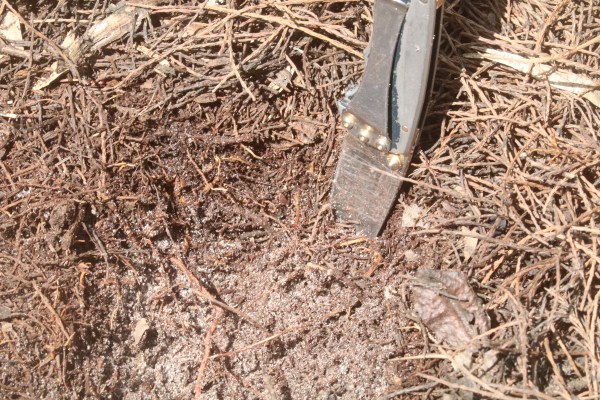
Those carpets can be several inches thick, and the material visibly resembles expensive potting soil from a garden store, it stifles seed growth like a natural preemergent herbicide, with two exceptions.
One is Cocoplum which has ecological tolerances so broad it loves to be pruned into a hedge. Its hard floating Cocoplum seedpit feeds and apparently protects the embryo from drying, flooding, and needle poisons. Nothing stops Cocoplum. It could sprout on Mars.
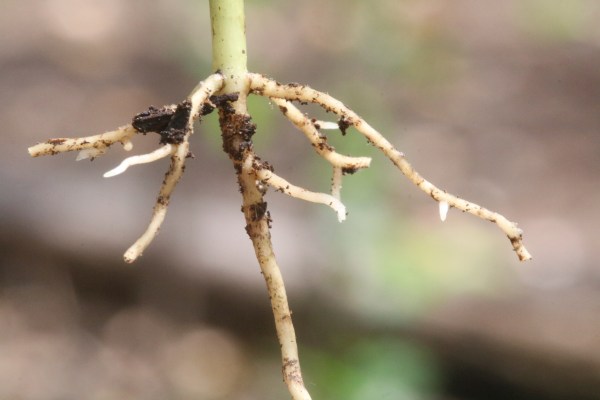
The second needleproof tolerator is Pond Apple, which, like Cocoplum, also has large, hard-shelled, protective, nutrient-rich floating seeds. These have an extra trick (called epigeal germination) where, once the root hits the carpet, the rest of the seed lifts safely above the poison carpet, and ready for “next year’s” flooding.

Its roots spread horizontally trouble-free into the needle duff Pond Apple can remain as small understory tree, or eventually become substantial.

Being able to invade a light gap by floating seeds faster than a Cypress’s basal sprouting, Pond Apples can crowd into Cypress Swamp gaps, although given a few centuries, the enormous Cypress will have the last word.

 
8 Comments

Posted by on March 17, 2025 in Uncategorized


Why John buys duck stamps and why you should too

You may hope that the Florida legislature provides the funds to buy land for water storage but I know that when I buy a duck stamp the 98 cents of every dollar is mandated to buy wetlands.

Duck stamps are the greatest federal program in existence. 98 cents out of every dollar goes to buy wetlands. That is a Federal mandate. Since 1934, when the program began, it has purchased or leased over 6 million acres of wetland – an area nearly the size of Maryland. Much of this area is now part of the National Wildlife Refuge system. It’s the envy of the world.

Stamps have enabled the purchase of over 2500 acres at the Arthur Marshall refuge and almost 86,000 acres in 6 other refuges in Florida.

And here is the backstory:

In 1934, our country suffered in severe economic depression. Real needs were many; financial resources were slim to non-existent.  At the same time, our abundant natural resources were rapidly disappearing. In an era when hunting still provided the meat on many tables, it seemed there were more hunters than ducks.

As chief of the U.S. Biological Survey, forerunner of today’s U.S. Fish and Wildlife Service, J. N. “Ding” Darling devised a program wherein hunters became stewards of the wildlife they hunted.

“Ding” Darling was most widely known for his editorial cartoons, which appeared in nearly 150 newspapers nationwide and earned him two Pulitzer Prizes.

Although “Ding” earned his living as an editorial cartoonist, his passion was teaching the wise use of the world’s natural resources. Skilled in public speaking, articulate in writing, Darling devoted his special talents to conservation education and to developing programs and institutions which would benefit wildlife.

Ding-Darling-cartoon-770x270

One of “Ding’s” cartoons

Darling’s Design for the First Federal Duck Stamp~1934 is especially significant to conservation. After he had guided the funding for the Migratory Bird Hunting Stamp Act through Congress, Darling sketched his concept of a suitable image for the First Federal Duck Stamp. With its enthusiastic adoption, a remarkable program of stewardship was born that endures today, more than a half-century later. Here is an image of “Ding” Darlings original stamp:

1stDuckStamp


Not only does the stamp provide the funds to buy and maintain the wetlands it provides a beautiful piece of artwork. Every fall hundreds of painters across the country compete in the Federal Duck Stamp contest, which gives participants a chance to have their paintings featured on the duck stamp of the year. So when you buy the stamp not only are you saving wetlands but you are buying a wonderful piece of art. Here is an image of the current stamp depicting Trumpeter Swans

2016-2017 Federal Duck Stamp

If you want a great read about the peculiar world of competitive duck painting then pick up a copy of The Wild Chase by Martin J. Smith. This book follows the Federal Duck stamp contest of 2010. If you saw and liked the movie “Best In Show” you will really enjoy this book. Some of the descriptions of the ducks and geese in the 2010 duck stamp contest were hilarious. The Brant, a smallish goose is like a feathered Martha Stuart – they put more down in their nests (for insulation) than any other waterfowl. The Northern Shoveler is Lady Gaga of the wetlands – iridescent green head and neck and really showy plumage. The Ruddy duck is an oddball – a skyblue bill that is just ridiculous. The Ruddy Duck appeared on the stamp in 2016

Ruddy Duck

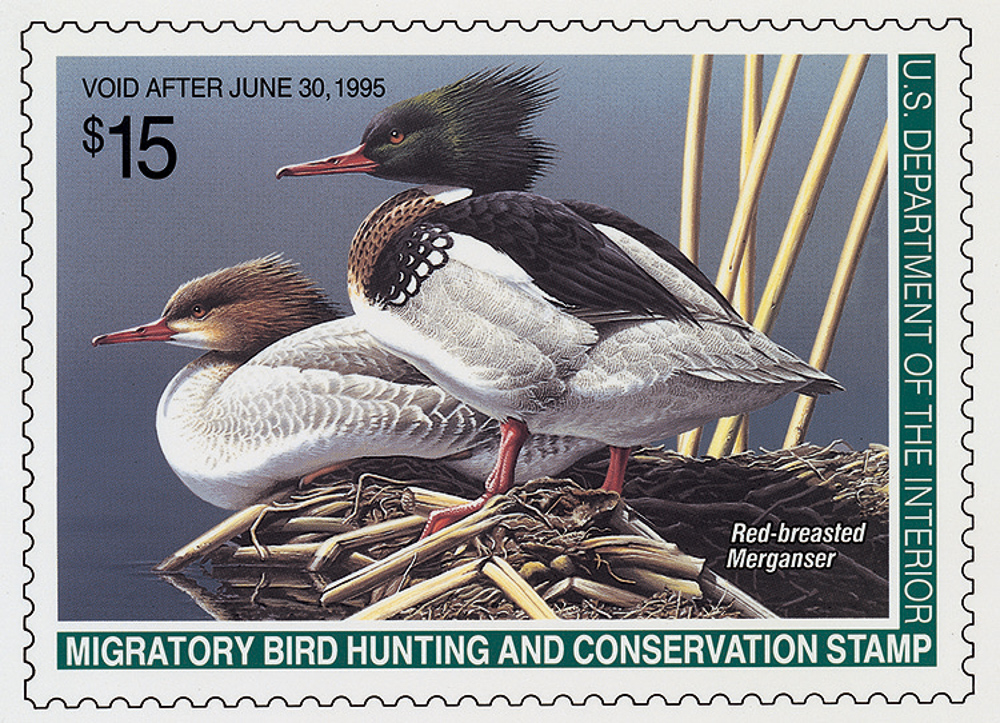
Another interesting duck is the Red-breasted Merganser who looks like he had his hair styled by Woody Woodpecker.  The bird appeared on the 1994 stamp.

Merganser


I hope you will consider the purchase of a stamp as part of your conservation effort. Here is a link to the Federal website that contains a lot of duck stamp information: https://www.fws.gov/birds/get-involved/duck-stamp.php


I buy my stamps from the US Post Office and here is that link: https://store.usps.com/store/browse/subcategory.jsp?categoryId=duck-stamps&categoryNavIds=stamp-collectors%3Acollectibles-by-type%3Aduck-stamps

 
10 Comments

Posted by on March 24, 2017 in Uncategorized


The Wonderful Images of Grass

Grass Family

Poaceae

A number of years ago George and John started taking a close look at the some 200 species of grasses  which are found in our neck of the woods.  This project led to spending many hours in the field collecting specimens and many hours in the lab studying the specimens.  A lot of this work was done with a loupe (hand lens) and/or a microscope since the key to a positive ID is close examination of the spikelet – the smallest readily identifiable part of the flowering part of the grass.  As the work progressed, I started photographing the spikelets.  And the more I photographed them, the more I came to love their many shapes and textures.

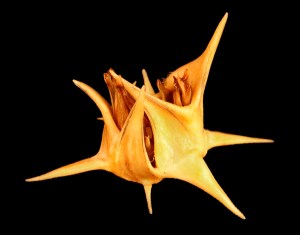
Some grasses have diverse “bristly” coverings and protrusions.  Perhaps most familiar to any beach goer are the nasty “sand spurs” formed by Cenchrus.  These burrs are spikelet clusters provided with wicked barbed spines.  The spine impales your toe and your toe disperses the species.  They also protect the fruit from predators, as no right-minded creature would eat these seed coverings.

Coastal Sandbur (Cenchrus spinifex)

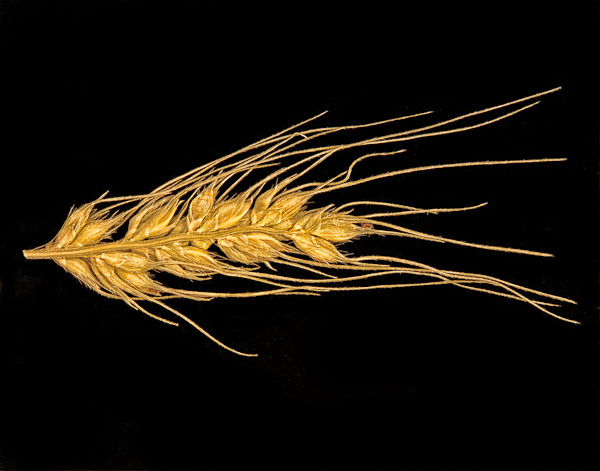
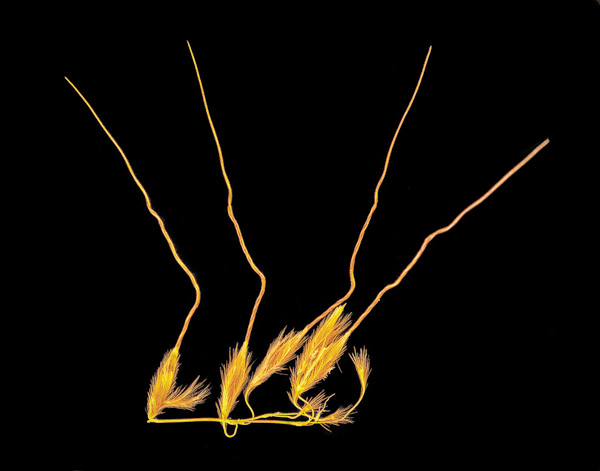
More diverse are awns.  These are needles attached to the tips of glumes or lemmas (or occasionally to other structures).  Awns range from microscopically small to multiple inches long.  They are common in a large number of species.  The functions are diverse.  They help break the spikelet apart by catching wind, rain, or creatures.   They can help orient, lodge or embed (plant) fallen spikelets.  Some awns twist and move in responses to humidity changes, suggesting limited ability to “screw” into the sandy soil.

Coast Cockspur (Echinochloa walteri)


Lopsided Indian Grass (Sorghastrum secundum)


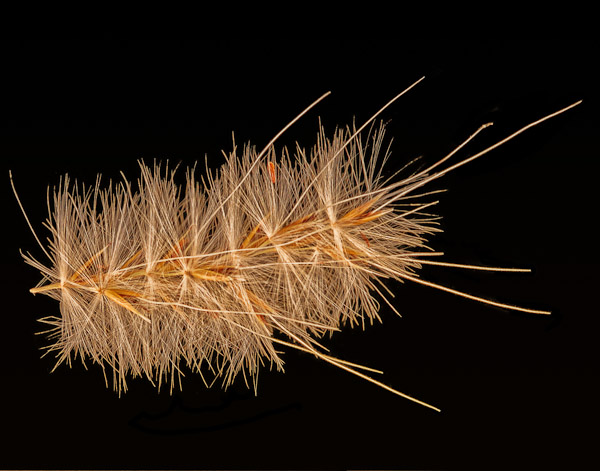
The plant world is full of seeds on parachutes, and  grasses are no exception.  Several species have fuzzy or cottony parachutes on their spikelets.

Sugarcane Plume Grass (Saccharum giganteum)


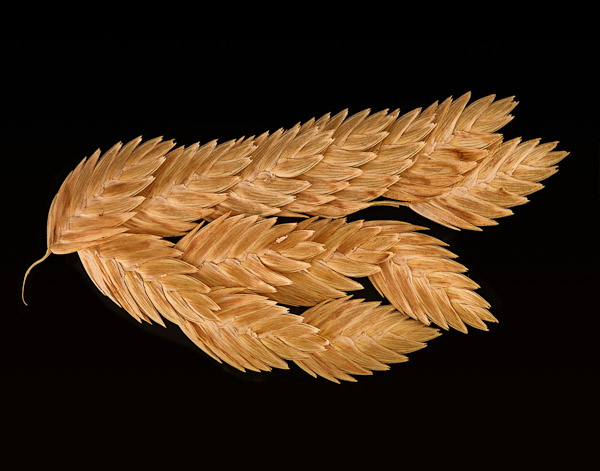
And finally one that large and flat so that it can be carried by the wind or ocean currents.

Sea Oats (Uniolata paniculata)


If you liked seeing these images you may enjoy this short video on the shape and texture of more grass spikelets.  http://vimeo.com/36310464

For more information on grasses, sedge, and rushes visit our website: http://floridagrasses.org/

 
Leave a comment

Posted by on February 8, 2012 in Grass


Tags: , , , , , ,

Mushroom Identification 101

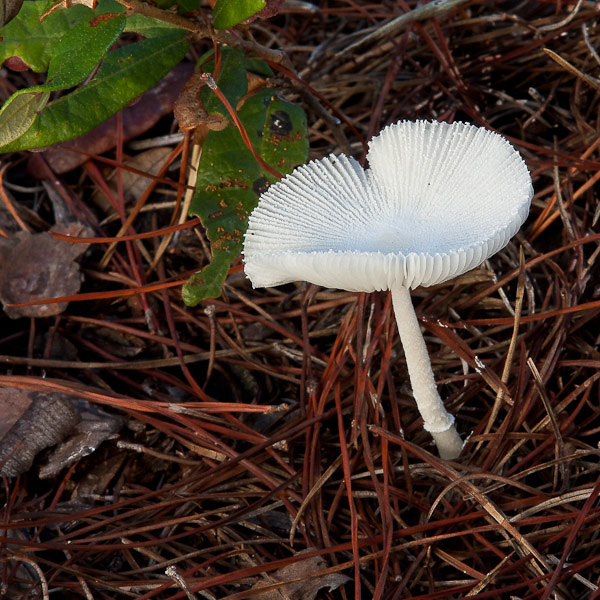
While walking through Hawk’s Bluff, which is part of the Savannas State Preserve, I noticed a white mushroom. Normally, I’m looking for plants to photograph or grasses to identify, but the white mushroom set against the pine needles presented a nice photo op.

When I got home and downloaded the picture, I started wondering about the name of the mushroom. Now I knew that mushrooms, like all other flora and fauna would be divided into Families, then Genera, then Species. But since I’ve never really spent any time trying to ID a mushroom, I didn’t even know where to start. I began by searching Google for images of white mushrooms of Florida. After spending some time and not finding a match, I came on a site entitled “WELCOME TO FLORIDA FUNGI”. And what was better, it had a section entitled “Ask Bill!” Bill said, “Send in your photos and I will help you ID them.”

Never one to turn down a offer of free help, I wasted no time in attaching my photo to a email and sending it off, hoping to get some info in a few days. Imagine my surprise when a few hours later I got an email from Bill giving me the Genus of the mushroom. Bill was positive that it was a Leucocoprinus but it had the possibility of being one of a couple of species. As I later learned, Leucocoprinus is a genus of fungi in the family Agaricaceae whose best known member is the yellow pot-plant mushroom (Leucocoprinus birnbaumii). The genus has a widespread distribution and contains about 40 species.

The ID of Leucocoprinus was just fine for a title for my picture and I was happy. But, apparently Bill wasn’t and he sent the picture off to his contacts for their opinion. As Bill forwarded me their comments and opinions, I began to realize that the positive ID of some mushroom species is not something that one learns overnight.

While I think that I’ll stay in my comfort zone of plant and grass ID, it is interesting to learn something about the world of fungi. And it’s also nice to know that there are people like Bill out there that are willing to take the time and lend their expertise to helping someone asking for help. Here is a link to Bill’s site for anyone wanting to know more about the fungi of Florida: http://www.nettally.com/annep/floridafungi/

Thanks Bill.

 
Leave a comment

Posted by on September 29, 2011 in Mushroom


Tags: , , ,

Marsh Gentian

Marsh Gentian
Eustoma exaltatum
Gentianaceae
 
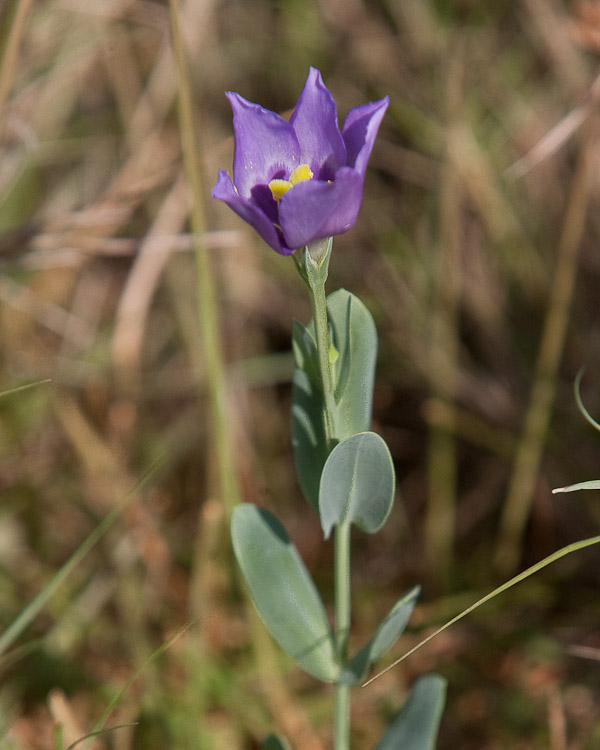
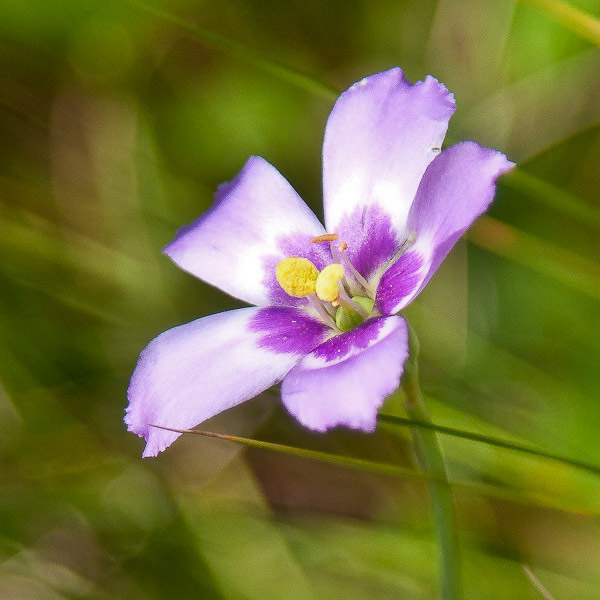
Some wildflowers are so big, colorful, and assertive, they look like they came right out of a Garden Club flower show. That is not far from the truth. This eye-grabbing species is, according to contemporary taxonomy, the lone species of the genus Eustoma, a member of the Gentian Family. In South Florida we may think of it as a marsh or coastal species, but amazingly, this beauty inhabits diverse moist habitats from South America to Florida and even ranges as far as Montana. Ladybird Johnson would have called it “Texas Bluebells.”

The species tolerates salty and alkaline conditions. The photo on our blog was taken just steps from the Intracoastal Waterway at the edge of a mangrove stand, a stone’s throw from Tiger Wood’s home.

Marsh Gentain

Marsh Gentain


These plants have a complex taxonomic and horticultural history. The garden Eustomas are best known under the names Eustoma grandiflorum or E. russellianum, or under the genus name Lisianthus. They are so well established under the last-mentioned name, that “Lisianthus” lives on as their handle in the commercial trade. Current classifications tend to regard all of these names as synonyms of E. exaltatum, making our wildflower and the vast array of garden Lisianthus one and the same species.

The plants are highly modified horticulturally and inter-crossed, yielding numerous cultivars with purple, violet, bluish, pink, white, single, and doubled blossoms. They are valued as garden selections, as potted plants, and especially as cut flowers. Many of the doubled cultivars resemble roses. Starting with attention in Japan in the 1930s, this species came (back) commercially to the U.S. in the 1980s and quickly became the number one cut flower in the U.S. although production problems emerged. Several cultivars have been developed in Florida, but Japan remains the capital of Lisianthus.

Marsh Gentain

Marsh Gentain

The flowers are self-compatible, and an example of “protandry,” that is, with pollen released days before the stigma becomes receptive.

Personally, we regard native wildflowers as more beautiful than any artificial garden, but the “Marsh Gentian” is a species that graces everyone’s world from Florida natural areas to the Japanese cut flower industry.

 
Leave a comment

Posted by on July 18, 2011 in Marsh Gentian


Tags: , , , ,

Underground Botany: Hidden Flowers and Buried Fruits

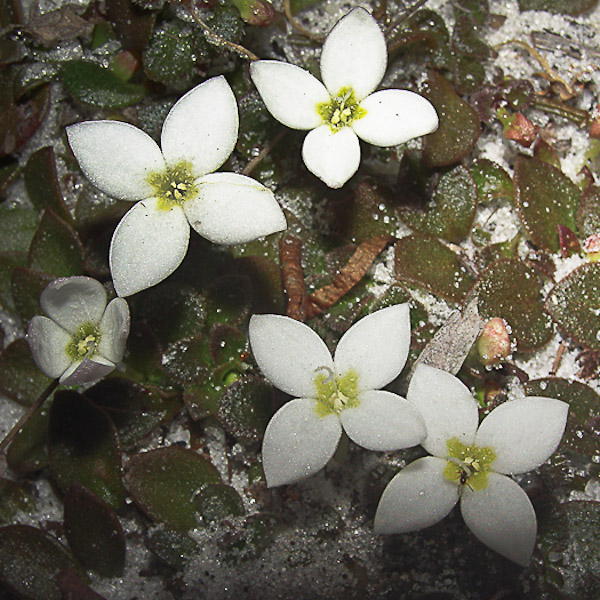
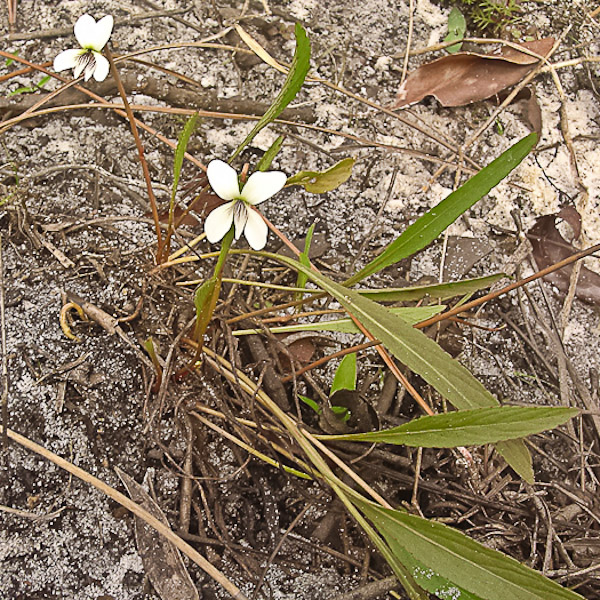
What do Innocence, Blue Maidencane Grass, Bog White Violet, and Beach-Peanut have in common? Hint: Look at the title of the post. They all have “funny” flowers and fruits doing things you don’t expect where you don’t expect them.

Houstonia procumbens 2

Innocence

Innocence (Hedyotis procumbens) is a petite member of the Coffee Family (Rubiaceae) related to the Bluets familiar to readers with more northern exposures. In South Florida the species turns up on sun-baked dry sugar sand in scrub or near-scrub habitats. The small white flowers often appear to spawn directly on the sand, as the vegetative plant body is low, trailing, and frequently more or less covered with sand. After flowering, the flower stalk bends earthward burying the developing fruit protectively for subterranean maturation. To be speculative, it looks like ants might disperse the resulting fruits and seeds. And there is more to the story: Innocence is not so innocent. In addition to the showy flowers, it hides secret inconspicuous flowers underground. These either self-pollinate or do not require pollination, and they produce fruits without seeing light of day. Such flowers are a “back-up” on the sexual process and are called cleistogamous (kleist-OG-ah-mus) flowers. Cleistogamous comes from Greek for, roughly speaking, “hidden husband.”

The most famous owners of cleistogamous flowers are violets, and our native Bog White Violet (Viola lanceolata) is no exception. Look for the hidden flowers or the resulting fruits near the base of the plant.

Bog White Violet

Bog White Violet

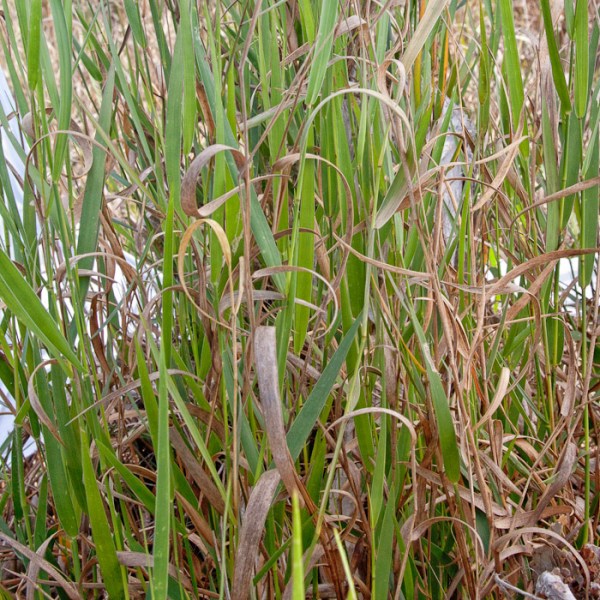
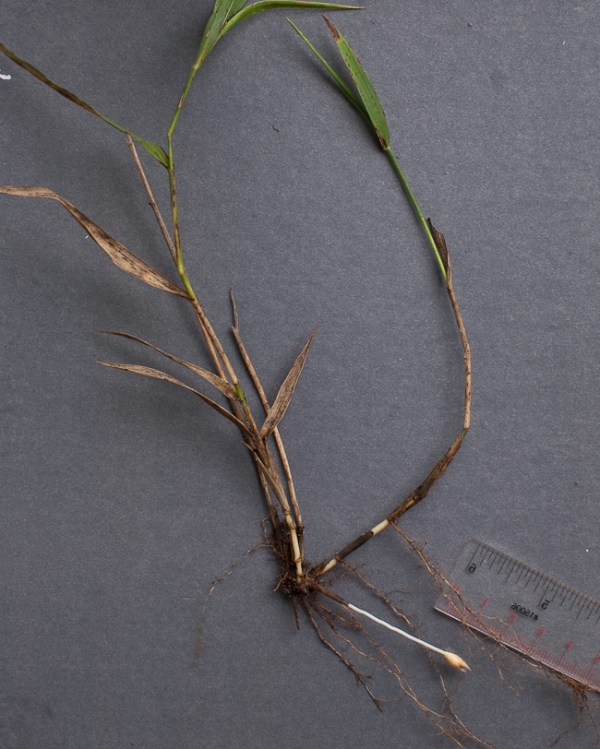
A more surprising case is the grass Blue Maidencane (Amphicarpum muhlenbergianum, see http://www.floridagrasses.org). Amphicarpum translates as “fruits on both sides“, in this case, both sides of the ground surface. In addition to normal (chasmogamous) flowers and fruits in the sunshine, cleistogamous flowers in the rhizome make buried fruits. John and I saw these first and most easily in an area rooted up by feral hogs.

Blue Maidencane

Blue Maidencane

Blue Maidencane Buried Fruit

Blue Maidencane Buried Fruit

Buried fruits are hidden from some menace, and what could be more menacing than clinging to life on Florida seashores and seaside dunes. You can guess now how Beach-Peanut (Okenia hypogaea) got its name. Not for being a type of goober. The Beach-Peanut is no legume, but rather a member of the Four O’Clock Family (Nyctaginaceae), as you might guess from its vibrant floral display. The prettiest flower on the beach buries its fruits in the sand on a downward peg potentially mistaken for a root. It too produces cleistogamous flowers, but the relative roles of the cleistogamous flowers and showy flowers remain poorly studied.

Beach-Peanut

Beach-Peanut


Tags: , , , , , ,

American Crinum and the Lubber Grasshopper

Crinum americanum 2

American Crinum

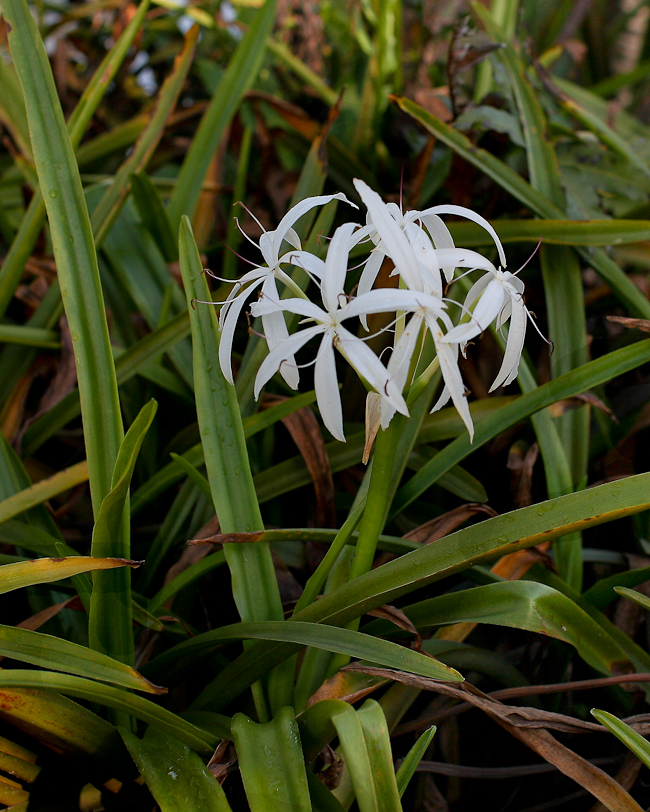
Some of the largest and most eye-catching wildflowers in Florida are aquatic, and the American Crinum is in that category, featuring garden-worthy fragrant blossoms a couple inches in diameter, having 6 long white“petals” and a long narrow tube.

Big white long-tubular flowers are pollinated by sphinx moths (also called hawk moths), which are nocturnal and are drawn by scent instead of by bright colors. There are two species of sphinx moths in South Florida and their relative importance with respect to Crinum sex is unclear. They hover when they visit the flower and unroll a long proboscis that matches the narrow floral tube like a key in the lock. The larva of the Tersa Sphinx Moth resembles a snake.

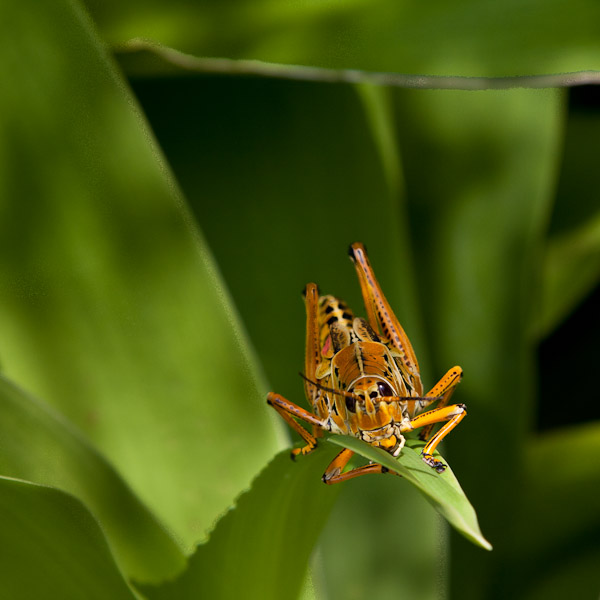
The insect relations of Crinums run deeper than pollination assistance. As is true of many members of the Lily Family, Crinums contain bioactive alkaloids. Alkaloids are familiar as drugs, such as nicotine, caffeine, heroin, morphine, cocaine, and colchicine. Crinum americanum is a one-species chemical factory with at least 11 known alkaloids. It and other Crinums are the subjects of optimistic drug research, and our species may well wind up saving somebody from something someday. Looking back, Crinums have rich histories in traditional and local medical practices around the world. One Lily alkaloid is already useful against gout. Actually American Crinum poison does save somebody from something already: Lubber Grasshoppers from being bird snacks. Eating the drug-laden foliage on wild and garden crinums, Lubber Grasshoppers render themselves toxic, revealing their acquired threat to hungry birds with bright warning coloration.

Lubber 5 (small)

Lubber grasshopper eating Crinum folage

Crinum americanum is the U.S. representative of the 100-species genus Crinum, which comes mostly from the Old World Tropics. DNA study shows the closest relatives of the American Crinum to be the other Crinums from Tropical America, leaving their relationship with the bulk of the genus in Africa and beyond unclear. How did they cross the sea? And when?

Crinums are prominent and diverse in warm-climate gardens, with numerous species and cultivars having white to reddish and purplish flowers. They are hybridized and highly modified horticulturally, making the exact taxonomy of the garden crinums tangled and puzzling.

 
2 Comments

Posted by on July 15, 2011 in Lubber Grasshopper, String Lily


Tags: , , ,