Grass Family
Poaceae
A number of years ago George and John started taking a close look at the some 200 species of grasses which are found in our neck of the woods. This project led to spending many hours in the field collecting specimens and many hours in the lab studying the specimens. A lot of this work was done with a loupe (hand lens) and/or a microscope since the key to a positive ID is close examination of the spikelet – the smallest readily identifiable part of the flowering part of the grass. As the work progressed, I started photographing the spikelets. And the more I photographed them, the more I came to love their many shapes and textures.
Some grasses have diverse “bristly” coverings and protrusions. Perhaps most familiar to any beach goer are the nasty “sand spurs” formed by Cenchrus. These burrs are spikelet clusters provided with wicked barbed spines. The spine impales your toe and your toe disperses the species. They also protect the fruit from predators, as no right-minded creature would eat these seed coverings.
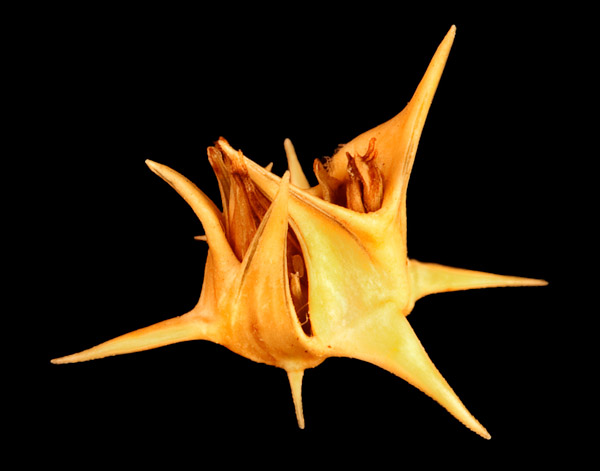
Coastal Sandbur (Cenchrus spinifex)
More diverse are awns. These are needles attached to the tips of glumes or lemmas (or occasionally to other structures). Awns range from microscopically small to multiple inches long. They are common in a large number of species. The functions are diverse. They help break the spikelet apart by catching wind, rain, or creatures. They can help orient, lodge or embed (plant) fallen spikelets. Some awns twist and move in responses to humidity changes, suggesting limited ability to “screw” into the sandy soil.
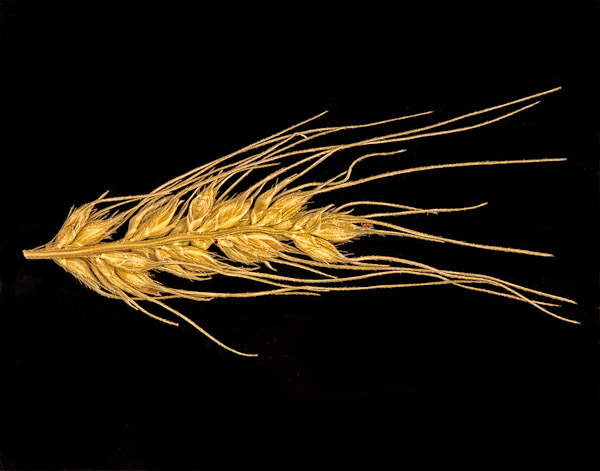
Coast Cockspur (Echinochloa walteri)
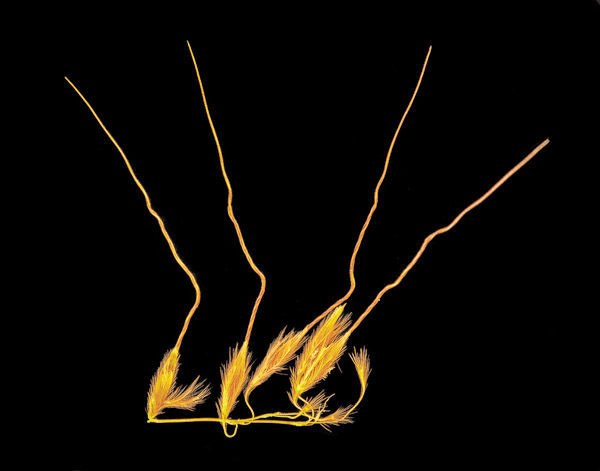
Lopsided Indian Grass (Sorghastrum secundum)
The plant world is full of seeds on parachutes, and grasses are no exception. Several species have fuzzy or cottony parachutes on their spikelets.
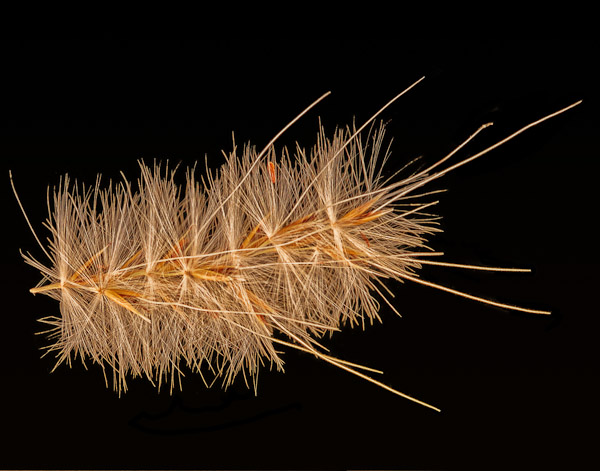
Sugarcane Plume Grass (Saccharum giganteum)
And finally one that large and flat so that it can be carried by the wind or ocean currents.
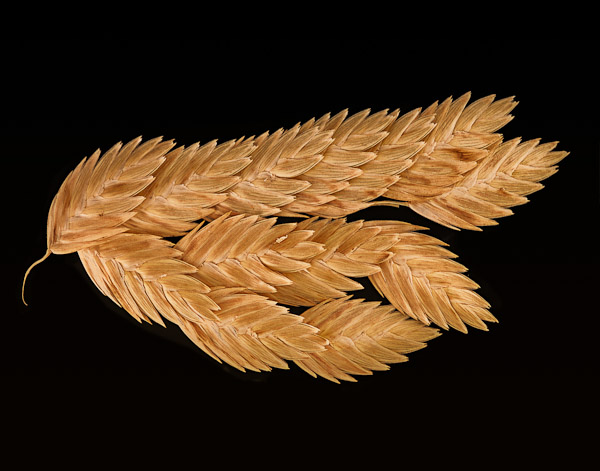
Sea Oats (Uniolata paniculata)
If you liked seeing these images you may enjoy this short video on the shape and texture of more grass spikelets. http://vimeo.com/36310464
For more information on grasses, sedge, and rushes visit our website: http://floridagrasses.org/
 John Bradford
 George Rogers
 George Rogers
 Dee Staley
 Treasure Coast Natives