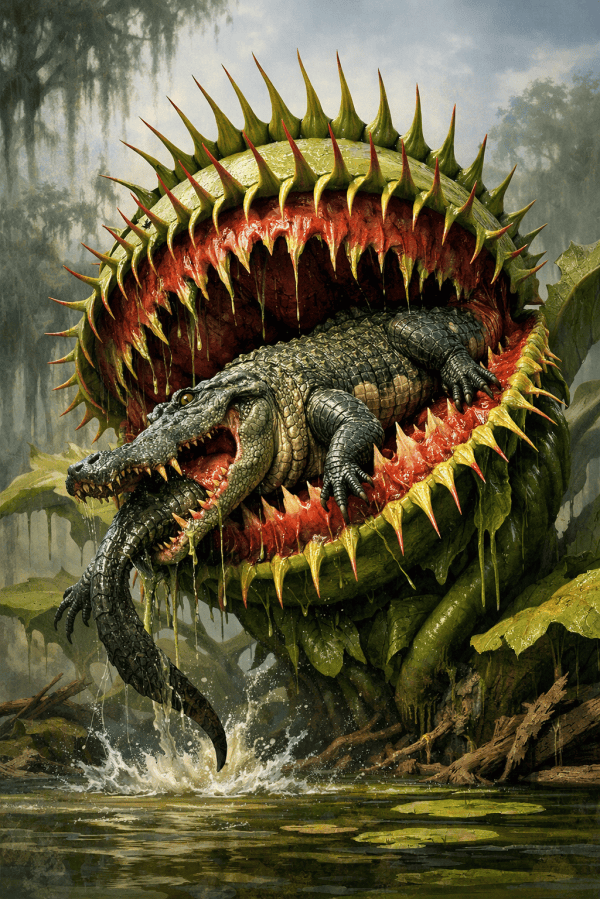
Dionaea muscipula
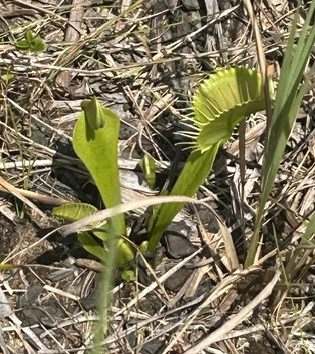
I spent last week with family in Wilmington NC. Wilmington is a lovely old coastal city known for a number of wonderful things. Among those things are two I’ve long wanted to see: the USS North Carolina (WWII Battleship) and wild Venus Flytraps. Ever since my earliest days in botany I’ve heard and read that “Venus Flytraps occur naturally only in a small radius around Wilmington NC.” So finally after fifty years of waiting, I went with family group to seek some. They hide well. An hour of searching under hellish sun turned up nothing, so we trudged grumpy back to the car with its enticing AC. About to peel rubber, my intrepid son Evan said, “alas we’ve traveled from afar, and I do so yearn to behold the treacherous forb.” So we returned, and sure enough he spotted one individual. Then, with the help of a fellow sweaty voyeur, we found several more all in one tight cluster.
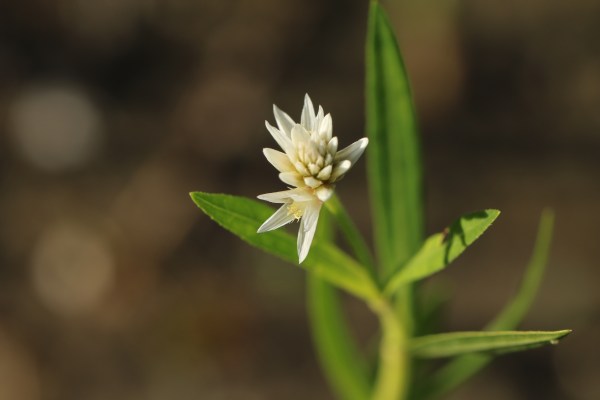
Here is the one Evan found:
Now, it would be easy to give a pseudo-expert Google book report on all the wonderful and amazing things about the Venus Flytrap, but problem is that’s all covered to a farethewell on the Internet. If you wish to learn what they trap, and how they do it, why they catch arthropods (largely crawling ants and spiders) and not tripped by raindrops, fire adaptations, evolutionary ancestry, how many are pilfered from wild sites, or how to grow them. Try Grokipedia. So let’s consider things not connected to fly-catching.
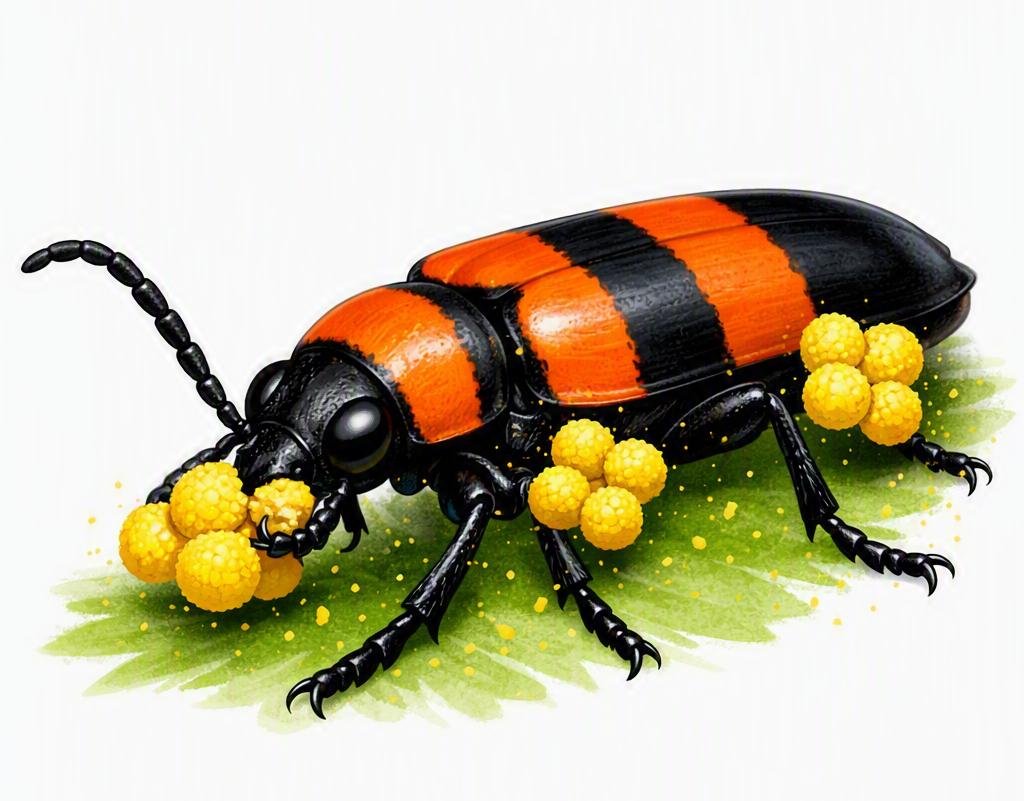
First thing. What pollinates them? Given that the plants naturalize where they don’t belong (that’s thing 2 below), they probably can receive pollination services from multiple agents. However, an article in National Geographic based on prior research gives just three insects as the significant pollinators in the natural range: one sweat bee and two beetles, none of these imperiled by the traps. Oddly, the pollen grains are in clusters of four, enormous by plant standards, and eaten by the beetle pollinators. It may be that the grains work like walnuts and squirrels…the squirrel sometimes eats part of the walnut but leave enough for the plant’s regeneration. Perhaps the beetles eat one or two of the grains in the cluster while other grains survive to pollinate the flytrap. A little sacrifice in the interest of floral success.
Second thing. Venus Flytraps turn up naturalized in widespread sunny sandy acid places far outside their natural range, including in Jonathan Dickinson State Park near Jupiter. I suppose it is conceivable for the tiny seeds to come by bird, but the species is clearly disinclined to natural long distance dispersal, so the far-flung diaspora are probably all or mostly due to people. Planting it? Seeds stick to shoes? Both are possible when you can buy potted individuals in a Walgreens.
Third Thing. Forgive my soapbox for an old pet peeve, much in effect with respect to planting VFT. Start with a charismatic, well known, endangered species. That’s the perfect recipe for well-intentioned spreaders, including some botanical gardens, to help Mother Nature by bringing the poor endangered rare species into cultivation and then “reestablishing it” in the wild. Sounds great until you consider the fact that a species is not a single unified thing. Species have all manner of genetic, regional, environmental, and historical variation all closely related to fine points of distribution. Generating them in a garden or salvaging them from construction sites and replanting them elsewhere in natural areas interferes with their intricate natural history. Just this spring, in fact, biologist Wenmin Zhou and several collaborators conducted a genetic study identifying four separate lineages of VFTs within the postage stamp natural range, with a plausible explanation of how that pattern came to be. Understanding their intricate population infrastructure probably contributes far more to species conservation than replanting unaware of intricate mysteries.





 John Bradford
 George Rogers
 George Rogers
 Dee Staley
 Treasure Coast Natives