RSS

Tag Archives: Cypress swamp

ANNOUNCING! For the three people in the world who care…our old grass site (dating from 2004) is back online under a new url:   www.floridagrassesandsedges.net

ANNOUNCING! For the three people in the world who care…our old grass site (dating from 2004) is back online under a new url:   www.floridagrassesandsedges.net

click it here


therefore a classy grassy blog today…

Maidencane is as Smart as a Slime Mold

Panicum hemitomon  (Hymenachne hemitomon)


Slime molds are famously clever microbes. Put one on one side of a maze and a food tidbit on the far side,  and the slimer triumphantly solves the puzzle.  Sort of.  It slithers hither and thither confined by the maze, extending throughout.  Eventually the widespread exploratory portion of the s.m. encounters the morsel, so the microbe concentrates on that pathway.   Think of bees exploring for flowers, with successful foragers establishing a collective route to the sugary blossoms. That brings us to today’s “thing.”   It is incredible how spreading rhizomatous marsh plants colonize and divide a marsh into single-species patches, maybe an exclusive acre of  Knotted Spikerush here, a  plue zone of pure Pickerelweed over there.   That quilt doesn’t form overnight.  Think of all the “exploring” by creeping rhizomes like giant slime molds: all the pushing, shoving, border disputing,  poisoning,  social climbing, and jostling until it is all sorted out into the patchwork we see from the boardwalk. Some patches have deeper water longer, or more nitrogen pollution, or muckier soil, giving different species patchy advantages according to their needs and tolerances,
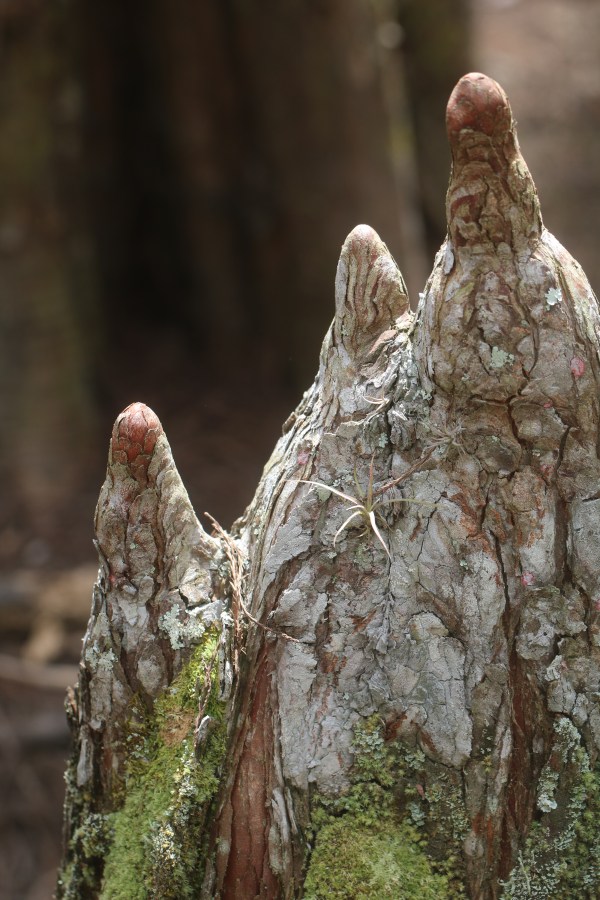
We are not air snorkels.

Anyhow, I have a thing for cypress swamps, and enjoyed today a nice example of patchy life under the pond cypress,  with a twist—a single species free of competitors.    Astoundingly few non-woody plants grow on cypress swamp floors. Well yea, ferns, but ferns are ferns,  and you could count the remaining herbaceous species on your toes.    The floor of a cypress swamp is a fascinatingly narrow ecological filter:   suffocating seasonal flooding, a thick layer of duff and semi-decayed  needles,  seasonal deep shade,  and dry-season drying.    In the swamp I explored today one species was the absolute ruler, but very unevenly.   Maidencane Grass can stand up to the harsh swamp tortures, but across the swamp it ranges from dense expansive lawns, to modest clumps, to scattered individuals, to none.     
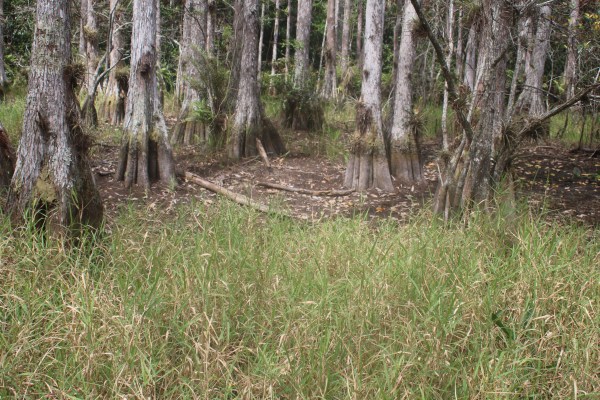
Many here
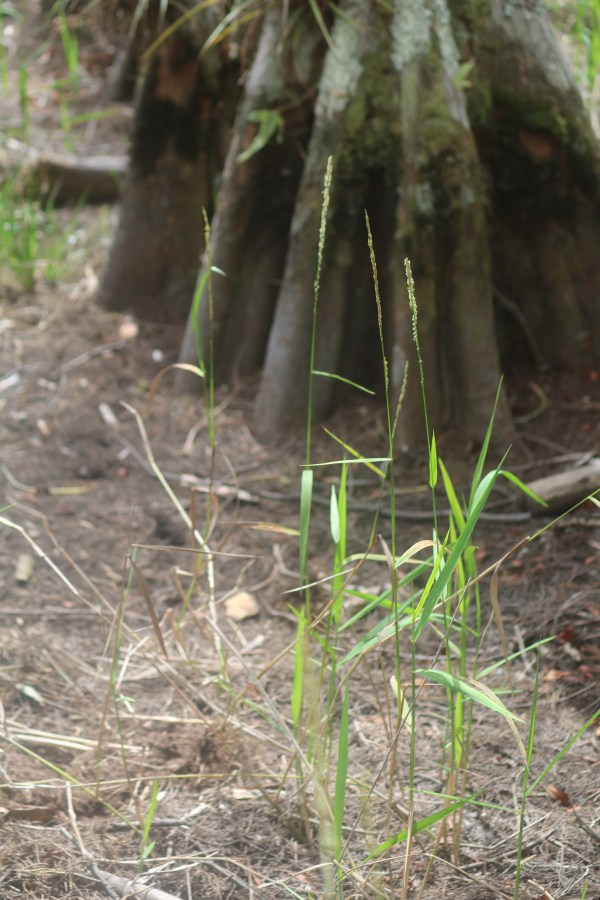
A few here
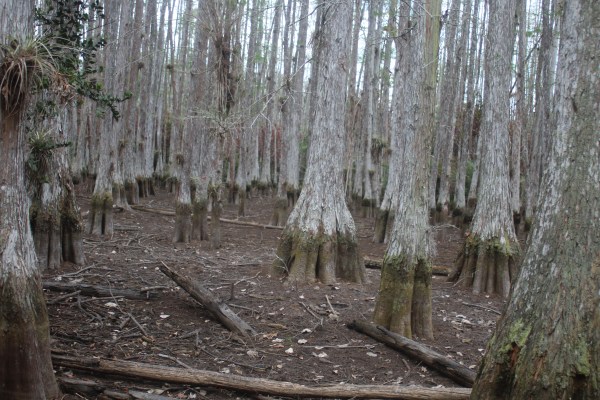
Not many here! All these photos a stone’s throw apart.

Patchiness is easy to envision when forced by competitors, but in the cypress swamp there’s a different pattern.  The strongest Maidencane growth is generally where the cypress trunks are fewest.  That is, within the swamp the cypresses are subtly patchy, probably having to do with varying hydrologic conditions combined with the occasional gap from treefall.  I don’t think the water conditions are the main control of the extreme Maidencane patchiness.  Although untested, the driving force appears largely to be the relative light conditions caused by uneven cypress positioning.   The Maidencane is probably fluctuating at the edge of its shade tolerance “in exchange” for a monopoly on the swamp understory herbaceous layer. Like a giant slime mold, it spends eternity floating and creeping around the swamp, “finding the food”  in relatively bright spots and fading out when prospects dim.
 
12 Comments

Posted by on March 12, 2026 in Uncategorized


Tags: , , , , , , ,

Up and Downs in the Bald Cypress Swamp

Up and Downs in the Bald Cypress Swamp

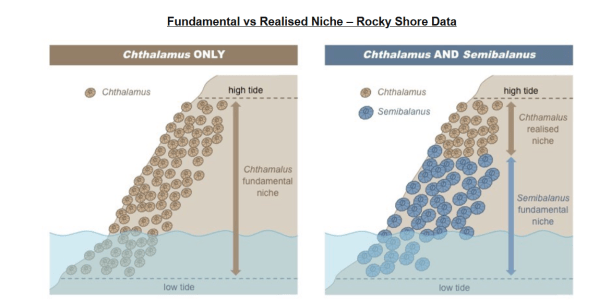
Every introductory Biology textbook has a famous graphic,  a vertical seashore rock with its base in the ocean and its top exposed, home to barnacles.  Conditions toward the submerged rock bottom differ from conditions rising to the splash zone.   If one barnacle species is alone it spreads out up and down the rock as far as it can tolerate in both directions.    But if there are two species,  one may compete the other into a narrower portion of the rock.  And, having divvied up the habitat vertically, everybody coexists in two stacked bands.

Welcome to Biology class! Barnacle social life.

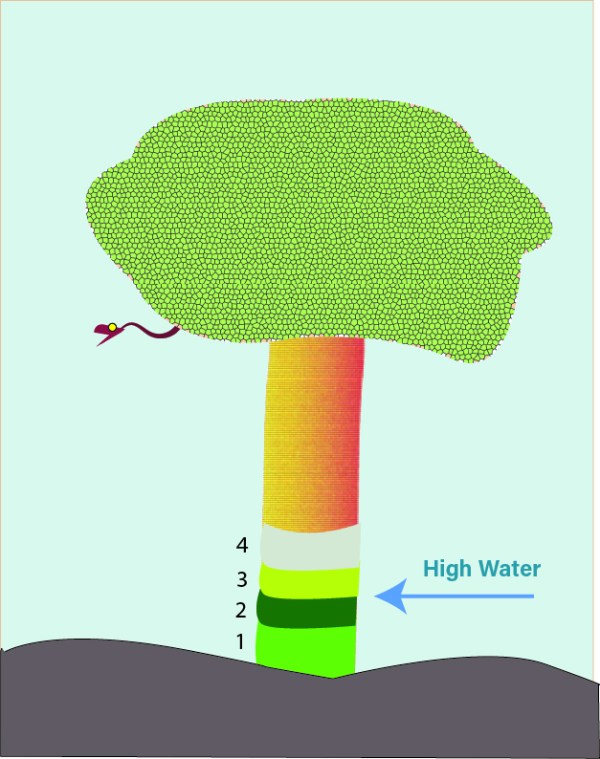
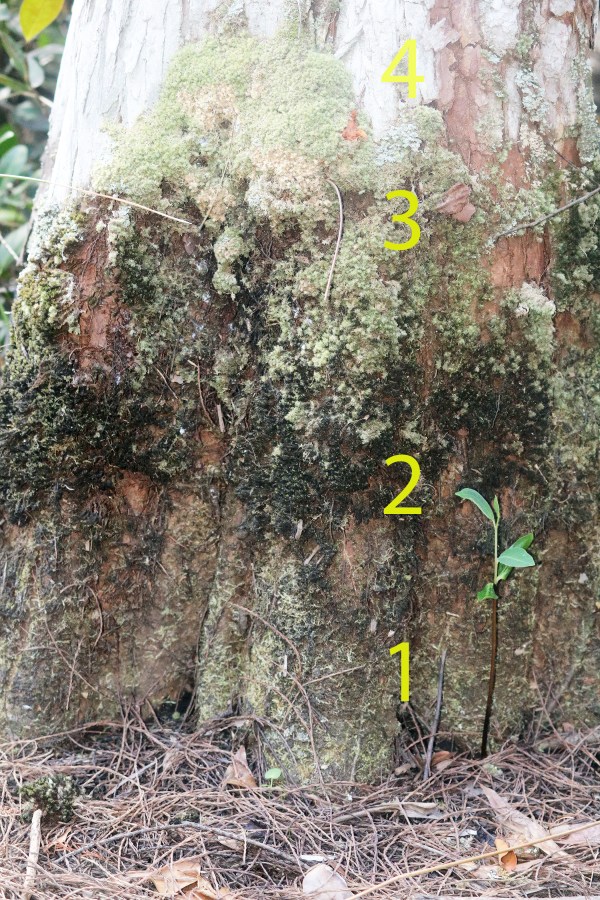
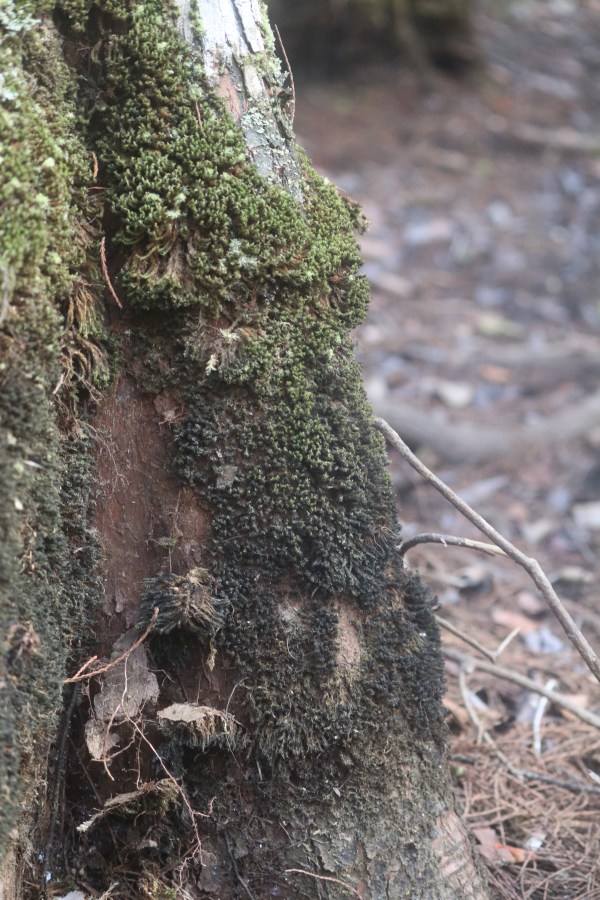
There’s a better example in our local Bald Cypress swamps, although the competitive dynamics differ.    In a swamp there’s a rough tendency toward four stacked rings on the cypress lower trunks rising from the seasonally submerged base to above the high water line.    The vertical changes in conditions bottom-up make the barnacle stacking seem simple.  Here is a Cypress Creek report from yesterday.  From bottom up, the four bands are dominated by four species, each with features suited to its position relative to the flooding pattern. This is a nice example of an “ecological filter” at work, allowing occupancy only to competitors with the right abilities to pass through the filter.  A shady swamp with rising and falling water is a fairly harsh filter.

By John Bradford

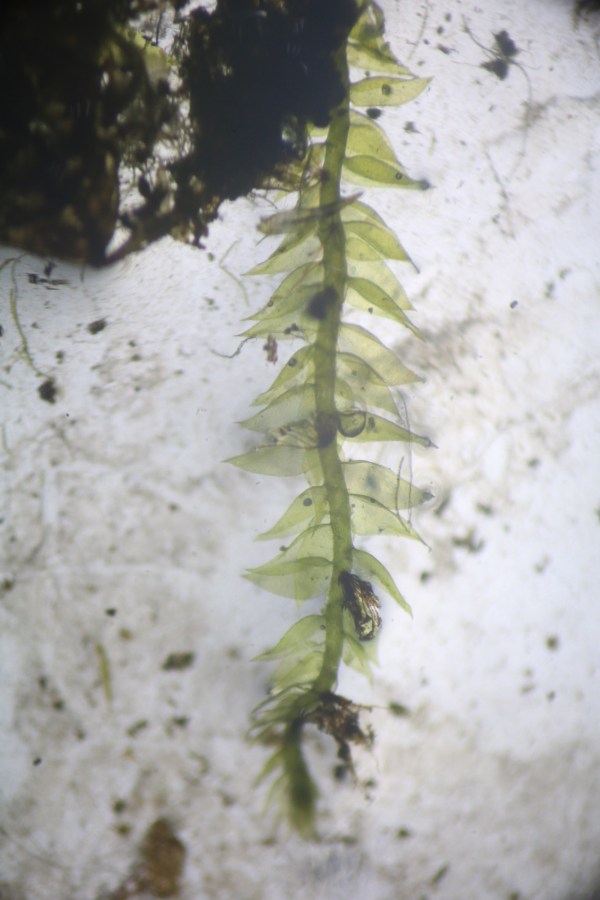
The bottom band (1) Sematophyllum adnatum, a common widespread moss, here surviving at the tree base well below the high water line.   It lives on smoother bark than the flaky bark at and above the water line.  Terrible place to grow!  At high water, dark, muddy,  suffocated.    Perhaps the reason it “owns” this band is the ability to cling to life under nasty mudwater for extended periods.   Then when conditions improve,  it creeps across the base as a tiny weedy vine reclaiming space.  Probably nobody has ever measured the growth rate, but I’ll bet it is fast, the cheap thin leaves being a clue to quick recovery.   This species is not fighting crowded competition, but rather floodwater.

Moss 1. Sematophyllum creeping.

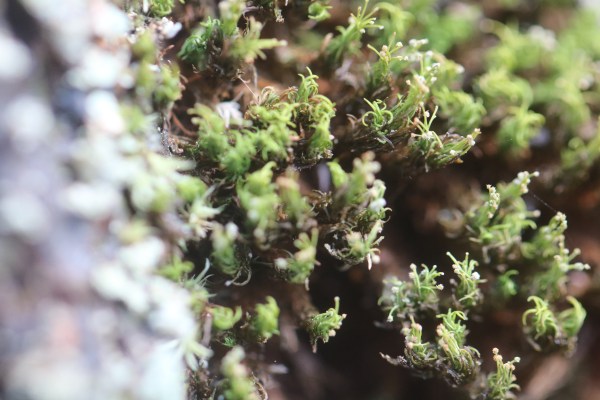
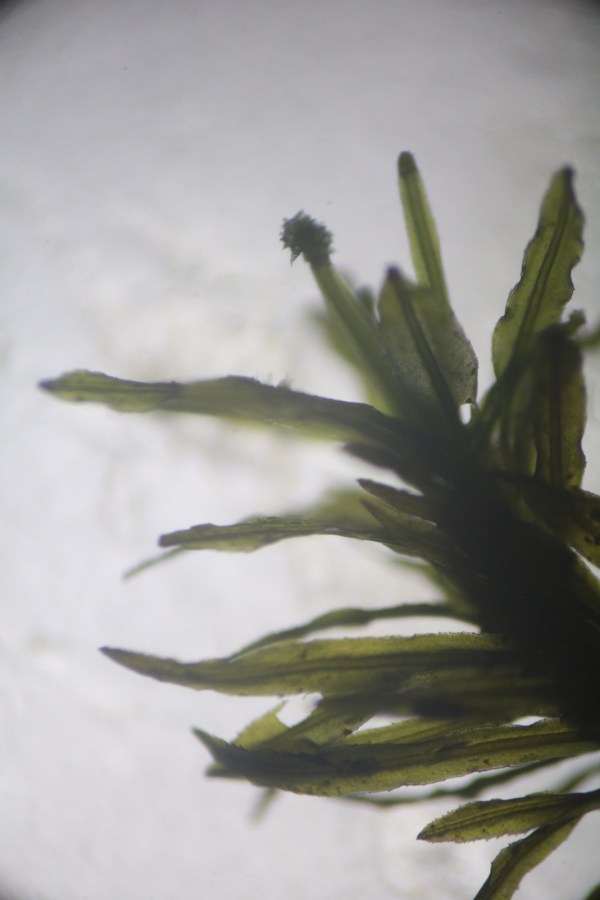
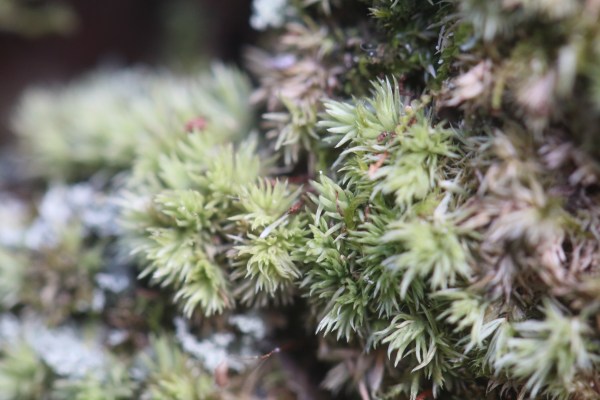
The second band (2) moss is Syrrhopodon texanus presiding presides over the rising and falling water line.   The Syrrhopodon band can sometimes be particularly widedancing with the fluctuating water line. It often has its own “sub-bands”   functioning as  timestamps from happy times (about right) relative to the water line, and sadder times (when the water line was in a better place). That is, rising and falling water leaves a record on the Syrrhopodon mood.  Plants growing in subdued light often have comparatively dark leaves, as does this species.  The fit to the waterline lifestyle extends to reproduction.  Mosses mostly spread by airborne spores, but it makes more sense for a waterline grower to float from tree to tree by water.  This species and some relatives make tiny little floaters on their leaves which bypass the need for dusty spores to blow through the windless swamp.  Some species of Syrrhopodon have no known spore production at all. Now that we’ve climbed the trunk into better conditions, life is more competitive, and this moss tends to grow crowded with vertical stems, like high-rises in the big city.

Moss 2, Syrrhopodon at the high waterline.

Syrrhopodon in mixed moods.

Syrrhopodon releasing its leaf-tip floaties.

Rising to the third band, we’re above the water line with intermittent drying increasing as a threat.  From submerged, to following the water, line to drought—-all in a  lizard’s climb.  Moss (3) is Leucobryum albidum, also crowded and vertical-ish, but with a new feature.  In stead of dark green, it is whitish (leuco-), which ties in with that dangerous drying.  The leaves are a bit succulent with empty (white) cells that can store water. Micro-cacti!

Moss 3. Leucobryum. A wee bit succulent.

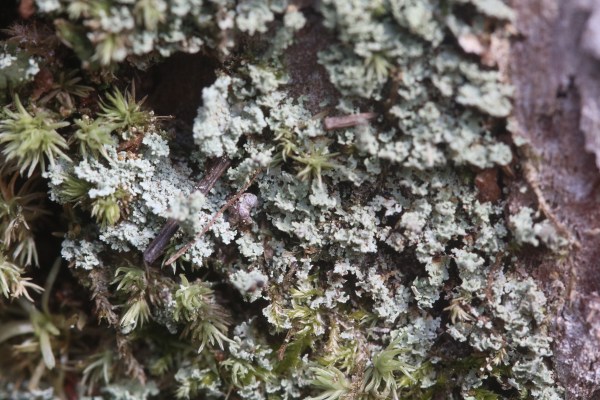
By the time we get to level 4, drying is a deadly threat, and the mosses cede the trunk to lichens, undisputed masters of life in high dry places.

Lichens now take over.

 
6 Comments

Posted by on March 6, 2026 in Uncategorized


Tags: , , , ,