The species tolerates salty and alkaline conditions. The photo on our blog was taken just steps from the Intracoastal Waterway at the edge of a mangrove stand, a stone’s throw from Tiger Wood’s home.
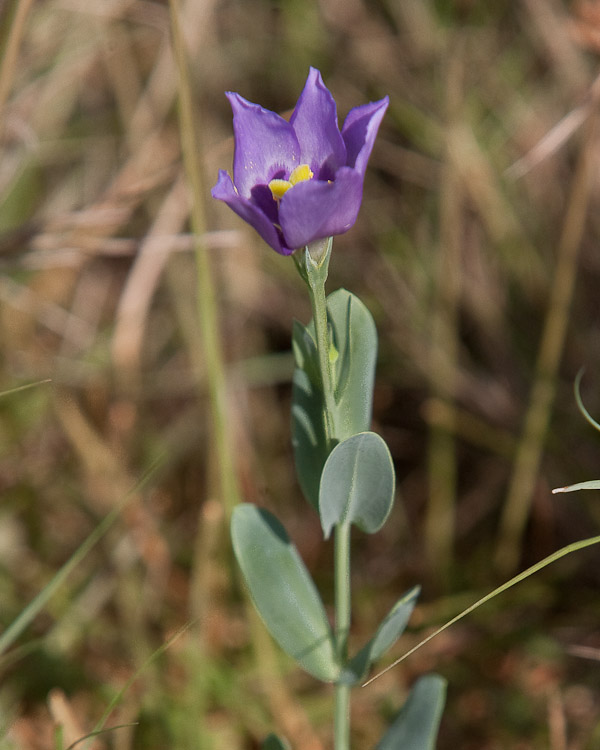
Marsh Gentain
These plants have a complex taxonomic and horticultural history. The garden Eustomas are best known under the names Eustoma grandiflorum or E. russellianum, or under the genus name Lisianthus. They are so well established under the last-mentioned name, that “Lisianthus” lives on as their handle in the commercial trade. Current classifications tend to regard all of these names as synonyms of E. exaltatum, making our wildflower and the vast array of garden Lisianthus one and the same species.
The plants are highly modified horticulturally and inter-crossed, yielding numerous cultivars with purple, violet, bluish, pink, white, single, and doubled blossoms. They are valued as garden selections, as potted plants, and especially as cut flowers. Many of the doubled cultivars resemble roses. Starting with attention in Japan in the 1930s, this species came (back) commercially to the U.S. in the 1980s and quickly became the number one cut flower in the U.S. although production problems emerged. Several cultivars have been developed in Florida, but Japan remains the capital of Lisianthus.
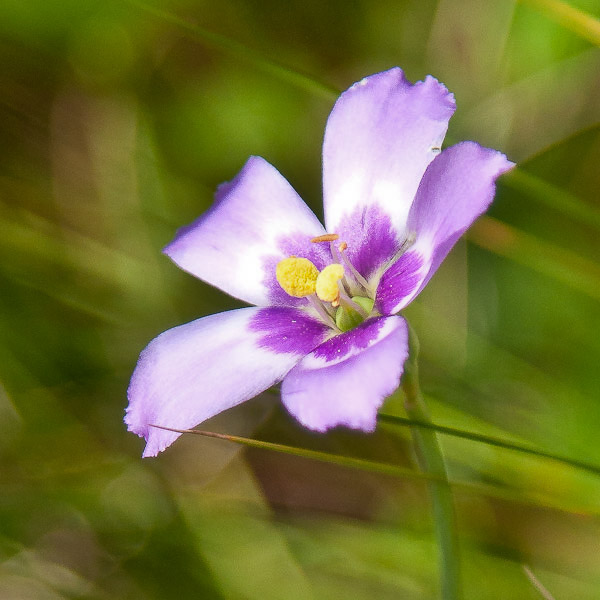
Marsh Gentain
The flowers are self-compatible, and an example of “protandry,” that is, with pollen released days before the stigma becomes receptive.
Personally, we regard native wildflowers as more beautiful than any artificial garden, but the “Marsh Gentian” is a species that graces everyone’s world from Florida natural areas to the Japanese cut flower industry.
 John Bradford
 George Rogers
 George Rogers
 Dee Staley
 Treasure Coast Natives