Plants that “make their own luck” are a fascinating bunch. Many improve their own circumstances, or, an ecologist might say, generate “autogenic positive feedback.” Today’s example from a windy walk in the scrub is the way single plants, or even better, clumps, capture blowing leaf litter and make their own compost. Any gardener worth their snippers can list the marvels of compost.
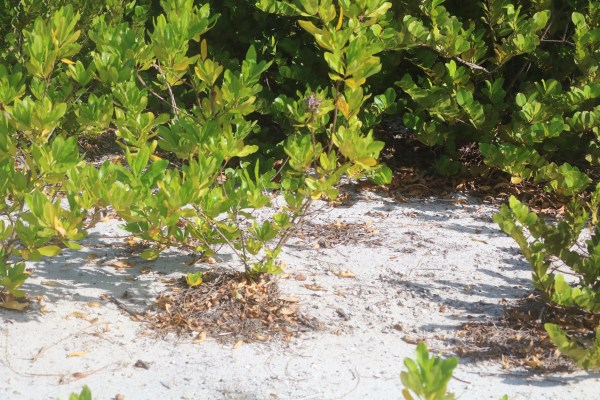
A natural mulch volcano around Varnishleaf.
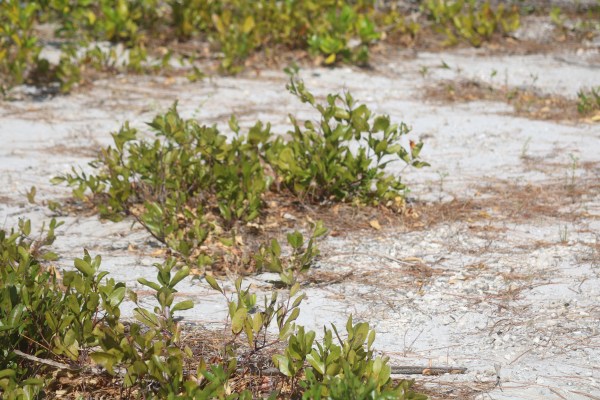
Clump of Gopher Apple acting like a leaf catcher brush.
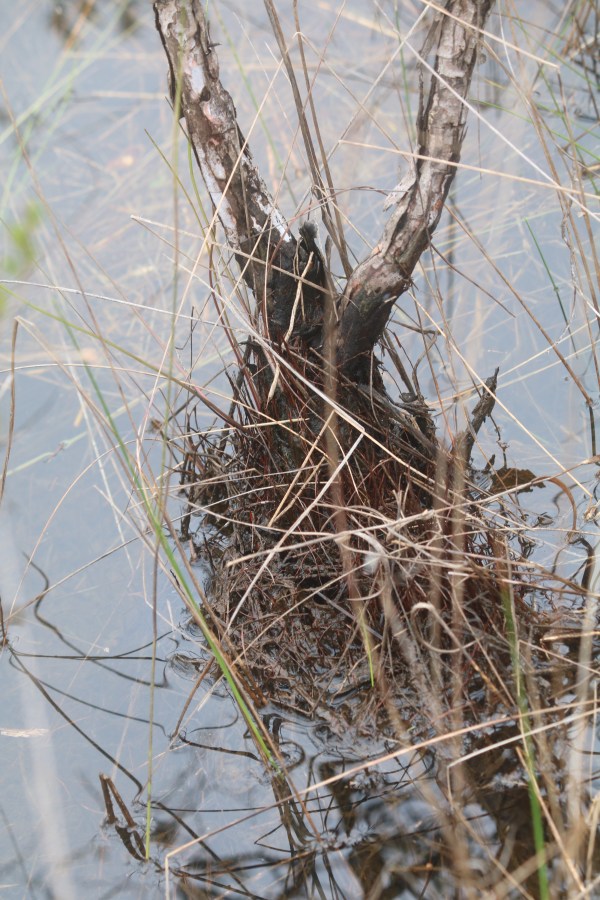
Peelbark St. Johnswort catches waterborne debris.
Have the actual benefits of this sort of thing ever been tested and demonstrated? Yea, but what’s more fun than digging around in in Google is walking around in nature. Often if you think about an ecological possibility—making it “the theme” of a stroll— you can make your own comparative assessments. Does the plant send roots into its personal compost? Do this with compost look healthier than those without?
A twist in this topic is root-parasitic plants, one’s that grow alongside hosts and divert goodies from the host roots. The downside for the hosts is obvious, but maybe paying rent too? Observers have shown or speculated that while host helps the parasite grow nice and leafy, the parasite sheds its leaves into the shared compost zone. It might even help block wind. Maybe free compost benefits the host more than the cost of the root mischief. Not that I have any proof, but locally the scrub-dwelling root parasite Hogplum (Ximenia americana) comes to mind.
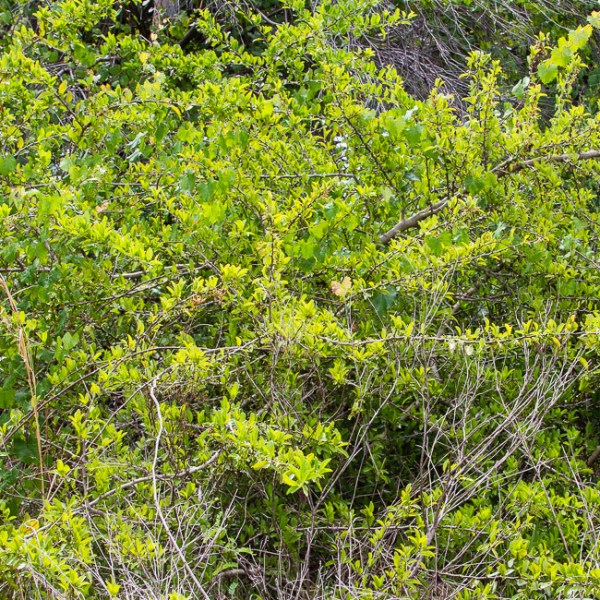
Hogplum growing a leafy contribution. By John Bradford.
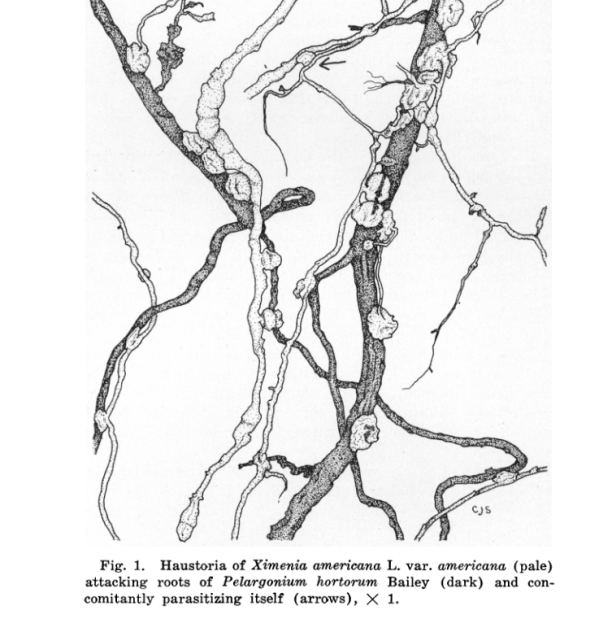
Hogplum underground thievery. By R DeFilipps (1969).
 John Bradford
 George Rogers
 George Rogers
 Dee Staley
 Treasure Coast Natives