RSS

Tag Archives: Asteraceae

DYCs are the Bees Knees

Narrowleaf Sunflower

Helianthus angustifolia

Asteraceae

Last Friday John and George trekked the Trail to the River (CLICK), also known as the Halpatioke Nature Trail,  a biodiverse satellite of Savannas State Park, in Port St. Lucie.

One of the many handsome marvels on the way to the river is Partridgeberry (Mitchella  repens), which I’m sorry, I can only regard as a wildflower from childhood Canadian canoe trips, not a South Florida trail flower.   It just doesn’t fit my world view here!
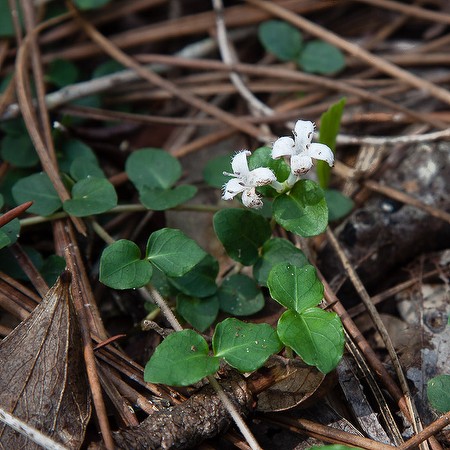
Partridgeberry (Twinflower, by JB)

Partridgeberry (Twinflower, by JB)

Also along the path are several members of a plant clique referred to by botanists as “DYCs.”  DYC stands for, “darned yellow Composites,” and apt term for anyone who has tried to sort out yellow-flowered members of the Aster Family.  Now please remember the “flowers” in the Aster Family are not real flowers, but rather are clusters of hundreds of tiny flowers all massed into one big false blossom.  A Sunflower is a whole lot of flowers.  (Details on this are in our archives CLICK)
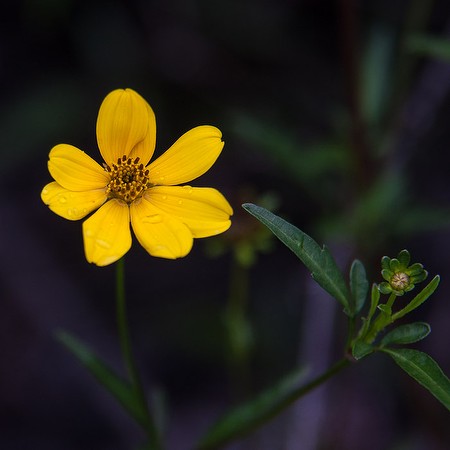
Bidens mitis a DYC (JB)
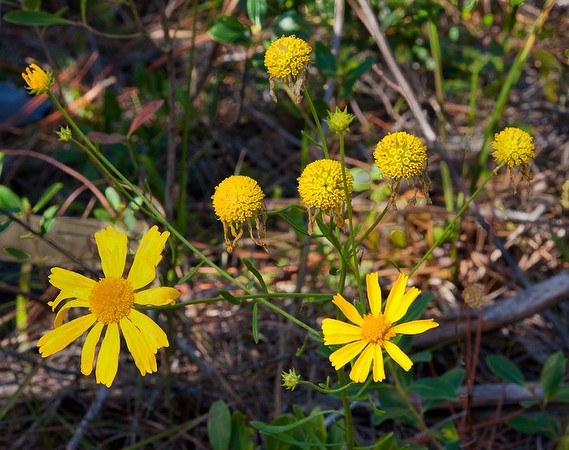
Bidens mitis a DYC (JB)


Balduina angustifolia, another one (JB)

Balduina angustifolia, another one (JB)

The King of the DYCs Friday was Narrow-Leaf Sunflower (Helianthus angustifolius),  with the lesser Smallfruit Beggarticks (Bidens mitis) as its loyal vassal.

If everything that could be known about Sunflowers were suddenly revealed it might boggle our brains.  They are a group with a lot goin’ on.  Technically, Sunflowers are the genus Helianthus, of which there exist roughly 50 species, all native to North America including Mexico.  About 18 species grow “wild” in Florida, natively or escaped.  From a taxonomic standpoint, they are messy messy messy, with hybrids, ancient and new cultivars, chromosomal variants,  intermediates,  unclear species borders, and divergent classification interpretations.
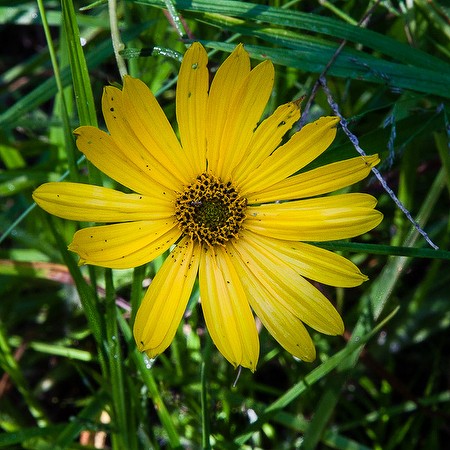
Narrowleaf SF (the King of the DYCs, by JB)

Narrowleaf SF (the King of the DYCs, by JB)

The big familiar common sunflower is Helianthus annuus, distributed “naturally” from Mexico to Nunavut.   Ancient peoples no doubt helped its transcontinental spread and diversification.  How many native American plant species have achieved agricultural prominence?  Native American humans used it for almost every use conceivable.  Arguably the most interesting ancient uses were culinary, for “seeds,” ground flour, and oil.   There were probably large-seeded (achenes)  cultivars in pre-settlement “horticulture.”

We like sunflower oil today, but a funny thing happened along the way.  After an early history of cultivation in North America partly for livestock forage and chickenfeed, Sunflowers fell of out of agricultural favor but caught on in Russia as an oil crop.  Oil-bearing strains returned to the U.S. from Russia with love in the 70s, and may help our grandchildren’s energy deficit someday.

Another sunflower with ancient “roots” is the so-called Jerusalem Artichoke (Helianthus tuberosus) distributed across much of North  America, including some of Florida.  What does it have to do with Jerusalem or artichokes? Its tuber is a food source and a source of combustible alcohols.
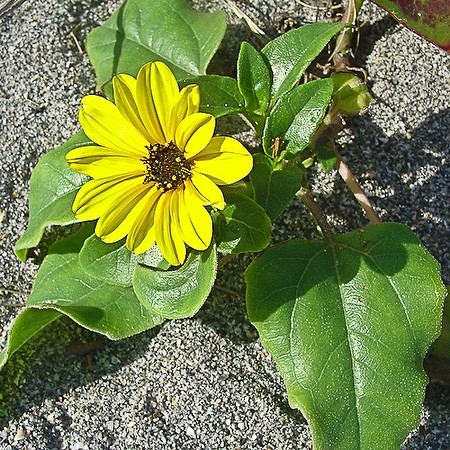
Little Beach Sunflower (by JB)

Beach Sunflower (by JB)

A garden favorite in Florida and far beyond is the Beach Sunflower, Helianthus debilis,  easy to grow and as pretty as a day at the beach.   Amazingly, this highly diverse foot-tall species can hybridize with the big common sunflower.  (See what I mean about messy species boundaries?)

But what about our Sunflower along the trail to the river?  Narrowleaf Sunflower (Swamp Sunflower, H. angustifolius) is a wildflower and a garden selection CLICK.   The flower extends northward and westward from Texas to New York from a southeastern limit probably near the trail to the river.

Narrowleaf SF is a chemical factory.  Aster Family members in general produce an array of smelly and bioactive compounds, so any given species can be a chemist’s goldmine.  Narrowleaf Sunflower has attracted recent attention most importantly for cytotoxic (cell-killing) agents with lethal effect against cultured human cancer cells.  CLICK   This general sort of screening and discovery is not rare, but in an already much-cultivated prolific plant it’s even better.  That would be a parallel history to the life-saving Oncovin chemotherapy from the Madagascar Periwinkle.

Even if Narrowleaf Sunflower turns out not to counter cancer, or even if it does, it feeds bees in spades.  UF Entomology Professor Jaret Daniels describes native bees filling the pollination gaps left by non-native honeybees diminishing from Colony Collapse Disorder, and he points out native wildflowers drawing on average 19 times as many bees as non-native blossoms.  Even better, he lists nine super-charged bee-feeding wildflowers.  Five of the nine are DYC’s, including Narrowleaf Sunflower.
 
2 Comments

Posted by on November 5, 2013 in Sunflower


Tags: , , ,

Purple Thistle

Cirsium horridulum
Asteraceae

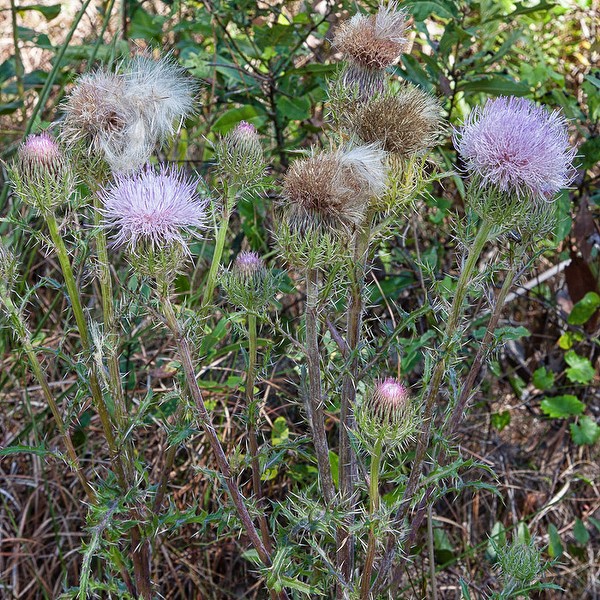
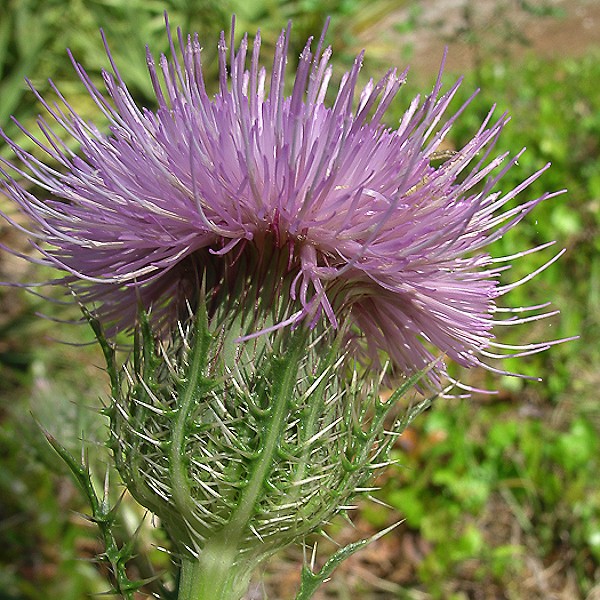
John and George last week explored a low pine woods with marshes, ponds, and Sandhill Cranes in the West Jupiter Wetland. The site was a floral  showplace of White Violets, Pineland Daisies, Yellow Sneezeweeds, Orange Milkworts, and more in colorful bloom. The trailside all-stars were native Purple Thistles, Cirsium horridulum.

Cirsium horridulum (by JB)

Cirsium horridulum (by JB)

Nothing could be less horrid than this proud wildflower. (The “horridulum” presumably relates to the thorns on the foliage and on the bracts under the flower head.) Thistles are especially happy plants for me, evoking childhood memories of bike rides, railroad tracks, and cows in the pasture.

Purple Thistle (by JB)

Purple Thistle (by JB)

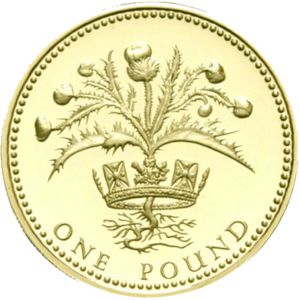
The broad term “thistle” embraces several thorny members of the Composite Family. The name is ancient, as are writings about thistles. They’re the symbol of Scotland, according to lesson, due to the painful spines tipping the fate of battle. You can scarcely find a plant group applied medicinally in more ways. Uses include treating swollen veins, controlling blood sugar, and relieving gastrointestinal discomforts.

Thistle-of-Scotland
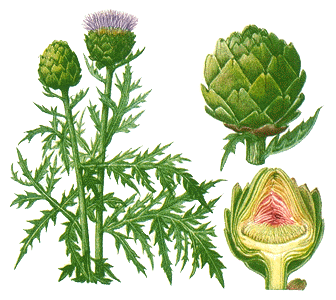
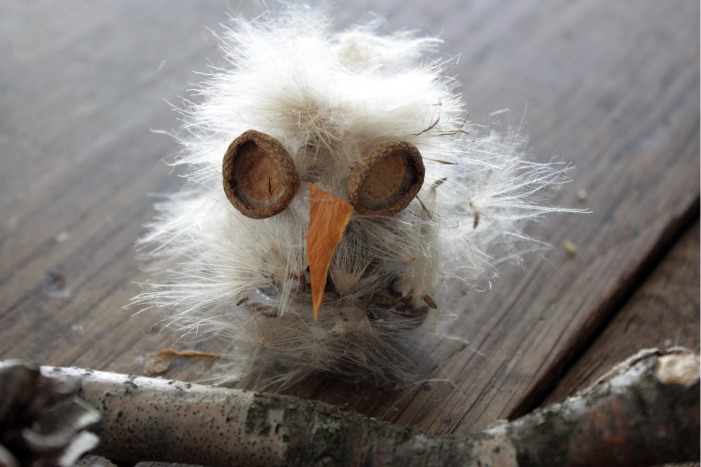
Thistle uses extend beyond medicine. Thistles solidify cheese as a vegetable rennet. And there’s nothing cozier than a goldfinch nest lined with thistledown. Thistledown provides the poofy end for blowgun darts. CLICK  Ever notice the similarity between artichokes and thistles? Artichokes are thistles of sorts, and weedy thistles, including C. horridulum, have had their soft inner regions served in foods.

artichoke-info0
What do you do if your pastures invaded by exotic thistles? Find a natural enemy of course and introduce it to smite those uninvited botanical guests. But watch out…that can backfire if the pest plant has native relatives. A weevil introduced from the Old World to control Old World Thistles in American pastures broadened its palette to native thistles, including our own Cirsium horridulum. The full extent of the problem remains to be seen.

Thistle weevil(From 5 orange potatoes ETSY site)

Thistle weevil
(From 5 orange potatoes ETSY site)

 
7 Comments

Posted by on February 15, 2013 in Thistle


Tags: , ,

Santa Maria Feverfew Packs a Punch

Santa Maria Feverfew

Parthenium hysterophorus

Asteraceae or Compositae

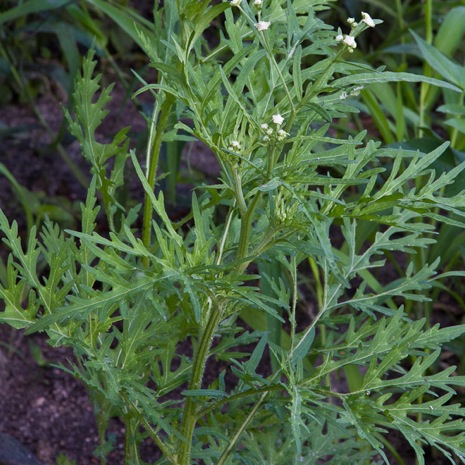
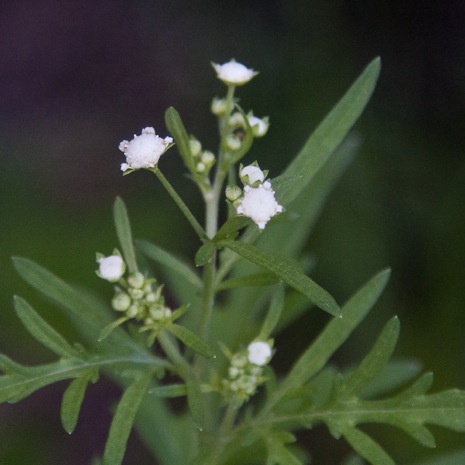
Parthenium (Today's photos by JB)

Continuing our exploration of the eastern shore of Lake Okeechobee today, John and George wallowed in invasive exotics, eating guavas, tripping over Syngonium vines, and admiring the tallest Johnson Grass we’ve ever seen.  (Billy is in North Carolina.)  Part of the fun was spotting one isolated little Coontie, which is native.  Has it been there a millennium? Did Native Americans bring it?  Did a seed float across Lake Okeechobee in a storm?  Does it date from someone dumping garden refuse?  Why is a Cycad the opening act for a post on Parthenium anyhow?  Well, they are both bioactive and toxic.

Let’s get on-topic.  An intriguing non-native plant loitering around the agricultural field borders is Santa Maria Feverfew (Parthenium hysterophorus), probably native from Mexico to South America.  It is now a worldwide weed, which tends to obscure the precise point of origin.

A clue to the strange brew within, the foliage has a distinctive odor when you crush it, which is a bad idea, as the itchy-scratchy sap can raise a few blisters.  Despite the hazard, it is fun to sniff weedy members of the Composite Family, because they tend to contain sesquiterpenoid lactones.

Huh?  Back up a second here.  Terpenoids (TURP-ah-noids) are usually pleasantly fragrant botanical essences, such as pine, lemon,  citronella,  and menthol.  They are based on 10-carbon “terpene” chains.  Just as a sesquicentennial is  150 years, a sesquiterpenoid (SES-kwa-turp-ah-noid) is a terpenoid-and-a-half, that is 15 carbons, and the term “lactone” (LACK-tone) refers to specific molecular configuration beyond the scope of our little e-chat. All right now,  don’t get hung up on the chemistry—the point here is what the chemicals do.   Sesquiterpenoid lactones tend to have a characteristic bitter or medicinal odor, not necessarily unpleasant, and, although found in multiple plant families, they are the flagship anti-herbivory arsenal of Composites, including Feverfew.  Parthenium contains a medicine cabinet of sesquiterpene lactones as well as other toxins.  The best-known lactone in today’s species is named for it, parthenin.

Pretty little snow white flower heads on Parthenium. It looks better than it smells.

Sesquiterpenoid lactones are a veterinarian’s (and butcher’s) nightmare.  Especially hard on sheep and goats, they’re not so great for cattle and horses either.  The compounds attack vegetarians in varied nasty ways—they are neurotoxic, and able to bind to animal tissues interfering with varied functions, and prone to cause digestive lesions.  They cause “spewing sickness,” where the animal can drown in its own vomit.  These toxins spoil the meat of livestock who eat them.

And here is an odd effect with possible benefits in human medicine: antimicrobial activity.  What would a plant do with antibiotic capability?  Apparently the sesquiterpenoids interfere with the microbe symbionts in the animal rumen, adding even more injury to the error of eating the wrong weed.

The compounds have insecticidal characteristics too, harnessed in some regions where Parthenium helps with flea control.

A fine line separates scary poison and useful medicine.  Species of Parthenium have served historically against diarrhea, bacterial infections, malaria (some partheniums are called “wild quinine”), female troubles, pain, and fevers.   But watch out, Parthenium derivatives reportedly damage human chromosomes.

If you are a plant, who do you want to suppress in addition to hungry grasshoppers and goats?  Answer: competition from other weeds.  One study showed parthenin, mentioned above, to thwart germination, to diminish the chlorophyll content, and to sabotage enzymes in a species of Ageratum.  Maybe it has commercial value as a natural herbicide, but we don’t really want to handle it!

The botanical name is just plain odd.  The name Parthenium is of debatable origins that we’ll ignore.  The weirder part, hysterophorus means womb-bearing.  What was Linnaeus thinking?  Not clear, but the flower heads do look like the ends of the fallopian tubes.

Many members of the Composite Family contain latex.  A related species, Parthenium argentatum, is the source of the rubber substitute guayule.

What a plant: it’ll cure your cooties, mutate your offspring, make the goat barf, give a horse a crummy in his tummy, sour the lamb vindaloo, irritate your skin, and self-weed the garden.  Yet it looks so white-flowery innocent by the side of the canal.  (This post is a team effort by John Bradford and George Rogers.)

 
Leave a comment

Posted by on July 30, 2011 in Santa Maria Feverfew


Tags: , , , , ,