Club-Moss
Lycopodiella species
Fern Allies
Two fun things occurred in recent days. I had the good fortune to tour the University of Michigan Natural History Museum in Ann Arbor, Michigan, and went botanizing in the West Jupiter Wetlands with John. And the two experiences overlapped. Natural History museums are full of dioramas showing past geological periods, such as the Carboniferous Period 360-300 million years ago, and the West Jupiter Wetlands has living fossils reminiscent of those times still rising from the mud. Every time I see Lycopodiella my mind’s eye goes to Coal Age forests.
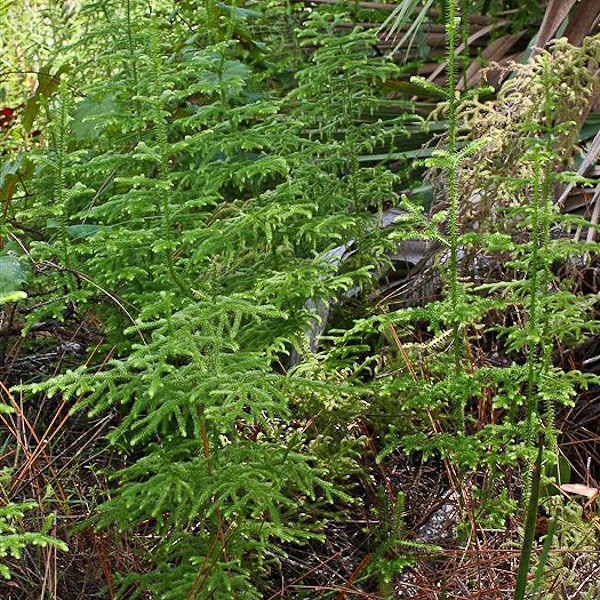
Lycopodiella cernua, Nodding Clubmoss (by JB)
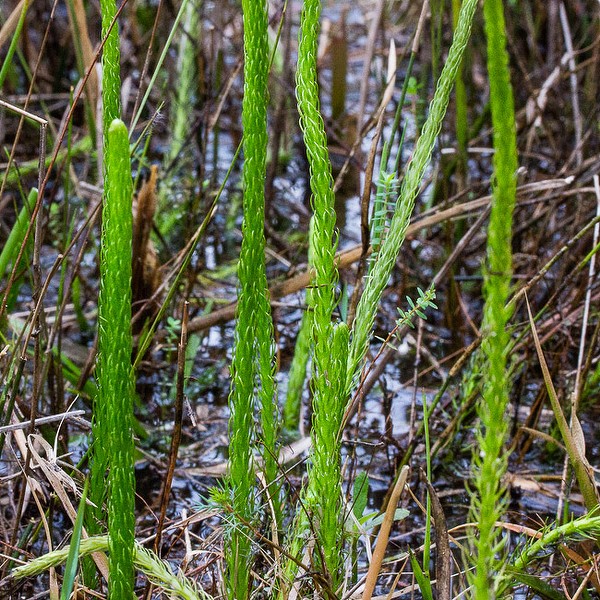
We’re talking about an odd assortment of plants known as Fern Allies, not particularly related to each other, and not particularly related to ferns, but all very primitive dating back hundreds of millions of year before Flowering Plants and mammals, even before dinosaurs. Floridians know many Fern Allies, including the Spikemosses (Selaginella) we see natively in scrub habitats and non-natively in cultivation; the Horsetails and Scouring-Rushes (Equisetum) seen likewise native and not; the Whisk-Fern (Psilotum) hanging out of Cabbage Palm boots and out of plant containers, the Quillworts (Isoetes) familiar to some freshwater plant enthusiasts and to aquarium owners, Hanging Clubmoss (Huperzia dichotoma, a rare epiphytic species), and the Clubmosses of the genus Lycopodiella, which are the main topic for today. All of these Fern Allies share an overall simplicity in structure, a primitive life cycle based on spores with no seeds or flowers, and ancient ancestors. Let’s get specific now and talk about today’s Lycopodiella.
To quit listing species and to get to something interesting, I can’t see a Lycopodiella and not think of a museum diorama showing prehistoric swamps forest. In the Carboniferous Period and before there were Lycopodiella-ancestors (Lycophytes) and ancestors of other Fern Allies similar to today’s, except that “back in the day” they were dominant forest trees, and for the most part today’s humble Fern Allies are inches to a couple feet tall. Compare John’s photo of Lycopodiella above with the ancient tree-sized Fern Allies pictured below. It stirs the imagination. Living fossils.
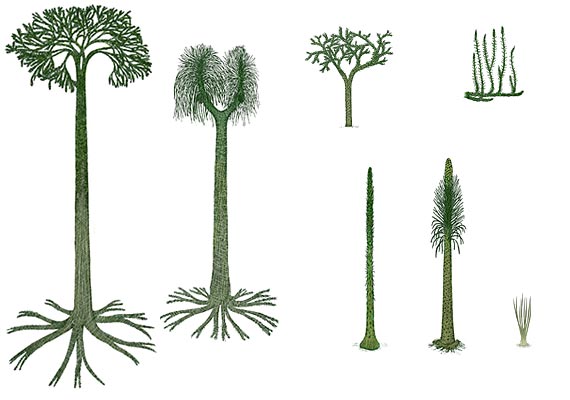
Carboniferous and older Fern Allies. The ones on the left were 70 feet tall.
That reproduction is by spores has come up already. Most Lycopdiellas have spores cases in clusters in small leafy cones made of slightly modified leaves. Reverting to an older broader name, Lycopodium spores have a remarkable history in human affairs. They are oily, slippery, and unwettable like a duck. They once served to lubricate rubber gloves and pills. And if that does not excite you, maybe fireworks will.
Sprinkled in the air the spores are explosive. Before the days of smoke detectors and liability, setting them off was a good old botany class gimmick to build class enrollment. The spores once served in pyrotechnics and in old-time photographic flash powder. Even now they are sold as “Dragon’s Breath.” How they harvested the spores in industrial quantities would be interesting to know. But don’t take it from me—see the exploding Clubmoss spores on the Ellen Degeneres Show. CLICK (Skip the add and jump ahead to about the middle of the Youtube.)
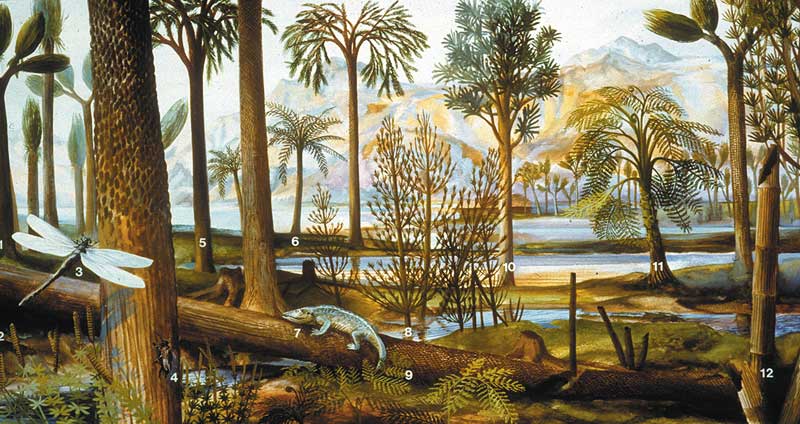
Carboniferous forest with ancient Fern Allies
Diorama Alan Singer http://web.stanford.edu/group/stanfordbirds/SAN/AAAS-DC/J/Singer-DC.html
 John Bradford
 George Rogers
 George Rogers
 Dee Staley
 Treasure Coast Natives