RSS

Author Archives: George Rogers

Unknown's avatar

About George Rogers

Florida botanist

Great News for Sufferers from Sexual Irritability!

Spatterdock (Spadderdock)

Nuphar advena

Nymphaeceae

Visited Grassy Waters Preserve off of Northlake Blvd. this week, and the Spatterdock water lilies made the trip as pretty as a picture.  So did seeing ripening persimmons on the trees.  There are plenty of persimmon trees around, but it has not been my common experience to see the almost-mature fruits.

Everyone has seen these lovely “lilies.”  The leaves float, or may rise from the water surface, and the flowers are yolk-golden and cup-shaped.  These and Pickerelweeds take me back to childhood fishing trips  and boat trip picnics.
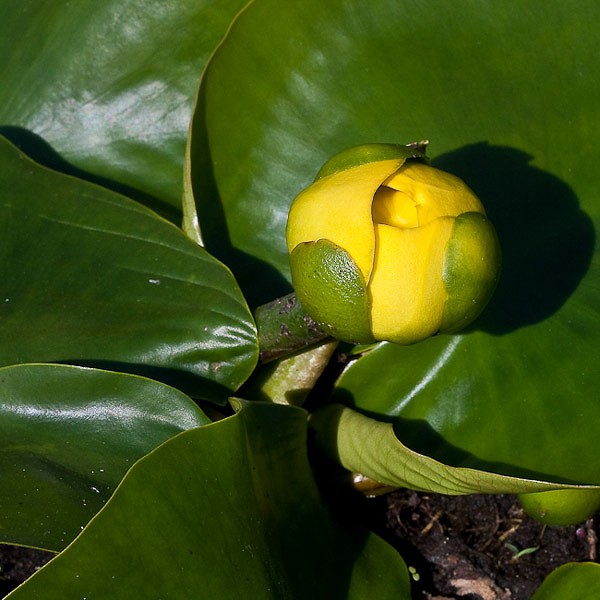
Young flower with the triangle door.  Careful it might slam behind you.  (All photos by JB)

Young flower with the triangle door. Careful it might slam behind you. (All photos by JB)

Scattered in the plant world are flowers known to imprison their pollinators temporarily,  then parole the buggy inmates to continue their symbiotic services.  Such flowers include some Orchids, Aristolochias, Aroids, and today’s Spatterdocks.  When the Spatterdock flower is young, the stigma is pollen-receptive and the pollen-making  stamens are inactive.  The young flower is closed except for a triangular opening between the petals;  insect visitors can enter the triangular portal and dust any pollen they carry off onto the stigma, which they touch upon entry.  The triangular opening closes at night, trapping the pollinators until the hole reopens the next day.  By then the stamens have released pollen, re-dusting the visitor.  This repeats over a series of days until the flower becomes fully open.  Pollination is by beetles, bees, flies, and (if you can believe it) reportedly aphids.  Aphids?  Maybe they are drawn to easily available sap in the nectar-producing petals.

Nuphar (Click for more photos)

As an  odd tidbit, the fruits float and disperse the sinking seeds, like zeppelins dropping bombs.  The sunken seeds have a problem—mature plants have floating or emergent leaves at the water surface.  This is similar to a problem of the young stages of a tree-top vine’s seedling on the ground.  In Nuphar, the first leaf is strap-shaped, the second leaf is expanded, and it is not until the 4th or 5th leaf that the foliage looks proper.

The plants make big starchy rhizomes.  These along with fruits and seeds were food to Native Americans.  But not so fast!  The plants also make alkaloid drugs, so the rhizome-eaters must have known what to do about that, just as ancient peoples in the Old World knew how to brew an intoxicating beverage from the flowers.  The alkaloids are of modern interest to destroy various cancer cells and an ability to cause apoptosis (programmed cell death relevant to cancer treatments).  More curiously, a reported use for Nuphar root tea to treat “sexual irritability.”  Not exactly sure what that is, but I have a lively imagination, so let’s cure S.I. in our lifetime!

Victims of S.I. (identities disguised for privacy)

Note:  Some of the info here comes from a 2007 Monograph of Nuphar by botanist Donald Padgett.
 
5 Comments

Posted by on July 18, 2013 in Spatterdock


Tags: , ,

Evolutionary Flip-Floppers

Kyllinga odorata (Cyperaceae)

Ludwigia species (Onagraceae)

Today John and George sweated through Halpatioke Park in Stuart, Florida.  With resort-quality lakes deep in the forest, Halpatioke is always a beautiful source of botanical surprises from “northern” species near their southern limit, such as Partrideberry (Mitchella repens) to “tropical” species near their northern border, such as Lax Panicum (Steinchisma laxum).  But what made an impression today were the weird flowers—the ones not playing by the usual rules.

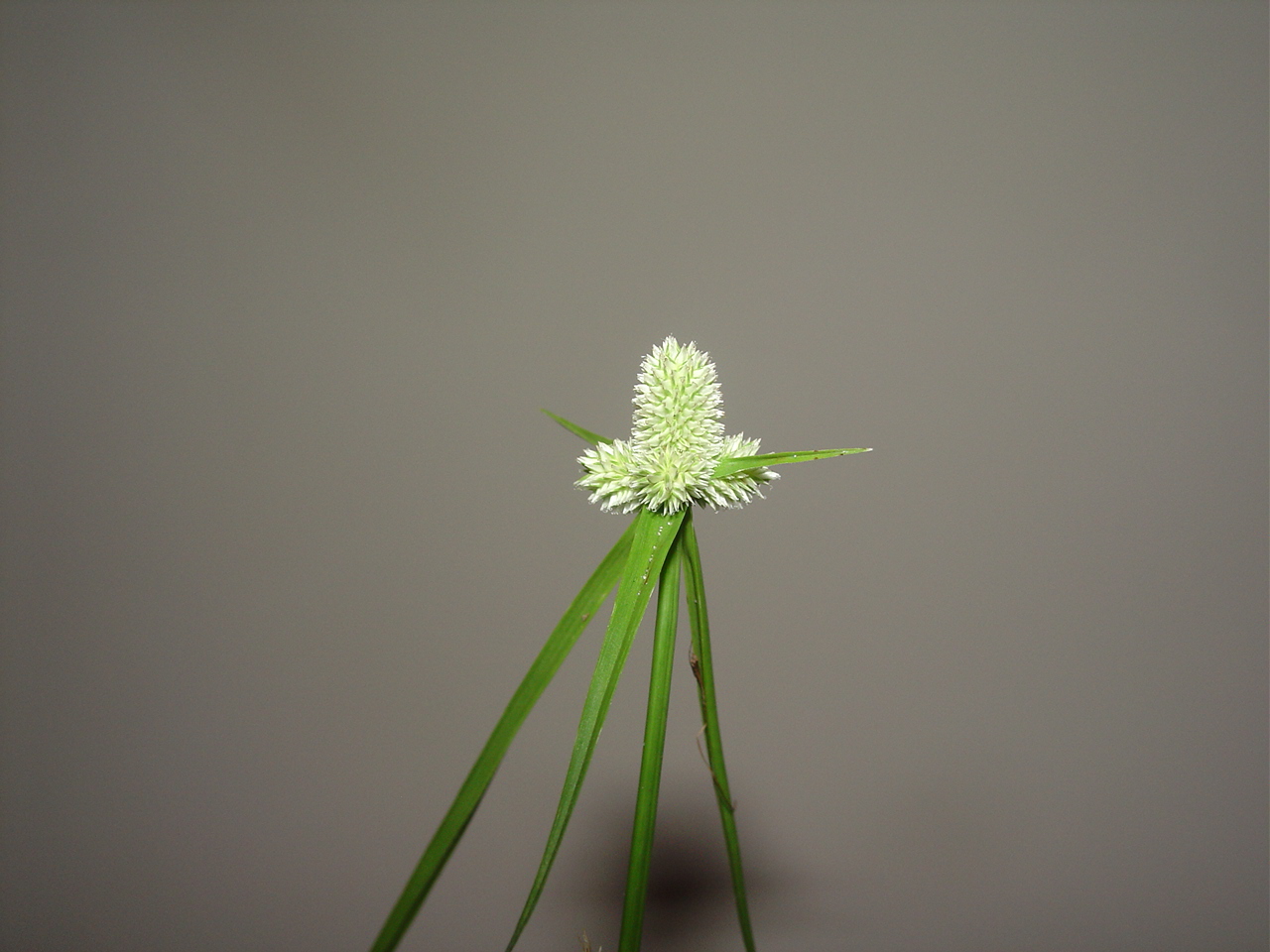
Fragrant Kyllinga, white and fragrant.
Fragrant Kyllinga, white and fragrant. (by JB)
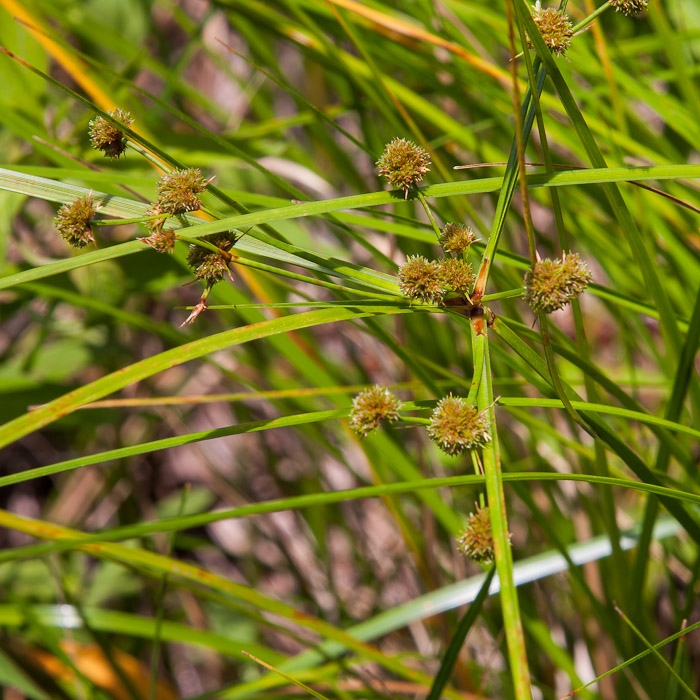
First, in the lawn there was the native Fragrant Kyllinga (Kyllinga odorata).   We all know the vast majority of grasses and sedges to be wind-pollinated, no showy flowers and no floral fragrance.  Florida wildflower enthusiasts know an exception to this to be the species of Rhynchspora called Painted Sedges, with white bracts at the top simulating petals.  (Some may have learned these under the name Dichromena, two-toned.)  We are not talking about those today.

Fragrant Kyllinga is an inconspicuous little sedge, often a turf weed, providing a less familiar case of an insect-pollinated sedge.  In most Kyllingas the flower cluster is green, odorless and typically sedgelike.  But in Fragrant Kyllinga the thimble-shaped flower cluster is nearly white and sweetly fragrant.  Evolution works in weird ways.  Wind-pollinated plants are generally regarded as having abandoned creature-mediated pollination.   Exceptional fragrant or colorful plants in a wind-pollinated family thus seem to have “reinvented” insect pollination.  With petals gone, the white color must be on modified leaves under the flowers in the Painted Sedges and Fragrant Kyllinga.

Ludwigia maritima (JB), a yellow-petal species.

Ludwigia maritima (JB), a yellow-petal species.

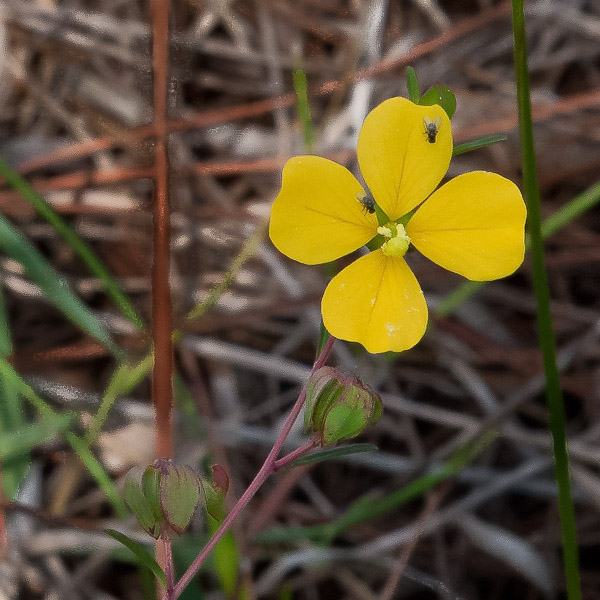
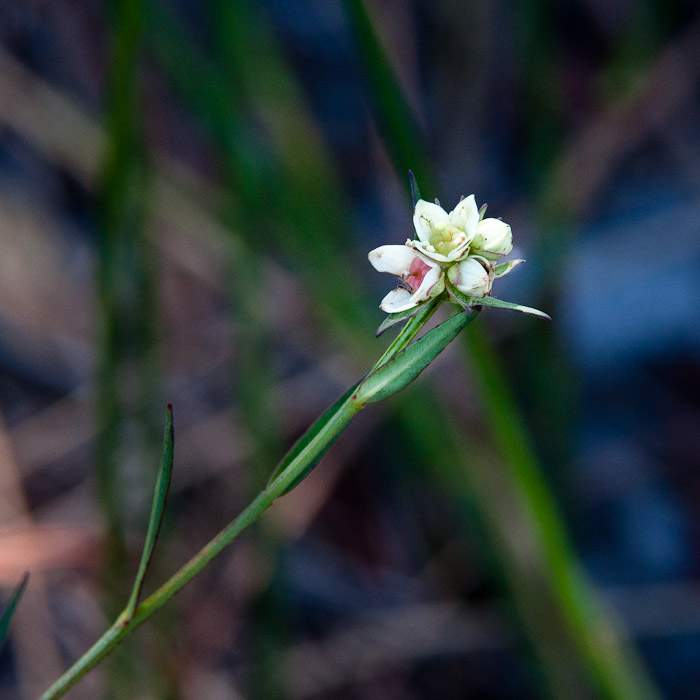
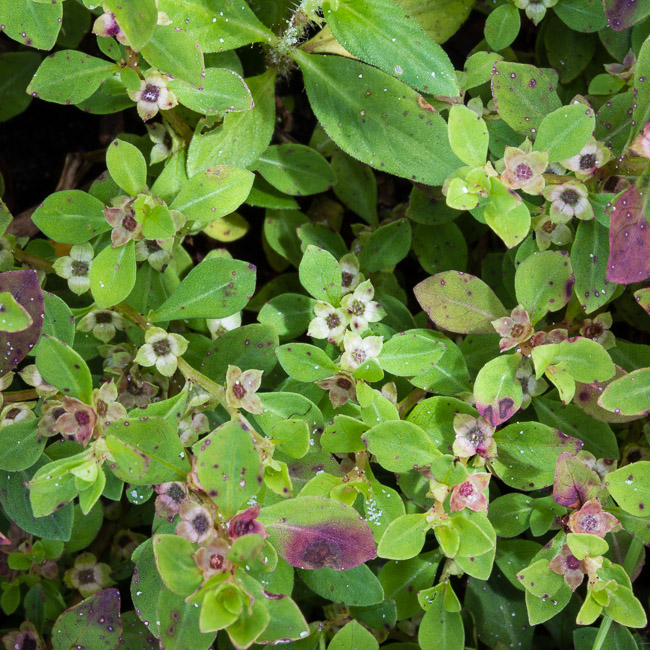
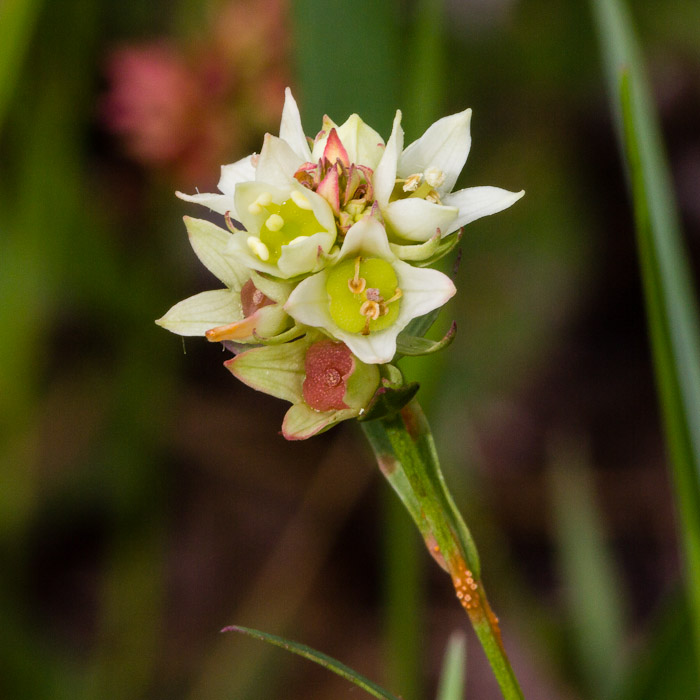
Not long after sniffing the Kyllinga  we came upon a lake shore patch of what we took to be Small-Fruited Ludwigia,  Ludwigia microcarpa, another head-scratcher.  Most of us probably tend to think of Ludwigias as having conspicuous yellow blossoms, such as the showy Peruvian Primrose-Willow rising bright yellow from roadside ditches.  Yet a number of Ludwigia species have done away with petals or nearly so. (What look like petals in the photos below are sepals.)   Examples of petal-less Ludwigias (by JB) are illustrated below:

ludwigia lanceolata Ludwigia microcarpa Ludwigia suffruticosa JB

These obviously differ dramatically from the yellow-petal Ludwigias. Maintaining any unnecessary structure is a biological liability and waste of energy, sort of like maintaining an unused residential swimming pool, but petals not needed?

Are those petal-less species self-pollinated, or able to make seeds without pollination?   Those abilities are not rare in the plant world, but I doubt that explains the absence of petals.  The flowers without petals have otherwise well-formed open flowers, the sepals have a slightly petal-like appearance, even becoming creamy or tinted rather than the usual sepal-green.   The flower centers can be colorful as well.

Now we go to pure speculation.  Here is a guess.   Maybe the genus has divided its pollination between bees drawn to the big bright petals on some species, and other insect visitors not particularly drawn to big yellow petals.   Losing petals genetically is probably a minor change, basically “instant evolution.”  What’s striking is that the petal-less species are not all most closely related to each other.   Some have species with petals as their closest relatives, implying that that petals were lost more than once as separate events.    There must indeed be something “good” about petal loss.

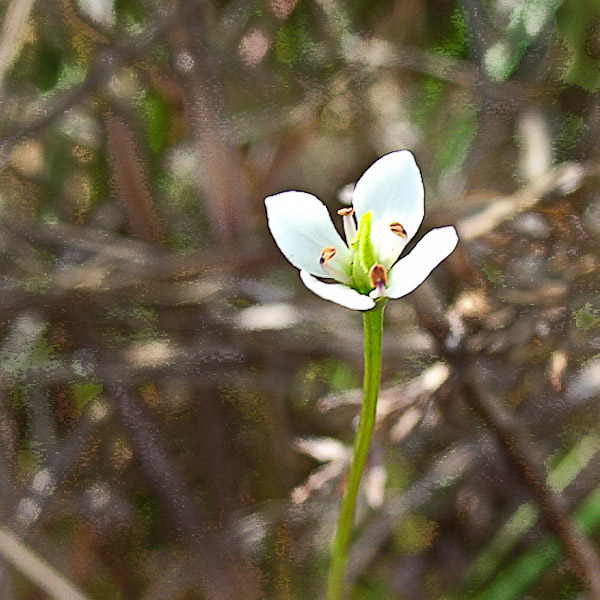
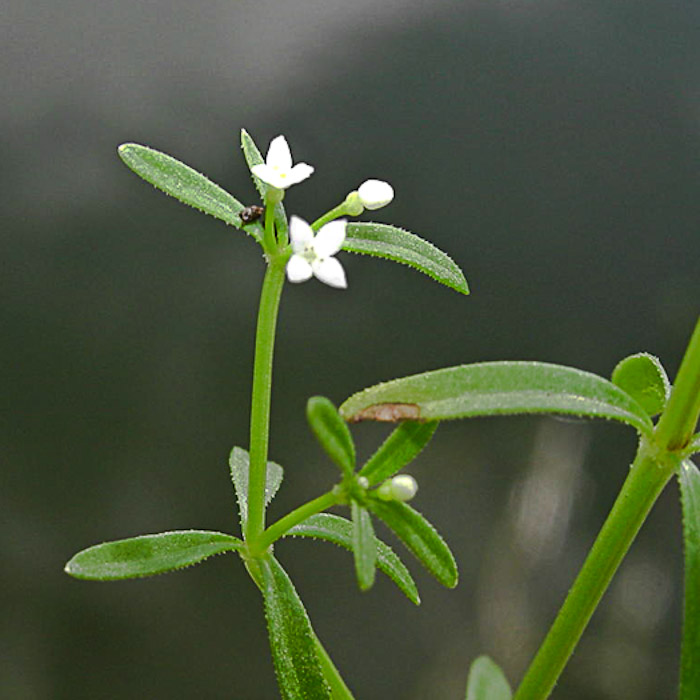
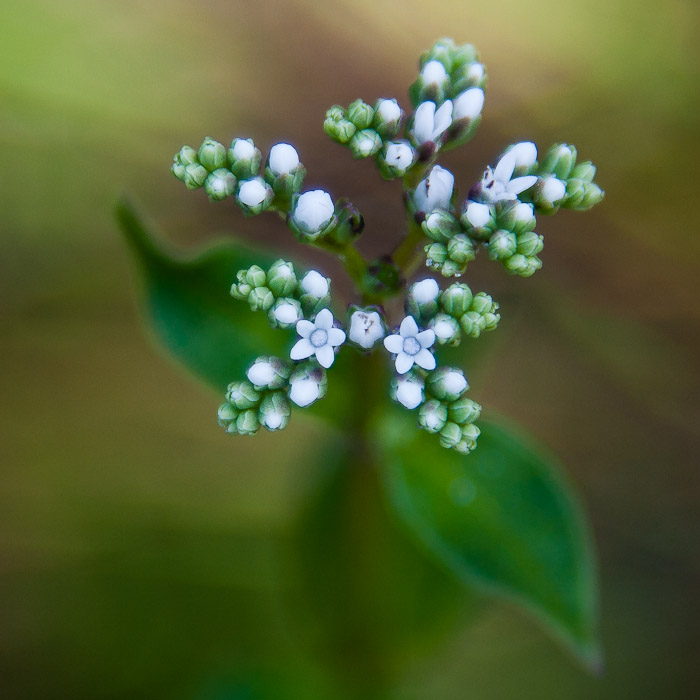
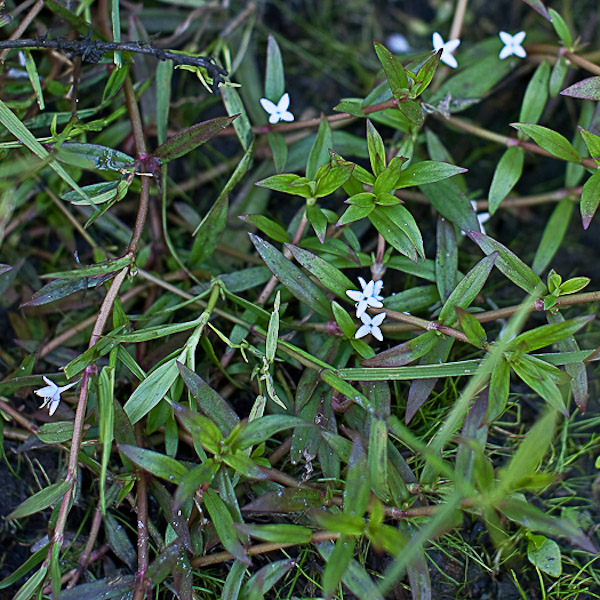
If I can beg your credibility a little, the petal-free Ludwigia flowers are not terribly different from flowers of roughly similar sizes and colorations encountered in many other plant types in similar marshy or shoreline habitats, for instance,  Swamp Hornpod (Mitreola sessilifolia),  Herb-of-Grace (Bacopa monnieri), Buttonweeds (Diodia species),  Bartonia (Bartonia verna),  Bedstraws (Galium species), Water Pimpernels (Samolus species), and others.

Below are several species not related to Ludwigia.  The petal-less Ludwigias are more similar to these than they are to their yellow-flowers relatives.  They are all roughly in the same size range.

Bartonia verna (JB)

Bartonia verna (JB)

Bedstraw (Galium, by JB)

Bedstraw (Galium, by JB)

Hornpods (by JB)

Hornpods (by JB)

Diodia (by JB)

Diodia (by JB)


Tags: , , ,

Nature Deficit Disaster

Nature-bugs like me avidly bemoan nature-deficit-disorder, the concept that today’s children grow up in a nature vacuum sucked dry by video games, sterile air conditioned gated communities, and overly structured  upbringings.  

All true of course, but thinking back to my own childhood in industrial Wheeling, West Virginia followed by Detroit, I don’t recall childhood companions terrifically fascinated with spiders and warblers.    I do recall adult concerns about kids getting too soft and indoorsy, but then again in my recent readings of 1920s nature writings,  they worried back then too about the kids losing their grip on nature.    That worry must go back all the way to the transition from a land of farmers to the Industrial Revolution, and I kinda suspect 19th Century farm kids were more interested in the attractions of the big city than in wildflowers and butterflies.  The hippies talked about “back to nature” in the 60s, but that was mostly some silly affectation with no substance.  Were the ancient Romans interested in nature?

But even if it is long-standing human nature to ignore Mother Nature, things seem extra screwy to me when I teach a botany class with students afraid to touch a flower because it might house a bug.   When the Boy Scouts seem more concerned with silly exclusive policies than in bringing kids outside.   When lightning bugs and salamanders decline and nobody notices.   When “outdoor activity” becomes golf and soccer.   When fishing became more expensive than leisurely.  When to see butterflies I go to “Butterfly World.”  And when a college can’t teach ecology without flying everyone to Costa Rica.

Something has even happened to gardening.    Forever, hasn’t gardening been more about beauty, flowers, soil, fresh air, exercise, wind, and worms?   A personal experience, or a family experience, often multigenerational.   It was for everybody.  So when did gardening become “landscaping”?  When did ostentation loom large?  When did ego creep in?  Who in the world ever thought there’d be “garden celebrities.”  Oh come on!   Let’s dig the dirt and plant some flowers.

I don’t think it is as simple as, “when I was a kid we played outside in the hills and meadows, and now we don’t.”   (Although that may often be quite true.)    What worries me more is a slightly different shift in values, a lost ability to enjoy basic simple pleasures, nature or whatever it may be.   Life has gotten so fast, so specialized, so complex, so competitive, and so driven by some sort of new values coming at us electronically.

Enviornmentalists are fond of explaining attitudes about nature in terms of World View.   Seems to me that collectively our big World View has homogenized around an unnatural core through the electronic media bath in which we live:  giant TVs, WWW,  cable news 24/7,  pundits, gurus,  satellite radio, political polarization,  stock reports,  sports fixation.   Reminds me of my college days ca. 1970 when Marshall McLuhan with the “medium is the message” was hot classroom fodder.    I just looked him up on Wikipedia and found a comment that seems to say so much:  “Key to McLuhan’s argument is the idea that technology has no per se moral bent—it is a tool that profoundly shapes an individual’s and, by extension, a society’s self-conception and realization.”

It isn’t that our “self-conception and realization” is anti-nature, but rather merely a narcissistic cyber-world ever-evolving away from the small tangible pleasures, individual pursuits, and the values they engender.    Even our conversational social lives meld into Facebook, texting, and Twitter.  Celebrities tell us what to value.   Nature is not in the back yard—it is on the Discovery Channel.

And here I sit on a beautiful Florida summer afternoon with my face buried in a laptop computer.

 
7 Comments

Posted by on July 10, 2013 in Uncategorized


Sea Blite and Castaway Plight

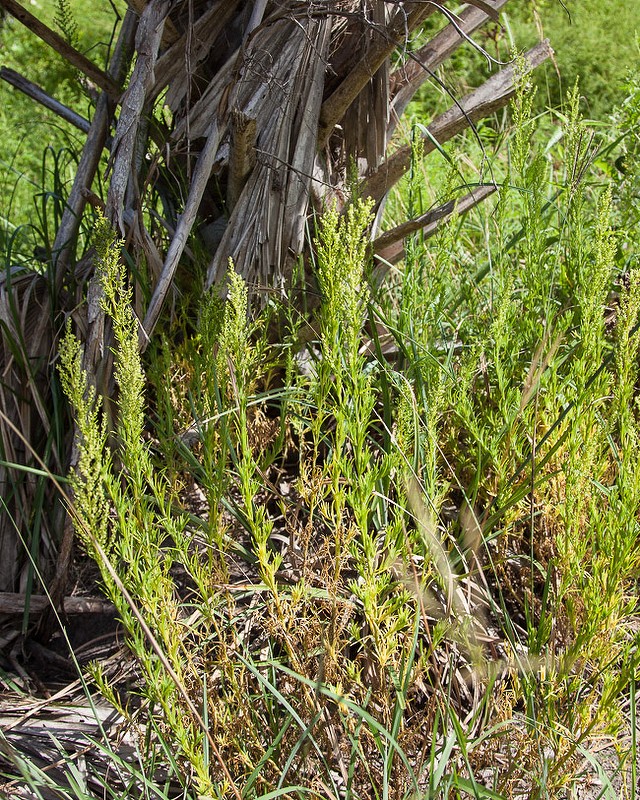
Sea Blite

Suaeda linearis

Amaranthaceae (Chenopodiaceae)

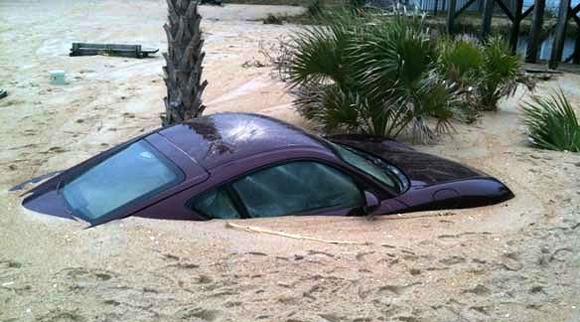
John, I TOLD you to turn right.

John, I TOLD you to turn right.

Yesterday John and George mired the car hopelessly in the seaside sand lost in the remote reaches of the Hobe Sound National Refuge, all in a day’s work for fearless adventurers.   It happened right as I said, “that sand looks firm.”  We became stranded castaways deep in a mangrove jungle unvisited by humans since Jonathan Dickinson.  While we stressed over who might find our buzzard-picked remains, we kept our spirits up by exploring the salty-marly mangrove lowland behind the dunes and singing marching songs from the Boer War.  We looked for esculent native plants to mitigate our stranded plight.  There wasn’t much to hunt and gather, but Black Mangrove was lovely in flower, and no, that wasn’t a skunk, it was White Stopper.

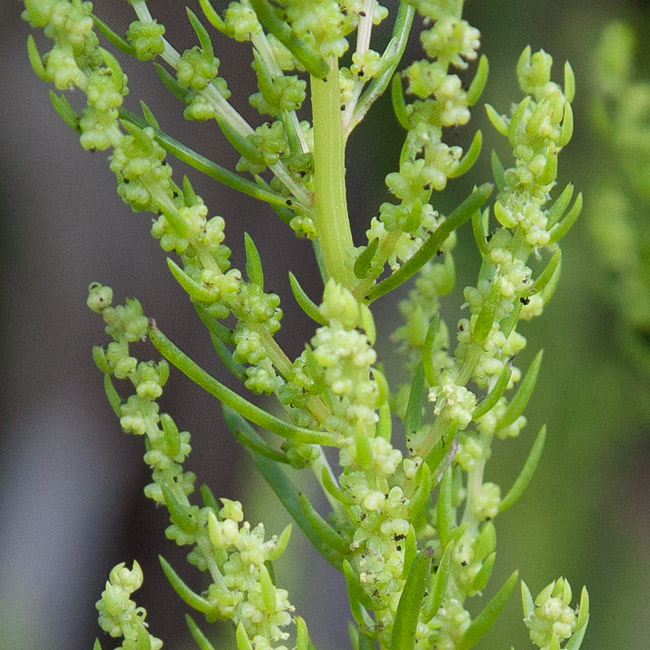
Our destitution gave us time to ponder convergent evolution.  (That is when unrelated species develop similarities due to similar adaptations.  Sharks and Porpoises are not related but they look similar.)  We saw no sharks nor porpoises, but we did see how salty-place plants have a convergent tendency toward succulent leaves that look like fingers.  The fat-finger-foliage species include Batis maritima (Saltwort, Batidaceae),  Salsola kali (Amaranthaceae), Sesuvium portulacastrum (Sea-Purslane, Aizoaceae), Salicornia bigelovii (Glasswort, Amaranthaceae), and Suaeda linearis (Sea Blite, Amaranthaceae).

Yes, the foliar similarities can confuse identification.  And yes, they confuse common names.  The common names for these species are intertwined and contrived.  For example, Batis maritima and Salsola kali (and undoubtedly others) get called “Saltwort,” hence the silly misleading name “Russian Thistle” to differentiate Salsola.  My personal outlook—never get too fixated on the English names for non-prominent plants.

The main succulent finger species yesterday was Suaeda linearis,  representing  the mostly saline genus Suaeda which has over 100 species.   As is often true of coastal species, the distribution is wider than you think.  Suaeda  linearis extends from Maine to Mexico and southward.  Such species keep us from getting too hung up on latitude.

Suaeda linearis (JB)

Suaeda linearis (JB)

Suaedas inhabit saline desert areas in North Africa, where  Beduins burn the foliage to obtain soda-ash (sodium carbonate)  for laundering,  dying clothing, and fine-tuning the pH in their pools.  And speaking of burning  Suaeda, North Africans burn the plants also to generate smoke for asthma relief.  Suaeda is an ancient Arabic name.

Close-up (JB)

Close-up (JB)

Closer to home, Native North Americans appreciated the seeds as a staple grain, which was a comfort to John and me as we despaired of rescue yesterday.  As we roasted fiddler crabs on burning Suaeda and tried to invent a solar desalination still using our shoes, John suddenly remembered we had cell phones.  The miracle of Verizon brought a nice man named Bill with a big truck to yank us out of our sandy Hell to explore and blog another day.

[Note—that isn’t really John’s car. His car isn’t that cool.  But we did get quagmired and rescued deep in the jungle.]

 
6 Comments

Posted by on June 29, 2013 in Sea Blite


Tags: , , ,

Showy Rattlebox – You Get Three Wishes

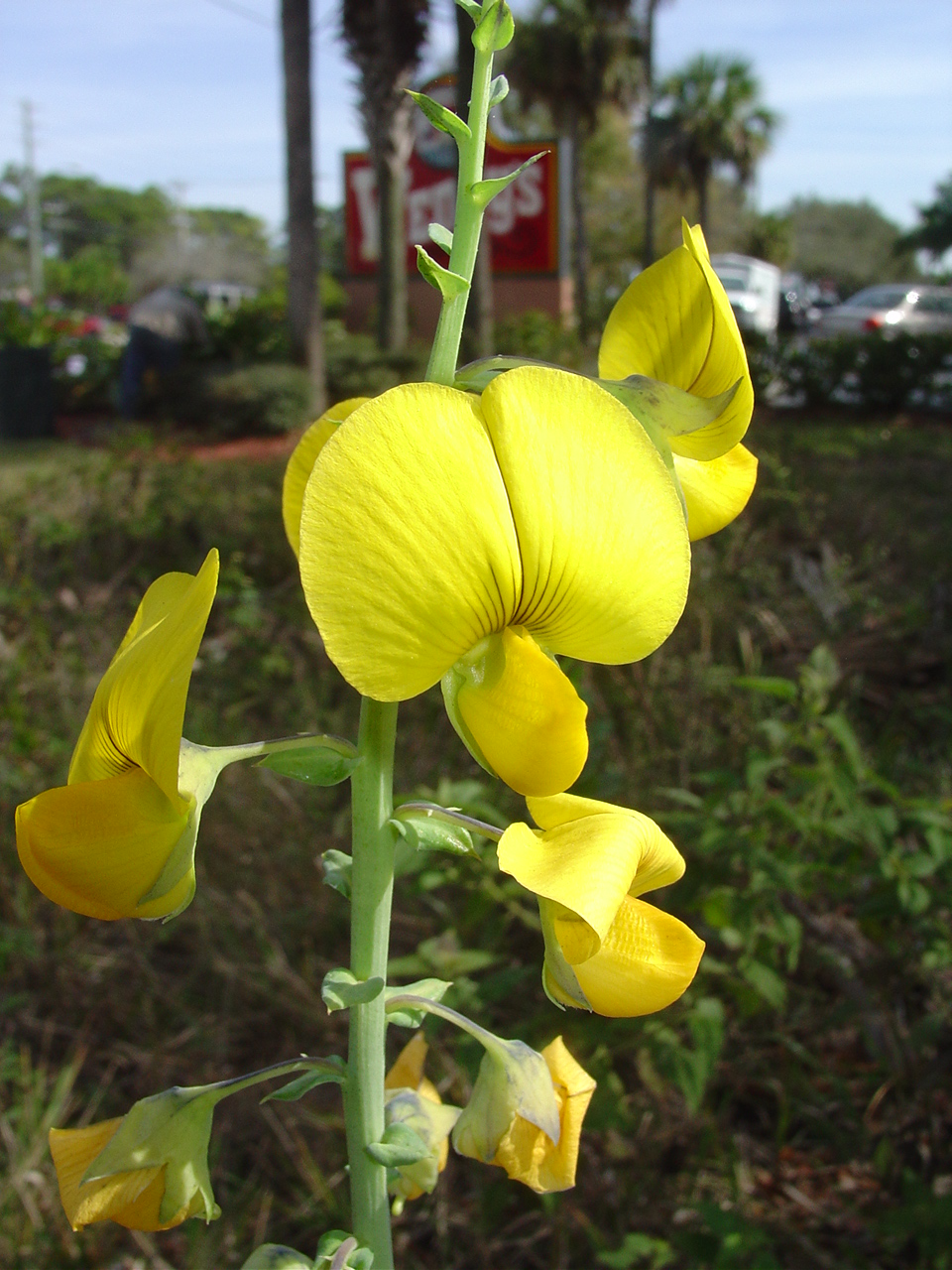
Showy Rattlebox

Crotalaria spectabilis (not native)  CLICK

Fabaceae

What wild-growing flower is the most eye-grabbing?    Showy Rattlebox is on the good-looking list.  It is as big and colorful like a garden flower, and I always assumed that it’s a garden escape, but a little Google research indicates this nitrogen-fixer to owe its Florida presence to services as a green manure and cover-crop.

Showy Rattlebox

Showy Rattlebox

Not really a great crop, because the foliage and especially the seeds bear a toxic alkaloid lethal to livestock.  The poison renders feeding  butterfly larvae toxic to their predators, and serves in some folk medicines against varied complaints, such as intestinal worms. (Poisons are useful for that!)

Crotalaria is a big genus (over 500 species), well represented in Florida by several native and introduced species.  Look for yellow pea-type flowers and inflated pods with rattly seeds inside.  Rattlesnakes come from the genus Crotalus.  Showy Rattlebox has especially large striking flowers and simple (not compound) leaves.  It is the only large imposing local Crotalaria with simple leaves.

Showy Rattlebox is native to India, Pakistan, and neighboring regions, and has become a widespread weed  warm-climate-globally.  This is one tough cookie—full blazing sun, thin soils, sand, marl, rocks, and roadsides.    It may be a weed, but railroad tracks would be uglier without it.

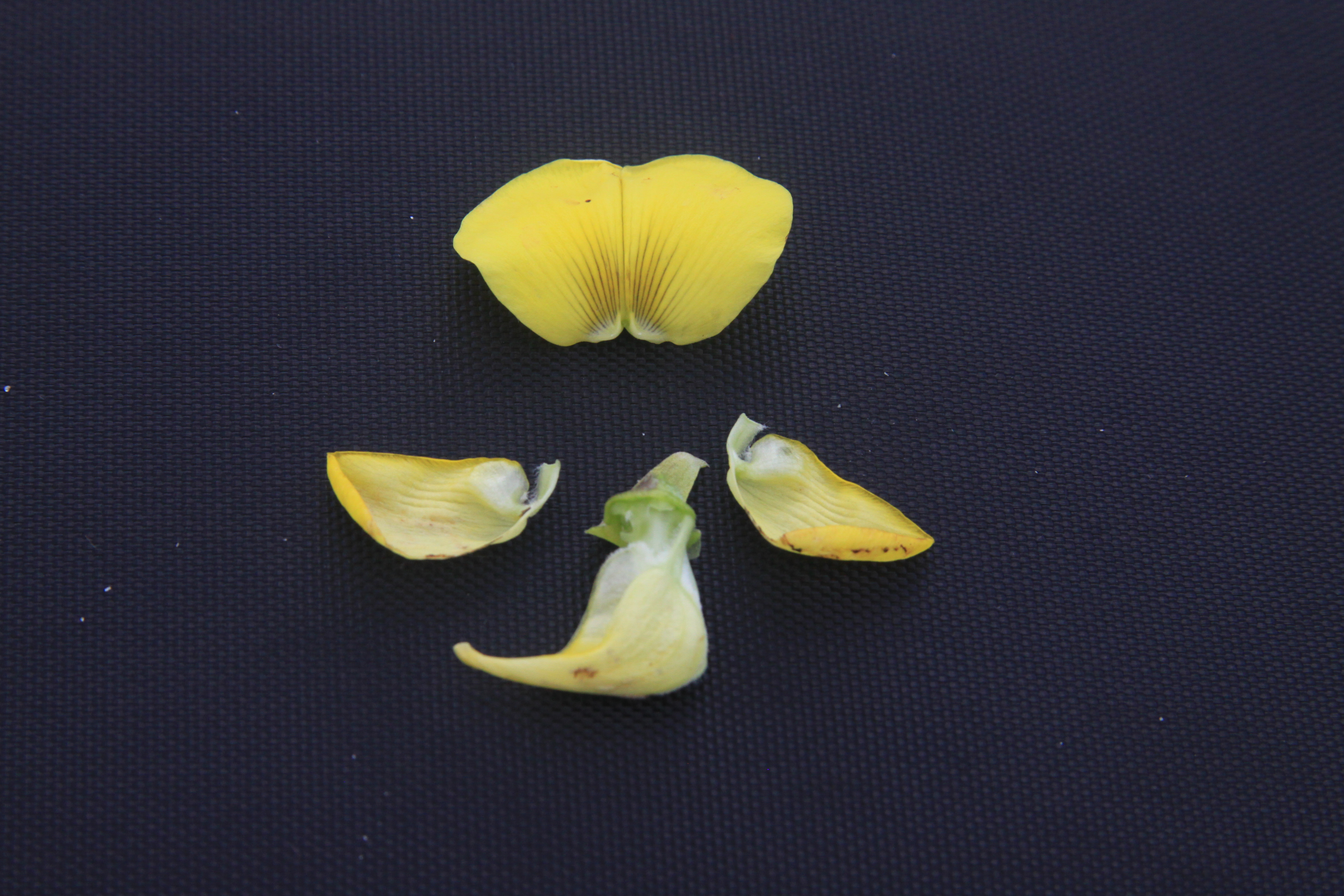
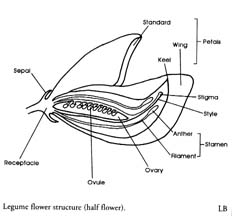
One thing I like about Showy Rattlebox is the way the big easily manipulated flowers demonstrate a pollination mechanism found in many legumes having pea-type flowers.  Such blossoms have 5 petals: one is the showy banner rising above and behind the others; two side-petals are called wings, and they look like two hands clasped in prayer.  To the inside of the clasped hands are two more petals fused into a vertical envelope called the keel.  The pollen-bearing stamens and female pistil lie inside the keel like the letter in an envelope.

Here are two great drawings of a similar flowers:  CLICK

And  CLICK again.

Crotalaria banner (top), wings (sides), and lamp-shaped keel (bottom).  The opening is at the tip of the neck on the keel.

Crotalaria banner (top), wings (sides), and lamp-shaped keel (bottom). The opening is at the tip of the neck on the keel.

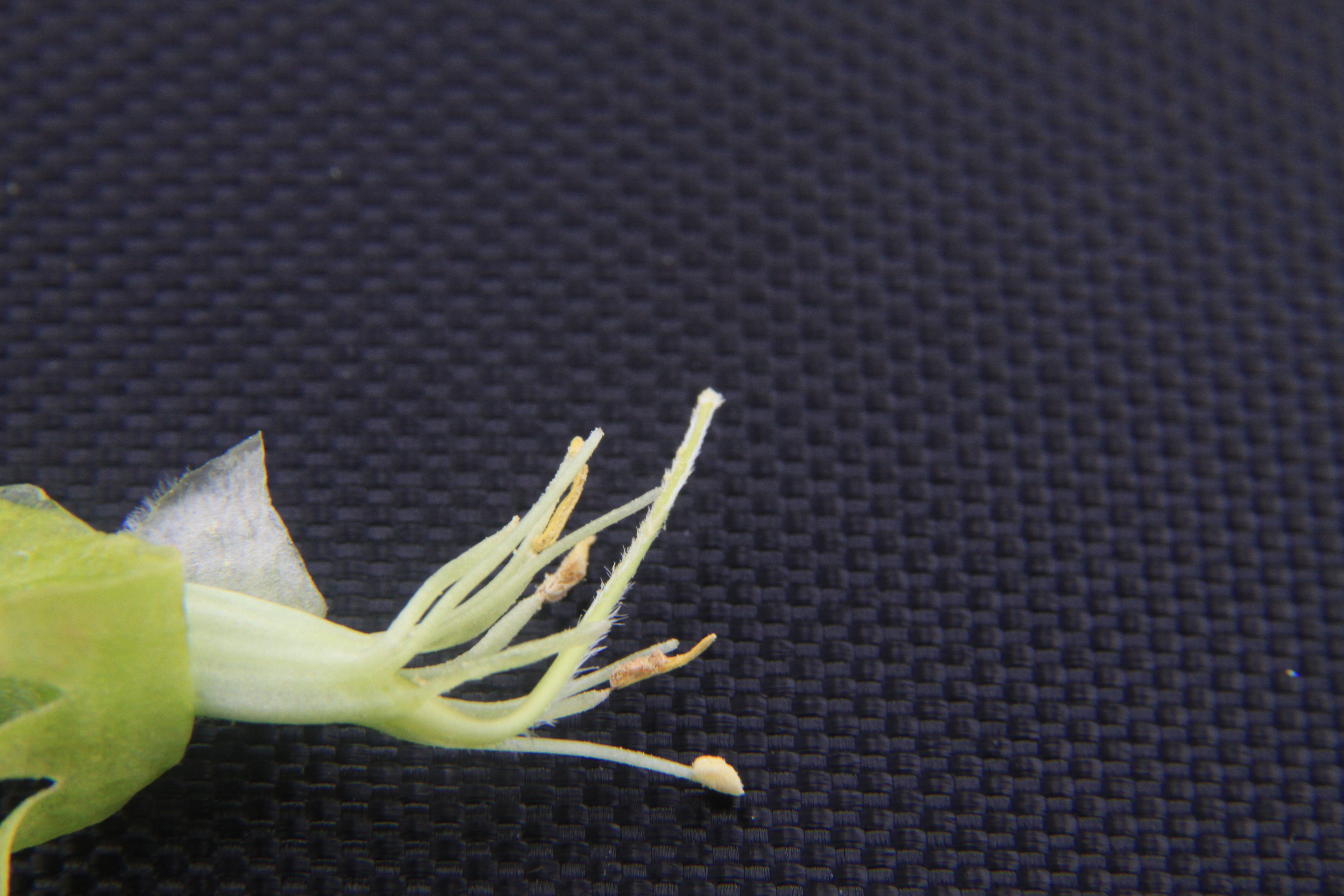
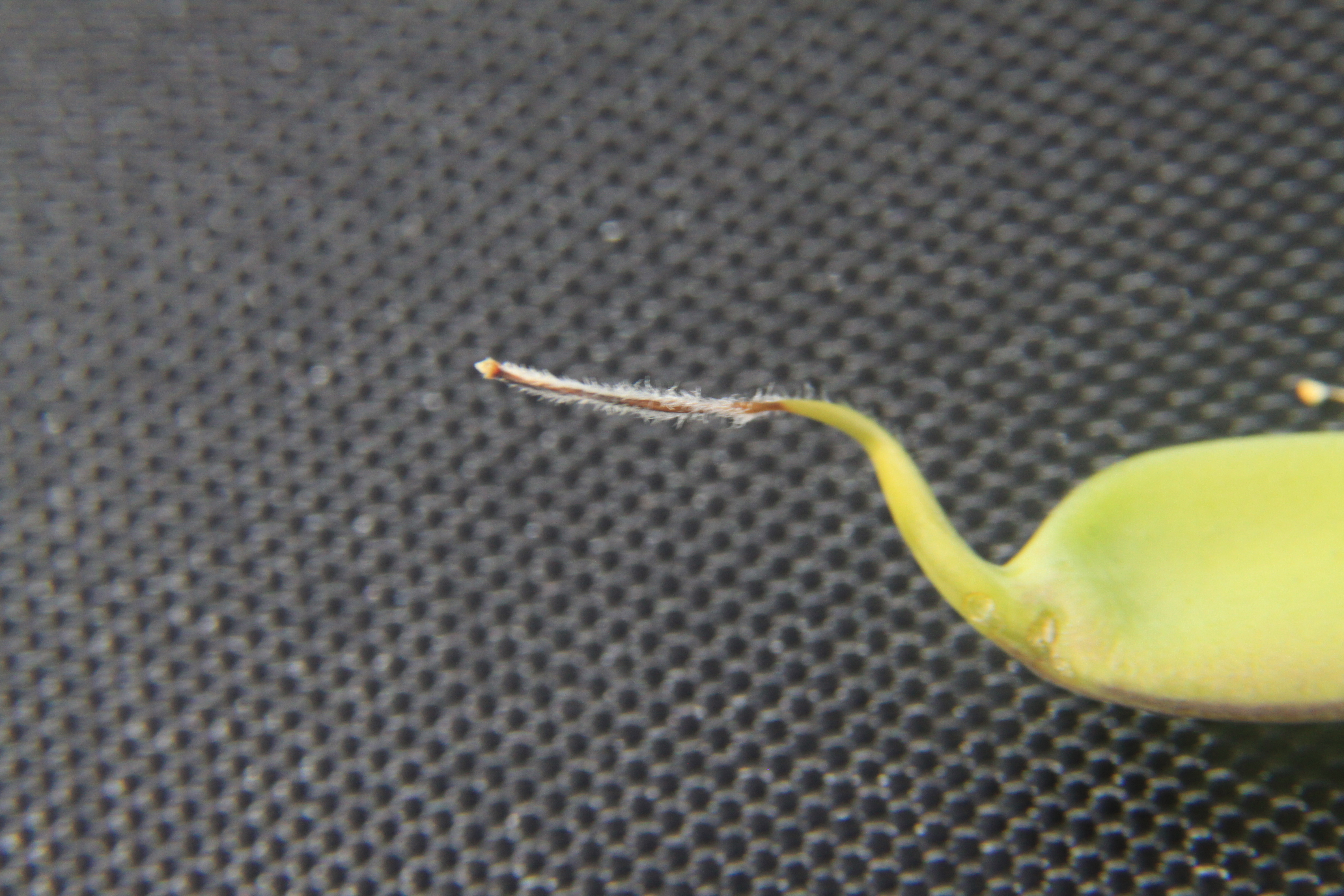
In some legumes, including Crotalaria, the keel looks like Aladdin’s lamp, completely sealed except for the genie exit-hole at the end of a narrow neck.  The style and stigma (pollen-receiving surface) are in the form of a narrow fuzzy shaft.  The stigma is the tip of the shaft just above the fuzz. Contained within the keel, the anthers deposit their pollen onto the fuzzy region on the style.

Keel removed to show stamens and fuzzy style.  The style is the long shaft jutting to the right.  The stigma is its tip.

Keel removed to show stamens and fuzzy style. The style is the long shaft jutting to the right. The stigma is its tip.

When a pollinating insect lands on the top edge of the keel the bug’s weight causes the style and stigma to pop up like the genie rising from the lamp.  The protruding stigma snags any pollen on the underside of the visitor, and the fuzzy brush “paints” new pollen onto the insect.

The style (and stigma on its tip) isolated and magnified to show the fuzz.

The style (and stigma on its tip) isolated and magnified to show the fuzz.

 
Leave a comment

Posted by on June 26, 2013 in Showy Rattlebox


Tags: ,

The Quiet Invaders—Death by a Thousand (Literally) Cuts

Shoebutton elliptica.  It has been mistaken for the native Marlberry. By JB.

Shoebutton Ardisia. Once popular in gardens, this Ardisia is related to and has been mistaken for the native Marlberry. (By JB)

In Palm Beach County:

Grasses: 135 total vascular plant species growing wild, 45 species non-native, 33% non-native

Sedges: total 83 total, 13 non-native, 16% non-native

Asteraceae: 95 total, 18 non-native, 19% non-native

Rubiaceae: 23 total, 7 non-native, 30% non-native

All Florida Vascular plants: 4289 total, 1421 non-native, 33% non-native

(Data from USF Atlas of FL Vascular Plants)

Every nature enthusiast decries the invasive exotic bioinvasion of Florida and worldwide. Brazilian Pepper and Climbing Fern make us cuss. We battle unwelcome Laurel Figs and Java Plums on public lands. We grouch about those who love their beachside Casuarinas. And then come the Pythons, Walking Catfish, Cane Toads, Cuban Treefrogs, and snails that look like tennis balls. (Are these good for Limpkins?) Invasive microbes and arthropods are a scourge. We know, we know.

But it is even worse than it looks. For every invasive species we know many more sneak in virtually unnoticed .

A quick and approximate survey of species growing “wild” in Palm Beach County makes the point painfully. Looking at four large plant families—the grasses, sedges, composites, and coffee family, the percentages of non-natives species are 33, 16, 19, and 30. Eighty three non-native species in Palm Beach County alone. Or statewide 1421 non-native species accounting for 1/3 of the flora. We have more invasive exotic species growing loose in Florida than the number of native species in Hawaii!

Cuban Bulrush forms floating mats.

Cuban Bulrush forms floating mats. (JB)

I don’t have data, but 1/3 of a diverse flora being non-native begs unanswered questions concerning crowding, allelopathy, competition, hybridization with native species, alterations to the soil ecosystem, impacts on wildlife, altered fire patterns, collateral pests and diseases, and more. Is Global Warming a factor?

So it’s not all Melaleuca. And, by the way, Melaleuca’s close relative, a garden favorite, Weeping Bottlebrush (Callistemon viminalis) is adding its red beauty to certain natural areas in Florida. Why don’t we just dub it Bloody Melaleuca?

Some of the invaders are pretty, or novel, and interesting. The other day I waded into a canal for a better look at an overhanging branch bearing what I thought was Skunk Vine (Paederia foetida) in a new locale. Wrong! (I hate being blind.) But you might not have to wait long to enjoy Skunk Vine on a branch near you. The flowers are showy. And even more fun nomenclaturally, and so far limited to the Miami Area, is Sewer Vine, Paederia crudasiana, which, I’m sorry to say, makes me wonder what a crud-ass looks lie. (Sorry, blog-writer’s license)

Skunk Vine is prettier than its name. (by GR)

Skunk Vine is prettier than its name. (GR)

Speaking of runaway vines, Mile-a-Minute Vine (Mikania micrantha) is pondering the possibility of over-running Florida from a start in Miami. Why has it remained localized so far?

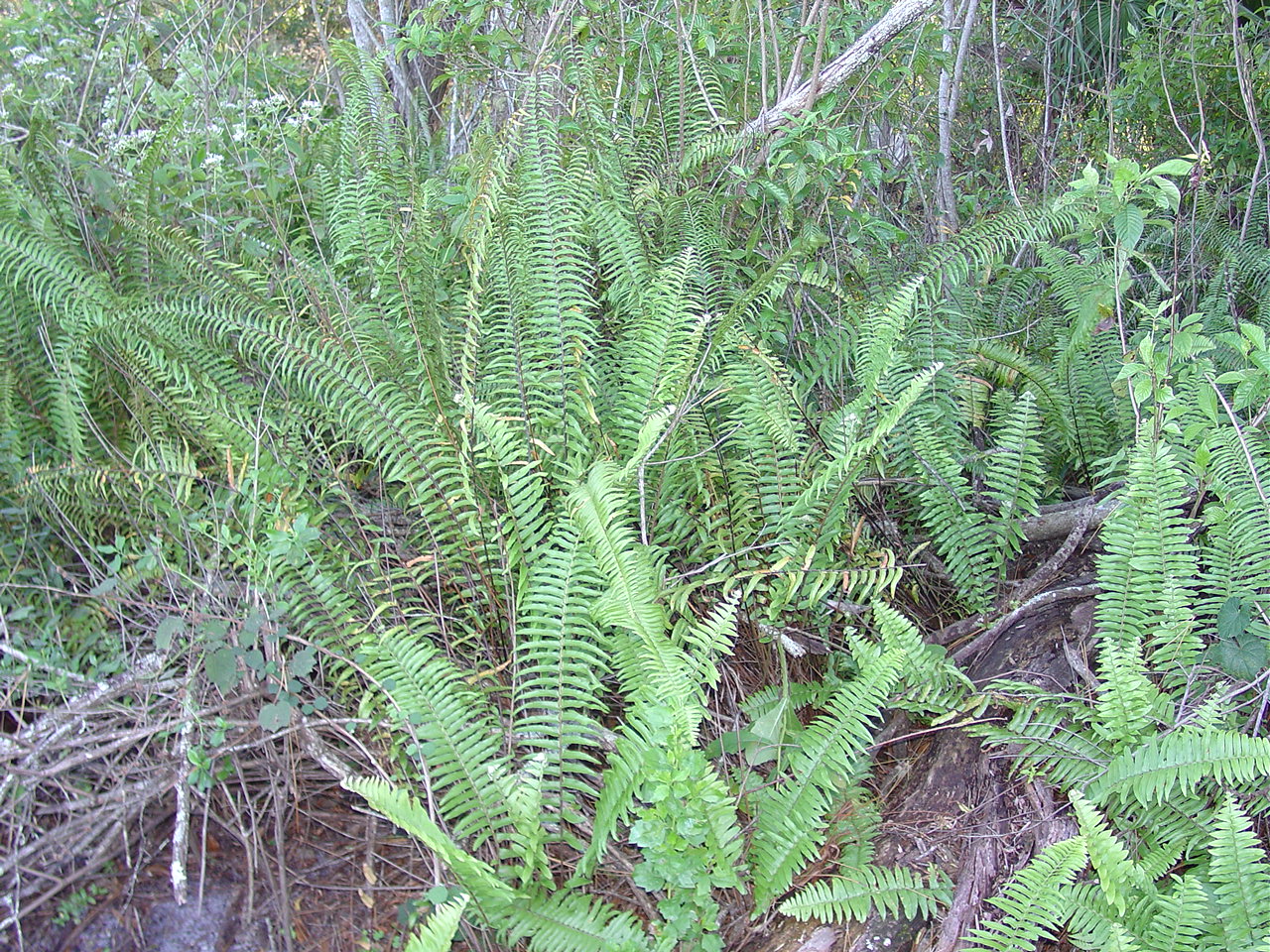
Trying to figure out which ferns are truly native is next to impossible. If you think otherwise, compare every source you can find dealing with the genus Nephrolepis. If you get it figured out definitively and with consensus, please let me know. And to make it worse, fern spores blow long distances on the wind, and ferns are especially good at hybridizing.

Native Boston Fern?  No, invasive Asian Sword Fern.  Mighty similar!  (Boston Fern has light tan shagginess sticking out on the leaf stalk.)

Native Boston Fern? No, invasive Asian Sword Fern. Mighty similar! (Boston Fern has light tan shagginess sticking out on the leaf stalk.)

So what can you do? Bulldozers, machetes, brigades of volunteers and herbicides are not enough. I heard someone say recently, “sometimes all we’ve got is resignation.” Just like crime and reality TV, we’ll never shed the curse, but at least there is one little thing we could do:

Abandon the 19th Century social cachet attached to “I have an exotic plant you don’t have,” and mature to a 21st Century preference for the native species that belong in our own back yards. Oh yea, right, I’m preaching to the other preachers.

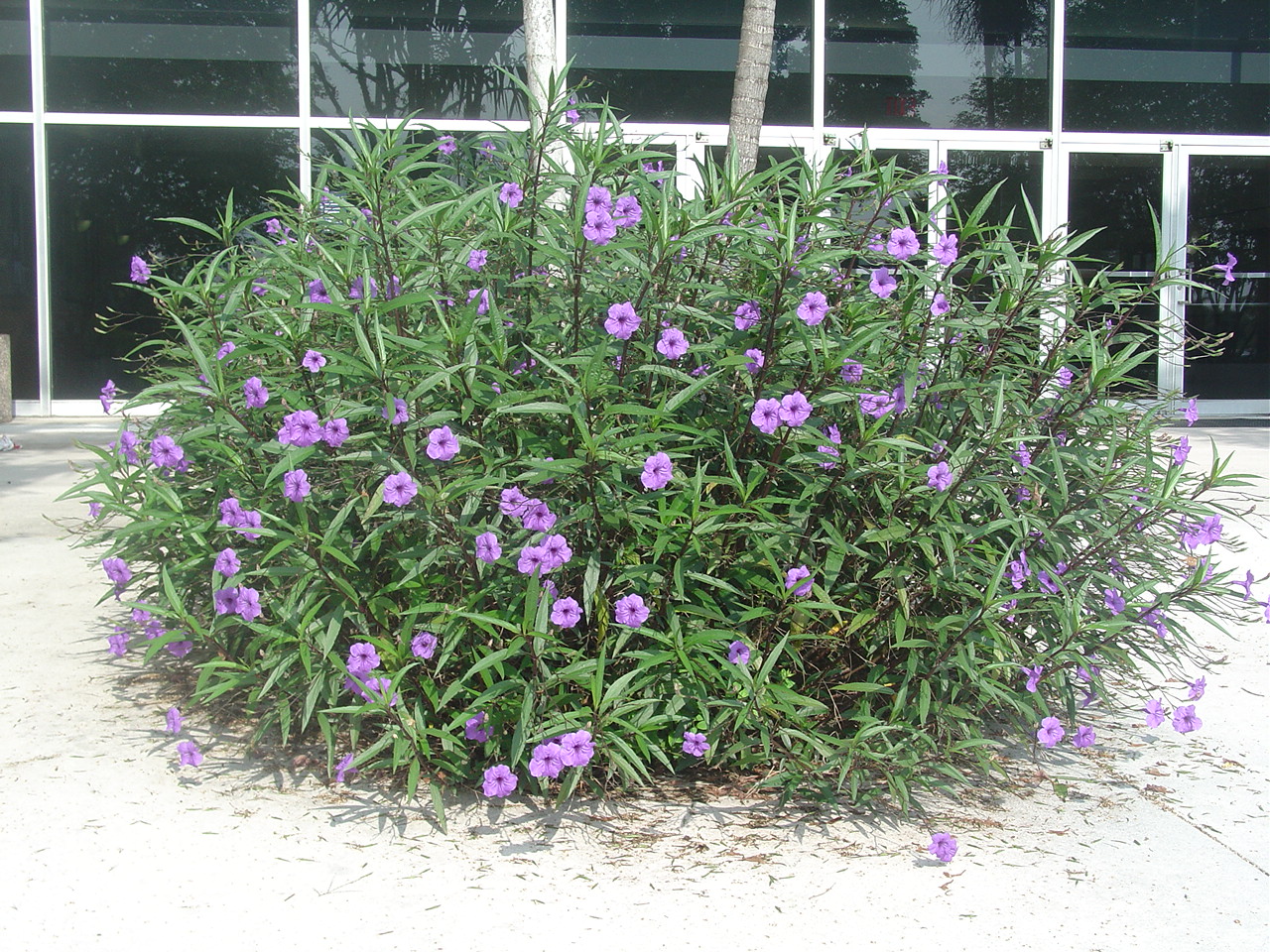
"Mexican Petunia" is not Mexican, and is not a Petunia.  It remains popular in landscapes despite being a Category I Invasive Exotic invader.

“Mexican Petunia” is not Mexican, and is not a Petunia. It remains popular in landscapes despite being a Category I Invasive Exotic.

 
4 Comments

Posted by on June 19, 2013 in Uncategorized


Tags: , , , , , , , , , , , , , ,

Hickory Dickory Dock, Old Hickory, and Hickory Sticks

Carya species

Juglandaceae

You can scarcely find a group of trees more steeped in American lore than hickories, but let’s not be American-o-centric in the era of globalization. Hickories are native to China, Viet Nam, and Laos too, being examples of the sister-species relationships linking  Eastern U.S. and East Asia.  I wonder if there’s a Euell Gibbons-type guy in China who savors wild hickory nuts there.

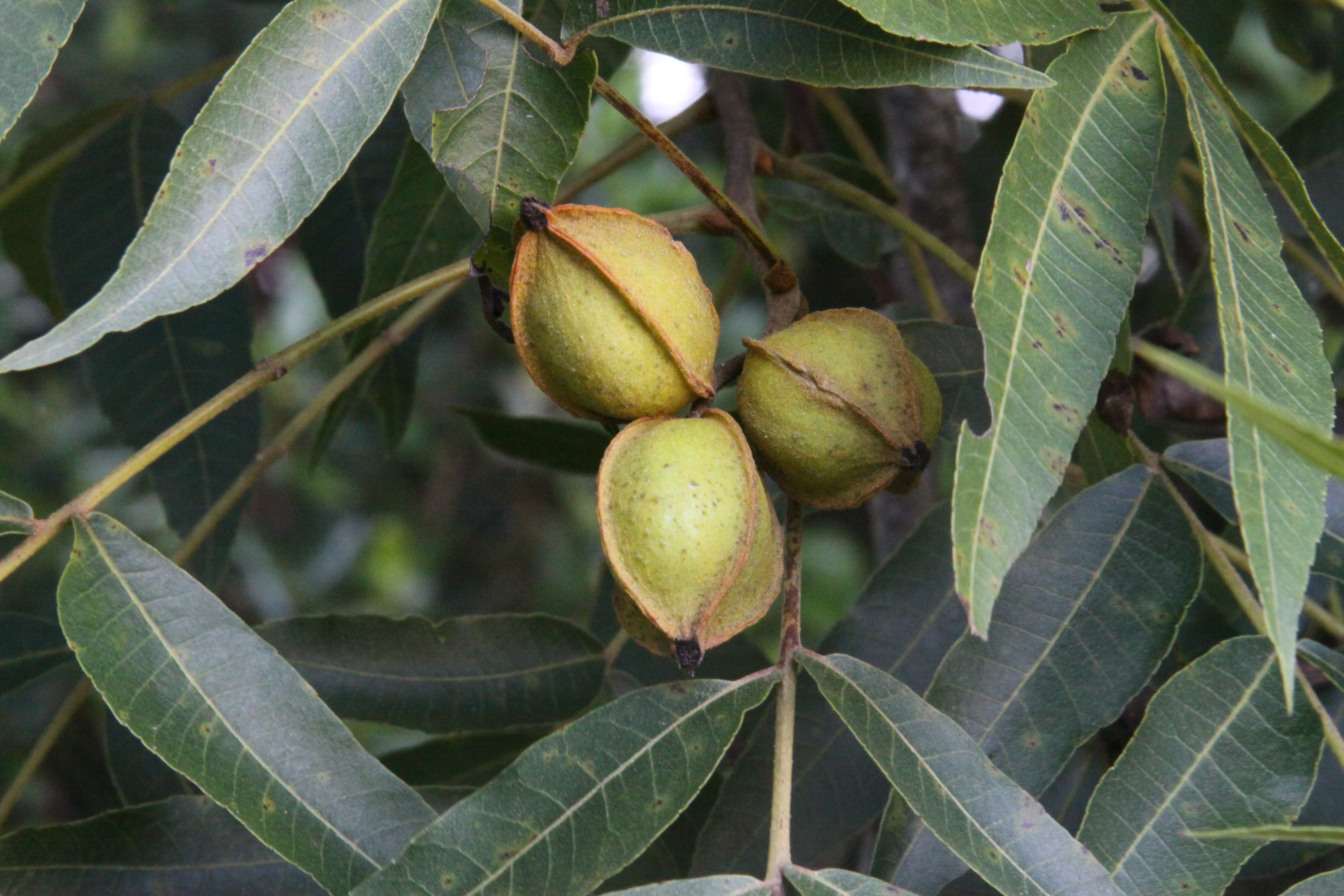
Water Hickory nuts (by JB)

Water Hickory nuts (by JB)

The best hickory nuts are Pecans,  cultivated in the southeastern U.S., and  speaking of China, likewise there.   We even have some cultivated in Palm Beach County, although the native region is somewhat farther north.  The native range of Pecans is actually somewhat unclear, thanks to ancient peoples’ taste for the nuts.  I’ve seen them growing wild in lowland woods along the Mississippi River.

The name Hickory comes from an Algonquin word for a milky paste made from pounding the nuts.

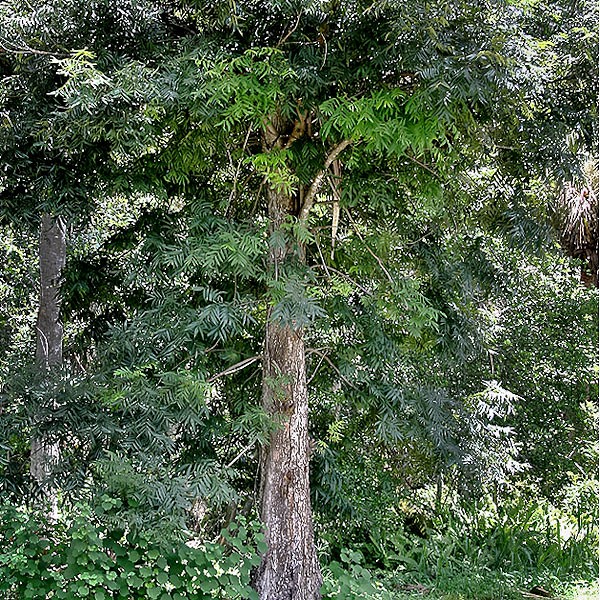
Water Hickory in Riverbend Park (I don't know who took the photo)

Water Hickory in Riverbend Park (I don’t know who took the photo)

Hickory wood is ultra-strong, durable, and snappy-bendable.  They used to make golf club handles from it, and hickory clubs are enjoying a little retro-chic nowadays.  Today I read a (1936) article on how to select the strongest hickory hammer handle.   There is hickory flooring and hickory furniture.  Pre-Europeans and modern bowyers could debate whether hickory is the best wood for archery bows. (Osage Orange and Yew would have loyal proponents.)  The list of hickory products could go on.  In addition to tasty nuts and tough woods, hickories are beautiful.   I’ve spent a lot of time in the Appalachians and in the Ozarks, and life just wouldn’t be the same hickory-less.

Fore! (Photo stolen from Internet)

Fore! (Photo stolen from Internet)

The good news is that here is South Florida, contrary to all that “tropical paradise” nonsense, we have two lovely hickories: Water Hickory (Carya aquatica) and Scrub Hickory (Carya floridana).  The two names hint at the interesting part of today’s topic.  Our two hickories couldn’t be farther apart ecologically.  Water Hickory lives up to its name by being a soggy shore and swamp species.   (A great place to see them locally is Riverbend Park in Jupiter.)  Its natural range is across the southeastern U.S.

Or if sun-baked sugar sand is more to your liking, Scrub Hickory is the one for you.  This odd tree lives in high dry scrub, where it can be the dominant (or only) broadleaf tree.  Its distribution is limited to the Florida Peninsula.

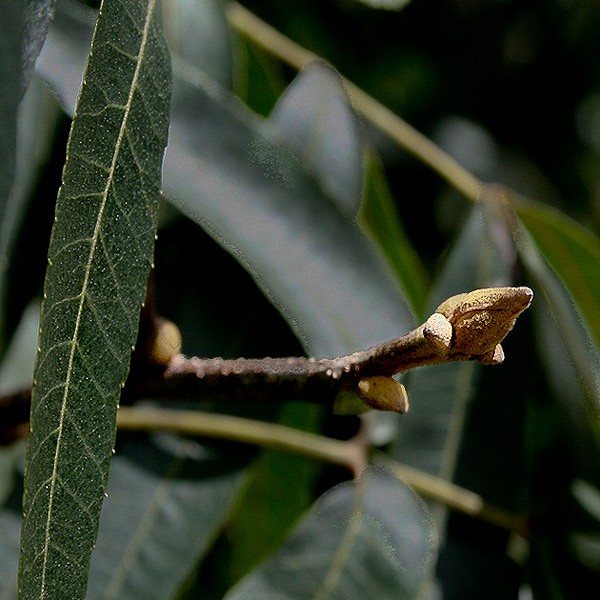
Carya floridana. Bud.  Hickories have big messy distinctive buds.

Carya floridana. Bud. Hickories have big messy distinctive buds. (JB)

You might wonder if two species found jointly down here in South Florida are close relatives.  No.  They are in separate sections of the Hickory genus Carya.   Water Hickory  is related to and hybridizes with Pecans, which are naturally a swampy species.   Scrub Hickory, by contrast,  is related to the common widespread  Pignut Hickory (Carya glabra), which lives (among other habitats) on high dry “scrub-ish” places.

Time to speculate.  Carya aquatica is a widespread species that probably wandered from the more northern states into Florida in ancient times.  The history of Carya floridana is more fun to imagine.  It is restricted to Florida and probably evolved here.  Most of Florida has been inundated too recently to have much ancient evolutionary history, except on scrub which differs from the rest of Florida by having been high and dry vastly longer then the lowland regions favored by Carya aquatica.   Scrub has been high and dry long enough for plenty of evolution.  Now to repeat,  this is speculation, not fact,  but  Carya floridana perhaps originated  on scrub as an isolated southern satellite population of Pignut Hickory, Carya glabra, which is variable and widely distributed in Florida, although not this far south.   Florida scrub areas were figuratively and literally islands as sea levels rose and fell over the eons, the perfect setting for an isolated splinter-group from a more broadly distributed species to evolve into a separate species in its own right.  Interestingly, these two species (and some other related hickories) have the same tetraploid (doubled)  chromosome number consistent with close relationship.

 
8 Comments

Posted by on May 14, 2013 in Hickory


Tags: ,

Alligator Weed, a Taste of the Amazon

Alligator Weed

Alternanthera philoxeroides (not native)

Amaranthaceae

Having a drainage ditch behind your hose can be entertaining and a chance for expanded vistas on nature right there in the (sub)urban yard. Thanks to my waterfront real estate I’ve seen all the big beautiful wading birds and their duck companions, a hawk snag a snake, jumbo catfish, darting minnows, and dragonflies. The frogs sing at night. I’ve learned that young cottonmouths go out to party with yellow tails, that kids still go fishing, and that dogs enjoy a swim off the leash. All the sedge species in town form a spontaneous garden along the banks. Much fun for a reviled “no trespassing” ditch.

Which will fill the ditch?  Alligator Weed or Torpedo Grass? The race is on.

Which will fill the ditch? Alligator Weed or Torpedo Grass? The race is on.

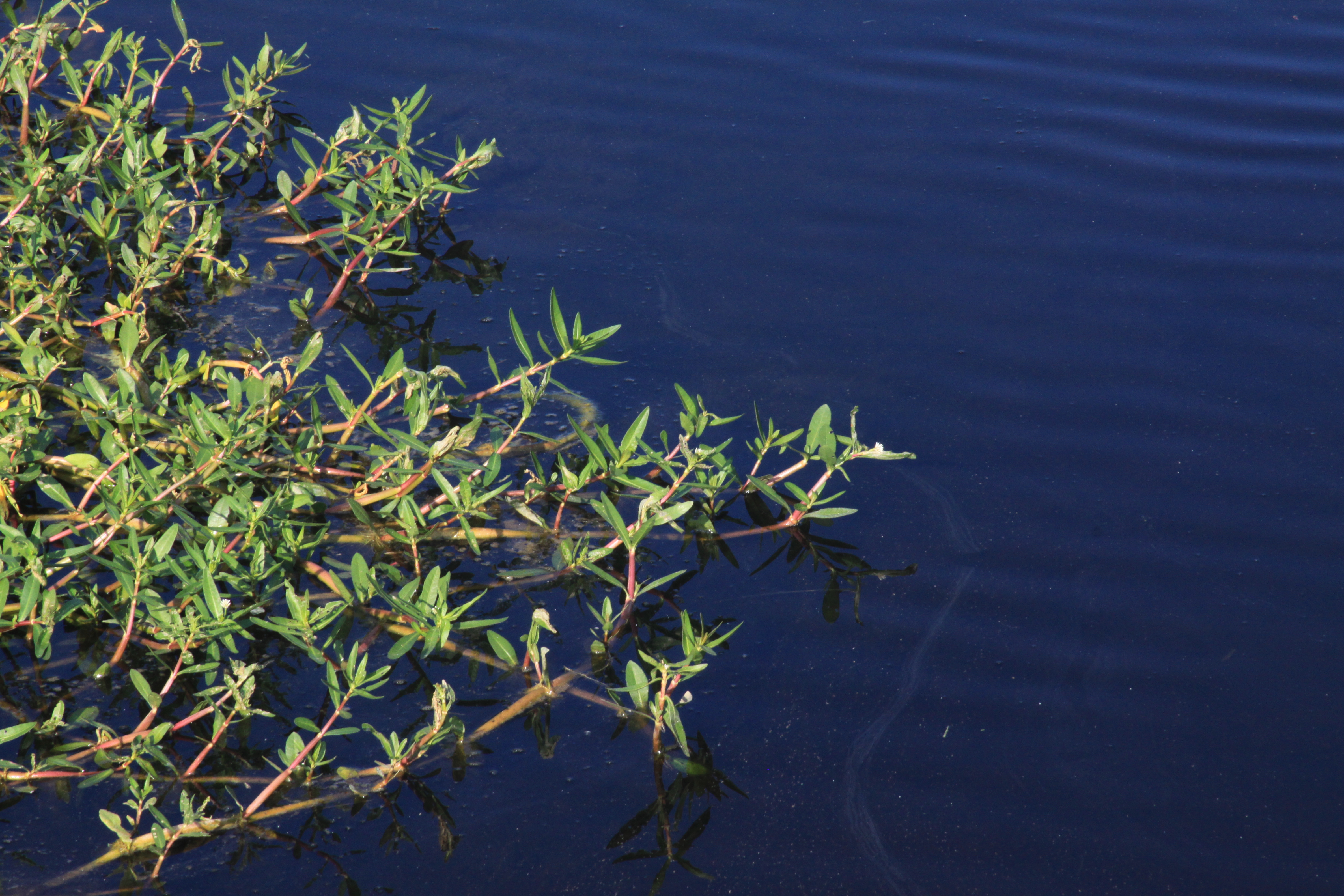
The aquatic lifeform grabbing my attention now is a little taste of the Amazon: the invasive exotic South American Alligator Weed. Take my word for it—that weed grows like a weed! I feel like I can see a difference from day to day. The plant can take over big areas fast, as multiple published studies have affirmed and reaffirmed. That has prompted interest in biocontrol, with limited success, especially by a Brazilian Flea Beetle.

CLICK for biocontrol

Anyone who lives near warm eutrophic shores can attest to the fact that the species is not under control.

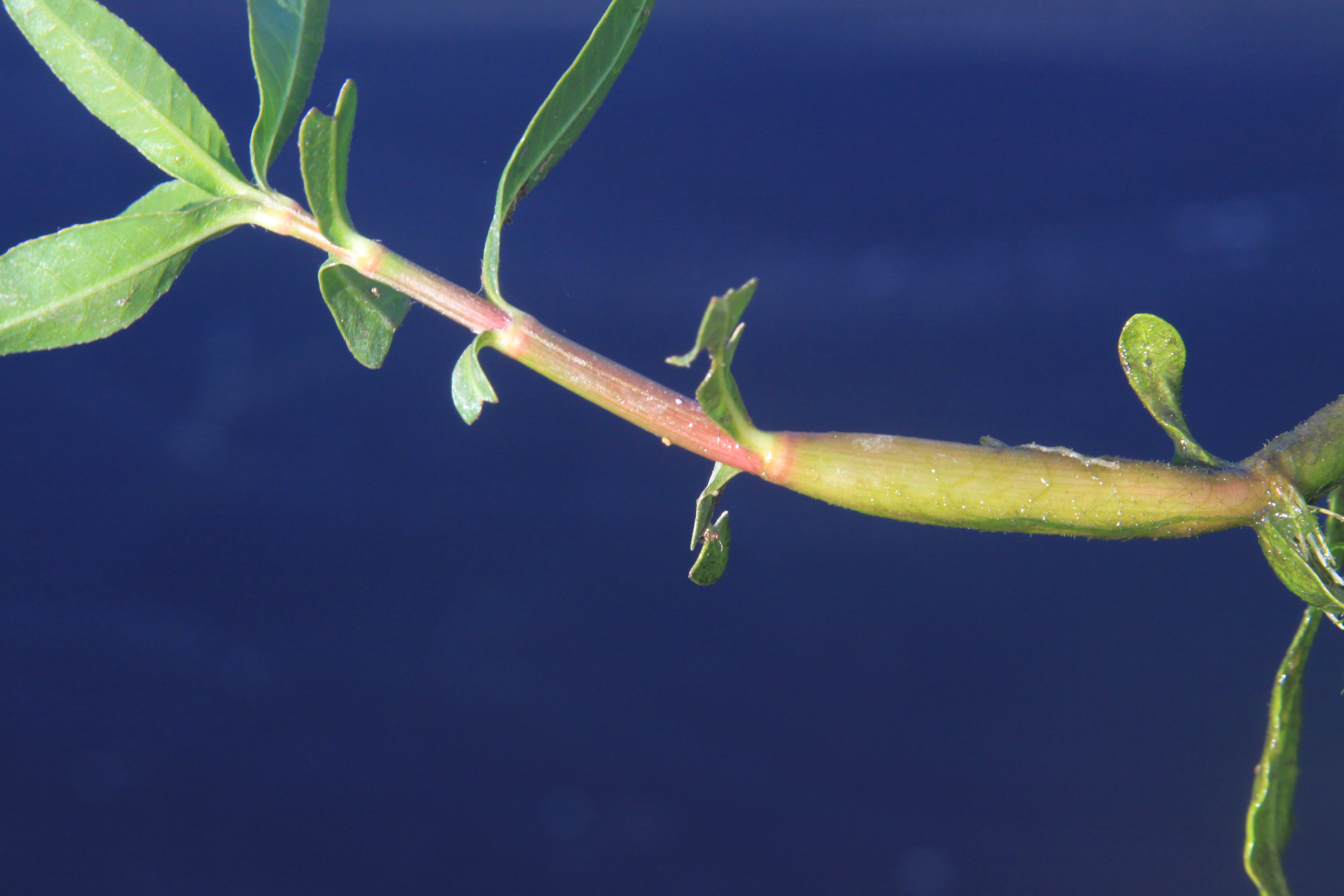
The rate of growth is interesting but where it grows is the good part. The stems spread out on the water surface like a swimming snake, and raise their growing tips or flowering tips a little above the water. To accomplish this the stem is hollow. The growing tip and first few nodes jutting out of the water are only a little swollen. Somewhere around 5 nodes back from the apex the stem expands abruptly to many times its original diameter; it looks puffy like it was inflated with gas. The nodes produce branches and wads of roots, allowing the sprawling branches to suck nutrients directly out of the water, and allowing the branches to root in the mud if the water level drops.

stems on water

Although Alligator Weed can produce seed, there is a suspicion that its spread in Florida and other introduced areas is by cloning. What is easier to propagate than a species where the stem segments break off and float away pre-rooted and ready to invade?

The rampant growth, easy propagation, and nutrient-sucking power have suggested to multiple observers that this invader may not be 100% bad…that maybe it can be harnessed to pull polluting nutrients, including heavy metals, out of polluted waters. Also, people and livestock eat Alligator Weed, which helps explain its intercontinental spread.

The stem puffs up a few nodes back from the tip.

The stem puffs up a few nodes back from the tip.

The flower heads may remind some readers of Globe-Amaranths or Joyweeds. That’s because they all belong to the same family, the Amaranthaceae.

A lot of folks worry about some form of coming collapse of civilization. They stockpile sardines, bullets, and gold. I’m not worried—when the going gets rough I’ve got water-purification, biofuel, and unlimited salad right in my own back yard, with absolutely no effort.

 
2 Comments

Posted by on May 9, 2013 in Alligator Weed


Tags: , ,

Way Down Yonder in the PawPaw Patch

PawPaws

Asimina species

Annonaceae

My best memories of my father come from his profound love and knowledge for nature, but even the sweetest memories can have PawPaw problems. My family lived in West Virginia, home to magnificent Pawpaws (Asimina triloba) 20-30 or more feet tall rising from the sides of shaded ravines and stream bottoms. (Where did the repeated Google-assertion that Asimina tetramera is the tallest pawpaw in North America”come from? Asimina triloba is much larger. I thought they couldn’t put anything on the Internet if it isn’t true.) My Dad told me, somewhere around age 8, ca. 1959, that PawPaws are tasty treats, so I sampled one out on the hillside where a burning coal slag heap looked and smelled like Hell surfacing. Within seconds after munching the “mountain banana” I was unconscious, to wake up a few minutes later in a pool of my own vomit. For the subsequent 53 years and to this day I can’t smell a Pawpaw without having my stomach flop. Was the PawPaw green and mean? (I can’t remember.) Was it an allergic reaction?  Perhaps. Here is a tidbit lifted from Google:

“Allergenic responses have been observed. While many people enjoy the taste of pawpaw, some individuals can become sick after eating the fruit. Skin rash, nausea, vomiting, or diarrhea can develop…Many tissues of this tree, especially bark, leaves, and seeds, contain a variety of alkaloids such as the aforementioned acetogenins, as well as phenolic acids, proanthocyanidins, tannins, and various flavonoids. Though these compounds represent potential commercialized products as anticarcinogenic and botanical pesticides, they also can cause allergic reactions.”

mr-yuk563

The name PawPaw is confusing, applied also to Papayas, so be sure we’re talking about the approximately 10 species of the genus Asimina limited to North America, half of them limited to Florida as scrubby shrubs. The species have a long-known history of hybridization, yet, with that in mind, a surprising freedom from the taxonomic rearrangements often encountered with rampant hybridization.

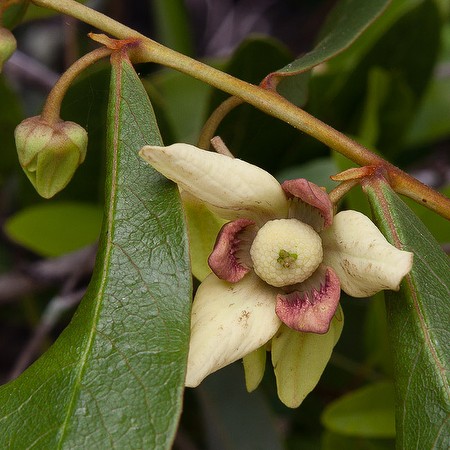
Four-Petal PawPaw near Jensen Beach (by JB)

Four-Petal PawPaw near Jensen Beach (by JB)

PawPaw flowers are odd, and sometime showy. I’ve seen them misidentified as Orchids, although quite a stretch, the error is understandable. Traditionally regarded as primitive, the blossoms tend to be unusual for Dicots in having sepals and petals mostly in multiples of 3. The stamens and pistils are numerous and separate, with the pistils pollen-receptive before the anthers of the same flower release pollen.

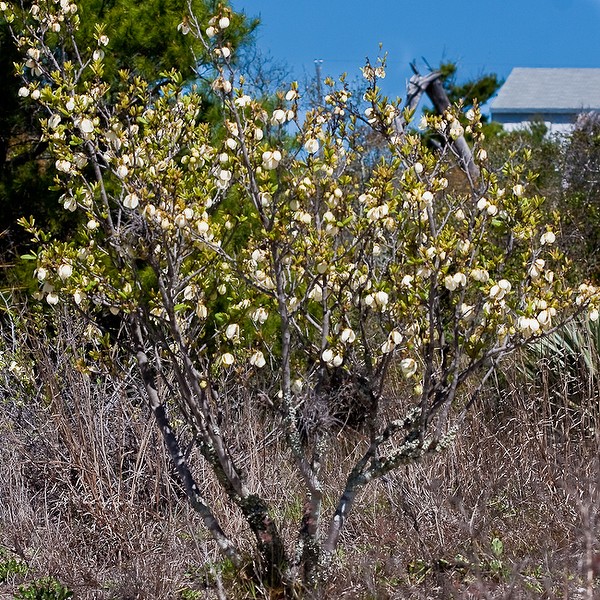
Four-Petal PawPaw in April (by JB)

Four-Petal PawPaw in April (by JB)

What’s more interesting is that the flowers are generally regarded as beetle-pollinated, a slightly unusual and “primitive” characteristic. As with other beetle flowers, they tend to be cup-shaped and they can smell funny and fermented, although highly varied, and no doubt delightful to a beetle. Crawling around in the scrub sand Friday John and George found a beetle within the flower of a Four-Petal PawPaw. PawPaw flowers combine various shades of white, purplish-reddish tones, and greenish-yellow. The petals can increase in size and can change color after the flower opens, to the point that the same individual seen at different phases could pass for two different species.

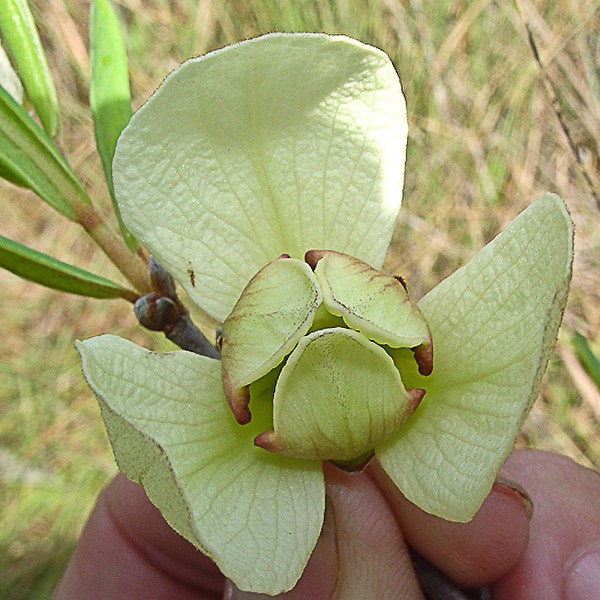
We opened the flower with a little force for a clear view (by JB).

We opened the flower with a little force for a clear view (by JB).  The lumpy white ball at the center is a mass of stamens.  The green structures poking out at the center are pollen-receptive stigmas.

Four-Petal PawPaw is one of the two species scattered in our usual working radius, in fact, its entire worldwide distribution almost matches our usual working radius along central-south coastal Florida. How many federally listed endangered species do we have restricted to that zone? CLICK  It’s easy to recognize in the field because somebody has usually affixed blue flagging tape to it. Don’t trust the name “four petal” PawPaw because names can lie, and the distinctions between sepals and petals can be confusing too. Premier Florida botanist John Kunkel Small named the species in 1926.  He might have missed this critical reference: CLICK
As with many rare and endangered species, I worry about too much love almost as much as I worry about too little attention. Rare species have unique and interesting population structures and genetic patterns with respect to their odd distributions. And this is especially true as DNA study allows high-resolution analysis of genetic-distributional-relationship histories. Thus sometimes maybe propagation by botanical gardens and reintroductions of clones might mix up some delicate evolutionary genetics. So call me a grumpy silly old worrywart nervous nelly.

Asimina reticulata

Does it look like an Orchid? (Naw)

Does it look like an Orchid? (Naw)

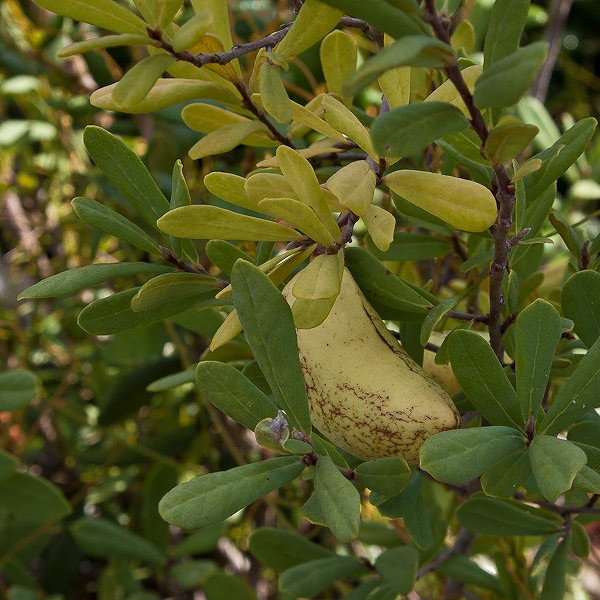
The other species abundant in our botanical sandbox is Reticulate-Leaved PawPaw (Asimina reticulata) often encountered with big white floppy flowers on leafless (or leafy) stems poking up from the scrub sand. The fruit can look like a bloated banana and certainly must be pleasing to wildlife. Even tiny wildlife can join the “feast,” because the individual seeds have their own pulpy attachments (called arils). (However, personally I’ll take a raincheck.)

Asimina reticulata fruit.

Asimina reticulata fruit.

 
4 Comments

Posted by on April 22, 2013 in PawPaw


Tags: ,

Taking a Shine to Varnishleaf

Varnishleaf

Dodonaea viscosa

Sapindaceae

Here’s a shrub for everyone, and I do mean everyone around the world. The shrub we call Varnishleaf in Florida must have a few names we can’t pronounce because its natural distribution ranges from here to Australia and back. Actually the other way around, since DNA research shows its origins to be Down Under. The international uses are as widespread as the cosmopolitan places, everything from making the hard wood into weapons to more medicinal applications than you can throw a pill at. In Florida we like this species as a tough drought tolerant landscape shrub with pretty fruits.

John and I did not go visit Australia to see Varnishleaf. There is plenty in the Hobe Sound National Wildlife Refuge cooking in the sun up on top of those sugar sand dunes.

Dodonaea viscosa 1

Varnishleaf (by JB)

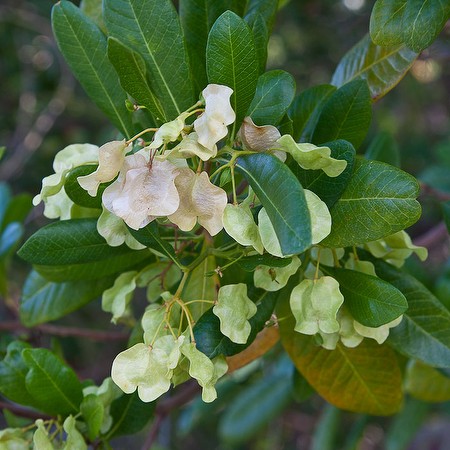
The puffy papery fruits resemble those of certain garden trees, especially Goldenrain Tree (Koelreuteria elegans) or Black Pearl (Harpullia arborea). Some readers will see “the same” fruit in species of Cardiospermum. The similar-pod list could expand, but why bother, the point is family similarities in these members of the Soapberry Family, the Sapindaceae.

Varnishleaf pods (by JB)

Varnishleaf pods (by JB)

The predictable lists of “traditional medicinal uses” surrounding most common widespread bioactive plants can grow a little dubious and tiresome. Conduct a little research and you will find almost any plant you name to have served somewhere somehow to counter some common discomforts.

That cynical remark off my chest, a traditional use for Varnishleaf struck me as unique and particularly plausible: warming the naturally sticky leaves and applying them as a plaster over hurty places. Given evidence of antimicrobial activity, maybe sticky Dodonaea plasters actually help with healing. Free Salon Pas. Dodonaea seems to contain multiple bioactive contents, including saponins, cyanide, and more. Saponins are lathery-poisony compounds that put the soap in Soapberry. They are most famous as fish poisons.

Why would a shrub make shiny “varnished” leaves anyhow? Here we have a leaf with an array of adaptations for extreme sun. In Mexico Varnishleaf is a member of “Opuntia associations.” (Opuntias are Prickly Pear Cacti.) Come to think of it, right here in Florida Varnishleaf can be a member of the Opuntia association. This is a plant for blazing sun. So then an obvious guess about those ultra-shiny leaves is the same as mirrored sunglasses—to bounce away excess light and protect delicate tissues beneath. Seen microscopically, the top layer of the leaf has special varnish-making cells just beneath the surface. Plant ecologists Gary Brown and Bruno Mies commented on a related adaptation in the same species…the ability to orient the foliage vertically to minimize sun exposure. Also odd, the layer of photosynthetic cells near the leaf surface is thicker then in most leaves—a leaf designed for fun in the sun.

Dodonaea viscosa 2

Varnishleaf leaf (by JB)

The fruits are showy and novel, whereas the flowers are merely novel. Apparently pollinated by wind, they have no petals, but rather many pollen-dispersing anthers, and extended pollen-catching stigmas.

The flowers---no petals, just the "business parts" (by JB)

The flowers—no petals, just the “business parts” (by JB)

Did you gulp at the idea of one species distributed from New Zealand to Hobe Sound? Varnishleaf has two outstanding abilities behind its wanderlust: 1. High salt tolerance. It can grow among mangroves. 2. The world’s toughest seeds. Experiments have shown high germination rates after 6 months in saltwater. Those little bitty seeds can float across vast oceans, perhaps sometimes within their capsules, and maybe sometimes aided by seed-eating migratory birds. Some of the seeds have an internal airspace.

Badass biker with Dodonaea-inspired shades (Photo not of or by JB)

Badass with Dodonaea-inspired shades (Photo not of or by JB)

 
4 Comments

Posted by on April 14, 2013 in Varnishleaf


Tags: , ,