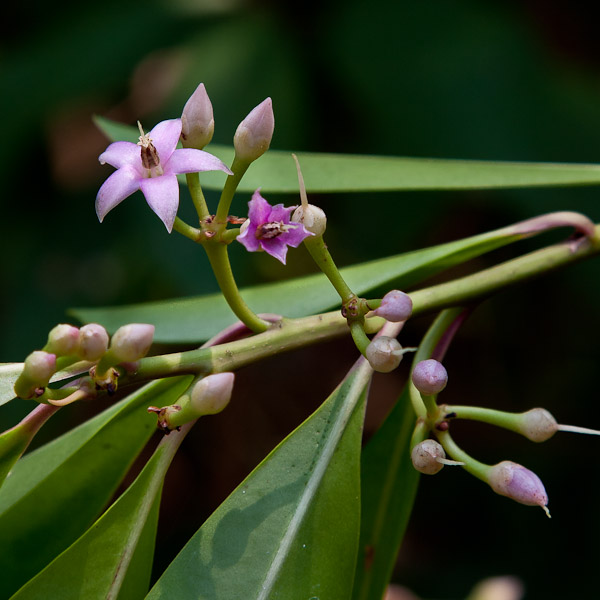
Shoebutton Ardisia. Once popular in gardens, this Ardisia is related to and has been mistaken for the native Marlberry. (By JB)
In Palm Beach County:
Grasses: 135 total vascular plant species growing wild, 45 species non-native, 33% non-native
Sedges: total 83 total, 13 non-native, 16% non-native
Asteraceae: 95 total, 18 non-native, 19% non-native
Rubiaceae: 23 total, 7 non-native, 30% non-native
All Florida Vascular plants: 4289 total, 1421 non-native, 33% non-native
(Data from USF Atlas of FL Vascular Plants)
Every nature enthusiast decries the invasive exotic bioinvasion of Florida and worldwide. Brazilian Pepper and Climbing Fern make us cuss. We battle unwelcome Laurel Figs and Java Plums on public lands. We grouch about those who love their beachside Casuarinas. And then come the Pythons, Walking Catfish, Cane Toads, Cuban Treefrogs, and snails that look like tennis balls. (Are these good for Limpkins?) Invasive microbes and arthropods are a scourge. We know, we know.
But it is even worse than it looks. For every invasive species we know many more sneak in virtually unnoticed .
A quick and approximate survey of species growing “wild” in Palm Beach County makes the point painfully. Looking at four large plant families—the grasses, sedges, composites, and coffee family, the percentages of non-natives species are 33, 16, 19, and 30. Eighty three non-native species in Palm Beach County alone. Or statewide 1421 non-native species accounting for 1/3 of the flora. We have more invasive exotic species growing loose in Florida than the number of native species in Hawaii!
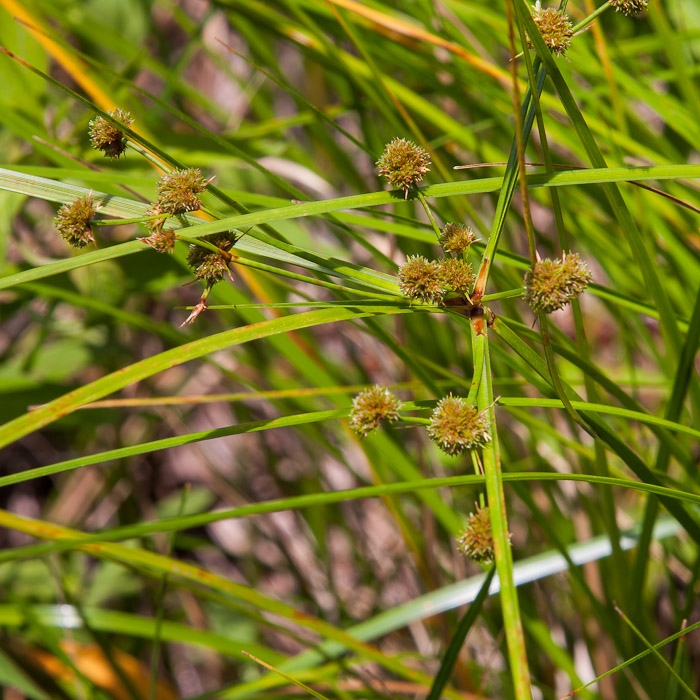
Cuban Bulrush forms floating mats. (JB)
I don’t have data, but 1/3 of a diverse flora being non-native begs unanswered questions concerning crowding, allelopathy, competition, hybridization with native species, alterations to the soil ecosystem, impacts on wildlife, altered fire patterns, collateral pests and diseases, and more. Is Global Warming a factor?
So it’s not all Melaleuca. And, by the way, Melaleuca’s close relative, a garden favorite, Weeping Bottlebrush (Callistemon viminalis) is adding its red beauty to certain natural areas in Florida. Why don’t we just dub it Bloody Melaleuca?
Some of the invaders are pretty, or novel, and interesting. The other day I waded into a canal for a better look at an overhanging branch bearing what I thought was Skunk Vine (Paederia foetida) in a new locale. Wrong! (I hate being blind.) But you might not have to wait long to enjoy Skunk Vine on a branch near you. The flowers are showy. And even more fun nomenclaturally, and so far limited to the Miami Area, is Sewer Vine, Paederia crudasiana, which, I’m sorry to say, makes me wonder what a crud-ass looks lie. (Sorry, blog-writer’s license)
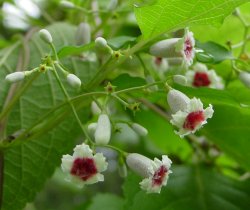
Skunk Vine is prettier than its name. (GR)
Speaking of runaway vines, Mile-a-Minute Vine (Mikania micrantha) is pondering the possibility of over-running Florida from a start in Miami. Why has it remained localized so far?
Trying to figure out which ferns are truly native is next to impossible. If you think otherwise, compare every source you can find dealing with the genus Nephrolepis. If you get it figured out definitively and with consensus, please let me know. And to make it worse, fern spores blow long distances on the wind, and ferns are especially good at hybridizing.
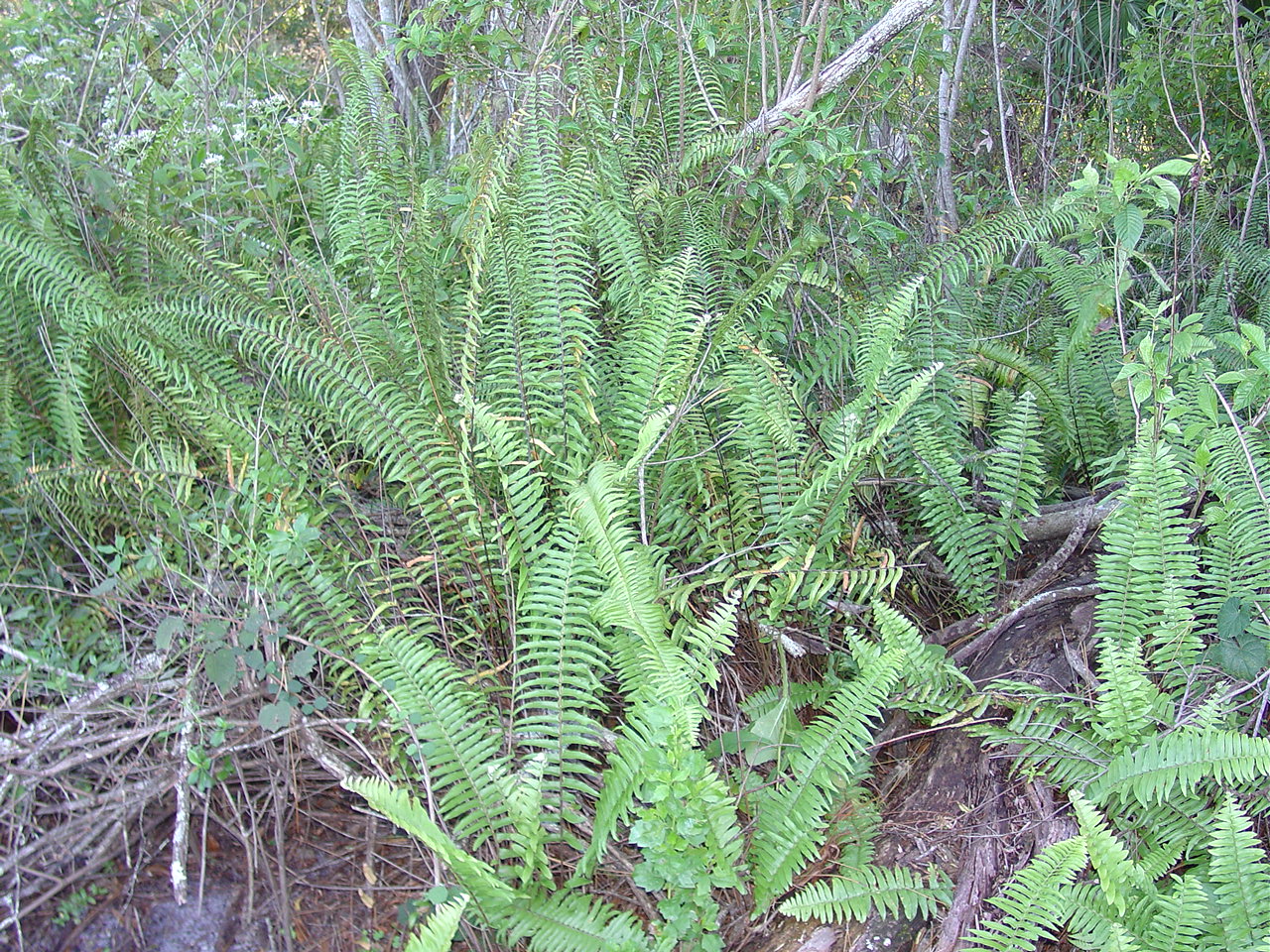
Native Boston Fern? No, invasive Asian Sword Fern. Mighty similar! (Boston Fern has light tan shagginess sticking out on the leaf stalk.)
So what can you do? Bulldozers, machetes, brigades of volunteers and herbicides are not enough. I heard someone say recently, “sometimes all we’ve got is resignation.” Just like crime and reality TV, we’ll never shed the curse, but at least there is one little thing we could do:
Abandon the 19th Century social cachet attached to “I have an exotic plant you don’t have,” and mature to a 21st Century preference for the native species that belong in our own back yards. Oh yea, right, I’m preaching to the other preachers.
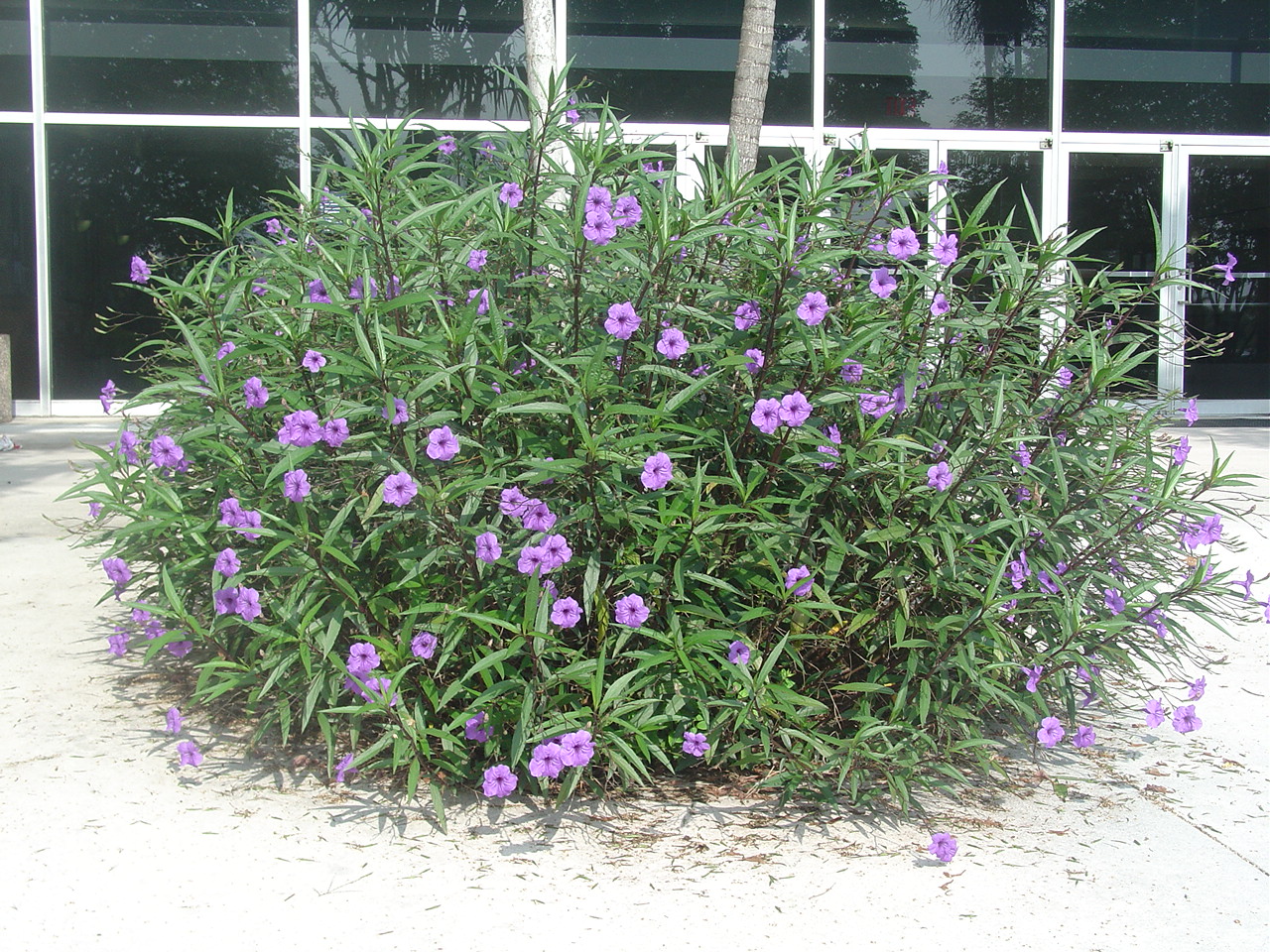
“Mexican Petunia” is not Mexican, and is not a Petunia. It remains popular in landscapes despite being a Category I Invasive Exotic.
 John Bradford
 George Rogers
 George Rogers
 Dee Staley
 Treasure Coast Natives