RSS

Tag Archives: Halpatioke

Three Petal Bedstraw…might curdle yer cheese and stain yer bones

Galium tinctorium

(Galium comes from Greek gala, for milk, because the plants have an ancient history for curdling milk, tinctorium means used for dye.)

Rubiaceae (Coffee Family) (Art by Heather Calderon)
Galium obovatum 2

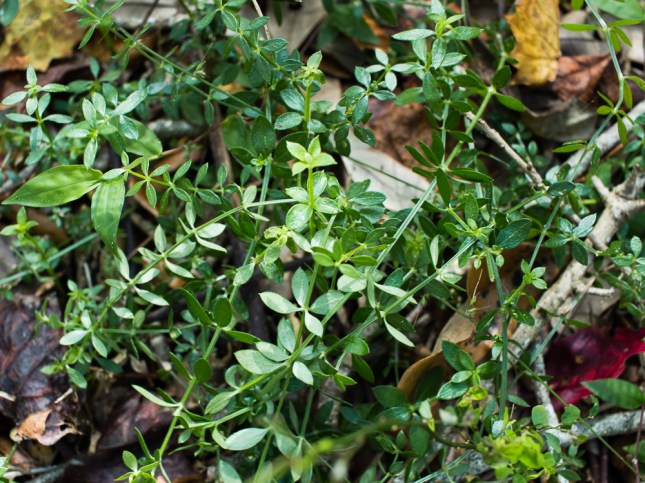
Galium obovatum by John Bradford

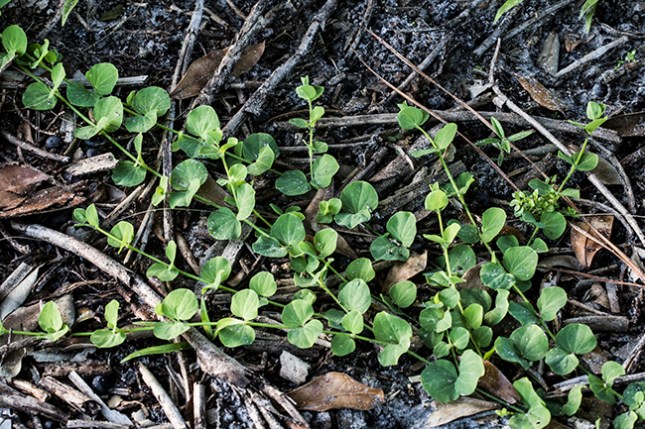
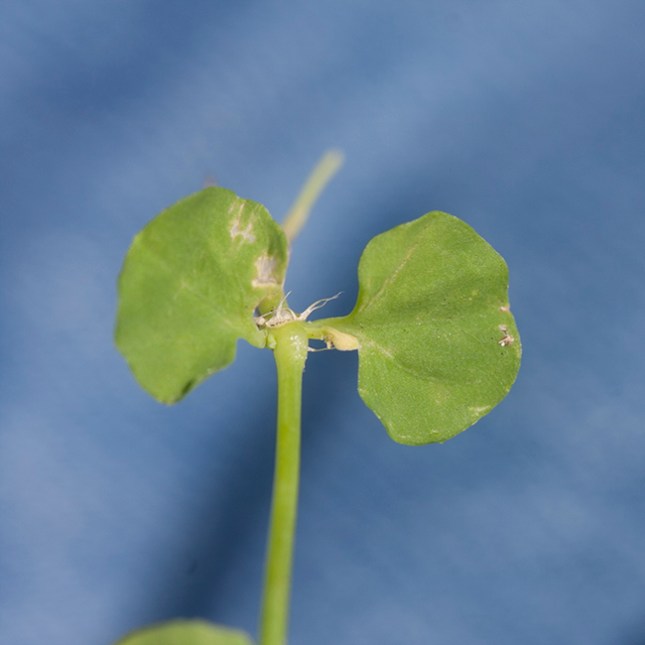
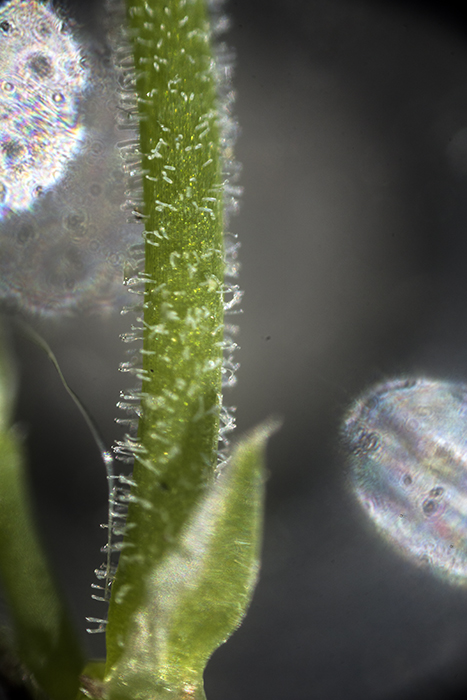
John and I worked on weeds in Halpatioke Park today near Stuart, Florida.  How many species of weeds compete within a 100 yard square?   Bedstraws, species of Galium, are little weedy charmers in the Coffee Family with good looks, nice aromas, and historic roles in human affairs.  Galium is a huge worldwide genus, about 600 species.
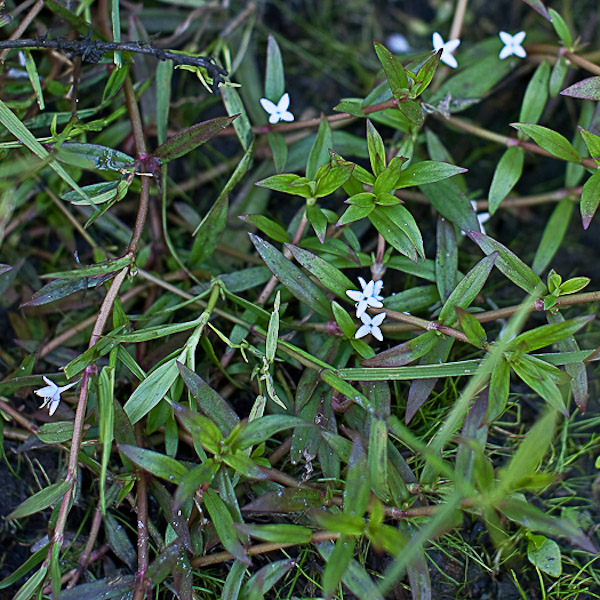
Galium sp. 1

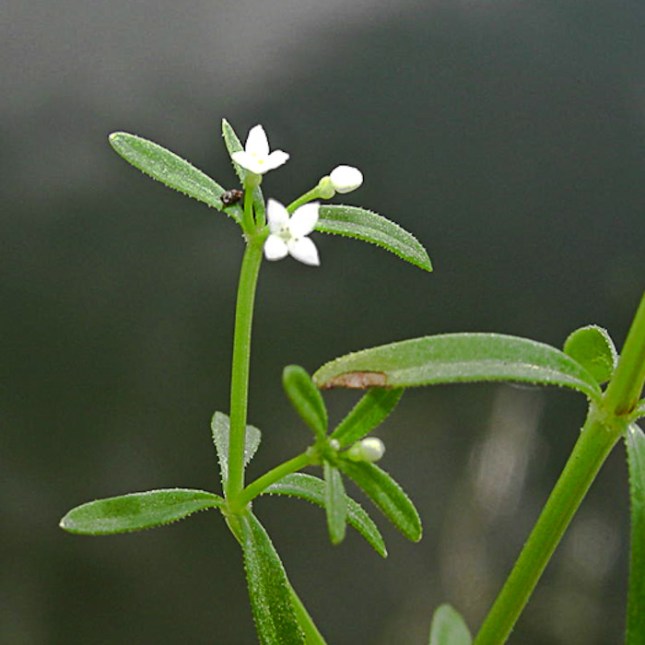
Galium tinctorium by JB

Today’s species ranges essentially from the Arctic Circle through Florida to the tropics.  It likes low wet grassy places.
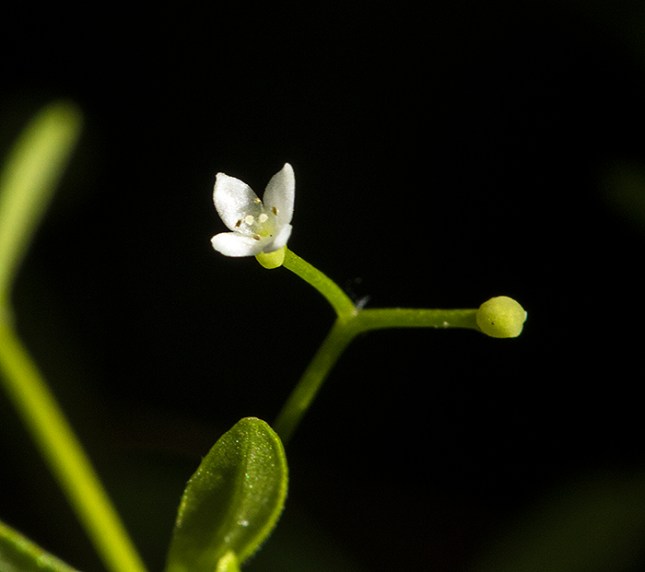
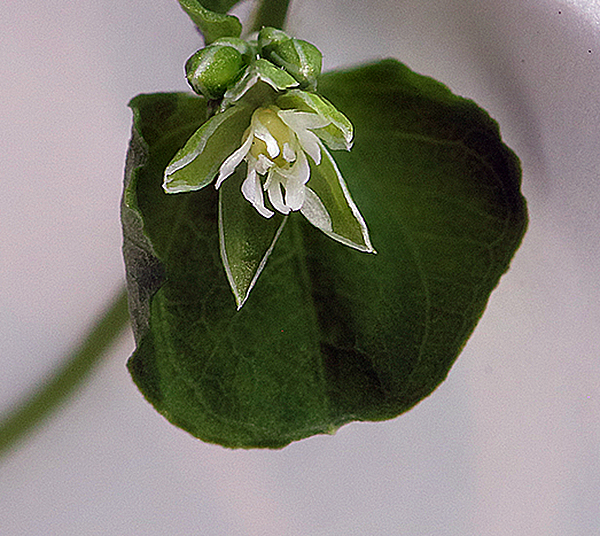
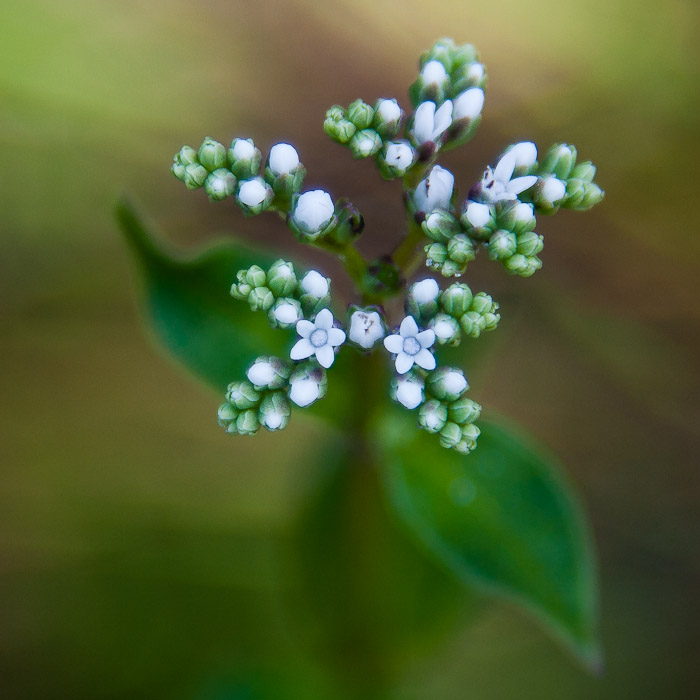
Galium flower small

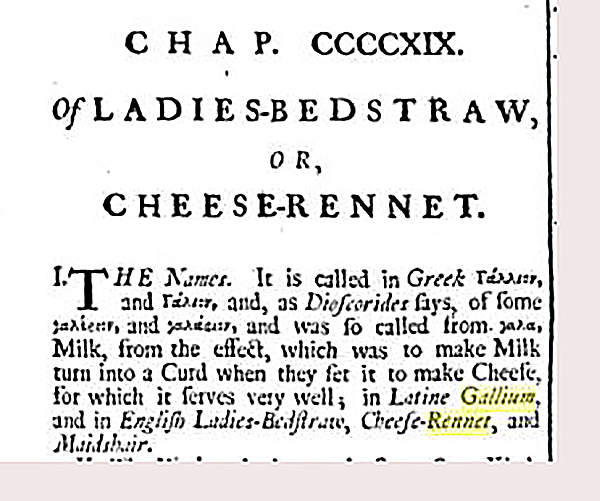
If you read the explanation of name above, you can stop reading now, as that is the story.   But if choose to proceed,  let’s start with the milk thing.   Vegetarians watch what cheeses they eat, or should, because most rennets (enzymes used to curdle milk proteins into cheeses) come from the fourth stomach of unweaned calves.   For those who want none of that, there are chymosin “fermentation” rennets using calf genes genetically engineered into microbes.    Behind door number three are vegetable and microbial rennets dating back into antiquity, and Galiums are among these.  Even better,  Galiums do not merely harden cheese, but they also color it ever so tempting.  (See their next set of useful attributes.)
Galium rennet

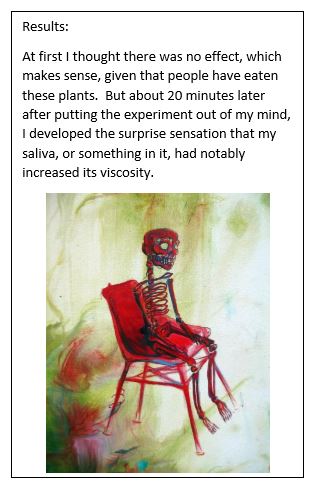
Before that, however, a question:  Why would a plant develop the ability to coagulate animal proeins?  My guess is to deter herbivory, and that calls for an experiment.    Excuse me while I go fetch a piece of bedstraw to micro-nibble.  (Result below)
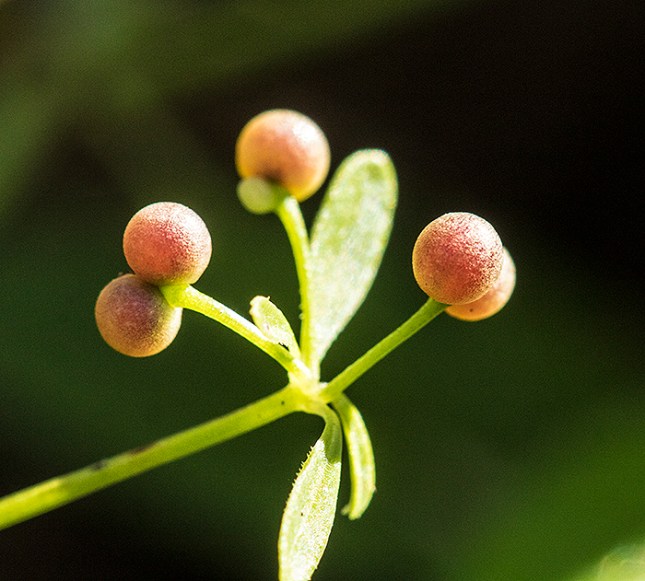
Galium fruits

Red pigment in the weird fruits.

Bedstraws have a second set of ancient uses in addition to stuffing mattresses and making cheese.  Civilizations around the world use them as dyes.   They are very closely related to the madder dyes, and have quite a history of their own.   The lower portions of the plants and the roots yield a red or yellow dye.
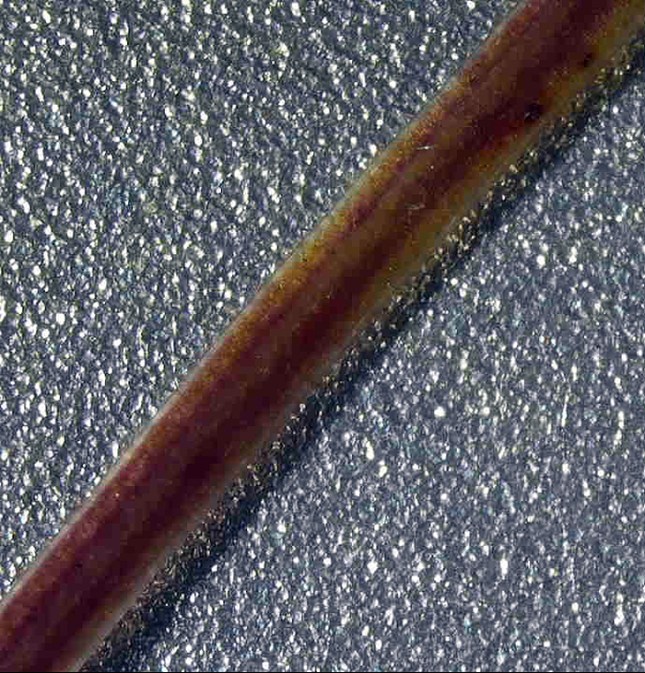
1316631480079.jpg

Red pigment in plant base.

And that brings us to the final unwise use.  Please do not eat the weeds.   People have some history of eating some Galiums under certain circumstances.   I’ll say boringly that the plant is loaded with bioactive principles.  And far more interestingly, there is a report that eating Galium dyes the bones red.   I have no idea if that is so, but…..Galium textbox 1
 
13 Comments

Posted by on March 23, 2018 in Bedstraw, Uncategorized


Tags: , ,

Drymary, West Indian Chickweed

Drymaria cordata

(Drymos is Greek for forest.  Cordata means heart-shaped.)

Caryophyllaceae (The Carnation Family)

It was Halpatioke Park near Stuart, Florida, today for John and me.    We could talk about the dazzling Cardinal Airplants, or the gnarly Live Oaks overhanging the river, but nawww, how about a crummy little turf weed that sticks in your cuff?   So much more exciting!

Drymaria Jupiter Golf Club

Drymary sprawling

Drymary is an around-the-world weed.   Native to Florida?   Hard to be sure, some informed observers say yes, others deny.     There are no Florida collections of it before around 1900, but then again,  easy to ignore.    The stems mostly creep forth, loving moisture, happy in sol or sombra.   Sometimes they tower vertically to 8 inches, especially at flowering time.    It must reach up to deposit its seedheads on a passing possum.

Drymaria leaves

I like weeds because we step on them daily, but if we stop,  look,  think, and Google they offer as much good botany as tropical tourism.

People like to eat this weed.  Why!?  Go to Publix and buy tofu jerky instead.   Some folks think plants come in two varieties…edible and inedible.  That’s not very nuanced, sort of like saying boys sort into good boys  and bad boys.     Fact is, most wild plants have chemical defenses against herbivory.   So before you get out the Asian Sesame Dressing,  here is a discouraging word, “The flower, fruit, seed and root have given very weak positive reactions for the presence of haemolytic saponin.”   Does the “very weak” comfort your apprehensions?  Do you feel lucky?

Drymary flower cropped

So then, if you don’t eat it, what’s Drymary good for?  How about smoking it?   The plant has a pleasant fragrance, and yes, it has been smoked.    I might have puffed some except for two things—a trip to the gas station for medical marijuana rolling papers.  And, well, there’s this, “Topical application must be done with caution as prolonged treatment causes burning.”

Drymaria cordata stem hairs

Stem with glandular hairs

So the best enjoyment of Drymary is nonconsumptive.  The stems have a coat of stiff hairs tipped with glistening droplets.  Maybe that is where the fragrance resides.  In any case, why all those sticky hairs?    Probably protection, maybe from ground-dwelling pests, and/or sun-baking.   Obvious possibilities, but there is more.

When your pants cuff  drags through the meadow the seed-heads snap off along with a short stem fragment.    The seed head itself has hairs, and the stem fragment acts like Velcro.    So, maybe then  possession of a protective hairy stem was pressed into service secondarily as a dispersal aid.  This is the one Drymaria species, out of almost 50, spread all around the globe.

Drymary stuck to shirt

My shirt with Velcro-stuck seed heads.

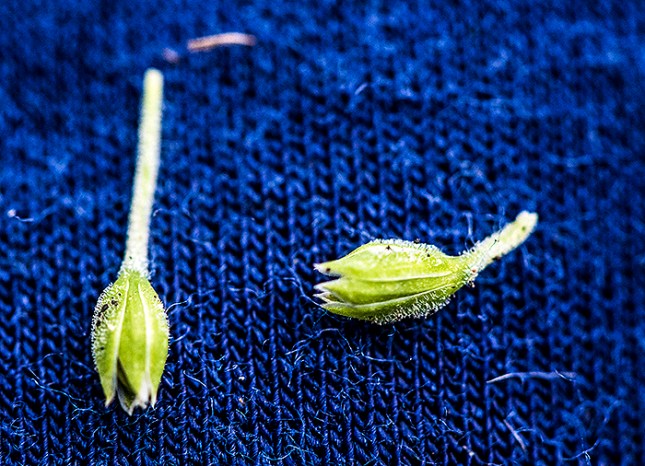
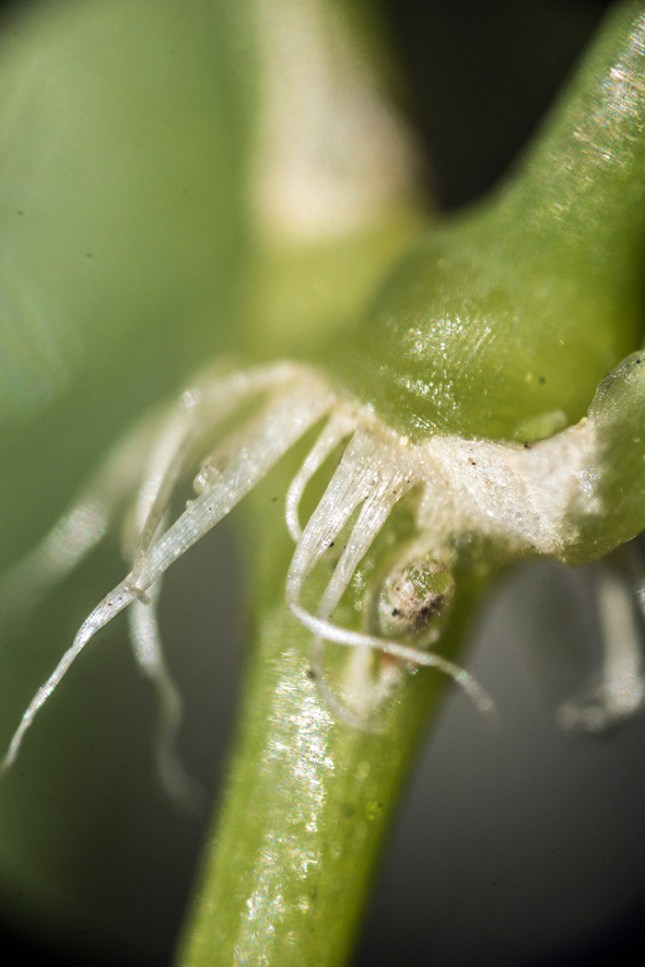
There’s another oddity.  Between the two opposed plate-shaped flat leaves, immediately below their bases, is a set of twisty-pointy Halloween fingers.  (Vocabularious readers may recognize these as stipules.)    We then ask in unison, what do those fingers contribute to the well being of the weed?

Drymaria cordata stipule

Funky fingers immediately below the leaf pairs.  What good are they?

My first idea favored preventing  soil buggies from climbing  to make pests of themselves.  Okay barricades maybe, but I went outside, plopped down on my sixpack abs, got the Velcro heads on my shirt, and saw something more interesting:

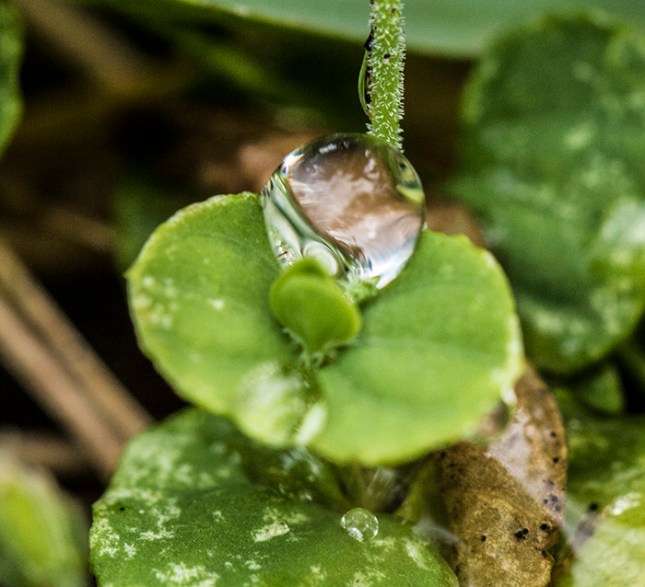
drymary drop 1

Little gem on the paired leaves just above the fingers.

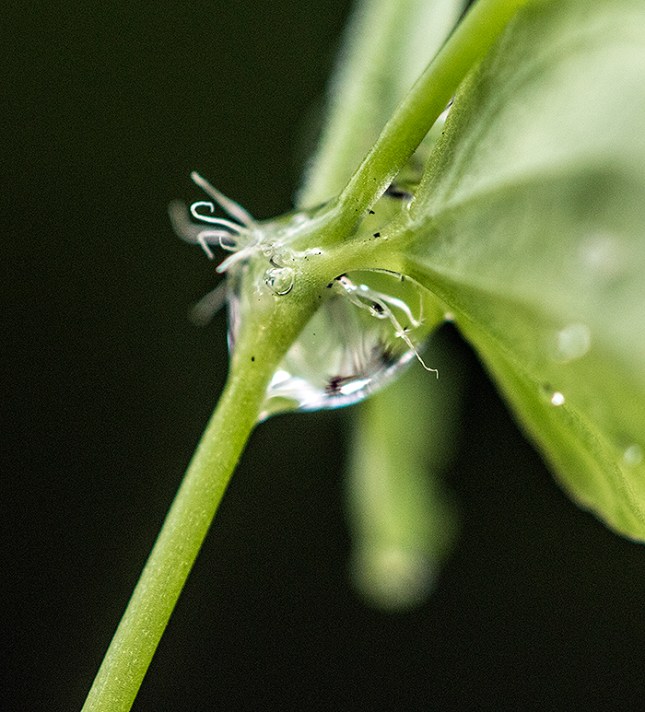
The paired leaves collect water on their top surfaces, capturing beautiful glistening drops in the angle where the two leaves meet immediately above the fingers.   Do the fingers have something to do with holding the water a little longer, or influencing its drainage and distribution?   Maybe they help support the drop before it slithers down between the leaf bases, or more likely (and observed), as the drop falls between the bases, it can catch in the fingers.   Could the snag help the plant retain moisture?   I don’t know, but pretty to contemplate, if you like sprawling on the ground with fire ants and curious neighbors.  Your choice.

Drymary water on stipule

Droplet clinging to the fingers, or vice versa.

 
14 Comments

Posted by on March 2, 2018 in Drymary, Uncategorized


Tags: , , , ,

Puncture Vine

Tribulus cistoides

Zygophyllaceae


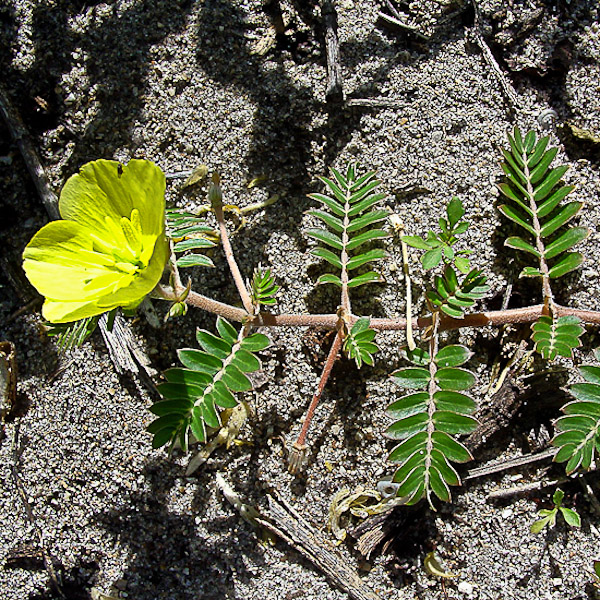
Puncture Vine (by John Bradford). The opposite (paired) compound leaves look ferny.

Puncture Vine (by John Bradford). The opposite (paired) compound leaves look ferny.

Friday John and George searched Halpatioke Park in Stuart Florida for botanical treats. They abound, including the parking lot weeds.  A striking non-native presence on the hottest driest sunbaked weedy sand is the botanical misfit known as puncture vine.  We’ve all seen it sprawling from a pavement crack across the asphalt with opposite ferny leaves and cheery yellow buttercup blossoms.  It is related to Vera Wood trees, similar in flowers and foliage.  Some may know Tribulus (terrestris) as a commercialized botanical “remedy” in a jar.  Others may know puncture vine from a foot stab mishap, the painful burr fruits similar in size, shape, and sensation to those from the sand spur grasses (CLICK).    An example of convergent evolution, as sandspur and puncture vine are unrelated despite superficial burr similarity.

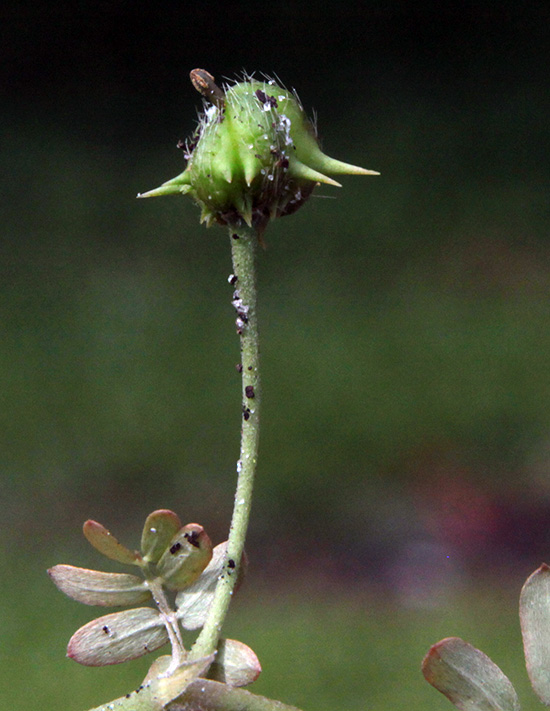
Ouch.  Puncture vine fruit

Ouch. Puncture vine fruit

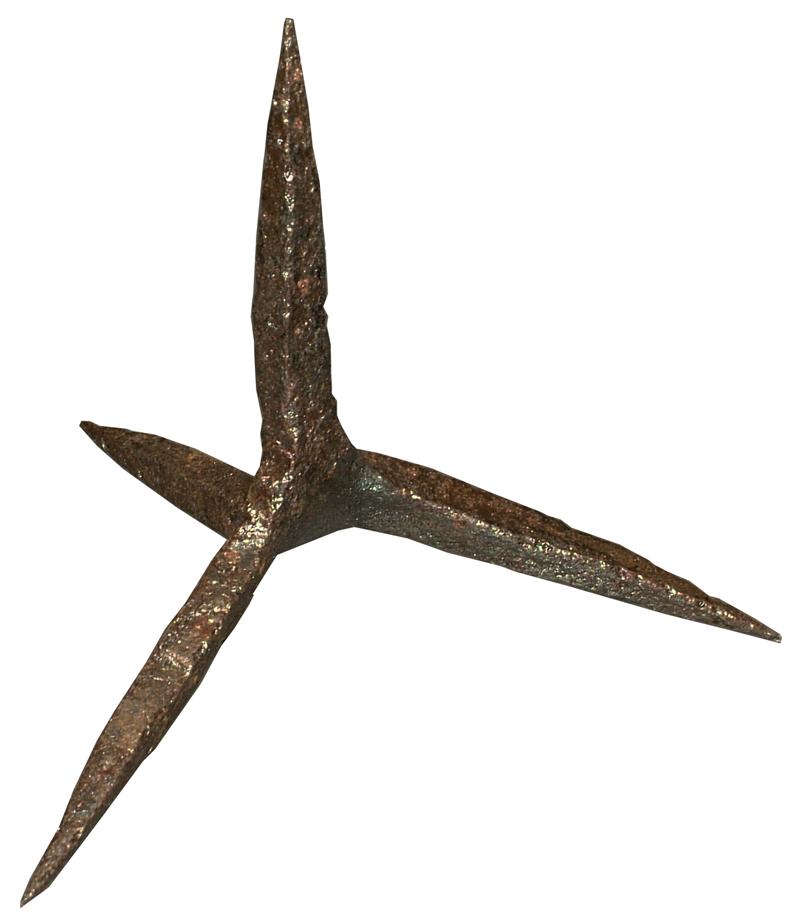
The puncture-prone fruits are armed to the teeth with teeth.  Another an apt name for the plant is caltrop.  A caltrop is an old fashioned device to hobble horses.  Anti-chariot technology. The puncture vine fruit is a little green caltrop.   It can poke a sneaker or a bicycle tire.  Even worse—the things you learn from Wikipedia—some warriors smear lethal arrow poison on the burrs and leave the deadly little booby-traps for unshod foes.

Caltrop (Google Images)

Caltrop (Google Images)


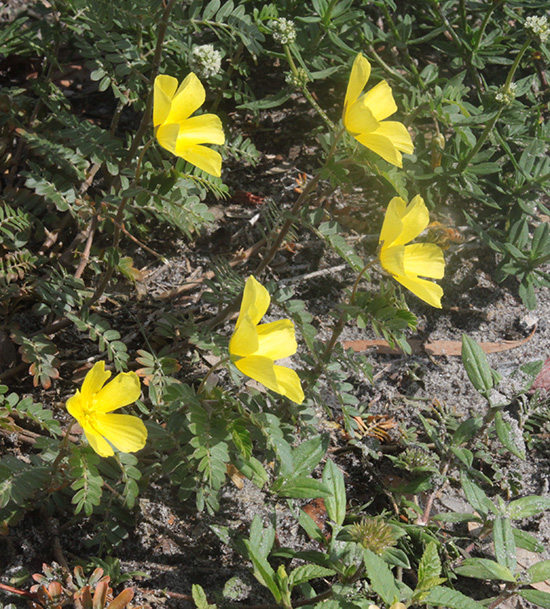
Let’s change the subject to something prettier. The attractive blossoms track the sun, all aligning toward the rays just like digitally coordinated solar collectors.

Sun-trackers

Sun-trackers

Why?  Explanations of floral solar tracking include the heat vaporizing floral fragrances, or to provide an attractive warm haven for pollinators.  Most solar tracking flowers live in cool places where such cozy advantages are obvious.   But why a solar-powered warm-climate weed?  I do not know.  Maybe extra heat helps at times even in warmer climates. It is not always hot year-round 24/7.  And maybe the species evolved in a cooler time or place. Or maybe the direct sunbeams somehow help bees orient to the flowers.   Yellow flowers commonly have UV patterns in the petals; bees see the patterns but we can’t—maybe those sun rays make the patterns pop to a busy bee.

tribulus Solar Dish Systems

The compound leaves and their leaflets track the sun too, ostensibly to maximize sun exposure for photosynthesis.  The entire ferny leaf orients toward the orb, and as a step further, the individual leaflets “cup” like tiny curved linear sun collectors.  In the image below the brown tilted stick tilts at the sun.  The leaves have the same inclination.

Leaves tracking the sun.  The stick (and leaves) pint to the sun.

The stick, flower, and leaves point to the sun.


The END

tribulus pills

 
15 Comments

Posted by on June 21, 2014 in Puncture Vine, Tribulus


Tags: , ,

Evolutionary Flip-Floppers

Kyllinga odorata (Cyperaceae)

Ludwigia species (Onagraceae)

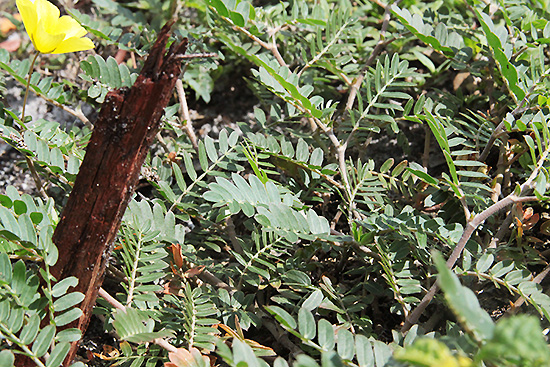
Today John and George sweated through Halpatioke Park in Stuart, Florida.  With resort-quality lakes deep in the forest, Halpatioke is always a beautiful source of botanical surprises from “northern” species near their southern limit, such as Partrideberry (Mitchella repens) to “tropical” species near their northern border, such as Lax Panicum (Steinchisma laxum).  But what made an impression today were the weird flowers—the ones not playing by the usual rules.

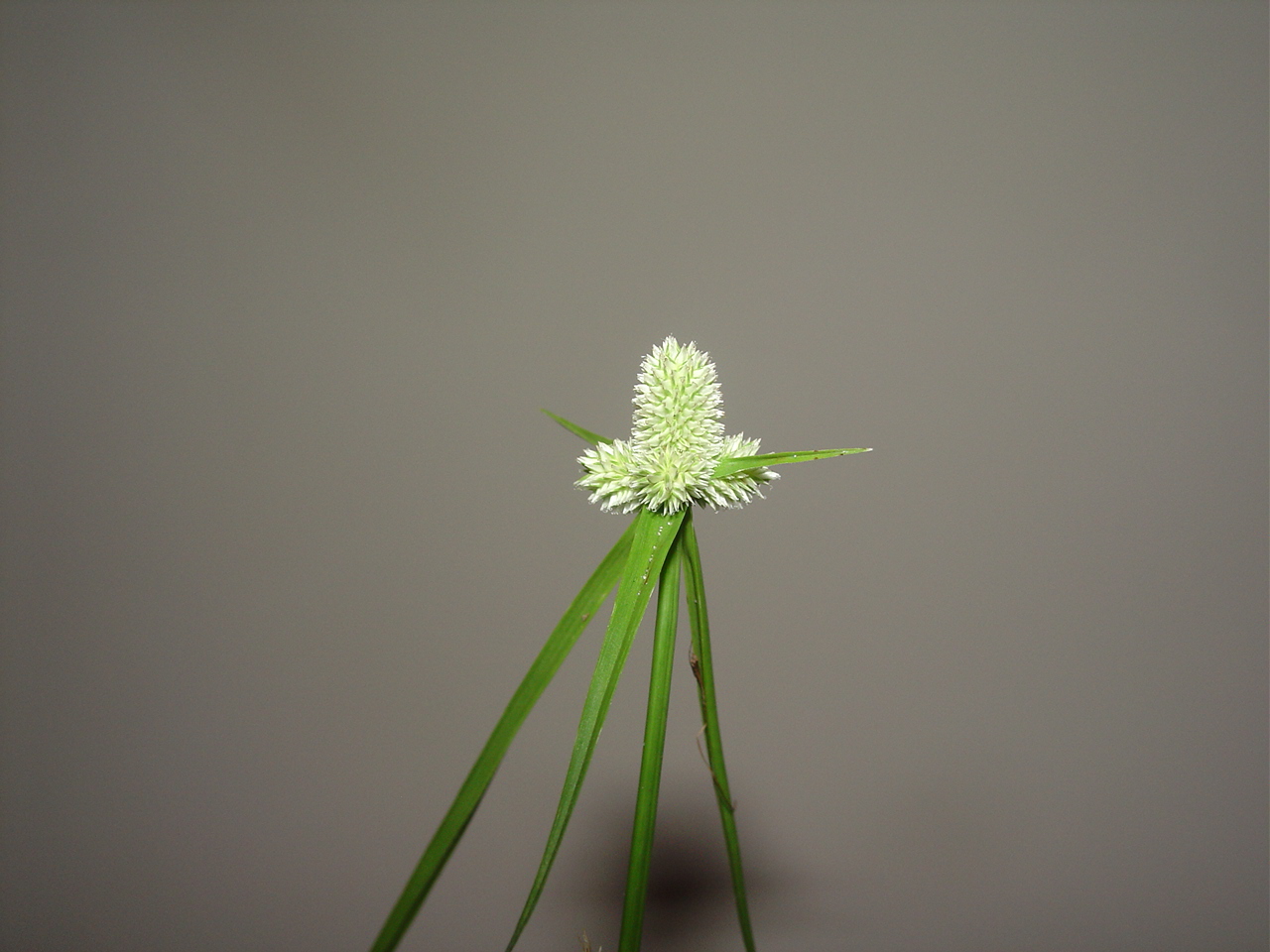
Fragrant Kyllinga, white and fragrant.

Fragrant Kyllinga, white and fragrant. (by JB)

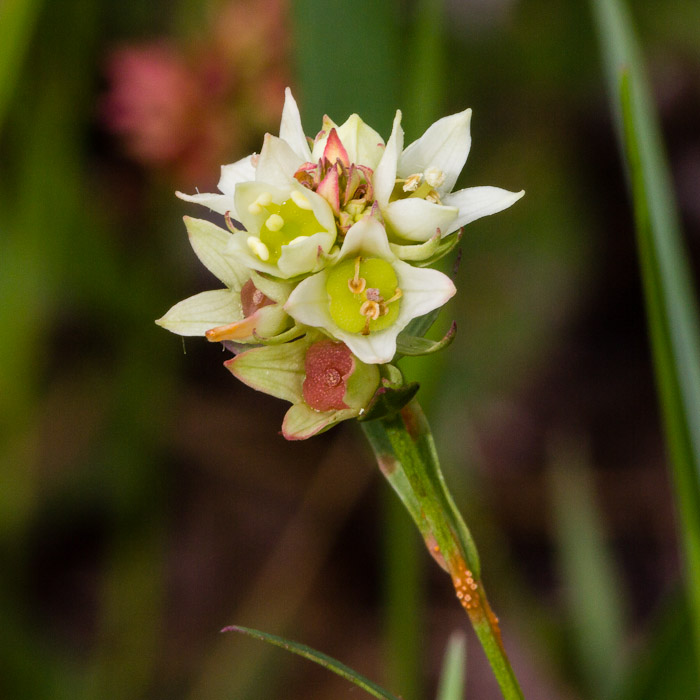
First, in the lawn there was the native Fragrant Kyllinga (Kyllinga odorata).   We all know the vast majority of grasses and sedges to be wind-pollinated, no showy flowers and no floral fragrance.  Florida wildflower enthusiasts know an exception to this to be the species of Rhynchspora called Painted Sedges, with white bracts at the top simulating petals.  (Some may have learned these under the name Dichromena, two-toned.)  We are not talking about those today.

Fragrant Kyllinga is an inconspicuous little sedge, often a turf weed, providing a less familiar case of an insect-pollinated sedge.  In most Kyllingas the flower cluster is green, odorless and typically sedgelike.  But in Fragrant Kyllinga the thimble-shaped flower cluster is nearly white and sweetly fragrant.  Evolution works in weird ways.  Wind-pollinated plants are generally regarded as having abandoned creature-mediated pollination.   Exceptional fragrant or colorful plants in a wind-pollinated family thus seem to have “reinvented” insect pollination.  With petals gone, the white color must be on modified leaves under the flowers in the Painted Sedges and Fragrant Kyllinga.

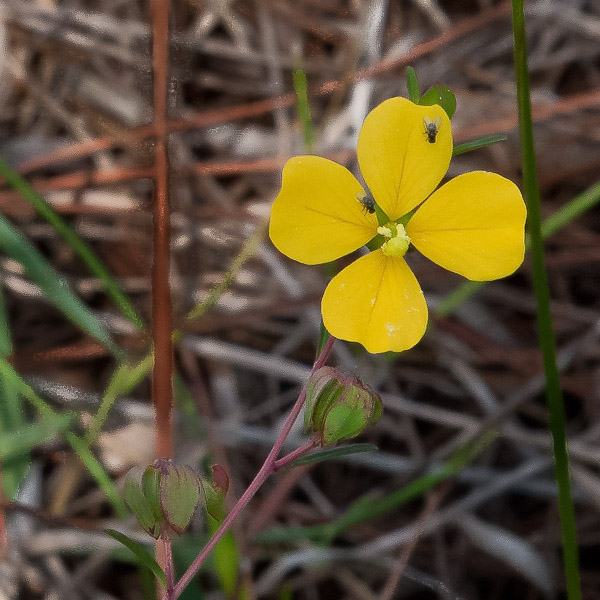
Ludwigia maritima (JB), a yellow-petal species.

Ludwigia maritima (JB), a yellow-petal species.

Not long after sniffing the Kyllinga  we came upon a lake shore patch of what we took to be Small-Fruited Ludwigia,  Ludwigia microcarpa, another head-scratcher.  Most of us probably tend to think of Ludwigias as having conspicuous yellow blossoms, such as the showy Peruvian Primrose-Willow rising bright yellow from roadside ditches.  Yet a number of Ludwigia species have done away with petals or nearly so. (What look like petals in the photos below are sepals.)   Examples of petal-less Ludwigias (by JB) are illustrated below:

ludwigia lanceolata Ludwigia microcarpa Ludwigia suffruticosa JB

These obviously differ dramatically from the yellow-petal Ludwigias. Maintaining any unnecessary structure is a biological liability and waste of energy, sort of like maintaining an unused residential swimming pool, but petals not needed?

Are those petal-less species self-pollinated, or able to make seeds without pollination?   Those abilities are not rare in the plant world, but I doubt that explains the absence of petals.  The flowers without petals have otherwise well-formed open flowers, the sepals have a slightly petal-like appearance, even becoming creamy or tinted rather than the usual sepal-green.   The flower centers can be colorful as well.

Now we go to pure speculation.  Here is a guess.   Maybe the genus has divided its pollination between bees drawn to the big bright petals on some species, and other insect visitors not particularly drawn to big yellow petals.   Losing petals genetically is probably a minor change, basically “instant evolution.”  What’s striking is that the petal-less species are not all most closely related to each other.   Some have species with petals as their closest relatives, implying that that petals were lost more than once as separate events.    There must indeed be something “good” about petal loss.

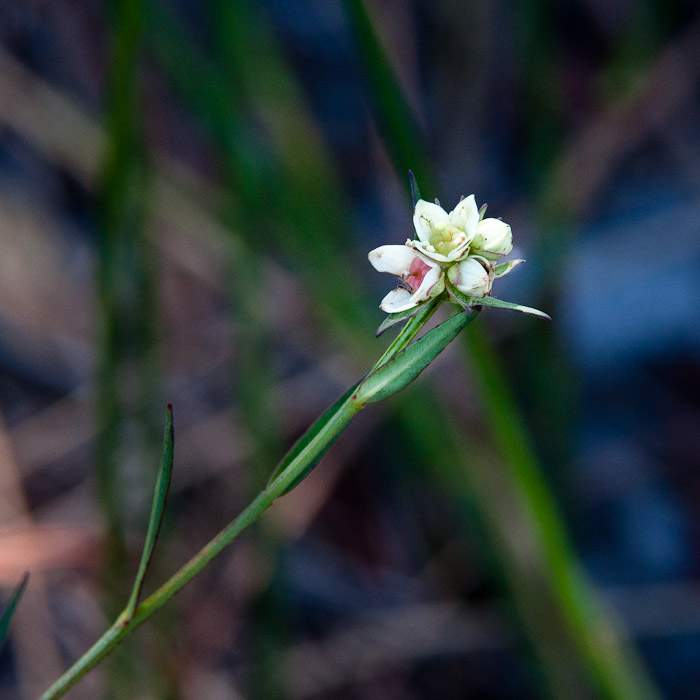
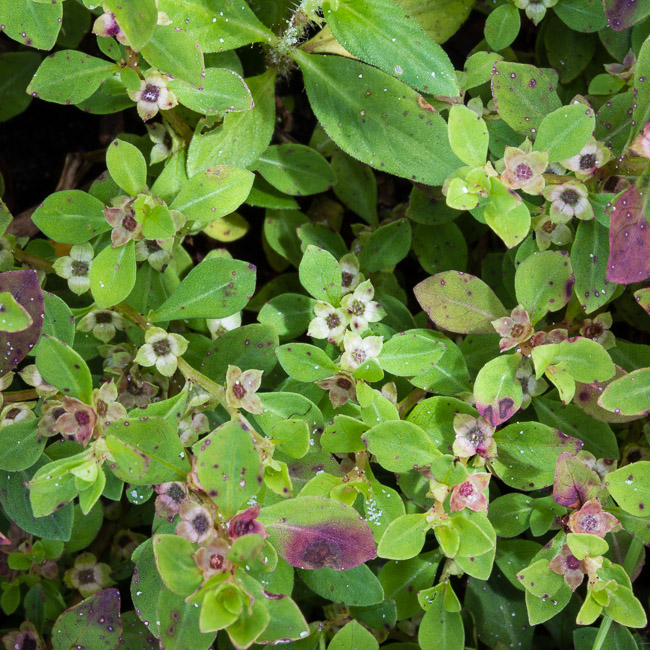
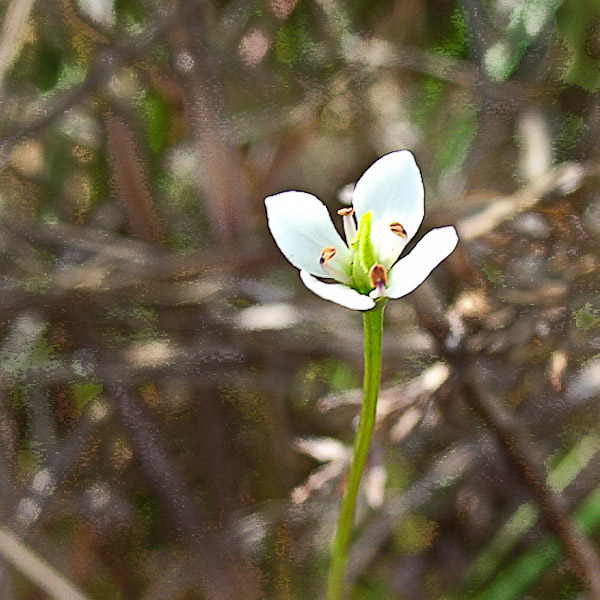
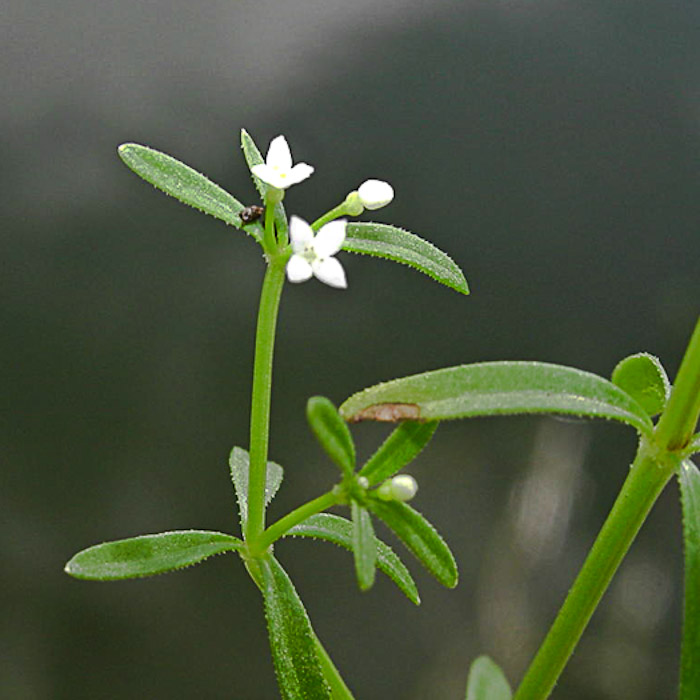
If I can beg your credibility a little, the petal-free Ludwigia flowers are not terribly different from flowers of roughly similar sizes and colorations encountered in many other plant types in similar marshy or shoreline habitats, for instance,  Swamp Hornpod (Mitreola sessilifolia),  Herb-of-Grace (Bacopa monnieri), Buttonweeds (Diodia species),  Bartonia (Bartonia verna),  Bedstraws (Galium species), Water Pimpernels (Samolus species), and others.

Below are several species not related to Ludwigia.  The petal-less Ludwigias are more similar to these than they are to their yellow-flowers relatives.  They are all roughly in the same size range.

Bartonia verna (JB)

Bartonia verna (JB)

Bedstraw (Galium, by JB)

Bedstraw (Galium, by JB)

Hornpods (by JB)

Hornpods (by JB)

Diodia (by JB)

Diodia (by JB)


Tags: , , ,

Why is the Redroot Red?

Carolina Redroot

Lachnanthes caroliana

Haemodoraceae

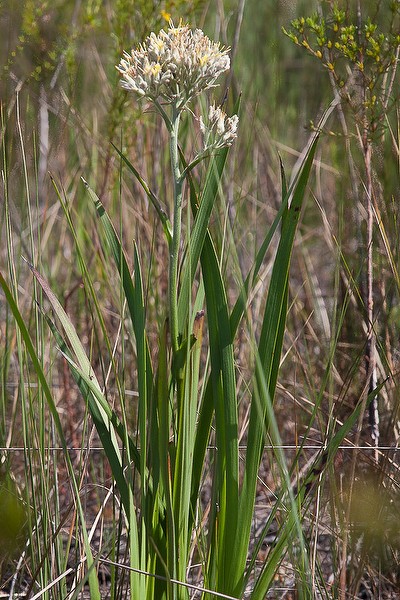
Halpatioke Park in Stuart was where John and George got lost yesterday, but the advantage of getting lost is extended exploration, and in the depth of our despair took comfort in Marshallia tenuifolia (Barbara’s Buttons) putting on a fancy show.  We traipsed also through a Hypericum marsh full of the odd annual grass Steinchisma laxa which seems to relocate from year to year as the wind blows.  But enough of this pointless chatter:  we are here for Carolina Redroot (Lachnanthese caroliana).

Carolina Redroot (by JB)

Carolina Redroot looks vegetatively like an Iris, and like one of those, it prefers wet places and shallow water.  What’s woolly on the outside and yellow on the inside?  The Cowardly Lion?  No, Lachnanthes blossoms.  In class we talk about butterfly-pollinated flowers resembling upside-down witch hats, which occur more often in Dicots than in Monocots, such as today’s pretty Monocot.  Butterflies do visit, but not just butterflies.  Yesterday the dominant floral visitors were  big scary-looking bees (or bee posers).

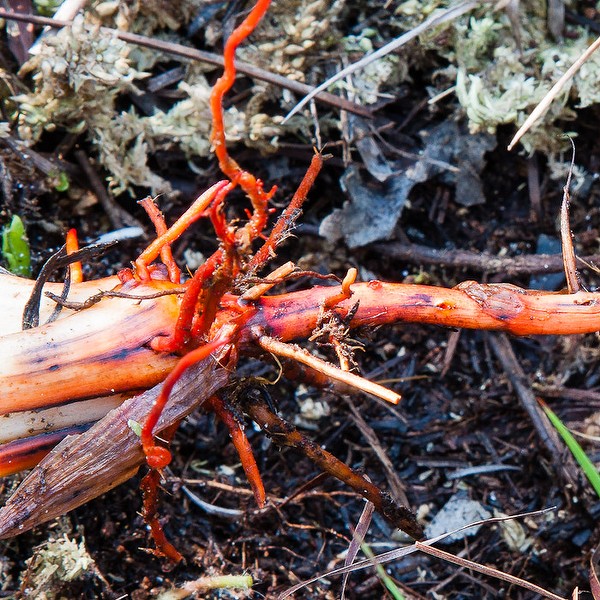
The term redroot is apt, as the subterranean underpinnings are bloody.  The red bleeds readily into oils and ethanol, meaning that people have used the stuff easily.   William Bartram and other 18th Century observers encountered Native Americans using an oil extract as tinted hair oil.  (I’ve had students who look like they do too.)  The red serves also as fabric dye, which I could have discovered personally, as my right thumbnail remains red long after handling the roots.  Easily extracted plant products have a way of winding up in homeopathy, which is true of our plant.

Bad for white pigs but okay for black ones? What do the feral hogs think? (By JB)

Why would a plant pack its roots with red stuff?  I do not know how important the actual coloration is.  It could be a  sort of warning coloration—“hey, pigs don’t  munch these poison roots.”  The plants are reputedly tough on livestock, including a much-repeated, but unsubstantiated, report that the roots poison white pigs but not black ones.  It turns their bones red!  There could actually be something to it, because there are hints of the toxins causing photosensitivity, so maybe black pigs have natural sunscreen.  Or then again this is all coming from some iffy sources and may be hogwash.  (I’d love to know the dietary attitude of feral piggies to Redroot roots.)

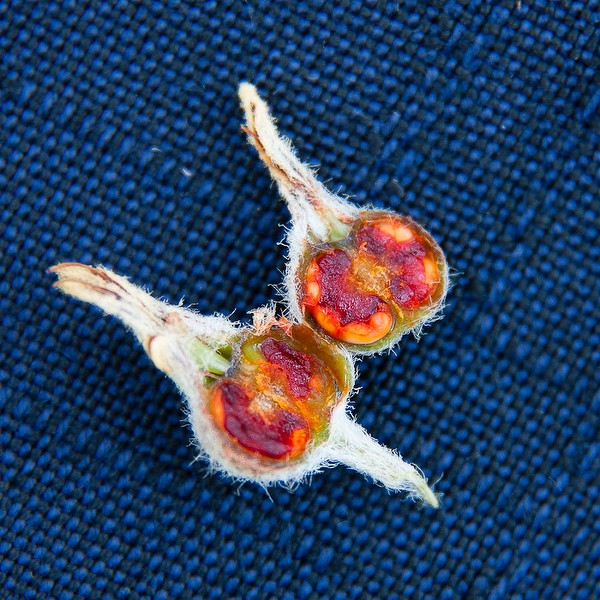
What is more fascinating about the red material, which seems to be a chemical blend, is that the other big concentration is in the young fruit.  What does the young fruit have in common with the root?  Both are starchy regions the plant may defend from hungry varmints.  Cut across an immature capsule and it glows red like rubies.  Really, try it.  (You will get red fingers.)  The red part is not the seeds,  but rather a massive swollen exaggerated placenta, which is the organ to which seeds are attached.  (Technically, a portion of the seed attachment itself may contribute to the red mass.)  Mammal placentas are big and red, but why would a plant have such a thing?  I think the placenta is a big red poison pill.  The main compound reported from it is a toxin called lachnanthocarpone.  As the fruit ripens the redness fades.  The mature fruits are ugly dry capsules crowned with persistent sepal tips.

The young fruit is a box of rubies. The red part is (mostly) the placenta. The seeds are yellowish. (By JB)

Evidence that dispersal is mostly by flotation, at least in some regions, is that in northern portions of the range Redroot spreads through physically interconnected water systems yet is absent from apparently suitable habitats without flotation access.

Speaking of the distribution, the range is bizarre, from Cuba to Nova Scotia.  Despite what I just said about floating, a spotty linear north-south range implicates migrating waterfowl as translatitudinal movers and shakers.

Redroot is not prominent garden-wise, but it is cultivated occasionally, including in Europe, with an eye to its wetland proclivities.  Commercial availability is low, although the Florida Wildflower Growers Cooperative offers the seeds.  CLICK

 
1 Comment

Posted by on July 3, 2012 in Carolina Redroot


Tags: , , ,

Sensitive Brier

Sensitive Brier

Mimosa quadrivalvis

Mimosaceae

 First,  today’s story is based at Halpatioke Park in Stuart.  Enjoy John’s Gigapan in the park.  You can pan around and zoom in and out.  Click Here

Second, let’s get our Mimosas straight.

Different Mimosa #1:  Most gardeners and botanical garden visitors have touched and crumpled poor neurotic  Sensitive Plant.  That fun species is Mimosa pudica (pudica = shy) and, although not native to Florida, crops up occasionally in the sunshine state.  It differs from all other Florida Mimosas by having just two pairs of pinnae (major leaflets).

Different Mimosa #2:  Mimosa strigillosa, sometimes called Powderpuff or Sunshine Mimosa, is a Florida native and  a commercial groundcover.  It was a 2008 Florida Nursery Growers and Landscape Association 2008 “Plant of the Year.”  This species has a somewhat elongate (vs. globose) flower head and is the only thornless species in Florida.  (The 4th Florida species, Mimosa pigra, is a vining species with thorns and with flat fruits.)

Different Mimosas #3:  Tropical American Mimosa tenuiflora and some other species have psychedelic root drugs used in mind-bending preparations.  As far as we know, the only “trip” you experience from any of the Florida species is stumbling over a vining stem.

Different “Mimosa” #4:  The “Mimosa” tree is not a Mimosa and is irrelevant.

Different Mimosa #5: Is a disgusting cocktail made with champagne and orange juice. Avoid it.

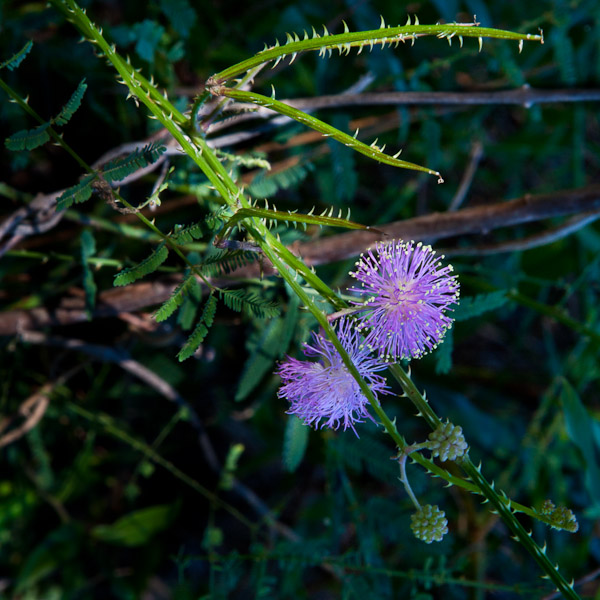
Mimosa quadrivalvis flower heads (by JB)

Now that the pesky  imposters  are marginalized, let’s talk.  Yesterday John and George enjoyed a 70-degree, blue-sky visit to Halpatioke Park and selected Sensitive Brier to feature here.   Mimosa quadrivalvis, the only Florida species with a four-angled (vs. flat) pod, was in beautiful bloom with its highly pink poofy flower heads.  Less attractive but more interesting were its ugly bristly pods.  To older folks, this species may be more familiar as Schrankia,  a persistent form of  nomenclatural brain pollution.  Does Sensitive Brier recoil from probing like a good “sensitive” brier should?  Yes, but less dramatically than Different Mimosa #1.

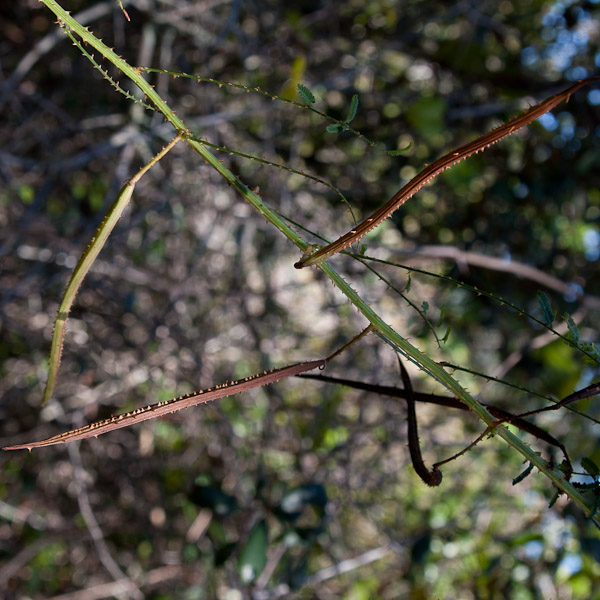
Thorny ripe pods (by JB)


Let’s linger a moment on the sensitivity.  Many Legumes tend to droop their foliage at night.  They are not wilted.  Rather, they “close up shop” by means of little muscles called pulvini (singular: pulvinus) at the bases of the leaves and sometimes at the leaflet bases too.  The pulvinus controls the angle of the dangle in response to environmental cues.  We won’t go far down that technical road, but briefly, the plant responds to the different reddish light tones during the day compared with those at dusk.   Far-red light characteristic of dusk sends a “time to droop” signal to the pulvinus.  The mechanism is related closely to the way long-day and short-day plants determine the season, and to red/far-red  cues governing seed germination.  Take the drooping  reaction, change the cues from light color to touch, and you have leaves that recoil  when a cow comes sniffing around.  You can watch here as a Mimosa goes to sleep thanks to its pulvini.  Click

What really grabbed us, literally, was not the beguiling flower head, and not the sensitive leaves, but the pods.   They are scary, resembling slim barbed torpedoes.  A reasonable observer might interpret the thorns on the pods as protection from herbivores, which of course is probable, especially since the entire plant is armed similarly.  Beyond that, fruits from many plant species apply spines and varied protuberances to cling to passing creatures to aid dispersal.  That’s conceivable with today’s plant.


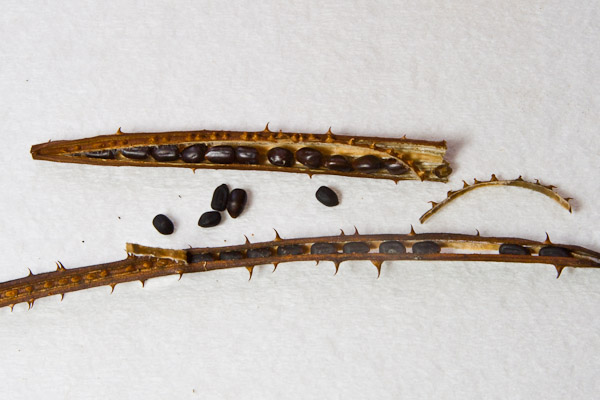
Mess with the pods, and they unzip (by JB)


Playing with the ripe legumes we noticed something fun:  if you abuse them, for instance by dragging the spines across fabric, the pods pop open readily along pre-set lines presenting the seeds all lined up like paratroopers getting ready to jump.  It seems that abrasion and tugging on the spines helps open the pod.  Maybe creatures do it sometimes, or maybe the wind helps as the pods grab each other and snag surrounding vegetation suspended on their vines.

 
2 Comments

Posted by on October 22, 2011 in Sensitive Brier


Tags: , ,