Tribulus cistoides
Zygophyllaceae
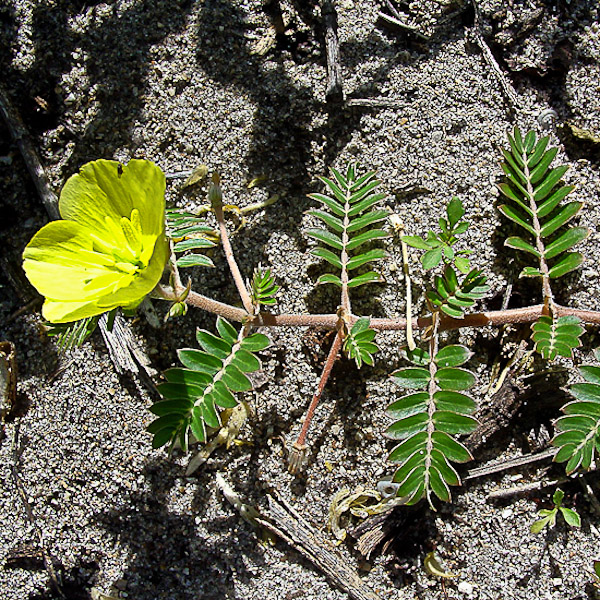
Puncture Vine (by John Bradford). The opposite (paired) compound leaves look ferny.
Friday John and George searched Halpatioke Park in Stuart Florida for botanical treats. They abound, including the parking lot weeds. A striking non-native presence on the hottest driest sunbaked weedy sand is the botanical misfit known as puncture vine. We’ve all seen it sprawling from a pavement crack across the asphalt with opposite ferny leaves and cheery yellow buttercup blossoms. It is related to Vera Wood trees, similar in flowers and foliage. Some may know Tribulus (terrestris) as a commercialized botanical “remedy” in a jar. Others may know puncture vine from a foot stab mishap, the painful burr fruits similar in size, shape, and sensation to those from the sand spur grasses (CLICK). An example of convergent evolution, as sandspur and puncture vine are unrelated despite superficial burr similarity.
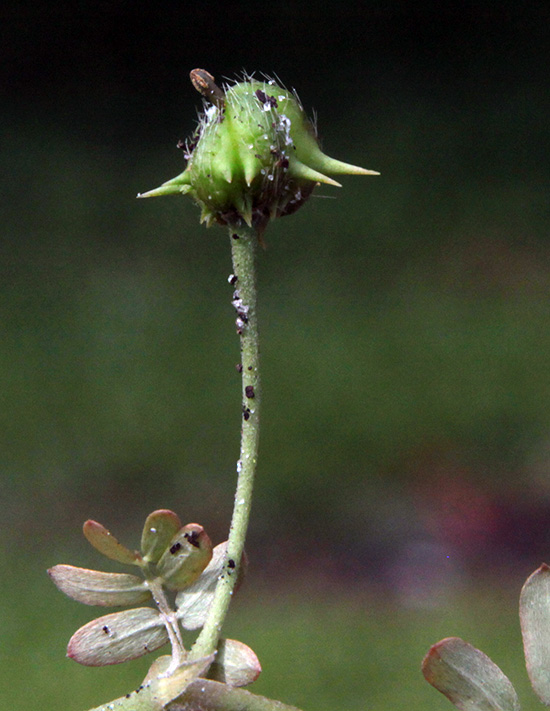
Ouch. Puncture vine fruit
The puncture-prone fruits are armed to the teeth with teeth. Another an apt name for the plant is caltrop. A caltrop is an old fashioned device to hobble horses. Anti-chariot technology. The puncture vine fruit is a little green caltrop. It can poke a sneaker or a bicycle tire. Even worse—the things you learn from Wikipedia—some warriors smear lethal arrow poison on the burrs and leave the deadly little booby-traps for unshod foes.
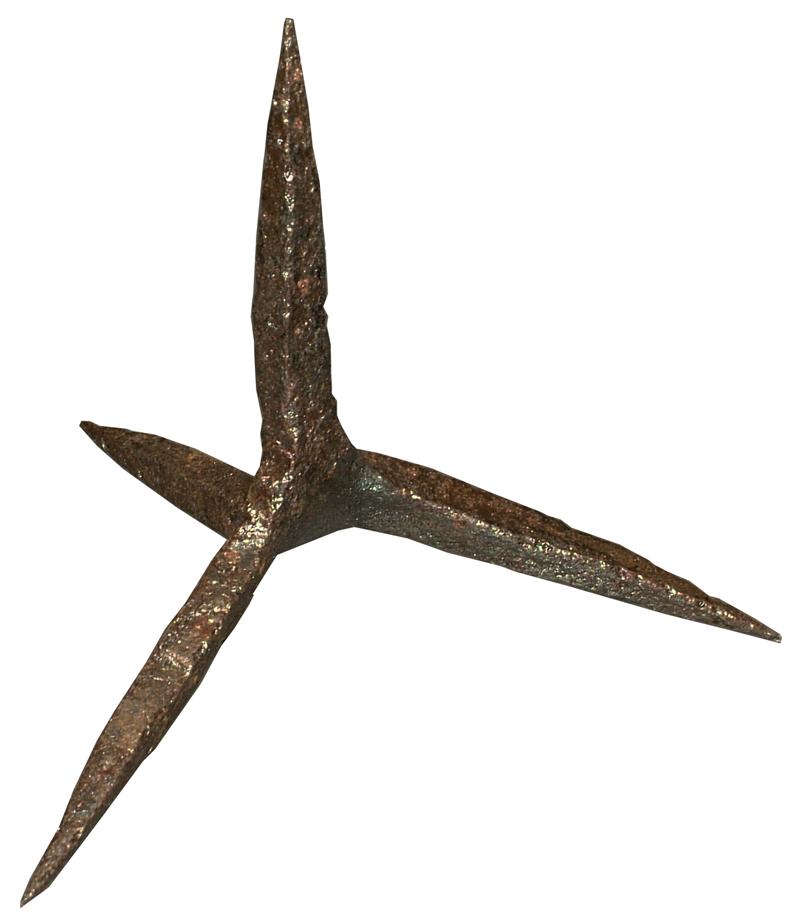
Caltrop (Google Images)
Let’s change the subject to something prettier. The attractive blossoms track the sun, all aligning toward the rays just like digitally coordinated solar collectors.
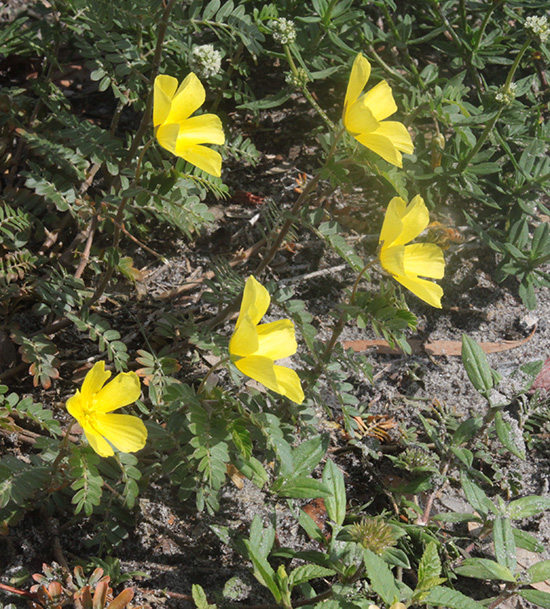
Sun-trackers
Why? Explanations of floral solar tracking include the heat vaporizing floral fragrances, or to provide an attractive warm haven for pollinators. Most solar tracking flowers live in cool places where such cozy advantages are obvious. But why a solar-powered warm-climate weed? I do not know. Maybe extra heat helps at times even in warmer climates. It is not always hot year-round 24/7. And maybe the species evolved in a cooler time or place. Or maybe the direct sunbeams somehow help bees orient to the flowers. Yellow flowers commonly have UV patterns in the petals; bees see the patterns but we can’t—maybe those sun rays make the patterns pop to a busy bee.

The compound leaves and their leaflets track the sun too, ostensibly to maximize sun exposure for photosynthesis. The entire ferny leaf orients toward the orb, and as a step further, the individual leaflets “cup” like tiny curved linear sun collectors. In the image below the brown tilted stick tilts at the sun. The leaves have the same inclination.
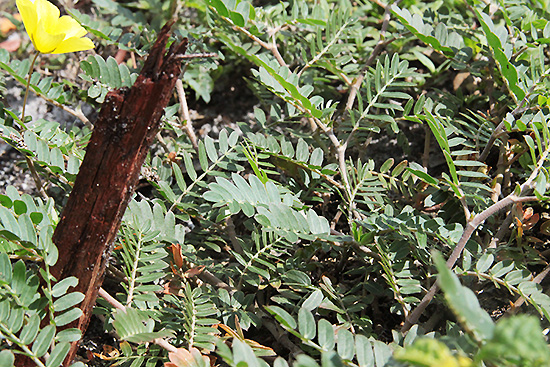
The stick, flower, and leaves point to the sun.
The END

 John Bradford
 George Rogers
 George Rogers
 Dee Staley
 Treasure Coast Natives