Galium tinctorium
(Galium comes from Greek gala, for milk, because the plants have an ancient history for curdling milk, tinctorium means used for dye.)
Rubiaceae (Coffee Family) (Art by Heather Calderon)
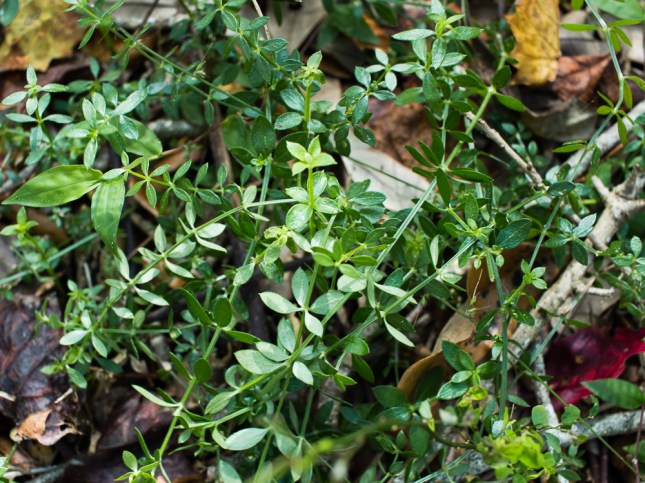
Galium obovatum by John Bradford
John and I worked on weeds in Halpatioke Park today near Stuart, Florida. How many species of weeds compete within a 100 yard square? Bedstraws, species of Galium, are little weedy charmers in the Coffee Family with good looks, nice aromas, and historic roles in human affairs. Galium is a huge worldwide genus, about 600 species.
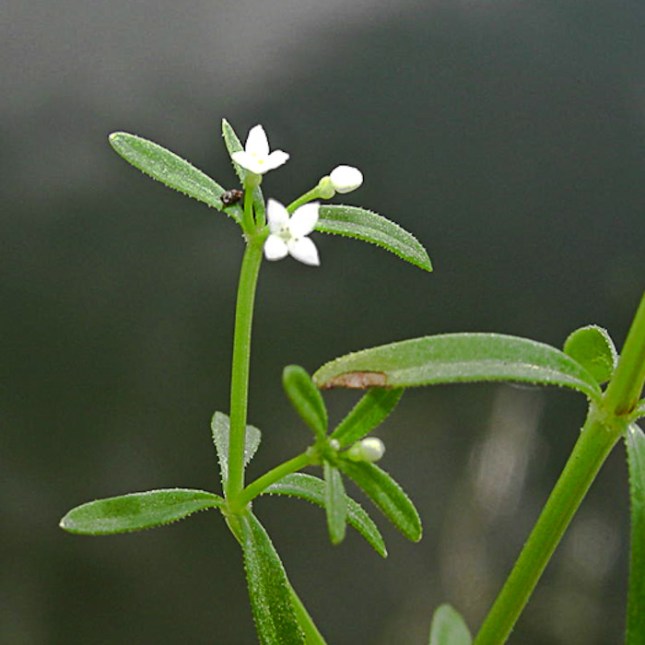
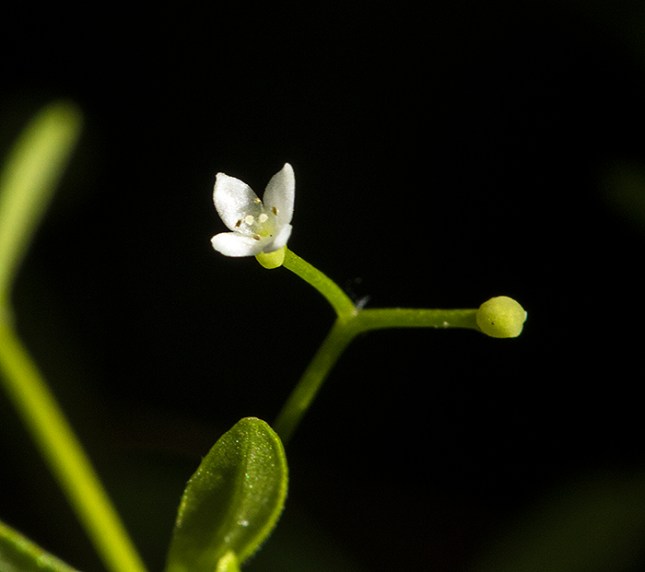
Galium tinctorium by JB
Today’s species ranges essentially from the Arctic Circle through Florida to the tropics. It likes low wet grassy places.
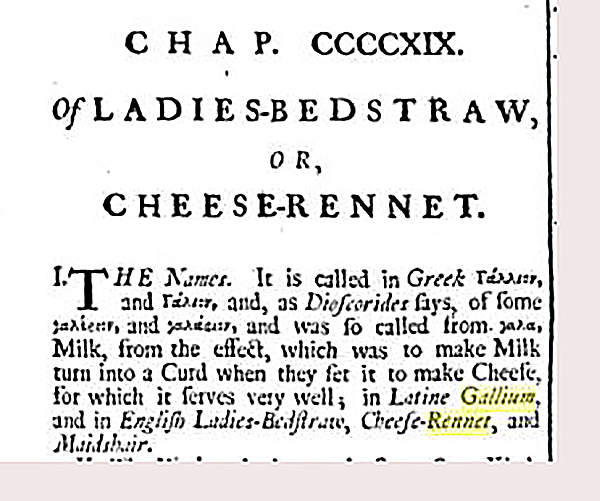
If you read the explanation of name above, you can stop reading now, as that is the story. But if choose to proceed, let’s start with the milk thing. Vegetarians watch what cheeses they eat, or should, because most rennets (enzymes used to curdle milk proteins into cheeses) come from the fourth stomach of unweaned calves. For those who want none of that, there are chymosin “fermentation” rennets using calf genes genetically engineered into microbes. Behind door number three are vegetable and microbial rennets dating back into antiquity, and Galiums are among these. Even better, Galiums do not merely harden cheese, but they also color it ever so tempting. (See their next set of useful attributes.)
Before that, however, a question: Why would a plant develop the ability to coagulate animal proeins? My guess is to deter herbivory, and that calls for an experiment. Excuse me while I go fetch a piece of bedstraw to micro-nibble. (Result below)
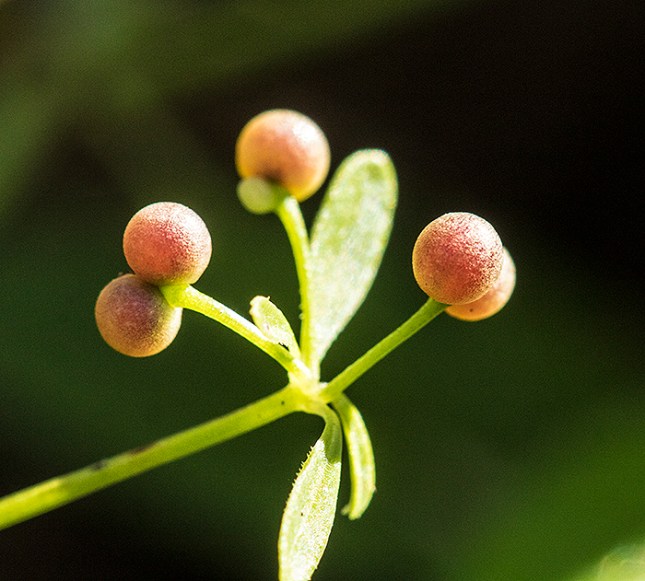
Red pigment in the weird fruits.
Bedstraws have a second set of ancient uses in addition to stuffing mattresses and making cheese. Civilizations around the world use them as dyes. They are very closely related to the madder dyes, and have quite a history of their own. The lower portions of the plants and the roots yield a red or yellow dye.
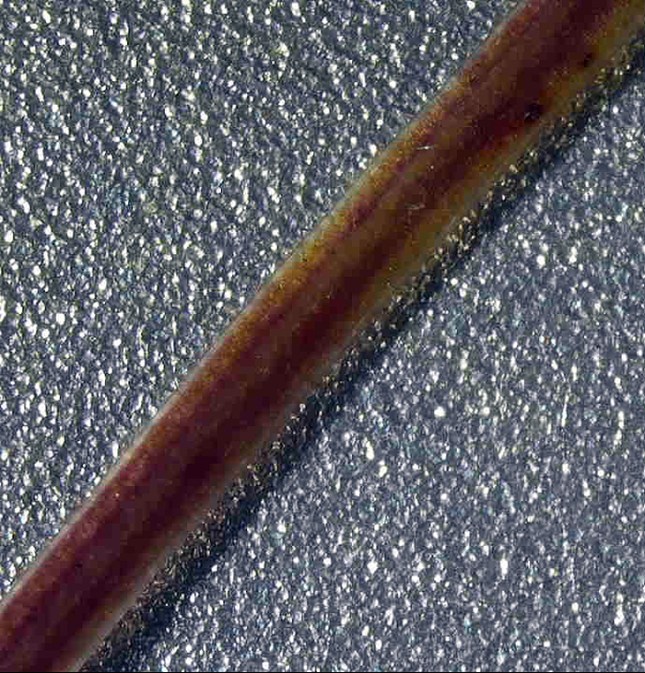
Red pigment in plant base.
And that brings us to the final unwise use. Please do not eat the weeds. People have some history of eating some Galiums under certain circumstances. I’ll say boringly that the plant is loaded with bioactive principles. And far more interestingly, there is a report that eating Galium dyes the bones red. I have no idea if that is so, but…..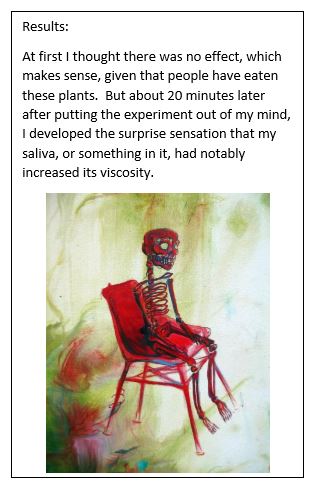
 John Bradford
 George Rogers
 George Rogers
 Dee Staley
 Treasure Coast Natives
