RSS

Tag Archives: pollination

Great News for Sufferers from Sexual Irritability!

Spatterdock (Spadderdock)

Nuphar advena

Nymphaeceae

Visited Grassy Waters Preserve off of Northlake Blvd. this week, and the Spatterdock water lilies made the trip as pretty as a picture.  So did seeing ripening persimmons on the trees.  There are plenty of persimmon trees around, but it has not been my common experience to see the almost-mature fruits.

Everyone has seen these lovely “lilies.”  The leaves float, or may rise from the water surface, and the flowers are yolk-golden and cup-shaped.  These and Pickerelweeds take me back to childhood fishing trips  and boat trip picnics.
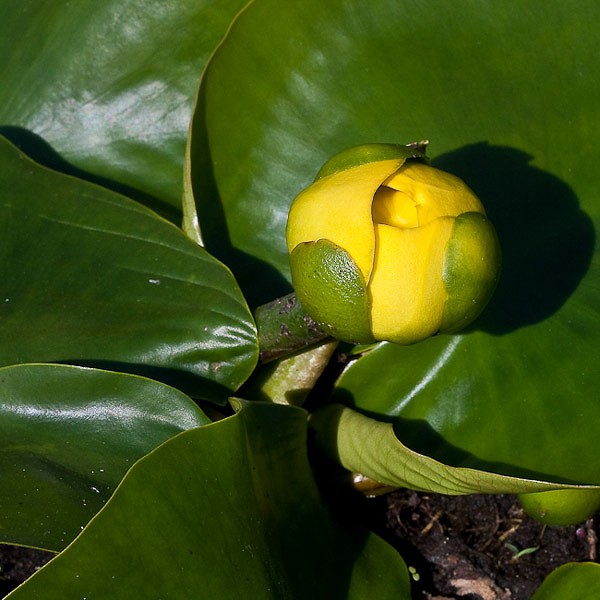
Young flower with the triangle door.  Careful it might slam behind you.  (All photos by JB)

Young flower with the triangle door. Careful it might slam behind you. (All photos by JB)

Scattered in the plant world are flowers known to imprison their pollinators temporarily,  then parole the buggy inmates to continue their symbiotic services.  Such flowers include some Orchids, Aristolochias, Aroids, and today’s Spatterdocks.  When the Spatterdock flower is young, the stigma is pollen-receptive and the pollen-making  stamens are inactive.  The young flower is closed except for a triangular opening between the petals;  insect visitors can enter the triangular portal and dust any pollen they carry off onto the stigma, which they touch upon entry.  The triangular opening closes at night, trapping the pollinators until the hole reopens the next day.  By then the stamens have released pollen, re-dusting the visitor.  This repeats over a series of days until the flower becomes fully open.  Pollination is by beetles, bees, flies, and (if you can believe it) reportedly aphids.  Aphids?  Maybe they are drawn to easily available sap in the nectar-producing petals.

Nuphar (Click for more photos)

As an  odd tidbit, the fruits float and disperse the sinking seeds, like zeppelins dropping bombs.  The sunken seeds have a problem—mature plants have floating or emergent leaves at the water surface.  This is similar to a problem of the young stages of a tree-top vine’s seedling on the ground.  In Nuphar, the first leaf is strap-shaped, the second leaf is expanded, and it is not until the 4th or 5th leaf that the foliage looks proper.

The plants make big starchy rhizomes.  These along with fruits and seeds were food to Native Americans.  But not so fast!  The plants also make alkaloid drugs, so the rhizome-eaters must have known what to do about that, just as ancient peoples in the Old World knew how to brew an intoxicating beverage from the flowers.  The alkaloids are of modern interest to destroy various cancer cells and an ability to cause apoptosis (programmed cell death relevant to cancer treatments).  More curiously, a reported use for Nuphar root tea to treat “sexual irritability.”  Not exactly sure what that is, but I have a lively imagination, so let’s cure S.I. in our lifetime!

Victims of S.I. (identities disguised for privacy)

Note:  Some of the info here comes from a 2007 Monograph of Nuphar by botanist Donald Padgett.
 
5 Comments

Posted by on July 18, 2013 in Spatterdock


Tags: , ,

Evolutionary Flip-Floppers

Kyllinga odorata (Cyperaceae)

Ludwigia species (Onagraceae)

Today John and George sweated through Halpatioke Park in Stuart, Florida.  With resort-quality lakes deep in the forest, Halpatioke is always a beautiful source of botanical surprises from “northern” species near their southern limit, such as Partrideberry (Mitchella repens) to “tropical” species near their northern border, such as Lax Panicum (Steinchisma laxum).  But what made an impression today were the weird flowers—the ones not playing by the usual rules.

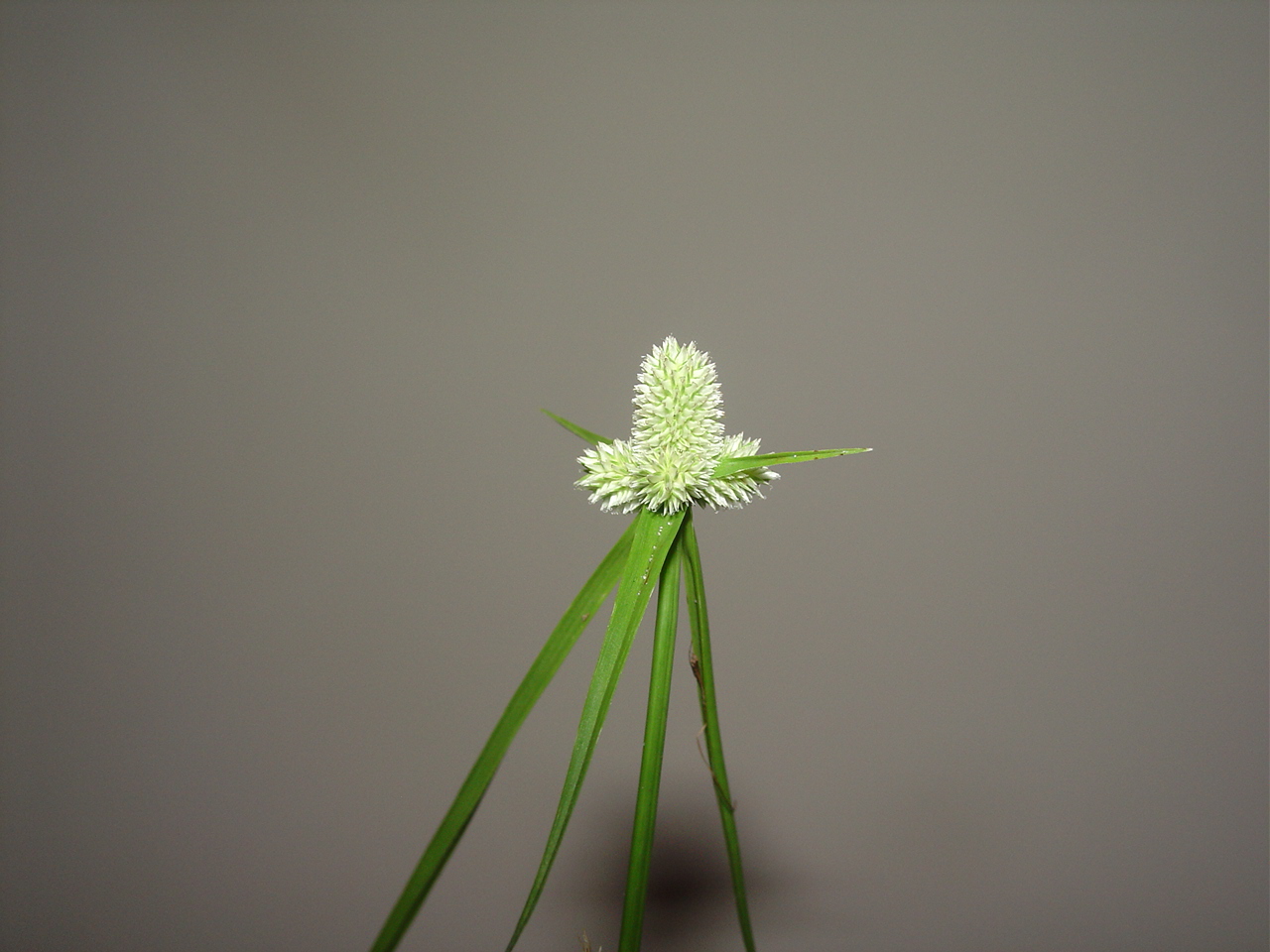
Fragrant Kyllinga, white and fragrant.

Fragrant Kyllinga, white and fragrant. (by JB)

First, in the lawn there was the native Fragrant Kyllinga (Kyllinga odorata).   We all know the vast majority of grasses and sedges to be wind-pollinated, no showy flowers and no floral fragrance.  Florida wildflower enthusiasts know an exception to this to be the species of Rhynchspora called Painted Sedges, with white bracts at the top simulating petals.  (Some may have learned these under the name Dichromena, two-toned.)  We are not talking about those today.

Fragrant Kyllinga is an inconspicuous little sedge, often a turf weed, providing a less familiar case of an insect-pollinated sedge.  In most Kyllingas the flower cluster is green, odorless and typically sedgelike.  But in Fragrant Kyllinga the thimble-shaped flower cluster is nearly white and sweetly fragrant.  Evolution works in weird ways.  Wind-pollinated plants are generally regarded as having abandoned creature-mediated pollination.   Exceptional fragrant or colorful plants in a wind-pollinated family thus seem to have “reinvented” insect pollination.  With petals gone, the white color must be on modified leaves under the flowers in the Painted Sedges and Fragrant Kyllinga.

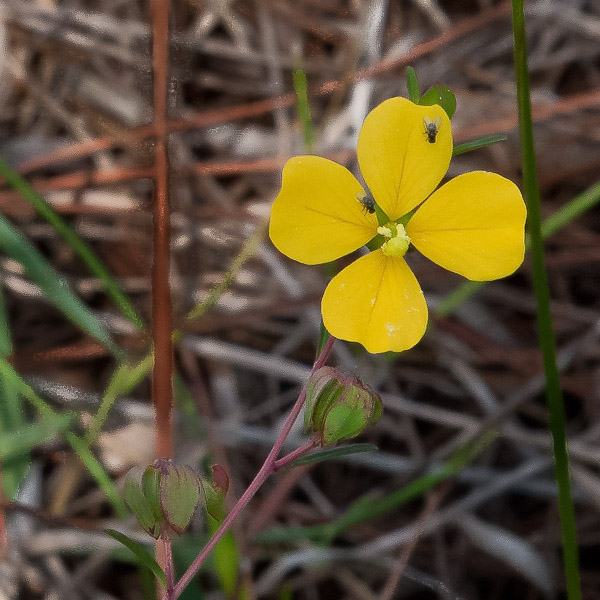
Ludwigia maritima (JB), a yellow-petal species.

Ludwigia maritima (JB), a yellow-petal species.

Not long after sniffing the Kyllinga  we came upon a lake shore patch of what we took to be Small-Fruited Ludwigia,  Ludwigia microcarpa, another head-scratcher.  Most of us probably tend to think of Ludwigias as having conspicuous yellow blossoms, such as the showy Peruvian Primrose-Willow rising bright yellow from roadside ditches.  Yet a number of Ludwigia species have done away with petals or nearly so. (What look like petals in the photos below are sepals.)   Examples of petal-less Ludwigias (by JB) are illustrated below:

ludwigia lanceolata Ludwigia microcarpa Ludwigia suffruticosa JB

These obviously differ dramatically from the yellow-petal Ludwigias. Maintaining any unnecessary structure is a biological liability and waste of energy, sort of like maintaining an unused residential swimming pool, but petals not needed?

Are those petal-less species self-pollinated, or able to make seeds without pollination?   Those abilities are not rare in the plant world, but I doubt that explains the absence of petals.  The flowers without petals have otherwise well-formed open flowers, the sepals have a slightly petal-like appearance, even becoming creamy or tinted rather than the usual sepal-green.   The flower centers can be colorful as well.

Now we go to pure speculation.  Here is a guess.   Maybe the genus has divided its pollination between bees drawn to the big bright petals on some species, and other insect visitors not particularly drawn to big yellow petals.   Losing petals genetically is probably a minor change, basically “instant evolution.”  What’s striking is that the petal-less species are not all most closely related to each other.   Some have species with petals as their closest relatives, implying that that petals were lost more than once as separate events.    There must indeed be something “good” about petal loss.

If I can beg your credibility a little, the petal-free Ludwigia flowers are not terribly different from flowers of roughly similar sizes and colorations encountered in many other plant types in similar marshy or shoreline habitats, for instance,  Swamp Hornpod (Mitreola sessilifolia),  Herb-of-Grace (Bacopa monnieri), Buttonweeds (Diodia species),  Bartonia (Bartonia verna),  Bedstraws (Galium species), Water Pimpernels (Samolus species), and others.

Below are several species not related to Ludwigia.  The petal-less Ludwigias are more similar to these than they are to their yellow-flowers relatives.  They are all roughly in the same size range.

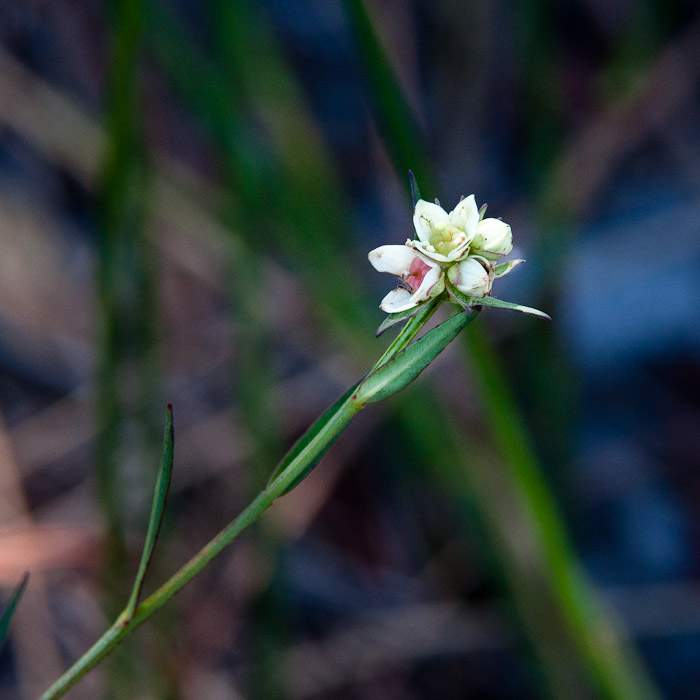
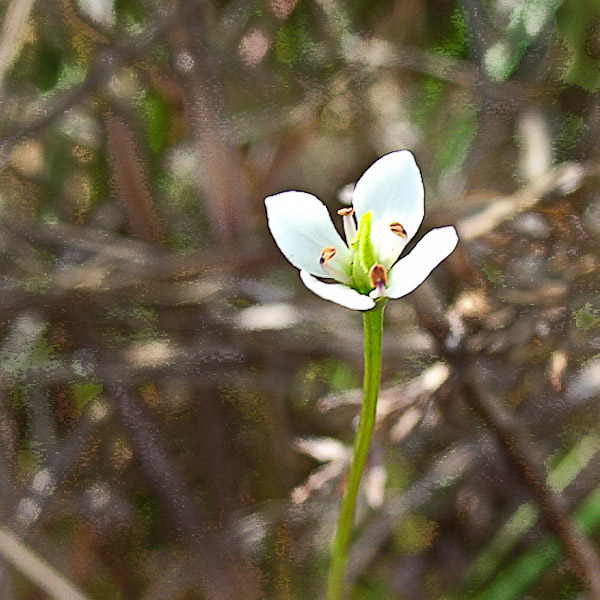
Bartonia verna (JB)

Bartonia verna (JB)

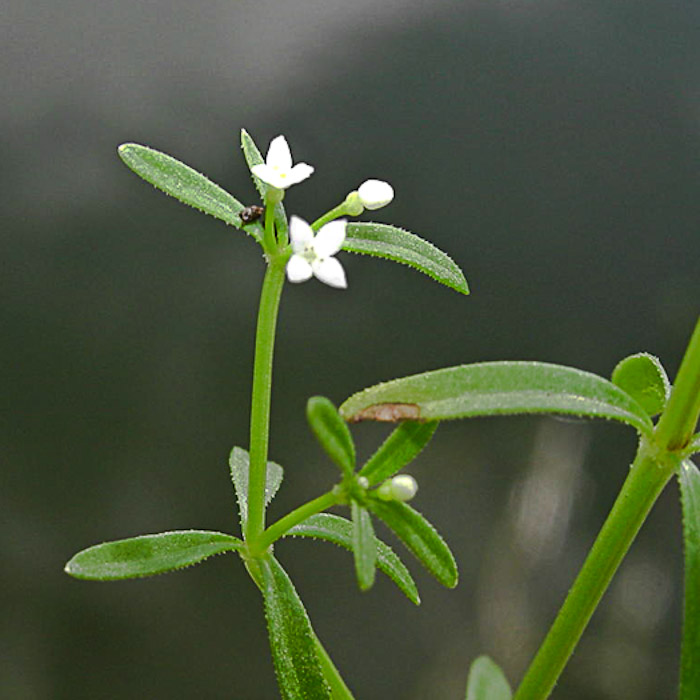
Bedstraw (Galium, by JB)

Bedstraw (Galium, by JB)

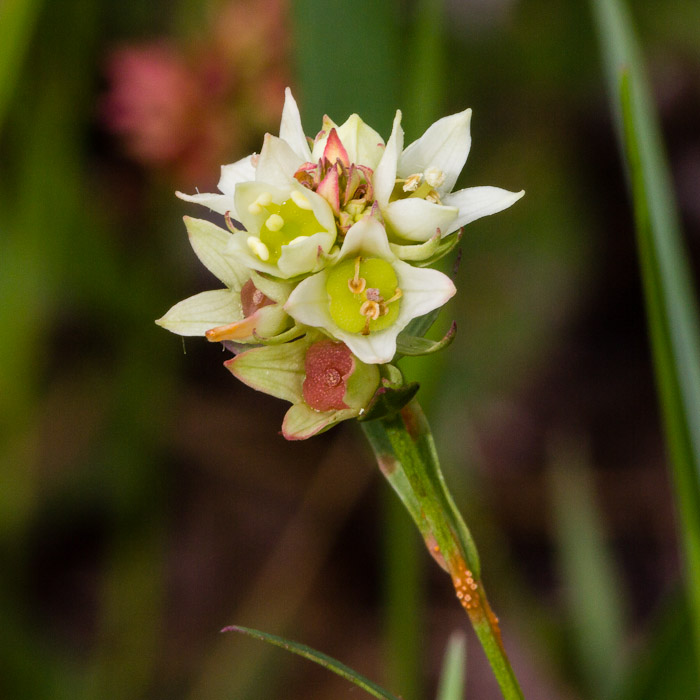
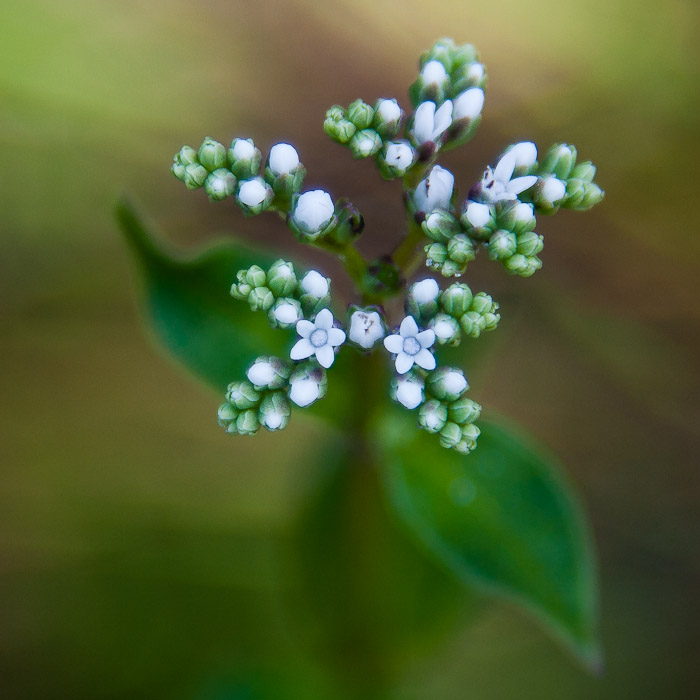
Hornpods (by JB)

Hornpods (by JB)

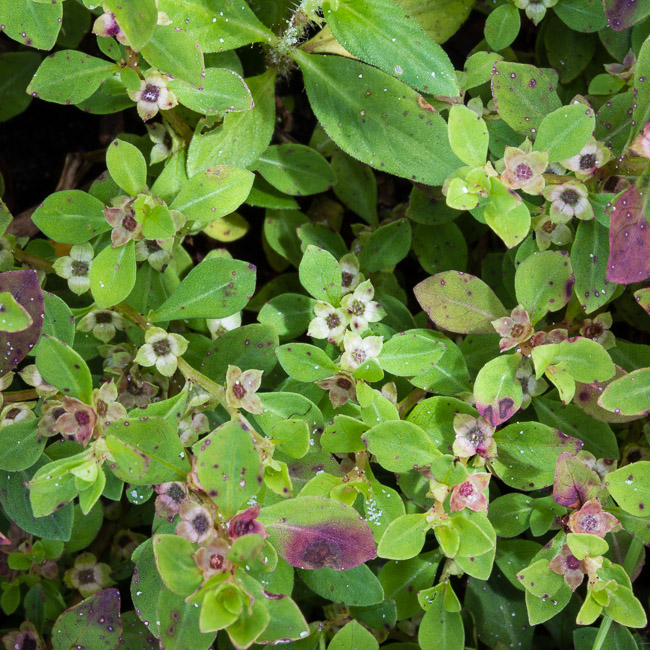
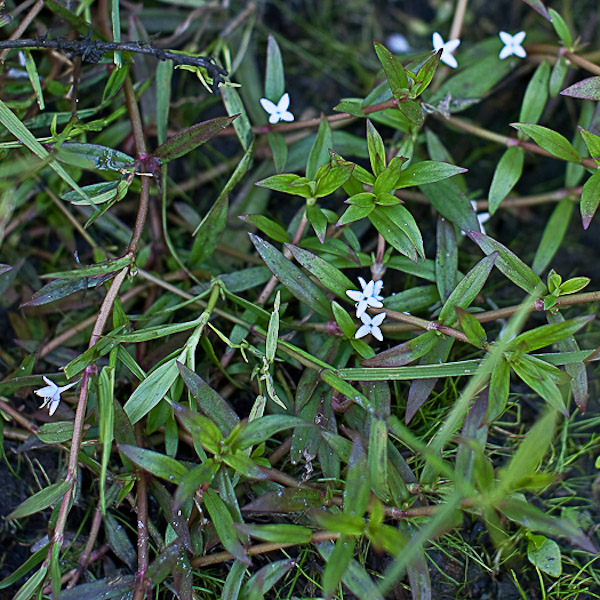
Diodia (by JB)

Diodia (by JB)


Tags: , , ,