Varnishleaf
Dodonaea viscosa
Sapindaceae
Here’s a shrub for everyone, and I do mean everyone around the world. The shrub we call Varnishleaf in Florida must have a few names we can’t pronounce because its natural distribution ranges from here to Australia and back. Actually the other way around, since DNA research shows its origins to be Down Under. The international uses are as widespread as the cosmopolitan places, everything from making the hard wood into weapons to more medicinal applications than you can throw a pill at. In Florida we like this species as a tough drought tolerant landscape shrub with pretty fruits.
John and I did not go visit Australia to see Varnishleaf. There is plenty in the Hobe Sound National Wildlife Refuge cooking in the sun up on top of those sugar sand dunes.
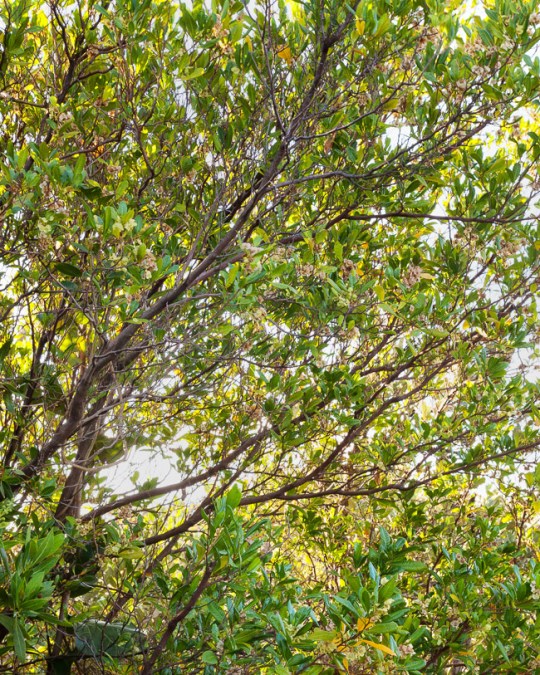
Varnishleaf (by JB)
The puffy papery fruits resemble those of certain garden trees, especially Goldenrain Tree (Koelreuteria elegans) or Black Pearl (Harpullia arborea). Some readers will see “the same” fruit in species of Cardiospermum. The similar-pod list could expand, but why bother, the point is family similarities in these members of the Soapberry Family, the Sapindaceae.
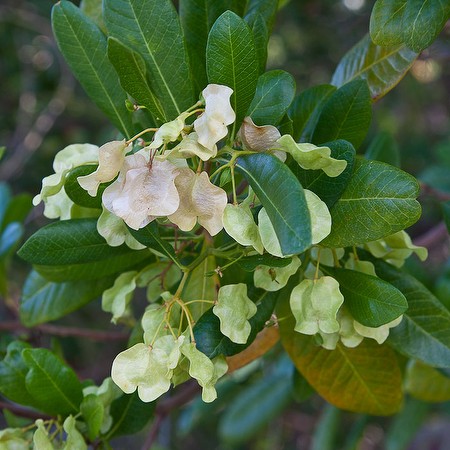
Varnishleaf pods (by JB)
The predictable lists of “traditional medicinal uses” surrounding most common widespread bioactive plants can grow a little dubious and tiresome. Conduct a little research and you will find almost any plant you name to have served somewhere somehow to counter some common discomforts.
That cynical remark off my chest, a traditional use for Varnishleaf struck me as unique and particularly plausible: warming the naturally sticky leaves and applying them as a plaster over hurty places. Given evidence of antimicrobial activity, maybe sticky Dodonaea plasters actually help with healing. Free Salon Pas. Dodonaea seems to contain multiple bioactive contents, including saponins, cyanide, and more. Saponins are lathery-poisony compounds that put the soap in Soapberry. They are most famous as fish poisons.
Why would a shrub make shiny “varnished” leaves anyhow? Here we have a leaf with an array of adaptations for extreme sun. In Mexico Varnishleaf is a member of “Opuntia associations.” (Opuntias are Prickly Pear Cacti.) Come to think of it, right here in Florida Varnishleaf can be a member of the Opuntia association. This is a plant for blazing sun. So then an obvious guess about those ultra-shiny leaves is the same as mirrored sunglasses—to bounce away excess light and protect delicate tissues beneath. Seen microscopically, the top layer of the leaf has special varnish-making cells just beneath the surface. Plant ecologists Gary Brown and Bruno Mies commented on a related adaptation in the same species…the ability to orient the foliage vertically to minimize sun exposure. Also odd, the layer of photosynthetic cells near the leaf surface is thicker then in most leaves—a leaf designed for fun in the sun.
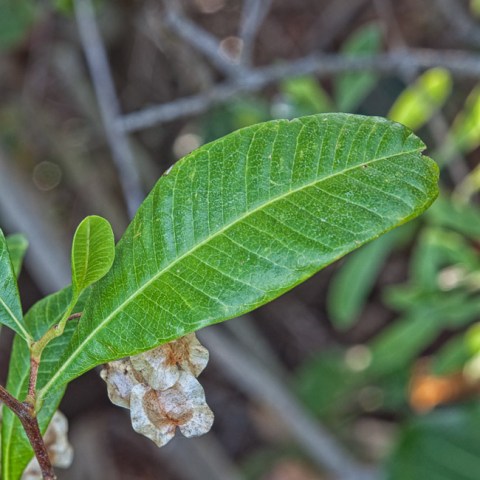
Varnishleaf leaf (by JB)
The fruits are showy and novel, whereas the flowers are merely novel. Apparently pollinated by wind, they have no petals, but rather many pollen-dispersing anthers, and extended pollen-catching stigmas.
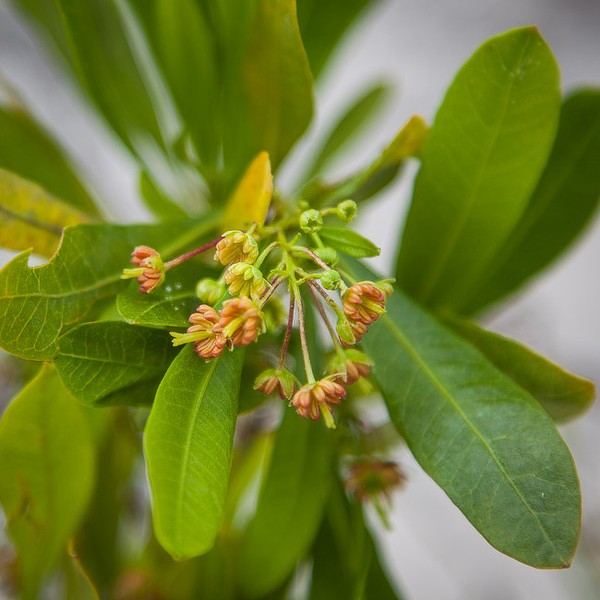
The flowers—no petals, just the “business parts” (by JB)
Did you gulp at the idea of one species distributed from New Zealand to Hobe Sound? Varnishleaf has two outstanding abilities behind its wanderlust: 1. High salt tolerance. It can grow among mangroves. 2. The world’s toughest seeds. Experiments have shown high germination rates after 6 months in saltwater. Those little bitty seeds can float across vast oceans, perhaps sometimes within their capsules, and maybe sometimes aided by seed-eating migratory birds. Some of the seeds have an internal airspace.

Badass with Dodonaea-inspired shades (Photo not of or by JB)
 John Bradford
 George Rogers
 George Rogers
 Dee Staley
 Treasure Coast Natives
Mary Hart
April 15, 2013 at 3:21 am
Afraid the UK lacks enough sun to entertain this plant!
George Rogers
April 15, 2013 at 6:56 am
Are you speaking with particular emphasis on htis week? For those in the UK with an urger to see it, you must go to Kew Gardens; they have it (under glass). Or take a trip to Barbados.
Martin
April 15, 2013 at 8:16 am
Good lord! What a beard!
George Rogers
April 15, 2013 at 8:41 am
Probably has chiggers in it.