RSS

Hickory Dickory Dock, Old Hickory, and Hickory Sticks

Carya species

Juglandaceae

You can scarcely find a group of trees more steeped in American lore than hickories, but let’s not be American-o-centric in the era of globalization. Hickories are native to China, Viet Nam, and Laos too, being examples of the sister-species relationships linking  Eastern U.S. and East Asia.  I wonder if there’s a Euell Gibbons-type guy in China who savors wild hickory nuts there.
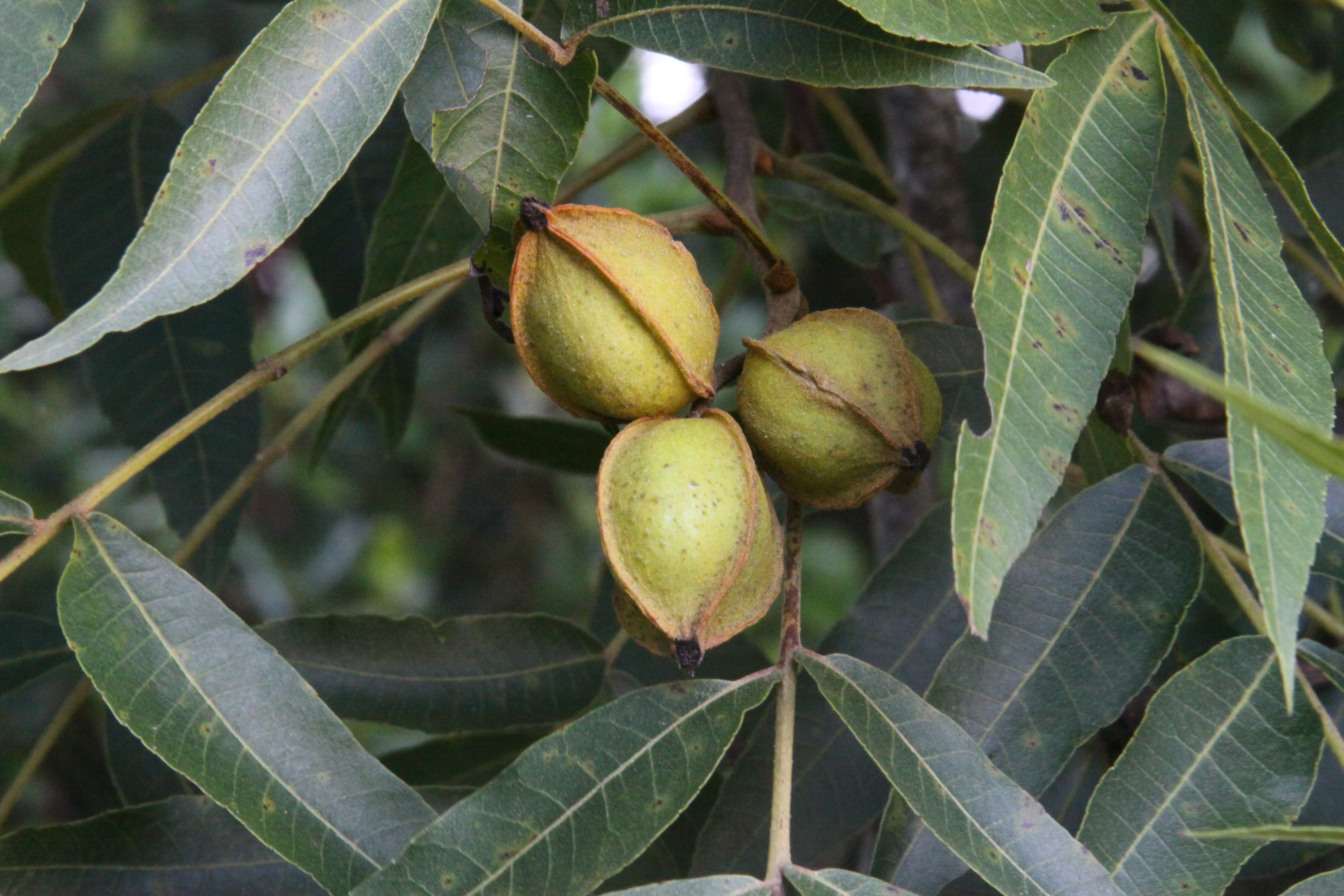
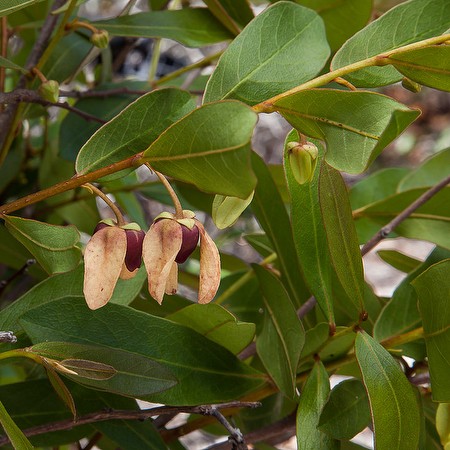
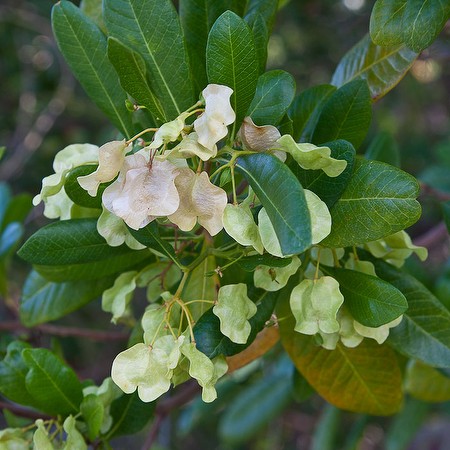
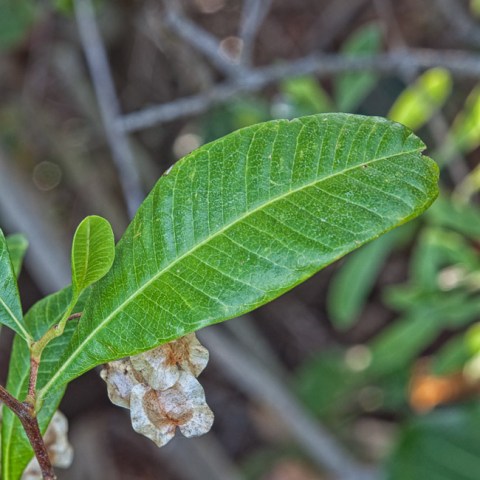
Water Hickory nuts (by JB)

Water Hickory nuts (by JB)

The best hickory nuts are Pecans,  cultivated in the southeastern U.S., and  speaking of China, likewise there.   We even have some cultivated in Palm Beach County, although the native region is somewhat farther north.  The native range of Pecans is actually somewhat unclear, thanks to ancient peoples’ taste for the nuts.  I’ve seen them growing wild in lowland woods along the Mississippi River.

The name Hickory comes from an Algonquin word for a milky paste made from pounding the nuts.
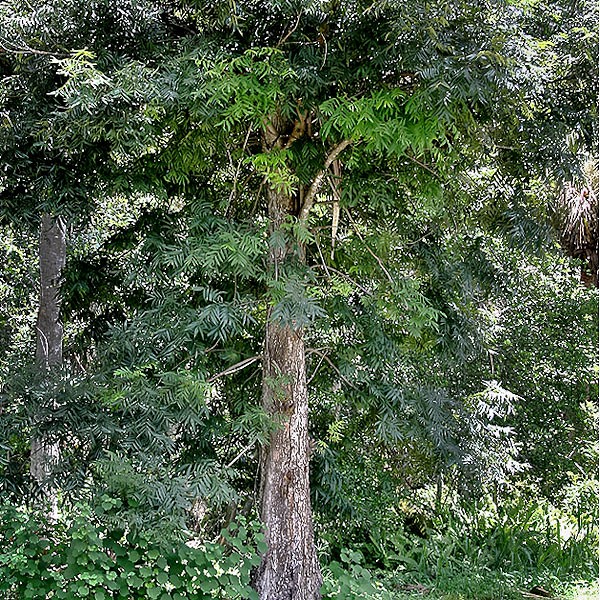
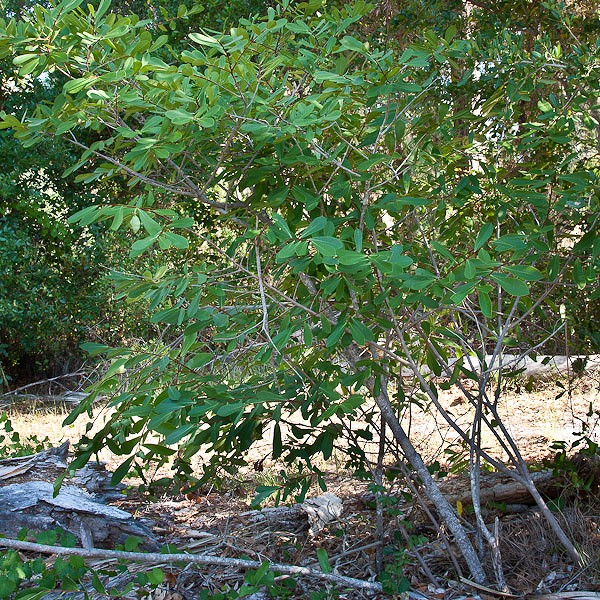
Water Hickory in Riverbend Park (I don't know who took the photo)

Water Hickory in Riverbend Park (I don’t know who took the photo)

Hickory wood is ultra-strong, durable, and snappy-bendable.  They used to make golf club handles from it, and hickory clubs are enjoying a little retro-chic nowadays.  Today I read a (1936) article on how to select the strongest hickory hammer handle.   There is hickory flooring and hickory furniture.  Pre-Europeans and modern bowyers could debate whether hickory is the best wood for archery bows. (Osage Orange and Yew would have loyal proponents.)  The list of hickory products could go on.  In addition to tasty nuts and tough woods, hickories are beautiful.   I’ve spent a lot of time in the Appalachians and in the Ozarks, and life just wouldn’t be the same hickory-less.

Fore! (Photo stolen from Internet)

Fore! (Photo stolen from Internet)

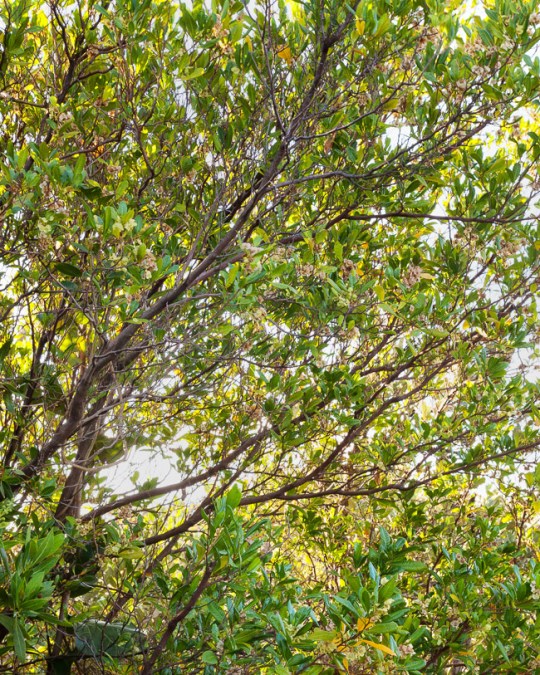
The good news is that here is South Florida, contrary to all that “tropical paradise” nonsense, we have two lovely hickories: Water Hickory (Carya aquatica) and Scrub Hickory (Carya floridana).  The two names hint at the interesting part of today’s topic.  Our two hickories couldn’t be farther apart ecologically.  Water Hickory lives up to its name by being a soggy shore and swamp species.   (A great place to see them locally is Riverbend Park in Jupiter.)  Its natural range is across the southeastern U.S.

Or if sun-baked sugar sand is more to your liking, Scrub Hickory is the one for you.  This odd tree lives in high dry scrub, where it can be the dominant (or only) broadleaf tree.  Its distribution is limited to the Florida Peninsula.
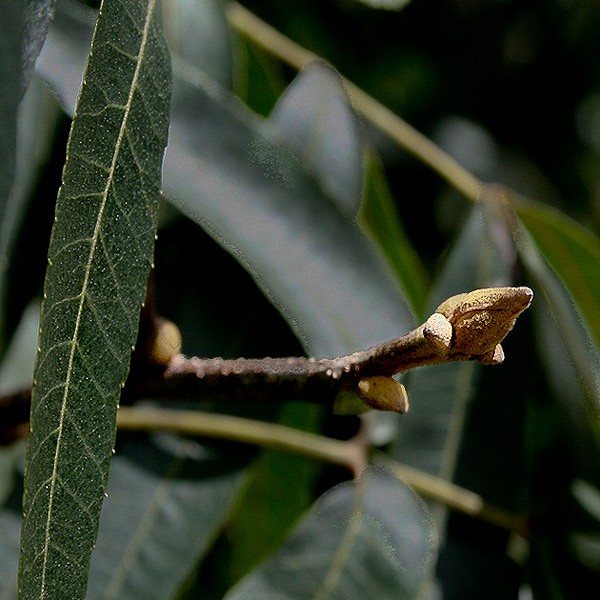
Carya floridana. Bud.  Hickories have big messy distinctive buds.

Carya floridana. Bud. Hickories have big messy distinctive buds. (JB)

You might wonder if two species found jointly down here in South Florida are close relatives.  No.  They are in separate sections of the Hickory genus Carya.   Water Hickory  is related to and hybridizes with Pecans, which are naturally a swampy species.   Scrub Hickory, by contrast,  is related to the common widespread  Pignut Hickory (Carya glabra), which lives (among other habitats) on high dry “scrub-ish” places.

Time to speculate.  Carya aquatica is a widespread species that probably wandered from the more northern states into Florida in ancient times.  The history of Carya floridana is more fun to imagine.  It is restricted to Florida and probably evolved here.  Most of Florida has been inundated too recently to have much ancient evolutionary history, except on scrub which differs from the rest of Florida by having been high and dry vastly longer then the lowland regions favored by Carya aquatica.   Scrub has been high and dry long enough for plenty of evolution.  Now to repeat,  this is speculation, not fact,  but  Carya floridana perhaps originated  on scrub as an isolated southern satellite population of Pignut Hickory, Carya glabra, which is variable and widely distributed in Florida, although not this far south.   Florida scrub areas were figuratively and literally islands as sea levels rose and fell over the eons, the perfect setting for an isolated splinter-group from a more broadly distributed species to evolve into a separate species in its own right.  Interestingly, these two species (and some other related hickories) have the same tetraploid (doubled)  chromosome number consistent with close relationship.
 
8 Comments

Posted by on May 14, 2013 in Hickory


Tags: ,

Alligator Weed, a Taste of the Amazon

Alligator Weed

Alternanthera philoxeroides (not native)

Amaranthaceae

Having a drainage ditch behind your hose can be entertaining and a chance for expanded vistas on nature right there in the (sub)urban yard. Thanks to my waterfront real estate I’ve seen all the big beautiful wading birds and their duck companions, a hawk snag a snake, jumbo catfish, darting minnows, and dragonflies. The frogs sing at night. I’ve learned that young cottonmouths go out to party with yellow tails, that kids still go fishing, and that dogs enjoy a swim off the leash. All the sedge species in town form a spontaneous garden along the banks. Much fun for a reviled “no trespassing” ditch.

Which will fill the ditch?  Alligator Weed or Torpedo Grass? The race is on.

Which will fill the ditch? Alligator Weed or Torpedo Grass? The race is on.

The aquatic lifeform grabbing my attention now is a little taste of the Amazon: the invasive exotic South American Alligator Weed. Take my word for it—that weed grows like a weed! I feel like I can see a difference from day to day. The plant can take over big areas fast, as multiple published studies have affirmed and reaffirmed. That has prompted interest in biocontrol, with limited success, especially by a Brazilian Flea Beetle.

CLICK for biocontrol

Anyone who lives near warm eutrophic shores can attest to the fact that the species is not under control.

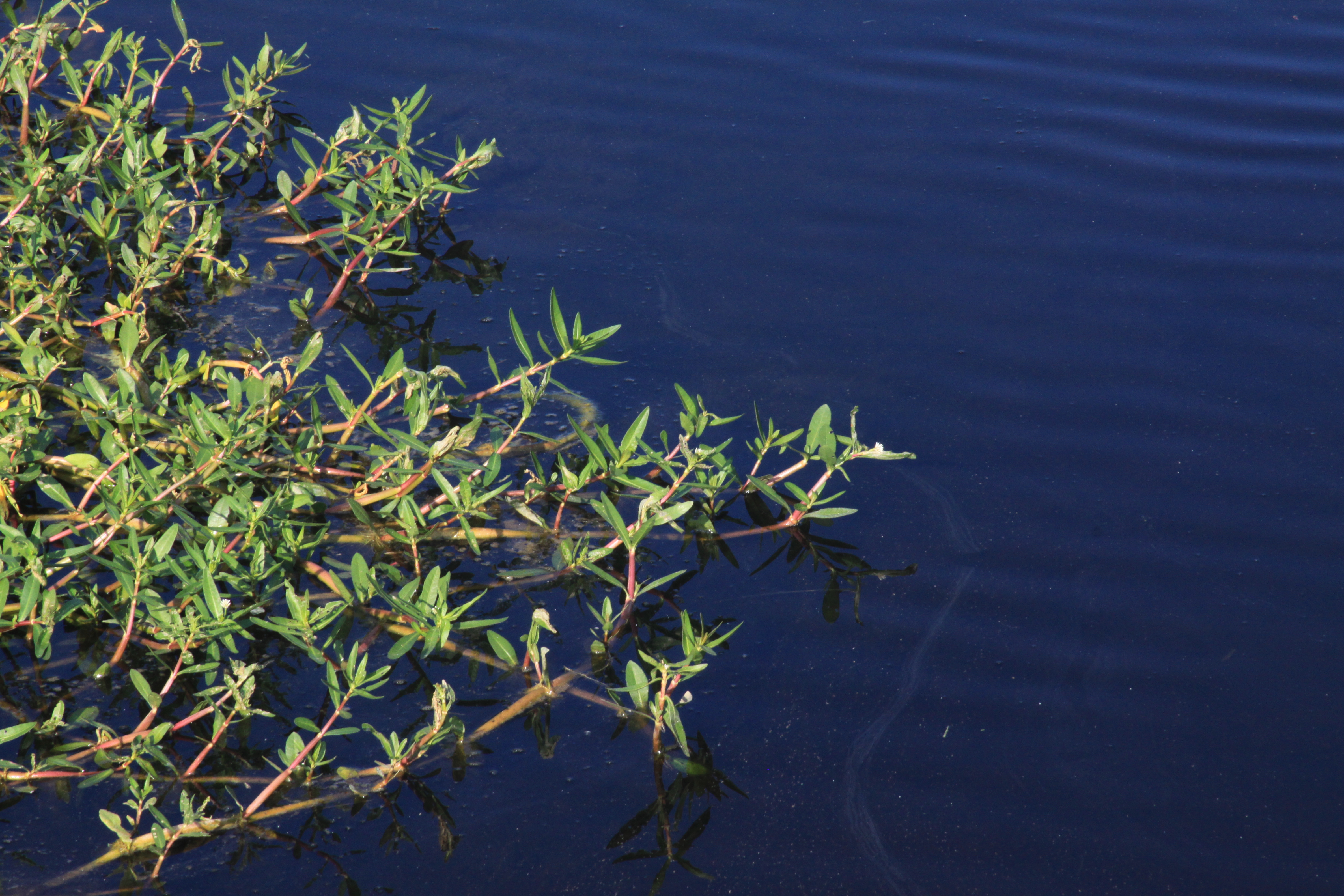
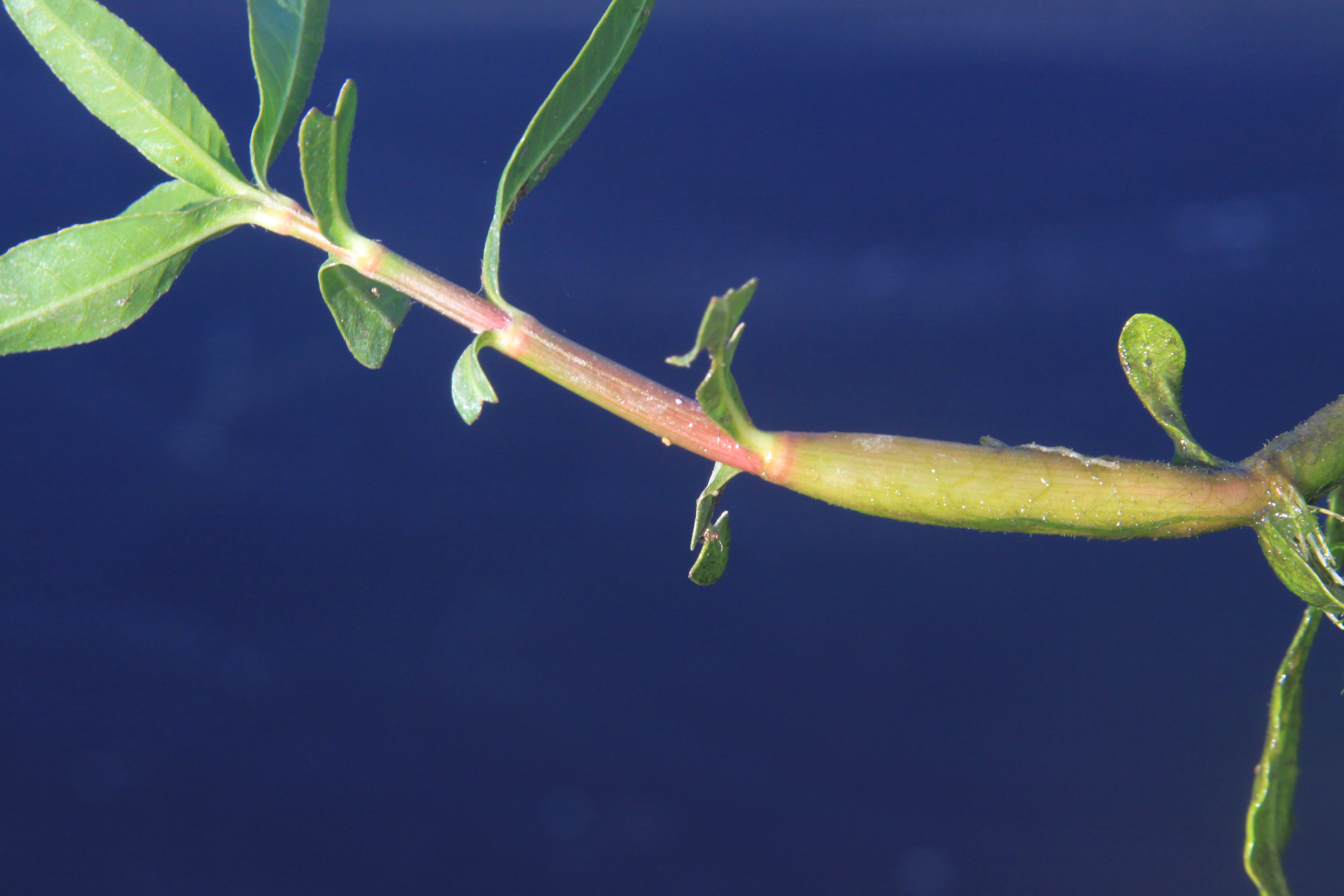
The rate of growth is interesting but where it grows is the good part. The stems spread out on the water surface like a swimming snake, and raise their growing tips or flowering tips a little above the water. To accomplish this the stem is hollow. The growing tip and first few nodes jutting out of the water are only a little swollen. Somewhere around 5 nodes back from the apex the stem expands abruptly to many times its original diameter; it looks puffy like it was inflated with gas. The nodes produce branches and wads of roots, allowing the sprawling branches to suck nutrients directly out of the water, and allowing the branches to root in the mud if the water level drops.

stems on water

Although Alligator Weed can produce seed, there is a suspicion that its spread in Florida and other introduced areas is by cloning. What is easier to propagate than a species where the stem segments break off and float away pre-rooted and ready to invade?

The rampant growth, easy propagation, and nutrient-sucking power have suggested to multiple observers that this invader may not be 100% bad…that maybe it can be harnessed to pull polluting nutrients, including heavy metals, out of polluted waters. Also, people and livestock eat Alligator Weed, which helps explain its intercontinental spread.

The stem puffs up a few nodes back from the tip.
The stem puffs up a few nodes back from the tip.
The flower heads may remind some readers of Globe-Amaranths or Joyweeds. That’s because they all belong to the same family, the Amaranthaceae.

A lot of folks worry about some form of coming collapse of civilization. They stockpile sardines, bullets, and gold. I’m not worried—when the going gets rough I’ve got water-purification, biofuel, and unlimited salad right in my own back yard, with absolutely no effort.

 
2 Comments

Posted by on May 9, 2013 in Alligator Weed


Tags: , ,

Way Down Yonder in the PawPaw Patch

PawPaws

Asimina species

Annonaceae

My best memories of my father come from his profound love and knowledge for nature, but even the sweetest memories can have PawPaw problems. My family lived in West Virginia, home to magnificent Pawpaws (Asimina triloba) 20-30 or more feet tall rising from the sides of shaded ravines and stream bottoms. (Where did the repeated Google-assertion that Asimina tetramera is the tallest pawpaw in North America”come from? Asimina triloba is much larger. I thought they couldn’t put anything on the Internet if it isn’t true.) My Dad told me, somewhere around age 8, ca. 1959, that PawPaws are tasty treats, so I sampled one out on the hillside where a burning coal slag heap looked and smelled like Hell surfacing. Within seconds after munching the “mountain banana” I was unconscious, to wake up a few minutes later in a pool of my own vomit. For the subsequent 53 years and to this day I can’t smell a Pawpaw without having my stomach flop. Was the PawPaw green and mean? (I can’t remember.) Was it an allergic reaction?  Perhaps. Here is a tidbit lifted from Google:

“Allergenic responses have been observed. While many people enjoy the taste of pawpaw, some individuals can become sick after eating the fruit. Skin rash, nausea, vomiting, or diarrhea can develop…Many tissues of this tree, especially bark, leaves, and seeds, contain a variety of alkaloids such as the aforementioned acetogenins, as well as phenolic acids, proanthocyanidins, tannins, and various flavonoids. Though these compounds represent potential commercialized products as anticarcinogenic and botanical pesticides, they also can cause allergic reactions.”

mr-yuk563

The name PawPaw is confusing, applied also to Papayas, so be sure we’re talking about the approximately 10 species of the genus Asimina limited to North America, half of them limited to Florida as scrubby shrubs. The species have a long-known history of hybridization, yet, with that in mind, a surprising freedom from the taxonomic rearrangements often encountered with rampant hybridization.

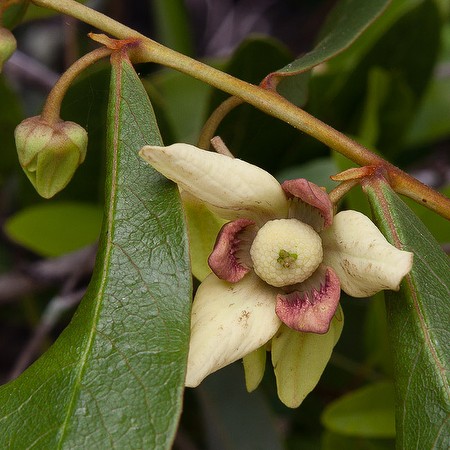
Four-Petal PawPaw near Jensen Beach (by JB)

Four-Petal PawPaw near Jensen Beach (by JB)

PawPaw flowers are odd, and sometime showy. I’ve seen them misidentified as Orchids, although quite a stretch, the error is understandable. Traditionally regarded as primitive, the blossoms tend to be unusual for Dicots in having sepals and petals mostly in multiples of 3. The stamens and pistils are numerous and separate, with the pistils pollen-receptive before the anthers of the same flower release pollen.

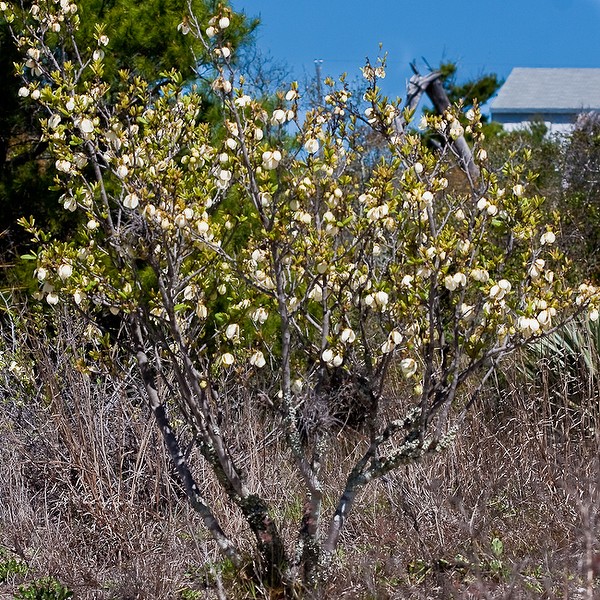
Four-Petal PawPaw in April (by JB)

Four-Petal PawPaw in April (by JB)

What’s more interesting is that the flowers are generally regarded as beetle-pollinated, a slightly unusual and “primitive” characteristic. As with other beetle flowers, they tend to be cup-shaped and they can smell funny and fermented, although highly varied, and no doubt delightful to a beetle. Crawling around in the scrub sand Friday John and George found a beetle within the flower of a Four-Petal PawPaw. PawPaw flowers combine various shades of white, purplish-reddish tones, and greenish-yellow. The petals can increase in size and can change color after the flower opens, to the point that the same individual seen at different phases could pass for two different species.

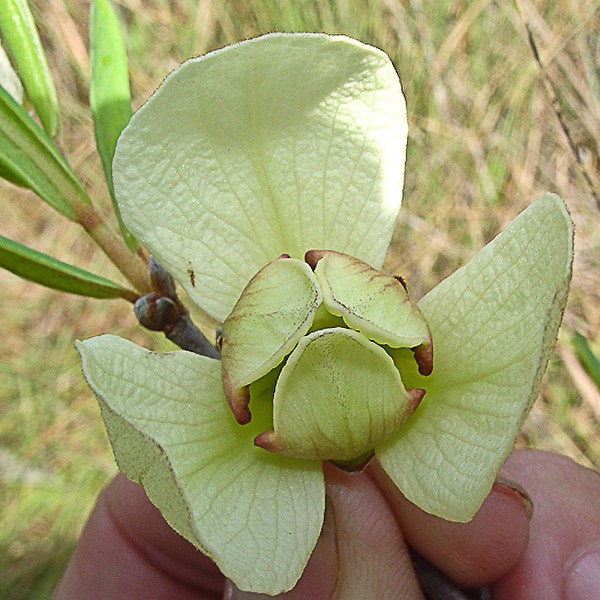
We opened the flower with a little force for a clear view (by JB).

We opened the flower with a little force for a clear view (by JB).  The lumpy white ball at the center is a mass of stamens.  The green structures poking out at the center are pollen-receptive stigmas.

Four-Petal PawPaw is one of the two species scattered in our usual working radius, in fact, its entire worldwide distribution almost matches our usual working radius along central-south coastal Florida. How many federally listed endangered species do we have restricted to that zone? CLICK  It’s easy to recognize in the field because somebody has usually affixed blue flagging tape to it. Don’t trust the name “four petal” PawPaw because names can lie, and the distinctions between sepals and petals can be confusing too. Premier Florida botanist John Kunkel Small named the species in 1926.  He might have missed this critical reference: CLICK
As with many rare and endangered species, I worry about too much love almost as much as I worry about too little attention. Rare species have unique and interesting population structures and genetic patterns with respect to their odd distributions. And this is especially true as DNA study allows high-resolution analysis of genetic-distributional-relationship histories. Thus sometimes maybe propagation by botanical gardens and reintroductions of clones might mix up some delicate evolutionary genetics. So call me a grumpy silly old worrywart nervous nelly.

Asimina reticulata

Does it look like an Orchid? (Naw)

Does it look like an Orchid? (Naw)

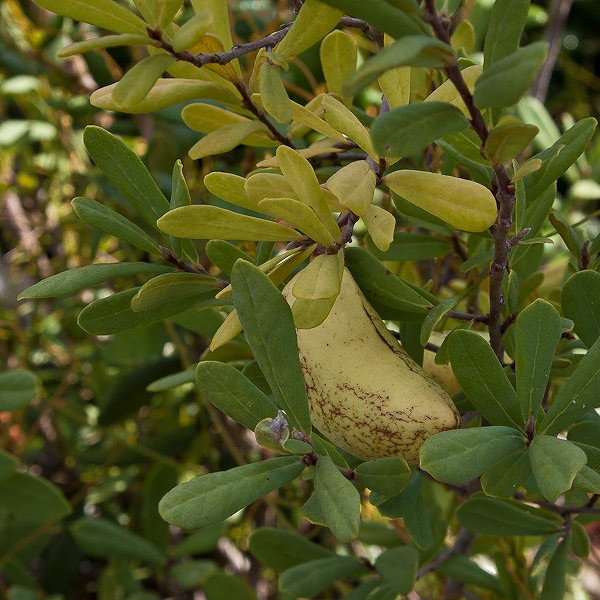
The other species abundant in our botanical sandbox is Reticulate-Leaved PawPaw (Asimina reticulata) often encountered with big white floppy flowers on leafless (or leafy) stems poking up from the scrub sand. The fruit can look like a bloated banana and certainly must be pleasing to wildlife. Even tiny wildlife can join the “feast,” because the individual seeds have their own pulpy attachments (called arils). (However, personally I’ll take a raincheck.)

Asimina reticulata fruit.

Asimina reticulata fruit.

 
4 Comments

Posted by on April 22, 2013 in PawPaw


Tags: ,

Taking a Shine to Varnishleaf

Varnishleaf

Dodonaea viscosa

Sapindaceae

Here’s a shrub for everyone, and I do mean everyone around the world. The shrub we call Varnishleaf in Florida must have a few names we can’t pronounce because its natural distribution ranges from here to Australia and back. Actually the other way around, since DNA research shows its origins to be Down Under. The international uses are as widespread as the cosmopolitan places, everything from making the hard wood into weapons to more medicinal applications than you can throw a pill at. In Florida we like this species as a tough drought tolerant landscape shrub with pretty fruits.

John and I did not go visit Australia to see Varnishleaf. There is plenty in the Hobe Sound National Wildlife Refuge cooking in the sun up on top of those sugar sand dunes.

Dodonaea viscosa 1

Varnishleaf (by JB)

The puffy papery fruits resemble those of certain garden trees, especially Goldenrain Tree (Koelreuteria elegans) or Black Pearl (Harpullia arborea). Some readers will see “the same” fruit in species of Cardiospermum. The similar-pod list could expand, but why bother, the point is family similarities in these members of the Soapberry Family, the Sapindaceae.

Varnishleaf pods (by JB)

Varnishleaf pods (by JB)

The predictable lists of “traditional medicinal uses” surrounding most common widespread bioactive plants can grow a little dubious and tiresome. Conduct a little research and you will find almost any plant you name to have served somewhere somehow to counter some common discomforts.

That cynical remark off my chest, a traditional use for Varnishleaf struck me as unique and particularly plausible: warming the naturally sticky leaves and applying them as a plaster over hurty places. Given evidence of antimicrobial activity, maybe sticky Dodonaea plasters actually help with healing. Free Salon Pas. Dodonaea seems to contain multiple bioactive contents, including saponins, cyanide, and more. Saponins are lathery-poisony compounds that put the soap in Soapberry. They are most famous as fish poisons.

Why would a shrub make shiny “varnished” leaves anyhow? Here we have a leaf with an array of adaptations for extreme sun. In Mexico Varnishleaf is a member of “Opuntia associations.” (Opuntias are Prickly Pear Cacti.) Come to think of it, right here in Florida Varnishleaf can be a member of the Opuntia association. This is a plant for blazing sun. So then an obvious guess about those ultra-shiny leaves is the same as mirrored sunglasses—to bounce away excess light and protect delicate tissues beneath. Seen microscopically, the top layer of the leaf has special varnish-making cells just beneath the surface. Plant ecologists Gary Brown and Bruno Mies commented on a related adaptation in the same species…the ability to orient the foliage vertically to minimize sun exposure. Also odd, the layer of photosynthetic cells near the leaf surface is thicker then in most leaves—a leaf designed for fun in the sun.

Dodonaea viscosa 2

Varnishleaf leaf (by JB)

The fruits are showy and novel, whereas the flowers are merely novel. Apparently pollinated by wind, they have no petals, but rather many pollen-dispersing anthers, and extended pollen-catching stigmas.

The flowers---no petals, just the "business parts" (by JB)

The flowers—no petals, just the “business parts” (by JB)

Did you gulp at the idea of one species distributed from New Zealand to Hobe Sound? Varnishleaf has two outstanding abilities behind its wanderlust: 1. High salt tolerance. It can grow among mangroves. 2. The world’s toughest seeds. Experiments have shown high germination rates after 6 months in saltwater. Those little bitty seeds can float across vast oceans, perhaps sometimes within their capsules, and maybe sometimes aided by seed-eating migratory birds. Some of the seeds have an internal airspace.

Badass biker with Dodonaea-inspired shades (Photo not of or by JB)

Badass with Dodonaea-inspired shades (Photo not of or by JB)

 
4 Comments

Posted by on April 14, 2013 in Varnishleaf


Tags: , ,

Pectis

Cinchweed

Pectis glaucescens

Asteraceae

Friday John and George invaded the historic site of the demolished LORAN station at Jupiter Inlet, now known as Jupiter Inlet Natural Area, a beautiful and botanically rich scrub moonscape extending down from the sugar sand dunes to the Intracoastal Waterway, with the Jupiter Lighthouse rising above the distant trees.  The best-smelling species in full bloom was the Willow-Bustic buzzing with bees.  Its flowers  are curious, but for another day.  More subtle and underfoot, likewise in full bloom in a mat on the sand was Cinchweed, Pectis glaucescens, a curious tiny representative of the Aster Family.  This little wildflower may tower to an inch tall with a golden flower head a quarter-inch in diameter.

Pectis flowers (by JB)

Pectis flowers (by JB)

When not in flower you might notice Pectis by its fragrance as you crush it underfoot, pungent and pleasant (to my nose).  Some folks compare it to Citrus, although to me it smells like “Asteraceae.”   Hold the leaves up to the light and see the oil glands big and translucent, in this way reminiscent of Citrus in appearance as well as aroma.  In at least one species of Pectis the fragrant oils are apparently the same as those derived commercially from cumin, caraway, and dill seed, and thus of potential commercial interest.  Anything that smelly has had medicinal uses, and Pectis has served against ailments ranging from fevers to  eye ailment.    They’ve also been used as food flavorings, and even as perfumes.

Pectis on the sand (by JB). See how the colony spreads.

Pectis on the sand (by JB). See how the colony spreads.

The leaves give the genus its name, because they are “pectinate,”  meaning resembling a comb, or a fish skeleton in outline.  (Not always conspicuous on P. glaucescens.)

This sand-dweller has specializations worth mentioning.  Certain plants of hot sunny places have what’s called “C4 Photosynthesis.”  Setting the biochemical physiology aside, this is a mechanism with associated cellular anatomy to overcome photosynthetic impairment most plants suffer under hot conditions.  Most C4 species are hot-climate grasses, such as Sugar Cane.  The adaptation is uncommon in broadleaf plants, but here we have an example, encountered fittingly in hot sunbaked habitats.  Some Pectis species live in deserts.

Uproot a Pectis mat and it has a curious structure, shaped like a big green tack.  The top of the tack is the green spreading foliage mat almost flat against the sand.  The pointy part of the tack is a single (or few) taproot(s) at the center of the mat and drilling down into the sand.   The outer fringes of the mat spawn  little satellite colonies able to root and take hold on their own.  Clone-colonization is significant in the sterile Pectis Xfloridana mentioned below.  Stay tuned a moment.

Upside down Pectis.   Check out that taproot!  (By JB)

Upside down Pectis. Check out that taproot! (By JB)

Florida is home to multiple Pectis species, one of which has a special relationship with today’s PectisPectis prostrata (flower heads not on a stalk, vs. the long stalk in P. glaucescens)  hybridizes with P. glaucescens to make a sterile hybrid with abnormal chromosomes called Pectis Xfloridana.  Pectis prostrata gets around, being an invasive weed in China.

 
4 Comments

Posted by on April 7, 2013 in Cinchweed


Tags: , ,

Salt Bushes

Saltbushes, Groundsel-Trees
Baccharis species

Asteraceae

Yesterday John and George joined a nature walk led by State Park Volunteer Jay Barnhart in Sebastian Inlet State Park near Vero Beach, enjoying a coastal hammock-dune-marsh with gnarly ancient Live Oaks and postcard views to the sea. You learn something every day. Yesterday we learned how the leaves of Cherrylaurel (Prunus caroliniana) snap audibly when creased, and then smell like almonds. And we learned pig farmers use the forked bases of Cabbage Palm petioles as reverse shoehorns for removing smelly boots (like a claw hammer pulling a nail).

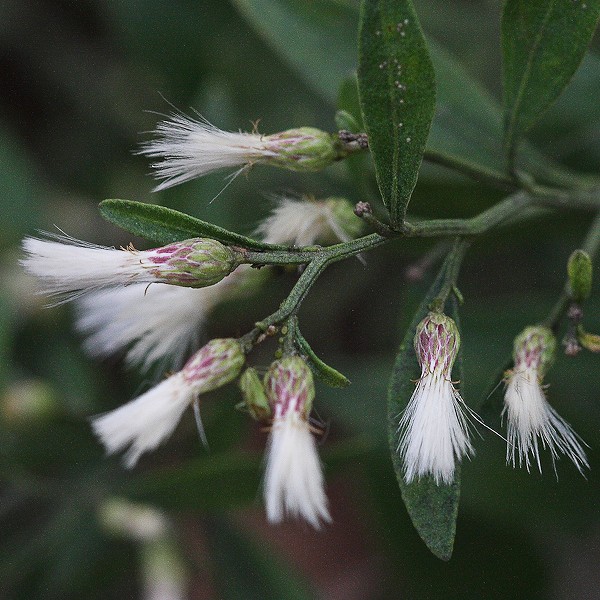
Among the botanical attractions were Saltbushes, species of Baccharis. Within our botanical radius are three Baccharis species: B. halimifolia with flower heads in loose clusters, B. glomeruliflora with the heads in compact clusters, and B. angustifolia with distinctively narrow and non-toothed leaves. Baccharis species have a confusing array of English names. And to complicate classification, some of the species hybridize. It is not a goal at this moment to sort out the variations and names. We’ll be generic today.

Unless you see the parachute-fruits, it might be tough to recognize Salt Bushes as members of the Aster Family. After all, how many woody Asters do you see in Florida? (Answer: not many.) The little white unisexual flowers are clustered in un-showy flower heads. The female flowers transform into parachuted fruits resembling those of dandelions or thistles.

Baccharis glomeruliflora parachute fruits (by JB).

Baccharis glomeruliflora parachute fruits (by JB).

Salt Bushes are standard green companions in everyday Florida botanizing, although their vulgarity is a mixed blessing. Despite being native, the shrubs have weedy ways, to the point of being invasive exotics in continents where they don’t belong. And they can be replacement plants here in Florida as natural marshes are drained and altered. Like good weeds, Salt Bushes produce massive masses of wind-dispersed happy-to-germinate seeds. Oddly for weeds, the seedling growth can be shade tolerant. Depending on the species, they tolerate also awful soils, varied water regimes, salt, and abuse. The plants contain heart poisons, so livestock leave them alone, or else! After a fire in some habitats, hello Salt Bushes. Being easy to grow (!) and good looking, Baccharis species have a small market for cultivation.

After a fire, here come the Salt Bushes (by JB).

After a fire, here come the Salt Bushes (by JB).

Baccharis halimifolia is one of those hot-climate to north-woods species distributed from Nova Scotia to Alaska to Florida to Mexico. In Europe, New Zealand, and Australia it is an invader. And the invasion events present a head-scratcher Emily Dickinson would have understood, in her words:

To make a prairie it takes a clover
 And one bee.
 One clover, and a bee, and reverie.

Now let’s extend that to Salt Bush. They come as separate male and female plants, so to make a prairie on foreign continents it takes TWO Salt Bushes, not to mention lots of bees (of the right kinds). How does a species that needs a male plant to pollinate the female manage to arrive in Australia as a legally married couple to begin the invasion? How do female plants Salt Bushes in a Florida roadside ditch manage a huge fruit-set, and seeds with high germination rates? (I am not certain that occurs but informal observation seems to indicate it does.) Such saturation-pollination would require a lot of bees and even more reverie . Every one of those millions of parachute fruits on a single female Salt Bush would require its own pollination event. Inquiring minds want to know, how can it bee?

Baccharis glomeruliflora (by JB).

Baccharis glomeruliflora (by JB).

Splitting a species into separate males and females is one step in evolution, but another step is then possible to compensate for iffy pollination, a “plan B” to make seeds without benefit of those male plants and super-bees. Such seeds are clones of the mother plant, and are called apomictic seeds (ap-oh-MICK-tic). Is that true of Baccharis halimifolia? Probably, but if it has been shown experimentally I’m not aware of it. (Always a big possibility!) Apomixis has been demonstrated in different Baccharis species. It would be interesting to isolate a female Baccharis halimifolia from all possible outside pollination and see if the usual bazillion fertile fruits form.

Baccharis halimiflora (by JB).

Baccharis halimifolia(by JB).

 
6 Comments

Posted by on March 10, 2013 in Groundel-Trees, Saltbushes


Tags: , , ,

Getting a Bang Out of Lycopodiella

Club-Moss

Lycopodiella species

Fern Allies

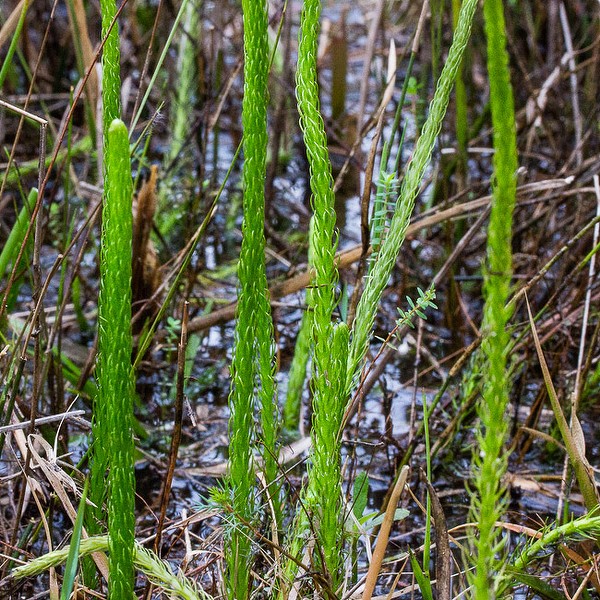
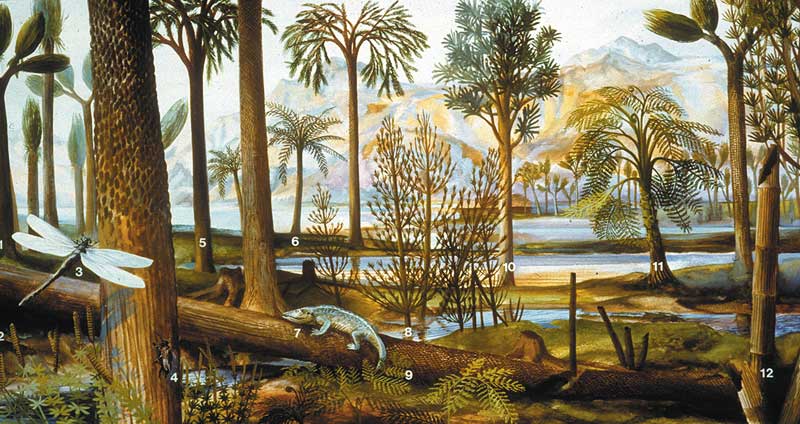
Two fun things occurred in recent days. I had the good fortune to tour the University of Michigan Natural History Museum in Ann Arbor, Michigan, and went botanizing in the West Jupiter Wetlands with John. And the two experiences overlapped. Natural History museums are full of dioramas showing past geological periods, such as the Carboniferous Period 360-300 million years ago, and the West Jupiter Wetlands has living fossils reminiscent of those times still rising from the mud. Every time I see Lycopodiella my mind’s eye goes to Coal Age forests.

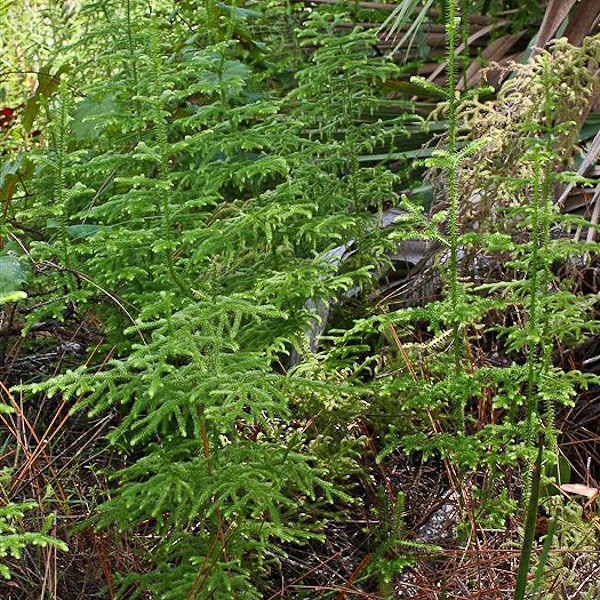
Lycopodiella cernua, Nodding Clubmoss (by JB)

Lycopodiella cernua, Nodding Clubmoss (by JB)

We’re talking about an odd assortment of plants known as Fern Allies, not particularly related to each other, and not particularly related to ferns, but all very primitive dating back hundreds of millions of year before Flowering Plants and mammals, even before dinosaurs. Floridians know many Fern Allies, including the Spikemosses (Selaginella) we see natively in scrub habitats and non-natively in cultivation; the Horsetails and Scouring-Rushes (Equisetum) seen likewise native and not; the Whisk-Fern (Psilotum) hanging out of Cabbage Palm boots and out of plant containers, the Quillworts (Isoetes) familiar to some freshwater plant enthusiasts and to aquarium owners, Hanging Clubmoss (Huperzia dichotoma, a rare epiphytic species), and the Clubmosses of the genus Lycopodiella, which are the main topic for today. All of these Fern Allies share an overall simplicity in structure, a primitive life cycle based on spores with no seeds or flowers, and ancient ancestors. Let’s get specific now and talk about today’s Lycopodiella.

LycoJB
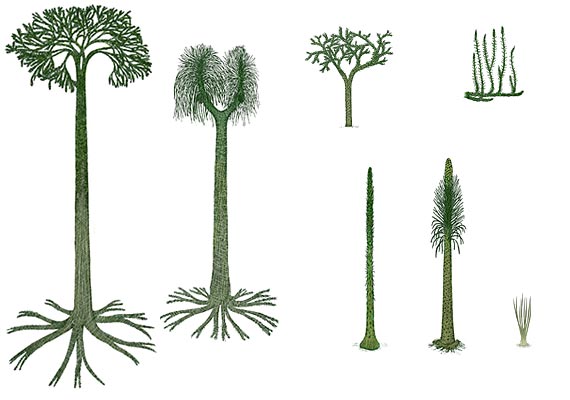
To quit listing species and to get to something interesting, I can’t see a Lycopodiella and not think of a museum diorama showing prehistoric swamps forest. In the Carboniferous Period and before there were Lycopodiella-ancestors (Lycophytes) and ancestors of other Fern Allies similar to today’s, except that “back in the day” they were dominant forest trees, and for the most part today’s humble Fern Allies are inches to a couple feet tall. Compare John’s photo of Lycopodiella above with the ancient tree-sized Fern Allies pictured below. It stirs the imagination. Living fossils.

Carboniferous and older Fern Allies.  The ones on the left were 70 feet tall. (From Stanford University)

Carboniferous and older Fern Allies. The ones on the left were 70 feet tall.

That reproduction is by spores has come up already. Most Lycopdiellas have spores cases in clusters in small leafy cones made of slightly modified leaves. Reverting to an older broader name, Lycopodium spores have a remarkable history in human affairs. They are oily, slippery, and unwettable like a duck. They once served to lubricate rubber gloves and pills. And if that does not excite you, maybe fireworks will.

Sprinkled in the air the spores are explosive. Before the days of smoke detectors and liability, setting them off was a good old botany class gimmick to build class enrollment. The spores once served in pyrotechnics and in old-time photographic flash powder. Even now they are sold as “Dragon’s Breath.” How they harvested the spores in industrial quantities would be interesting to know. But don’t take it from me—see the exploding Clubmoss spores on the Ellen Degeneres Show.    CLICK (Skip the add and jump ahead to about the middle of the Youtube.)

Carboniferous forest with ancient Fern Allies (Stanford University)

Carboniferous forest with ancient Fern Allies


Diorama Alan Singer http://web.stanford.edu/group/stanfordbirds/SAN/AAAS-DC/J/Singer-DC.html

 
2 Comments

Posted by on March 5, 2013 in Club-Moss, Fern Allies


Tags: , , ,

Respect Your Elders

Marsh Elders

Sumpweeds

Iva imbricata, I. frutescens and additional species

Asteraceae

A class trip to Blowing Rocks Preserve today on Jupiter Island reminded me that sometimes broad plant groups are collectively interesting—we live in a plant world of genera and families, not just individual species. At Blowing Rocks separated by a couple hundred yards are two representatives of the nine-species genus Iva, which is an odd little bunch in the Aster Family.

Iva imbricata on the beach (JB)

Iva imbricata on the beach (JB)

Locally the dominant beach plant is Marsh Elder, Iva imbricata. You can’t miss it. On most local beaches it comprises 90% of the vegetation in great green perennial patches  on the beach just above the waves and just below (or on) the dunes. The leaves are succulent, mostly opposite, slightly toothy, and fragrant when crushed. The fragrance perhaps accounts for the name Iva in reference to a mint Ajuga iva, although the paper trail on this notion goes cold fast. You scarcely see flowers, because the Iva flower heads are greenish and inconspicuous like those of its relative Ragweed.

Iva imbricata (by JB)

Iva imbricata (by JB)

I’m always fascinated with the adaptations of beach species. How can they establish and survive on hot, windblown, stormy, abrasive, shifting salty sand? A relevant adaptation of Iva imbricata is the ability of its seeds to sprout anchored far deeper in the sand than typical seed-sprouting depths. The seedlings burrow up from subterrranean safety below the maritime perils to break through to the sunny surface like little skyscrapers drilled basally into the bedrock.

Walk 200 yards to the lee side of Jupiter Island to protected salt flat and there’s a different Iva. Iva frutescens is taller, woody, toothier-margined, and less succulent. Books call it Bigleaf Sumpweed, although I’ve never heard that silly handle in conversation. Other authors call this species Jesuit’s Bark, a name applied more to quinine used to quell fevers and as an antimalarial and promoted by Jesuit missionaries. Applying the name Jesuit’s Bark for Iva frutescens may refer to historical applications against fevers, although few data are handy. Iva species do contain phytochemicals vaguely compatible with such benefits.

There are other Ivas in Florida, including two local annual species Iva angustifolia (outer bracts on flower head fused) and Iva microcephala (outer bracts separate, the clusters < 2 mm long).

Iva microcephala (by JB)

Iva microcephala (by JB)

Iva annua, is arguably the most interesting species. It ranges across much of eastern North America, including northern Florida. I recall it fondly from living in St. Louis across the Mississippi from the ancient Native American center known as Cahokia. CLICK
Cahokia dates back to the transitional era when maize and beans gained prominence as Native American staples very roughly speaking a little less than a thousand years ago. What grains were important in the pre-maize era? Among them were the “seeds” (achenes) of Iva annua. Now here is the good part: archaeological remains going back some 5000 years show Iva to have been an early staple. Even more remarkable, there were large-seeded “improved” cultivars of Iva annua by 2000 BC in caves, kitchens, and storage for planting. In short, ancient horticulturists developed it as a domesticated crop named by modern botanists Iva annua var. macrocarpa. As a young botanist not long ago I enjoyed searching the wild Iva populations around Cahokia for the macrocarpous strains persisting into modern times. Found some large ones but nothing convincingly “improved and persistent.” The large-seeded strains are presently regarded as extinct, having been elbowed aside by corn around the year 1200. Iva seeds are easy to harvest, are produced abundantly, are easy to prepare, and are nutritious high in nutritious oils. Once so important, now so forgotten. That seems worth knowing.

—————————————————————————————————————-

Note:

[Readers interested in ancient large-fruited Iva will enjoy this detailed illustrated account  CLICK.]

 
6 Comments

Posted by on February 28, 2013 in Marsh Elders, Sumpweed


Tags:

Roses are Red, Violets are Cleistogamous, Sugar is Sweet, and Vultures Monogamous

Bog White Violet

Viola lanceolata

Violaceae

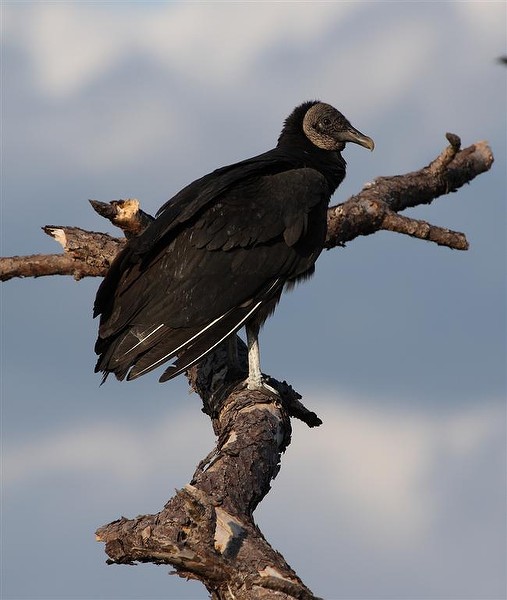
The tidbit about (Black) Vultures just goes to show you, table manners do not matter in dating. What do vultures have to do with violets other than starting with the letter V? Answer: They’re both gregarious but have oddly restricted genetic exchange. Genetic testing shows black vultures to limit genetic exchange to one partner, despite apparent opportunities for side-stepping at a road kill party.

Happily married vulture by JB

Happily married vulture by JB

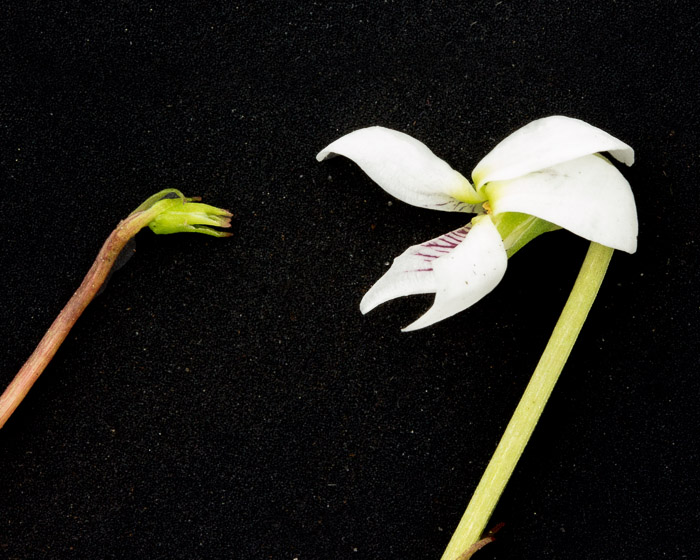
Violets, which having beautiful broadly pollinated blossoms, have also “cleistogamous” (kleist-OG-ah-muss) flowers, which are small, inconspicuous flowers that bear fruit without ever opening. They often look like buds. Most cleistogamous flowers are self-pollinated, thus creating clones or near-clones of the parent plant. Cleistogamous flowers occur in a lot of plants; they are sort of a plan B. That is, in addition to mixing genes broadly helped by the birds and bees visiting regular flowers, use also cleistogamous flowers to make backup copies of the parent plant. Look for cleistogamous flowers low on violet plants.

Cleistogamous flower and regular flower (by JB)

Cleistogamous flower and regular flower (by JB)

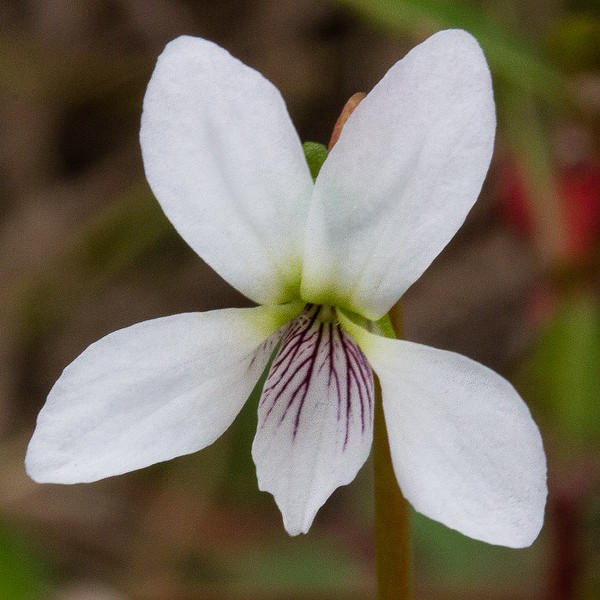
There are 500-600 violet species in the world. Three species inhabit our usual Treasure-Coast haunts, with Bog White Violet, Viola lanceolata, common and conspicuous. It has white flowers with purple nectar guides (tracks) leading into the floral center.

The purple nectar guides correspond with the veins (JB)

The purple nectar guides correspond with the veins (JB)

The purple pigments are called anthocyanins, and interestingly, anthocyanin colors change with acidity and alkalinity. Might be fun to try with some violets. More interestingly, in violets and in many other plants, the coloration corresponds with the petal veins. Why? When you think it over, that is weird. How can a pigment be confined in veins, which are made of dead water-conducting cells and highly specialized sap-carrying cells? I mean, plumbing with running water is no good place to sequester a pigment. But:
The color is not actually in the plumbing. To explore this further we have to go to other plants and extrapolate speculatively to today’s case. In other species with similar colored-vein patterns there is a gene called “venosa.” Responding to some mysterious cue, the venosa gene turns on pigment-making genes in the leaf cells overlying veins. In short, something about being near a comparatively large vein turns on a gene. That gene is a switch to turn on different genes, and those second genes case pigment formation.
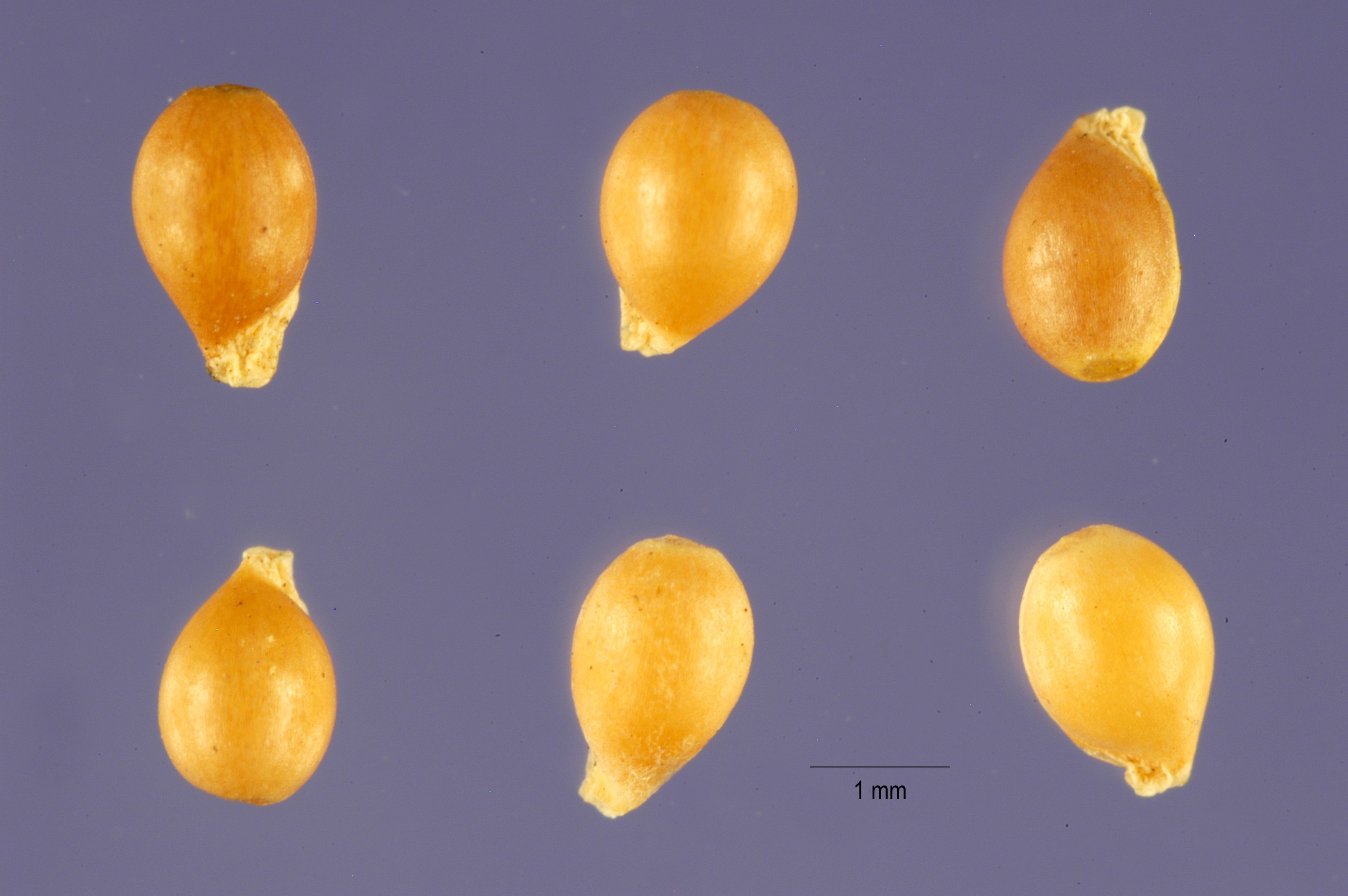
Violets enjoy a little help from ants in dispersing their seeds. The seeds have a small food packet attached.. Hungry ants drag the candy bar with that pesky seed attached back to their well-tilled, fertilized, and armed-guarded nests. Great place for the violet to grow, and make more seeds for more ants.

Violet seeds with food packets for ants. (By Jose Hernandez, USDA Database, permitted use.)

Violet seeds with food packets for ants. (By Jose Hernandez, USDA Database, permitted use.)

 
6 Comments

Posted by on February 20, 2013 in Violet


Tags: , , ,

Purple Thistle

Cirsium horridulum
Asteraceae

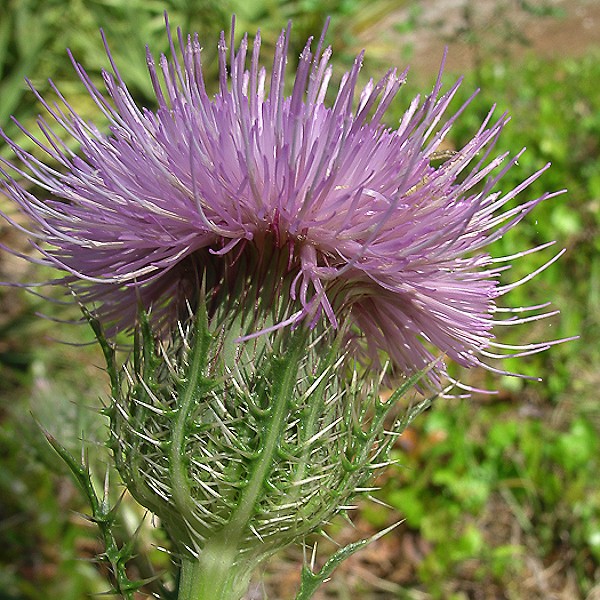
John and George last week explored a low pine woods with marshes, ponds, and Sandhill Cranes in the West Jupiter Wetland. The site was a floral  showplace of White Violets, Pineland Daisies, Yellow Sneezeweeds, Orange Milkworts, and more in colorful bloom. The trailside all-stars were native Purple Thistles, Cirsium horridulum.

Cirsium horridulum (by JB)

Cirsium horridulum (by JB)

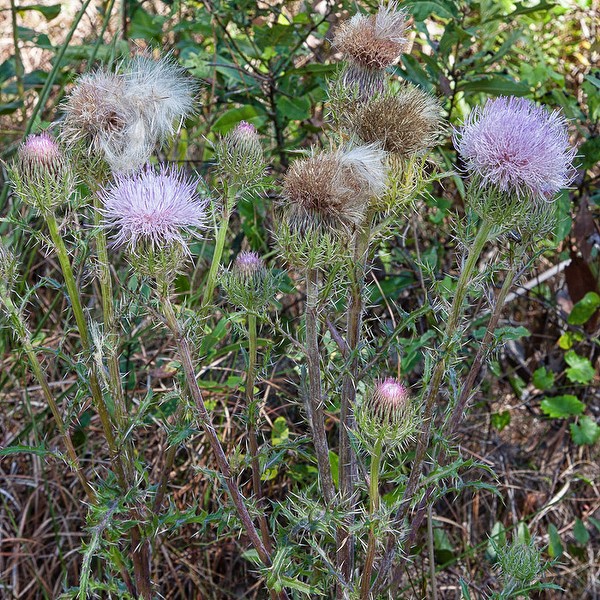
Nothing could be less horrid than this proud wildflower. (The “horridulum” presumably relates to the thorns on the foliage and on the bracts under the flower head.) Thistles are especially happy plants for me, evoking childhood memories of bike rides, railroad tracks, and cows in the pasture.

Purple Thistle (by JB)

Purple Thistle (by JB)

The broad term “thistle” embraces several thorny members of the Composite Family. The name is ancient, as are writings about thistles. They’re the symbol of Scotland, according to lesson, due to the painful spines tipping the fate of battle. You can scarcely find a plant group applied medicinally in more ways. Uses include treating swollen veins, controlling blood sugar, and relieving gastrointestinal discomforts.

Thistle-of-Scotland
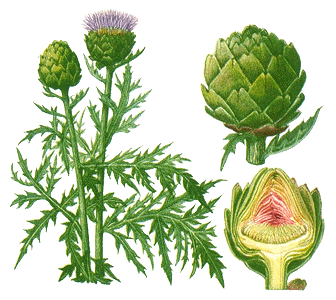
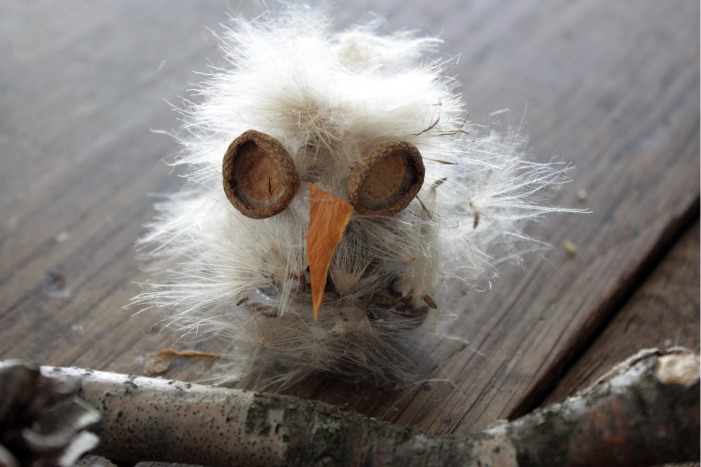
Thistle uses extend beyond medicine. Thistles solidify cheese as a vegetable rennet. And there’s nothing cozier than a goldfinch nest lined with thistledown. Thistledown provides the poofy end for blowgun darts. CLICK  Ever notice the similarity between artichokes and thistles? Artichokes are thistles of sorts, and weedy thistles, including C. horridulum, have had their soft inner regions served in foods.

artichoke-info0
What do you do if your pastures invaded by exotic thistles? Find a natural enemy of course and introduce it to smite those uninvited botanical guests. But watch out…that can backfire if the pest plant has native relatives. A weevil introduced from the Old World to control Old World Thistles in American pastures broadened its palette to native thistles, including our own Cirsium horridulum. The full extent of the problem remains to be seen.

Thistle weevil(From 5 orange potatoes ETSY site)

Thistle weevil
(From 5 orange potatoes ETSY site)

 
7 Comments

Posted by on February 15, 2013 in Thistle


Tags: , ,