RSS

Author Archives: George Rogers

Unknown's avatar

About George Rogers

Florida botanist

Orchid Weeds, Fungal Needs, and Wind-Blown Seeds

Lawn Orchid, Soldiers Orchid

Zeuxine strateumatica

Orchidaceae
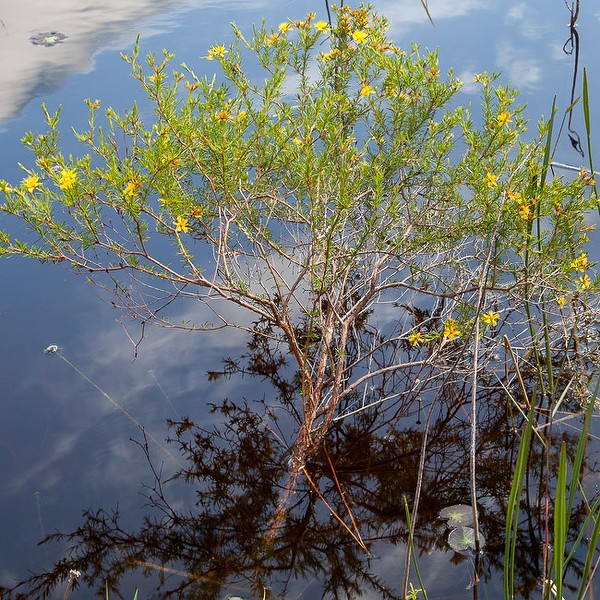
St. Johns Wort in JD Park Feb. 28.  All photos today by John Bradford

St. Johns Wort in JD Park Feb. 28. All photos today by John Bradford

When I think of Orchids, I think of jungle epiphytes, or exotic fieldtrips,  or corsages, or my brother’s flowery greenhouse (and the morons who broke into it recently probably looking for pot, only to leave the doors open in an 8-degree Michigan night).

Or, more botanically speaking, I think of the largest plant family that has splintered itself into maybe 30,000 species famous for specialized habitat niches, dedicated pollinators, restricted fungal associates, and narrow geographic ranges.  In short, voted, “least likely to be weeds.”

That “it’s not us” perception seems fundamental to the enormous world trade in Orchids, shuffling the Franken-hybrid and species plants all over the place surprisingly unrestricted and with little thought to potential escape into natural habitats.  Too bad that invasive exotic Orchids exist and seem to be getting worse.
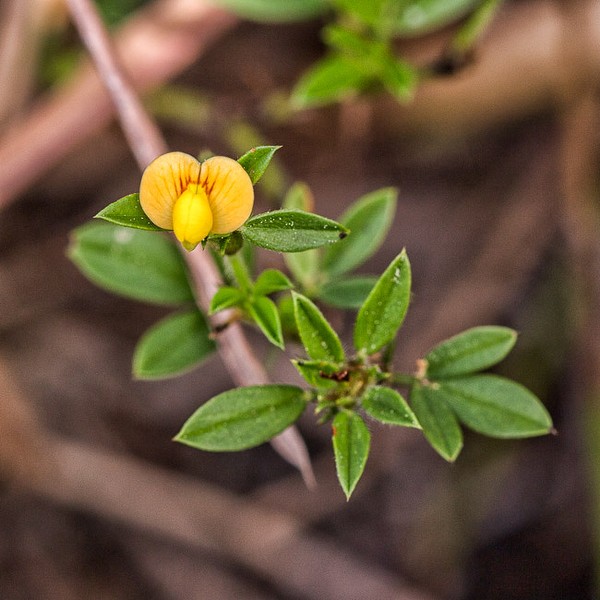
Cheesy Toes in JD Feb. 28.

Cheesy Toes in JD Feb. 28.

Which Orchids dominate the commercial and hobby trade?  Answer:  The ones with broad tolerances and flexible needs.  Same reason so many other exotics have become invasive.  And much like the spores of weedy ferns, Orchid seeds are dust blowin’ in the wind.  Every warm climate worldwide has Orchid enthusiasts, and cultivated  Orchids are getting loose with documented adverse effects, for instance, disease spreading from invasive species to native Orchids.  Epipactis helleborine is a good-old weedy species across cool latitudes.  Disa bracteata is a self-pollinated nuisance ground Orchid in Australia.   And new pests are turning up, perhaps most alarmingly in Hawaii.
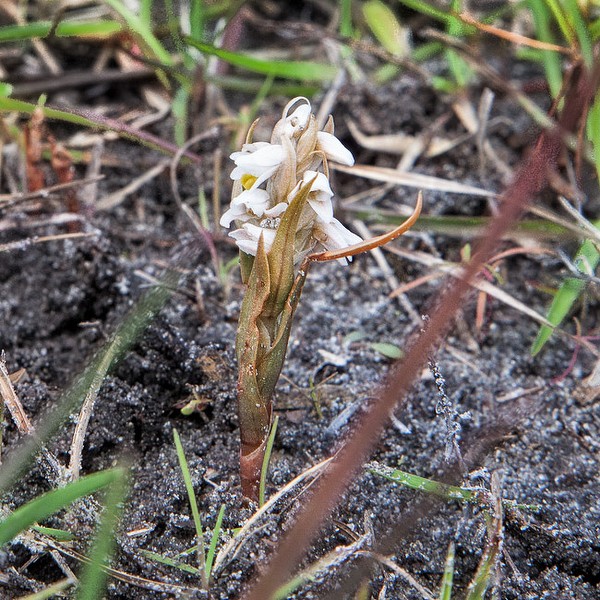
Lawn Orchid, Zeuxine,  in JD, Feb. 28

Lawn Orchid, Zeuxine, in JD, Feb. 28

Even though most Orchids are too constrained by their local pollinators and fungal associates to venture untended outside their normal ranges, some are self-pollinated or able to form seeds unpollinated.  Some find new pollinators, such as the Brazilian Parana Cowhorn Orchid Cyrtopodium flavum (C. polyphyllum) sneaking into Florida aided by an exotic bee (reported in Botany 88: 290. 2010).  Some weedy Orchids bring their fungal associates with them, or find new consorts.

My three most recent Orchid encounters in local wild areas were weedy Orchids, probably all  non-native species. (The exact nativity of species with dustlike wind-blown seeds, and of weedy species in general can be unclear.)  On our class field trip yesterday a sharp-eyed student spotted a pretty Orchid.  How nice!  At that moment I was unsure of the identity, but at home later with resources in hand, realized it was Eulophia graminea, an invasive Asian species.  In the same class, the students had previously spotted Monk Orchid, Oeceoclades maculata, an invasive weedy reportedly alien species CLICK with distinctive blotched  (maculata) foliage.  This weed extends from Africa (see comments) to Tropical America, and into the Caribbean and Florida.   I wonder if Global Warming is helping a northward progression, only a vague hunch.  A quick search of the Florida Atlas of Vascular Plants turns up a baker’s dozen non-native Orchids.

The feral Orchid trend continued today.  John and George just can’t stay out of Jonathan Dickinson State Park—such a lovely destination in the cool sunshine with Pawpaws, Gallberries, St. Johnsworts, Water Lilies, Silkgrass,  and Marsh-Pinks in bloom.
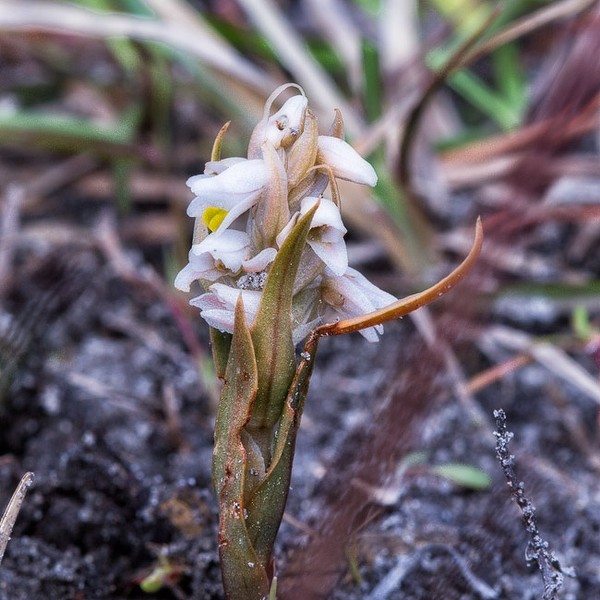
Zeuzine close

As we stepped out of the car, hey look, an Orchid.  Lawn Orchid, Zeuxine strateumatica it was.  The invasive exotic Old World species decorates lawns and disturbed moist spots in several southern states.  In cultivation it can be medium-magnificent.  When escaped, it looks pretty but unassuming.

The species ranges more or less naturally (?) from the Middle East to the Pacific Islands, and has spread beyond.  The first U.S. report dates to 1936 near Fellsmere, Florida.  Harvard University researchers in the 1940’s (see citation below) surmised speculatively that the Orchid hitchhiked here with imported Centipede Grass around WWI but failed to spread at first because its usual fungal associate was not sufficiently established locally.  By almost WWII, the necessary fungus, Rhizoctonia mucoroides, had a local foothold, and the Orchid-fungus duo spread  with alacrity.  Dig this:  The Orchid’s seeds germinate only in the presence of the fungus, which researchers isolated from the Zeuxine in Florida and in its native Java.

Multiple botanists explain Zeuxine’s viable seeds without a known local pollinator as probable self-pollination and/or  seed formation without benefit of pollination.  Such (apomictic) seeds contain a clone of the mother plant.  Determining if the plants self-pollinate or produce seed-borne clones is a feasible student research project.

Lawn Orchid comes and goes mysteriously.  John and I often park where we encountered it, but have never seen the little imp there previously.  The first time I saw the species was in masses behind a store in Jupiter.  It vanished.  I wonder if the “here today gone tomorrow” behavior explains Linnaeus’s name, “Orchis strateumatica,”  with strateuma in Greek a roving band or regiment of soldiers.  The plant’s basic lifestyle explains the peek-a-boo:  There is an underground stem rooted at one end, with the opposite end capable of rising up and flowering.  After coming up like a periscope, the flowery end dies down out of sight.  At that time the fungus presumably sustains the subterranean stem saprophytically until some environmental cue says, “up-periscope.”

————————————————————————————————————————–

Note:

An account of the biological side of the Zeuxine strateumatica invasion appears in Mycologia 34: 380-390. 1942.
 
10 Comments

Posted by on March 1, 2014 in Lawn Orchid


Tags: ,

What did Stonhenge and Trapper Nelson’s Cabin Have in Common?

Brookweed

Samolus verlandi (Or Samolus verlandi subsp. parviflorus,  or S. parviflorus)

Traditionally Primulaceae (Or Samolaceae)

Today John and George visited the “Tarzan of the Loxahatchee’s”  historic camp in Jonathan Dickinson State Park    CLICK   Trapper Nelson’s ghost still haunts the vicinity as the abundant offspring of his exotic fruit trees, bamboos, and other apparent introductions to illustrate the consequences of bringing non-native species into a native habitat.

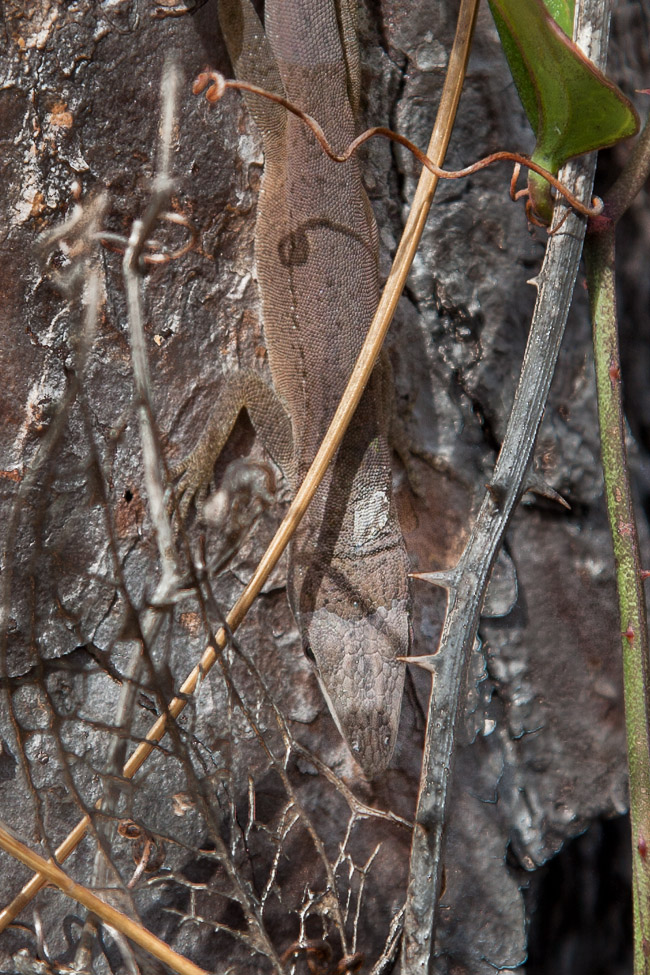
Of the flowering natives along the swampy river shore the stars of the show were Lizards’s Tails CLICK,  and speaking of lizards,  we almost missed this camouflaged peek-a-boo:

Anole%202

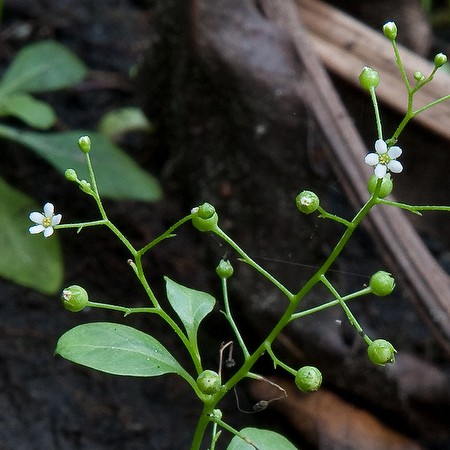
The prize for best supporting flower goes to pretty little Brookweed.

Samolus verlandi (All photos today by John Bradford)

Samolus verlandi (Both photos today by John Bradford)

Brookweed is not an everyday flower.  The species is not rare, but you have to go to a squishy habitat at the right time.  The plant is a charmer, sort of delicate, sort of shy, with tiny white bright flowers in the dancing jungle sun and shadows. (There is a second species in Florida, S.ebracteatus.)

When I want to know more about a plant, the first place I often look is the Flora of North America. CLICK  And when I saw there the suggestion that the plant was probably known to the Druids, that caught my eye.

I mean, how many plants do we know from the Druids!?  The connection between Druids and Samolus comes from an account by Pliny the Elder (23 – 79 AD),  well known to botanists as author of the medically biased  “Field Guide to Everything”  from the Roman Empire.  Pliny recorded the Druids to pick their Brookweed without looking at it, while fasting, with their left hand, to serve as a veterinary medicine.   So John shot a picture of our Samolus left-handed and blindfolded before lunch.

(By the way, Stonehenge and Druids tend to be mentioned together.  If not for Stonehenge, I’d not know a Druid if he walked up and said “good day for human sacrifice.”  But truth told, I do not know enough to vouch for the veracity of the Druid-Stonehenge connection.)

You may have noticed two competing classifications for today’s little posie, one classification is as a separate North American species (S. parviflorus) distributed from nippy northern Canada to toasty Florida and southward to Bolivia.  That is quite an impressive distribution.  (And it is in Japan too?)

The competing classification extends the range even more broadly if the North American “S. parviflorus” is merged into a broadly interpreted S. verlandi, a species with a huge multicontinental distribution: the Americas, Europe, and beyond.  Just to broaden the blog, let’s go arbitrarily with the big inclusive interpretation of  S. verlandi  embracing our little wildflower at Trapper Nelson’s.  That is more fun, since must of what is written about Samolus is based on S. verlandi.

Those little Samolus verlandi flowers are an example of “plan B” pollination.   Let me explain.   You might say throughout the plant world generally pollination from a separate individual is best.  That is why we have the birds and the bees.  So we’ll call pollen brought from a different plant “plan A.”

But if outside pollination fails there is a backup mechanism—“plan B”  is self-pollination, that is, a single flower pollinates itself in lonely desperation.   In this contingency, the pollen-bearing stamens tilt inward until they brush pollen onto the stigma of the same blossom.  In the link below the photographer caught a Samolus with one flower where the stamens are upright (righthand flower),  and another flower (on the left) as the stamens begin to curve inward toward the stigma CLICK

Samolus verlandi seems to like salt.  Other observers comment on the affinity of the species for habitats lightly salty—not too much, not too little.  I have a hunch that the Loxahatchee River at Trapper Nelsons is lightly salty with variations from the weather, tide, and season.

Samolus verlandi has a minor market in commercial horticulture as a submerged aquarium plant and as an indoor container plant.

 
6 Comments

Posted by on February 24, 2014 in Brookweed


Tags: , , ,

Tough Bullies and Bungee-Jumping Worms

Golden-Asters

Chrysopsis scabrella

Asteraceae

Willow-Bustic on Hobe Mountain.  All photos today by John Bradford.

Willow-Bustic on Hobe Mountain. All photos today by John Bradford.

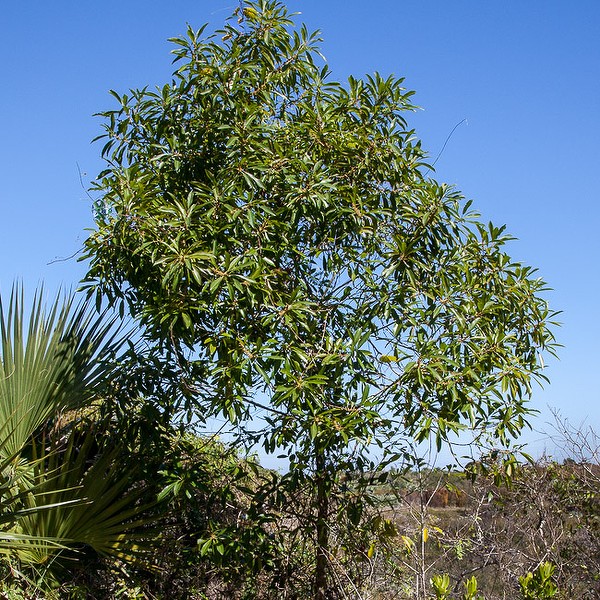
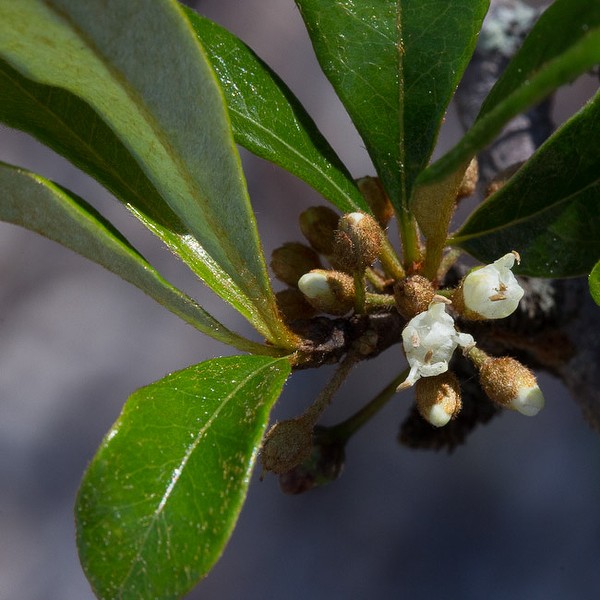
Yesterday John and George continued a multiweek appreciation of Jonathan Dickinson State Park, exploring this episode mostly the scrub area around Hobe “Mountain” (big coastal dune).  The alpine vistas are postcard pretty, and the montane flora is joyous too.  Understand, this massive pile of white sand looks like something out of Arizona, complete with cacti, big agaves, and no doubt rattlesnakes.  Especially eye-catching yesterday in bud/early flowering were two different species of “Bullies”:  Tough Bully (Sideroxylon tenax) and Willow-Bustic (S. salicifolium).

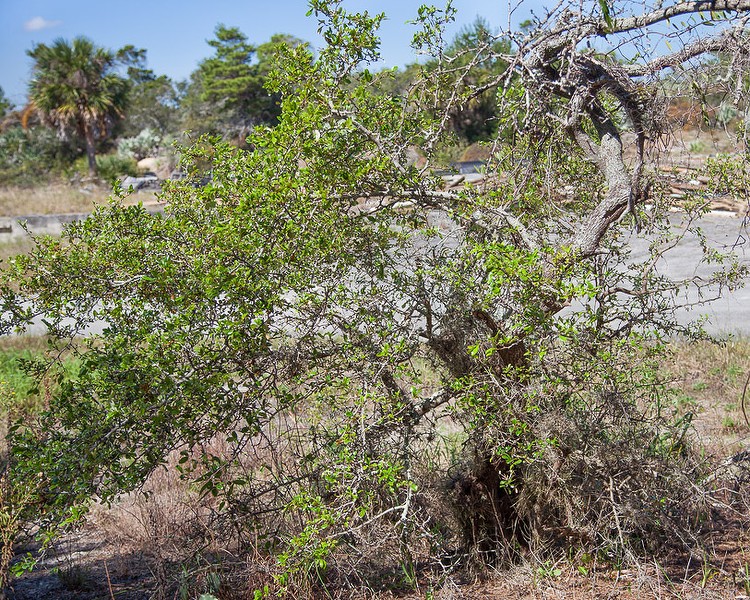
The Willow-Bustic, alternatively encountered as a hammock species in our experience, stood out as one of the dominant woody species on the fulsome dune, and the Tough Bully made its impression as an old, weather-worn, lichen-covered individual in the middle of historical Camp Murphy.  CLICK   The kinky tree could pass for a small live oak, and looked old enough to have been around in the WWII heyday of Camp Murphy, and gnarled and sand-blasted enough to be straight out of Lawrence of Arabia.

Tough Bully on N base of Hobe Mountain
Tough Bully flowers yesterday (2/14)

Tough Bully flowers yesterday (2/14)

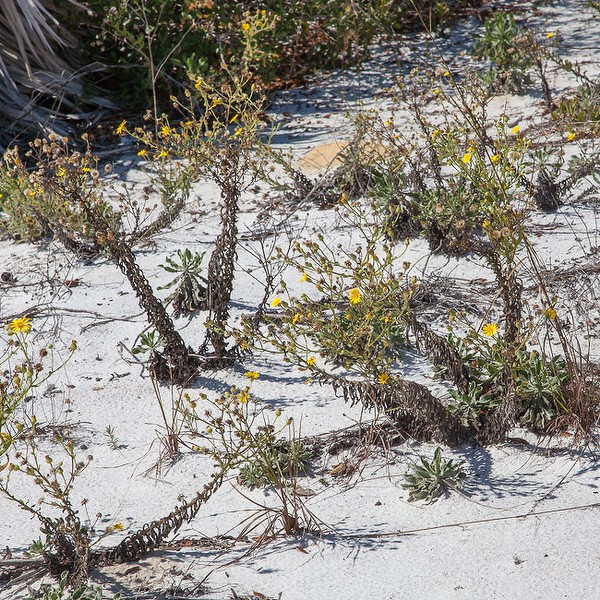
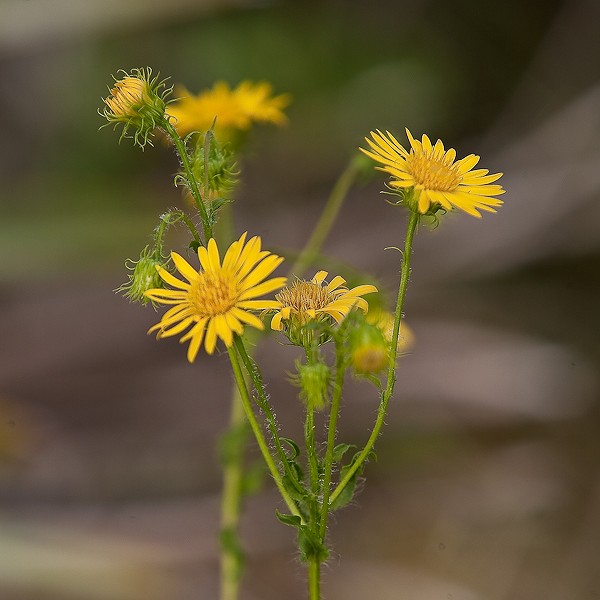
At that site, and throughout scrubs and dry pinewoods, is a vibrant yellow presence right now, Coastalplain Golden-Aster, Chysopsis scabrella, a sand-loving, sun-drenched, indestructible yellow-flowered ray of sunshine in Florida and nearby Southeastern States.  The ability of this species to thrive baking on sugar sand is remarkable.  It flourishes blooming on bare open windswept sand where it almost  seems little else can survive.

Golden-Asters on the sand

Golden-Asters on Hobe Mountain

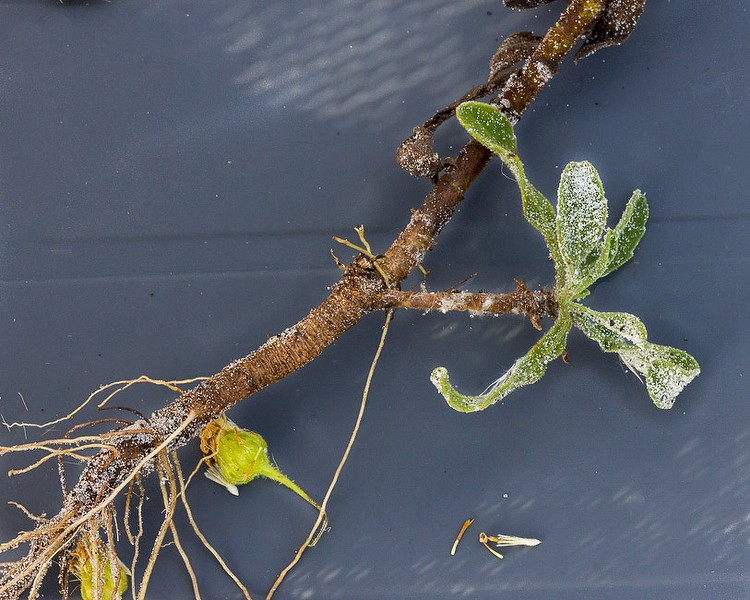
Not very exciting or photogenic, the root is a massive brush infiltrating the sand below.  The above-ground growth presents more to describe and photograph.   The early growth is a fuzzy gray-green rosette, leading some botanists to dub the plant a biennial, although the life cycle seems more complex than that.  A stem rises, oh let’s say, 2 feet from the rosette, and something curious happens, the leaves in the lower part of the stem wither, as though the plant in its extreme habitat sheds foliage it does not absolutely need, taking a little inspiration from cacti and other leafless or minimal-foliage desert plants.

Golden-Asters

Golden-Asters

Another Florida member of the Composite Family that likes to accumulate fragrant dead leaves along the stem is “Rabbit Tobacco.” SMOKE THIS   Every time I see the dry Golden Aster leaves I experience, but resist, an urge to try smoking them. (That would be beyond stupid, but stupidity does not always stop me.)   Interestingly, also, the soft pith in the center of the stem seems to fizzle out…again, the plant shedding all but necessary tissue?

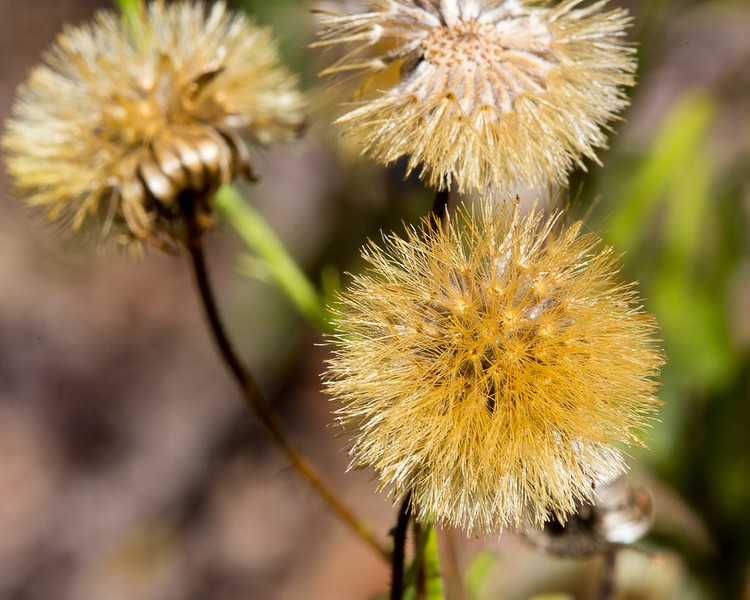
The fruits

The fruits

Around here the Golden Aster lives up to its name with a stunning late-winter canary floral display although flowering is not confined to this season.  In late winter, now, a new rosette (basal  leaf cluster) forms as a side-branch at the old plant’s base.  In a garden setting you might say it makes “offsets,” or “pups,”  not an uncommon behavior in desert species, for example agaves.

Plant with pup

Plant with pup

So perhaps the Golden-Aster is an improved biennial…yes, it goes from rosette to flowering stem, maybe even in two years in the fashion of a biennial, but then remakes a new rosette based on the existing hard-earned and precious root system, and thus is sort of an immortal “biennial.”  How many years one root system generates  annual resurrections would be fun to know.

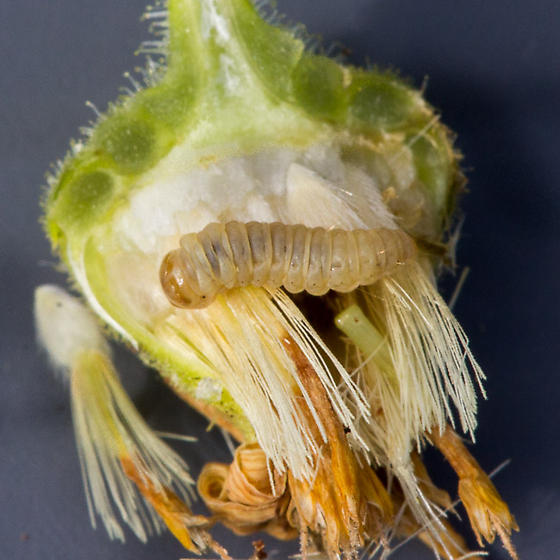
As John and I were photographing, and sniffing the fragrant foliage, and savoring the Golden Asters we noticed an entomological curiosity.  At the bases of the flower heads (the units that look like single yellow flowers) often a little whitish larva maybe ¼ inch long nestles in a little cup with its frass.  When disturbed, the wee stowaway bungee jumps on a silk thread.  (It probably leaps when the flower head disintegrates, rockin’ its dreamboat.)  We do not know what the hidden hobbit is.  John posted photos on BugGuide.net, yielding opinions of moth, although which species is not clear.  We’d love to know.

Stowaway emerging from opened flower head.  He's PO'ed.

Annoyed stowaway emerging from opened flower head.

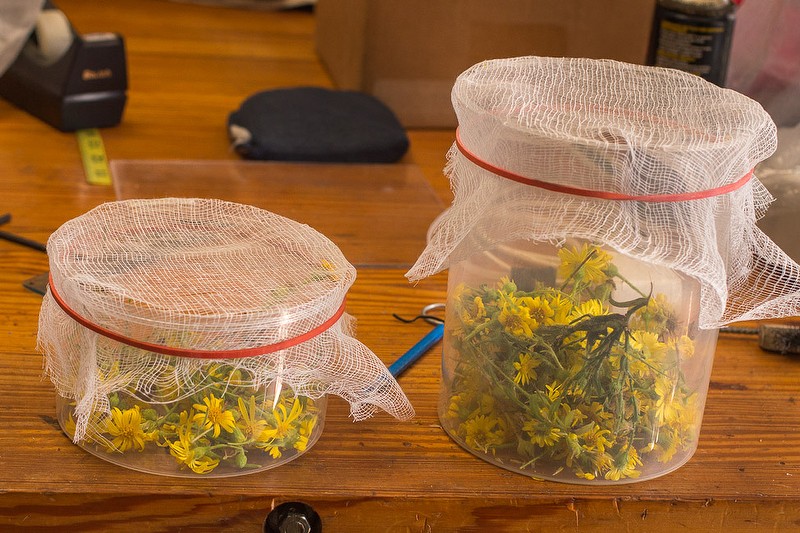
We’d love to know so much we placed occupied flower heads in containers hoping maybe we can “rear one out” for definitive ID.  In the meantime, there’s a mystery trespasser in the Golden Aster flower heads.

You never know!

You never know!

 
25 Comments

Posted by on February 15, 2014 in Golden-Asters


Tags: , , ,

Buttered Up and Pinch-Trapped

Yellow Butterwort

Pinguicula lutea  CLICK

Lentibulariaceae

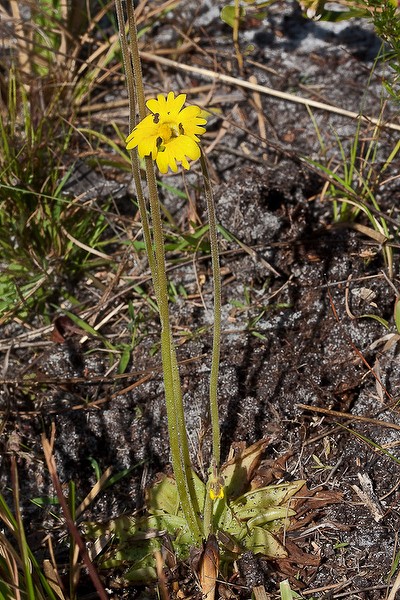
John and George today visited the best botany site in town: Jonathan Dickinson State Park near Hobe Sound, Florida.  All the showy flowers were yellow: Golden-Asters, Silk-Grass, Yellow Milkworts, and buttery Butterworts.  We’ll zoom in on the last-mentioned.

Butterwort.  All plant photos today by John Bradford.

Butterwort. All plant photos today by John Bradford.

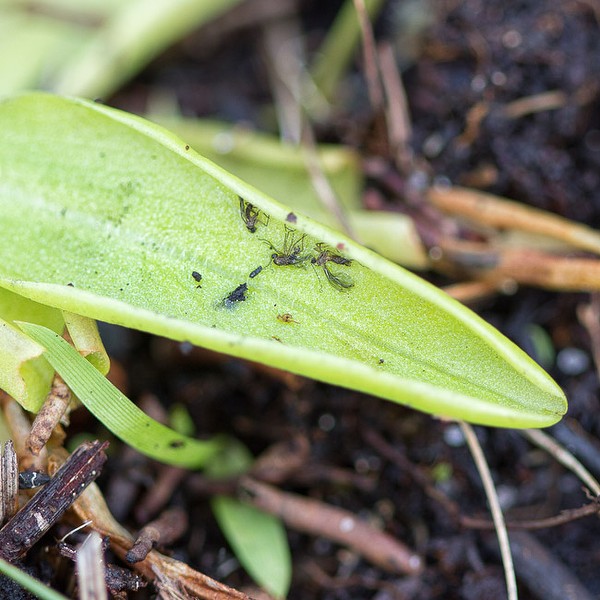
Pinguicula lutea bags bugs across the Southeastern U.S. in sunny moist habitats.  Today it was in the intimate company of two additional critter-eatin’ carnivores, Bladderworts and Sundews.   Bladderwort slurps tiny prey into a trap.  Sundew catches lunch using sticky hairs.  Butterworts are botanical flypaper, the upper surfaces of the leaves are sticky, and the edges of the leaves curl in to engulf the fresh meat.  After the meal, the leaves spread out.  Look closely, the tops of the leaves have hairs to secrete the stickum, and little droplets of digestive enzymes.  I’ve read of pollen being a protein source for Butterworts.  Makes sense, as it too would catch on the flypaper.  How much of a contribution, if anything meaningful,  comes from pollen is open to research.

The name Pinguicula  comes from Latin for fatty, as in butter, so I guess the name “Butterwort” refers to the leaf surfaces more than to the bright yellow blossoms.

Lunch,  caught in the butter.  Butterwort is botanical flypaper.

Lunch, caught in the butter. Butterwort is botanical flypaper.

Finding the plant is a seasonal treat, because Butterworts can disappear altogether later in the season, leaving not a trace of their existence.

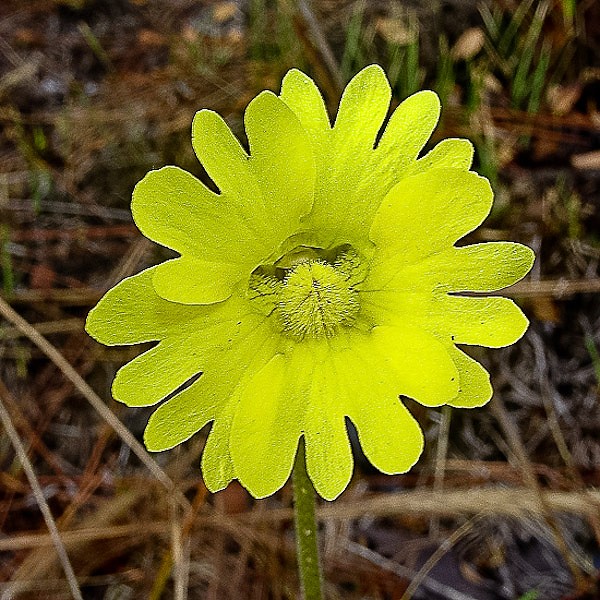
pinguicula big flowers

The flower is as odd as the flesh-eating foliage.  The petals look like the impact of a yellow paintball.  The rear end of the flower has the nectar sequestered in a hollow tail, the spur.  Looking into the entranceway into the flower, notice a shaggy pillow (palate) greeting the bee, reminiscent of the lip ornamentation leading into some orchids.  As the bee crawls into the floral tunnel past the shag-pillow, it pushes past large complex multicelled “hairs” arranged in tufts like brushes along the sides, floor, and perhaps roof of the floral tube.  The shag-pillow palate and restrictive brushes capture the bee temporarily to position it for pollen exchange.  This has been called “pinch-trap pollination.”   My post-university mentor, the late botanist Dr. Carroll Wood, once found a bee still pinch-trapped in a museum (herbarium) specimen of Pinguicula  lutea.   The bee must feel as I do pinch-trapped between those giant brushes in the carwash.

Pinch-trapped by shag-pillows!

Pinch-trapped by shag-pillows!

 
8 Comments

Posted by on February 8, 2014 in Butterwort, Yellow Butterwort


Tags: ,

Sand Pine

Sand Pine

Pinus clausa

Pinaceae

Friday John and George visited Seabranch State Park near Hobe Sound, a scrub area, or you might say a scrubby pine woods.  Except for a mantis praying, not much out of the ordinary, so we enjoyed the ordinary dominant Sand Pine trees.

Praying Mantis

Praying Mantis.  All of today’s photos are by John Bradford.

Two pines are native in our usual haunts, one being Sand Pine and the other Slash Pine. CLICK  Sand Pine tends to be a small gnarly hurricane-whipped scrub tree, although, given a chance, it can reach 60-80 feet tall.   They mature quickly, able under ideal conditions to form cones at under a year old, often reproducing by five years.  Yesterday we saw mature cones on the trunks of youngsters.  That’s one way of coping with fires and hurricanes: make seeds before trouble hits.

Sand Pine in the scrub.

Sand Pine in the scrub.

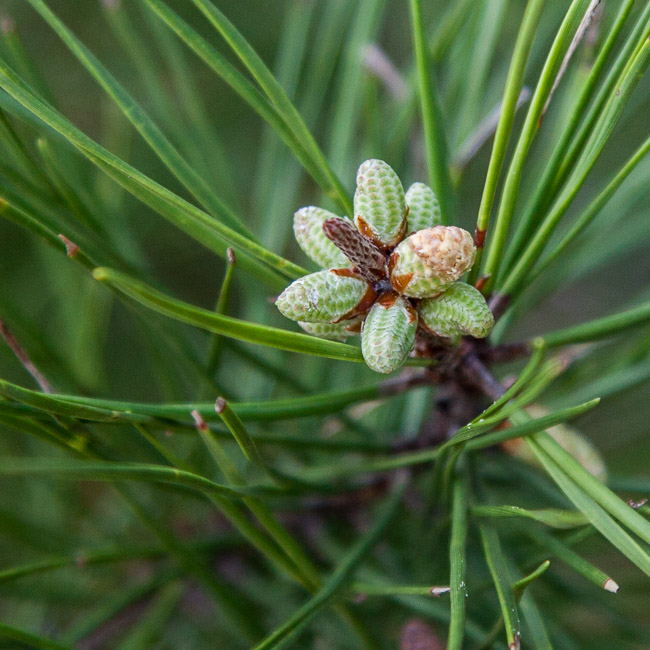
Todays the pines were maturing male cones resembling small yellow cigarettes, some already releasing pollen.    The emerging female cones are about the size of a pea, but scaly.  They take two years to mature into the familiar woody pine cones, and may remain on the tree for many more years until fire separates the scales and allows the seeds to fall onto the fire-cleared ground,

Young male cones.

Young male cones.

The Sand Pines in South Florida tend to have “serotinous” cones, that is, requiring fire to open up, although a walk in the woods shows some to open fireless.   “Clausa” means closed-in.  Oddly, there exists a second, northern, population in and near the Florida Panhandle separated from the southern distribution by a geographic gap.  The northern population has non-serotinous cones.  That is, they differ from the southern Sand Pines by having the cones open when mature and letting the seeds flutter without benefit of flames.

Young female cone

Young female cone

Now hold on there, that’s interesting.  To reiterate, we have a species spread the length of Florida with a gap in the middle.  North of the gap the cones open up, whereas south of the gap the cones wait for fire, although these tendencies are not 100%.  The difference has led some botanists to classify the northern open-cone-pines as one variety and the southern closed-cone-pines as a separate variety.   (Variety is a category below species in the classification hierarchy.  Species can be subdivided into varieties.)

This mature female cone opened with no apparent help from fire, even though it comes from the southern "closed cone" population.

This mature female cone opened with no apparent help from fire, even though it comes from the southern “closed cone” population.

The formal designation of two distinct varieties isn’t very convincing and doesn’t interest me much, but how that north-south difference in cone-behavior came about is something to ponder.  Three possibilities come to mind:

Possibility 1. Slow evolution.  Perhaps the two populations have been apart long enough for each to experience its own evolutionary divergence, with the cone difference being the most prominent distinction.  If that is so, was fire historically more a factor in the southern region than in the north?  Or could it be that in the cold north it is better to drop the seeds into the protective earth than dangle them in the frosty air?  (There are other serotinous pine species in northern regions.)  Of the three possibilities this one strikes me as most likely.

Possibility 2.  The southern population originating from a few closed-cone founders.  Maybe the Sand Pines originated in the north while most of Florida was submerged, and then maybe just by chance a closed-cone great ancestor jumped whatever gap(s) existed in prehistoric times to populate the southern region with its closed-cone descendants.  Scrub habitats at times of high water in millennia past were islands, and maybe a closed-cone “island” population developed and spread southward.  This possibility is called the “founder effect.”   There is a nice Wikipedia elaboration on this linked in the notes below.
Possibility 3.  Environmental cues.  Conceivably some environmental difference—soil, water, temperature—determines the cone type on any given specimen during its individual development.   If you have 10 years and a truck, you could plant some closed cone-types in the northern zone and vice versa and see if the reciprocal transplants each conform to their new digs.  Don’t hold your breath.

Possibility 4. None of the above, or a combination of factors.

Preliminary DNA study shows more variability within each of the two Sand Pine populations than between them.   In other words, DNA so far does not support recognition of two different named varieties, although there seem to be minor differences in their reproductive cycles.   The southern closed-cone types tend to be more uniform in age and in genetic variation (over small distances) than their northern counterparts.  Such uniformity might result from uniform repopulation after fire or hurricanes like grass regrowing uniformly after mowing, or maybe it comes from possibility #2, the founder effect, given that a small founder population would be less diverse than the large, widespread population to the north.

———————————————————————————-

Notes:

CLICK

CLICK AGAIN

Wikipedia:  http://en.wikipedia.org/wiki/Founder_effect

 
10 Comments

Posted by on February 1, 2014 in Sand Pine


Tags: , ,

Wakodahatchee and Green Cay Recycle Sewer Water, Entertain Bird-Watchers, and Spawn Super-Herbs

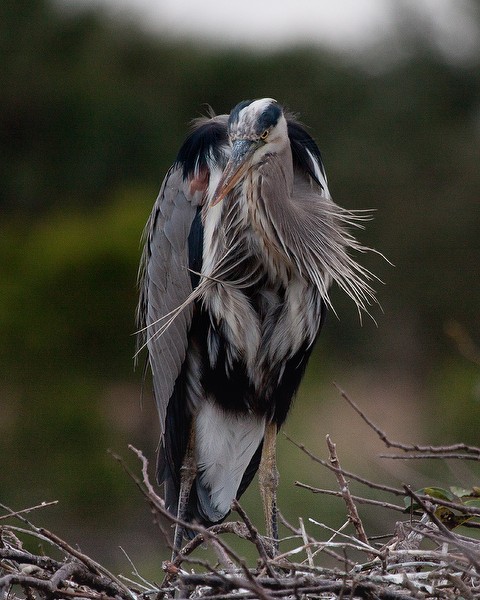
Great Blue Heron (JB)

Great Blue Heron (JB)

Green Kay Nature Center CLICK

Boynton Beach

Has restrooms, gift shop, visitor center, ample parking

100 acres with 1.5-mile boardwalk

Wakodahatchee Wetlands  CLICK

Delray Beach

Has coarse restrooms but no visitor center, parking jammed on busy days

50 acres with ¾-mile boardwalk


“Palm Beach County Water Utilities Department’s Southern Region Water Reclamation Facility pumps approximately two million gallons of highly treated water into the Wakodahatchee Wetlands. By acting as a natural filter for the nutrients that remain, the wetlands work to further cleanse the water.” (From the Wakodahatchee web site)

John was away having fun Friday, so today’s topic is more southern than usual.  My wife Donna and I skipped around the Wakodahatchee Wetlands boardwalk in Delray Beach, then a second loop to prolong the joy.  Near each other geographically, Wakodahatchee and Green Cay are wastewater reclamation sites with benefits. Sewage treatment generates leftover water after subtracting solids and organic matter, and pathogen suppression.  The most salient problem with the the effluent is its heavy nutrient load, a special curse here in nutrient-overloaded Florida and its beleaguered aquifers.

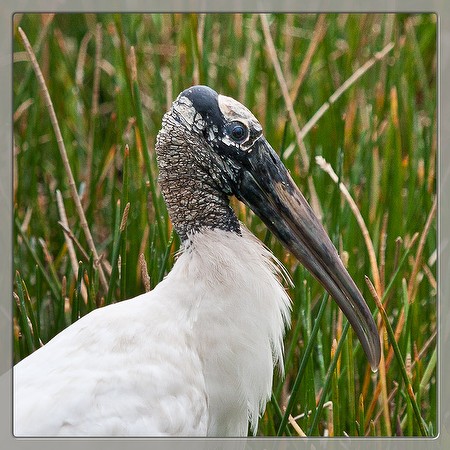
Wood Stork (by JB)

Wood Stork (by JB)

There are varied ways to dispose of the juice, and they all stink.  One approach is to spread it over an area inhabited by marshy plants to extract the unwanted nutrients.   It is not my intent to evaluate the environmental pros and cons of such treatment as opposed to alternatives.  You have to do something with stinkjuice, so we might as well enjoy it.   Wakodahatchee Wetlands and Green Cay service millions of reclaimed gallons daily over a collective 150 acres.  (The water smells only a teensie weensie.  Not a problem to most noses.)

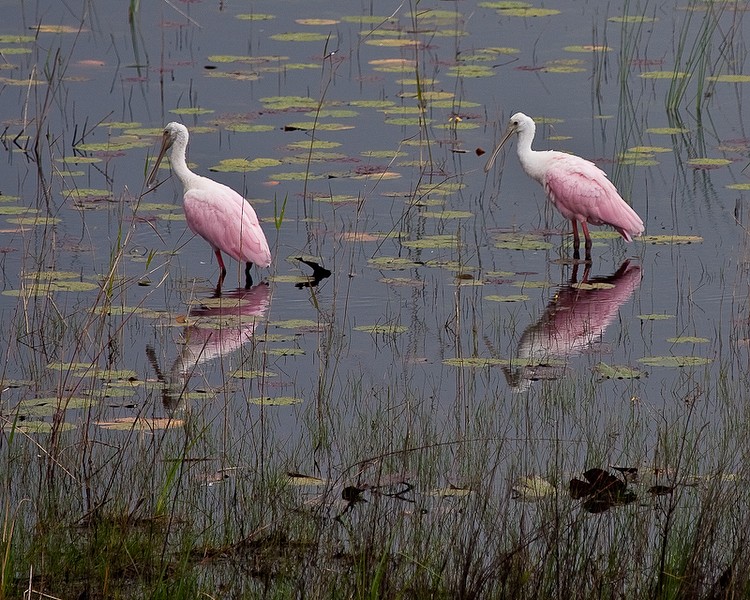
Roseate Spoonbills (JB)

Roseate Spoonbills (JB)

Now to the good stuff.  Both wetlands are famous for is birds and critters:  anhingas, bobcats, coots, cormorants, ducks, ducks and more ducks, egrets, gators, glossy ibis, grebes, herons of all stripes, marsh hares, marsh wrens, moorhens, people in funny hats, purple galinules, spoonbills, warblers, wood storks, and more.   What a joy to see so many people drawn to the birds and bees, and as a byproduct of sewage no less.

Now what about the botany?  The fauna upstages the flora, but still the plants give a glimpse of life in a super-nutrient-enriched soup.  Is it fair to state that native Florida marsh plants tend to be nutrient-limited under pristine natural circumstances?    The designers of Green Cay say they modeled the “ecosystem” on the Everglades.  But what could be farther apart environmentally:  at one extreme, the Everglades where we worry about 10 parts per billion phosphorus, and at the other pole, sewage broth with a smorgasboard of nutrients.  Reclaimed water in Naples has phosphorus at 370 parts per billion.  Or to put it differently, the Everglades model leaves me behind as soon as I don’t see Sawgrass!

It is not only Sawgrass that is missing or scarce.  We think of Cattails invading the Everglades thanks to nutrient pollution, yet cattails are not an important presence at today’s venues.  The  dominant plants are:  Alligator Flag (Thalia geniculata),   Arrowhead (Sagittaria lancifolia),  Bulrushes (Schoenoplectus species),  Knotted Spikerush (Eleocharis interstincta),  Pickerelweed (Pontederia cordata),  Pondapples (Annona glabra) with cormorant nests and guano, Spadderdock (Nuphar luteum) with floating tubers as big as alligators,  and Water Lettuce (Pistia stratiotes).  There are others, of course, but the lush vista is species-poor missing the fine-tuned diversity of grasses, sedges, rushes, xyris, wetland shrubs, and wildflowers typically encountered in natural wetland ecosystems.

The created wetlands are a study of plant life in unlimited water, unlimited sunshine, and an overdose of nutrients. So then, with all that abundance, what does limit plant growth there in marsh heaven?  Perhaps space to grow.  Wakodahatchee and Green Cay are wall-to-wall with a comparatively small number of planted species and uninvited others in massive often monospecific stands.  Acre-sized drifts of single species.

In a nutshell, to a visitor with a camera interested in birds the sites are a delight, and that is genuinely a wonderful thing.  I am enthusiastically one of the delighted, funny hat an all.  I go there frequently and love it for all the favorable features, even if botanically the “ecosystem” is more of heavily fertilized garden than a Florida wetland.  Hey, I like gardens too.

Hydrocotyle spreading at Wakodahatchee

Hydrocotyle spreading at Wakodahatchee

Some of the spontaneous species are abundant and eye-catching.  In the Carrot Family, Water-Pennyworts, Hydrocotyle umbellata (I think it is umbellata from above on the boardwalk), form sprawling rhizomatous mats.  Hydrocotyles are the dreaded Dollarweeds in suburban lawns.  You’d never see the relationship to carrots without a close look at the flowers, or maybe a sniff of bruised leaves.  University of Michigan ethnobotancial files  record Seminoles applying the herbs against “turtle sickness,” i.e. “tembling,  short breath, and cough.”  I think I might suffer T.S. just before public presentations, but I’ll just imagine the crowd in their skivvies, because, as with many members of the Carrott Family, ingesting the plant is a toxic gamble.  My neurotic anxieties aside, Hydrocotyles are prominent in herbology.  CLICK

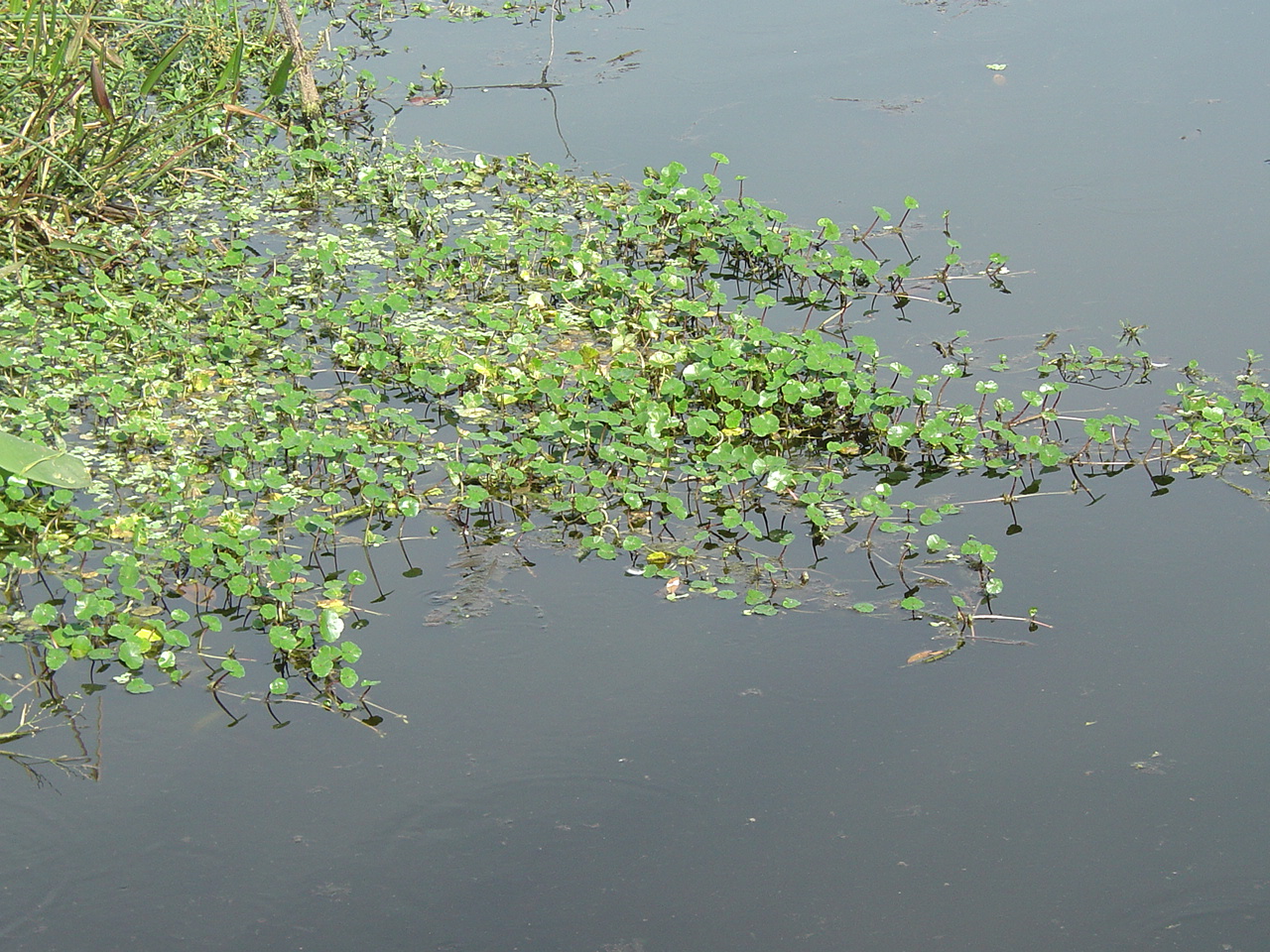
Water-Hyssop island carpet at Wakodahatchee

Water-Hyssop island carpet at Wakodahatchee

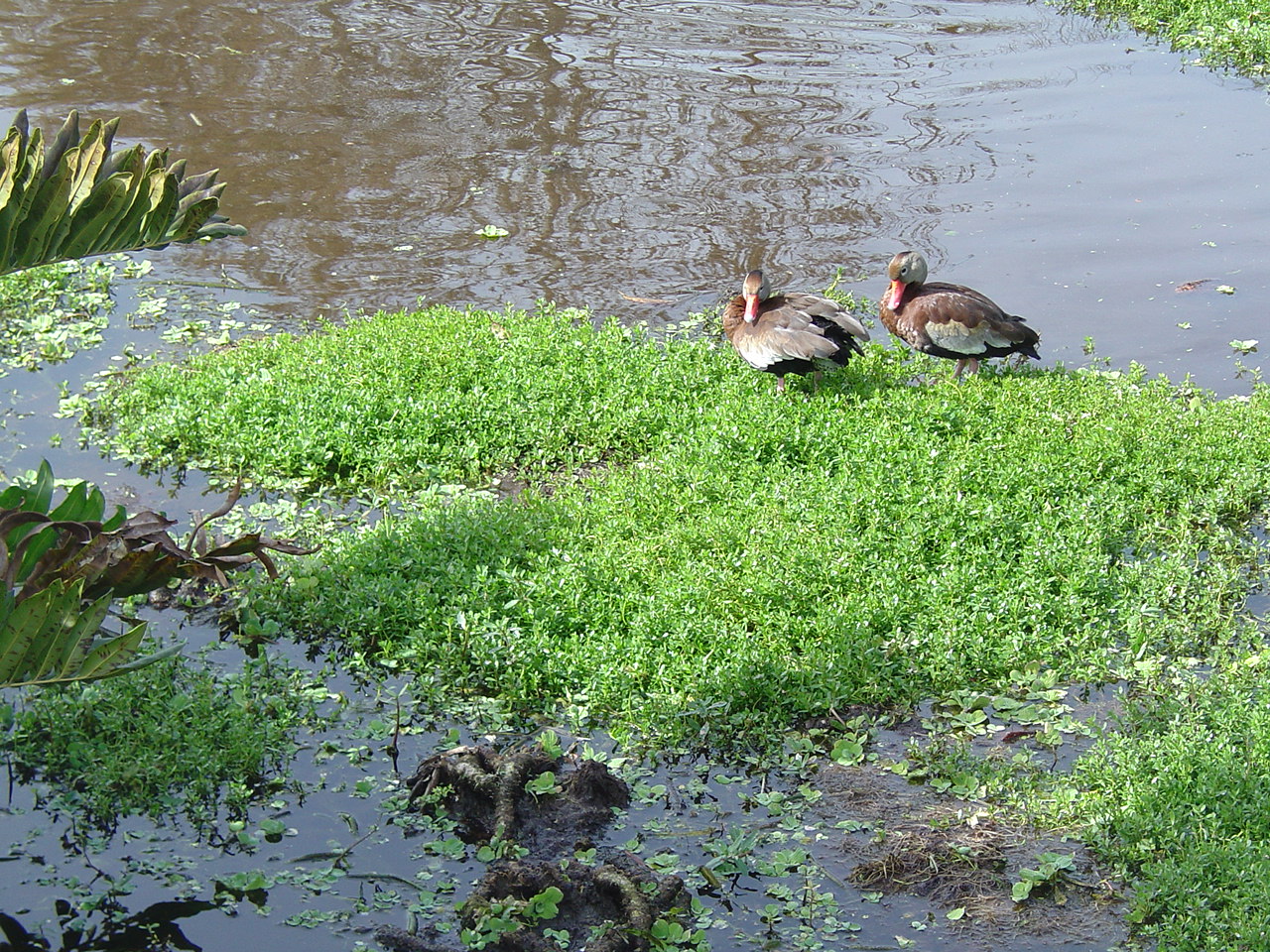
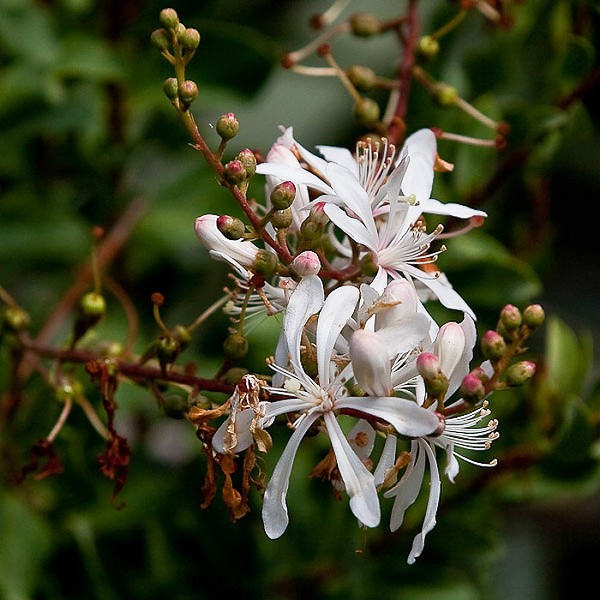
Another modest mud-dweller, Water-Hyssop, Bacopa monnieri, is again an herbal superstar.  This little member of the erstwhile Scropulariaceae has a medicinal reputation out of proportion for a nutrient-greedy mat-forming weed.  Regarded debatably as a Florida native, this small creeper is all around the warm-climate world, and has has ancient names in both hemispheres.  In both the Eastern and Western hemispheres old medicinal uses abound, too many to list, although recurrent applications are against rheumatism and to counter neurologic disorders.   To skip ahead a few centuries, the species has popped into modern medical research of interest against Alzheimer’s Disease, perhaps a contemporary echo of ancient uses against dementia.

Take two Bacopas and call me in the morning.

Take two Bacopas and call me in the morning.

 
9 Comments

Posted by on January 28, 2014 in Green Cay, Wakodahatchee Wetlands


Tags: , , ,

Fettered, Staggering, and Getting By

Staggerbush (Coastalplain Staggerbush)  Lyonia fruticosa

Fetterbush,  Lyonia lucida (In other regions the name “Fetterbush” applies to different species.)

Ericaceae

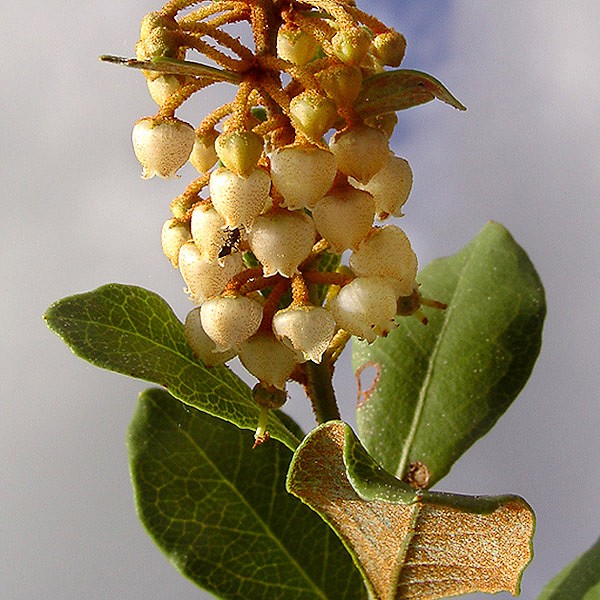
Tarflower was in bloom a little yesterday.  All of today's photos are by JB.  This flower is about an inch across.  Those of the species shown below are much smaller.

Tarflower was in bloom a little yesterday. All of today’s photos are by JB. This flower is about an inch across. Those of the species shown below are much smaller.

“Fettered” and “staggering”  describe John and George’s web site development process (www.floridagrasses.org),  but  these terms are also the botanical headlines of our trip to Halpatioke Park in Stuart, Florida, yesterday to seek grass photos for the site.  Photogenic Poaceae were scarce, but Staggerbush (Lyonia fruticosa), with its rusty fuzz, and the fuzzless Fetterbush (Lyonia lucida) were abundant and in flower.  Fetterbush flowers were the blossom du jour throughout  the land, millions of them all pretty in pink.  By dint of showiness, they earn most of today’s attention.  Their relative Tarflower (Bejaria racemosa) was sporting a few blossoms itself.

Staggerbush (Lyonia fruticosa)

Staggerbush (Lyonia fruticosa)

These are all members of the Azalea Family, the Ericaceae.  Altogether there exist 35 species of Lyonia, named for John Lyon, best known for botanical exploration in the southern Appalachians around 1800, as well as at least one Florida visit.  He was a gardener, mostly in Philadelphia, and had an “eye” for ornamental Ericaceae.  Lyons may be the only botanist to “re-discover,”  fleetingly, William Bartram’s lost Franklin Tree in Georgia.  (After that, it evaporated from the wild for keeps.)  To get back to interpreting  the names, fruticosa mans shrubby, and lucida means bright.

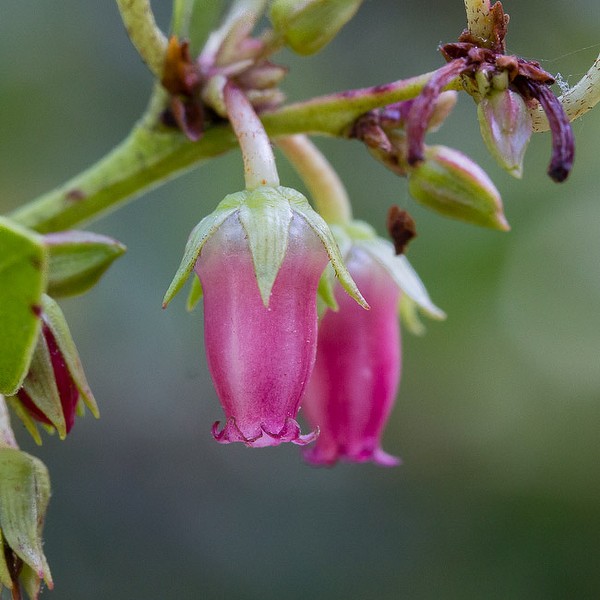
Fetterbush pinkies.  The flowers are more elongate than those of Staggerbush.

Fetterbush pinkies. The flowers are more elongate than those of Staggerbush.

Staggerbush grows only in Florida and nearby states.  Often on its leaves appear bizarre growths about the size and shape of a mutated human ear, and bright pink.  Very eye-catching.  Looks like a gall, but, no, it is a response to a fungal infection.  To see these, go for a walk, preferably along the Trail to the River. CLICK

Fetterbush grows from Virginia to Florida, and hops to Cuba where the flowers have a subtly different shape.  For the most part it prefers acid sites with seasonal flooding or bad drainage, but its tolerances are broad, extending locally into scrubby habitats.  With no data, it seems to us that Staggerbush is more tolerant of higher drier scrub, although the two often occur together on white sand.  Fetterbush is okay in some shade, or in the sun.  They are both rise from below after burning.

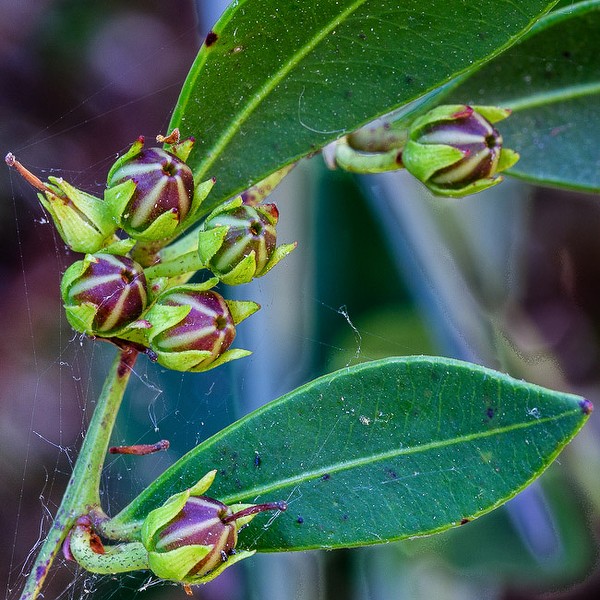
Yipes stripes!  Fetterbush unripe capsules please the eye.

Yipes stripes! Fetterbush unripe capsules please the eye.

Both of our Lyonia species have  small vase-shaped  flowers,  L. fruticosa white and popular with bees, and L. lucida usually pink and much-less conspicuously visited.  Floral visitors were absent yesterday despite the magnificent floral display.  Duh, it’s winter, but January is not the entire story.

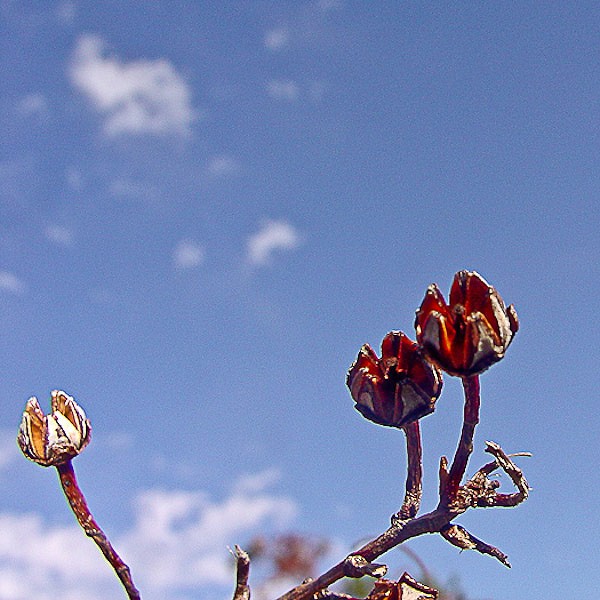
Fetterbush ripe capsules

Fetterbush ripe capsules

Botanist John Benning recently studied the floral biology of Fetterbush in Florida and experienced surprise,  although in need of further study:  Unlike other Lyonias, Fetterbush may generally not bee a honey-maker.  The main pollinators seem to be, so far, nocturnal moths.  Looking further into this seems a perfect project for student research: inexpensive and fun.  John and I would do it but we go to bed too early.  At a glance, Fetterbush flowers seem to be a bit extra-elongate, maybe excluding bees and better-fitted to a moth’s longer proboscis.  Data in Flora of North America show the Fetterbush blossoms as reaching 9 mm long as opposed to a mere 5 mm limit in Staggerbush.   Fetterbush extends its moth relationship as a larval host for caterpillars of Datana moth species.  The adult feeding of Datana moths is not well studied.

Notes:

Did John Lyon re-find Franklinia?  CLICK to ponder

Is Fetterbush a “moth” flower?  PROBE with your proboscis

Where can I get one?  SPEND here

 
15 Comments

Posted by on January 18, 2014 in Fetterbush, Staggerbush


Tags: , ,

Backyard Hedges, Congo Riverfront Landscaping, and Burnin’ Fat Pork

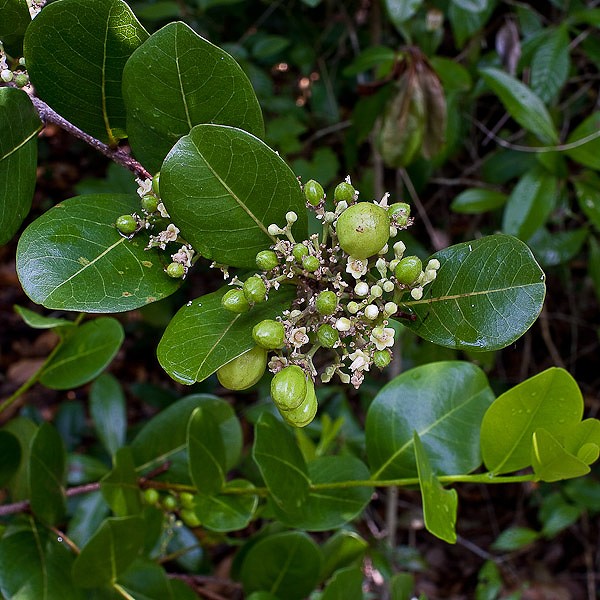
Coco Plum

Chrysobalanus icaco

Chrysobalanaceae

Yesterday the world was flooded following the dreadful “Arctic Vortex,” so John and George tended our aging and ailing website www.floridagrasses.org.  It shall rise again!  And a rainy day is a fine time to contemplate the hedge out window.

Cocoplum flowers. The shrubs have some on them now (Jan. 11). Photo by JB.

Cocoplum flowers. The shrubs have some on them now (Jan. 11). Photo by JB.

Cocoplum must be the most-used native shrub in local landscaping.  Why can this cooperative species tolerate the abuse of periodic hedge-pruning in the service of neighborhood beautification?  Perhaps because it is largely a coastal citizen adapted to the stormy setbacks and recoveries of seaside living.  The genus Chrysobalanus is a complex of close relatives interpretable debatably as three species distributed around the Caribbean and in Africa.  The transatlantic hop probably results from very floaty seeds.  Imagine that!—the hedge species around my house is commonplace along the Congo River.  Slicing and dicing the genus into different species is complicated by a messy pattern of variation with different variants turning up side-by-side.

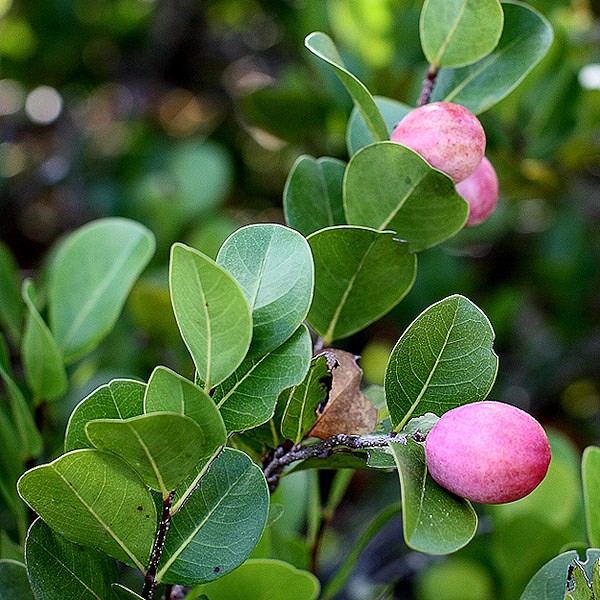
The plums (not taken this week) (JB)

The plums (not taken this week) (JB)

Landscapers fancy “red tip” Cocoplums glowing ruby red in the balmy Florida sunshine.  Red in young growth is common in the plant world, the red pigments probably sun-screening tender new growth.  Cocoplum is usually shrubbery but some can rise to 30 feet tall with a trunk a foot in diameter.  Flip the leaf over and look closely near the base.   Very closely! Cocoplum is one of numerous Florida plants to feed ants with nectaries on foliage.  Sometimes a tiny drop of sweet nectar appears on the glands to get the ants all excited.  You may need a magnifier.  The glands are smaller than tiny, and green,  just at the base on each side of the petiole attachment. 

As I mow the detested grass I nibble any plums on the Cocoplums I pass. The sweet tastinessis is subtle at best, and most of the experience is “pit.”   The fruits vary in flavor, and in coloration:  black-purple, reddish,  golden, or white.  To my limited experience, flavor does not correlate with color.   Historically in the New World and in Africa alike, the fruits are valued for eating fresh, drying, and making into preserves, even canned and marketed commercially.  (There are reports of toxins in the plants.)

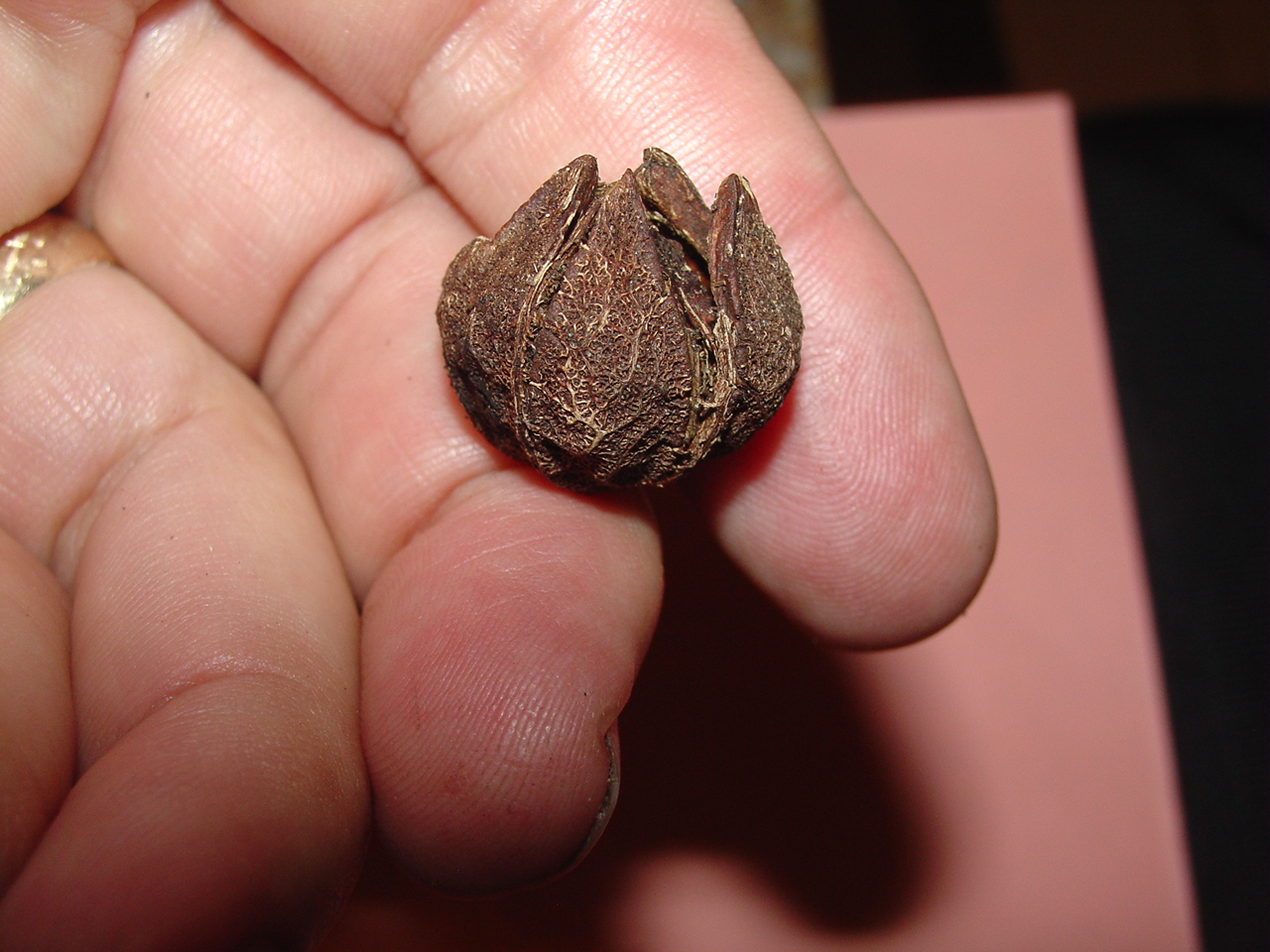
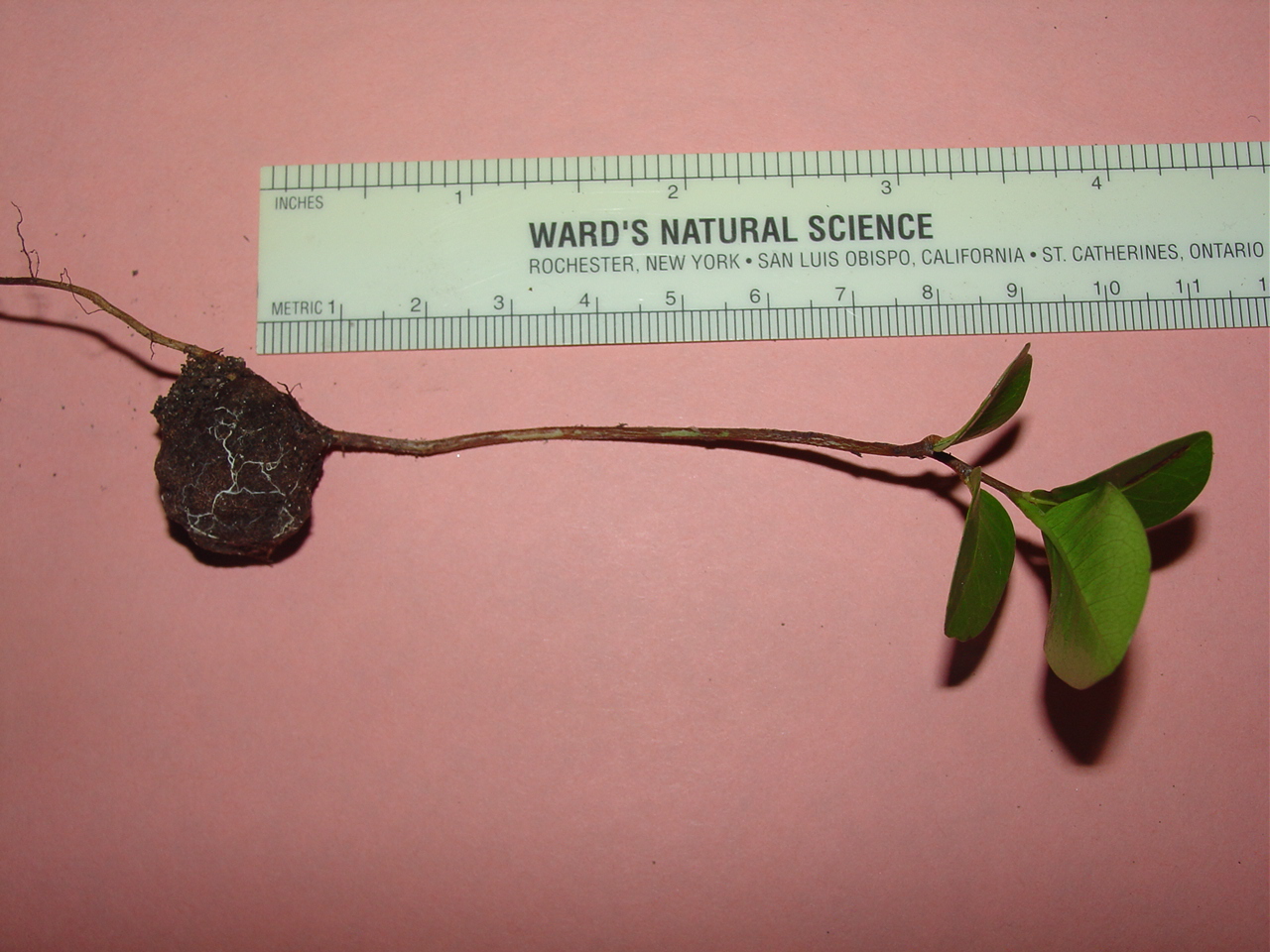
Being a drupe, the inner fruit  layer is a hard case (endocarp) around the seed.  The endocarp-seed unit is a pit or stone, as in a peach or almond.  Peaches and almonds are in the Rose Family.   Cocoplum is related to the Rose Family, where in times past today’s shrubs held membership.  That some folks report an almond essence to the seeds, perhaps cyanide, possibly reflects the relationship to the Rose Clan.  The stony case around the seed has thin elongate grooves.  The grooves are preformed opening slits to let the seedling out.  As the case opens, it looks like a Hibiscus capsule splitting to release its seeds.

The aging case around the seed is opening along preformed slits.

The aging case around the seed is opening along preformed slits.

The seed contains 20-some percent oil and burns like napalm.  Both in the Americas and in Africa the seeds skewered on sticks or strung on wires make natural candles, no doubt accounting for the name “Fat Pork” applied to Cocoplums the Caribbean.  It burns with a popping sound and black oily smoke.  Historically enterprising harvesters shipped the seeds from Africa to England as cheap candles.  Maybe now we could squeeze a little biofuel out of our hedges.

Facilitated by slits in the endocarp, the seedling can emerge.

Facilitated by slits in the endocarp, the seedling can emerge.

Speaking of names, the botanical name is interesting.  Chrysobalanus translates in polite society as “golden acorn.”   But Linnaeus was not fully fit for polite society, and the name is probably a double entendre not seemly for translation in our genteel blog.    (The endocarp does look much like an acorn.)

“Icaco” is even a more-interesting name, since it seems to contain a clue about potential pre-Columbian cultural intercourse.   “Icaco” reportedly comes from an indigenous name for the plant from Hispaniola,  “Icaco” or “Hicaco.”   Okay, good, and what really spices the sauce is the similarity of its indigenous names from other localities scattered around the Caribbean, from “Ekakes” in Curacao to names resembling “Hekako” in Mesoamerica, and in Florida, as noted by Florida botanist Dan Austin.  Names don’t move around the Caribbean unless people are island hopping, and apparently dropping by the Sunshine State.  Personally, I (not an original notion) expect archaeology to reveal more and more pan-Caribbean influences impacting ancient Florida, from agaves to papayas to the name “hekako.”

Fat pork lights up the night. Cultures on both sides of the Atlantic had the same idea.

Fat pork lights up the night. Cultures on both sides of the Atlantic had the same bright idea.

 
14 Comments

Posted by on January 11, 2014 in Coco Plum


Tags: , ,

What do Faculty Meetings, Lima Beans, and Elderberry Have in Common?

John and George venture out to botanize and photograph on Friday mornings.  Not yesterday, however.  George had much more fun.  The morning was spent in a faculty meeting with 80 colleagues hanging eagerly on every word of a passionate three-person debate of, “should the Health Class be a General Education course or merely required for graduation.”  About an hour in, cyanide pills came to mind.  Fortunately they were not dispensed with the leftover Christmas Cookies, and thoughts of cyanide are best channeled botanically to words on cyanide-bearing plants.  Ability to smite herbivorous foes with cyanide is scattered liberally across the plant world, from fern fiddleheads to Laetrile from apricot pits.

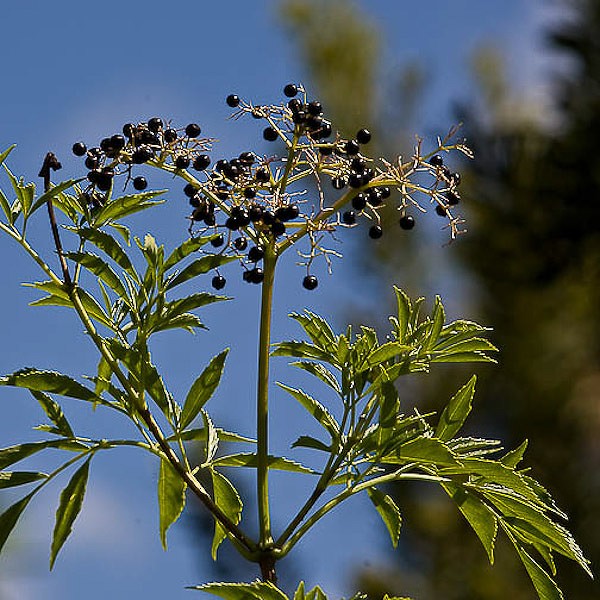
Elderberry berries.  Don't bite the seeds. (JB)

Elderberry berries. Don’t bite the seeds. (JB)

Now, pondering Health Class and cyanide together, a question comes to mind:  isn’t it unhealthy for a plant to sequester cyanide?  It’s a wicked poison to any living thing.  Cyanide stomps down basic respiratory metabolism,  so how does the plant avoid trouble?  Some plants have self-protective enzymes.  But a more interesting adaptation resembles avoiding trouble with epoxy glue…no action until key ingredients combine.    In cyanide-producing plants, the cyanide precursors are attached to sugar molecules.  They are safe until a bunny munches the leaf, allowing the precursors to encounter enzymes able to nip off the sugars and release deadly cyanide gas.  A booby trap for herbivores it is.

As with certain nations, the defense budget can become self-defeatingly costly.  That cyanide nuclear arsenal can be a burden, so cyanide-bearing species often have mixed cyanide-producing and defenseless strains.    Sweet and bitter yuca (manihot, cassava), lima beans, and almonds are culinary examples.  True also in clovers.

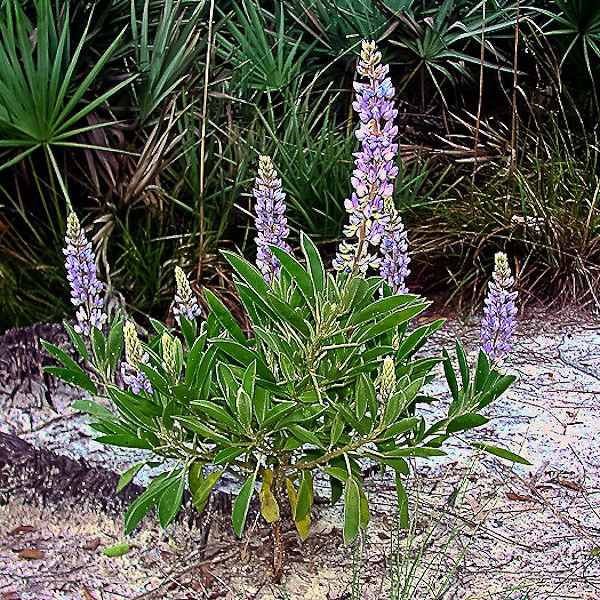
If you own a weapon, know how to shut it off!  Lupines have enzymes able to disarm cyanide (JB).

If you own a weapon, know how to shut it off! Lupines have enzymes able to disarm cyanide (JB).

Clovers and other legumes capture their own nitrogen via nitrogen-fixing bacterial companions.  Cyanide is nitrogen-intensive.  Consequently many legumes are sufficiently nitrogen-rich to invest in cyanide.  This is well studied in clovers, because they are pasture plants.  And here is a toxic twist:  frost damage allows that “epoxy glue” activation to cause clover self-poisoning.  Clovers at cooler latitudes are thus less likely to be cyanide makers than their hot-climate kin.  No doubt true also in less-studied species, including grasses.

Symbiotic relationships between grasses and nitrogen-fixing bacteria have come increasingly into focus in recent times.  Long story short:  as with legumes, grasses are turning out to be remarkably talented nitrogen-getters, and some have the cyanide to show for it.   There was a recent flurry of attention to cow-snuffing Bermuda Grass,  blamed by folks not aware of grassy cyanide on GMO-ness (the grass was not GMO).  CLICK

Bamboos can generate enough cyanide to kill a human, yet Golden Bamboo Lemurs and Pandas dine with impunity, perhaps by having enzymes able to convert cyanide to harmless amino acids?

Johnson Grass (JB)

Johnson Grass (JB)

So then, what about wild cyanide in Florida?   One local example is Johnson Grass, Sorghum halpense, a large weedy wetland grass introduced into the U.S. perhaps as fodder.  It is dangerous to livestock, especially when nitrogen-fertilized, frosted, or otherwise damaged physically.

To end on a curious note, why do plant enthusiasts so often want to eat the wild plants, as though “natural” = safe?   Toxicity can work at low insidious levels, rather than simplistic “keel over and convulse.”  It would be an eye-opener to research and list every cyanide-producing species in Florida.  And watch out for those Lima Beans!

Panda-Pictures-16

 
13 Comments

Posted by on January 4, 2014 in Uncategorized


Tags: , ,

From Slash Pine to the Grasshopper Effect – What Would Rachel Carson Say?

Slash Pine

Pinus elliottii

Pinaceae

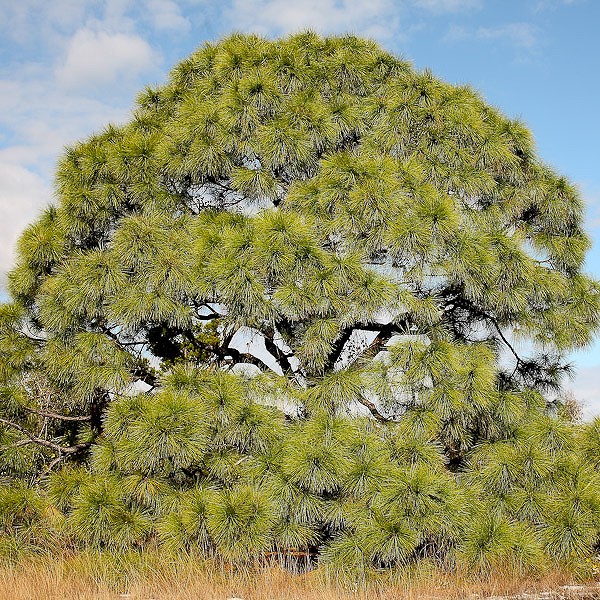
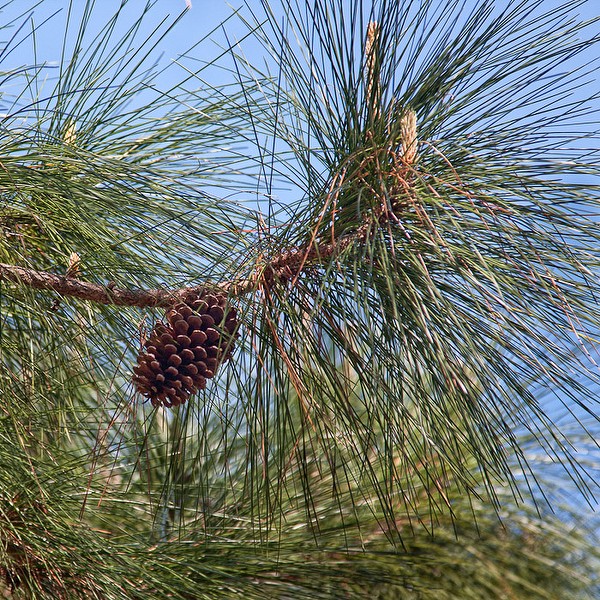
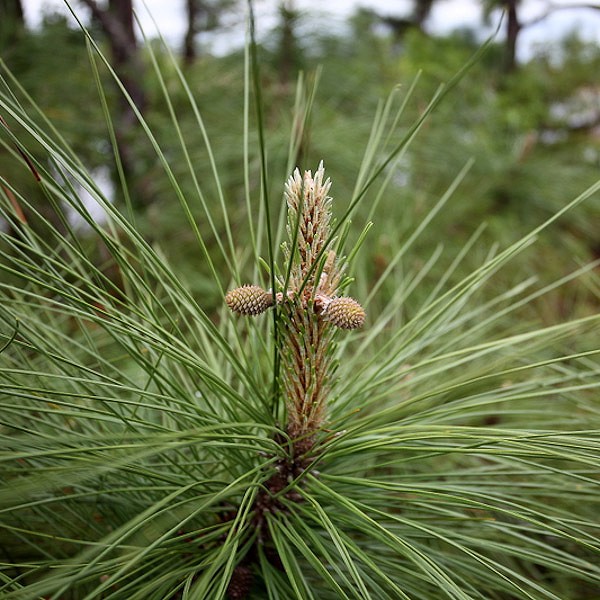
All photos are Pinus elliottii, by JB

All photos are Pinus elliottii, by JB

This post is odd  relative to the “usual” in Treasure Coast Natives, but maybe most folks interested in native plants have environmental interests, so here is a rant that begins with native plant Slash Pine and winds up in scary places.  This post is dedicated to folks who assume that what we put in in the air, water, and ground doesn’t make much difference, that “there’s no cause for concern.”

Begin our ghost story with the dominant tree of our area, Slash Pine.  Slash Pine occurs naturally across the Southeastern U.S. from South Carolina to Louisiana, and with human help to Texas as one of several U.S. pine species.  It and Sand Pine (Pinus clausa) are the only two pines native to Palm Beach County.  Slash Pine is “the” pine of the local pine flatwoods, and fares well on poor soils with impeded drainage under natural conditions.  

pe cone 

The “slash” refers to cuts into the tree to bleed resin for distillation into turpentine and rosin, an important  industry in Florida before the mid 20th Century.  Until the 1920s Florida dominated the nation in pine distillates production.  My father who grew up in Alachua County had vivid memories of turpentine times.  Turpentine production shifted over time from resin from tapped trees to extracting it from lumber byproducts, including stumps.  More on that in a moment.  Around the world several pine species yield turpentine, mainly these days in China. Slash Pine cultivation occurs in Brazil, South Africa, Zimbabwe, and Kenya.

Baby cones

Baby cones

Turpentine is a natural solvent and industrial ingredient.  Rosin is the gum left after distilling the turpentine, important to violinists and an industrial ingredient too.  One industrial product from turpentine will occupy the rest of the post:  toxaphene, an insecticide.

Turpentine is a mix of naturally occurring organic compounds, most of them called terpenoids.  Terpenoids evolved no doubt largely to deter insect herbivory.  Yet in the great race of plant-insect evolution, many insects have adapted tolerance to terpenoids, sometimes even attraction to them, and insects involve terpenoids in their own physiology.  So here is an idea:  want to make an especially potent and cheap insecticide?  Use chlorine gas to chlorinate (stick chlorines onto) constituents of turpentine.  Now that goes “naturally” into insects, and has some kick!

Toxaphene is chemically related to DDT with pretty much the same main characteristics and hazards.  Rachel Carson stirred up resistance to DDT in 1962.  Toxaphene slipped in under the radar.  During the 60s and into the 70s Toxaphene dethroned DDT, becoming the most-used pesticide in the U.S., and remained in use in the U.S. until near-banishment the early 80s.  Usage beyond our borders continued.  We knew its dangers for 20 years yet showered Toxaphene on ourselves profusely, 34 million pounds per year in the early 70s.

What dangers?  Try a little Google research.  Suffice it to say that Toxaphene is a proven mammalian carcinogen, and has induced visible chromosomal damage in humans.  It is persistent in the environment; one study showed 45% of original soil contamination still there 20 years later.  That’s probably the main basis of the famous Lake Apopka bird kills in the late 80s and early 90s, and the “teenie weenies” on the alligators there.  Not mere idle speculation.  Toxaphene interference with the relevant gator developmental gene is known precisely.  Concerns about loitering Toxaphene complicated plans for a reservoir here in Palm Beach County.  And speaking of PBC, here is a locally native web site you’ll enjoy:  CLICK to get sick

And after clicking, check out the toxaphenous entries under Chelmal Spray and Chem-Spray Agrisystems.  You may enjoy perusing other entries for amputated body parts and other juicy contributions to the groundwater we drink.  Is Toxaphene in the groundwater we drink?  It has turned up in a couple of Florida water systems, especially at Lake City.

And it gets around.  Toxaphene participates in the “Grasshopper Effect,” in which volatile toxins jump northward.  Toxaphene contaminates Arctic mammals and thus probably Arctic people.  The Canadian government had to ban fishing in a lake in the Yukon due to contamination by you-know-what from afar. (See comment below.)

Who made all that stuff?  A couple U.S. companies, most interestingly the Hercules Powder Company, which had a Toxaphene plant in Brunswick, Georgia.  That foul factory did not get cleaned up until recently.

A Hercules-Florida connection existed around Zephyr Hills, ironically, as in Zephyr Hills bottled water.  Hercules had a camp there dedicated to collecting pine stumps for shipment to Brunswick to turn into pine products, especially Toxaphene you can bet. CLICK

pemale

 
2 Comments

Posted by on December 29, 2013 in Slash Pine


Tags: , , ,