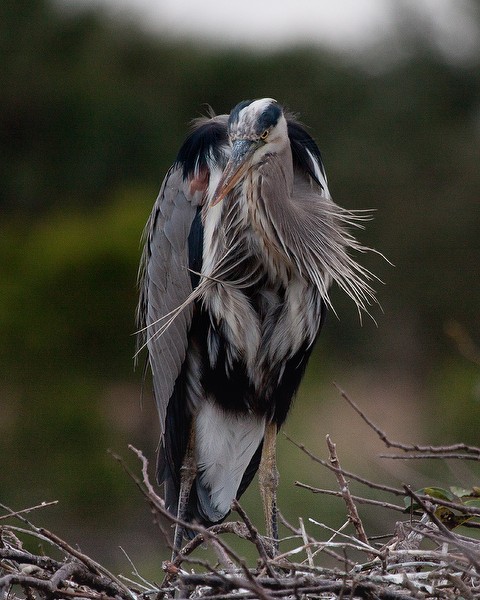
Great Blue Heron (JB)
Green Kay Nature Center CLICK
Boynton Beach
Has restrooms, gift shop, visitor center, ample parking
100 acres with 1.5-mile boardwalk
Wakodahatchee Wetlands CLICK
Delray Beach
Has coarse restrooms but no visitor center, parking jammed on busy days
50 acres with ¾-mile boardwalk
“Palm Beach County Water Utilities Department’s Southern Region Water Reclamation Facility pumps approximately two million gallons of highly treated water into the Wakodahatchee Wetlands. By acting as a natural filter for the nutrients that remain, the wetlands work to further cleanse the water.” (From the Wakodahatchee web site)
John was away having fun Friday, so today’s topic is more southern than usual. My wife Donna and I skipped around the Wakodahatchee Wetlands boardwalk in Delray Beach, then a second loop to prolong the joy. Near each other geographically, Wakodahatchee and Green Cay are wastewater reclamation sites with benefits. Sewage treatment generates leftover water after subtracting solids and organic matter, and pathogen suppression. The most salient problem with the the effluent is its heavy nutrient load, a special curse here in nutrient-overloaded Florida and its beleaguered aquifers.
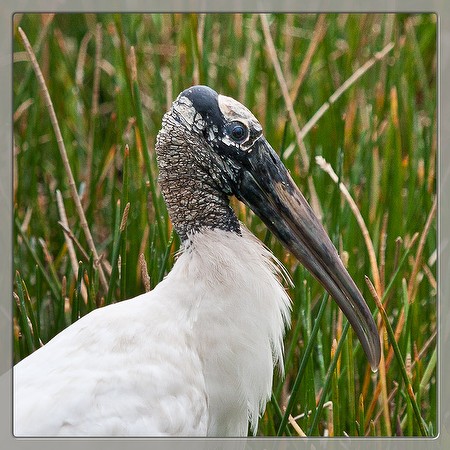
Wood Stork (by JB)
There are varied ways to dispose of the juice, and they all stink. One approach is to spread it over an area inhabited by marshy plants to extract the unwanted nutrients. It is not my intent to evaluate the environmental pros and cons of such treatment as opposed to alternatives. You have to do something with stinkjuice, so we might as well enjoy it. Wakodahatchee Wetlands and Green Cay service millions of reclaimed gallons daily over a collective 150 acres. (The water smells only a teensie weensie. Not a problem to most noses.)
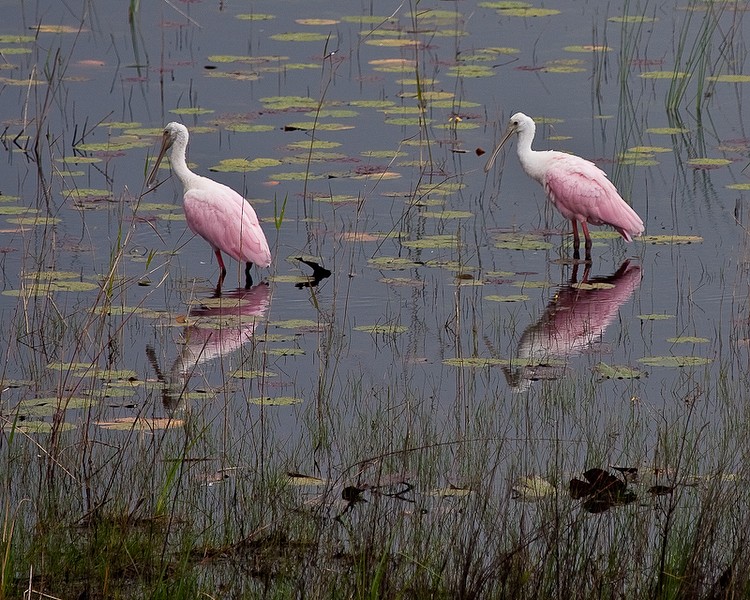
Roseate Spoonbills (JB)
Now to the good stuff. Both wetlands are famous for is birds and critters: anhingas, bobcats, coots, cormorants, ducks, ducks and more ducks, egrets, gators, glossy ibis, grebes, herons of all stripes, marsh hares, marsh wrens, moorhens, people in funny hats, purple galinules, spoonbills, warblers, wood storks, and more. What a joy to see so many people drawn to the birds and bees, and as a byproduct of sewage no less.
Now what about the botany? The fauna upstages the flora, but still the plants give a glimpse of life in a super-nutrient-enriched soup. Is it fair to state that native Florida marsh plants tend to be nutrient-limited under pristine natural circumstances? The designers of Green Cay say they modeled the “ecosystem” on the Everglades. But what could be farther apart environmentally: at one extreme, the Everglades where we worry about 10 parts per billion phosphorus, and at the other pole, sewage broth with a smorgasboard of nutrients. Reclaimed water in Naples has phosphorus at 370 parts per billion. Or to put it differently, the Everglades model leaves me behind as soon as I don’t see Sawgrass!
It is not only Sawgrass that is missing or scarce. We think of Cattails invading the Everglades thanks to nutrient pollution, yet cattails are not an important presence at today’s venues. The dominant plants are: Alligator Flag (Thalia geniculata), Arrowhead (Sagittaria lancifolia), Bulrushes (Schoenoplectus species), Knotted Spikerush (Eleocharis interstincta), Pickerelweed (Pontederia cordata), Pondapples (Annona glabra) with cormorant nests and guano, Spadderdock (Nuphar luteum) with floating tubers as big as alligators, and Water Lettuce (Pistia stratiotes). There are others, of course, but the lush vista is species-poor missing the fine-tuned diversity of grasses, sedges, rushes, xyris, wetland shrubs, and wildflowers typically encountered in natural wetland ecosystems.
The created wetlands are a study of plant life in unlimited water, unlimited sunshine, and an overdose of nutrients. So then, with all that abundance, what does limit plant growth there in marsh heaven? Perhaps space to grow. Wakodahatchee and Green Cay are wall-to-wall with a comparatively small number of planted species and uninvited others in massive often monospecific stands. Acre-sized drifts of single species.
In a nutshell, to a visitor with a camera interested in birds the sites are a delight, and that is genuinely a wonderful thing. I am enthusiastically one of the delighted, funny hat an all. I go there frequently and love it for all the favorable features, even if botanically the “ecosystem” is more of heavily fertilized garden than a Florida wetland. Hey, I like gardens too.
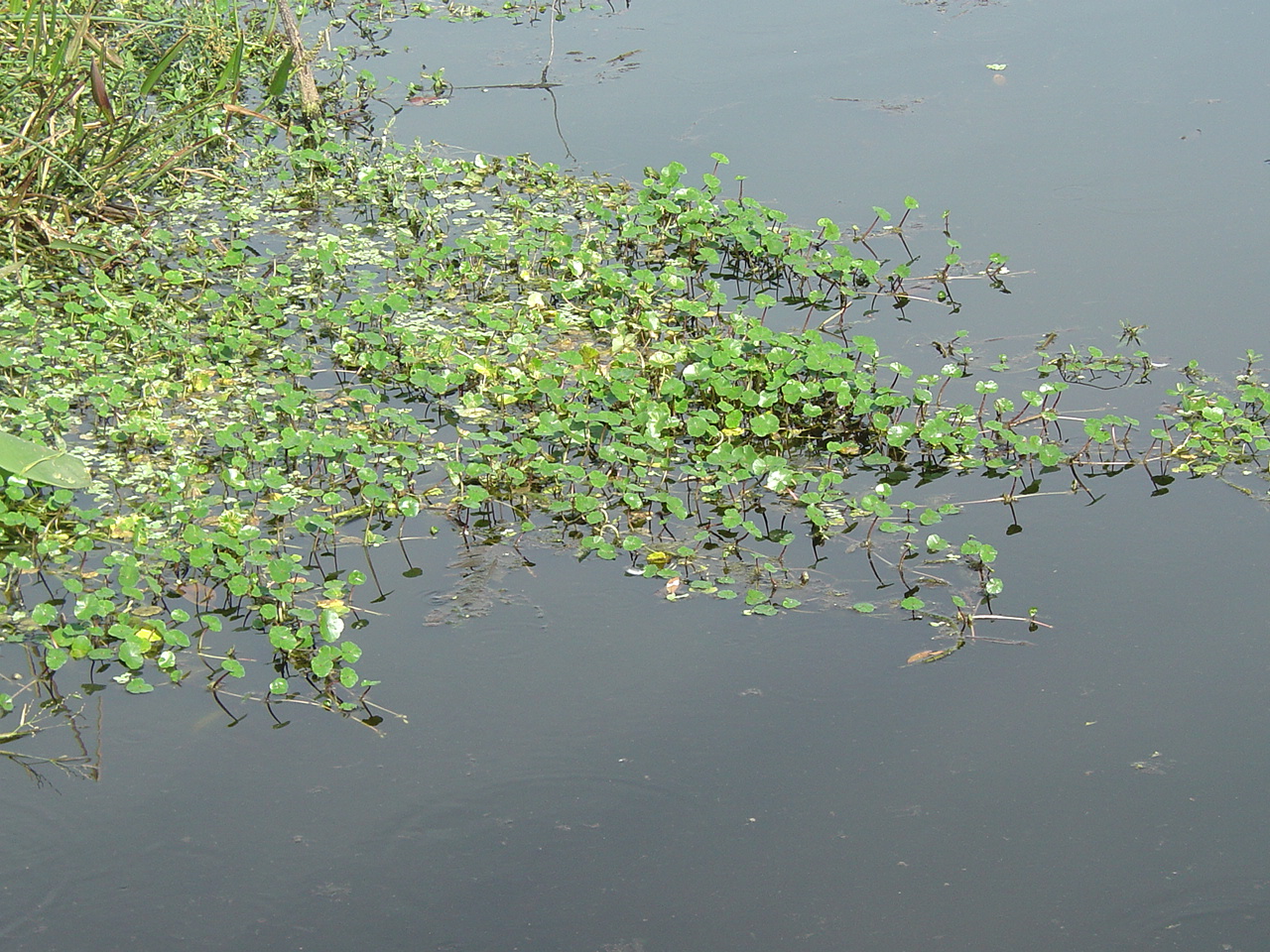
Hydrocotyle spreading at Wakodahatchee
Some of the spontaneous species are abundant and eye-catching. In the Carrot Family, Water-Pennyworts, Hydrocotyle umbellata (I think it is umbellata from above on the boardwalk), form sprawling rhizomatous mats. Hydrocotyles are the dreaded Dollarweeds in suburban lawns. You’d never see the relationship to carrots without a close look at the flowers, or maybe a sniff of bruised leaves. University of Michigan ethnobotancial files record Seminoles applying the herbs against “turtle sickness,” i.e. “tembling, short breath, and cough.” I think I might suffer T.S. just before public presentations, but I’ll just imagine the crowd in their skivvies, because, as with many members of the Carrott Family, ingesting the plant is a toxic gamble. My neurotic anxieties aside, Hydrocotyles are prominent in herbology. CLICK
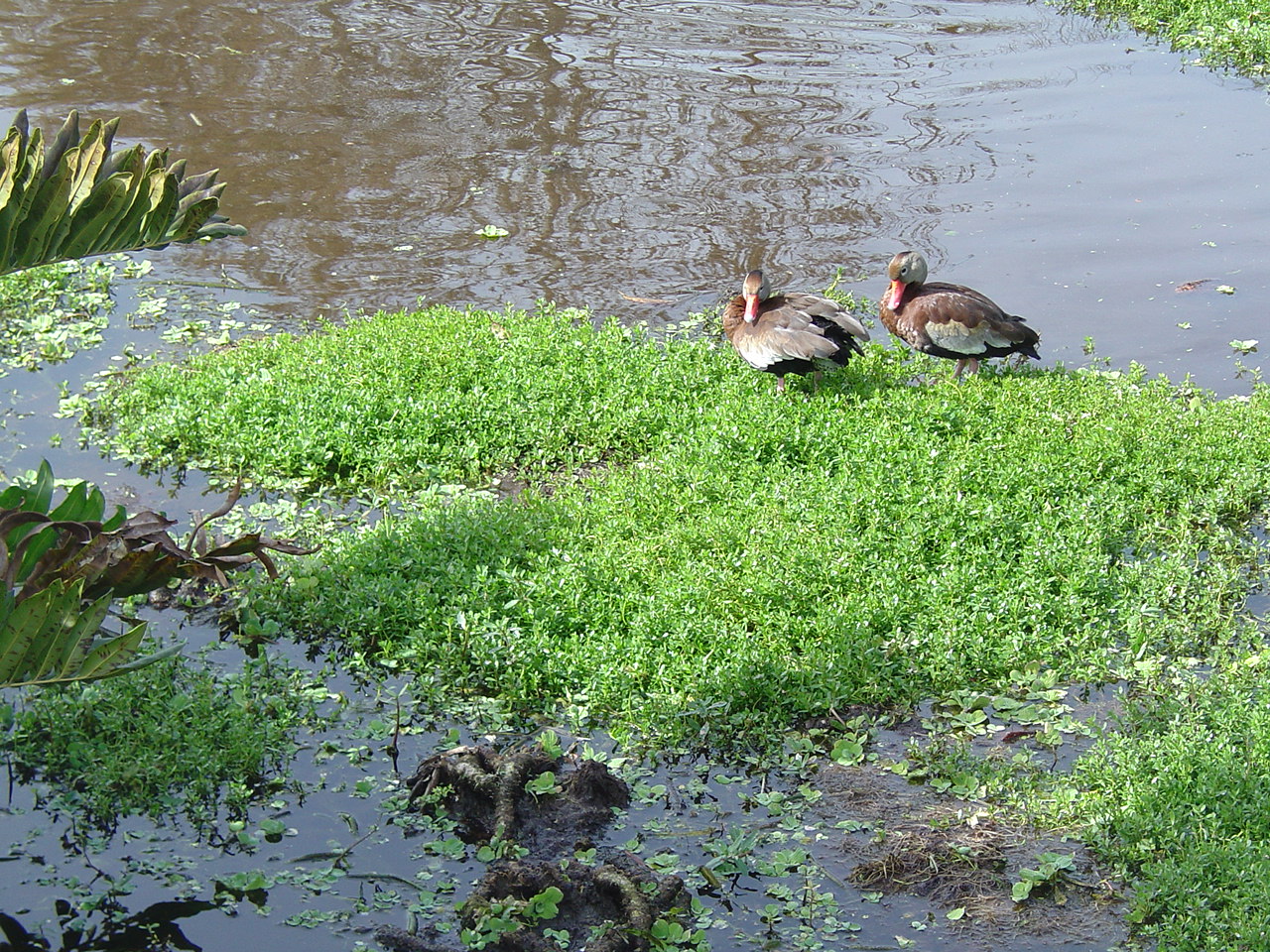
Water-Hyssop island carpet at Wakodahatchee
Another modest mud-dweller, Water-Hyssop, Bacopa monnieri, is again an herbal superstar. This little member of the erstwhile Scropulariaceae has a medicinal reputation out of proportion for a nutrient-greedy mat-forming weed. Regarded debatably as a Florida native, this small creeper is all around the warm-climate world, and has has ancient names in both hemispheres. In both the Eastern and Western hemispheres old medicinal uses abound, too many to list, although recurrent applications are against rheumatism and to counter neurologic disorders. To skip ahead a few centuries, the species has popped into modern medical research of interest against Alzheimer’s Disease, perhaps a contemporary echo of ancient uses against dementia.
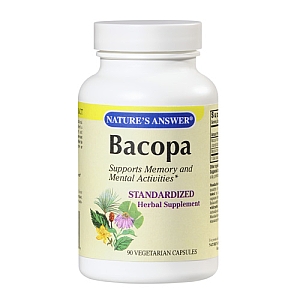
Take two Bacopas and call me in the morning.
 John Bradford
 George Rogers
 George Rogers
 Dee Staley
 Treasure Coast Natives