Brookweed
Samolus verlandi (Or Samolus verlandi subsp. parviflorus, or S. parviflorus)
Traditionally Primulaceae (Or Samolaceae)
Today John and George visited the “Tarzan of the Loxahatchee’s” historic camp in Jonathan Dickinson State Park CLICK Trapper Nelson’s ghost still haunts the vicinity as the abundant offspring of his exotic fruit trees, bamboos, and other apparent introductions to illustrate the consequences of bringing non-native species into a native habitat.
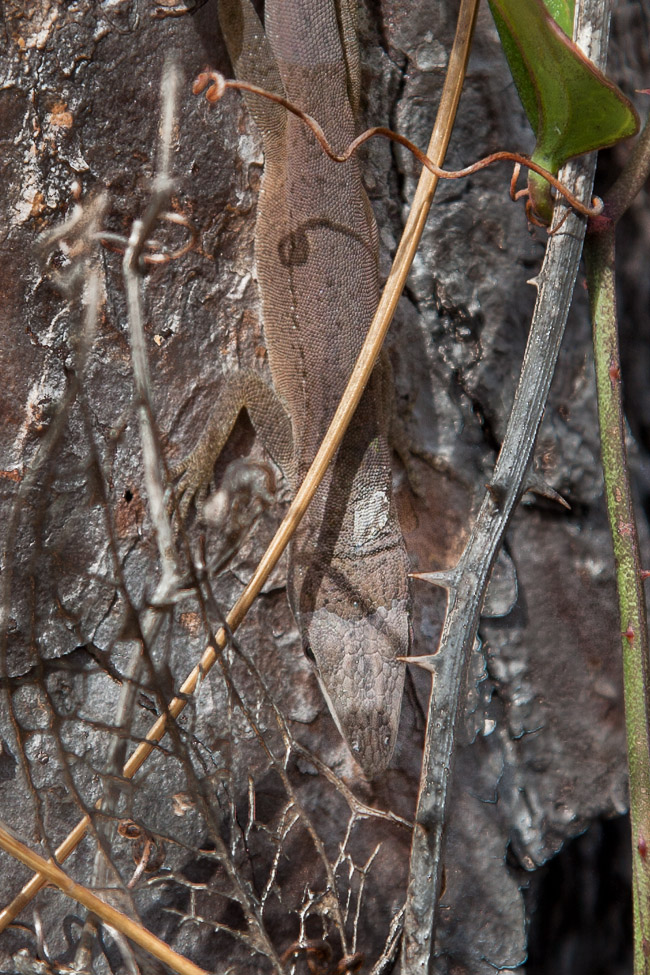
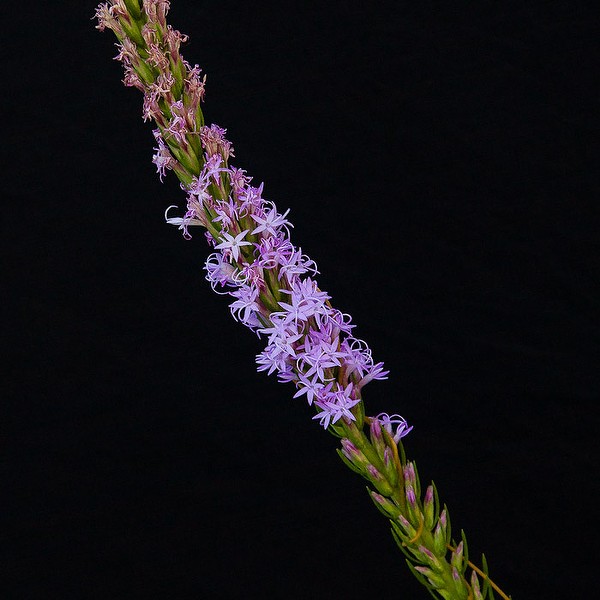
Of the flowering natives along the swampy river shore the stars of the show were Lizards’s Tails CLICK, and speaking of lizards, we almost missed this camouflaged peek-a-boo:
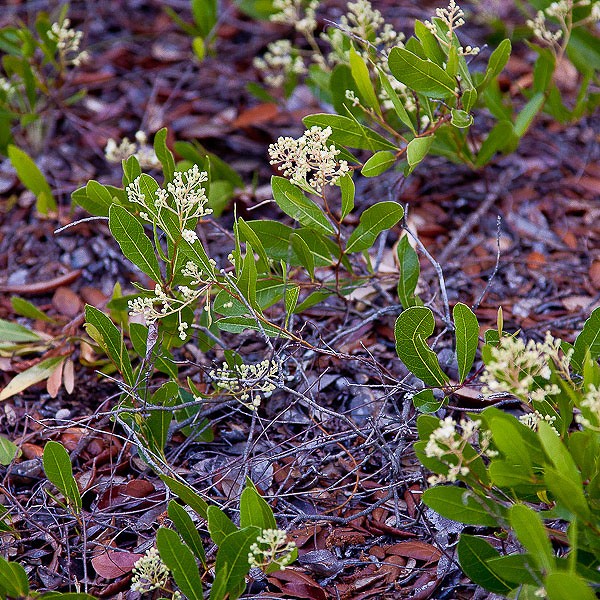
The prize for best supporting flower goes to pretty little Brookweed.
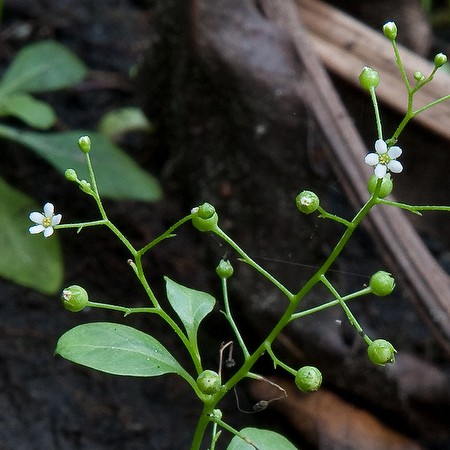
Samolus verlandi (Both photos today by John Bradford)
Brookweed is not an everyday flower. The species is not rare, but you have to go to a squishy habitat at the right time. The plant is a charmer, sort of delicate, sort of shy, with tiny white bright flowers in the dancing jungle sun and shadows. (There is a second species in Florida, S.ebracteatus.)
When I want to know more about a plant, the first place I often look is the Flora of North America. CLICK And when I saw there the suggestion that the plant was probably known to the Druids, that caught my eye.
I mean, how many plants do we know from the Druids!? The connection between Druids and Samolus comes from an account by Pliny the Elder (23 – 79 AD), well known to botanists as author of the medically biased “Field Guide to Everything” from the Roman Empire. Pliny recorded the Druids to pick their Brookweed without looking at it, while fasting, with their left hand, to serve as a veterinary medicine. So John shot a picture of our Samolus left-handed and blindfolded before lunch.
(By the way, Stonehenge and Druids tend to be mentioned together. If not for Stonehenge, I’d not know a Druid if he walked up and said “good day for human sacrifice.” But truth told, I do not know enough to vouch for the veracity of the Druid-Stonehenge connection.)
You may have noticed two competing classifications for today’s little posie, one classification is as a separate North American species (S. parviflorus) distributed from nippy northern Canada to toasty Florida and southward to Bolivia. That is quite an impressive distribution. (And it is in Japan too?)
The competing classification extends the range even more broadly if the North American “S. parviflorus” is merged into a broadly interpreted S. verlandi, a species with a huge multicontinental distribution: the Americas, Europe, and beyond. Just to broaden the blog, let’s go arbitrarily with the big inclusive interpretation of S. verlandi embracing our little wildflower at Trapper Nelson’s. That is more fun, since must of what is written about Samolus is based on S. verlandi.
Those little Samolus verlandi flowers are an example of “plan B” pollination. Let me explain. You might say throughout the plant world generally pollination from a separate individual is best. That is why we have the birds and the bees. So we’ll call pollen brought from a different plant “plan A.”
But if outside pollination fails there is a backup mechanism—“plan B” is self-pollination, that is, a single flower pollinates itself in lonely desperation. In this contingency, the pollen-bearing stamens tilt inward until they brush pollen onto the stigma of the same blossom. In the link below the photographer caught a Samolus with one flower where the stamens are upright (righthand flower), and another flower (on the left) as the stamens begin to curve inward toward the stigma CLICK
Samolus verlandi seems to like salt. Other observers comment on the affinity of the species for habitats lightly salty—not too much, not too little. I have a hunch that the Loxahatchee River at Trapper Nelsons is lightly salty with variations from the weather, tide, and season.
Samolus verlandi has a minor market in commercial horticulture as a submerged aquarium plant and as an indoor container plant.
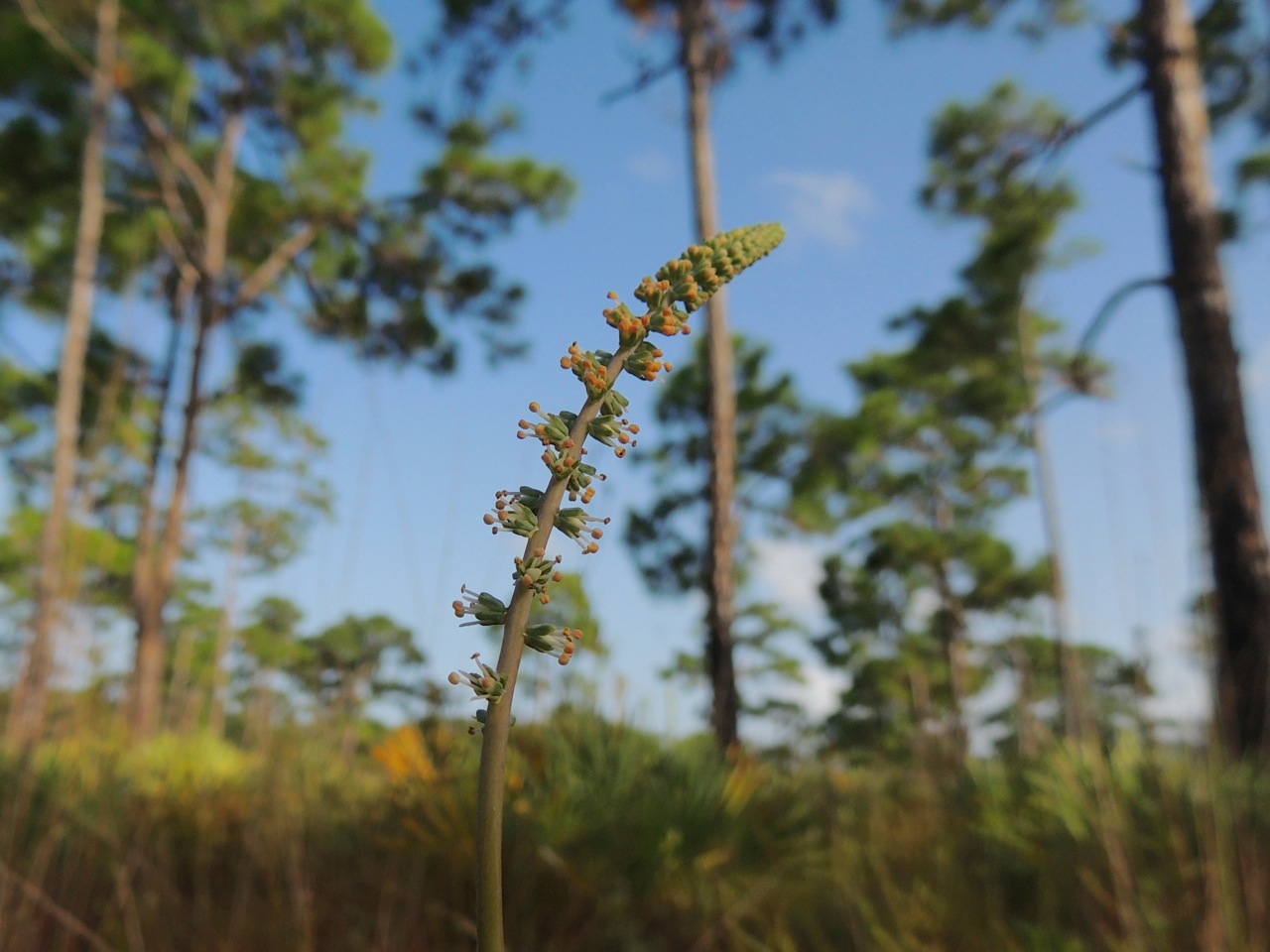
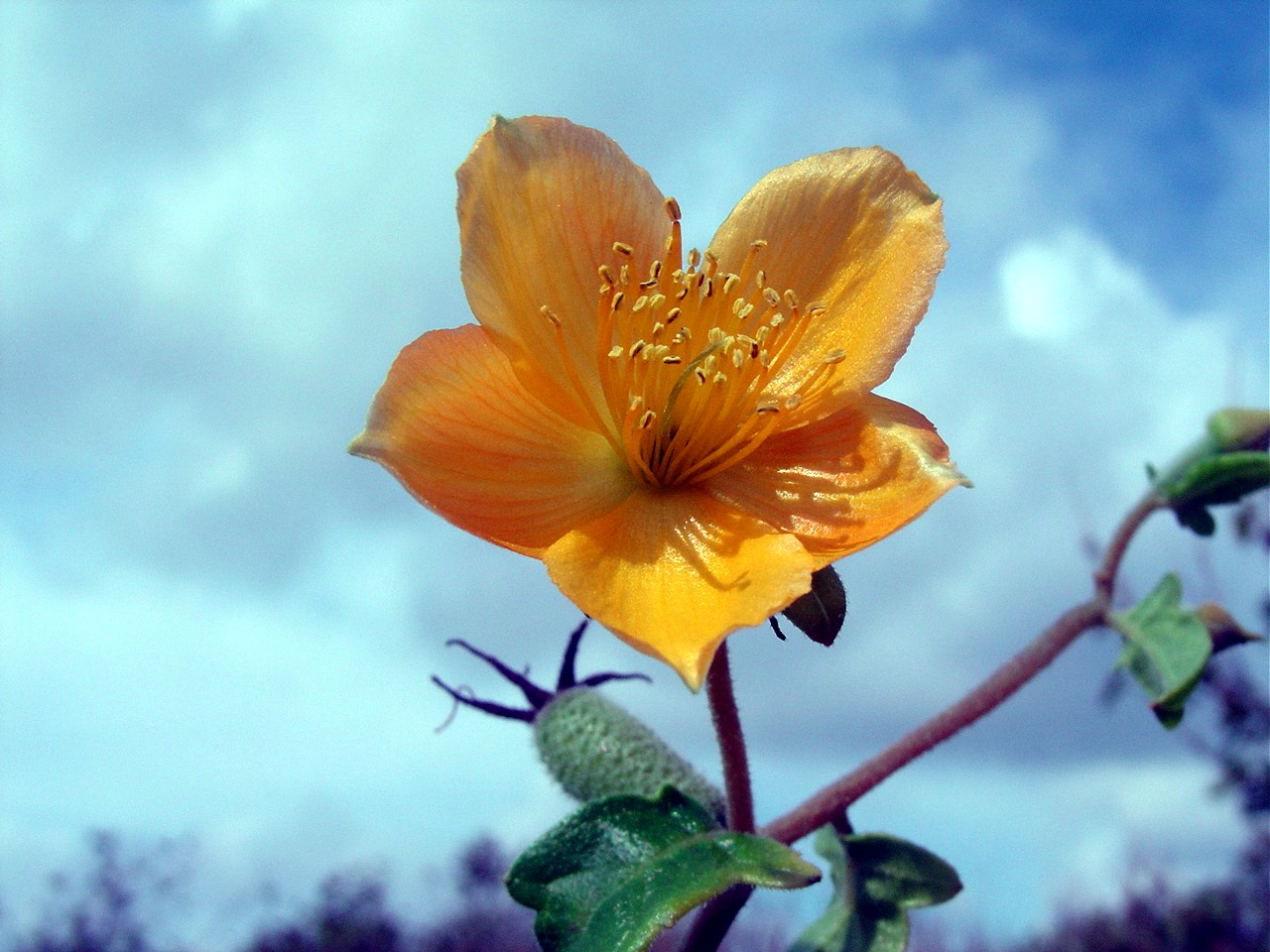
 John Bradford
 George Rogers
 George Rogers
 Dee Staley
 Treasure Coast Natives
