Palafoxia feayi
Asteraceae
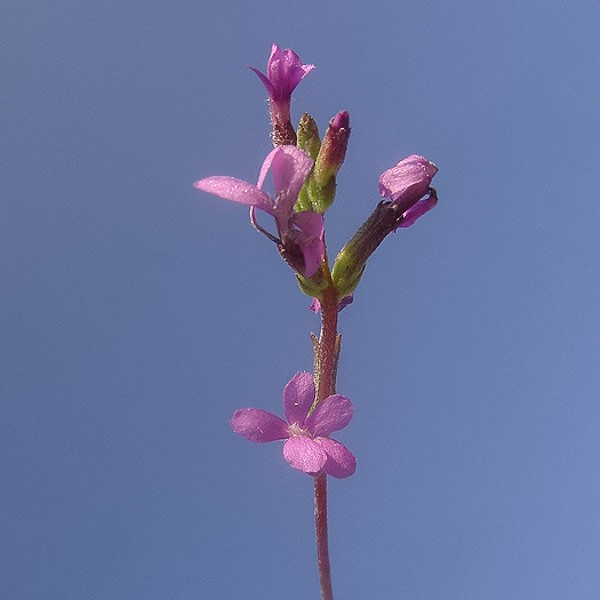
Today John and George hotfooted it through the oven-baked Saharan scrub in Seabranch State Park near Pt. Salerno, Florida. It was so torrid my shoes melted off my feet. Really. Ask John. (Well, one fell apart.) Recently a paved bicycle Autobahn made its way through the park. The concrete ribbon is wide, flat, and dang sunny, and it offers passage through dozens of scrubbish species growing in isolated clumps recovering along the disturbed trail margins. A unique “garden” view of Prairie-Clovers, Florida-Rosemarys, Golden Asters, and assorted grasses and sedges alone and uncrowded. One of the finest species to behold is Feay’s Palafox, a member of the Aster Family.
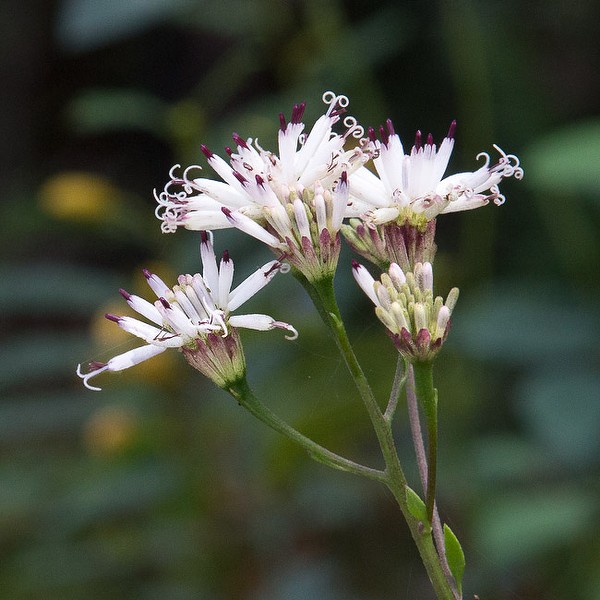
Feay’s Palafox. All photos today by John Bradford.
William Feay (1804? – 1879) was a Savannah, Georgia, physician turned teacher with botanical instincts in the mid 19th Century. During the Civil War Savannah Georgia was no place for a nice botanist. He scooted to Florida, where he collected the original Feay’s Palafox specimen, conceivably abetted by another botanical M.D., Alvin Chapman, of Chapman’s Oak. Just think, Feay’s Palafox is a souvenir of the War Between the States.
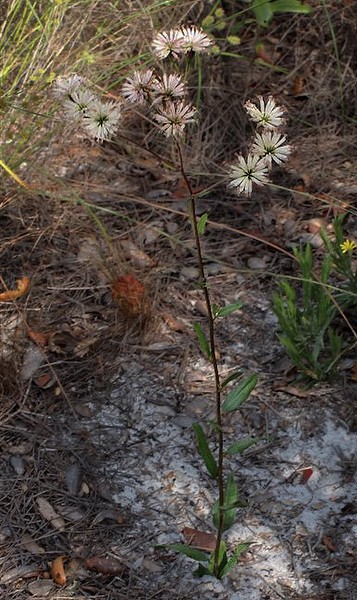
Feay’s Palafox
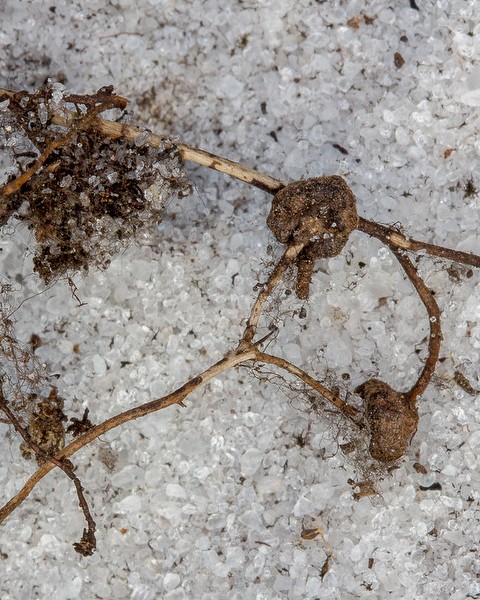
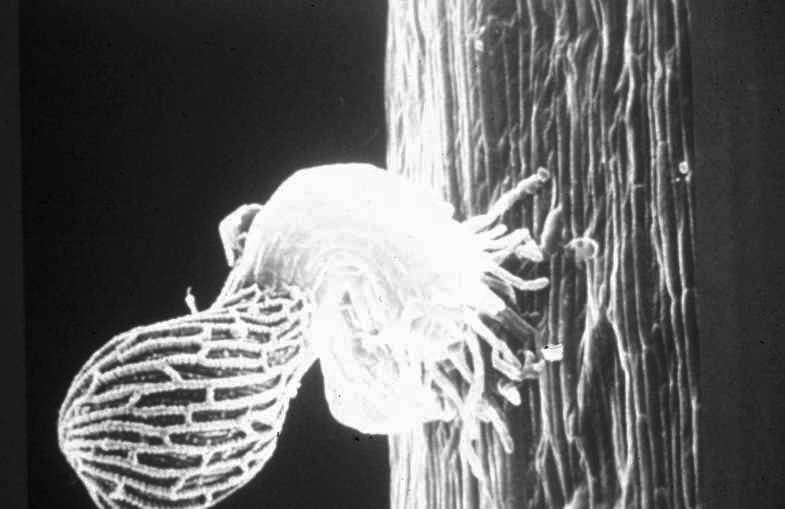
You don’t spend much time in scrub without seeing Feay’s Palafox, a slightly woody subshrub standing 2-8 or more feet tall with its showy white or pink flower heads. Unlike most members of its family, the heads consist entirely of “disc” flowers, that is, the sort of flowers associated with the black center of a Sunflower head. Our species hangs out in scrub or similar habitats, and seems to be fire-adapted. Recent study show its strongest root-fungal symbioses to thrive after burning followed by decline during non-burned years, although the decline could be due to the recovery of competition.
What’s intriguing about Palafoxia is its circle of relatives. We have three species in Florida: 1. Palafoxia texana, a western species with a tiny weird toehold in the Florida Panhandle. 2. Palafoxia integrifolia, almost restricted to Florida. And Palafoxia feayi, which is limited to Florida.
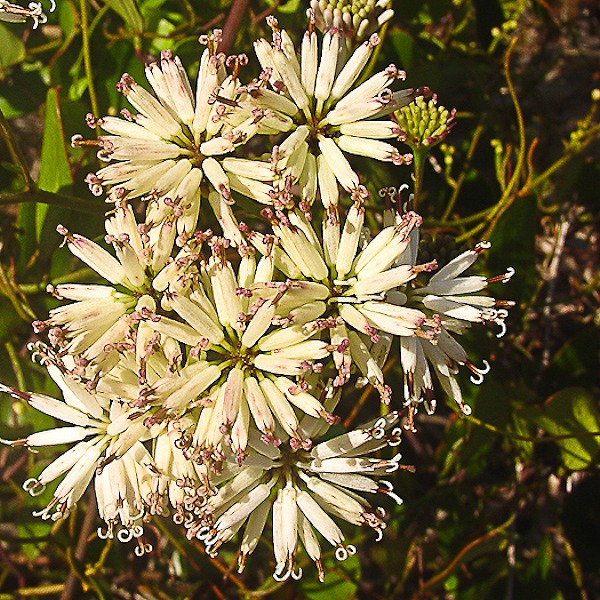
Feay’s Palafox
The rest of the genus, about 9 additional species, are all more or less desert plants in the southwestern U.S. and Mexico. This is reminiscent of Agaves, where we have two dubiously native species in Florida related to a big group in the Southwest, Mexico, and Caribbean.
That our local Palafoxia species live in Florida’s sandy scrub “desert” is no surprise then, given that they are far-flung offshoots of a posse at home in Death Valley and the Sonoran Desert. Palafoxia supports a vision of Florida scrub as a now-isolated remnant of a once-contiguous Tex-Mex arid land stretching around the Gulf, eventually divvied up by changing conditions. Similar Florida scrub-loving derelicts with Mexican roots include Scrub Jays and Gopher Tortoises.
If the Florida species of Palafoxia are spillovers from points west, do they represent one spill, or three separate splashes? The latter: Our three species are not closely related to each other. Palafoxia texana stands aloof. It does not even have the same number of chromosomes as our other two Florida species. Likewise alone is Palafoxia integrifolia; as botanists who studied it said, it is “unquestionably the oddball of the genus Palafoxia,” so odd, it used to be regarded as a separate genus.
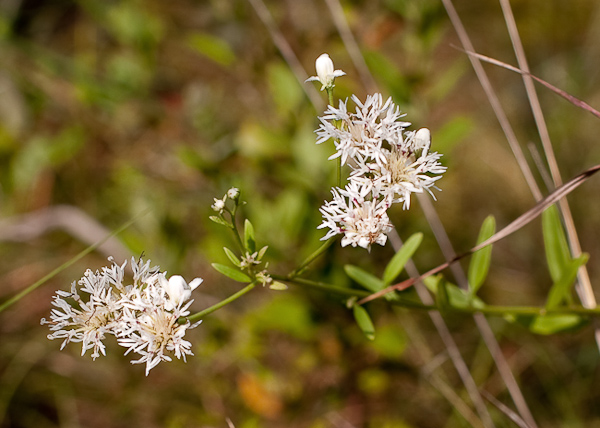
Palafoxia integrifolia
Palafoxia feayi is allegedly most closely related to two species of the extreme Southwestern U.S., Mexico, and the Rio Grande Region.
How such an odd mixed up geographic pattern could come about boggles the brain. One thing is certain, it dates back a long time, roughly (according to the botanists cited below) some 60 million years, before the continent-spanning genus fragmented into isolated lineages from Baja California to Seabranch State Park.
This all goes to reinforce nobody’s secret: Florida scrub is vastly older than other Florida habitats, with a history all its own. When you walk in a Florida scrub, enjoy a little hint of the Tertiary Period when Mexico extended to Palm Beach, when palm trees grew in Ohio, and when Gopher Tortoises raced Jackrabbits here from Chihuahua. (Apparently the tortoise won.)
——————-
Notes:
Most of today’s data and taxonomic assessments on Palafox come from B. L. Turner and M. I. Morris, Systematics of Palafoxia (Asteraceae: Helenieae). Rhodora 78: 567-628. 1976.
Our two local species are easy to separate. Palafoxia feayi is semi-woody, well over a yard tall, and has the flower heads surrounded by linear green or purplish bracts. Palafoxia integrifolia is shorter than a yard tall; its bracts are more or less white, and narrowly elliptic.




 John Bradford
 George Rogers
 George Rogers
 Dee Staley
 Treasure Coast Natives