Yellow Butterwort
Pinguicula lutea CLICK
Lentibulariaceae
John and George today visited the best botany site in town: Jonathan Dickinson State Park near Hobe Sound, Florida. All the showy flowers were yellow: Golden-Asters, Silk-Grass, Yellow Milkworts, and buttery Butterworts. We’ll zoom in on the last-mentioned.
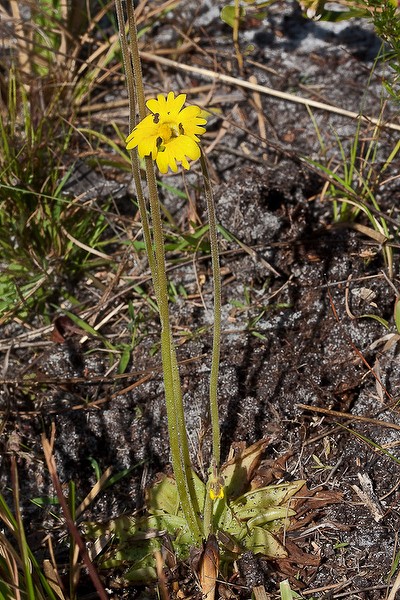
Butterwort. All plant photos today by John Bradford.
Pinguicula lutea bags bugs across the Southeastern U.S. in sunny moist habitats. Today it was in the intimate company of two additional critter-eatin’ carnivores, Bladderworts and Sundews. Bladderwort slurps tiny prey into a trap. Sundew catches lunch using sticky hairs. Butterworts are botanical flypaper, the upper surfaces of the leaves are sticky, and the edges of the leaves curl in to engulf the fresh meat. After the meal, the leaves spread out. Look closely, the tops of the leaves have hairs to secrete the stickum, and little droplets of digestive enzymes. I’ve read of pollen being a protein source for Butterworts. Makes sense, as it too would catch on the flypaper. How much of a contribution, if anything meaningful, comes from pollen is open to research.
The name Pinguicula comes from Latin for fatty, as in butter, so I guess the name “Butterwort” refers to the leaf surfaces more than to the bright yellow blossoms.
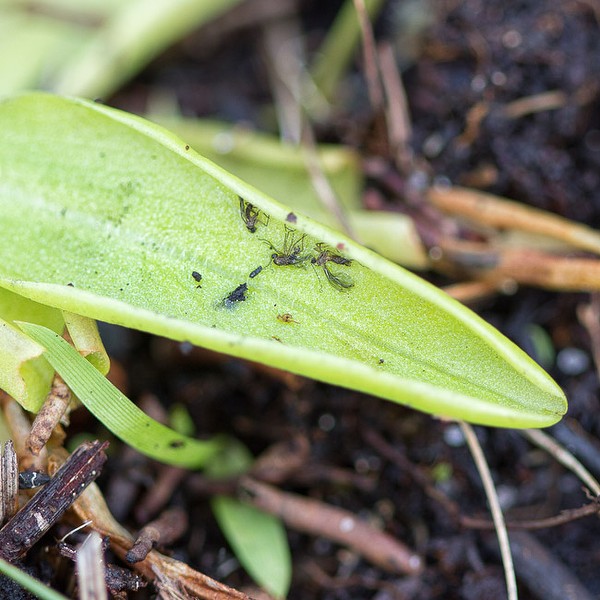
Lunch, caught in the butter. Butterwort is botanical flypaper.
Finding the plant is a seasonal treat, because Butterworts can disappear altogether later in the season, leaving not a trace of their existence.
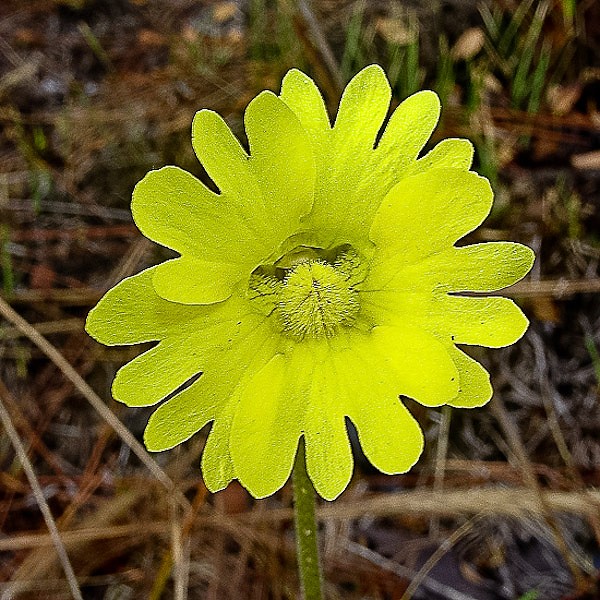
The flower is as odd as the flesh-eating foliage. The petals look like the impact of a yellow paintball. The rear end of the flower has the nectar sequestered in a hollow tail, the spur. Looking into the entranceway into the flower, notice a shaggy pillow (palate) greeting the bee, reminiscent of the lip ornamentation leading into some orchids. As the bee crawls into the floral tunnel past the shag-pillow, it pushes past large complex multicelled “hairs” arranged in tufts like brushes along the sides, floor, and perhaps roof of the floral tube. The shag-pillow palate and restrictive brushes capture the bee temporarily to position it for pollen exchange. This has been called “pinch-trap pollination.” My post-university mentor, the late botanist Dr. Carroll Wood, once found a bee still pinch-trapped in a museum (herbarium) specimen of Pinguicula lutea. The bee must feel as I do pinch-trapped between those giant brushes in the carwash.
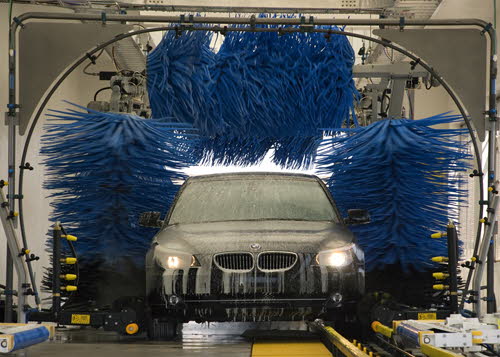
Pinch-trapped by shag-pillows!
 John Bradford
 George Rogers
 George Rogers
 Dee Staley
 Treasure Coast Natives