RSS

Tag Archives: Chrysopsis

Coastalplain Golden Aster and the Florida Marcescent Lifestyle

Chrysopsis scabrella

Asteraceae
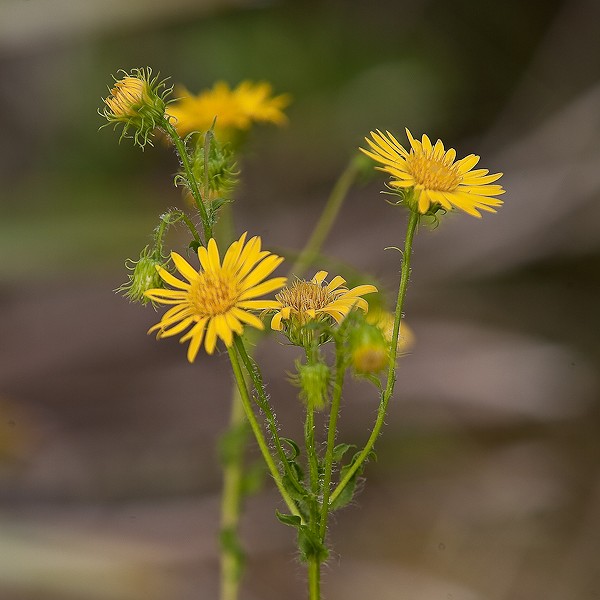
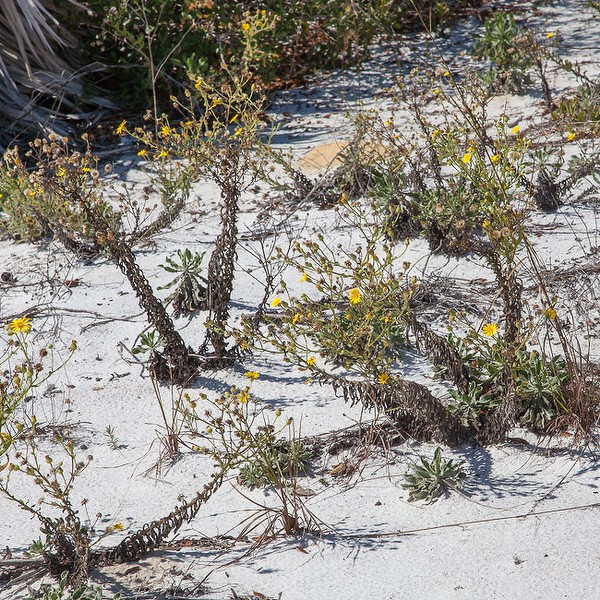
Golden Asters in the sun (John Bradford)

Golden Asters in the sun (John Bradford)

Every time John and I botanize through an open scrubby area, such as today, we enjoy an odd-looking species, Coastalplain Golden Asters rising awkwardly from the white sand at varied angles to attain irregular heights. Very martian! To add drama, the funny stems retain a covering of dead withered foliage, more properly called “marcescent” leaves.
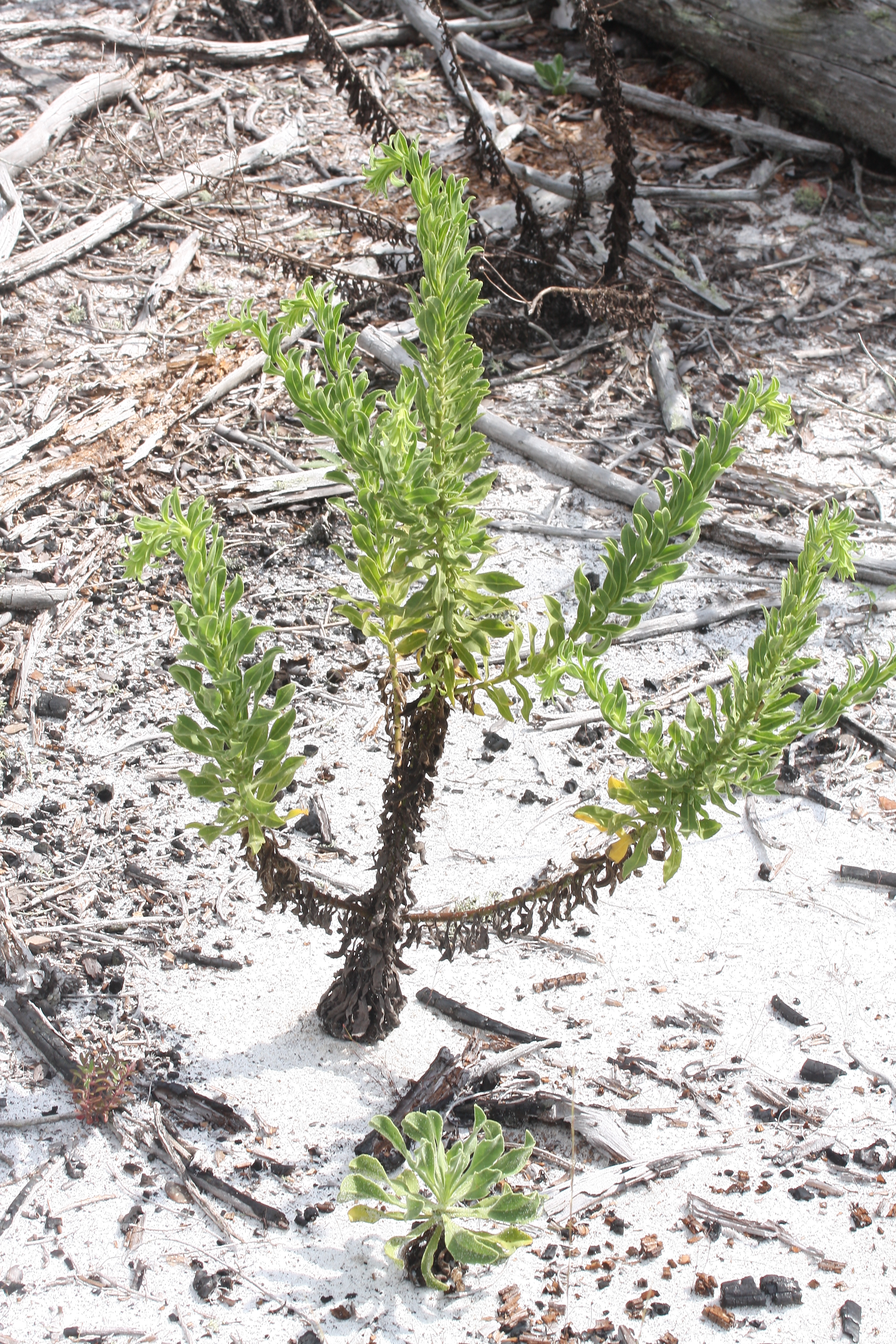
The dead leaves stay put.

The dead leaves stay put.

Dead leaves usually fall away and decay in most plants, but not always. The Golden Aster appearance always evokes the same old memory for me. Back in the Reagan Administration I had the good fortune to work at high elevations in South America where several unrelated plants resemble Golden Aster by having marcescent leaves covering an otherwise bare stem.   Around the world, this life form has evolved repeatedly, usually in exposed habitats where a drying risk is coupled with fluctuating temperature extremes, often intermittent frost alternating short-term with warm temperatures. Of a few examples here in South Florida,  Golden Aster is the most striking.   (We’ll look at Rabbit Tobacco another day.)

Coastalplain Golden Aster is generally described as a “biennial,” hunkered down the first year as a rosette on the ground, with the stem then rising the second year to flower and fruit.   New rosettes form at the stem base.   I’m not 100% sure the plant always obeys its biennial characterization.

Here is Espeletia in Ecuador:  CLICK

Here is Golden Aster in Stuart, Espeletia Jr.:
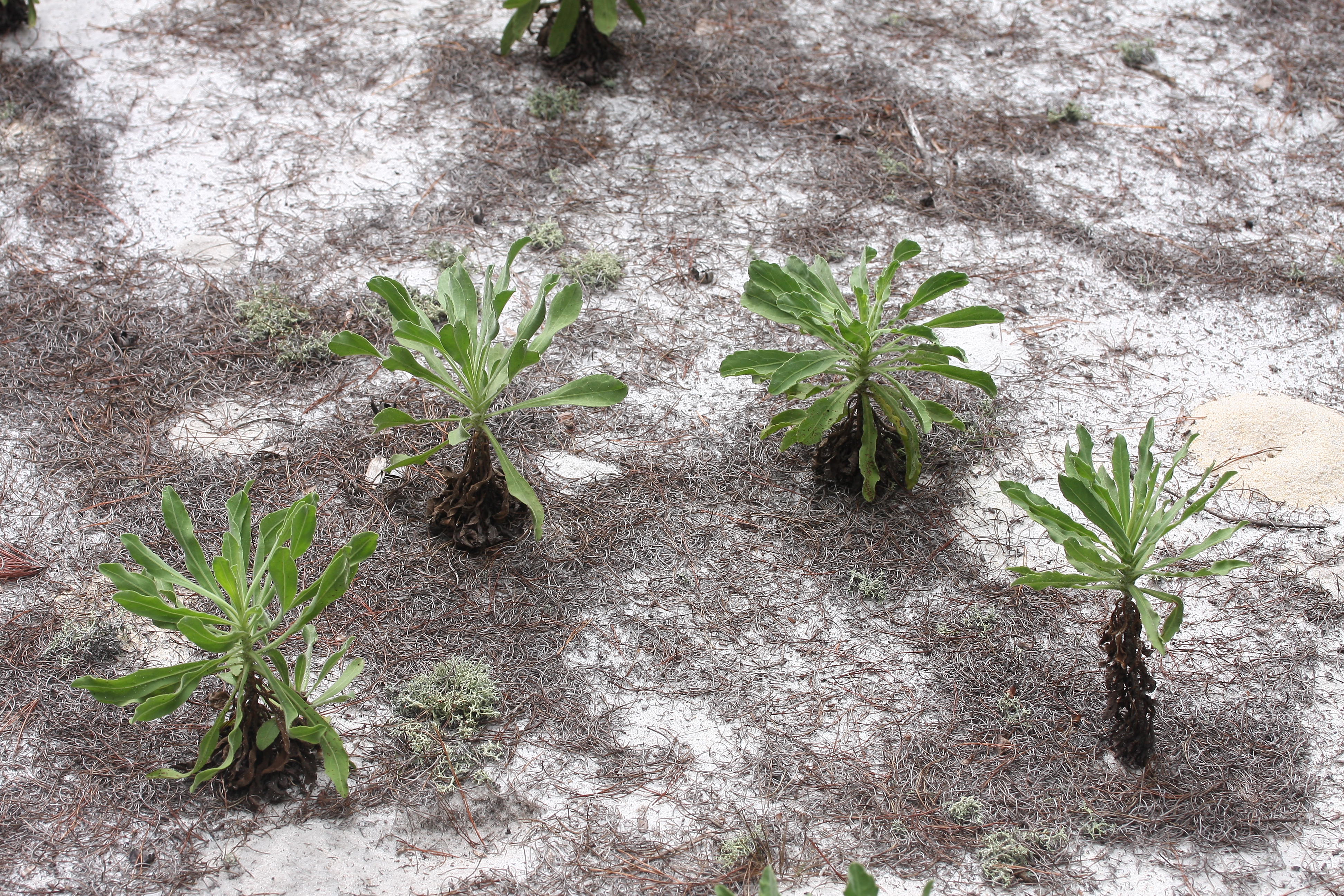
Every stem with a skirt of marcescent leaves.

Every stem with a skirt of marcescent leaves.

We might say blithely, “well, the dead leaves protect the stem.”   OK, but exactly how, from precisely what?   If anyone has looked into it at a physiological level in Chrysopsis, I can’t find it. But botanist Alan Smith back in the 70s took a hard look at Espeletia in Venezuela, and provides inspiration for a better look at our similar local case. Dr. Smith found the Espeletia habitat to feature strong seasonal differences in rainfall, like us. And there were wide strong short-term temperature fluctuations, like us. The greatest temperature stress and moisture stress occurred during the dry season, likewise the case in Florida if the main temperature stress is frost. (We live near the southern limit of the all-Florida geographic range for Chrysopsis scabrella.)

Smith and other botanists have interpreted marcescent leaf blankets as a buffer against fluctuating temperature extremes. Removal of the dead leaves cost a lot of Espeletias their lives.   The main apparent reason was that during times of frosty nights alternating with warm days stems with their dead leaves intact never dipped below freezing, whereas the ones with marcescent leaves removed dipped and died. Those dead old leaves don’t radiate heat at night.

It may seem odd to speculate that frost protection might be the “main” benefit of marcescent leaves, especially in a plant like Golden Aster so obviously exposed to extreme drying.   Don’t those dead leaves merely protect the stem from hot dry winds? Maybe, but two reasons suggest otherwise:

A.  In general, water loss from stems is not severe.   The stem probably does not need much protection from direct drying.  (Cacti are all-stem.)

B. Frost stress is drying stress. One of the worst aspects of frost for a plant (in a not-very-frosty borderline setting) is that freezing in the stem diminishes water passage from the roots to the leaves. An plant in a super-dry setting with temperatures hitting 80 degrees by day and dipping below freezing by night has much to fear from Jack Frost.   The warm day, especially at dawn, creates high demand for water to the living leaves, but if frost-impaired stem tissue can’t deliver, well that’s tragic.  Walking through the scrub in 90 degree weather and 90 percent relative humidity, it takes some faith to see those stem-blankets of dead leaves as possible winter coats.
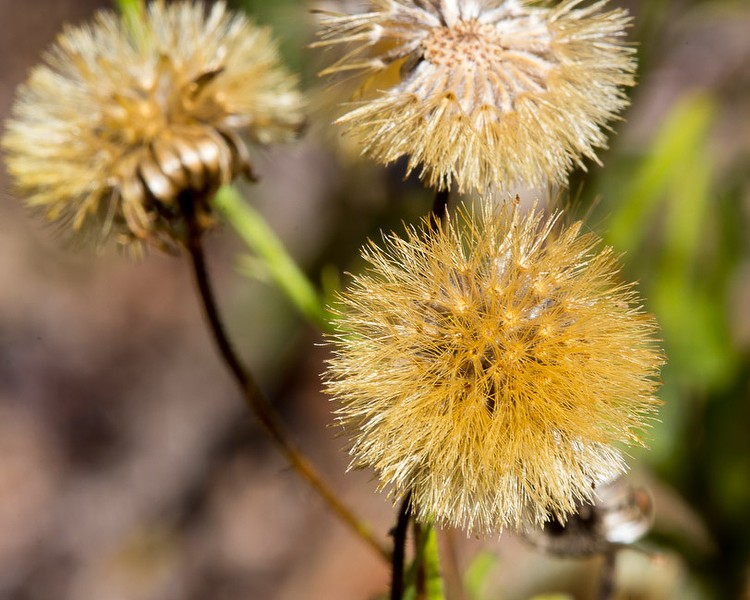
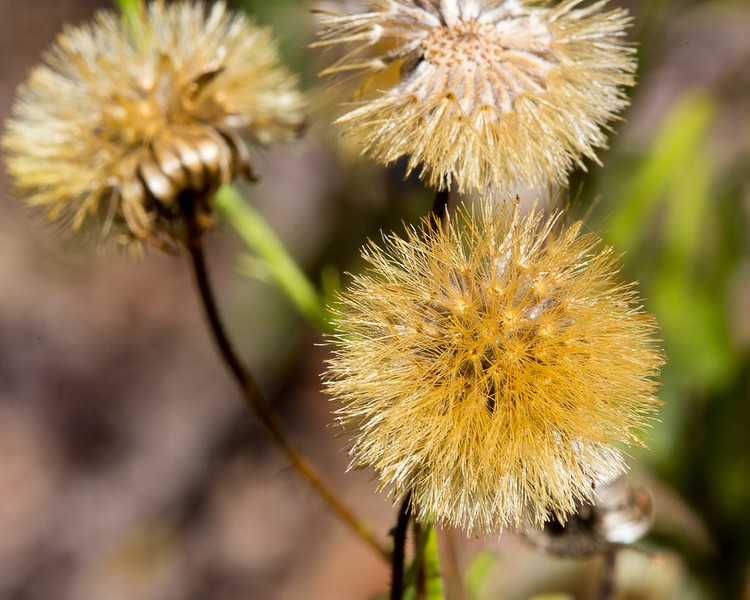
Fruiting heads (John Bradford)
Fruiting heads (John Bradford)
 
10 Comments

Posted by on October 9, 2015 in Uncategorized


Tags:

Tough Bullies and Bungee-Jumping Worms

Golden-Asters

Chrysopsis scabrella

Asteraceae

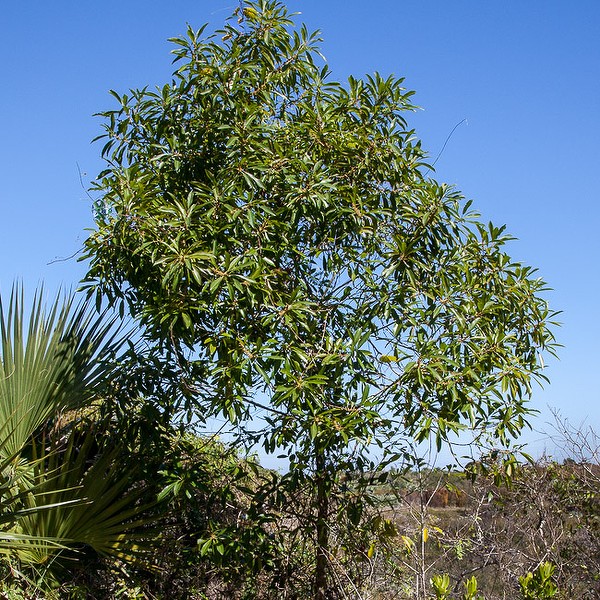
Willow-Bustic on Hobe Mountain.  All photos today by John Bradford.

Willow-Bustic on Hobe Mountain. All photos today by John Bradford.

Yesterday John and George continued a multiweek appreciation of Jonathan Dickinson State Park, exploring this episode mostly the scrub area around Hobe “Mountain” (big coastal dune).  The alpine vistas are postcard pretty, and the montane flora is joyous too.  Understand, this massive pile of white sand looks like something out of Arizona, complete with cacti, big agaves, and no doubt rattlesnakes.  Especially eye-catching yesterday in bud/early flowering were two different species of “Bullies”:  Tough Bully (Sideroxylon tenax) and Willow-Bustic (S. salicifolium).

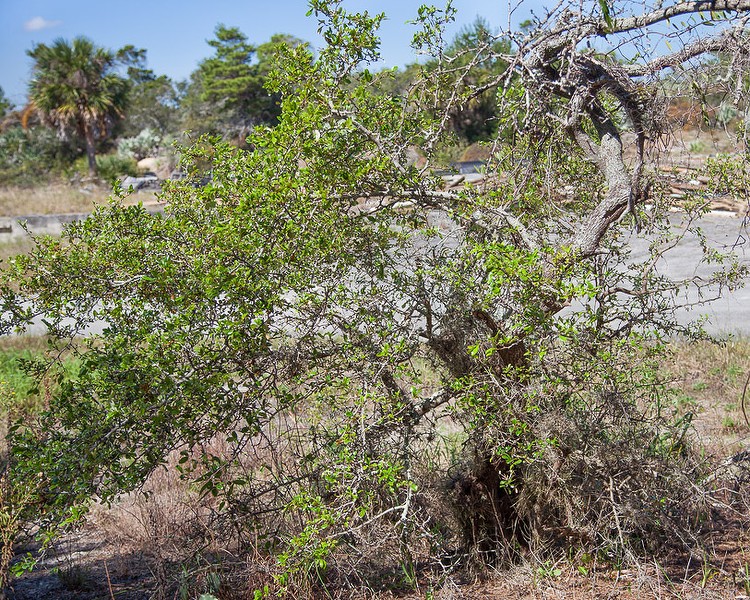
The Willow-Bustic, alternatively encountered as a hammock species in our experience, stood out as one of the dominant woody species on the fulsome dune, and the Tough Bully made its impression as an old, weather-worn, lichen-covered individual in the middle of historical Camp Murphy.  CLICK   The kinky tree could pass for a small live oak, and looked old enough to have been around in the WWII heyday of Camp Murphy, and gnarled and sand-blasted enough to be straight out of Lawrence of Arabia.

Tough Bully on N base of Hobe Mountain
Tough Bully flowers yesterday (2/14)

Tough Bully flowers yesterday (2/14)

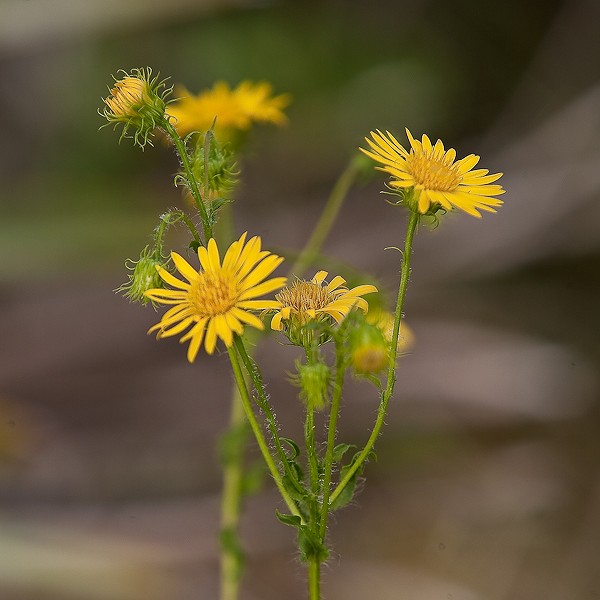
At that site, and throughout scrubs and dry pinewoods, is a vibrant yellow presence right now, Coastalplain Golden-Aster, Chysopsis scabrella, a sand-loving, sun-drenched, indestructible yellow-flowered ray of sunshine in Florida and nearby Southeastern States.  The ability of this species to thrive baking on sugar sand is remarkable.  It flourishes blooming on bare open windswept sand where it almost  seems little else can survive.

Golden-Asters on the sand

Golden-Asters on Hobe Mountain

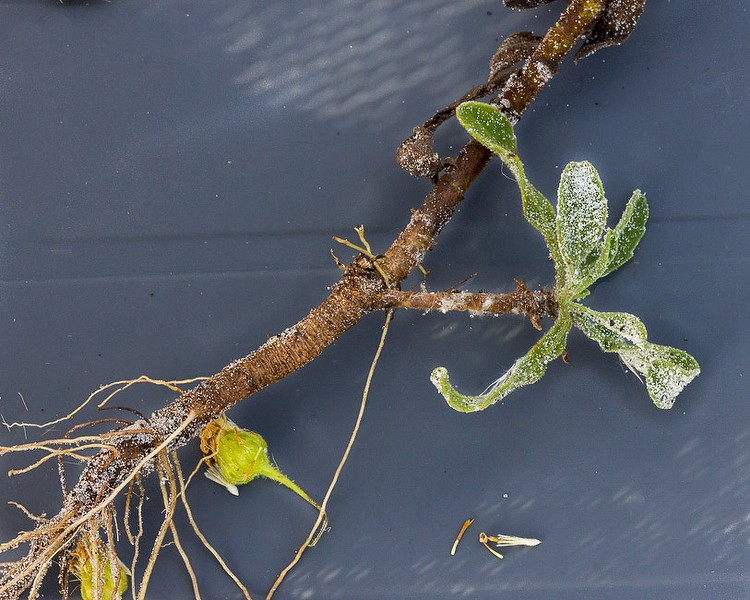
Not very exciting or photogenic, the root is a massive brush infiltrating the sand below.  The above-ground growth presents more to describe and photograph.   The early growth is a fuzzy gray-green rosette, leading some botanists to dub the plant a biennial, although the life cycle seems more complex than that.  A stem rises, oh let’s say, 2 feet from the rosette, and something curious happens, the leaves in the lower part of the stem wither, as though the plant in its extreme habitat sheds foliage it does not absolutely need, taking a little inspiration from cacti and other leafless or minimal-foliage desert plants.

Golden-Asters

Golden-Asters

Another Florida member of the Composite Family that likes to accumulate fragrant dead leaves along the stem is “Rabbit Tobacco.” SMOKE THIS   Every time I see the dry Golden Aster leaves I experience, but resist, an urge to try smoking them. (That would be beyond stupid, but stupidity does not always stop me.)   Interestingly, also, the soft pith in the center of the stem seems to fizzle out…again, the plant shedding all but necessary tissue?

The fruits

The fruits

Around here the Golden Aster lives up to its name with a stunning late-winter canary floral display although flowering is not confined to this season.  In late winter, now, a new rosette (basal  leaf cluster) forms as a side-branch at the old plant’s base.  In a garden setting you might say it makes “offsets,” or “pups,”  not an uncommon behavior in desert species, for example agaves.

Plant with pup

Plant with pup

So perhaps the Golden-Aster is an improved biennial…yes, it goes from rosette to flowering stem, maybe even in two years in the fashion of a biennial, but then remakes a new rosette based on the existing hard-earned and precious root system, and thus is sort of an immortal “biennial.”  How many years one root system generates  annual resurrections would be fun to know.

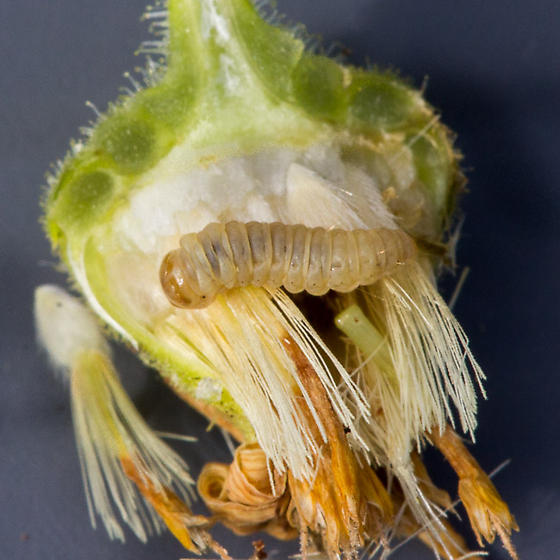
As John and I were photographing, and sniffing the fragrant foliage, and savoring the Golden Asters we noticed an entomological curiosity.  At the bases of the flower heads (the units that look like single yellow flowers) often a little whitish larva maybe ¼ inch long nestles in a little cup with its frass.  When disturbed, the wee stowaway bungee jumps on a silk thread.  (It probably leaps when the flower head disintegrates, rockin’ its dreamboat.)  We do not know what the hidden hobbit is.  John posted photos on BugGuide.net, yielding opinions of moth, although which species is not clear.  We’d love to know.

Stowaway emerging from opened flower head.  He's PO'ed.

Annoyed stowaway emerging from opened flower head.

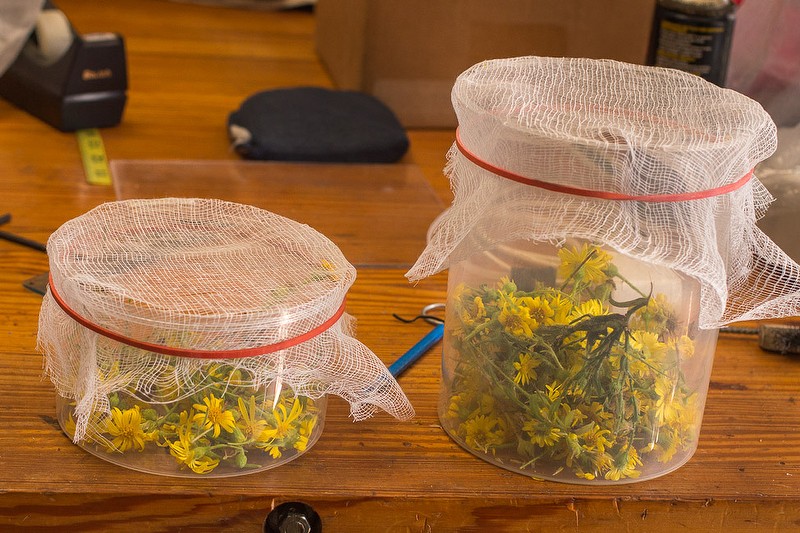
We’d love to know so much we placed occupied flower heads in containers hoping maybe we can “rear one out” for definitive ID.  In the meantime, there’s a mystery trespasser in the Golden Aster flower heads.

You never know!

You never know!

 
25 Comments

Posted by on February 15, 2014 in Golden-Asters


Tags: , , ,