RSS

Bluestem Grasses

Andropogon (and Schizachyrium)

Poaceae

Today’s sunny fieldtrip took John and George through the north end of Seabranch State Park near Hobe Sound, Florida, the present epicenter of our green interests.  Today’s word to describe the glory of nature: Bluestem Grasses!
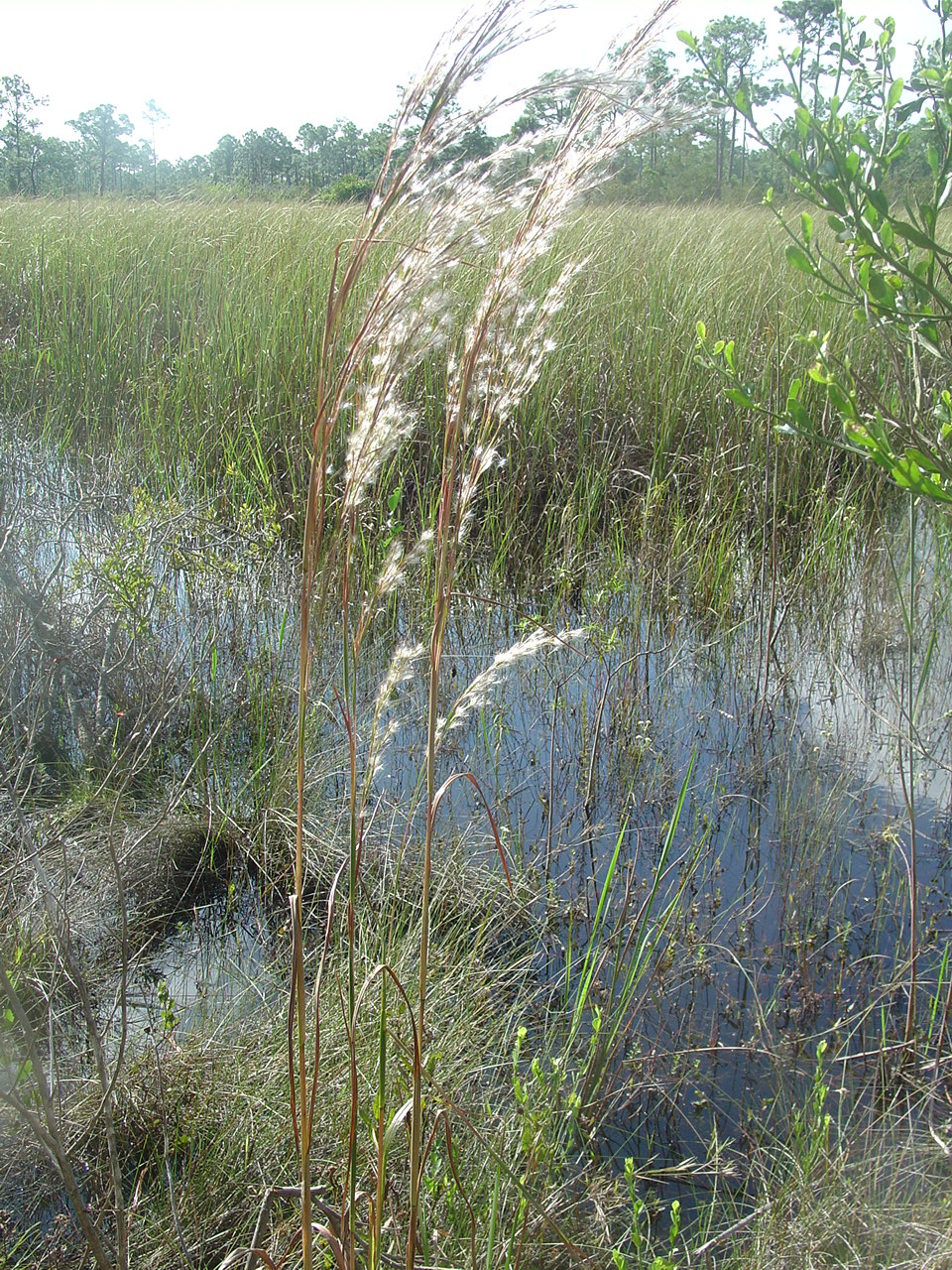
All Bluestem Grass photos today by John Bradford.

All Bluestem Grass photos today by John Bradford.

These are those large puffy-topped grasses, sometimes over 6 feet tall so pretty in October.  Always reluctant to pick favorites, apply tickle-torture and I may confess preference for those gorgeous wands of puff.  It isn’t just the silvery tops dancing in the breeze, but also the array of foliar colors.  So autumnal, a celebration of sunbeams and flickering memories, such as fond recollections of childhood strip mines.

I grew up in West Virginia immediately across the Ohio River from bigtime earth-rape.  Bluestems restore a tentative wisp of beauty to the toxic post-mining landscape.  (“Restoration,” yea sure.  Let’s go see the phosphate mines here in Florida.)  CLICK to see a Bluestem (“Broomsedge”) consoling an old mine crater in Illinois.

Bluestems make all the difference along roadsides, in old abandoned farm fields, along railroad tracks, and on rocky hilltops across much of North America and worldwide.  By the way, grouse like them.  Here is a Bluestem enhancing John’s path of life.

Several species coexist locally.  If you are nutty enough to try to sort them out, try our grassy web site.   Distinguishing these species can be extra-exasperating because:  1. The common species can be bewilderingly variable.  2. Different nearby regions house different species assortments.  3. Some hybridize.  4. They do not stick to their textbook habitats or to field-guide dimensions.  So for today, they’re just all “Bluestems.”
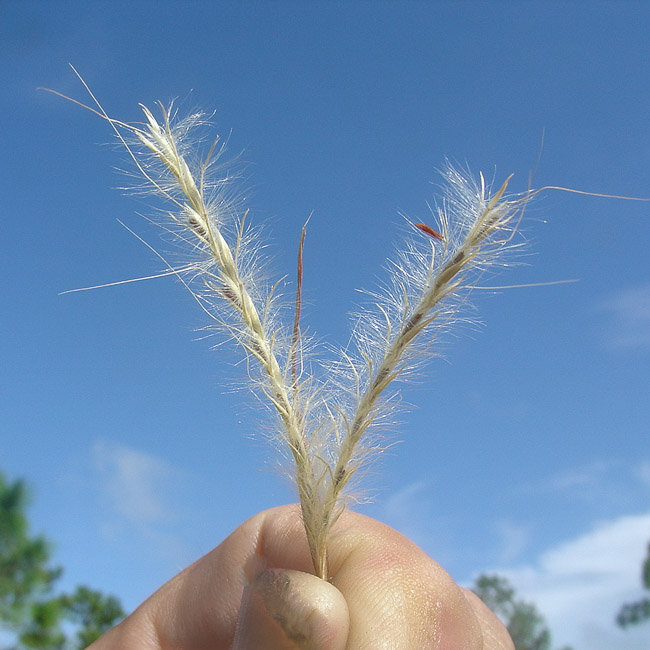
Andropogons usually have two bunny-ears.

Andropogons usually have two bunny-ears.

As hinted a moment ago, they tolerate the world’s worst soils:  graded roadsides, rocky hilltops, hellish railroad tracks, and scrub.  These rugged grasses have a few tricks, some of them studied in only one or few species.

Trick #1.  Some Bluestems have symbiotic root fungi (mycorrhizae) procuring phosphorus from shamefully nutrient-poor soils.

Trick #2.  Bluestems suppress potentially competing vegetation.  It is not mere competition.  Recent research shows some to diminish the “normal” nitrogen-fixing (fertilizer-providing) bacterial associates of non-grass species.

Grasses are turning out increasingly to have their own symbiotic arrangements with unconventional nitrogen-fixing bacteria.  Although data are sparse and preliminary, Bluestems sometimes have such unconventional nitrogen-fixers.  So could they sabotage the other guy’s nitrogen relations while enhancing their own, making the Bluestems kings of the starved soils?  Can they form a nitrogen monopoly?

Even weirder, one species preferentially takes up its soil nitrogen as ammonia, as opposed to slurping in nitrate, the other form in which plants take up nitrogen.  The selfish Bluestem is able to diminish soil nitrate to the detriment of potential competitors, while it somehow enhances soil ammonia for its personal private consumption.
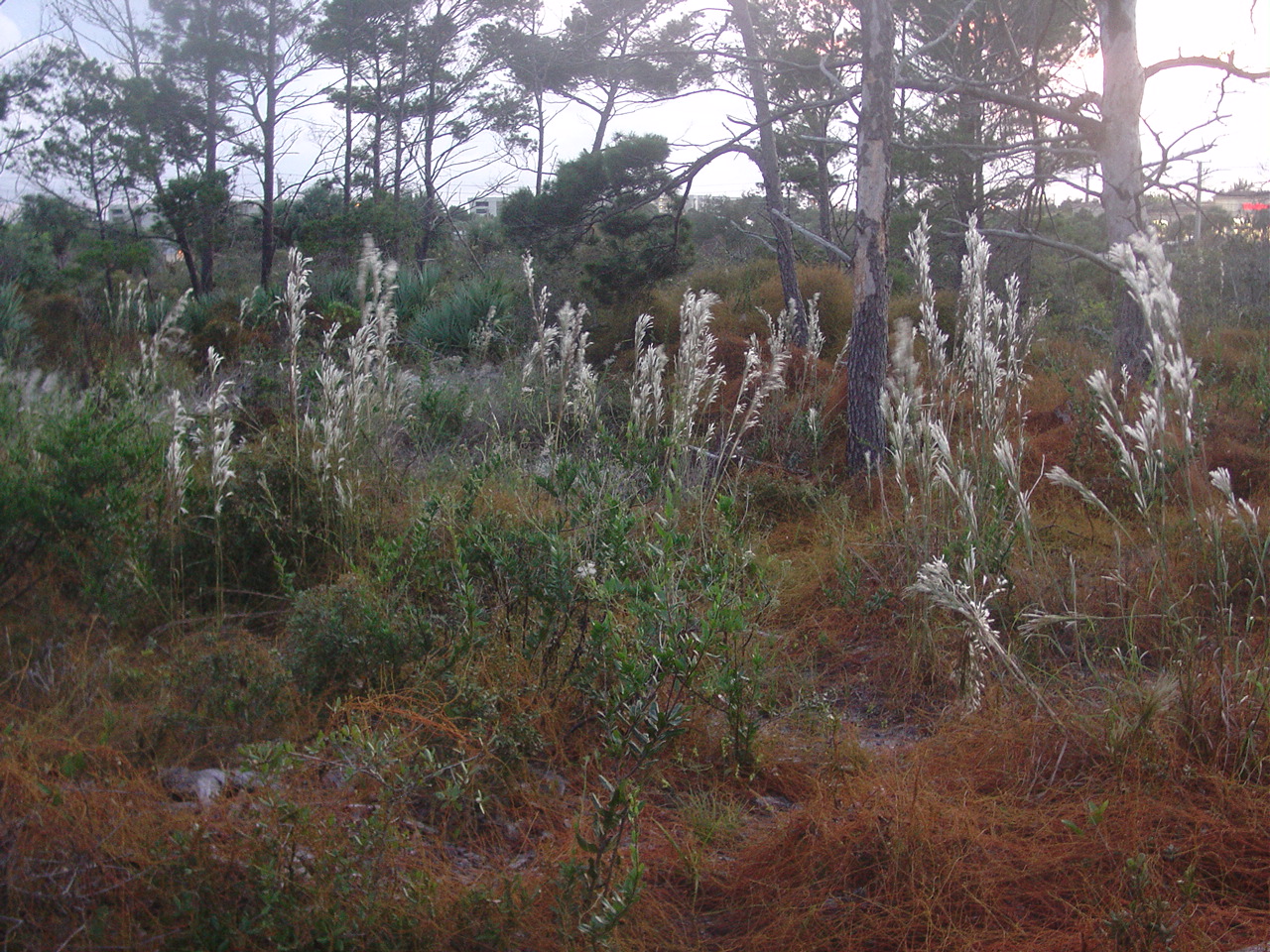
Andropogon floridanus Jupiter Inlet Oct.

 
2 Comments

Posted by on October 11, 2014 in Bluestem Grass


Tags: ,

Feay’s Palafox

Palafoxia feayi

Asteraceae

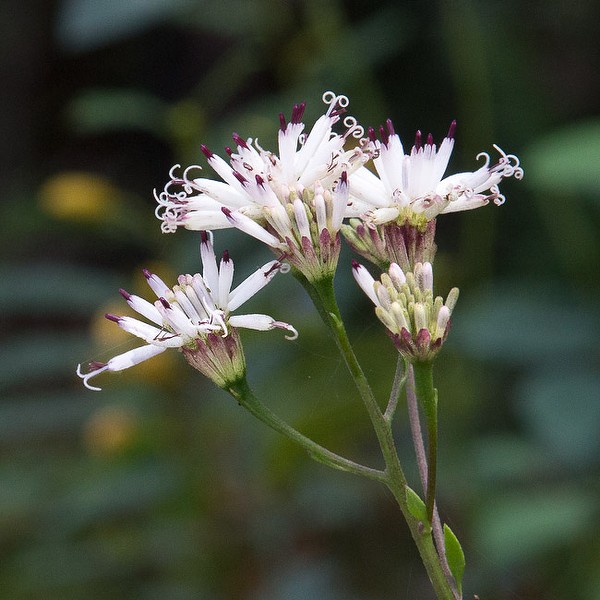
Today John and George hotfooted it through the oven-baked Saharan scrub in Seabranch State Park near Pt. Salerno, Florida.  It was so torrid my shoes melted off my feet.  Really.  Ask John.  (Well, one fell apart.)  Recently a paved bicycle Autobahn made its way through the park.  The concrete ribbon is wide, flat, and dang sunny, and it offers passage through dozens of scrubbish species growing in isolated clumps recovering along the disturbed trail margins.  A unique “garden” view of Prairie-Clovers, Florida-Rosemarys, Golden Asters, and assorted grasses and sedges alone and uncrowded.  One of the finest species to behold is Feay’s Palafox, a member of the Aster Family.

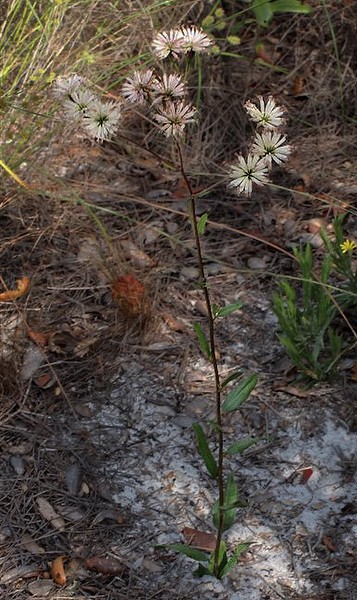
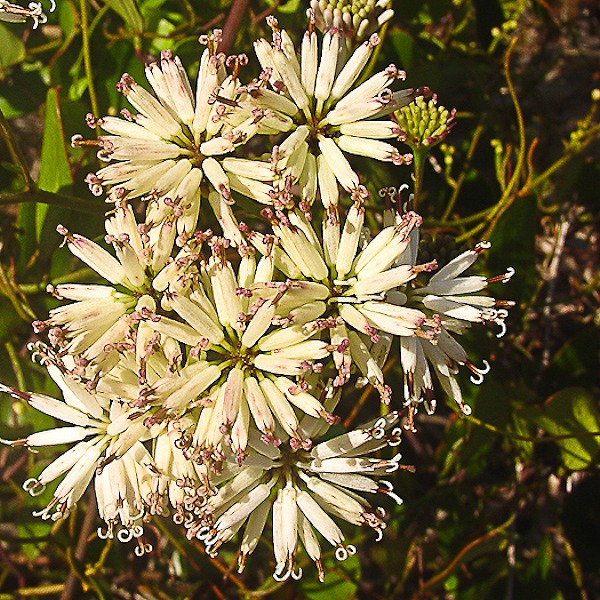
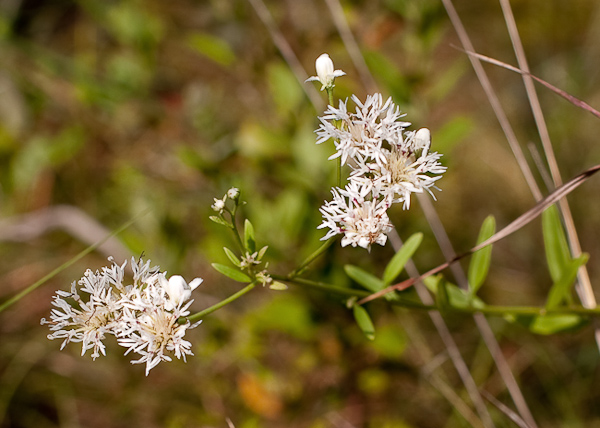
Feay's Palafox.  All photos today by John Bradford.

Feay’s Palafox. All photos today by John Bradford.

William Feay (1804? – 1879) was a Savannah, Georgia, physician turned teacher with botanical instincts in the mid 19th Century.  During the Civil War Savannah Georgia was no place for a nice botanist.  He scooted to Florida, where he collected the original Feay’s Palafox specimen, conceivably abetted by another botanical M.D., Alvin Chapman, of Chapman’s Oak.  Just think, Feay’s Palafox is a souvenir of  the War Between the States.

Feay's Palafox

Feay’s Palafox

You don’t spend much time in scrub without seeing Feay’s Palafox, a slightly woody subshrub standing 2-8 or more feet tall with its showy white or pink flower heads.  Unlike most members of its family, the heads consist entirely of “disc” flowers, that is, the sort of flowers associated with the black center of a Sunflower head.  Our species hangs out in scrub or similar habitats, and seems to be fire-adapted.  Recent study show its strongest root-fungal symbioses to thrive after burning followed by decline during non-burned years, although the decline could be due to the recovery of competition.

What’s intriguing about Palafoxia is its circle of relatives.  We have three species in Florida: 1. Palafoxia texana,  a western species with a tiny weird toehold in the Florida Panhandle.  2. Palafoxia integrifolia, almost restricted to Florida.  And Palafoxia feayi, which is limited to Florida.

Feay's Palafox

Feay’s Palafox

The rest of the genus, about 9 additional species, are all more or less desert plants in the southwestern U.S. and Mexico.  This is reminiscent of Agaves, where we have two dubiously native species in Florida related to a big group in the Southwest, Mexico, and Caribbean.

That our local Palafoxia species live in Florida’s sandy scrub “desert” is no surprise then, given that they are far-flung offshoots of a posse at home in Death Valley and the Sonoran Desert.  Palafoxia supports a vision of Florida scrub as a now-isolated remnant of a once-contiguous Tex-Mex arid land stretching around the Gulf, eventually divvied up by changing conditions.  Similar Florida scrub-loving derelicts with Mexican roots include Scrub Jays and Gopher Tortoises.

If the Florida species of Palafoxia are spillovers from points west, do they represent one spill, or three separate splashes?  The latter:  Our three species are not closely related to each other.  Palafoxia texana stands aloof.   It does not even have the same number of chromosomes as our other two Florida species.  Likewise alone is Palafoxia integrifolia; as botanists who studied it said, it is “unquestionably the oddball of the genus Palafoxia,”  so odd, it used to be regarded as a separate genus.

Palafoxia integrifolia

Palafoxia integrifolia

Palafoxia feayi is allegedly most closely related to two species of the extreme Southwestern U.S., Mexico, and the Rio Grande Region.

How such an odd mixed up geographic pattern could come about boggles the brain.  One thing is certain, it dates back a long time, roughly (according to the botanists cited below) some 60 million years, before the continent-spanning genus fragmented into isolated lineages from Baja California to Seabranch State Park.

This all goes to reinforce nobody’s secret: Florida scrub is vastly older than other Florida habitats, with a history all its own.  When you walk in a Florida scrub, enjoy a little hint of the Tertiary Period when Mexico extended to Palm Beach,  when palm trees grew in Ohio, and when Gopher Tortoises raced Jackrabbits here from Chihuahua. (Apparently the tortoise won.)

——————-

Notes:

Most of today’s data and taxonomic assessments on Palafox come from B. L. Turner and M. I.  Morris, Systematics of Palafoxia (Asteraceae:  Helenieae).   Rhodora 78: 567-628. 1976.

Our two local species are easy to separate.  Palafoxia feayi is semi-woody, well over a yard tall, and has the flower heads surrounded by linear green or purplish bracts.    Palafoxia integrifolia is shorter than a yard tall; its bracts are more or less white, and narrowly elliptic.

 
11 Comments

Posted by on October 3, 2014 in Feay's Palafox


Tags: ,

Witch’s Butter

Nostoc commune:  icky gross slime, or emerald carpet?

Cyanobacteria

(Note—the term “witch’s butter” is applied also to other slimy things, mostly fungi.  It is not exclusive to today’s cyanobacterium.)

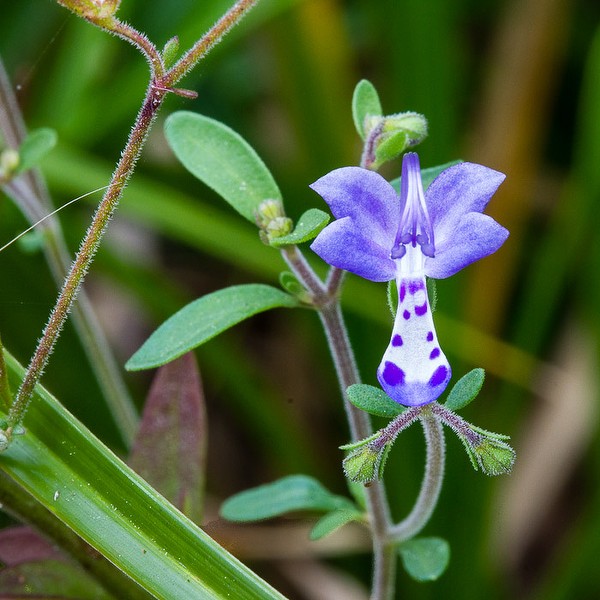
Today John, George, and the Florida Association of Environmental Professionals Treasure Coast Chapter combed the wet regions of Jonathan Dickinson State Park for grassy plants.  About a million species to enjoy.  The pine woods vistas and wildflowers were gripping as always. Blue Curls were at their best.

Blue Curls by John Bradford.

Blue Curls by John Bradford.

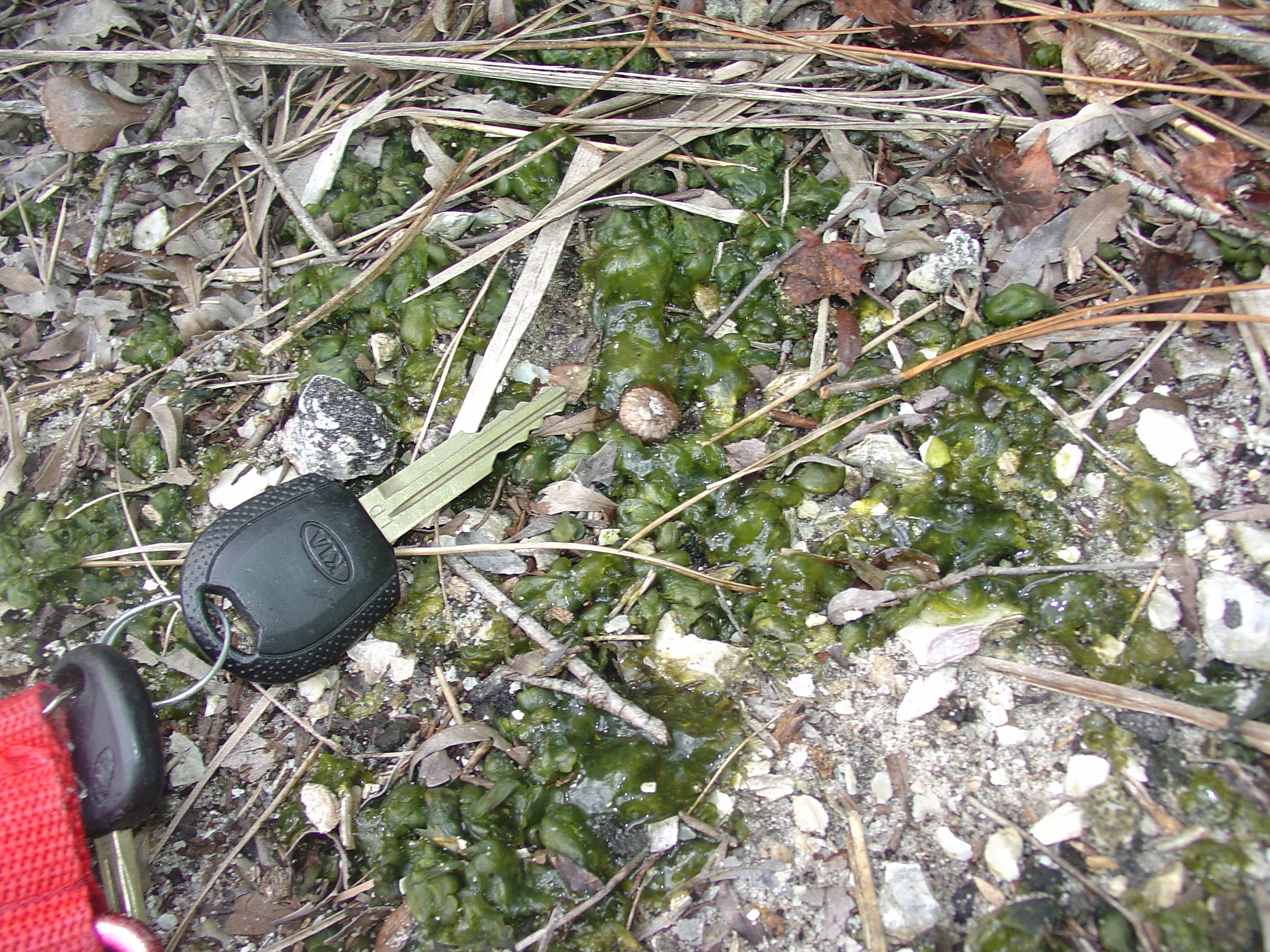
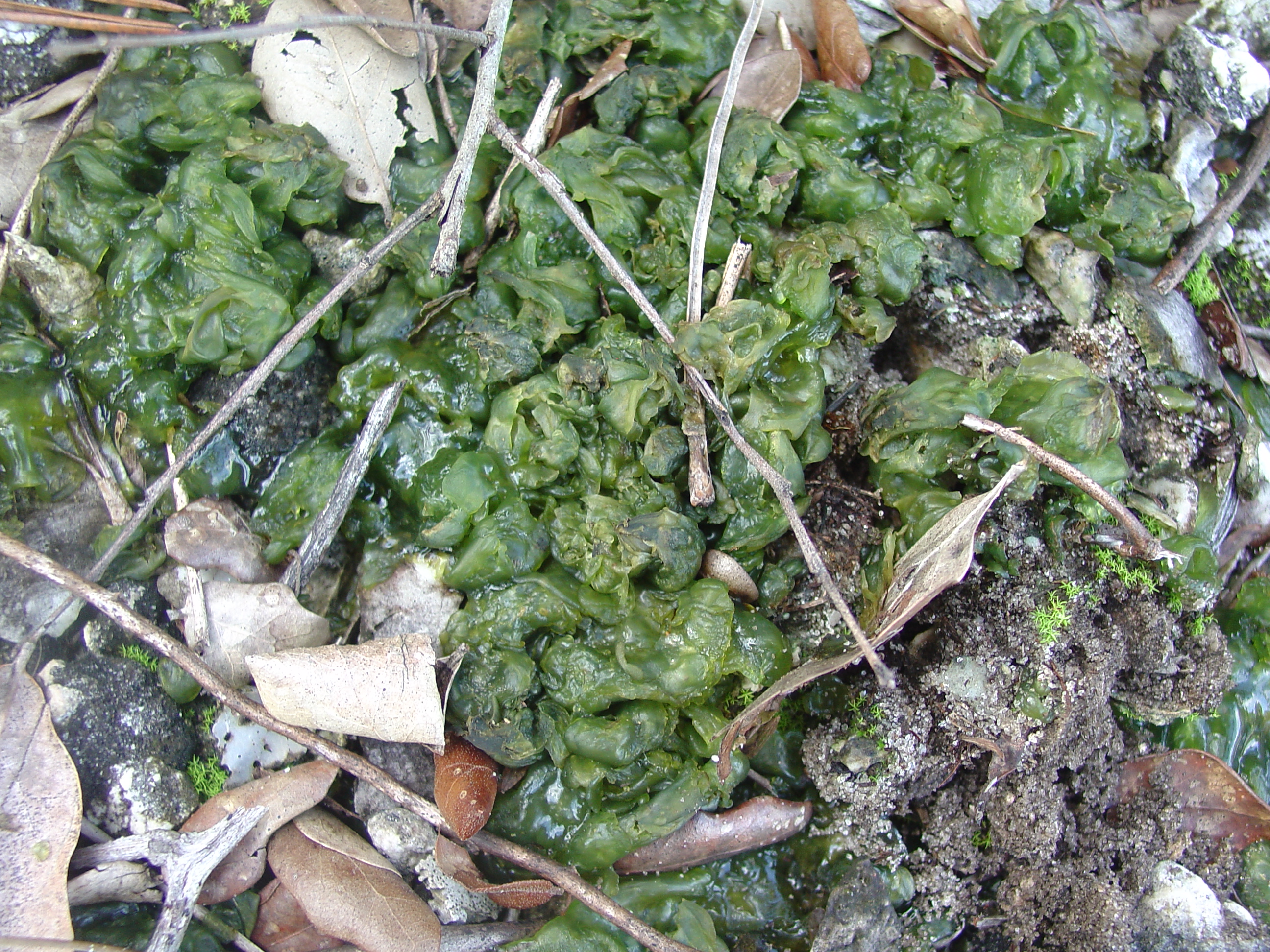
Now look on the ground below that fetching wildflower, there’s something even better.  What grabbed me with the most gusto today were waves of green jello on the otherwise bare scrubby soil.  We’re talking about huge bacterial colonies of the  blue green bacterium (cyanobacterium) Nostoc commune.   Some observers erroneously call these blue-green “algae.”  And some get upset when the “algae” befoul their pristine lawn of pride.

Nostoc (by GR, John is drawn to beauty, but I like the lowdown and slimy)

Nostoc (by GR, John is drawn to beauty, but I like the lowdown and slimy)

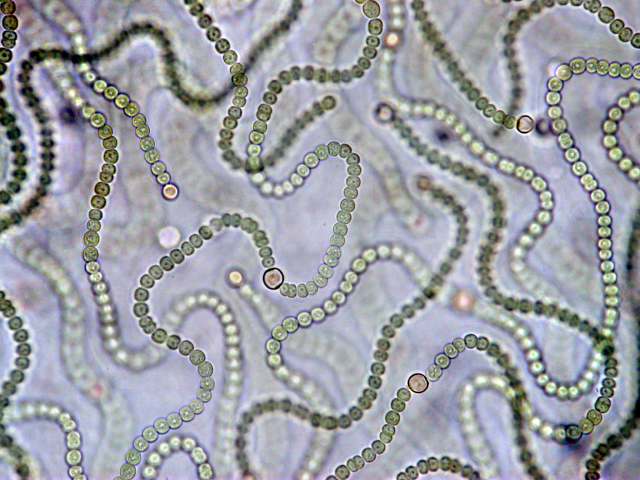
This is one mighty germ.  It is photosynthetic growing in microscopic strings of cells in colonies as big as dinnerplates.  This species fixes nitrogen in special air-tight cells called heterocysts, seen as the larger light-colored cells in this photo link microscope view.

When you transform atmospheric nitrogen gas into forms plants can use, that’s fixed nitrogen.  Legumes and some other plants do it with the assistance of certain bacteria.   The symbiotic bacterial helpers in some cases, such as in Cycads, are species of NostocNostoc is the “algal” partner in some lichens as well, but today you have Nostoc living proudly off the leash.  If this nitrogen-fixing mat isn’t nitrogenizing the hungry scrub sand I’ll be a monkey’s uncle!

Nostoc in JD Park

Nostoc in JD Park

You could walk through the scrub for years in dry weather and never spy Nostoc, except maybe as an inconspicuous dry crust we crush while seeking interesting things.  This organism can dry out to a mere nothing for months, probably many years, and eventually bust out into its idea of glory when wet and ready.  Then dry times resume and bye bye for now.

The world is full of odd symbioses, and Nostocs (including today’s species? perhaps not) have an unusual relationship with a tiny midge prone to lay its eggs in the Nostoc jelly for a safe haven and nourishment.  What the fly offers the Nostoc is odd, if not adequately studied:  the larva seems to induce changes in colony shape with an enhanced grip on its substrate and probable enhanced photosynthetic production.  If I had nothing else to do, I could happily spend tomorrow searching for the larvae before the present Nostoc patches go back into hiding.  Want to go play golf tomorrow?  No thanks, I’d rather look for maggots in bacterial slime blobs.

Nostoc commune and related species are global and like arid places.  They tolerate blistering heat, arctic freezing, blazing sun, and extended drought.  No surprise they prompt research to probe the molecular biology behind happy life in extreme environments.   Nostocs make so much fatty gel they’ve raised the eyebrows of biofuelophiles.  They are so responsive to wet-dry cycles they cause research on environmental gene control.   Nostoc reacts to extreme sun exposure with a UV-screen not known in any other living thing.

That UV protection is perhaps linked to an example of why we don’t eat the weeds, even if other people do.  A recent article in the Journal of Ethnophamacology  described the traditional consumption of Nostoc commune in Peru.  Yummy good–but the fly in the ointment is a neurotoxic amino acid possibly linked to neurodegenerative disease.  There’s always something.

Maybe it is no surprise how these close relatives of the oldest fossils known on earth survive nasty conditions perhaps resembling the primitive Earth when cyanobacteria ruled.  Back when we were an almost-uninhabited planet.  Like Mars.

Hmmmm, too bad Mars is so dry these days.  Maybe a little green Martian Nostoc would come forth with a good honest wetting.

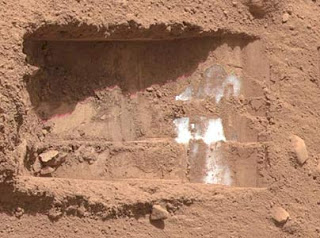
Mars Rover footprint, or John's tripod print?  You decide.

Mars Rover footprint, or John’s tripod print? You decide.

 
18 Comments

Posted by on September 27, 2014 in Nostoc commune


Tags:

Caesarweed

Caesar Weed

Urena lobata

Malvaceae

A joyous week of going native.  Tuesday evening it was fun to bore the West Palm Beach Chapter of the Florida Native Plant Society with my yada yada yada presentation, such an energized and cheerful group.  Then this morning John and I joined ecologist Arnaud Roux for a sunny slog through Jonathan Dickinson State Park soggy shores to prepare an upcoming professional workshop on grassy plants.  We enjoyed the Blue Curls, Roselings, Chaffheads, Liatris and so much more as pretty as a state park brochure.

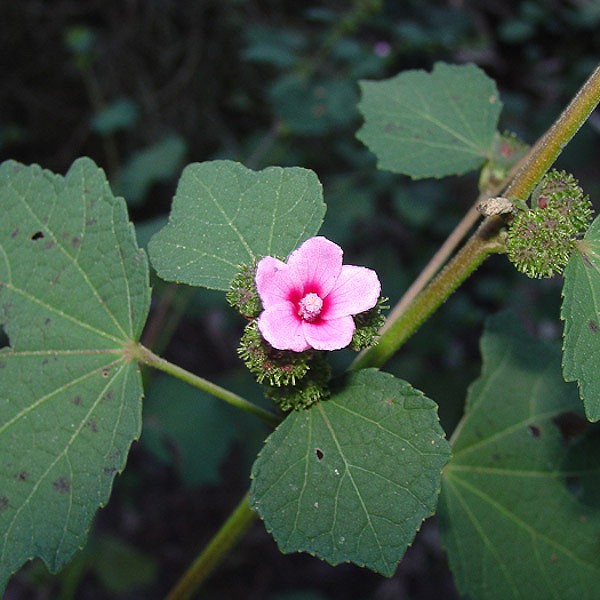
The pink "mini-Hibiscus" flower (by John Bradford).

The pink “mini-Hibiscus” flower (by John Bradford).

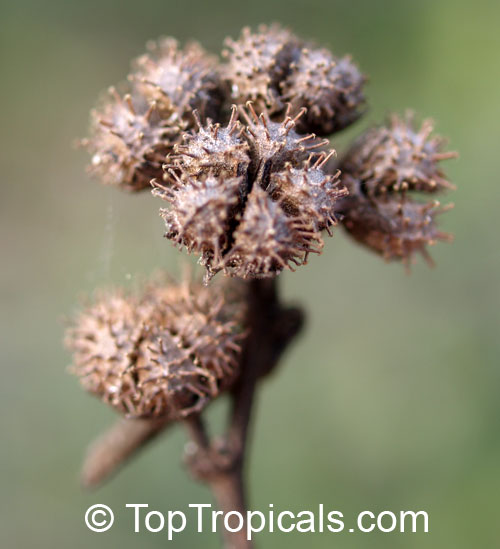
So many lovely native wildflowers, so let’s talk about a Category I invasive exotic weed stuck in your socks.  You don’t live in Florida long before meeting Caesarweed.  Even if you never encountered its pink “Hibiscus” flower, its burrs have encountered you.  The sock-stickers are segments of the fruit, which comes apart like slices of VELCRO pie.  They arrive home in your pants cuff, liberate themselves in the Maytag, and transfer amusingly to your wife’s apparel.

VELCRO pie.  By Top Tropicals (permitted use)

VELCRO pie. By Top Tropicals (permitted use)

Clinging may help explain the enormous range of this around-the-world weed of unclear origins, possibly in or around Tropical Asia.  Florida has been home since at least the 1800s.  Like many weeds, Caesarweed enjoys the company of humans as we create disturbed habitats, disperse its bristly hitchhikers in our spouse’s delicates, and enjoy its useful attributes.

As with so many widespread plants, the traditional medicinal uses are too many to list and actually a bit boring, although if you suffer “windy colic,” forget that medicinal marijuana, this is the weed for you.

Horticulturists are familiar with urease as an enzyme in soil microbes critical for transforming the natural decay product (or commercial fertilizer) urea into plant-useful ammonia/ammonium.   You can buy “urease inhibitors” to ration the conversion.

NitroGainUI-logoR

Caesarweed has urease in its seeds, clearly giving them a kickstart at germination time.  Urease-enhanced plant seeds are not rare, but even so, I dig the idea of a powerweed equipped with its own fertilizer-making enzyme.  So often weeds have special means of establishment after their relocational skills plop them in strange new worlds.

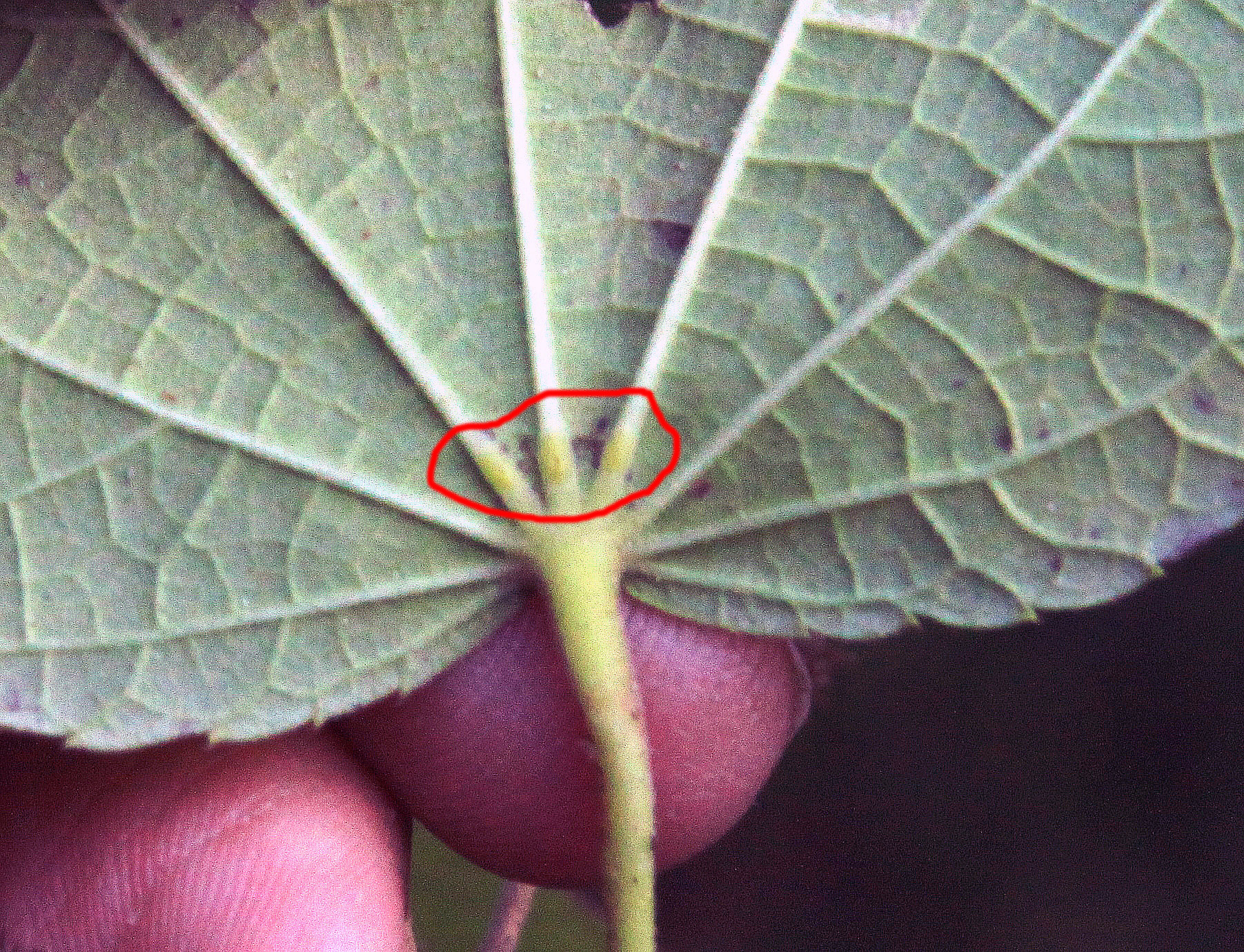
Speaking of special adaptations, flip over a Caesarweed leaf.  At the base on the main veins are glands, apparently to feed protective ants.

The leaf glands.  Apologies for the crummy focus. Don't blame John...my bad.

The leaf glands. Apologies for the crummy focus. Don’t blame John…my bad.

Beyond historical and modern medicinal interests, humans cultivate Caesarweed for fibers up to a yard long.    Not a huge surprise really, as the Hibiscus Family is a fibery bunch: Cotton, Kenaf,“Indian Hemp,” and more.  While some parts of the world are trying to figure out how to discourage Caesarweed’s growth, others research ways to boost germination rates and enhance growth as a commercial crop, especially in Africa where the plant acquires the name Congo Jute.  Before synthetics, Florida used to be a fiber growing and testing center.  It would be fun to know if Casaerweed had any participation in that.

 
10 Comments

Posted by on September 19, 2014 in Caesar Weed


Tags: ,

In a Lather Over Sudsy Snakewood

Asiatic Snakewood

Colubrina asiatica

Rhamnaceae

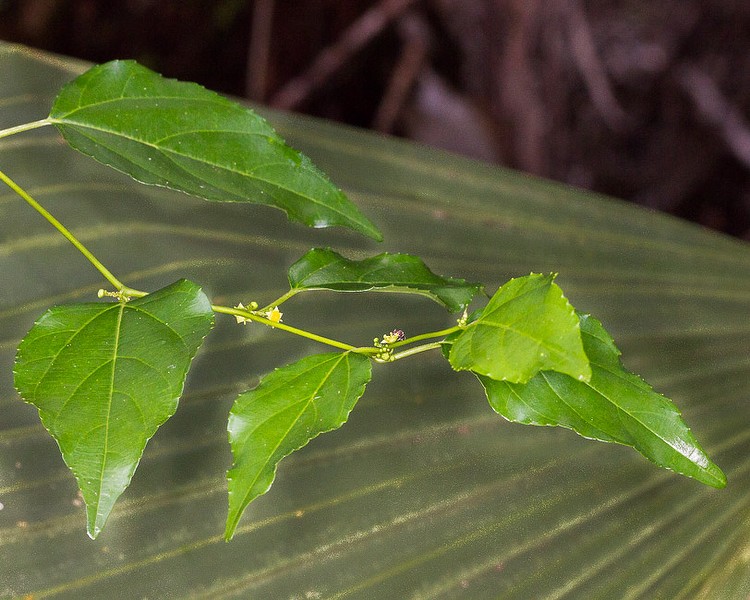
As John and George go about our Friday botany biz, sometimes near the sea—especially in the Hobe Sound Wildlife Refuge—we trip over an odd and different-looking woody plant known as Asiatic Snakewood.  Although a small number of native species of Colubrina live in southern-most Florida, our local Colubrina is Asiatic Snakewood, an invasive exotic stinker, but an interesting stinker.  It thrives in some coastal strand habitats, crowding rudely into hammocks and mangrove areas.   Every invasive has its tricks, and one of those earns Snakewood its name; the stems reportedly grow over 30 feet per year, snaking around, rooting where they touch the soil.  It’s really no fun ranting about the invasion,  so for now let’s try to know thy Snakewood.

Snakewood at Hobe Sound.  Today's photos by John Bradford.

Snakewood at Hobe Sound. Today’s photos by John Bradford.

Inquiring minds might ask how it got from its presumed origins around Tropical Asia to the Hobe Sound Wildlife Refuge nature trail.  Two main possibilities stand out (a combo of the two seems likely).

  1. Maybe humans brung it, at least to the Caribbean in the 9th Century or before.
  2. Maybe the seeds floated or came by bird delivery.

Colubrina Close JB

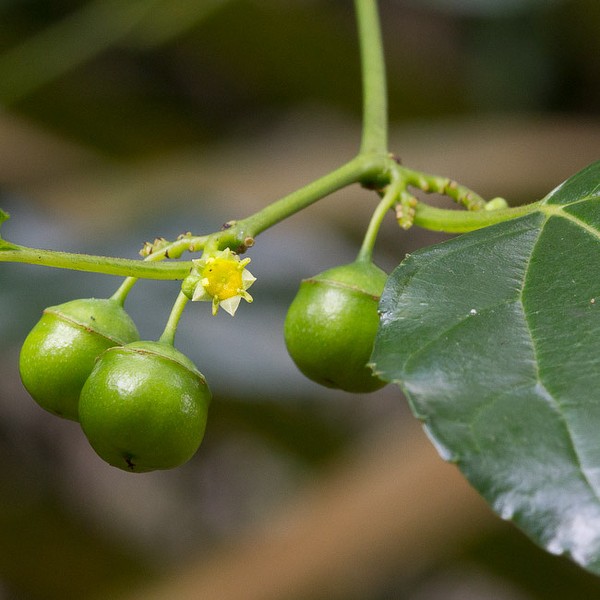
To look at possibility # 2 first, this species gets around!  Let’s say it originated in Tropical Asia, yet it is regarded as native in Hawaii, and decorates the tropical world from Africa to Australia and beyond.  The seed journey begins when the fruit explodes.  Pop.  The seeds like to float in saltwater.  A skeptic might now wonder, “well, if it migrates aggressively, perhaps it managed to get around all the way to the Caribbean and Florida on its own.  Wouldn’t it then be native, technically speaking?”   (And of course Global Warming could lend a hand.)  We’re unlikely to see anyone make that case.  I think we can all agree human activity probably had something to do with it. (Or then again, maybe you disagree.)

Which brings us to arrival scenario #1 (we’ll conveniently ignore many other human-mediated but inadvertent and boring possibilities).  To appreciate possibility #1, a little background is relevant.  Snakewood has a laundry list of traditional medicinal applications, and those long snake-sticks can be woven.  The species is chock-full of bioactive chemicals, the most famous being what are known as saponins.  Saponins are widespread in the plant world, and some plants make a lot.  Another name for Colubrina asiatica is “Latherleaf,” because saponins froth in water, and our species is sapono-tastic.  The sudsiness has served humankind, and there’s another benefit: saponins snuff fish.  A multi-use weed!  You can take a little Colubrina down to the river, launder your drawers and enjoy a seafood lunch.

 
6 Comments

Posted by on September 13, 2014 in Asiatic Snakewood


Tags: ,

Chapman’s Oak

Chapman’s Oak

Quercus chapmanii

Fagaceae

On Friday John and George explored a corner of Seabranch State Park near Port Salerno, Florida, previously unpenetrated by us, a big area of scrub more mature with larger Oaks and Pines than many other local scrub areas.

The Prairie Clover (Dalea feayi) was pleasingly in bloom.

Feay's Prairie Clover Friday 9/5/14.  All photos today by John Bradford.

Feay’s Prairie Clover Friday 9/5/14. All photos today by John Bradford.


The Yellow Garden Spider was enjoying the day.

What's a tuffet?

What’s a tuffet?


If we’re going to feature Chapman’s Oak, we better establish who was Chapman?  Alvin Wentworth Chapman (1809-1899) witnessed most of the 19th Century, remaining active to age 90.  He was a physician and founder of modern Florida botany.  Back then doctoring and botany often occupied the same soul.  (Come to think of it,  my own father was a physician-and part-time naturalist.)

Chapman's Oak

Chapman’s Oak


I believe many species distinctions we use in modern manuals date back to Dr. Chapman’s antebellum (1860) Flora of the Southern United States, setting up subsequent generations of addition and refinement in 20th Century floras.  Originally from Massachusetts and a Union sympathizer in the Civil War, Chapman lived most of his long productive life isolated in Apalachicola.

Most local scrub areas host Chapman’s Oak, and in Seabranch State Park this species is abundant, in fruit, big by local standards, and striking with two special eye-catching features:

Feature #1:  Galls as big as ping pong balls and as red as apples, before turning brown.

Gally-gee---they resemble apples

Gally-gee—they resemble apples


Eye-catcher #2:  Super-glossy-reflective leaves.  Chapman’s Oak has some of the larger leaf blades found in the sun-drenched scrub habitat where the general tendency in most plants is toward reduced leaf sizes.  You’d think those big Chapman solar panels might cook and dehydrate in the scrubby sunbath, and we’ll see in a moment that to be the case in a limited way, but I’d like to think that reflective surface offers protection.  We usually think of big leaf blades as typical of shade, so maybe Chapman’s Oak straddles the best of both worlds:  expansive blades for life in a mature scrub under the shade of Pines, and at the same time protected when un-shaded.  This is mere speculation—the prerogative of the individual who types the blog.

Chapman's Oak leaves and acorn

Chapman’s Oak leaves and acorn


Several species of Oaks grace our local scrubs, and they are an interesting committee.  We won’t sort out here how to tell them apart (for help see Lesson 3 in our online class), but some general remarks may interest a reader or two.

Would you expect a cluster of Oak species living in the same habitat in the same place to be closely related?  They are mostly just the opposite—a highly disparate group all thrust together.  Think of a bunch of new neighbors getting acquainted around the pool in a recently built Florida condo complex (perhaps built where scrub once was).  The first conversation topic over frosty Coronas at the meet & greet is, “where are you from?” —- “We’re from Syracuse,”  “I came here from Philadelphia,”  “Minneapolis,”  “Argentina,” etc.    Same thing with the Florida scrub-dwelling Oaks.  They all came to Seabranch State Park from different directions, different relationships, different histories.  How’d they all get together in the same scrubby sandbox?  Fairly remarkable, so Floridian, and just like human Floridian transplants, they have their own subtle climate preferences, especially with respect to differences in soil water on that scrubby sugar sand.  We’ll return to that.

You can divide the local Oaks into three distinct species alliances, the Red Oaks, the White Oaks, and the Live Oaks.

Representing the Live Oak species group, in Seabranch, we met Sand Live Oak (Quercus geminata) and Dwarf Live Oak (Q. minima).  From the Red Oak Guild was pretty Myrtle Oak (Q. myrtifolia).  Chapman’s Oak alone hails from the White Oak gang.

Today it is all about Chapman’s Oak.  Wonder why it is so rare in cultivation?  Apart from any necessary symbiotic microbial partners, its soil moisture preference is under 7%!  (Sand Live Oak, by comparison which is cultivated prefers over 12%.)  Chapman’s Oak, perhaps by dint of longevity, can extract water from fairly deep scrub soil, recorded down to over 6 feet.  It initiates leaves during the early rains of Spring, having them in place during the long hot summer and early autumn.  As the dry season rolls around, Chapman’s Oak is particularly prone to have those oversized leaves dehydrate internally…drier than any of several scrub species measured.   Remember our worries above how big leaves may dry out.  They seem to, to a point, but under protected control, on schedule, and basically okay.  Mother N watches over her Oaks.

Chapman’s nearest relative, as revealed by DNA, is the so-called Bastard White Oak (Q. austrina).  BWO inhabits more-northern Florida and beyond on soil with more moisture.  In short, you might interpret Chapman’s Oak as a heat-seekin’ dry-lovin’ derivative of its bastard northern cousin.

——————————————————————————————-

Note:  Technical data largely from article by J.  Cavender-Bares and collaborators.  Phylogenetic Overdispersion in Floridian Oak Communities. Am. Naturalist 163:  823-843. 2004.

 
6 Comments

Posted by on September 7, 2014 in Chapman's Oak


Tags: ,

Cabbage Palms – Even Our Best Friends Have a Secret or Two

Cabbage Palm

Sabal palmetto

Arecaceae

Saturday morning it is, and how relaxing it is to relax!  This week classes started at PBSC; so did John’s and my “MOOC” on Native Plants.  In the first week of school broad topics set the academic context, one of those topics was persons of historical environmental interest in Florida.  Few had the super-human powers of John Muir, arguably most famous for founding the Sierra Club in California (and for inventing an alarm bed to toss you out of the sack in the morning).  One of the many reasons I like him is our shared  view of nature through just one eye.  On his Thousand Mile Walk to the Gulf through still-smoldering Civil War rubble, John M. hiked across Florida via Gainesville with a layover ill at Cedar Key not long before fatherhood, the High Sierra, and enviro-glory.

The 1000-mile walk included a boat ride.  He landed at Fernandina as a lonesome, hungry, and frostbitten Wisconsonite to find an uplifting thrill upon spotting his first palm.  In his words:

It was while feeling sad to think that I was only walking on the edge of the vast wood, that I caught sight of the first palmetto in a grassy place, standing almost alone. A few magnolias were near it, and bald cypresses, but it was not shaded by them. They tell us that plants are perishable, soulless creatures, that only man is immortal, etc.; but this, I think, is something that we know very nearly nothing about. Anyhow, this palm was indescribably impressive and told me grander things than I ever got from human priest.

sabal palmetto cypress creek1

I’m more jaded.  The grand thing my backyard Cabbage Palm says is, “clean up my fallen debris.”  But looking back a few years, I recall excitement as a northern kid peering out the back seat window through a cloud of my Dad’s pipe smoke and spotting that first palm tree upon arriving on a Florida vacation.  (Don’t they plant some at the state line?)

The geographic distribution covers most of peninsular Florida, truncated abruptly along a line across North Florida, with razor-thin ribbons extending along the Gulf Coast in the Panhandle, and far up the east coast to North Carolina in the Caribbean too.

As Florida’s state tree, Cabbage Palms are known well as sources of fiber and thatch, as having the persistent leaf bases harboring epiphytes and creatures, as feeding berries to wildlife and ancient humans, and as having their terminal buds (“hearts”) tasty and apparently responsible for the name “Cabbage” Palm.

Now for something less generally familiar—a feature known in plant nurseries and studied biologically in the 90s by biologists K. McPherson and K. Williams (see esp. Am. Jour. Bot.  83: 1566-1570. 1996).

Cabbage Palm flowers by John Bradford.

Cabbage Palm flowers by John Bradford.

Young Cabbage Palms face a rough world… hurricanes, flooding, drought, frost, shade, hogs, rampaging hippos, and fire.  That’s all pretty threatening if you have just one growing bud.  Consequently they and additional palms evolved a secret adaptation.  After germination, the trunk does not rise and prosper like a normal plant.  Instead, it burrows downward, sometimes as deep as a meter, before executing a U-turn to eventually come forth above the ground.  The growth is J-shaped with trunkless leaves jutting above the ground surface. (The related Sabal minor most often hides its trunk permanently below ground or nearly so.)

We’re not talking about a momentary delay.  The belowground trunk establishment phase reportedly takes usually 30-60 years or more under wild conditions (maybe 7-20 years in favorable cultivation).  The trunk from a seed germinated when I was peering out that car window in 1960 may just be breaking ground now.  A stand of Cabbage Palms can be wiped out above-ground and recover just dandy from others still in the subterranean trunk phase.  Or seen differently, starting a Cabbage Palm stand from seed will require patience.  Plant the seeds while you are young for your gray-haired grandchildren.

Sabal palmetto

 
10 Comments

Posted by on August 31, 2014 in Cabbage Palm


Tags: , ,

With a honk honk here and an oink oink there, Old MacDonald had some Goose Grass and Sow Thistle

…and Barnyard Full of Superweeds, ee-i-ee-i-oooooo

Sow Thistle (Sonchus oleraceus)

Canadian Horse Weed (Conyza canadensis)

Goose Grass (Eleusine indica)


But first a note on our Native Plants On-Line MOOC.  The class has filled with 60 apprehensive victims, and is therefore closed.  We expect to offer it again maybe in the winter.  


A pretty weed distributed throughout all of sunny Florida has earned the distinction of being the newest addition to the International Survey of Herbicide Resistant Weeds worldwide list of glyphosate-resistant  weeds.  Glyphosate is the active ingredient in the world’s top herbicide, better known as Round-Up.   Our newly crowned Round-Up-Resistant (R-U-R) superweed is number 28 on the Survey’s hit parade dating back to 1996.   And it is Common Sowthistle (Sonchus oleraceus).

Sonchus asper (similar to S. oleraceus) .  All photos today by John Bradford.

Sonchus asper (similar to S. oleraceus) . All photos today by John Bradford.

Not that Florida is under-represented by prior R-U-R title holders.   Also in our state natively or just visiting  are: Spiny Amaranth (Amaranthus spinosus), Tropical Sprangletop Grass (Leptochloa virgata),  Jungle Rice Grass (Echinochloa colona),  Sour Grass (Digitaria insularis),  Johnson Grass (Sorghum halepense),  Ragweed (Ambrosia artemisiifolia),  Narrow Leaf Plantain (Plantago lanceolata), Canadian Horseweed (Conyza canadensis and a related resistant cousin),  Goose Grass (Eleusine indica), and a couple of bit-players.   In other words, a big chunk of the world’s R-U-R species are right here in our own back yards.  Literally.

And that’s where it gets extra-interesting.   If you do not want these in your own back yard, the day may be fast approaching where your turf grass is a Round-Up-Resistant selection, so all you have to do is lay on the Round-Up to eliminate any weeds that have not joined La Résistance.   There exist some GMO Round-Up-Resistant turf grasses now, although there have been annoying problems with the resistance genes spreading a few miles from test plots, even to other species.  To my very limited Google-influenced knowledge these turf species have not come onto the market, and they are not for South Florida anyhow.

Immortal Canadian Horseweed

Immortal Canadian Horseweed

Of course Round-Up Ready commercial crops, including a lot of cotton, have been around a generation, leading to massive Round-Up applications, helping us get those R-U-R weeds.  (Interestingly, btw, whatever you think about GMOs,  herbicide contamination, and whatnot, did you know Round-Up adds unwelcome yucky-poo phosphate to the environment?)  Many weeds have evolved resistance¹ to many other herbicides; in fact, efforts are in progress to develop crops resistant to additional weed-killers, even nasty old infamous 2,4-D and more.  But today’s topic is Round-Up Resistance so let’s stay on topic.

I don’t want to delve into the politics of Round-Up and GMOs. Doing that would take all night, and the blog world is loaded with it.  If you are interested, there is a relevant article in this week’s New Yorker magazine (8/25/14, p. 46, “Seeds of Doubt”).   So just a few more words in our plant blog on the green things.

Canadian Horseweed scoffing in the face of  wimpy Round-Up

Canadian Horseweed scoffing in the face of wimpy Round-Up

My first brush with Goose Grass, on the R-U-R list, was in approximately 1995 as a golf course weed.  At that time and place, at an expensive Caribbean resort,  the control measure of choice was the herbicide MSMA, where the A stands for arsonate, as in arsenic.  Arsenic is not nice stuff, unless you want to murder somebody gradually, and arsenic in the soil, presumably from MSMA, caused a flap in Wellington not long ago.  That flap was odd—we spew it all over the golf course over umpteen years, then it makes the papers when somebody !!!OMG!!! detects arsenic in the soil.    That’s like dumping molasses on the floor and detecting sticky. Back to plants:

Canadian Horseweed is a superweed to know and love just about everywhere. We usually just step on it in passing, or mow it down, or spray it, or curse it, but please show it some respect.  You don’t tug on Superman’s cape.  Horse Weed was ahead of its time achieving R-U-R superweed status in 1999, and merely 5 years later the resistant strain had spread to a dozen states.  Another decade has gone by, and the R-U-R Horse Weed spans a dozen nations from Brazil to China.  That’s just one weed and one herbicide and one decade.  Use your imagination for the rest of the story.

Canadian Horseweed, kinda pretty if you give it a chance

Canadian Horseweed, kinda pretty if you give it a chance

¹How do you evolve a superweed?  It’s Darwinian survival of the fittest.  Take a big cornfield, douse it with Round-Up to kill 99.9% of the weeds.   The remaining 0.1%, hmmmmm, seem to have some natural Round-Up resistance.  (Round-Up interferes with an enzyme, so the tiny minority of resistant plants may have genetically a slightly different enzyme or a slightly different cellular physiological environment or slightly less ability to allow the poison to penetrate.)  That small number of naturally resistant plants can make a lot of seeds of course, so the 0.1% expands.    Repeated years of applying Round-Up to the same field with the ever-growing resistant population gives repeated years of such intense artificial selection for resistance.  It builds up.  One day the weed-killer just isn’t doing the trick.  An approach to delay that day is to leave some areas near the crop fields unsprayed, so the non-resistant weeds there will cross and dilute the resistance of the spray-survivors.   The mechanism for evolving superweeds is how you wind up with antibiotic resistant bacteria too.


6 Comments

Posted by on August 23, 2014 in Superweeds


Virginia Swamp Mallow, Pretty in Pink and Diesel Powered

Kosteletzkya pentacarpos (better known as K. virginica)

Malvaceae

Kosteletzkya - John's photo. Can you pronounce it?

Kosteletzkya – John’s photo. Can you pronounce it?

Yesterday John and George hankered for scrub, so we wandered the dunes of Hobe Sound National Wildlife Refuge across the Intracoastal Waterway from the Isle of the Rich and Famous, none of whom read this blog.  An extra bonus of HSNWR, even if tough to see, is a brackish coastal pond nestled among the desert dunes.  Decorating the wet oasis is a pretty shrub fond of brackish wetlands, Virginia Swamp Mallow.

The flat fruit. Photo from Ladybird Johnson Wildflower Center.

The flat fruit. Photo from Ladybird Johnson Wildflower Center.

The shrub looks like a Hibiscus and is related, differing by having the woody capsule squashed flat, and splitting to release the seeds along the middles of the seed chambers as opposed to splitting at the edges.  No doubt every reader will remember this gripping detail!

Spotting Virginia Swamp Mallow is a treat, standing tall with big eye-grabbing pink blossoms.  The flowers exemplify textbook hummingbird-pollination, and the hummingbirds do hum there.  But life never obeys the textbooks.  Bee and butterfly visitation are reported too.  More interestingly, the flowers have a self-pollination backup system.  If the birds and bees disappoint, the stigmas (the five pollen-receptive knobs visible in the photo below) curl down to the pollen-producing anthers (the yellow organs below the stigmas) and take care of business independently.  Floral closure at the end of the day helps with the selfies.

The blossom, by John Bradford. The stigmas are the five lobes at the tip of the central column.  These are surrounded by hundreds of yellow anthers  along the column shaft.

The blossom, by John Bradford. The stigmas are the five reddish lobes at the tip of the central column. These are surrounded by hundreds of yellow anthers along the column shaft.

Bioengineers like self-pollinated salt-tolerant species.  The hungry world has expanding areas of under-utilized salinized (salty) soil, and brackish irrigation water is increasingly plentiful though obviously not applicable to many crops.  Problem?  Opportunity?  One forgiving salt-tolerant crop is today’s Kosteletzkya; its seeds are miniature oil wells.  Black gold!  Texas tea!  Lucrative opportunity!

A recent U.S. patent is dedicated to improving and farming Kosteletzkya and reaping diesel juice.  As a side thought, there must be a fine line between freely farming a posie and squeezin’ its seeds, and enforcing a patent claim onto the little gushers!  (Maybe someday we’ll have Roundup-Ready Swamp Mallows.)

One place where the squeezin’ occurs, at least at an experimental level, is coastal China with spreading tidal marshes where you can generate green fuel using crowd-pleasing flowers, stabilize the soil, and empower diesel-fueled migratory fowl.

Now for the daydreaming.   That today’s pinkie oozes oil is no surprise, given a close relationship to cotton, as in cottonseed oil.  And, speaking of China, they already grow much cotton there.  Cottonseed oil is in the diet in parts of China, where it has caused temporary (I hope) male sterility.  Or to the glass-is-half-full crowd, a potential male oral contraceptive.  So on top of all the other wonders, could a Hobe Sound swamp bush loaded with unsaturated fatty acids have a future as Newman’s Own Reduced-Baby Salad Dressing?  Call my patent attorney!

——————————-

——————————-

——————————–

A tree house, taken in Las Vegas last week in honor of our blog friend Uncle Tree, and his wonderful and popular poetic blog Uncle Tree’s House.

Treehouse

 
9 Comments

Posted by on August 16, 2014 in Kosteletzkya, Virginia Swamp Mallow


Tags:

Bloodberry

Bloodberry, Rouge Plant, Pigeon Berry, Turkey Berry, Baby Peppers

Rivina humilis

Phytolacccaceae (or Petiveriaceae)


[Because I’m leaving on a trip instead of our usual Friday field outing tomorrow, the blog goes up a day early today and may not appear next week.  (I may fail to reply to or to approve commentary, but John might chime in.)  Here is a link to our upcoming free on-line class.]

No nature enthusiast overlooks the curious Bloodberry.  You see those scarlet “baby peppers” everywhere, and I mean everywhere, around the world with ecological tolerances as broad as they come: dark dank shade, sun-baked beachside dunes, soggy inland hammocks, and more.  Famed wood anatomist Sherwin Carlquist noticed the internal wood structure to indicate adaptation to dry conditions despite frequent encounters in moisty places.  Part of our berry’s life strategy seems at a glance to be tolerance for drought and salinity once established, allowing a full reproductive cycle in spots with a flippy-floppy wet-dry cycle.  Knowing that, Bloodberry as a (riparian) Arizona wildflower or pest in arid South Africa is not surprising.

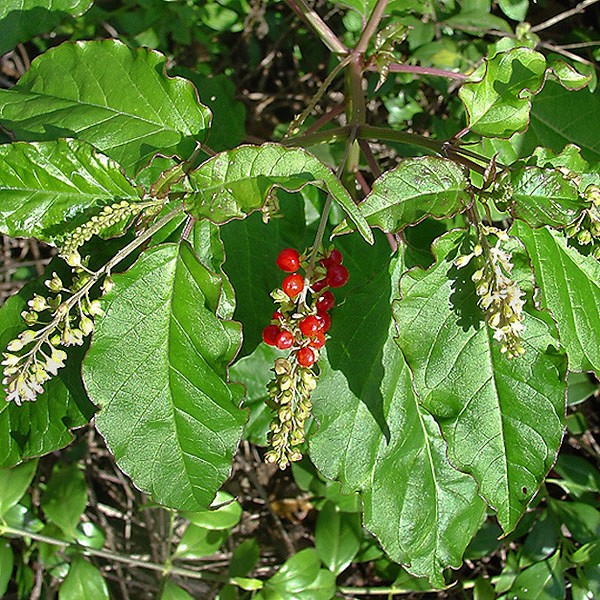
Bloodberries (by John Bradford)

Bloodberries (by John Bradford)


The original natural native boundaries are tough to pin down for weeds, in today’s case probably from the southern U.S. down deep into tropical America and the Caribbean.  The red-berried wonder now spans the warm climate world, and here is a case where our well-behaved local wildflower is an invasive menace scattered on the other side of the globe.

How does BB jump those miles?  Answer #1:  Those scarlet berries are bird candy.  Back to that in a moment.  Answer #2:  Who’d be surprised if this often-coastal plant floats a bit. More on that momentarily.   Answer #3:  Gardeners see it as a shade-tolerant dash of color, and who’d be surprised if ancient folks had a hand in relocation too…those red berries are striking and have ethnobotanical histories, especially, according to botanist Dan Austin in treating diarrhea.

Are the berries safe to eat?  No.  Commercial interest in this question stems from the possibility of using the juice as food coloring.  The red pigments are akin to those in beets.  Laboratory rats tolerated the juice, short-term…but leave these plants out of the kitchen!  They are related to pokeweed, which has subtle toxins effective at minute concentrations, which makes me nervous about Bloodberry.  But who needs subtlety and low concentrations?  A little Google-tickling reveals poisonosity.  Question answered.  (Gardeners and nibblers take note.  The dangerous berries might appeal to children.)  By the way, keep the cow away, the toxins taint the moojuice.

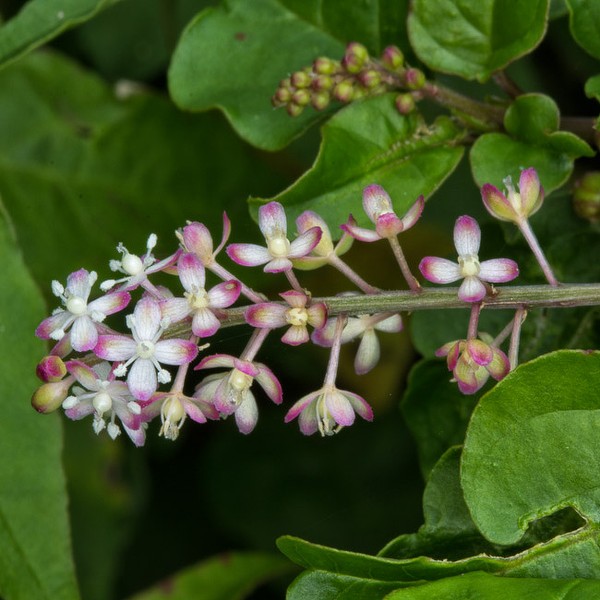
The flowers (by John Bradford)

The flowers (by John Bradford)

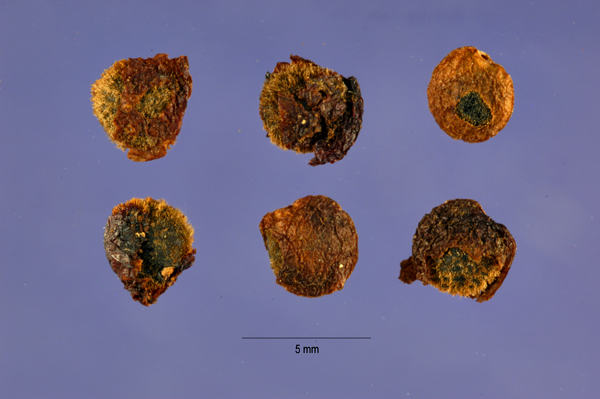
Every plant has its weird point.  And here it is, drumroll please:  The seeds are hairy.  Big wup!  No, hang on, that’s not it, so here is the weird part—the hairs are not really hairs; they are the inner layers of the fruit wrapping the seed coat in inflated bumps.  That’s so contrived there must be a good reason for the contrivance.  We can speculate:

Often small seeds and seedlike fruits—especially in moist habitats—have varied bumps, lumps, and “hairs.”  Flotation help?  Devices for clinging to muddy bird legs for dispersal?  Padding?  Protection? Nobody really knows, probably all of the above in varied doses depending on the species.  If we take those bloody berries to be essentially bird-dispersed, my guess is that the bubble wrap protects the seed’s passage through a bird, grinding gizzard and all, just like bubble wrap protects a glass bowl’s passage through Fed-Ex.  And once the seed pops free of the bird, maybe a little extra flotational padding helps the pretty and poisonous species invade exotic places.

The bubble wrap seeds (U.S. National Seed Herbarium photo)

The bubble wrap seeds (U.S. National Seed Herbarium photo)

 
10 Comments

Posted by on August 7, 2014 in Bloodberry


Tags: ,