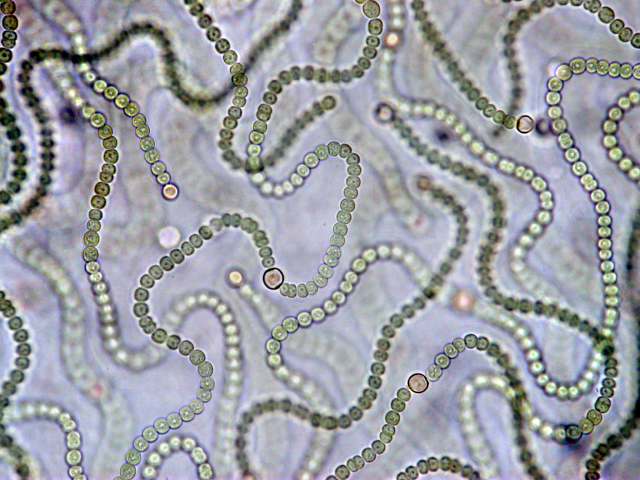
Hey I’m no expert on cyanobacteria, but exploring nature, peeping through microscopes, and teaching botany, they crop up. Having the amazing ability to type words into Google and to read the results makes me a qualified Internet pundit! I self-declare a Ph.D. in cyanobacteriology.
Pundits love to define terms. Algae and so-called bluegreen “algae” are a point of vocabularial confusion apparently beyond the comprehension of newscasters. A complicating factor is that “algae” is a tough term to define, more descriptive of a lifestyle than of biological relationship. A grab bag of simply constructed non-flowering water-dwellers. That is a license to use a term loosely. Yet there is another way to see it. Bacteria are more crisply defined. Bacteria (and Archaea) are profoundly different from all other living things, right down to their basic biochemistry. For vocabulary lovers they are prokaryotes as opposed to the eukaryotic algae. The bluegreen “algae” are bacteria, cyanobacteria.
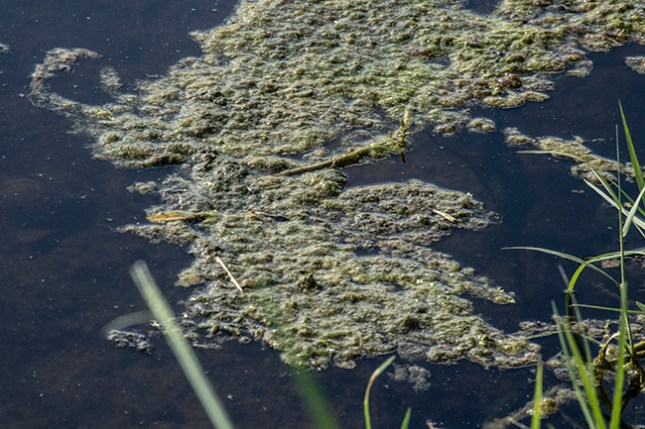
Cyanobacteria crop up in disparate contexts:
- As symbionts, the main “botany classroom” role. Cyanobacteria are “good guys” as the right species in the right roles. Many cycads have “coralloid roots” poking aboveground looking pathological but actually inhabited by beneficial, symbiotic, photosynthetic, nitrogen-fixing cyanobacteria. (Nitrogen-fixers convert atmospheric nitrogen to “fertilizer.”) If you bust apart the floating fern Azolla…lots in South Florida…it has cyanobacteria folded into its leaves, making it a rice paddy fertilizer. Cyanobacteria can inhabit the traps of carnivorous bladderworts and turn up inside hollow-water-holding cells in sphagnum moss. The “alga” in some (cyano)lichens can be a cyanobacterium.
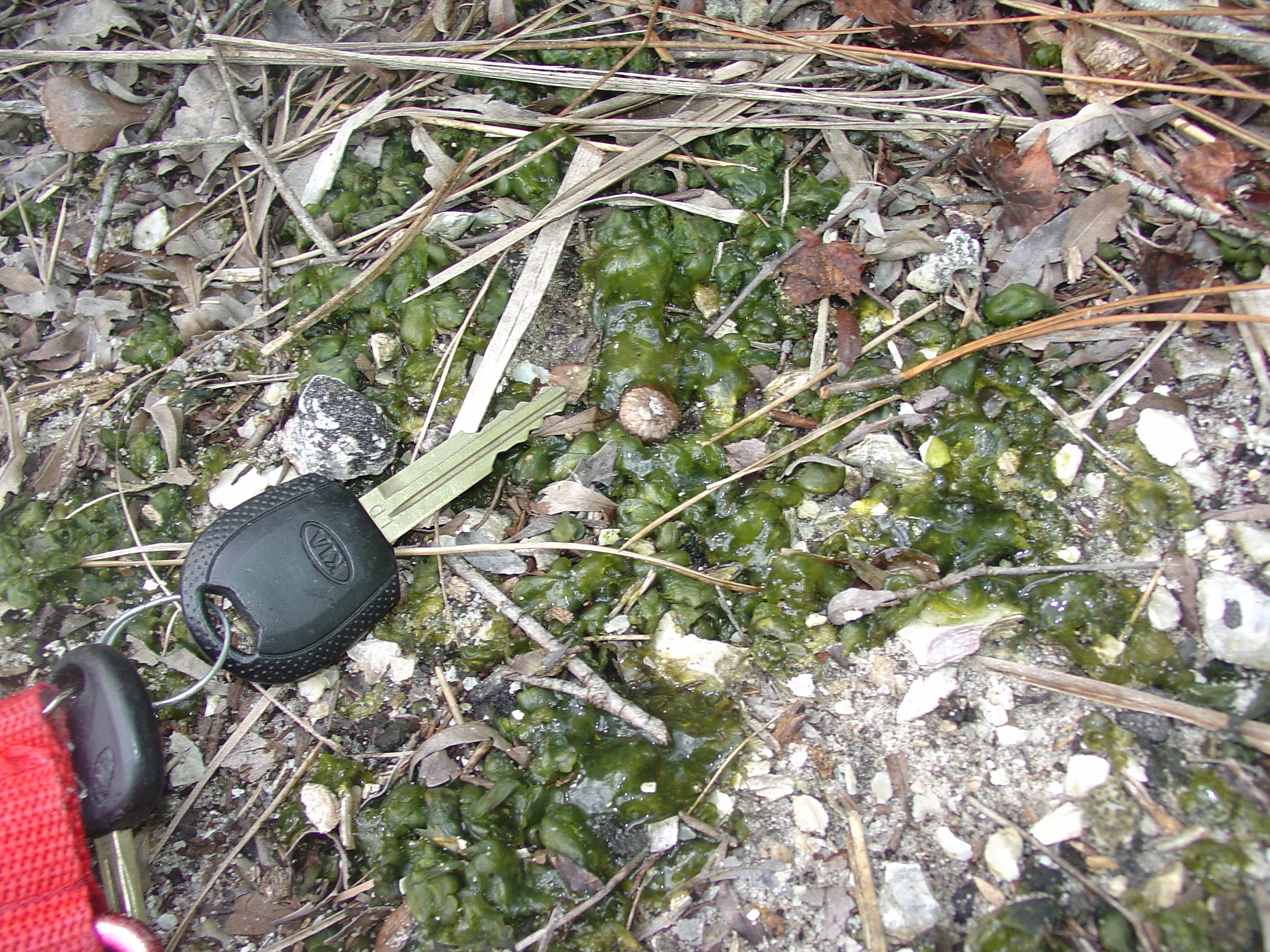
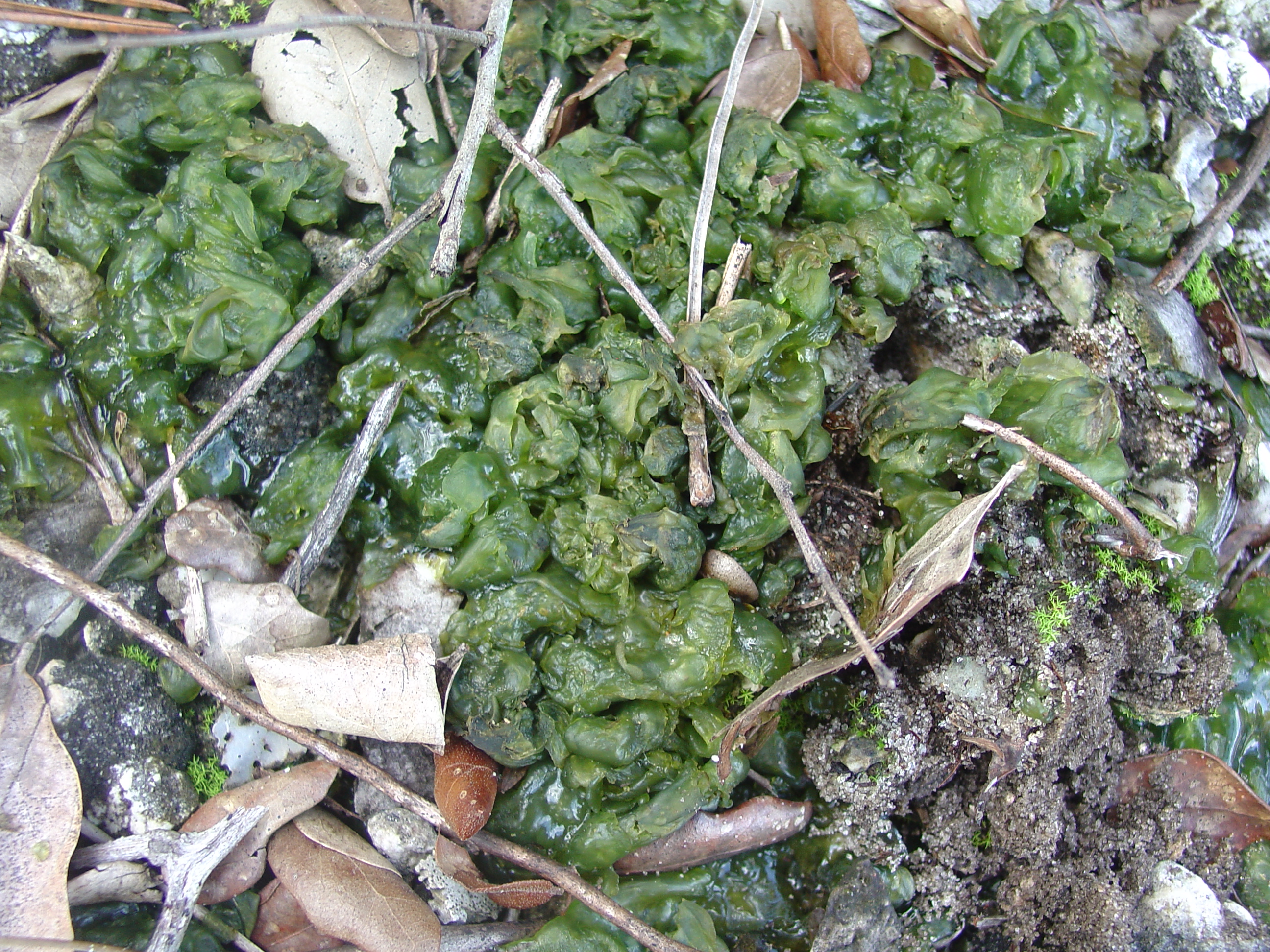
- Nitrogen-fixing cyanobacteria living freely, or perhaps not completely free, in the dirt and in hydric soils bring nitrogen to the earth. During wet weather, great green globs of cyanobacteria jelly rise into prominence on the soil surface.
- On wet surfaces. Sometimes before I powerwash the patio, it is interesting to scrape the stains and see under the microscope who it is: fungus? green alga? cyanobacteria? Often the last-mentioned looking like dark pain on concrete and stones.
- In canals, lakes, and rivers. Summer in Florida, and “algae” in the news again! True algae, cyanobacteria, aquatic weeds, associated microbes and creatures, red tides, and dead zones are all part of the evil syndrome relating to our over-fertilized, over-nutrient-enriched, over-hyped Florida active adult lifestyle. We’re a wet state, not that these problems are unique to Florida, and natural aquatic systems did not evolve dealing with all the nitrogen, phosphorus, and other nutrients humanity puts in the water. Natural ecosystems evolved in a balance with “normal” nutrient levels, and when the levels skyrocket, some lifeforms suffer, while others benefit to the point of trouble.
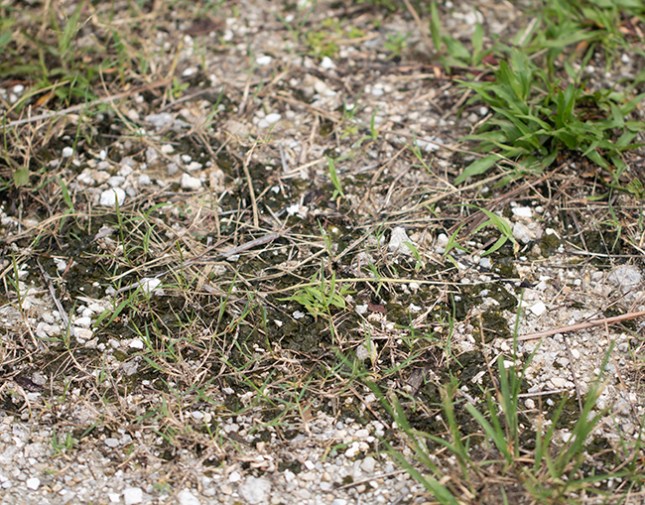
Rising from the wet earth
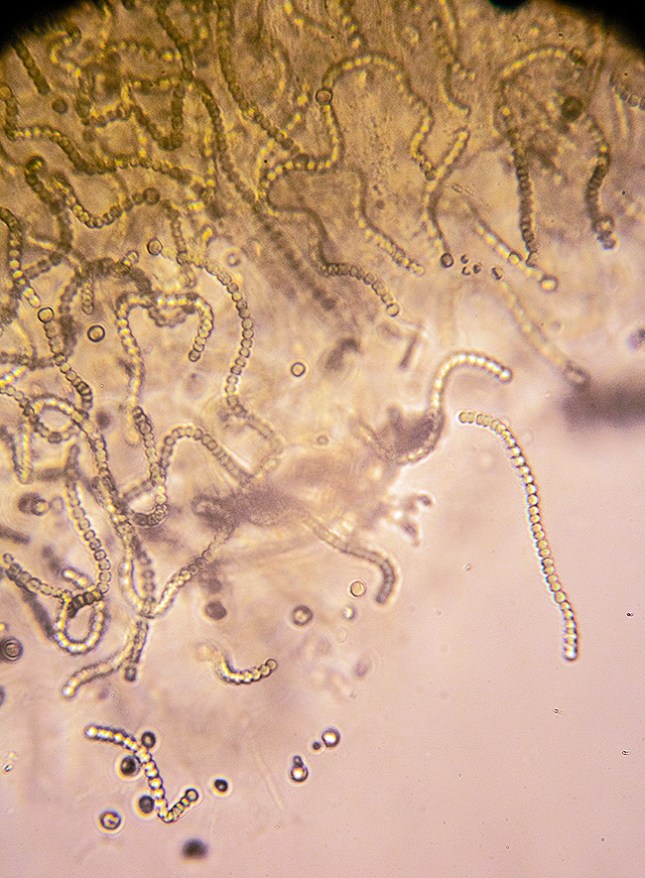
Same as above, microscope view.
A windowsill experiment to see this is to put pondwater in four soda bottles. In one bottle put no fertilizer, and then increasing amounts in all the others. One drop in one, two drops in the next, and so forth. Wait a month. A harmful algal bloom right before your eyes!
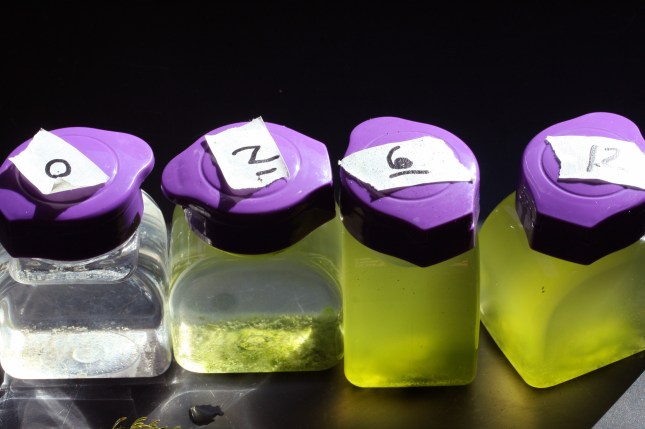
How many sources of nutrient enrichment can you think of? Organic decay, sewage, septic systems, manure, biosolids, fertilizers. Twenty-some million Floridians and tourists generate oodles of sewage. Treatment does not remove all the nutrients, even passage through artificial wetlands. One way to shed nutrient-loaded sewage treatment water is as reclaimed irrigation water, inviting turf and ornamentals to take up the nutrients, and those nutrients are back into the ecosystem.
Agriculture comes up in the news about the polluted Lake Okeechobee system: manure, fertilizers, backpumping. And then there are biosolids, treated sewage sludge spread onto the earth.
As anyone who watches the news would know, releasing nutrient-enriched waters from Lake Okeechobee causes unwanted aquatic life where the water goes: unnatural weed infestations in the Everglades and harmful algal/cyanobacterial blooms along the rivers draining the lake, extending into the sea. That unwanted growth, especially the cyanobacteria “algae,” make dangerous toxins.
There are plenty of targets for the finger of blame, and authorities from whom to demand action. No need to repeat the usual list of suspects. I would not want to be any of them, because cures are not obvious, nor without downsides, and as Pogo croaks from the polluted swamp, the enemy is us. Florida was never meant to host a gazillion people.
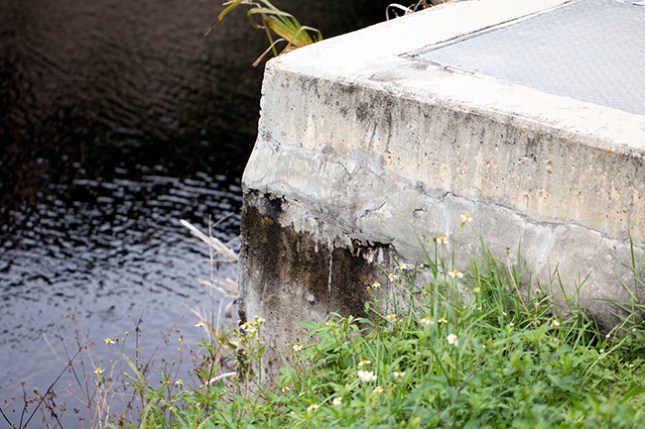
Many stains on rocks and concrete are cyanobacteria.
Which sources of trouble can we control? Ample room for argument, but most controls will be tweaks, details, adjustments, NIMBY, and redirections. How do you diminish sewage nutrients, agriculture, and too much rain in Lake Okeechobee (restore more natural outflow?)? Curtail Florida development? Heresy! Seems to many observers, and recall my amateur status with no data, one actionable point might be limiting residential fertilizer applications, which might mean we don’t all need a big sprawling St. Augustine lawn.
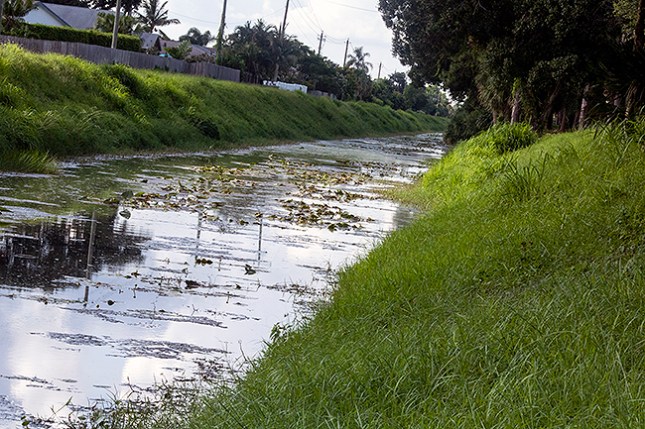
Cyano-soup
It isn’t just the Lake Okeechobee system of course. This summer the eutrophic canals and ponds suddenly have smelly floating mats of green. Close examination of a floating mat is eye-opening. Tried it yesterday in a stagnant canal in Jupiter, speaking over over-development.
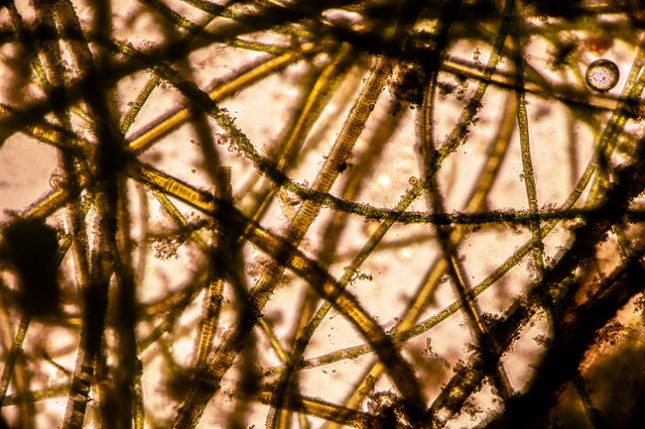
The mat from canal yesterday, dominated by Cyanobacteria (the striated filaments).
The mat is a tapestry dominated by filamentous cyanobacteria (marked by their cross-striations) interwoven with filamentous algae, varied single-celled algae and alga-like organisms, wriggling animalcules, and decaying globs of organic matter. Those decaying globs sink, stink, and take up oxygen as they go.
CLICK for a 40 second flyover.
One of the abundant filamentous ones is called Oscillatoria. It wiggles like some sort of mud-dwelling worm. CLICK to see the wiggle (about 40 seconds).
This may be an artifact of my limited experience, but that experience so far finds unicellular (sometimes clinging into clusters) cyanobacteria in the St. Lucie River, with the filamentous types (strings of rectangular or circular cells) in the floating mats on canals.
 John Bradford
 George Rogers
 George Rogers
 Dee Staley
 Treasure Coast Natives