RSS

Lazy Jack Hanging in the Bush

Jack in the Bush, Siam Weed

Chromolaena odorata

Asteraceae

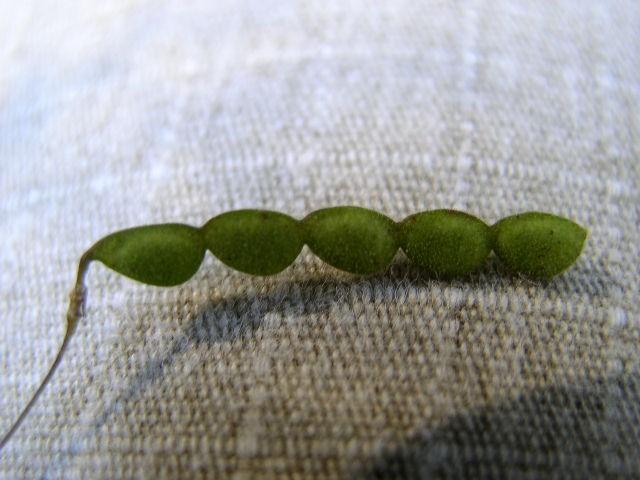
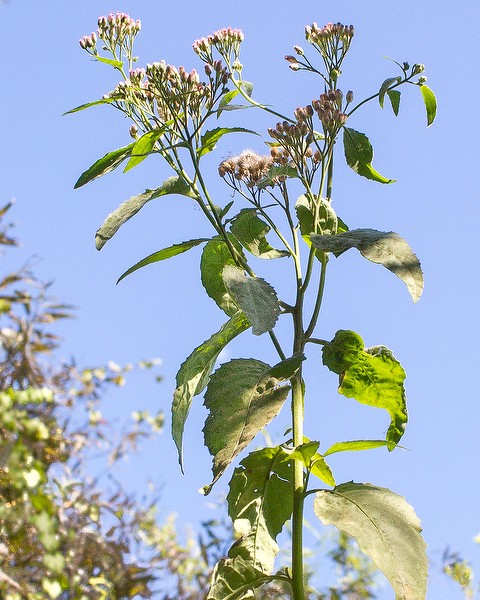
John is away for a couple weeks so I must represent alone, although that’s easy after a week of class field trips.   A curious species often encountered in class is Jack in the Bush, a native with a big personality in disturbed places, usually sunny. It is a native in Florida but a mixed minor blessing and major horror escaped invasively around the tropical world.
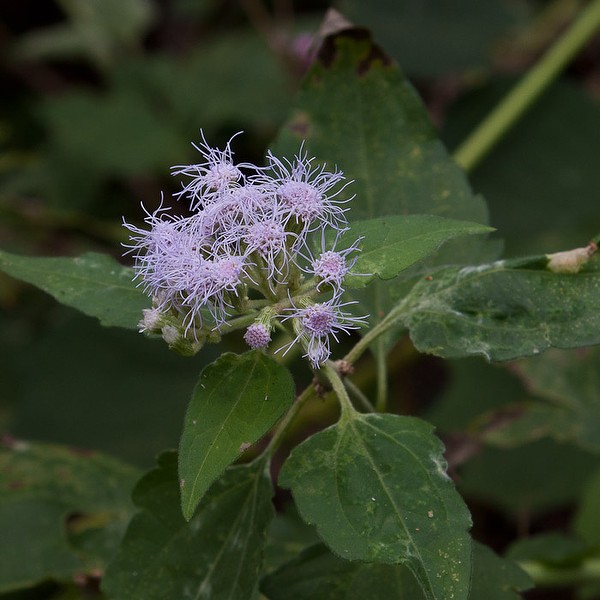
Jack with violet flower heads (by John Bradford)

Jack with violet flower heads (by John Bradford)

A problem with deliberately introducing plants and beasts—and in some marriages—surfaces when minor blessings later turn into major horrors.   Jack in the Bush has spread far and for different reasons, including during WWII on equipment and personnel, as a living mulch, as a cover crop, and in coffee plantations.   Why is it deliberately spread?   The robust growth crowds out other weeds, is reportedly allelopathic (naturally herbicidal), insect and nematode repellant, and easily generated green manure. It is beneficial to some fallow fields. And being so utterly willing to grow anywhere, our species has attracted attention as a potential cover for mine tailings. Hooray. Bring it!
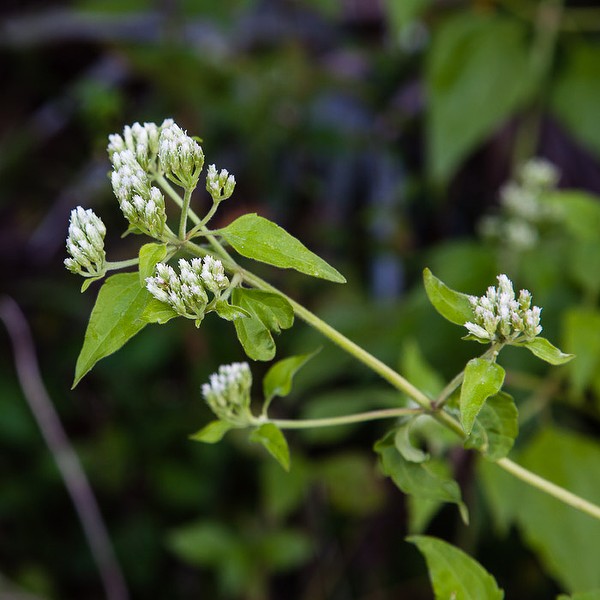
Jack with white heads (JB)

Jack with white heads (JB)

Too bad it grows too well, and in Africa, India, Asia, and beyond Jack has gone crazy, dominating farm fields, disrupting cropping cycles, invading tree crop plantations, and becoming a general smother as well as hosting pest insects and probably pest fungi. The leaves are petri dishes hosting powdery mildews and many other fungi. Researchers have found the soil near Chromolaena to be oddly high in the spores of certain molds, as if somehow promoting them.

Derisive common names are revealing, such as “King Kong,” “Cholera,” and Rey de Todo (King of Everything) reflecting an imperialistic tendency to form vast single-species stands.
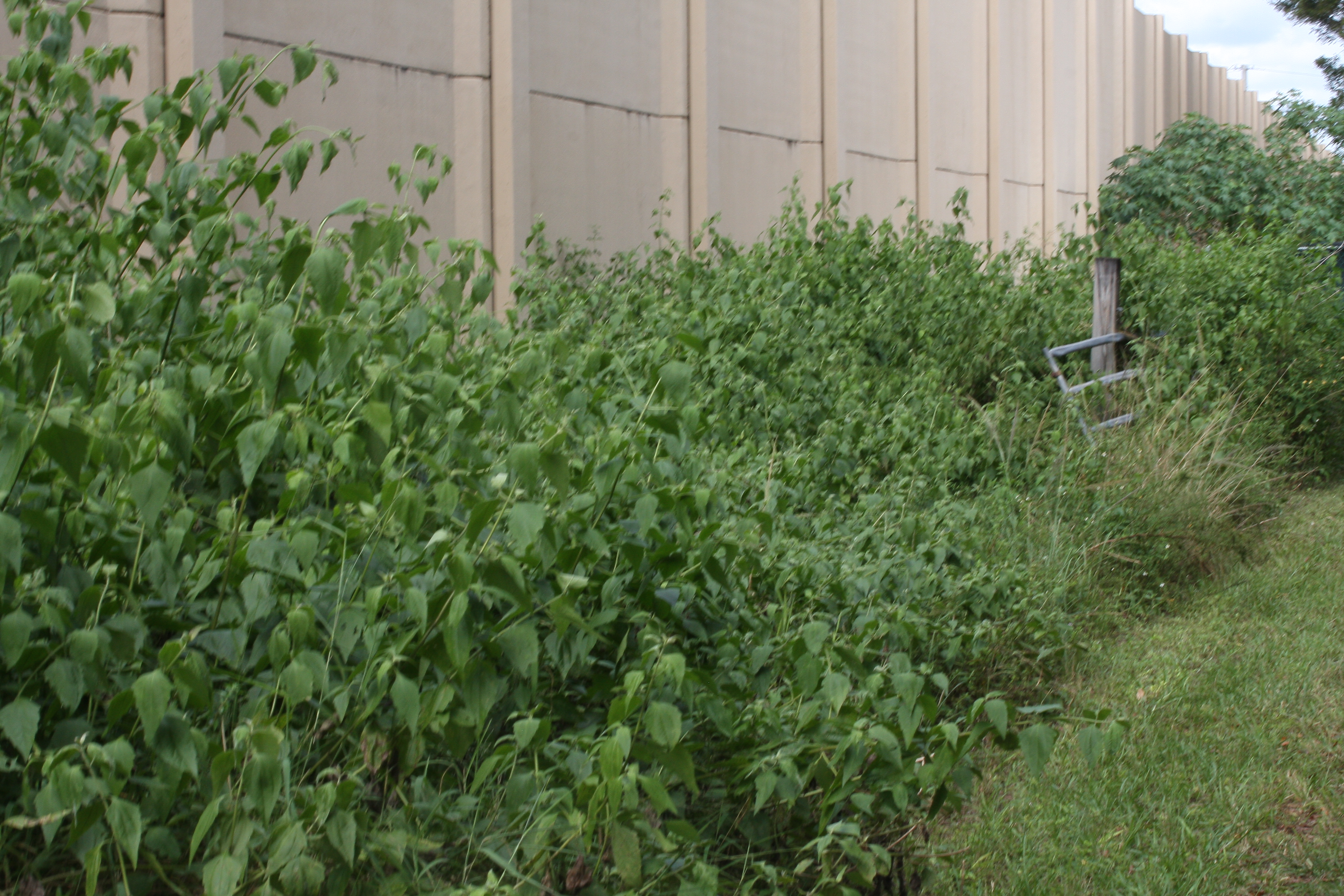
Rey de Todo (See how it looks wilty?)

Rey de Todo

This plant knows how to grow. Is it an annual or perennial? Both. Whatever top growth survives drought, fires, grazers, and mowers from year to year resprouts from buds.   It can regrow directly from the roots, which can enlarge into immortal storage organs, and from tiny seeds (achenes) blowing forth on parachutes to new colonization opportunities as crowded as 2000 seedlings per square meter. Once the growth starts, stand back, as observers have noted, “it grows like a crop.” If the main stem finds a support it can shoot up to 30 feet. If no support is encountered, side branches take over, often growing out at right angles. Growth rates can exceed an inch a day.

The flower heads have an odd trait: variable coloration, whiteish, bluish, violetish, and pinkish. That might tie in with the dozens of butterfly and moth species recorded to visit and pollinate. With so much help the plant can establish anywhere. And who needs butterflies anyhow? It reportedly can set seeds clonally without benefit of bugs.
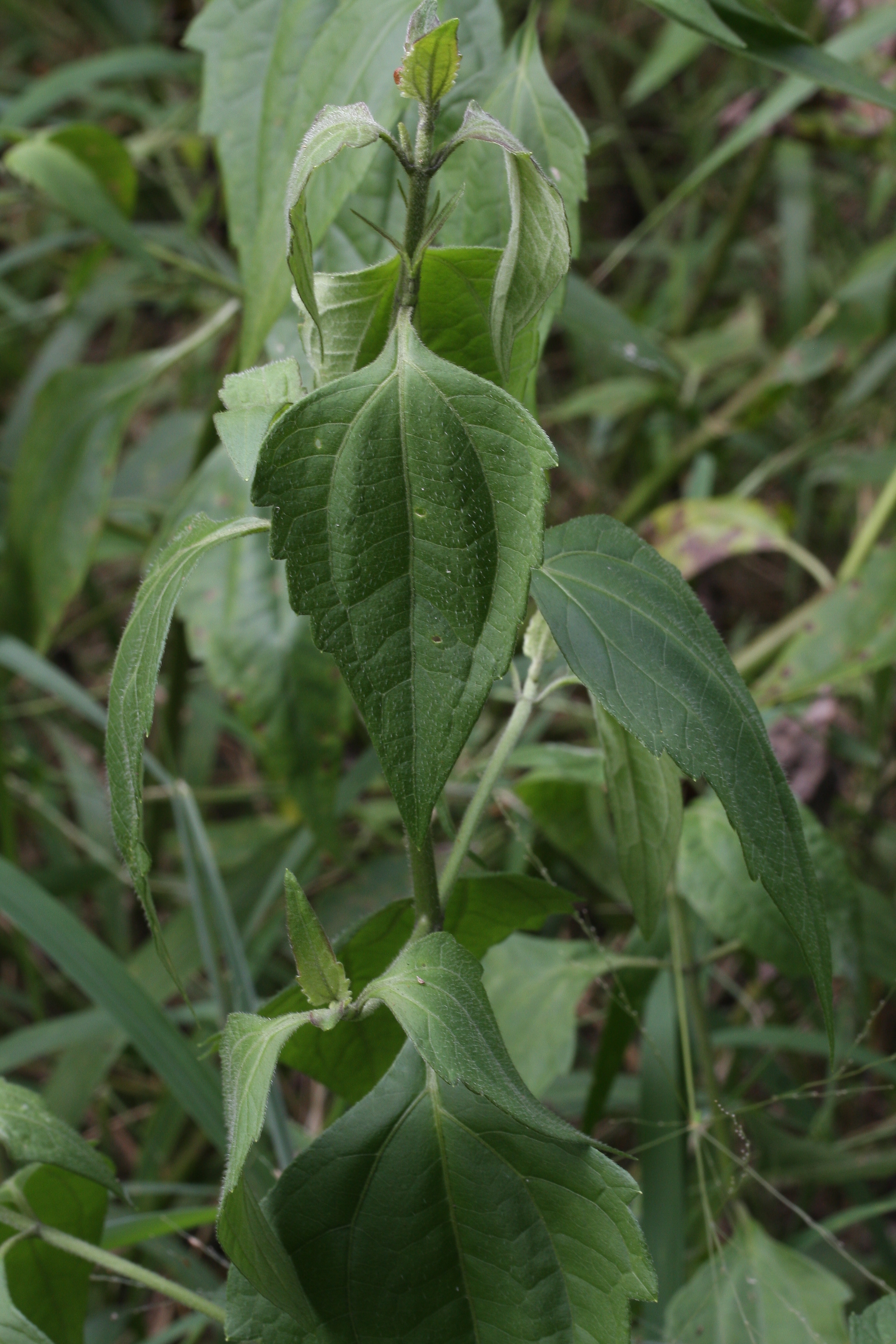
The plant is wilted when nobody else is.

The plant is wilted when nobody else is.

Reluctant to stand on its own two feet, Jack is sort of a shrub, sort of an herb, and prone to sprawl across and climb more substantial shrubs.   Why form wood when others do it for you? Cut open the stem, even a big one, and you find it to be made disproportionately of pith, soft, cheap, air-filled “styrofoam,” easy, lightweight, and fast to make, and of no substance.
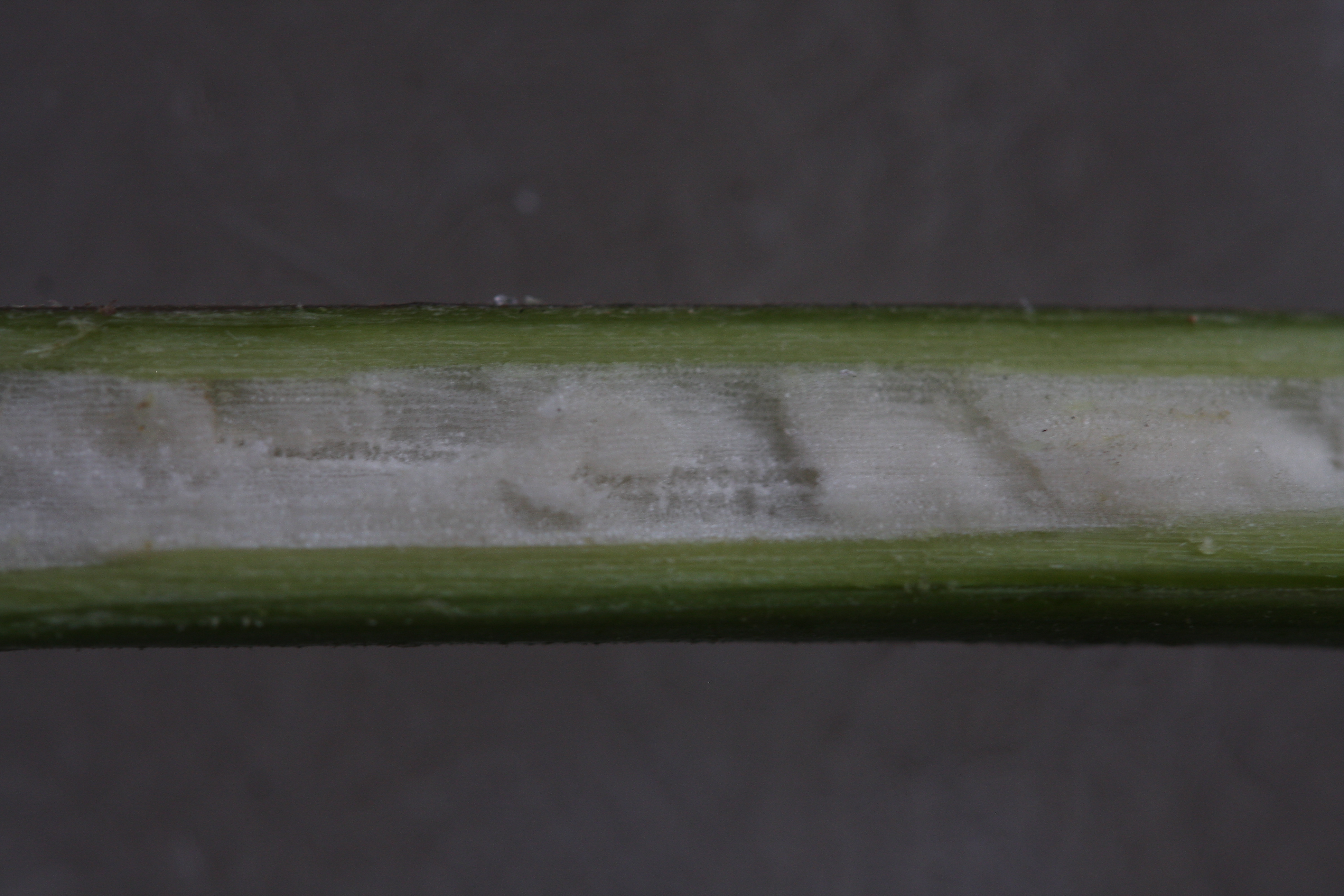
The stem has more soft but useless pith (white) than supportive water-conducting wood (light green).

The stem has more soft but useless pith (white) than supportive water-conducting wood (light green). “Quick & Dirty” No wonder it flops.

That probably explains why Jack in the Bush so often looks wilted.   Water travels in wood (xylem), not in pith (parenchyma). So if your stem is super pithy and deficiently woody, you probably can’t move much water. If you can’t move much water you could spend a lot of time wilted. Ecologist K. Naidoo discussed “severe wilting” of Jack in the Bush as a probable adaptation to help with water use efficiency and avoid leaf damage at times of water stress.

There’s an apparent trade-off in play, just speculating.   Lightning fast growth at the cost of building a soft flimsy stem with minimal water-conducting wood. Let the host plant supply the support, grow like mad when there’s plenty of water, and take it easy wilted in the meantime.
 
9 Comments

Posted by on October 24, 2015 in Jack in the Bush


Tags: ,

Confounded Compounded Leaves

John and I visited the woods yesterday and watched an ant crew complete with supervisors, guards, overachievers, and slackers hauling bits of fungus and winged pine seeds along a 10 foot trail (= 5 ant-miles).   They extract the core from the pine seeds and ditch the wing. The size of the pine seed relative to an ant is about like an airplane wing relative to a poodle. And now on to native plants.

The forms and functions of leaves may be boring, but boring is my middle name. So today’s topic is boring compound leaves. To talk about a topic we better define it. My Webster’s Collegiate Dictionary defines compound leaf as…..Dontcha just hate presentations that start like that!?
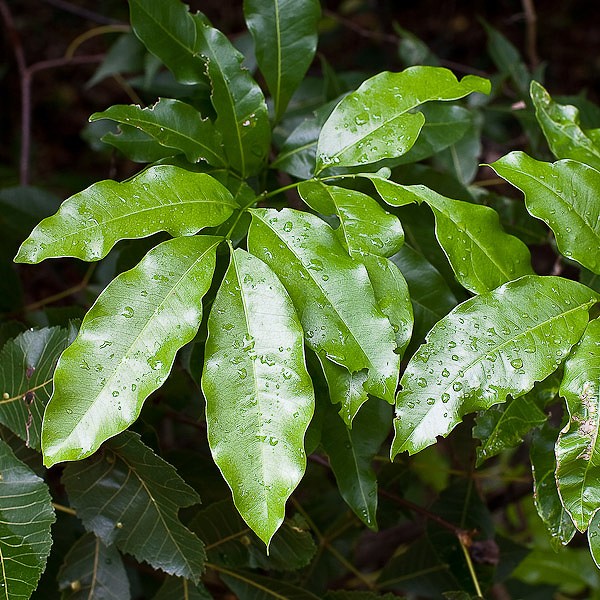
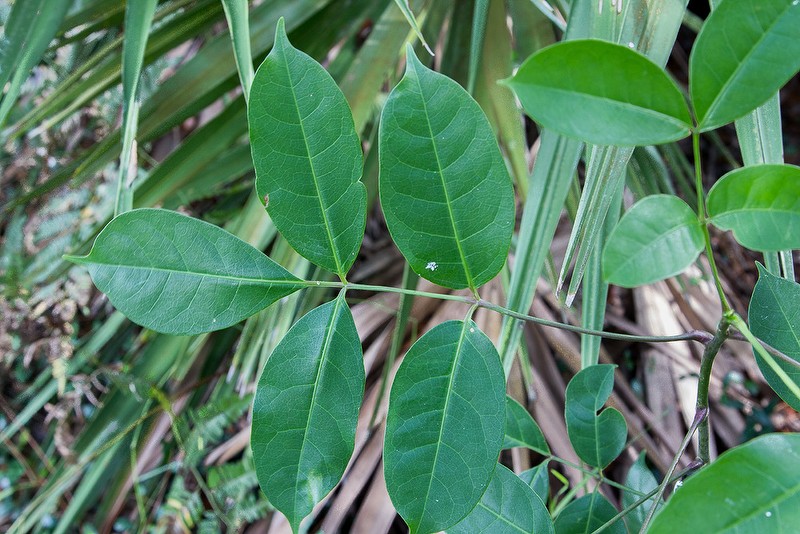
Here is a single compound leaf on Gumbo Limbo, with 5 leaflets. The leaf ends in a leaflet. (All photos today by John Bradford)

Here is a single compound leaf on Gumbo Limbo, with 5 leaflets. The leaf ends in a leaflet. (All photos today by John Bradford)

A compound leaf is a single leaf that looks misleadingly like a stem with multiple small leaves.   The small fake leaves are called leaflets. Now ask, what’s the difference? Most leaves, compound or not, drop free as single units. A stem-leaf junction is always immediately below a bud, but a leaflet revealingly has no bud.  A stem ends in a bud, but the compound leaf stalk ends in a leaflet or it just peters out budless. Examples of compound leaves are plenty. A vegetable gardener says green beans.   A suburban landscaper might cite Schefflera. A fruit fancier could think of starfruit. Stonewall Jackson may mention hickory. Teenagers behind my fence know of marijuana. Those who loath invasive exotics lie awake over Brazilian Pepper. Native plant enthusiasts have umpteen examples. Enjoy a dozen:

  • Ash
  • Paradise Tree
  • Hercules Club
  • Wild Lime
  • Torchwood
  • Elderberry
  • Most ferns
  • Coontie
  • Poison Ivy and Poisonwood and Poison Sumac
  • Milk Pea, Cow Pea, Butterfly Pea, Rosary Pea, Partridge Pea, Sensitive Pea
  • Bay Beans, Coral Beans, Velvet Beans, Cool Beans
  • Things that stick in my socks (Spanish Needles, Tictrefoils)
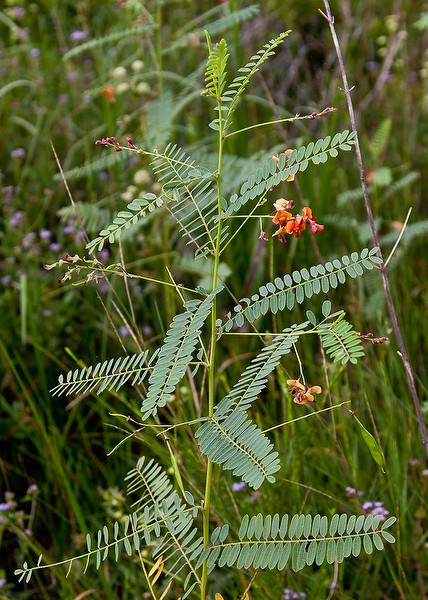
This Sesbania has about 9 compound leaflets visible, each leaf with numerous little elliptic leaflets.

This Sesbania has about 14 compound leaves visible, each leaf with numerous little elliptic leaflets.

And there exist twice-compound leaves. Huh? Ones where the leaflets themselves are “compound leaves.”   Fact is, a leaf can be twice, thrice, or more compound.   Think of some frilly ferns, or native Nickerbean. This all leads into nomenclature we shall ignore.
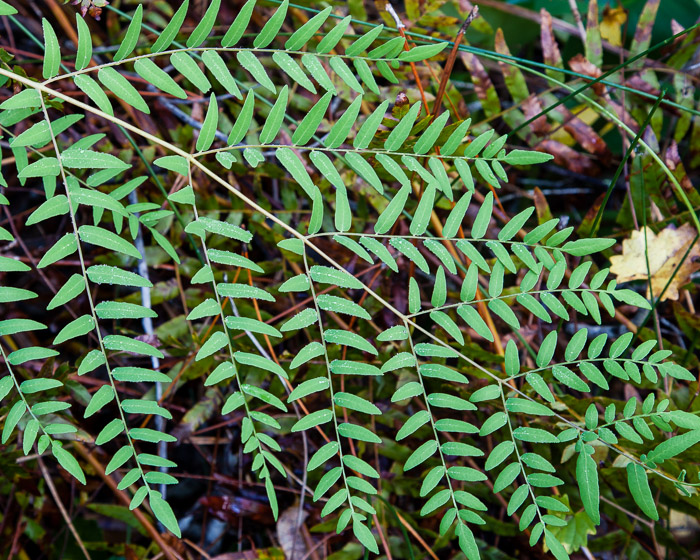
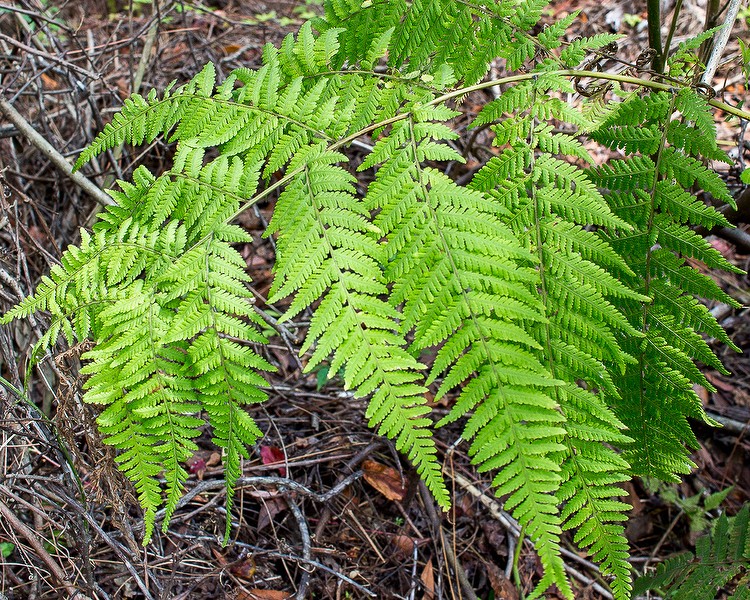
This Royal Fern has a twice-compound leaf. Only one leaf is in this photo. It is

This Royal Fern has a twice-compound leaf. Only one leaf is in this photo. It is “doubly compound,” divided into about 12 main subunits, these subdivided into numerous smaller units.

Compound leaves have evolved separately many times in numerous unrelated plant groups. Many more plants have lobed leaves approaching compound, but not quite.

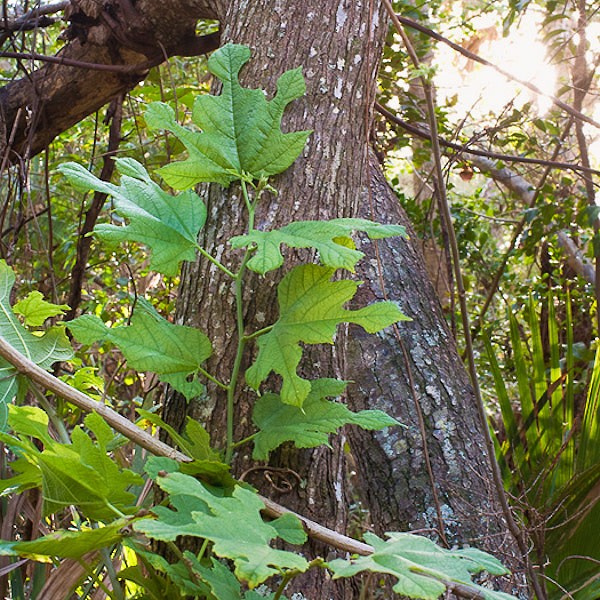
Lobed and almost compound.

Lobed and almost compound.

Some species have a portion of the leaves simple (simple = not compound), with other leaves on the same individual lobed or compound. Red Mulberry, Calloose Grape, Marsh Mermaid Weed, and the invasive exotic Arrowhead Vine come to mind. The mix reveals different pros and cons of different leaf forms depending on the leaf’s age, position, or physiological state.

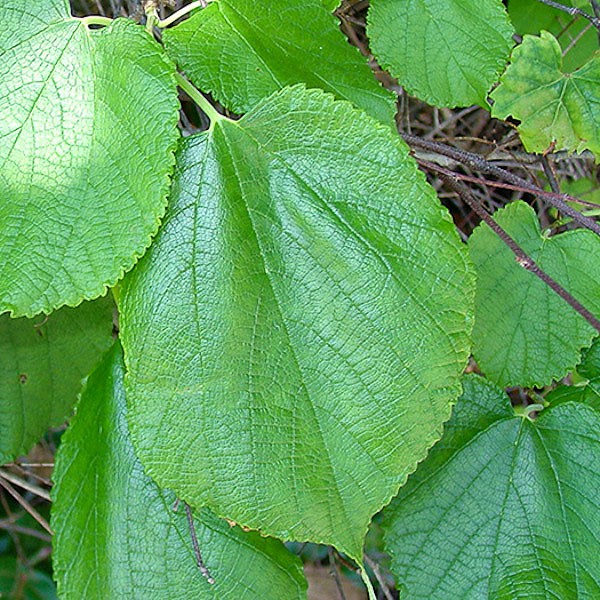
Mulberry simple leaves.

Mulberry simple leaves.

Mulberry lobed leaves.

Mulberry lobed leaves.

Bald Cypress pretends to have compound leaves in a converse fashion. Its branchlets with many small leaves behave like single “compound leaves” in the sense of being seasonal, flat, and deciduous.

As Miami botanist Steve Woodmansee recently commented on this blog, there’s an evolutionary two-way street.   Although clearly simple leaves have evolved many times into compound leaves, the reverse occurs too. A locally familiar example of compound-to-simple is Coin Vine, a Legume uncharacteristically having simple leaves.

There must be something compelling to induce “big” simple leaves to subdivide over evolutionary time into “small” more or less separate leaflets and lobes.   Many botanists have wondered why, and several answers exist, none of them “the” single revealed truth.

Clammyweed. Each leaf with 3 narrow lobes.

Clammyweed. Each leaf with 3 narrow lobes.

First off all, it might seem optimal for a leaf to be as big as an umbrella and just steal all light from competitors below.   We have solar panels on our campus as big as patio surfaces. Not many plants however evolve umbrella leaves. There must be advantages toward small independent blades.

First disadvantage of big leaves: they fray and tatter in the wind, and are “expensive” to replace.

Second disadvantage of big leaves: bright sun exposes a leaf to more light than it can handle. Too much light diminishes photosynthetic ability and generates often unwelcome heat. On average, any leaf can use only about 20% of full sunlight. A big umbrella shadowing all below is wasting 80% or more of the incoming light while suffering possible damage.   A plant is usually better served by having vertically layered smaller leaves (or leaflets or lobes) capturing collectively far more than that original 20% at the top layer.  Light becomes more diffuse deep in the shadowed understory, so that the varied orientations of the leaves, leaflets, and lobes, and their flutterings allow more efficient capture of dim light, also light angling in at dawn and dusk, and sporadic bright “sunflecks” as the wind fleetingly parts the canopy above.

Frangrant Eryngo with some fancy lobes.

Frangrant Eryngo with some fancy lobes.

Third disadvantage of big leaves: Growth is not limited by light alone.   Every third grader knows, I hope, that leaves take in bad carbon dioxide and give us good oxygen. Breezes blowing across small leaves, leaflets, or lobes are more effective at gas exchange than those passing over large surfaces.   Bigger surfaces have more surface-breeze friction. Also, the margins tend to be younger fresher tissue. It is easy to show as a classroom demonstration more photosynthesis happening near the margins than “inland.”

Fourth disadvantage of big leaves:   As foliage absorbs solar energy it doesn’t merely photosynthesize, it heats up, and heat stress can be trouble. Without protective adaptations leaves would sometimes be hotter than the surrounding air, but they have evaporative cooling. Small blades shed water vapor and heat directly to the air better than big leaves. (By the way, on cold clear nights leaf blades can be colder than the surrounding air so that the ability of smaller blades to conform to air temperatures might sometimes help at both ends of temperature stress.)

One thing I like about compound leaves is the ability for individual movement by the leaflets.   Leaf movement in response to built-in rhythms and to environmental cues, including light vs. dark, is fascinating, especially in complex compound leaves.

In Pigeon Pea the leaflets can all move in unison, resembling the blades in venetian blinds. You see it in the time lapse below experiencing the end of a day, the night, and waking up the next morning:  CLICK to see the pea

In the following time lapse through a semidark night and the morning after, the Trefoil (left) and Oxalis (right) have individual leaflets all doing their own dance. (The classroom lights come on a couple times early in the evening— cleaning crew/security guard.)  CLICK

Inkwood compound leaf with 4 leaflets

Inkwood compound leaf with 4 leaflets

 
14 Comments

Posted by on October 18, 2015 in Compound Leaves


Tags:

Coastalplain Golden Aster and the Florida Marcescent Lifestyle

Chrysopsis scabrella

Asteraceae

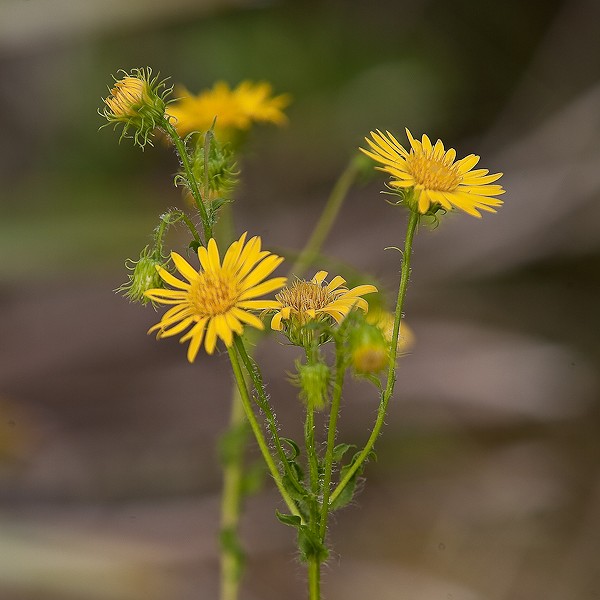
Golden Asters in the sun (John Bradford)

Golden Asters in the sun (John Bradford)

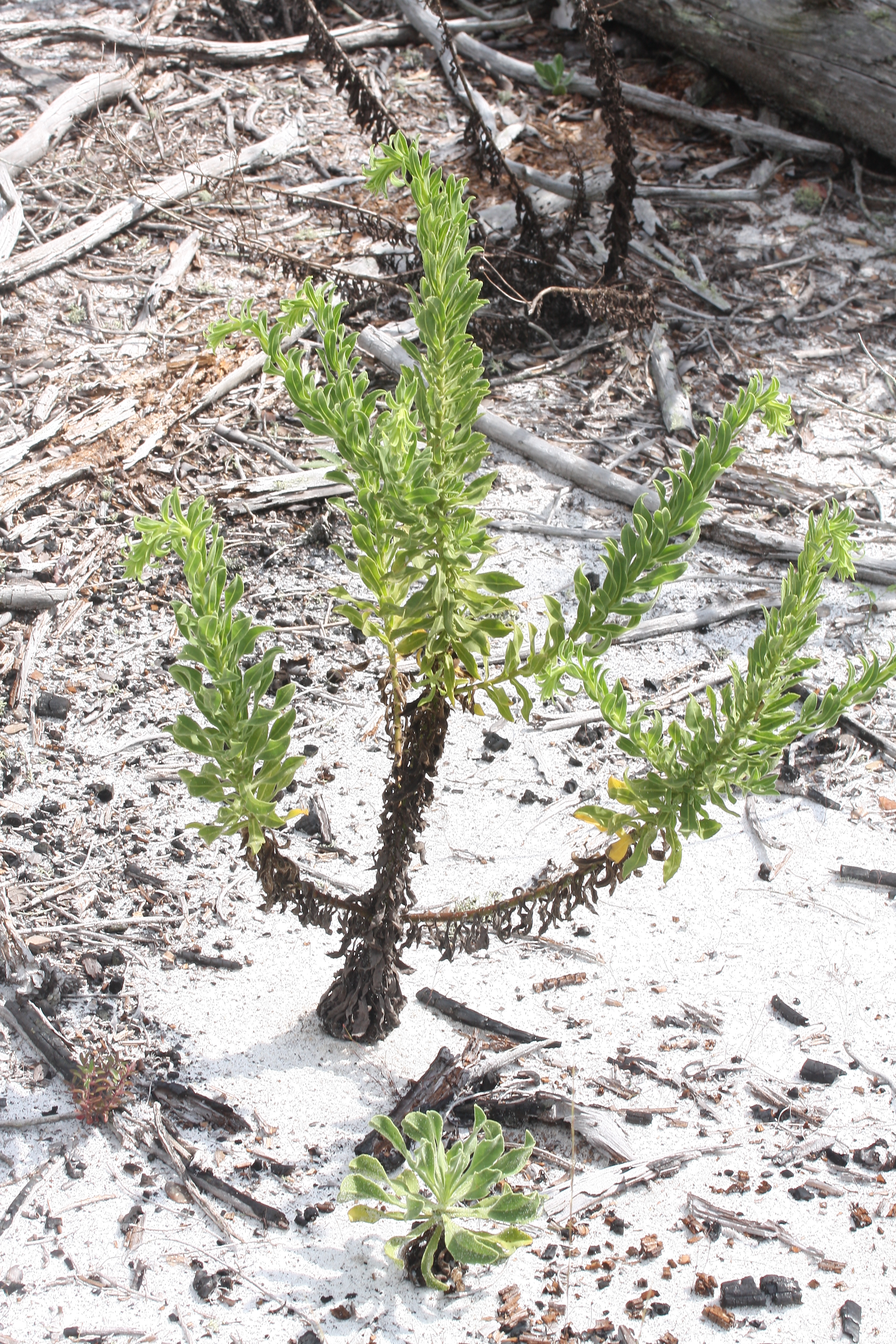
Every time John and I botanize through an open scrubby area, such as today, we enjoy an odd-looking species, Coastalplain Golden Asters rising awkwardly from the white sand at varied angles to attain irregular heights. Very martian! To add drama, the funny stems retain a covering of dead withered foliage, more properly called “marcescent” leaves.

The dead leaves stay put.

The dead leaves stay put.

Dead leaves usually fall away and decay in most plants, but not always. The Golden Aster appearance always evokes the same old memory for me. Back in the Reagan Administration I had the good fortune to work at high elevations in South America where several unrelated plants resemble Golden Aster by having marcescent leaves covering an otherwise bare stem.   Around the world, this life form has evolved repeatedly, usually in exposed habitats where a drying risk is coupled with fluctuating temperature extremes, often intermittent frost alternating short-term with warm temperatures. Of a few examples here in South Florida,  Golden Aster is the most striking.   (We’ll look at Rabbit Tobacco another day.)

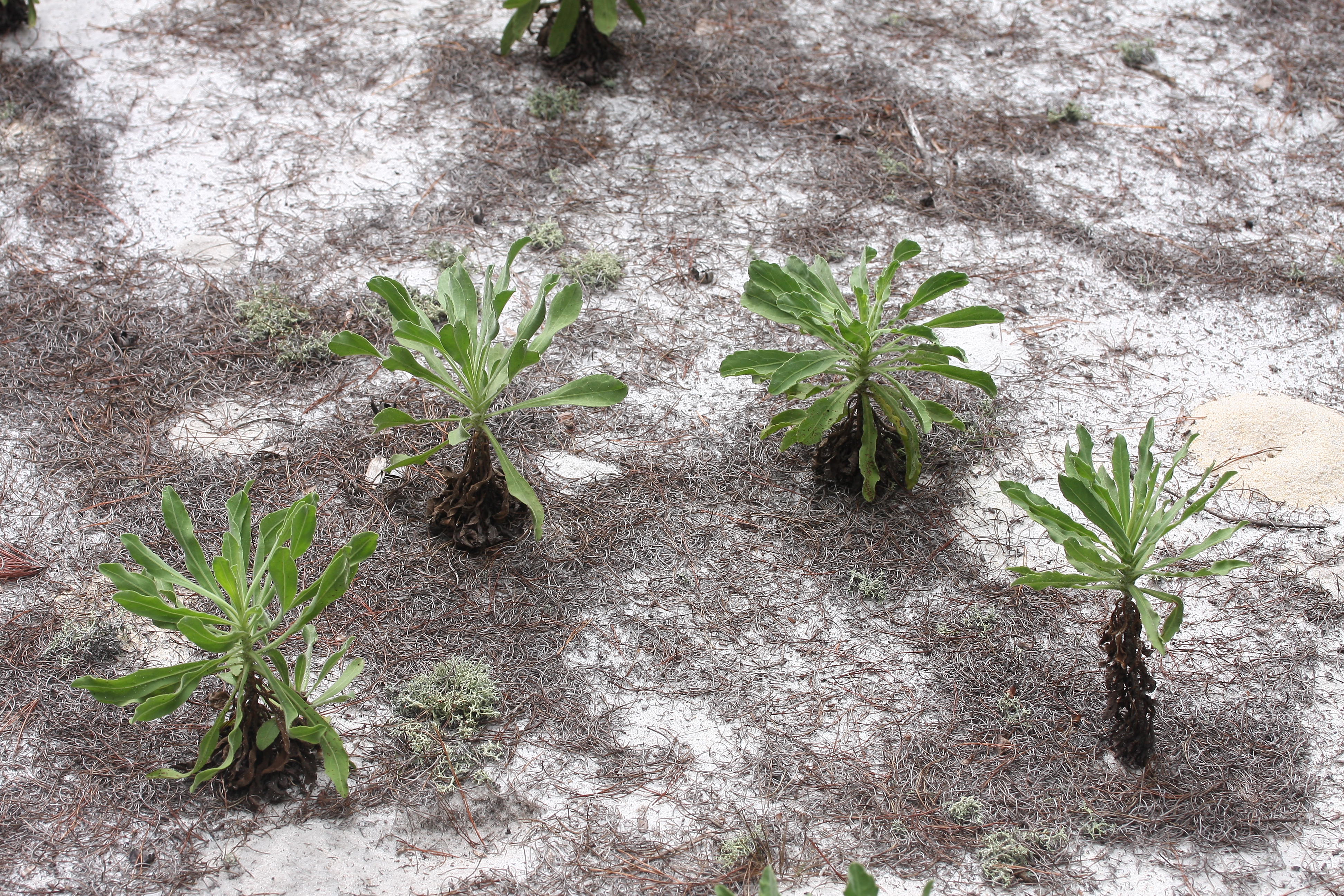
Coastalplain Golden Aster is generally described as a “biennial,” hunkered down the first year as a rosette on the ground, with the stem then rising the second year to flower and fruit.   New rosettes form at the stem base.   I’m not 100% sure the plant always obeys its biennial characterization.

Here is Espeletia in Ecuador:  CLICK

Here is Golden Aster in Stuart, Espeletia Jr.:

Every stem with a skirt of marcescent leaves.

Every stem with a skirt of marcescent leaves.

We might say blithely, “well, the dead leaves protect the stem.”   OK, but exactly how, from precisely what?   If anyone has looked into it at a physiological level in Chrysopsis, I can’t find it. But botanist Alan Smith back in the 70s took a hard look at Espeletia in Venezuela, and provides inspiration for a better look at our similar local case. Dr. Smith found the Espeletia habitat to feature strong seasonal differences in rainfall, like us. And there were wide strong short-term temperature fluctuations, like us. The greatest temperature stress and moisture stress occurred during the dry season, likewise the case in Florida if the main temperature stress is frost. (We live near the southern limit of the all-Florida geographic range for Chrysopsis scabrella.)

Smith and other botanists have interpreted marcescent leaf blankets as a buffer against fluctuating temperature extremes. Removal of the dead leaves cost a lot of Espeletias their lives.   The main apparent reason was that during times of frosty nights alternating with warm days stems with their dead leaves intact never dipped below freezing, whereas the ones with marcescent leaves removed dipped and died. Those dead old leaves don’t radiate heat at night.

It may seem odd to speculate that frost protection might be the “main” benefit of marcescent leaves, especially in a plant like Golden Aster so obviously exposed to extreme drying.   Don’t those dead leaves merely protect the stem from hot dry winds? Maybe, but two reasons suggest otherwise:

A.  In general, water loss from stems is not severe.   The stem probably does not need much protection from direct drying.  (Cacti are all-stem.)

B. Frost stress is drying stress. One of the worst aspects of frost for a plant (in a not-very-frosty borderline setting) is that freezing in the stem diminishes water passage from the roots to the leaves. An plant in a super-dry setting with temperatures hitting 80 degrees by day and dipping below freezing by night has much to fear from Jack Frost.   The warm day, especially at dawn, creates high demand for water to the living leaves, but if frost-impaired stem tissue can’t deliver, well that’s tragic.  Walking through the scrub in 90 degree weather and 90 percent relative humidity, it takes some faith to see those stem-blankets of dead leaves as possible winter coats.

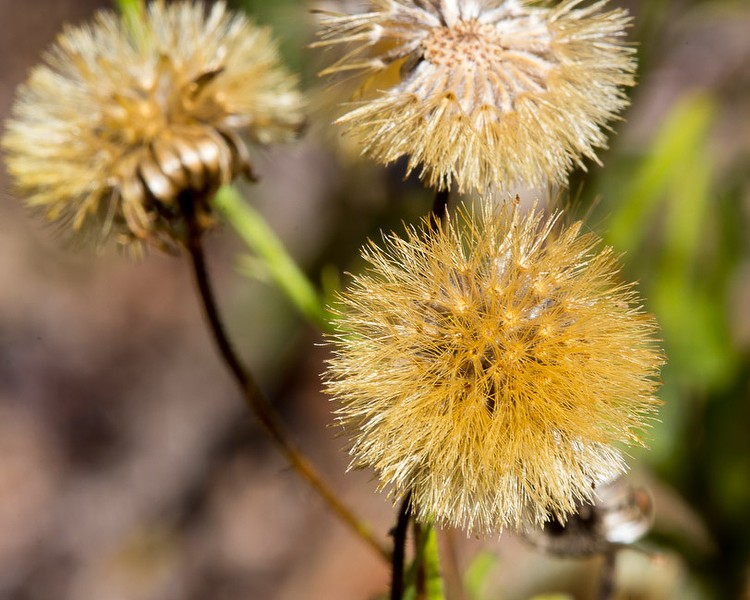
Fruiting heads (John Bradford)

Fruiting heads (John Bradford)

 
10 Comments

Posted by on October 9, 2015 in Uncategorized


Tags:

Tricky Tick Trefoils

(The pod sticks like a tick. Trefoil refers to the trifoliate leaves)

Desmodium tortuosum and so many more species

Fabaceae

This weekend’s botanical joy has been a study for plant physiology class of the leaf movements by Desmodium leaves to light changes and biological rhythms. Boring to most folks no doubt, but one of the tricky treats we all can see in this back yard marvel. The leaf bases have muscle power, true of most legumes and big-time in Desmodium. The leaf-muscles are called pulvini (pull-VINE-ee), and wiggle-waggle the leaf blades up and down in response to the plant’s wants and needs.

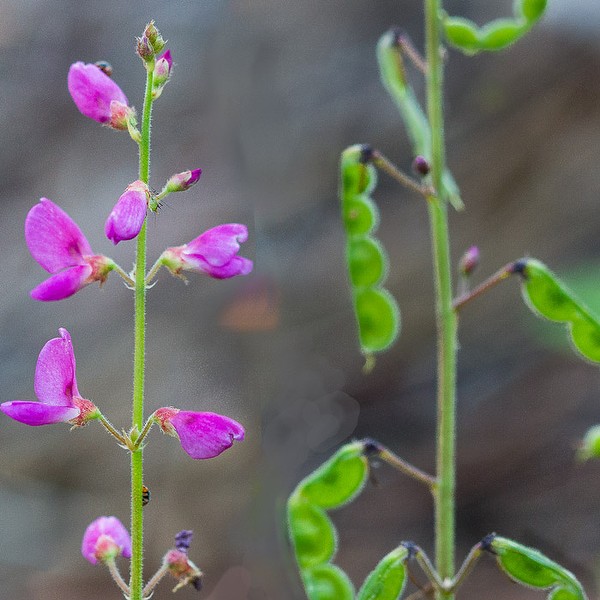
Flowers and segmented pods (John Bradford)

Flowers and segmented pods (John Bradford)

Anybody with socks or pant cuffs knows Desmodium for its laundry fun. The segmented flat pods cling to fur and fabric with hooked hairs like Velcro.   Although a hiker’s nuisance, it’s quite an evolutionary trick to take a flat “peapod,” segment it into break-apart pieces like a Kit-Kat bar, and give them stick-o-rific hairs. I find that as amazing and awesome and phenomenal as any ol’ orchid flower, but sadly there are no Desmodium Societies to join.

desmodium loment

Possibly the beggar-lice helped make Desmodium such a successful genus, with some 300 species around the world, with two dozen in Florida a mix of native, introduced, and of ambiguous nativity. Anything that clingy gets around, and how much of that travel over thousands of years is “natural” is impossible to say. Weeds is weeds.

Just to narrow the field, let’s zoom in on a big one, “Florida” Tick Trefoil, Desmodium tortuosum. The book in front of me deems it not native, but other authorities place its “natural” origins as close as Cuba, and who’s to say those pods don’t sometimes cover the 90 miles without human help! So let’s not be overly dogmatic.   In any case, humans sure have moved it around the southern U.S. quite a bit on purpose.

Here’s a case of why flip-flopping with Mother Nature is not always wise. A couple generations ago the species was “good”—even planted.   It smothered weeds. It fixed nitrogen. It was a green manure, a cover crop, living mulch.   It succeeded…opps, a little too well.

Modern Dixiemodium tortuosum tortures agriculture. (The “tortuosum” refers to the twisted pods.) It is arguably the #1 peanut weed in Georgia, prompting lots of herbicide spraying. I wonder if any gets into the Skippy. Desmo-tort pesters peanuts something awful. I just read that a single specimen about 2 feet from a peanut plant can diminish the yield by almost 20%, and just 8 desmodiums per approx. sq. yard can cut peanut production by over a third.   That’s a serious weed, and it gets in the way of adding fungicides. Farmers are lucky that Dixie Tick Trefoil is one of the few annual Desmodiums, rising up during late season growth. Certain herbicides can be timed to pass over the early-growing peanuts and to suppress the later-maturing Desmodium.

Let’s end on a more colorful note.   A curious aspect about Desmodiums is mixed flower color, even on single individuals, the combo usually being lilac flowers mixed with blue-ish blossoms (as well sometimes as white).  This link shows a mix on the same inflorescence   TRIP HERE and look closely.

Mixed colors are not rare in plant species, and are generally interpreted as a signal to pollinators conveying the reproductive status of the flower, let’s say nectar availability.   It would be reasonable to regard the changes as mere floral age, but some Desmodium species take it a step further.   The flowers have a tippy landing platform with the anthers and stigmas concealed until a bee lands, fairly standard for many legumes.   In Desmodiums, the penetrating bee “trips” the flower on a one-time basis like a rat trap.   The tripped flower pulls the trigger on the color change: “attention pollinators: this flower is taken care of, so go find another.”

 
Leave a comment

Posted by on October 4, 2015 in Baldwin's Eryngo, Desodium


Tags: ,

Dog-Fennel

Eupatorium capillifolium

Asteraceae

When it comes to enjoying plants I’ve developed the lifelong conviction that merely stepping into a meadow and making friends with the flora in front of you is a richer life museum than ecotouring in khakis to Shangri-la-de-dah.   When you step outdoors in the autumn you may run into a big smelly herb —dog fenneI*. It grows from a seed to taller and stinkier than you in a season.

Fast and aggressive, a native weed

Fast and aggressive, a native weed (Today’s photos by John Bradford)

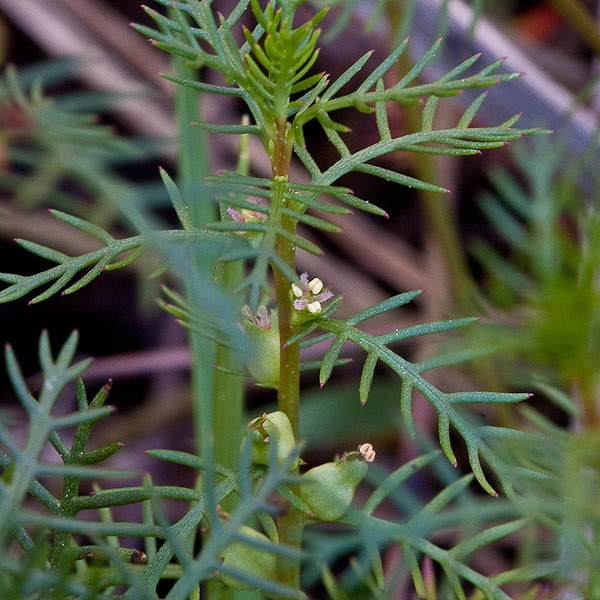
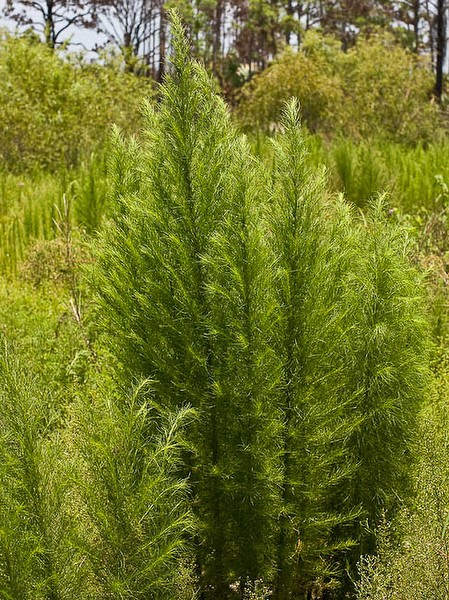
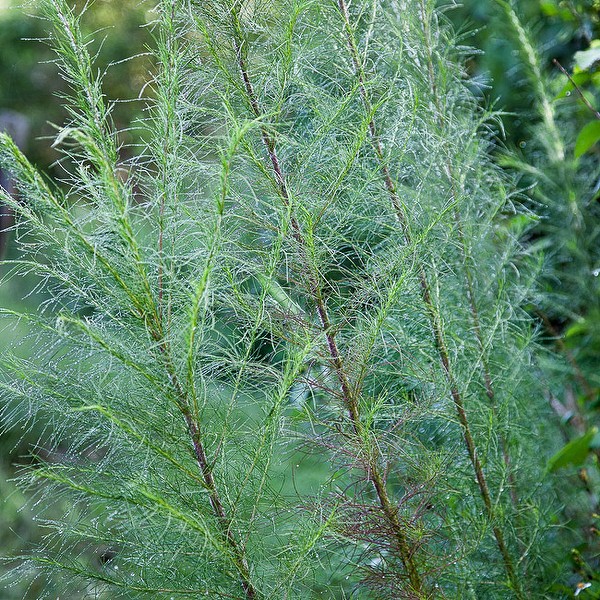
Right of the bat, this aggressive native weed has two distinctive features: a chemical odor when handled, and leaves divided into linear segments like dill. Both attributes are of interest.

I kind of like the smell.   Its obvious interpretation is anti-herbivory, a skill well-developed in the Aster Family.   Testing DF extracts as natural insecticides led one enthusiastic researcher to claim: “The dog-fennel oil was more potent than the conventional insecticide malathion.” I’m going to bottle this stuff and sell it!

The deterrence serves the scarlet-bodied wasp moth in such an oddball fashion.   Although the moth larva feeds on related species in the hempvine genus Mikania, the adult male moth acquires protective toxins from dog-fennel, and the moth’s distribution seems possibly linked to that of the plant. Now if you worry the female moth is getting cheated out of the poison, she gets her share in a way that would make Masters and Johnson blush. At party time, the male moth mists the female in a frothy love net, followed promptly by copulation delivering the protective fennel juice along with the semen.   The STI** then protects the female and her eggs.

The leaf fragrance brings us to the second talking point: blades divided into hairlike threads, which is common in aquatic plants exchanging gas with surrounding water, but frilly fringy foliage on land plants?  Why? One thought is to dispense aromatic products—disperse the feeding deterrents into the air like fogging for mosquitoes, maybe even airborne plant hormones.     Perhaps those brushlike leaves are “painting” the air.

Painting the air, or just chillin?

Painting the air, or just chillin?

But to be honest, a more likely (but not mutually exclusive) interpretation is the usual explanation for threadlike leaves–heat exchange with the air, preventing leaves from overheating, the same explanation as the plates on the back of Stegosaurus.   Ventillation.  Dog-fennel occupies hot sunny meadows where heat stress hurts.   Many meadow/scrub species have similar leaves: Queen Anne’s Lace, Yarrow, Ragweed, Prairie-Clover, Clammyweed, some Tickseeds, Herb William, and others.

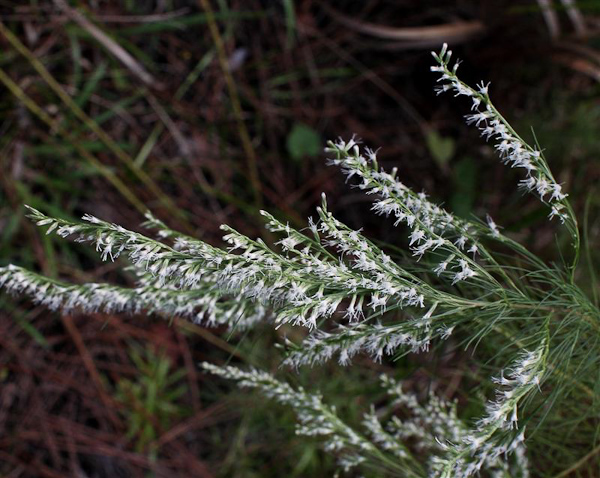
Search the Internet and conclude that wind pollinates dog-fennel. Baloney!  Here is how one blogger with more poetic ability than mine described the blossoms (accurately): “Sometime in October, tiny white blossoms burst out, abuzz with bees, butterflies, and other insects. If you get close enough, you can detect the flowers’ delicate scent.” Does “abuzz” suggest wind-pollination!?     I think that  line of malarkey represents misinformation spreading and magnifying from web site to web site like gossip through the congregation.  Or then again, maybe I’m wrong, but “flower’s delicate scents” do not contribute to wind pollination.
Eup cap flowers 1

Those plants are so pretty you can buy dog-fennel as a sterile garden attraction under the name ‘Elegant Feather’. It looks like something from an aquarium.

————————————————————————–

*Dog-fennel is part of a complex consisting locally of three highly similar variants: dog-fennel, yankee-fennel, and false-fennel.

  1. Eupatorium leptophyllum (false fennel): hairless, flowering branches bent down. Very wet habitats.
  2. E.  capillifolium (dog fennel): hairy, flowering branches not bent down, leaf blades under ½ mm wide, floral bracts (phyllaries) hairless and not glandular.
  3. E. compositifolium (yankee weed): hairy, flowering branches not bent down, leaf blades wider than ½ mm, floral bracts hairy and glandular.

** Sexually Transmitted Insecticide

 
10 Comments

Posted by on September 25, 2015 in Dog Fennel


Tags: ,

Slash Pine and T. rex

Pinus elliottii

Pinaceae

This afternoon I just couldn’t decide what to write about, and then in flew inspiration: an e-mail from PBSC Interim VP for Academic Affairs Dr. Ginger Pedersen about a state champion challenger slash pine near PBIA , and an old stand of uncut pines in Dade County.     So I’m now in a pine kinda mood, and that’s a nice way to be.    Long ago in this blog we looked at slash pine, the turpentine industry, and the nasty toxaphene insecticide spin-from that.   Today it’ll just be pretty pine trees.

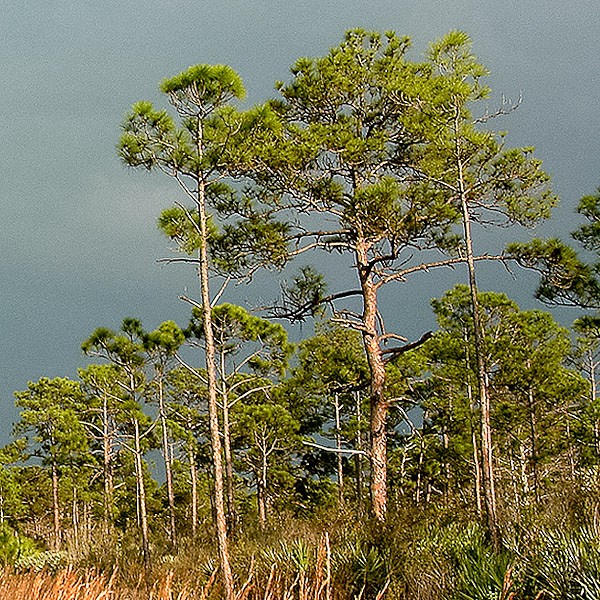
Pretty pines. Today's pictures by John Bradford.

Pretty pines. Today’s pictures by John Bradford.

Two native pines grace our immediate area, Sand Pine in scrub habitats, and Slash Pine all over the county. Divided into two varieties, the latter species is native throughout Florida and across much of the southeastern U.S., and cultivated worldwide in warm climates for turpentine, pulp, and wood. Variety elliottii is in North and Central Florida and in nearby states. Variety densa, with heavier wood and a fire-resistant grassy stage, is mostly in southern Florida, and their natural ranges don’t overlap much.

Pines are tough and diverse, a hundred species resisting drought, poor soils, and extreme weather from the far north to the equator.   Very few true pines occur naturally in the southern hemisphere (although the name “pine” gets applied to many posers).

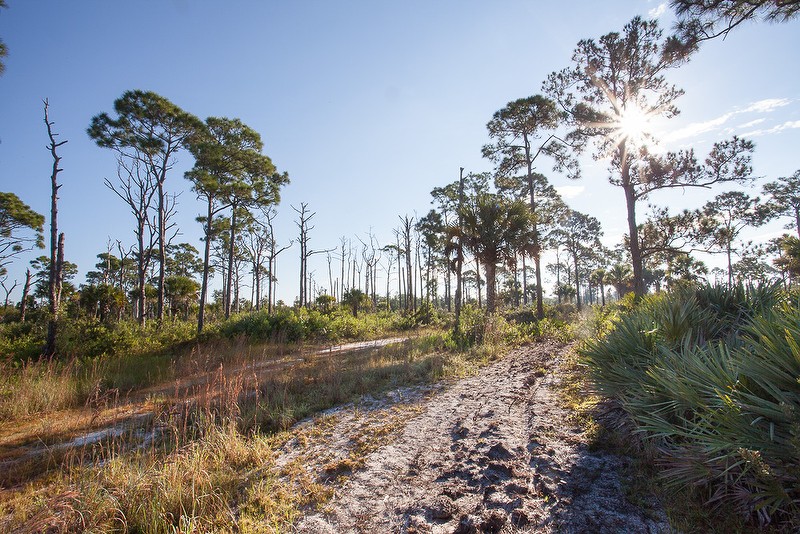
Slash Pines in Jonathan Dickinson Park.

Slash Pines in Jonathan Dickinson Park.

Pines have weird wind-dispersed pollen grains with two airbags suggesting Mickey Mouse ears.   The pollen ears possibly help orient the grain for its job of fertilizing the egg in the young cones, which take 3 years to mature.      Anyone who has parked under a pine in the spring has brushed the yellow pollen off the windshield. It comes from small papery male cones that bust apart and evaporate.   The female cones are big and woody, and release wafer-thin windblown seeds from between the scales if squirrels don’t chew the cones up.

Slash Pines maintain fungal root associates. Perhaps sometimes in relation to those symbiotic fungi, the trees often don’t like certain suburban yards, altered water regimes, ozone, over-fertilized soil, alkaline soil, irrigation that renders the soil alkaline, and a number of insect pests.

Many types of trees to varying degrees shed lower branches from the trunk.   Some snap off cleanly, others break irregularly and decay.   Slash Pine is a leader in branch shedding, although the anatomical-physiological mechanisms are unstudied.   Most observers interpret the self-pruning as an adaptation to keep the upper canopy safely above ground fires.   Whether fire induces branch loss directly is unclear. Pines have unusual growth responses to stresses, making stress a suspect in forcing branches to fall.   As another possibility, aging pine needles lose function, so that old ones may fail to keep their branches alive.

pines and sun - Copy - Copy - Copy

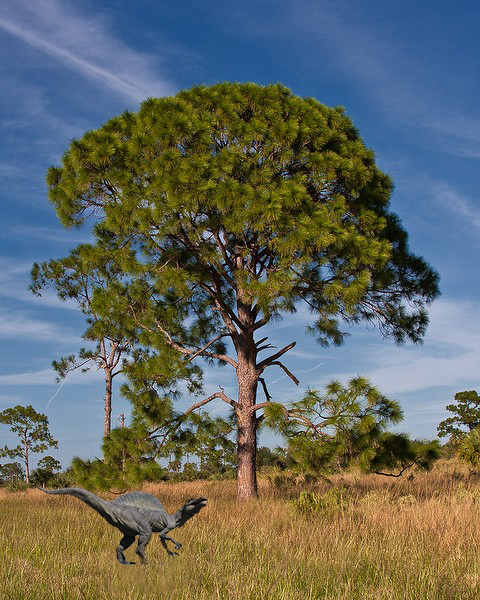
Slash pines have additional fire adaptations, such as young variety densa with grassy needles wrapped protectively around the bud, and when older by having fire-resistant bark. Back in the Cretaceous Period when dinosaurs ruled, conifers helped rule, and forest fires became common. Botanist Tianhua He and collaborators have shown fire adaptations in pines to date back into dinosaur days eons before Florida was here to have pine woods.

Pines helped the dinosaurs rule.

Pines helped the dinosaurs rule.

 
21 Comments

Posted by on September 18, 2015 in Uncategorized


Hemicryptophytes, Lower Than Snake Spit

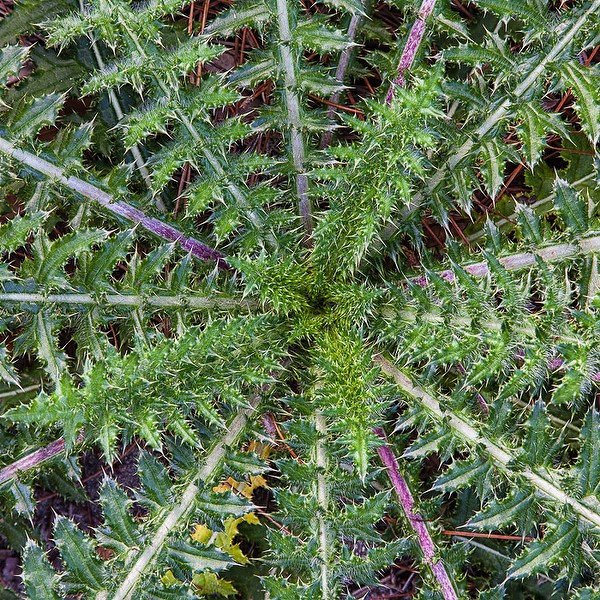
Nuttall's Thistle. Today's photos by John Bradford.

Nuttall’s Thistle. Today’s photos by John Bradford.

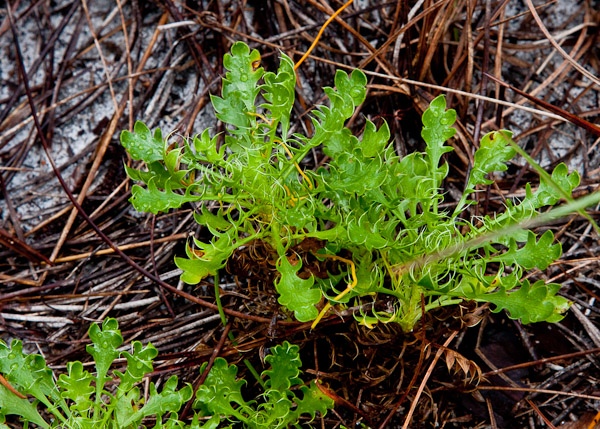
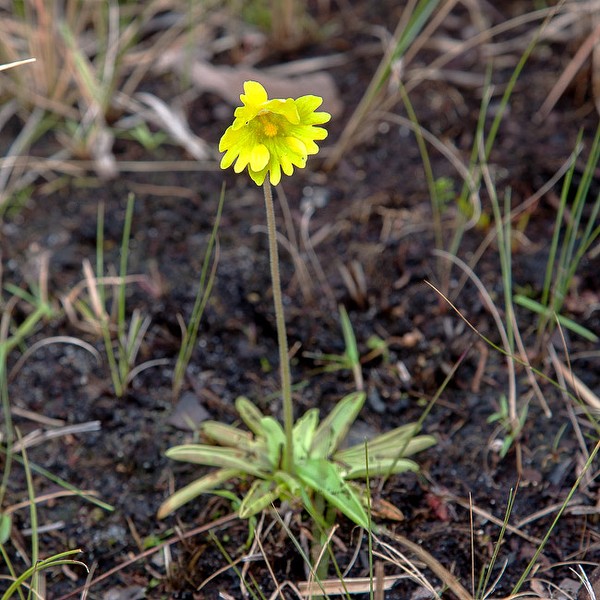
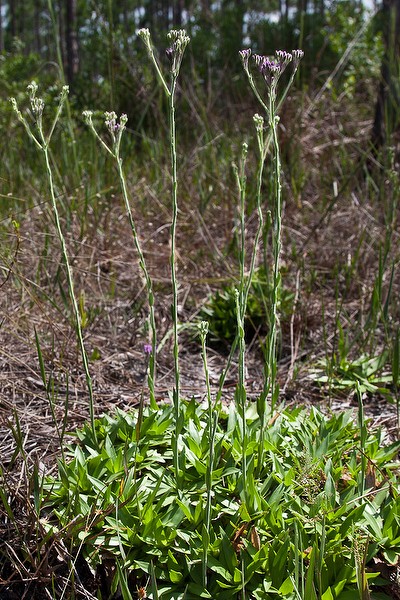
A thundershower drowned out John’s and George’s usual botanicals today, but I’ve been in the wilderness much this week with my Palm Beach State College classes.   Walking in a sunny, burned,  -browsed slash pine savannah, a special sort of beauty is at its best now: species with basal rosettes: lilac-flowered Elephant’s Foot, white-headed Hat Pins, purple Chaffheads, yellow Pinebarren Milkwort, and more.    Think of dandelions.  Leaves on the ground arranged like propeller blades, flower(s) in the middle.

Here’s a great case where plant form correlates with habitat. Savannah life favors plants hunkered down with their leaves and buds safely close to the ground.

The world’s greatest botanist concerned with form and function was Christen Raunkiaer (1860-1938) who developed a classification of plant life forms related statistically to ecological circumstances.   His system thrives 80 years later. Every botany student memorizes the polysyllabic category names in the “Raunkiaer Life Forms.”

Rosettes fall into the category of “hemicryptophytes,” plants with their vulnerable buds at ground level just like soldiers in battle relatively out of harm’s way.   What harm? Grass-fires, hungry herbivores, hot dry winds.   Layin’ low is how I survive the brushfires of office politics.

Rosettes have benefits beyond cowardice.   Leaves lose water mostly from their undersides. Undersides pressed against the ground with topsides in full sun maximize photosynthesis while minimizing the associated water loss.

Carnivorous butterwort

Carnivorous butterwort

All spread out, the leaves cover competitors’ seedlings like mulch fabric while not shading each other.

Rosette leaf bases are direct contact with the roots. No pesky stem in between to slow the exchange of water, minerals, and carbs. When the root is loaded up with food and seasonal conditions are right, a flower stalk rises confidently from the rosette into the lofty realm of pollinators. When the stalk dies down, or burns, or feeds a buffalo, no problem, the vital portions of the plant remain basking on the sand.

If you’re going to lie upon the soil with your leaves spread out, you might as well catch extra nutrition with that sprawled array. I suspect, and have read hints, that rosette leaves can be involved in rootlike absorption, including (rarely) growing “root” hairs on the leaves.   To go a hungry step further,  several rosette plants are carnivorous, including some bromeliads, butterworts, sundews, venus flytraps, and certain pitcherplants.

New growth comes from buds. If each leaf in a rosette has a bud, the plant is well set up for reproduction.  Even if the center plant dies, each of those buds can turn into a chick around the mother hen, or into a rhizome soon to start its own rosette.   Rosette plants can colonize space.

The rosette lifestyle has evolved many times in many different plants, so we might wonder if it is “easy” to come by.   A rosette plant is merely a species where the stem fails to elongate.  The plant stays condensed.

Rosette mission creep in Chaffheads.

Rosette mission creep in Chaffheads.

Treatment with the stem-elongating plant hormone gibberellin can cause a rosette plant to stretch out and rise. To become a rosette species, maybe all you need is to cut your gibberellin content, perhaps not involving substantial genetic change. No wonder rosettes are prime examples of convergent evolution—great “idea” and easy to achieve.

lotusmobileu - Copy

 
4 Comments

Posted by on September 11, 2015 in Rosettes


Tags:

Gall-y Gee — Sneaky Wasps and Ants Galore

John and George visited the scrub near Stuart, Florida, yesterday on a torrid humid afternoon topped off with donner and blitzen. Even the bugs seemed hot and bothered. We usually go for botanical purposes, but today’s trip took an arthropod bend, beginning with spiders, big ones, all over the place. But let’s turn to the ants in your plants. What caught our eye were ant shenanigans on oak galls.

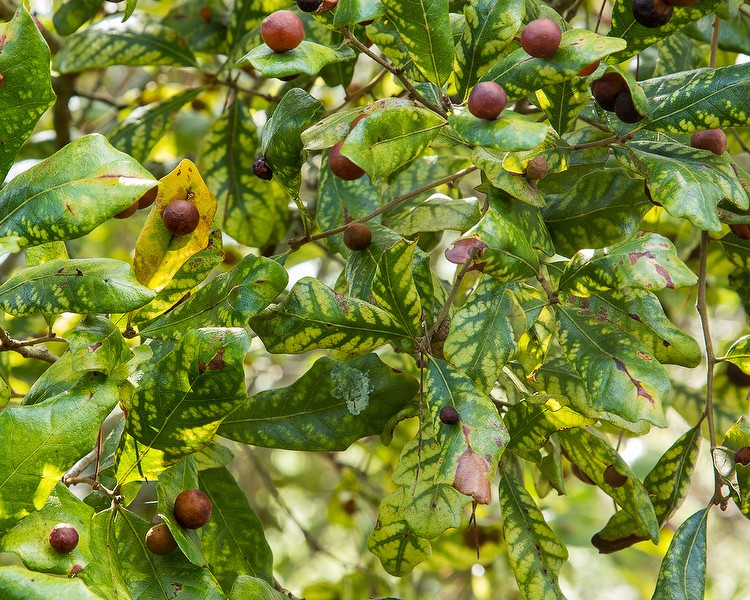
Galls on Myrtle Oak leaf. All photos today by John Bradford

Galls on Myrtle Oak leaf. All photos today by John Bradford

Galls are growths on plants, most often caused by various arthropods forcing the plant to create a home for the creature’s larva.   Two plant groups especially prone to this are members of the Aster Family and oaks.   Most oak galls are the work of little wasps who lay their eggs into the bud, leaf, or stem. Lotsa wasp species, lotsa galls types.

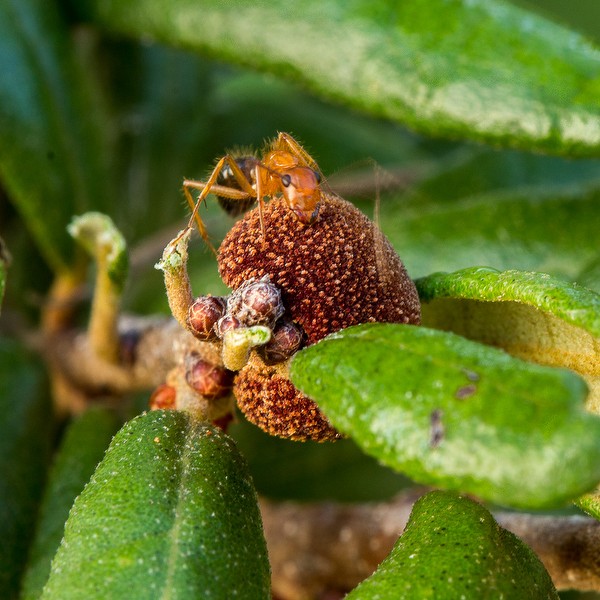
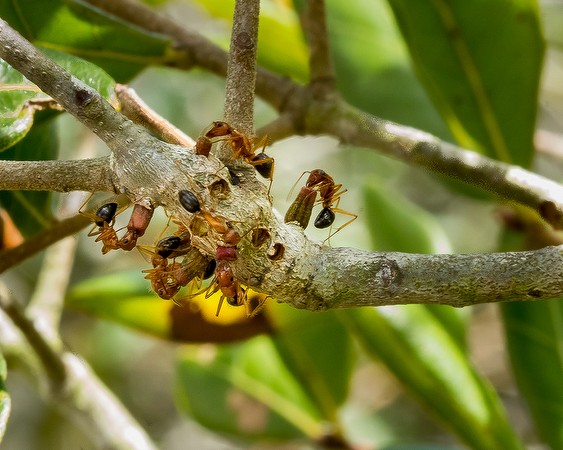
Galls feeding ants.

Galls feeding ants.

On sand live oaks (Quercus geminata) are spherical stem galls crawling with at least two ant species. These galls probably house larvae from a small oak-loving wasp, Disholcaspis quercusvirens (or related species). Why ants on a wasp’s larval home? A larva trapped in a gall is a sitting duck for parasitoid insects to lay eggs in you.   The vulnerable larva needs defense.   Our wasp not only can force an oak to launch a gall, but even better, galls with benefits to lure hungry ants who deter those pesky parasitoids. The galls make ant food. At least four species all intertwined: mighty oak, tricky wasp, odious parasitoid, and all those ants. Not to mention multiple ant species, and there are probably “inquilines,” tagalong insects who use the gall as secondary guests. It’s a tiny ecosystem in and on an organ the size of a grape.

Does the tree benefit?   Although the plant is traditionally cast as a passive victim, a breath of preliminary experimental evidence has shown the gall experience to enhance sometimes a plant’s stress resistance.

Ants apparently feeding from horns of plenty.

Ants apparently feeding from horns of plenty.

A second gall we inexpertly identify as the Horned Oak Gall (starring the wasp Callirhytis cornigera or related species) on Myrtle Oak is another ant playpen.  Ants push their faces into the tips of the horns like a dog drinking from the toilet. The horns are exit-holes for the baby wasps and also sap drinking fountains, although the relationship in time between larval departure and snack time is a little mysterious. CLICK and CLICK AGAIN

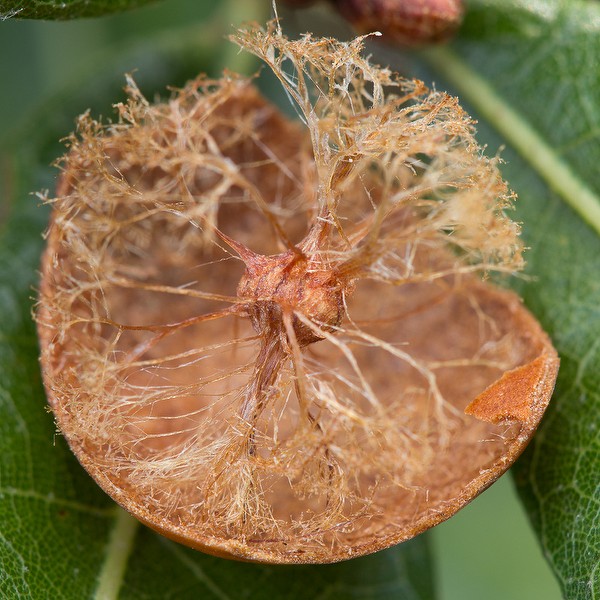
The ants do not stay the outside galls. Oak Apple Galls on the inside have a nearly hollow capsule with the larval crib suspended on a network of strands, shock-resistant, temperature-insulated, and out of reach of probing parasitoid ovipositors. Occasionally an old dried Oak Apple Gall becomes an ant nest, a lively surprise when you pluck the gall for a close look or photograph. The ants use the wasp exit hole as the door.

Oak Apple Galls

Oak Apple Galls

That an insect can induce a plant to make a device to perform the bug’s bidding is remarkable, one species directing development in another, how very odd. The interspecific genetic control implications boggle the mind.

Plant hormones are no doubt important in galls, especially cytokinins. Cytokinins are involved in tissue growth and differentiation, and are strongly implicated in gall formation. That an insect could cause or mimic cytokinin production seems plausible, and might be a satisfying answer if galls were mere unstructured tumors.   The mystery is in the complexity: how the insect directs the plant to form nectar-secreting horns, and little honeydew bite-off chunks, and reinforced packaging spheres. The intricacy goes beyond mere structure: gall insects can suppress the natural defenses of host plant species,   and they can force the plant to make nutritional material as well as enzymes to help digest the food. This is sequential complex development.

Oak Apple gall opened, larval capsule in the middle. That is one well protected baby.

Oak Apple gall opened, larval capsule in the middle. That is one well protected baby.

So now the tough questions. Would a plant evolve genes to build the larval home for an insect?   Not likely. Does the insect transmit genetic information to the plant? Likewise improbable, although not beyond the imagination. Most likely by far, the insect manipulates what’s already in the plant’s genes.

As an example, galls sometimes provide nutritional protein to the larva within.   This fancy achievement is easier to explain knowing that the protein is already coded in the plant’s genetic library, normally expressed in feeding the plant’s embryo in the seed. Somehow the wasp activates the “on” switch to nourish its own little interloper.

To extend the theme of repurposing the plant’s existing genome, a plant has the genes to make sugary nectar, merely redirected onto galls. The spongy tissue in the Oak Apple gall doesn’t seem a genetic stretch for a plant.  Even the horns on Horn Galls might be misdirected “buds.”

With all that said, galls must have an astounding gene control story. Check in again in 20 years and maybe the story will be told.

Our peek in the gall development window is superficial, entailing vague references to Waddington’s epigenetic-landscape model*, DNA methylation, and histone modification. That all sounds spiffy but tells us about as much as, “how did Kurt Vonnegut create Slaughterhouse-Five? With a typewriter. “

Potentially relevant, one family of plant growth-stimulating hormones called brassinosteroids is biochemically similar to animal hormones. They are the only steroid hormones in plants. These have been shown to sabotage herbivorous insects, but could it work the other way around…can the animal use its steroids to influence plant growth?   Hints are in the air but far from anything solid. Time to quit, because we’re already out on a gall-infested limb beyond any actual knowledge.

—————————————————————

Notes:

*Waddington’s model uses a downhill series of valleys and ridges like a branching river delta to describe the progressively branching and narrowing genetic options of developing tissues—or of developing students sorting into colleges, then academic majors, then careers. DNA methylation is a means of gene suppression during development where methyl groups added to genes inhibit or prevent their expression.   Histones are proteins associated with DNA. Enzymatic modifications to histones regulate expression of their associated genes.

 
12 Comments

Posted by on September 5, 2015 in Galls


Tags:

Hog Plum

Hog Plum

Ximenia americana

Olacaceae

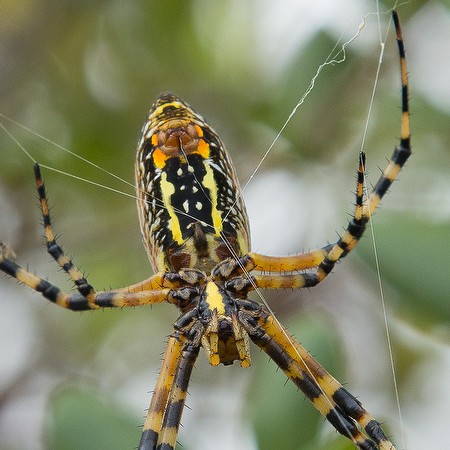
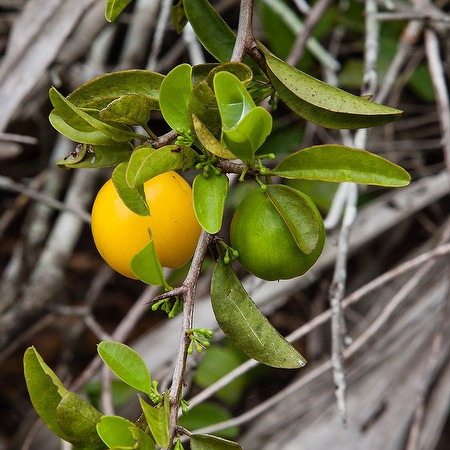
Trudging across the burning scrub sands and down into the deep dank swamp yesterday, orange was the new black: day-glo orange fungi in the swampy shadows, pale orange saw palmetto fruits full of prostate pseudo-therapy, orange tail-end on the garden spiders, and orange Hog Plum “plums,” many on the ground.

Garden spider spinning (by John Bradford)

Garden spider spinning (by John Bradford)

Here’s a poorly chosen name, because  “Hog Plum” to other folks refers to edible species of Spondias (and even to additional “plum”-making plants).   Another reference-book name for today’s species is Tallow Wood, but in my narrow world nobody actually seems to call it that.

The oil is abundant in seeds from today’s species and in its cousin the Old World Ximenia caffra, with a history (and future?) of all things oily, such as medicines, lamps, leather treatment, and most prominently cosmetics. Here is a quote from modern promotional blurb, “it contains unsaturated fatty acids and has an exceptional nutritional value to nourish the skin while moisturizing, softening and revitalizing the skin.” The paleo-cosmetic diet! Being as fashion-forward as can be, John and I mashed some and nourished and revitalized our facials.

And if we suffered any discomforts or snake mishaps, we’d have been in a good way. The reported doctor uses would fill a page. Name an ailment: somebody somewhere used Ximenia oil to fix it, from STDs to Cobra bites, hopefully not in the same patient.

The orange ripe fruits, in season now (by John Bradford).

The orange ripe fruits, in season now (by John Bradford).

Even beyond medicine, Hog Plums have more historical uses than you can shake a thorny branch at. Useful parts include the stems, roots, and fruits. The strong wood serves for handles, spears, and assorted kitchen implements. And of course firewood. (I’ll bet that oily wood burns dandy.)

The fruits are food, although mostly pit, not tempting, and impossible to store. Come on now, don’t go eat them. There is a reported laxative consequence.   Gopher Tortoises eat the plums*, with there being at least anecdotal geographic association between Hog Plums and Tortoise nests.   That would be a fun geo-statistical study for a class with apps.   I wonder if hogs like Hog Plums. Monkeys do.

So obviously the fruits are animal-dispersed. But that’s not all.  The fruit pits have spongy flotation material. Their ability to bob safely for months is demonstrated.  Mother Nature conducted the best experiment, floating Ximenia americana all around the tropical world.   Its ethnobotany is richer in Ethiopia than in the Americas.

Hog Plums prefer hot dry habitats, mostly scrub locally, although they also occupy wet mangrovey places, which are “physiologically dry” thanks to salt.  Ximenia is one of many species divided between dry habitats and wet-yet-dry situations.

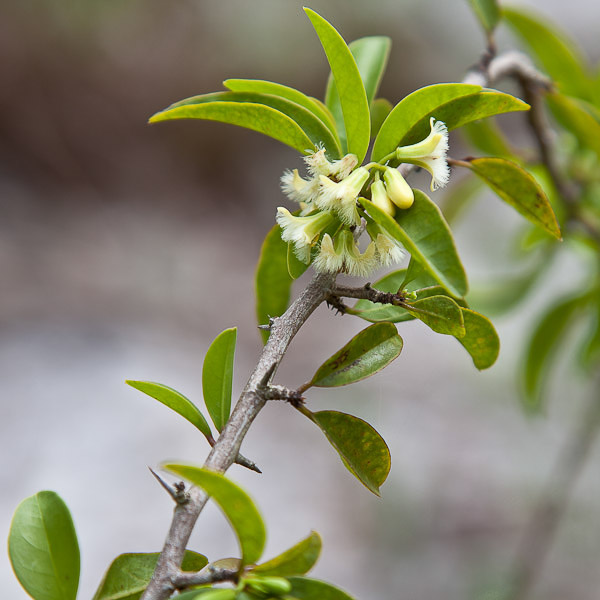
Hog Plum flowers are white, fuzzy, and fragrant (by John Bradford). This photo not taken yesterday.

Hog Plum flowers are white, fuzzy, and fragrant (by John Bradford). This photo not taken yesterday.

Hog Plums are “facultative” root parasites. Facultative means they can take it or leave it. In a greenhouse they do not need to take it. Hog Plum may have the plant world’s largest known haustoria (suckers) which attach indiscriminately to the roots of neighbors, or to their own roots, or to rocks, or to plastic scraps.   The suckers can be over an inch in diameter.

One final odd feature, apparently a protective adaptation for surviving youth in nasty sands.   As germination proceeds, the first two foliage leaves, instead of unfurling optimistically  to greet the sun, bend straight down.  They tuck snugly into the nook between the cotyledons and stem, terrified like a kid frozen in the car on the first day of school. Perhaps the leaves fear a Gopher Tortoise lumbering out for an oily snack.

———————————————————————————

*Ever seen Gopher Tortoise scat? They may appreciate a little regularity from that Hog Plum oil.

 
12 Comments

Posted by on August 29, 2015 in Uncategorized


Tags:

Itchgrass is Not Without Virtue

Rottboellia cochinchinensis

Poaceae

Yesterday John and George extracted three hours of botany from a streamside hammock near Stuart so loaded with green entertainment we couldn’t quit, until the temperature hit 90.   The immediate goal was to rediscover a population of Eelgrass where John intends to shoot a video we’ll all enjoy soon. The Eelgrass destination was attained, and the fun’s in the journey. That is, unless along the journey your ankles feel like bee stings, but where are the bees? Back to that in a moment. Before the pain, here are some of the nicer waypoints climbing through the poison ivy:

Mitrewort (all photos today by John Bradford)

Mitrewort (all photos today by John Bradford)

We have a couple local species of Mitrewort or Hornpods, Mitreola, with their names coming from their two-horned fruits resembling a bishop’s mitre.

Another soggy-foot friend is Pluchea odorata, sometimes called Sweetscent (a name applied to multiple different plants). It looks so pretty and smells so medicinal, you guessed it, species of Pluchea have more medicinal history than the AMA.

Sweetscent yesterday

Sweetscent yesterday

Mixed in with all the usual native and non-native ferns a surprise stood out, a big multi-branched fern, Macrothelypteris torresiana, Mariana Maiden Fern, one more garden fern rampaging into Florida natural areas. Why would anyone import an alien fern!? Ferns make billions of wind-blown spores. No likelihood of those escaping-eh?  Morons.  This Asian-African fern has turned up all over Florida, part of the “silent majority” of hundreds of invasive exotic species not in the public eye. It looks like the endangered rare Florida Tree Fern, but the horticultural runaway has distinctive sparse chocolatey-colored (vs. abundant usually orange-toned) scales at the base of the stalk, white whiskers under the leaf (vs. essentially no hairs), and two (vs. more) veins at the base of the stalk if you slice cleanly across it.

Mariana Maidenfern

Mariana Maidenfern

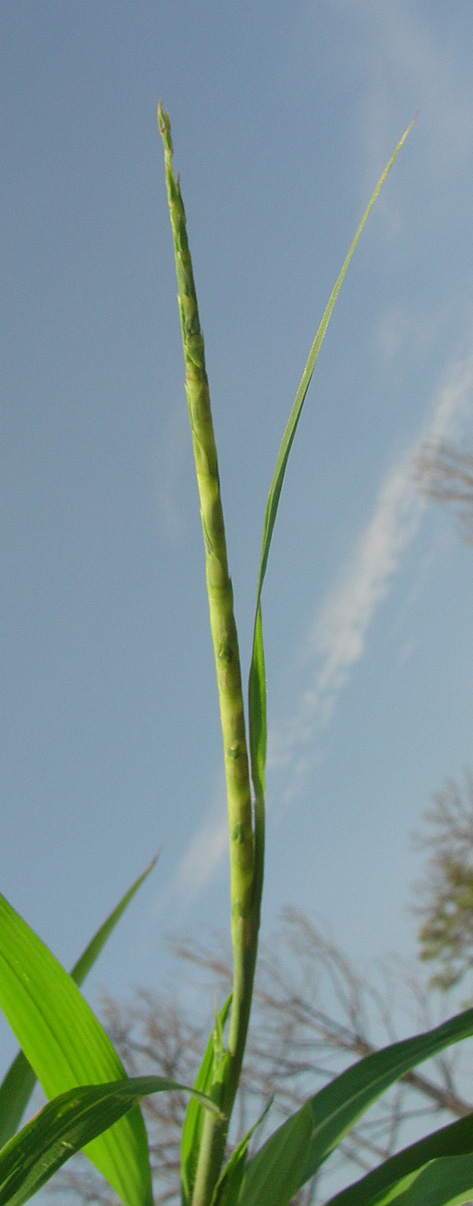
Invasives not in the public eye include dozens of grass species. One possibly in the public ankle is so-called itch grass. (It does not itch—it stings, for hours.) Everyone who has ever been outdoors knows how plants use flesh-piercing prickers for self-defense. Odd, isn’t it, that in 12,000 species of grasses prickly is uncommon…but John and I found an example yesterday.  If you want to identifiy Rottboellia, merely look for a pencil-shaped flower spike.   Then close your eyes and grab the base of the stem firmly. If you think you snagged a porky-pine, you have found today’s grass.

This odious agricultural nuisance grows in unattractive places, and ouch. Unloved and sad. On top of all other repugnance, it is allelopathic, meaning the grass makes natural herbicides to reinforce its social isolation. How’d such a stinker get to Florida? According to web sites, probably as a “pasture improvement” introduction in the 1920’s. A lot of weird stuff happened in the 20s.

Rottboellia

Rottboellia

Corn, sugar cane, and rice farmers hate Rottboellia. It spreads abundantly by seed and rises 10 feet in 3 months, needing prop roots to stand so tall. The seeds mingle with crop seeds, thus invading cultivated fields, sometimes massively. And, remember the toxic allelopathy? That’s another big negative in a rice paddy, right? Maybe.

Or maybe not. When life gives you itchgrass, scratch the itch. In the vicinity of Lampang, Thailand,  rice growers deliberately let the invader take over fallow fields, even deliberately sowing it in crop rotation, then plowing it in as a green manure. The manured grass retains soil water and turns into mulch and compost. Even better, its allelopathy seems to be a no-cost natural pre-emergent herbicide more suppressive of weed seedlings than young rice plants. (After the fallow year the Rottboellia presumably can be suppressed with fire and permacultured soil. Its seeds require light to sprout.)

Aren’t “green manures” usually nitrogen-fixing legumes, such as alfalfa? Let’s join in on speculation. Fact: Grasses can be surprisingly nitrogen-fixing. Fact: One reported situation where grasses are good at nitrogen fixation is in heavy black soils, such as rice paddies and along the shore where the Rottboellia poked us yesterday. Speculation: Observers in Thailand suspect our nasty grass to be nitrogen-fixing as a bonus to its green manure potency. A great study for a thick-skinned Florida student to tackle…the soil ecology and nitrogen metabolism of this unique grass.

 
6 Comments

Posted by on August 22, 2015 in Uncategorized