Jack in the Bush, Siam Weed
Chromolaena odorata
Asteraceae
John is away for a couple weeks so I must represent alone, although that’s easy after a week of class field trips. A curious species often encountered in class is Jack in the Bush, a native with a big personality in disturbed places, usually sunny. It is a native in Florida but a mixed minor blessing and major horror escaped invasively around the tropical world.
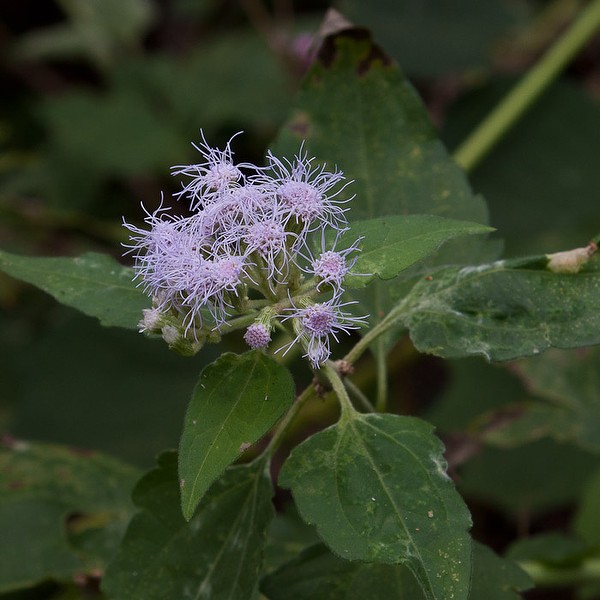
Jack with violet flower heads (by John Bradford)
A problem with deliberately introducing plants and beasts—and in some marriages—surfaces when minor blessings later turn into major horrors. Jack in the Bush has spread far and for different reasons, including during WWII on equipment and personnel, as a living mulch, as a cover crop, and in coffee plantations. Why is it deliberately spread? The robust growth crowds out other weeds, is reportedly allelopathic (naturally herbicidal), insect and nematode repellant, and easily generated green manure. It is beneficial to some fallow fields. And being so utterly willing to grow anywhere, our species has attracted attention as a potential cover for mine tailings. Hooray. Bring it!
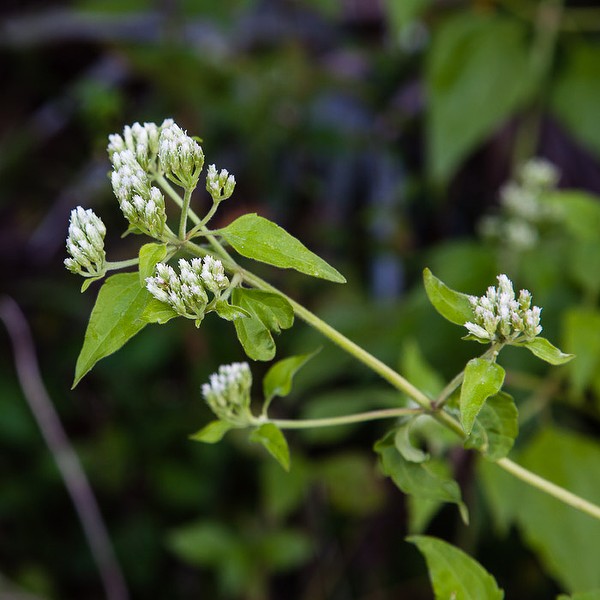
Jack with white heads (JB)
Too bad it grows too well, and in Africa, India, Asia, and beyond Jack has gone crazy, dominating farm fields, disrupting cropping cycles, invading tree crop plantations, and becoming a general smother as well as hosting pest insects and probably pest fungi. The leaves are petri dishes hosting powdery mildews and many other fungi. Researchers have found the soil near Chromolaena to be oddly high in the spores of certain molds, as if somehow promoting them.
Derisive common names are revealing, such as “King Kong,” “Cholera,” and Rey de Todo (King of Everything) reflecting an imperialistic tendency to form vast single-species stands.
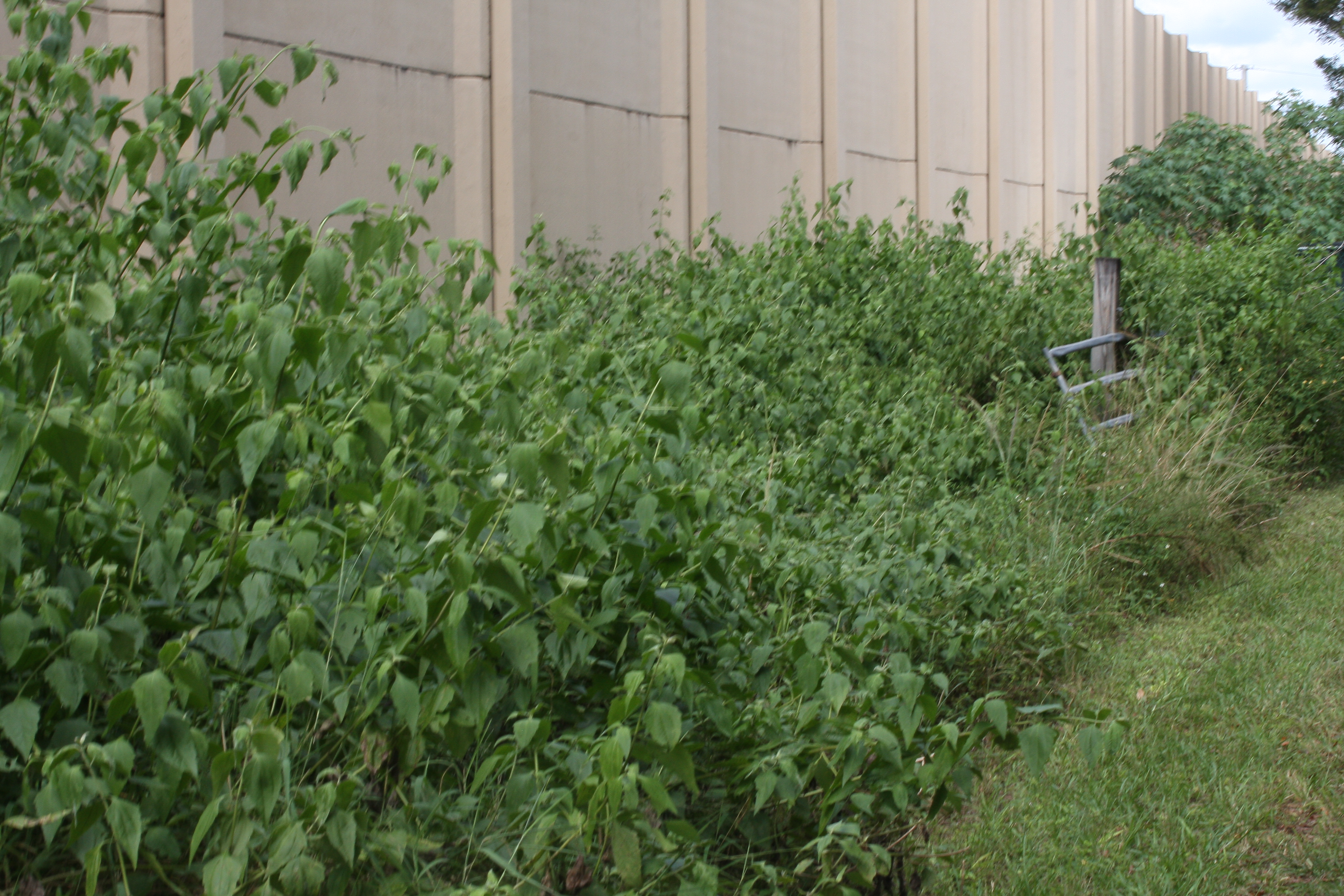
Rey de Todo
This plant knows how to grow. Is it an annual or perennial? Both. Whatever top growth survives drought, fires, grazers, and mowers from year to year resprouts from buds. It can regrow directly from the roots, which can enlarge into immortal storage organs, and from tiny seeds (achenes) blowing forth on parachutes to new colonization opportunities as crowded as 2000 seedlings per square meter. Once the growth starts, stand back, as observers have noted, “it grows like a crop.” If the main stem finds a support it can shoot up to 30 feet. If no support is encountered, side branches take over, often growing out at right angles. Growth rates can exceed an inch a day.
The flower heads have an odd trait: variable coloration, whiteish, bluish, violetish, and pinkish. That might tie in with the dozens of butterfly and moth species recorded to visit and pollinate. With so much help the plant can establish anywhere. And who needs butterflies anyhow? It reportedly can set seeds clonally without benefit of bugs.
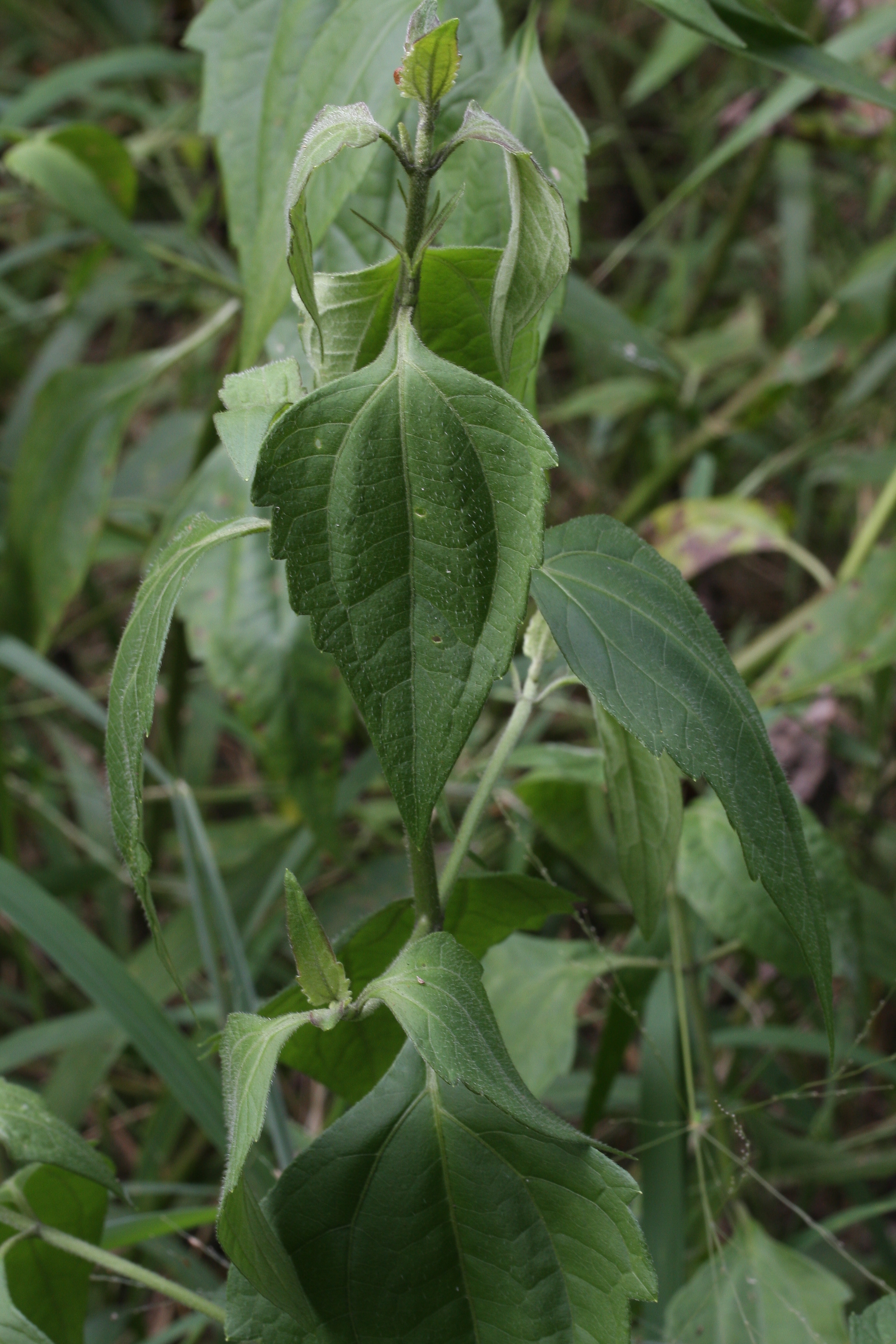
The plant is wilted when nobody else is.
Reluctant to stand on its own two feet, Jack is sort of a shrub, sort of an herb, and prone to sprawl across and climb more substantial shrubs. Why form wood when others do it for you? Cut open the stem, even a big one, and you find it to be made disproportionately of pith, soft, cheap, air-filled “styrofoam,” easy, lightweight, and fast to make, and of no substance.
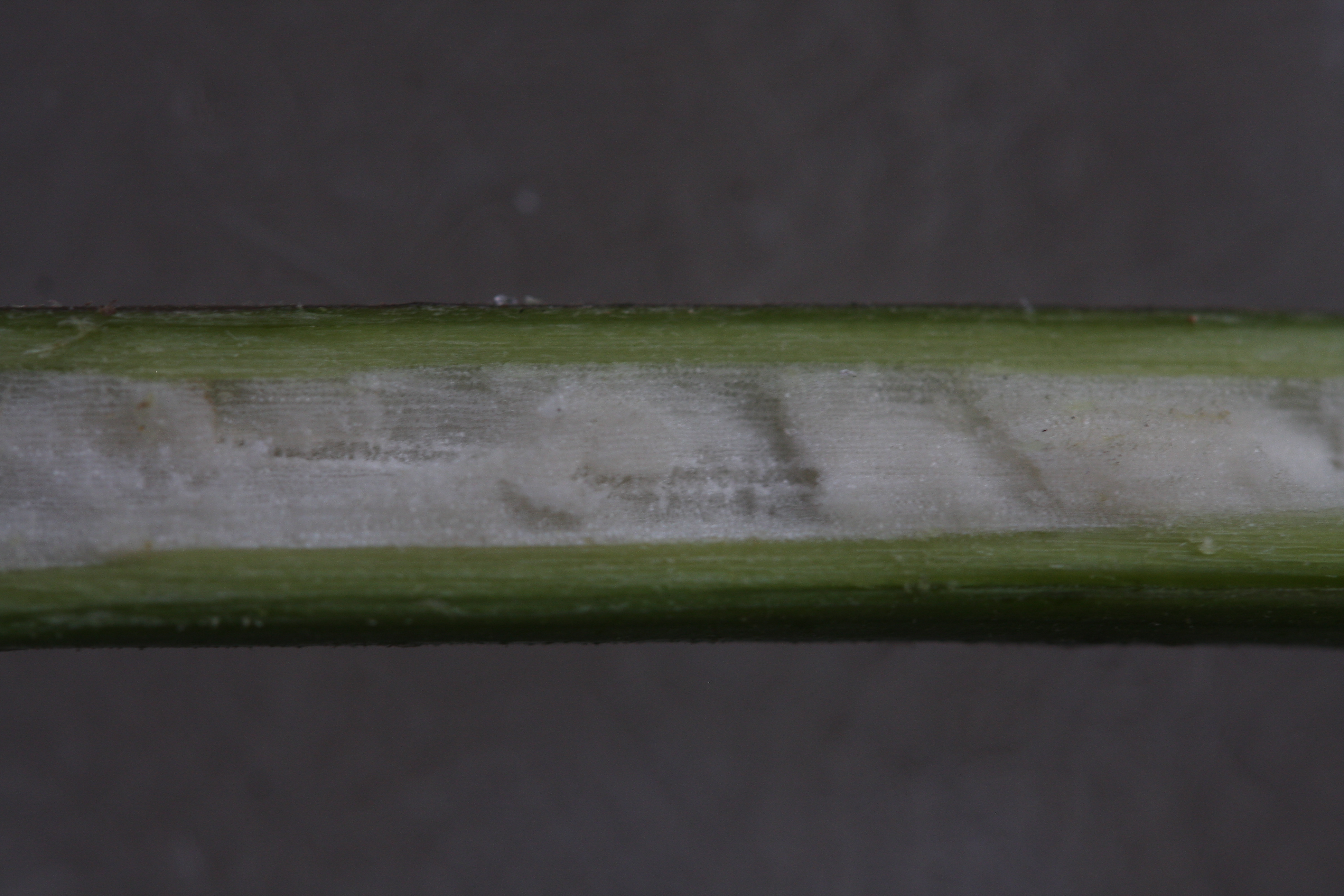
The stem has more soft but useless pith (white) than supportive water-conducting wood (light green). “Quick & Dirty” No wonder it flops.
That probably explains why Jack in the Bush so often looks wilted. Water travels in wood (xylem), not in pith (parenchyma). So if your stem is super pithy and deficiently woody, you probably can’t move much water. If you can’t move much water you could spend a lot of time wilted. Ecologist K. Naidoo discussed “severe wilting” of Jack in the Bush as a probable adaptation to help with water use efficiency and avoid leaf damage at times of water stress.
There’s an apparent trade-off in play, just speculating. Lightning fast growth at the cost of building a soft flimsy stem with minimal water-conducting wood. Let the host plant supply the support, grow like mad when there’s plenty of water, and take it easy wilted in the meantime.
 John Bradford
 George Rogers
 George Rogers
 Dee Staley
 Treasure Coast Natives