John and I visited the woods yesterday and watched an ant crew complete with supervisors, guards, overachievers, and slackers hauling bits of fungus and winged pine seeds along a 10 foot trail (= 5 ant-miles). They extract the core from the pine seeds and ditch the wing. The size of the pine seed relative to an ant is about like an airplane wing relative to a poodle. And now on to native plants.
The forms and functions of leaves may be boring, but boring is my middle name. So today’s topic is boring compound leaves. To talk about a topic we better define it. My Webster’s Collegiate Dictionary defines compound leaf as…..Dontcha just hate presentations that start like that!?
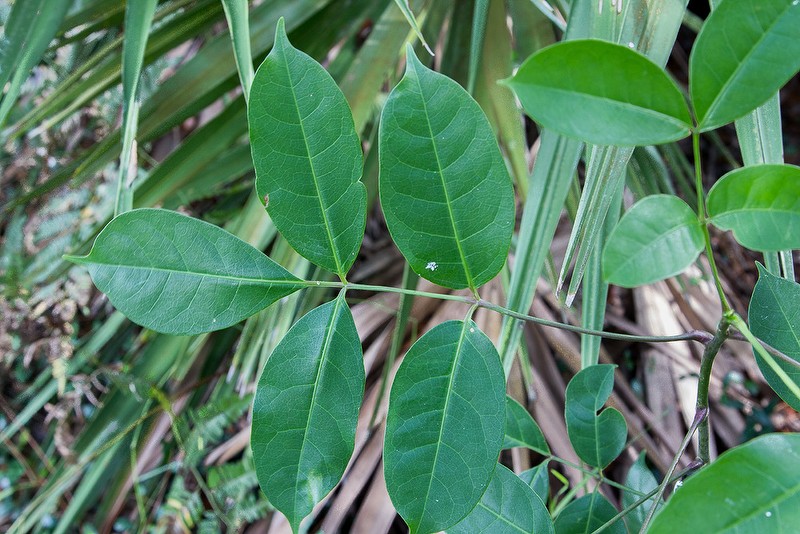
Here is a single compound leaf on Gumbo Limbo, with 5 leaflets. The leaf ends in a leaflet. (All photos today by John Bradford)
A compound leaf is a single leaf that looks misleadingly like a stem with multiple small leaves. The small fake leaves are called leaflets. Now ask, what’s the difference? Most leaves, compound or not, drop free as single units. A stem-leaf junction is always immediately below a bud, but a leaflet revealingly has no bud. A stem ends in a bud, but the compound leaf stalk ends in a leaflet or it just peters out budless. Examples of compound leaves are plenty. A vegetable gardener says green beans. A suburban landscaper might cite Schefflera. A fruit fancier could think of starfruit. Stonewall Jackson may mention hickory. Teenagers behind my fence know of marijuana. Those who loath invasive exotics lie awake over Brazilian Pepper. Native plant enthusiasts have umpteen examples. Enjoy a dozen:
- Ash
- Paradise Tree
- Hercules Club
- Wild Lime
- Torchwood
- Elderberry
- Most ferns
- Coontie
- Poison Ivy and Poisonwood and Poison Sumac
- Milk Pea, Cow Pea, Butterfly Pea, Rosary Pea, Partridge Pea, Sensitive Pea
- Bay Beans, Coral Beans, Velvet Beans, Cool Beans
- Things that stick in my socks (Spanish Needles, Tictrefoils)
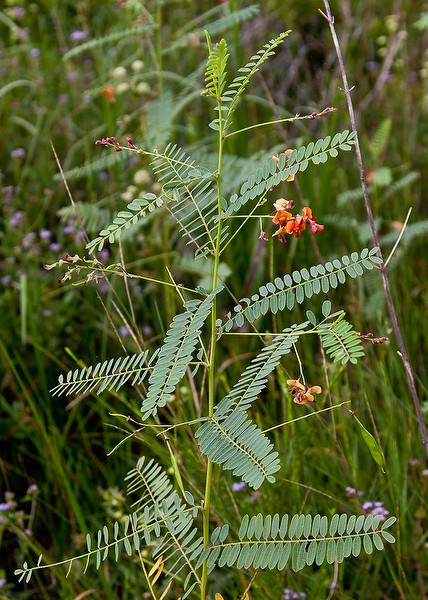
This Sesbania has about 14 compound leaves visible, each leaf with numerous little elliptic leaflets.
And there exist twice-compound leaves. Huh? Ones where the leaflets themselves are “compound leaves.” Fact is, a leaf can be twice, thrice, or more compound. Think of some frilly ferns, or native Nickerbean. This all leads into nomenclature we shall ignore.
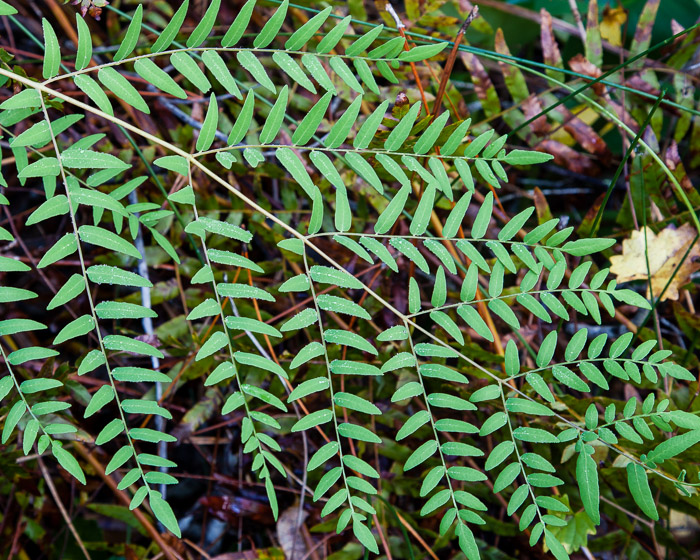
This Royal Fern has a twice-compound leaf. Only one leaf is in this photo. It is “doubly compound,” divided into about 12 main subunits, these subdivided into numerous smaller units.
Compound leaves have evolved separately many times in numerous unrelated plant groups. Many more plants have lobed leaves approaching compound, but not quite.
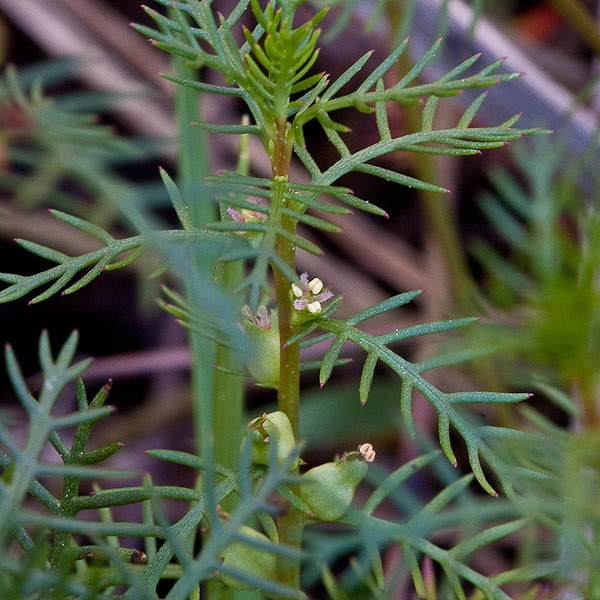
Lobed and almost compound.
Some species have a portion of the leaves simple (simple = not compound), with other leaves on the same individual lobed or compound. Red Mulberry, Calloose Grape, Marsh Mermaid Weed, and the invasive exotic Arrowhead Vine come to mind. The mix reveals different pros and cons of different leaf forms depending on the leaf’s age, position, or physiological state.
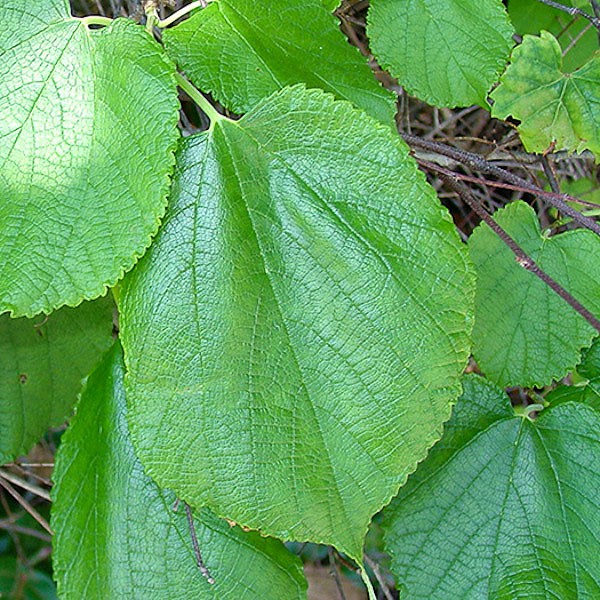
Mulberry simple leaves.
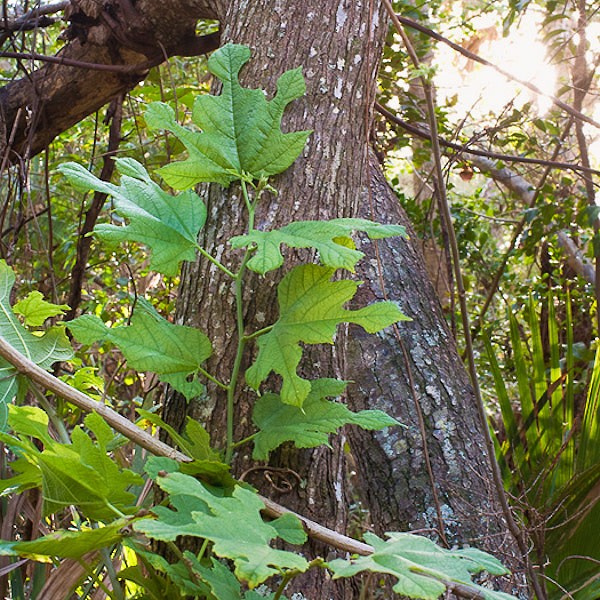
Mulberry lobed leaves.
Bald Cypress pretends to have compound leaves in a converse fashion. Its branchlets with many small leaves behave like single “compound leaves” in the sense of being seasonal, flat, and deciduous.
As Miami botanist Steve Woodmansee recently commented on this blog, there’s an evolutionary two-way street. Although clearly simple leaves have evolved many times into compound leaves, the reverse occurs too. A locally familiar example of compound-to-simple is Coin Vine, a Legume uncharacteristically having simple leaves.
There must be something compelling to induce “big” simple leaves to subdivide over evolutionary time into “small” more or less separate leaflets and lobes. Many botanists have wondered why, and several answers exist, none of them “the” single revealed truth.
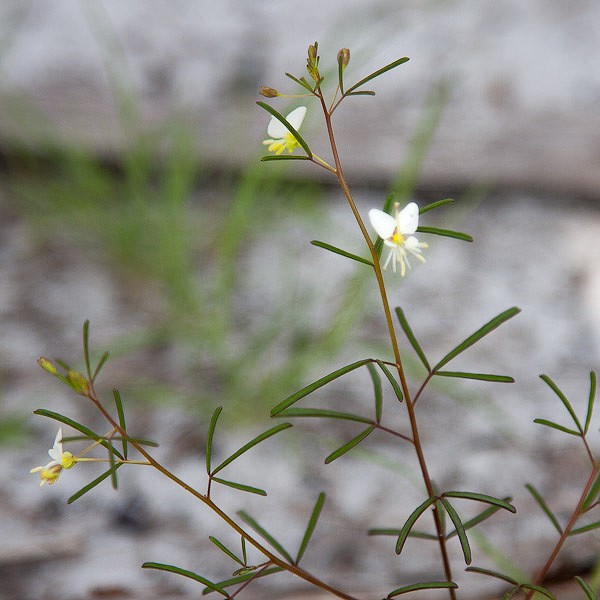
Clammyweed. Each leaf with 3 narrow lobes.
First off all, it might seem optimal for a leaf to be as big as an umbrella and just steal all light from competitors below. We have solar panels on our campus as big as patio surfaces. Not many plants however evolve umbrella leaves. There must be advantages toward small independent blades.
First disadvantage of big leaves: they fray and tatter in the wind, and are “expensive” to replace.
Second disadvantage of big leaves: bright sun exposes a leaf to more light than it can handle. Too much light diminishes photosynthetic ability and generates often unwelcome heat. On average, any leaf can use only about 20% of full sunlight. A big umbrella shadowing all below is wasting 80% or more of the incoming light while suffering possible damage. A plant is usually better served by having vertically layered smaller leaves (or leaflets or lobes) capturing collectively far more than that original 20% at the top layer. Light becomes more diffuse deep in the shadowed understory, so that the varied orientations of the leaves, leaflets, and lobes, and their flutterings allow more efficient capture of dim light, also light angling in at dawn and dusk, and sporadic bright “sunflecks” as the wind fleetingly parts the canopy above.
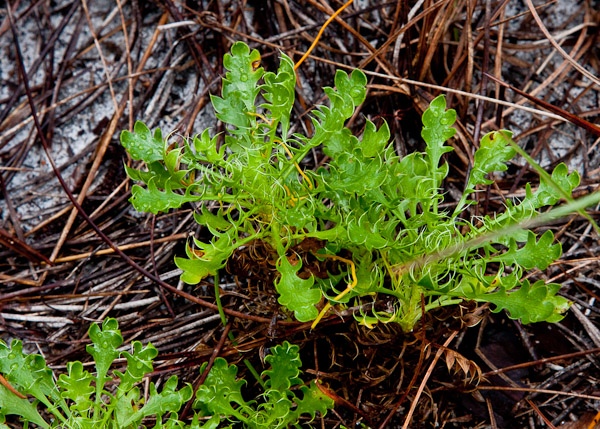
Frangrant Eryngo with some fancy lobes.
Third disadvantage of big leaves: Growth is not limited by light alone. Every third grader knows, I hope, that leaves take in bad carbon dioxide and give us good oxygen. Breezes blowing across small leaves, leaflets, or lobes are more effective at gas exchange than those passing over large surfaces. Bigger surfaces have more surface-breeze friction. Also, the margins tend to be younger fresher tissue. It is easy to show as a classroom demonstration more photosynthesis happening near the margins than “inland.”
Fourth disadvantage of big leaves: As foliage absorbs solar energy it doesn’t merely photosynthesize, it heats up, and heat stress can be trouble. Without protective adaptations leaves would sometimes be hotter than the surrounding air, but they have evaporative cooling. Small blades shed water vapor and heat directly to the air better than big leaves. (By the way, on cold clear nights leaf blades can be colder than the surrounding air so that the ability of smaller blades to conform to air temperatures might sometimes help at both ends of temperature stress.)
One thing I like about compound leaves is the ability for individual movement by the leaflets. Leaf movement in response to built-in rhythms and to environmental cues, including light vs. dark, is fascinating, especially in complex compound leaves.
In Pigeon Pea the leaflets can all move in unison, resembling the blades in venetian blinds. You see it in the time lapse below experiencing the end of a day, the night, and waking up the next morning: CLICK to see the pea
In the following time lapse through a semidark night and the morning after, the Trefoil (left) and Oxalis (right) have individual leaflets all doing their own dance. (The classroom lights come on a couple times early in the evening— cleaning crew/security guard.) CLICK
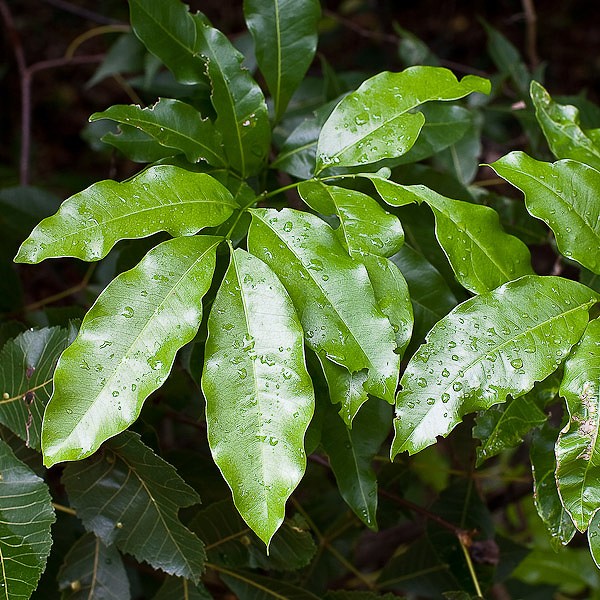
Inkwood compound leaf with 4 leaflets
 John Bradford
 George Rogers
 George Rogers
 Dee Staley
 Treasure Coast Natives