RSS

Author Archives: George Rogers

Unknown's avatar

About George Rogers

Florida botanist

Bluegreen “Algae,”   Pink Flamingos, Red Tides, (and Nonpolluting Buses)

Cyanobacteria

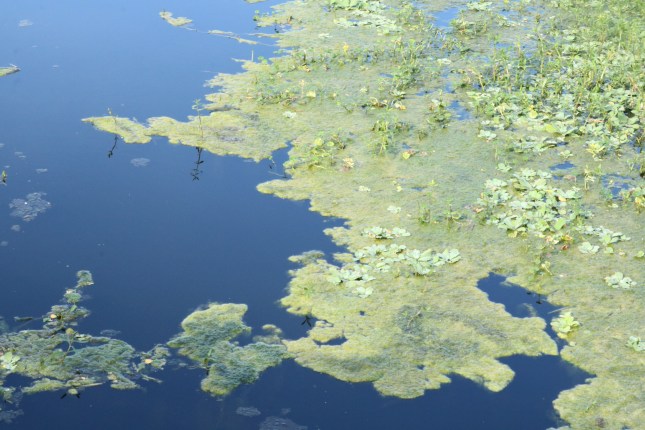
Not many plants have a more diversified story than Cyanobacteria.  We know them in Florida as villians of “toxic algal bloom” news, featured even in the gubernatorial race.    That horror story is not my focus today.  Google will unleash that mess abundantly already.  Quickly, however, toxic “algae” blooms are not limited to the Florida Active Adult Lifestyle.  Ask the residents of Toledo who drink Lake Erie, or what’s left  of my home town, Wheeling, W.Va. where “a green paint spill” reported in the Ohio River turned out to be Cyanobacteria.  The problem is global, making it tough to point the finger of blame too ardently at any particular political entity, or demanding simplistic politicized “do something.”
IMG_3961

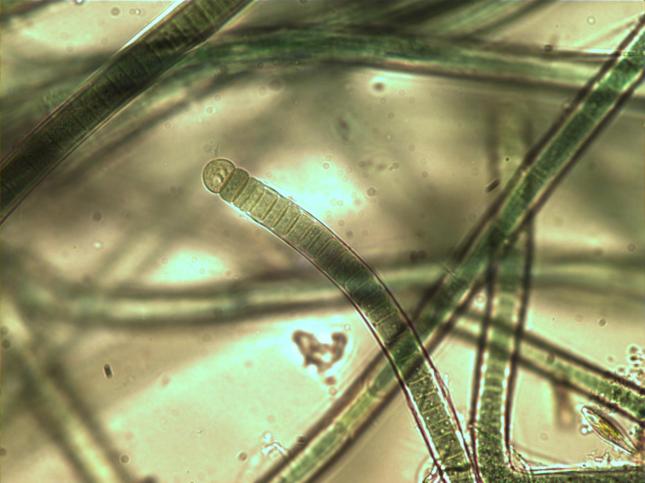
Now hear this!…bluegreen “algae” are not algae.  They are Cyanobacteria. Even though the term “algae” is vague, Cyanobacteria are no more algae than I am.  They are large photosynthetic bacteria.

Cyanobacteria or similar paleo-germs are contenders to be the oldest life on Earth.  The globe is about 4.5 billion years old, with Cyanobacterial evidence extending back over 3.5 billion years.   Contrast that with humans, here for maybe 2 million years.    So then Cyanos are some 2000 times older than we are.  We curse them for polluting rivers, yet, looking back a few billenia, who kickstarted  the biological world with original oxygen?
BGA from fish tankCLOSE2

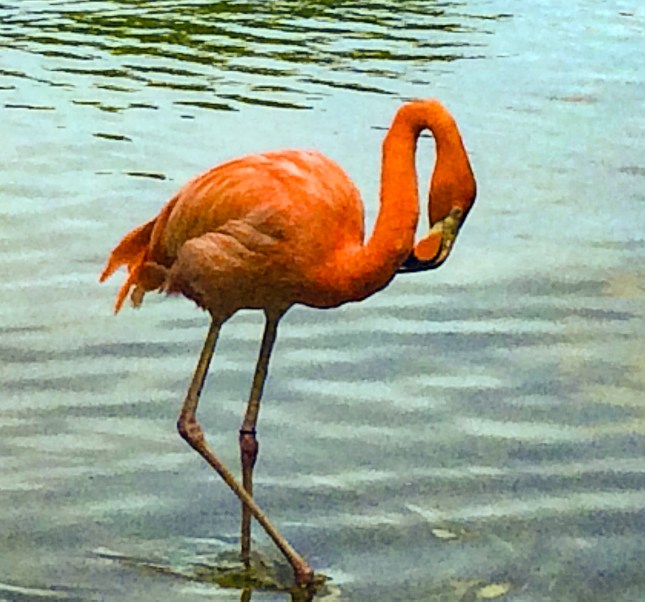
And even better, who makes the Flamingos pink?   With variation from species to species and from place to place, in a general sense Flamingo pink coloration owes mostly to pigments from Cyanobacteria, including the genus Spirulina on sale now in a health food store as a dietary aid.   I wonder if Spirulina over-consumption will give a ruddy glow.  (Just kidding.)

What about those pink Roseate Spoonbillls John and I witnessed today in Riverbend Park? They are more carnivorous than Flamingos, and their rosy pigments come from the little creatures they catch in their spoons, although ultimately the pink ink comes from plankton, presumably Cyanobacteria and perhaps also true Algae.  In the Spoonbill’s case, the path to pink may be complex.

CLICK HERE for quick peek at some Spoonbill Action!

Cyanobacteria have astounding grit.   They grow on trees, on rocks, on my back porch, on wet concrete, and mostly in salt and fresh water, where we may try to suppress them with shade.  Shade doesn’t work; some species cope by using cells called akinetes (AY-kuh-neats) able to sink and wait out bad times.

Many Cyanobacteria, especially planktonic species, including the Microcystis in toxic blooms,   have “air bladders.”  When the cell is near the sunny water surface photosynthesis there depletes buoyant carbon dioxide from the bladder and creates sinky heavy carbohydrates.  The cell thus loses buoyancy and sinks to deeper waters where there is less sun and more nutrients, such as phosphorus.   Down in the dark, the cell stocks up on nutrients, burns its heavy carbohydrates, generates carbon dioxide back into the bladder, and rises anew.  The yo-yo cycle is daily.
Lyngbya

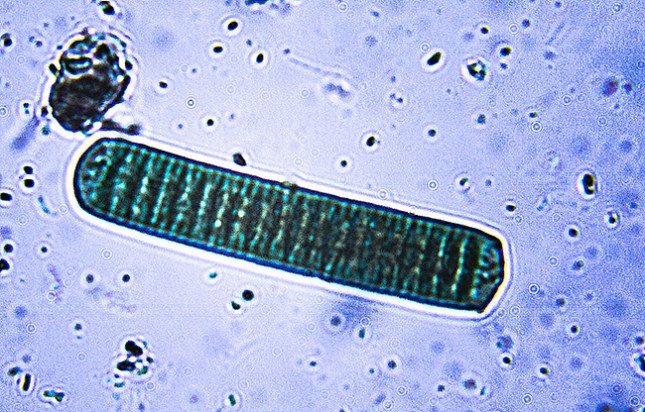
Lyngbya, with sheath

Fast growers demand much nitrogen.   Problem is, most plants can’t use nitrogen gas from the air.   Good thing we have Cyanobacteria with specialized cells called heterocysts to convert atmospheric nitrogen to ammonium fertilizer to their own benefit, to the benefit of plants that share their soil,  such as in Florida wet prairies, and to the benefit of many symbionts.

Cyanobacteria have more symbiotic relationships than you can shake an alga at.  They hook up with:  true algae, cycads, diatoms, ferns (including the floating fern Azolla used to fertilizer rice), flowering plants, fungi, hornworts, liverworts, marine worms, mosses (including Sphagnum), radiolarians, sea squirts, sponges by the dozen, and more, including partnerships awaiting discovery.  Oddly enough, if we shift our attention momentarily to the Red Tides befouling the beaches, those little agents of destruction are Dinoflagellate Algae, and guess what, Dinoflagellates and Cyanobacteria are known to have symbiotic relationships.   Every Cyanobacterial symbiosis has a story, but enough is enough for now.

Yet permit me one little example, the Southern-Hemisphere flowering plant genus Gunnera is unique so far as is known, having cyanobacteria living inside the host’s cells.   This growth-promoting intimacy is of interest in a hungry world, not merely because some Gunneras are food, but conceivably the little internal fertilizer generators could be extended to other crop plants.

Now for the surprise ending.  Not all Cyanobacteria are photosynthetic.  Recently in Spain some  turned up 2000 feet underground.   They get their energy from hydrogen just like a fuel cell.  Just think, the most primitive “plants”  of the deep past are demonstrating the most advanced energy form we know.
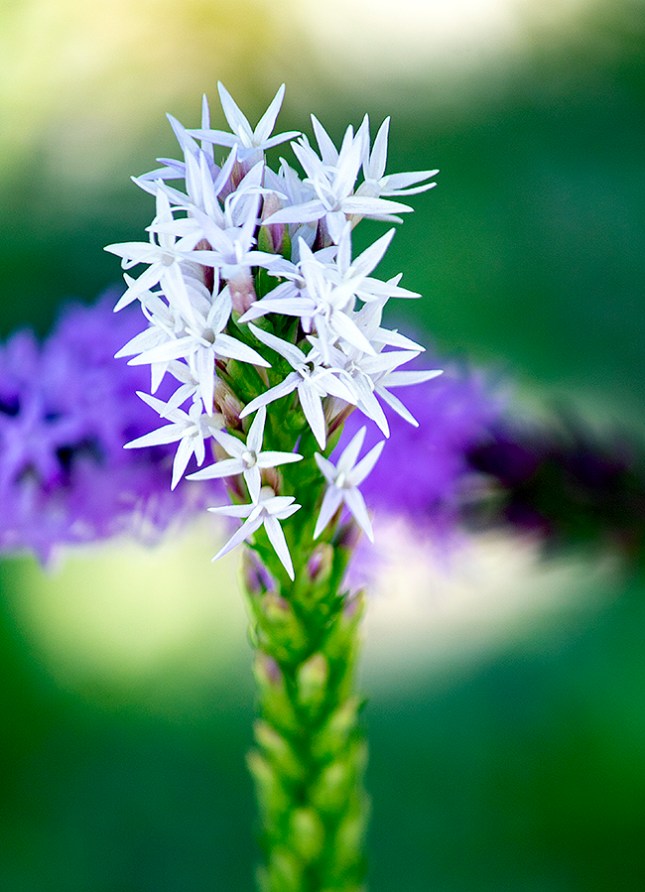
flamingo

Photo by Donna Rogers


Tags: , ,

White Star Sedge Can Tell Time

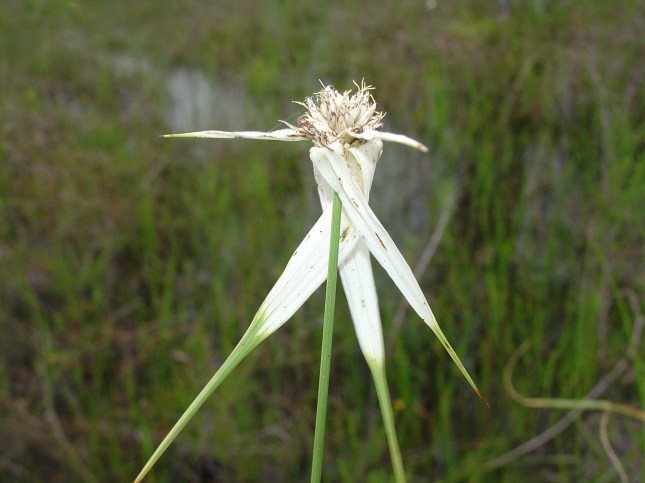
Rhynchospora colorata

(Rhynch-o-spora means snout-seed, and colorata has obvious meaning.)

Cyperaceae, the Sedge Family

Sedges are a funny family.  They look like Grasses at first glance, but have their own ways, and weird tricks up their sleeves.   One trick is insect pollination salted among the species.  That is a wee bit of a surprise in an almost entirely  “classic” wind-pollinated family.  “Almost” is the key word.  Many  sedges, not all of them related to each other, have switched from wind pollination to complete or partial insect pollination.  Given that insect-pollination is the original pollination mode in flowering plants, you could say these buggy sedges have switched “back” to insects from wind-loving ancestors whose own ancestors needed insects.   Flip flop flip.  If you switch “back” to insects you don’t have the original insect-attracting equipment:  nectar, fragrance,  or colorful petals. Your insect-pollination-evolution has to re-start from scratch.

The insect-pollinated sedges have reinvented insect-pollination offering pollen instead of nectar, using showy yellow anthers and white or yellow bracts (specialized leaves) in place of petals, and have reinvented sweet floral fragrances.
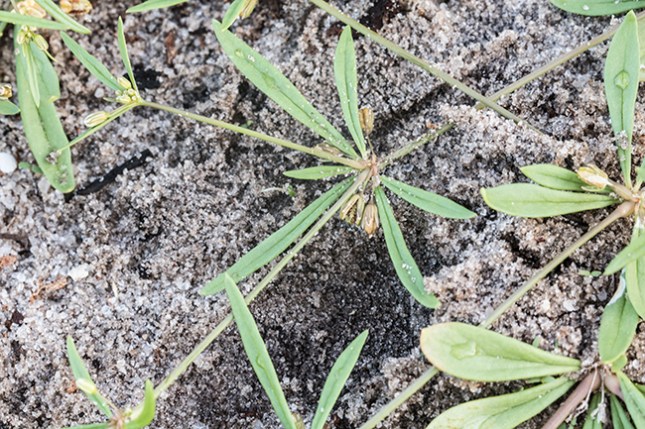
Rhynchospora latifolia 4.jpg

Rhynchospora latifolia by John Bradford.

The sedge stars of insect pollination around here are species of the large and diverse genus Rhynchspora differing from the wind-pollinated species most obviously by having showy partially white bracts spreading out like petals.   When I was younger these species were known as Dichromenas (die-crow-MEAN-ahs).    The two common ones in our immediate area are Rhynchospora colorata on neutral soils and its larger cousin R. latifolia preferring acid soils.  We’ll zoom in on the former.
Its pollination is by bees.  Watch this short video to get the buzz:

CLICK HERE

The bee is a zippy rascal, so the footage is slowed by about 2/3 for easy viewing.

On top of the bee visitation, the flower has a second odd ability, to tell time.  I first learned of this talent about a similar, Brazilian, species botanist E. Leppik described in 1955 as attracting bees during mid morning,  being bereft of bees earlier and later in the day.   Although my visitations at those hours are sadly  constrained by the need to go to work,  I see the same behavior in R. colorata here.

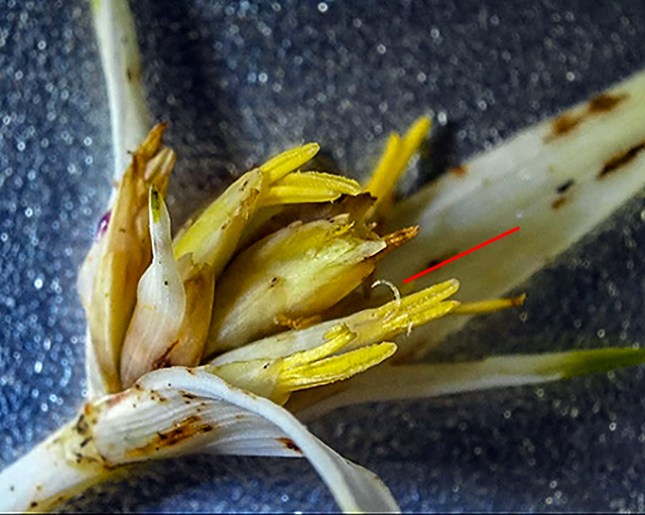
Early in the morning, the flower heads are not fragrant while they are launching the pollen-producing anthers, which become yellow and showy, and pollen-receiving stigmas,  which are inconspicuous and more ephemeral than the anthers.  The stigmas seem to become receptive before the adjoining anthers mature.

Cyperus colorata early AM

Above. Approx. 7:15  AM.  The big yellow anthers peeking out but not yet expanded. Stigmas emerging too, the curled white one marked with red pointer seems to be ahead of the anthers.

Rhynchospora colorata 1015 AM Second Photo

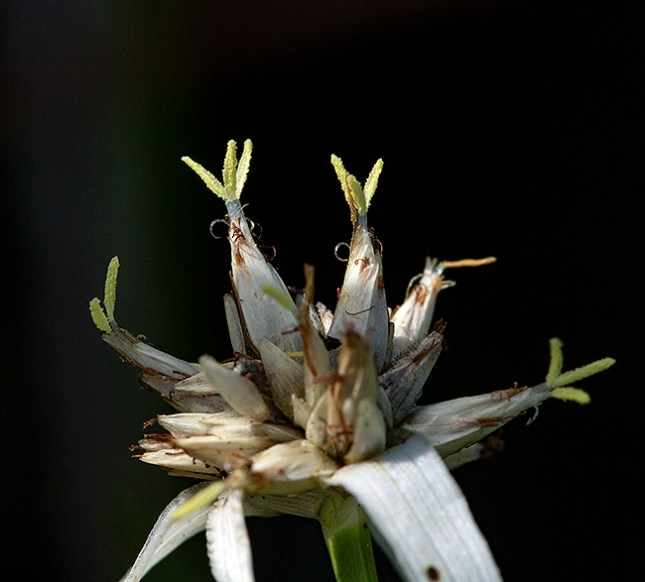
Above:  Approx. 10 AM. Bee time.   Fragrant. The anthers, dusty with pollen, standing up yellow in triads.  The curly white delicate stigmas below them apparently at their prime as well.

Rhynchospora colorata evening

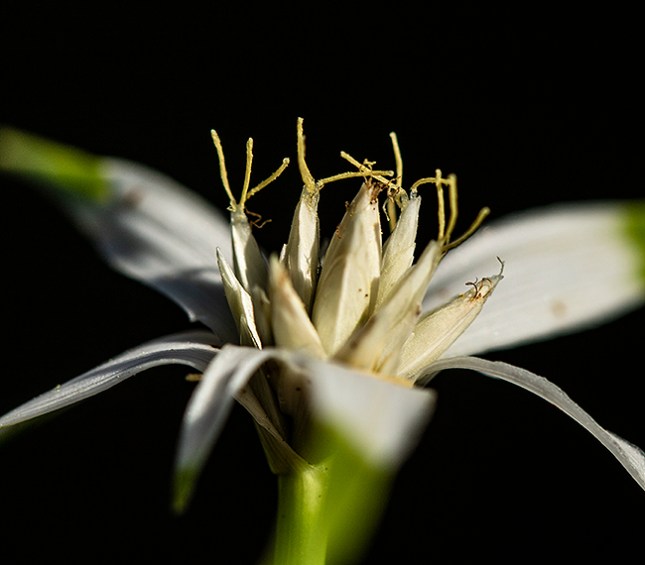
Above:  Approx. 6 pm.  Stigmas withered and brown.  Anthers still present but losing color, losing perkiness, losing organization,  losing pollen.

Roughly 10-11 AM (on our current DST) the stigmas are white and glossy; the anthers protrude in jaunty clusters of three yellow covered with granular pollen; and the flower heads smell oh so fragrant.   This is the only time I’ve seen bees visiting.

By dusk the stigmas are gone or at best brown and withered; the anthers may or may not still be there, and when remaining, the pollen in gone or vastly reduced; and the floral perfume is gone or nearly so.

Leppik noted multiple species of Brazilian bee visitors, mainly stingless bees of the large genus Trigona.  We have stingless bees in Florida.  Perhaps R. colorata is important to them.   I think a pollination study of the Floridian insect-pollinated sedges would be worthwhile, if that has not occurred, and I can’t find anything like it using Google.

Rhynchospora colorata spreads into rhizome-bound clonal patches in open wet habitats, such as shores,  either mixed with other species or nearly a monoculture.   Sedge rhizomes are interesting in their own right.  They often accumulate starch generously, although it is hazardous to over generalize about a few thousand species.   Water-chestnut in stir-fry is a thickened sedge rhizome.  The hated weed purple nutsedge has prehistoric  value for its edible thickened rhizome tubers dating back almost 9000 years in Subsaharan African archaeology.     Likewise weedy locally, Yellow Nutsedge is the Chufa valued as a tasty tuber in parts of the world.  Does Rhynchospora have its own tasty tuberous rhizome?   Naw, it is slender, yet still rich with starch.

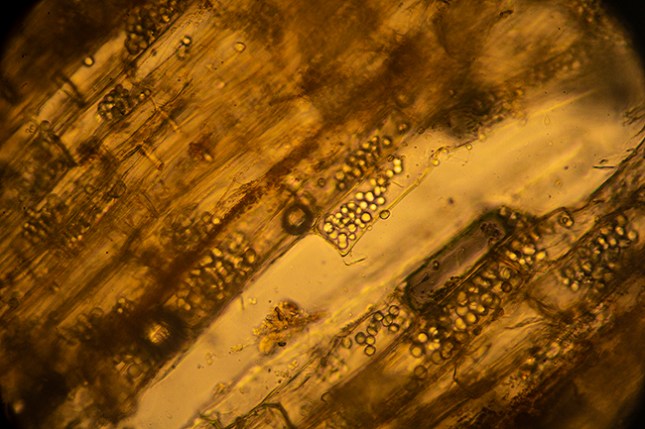
Rhynchospora colorata rhizome starch

Rhynchospora colorata. Microscope view of rhizome. The glassy beads are starch granules.  This rhizome is loaded.

 
2 Comments

Posted by on September 21, 2018 in Uncategorized, White Star Sedge


Tags:

Axil-Flower and Its Topsy Turvy Bees

Mecardonia acuminata

(Mecardonia is a fusion of the name Anton Meca y Cardona, Spanish botanist.  An acuminate leaf is pointy-tipped.)

Plantaginaceae (traditionally Scrophulariaceae)

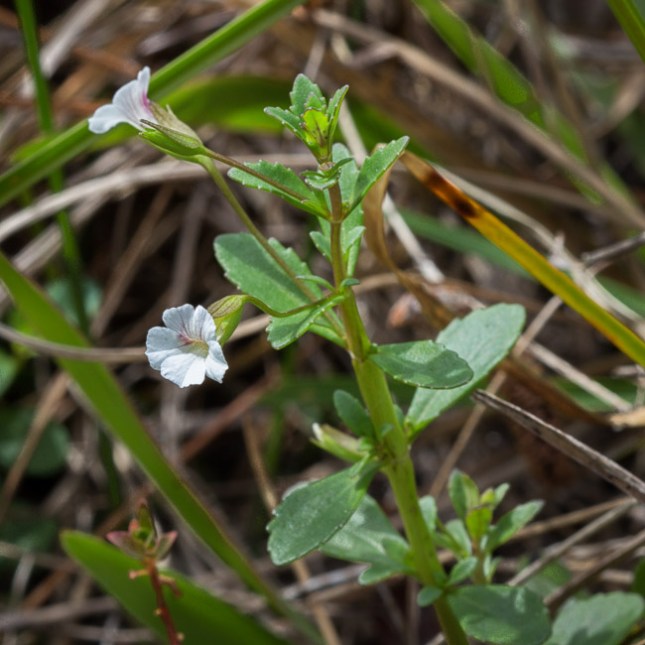
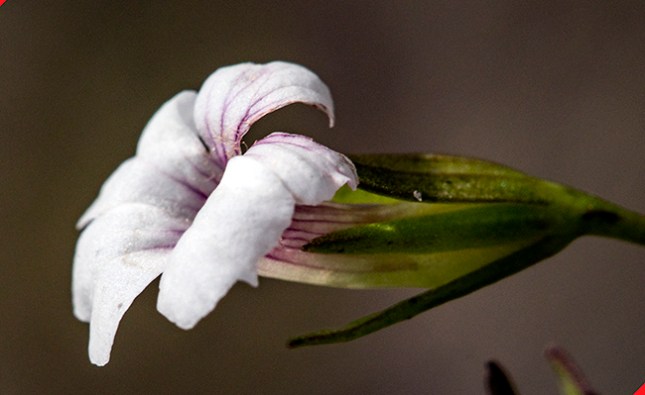
Mecardonia acuminata 3

Mecardonia acuminata by John Bradford.

John and I botanized early this morning in an immense disturbed wet meadow near Jupiter, Florida.    My goodness how certain areas can have an utterly unique flora found nowhere else nearby.    You’ve heard of flyover country, well on a smaller scale there are walk-by plants.  Poor Mecardonia acuminata is a meek species one might step on while looking for something “interesting.”    Everything is interesting, dang-it, and this little native wildflower is a bag of curiosities.

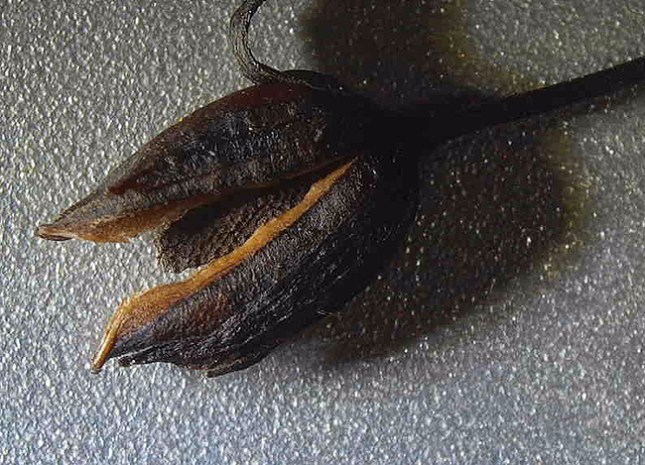
Mecardonia pod

The pod highly magnified.

The first curiosity is the ripe pod turning black, which spreads to the entire plant as it dries.  Such blackening  is scattered among species formerly classified in the Scrophulariaceae, such as our local “black” senna familiar to some readers.  The blackening reportedly comes from iridoid compounds, deterring herbivores and microbes.

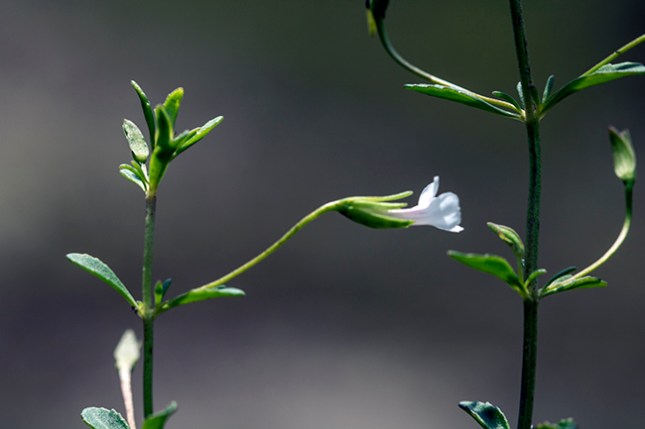
Curiosity number two is the  abnormally long flower stalk, a wand lifting the flower up away from foliage.  These plants grow in the vegetative tangles in squishy mud.   Seems like they have to elevate their blossoms for pollinator access.  Although evidence suggests sweat bees as primary pollinators, I’d not be dismayed to catch a moth or butterfly in the act, and when my imiginary lepidoptrans hover it might help to have the flowers  lifted safely above dangerous foliage.  At least one botanist has supposed  the curvature of the flower tube to thwart moth and butterfly penetration.    For a weird aspect to the wands,  read on:

As biologists A. Ahedor and W. Elisens documented recently, proceeding westward across Florida from east coast to Gulf Coast, the wands diminish progressively, averaging around 22 mm long eastward shrinking down to mid teens westward.  Go figure.   Different environmental conditions?  Different pollinators?   If you transplant a short-wand individual from Sarasota to east-coast Jupiter will it conform to the dimensions of its new lengthy neighbors?  An experiment to try.   Hint: when such experiments are attempted the original condition usually persists, genetically set.

mecardonia axil

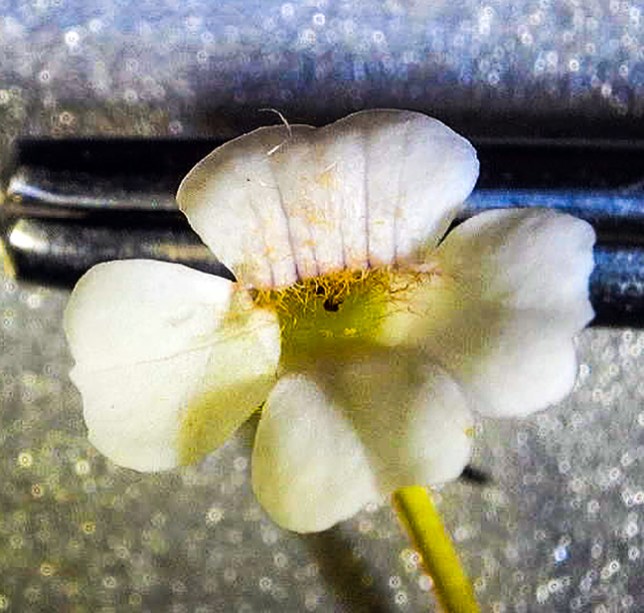
The third curiosity is floral.  Botany textbooks describe flowers pollinated by bees as often being horizontal with a tube, its entrance a landing platform marked with lines, fuzz, or bumps called nectar guides leading in.   But in Mecardonia the “landing platform” marked with pink-lavender nectar guides rises above the entrance like a sign above a door.  Signs above the tube door are not rare, for example, in many orchids and legumes, but there is a big difference.  In those orchids and legumes, even though there is a sign over the door, the plant still provides a spacious and commodious landing platform…the labellum in an orchid, the keel in the legume.  But Mecardonia has no specialized welcome mat at the door.

Mecardonia flower side view Riverbend

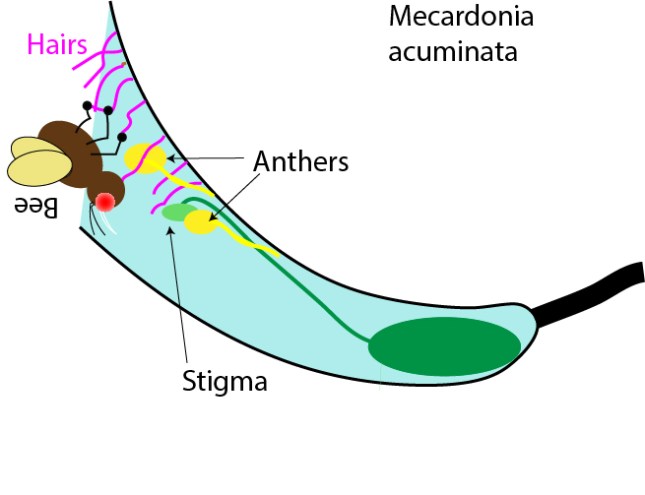
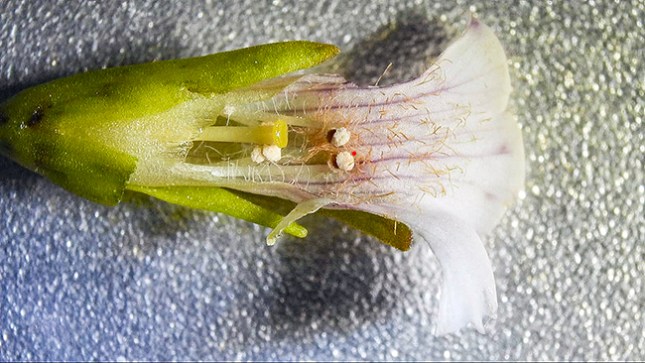
Instead, the upside-down landing platform above the door serves double duty, as advertising and as landing platform.   The bee enters the tube flipped belly-up clinging to hairs on the roof of the tube like a lizard crossing my garage ceiling.  As the bee goes in, its belly brushes against the anthers and stigma.   (There is a long-standing but unproven suspicion of self-pollination as well.)

Mecardonia bee

Observation of the bee walking on the ceiling in the Mecardonia species complex goes back to botanist Federico Delpino (1833-1905), the father of pollination biology.

mecardonia looking in1


Mecardonia open


To dig deeper: CLICK

 
3 Comments

Posted by on September 7, 2018 in Axil-Flower, Uncategorized


Tags: ,

Liatris, Blazing Stars

Liatris, Blazing Stars

Liatris chapmanii and additional species

(Nobody knows how the name “Liatris” originated.   Alvin Chapman was a 19th Century physician who documented fundamentally much of the Florida flora.)

Asteraceae

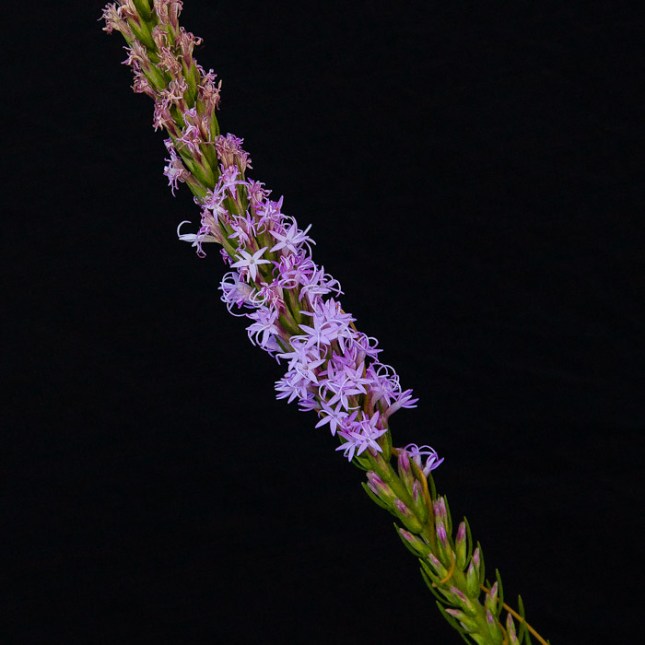
Hot hot hot.  John and I today sweltered across the Haney Creek Natural Area near Jensen Beach, Florida, a mixed habitat with an extensive white sand scrub “desert.”  Sometimes sheer beauty is the main story.   Today the Liatris plumes were surreal, hundreds of glowing purple feathery spikes waving in the wind.    Even master photographer John  can’t capture the sunshine, fragrance, and breeze with a camera.

Liatris chapmanii 5

By John Bradford

Most of those in Haney Creek are Liatris chapmanii, although there are others too. Florida is home to about 14 different Liatris species, five locally, and  four species 100% restricted to the Sunshine State.  Not a bad representation of a genus with only 37 species altogether.

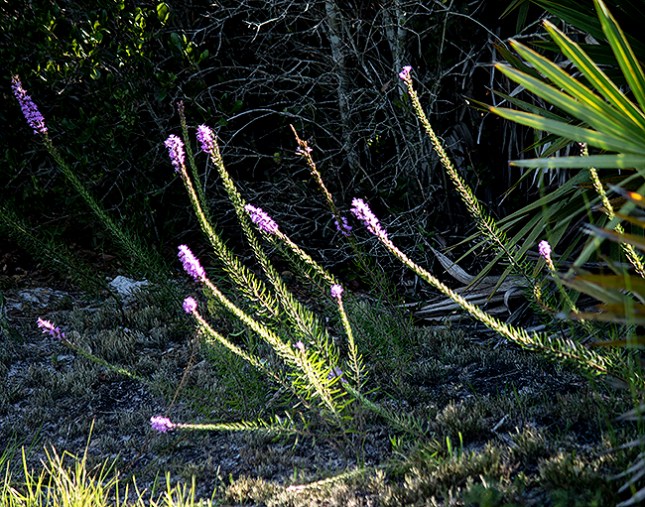
liatris patch

Chapman’s Liatris today

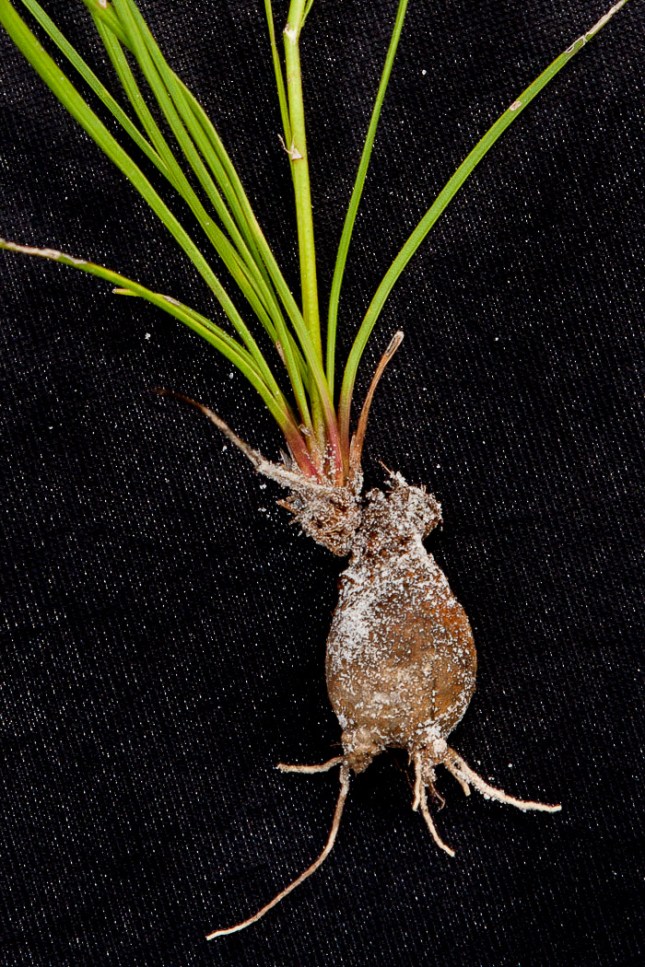
Despite their good looks, these plants are tough, famous for making subterranean corms (thick bulblike stems)  or rhizomes able to hide from fires and other hardships above the soil. Nobody would farm the corms, exactly, but Liatris is a commercially valuable cut flower, especially  the lovely Liatris spicata native to our area and up eastern North America.  The bulbous corms have been grown commercially in the bulb capital of the world, The Netherlands, and from there to Egypt where they flourish to sustain a cut flower industry there.   The corms then became abundant byproducts of that industry, and thus objects of research as potential food and drug sources, complicated by the presence of nutritional benefits and bioactivity at the same time.

Liatris gracilis 5

The corms, by JB

The raison d’etre for the Liatris flower power is to lure pollinators.   Build it and they will come:  bees, butterflies, day-flying moths, and even hummingbirds.   The Bleeding Flower Moth breeds exclusively or nearly so in Liatris flower heads, where its larvae benefit from Liatris-matched camouflage.  More remarkable, the adult moth’s coloration resembles the flowering heads.

Liatris white

Some mutants are white-flowered. Today.

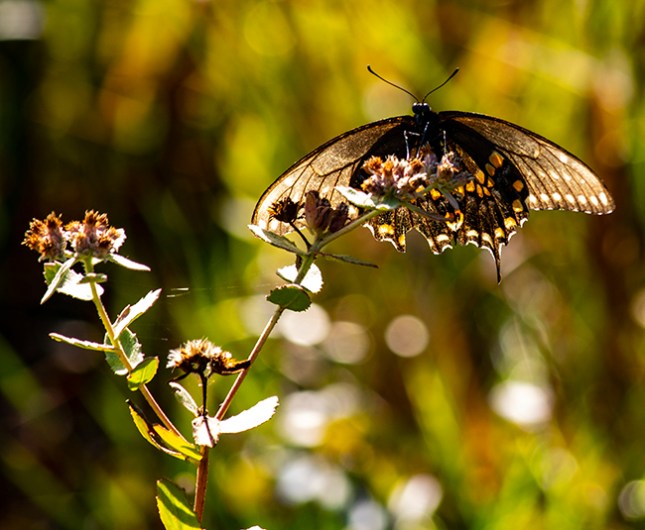
Today squinting through the sweat dripping from our brows, we failed to spot the Bleeding Flower Moths, maybe too well hidden.   In the same scrub patch fluttering about was the black swallowtail below.

liatris file swallowtail

Who is looking at whom?


7 Comments

Posted by on August 31, 2018 in Liatris, Uncategorized


Devil’s-Potato and Its Mimectic Moths

Echites umbellata

(Echis is a genus of nasty old vipers.  Echites vines look snakey, and maybe because of that have a history as  snakebite remedies.  An umbel is a type of flower arrangement.)

Apocynaceae

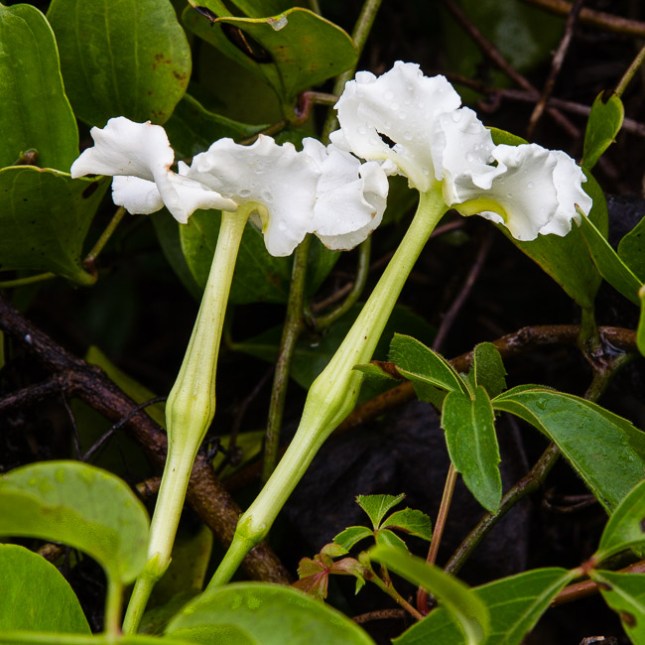
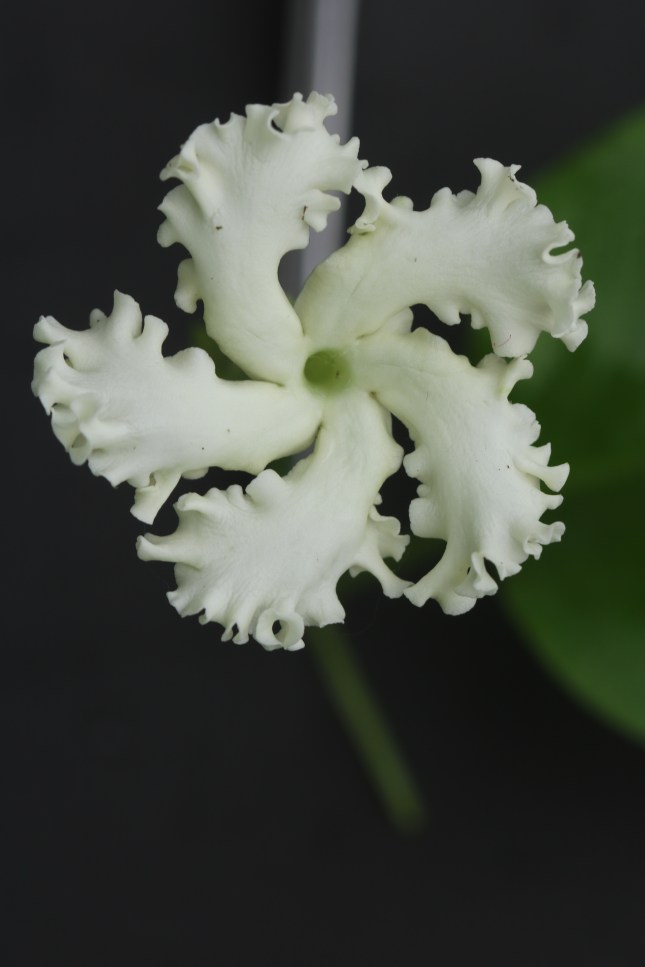
A Google book report is a crummy blog, and this week is honestly nothing more.  I did not set out to compile Google notes, but rather was curious about pollination in the exquisite Devil’s-Potato flower which looks like a cultivated white Mandevilla (Dipladenia) Vine. Trying to find the pollinator online took me down the rabbit hole into Alice in Mothland, complete with a large caterpillar.

Echites umbellatus 5

Devil’s Potato by John Bradford

Before the moths comes context.  The Devil in the name comes from deadly sap, no surprise in the Apocynaceae Family.  In Jamaica the vine applied superficially to a leg pain caused vomiting transdermally.  Poison’s a good thing for immune moth larvae whose feeding makes them too poisonous to predate.

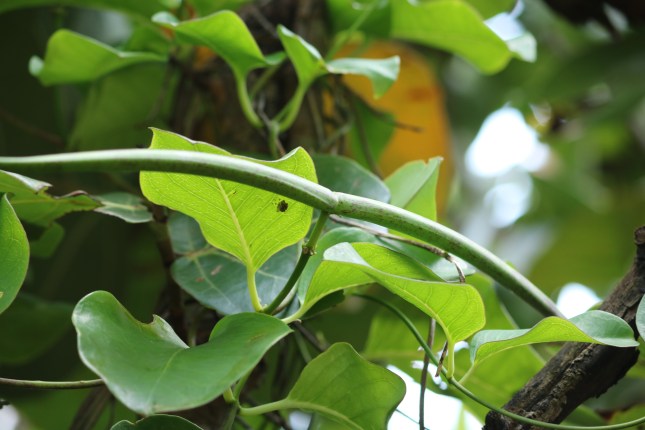
The fruit is a T-shaped double pod having two long horns joined in the middle.   The “potato” is a thick rootstock this tough vine uses to survive on stormy coastal dunes from Central America and the Caribbean to Florida.

IMG_5230

T-shaped two-horned pod

The flower is a classic textbook moth-pollinated blossom, having white coloration, a striking fancy silhouette visible at night, long narrow flower tube, and fragrance.   At mid day there is no fragrance;  at about 6 pm it is perfumed.    You’d think looking up the mothy visitor would be a no-brainer.  Tried hard yet still don’t know, but it is all about the journey.

IMG_5241

Can’t miss that silhouette, even at night. Note the narrow entrance for the moth proboscis.

Echites is intimate with at least three moth species.   John and I don’t have photos of them, but revealing links are at your fingertips below.   Here are the three moth-keteers:

  1. Uncle Sam Moth, aka Faithful Beauty (Composia fidelissima)

CLICK to see it

A patriotic beauty!  As with all three moths featured today, its larva feeds prominently on Echites umbellata, extending to other related members of the Apocynaceae, including horticultural Oleander as do the two other moths.   The moth also uses Baybean, a legume vine literally intertwined with Devil’s Potato.   Baybean has wicked poisons of its own.  Unlike most nectar-feeding moths, Uncle Sam is active by day.  Otherwise its 4th of July colors would be wasted.   A superficial impression is that this moth visits flowers smaller than Devil’s Potato, and the evening floral fragrance indicates a nocturnal or twilight moth. Therefore  I vote against it as the mystery pollinator.

  2. Oleander Moth, aka Polka Dot Wasp Moth (Syntomeida epilais)

CLICK for a peek

The Oleander Moth looks like a fearsome wasp, but is really a harmless poser.   It is poorly named, as Oleanders are horticultural introductions, and the caterpillar apparently expanded to Oleander from our native Echitites umbellata as its original larval host in Florida, probably also frangini (Plumeria) where those are native..   Closely related, Echites, Plumeria, and Oleander no doubt feature similar toxins. This polka-dotted moth with color similarity to Uncle Sam uses ultrasound to attract a mate.  The female emits a sound inaudible to you and to me,  and the male moth comes running like match.com.

That the Oleander Moth has warning coloration and the appearance of a wasp is noteworthy, but the mimicry runs deeper, again to ultrasonic signals serving not just to lure mates, but additionally to warn off moth-eating ultra-sound-navigating bats who would not see colors or waspy wings, but get the message sonically.   As with visually mimicry, moth resembling wasp, there are moths who mimic the sound warnings of other moths.

These moths have layered lines of defense: poisons, warning coloration and wasp appearance to deter birds by day as well as ultrasound warnings to deter bats in the dark.

As with Uncle Sam, the Oleander adult seems too small and too day-active to be the pollinator.  I vote nay.

  1. Tetrio Sphinx Moth (Pseudosphinx tetrio)

CLICK

Speaking of mimicry,  another caterpillar with Devil’s Potato as predominant or prominent native larval host, now expanded to Oleander,, is the Tetrio Sphinx (aka Frangipani Hornworm) Moth.   The huge caterpillar has red, yellow, and black warning coloration.  Those colors remind you of any sneaky snakes?  Ecoogist Dan Janzen suggested the caterpillar mimics a coral snake, not only in coloration, but also in a writhing and biting behavior when grabbed.

The caterpillar morphs into a large adult sphinx moth that seems just right to be the pollinator we seek.   With no data in support beyond circumstantial speculation, it gets my vote:  size match seems ok, and this moth is twilight/nocturnal.   The photo below shows the opened flower, with the entrance to the flower tube at the right, and a device to block penetration by anything other than a moth proboscis to the left.  To get from the entrance past that barricade on the left down (leftward) into the nectar, the proboscis must exceed 30 mm.   The length recorded for the Tetrio Sphinx is 49 mm, perfect.  If it is the pollination agent,  it is a handy example of a pollinator whose larval stage lives on the species it grows up to pollinate.   This is known well enough in other species pairs, such as yucca moths and the beetles that pollinate coontie.

Echites floral tube

Opened flower tube. Entrance at right.  Conical barricade at left has visible slits a moth proboscis can penetrate.  The proboscis must exceed 30 mm.  Average for the Tetrio Sphinx Moth is 49 mm.

A final odd note.  In Southeast Florida Devil’s Potato Vine is no longer abundant, as its favored habitats have become seaside condos even though at least three different moth species probably depended partly or entirely on it.   As the habitat goes, the vines go, and so go the moths…right?  Such a typical finger-wagging ending..eh?  But hold on.   Looks like all three fickle moths have taken up with cultivated Oleander.  Gotta be a lesson there.

 
4 Comments

Posted by on August 24, 2018 in Devil's Potato, Uncategorized


Tags: , ,

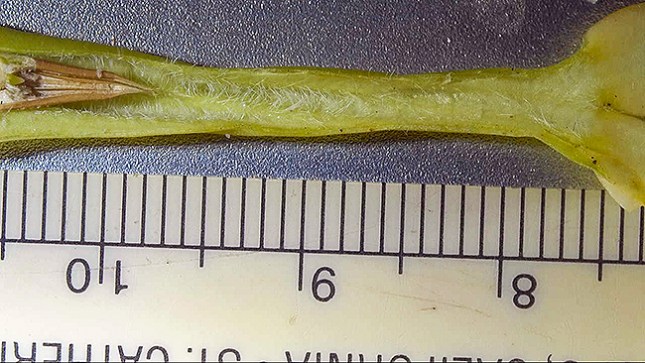
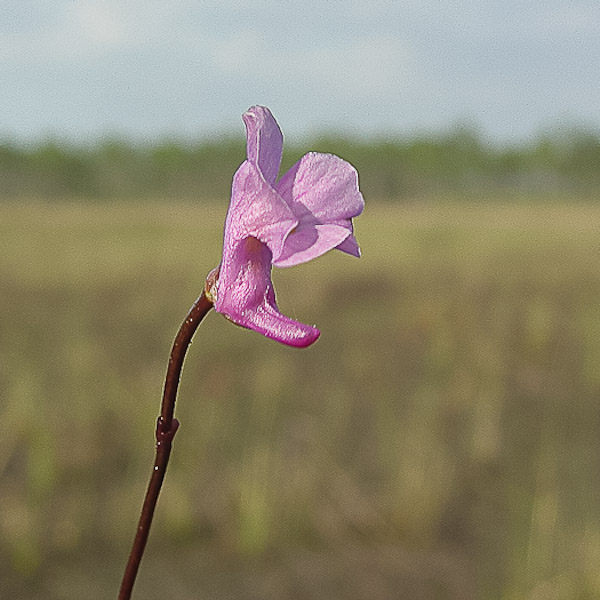
Purple Bladderwort Has Aquaponics

Utricularia purpurea

(A utricle is a sac.)

Lentibulariaceae

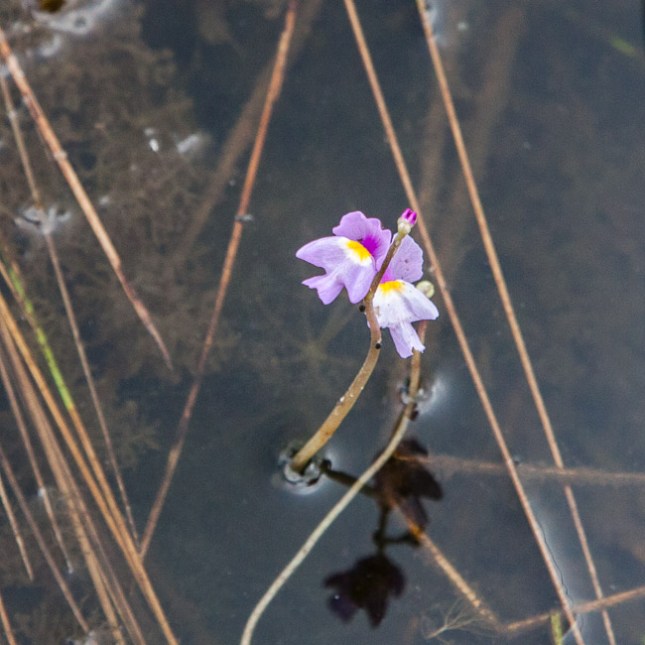
Brightening shallow waters and wet muds round town right now are intricate carnivorous plants, the bladderworts, in some places thousands of them.   Several Utricularia species make Palm Beach County a better place, all of them showy yellow-flowered, except one,  purple bladderwort having, duh, purple flowers.

Utricularia purpurea 7

PBW by John Bradford.

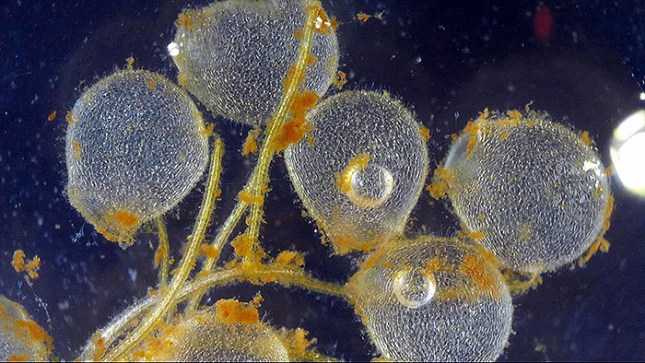
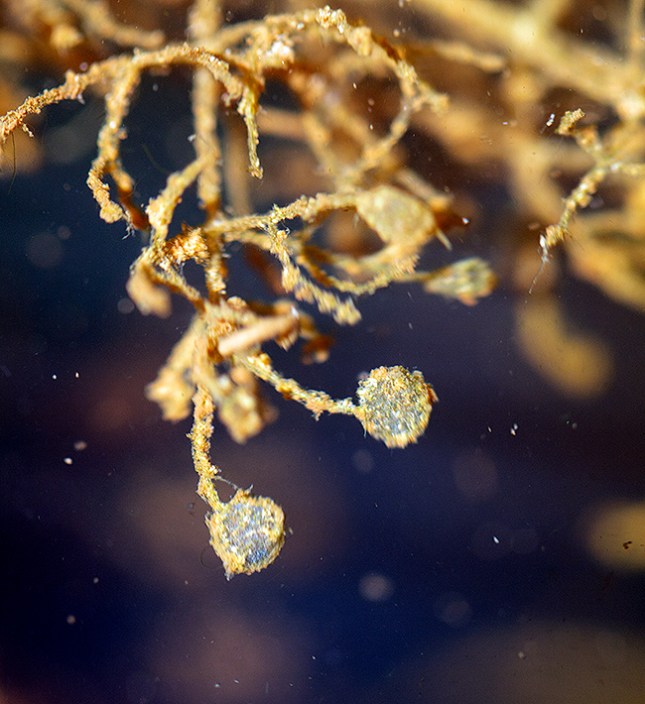
We’ll get acquainted, but first a word about bladderworts in general.   They typically have finely divided stringy leaves and live in shallow water or in wet mud.  Flowerless you could mistake them for algae.  Look closer though, on the foliage are tiny (let’s say 1 mm across) bladders, little slurp-traps with a trap door and trigger hairs.  Tiny creatures swimming by trigger the triggers, and SNAP,  the trap springs open like the wicked witch’s oven, and the small passerby becomes lunch.

utricularia purpurea traps with debris

Death traps magnified, with clinging brown detritus.

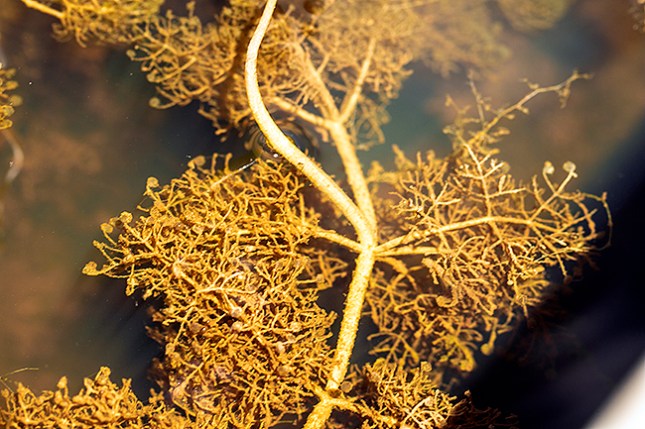
Utricuaria purpurea is one of over 200 worldwide species of bladderworts, and its astounding distribution extends from Central America to somewhere along Hudson Bay.   It takes the cold bravely via tiny tubers called turions hiding safely in the lake bottom mud.   In our area the foliage masses can be the size of a garbage can, often looking brown.

Utricularia purpurea foliage

Foliage with traps.

The inconsistent tendency toward brown is not a sign of morbidity.   Under the microscope even brown leaves sustain healthy chloroplasts.    The brown seems to be largely material clinging to the foliage, including dead and living algae,  mixed detritus, diatoms, fungi, cyanobacteria, and who knows what.  No doubt the mix depends largely on the site.

Utricularia purpurea 1

The flower by John Bradford.

Now back to those fearsome traps.    Utricularia purpurea is one of the species calling the role of the traps into question.     Today’s speculations are not necessarily mine, as other observers have given this matter study and thought.

utricularia traps in water

First of all, a study in one place and time is a snapshot,  and just like a snapshot on Facebook, it is inadequate to assess the big picture.   That said, there are reasons to suspect that, “catch a bug and eat it” is not the whole truth and nothing but the truth, even though the traps contain glands producing digestive enzymes.   But there’s more to it:    First of all, the plants invest substantial resources in making those traps, which, however, often appear under-rewarded with the expected victims (but not always).   Secondly, the plants secrete carbon compounds into the trap fluid, as though they are feeding something.   Third, the traps contain a lot of healthy squirming life other than dying victims.   The traps are home to micro-ecosystems of bacteria, sometimes cyanobacteria, apparently healthy protists, and some small multicellular varmints.  Below is a short movie made today of residents in the traps.  Check it out:

CLICK HERE to see life in the trap.

Which are victims?   Which are exploiters or predators?   Which are bycatch?  Which have a mutually beneficial relationship with the plant? Which are in multiple roles?

In the last-mentioned case, biologists plausibly wonder if the plant is feeding its trap colony food from photosynthesis (those carbon compounds) and receiving in exchange nitrogen and or phosphorus waste from those within.    What a great area for research.

You may be asking, if the trap has all those tiny inhabitants, how do they get in?   It turns out even minute stimuli can say, “open sesame,” and the traps can open and close repeatedly, even in a short time.  I’ll bet I know how they all get out…ultimately as fertilizer.  In short, perhaps instead of merely being trappers, bladderworts invented microscopic aquaponics.


—————————————————————————

For those who want to dig deeper:

https://www.jstor.org/stable/2657137?seq=1#page_scan_tab_contents

https://academic.oup.com/jxb/article/61/1/99/567342


3 Comments

Posted by on August 17, 2018 in Purple bladderwort, Uncategorized


Tags: , , ,

Moss and Fern Getting Along Famously

Moss (Octoblepharum albidum) and Shoestring Fern  (Vittaria lineata)

(Octoblepharum means 8 eyelids in reference to the spore release system with that many teeth;  albidum means white.   Vittaria comes from Latin for ribbon, noting long flat shoestring linear (lineata) leaves.

John and I worked indoors this week, but no worries, we can talk about a notable treetrunk partnership.   Many species grow on Cabbage Palms:  Boston Ferns,  Golden Polypody Ferns,  Grapes,  Hand Ferns,  Laurel Figs,  Lichens,   Liverworts, Peppervines,  Poison Ivy vines,  Smilax tangles,  Strangler Figs,  Tuberous Swordferns,  Umbrellatrees, Virginia Creeper,s  Wax Myrtles and more.

Octoblepharum blog lichen

Lichen on the palm trunk.

Two Cabbage Palm trunk residents have a special relationship:

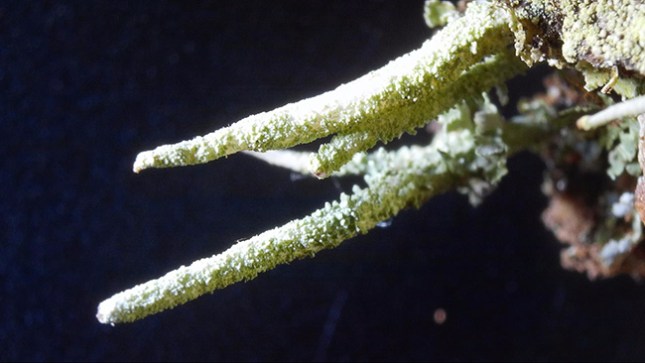
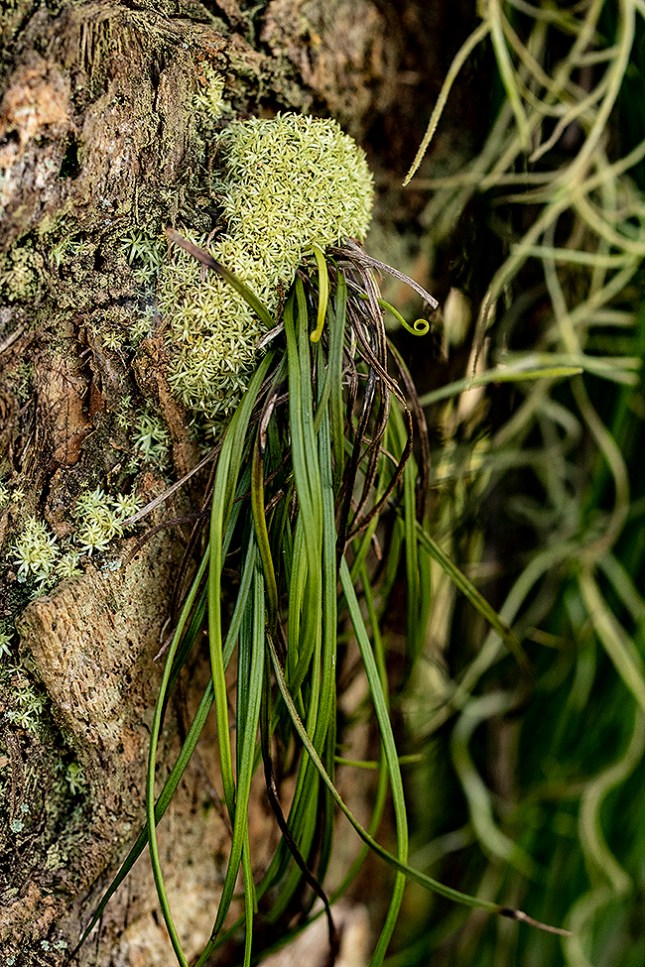
A beautiful moss Octoblepharum albidum often graces the bases of Cabbage Palms trunks with fibrous decaying leaf bases.   The moss is white-toned, thick, pillowy, absorbent, and abundant.  It may occur alone or in the company of lichens (often I think Cladonia subradiata), or with Shoestring Fern, our second species of interest.

Octoblepharum with Vittaria 1

The classic relationship.   The white moss immediately above a young clump of Shoestring Fern.

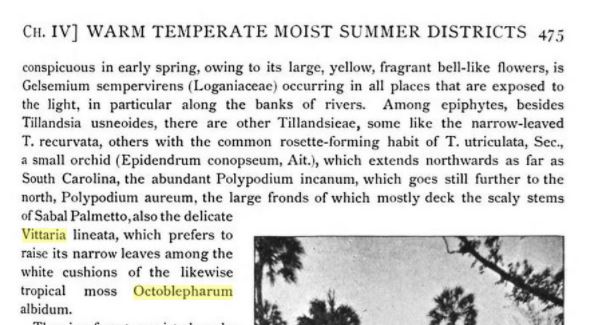
The moss often grows without the fern, but not vice versa.  The young fern rarely holds forth apart from physical contact with the moss.  (Stats listed below.)  Witness to the dependence surfaces sporadically in the literature.  For instance (from A.F.W. Schimper, Plant Geography on a Physiological Basis, 1903):

Octoblepharum from pl geo upon a physiological basis

That the moss occurs happily without the fern while the fern is rare moss-free suggests the moss has something the fern wants.  Alternative explanations are possible*, but we’re going to run with “the fern loves the moss.”

To ponder these things, we need to know Shoestring Fern better.  It lives on tree trunks, predominantly Cabbage Palms.   Ferns pass through a vulnerable early life stage called the gametophyte (gam-EAT-oh-fight) which is tiny, rootless, veinless, and delicate..  In most ferns the gametophyte is short-lived, although generally less true in epiphytic ferns, and the genus Vittaria is especially known for long-lived gametophytes.   In some regions self-perpetuating Vittaria gametophytes are the only form of the fern,  reproducing babies sans adults.    The little gametophytes make pups (gemmae) that break off and grow.  The main central gametophyte reportedly tends to be female, with its spinoff progeny tending to become male.   All this takes time on a tree trunk where water and nutrients can be hard to come by.  Maybe the moss offers support and protection.

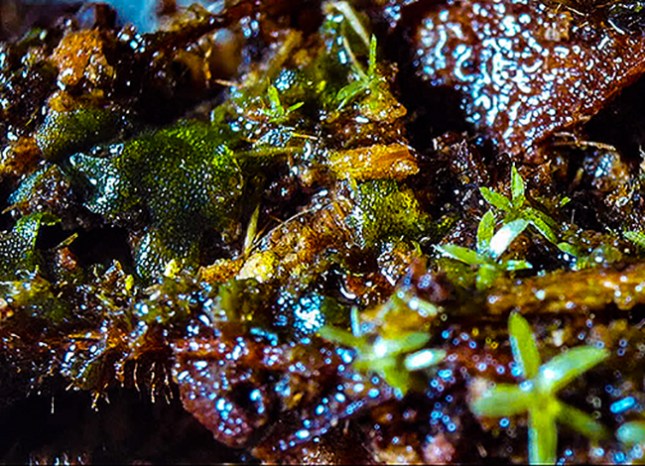
Octoblepharum blog gametophyte

Gametophytes (glossy green) to the left and adjacent moss buddies (narrow leaves) on the right.

The trouble with mosses and ferns is inadequate study.     In 2018 we know mosses sometimes benefit associated plants, but the mechanisms remain murky, with some good ideas afoot.

First of all, Octoblepharum is no ordinary moss.   Its leaves are thick like a mini-succulent, and they are tightly clustered.  In short, it is a little reminiscent of Sphagnum used to keep garden plants moist, holding water internally and externally on that windy sunny palm trunk.  Maybe the moss is a nice “growing bed” for the fern.   Yes, but not that simple either.   The position of the fern relative to the moss matters.    Ninety percent of the young ferns  are in physical contact with the moss, often at the edge of the moss patch,  but only four percent of the contacts are at the top (uphill on the trunk). By contrast,  24 percent of the young ferns reside at the bottom edge and 19 percent alongside the moss or surrounded by it.   Looks like something good washes downward or a bit sideways from the moss.  Nutrients?

Mosses are becomingly increasingly known for nitrogen fixation (capture from the atmosphere) with the help of microbes.    Moreover, recent research shows some mosses to take up nutrients from the substrate, unsurprising until I remind you they have no roots or veins,   traditionally regarded as reliant on rain, dew, and mist.   Octoblepharum sits anchored to the decaying palm leaf bases.   Nutrients could plausibly move from the decaying palm into the pseudo-rooted moss, and then to the fern before or after the moss dies.

If nothing else, the moss is a spongy reservoir for rainwater and  dissolved nutrients,  presumably releasing them slowly by stem dribble to the fern usually alongside, below, or surrounded.

To venture out into shameless speculation,  the moss has a conceivably relevant super-power.   Many tropical plants possess a form of photosynthesis called Crassulacean Acid Metabolism (CAM).   No need for a physiology lesson, the important thing is that CAM allows a plant to thrive under tropical conditions unsuitable for “normal” plants.   Our moss remarkably can toggle between “normal” photosynthesis and CAM, allowing it to stay lively under a wide range of conditions.   That extended vigor may help its needy fern buddy.

To summarize a highly speculative scenario,  somehow the moss seems to support the fern’s younger stages.   In addition to serving as a moist growing bed and retaining and rationing stemwash, the moss could perhaps also provide nutrients from its own decay,  or fixed nitrogen,  or nutrients taken up from its substantial attachment.

My son Evan tried growing essentially all the local ferns from spores in an indoor lab.  The only flop was Shoestring Fern.  Did it miss its moss?

Does the moss return the favor?  Not that I know of.   My theory is, “no good deed goes unpunished.”   Large mature clumps of the fern smother the mosses they come to dwarf.

—————————————————————————————————————————

*A few more details on the friendship for the interested.

Could the near-restriction of the fern to intimacy with the moss (90%) just be a reflection of a mutual need for decaying palm leaf bases, with the fern then having an additional narrower need within the shared habitat?  Maybe, but that seems a stretch, and if so, that would be a remarkable story in its own right.

Alternatively,  could the moss be so pervasive on mutually suitable habitats that the fern has to tolerate it to have a place to live?   Again, possible, but I doubt it, since there is plenty of non-moss-covered apparently suitable habitat, and the position of the fern relative to the moss clump matters.

Fifty trees with fern clumps were checked sequentially walking along paths in Riverbend Park, Jupiter, Florida.  One young fern per tree was recorded.   When more than one fern occupied a tree, the clump closest to my eye level was the one recorded.   Massive old fern clumps were not counted.  Here are the results in descending order of frequency:

  • Fern immediately below and touching or overlapping Octoblepharum moss clump 48% of trees examined
  • Fern surrounded by and touching Octoblepharum moss clump 22%
  • Fern immediately alongside and touching or overlapping Octoblepharum moss clump 16%
  • Fern above and touching Octoblepharum moss clump 4%
  • Fern alone, not touching a moss clump 8%
  • Fern surrounded by a different species of moss 2%

Summary:

Fern touching Octoblepharum 90% of fern-bearing trees examined

Fern touching Octoblepharum at the top (upstream) of the moss pad 4%

Fern not touching a moss 8%


Tags: , , ,

Septicweed

Senna occidentalis (Cassia occidentalis)

(Senna comes from an Arabic name, occidentalis means western.)

Fabaceae (Caesalpiniaceae)

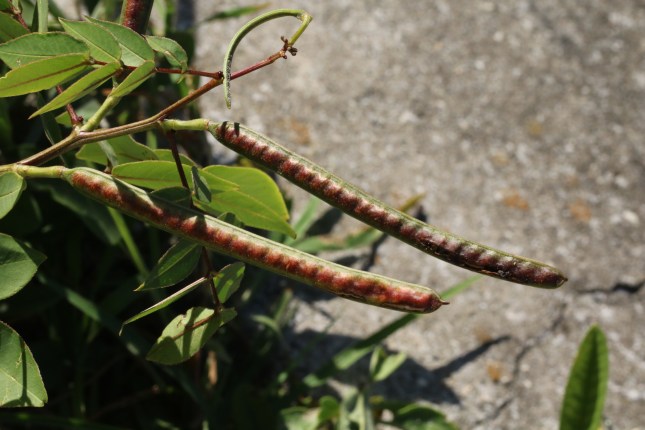
John and I focused literally today around Jensen Beach, Florida.   Arguably the most noteworthy species on today’s agenda is Septicweed, aka Coffee Senna, a super-weed.   Its nativity, like so many global weeds, is murky, reputedly hot-climate America.  The plant has compound leaves, yellow flowers, and flattened bean pods.  It can flower and fruit as a little herb underfoot, or can grow into a shrub taller than you are.  The plant has a ton of history in human affairs in food, in beverage,  in medicine,  in pastures, and more.

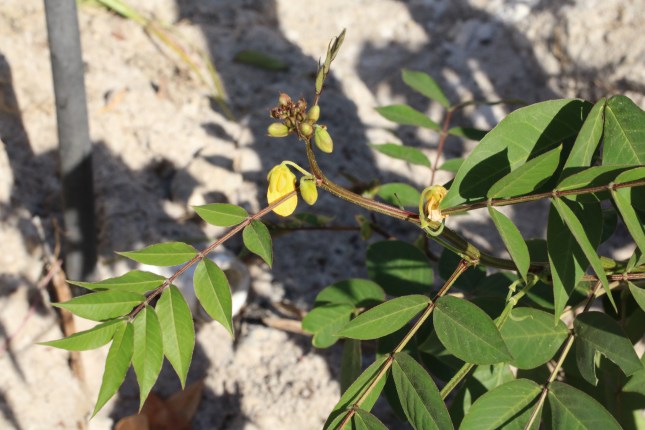
Senna occidentalis

The name Coffee Senna gives a clue as to one historical applications, the seeds roasted as a hot beverage.

The name Septiweed probably refers to the stinky crushed foliage resembling a festering wound, which brings us to its medicinal history.  Name a pathogen you’d like to eliminate…and somebody somewhere has published an article documenting Senna occidentalis to do the job:  cancer cells, fungi, insects, malarial sporozoans, nematodes, sleeping sickness trypanosomes, and more.  Wow.  An all-purpose hit plant.  Laxative as well (although not the Senna in the commercial laxative Senokot.)

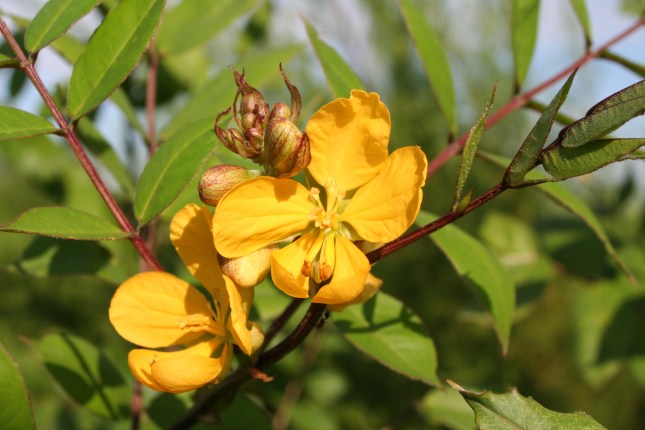
Senna occidentalis flowering branch

Viewed in a medical context it kills everything,  yet seen through an ethnobotanical lens,  it is gift from nature as food, drink, and remedy?    A dilemma, and a great case to underscore the silly argument, of “people have been eating this for a long time, so it’s nature’s bounty!”   Natural is good for you!  (CLICK for dangerous BS.)  Simplistic thinking makes the world go round.  Fact is, plant’s live in a chemical warfare race against their pests and have evolved an arsenal.  There is no clear line between “edible” and “toxic” plants.  Mother Nature doesn’t think that way.  Even long-domesticated grocery store species, such as celery,  can  retain residual nasty….you know, just like the commercials tell us our Boston Terriers still have the soul of a meat-craving wolf.

Senna occidentalis pods

Maybe roasting those seeds for the fake coffee helps with detox, but I don’t take total comfort in that, and any non-roasted ingestion is manifestly dangerous.  The scary problem with “plants that must be great because granny used them for tea” can take the form of under-perceived chronic, or sporadic, or low-level, or inconsistent, or localized, or mis-attributed damage.   In historical cultures where the weazened elders were 30 chronic toxicity may have escaped notice.   Everybody smoked happily in the 1940s.    Consider this example of human fatalities pinned on Septicweed seeds after initial misattribution of the cause of illness.  (CLICKITY CLICK)

Ask the neighborhood veterinarian.  Septicweed has poisoned livestock right here in Florida.   It destroys mitochondria.    With exceptions including bacteria, most living creatures need mitochondria  for  converting food energy to cell fuel to power basic functions such as muscle contractions.   Livestock and lab animals poisoned by Septicweed suffer mitochondrial loss entailing muscle damage entailing heart failure.   Maybe limited non-lethal heart failure could take the form of fatigue, or shortened lifespan, I dunno, I’m no veterinarian, but I do have a heart  and mitochondria,   ixnay on the epticsay.

Although tough to generalize worldwide, the plant’s basic business model seems according to limited research to be germination upon arrival of a rainy season, growing up lickety split, and depositing seeds into the soil seed bank for the next rainy season.   Observers have noted a puny root system, given that the species depends on fast use of ample water, and waiting out drier times as a rootless seed.

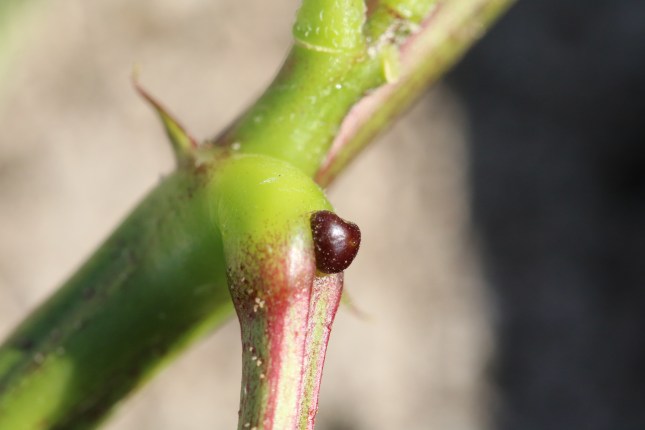
Senna occidentalis gland

Leaf gland

And to end on a weird note, according to biologists Robert Fleet and Brenda Young,  today’s species has an unholy collusion with fire ants.  Foliar glands nurture the little demons who defend the Senna from caterpillars unconcerned about their mitochondrial integrity.  After the blog was posted, Linda Cooper mentioned seeing Sleepy Orange and Cloudless Sulfur butterflies in large numbers breeding on today’s weed.

 
7 Comments

Posted by on July 14, 2018 in Septicweed, Uncategorized


Tags: , ,

Carpetweed–International Plant of Mystery

Mollugo verticillata

(Mollugo is an old name from a similar plant, verticillata refers to the whorled leaves.)

Molluginaceae

No matter where you live, you see this unpretentious yet storied species.  It grows everywhere, and I do mean everywhere, covering most of North America and much of the rest of the world.  How and when it achieved global domination is an interesting question we’ll fail to answer momentarily.

Carpetweed is one of many mat-forming ground-hugging plants often found sprawled in each others’ company in hot, exposed, periodically dry places.

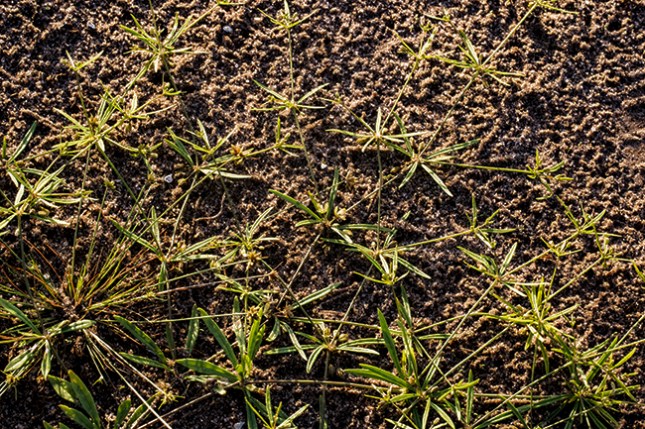
Mollugo sprawling Abacoa

Reach out and expand, creating colonies all the way.

What’s so great about hugging the earth?   Although it may go without saying, botanist John Fogg said it nicely in 1945, “the species can grow laterally, covering the ground with the carpet of its own foliage, and has a distinct advantage over its competitors, for the shade thus created reduces evaporation of moisture from the surface of the soil.”   Self-mulching.   Most of a plant’s water loss is from the bottoms of its leaves,  but leaves on their bellies  lie beneath the drying wind, not losing much water, and the water they do transpire recycles into the root zone.

Mollugo leaves on sand Abacoa

Having transpiration blocked may inhibit cooling, which might explain why mat formers tend toward small leaves amenable to air cooling.

I’ve read that carpetweed seeds can germinate upon one rain event, completing their brief life cycle from seeds to new seeds in a few weeks with no second rain.  A one-rain wonder, although this needs verification.

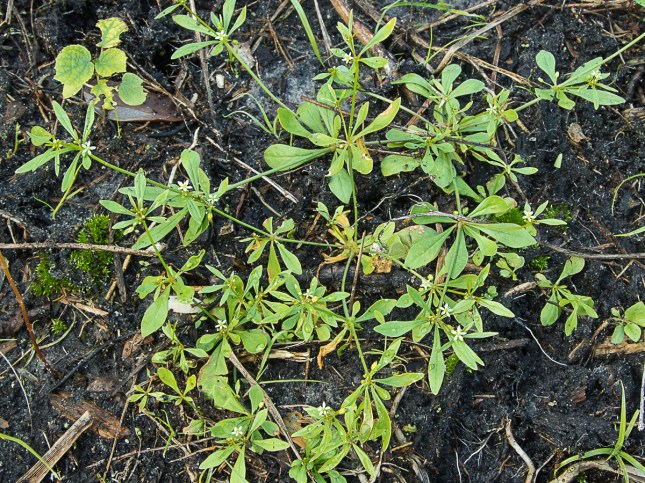
Mollugo verticillata 1Now for the distribution.   Checking the plant manuals at my elbow, here is what I find:
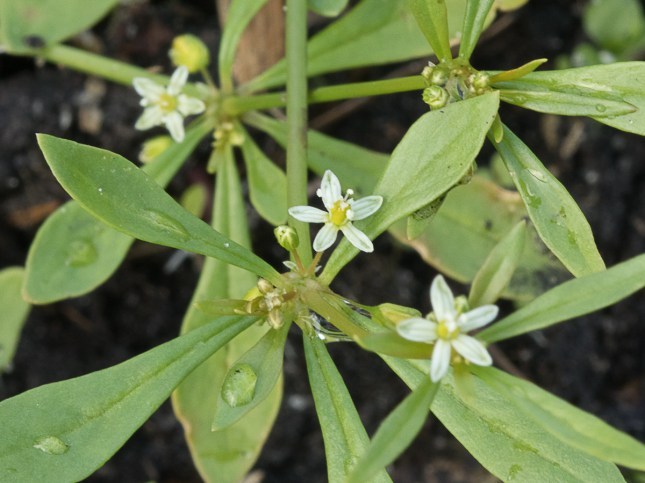
“Native to Tropical America”

“Native to Tropical North America and South America”

“Native of Tropical America”

“Introduced from Tropical America”

You get the picture,  and we see why facile statements of nativity may be too simplistic.  If carpetweed originated in Tropical America, it sure has done a fine job spreading,  now  in almost every state of the U.S., much of Canada, Africa,  Eurasia,  and Asia.  We might say, okay fine,  humanity tracked it all over the place with planes, trains, and automobiles.  But a complication may pull the rug out from under that easy view.

Botanist Jefferson Chapman and collaborators in 1974 reported charred carpetweed seeds 3000 years old  in archaeological remains near Knoxville, Tennessee. Sadly, the site is now  under pontoon boats on Lake Tellico. Seeds of the same species also turned up in Troyville, Louisiana archaeological remains from merely 1500 years ago.

Mollugo verticillata 3

Now go figure.  We must answer the unanswerable questions.

  1. If the species is native to Tropical America how did it journey 3000 years ago to Tennessee? There was limited and poorly documented ancient commerce between points in the American Tropics and the mainland, so arriving with people is possible. Florida is home to other probably non-native pre-European “natives,” such as papayas, agaves, and peppers.    On the other hand, the minute seeds could ride a bird or a storm.
  2. Why were the seeds at a human settlement? They were charred, that is, in ancient campfires.   Was somebody cooking carpetweed?  Unlikely, given the sparse seed production and the low food value of the foliage,  although possible.   More likely, it was a weed in whatever better crop was on the menu, which by the way, predated the arrival of corn and beans.

You have to use your own imagination, drifting back mentally to Tennessee three millennia ago.  What it must have been like.  Commerce with other peoples, although the extent not known.    Agriculture occurring, with its attendant weeds.   My imagination says carpetweed is a human-loving  camp-follower, where people go, it goes, and has been up to that trick for a long time whether or not it fully truly is “native to tropical America.” Could it have been a scattered and very old agricultural weed distributed from Tennessee and Louisiana to settlement-to-settlement over a large geographic area?   Sure why not.

There is another  mystery, the one most studied.   Avoiding a boring  lesson in plant physiology, let it be said that there are two main photosynthetic systems in the plant world.  Plants of cool and temperate climates tend toward “C3” photosynthesis.   By contrast, many from hot sunny climates have “C4” photosynthesis, which offers protections from heat and light.   Guess what, carpetweed is neither fish nor fowl, having aspects of both photosynthetic systems.   Such intermediacy occurs in other unrelated plants as well,  not associated with any known habitat or circumstance.   That being true, I’m only guessing, but is the tropical/nontropical C3/C4 fence straddling coupled with that quickie annual life cycle the secret to  carpeting the earth from  “native to the Tropical America” to frosty Canada?

 
3 Comments

Posted by on July 6, 2018 in Carpetweed, Uncategorized


Tags: , ,

Castorbean has ways to make you talk

Ricinus communis

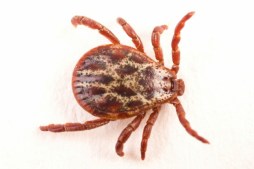
(Ricinus comes from Latin for a tick, which the seed resembles.  Bedbugs last week, ticks today.  Communis means common.) CLICK FOR TICK

Euphorbiaceae (the Spurge Family)  Misnomer alert:  Castorbeans are related to poinsettias, and are not beans.

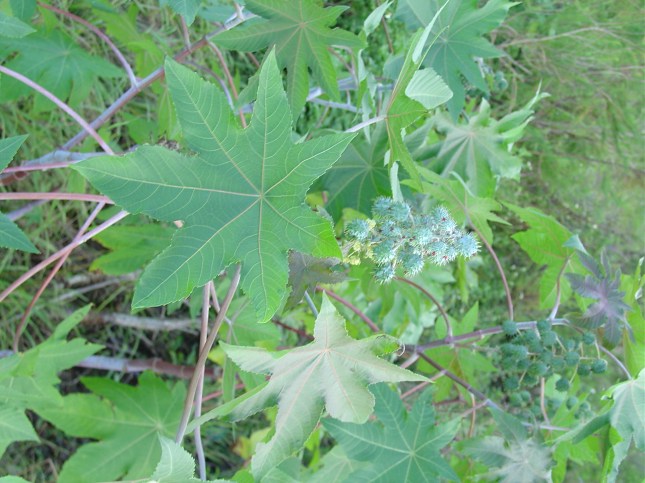
Ricinus communis 1 - Copy

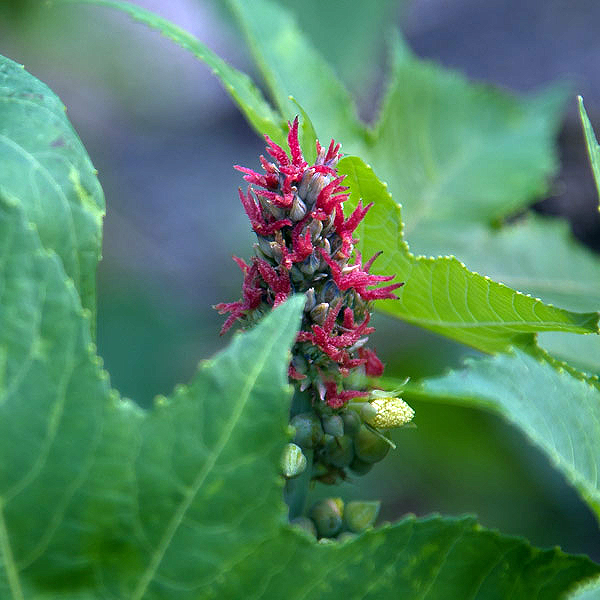
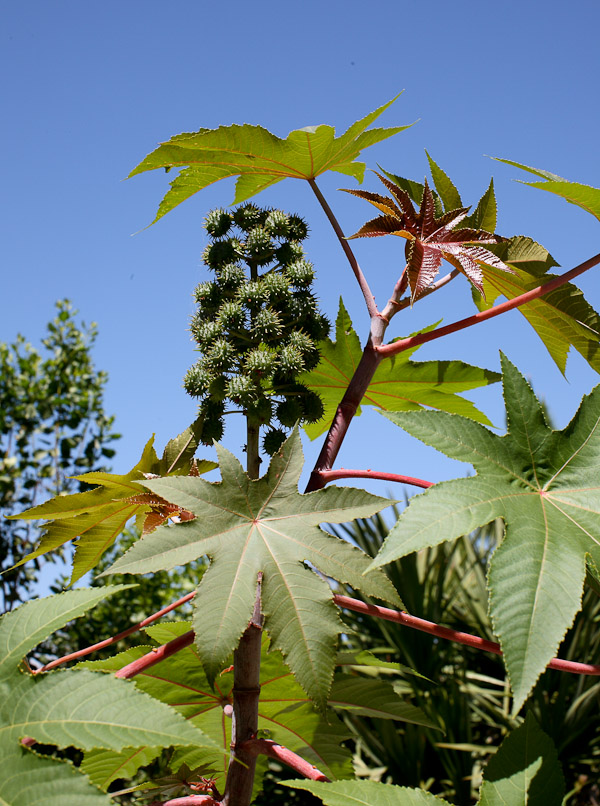
Castorbean with young fruits, as it looks now, by John Bradford.

John and I have been working on a weed project, so today a weed.  Although native to the Old Word, castorbean has made itself at home in Florida and far beyond. It’s big, booming, and blooming.  A good day to explore a storied history.

Beavers and Castrol

First, how castorbean got its name.  Beavers are of the genus Castor, and they make oil.   The oil from the plant resembles beaver oil in ways I couldn’t attest to from personal experience.    I do have experience with Castrol Motor Oil, however, which owes its name to the “bean,” and thus ultimately to the furry dam builders.   Castor oil has unique properties and an esteemed history in engine mechanics, from big airplanes to hobby micro-engines used on model planes, cars, and boats.

Most readers know castor oil not from lubricating their engines, but rather lubricating their innards.   It is a laxative, once thought to be a cure-all applied liberally to children, and is famous for its distasteful taste.  One curative application was probably against goldbricking.  “Oh, you’re too ill to go to school, then you need a big whopping spoonful of castor oil.”

Ricinus ad - Copy

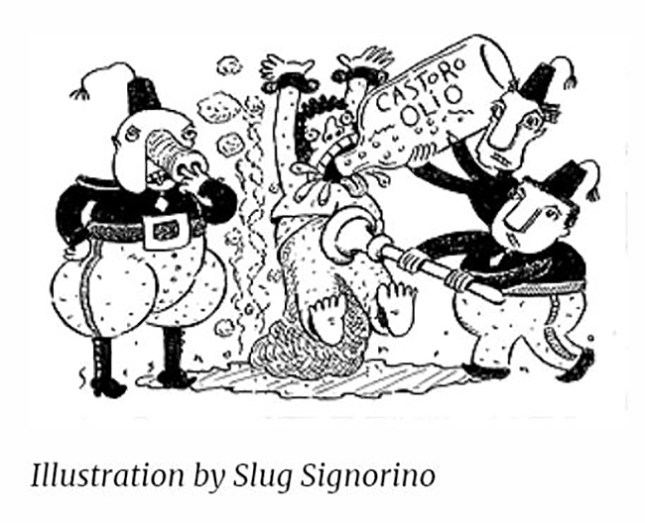
The Fascist Regime in Italy during WWII era likewise prescribed mega doses of castor oil for punishment and for coercion.   “We have ways to make you talk, although we may chat in the bathroom.”   Not nice, but beats the firing squad.   Castor oil as medicine extends back into antiquity.

Ricinus torture - Copy

Ricin

If you think castor oil is severe, how about ricin?   Ricin got in the news as a potential  WMD in the hands of terrorists.  It was also in the hands of the U.S. Military during WWI, when the American University in Washington DC became the epicenter of grim research.  Ricin got a look there for coating bullets and for powdering into a lethal cloud, but research showed it not to work well, despite one researcher getting a fatal snootful.   It got another look and another rejection as ineffective during WWII.  Therefore I doubt we have to fear it from terrorists, although the lethal protein experienced minor application in spy vs. spy,  and somebody mailed some to President Obama.  The way ricin kills is interesting…it deactivates ribosomes.

Now, if you did not just complete Biology class, it may be helpful to say ribosomes are where proteins are made.   No ribosomes, no proteins, no life.     What a great self-defense plan for a plant,  because every living thing has ribosomes.    Even so, plans and outcomes can differ.  Castorbean plants today were acreep with pesky bugs, and with ants.

Ants

Castorbean has another line of defense…ants.  The plants have glands everywhere, including where leaves join the stem, and on the leaf petioles and blades.  The glands feed ants, and the ants presumably protect.

This demonstration of ants on castorbean yesterday takes roughly one minute  CLICK

Ricinus - Copy

CB by JB

Caruncles

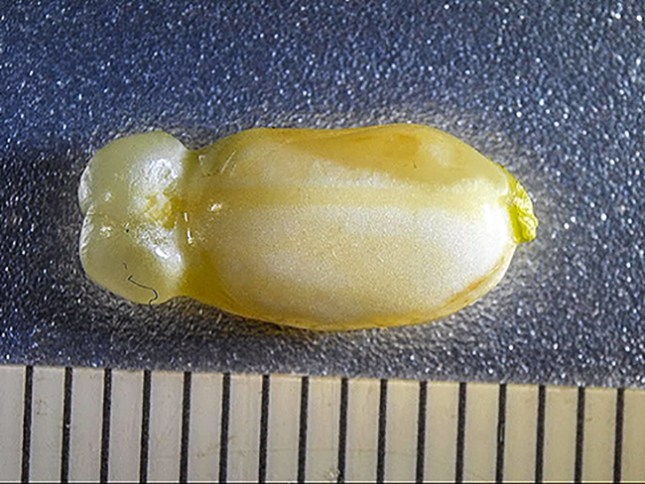
Ants may have another interest in the species.  The seed when fresh has a pair of large globular outgrowths on one end.   The double doohickey is called the caruncle.  Whatever does it do?

Ricinus seed with caruncle - Copy

Immature seed with caruncle to the left.

Traditionally fleshy seed add-ons are interpretable as ant food,  elaiosomes they call em’.  The ants grab the food body and relocate the seed, perhaps to their nice protective, aerated, fertilized nest.  These hefty castor seeds look like challenging luggage for the average ant.   Maybe the caruncle attracts above-average ants or larger critters, even rodents, to drag it. Probably.   After all, ants are mighty, and there is teamwork.  The plant is native to the Old World Tropics where there are ample ants.

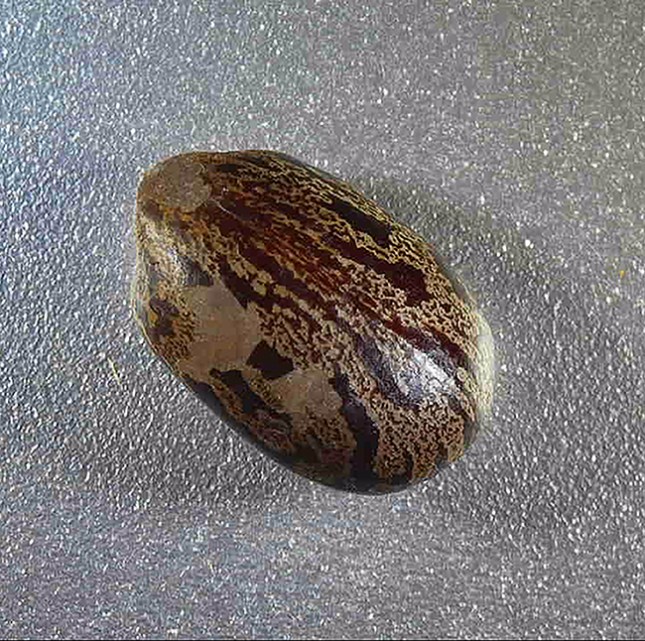
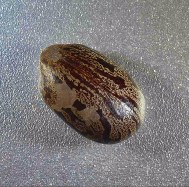
Does the seed look to a bird like a tasty tick, especially with the caruncle as the tick’s head?  Can’t rule it out offhand, although consuming the seed contents and not merely the caruncle would release ricin.  Biology is full or creatures that have overcome victim defenses.   Still, the seeds seem large to pass through a bird undigested,  and consuming the flesh of the seed would not merely release the poison but also probably damage the embryo fatally.

Ricinus mature seed2 - Copy

Mature seed. Caruncle gone (see the narrative).  Looks like a tick.

Conversely, could the seed surface pattern be warning coloration:  “eat me and I’ll wreck your ribosomes?”   The pattern on the seed resembles warning colors on noxious arthropods, patterned stinkbugs for instance.

To make it more confusing,  some research shows an intact caruncle to improve germination, helping with the seed’s water relations, although the scant relevant publications are not all in accord.

In any case, looking at old seed pods today, the caruncles are gone from the aging but otherwise perfect-looking seeds, and the surrounding pods are loaded with gross buggy manure and occasional wiggling larvae indicted on circumstantial evidence as caruncle snitchers.   They limit their mischief to the caruncles and maybe to the surrounding fruit walls, leaving the ricin-laced seed in mint condition.  Finding an intact caruncle required opening a fresh new fruit.

Pollination

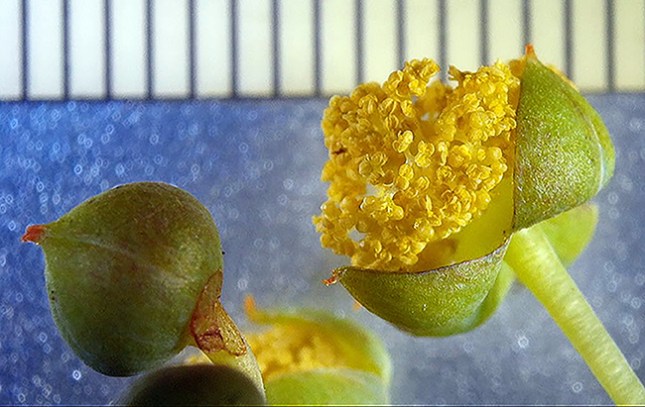
The flowers are separate male and female,  monoecious in the language of botany, with the females on the stalk above the males.   The females have big flesh-colored stigmas; the males look like paintbrushes of pollen.

Ricinus male flower 2 - Copy

Male flower

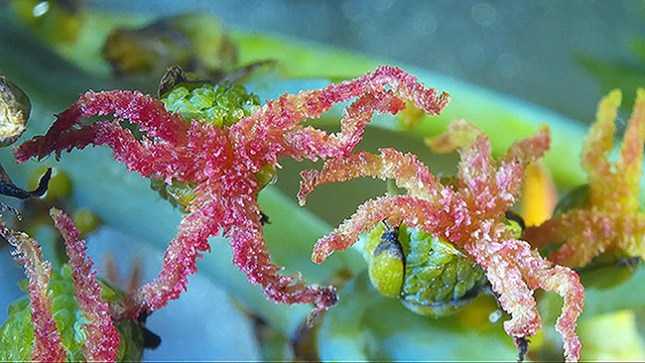
How do they exchange pollen?   Observers generally agree on wind-pollination, especially given the absence of nectar and of apparent petals, and considering the light fluffiness of the abundant pollen, as well as the attribution of allergies to airborne Ricinus pollen.  The female flowers look like sea anemones with long tentacles to catch the pollen off of the breeze.

Ricinus female flowers 2 - Copy

Female flowers look like sea anemones with long fingery flesh-tone stigmas to catch pollen from wind (and from insects?)

What about insect help?  Bee visitation is documented, remembering that bees collect pollen, and might then contact those big overarching stigmas.  The lurid meat color of those big fingery stigmas may help replace the petals as attractants, although red is not a bee-favored color.    In any event I’ve seen photos of bees on the flowers, so this might be a case of a species able to use wind and insects.

Ricinus communis 3 - Copy

Female flowers above, and one yellowish male flower below.  If insects don’t visit this, I’ll be a monkey’s (car) uncle.   Photo by JB.

Not many plants out there with more going on than castorbean, from Castrol oil to parental instrument of cure to Fascist instrument of torture to spy’s instrument of silent murder, and all the while rewarding ants from golden cups of nectar.  As you walk by, stop and see what insects are visiting the flowers (and send me an e-mail).  ((Really))

————————————————————————–

Abstract re. caruncle:

https://www.researchgate.net/publication/249158128_The_Caruncle_of_Ricinus_communis_L_Castor_Bean_Its_Development_and_Role_in_Seed_Dehydration_Rehydration_and_Germination

Ricinus tick - CopyRicinus mature seed2 - Copy

 
4 Comments

Posted by on June 29, 2018 in Castorbean, Uncategorized


Tags: , , , ,