Liatris chapmanii and additional species
(Nobody knows how the name “Liatris” originated. Alvin Chapman was a 19th Century physician who documented fundamentally much of the Florida flora.)
Asteraceae
Hot hot hot. John and I today sweltered across the Haney Creek Natural Area near Jensen Beach, Florida, a mixed habitat with an extensive white sand scrub “desert.” Sometimes sheer beauty is the main story. Today the Liatris plumes were surreal, hundreds of glowing purple feathery spikes waving in the wind. Even master photographer John can’t capture the sunshine, fragrance, and breeze with a camera.
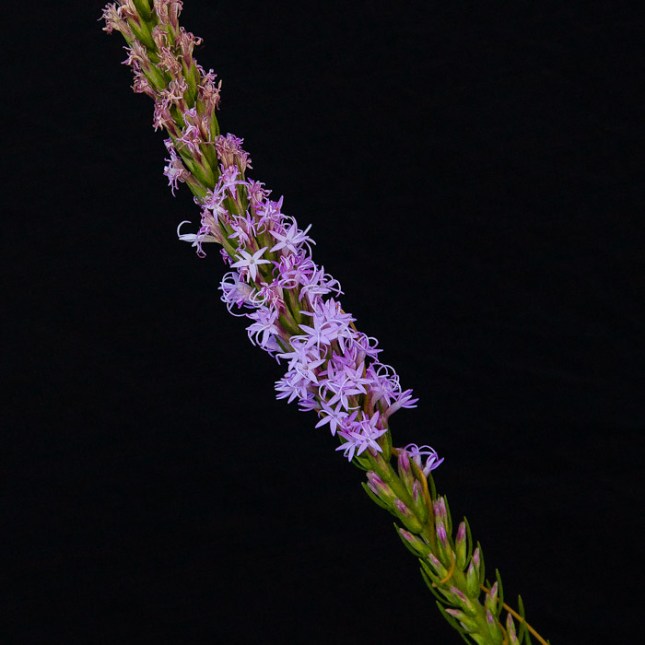
By John Bradford
Most of those in Haney Creek are Liatris chapmanii, although there are others too. Florida is home to about 14 different Liatris species, five locally, and four species 100% restricted to the Sunshine State. Not a bad representation of a genus with only 37 species altogether.
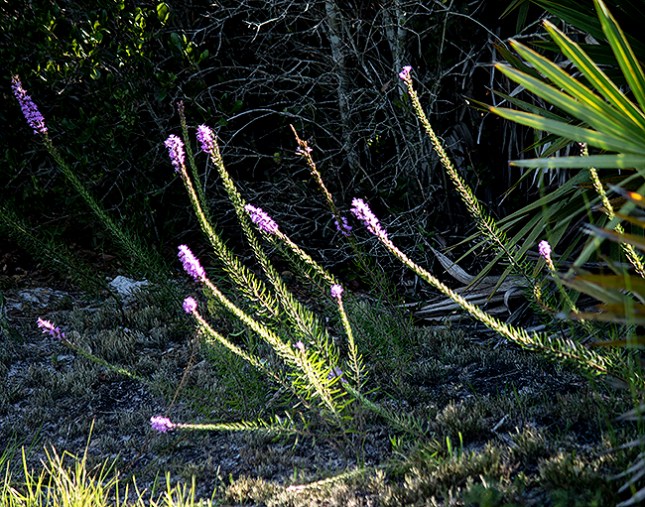
Chapman’s Liatris today
Despite their good looks, these plants are tough, famous for making subterranean corms (thick bulblike stems) or rhizomes able to hide from fires and other hardships above the soil. Nobody would farm the corms, exactly, but Liatris is a commercially valuable cut flower, especially the lovely Liatris spicata native to our area and up eastern North America. The bulbous corms have been grown commercially in the bulb capital of the world, The Netherlands, and from there to Egypt where they flourish to sustain a cut flower industry there. The corms then became abundant byproducts of that industry, and thus objects of research as potential food and drug sources, complicated by the presence of nutritional benefits and bioactivity at the same time.
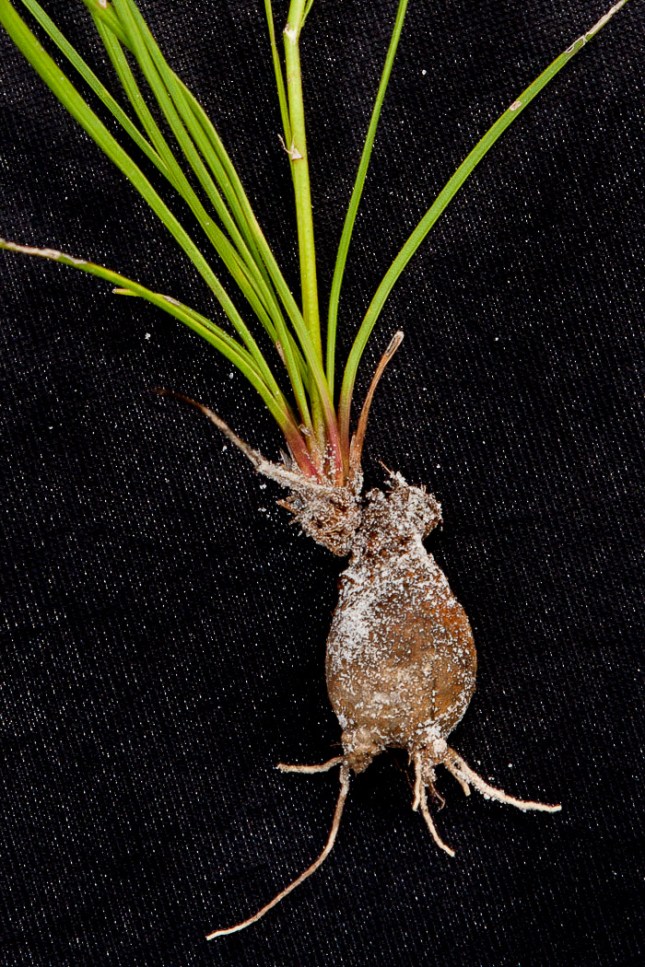
The corms, by JB
The raison d’etre for the Liatris flower power is to lure pollinators. Build it and they will come: bees, butterflies, day-flying moths, and even hummingbirds. The Bleeding Flower Moth breeds exclusively or nearly so in Liatris flower heads, where its larvae benefit from Liatris-matched camouflage. More remarkable, the adult moth’s coloration resembles the flowering heads.
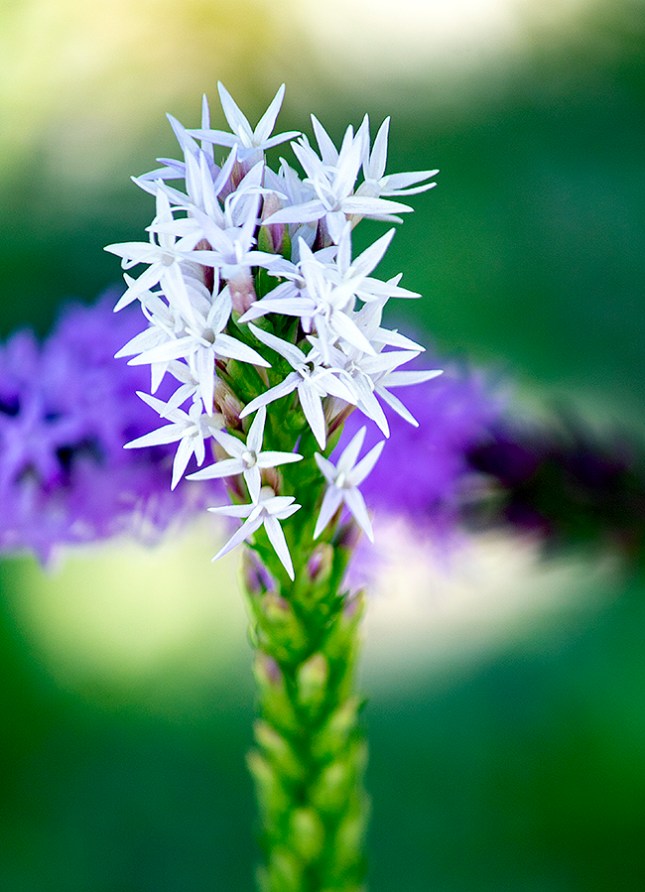
Some mutants are white-flowered. Today.
Today squinting through the sweat dripping from our brows, we failed to spot the Bleeding Flower Moths, maybe too well hidden. In the same scrub patch fluttering about was the black swallowtail below.
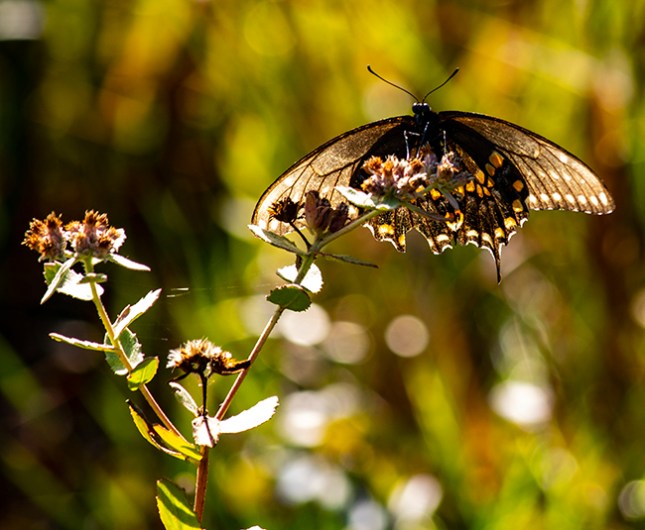
Who is looking at whom?
 John Bradford
 George Rogers
 George Rogers
 Dee Staley
 Treasure Coast Natives