RSS

Duppies, Cheeseshrubs, and Noni Juice

Morinda royoc

Rubiaceae

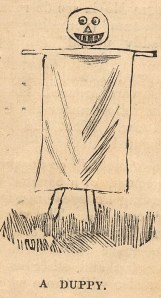
Want to spend twenty bucks on a highly touted bottle of odd-tasting health-promoting antioxidant juice?  Then Noni Juice is your oyster.  Probably based in limited truth and enhanced by volcanoes of hype, the ancient Polynesians had a thing for Noni.  Hawaii is the epicenter for Noni Juice now, and the tree (Morinda citrifolia) is grown in other tropical climates, a lot in the Caribbean, and a little in Florida.  We tried one at PBSC but Jack Frost murdered it.  The Caribbean name for the tree, “Duppy Apple,” refers to the similarity between the lumpy white fruit and a lumpy white ghost, a duppy.

The possibility that Noni is good for you is not far-fetched, although I have no idea of any underlying science.    In the Caribbean the species serves for alleged analgesic properties, like an aspirin.  And that rings plausible.  Noni belongs to the drug-laden Coffee Family, the Rubiaceae, from which one drug, caffeine, makes me feel painless at 6 am every day.  Fact is, the Rubiaceae is a hotspot of alkaloids and bioactivity.

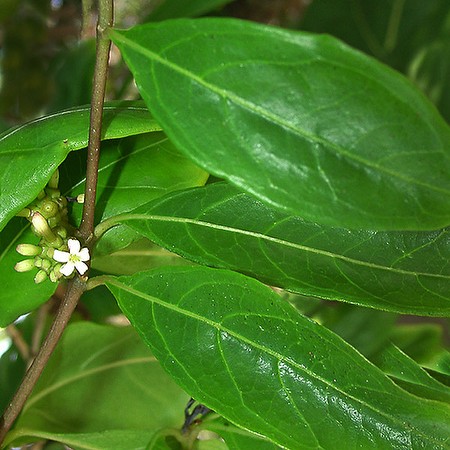
Is Noni a Florida native?  No, but we have our own close relative, Morinda royoc, which is similar, except for being more of a vine than a tree, and being  smaller in all dimensions.  Although not sold in bottles with a Polynesian motif, Morinda royoc  has its own place in traditional medicines to the point of having local populations abused by collectors.  Uses for Morinda royoc extend from lumbago to scurvy.  (Today’s vocabulary lesson: antiscorbutic.)  Echoing Noni, pain relief receives prominent mention.  Morinda  royoc extracts are sort of a mild “revitalizing” stimulant, in a coffee-ish sort of fashion.

Morinda royoc (by JB)

This plant has oodles of so-called common names, none of which I’ve ever heard anybody apply seriously: cheese shrub (they say from the odor of the fermenting fruits), mouse pineapple (the fruit resembles a  mini-pineapple),  Redgal, Indian Mulberry, and an anatomically descriptive handle we’ll modify for polite blogging as “Low Budget Viagra Shrub.”

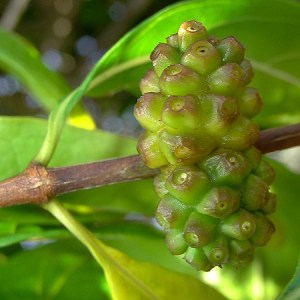
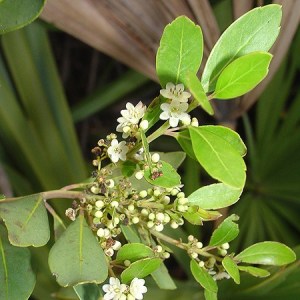
You don’t see Cheese Shrub often.  It is sort of an unpretentious clambering semi-shrub-semi-vine in coastal hammocks, often on dunes immediately overlooking the sea.  The vine is related to, resembles, and hangs around literally with Snowberry (Chiococca alba).  The leaves are opposite, often a little yellowish, and provided usefully (for identification) with a stipule between the bases.  The star-shaped white flowers are clustered in the constellation that will become the bumpy mouse pineapple, which eventually matures orange.  The fruit is a natural sea-dispersal pod—tough, thick, padded, and with built-in hollow floats.

Mouse Pineapples (not quite ripe, by JB)

We have a tissue culture lab at PBSC, and a protocol for micropropagation has been published, so with much patience and optimism we’re going to dry to grow our own little Redgal, whatever that means.

 
3 Comments

Posted by on February 25, 2012 in Morinda royoc


Tags: , ,

Don’t Get Your Nicker(Bean)s in a Twist

Nickerbean  Caesalpinia bonduc  Caesalpiniaceae

 Baybean Canvallia rosea Fabaceae

John is off boat-anizing in the Bahamas, and somebody had to stay in town to do the chores.  This week my Palm Beach State College Native Plants Class visited John D. MacArthur Beach State Park on Singer Island, with a brief foray onto the beach, where the Sea Lavender was magnificent.  Also fun on the sunny sand are the beans drifted up on the sand as well as growing there, a fascination dating back to my life in the Caribbean.   Two beachy beans were around:

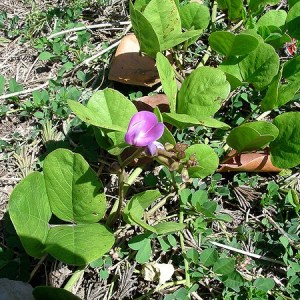
Baybean (Canavallia rosea) creeps across the sand, often in the company of its likewise creepy friend Railroad Vine (Ipomoea pes-caprae).  Interestingly, the two have almost identical rose-violet flower colors, although of very different structure.  Baybean has distinctive trifoliate leaves, hose rose-colored pea-type flowers, and a big thick pod full of tough beans.  The beans are the interesting part.

Baybean (by JB)

They contain an amino acid called canavanine, which is one of the world’s most interesting poisons due to its insidious mode of action.  Canavanine is named for Canavallia, although the toxin occurs in many other legumes.  A little background.  Proteins are chains of amino acids.  They are comprised of about 22 different amino acids, of which canavanine is not properly included.  It resembles the legitimate amino acid arginine, and sneaks into proteins in disguise.   A chain is as strong as its weakest link.  If you eat Baybeans the no-good canavanine infiltrates your proteins where arginine belongs, damaging the protein.   It is a case of sabotage, as if a bad spy sneaks into the airplane plant and replaces the good rivets with ones that break apart when stressed, or if you replace “a” with “c” throughout a computer program.

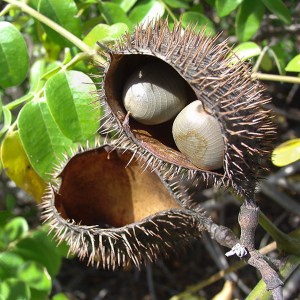
The other seabean prevalent in MacArthur Park is a bristly old friend from the Caribbean, nickerbean (Caesalpinia bonduc).   It defends itself before you get to its toxins:  the vine is thorny, and the pods looks like a porcupine clam, loaded with hard glossy gray spherical seeds the sizes of grapes.  The indestructible seeds have hollow spaces allowing them to float, and float they do, for example all the way from the Caribbean to northern European beaches.  I have picked them up from the beach, abraded them until a little white shows through, and sprouted them in a pot, where they grow like a thorny Jack’s Beanstalk.

Nickerbeans (by JB)

“Nicker” comes from an old name for marbles, and the seeds do serve as substitute marbles in games.  In my experience, the ancient game Wari (Mancala) was popular in Barbados, and nickerbeans turn up as the “marbles” on the board.  They make good necklace beads and slingshot ammo too.  My favorite website, Wayne’s World, suggests rubbing them rapidly on fabric, which heats them up to a surprisingly high temperature due to their mini-wrinkled surface, and then branding your friend for a comical prank.

Do not try that on your spouse (believe me).

 
7 Comments

Posted by on February 18, 2012 in Baybean, Nickerbean


Tags: , , ,

Wax Myrtle Makes Its Own Luck

Myrica cerifera (Morella cerifera)

(Cerifera means wax-bearing)

Myricaceae

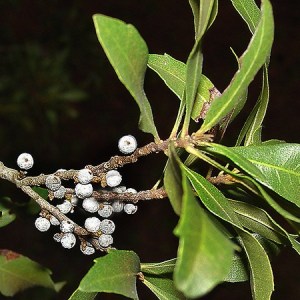
John and George visited Halpatioke Park today in Stuart and pondered Wax Myrtle in full “berry” with newly emerging spring flower clusters, if Feb. 10 is spring.

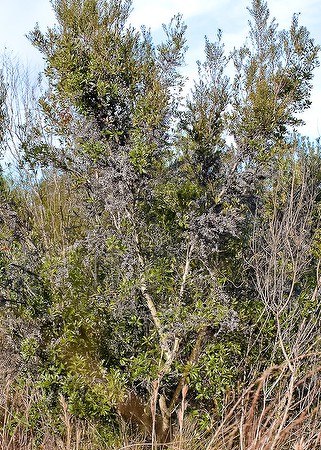
Wax Myrtle (photo by JB)

Wax Myrtle and Bayberry (M. pensylvanica)—think candles in Cape Cod tourist stops—are close cousins.  Myrica pensylvanica ranges from Canada to the Carolinas.  With a little overlap in range and consequent hybridization, Wax Myrtle (Myrica cerifera) grows from Maryland to Central America.  Thus some folks refer to Northern Bayberry (pensylvanica) and Southern Bayberry (cerifera).

A quick nod to noteworthy relatives:  Myrica inodora, named by William Bartram, lives in and near the Florida Panhandle.  Another Florida resident Myrica heterophylla (or M. caroliniensis, or neither),  lives  across much of the Southeast southward to central Florida.   It differs from M. cerifera by having its leaf glands restricted to the underside of the blade.  The taxonomy and nomenclature of this species is unsettled.  Readers with northern experience may recall Sweet Gale (Myrica gale) and Sweet Fern (Comptonia peregrina).

Bayberry fragrance and wax come from boiling the fruits and foliage, mainly of M. pensylvanica.  You’d have to be a big-time boiler to generate one candle, or you might mix Bayberry fragrance in with a different wax.  By the way, the plants are separate male and female.

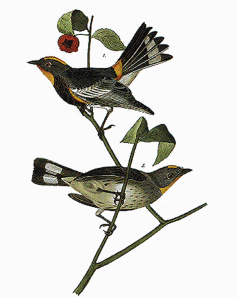
The seeds reportedly won’t germinate if not de-waxed, and certain birds do this in their digestive systems.  The Yellow Rumped Warbler has a special taste in its broad diet for Myrica fruits, especially during migration.   Interestingly, they go also for Juniper “berries” too, which are likewise blue, pungent-oily, and wax-coated.    Migrating birds have high metabolic demands and use lipids as stored fuel.

Ecologist Clarmarie Moss devoted a portion of her 1993 Masters Thesis to these berry important matters.  Myrica fruits and Juniper “berries” topped her chart in terms of “optimal lipid profitability.”  She found the range of the Yellow Rumped Warbler tied to Myrica distribution in place and time.  She noted that the mutualism between the two species fits a model known in other bird-plant relationships were the comparatively non-showy and peekaboo fruits in the foliage shadows favor the birds adapted to the relationship.  Preferred customers.

Yellow Rumped Warblers (from Google Images)

Wax Myrtle is clearly a successful species, and as my mother used to say (well, she still does): you make your own luck.   Wax Myrtle improves its habitat by enhancing the soil and by bullying the competition.  Ever wonder why Wax Myrtles are so willing to grow here, there, and everywhere?  They belong to the select group of non-legumes blessed with their own bacterial root nodules.  In our area that clique includes Australian-Pines and Silverthorns, both weedy and tolerant of poor soils.  Oddly, most of the non-legumes with bacterial nodules all share the same bacterium, Frankia alni, a filament-shaped bacterium once thought to be a fungus, and very different from that associated with legumes.  It transforms atmospheric nitrogen to ammonia.

Does the lawn look a little iffy around the Wax Myrtles?  They poison competing vegetation, including pines, grasses, and even Brazilian Pepper.  Experimenters have doused plants with Wax Myrtle extracts and shown the herbicidal effect under “lab” conditions.  It would be interesting to study weed distribution around Wax Myrtles.  The effect may not be 100% negative, since there could be species immune to the toxin and favored by the ammonia-enriched soil.  A project for another day.

In short, next time you brush past a Wax Myrtle, show some respect.  How many shrubs provide aroma therapy, jet fuel for warblers, free fertilizer, and Round-Up-free weed control?

 
7 Comments

Posted by on February 12, 2012 in Wax Myrtle


Tags: , , ,

The Wonderful Images of Grass

Grass Family

Poaceae

A number of years ago George and John started taking a close look at the some 200 species of grasses  which are found in our neck of the woods.  This project led to spending many hours in the field collecting specimens and many hours in the lab studying the specimens.  A lot of this work was done with a loupe (hand lens) and/or a microscope since the key to a positive ID is close examination of the spikelet – the smallest readily identifiable part of the flowering part of the grass.  As the work progressed, I started photographing the spikelets.  And the more I photographed them, the more I came to love their many shapes and textures.

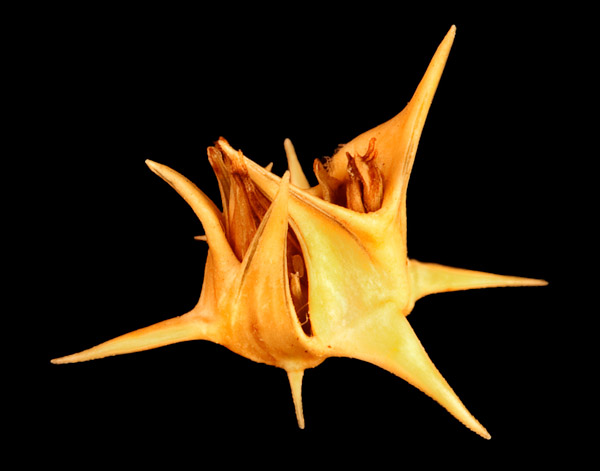
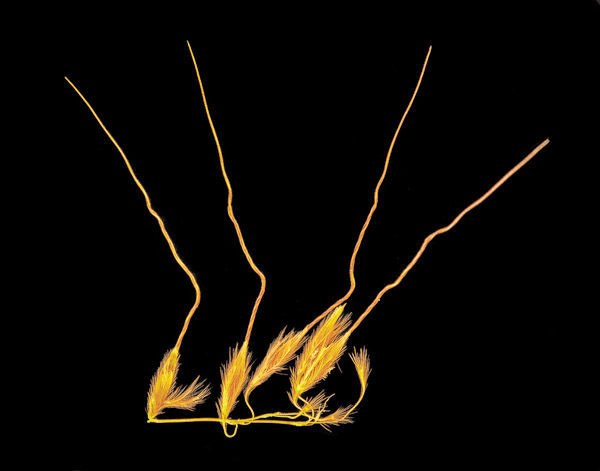
Some grasses have diverse “bristly” coverings and protrusions.  Perhaps most familiar to any beach goer are the nasty “sand spurs” formed by Cenchrus.  These burrs are spikelet clusters provided with wicked barbed spines.  The spine impales your toe and your toe disperses the species.  They also protect the fruit from predators, as no right-minded creature would eat these seed coverings.

Coastal Sandbur (Cenchrus spinifex)

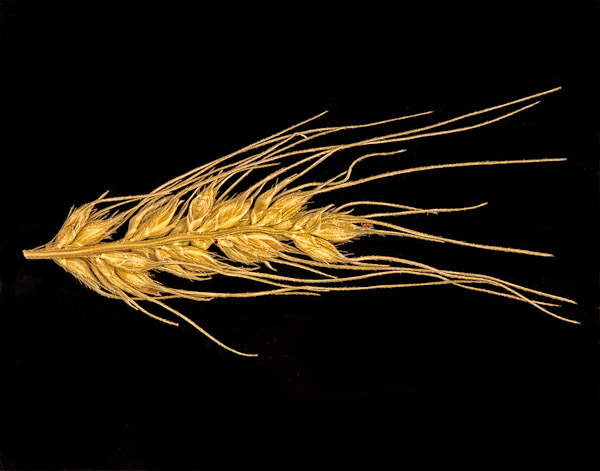
More diverse are awns.  These are needles attached to the tips of glumes or lemmas (or occasionally to other structures).  Awns range from microscopically small to multiple inches long.  They are common in a large number of species.  The functions are diverse.  They help break the spikelet apart by catching wind, rain, or creatures.   They can help orient, lodge or embed (plant) fallen spikelets.  Some awns twist and move in responses to humidity changes, suggesting limited ability to “screw” into the sandy soil.

Coast Cockspur (Echinochloa walteri)


Lopsided Indian Grass (Sorghastrum secundum)


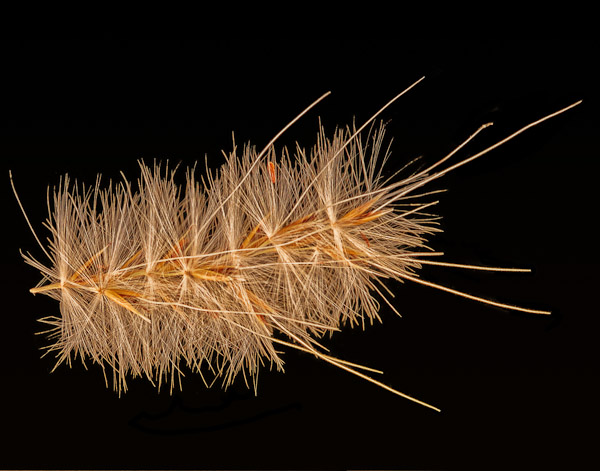
The plant world is full of seeds on parachutes, and  grasses are no exception.  Several species have fuzzy or cottony parachutes on their spikelets.

Sugarcane Plume Grass (Saccharum giganteum)


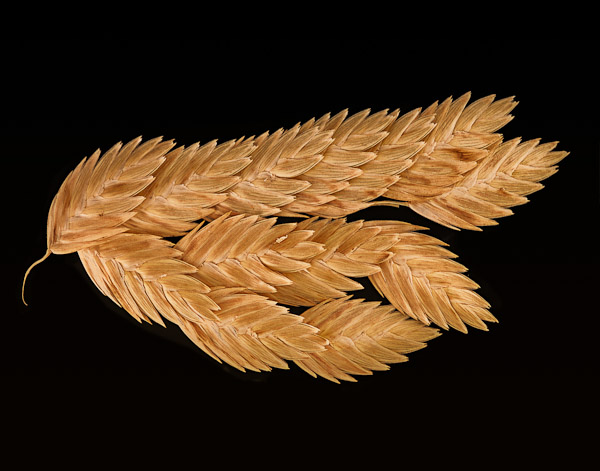
And finally one that large and flat so that it can be carried by the wind or ocean currents.

Sea Oats (Uniolata paniculata)


If you liked seeing these images you may enjoy this short video on the shape and texture of more grass spikelets.  http://vimeo.com/36310464

For more information on grasses, sedge, and rushes visit our website: http://floridagrasses.org/

 
Leave a comment

Posted by on February 8, 2012 in Grass


Tags: , , , , , ,

Don’t Let Your Beauty Droop

Beautyberry, French Mulberry

Callicarpa americana

Verbenaceae (traditional classification) (alternatively Lamiaceae)

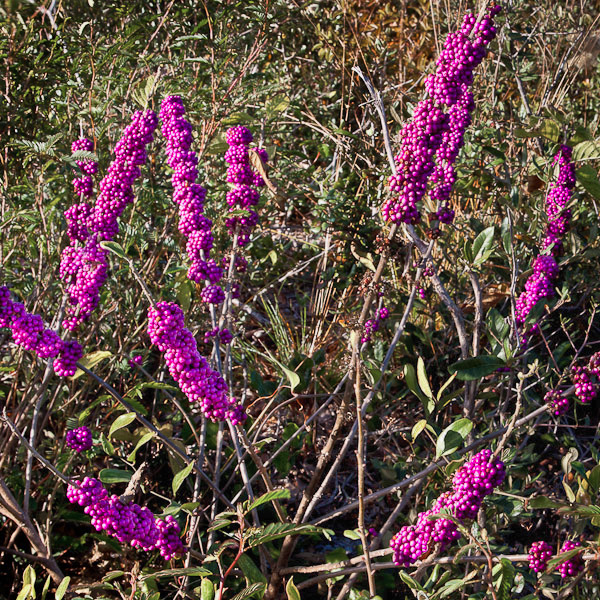
Hey birds, come on down! (by JB)


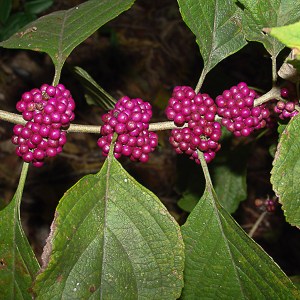
The well named Beautyberries are looking so beautiful that the spotlight must fall on them today.   The main photo is John’s work, taken in the natural area entered through Bert Winters Park in Juno Beach.

Anyone who has ever been outdoors knows that many plants make berries, often abundantly, but Beautyberry is the superstar in terms of volume and color.  Who is eating all those little beauties?  Lots of critters, mammals and birds.  One of the main Beautyberry-eaters is the American bobwhite.  Wild turkeys gobble them up.  And so forth, from songbirds to raccoons.

To set the record straight, technically speaking, the beautiful fruits are not berries, but rather drupes, but who would name such a fancy shrub “Beautydrupe”?

Why so drupe-prolific?  For a broad answer, the biological world is divided into what some biologists refer to as r-strategists and K-strategists.  The r in r-strategist stands for “rate” (of reproduction).  R-strategists spawn a lot of offspring fast, spreading them abundantly in the world to launch the next generation.  The investment is in quantity, not in quality, a shotgun approach.  These are rats, dandelions, and tadpoles in the kiddie pool.  R-strategists tend to be pioneers, species that exploit disturbed habitats before the competition intensifies.  R-ish plants tend to be broad in soil tolerances, sun-loving, abundant in production of small cheap easily dispersed fruits, and able to flower on young growth.  You know, like Beautyberry.

By contrast, K-strategists (the K stands for Karrying Kapacity) are species of undisturbed highly competitive habitats—for instance mature forests.  Here it is better to put the parental  investment into quality of offspring, that is, providing nurture or whatever it takes to achieve a successful launch in a competitive world: nut trees (with big fleshy seeds), elephants, and gray-haired parents with children in college.

Beautyberry has a lot of “r” in its spirit.  Grow anywhere.  Rise up with moxie and flower and fruit quickly.  Make oodles of showy little berries.  Induce lots of birds and rodents to drop the seeds all over the place.  Invade disturbed sites.  With foliage out of the way in the cooler berry-show months, the plant’s gimmick seems to be advertising.  Those big clusters of candy-colored berries must draw birds from afar, and when in an open disturbed area look like a come-on to entire migrating flocks.

A second way Beautyberry faces disturbed habitats is robust recovery from fire (which it seems to like), heavy browsing, and other trauma.  Foresters call this shrub a moderately shade-intolerant “early- to mid-seral” species, which means it is at its best early after disturbance, persisting to partial forest regeneration, and declining during later maturation.  Flowering and fruiting all occur on the growth of the current season, including the sprouts rising from fires, creating a cheery decorative effect in the charred landscape.  A weed, but a mighty fine one.


Callicarpa is about as prolific in species as it is in fruits.  We have just one species here, scattered across the Southern U.S. and a little beyond.  China has 48 species out of a worldwide total of 140 callicarpas.  Mind boggling for sure.

We like to think of native plants as comparatively free of pests, but BB does have an interesting one.  What seems to be a viral infection is occasionally apparent in the leaves, but home-made, duffer-level Google searching leads about as far as, yep, there’s a virus, not adequately studied.

Gardeners like Beautyberry for obvious reasons, and it crops up in residential landscaping, although the rapid growth makes it challenging.  Those with a horticultural inclination should be aware also of the White Beautyberry, Callicarpa americana var. lactea, sometimes also called ‘Albofructus’.

In class this week we had a debate on what is the exact name for that color?  The proof was that guys don’t know colors.  Maybe a new color should be named “Callicarpa.”  Would make a cool eye shadow.

 
4 Comments

Posted by on February 4, 2012 in Beautyberry


Tags: , ,

Pepper-Grass

Pepper-Grass

Lepidium virginicum

Brassicaceae (Cruciferae)

[Three additional species of Lepidium live in Florida, none of them native: two in the Panhandle and “Lesser Swinecress” in our area, not resembling today’s species.]

Lepidium at Kiplinger

Yesterday John and George dodged a deluge to enjoy raindrops on the flowers in the Kiplinger Natural Area in Stuart, home of spectacular Loblolly Bays, non flowering in January yet attractive with red winter leaf coloration.

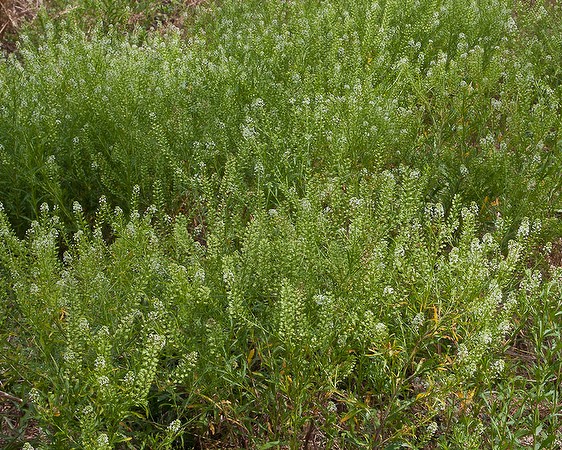
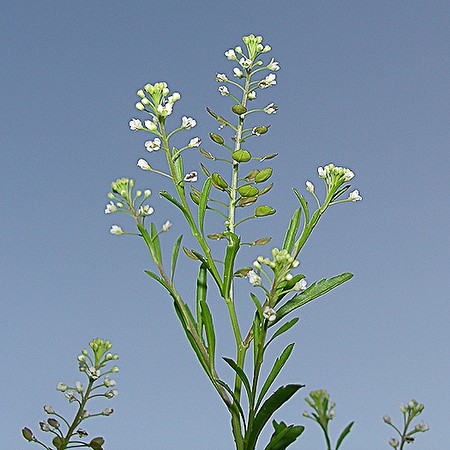
Dominating the disturbed trailside was Pepper-Grass (Lepidium virginicum), which is neither a grass nor related to red or black pepper.  A better name for this coarse native weed might be “Stink Mustard.”  This member of the Mustard Family reeks when crushed a little like its cousin Horseradish.  The Mustard Family is perhaps better known by the older name “Cruciferae,” as in “eat your cruciferous vegetables,”  for instance, cabbage, brussel sprouts, and cauliflower, which are all different cultivars of the same species.  They are called “crucifers,” not because eating them resembles being crucified to kids brought up on pop tarts and Wendys, but rather because the four petals form a cross.  The novel fruits are flat with two covers that fall away to leave a translucent membrane.   Vocabulary lesson:  the fruits are called silicles (SILL–ah-culls, oval) or siliques (a sill-EEK is long and SLEEK).

Flowers and silicles (photo by JB)

Different plants poison their pests differently, and Crucifers are regular Nozzle Nolens.  Crush Pepper-Grass, and the sharp mustard vapors penetrate your sinuses like a knife.   The kick comes from sulfur-based “mustard oils” more properly known as glucosinolates.  Until activated, the glucosinolates (glue-coe-SIN-oh-lates) are benign.  They and the activation-enzyme myrosinase reside in separate parts of the plant cells until a lubber grasshopper takes a munch.  Then, like two tubes of epoxy, the glucosinolates and enzyme mingle for hot stinky action in the crushed tissues.  We could linger the chemistry, but that would get boring to the non-chemists (like us), and we’d get in over our heads fast.

Low-dose glucosinolates can be tasty like mustard on a wiener, or cole slaw, or sushi with wasabi.  And the good news is that glucosinolates may inhibit cancer development, although the jury is still out.

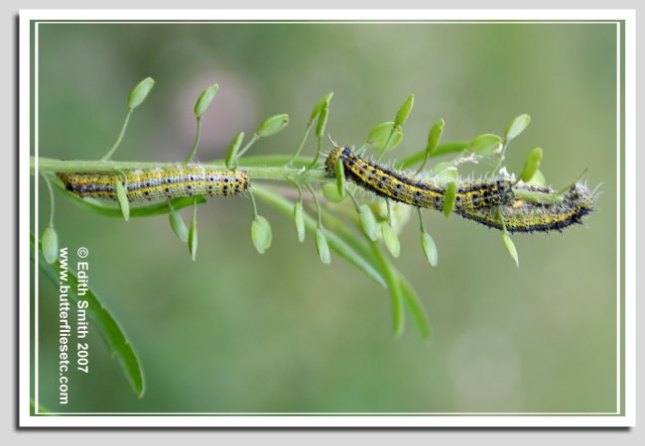
Glucosinolates are wasted on these Great White Southern caterpillars (photo by Edith Smith)

Anti-herbivore toxins deter most vegetarians, but life is one big evolutionary race between the eaters and their victims’ defenses.  Coyotes do catch roadrunners, and creatures do eat Lepidium.  Varied cooties, ranging from aphids to butterflies, have developed enzymes to deactivate the mustard oils, allowing access to those colon-cleansing cole vegetables.  Pepper-Grass supports native and non-native mustard-proof butterflies.   Examples include the Cabbage Butterflies (duh) as well as the Checkered White Butterfly, Great Southern White Butterfly, and the Falcate Orange Tip Butterfly (in northernmost Florida).

In conclusion, eat your vegetables.

(The photo of the Great Southern White Butterfly on the Lepidium is courtesy of Edith Smith at Shady Oak Butterfly Farm.  Visit her remarkable web site CLICK)

 
1 Comment

Posted by on January 28, 2012 in Pepper-Grass


Tags: , ,

The Florida Scrub-Jay, A True-Blue Native

Florida Scrub-Jay

Aphelocoma coerulescens

Corvidae

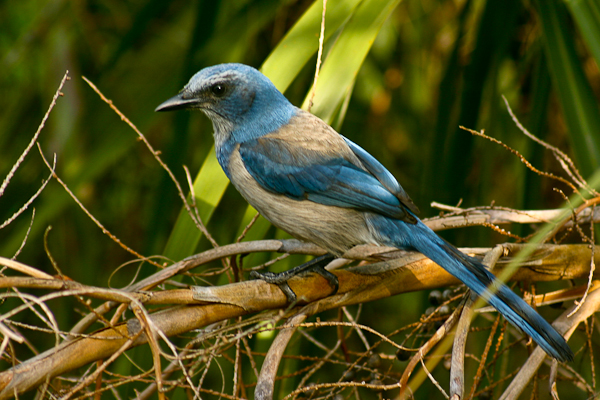
The Florida Scrub-Jay is gray and blue about the size of a Mockingbird.  Males and females have similar plumage and look alike.  They are only found in certain areas of Florida and are entirely dependent on scrub habitats, characterized by several species of “scrub” oaks.  Plants found in the scrub are adapted to well-drained, sandy, nutrient poor soils  and are dependent on periodic fires.  These plants can withstand high seasonal rainfall and extended periods of drought.  Scrub-Jays prefer oaks 3 to 10 feet tall and bare sandy openings in the soil where they can bury acorns.  The majority of Scrub-Jays on the Treasure Coast live in Jonathon Dickinson State Park and the Savannas Preserve State Park.

Photo by Dee

The birds are omnivores, eating insects, frogs, reptiles, berries, seeds and acorns.  It is estimated that each Jay harvests and buries 6000 to 8000 acorns from August to November for use throughout the year.

They mate for life, do not migrate, but occupy and protect a territory about 25 acres in size.  These birds will usually not travel more than 5 miles from where they were hatched.  This species is one of the few cooperative breeding birds in the United States. The fledging Jays usually remain with their parents in the territory as “helpers” and will assist in the care of the new siblings, feeding and protecting them.  These close-knit family groups have up to 8 members.  Studies have shown that breeding pairs with helpers successfully raise more young than do lone pairs.  Cooperative breeding benefits the parent birds by increasing defense and care of the young, and also benefits the helpers, as they learn parenting skills prior to raising their own young.  A helper is elevated to breeder status once it has it has acquired its own territory.  They may replace a breeder in a nearby territory, take over part of their parent’s territory, inherit breeding status after the death of a parent, or establish a new territory between existing territories.

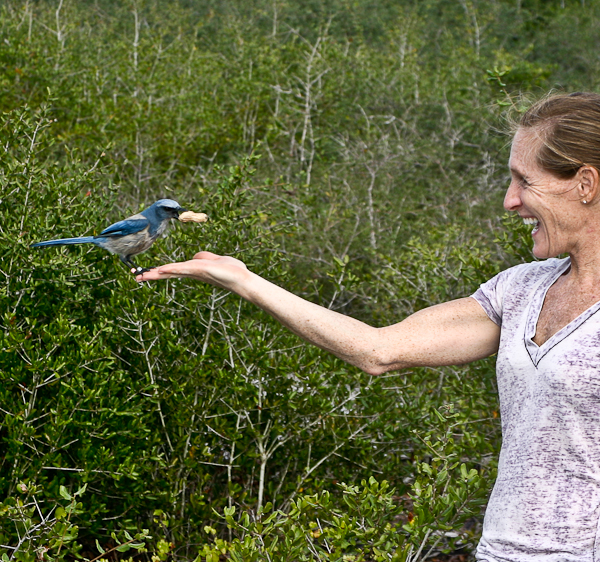
Peanuts are only used for training purposes (Photo by Dee)

Scrub-Jays are protected by the U.S. Fish and Wildlife Service (USFWS) and the Florida Fish and Wildlife Commission (FWC).  This species was listed as threatened by the state since 1975 and by the FWC since 1987.  In spite of protection by the Endangered Species Act, the greatest decline of this species has occurred during the last 20-25 years with an estimated 25 to 50 per cent reduction in Jay numbers.  Loss of habitat due to development has led to increased failed nesting attempts.  Other threats come from predation from natural predators such as bobcats, owls, raptors, snakes, blue jays and crows.  Domestic cats pose a serious threat in suburban areas, as well as poisoning and collisions with cars.

You can help by:

  • Supporting establishment of regional and local scrub-Jay preserves.  Protection of scrub-jay populations on managed tracts of optimal habitat is the best means of protecting the species.
  • Providing habitat for scrub-jay.  Plant, protect and cultivate patches of shrubby scrub live oak, Chapman’s oak, myrtle oak, and scrub oak on your property.  Maintain all of your landscaping at a maximum of 10 feet in height if you live on or near scrub-jay habitat.
  • Protecting scrub-jays from your pets.  Encourage passage and strict enforcement of leash laws for dogs and cats in your community.  Protect areas being used by nesting scrub-jays from domestic animals, especially cats.
  • Restricting use of pesticides.  Scrub-Jays feed on insects usually considered pests around golf courses and homes.  Pesticides may limit or contaminate  food used by the jays.  Reduce use of pesticides if possible; if you must use them, please do so with caution.
  • Report malicious destruction or harassment of scrub-jays or their nests to 888-404-FWCC (3922).

 
5 Comments

Posted by on January 26, 2012 in Florida Scrub-Jay, Scrub-jay


Tags: ,

Pokeweed

 Pokeweed

Phytolacca americana

Phytolaccaceae

Click for deeper data 

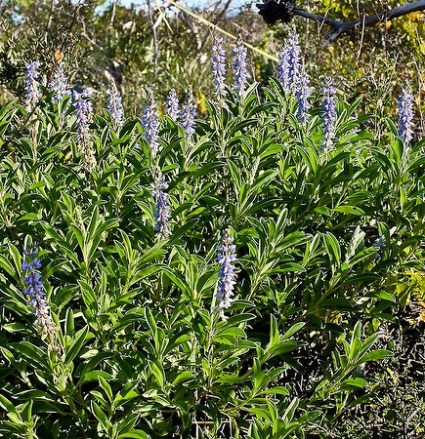
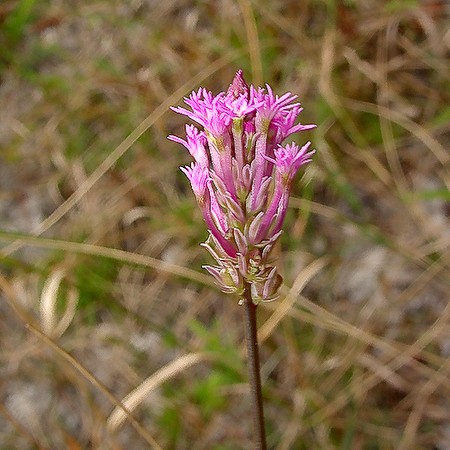
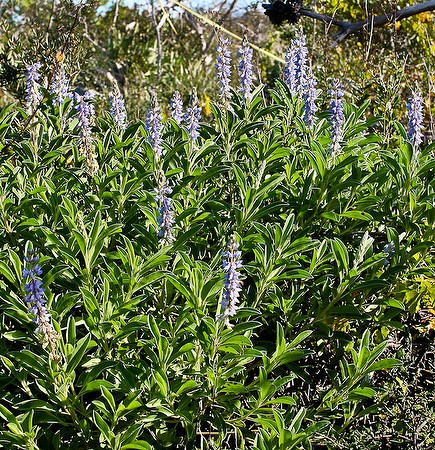
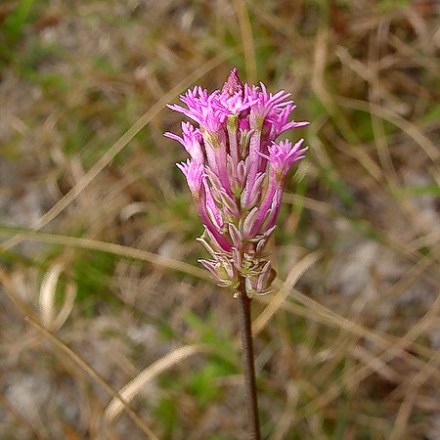
Yesterday John and George explored the natural area adjacent to Bert Winters Park on the Intracoastal in Juno Beach.  This disturbed scrub habitat is in part a scuffed-up area showing signs of invasive exotic removal, and has a small pond surrounded by a sedge-lover’s paradise of wet-mud-plants.  Like any recently disturbed area, the botanizing is fun, and the wildflowers were pretty and plentiful: Coreopsis, Frostweed, Hempvine covered with puffy fruit clusters, Jeweled Blue-Eyed Grass looking like a little blue garden iris, Pineland Scalypink blooming on the sunbaked sand, Procession Flower parading across the dune side, Skyblue Lupine, and striking Beautyberry in full berry.
Image

                                               Photo above: Procession Flower by JB

Image

                                                 Photo above: Skyblue Lupine by JB

Such a dandy menu – so hard to select a species to feature.  So how about the most beautiful of all: Pokeweed.

Phytolacca americana is a fascinating species, at least to a die-hard plant enthusiast.  We’ve all heard of Poke Sallet Annie who used to make a mess of it, after careful boiling it to defuse the toxins.  Poke sallet (salad) has had such prominence as an “edible” green they used to can it, a bad idea.  They also used to color wine with the berry juice, another bummer.  As kids we used to smear the berries on as war paint, again, not optimal.  And here is why:

The plant contains kickass bioactive compounds.  The roots or even the berries can kill a person in a jiffy.  But the acute toxicity is not what we’re going to discuss now.  More subtle and insidious are proteins called pokeweed mitogens, abbreviated PWM.   For George these have the distinction of being his first Internet search, back in the 80s when you had to make an appointment with a trained librarian, and received the results on that green-striped perforated computer paper.  The outcome of that primitive search was a huge literature on PWMs.  You can Google pokeweed mitogens on your own now with no help from the librarian.  (That’s a hint—do it.)   These compounds, merely from touching the plant, repeat, from just handling the foliage, stimulate the human immune system to proliferate white blood cells.  PWMs work in ultra-minute concentrations.   No thanks on that sallet, Annie.
Image

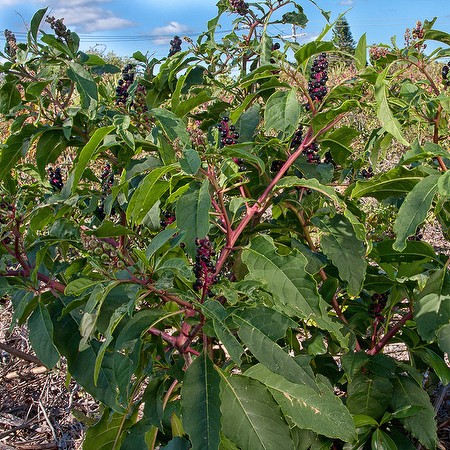
                                                       Photo above: Pokeweed by JB

Why was this not discovered until recently?  The PWM effects don’t seem to cause any known symptoms.  You don’t feel ill, but if you go in for a routine blood test you might raise some eyebrows.  (That is how the effect was discovered.)   These super-charged proteins have taken on a life of their own in immune-cell medical research.  Poke the Pokeweed, it pokes you back.

There is additional interesting Pokeweed biochemistry—antiviral compounds for instance—but let’s move on to bigger things.  This species is a master weed.  It builds up a massive root  that can pose as a parsnip, which is how it has snuffed occasional vegetable gardeners.  The root could survive a nuclear attack and provide poke salad to the mutant post-apocalyptic survivors.  (They will have bigger concerns than proliferating white blood cells.)  Even more interesting are the seeds.

Squash one of those black berries (oh yea, right, don’t touch it).  There are 10 seeds like bullets in a revolver.  Now you might think, “that’s nice, the birds eat the berries and disperse the seeds like any old berry maker plant.”  True, but with an odd twist.  The seeds have varied “wait times” for germination.  If you pluck out the 10 seeds and plant them, some will sprout right away, and others won’t.  Some have a built-in delay documented to last at least 40 years.  This weed is banking for the future!  When a bird drops the seeds from one plant, not only is it being dispersed in space but also in time.  Some of those delay-action seeds get into the soil, then a new forest grows up,  a cyclone blows the forest away, and ta-dah(!) pokeweeds sprout forth after a very patient wait.

This is getting long, but there’s one more important thing, so just keep reading.  Pokeweed has an odd geographic distribution pattern.  The species comes in two varieties.  The “normal” variety, variety americana, with droopy flower clusters is widespread across much of North America.  What’s weird is variety rigida, which, by contrast, holds the inflorescence upright.  Variety rigida is confined to the Atlantic and Gulf coasts, mostly in a razor-thin seaside strip as narrow as a mile or so, stretching from approximately New Jersey to Texas.   The only area where it occurs inland is across all of Florida, which is not exactly inland.   You might think the difference is environmental—maybe those coastal briny breezes influence the angle of the dangle, but life is never so simple.  If you take seeds from perky variety rigida and cultivate them inland where its droopy cousins dwell, the rigida grows up proudly erect, indicating a genetic component to the puzzle.

Now that’s just wacky. Geographically, upright variety rigida is a thin wrapper on the edge of a huge dangly variety americana population.  Along the coast the two grow in close proximity.  I mean, start at the beach, spot the upright rigida on the dunes, walk inland  a mile and the inflorescences droop.  Birds no doubt constantly carry rigida seeds into americana territory and vice versa, yet the two persist as distinct (there are occasional intermediates).  Go figure!

The take-home lessons are these:

1. Do not eat the Pokeweed even if Grandma did, even if Grandma boiled it.  If you are a Grandma, do not serve it.

2. Do not handle the Pokeweed if you are having blood work anytime soon, unless you want to have some fun with the doctors.

3. If you clear the forest, time-delay Pokeweed may rise up and say hello.

4. Because we live in Florida, our Pokeweed has upright flower clusters, but who knows why.
 
4 Comments

Posted by on January 22, 2012 in Pokeweed


Tags: , , , ,

Coffee, Tea, or Gallberry?

Gallberry

Ilex glabra

Aquifoliaceae

John’s been inventorying the Mariposa Cane Slough Preserve in Pt. St. Lucie, for which he produced an engaging slide show with great music.  To keep the ball rolling, John and George sniffed around the preserve yesterday, enjoying nature’s oasis.    CLICK

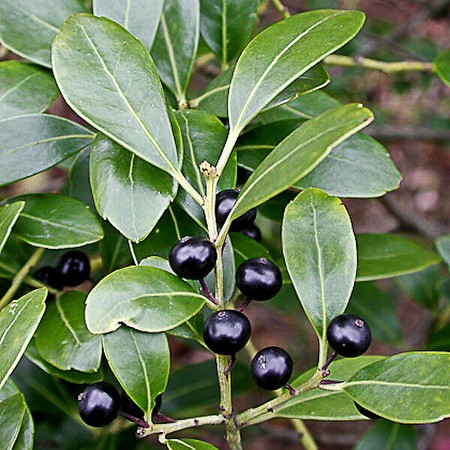
One end of Mariposa suffered a fire not so long ago, and the plant community there is different from the rest.   There is a “lawn” of Gallberry (Ilex glabra).  Gallberry is an example of our feeling that much of the fun of botany comes from getting to know the everyday plants.  Often that’s especially fun because we see the everyday plants, well, every day.  If you have ever tasted the black pea-sized fruits you know why it is called “gall” berry.  They are bitter, although in sort of an interesting way.  Birds and wildlife don’t all find them too bitter.  Maybe the intense flavor discourages the “wrong” fruit-eaters.

Gallberries as they looked yesterday (by JB)

There’s a lot of weird stuff about Gallberry, beginning with the fact that it is a Holly.  If this is not clear at first glance, the flowers are Holly-ish, and leaves look like those of small Asian Hollies used in landscaping.  To steal a 1974 quote from horticulturists Jack Alexander and Michael Dirr, “If Gallberry came from Japan, people would rave about it.”  Of course, the U.S. was especially fascinated with Japan in the 70’s.  Fact is, there are several named horticultural cultivars of this species, more valued up north than in Florida.  Up north?

How many species do you know with a distribution from Florida all the way to Nova Scotia (and westward to Missouri)?  The breadth of the distribution underscores the environmental breadth of Gallberry: hot, cold, sunny, shady, acid, slightly alkaline, clay, sand, or salty.  The species prefers moist  sites, although there is drought tolerance.  The diverse Florida habitats include low pine woods, especially after fire.

Male flowers (not seen this week) (file photo by JB)

The most interesting features of Gallberry have to do with fire.  Here is a hot quiz question.

What do mushrooms, many grasses, icebergs, Gallberries, and spy syndicates have in common? Answer:  Most of the action is hidden below the surface.

Gallberry rhizomes and roots form a massive widespread subterranean network.  The rhizomes can grow to multiple inches in diameter and can run several feet underground connecting bush-with-bush-with-bush like stations along a railroad line.  This helps explain why Gallberry can form a monospecific even-aged “lawn” of thousands of individuals.  As with the Hydra of mythology, cut off one head and is sprouts more.

Cut off one head and you get two more.

Who would cut off the head?   Fire mostly.  Easy to envision here in flammable Florida, although it is fun to wonder if fire is the only leveling force to mow down the Ilex from here to Nova Scotia (or wherever the species evolved originally—see below).  Maybe grazing by herbivores, or extreme cold, or other harsh forces of nature have been factors in the equation too.

Have you ever noticed how a patch of Gallberry can be nearly or entirely berry-forming or not?  As a Holly, Gallberry is dioecious, that is, with separate male (pollen-producing) or female (fruiting) plants.  A big patch, all growing from the same rhizome network can be one big individual genetically speaking, just like a mushroom “fairy ring.”  Such a patch could be all male or all female, although more than one rhizome-individual might establish in one patch, especially given the prolific fruit production and assistance by berry-eating birds and mammals.   If the patches were too unisexual and too separate there’d be no cross-pollination.

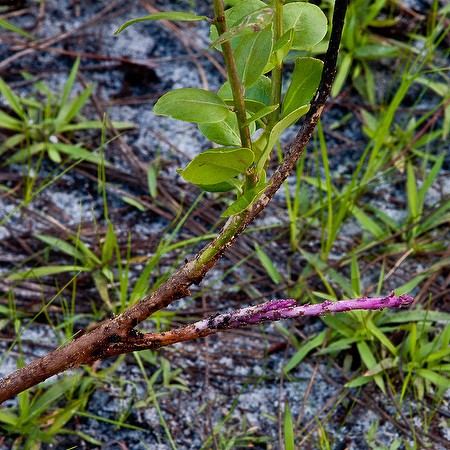
This photo tells a story. The blackened stem rising in the upper right is a burn fatality. Hydra-style, at its base are rising two new replacement shoots. A pink new rhizome is extending to the lower right.

While on the theme of Hollies, did you know that Hollies are among the few plant groups with drinkable caffeine?  Hollies serve as teas in scattered regions, including the “Black Drink” consumed by Native Americans in the Southeastern U.S. derived from Dahoon Holly and from Yaupon Holly, and the Yerba Mate sipped at South American tea parties.  What about Gallberry?  Some folks call it “Appalachian Tea,” although its caffeine levels range from zip to bitsy.

One final odd tidbit.  Multiple species of Ilex (Hollies) are native in the U.S.  And you might naturally expect species found together to be most closely related to each other, which is often so but not here.  DNA study shows Gallberry a member of a species cluster otherwise limited to Eurasia and Africa.

Did a migrating bird bring it?   Or with its northern predilection, did the distribution once sprawl from Asia, across a once-dry Bering Strait leading to sunny Florida?   There are many florisitc links between eastern Asia and the eastern U.S.  In any case, the 1974 comment invoking Asian landscaping Hollies was more true than the authors knew.

In short then, here’s a shrub we trip over rushing through the forest looking for the rare or noteworthy, while this humble shrub is notable in its own right as a valued landscape Holly, as a rhizome champ, as a natural shrubby “lawn” after fires, as a native cafeteria for wildlife, as a half-hearted tea, and as an Old World species far from home.  Perhaps it did come from Japan, and it is ok to rave.

 
5 Comments

Posted by on January 14, 2012 in Gallberry


Tags: , ,

Sedges and Grasses on the Move?

Tropical Umbrella Sedge

Fuirena umbellata

Cyperaceae

Yesterday John and George wandered the Danforth Conservation Area in Palm City, a low pine woods with ponds, seasonal pools, and squishy places with mud to your ankles.  Beauty was everywhere, including a natural “botanical garden” of the Aster Family with white, violet, and yellow blooms.

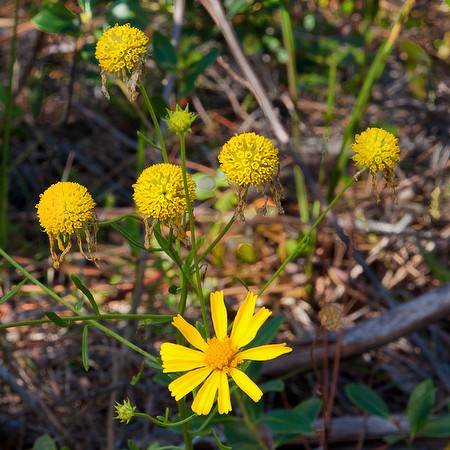
Honeycombheads (Balduina angustifolia) (by JB)

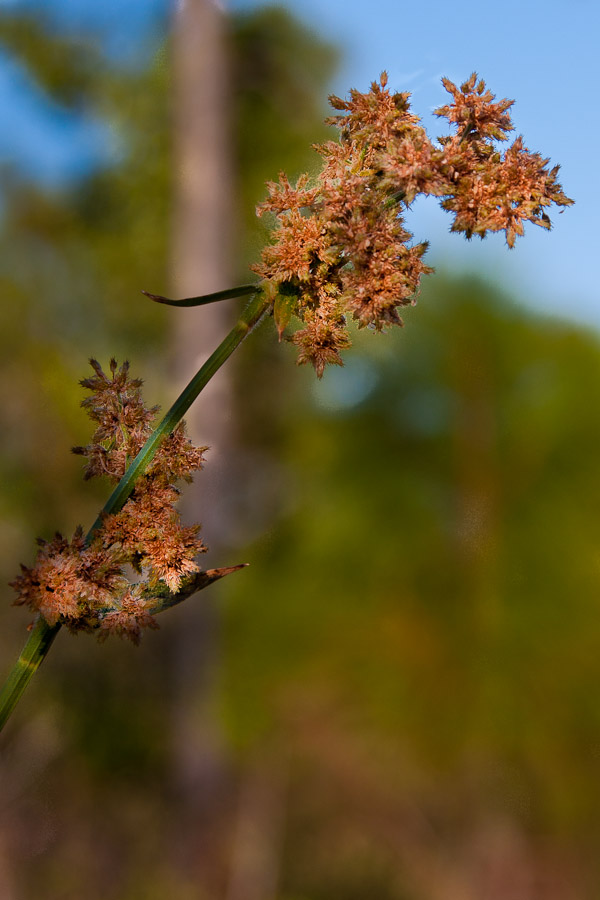
In the squishy zone we encountered a worldwide super-weed seldom seen in Florida, Fuirena umbellata.  We’ll call the species Tropical Umbrella Sedge for lack of a better English name.

Of course invasive exotics are abundant in Florida.  Collectively grass and sedge invaders are remarkably plentiful, and include such conspicuous cases as Guinea Grass, Napier Grass, Natal Grass, and Para Grass.   Many additional less conspicuous species have snuck in.  The problem has a name, even if it is misleading, “The Africanization of American Grasses.”  Not all the invaders are African, but a large number of our invasive grass and sedge species are of Old World origins.  It would be depressing to know what percent of Florida grass and sedge biomass is not indigenous. Given that grasses are the fuel for grass fires, and occupy the bottom rung of the ecological pyramid, the quiet species shift is a little worrisome.

Fuirena umbellata at Danforth (by JB)

Umpteen forces from hurricanes to imported nursery material move grassy weeds to and around Florida.  This complex of forces plus deficiency of historical data make it uncertain that Global Warming is crucial in the grass and sedge invasion.  But to our limited experience here at the latitude where tropics meets frost it seems like the invasive drift might have a northbound tilt. (The biological literature offers many examples of species shifting northward presumably due to Global Warming.)

Even if Global Warming is not directly responsible for northward weed migration, it no doubt warms the reception for tropical invasives, such as Cyperus hyalinus, Cyperus pumilaKyllinga squamulata, to list three sedges now in Florida from points South.  Our favorite example is the grass Steinchisma laxa, a tropical weed unknown in Florida until 2007, then suddenly abundant.  Perhaps Wilma helped.

That brings us back to Fuirena umbellata.  In cases of worldwide tropical weeds, it is tough to pinpoint an exact original distribution, perhaps the Tropical Pacific and Tropical Asia?  In any event, the weed, often associated with rice, is abundant in warm-climate Asia, Pacific Islands, Africa, and tropical America.  Yet  we are aware of only one other collection in Florida, in Broward County, although we have not conducted an exhaustive scientific search.  The abundance south of Florida coupled with scarcity in Florida and a surprise appearance in arctic Martin County is consistent with interpretation as another seemingly northbound weed.

Fuirena umbellata can be so plentiful in other countries as to serve as green manure in rice cultivation.  The species is salt-tolerant, and in places is burned to recover salty ashes; it serves as a (saline?) cleansing bath for babies in Africa.  Reminiscent of Scouring Rushes, the plants contain silica, limiting their utility as livestock fodder.

Fuirena has about four other species in Florida.  Southern Umbrellasedge  (F. scirpoidea) is a common presence along muddy shores, as are a couple smaller species.   Although the flower clusters in today’s species look “just like” a Fuirena, the overall appearance of the plant is out of line with the more familiar species; it stands  up to about six feet tall, making it a giant among Fuirenas, with a distinctive 5-angled stem.    Fuirenas are among the few sedges that have “petals” in the flowers, and those of F. umbellata, as seen with a hand lens, are big, broad to the base, and persistent around the seedlike fruit.

The first species known to us to be documented as migrating (to higher latitudes) due to Global Warming was Edith’s Checkerspot Butterfly in California. This was reported in 1996, just 16 years ago.   The list has grown since then, and we’re hoping that we are wrong about Fuirena umbellata being an “Edith’s Checkerspot” of the Florida grass and sedge world.

 
3 Comments

Posted by on January 7, 2012 in Tropical Umbrella Sedge


Tags: , , ,