RSS

Category Archives: Uncategorized

Ospreys as City Dwellers


As cities get bigger and as suburbs sprawl, a lot of wild creatures have expanded their ranges into town (or gotten trapped in little remnant pockets). Duh: raccoons, possums, skunks, rabbits, and coyotes, old-school. Foxes, screech owls, and even otters and martens (up north) maybe a little more recently.
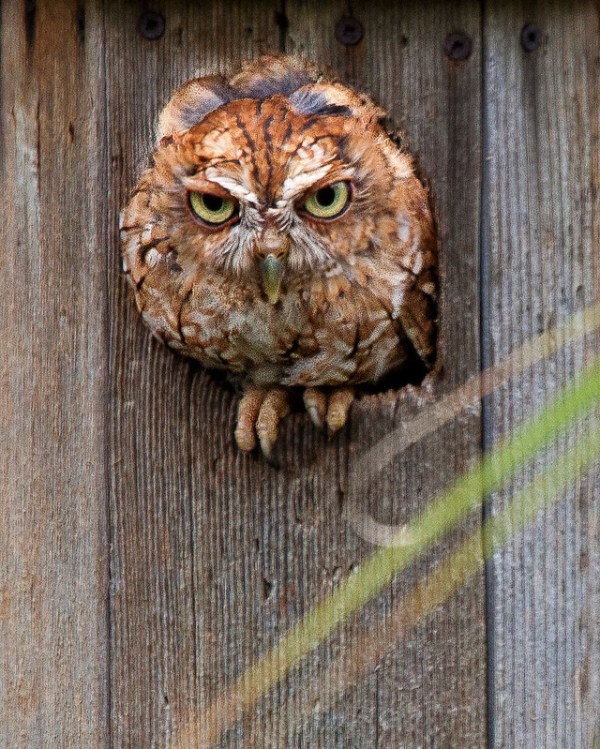
Screech by John Bradford

One that I find fascinating, perhaps because they’re frequent visitors around my totally non-waterfront suburban subdivision home, are ospreys.
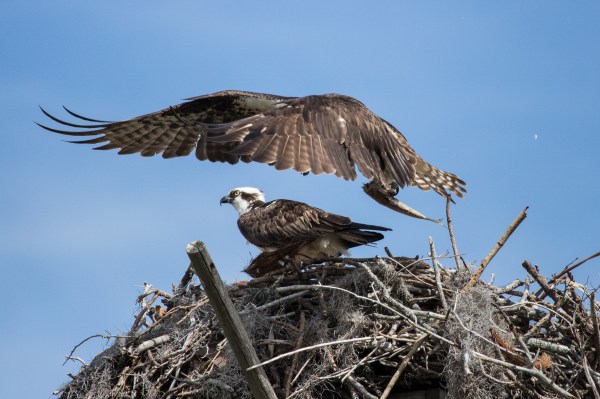
by John Bradford


It has long been known that ospreys take okay to cities, but usually that means the birds nest on the shore among humans yet remain on the edge of the usual bodies of water where they fish. An osprey may nest in Stuart and still have a waterfront view to the big ol’ St. Lucie River.

But what I’m noticing are ospreys nesting in urban/suburban sites far from any expanse of “obvious nice fishing places.” Some seem to nest and hang out these days in “funny” (not ha ha funny) places. The one(s) that visit me like to perch atop a big ugly Norfolk Island Pine overlooking the drainage canal passing by. The canal spawns unlovely catfish and tilapia, and maybe the occasional Mayan Cichlid. Not a gourmet menu….but easily snatched from the foot-deep water.
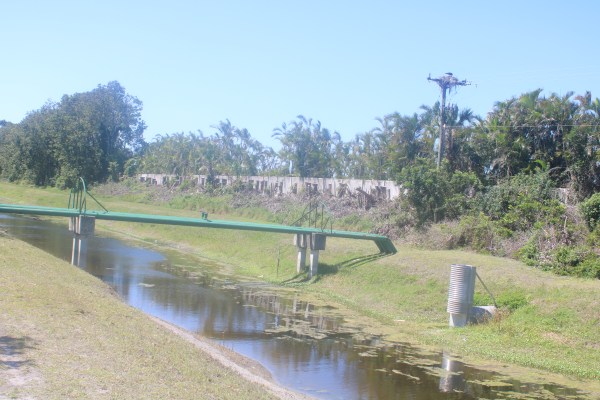
Nest in upper right corner above stinkwater.

There are plenty of fish in the sea (and evidently in the canals), so what do ospreys compete with each other for? Maybe suitable nesting sites.
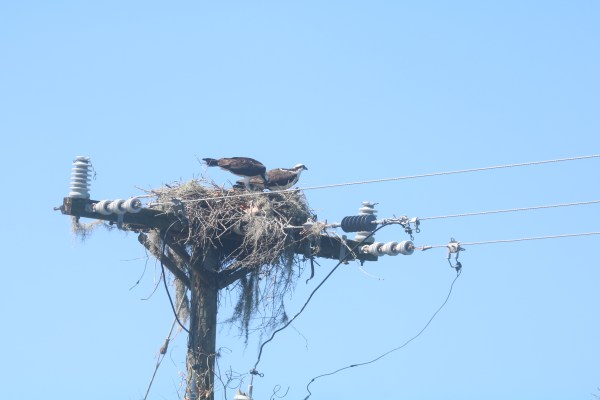

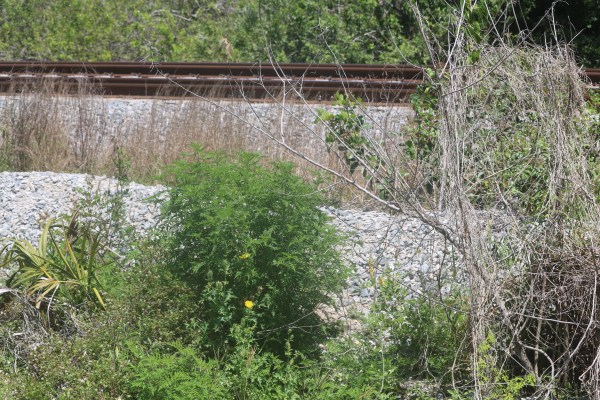
I do a bit of botanical snooping concerning weeds in relation to resilient gopher tortoises along a stagnant canal near home, between a huge urban golf course and a roaring RR track. Not very aesthetic setting, and the “seafood” is crummy. Along the way, though lives a beautiful family of ospreys bravely nested on a powerline pole among the insulators. Explain to me again why they don’t get electrocuted up there in the hotseat. I understand the safety of birds perching on a single wire, but the potentially soggy nest spans several wires, insulators, and the pole itself which is grounded. Kinda worrisome but they seem unconcerned.

Watch them feed the babies:

https://drive.google.com/file/d/1iVgjgE_aJUrVk63ISTdux-v6LuVaYFsm/view?usp=sharing


S
 
Leave a comment

Posted by on April 17, 2025 in Uncategorized


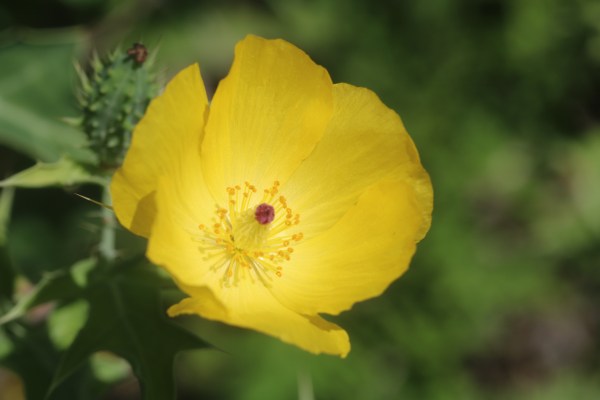
Mexican Poppy has a “little surprise” up its sleeve


Argemone mexicana
Papaveraceae (Poppy Family)

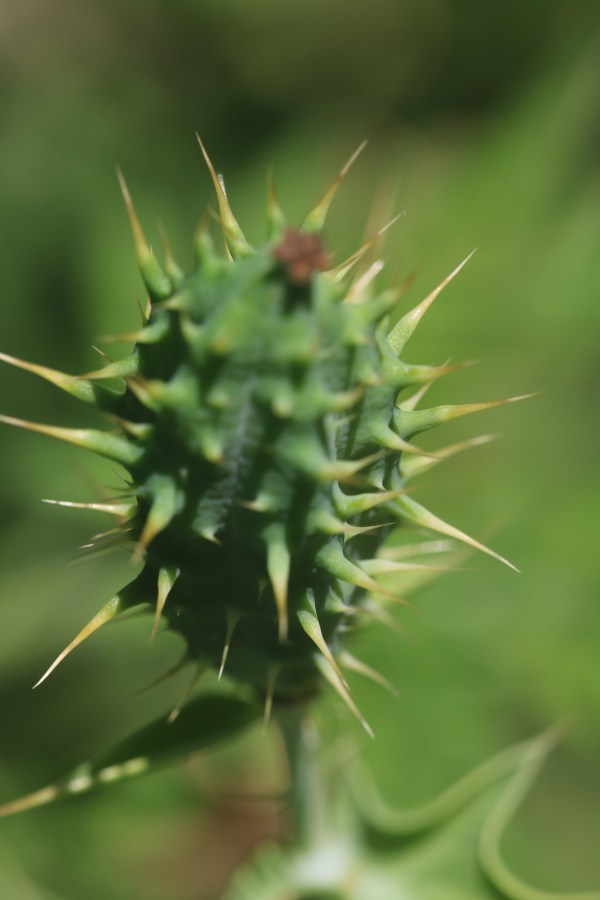
From a botanical standpoint, there are green gems sprouted along RR tracks from seeds ridin’ the rails from faraway places. The parents of todays’ trackside Mexican Poppy were probably weeds in an agricultural field along the route. This stunning prickly yellow species has made a prior appearance in the blog, but today’s angle is different. (https://treasurecoastnatives.wordpress.com/?s=poppy)


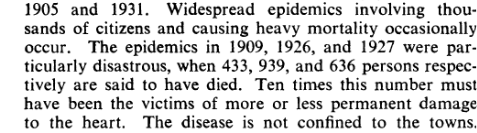
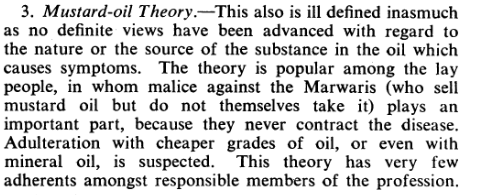
An old tropical disease, mostly in India, also South Africa, is called epidemic dropsy. Dropsy is an old-fashioned term for edema linked to heart failure and related events. Edema is usually sporadic and spotty in populations relating to age and to additional factors, so when it sweeps through a region like the flu, that’ll raise some medical eyebrows. That has occurred lots of times, causing lots of deaths, even in the “2000’s.” As recently as the 1930s, the cause remained unknown, As explained in the article we’re about to examine, there were then three theories: 1. “Contagion” (i.e. germs), 2. Bad rice. 3. Mustard seed cooking oil. Drs. R.B. Lal and S.C. Roy in the 1931 British Medical Journal narrowed the cause down to the almost-correct mustard seed oil theory, but with a big piece of the puzzle still missing. in

What is interesting is how they did it, raising the questions of were they heroes, or rat-finks, or some of both? First off, the two doctors shared an historical account of the disease around Calcutta. I call your attention to the “permanent damage to the heart” part. That sounds like something to avoid. Stay tuned on that.

The three theories then got an overview. Apparently at that time, “respectable members of the profession” had negative vibes about the mustard oil notion.

But the doctors listened to citizen science and showed those respected colleagues the path to truth by means of an experiment. And here is the kicker: The experiments took place on 12 healthy young volunteers “willing to take the risk.”

HUH? How informed was their informed consent? Did they read the fine print above about the reaper and the heart damage? I wonder how they were “volunteered.”

Glad to hear groups B and D were so cheerful! I’d be cheerful too if excluded from groups A and C. The docs never mentioned what happened to the un-cheerful group A and C volunteers. I wonder if they lived long enough to hear the rest of the story. Which is as follows:


For the rest of the story we have to know that today’s species has long been cultivated around the warm world for “argemone seed oil.” That’s good if the argemone oil is used for lubrication, fuel, and industry. Thanks to those non-food applications, Mexican Poppy has become an abundant worldwide agricultural weed. Just don’t let argemone seed oil get into the mustard seed oil, either from weedy seedy cropfield mixing, or more often, as a cheap adulterant to expensive mustard seed cooking oil.

(By the way, in more recent times argemone oil has been tried “externally” in massage oil, but guess what, it can enter transdermally, so your exotic massage then can have a very unhappy ending.)

 
Leave a comment

Posted by on April 12, 2025 in Uncategorized


Pigeon-Plum, The most versatile tree in town

Pigeon-Plum, The most versatile tree in town

Coccoloba diversifolia
Polygonaceae


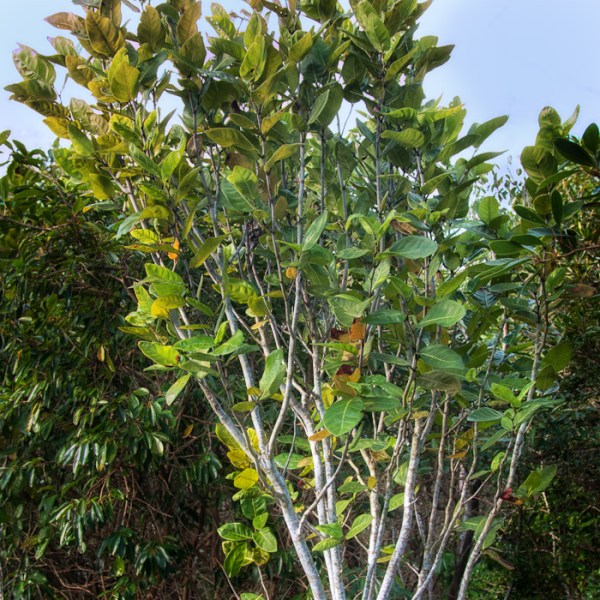
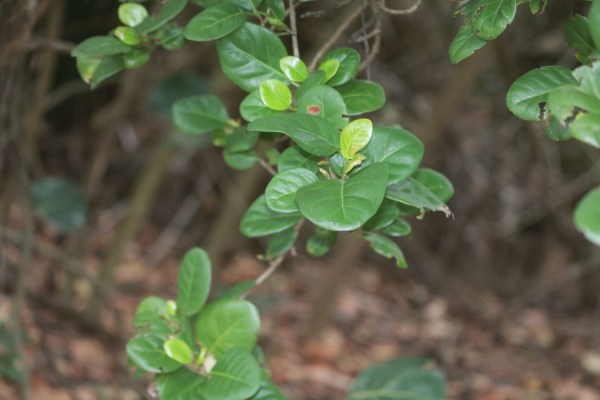
Quick…name five native trees to PB County! Bet you forgot Pigeon-Plum! It’s kind of modest after all, not that common locally, smallish, with unshowy flowers and weird bumpy fruits on female individuals. Modest…yet talented!

Photos today by John Bradford.


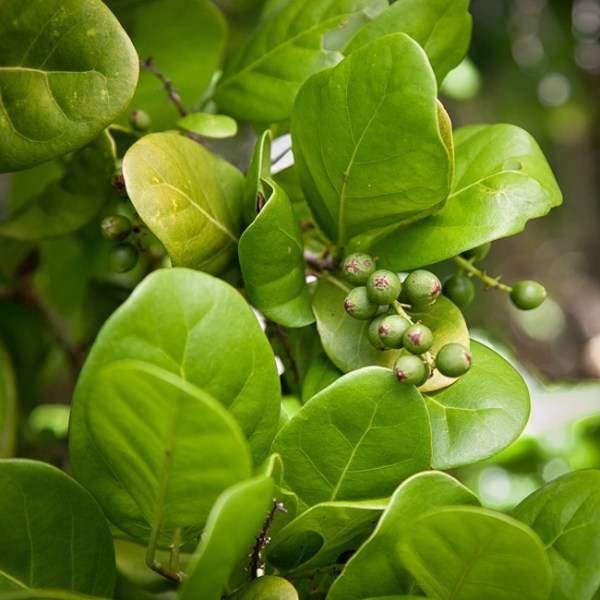
First of all, those plumlike fruits are not really plums, not even fruits. The actual fruits look like seeds, and the fleshy purple covering grows from the female flower petals swelling up around the small actual fruit. No doubt the fake fruit feeds seed-spreading birds, and maybe they float. Pigeon-Plum is abundant in mush of the Caribbean, often in marly salty dry forests. Seed fragments from Pigeon-Plum go far back in Florida archaeology. The fact that ancient people ate the fruits makes me wonder if pre-European people helped disperse the species throughout the Caribbean all the way to Florida, as with peppers, agaves, and papaya. Or then again, maybe pigeons spread it.


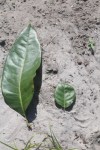
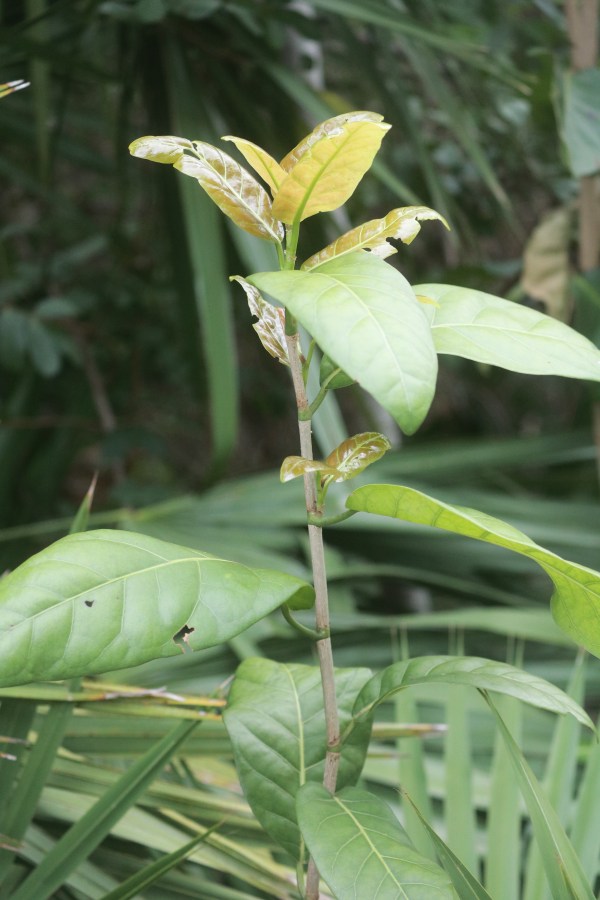
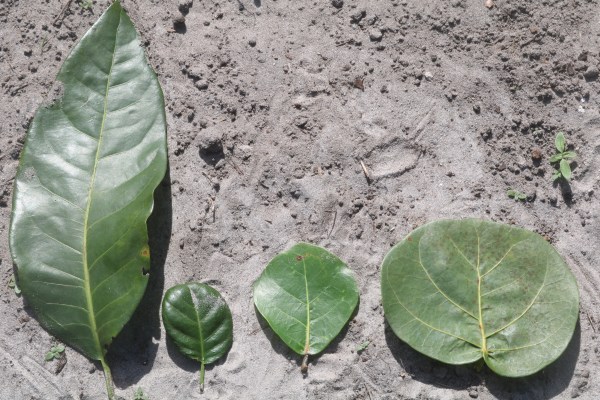
What I find most fascinating about PP is the feature responsible for its name “diversifolia.” Many plants have different “shade” leaves and “sun” leaves, but today’s tree goes to diverse extremes. The young shoots rising from the forest floor have elongate leaves a foot long or more. The branches on mature individuals, by contrast, have normal-looking small leave the size of a pocket watch. Those big-leaved but fragile forest-floor youngsters are equipped for gathering maximum light in the protected shaded understory. The small but tough mature leaves are better for resisting exposure to sun, wind, and salt spray. And, speculatively, leaf-eating insects. The two leaf types look like two different species. Come to think of it, the two types were historically misinterpreted that way as “Coccoloba laurifolia” and C. diversifolia. In 1949 botanists Richard Howard noticed the two “species” growing on the same tree in Cuba.


Pigeon-Plum is related to Seagrape, and the two sometimes hybridize. There’s a neglected postage stamp hammock remnant along the RR tracks in Jupiter where Seagrape and Pigeon-Plum grow intimately intermixed. Really—with the stems of each rising from single clumps. Room for doubt, (!) and no DNA test handy, but suspect some of the in-between forms there are the hybrid known as Coccoloba Xhybrida.

Left to right all from same clump: PP big-leaf form. PP little leaf form. Hybrid? Seagrape.

 
5 Comments

Posted by on April 4, 2025 in Uncategorized


Stuck in a rut? You may be sphexish!


Just ask the Great Golden Sand Digger
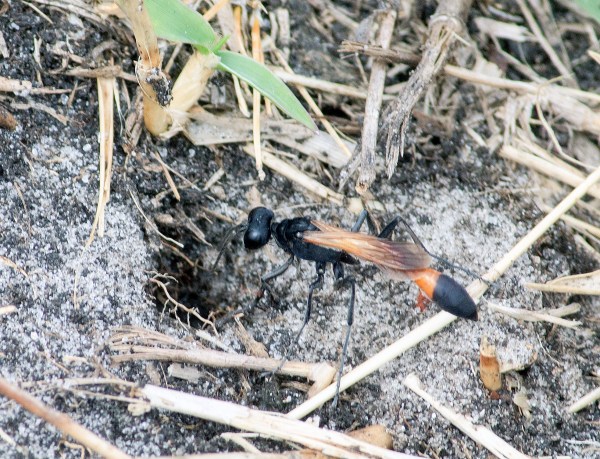
Sphex ichneumoneus or similar species

[technical note, I hear from a reader that the photo may in fact be a different tho similar species of digger wasp acting Sphexish]

When does a digger wasp in Cypress Creek meet Big Bang Theory? Leonard Hofstadter took his fictional name from Nobel Laureate physicist Robert Hofstadter (1915-1990). Robert’s son Douglas Hofstadter likewise achieved fame and glory, in computer science, in A.I., and in thinking about thinking. Douglas coined the term “sphexish” to describe (apparently) irrational repetitive behavior. You know, broken record. Look at the Latin name of the wasp above, and then witness this Sphex (or close relative) being sphexish. Over the last couple days I’ve come to suspect that the behavior might (might) have to do with seeking pebbles filling in the nest. But then why all in the same groove?

Click below for hot diggidity digger (repeat) action!

https://drive.google.com/file/d/1U0XEaN4tJPBPNIHL-XczTNi0fw-QzE9C/view?usp=sharing

Added later—worth a look

 
2 Comments

Posted by on March 28, 2025 in Uncategorized


The Dry Cypress Swamp…Hey, Something is Missing

Until today I thought the blog was defunct due to technical reasons. But through a stroke of record-keeping genius, John found the key to salvation so here we are, bullett dodged.

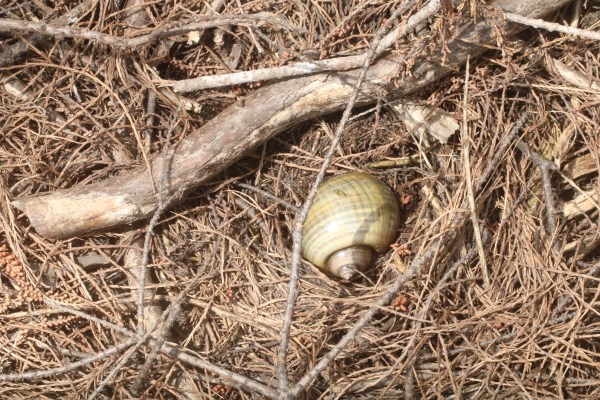
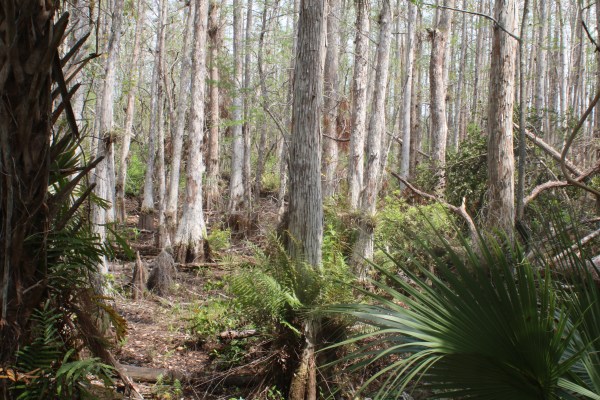
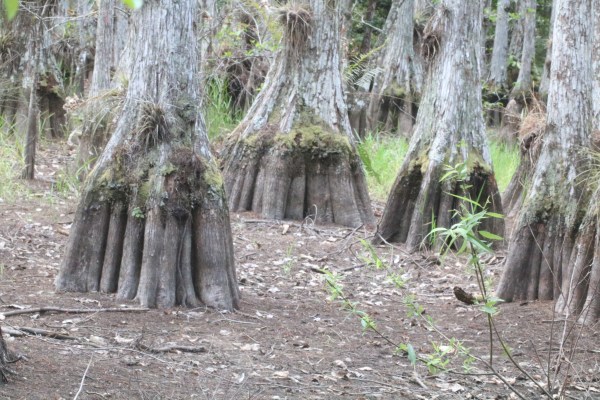
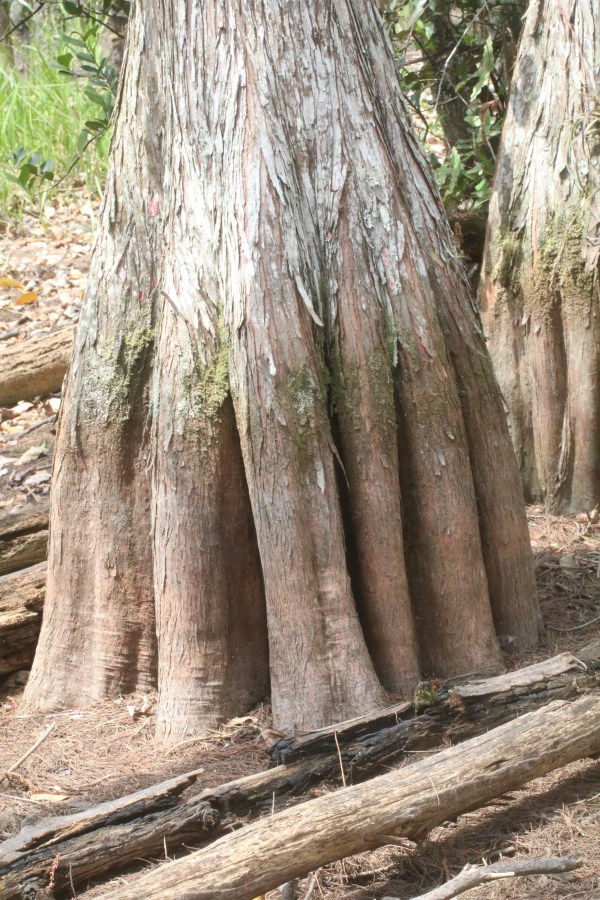
Today I did something I enjoy excessively—walked through a mostly dry Bald Cypress Swamp. Met an otter ‘long the way, also to my surprise hog scat deep in the swampy shadows, and an apple snail mobile home.

But entirely absent were young Bald Cypress, seedlings of saplings. None, not one, in a swamp spanning acres. Bald Cypress does make seeds, and they germinate in wet places where they blow….but not where the older trees drop their needles.


Something a crowded Bald Cypress swamp generally does not need is more trees . Those roots are already competing fiercely in awful waterlogged soil. Making competing youngsters underfoot would be suicidal, not a plus. Arboreal family planning, in fact, is well known among conifers, although I have not seen seed-o-cide reported for Bald Cypress itself. But I sure saw it in practice today.


Poisoning your own seedlings is called autotoxicity. And if you can do, you might as well knock off other species’ seedlings as well, known as allelopathy. And of course Cypresses get extra help via annual flooding.
If a Bald Cypress topples is the swamp, who fills the void? This is one of the few conifers able to regrow from basal stump sprouts. It can begin anew, but only when regrowth is necessary.


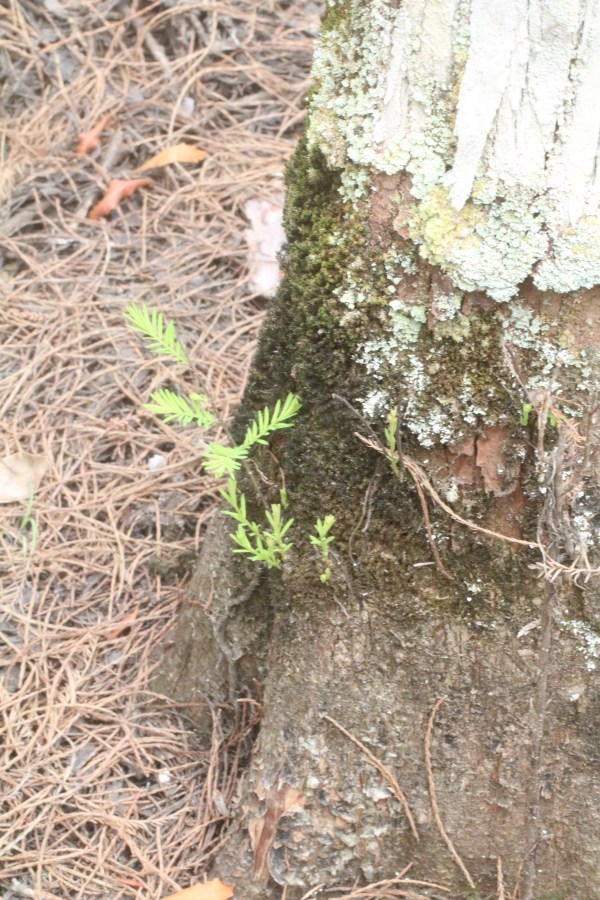
Think how many species of woody wetland plants most have their seeds blow, float, or ride inside animals or birds into a swamp. You do see some “outside” woody youngsters growing on cypress trunks, on knees, on stumps and logs, and on various other humps and hummocks. Wax Myrtle and Buttonbush do that. But not on the fallen needle carpet.

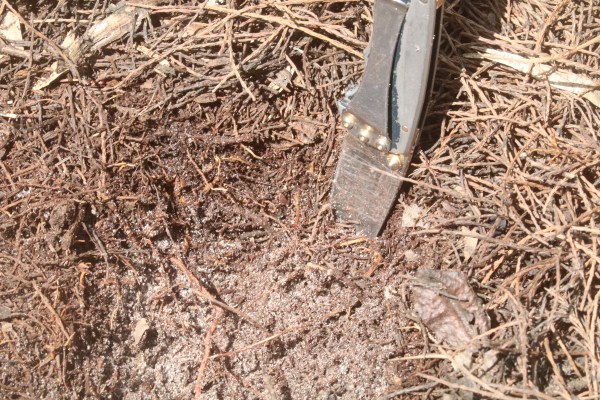
Those carpets can be several inches thick, and the material visibly resembles expensive potting soil from a garden store, it stifles seed growth like a natural preemergent herbicide, with two exceptions.
One is Cocoplum which has ecological tolerances so broad it loves to be pruned into a hedge. Its hard floating Cocoplum seedpit feeds and apparently protects the embryo from drying, flooding, and needle poisons. Nothing stops Cocoplum. It could sprout on Mars.
The second needleproof tolerator is Pond Apple, which, like Cocoplum, also has large, hard-shelled, protective, nutrient-rich floating seeds. These have an extra trick (called epigeal germination) where, once the root hits the carpet, the rest of the seed lifts safely above the poison carpet, and ready for “next year’s” flooding.

Its roots spread horizontally trouble-free into the needle duff Pond Apple can remain as small understory tree, or eventually become substantial.

Being able to invade a light gap by floating seeds faster than a Cypress’s basal sprouting, Pond Apples can crowd into Cypress Swamp gaps, although given a few centuries, the enormous Cypress will have the last word.

 
8 Comments

Posted by on March 17, 2025 in Uncategorized


Congo Jute and Its Upwardly Mobile Guests

Urena lobata, and Apis mellifera too
Malvaceae (Hibiscus Family)


A botany class kinda truism is:
Question: Why do leaves of many species have nectar glands?
Answer: To attract nasty ants who quard the host in exchange for lunch.
But exceptions are fun. One exception appears to be plants that have ant food also on the seeds, so that the nectar on the leaves draws ants near enough to find the seeds with benefits, which the insects then disperse beneficially for all. See that here.

Today’s exception, extends beyond ants. Abundant locally is non-native Caesarweed (Urena lobata). They probably brought it here back when one of the many ideas of “how to make money in Florida” was growing fiber plants, before the more lucrative idea of opening an Assisted Living Facility. When I’m sitting in the garden of my Assisted Living Facility, I want them to have Caesarweed. Then I can watch the bees, and wonder why it is called “Caesarweed.”


Let’s see if AI knows!

How’s that for instant expertise? Thank you Hal. And, yes, while watching the Caesarweed in the meditation garden, I’d like to know if its nectar glands under the leaves are good for anything?

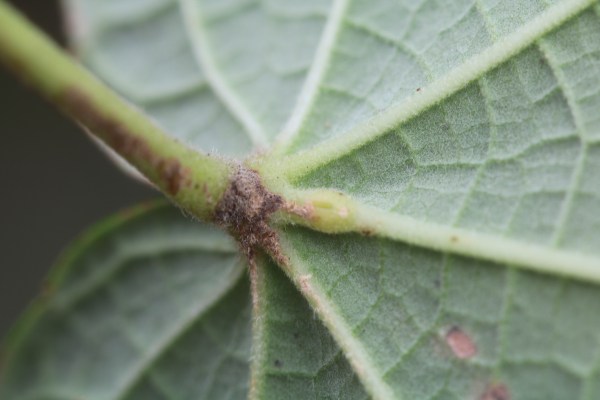
The gland is shiny green, on the leaf vein, to the right of the dark blotch.


That brings us to another invasive exotic: Honeybees. Hey, don’t we hate invasive exotics that out- compete native species? Don’t we love Honeybees! Cognitive dissonance strikes hard!
To get to the point, have you ever seen how bees tend to start at the bottom of an upright flower cluster then work upward? If not, take it on faith. Enjoy the video clip below. The bees work their way up the leafy Caesarweed as though the leaves were flowers in a spike. Then, at the top—well there IS a flower. I’ll bet a jar of honey that the leafy nectar glands help Caesarweed achieve pollination.
Bee in action on Caesarweed CLICK

 
Leave a comment

Posted by on December 19, 2024 in Uncategorized


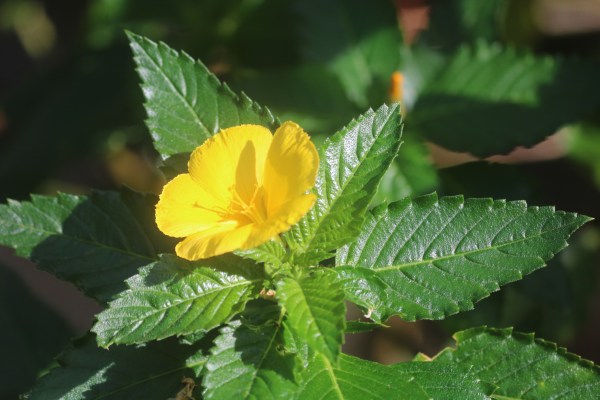
Hanging Out with the Gophers And Yellow-Alder (Turnera ulmifolia)…and Florida Snow


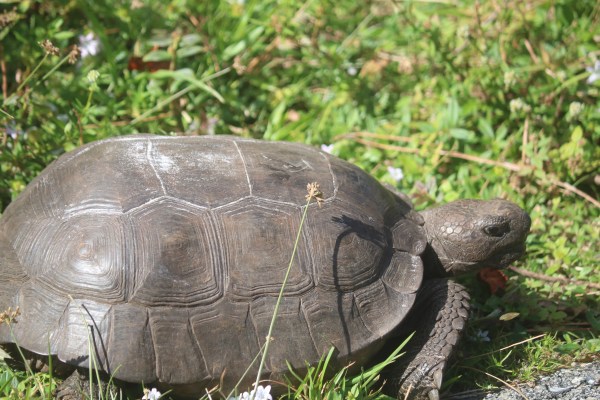
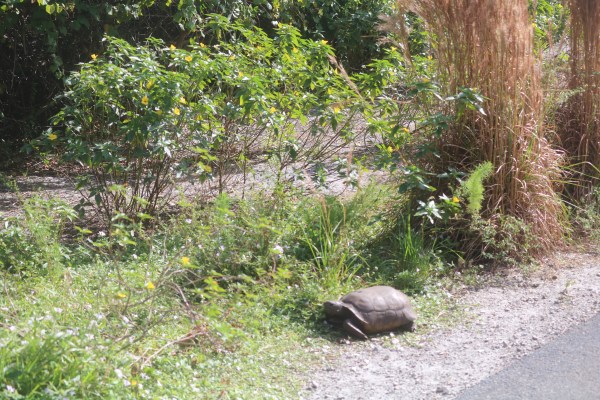
Today I went a’wandering around a small neglected urban scrubby remnant under power lines along a railroad track. What distinguishes the site is an exceptionally high population of gopher tortoises, perhaps with somebody officially and/or unofficially relocating them there, or concentrating them by habitat reduction. (A weedy ditch seems to keep them away from the lethal tracks.) A place to study tortoise crowding. (I saw a dead youngster.)

But being a plant blog, let us cross the fence from zoology to botany. . Today’s main plant, as plentiful as the tortoises, could be native having moved northward from the American Tropics, or quite possibly introduced, or both; hard to say, and unimportant for now. What seems interesting is some form of apparent relationship between Yellow-Alder (Turnera ulmifolia) and the Gophers.

The shrubs are Yellow-Alder.


Is the super-abundance of the Yellow-Alder and likewise of the tortoises merely coincidental…mutually preferring the same conditions? Or is there more to it? The Alder and the Tortoises seem to have overlapping microdistributions , the plant along the Tortoises thoroughfares and decorating some of the burrows. So let’s say for the sake of fun that the correspondence is real. Do Tortoises somehow eat Yellow Alder and disperse it through their digestive systems? Possible, but I doubt that’s important. Do the the Tortoises eat everything else but avoid the Alder, allowing it to survive like untouched thistles in a cowpasture? Seems so to a point. But the interesting answer might tie in vaguely with other features of the plant.

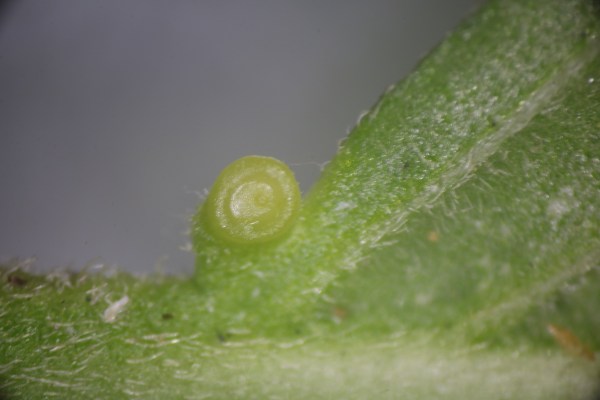
Nectar gland on leaf.


Yellow-Alder leaves have nectar glands. These nectaries attract ants. Although the ants no doubt defend the plant from herbivores, biologist Mariana Cuautle and collaborators in 2004 found the nectar glands to draw ants for a second benefit—to spread the seeds. Each seed has an edible wrapper (called an elaiosome) which ants drag back to their nest, spreading the seeds about.

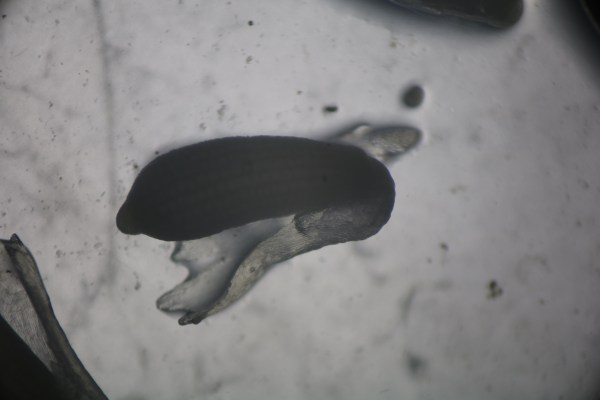
Candy wrapper (elaiosome) on seed.

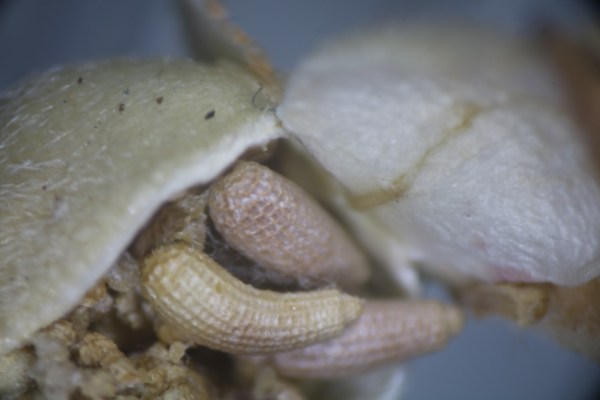
Funny thing though, today every Yellow-Alder pod I examined had the candy wrappers removed prematurely by some tiny non-ant insect thieves before release from the fruits. Seems the early larva gets the elaiosomes.

Pitted surfaces on Yellow-Alder seeds in pod. Frass from insect seed-pests on left.


Do gophers behave like enormous lumbering ants and seek Alder nectar and food bodies? Naw, but the seed coats have pitted “waffle” (‘aveolate’) coats. In the plant world in general, botanists tend to regard such coats as helping small seeds cling to mud on birds and other dispersers, you know, such as Tortoise shells. The honeycomb seed coats might be rendered even stickier (or more likely to Gopher-snag) by the starchy elaiosomes. So it seems Tortoises waddling through Yellow-Alder probably spread its seeds along the path of life. Moreover, Gopher Tortoises have a lot of camp followers animals who use their burrows, and those associates too may snag and drag seeds.

The Yellow-Alders tolerate turtle-munching-&-tromping, but most other plants there do not seem to, so smashing and eating competitors may be another way tortoises facilitate the Alders. The limited number of species on the menu poses a problem for the crowded Tortoises. One plant that is abundant where the Tortoises roam is Mexican-Clover, aka “Florida Snow” (Richardia grandiflora) in the Coffee Family. As anyone around here knows, that introduced groundcover grows like gangbusters. The Tortoises eat it. Looks like a case of an aggressive invasive exotic helping to sustain a Threatened native Keystone Species crowded into a urban postage stamp habitat.

Tortoise enjoying Florida-Snow, the movie CLICK

 
2 Comments

Posted by on November 16, 2024 in Uncategorized


Does Hogplum Pay Rent?

Plants that “make their own luck” are a fascinating bunch. Many improve their own circumstances, or, an ecologist might say, generate “autogenic positive feedback.” Today’s example from a windy walk in the scrub is the way single plants, or even better, clumps, capture blowing leaf litter and make their own compost. Any gardener worth their snippers can list the marvels of compost.

A natural mulch volcano around Varnishleaf.

Clump of Gopher Apple acting like a leaf catcher brush.

Peelbark St. Johnswort catches waterborne debris.


Have the actual benefits of this sort of thing ever been tested and demonstrated? Yea, but what’s more fun than digging around in in Google is walking around in nature. Often if you think about an ecological possibility—making it “the theme” of a stroll— you can make your own comparative assessments. Does the plant send roots into its personal compost? Do this with compost look healthier than those without?


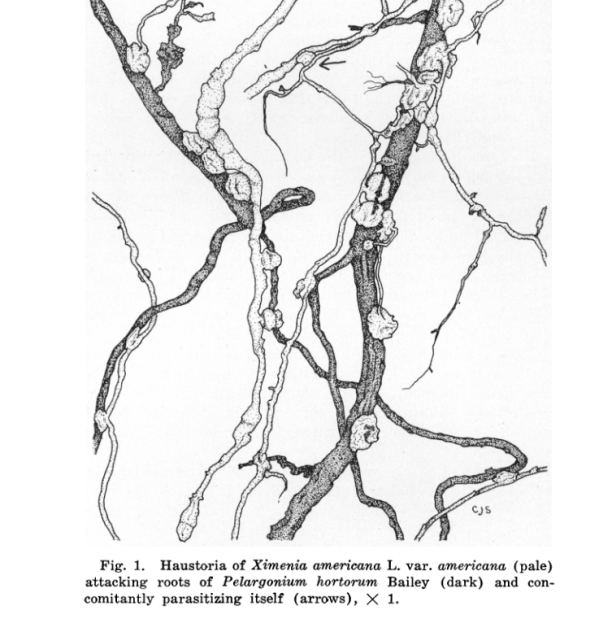
A twist in this topic is root-parasitic plants, one’s that grow alongside hosts and divert goodies from the host roots. The downside for the hosts is obvious, but maybe paying rent too? Observers have shown or speculated that while host helps the parasite grow nice and leafy, the parasite sheds its leaves into the shared compost zone. It might even help block wind. Maybe free compost benefits the host more than the cost of the root mischief. Not that I have any proof, but locally the scrub-dwelling root parasite Hogplum (Ximenia americana) comes to mind.

Hogplum growing a leafy contribution. By John Bradford.

Hogplum underground thievery. By R DeFilipps (1969).

 
Leave a comment

Posted by on November 10, 2024 in Uncategorized


Tags: , , , ,

Big Bananas and Pesky Little Kleptomaniacs


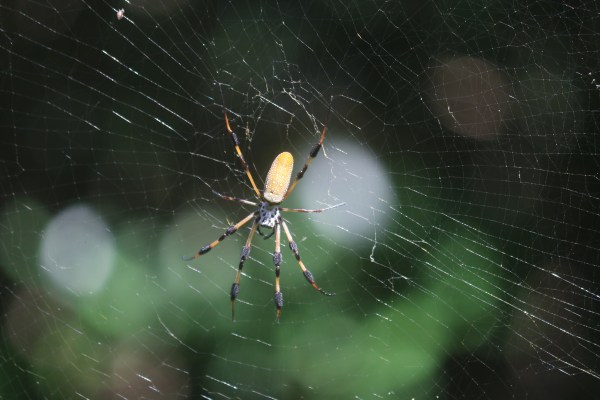
Carnivores suffer pests who swipe the kill or scrounge leftovers.  Dolphins steal from Sperm Whales. Hyenas rob lions.   Remoras clean up shark scraps.    Food theft is called “kleptoparasitism,” and it is not that rare in the animal kingdom.    A great example of abominable culinary larceny plays out in our local natural areas with a little big carnivore, the Banana Spider.

The Juno Dunes Natural Area adjacent to the Loggerhead Marine Life Center in Juno Beach is home to a village of ferocious-looking Banana Spiders on webs the size of tablecloths.  Wonder why they like that site so much.  Do ocean breezes bring victims to the killzone?    No doubt mere coincidence, but the webs are associated often with an odd coastline semi-vine in the Coffee Family,   “Redgal,” Morinda royoc, but back to arachnid true crime.

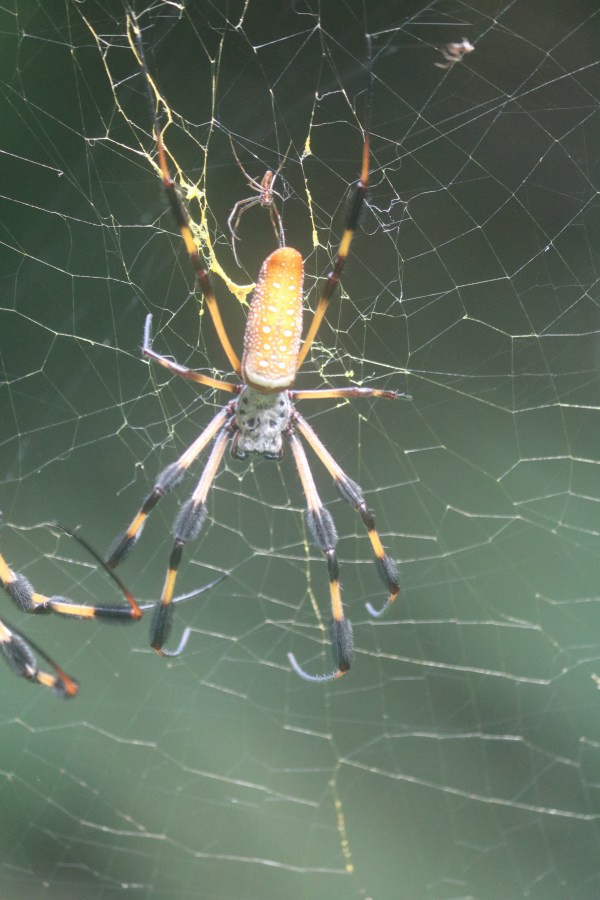
Female (big) and male (above his main squeeze). That’s a Dewdrop near the upper right corner.

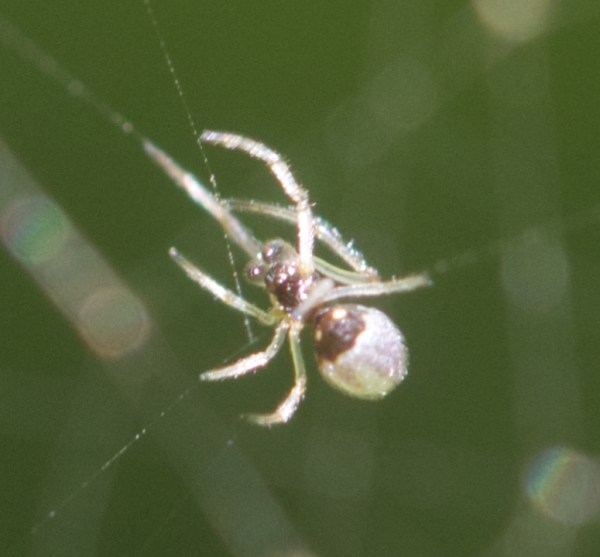
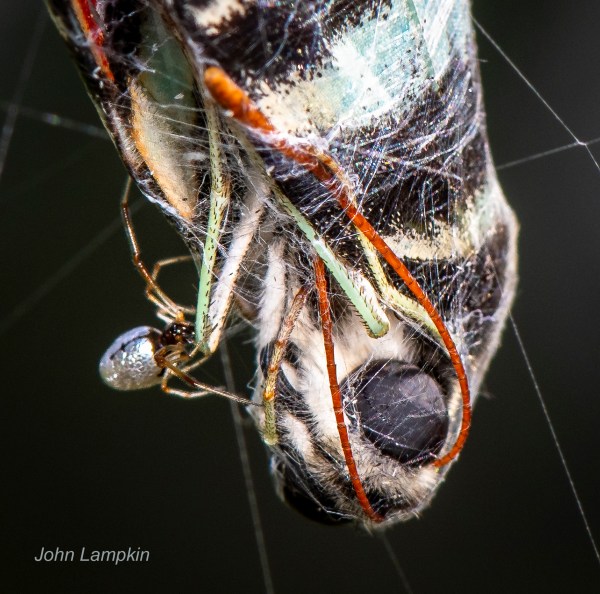
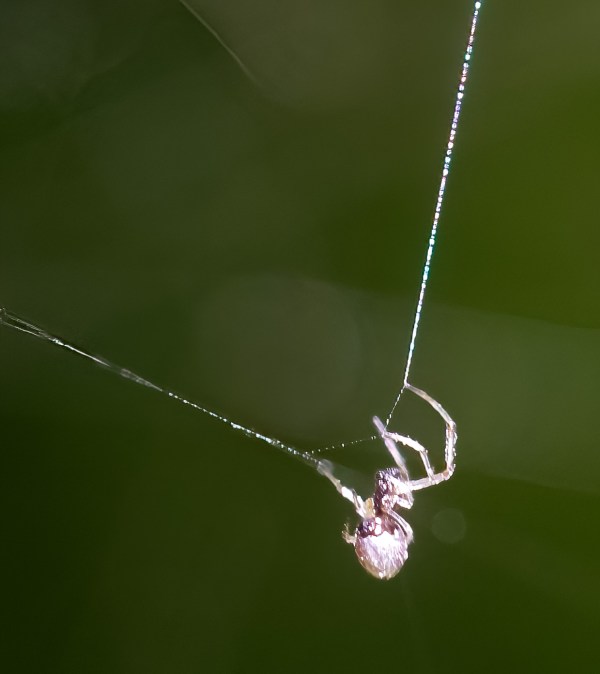
Look closely at a Banana Spider web,  if you dare. In addition to the jumbo Queen of the Web, there are little spiders too.  Some are pale males much smaller than the hunky  yellow females.   Some wee spidies are  juveniles.  But the truly interesting tiny ones are called Dewdrop Spiders (aka Robber Spiders).   They are rip off artists.

They do look like dewdrops, especially the females.  Varying  in color, most around here are shiny white toward the rear.  Some are so silvery you can see mirror images on their scales.  Are the shiny Dewdrops disguised from birds as water drops on the web?  Or does the reflective coloration make it difficult for PO’ed Bananas to nab them?  Or do they look like Banana egg cases?   Or is the glossy surface temperature regulation?  (In ignorance,  I vote for birdproofing.)

Dew Drop Inn. Highly magnified. Really less then 1/4 inch across.

In any event, they thievin’ little rascals are unpopular with the Banana Clan,  although enforcing  “get off of my lawn” may not be worth the Banana’s energy.  The dynamics are not well studied,  and are confounded by multiple species of Dewdrop Spiders.  Fact is, so little is known, all I can do is list disjointed observations by various biologists. Some observations are on different Dewdrop species..

Dewdrop….on its own filament?

Kinda relevant stuff I kleptoparasitized from online articles:

Banana webs are toxic, obviously to subdue prey, but maybe also to discourage trespassing?  Dewdrops can eat the web as a source of protein. Are they immune to the poisons?

Dewdrops loiter at the margin of the Banana Spider’s web, where the big spiders seldom go.

Dewdrops “know” when and where the Banana wraps prey by vibrations in the web.

Brave Dewdrops approach the Banana for a quick scoop and score.  Cowards steal prey from the web with the guard is away.

Dewdrops can snip the stolen merch from the web allowing the morsel to swing free on a single filament the Banana can’t navigate but the tiny Dewdrop can.

I have not read this, but I suspect I’ve seen Dewdrops on “their own” filaments safely isolated from Big Bad Banana .


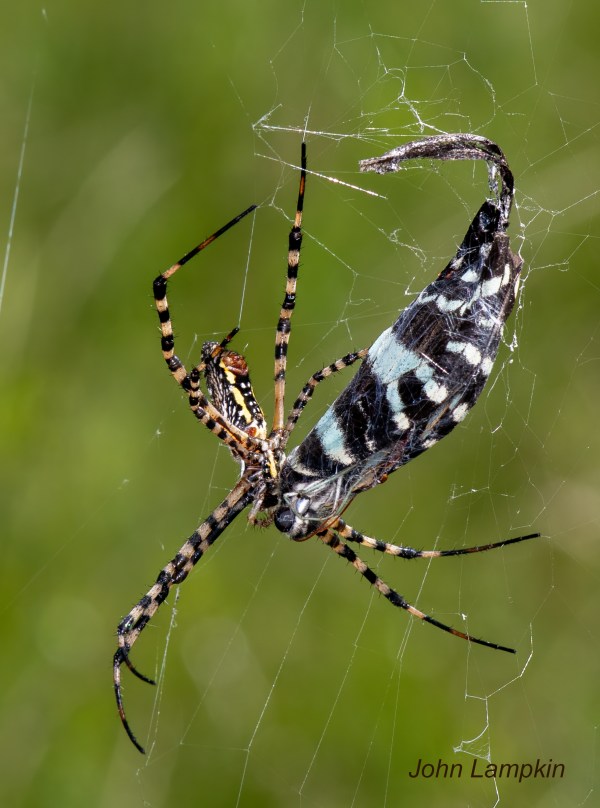
It gets better. John Lampkin contributed the two photos below of an Argiope Spider with a captured Zebra Longwing. Check out the mirror-surface Dewdrop in the 2nd photo. Thank you, John:

 
2 Comments

Posted by on September 27, 2024 in Uncategorized


When Lost in the Forest and Thirsty,  Try Grape Juice (…from the stem!?)


Trapped home today,  car in shop post-mishap ,  so limited to walking distance behind the house.   There is a “September plant” on the back fence:   Florida native Grapes!

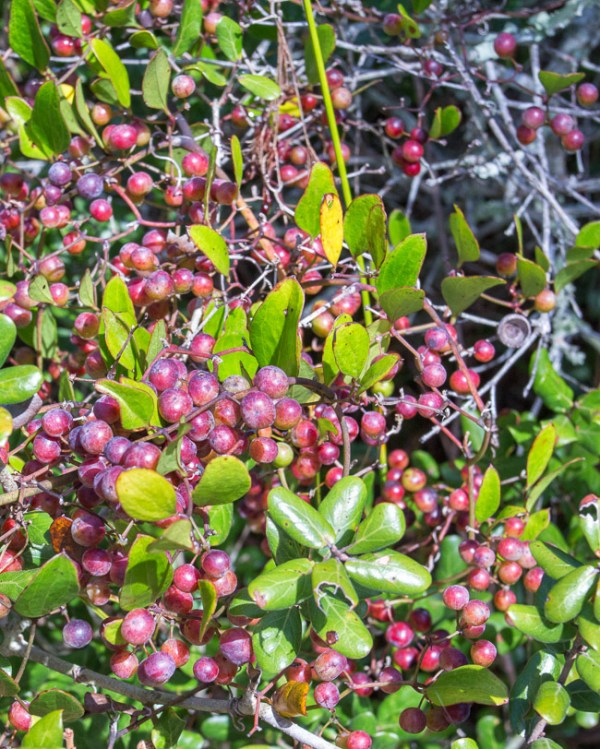
Around here and far beyond we have two different groups of vines that:   wander, climb, and sprawl abundantly;  cling with tendrils;  have small greeny -yellowish insect-pollinated flowers with males and females on separate individuals;  and bunches of “grapes”  used to make jelly.   The cool part is the two groups are green examples convergent evolution, unrelated species evolving striking similarities, like bats and birds, sharks and porpoises.     The two unrelated groups are grapes and smilax.   Grapes  are Dicots, loosely speaking “woody plants,”  and smilaxes (catbriers)  are woodless Monocots.  

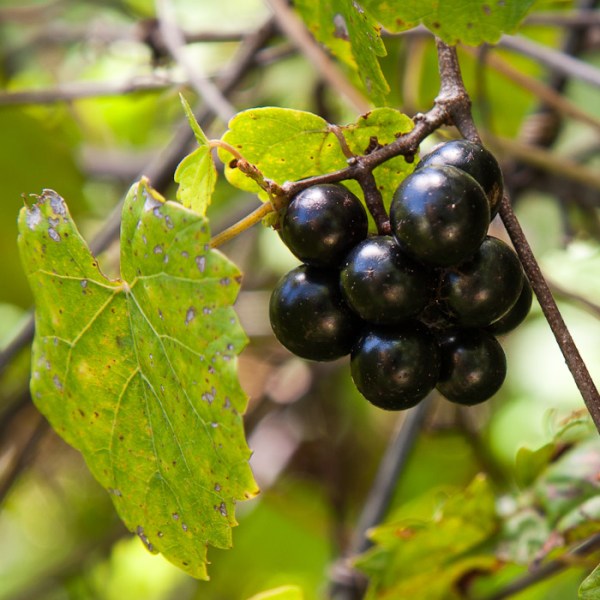
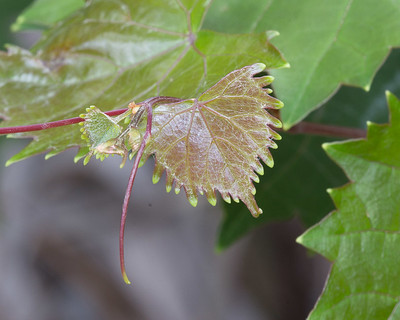
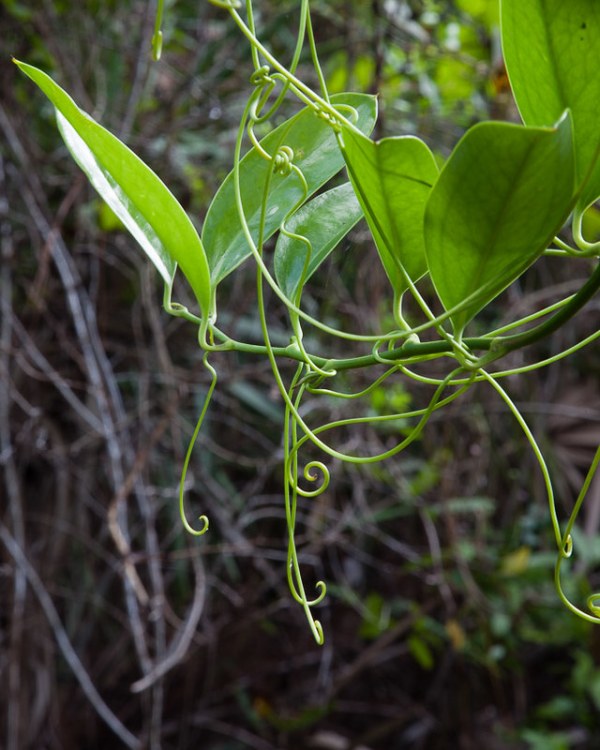
Grapes top photo. Smilax bottom photo. All photos today by John Bradford (except the cut stem).

The South Florida Grape Family includes several species, mostly Muscadine Grape (Vitis rotundifolia).    We don’t these days seem much interested in wild grapes for eating or drinking,  although wildlife feels otherwise.   The wild plentitude of grape vines makes a sommelier wonder if past people tapped into the easy abundance.    Oh yea.  According to botanist Earl Core, not only did indigenous residents of the Southeast gather grapes, they made raisins.    In fact, wrote Core, the alternative name for Muscadine Grape and its wines, scuppernong, comes from the pre-European name “askuponong.”  Archaeological pottery shards from Texas  have chemical traces of ancient wines.

Top photo: grape tendril. Bottom photo: Smilax tendrils

Later, people of European ancestry, including Thomas Jefferson,  developed various Scuppernong wines, although less popular than the countless vintages available from around the world.  I actually like scuppernong wine.  Muscadine’s greater contribution to the wine industry, in addition to other American grapes,  is as a disease-resistant rootstock for grafting delicate Old World varieties.

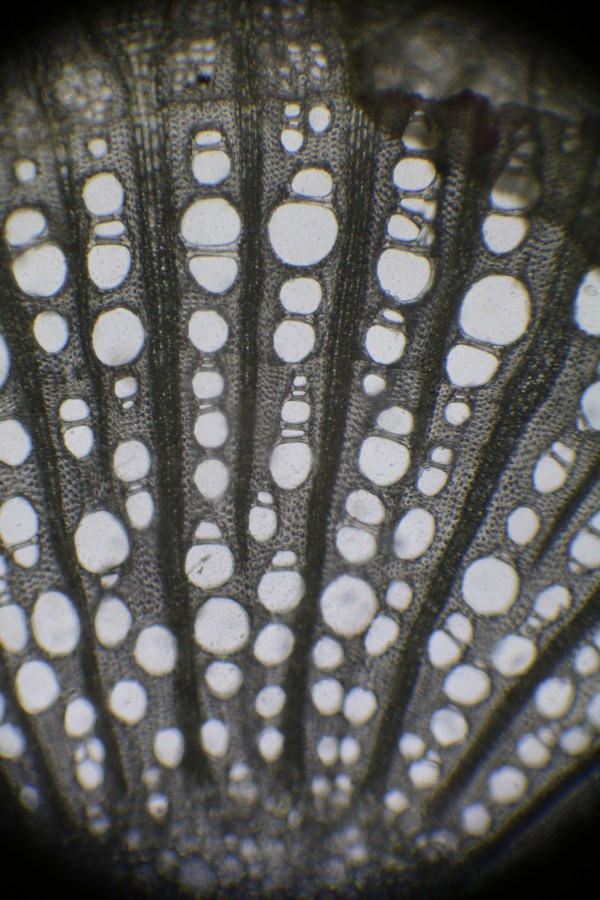
Speaking of grape beverages, here’s a “new” one.  As described  on the FAU  environmental science website, “a foot long [Muscadine Grape]  stem that is cut and inverted could give up to a liter of drinking water. “    As much as I’d like to go cut a big old grape stem, I’d shun killing a massive vine for a potential blog photo (and besides, the lady in the Publix parking lot trapped me home).   I did, however, cut across a pencil-sized  grape stem to see where that drinking water hides.   Look at those storage pipes even in a twig!    How can a long climbing vine store and replenish great quantities of water?   How does it fill  those pipes (technically, “vessels”)?   “Sucking” by evaporation from foliage far above in a 90-foot vine is not an adequate explanation.

A grape mystery!    With feeble evidence, the traditional explanation was, well, perhaps the roots push new water up from below   The evidence was feeble because it was mostly wrong.   Being valuable, wine grapes get high-tech research, which produced a surprising new finding undiscovered by 500 years of academic botany.  It turned out that the living stem tissues surrounding the pipes can refill the pipes all along their length, like little streams feeding a big river along its length.     

A glass of (ancient indigenous scuppernong) wine would sure taste good now.


Some pest might ask. If grape has those big pipes, And if smilax is so whoop-tee-do similar, does smilax have the huge pipes too? (yes)

 
1 Comment

Posted by on September 20, 2024 in Uncategorized