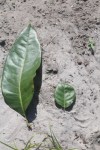
Coccoloba diversifolia
Polygonaceae
Quick…name five native trees to PB County! Bet you forgot Pigeon-Plum! It’s kind of modest after all, not that common locally, smallish, with unshowy flowers and weird bumpy fruits on female individuals. Modest…yet talented!
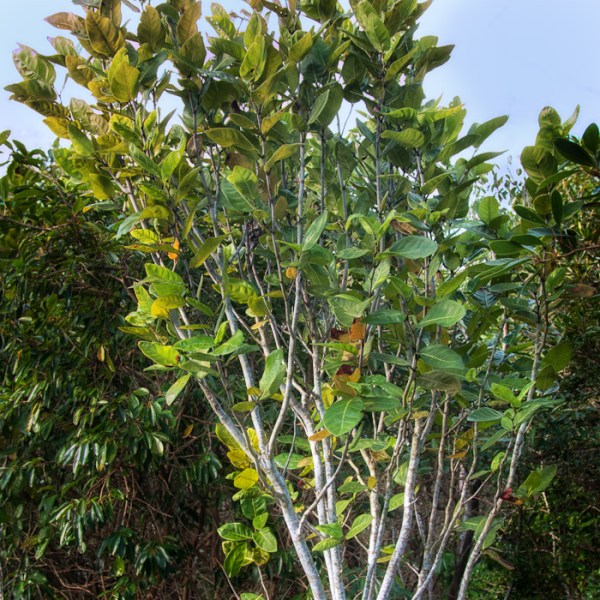
Photos today by John Bradford.
First of all, those plumlike fruits are not really plums, not even fruits. The actual fruits look like seeds, and the fleshy purple covering grows from the female flower petals swelling up around the small actual fruit. No doubt the fake fruit feeds seed-spreading birds, and maybe they float. Pigeon-Plum is abundant in mush of the Caribbean, often in marly salty dry forests. Seed fragments from Pigeon-Plum go far back in Florida archaeology. The fact that ancient people ate the fruits makes me wonder if pre-European people helped disperse the species throughout the Caribbean all the way to Florida, as with peppers, agaves, and papaya. Or then again, maybe pigeons spread it.
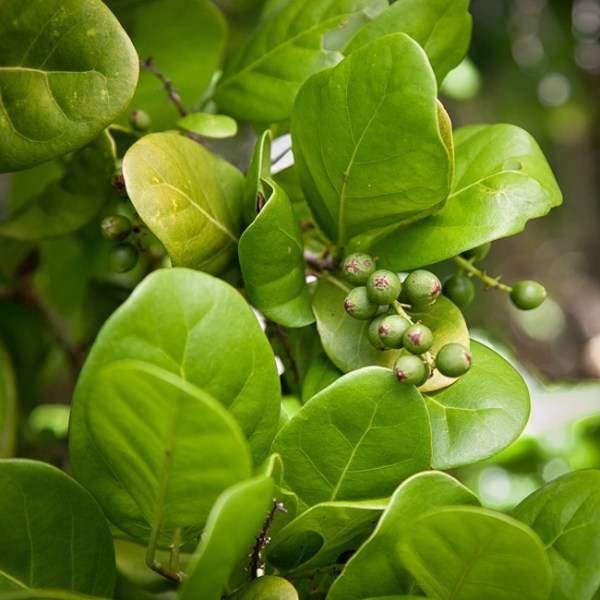
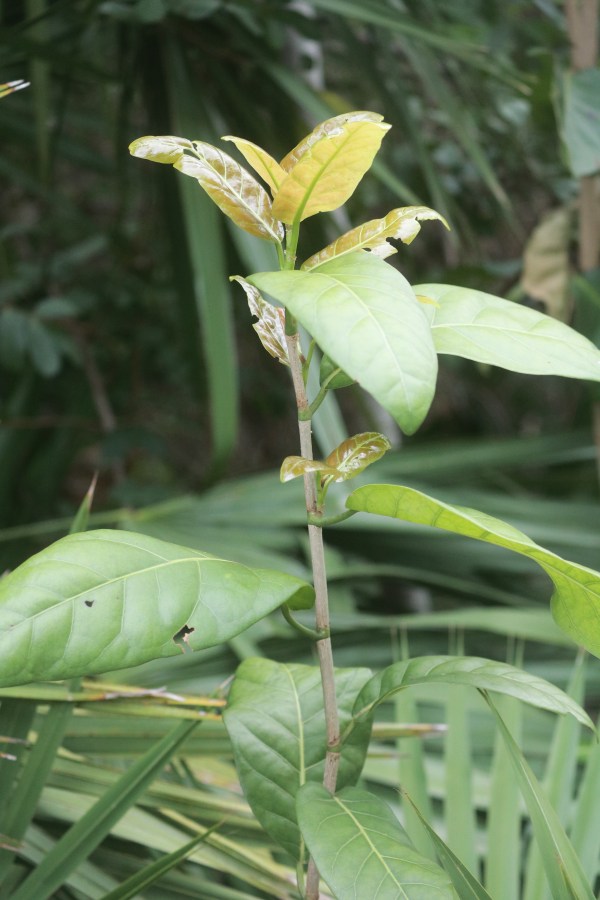
What I find most fascinating about PP is the feature responsible for its name “diversifolia.” Many plants have different “shade” leaves and “sun” leaves, but today’s tree goes to diverse extremes. The young shoots rising from the forest floor have elongate leaves a foot long or more. The branches on mature individuals, by contrast, have normal-looking small leave the size of a pocket watch. Those big-leaved but fragile forest-floor youngsters are equipped for gathering maximum light in the protected shaded understory. The small but tough mature leaves are better for resisting exposure to sun, wind, and salt spray. And, speculatively, leaf-eating insects. The two leaf types look like two different species. Come to think of it, the two types were historically misinterpreted that way as “Coccoloba laurifolia” and C. diversifolia. In 1949 botanists Richard Howard noticed the two “species” growing on the same tree in Cuba.
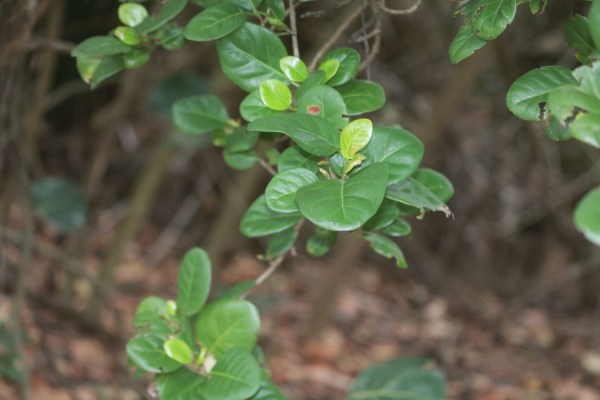
Pigeon-Plum is related to Seagrape, and the two sometimes hybridize. There’s a neglected postage stamp hammock remnant along the RR tracks in Jupiter where Seagrape and Pigeon-Plum grow intimately intermixed. Really—with the stems of each rising from single clumps. Room for doubt, (!) and no DNA test handy, but suspect some of the in-between forms there are the hybrid known as Coccoloba Xhybrida.
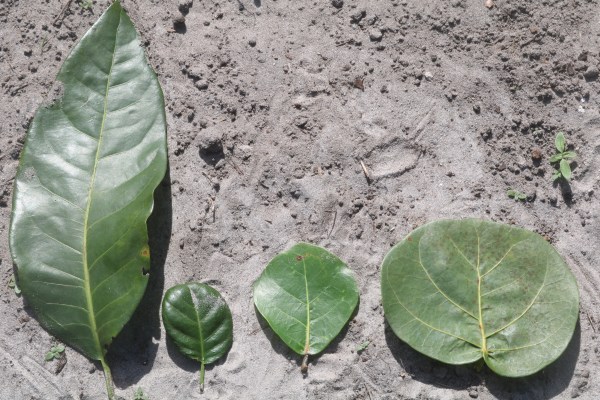
Left to right all from same clump: PP big-leaf form. PP little leaf form. Hybrid? Seagrape.


theshrubqueen
April 4, 2025 at 5:17 pm
Hello again, is PBC the northern limit? I don’t know this tree around Jensen.
George Rogers
April 4, 2025 at 5:22 pm
PBC might be the northern common limit—there are sites for it farther up the coast. Can’t think of one in Jensen itself. Probably some on Hutchinson Island. You see it cultivated here and there https://treeworldwholesale.com/product/coccoloba-diversifolia-pigeon-plum/
theshrubqueen
April 4, 2025 at 9:52 pm
Thanks for the link that’s an attractive tree. I’ll keep an eye out.
cynleet
April 4, 2025 at 7:09 pm
George, you look like Jim, your brother. Have you ever eaten a Pigeon-plum? If so, what’s it like?
Cindy
Joan’s sister
George Rogers
April 4, 2025 at 7:32 pm
we’ve been mistaken for each other but his hair never turned white. Can’t recall ever eating one—they are sort of weird and look buggy to me