Rottboellia cochinchinensis
Poaceae
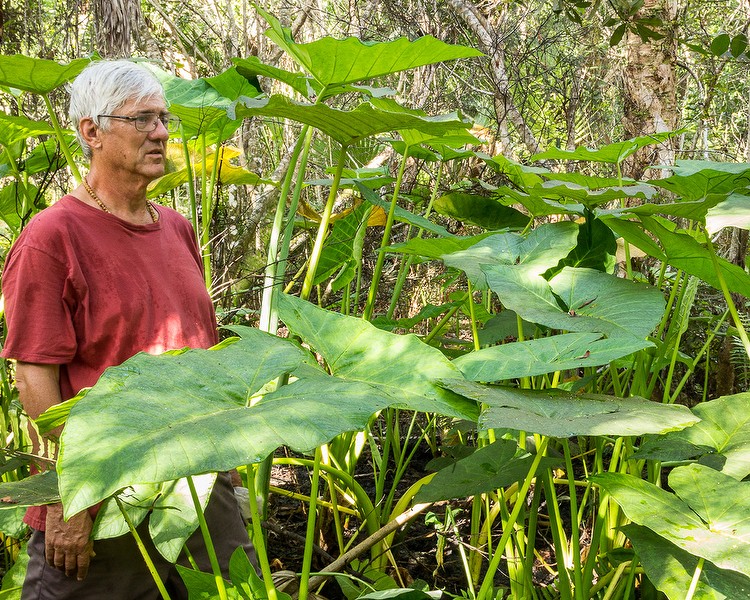
Yesterday John and George extracted three hours of botany from a streamside hammock near Stuart so loaded with green entertainment we couldn’t quit, until the temperature hit 90. The immediate goal was to rediscover a population of Eelgrass where John intends to shoot a video we’ll all enjoy soon. The Eelgrass destination was attained, and the fun’s in the journey. That is, unless along the journey your ankles feel like bee stings, but where are the bees? Back to that in a moment. Before the pain, here are some of the nicer waypoints climbing through the poison ivy:
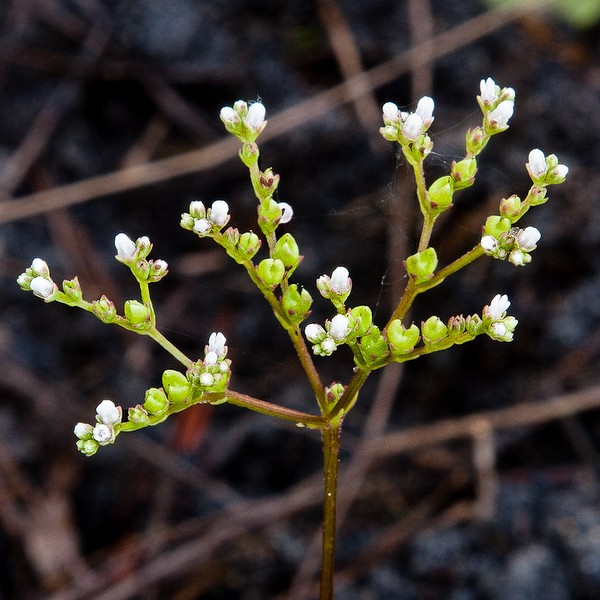
Mitrewort (all photos today by John Bradford)
We have a couple local species of Mitrewort or Hornpods, Mitreola, with their names coming from their two-horned fruits resembling a bishop’s mitre.
Another soggy-foot friend is Pluchea odorata, sometimes called Sweetscent (a name applied to multiple different plants). It looks so pretty and smells so medicinal, you guessed it, species of Pluchea have more medicinal history than the AMA.
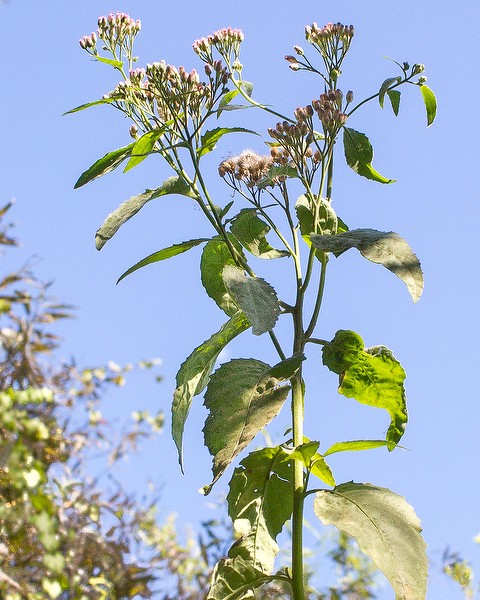
Sweetscent yesterday
Mixed in with all the usual native and non-native ferns a surprise stood out, a big multi-branched fern, Macrothelypteris torresiana, Mariana Maiden Fern, one more garden fern rampaging into Florida natural areas. Why would anyone import an alien fern!? Ferns make billions of wind-blown spores. No likelihood of those escaping-eh? Morons. This Asian-African fern has turned up all over Florida, part of the “silent majority” of hundreds of invasive exotic species not in the public eye. It looks like the endangered rare Florida Tree Fern, but the horticultural runaway has distinctive sparse chocolatey-colored (vs. abundant usually orange-toned) scales at the base of the stalk, white whiskers under the leaf (vs. essentially no hairs), and two (vs. more) veins at the base of the stalk if you slice cleanly across it.
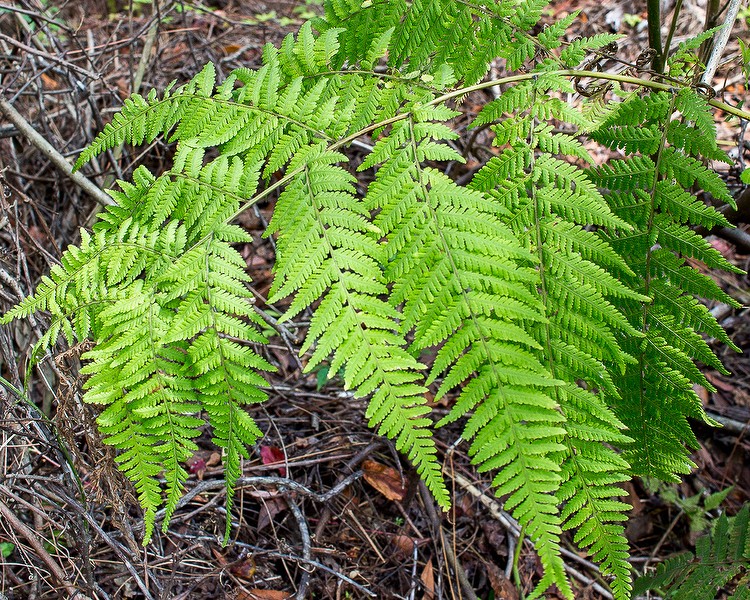
Mariana Maidenfern
Invasives not in the public eye include dozens of grass species. One possibly in the public ankle is so-called itch grass. (It does not itch—it stings, for hours.) Everyone who has ever been outdoors knows how plants use flesh-piercing prickers for self-defense. Odd, isn’t it, that in 12,000 species of grasses prickly is uncommon…but John and I found an example yesterday. If you want to identifiy Rottboellia, merely look for a pencil-shaped flower spike. Then close your eyes and grab the base of the stem firmly. If you think you snagged a porky-pine, you have found today’s grass.
This odious agricultural nuisance grows in unattractive places, and ouch. Unloved and sad. On top of all other repugnance, it is allelopathic, meaning the grass makes natural herbicides to reinforce its social isolation. How’d such a stinker get to Florida? According to web sites, probably as a “pasture improvement” introduction in the 1920’s. A lot of weird stuff happened in the 20s.
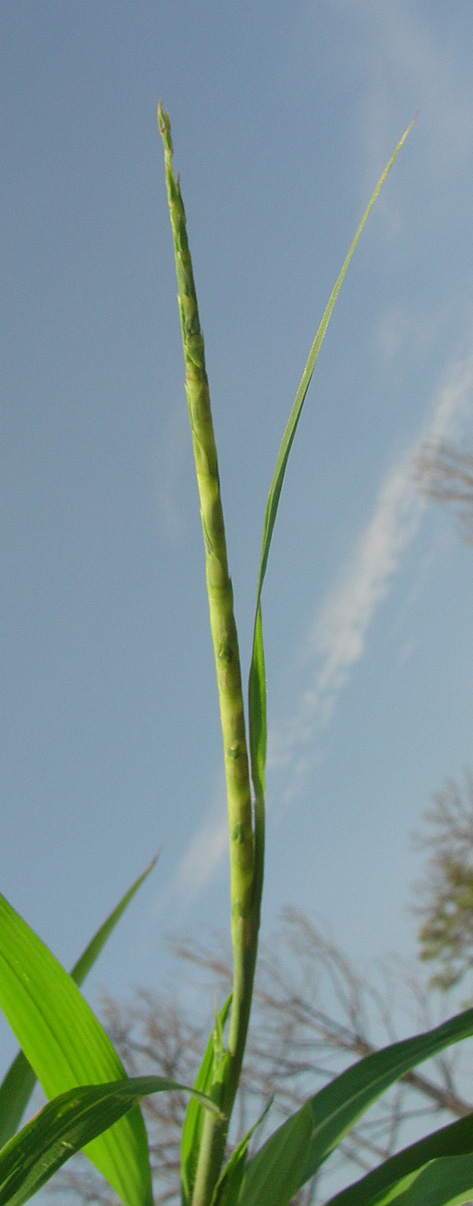
Rottboellia
Corn, sugar cane, and rice farmers hate Rottboellia. It spreads abundantly by seed and rises 10 feet in 3 months, needing prop roots to stand so tall. The seeds mingle with crop seeds, thus invading cultivated fields, sometimes massively. And, remember the toxic allelopathy? That’s another big negative in a rice paddy, right? Maybe.
Or maybe not. When life gives you itchgrass, scratch the itch. In the vicinity of Lampang, Thailand, rice growers deliberately let the invader take over fallow fields, even deliberately sowing it in crop rotation, then plowing it in as a green manure. The manured grass retains soil water and turns into mulch and compost. Even better, its allelopathy seems to be a no-cost natural pre-emergent herbicide more suppressive of weed seedlings than young rice plants. (After the fallow year the Rottboellia presumably can be suppressed with fire and permacultured soil. Its seeds require light to sprout.)
Aren’t “green manures” usually nitrogen-fixing legumes, such as alfalfa? Let’s join in on speculation. Fact: Grasses can be surprisingly nitrogen-fixing. Fact: One reported situation where grasses are good at nitrogen fixation is in heavy black soils, such as rice paddies and along the shore where the Rottboellia poked us yesterday. Speculation: Observers in Thailand suspect our nasty grass to be nitrogen-fixing as a bonus to its green manure potency. A great study for a thick-skinned Florida student to tackle…the soil ecology and nitrogen metabolism of this unique grass.

 John Bradford
 George Rogers
 George Rogers
 Dee Staley
 Treasure Coast Natives