Xanthosoma sagittifolium, Colocasia esculenta, Alocasia macrorrhizos
Araceae
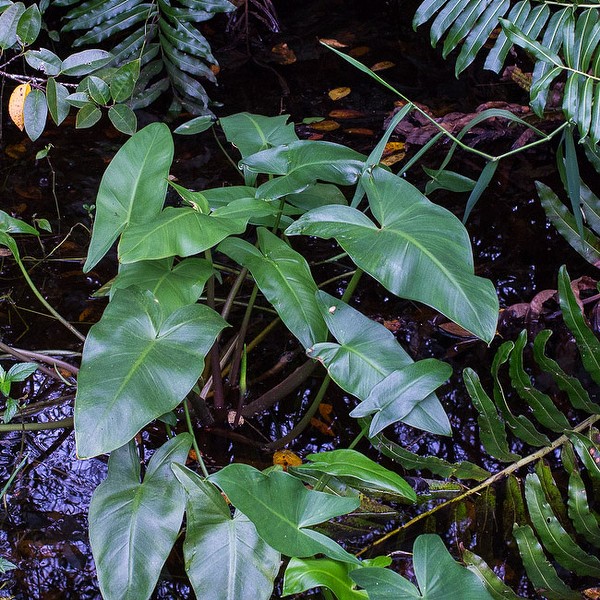
Squishing through the wettest buggiest ferniest tanglefoot swamp we know last Friday, John and George should not have been dismayed to find a big ol’ population of what you might call Elephant Ears, Xanthosoma sagittifolium in the shadows unseen by man and woman, though viewed by hogs who probably like a little Malanga “Root.” This oversized non-native tropical American species turns up just about everywhere: in gardens as funny-colored cultivars such as ‘Lime Zinger’, in the grocery store as Malanga, and throughout much of Florida as a Category II invasive exotic. At the same time the species is invading our swamps mercilessly, it is a touted as a “root vegetable” to grow and savor. Friend or foe?
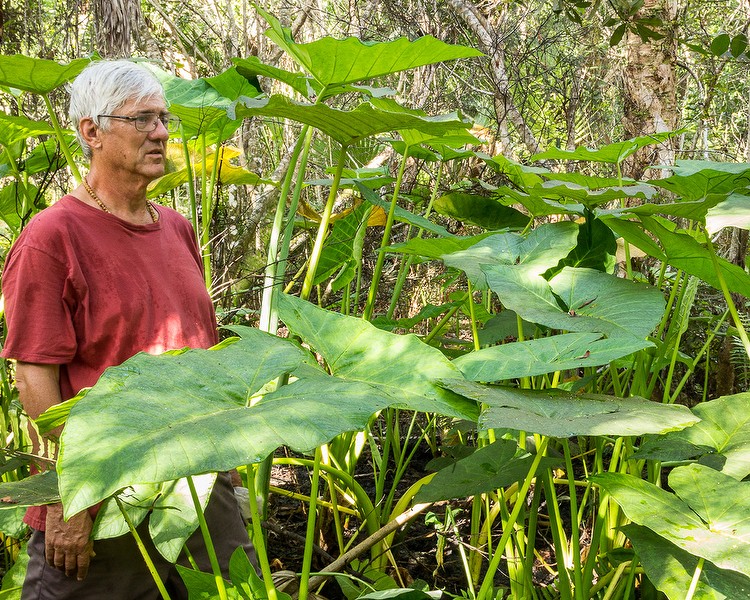
Xanthosoma running free in the Florida swamp, with unsightly man for size (by John Bradford)
Multiple similar big species of Araceae with arrow-head-shaped leaves have overlapping common names, including the over-applied “Elephant Ears” and “Coco Yam,”…so be careful. Some have similar culinary uses as well as similar propensities to spread through Florida and beyond. So here are those you might find growing wild, and also in a grocery store, in an ornamental garden, and maybe in a veggie garden.
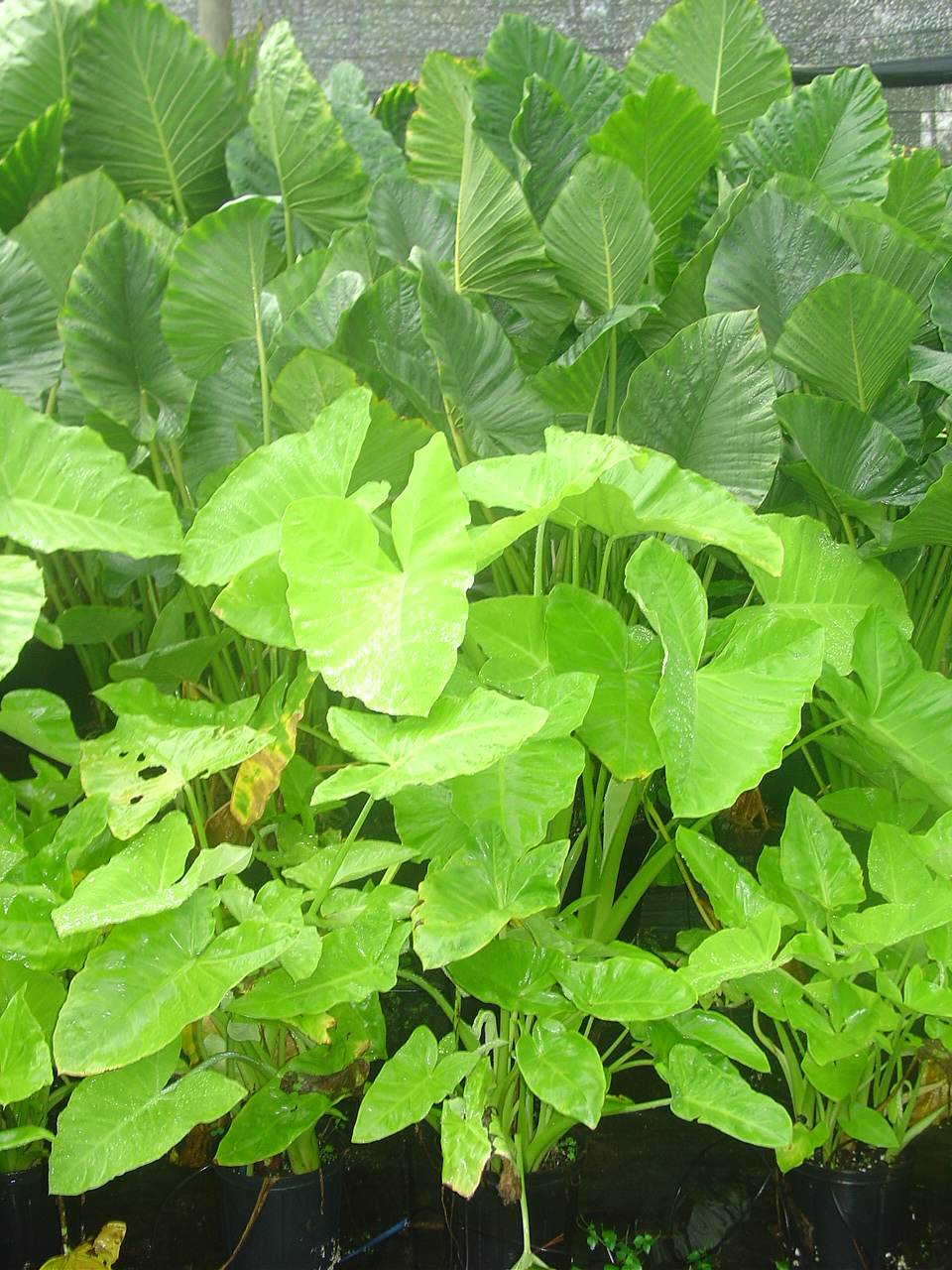
Xanthosoma ‘Lime Zinger’ (tips down) and Alocasia macrorrhizos (tips up) on FAU campus
Colocasia esculenta is often called Taro, but that name works also for Alocasia species. I know it better from my earlier Jimmy Buffett Caribbean life as Dasheen. Unlike the big “carrot” Xanthosoma can make, Colocasia esculenta makes a bulb-shaped “root” (corm). This species is native to the Old World, although centuries of cultivation have generated many cultivars and has obscured the exact origins. The species was a Polynesian staple in pre-European times made into a fermented porridge called poi, especially in Hawaii. After ancient peregrinations, the species probably came to the Americas from Africa. There’s a minor history of it as a potato substitute in Florida. Callaloo is a wonderful and variable green “stew” with African roots served throughout much of the Caribbean. The main green leaf in some places, including Barbados where I knew it as lunch, is Colocasia esculenta. Add in some saltfish, and/or breadfruit or plantain. A lot of people in the warm wet tropics depend on this starchy species. Colocasia esculenta is a wetland invaders throughout Florida and other states. There used to be some right here in Jupiter along the Loxahatchee River, although I have not seen it recently there.
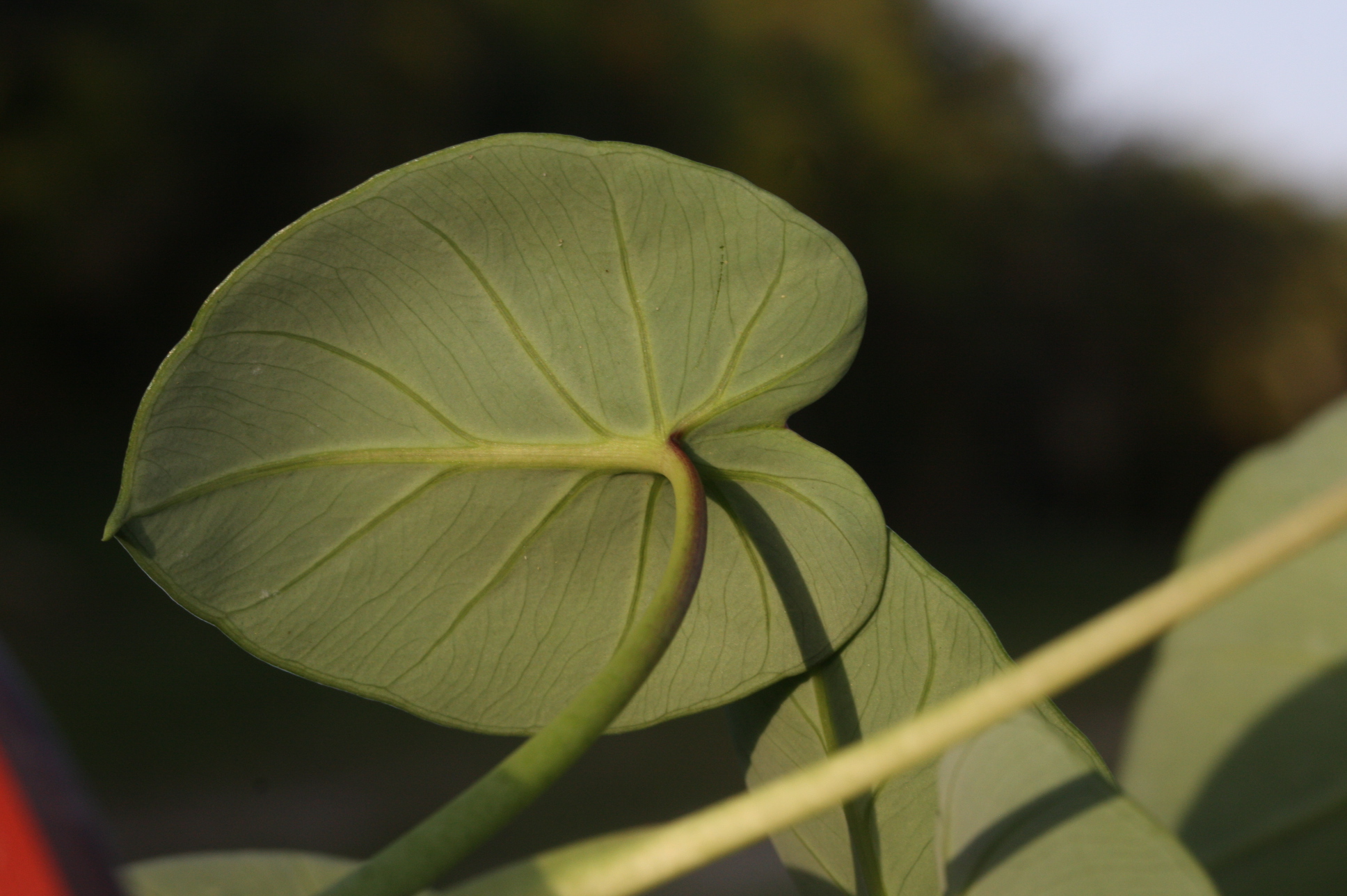
Colocosia esculenta, immature, petiole attached in center of leaf, not at the notch
Species of Alocasia are prominent in tropical ornamental horticulture. Giant Taro, Alocasia macrorrhizos, is a giant big-sized favorite. It has limited culinary uses, and has escaped cultivation into Florida wild areas. (Also escaped a little is Alocasia odora.)
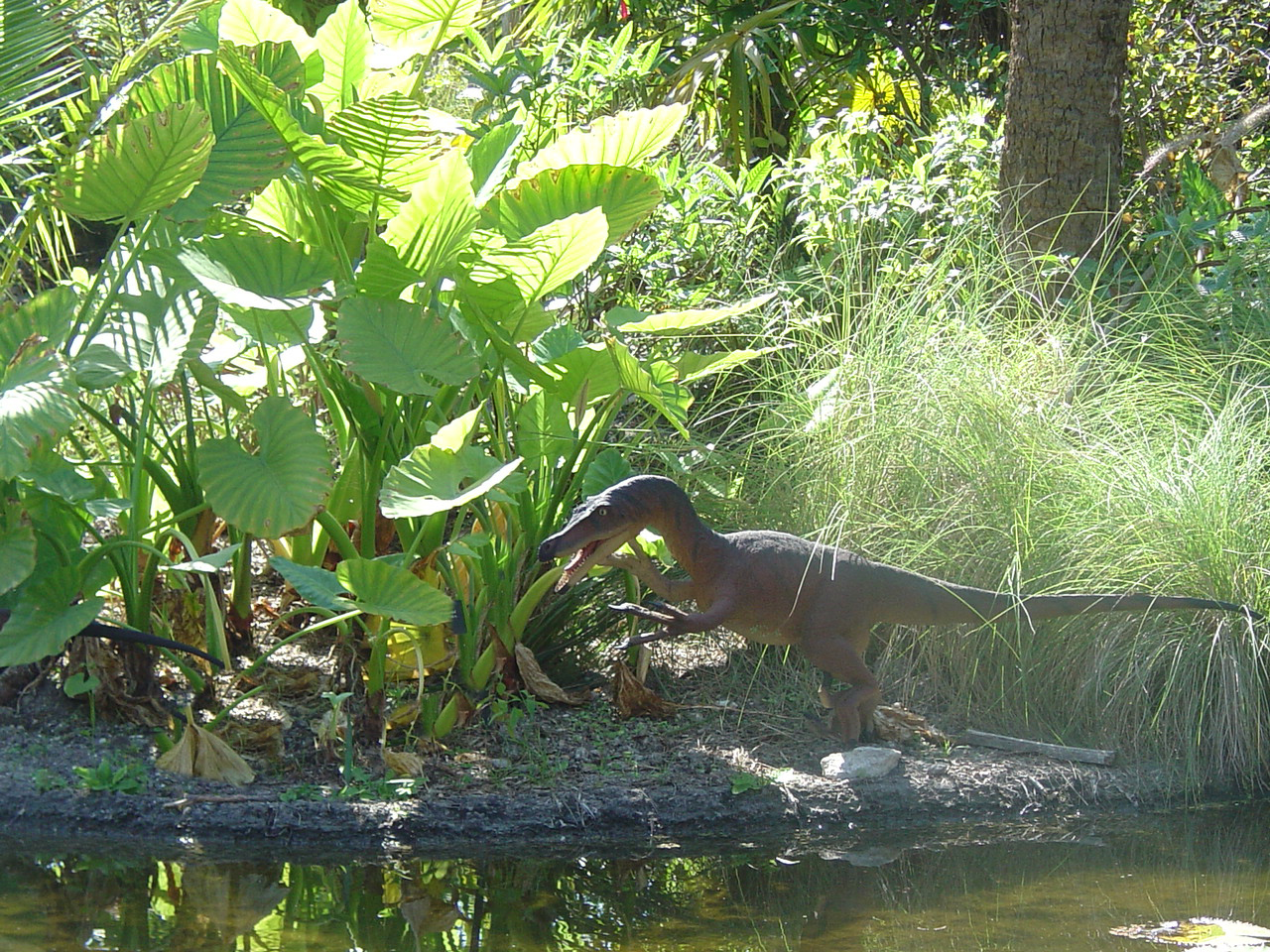
Alocasia macrorrhizos in a remote Florida swamp
Confused? Who isn’t? Here is a key to sort out those big uninvited wetland invasive bullies. Below under “notes” is more detail for the detail-oriented.
Key To The Local Wild-Growing Aroids Having Large Arrowhead-Shaped Leaves
- Petiole (leaf stalk) attached in middle of leaf, not at the basal notch…Colocasia (True also of garden caladiums.)
- Petiole attached immediately adjacent to the basal leaf notch…2
- Major leaf side veins 2-4 per side, plant under 3 feet tall…Arrow Arum (Peltandra virginica, native and potentially confused with the invaders)
- Major side veins > 4 per side, plant may substantially exceed 3 feet tall…3
- Leaf blade soft, not glossy, the tip pointed down…Xanthosma sagittifolium
- Leaf blade firm, the tip pointing up…Alocasia macrorrhizos (common in cultivation, may be encounted growing on the loose but not commonly escaped in our immediate area)
Peltandra virginica (by John Bradford), native species; each half of the leaf has only 2-4 major side veins
————————————————————————–
Notes:
Colocasia. The petiole (leaf stalk) attaches toward the center of the leaf instead of at the notch. Colocasia has mature infructescence not standing straight up, ovaries with parietal placentas, and numerous seeds per green (C. esculenta) smelly fruitlet.
Alocasia macrorrhizos. The petiole attaches at the notch, and the leaves are glossy with the tips up. The odds of finding Alocasia macrorrhizos growing wild in our area are far below the other two, which are common. Alocasia has wax glands under the leaf at the major vein junctions, the infructescence upright, few seeds, red fruitlets, and basal placentas.
Xanthsoma sagittifolium. The petiole attaches at the notch and the leaves are nonglossy flat-toned, a little soft, and with the tips pointing down to horizontal. The name Xanthosoma, meaning yellow body, refers to the yellow color of the mashed rhizome. It does not seem to flower or fruit much in Florida.
Peltandra virginica. As with Alocasia and Xanthosoma the petiole attachment is at the notch. Arrow Arum is highly variable, but usually smaller-statured than the others at their maturity, often forming dense clumps. The Arrow Arum leaf is relatively thick and wavy, distinctively with only 2-4 major side veins (vs. several more) along with numerous minor veins, tending inconsistently to a narrow sharp tip. The name “Peltandra” means “male shield,” and refers to the stamens united into a flat-topped shield. The infructescence lies down in the mud, making purplish gooey fruitlets.
On eating Aroids. The Araceae are a toxic family, featuring most prominently calcium oxalate crystals. Calcium oxalate is highly irritating, sometimes merely to the touch, and severely (even fatally) in the mouth and digestive system, not to mention kidney trouble. Never eat any wild-collected aroid or bring them home from wild collection into the vegetable garden. Yes, some are in the grocery store, well ok, cultivars and organs with diminished oxalate content cooked or fermented knowingly, but even those make me nervous. In the wise words of Wikipedia: ʻAi no i ka ʻape he maneʻo no ka nuku = The eater of ʻape [Alocasia macrorrhizos] will have an itchy mouth.
 John Bradford
 George Rogers
 George Rogers
 Dee Staley
 Treasure Coast Natives