Dalbergia ecastaphyllum Fabaceae Here’s a quiz: Where can you go to see Acrosticum species (Leather Fern), Caesalpinia bonduc (Nickerbean), Chrysobalanus icaco (Cocoplum), Conocarpus erectus (Buttowood), Dalbergia ecataphyllum (Coin Vine), Laguncularia racemosa (White Mangrove), Rhizophora mangle (Red Mangrove), Ximenia americana (Hog Plum) as dominant local species? If you said along the brackish lower Congo River in Angola you’d be correct. (Or if you said along the brackish lower St. Lucie River where John and George explored today you’d also be correct.) That’s what’s so fun about mangrove-habitat species…they make you feel cosmopolitan. Those salty species get around, and one of the widespread botanical wanderers is coinvine, named for its floating coin-shaped pods encountered often washed up on beaches.
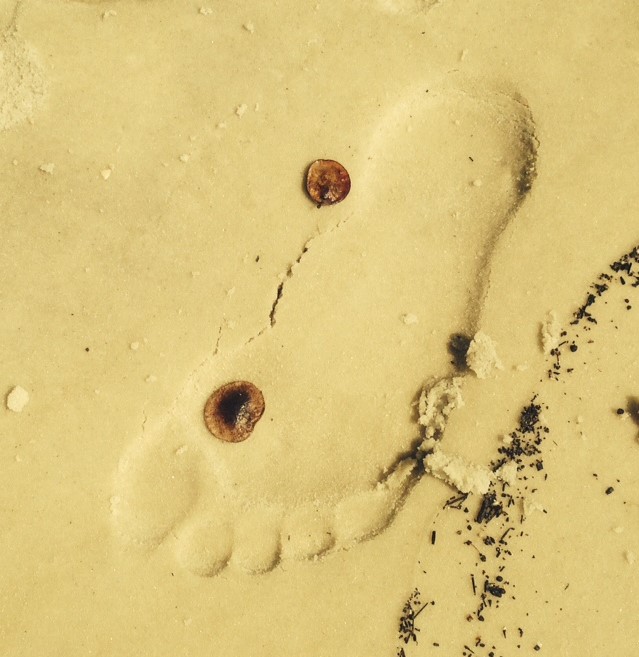
Coins on the beach
The coins don’t look much like legume pods, but they are. Come to think of it, the simple leaves don’t look much like the compound leaves characteristic of legumes either. The little white pea flowers are legume-ish and so are the nitrogen-fixing root nodules in Dalbergia species.
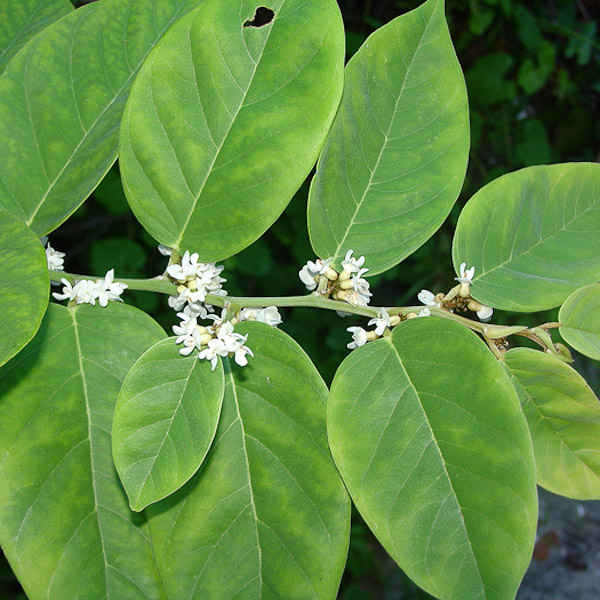
Coinvine in flower (by John Bradford)
The nitrogen-fixing angle is interesting. Why do plants have symbiotic bacteria housed along their roots? To extract nitrogen from the air and make their own nitrogen fertilizer. That ability might help explain the ability of coinvine to occupy nasty soils. But there’s more. Coinvine does not merely tolerate poor soils, it tolerates poor salty soils, and that introduces a kink.
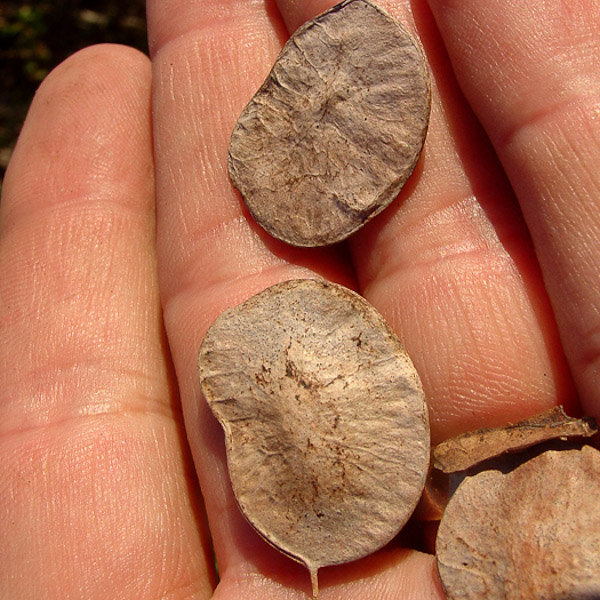
50 cents (by JB)
Most legumes have species of the bacterial genus Rhizobium as their nitrogen-fixing symbionts. But now for that kink. The large bacterial genus Burkholderia, some of its species pathogenic, started turning up as nitrogen-fixing symbiont in a variety of plants, including an increasing number of species of Dalbergia. Dalbergia ecastaphyllum is characteristic of salty and alkaline habitats. Research shows Burkholderia soil species to be especially salt-tolerant and to increases salt tolerance in host plants, and although with the data thin and sketchy, this bacterium has spawned interest as potentially useful to boost crop yields on saline soils. Too bad spare change doesn’t really grow on vines.
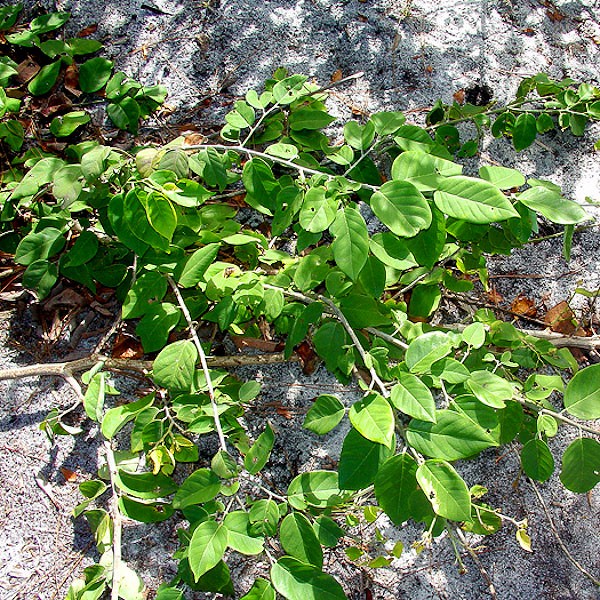
Coinvine (by JB)
 John Bradford
 George Rogers
 George Rogers
 Dee Staley
 Treasure Coast Natives