RSS

Author Archives: George Rogers

Unknown's avatar

About George Rogers

Florida botanist

Erect Dayflower and its sensitive pals

Commelina erecta

Commelinaceae

Yesterday John and George said phooey to 90 degrees and hoofed across the burning sands to warm up even more at a literally burning prescribed fire to examine the effect of heat stress on foliage (relevant to my plant physiology class), and to wonder how red widow spiders repopulate after fire.  (The red widow is one of John’s “pet” projects.)   It was hotter, spideryer, and smokier than Jerry Falwell’s preview for sinners.

I’ll bet Hell doesn’t have the super-cool blue blossoms of erect dayflower, so refreshing like a sky blue popsicle on a blazing July day.
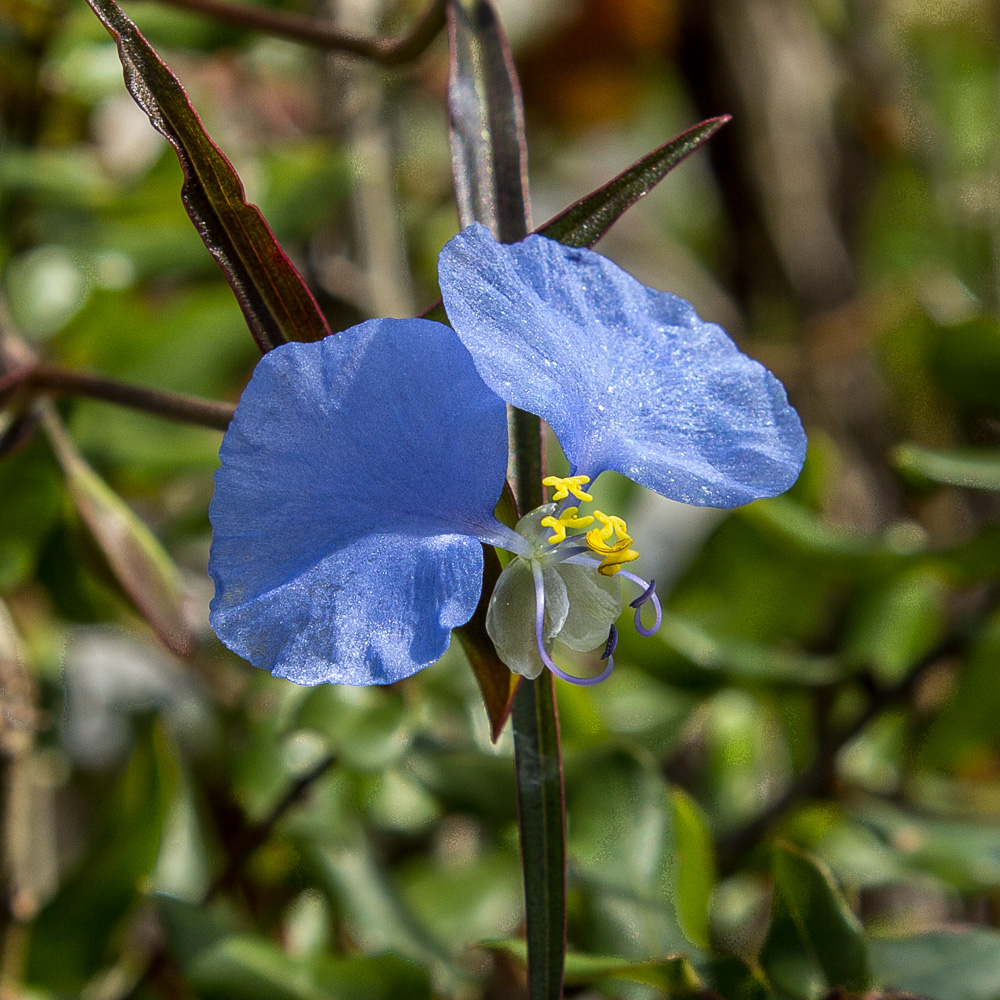
Commelina erecta yesterday. Note the abortive 3rd petal, and that half the stamens are pollen-making (brown) while the others are pollenless and bright yellow.

Commelina erecta yesterday. Note the abortive 3rd petal, and that half the stamens are pollen-making while the others are pollenless and bright yellow. (By John Bradford)

The Spiderwort Family, Commelinaceae (com-ah-lynn-ACE-ee-ee), combines the world’s most ephermal flowers with the world’s toughest foliage. Everybody encounters Commelinaceae.   Gardeners know, for example, oyster plant (Tradescantia spathacea), basket plant (Callisia fragrans), and small leaf spiderwort (Tradescantia fluminensis).   Persons concerned with invasive exotics know, for example, oyster plant (Tradescantia spathacea), basket plant (Callisia fragrans), and small leaf spiderwort (Tradescantia fluminensis).
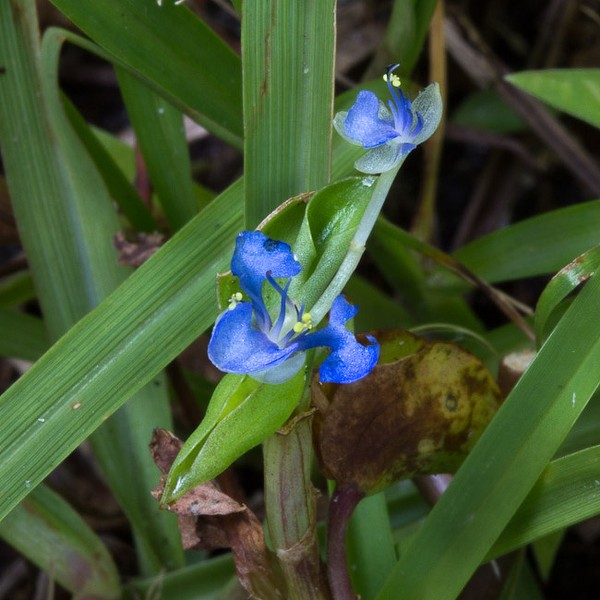
Commelina diffusa, superweed

Commelina diffusa, superweed

Neglectful yard owners are intimate with spreading dayflower (Commelina diffusa), a worldwide weed with an impressive claim to fame, having evolved herbicide resistance in the 1950s before resistance was cool.
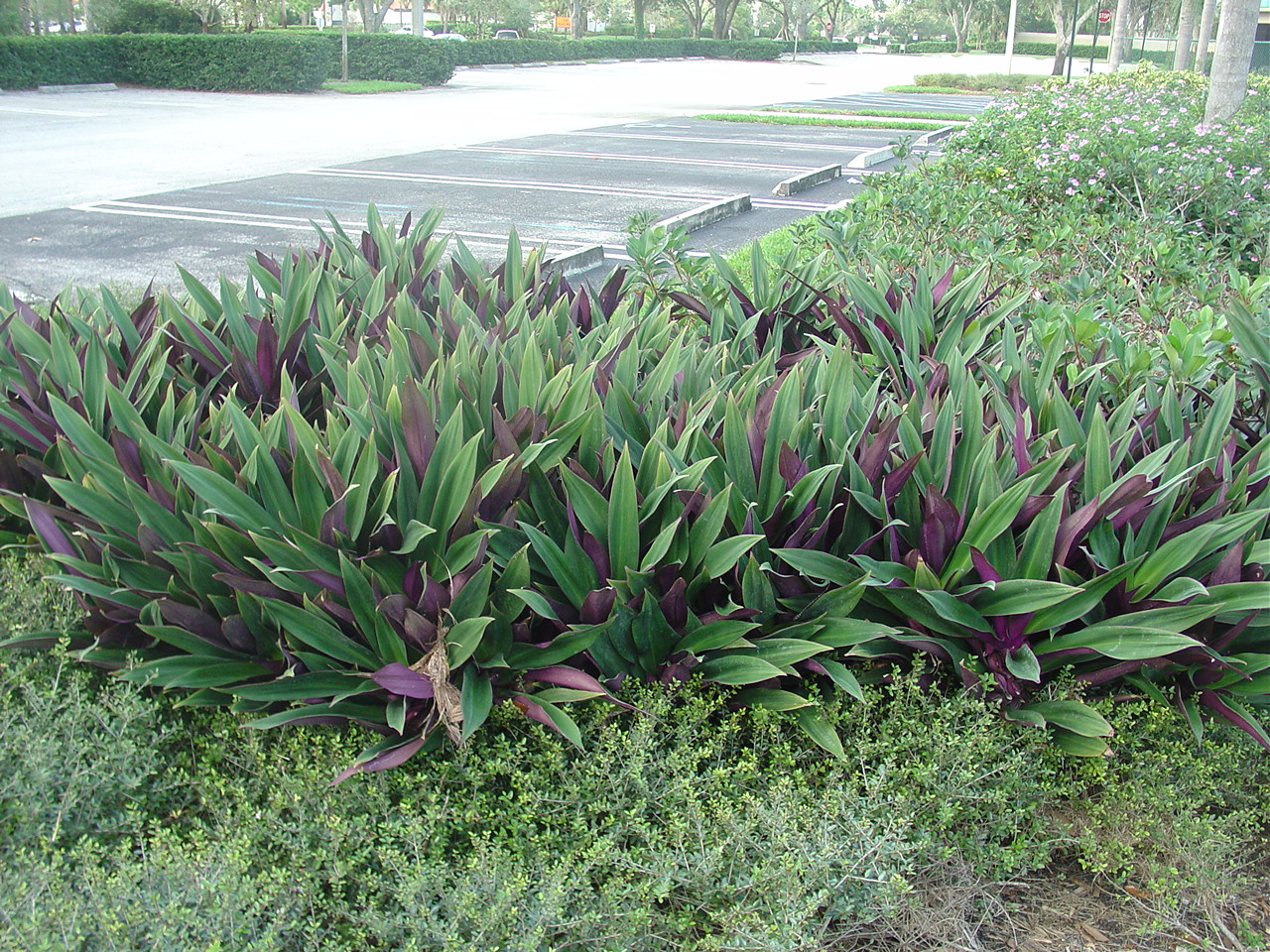
Oyster plant

Oyster plant

Commelina brings us to yesterday’s item of beauty: erect dayflower.   How many true blue wildflowers are there?   Commelina demonstrates in multiple ways how things don’t always amount to their original potential, beginning with the genus name itself.   The genus is named for a Dutch family of the late 1600s and early 1700s, Jan and Caspar Commelin were prominent botanists, but Caspar’s son died young.   Most Commelina species have two large petals representing Jan and Caspar. The third petal is usually abortive, standing for the son’s premature death.

The third petal is not the only abortive organ. Although you’ll never notice it, Commelinas fundamentally have two inflorescences per stem, but one often fails to mature, it is “vestigial,” that is, left over and no longer amounting to anything, like my appendix and canine teeth.

To keep going with lost functions, Commelina has six stamens but only two make pollen.   The others quit making pollen, and became bright yellow flags attractive to pollinators.  Among these, one is larger than the others and even seems (?) maybe to make a little pollen.

Growing among the erect dayflowers yesterday was another species with its own odd vestigial parts. Cacti evolved from “normal” leafy plants. They still carry genes for making leaves. The leaf-making genes are usually suppressed.   But not 100%. As prickly pear stems first emerge, they have cute little leaves on them, soon to fall off leaving behind the familiar prickly pads.
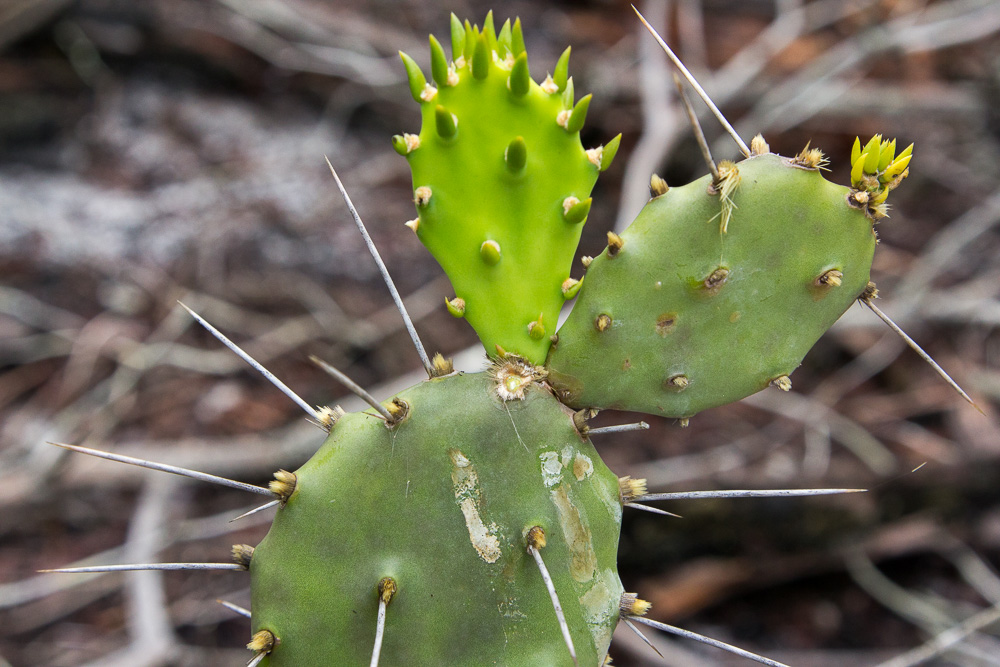
Prickly pear with leaves

Prickly pear with leaves (by JB)

Now back to Commelina.   This week my biology teacher wife Donna shared with me an internet report (there exist several) showing purportedly mutated flowers from the Fukushima nuclear disaster. (Yes, we all know there could be other explanations, so please no condescending e-mails pointing out alternative possibilities.)
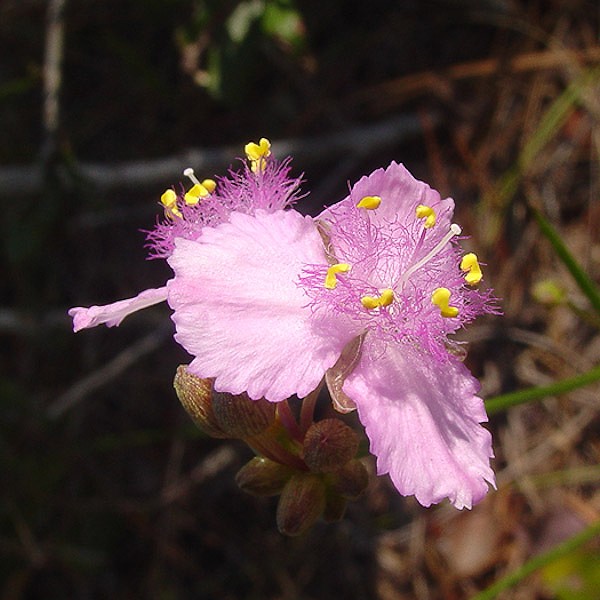
Roseling (Callisia ornata) showing htsoe delicate Commelinaceae radiation-sensitive hairs (by John Bradford)

Roseling (Callisia ornata) showing delicate Commelinaceae radiation-sensitive hairs (by John Bradford)

How does this tie to Commelina?   The name “dayflower” comes from the ability of the flowers in Commelinaceae to turn to mush at the end of the day interpretably as an adaptation to recover nutrients if pollination fails. Perhaps the most delicate part of Commelina and other Commelinaceae flowers is a tuft of ultra-fine hairs on the stamens.   The hairs are so fragile they mutate especially readily, sometimes visibly to the naked eye, with low radiation exposure.   The mutating hairs helped monitor radiation following the Chernobyl and Fukushima disasters.   I wonder if a few dayflowers in the gardens around town near a power plant work as a cheap early warning  system.  Or maybe try a Geiger-tree.

IMG_7000

 
8 Comments

Posted by on July 25, 2015 in Uncategorized


Tags:

Spooning, Dancing, and Spearing in Savannas

Everybody…get in your niche!

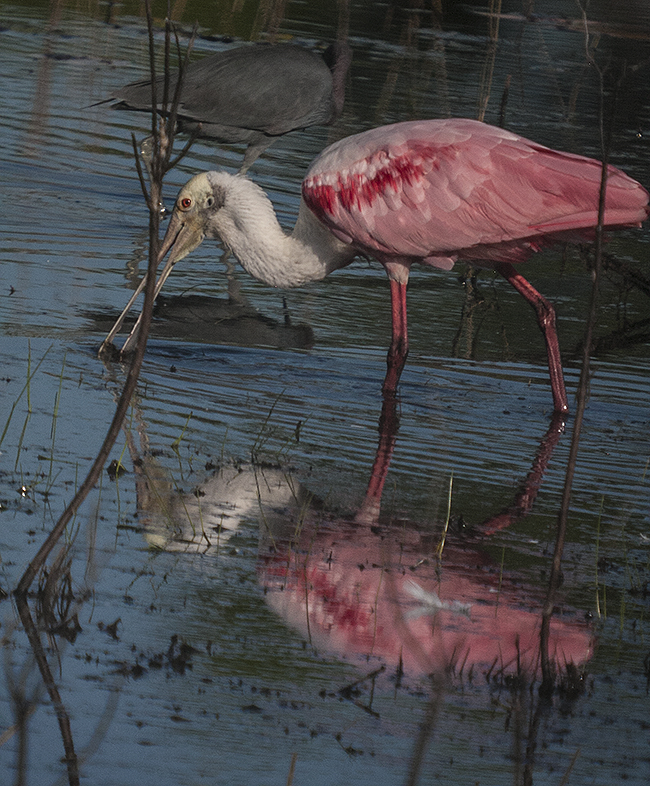
Today John and George visited the wading birds in Savannas Preserve State Park.  What a photo op!  John took the Snowy Egret action photos, and I took the others under John’s photo master supervision enjoying the use of my ancient and just-repaired 1970s reflector lens adapted happily to a modern camera.

I'm pink and I dabble.

I’m pink and I dabble.

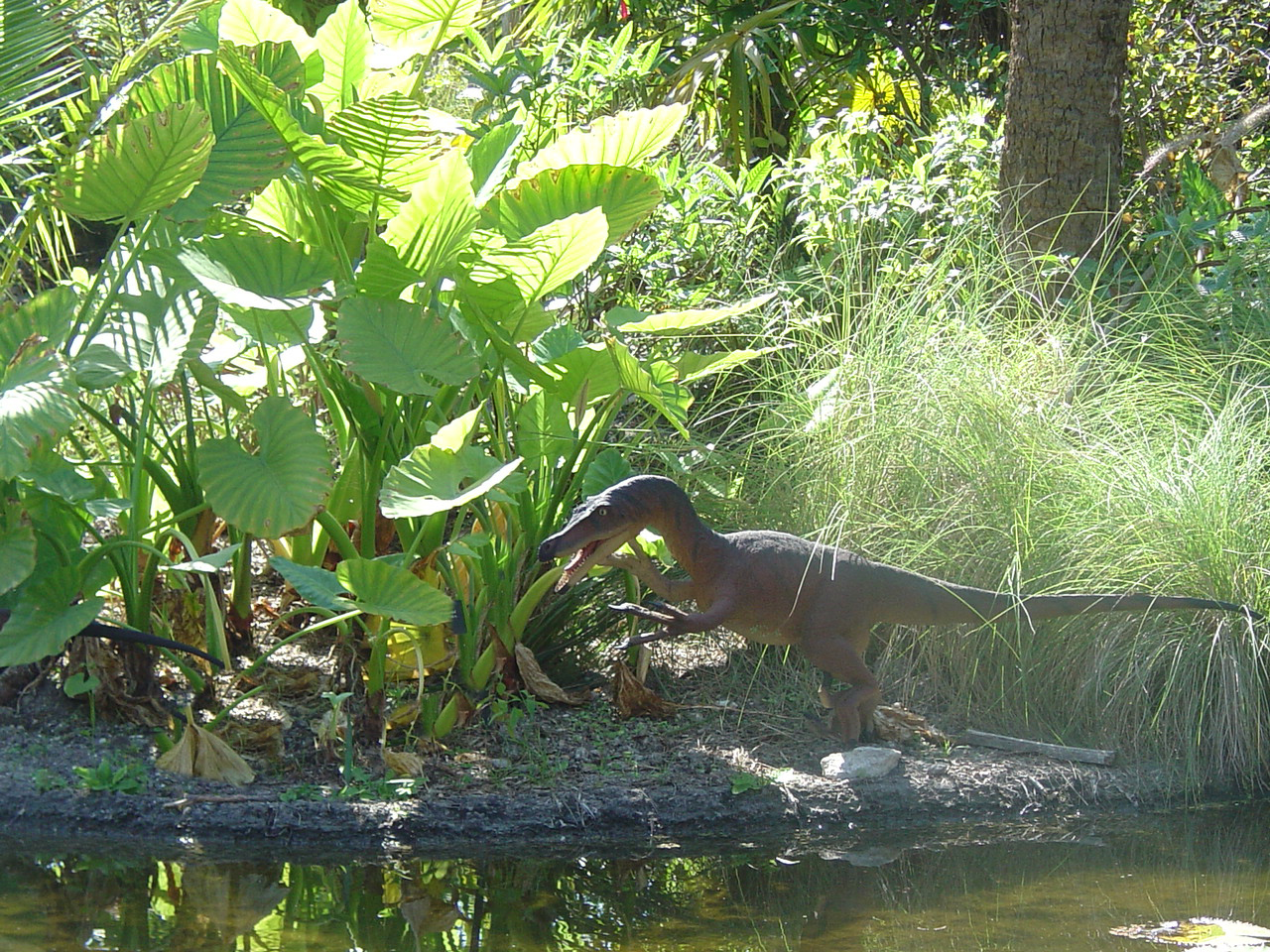
There’s something about a marsh to make you think of the big picture, maybe because you see so much at once: the open primitive diorama underscoring those big wading birds as the modern-day dinosaurs they are.   Bird diversity helped Darwin envision evolution, so today John and George were 2015 Darwins.   If Darwin hadn’t figured it all out back in the 1830s, we should have today because Darwin’s Finches having nothing on the Savannas Egrets.

A Spoonbill goes around with a shovel on its face, walking along…sometimes rapidly…dabbling and swinging its bill from side to side like an elephant’s trunk. The beak looks like one of those wooden ice cream paddles in the little paper lunchroom tubs. Spoonbills eat anything from vegan to squirmy.   When the bird senses food the spoon snaps shut, and water drains out the sides leaving a tasty treat for Mr. Pinky to eat.

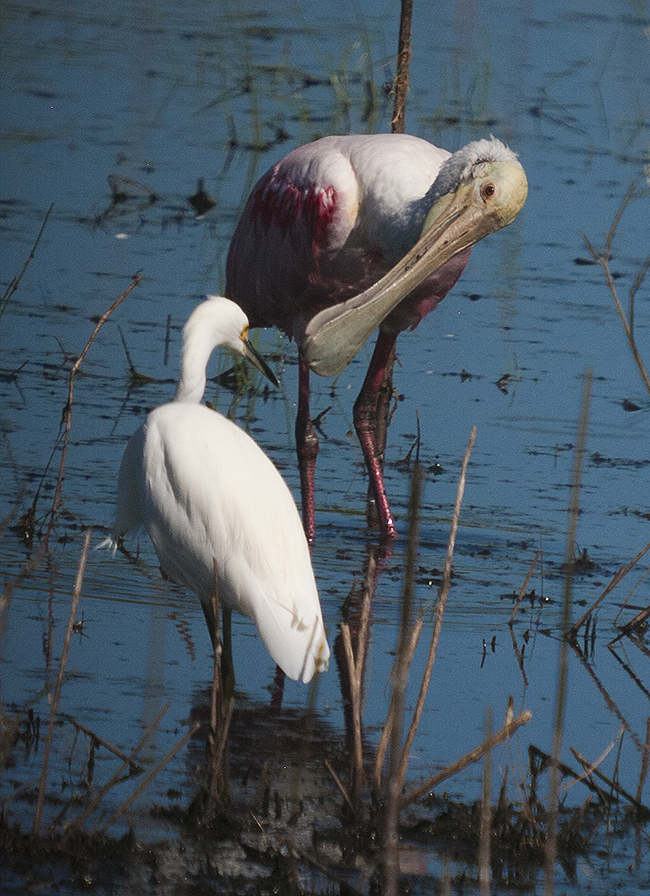
You stick to your niche, I'll stick to mine, and we'll get along okay.

Yo buddy,  you stick to your niche, I’ll stick to mine, and there won’t be no trouble.

Mixed in today’s flock were Great Egrets and Snowy Egrets.  There could be a competitive situation here.  But Mother Nature is on top of that.   She wrote the “Competitive Exclusion Principle,” decreeing that no two species occupy the same niche. The big wading birds may seem to have similar competing needs,  but competition breeds specialization, like the ecosystem of diversified shoe stores in the Treasure Coast Mall.    Today’s Egrets have détente with Spoonbills.  While Spoonbills eat with spoons, Egrets prefer harpoons.

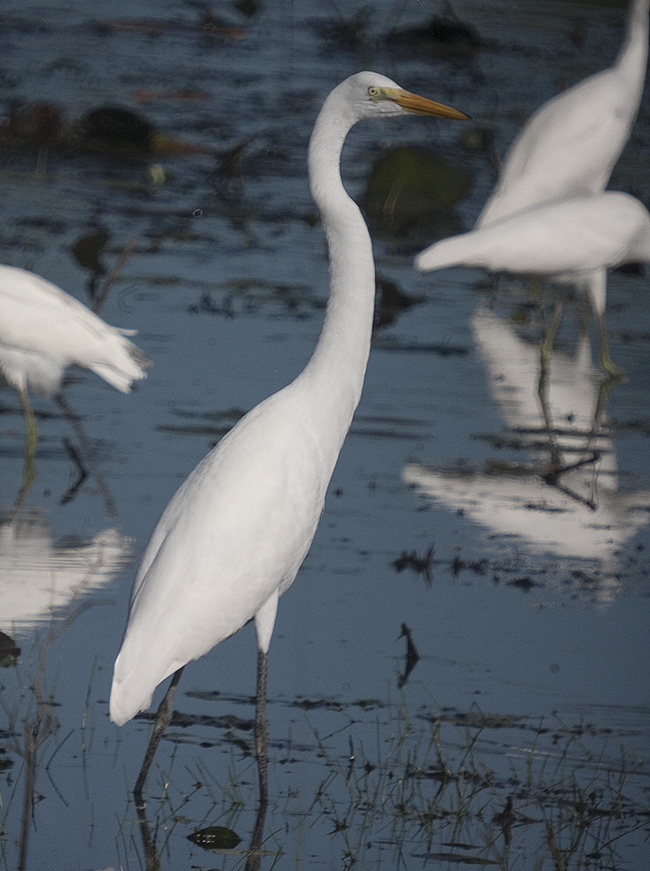
Great Egrets are easy to photograph because they hold still until they spot a tasty fish, then snap, the sharp yellow dagger stabs like lightning.

Great Egret waiting patiently and posing for portrait.

Great Egret waiting patiently and posing for portrait.

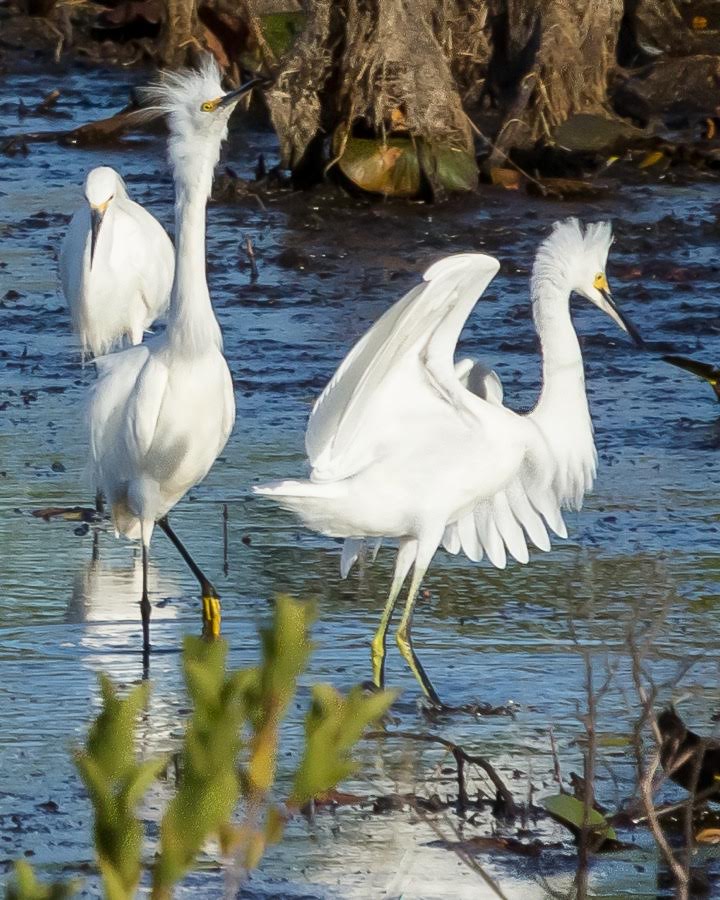
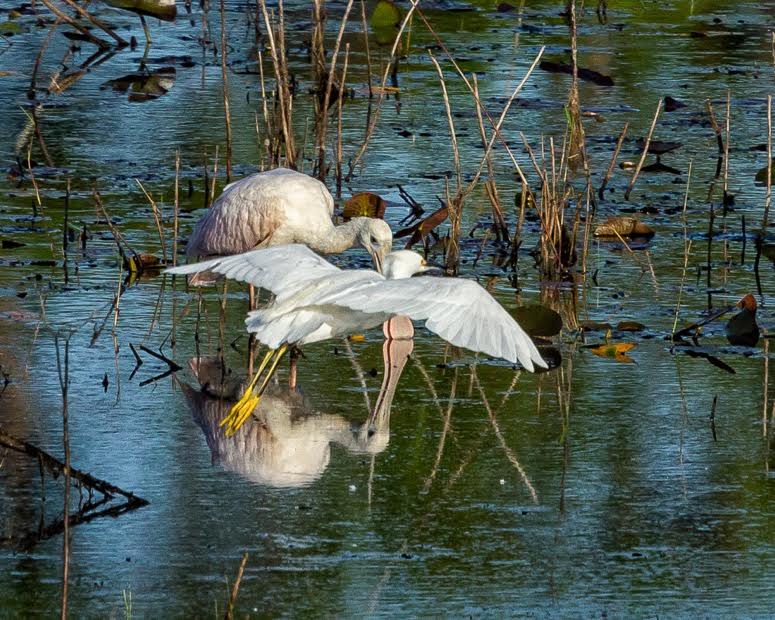
The similar Snowy Egret, with rakish hair-do and a black beak has its own non-compete clause.   Rather than ambush large prey, it does the “stingray shuffle” or flaps around stirring up such lunchables as amphibians, insects, worms, crustaceans, or small fish. Snowy Egrets can hunt in groups and “round up” the menu as the birds dance around.  Below those black legs are yellow tootsies. According to some accounts, the birds while flying dangle those yellow rakes down into the water to frighten the fish upward for an easy catch.

This photo and next, dancing flapping Snow Egrets with their yellow feet.

This photo and next, dancing flapping Snowy Egrets with their yellow feet.

snowy 2 jb

So today’s bird party was a gregarious jumble of spooners, ambushers, and a yellow-toed wolf-pack each doing its own thing. Opportunity for everyone.

To go one paragraph further, the plants seem to do the same. Marshes can be quilts where single species form acre-sized patches.   The borders between the patches are often sharp, or not.   Why do marsh species often sort into monospecific stands?

I think about that at Wakodahatchee Wetlands and Green Cay Wetlands, vast constructed marsh areas of shallow reclaimed water. These two sites with full sun, constant water, and nutrients galore nourish millions of grateful marsh plants in a conditions “as good as it gets.” They do not have 100 per cent perfect conditions, as there may be limited oxygen in the mud, maybe some toxins in the water, or odd nutrient imbalances, but let’s pretend a shallow sea of fertilized sewer water is the perfect setting for those species thriving there. Great blankets of pickerel weed, arrowhead, bulrushes, spike-rushes and others look like a giant paint by number composition.

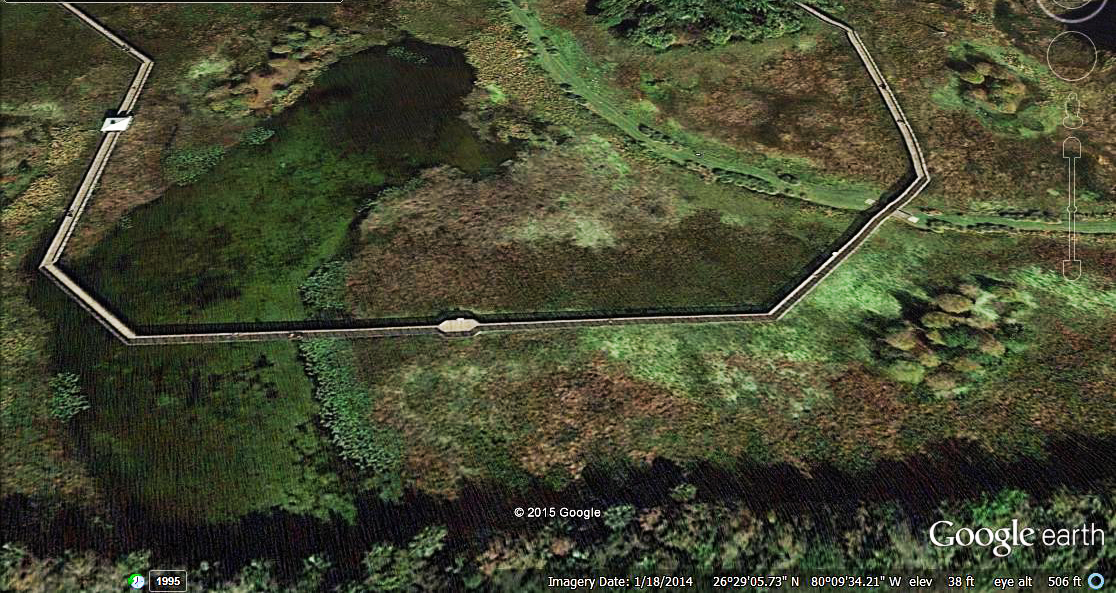
We might think the big species patches may merely represent each spreading out (most of them have rhizomes) from random points of origin until they bump into another patch—like expanding bacterial colonies after sneezing into a petri dish.  But it’s not so simple.  In the Google Earth helicopter view of Green Cay below, the species patch pattern relates to borders, structures, canals, cypress domes, and other physical variations an observer can see, let alone physical influences too subtle to spot.   Some species compete better along the boardwalk, some near the wooded hummocks, some near open water. There’s competitive exclusion afoot.  Even aggressive rhizomatous marsh species seem to divvy up the seemingly near-uniform wetland into divergent niches.

Green Cay, the species patchwork isn't random.  It seems related to the boardwalk, waterways, and islands.

Green Cay, the species patchwork isn’t random. It seems related to the boardwalk, waterways, and islands.

 
8 Comments

Posted by on July 17, 2015 in Uncategorized


Taro, Elephant Ears, Malanga, Coco Yam, Dasheen Tannia, Yautia, Eddoe, Gabi, Chembu, Dalo, Kape, Ape, Pulaka, Taamu

Xanthosoma sagittifolium, Colocasia esculenta, Alocasia macrorrhizos

Araceae

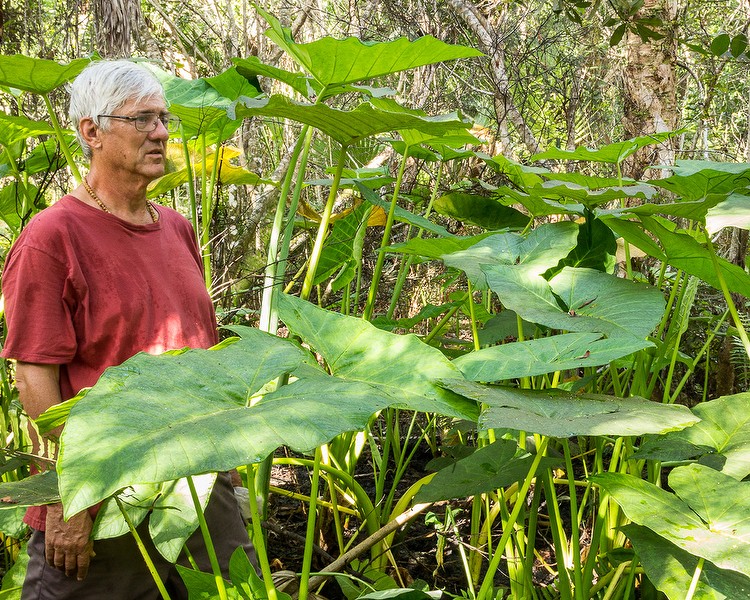
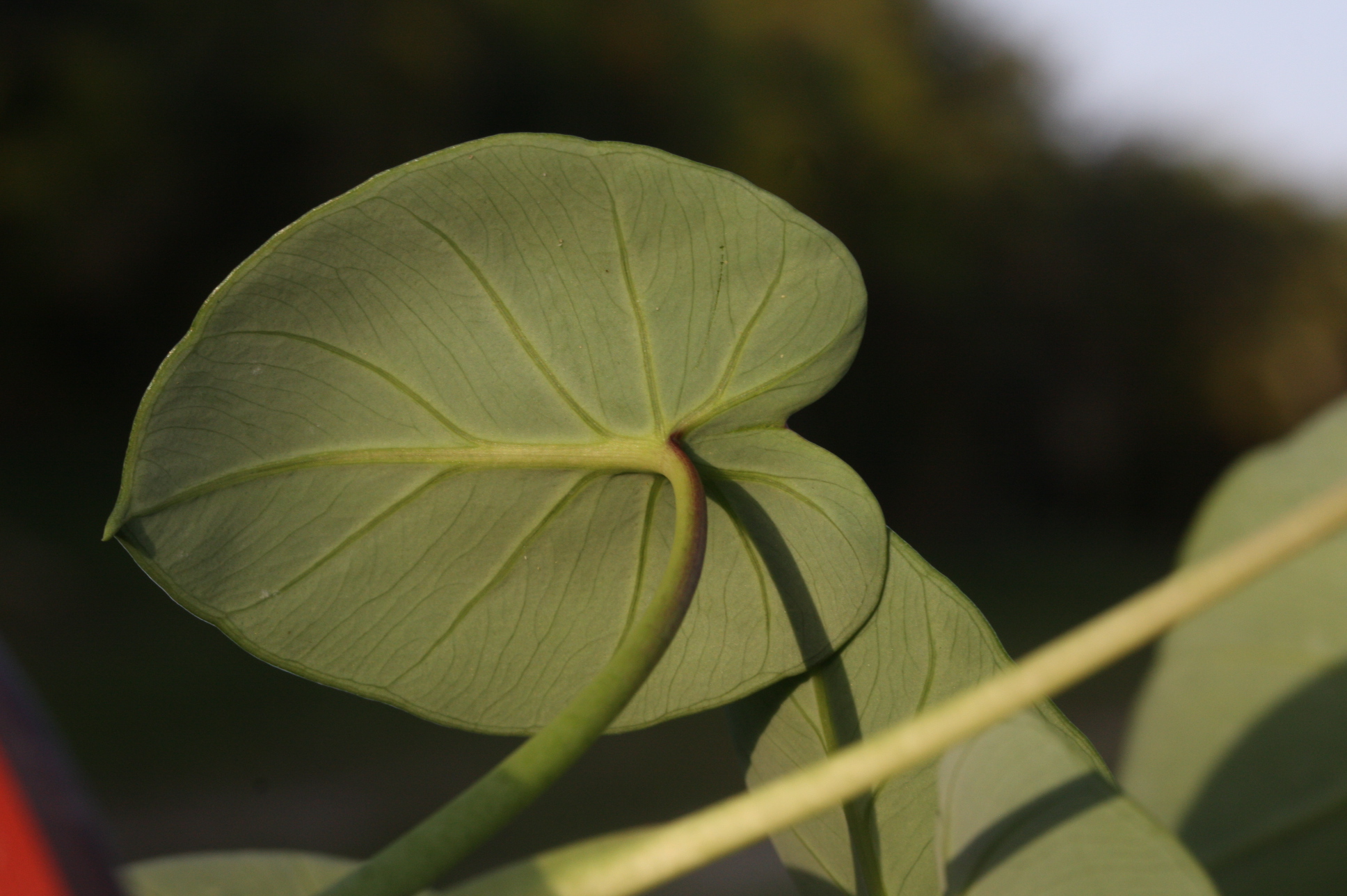
Squishing through the wettest buggiest ferniest tanglefoot swamp we know last Friday, John and George should not have been dismayed to find a big ol’ population of what you might call Elephant Ears, Xanthosoma sagittifolium in the shadows unseen by man and woman, though viewed by hogs who probably like a little Malanga “Root.” This oversized non-native tropical American species turns up just about everywhere: in gardens as funny-colored cultivars such as ‘Lime Zinger’, in the grocery store as Malanga, and throughout much of Florida as a Category II invasive exotic. At the same time the species is invading our swamps mercilessly, it is a touted as a “root vegetable” to grow and savor. Friend or foe?

Xanthosoma running free in the Florida swamp, with ugly dweeb for size (by John Bradford)

Xanthosoma running free in the Florida swamp, with unsightly man for size (by John Bradford)

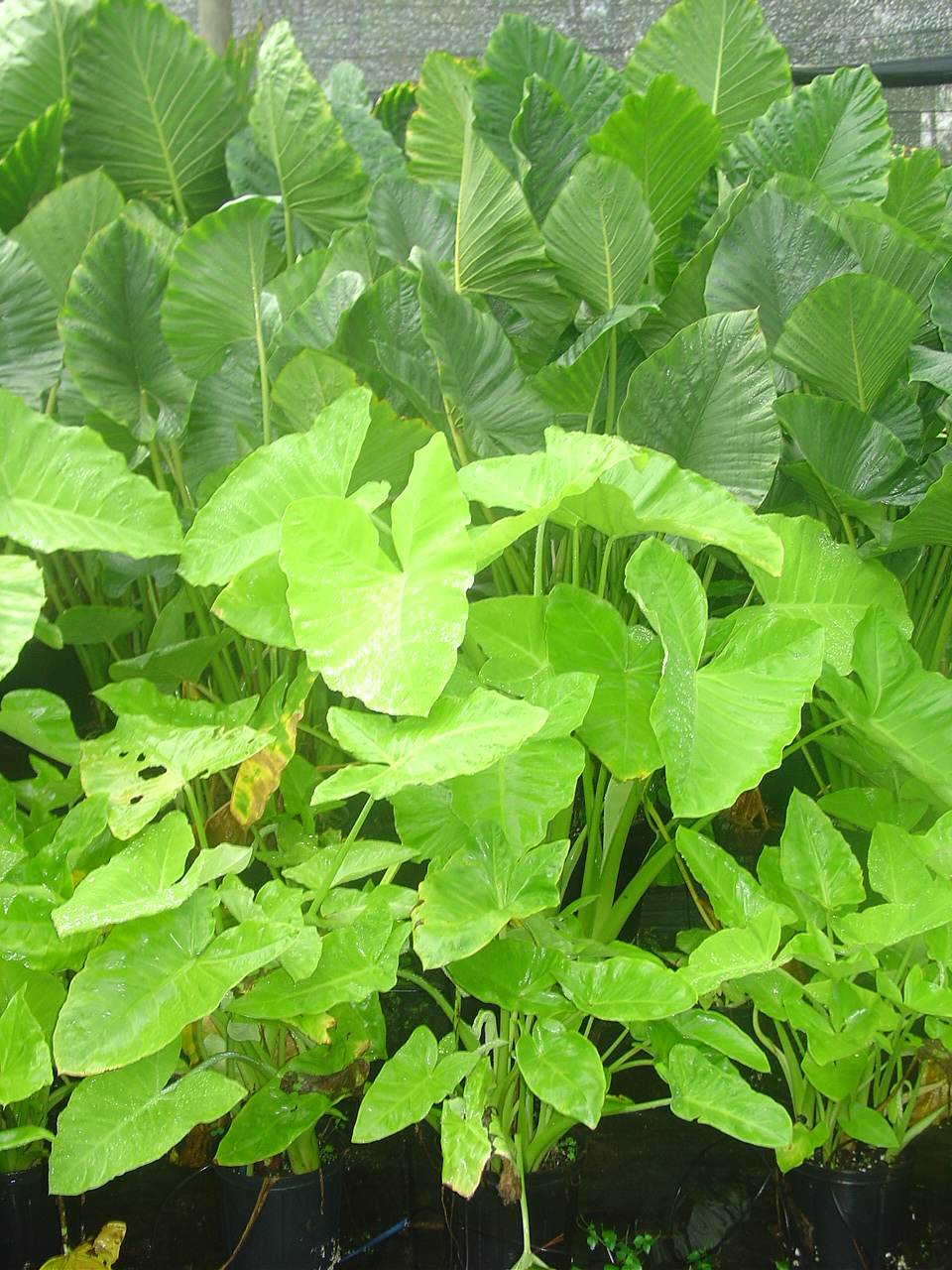
Multiple similar big species of Araceae with arrow-head-shaped leaves have overlapping common names, including the over-applied “Elephant Ears” and “Coco Yam,”…so be careful. Some have similar culinary uses as well as similar propensities to spread through Florida and beyond. So here are those you might find growing wild, and also in a grocery store, in an ornamental garden, and maybe in a veggie garden.

Xanthosoma 'Lime Zinger' in garden

Xanthosoma ‘Lime Zinger’ (tips down) and Alocasia macrorrhizos (tips up) on FAU campus

Colocasia esculenta is often called Taro, but that name works also for Alocasia species. I know it better from my earlier Jimmy Buffett Caribbean life as Dasheen. Unlike the big “carrot” Xanthosoma can make, Colocasia esculenta makes a bulb-shaped “root” (corm).   This species is native to the Old World, although centuries of cultivation have generated many cultivars and has obscured the exact origins.   The species was a Polynesian staple in pre-European times made into a fermented porridge called poi, especially in Hawaii. After ancient peregrinations, the species probably came to the Americas from Africa. There’s a minor history of it as a potato substitute in Florida. Callaloo is a wonderful and variable green “stew” with African roots served throughout much of the Caribbean. The main green leaf in some places, including Barbados where I knew it as lunch, is Colocasia esculenta. Add in some saltfish, and/or breadfruit or plantain. A lot of people in the warm wet tropics depend on this starchy species. Colocasia esculenta is a wetland invaders throughout Florida and other states. There used to be some right here in Jupiter along the Loxahatchee River, although I have not seen it recently there.

Colocosia esculenta, petiole attached in center of leaf, not at the notch

Colocosia esculenta, immature, petiole attached in center of leaf, not at the notch

Species of Alocasia are prominent in tropical ornamental horticulture. Giant Taro, Alocasia macrorrhizos, is a giant big-sized favorite. It has limited culinary uses, and has escaped cultivation into Florida wild areas. (Also escaped a little is Alocasia odora.)

Alocasia macrorrhizos along a Florida shore

Alocasia macrorrhizos in a remote Florida swamp

Confused? Who isn’t? Here is a key to sort out those big uninvited wetland invasive bullies. Below under “notes” is more detail for the detail-oriented.

Key To The Local Wild-Growing Aroids Having Large Arrowhead-Shaped Leaves

  1. Petiole (leaf stalk) attached in middle of leaf, not at the basal notch…Colocasia (True also of garden caladiums.)
  2. Petiole attached immediately adjacent to the basal leaf notch…2
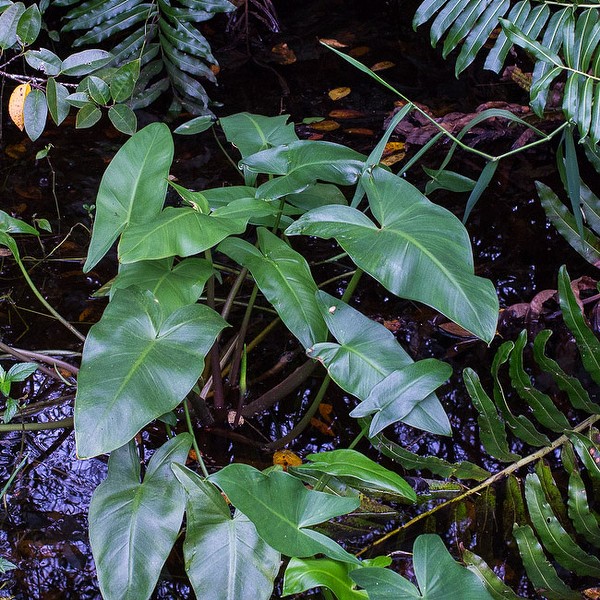
  3. Major leaf side veins 2-4 per side, plant under 3 feet tall…Arrow Arum (Peltandra virginica, native and potentially confused with the invaders)
  4. Major side veins > 4 per side, plant may substantially exceed 3 feet tall…3
  5. Leaf blade soft, not glossy, the tip pointed down…Xanthosma sagittifolium
  6. Leaf blade firm, the tip pointing up…Alocasia macrorrhizos (common in cultivation, may be encounted growing on the loose but not commonly escaped in our immediate area)
Peltandra virginica (by John Bradford), native species;  each half of the leaf has only 3-4 major side veins

Peltandra virginica (by John Bradford), native species; each half of the leaf has only 2-4 major side veins

————————————————————————–

Notes:

Colocasia. The petiole (leaf stalk) attaches toward the center of the leaf instead of at the notch.   Colocasia has mature infructescence not standing straight up, ovaries with parietal placentas, and numerous seeds per green (C. esculenta) smelly fruitlet.

Alocasia macrorrhizos. The petiole attaches at the notch, and the leaves are glossy with the tips up. The odds of finding Alocasia macrorrhizos growing wild in our area are far below the other two, which are common.  Alocasia has wax glands under the leaf at the major vein junctions, the infructescence upright, few seeds, red fruitlets, and basal placentas.

Xanthsoma sagittifolium. The petiole attaches at the notch and the leaves are nonglossy flat-toned, a little soft, and with the tips pointing down to horizontal. The name Xanthosoma, meaning yellow body, refers to the yellow color of the mashed rhizome. It does not seem to flower or fruit much in Florida.

Peltandra virginica. As with Alocasia and Xanthosoma the petiole attachment is at the notch. Arrow Arum is highly variable, but usually smaller-statured than the others at their maturity, often forming dense clumps.   The Arrow Arum leaf is relatively thick and wavy, distinctively with only 2-4 major side veins (vs. several more) along with numerous minor veins, tending inconsistently to a narrow sharp tip. The name “Peltandra” means “male shield,” and refers to the stamens united into a flat-topped shield. The infructescence lies down in the mud, making purplish gooey fruitlets.

On eating Aroids. The Araceae are a toxic family, featuring most prominently calcium oxalate crystals. Calcium oxalate is highly irritating, sometimes merely to the touch, and severely (even fatally) in the mouth and digestive system, not to mention kidney trouble. Never eat any wild-collected aroid or bring them home from wild collection into the vegetable garden.   Yes, some are in the grocery store, well ok, cultivars and organs with diminished oxalate content cooked or fermented knowingly, but even those make me nervous. In the wise words of Wikipedia: ʻAi no i ka ʻape he maneʻo no ka nuku = The eater of ʻape [Alocasia macrorrhizos] will have an itchy mouth.

 
18 Comments

Posted by on July 9, 2015 in Uncategorized


Tags: , ,

2002 Was a Bad Year for the Lorax

Ash

Fraxinus species

Oleaceae

Out botanizing today John and George saw ailing Red Bay (Persea borbonia) trees, probably thanks to Laurel Wilt Disease. The victims had characteristic black staining in the young wood, and I thought I saw galleries in a freshly sawed fallen trunk.  Whether or not my Dr. Oz diagnosis is any good is no biggie, because the important—or at least odd—thing is an approaching parallel disaster.  Most of this week I’ve been in southeastern Michigan, my botanical homeland, and the epicenter of yet another U.S. tree calamity headed our way, the Emerald Ash Borer. The first U.S. Emerald Ash Borer and the first U.S. Laurel Wilt Disease both date to 2002. (And for the hat trick, the Oriental Fruit Fly made its U.S. continental debut in Florida likewise in 2002.)

Both diseases spread southward from more northern origins:

  • The Emerald Ash Borer first turned up near Detroit. (It had probably been around awhile.)
  • Laurel Wilt first appeared in Georgia.

Asian beetles are to blame for both:

  • The Redbay Ambrosia Beetle drills fungus-lined galleries into red bay wood.
  • The Emerald Ash Borer destroys the inner bark and youngest ash wood.

Both beetles were probably stowaways in wooden pallets or other wooden shipping materials. (So was the Asian Longhorned Beetle, another pest on ash, maples, and more.)

Both beetles have broadened the attack to species beyond the initial hosts.

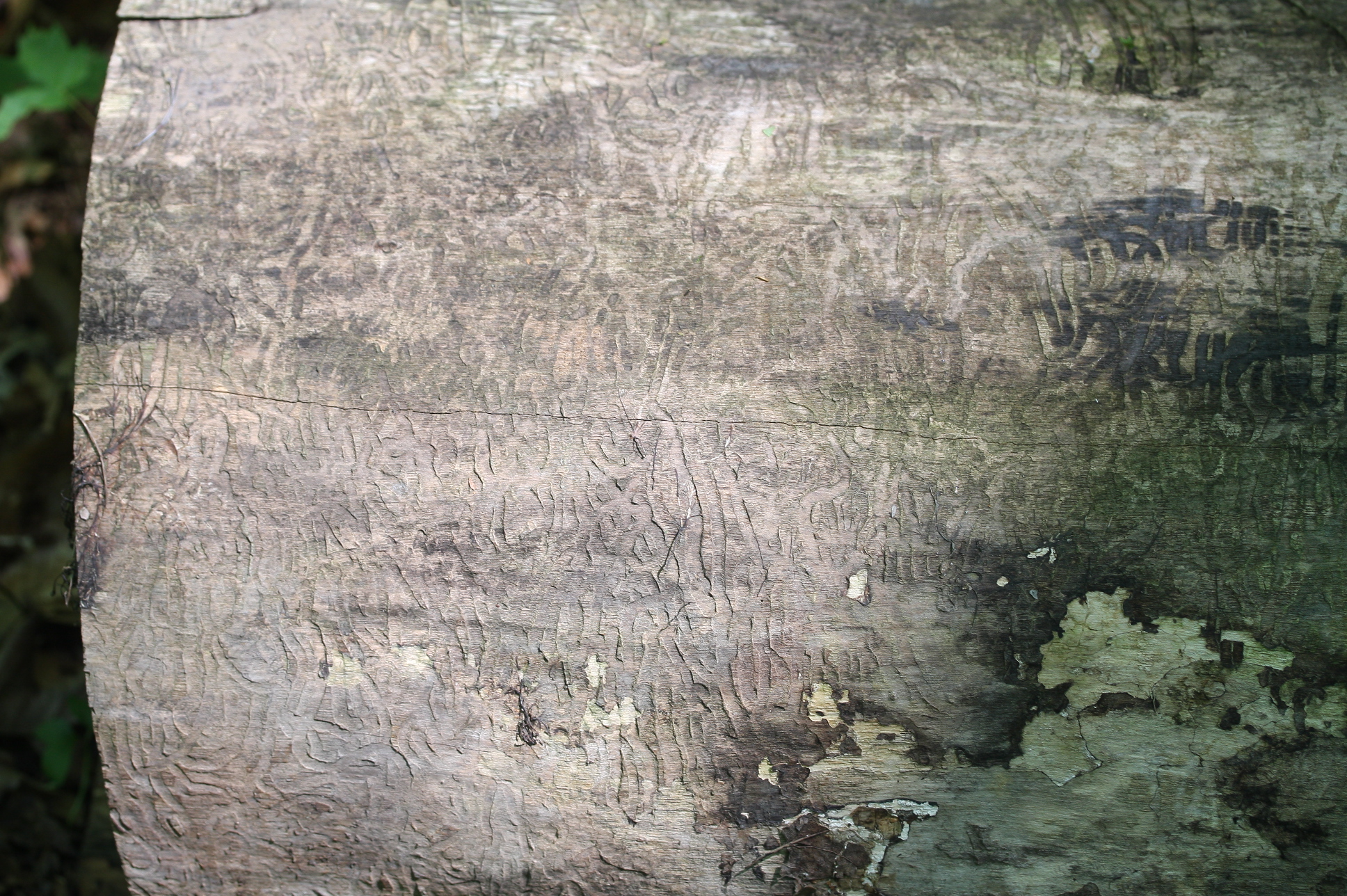
This week botanizing around Toledo, Ohio, and Adrian, Hillsdale,  Ann Arbor, and Jackson, Michigan was a thrill in wild flowers, native orchids, grasses and sedges, and butterflies, but….all silver linings have their dark cloud, and not just the mosquitoes. The area looks in places like Florida after a hurricane but the Michigan hurricane selected ash trees.   As the decaying bark falls away, the Emerald Ash Borer galleries suggest ancient scripts…spelling doom.   Ash seedlings come up, but who knows how they will fare?

IMG_5553

So why fret in Florida? Since 2002 the EAB has sprinted across most of the Midwest into Canada, some western states, New England, and as far south as central Georgia.   Here it comes.   Does a warm climate protect us? Probably not much, as the beetles live in even hotter Asian locales.

The USDA lists parts of Palm Beach County along with most of Florida as at risk. Does the fact that White Ash has a limited Florida distribution protect us? Not so much: the EAB reportedly can get into any species of ash. We have three in the sunshine state, including in our immediate area, even in my back yard. And to add angst, the bugs have broadened the attack to fringetree (Chionanthus virginicus). Florida has that species plus the endangered endemic pygmy fringe tree (C. pygmaeus), and several more members of the Olive Family, including the ubiquitous Swamp Privets (Forestiera species).

ashes, ashes...all fall down

ashes, ashes…all fall down

Sure do hope that nobody reading or writing this post spots the first Emerald Ash Borer in Florida.

A sea creature?  No, Valeriana uliginosa in a Michagan fen.

A sea creature? No, Valerian in a Michigan fen.

——————————————————————————————–

Note: Forgive me for using the same post in both of my blogs.

 
5 Comments

Posted by on July 3, 2015 in Uncategorized


Tags:

Peruvian Primrose Willow

Ludwigia peruviana

Onagraceae

Posting on Thursday instead of the usual Friday, because I’ll be camping in Michigan tomorrow,as primitive as can be after a trip to my favorite restaurant Metzgers in Ann Arbor.  Today’s featured plant is a super-weed.  Everyone has seen this invasive tramp lifting bright yellow flowers out of drainage ditches along the roads.   You’ll see one tomorrow if you drive at all.  Native to Tropical America, Peruvian Primrose Willow has spread across the tropical and subtropical world from West Palm Beach to Polynesia.   It is a weed on steroids capable of rising to 12 feet tall, and its super weed power is what makes this species interesting.  It is Peruvian, I guess, but not a primrose nor a willow.  It is related more to Fuchsia.

Here are some defining attributes of weeds.  With exceptions, weeds:  1.Mostly are sun-loving, and not fussy about soils.  2. Make quickly lots of “cheap” readily distributed seeds with little investment in each individual seed (quantity over quality).  3. Often have delayed germination.  4.  Are often self-pollinated or pollinated by any of many visitors, and/or have asexual reproduction.  5. Frequently have big strong underground parts.

Let’s see, in the case of Peruvian Primrose Willow:

  1. Sun-living (yep) and tolerant of every muddy ditch from the Caribbean to Australia.
  2. Lots of little cheap seeds readily distributed: The tiny seeds can reach densities of 450,000 seeds per cubic meter downstream from a stand of PPW. They float, blow in the wind, or cling to creatures.   And they can germinate still afloat.    Viability has been reported at 99%.  And if that is not enough, broken fragments of stem can root wherever they wash up.
  3. Delayed germination: Some PPW seeds seem to retain dormancy for about two years.
  4. Pollination: I do not know if PPW is self-pollinated, although many ludwigias are, so it is likely, especially given the plant’s ability to colonize new places. In any case, floral visitors are many, including bees, butterflies, flies, and probably more.  The flowers have striking UV reflectance patterns.    You and I see them as yellow.  A bee with UV vision sees a target with a bullseye. (The upper left images.)
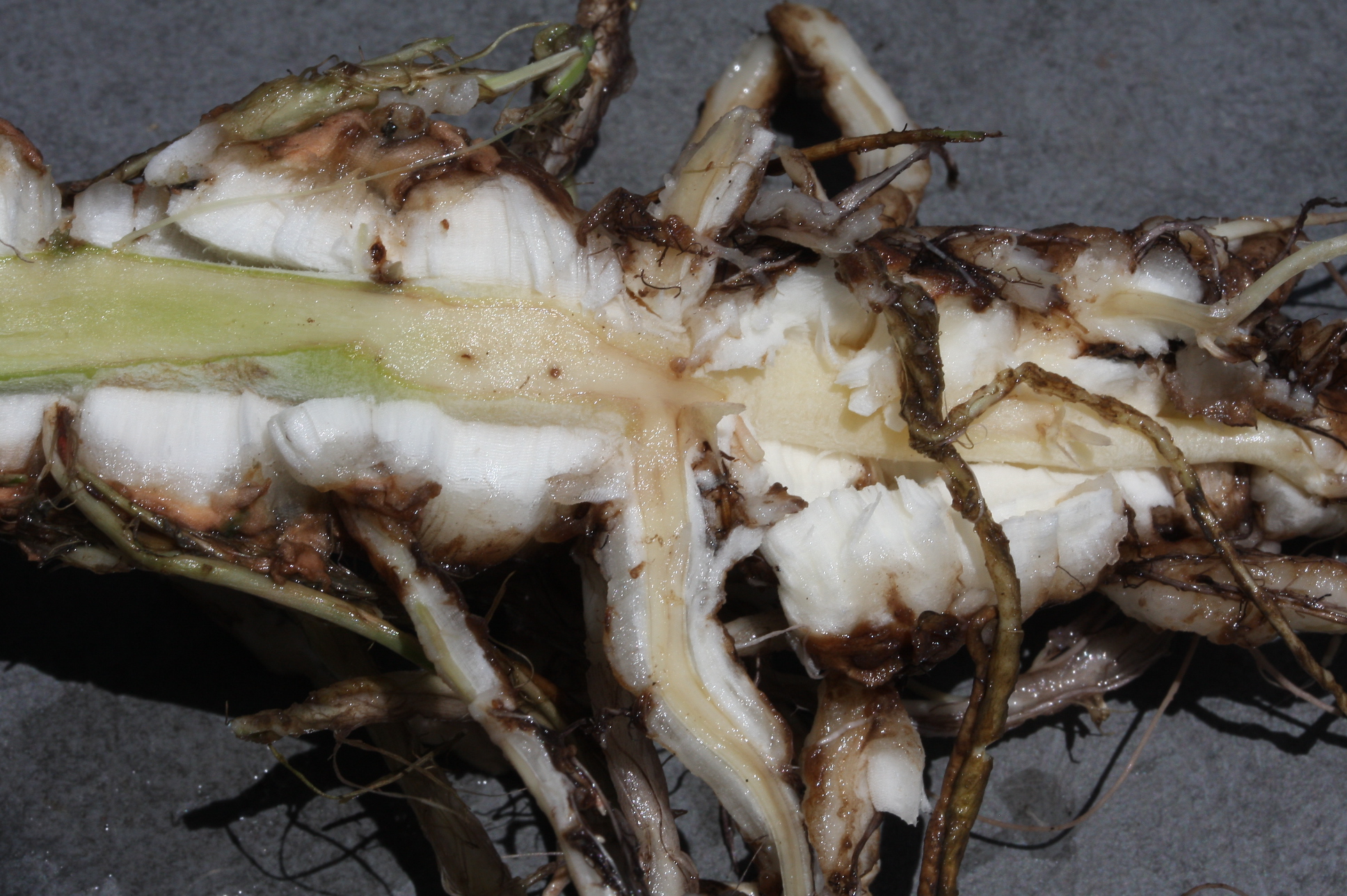
  5. Durable subterranean parts:  That’s the most interesting thing.  There’s a big deep taproot.  Big deep taproots in submerged mud should suffer oxygen starvation.    But our big weed is ready.   At the base of the stem leading down into the root, the cork meristem (the same tissue that makes corks for wine bottles) produces a thick layer of soft spongy white styrofoam to ventilate the submerged portions.
This the the base of the plant split to show the white

This the the base of the plant split to show the white “cork” ventilation tissue.

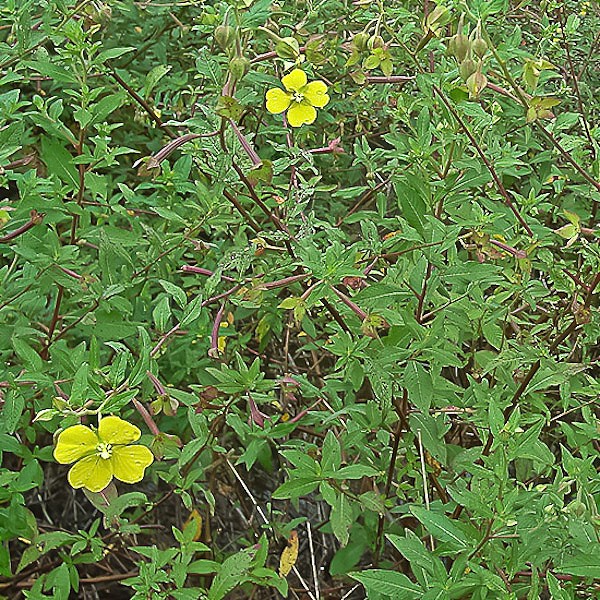
Ludwigia peruviana is easy to distinguish from the numerous locally native species, because it is larger than most, with fuzzy parts at least when young, usually has 4 petals and 10 stamens, and a long cylindric fruit.

The plant (by JB)

The plant (by JB)

And now here’s the mystery to “go figure.”   Ludwigia peruviana has 16-ploid strains, that is, with sweet 16 sets of chromosomes.   Although not absolutely connected, self-pollination and extra chromosomes sets often go hand in hand.

And now here’s the mystery to “go figure.”   Ludwigia peruviana has 16-ploid strains, that is, with sweet 16 sets of chromosomes.   Although not absolutely connected, self-pollination and extra chromosomes sets often go hand in hand.

 
6 Comments

Posted by on June 25, 2015 in Uncategorized


Tags: ,

Heterotheca’s Heterocarpy

Heterotheca subaxillaris

Golden-Aster, Camphor Weed

Asteraceae

This blazing 90 degree morning John and George* investigated red widow spiders, pine tree tip dieback, loblolly bay in fancy bloom, and mosses in Seabranch State Park near Stuart, Florida.  We botanize there often.

Feral hogs have stirred up patches of soil, with a consequence I always find interesting: pokeweed babies rising from the disturbed earth.   Pokeweeds are known for their heterocarpy, that is, differential circumstances for distribution and germination within a single species.   Many plants make mixed offspring in terms of how far the seeds or fruits will travel, or with seeds having mixed germination requirements and timing.  Reportedly in pokeweed some seeds are prone to sprout soon after release. Other sleep in the earth for decades until some hog stirs things up, even in a deep shaded woods unfit for pokeweed residence.  Some time ago in this blog we covered sea rocket, where half the fruit remains on the mother plant while the other half breaks free to go colonize new beaches.

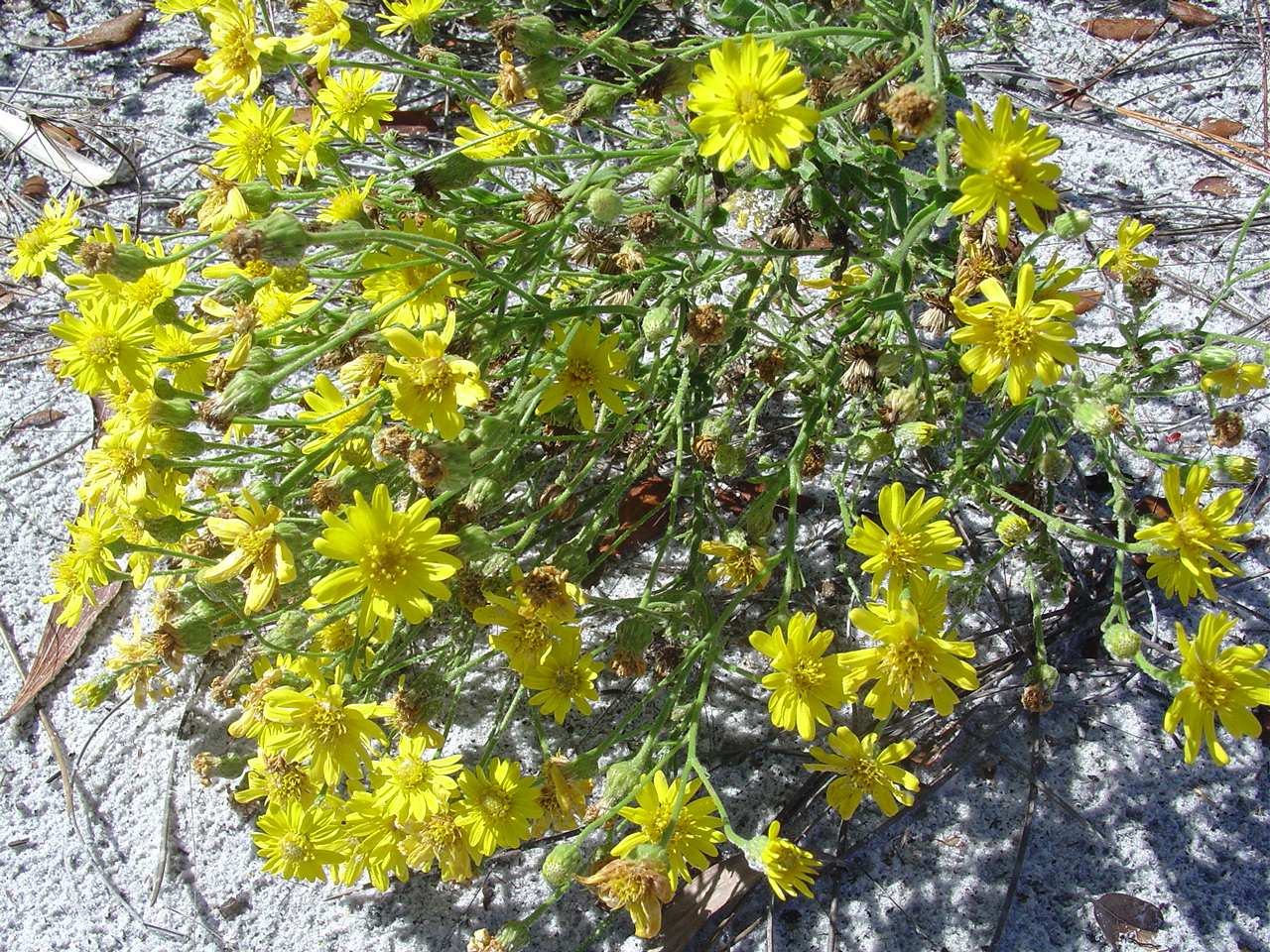
Heterotheca subaxillaris (by John Bradford)

Heterotheca subaxillaris (by John Bradford)

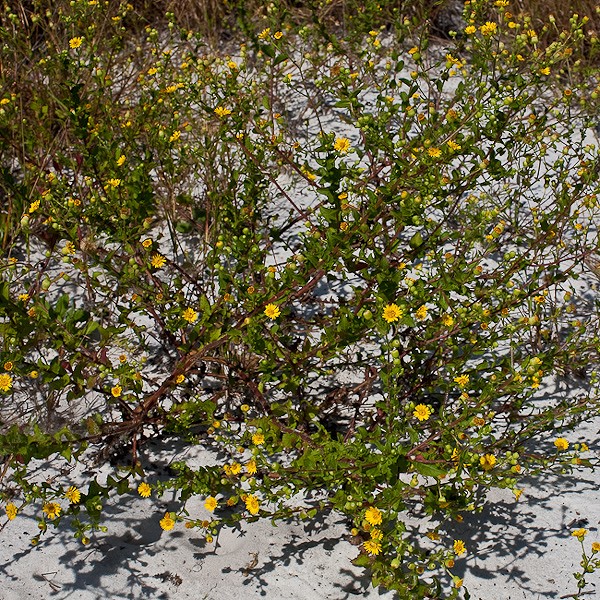
The heterocarpic flower in pretty bloom this week is named for its hetercarpy: Heterotheca means “different containers,” in reference to its two types of fruits. Sometimes called Golden-Asters, Heterotheca subaxillaris is a common local bright sunny yellow-flowered weed on bright sunny dry sands. This species has extreme tolerance for drought and heat. Heterothecas (grandiflora) are so tough they have become invasive pests on Mars-like volcanic lava fields in Hawaii.

The leaves are fuzzy and smelly, giving today’s plant the name camphor-weed. I like the fragrance, but how many people know what camphor smells like, or even what it is? I just Googled camphor so I arrogantly know much about it for the next hour or two. Fact is, Heterotheca is a one-plant chemistry lab with a wide array of pharmaceuticals.  The “family” of fragrances Heterotheca brings to mind are wormwood, marigolds, and sunflower leaves.  (They are all related, and the similarity may come from lactone sesquiterpenes, but who cares?)

heterotheca jb

The obvious function of the stinky, sticky, chemical-laden, glandular hairy covering is to deter herbivory. Nothing would want to crawl upon or eat  camphor-weeds!   And there may be a secondary advantage to the hairs—protection from sun and drying.  Look at the death valley habitat in the photo above.   Plant hairs insulate the leaf surfaces from drying wind, and they block sun, maybe even reflecting solar radiation.   I don’t know if this is true of Heterotheca, but some botanists have suggested that glandular hairs might make a “sunscreen” that can spread and protect the foliar surfaces.  Even better, in other fuzzy species of similar habitats the hairs produce water-retentive compounds to create a moisturizing gel when the rains come.   It would be fun to look into some of this in Heterotheca which is so hairy and so oddly happy in a solar oven. The structure of the hairs helps define the genus.  A mutant hairless Heterotheca would probably wither unprotected.

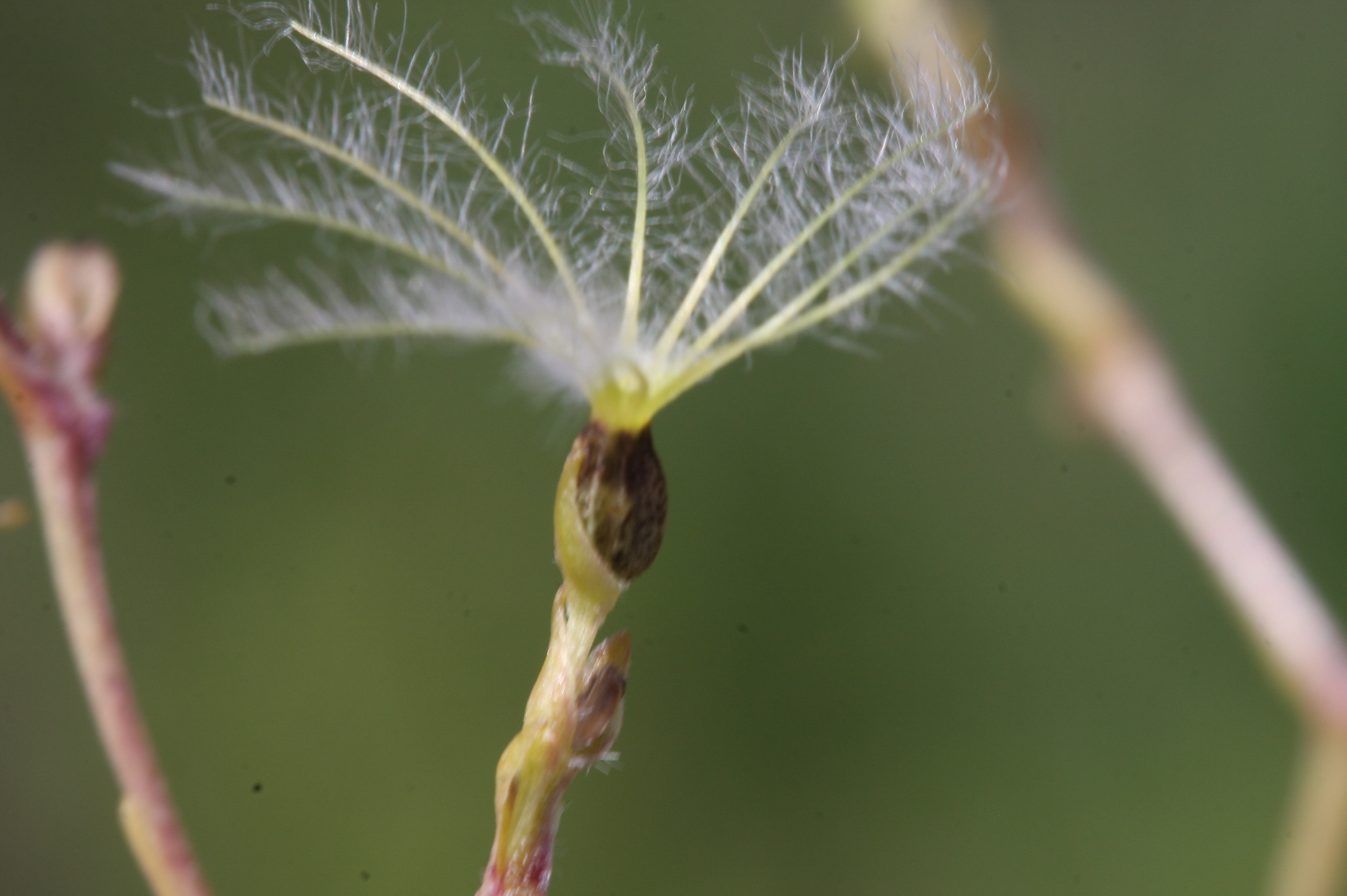
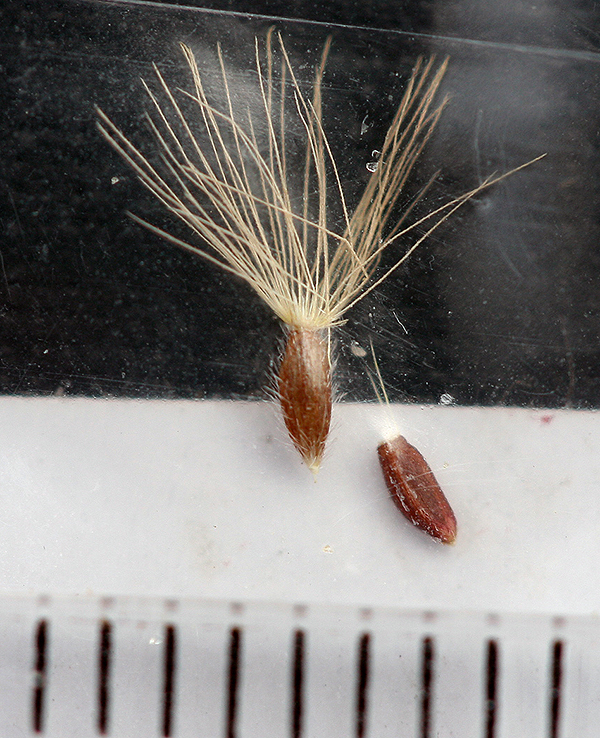
As for the heterocarpy, in a flower head, most of the “seeds” (achenes) have parachutes to blow away to colonize a distant disturbed sand pit.   Some of the seeds, however, have no parachute, and recolonize their home neighborhood.

Heterotheca achenes showing heterocarpy: one has a parachute; one is bare.  One flies far away; one keeps the home fires burning.

Heterotheca achenes showing heterocarpy: one has a parachute; one is bare. One flies far away; one keeps the home fires burning.

*Sorta let the blog slide.  Lost my mojo when our awesome international blog friend Mary Hart passed away in the U.K.  But John and George have kept up the botany—John has been working on the Seabranch site linked above, with some help from George.  And George has been developing a companion site to an introductory botany course, with a lot of John’s photos.

 
16 Comments

Posted by on June 20, 2015 in Uncategorized


Tags: , , ,

Noyau Vine

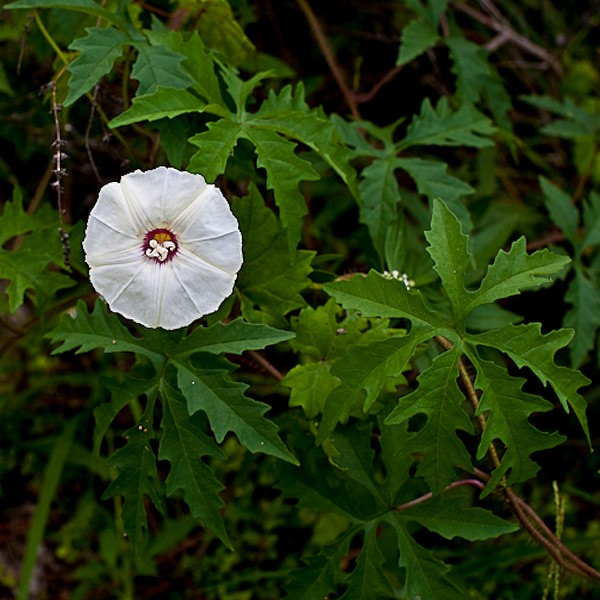
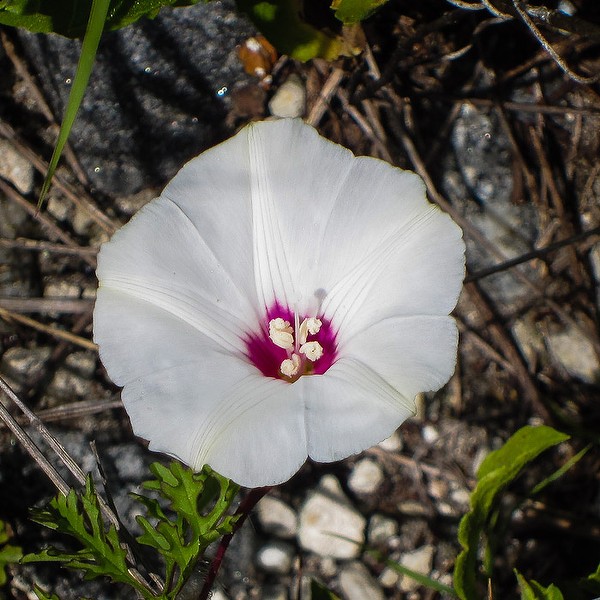
Merremia dissecta

Convolvulaceae

It is with extreme sadness, I must note the passing of our wonderful blog friend Mary Hart.  Some readers may recall her participation in the blog a year ago and more from Worcester in the U.K. where she had been confined to a wheelchair.   Mary was a botany student in my program during the early 90s at the University of the West Indies, Barbados, and was an avid horticulturist and naturalist, smart as a whip, a basketball fan, and a ton of fun.  She is missed. 

After some time away, John and George revisited Seabranch State Park yesterday to preview a nature walk we plan to lead there tomorrow.   Greeting visitors at the park entrance, climbing in the low scrub vegetation, is a weedy-looking morning glory vine with some history and mystery.   (Most of what I know that history comes from a 2007 article in the journal Economic Botany by the late morning glory expert Professor Dan Austin.)

Noyau literally means, “nut.” In the Caribbean context the term refers to almonds.  You guessed it. Noyau vine is almond-ish.   Not that that’s good for those who think the joy of wild plants is to eat them; essence of almond is associated with cyanide, just as in apple seeds and those laetrile apricot pits.

Noyau Vine (By John Bradford,  this and the next are file photos not taken yesterday)

Noyau Vine (By John Bradford, this and the next are file photos not taken yesterday)

But a little toxicity never gets in the way of plant uses; in fact poisonous-ness flags medicinal applications.  As Dr. Austin documented,  Merremia dissecta has served the variety of purposes in traditional medicines, flavoring, and even as a root food in Argentina, presumably prepared to free the entrée of cyanide.

As with so many bioactive plants, the historical medicine cabinet is boring and redundant, although ointments against skin ailments ring plausible as cyanide-based toxicity obviously may grant antibiotic powers.

What I find more interesting than the individual uses is a broader implication based on the breadth of uses:  People move useful plants around, and this creates complications in branding species as native or not native to any given region.  There are many cases perhaps where such designation should not occur, and we have before us a good example.   When you don’t know, you don’t know.

Merremia dissecta closeup

Is noyau vine a Florida native?  Look in different books and find different answers.  Should we rogue it out with malice as an abominable invasive exotic weed?  Or is the vine a native ethnobotanical treasure?   Without the possibility of certainty,  Dr. Austin tilted toward the latter, and I’m aboard on that.

Given that the species is native around the Caribbean Basin, there’s a fair chance it arrived in Florida free of human help.  To make little more interesting, of course there has been commerce around the Caribbean Basin for a very long time before Columbus spoiled the fun, although the degree of involvement of Florida in pre-Columbian Caribbean commerce is an open question.   Could it have come in a canoe or around the Gulf of Mexico from points south and west?  Sure.  We can ask the same about papayas, agaves, and more. William Bartram encountered the vine in Florida in the late 1700s.  How did it get around so early?  Non-human dispersal?  Native Americans?  Early Europeans?  A combo?

Whenever the original geographic limits,  noyau vine now with the help of people is worldwide in warm climates, and even some that aren’t so hot: Pennsylvania, Arizona, Africa where it has developed an ethnobotany of its own, and even Australia as a weed.

On tomorrow’s nature walk, we won’t eat any, but we might smash it up and see if it smells like almonds.

 
5 Comments

Posted by on March 19, 2015 in Uncategorized


Get Out Your Umbrella!   A Meteor Smacked a Flock of Bats!

 Trentepohlia aurea

Green Algae

John and George are both leaving town awhile, locking the blog in limbo for a few weeks. One last shot before bon voyage.  Then no more clutter in your in-box from us.  We’ve been exploring Seabranch State Park near Hobe Sound, Florida for several weeks. Arguably the most diverse region there is a dense wet coastal swamp.  Today’s odd plant hangs out in the swamp, although the photographs come from other sites.

What would you think if the rain fell bloody red? It happens. To some folks blood from above portends the end of times.  To others a meteor obviously whalloped an unlucky flock of bats. Not that far fetched after all, a meteor strike did eliminate the dinosaurs 60-some million years ago. To the more scientifically sanguine, red dust picked up somewhere by atmospheric currents explains the coloration. Case closed.

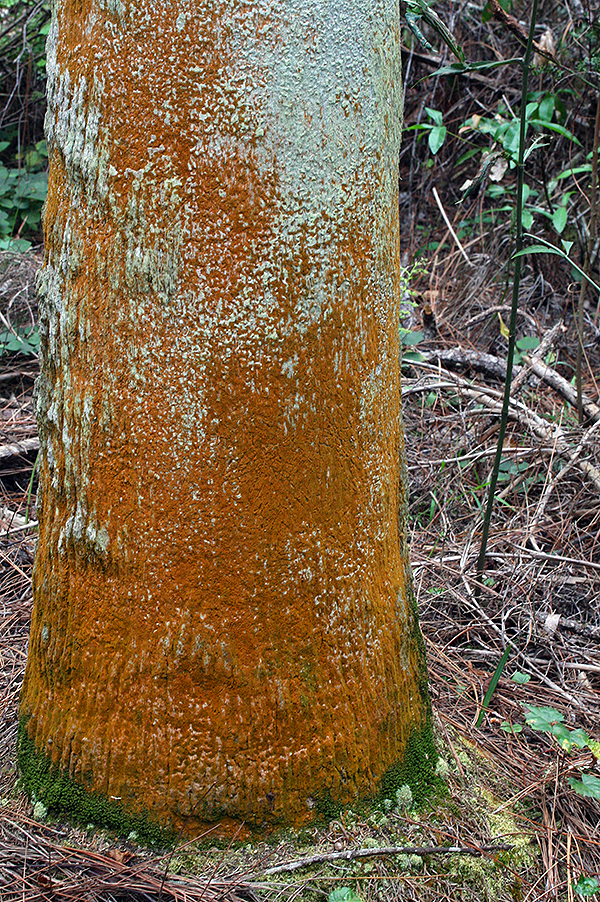
Trentepohlia on tree bark

Trentepohlia on tree bark

A microscope might help.  Aha!  Those reddish raindrops aren’t Sahara dust, but rather a soup of living cells.  But, oh my,  as a team of physicists—repeat, physicists—concluded, these don’t look like any cells we’ve seen before, so they gotta be extraterrestrials. Space brood is serious stuff!

Trentepohlia on a palm trunk

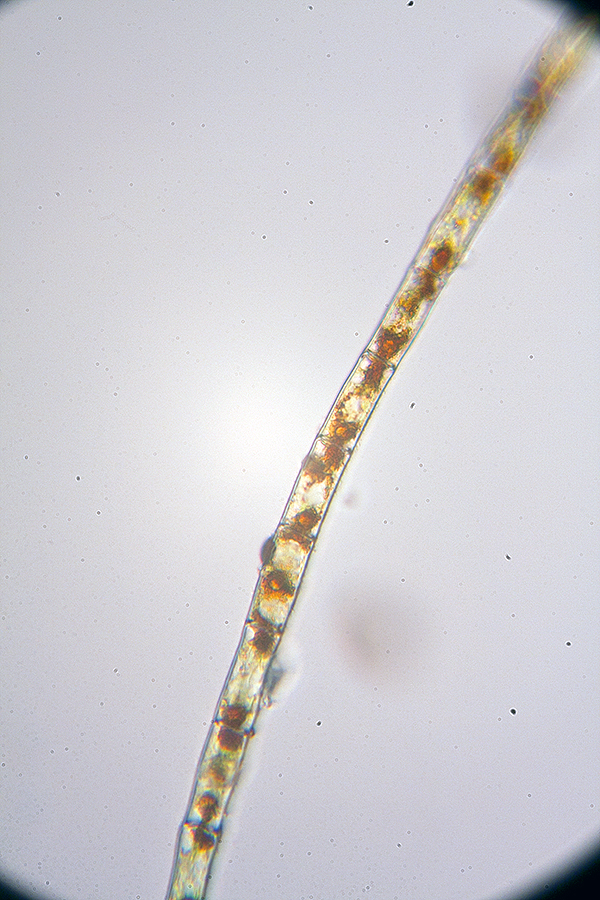
Trentepohlia through the microscope

More or less this scenario played out in connection with red rainfalls in India in 2001…and before…and after. How often does a botanical garden solve a newsworthy scientific mystery?  What do microbiologists do when presented with cells of an unknown type, at least before DNA technology? Culture them, especially when they look like spores.  Can you imagine the potential consequences of culturing alien spores?  There’d be some finger-pointing among the oozing survivors!  When the Tropical Research Garden and Research Institute in India risked unleashing the galactic fungus, the hatchlings THANK GOODNESS were earthlings— the common alga Trenepohlia.  Here is a report on a similar event in Sri Lanka. CLICK

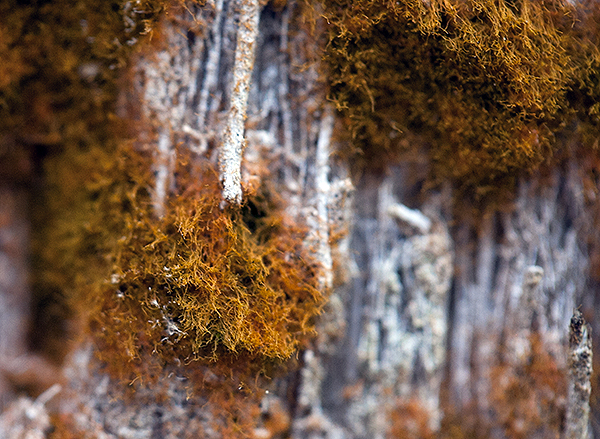
Trentepohlia up close on tree

Trentepohlia up close on tree

If Florida had a  tropical climate we too might experience funny rain. We have plenty of Trentepohlia, and you’ve probably seen it, at least if you stroll through swamps. It forms golden yellowish carpets on tree trunks.    Some Trentepohlias are not content to enjoy a mere free perch—they can parasitize their tree host, although I don’t think our Florida Trentepohlia aurea plays that nasty game.

Closer view

Closer

Trentepohlia is a Green Alga in a classification sense, even though it’s not colored green. The color deviation comes from high dry life on tree trunks.   An alga out of water needs sunscreen. The orange pigments are related to the carotenes in oranges and carrots, giving Trentepohlia its sunshine hue, and making its spores resemble bat gore, which I’ve never seen.

 
4 Comments

Posted by on February 17, 2015 in Trentepohlia


Tags:

Mama Mia – Could That Be Chia? (In Seabranch State Park!)

Salvia hispanica

Lamiaceae

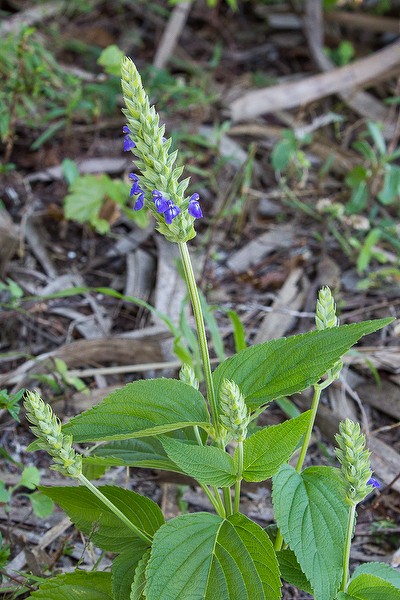
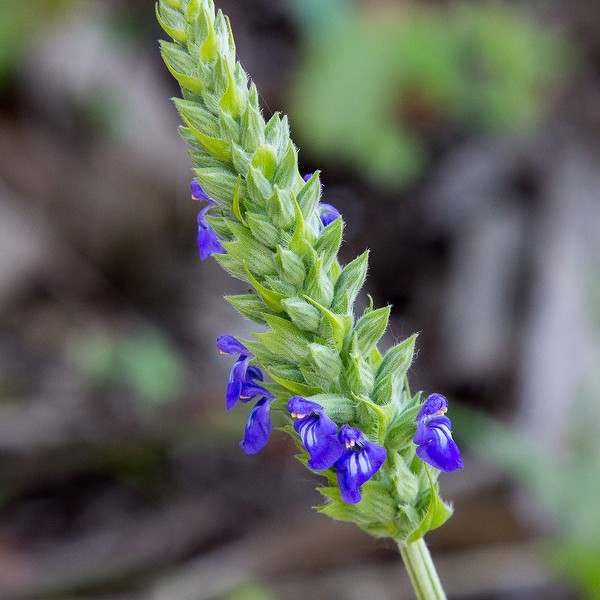
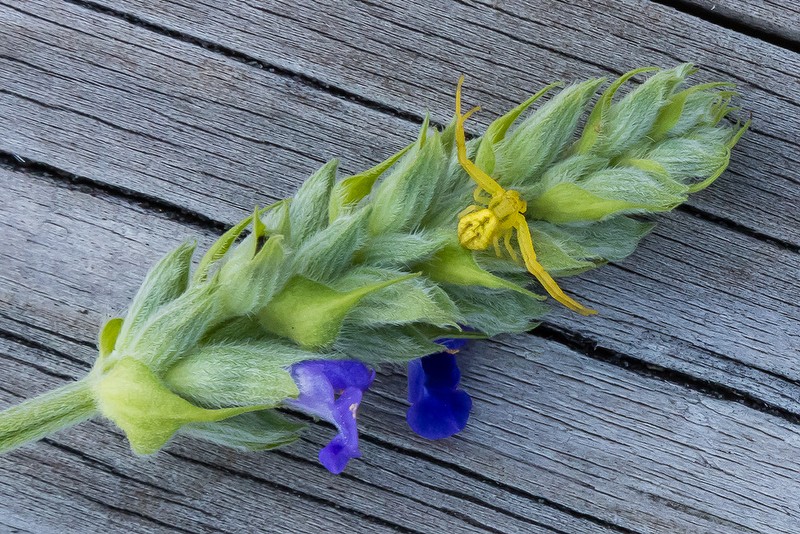
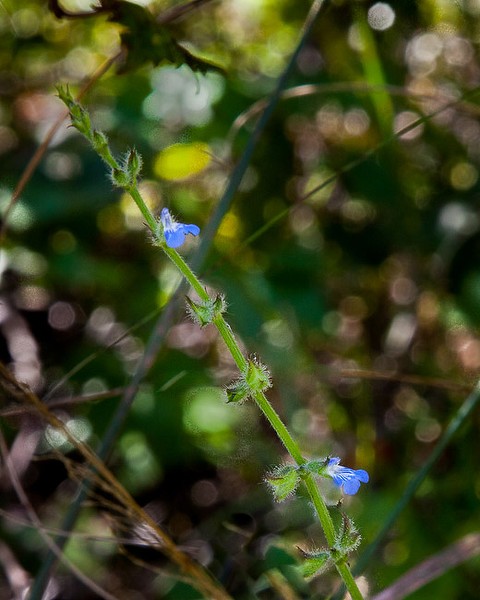
Something John and George did not expect in Seabranch State Park today was ch- ch- ch- Chia. It’s a perky mint similar to the native wildflower Salvia occidentalis although with the blue flowers crowded into a dense spike instead of spaced out widely.

Salvia hispanica.  (All photos today except the Chia pet by John Bradford.)

Salvia hispanica. (All photos today except the Chia pet by John Bradford.)

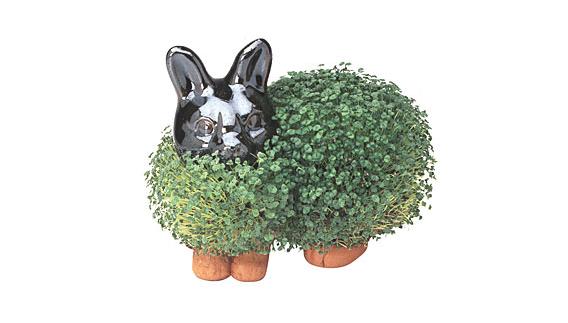
Everybody who has ever watched TV or battled their way through Walmart of course has seen Chia pets, maybe Homer Simpson with a rakish hairdo of Chia seedlings. I hope you’ve grown one at some point. We sometimes use them in my plant physiology class to demonstrate plant responses to light of different colors. They bend it like Beckham towards blue light.  The seedlings do not resemble the adult mint.

Chia-Pet-Bunny

If you’re up on contemporary healthful eating trends, you probably know Chia seeds attributed with healthful benefits.

Salvia hispanica today

Salvia hispanica today

To be technically correct, there are multiple closely related and very similar species of Chia. Though sold under the single name Chia even by a single company, the seedling species sprouting on the ceramic pig is usually or always Salvia columbariae, whereas the dietary Chia seed is today’s Salvia hispanica.

Chia, with a pet

Chia, with a pet

Both grow in arid western North America, so maybe it’s not severely dismaying to find Chia blooming merrily in the sandy sun-baked arid scrub in Florida.  Chias have history as snacks and meds in pre-European North American cultures.  It seems the perception of the seeds as healthy and energizing dates back thousands of years. A fad diet for the Mayans. Anyone who has slathered the seeds on Elmer Fudd’s noggin knows that when moistened they expand as a gelatinous mass. So naturally the traditional applications include poultices and plasters. Perhaps more interestingly, and I say this as an ophthalmology patient, ancient peoples with a painful particle in their eye, or maybe an intrusive bug, would pop a seed under the eyelid to let the expanding jelly could capture the irritant for easy extraction. Who would think a novelty is sold on TV would have a serious time-honored history?

Salvia occidentalis

Salvia occidentalis

The time-honored history may turn into a time-honored future, if you can believe material put out by the purveyors of Chia products.  According to the main supplier, and I know no reason to doubt them, farming Chia has become an industry in Uganda, where relief from hunger and poverty is life-giving. Photographs from Africa look exactly like the Salvia hispanica John and I enjoyed this morning.  I don’t know if the claims are the whole truth, or if there’s an undisclosed downside, or if there is self-serving exaggeration, but at first glance it seems that buying a silly Chia pet at Walgreens may put food in the mouth of a child on the other side of the world.

Note:

This video is of interest.

 
4 Comments

Posted by on February 13, 2015 in Chia


Tags: ,

Golden Club

Orontium aquaticum

Araceae (Aroid Family)

Today John and George planned an upcoming botany walk in Seabranch State Park near Hobe Sound, Florida.  We didn’t have much chance to explore new flora and fauna, but no problem, because this is February, time to visit the swamp. There are three reasons I stomp the swamp in February: 1. The low water level allows access to regions nasty during the rest of the year.  2. The bald bald cypresses allow light to the forest floor, promoting green life galore in what would otherwise be the deep dark shadows. A time for bromeliads, liverworts, mosses, seedlings, and marvels to find.  3. No bugs.

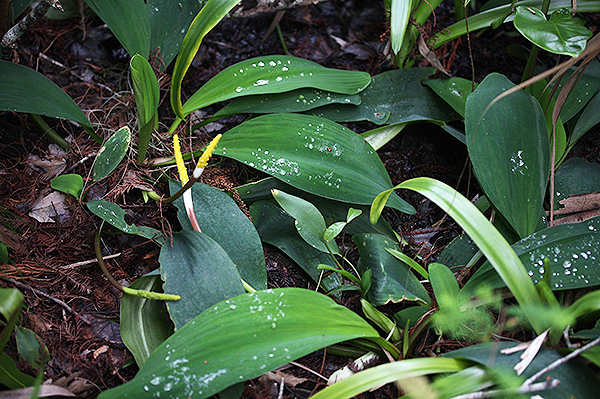
Bright spots down in the wet are golden clubs, unique members of the Aroid Family.  I’ve been fascinated with these showpieces ever since I was a student, and for over a decade have enjoyed a population near my home in Jupiter along brackish Jones Creek. With no solid data, I suspect this to be the southernmost population in eastern Florida.  The plants grow directly in shallow water or very near it.

Golden clubs today in Jones Creek, Jupiter, Florida

Golden clubs today in Jones Creek, Jupiter, Florida

Orontium is a genus with just one species distributed mostly across the eastern United States from Massachusetts to Florida to Louisiana. Oddly, one or two fossil species are known too.  The plants are so odd and beautiful that botanists Robert Godfrey and Jean Wooten used a drawing of one as the frontispiece in their classic manual, Aquatic and Wetland Plants of Southeastern United States.

What fly could pass this up?

What fly could pass up this bad boy?

And now a nod to the name. A reasonable person might think,  “these are golden clubs, and oro means gold,  well that makes sense.” But according to contradictory reliable research, the name comes from the Orontes River in Syria, with ancient myths, legends, and history, including a different plant the ancient Greeks called by a name similar to Orontium.

Humans have eaten the rhizome and the seeds.  And humans have gone over Niagra Falls in a barrel.   Bad ideas IMHO. Like other Aroids, GC bristles with calcium oxalate crystals.  Lots, and calcium oxalate can nuke your kidneys.    I’m not convinced repeated boilings make it as pure as the polluted snow just because folks who want to eat nature say so.  It you want to eat Aroids, why not go to Publix and buy Malanga Root?

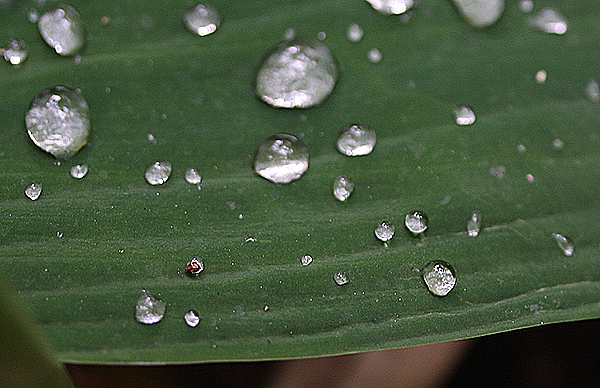
So what’s so weird about golden clubs? Start underground. How many plants do you know with a vertical rhizome? The rhizome is about the size of an upright hotdog, which is a corndog,  buried far down in the swamp mud, and it creeps deeper with time.  The roots are contractile, that is, rubber bands to pull the rhizome down out of harm’s way ready to sprout another day, or to wash ashore far away. Offhand, the only vertical rhizomes on other plants coming to my mind are on ferns.  By the way, another native species with contractile roots is coontie. Golden club leaves look like broad blue-green straps with tiny parallel veins.  Like a duck, water rolls off in sparkling droplets.

Like the hood on a well polished Corvette.

Like the hood on my Bentley after Jeeves waxes and buffs.

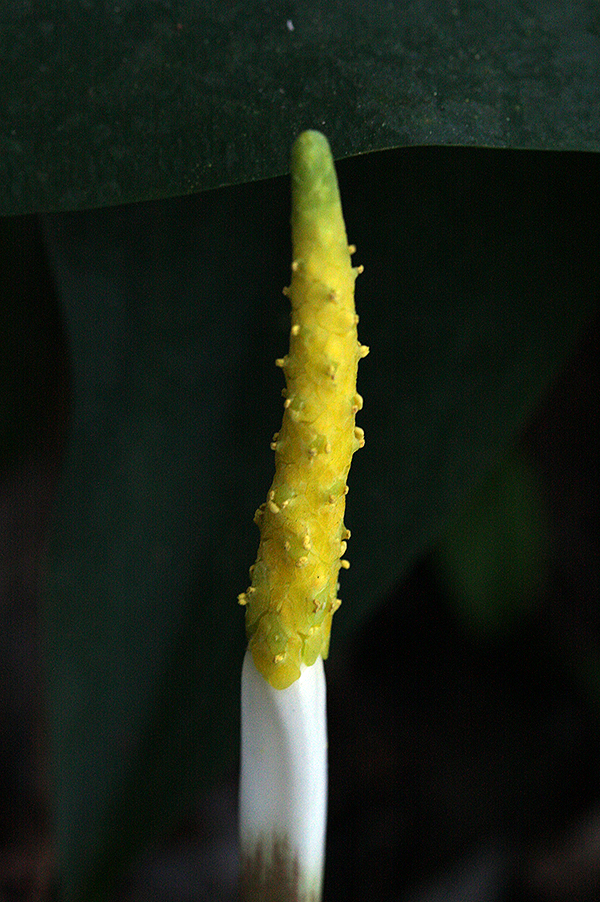
The best is yet to come, the flowering spike. First a quick lesson on the Aroid Family.  Aroid’s are known to gardeners and Home Depot shoppers as, for example, anthuriums, caladiums, colocasias, calla lilies, spathiphyllums, and many more.  Native plant enthusiasts might be familiar with arrow arums, sweet flags, and additional species.  Bring some of these to mind, and in your mind’s eye you will see a flowering spike called a spadix in association with a modified leaf called a spathe.  On those red florists’ anthuriums the spadix looks like a bumpy cigarette;  the spathe is that waxy scarlet leaf alongside it. Usually the spadix is not showy, and the spathe is the colorful flag. Or to phrase it for us native plant buffs, Jack is the spadix in the pulpit is the spathe.

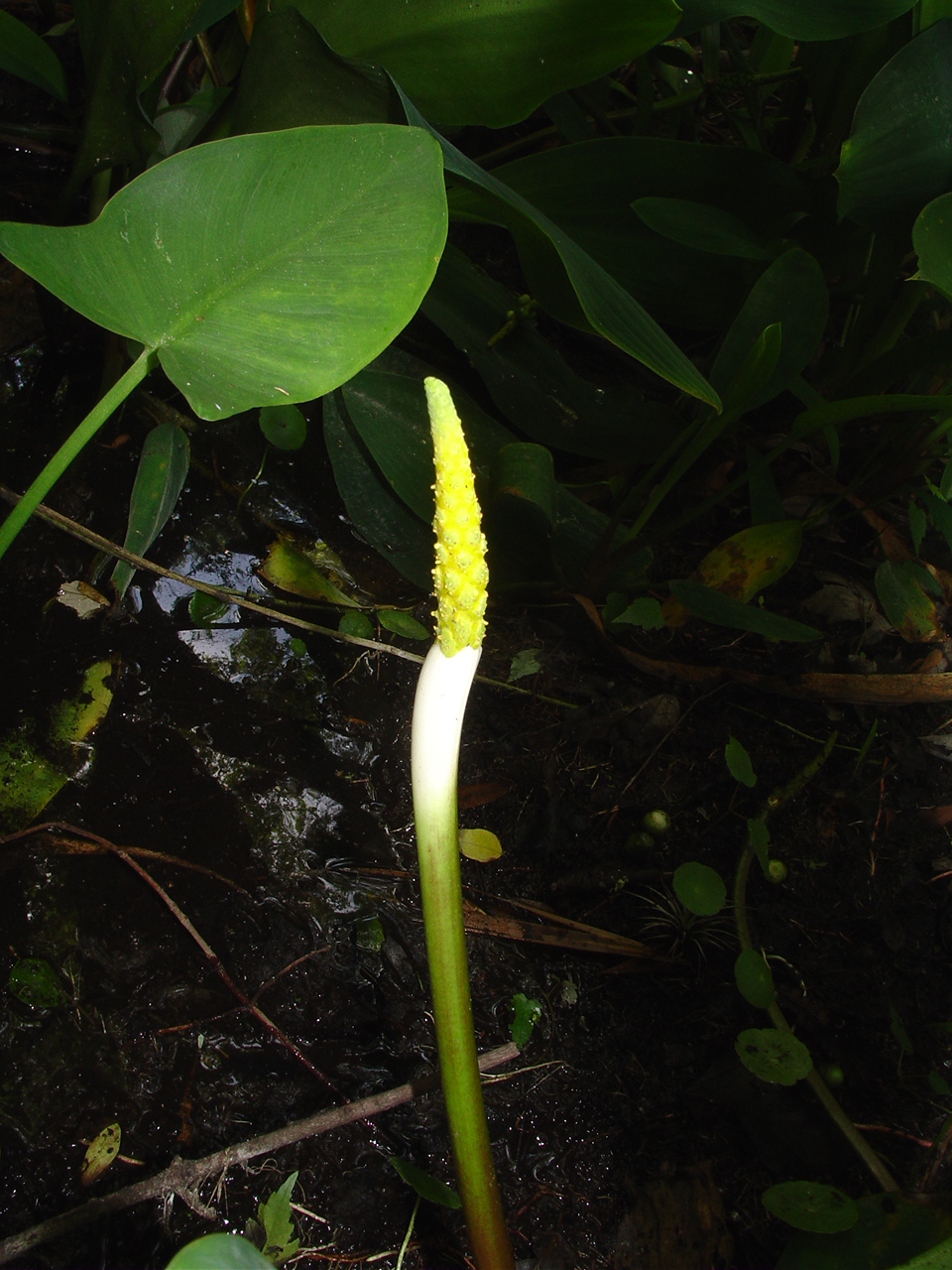
The spadix.  Twenty-some wee flowers visible.

The spadix. Twenty-some wee flowers visible.

In golden clubs the vestigial spathe is effectively absent. The spadix has taken over the showy function. It puts the golden in golden club. And what pollinator is lured to that goldfinger?  Apparently species of flies, with room for more research.

The pretty yellow spadix has numerous little flowers embedded in it. Toward the base of the spadix the flowers are bisexual, and toward the top the flowers are male. The bisexual flowers mature into a blue-toned fruit with one seed. The seed is separated from the fruit by a layer of Jell-O of unclear significance. Maybe the goo  gives the fruit buoyancy.  Maybe it sticks to a bird’s foot or to a passing gator or to the leaf on a waterlily.

 
2 Comments

Posted by on February 6, 2015 in Golden Club


Tags: , ,