RSS

Author Archives: George Rogers

Unknown's avatar

About George Rogers

Florida botanist

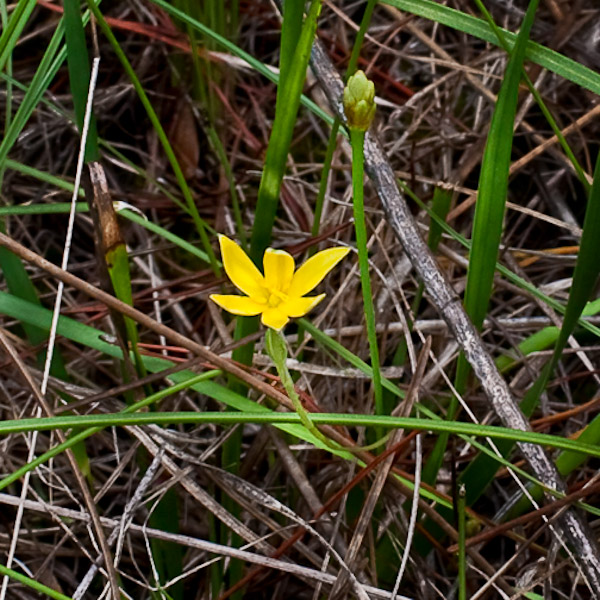
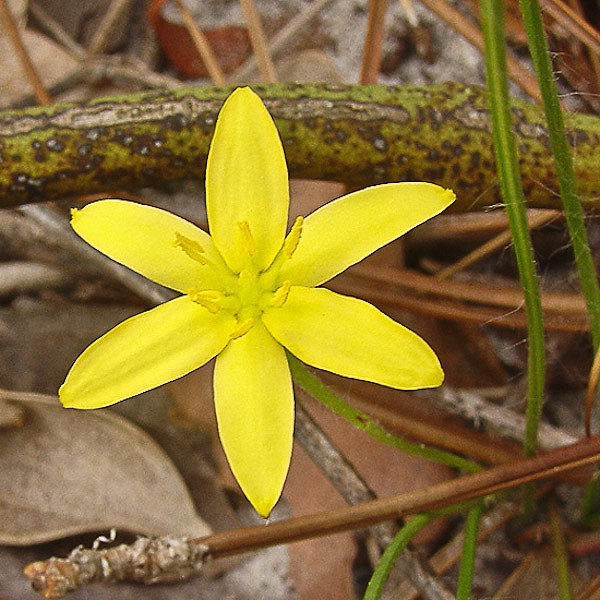
Yellow Stargrass Fired Up to Flower

Hypoxis juncea (and similar species)

Hypoxidaceae (not a true grass)

John and I wandered all over Jonathan Dickinson State Park on this hot sunny day working on photography…and on the railroad.

hypoxis john

John risks his life for that perfect shot!

The itinerary took us through an area burned nine days ago.   CLICK TO SEE THE BURN   Mostly charred remains and blackened earth.  Amid the ashes is Yellow Stargrass in full defiant bloom.   Didn’t it burn up?  Yes,  yet up and abloom after a week.    Many species, mostly monocots,  blossom after fires.

Observers may attribute enhanced flowering after flames to the blaze removing competition or recycling nutrients.  Probably so, but there has to be something more subtle, physiological, and immediate.       Improved soil conditions don’t likely bring forth blossoms in 9 days or less.   Some burned-over species are up and flowering the next day, Bulbostylis, also found in the Park.     Fire-stimulated blooming occurs sporadically in diverse fire-habitat species.   Combustion somehow causes a flower-inducing signal, probably a hormonal reaction.  An exact mechanism is not known, but the gas ethylene is the prime suspect.
Hypoxis juncea 1

All flower pictures today by John Bradford

Ethylene is a component of smoke, and the gas is also a plant hormone with several known physiological functions, one of them being to switch on flowering in many species. It serves that way commercially in  pineapples.  Could fire-adapted plants have “learned” to harness the ethylene release from a passing fire to get ahead of the curve in recovery?

That Hypoxis juncea gets a kick from fire was known to iconic Florida botanist John Kunkel Small.   Far more recently, biologist Alan Herndon, studying two Hypoxis species in South Florida, found not only that fire brings forth flowers fast, but also more flowers per stalk.  Moreover, curiously, that flowers post-fire tend to be sexual, whereas  fire-free flowers tend to shift to be asexual (cleistogamous) cloning the parent plant rather than the birds and bees.   Fire time is gene mixing time.
hypoxis juncea 3

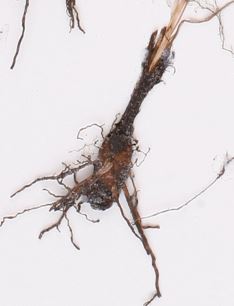
Hypoxis juncea and other Hypoxis species have a secret underground tuber.    I’ve read of a correlation between tubers and fire-stimulated blooming.  The tuber is a chemical factory, resulting in fame, glory, hype, and hope for species of Hypoxis as medicinal plants, a little in North America and a whole lot in Africa, where much Hypoxis grows.
hypoxis tuber

These plants have major history in traditional remedies for to many ailments to list.    Their role in modern over the counter remedies comforts many afflictions.   And they’ve crossed the threshold into modern medical research where they may save the world, or flop.

Hypoxis___Inkomf_4c10bb0530ea3-500x500

The star of the brew is a sterol called hypoxoside, which releases a component called rooperol into the human digestive system upon ingestion.  Rooperol seems to bolster the human immune system.   This and similar observations led to a wave of marketing Hypoxis in South Africa as a super duper tuber,  often called “African Potato,”  with packaged medicines derived from it.   Rooperol became a wonder drug, especially for prostate trouble, cancers, and HIV.

hypoxis add

Although there may be promise, the hype and hope bypassed research to the point of political trouble.   The South African government advocated taking Hypoxis-based drugs for HIV,  you might say in place of established effective antiretrovirals.  Ineffective medication placed HIV patients at increased risk, and set off heated political disagreement in South Africa.

hypoxis cartoon from singh

Hypoxis tuber.   “Fire her” refers to the South African Minister of Health who angered critics by advocating Hypoxis, African Potato (Montato) for HIV. (Cartoon by John Curtis, from Y. Singh, Univ. of Pretoria, Ethnobotany of Hypoxis)
 
2 Comments

Posted by on April 29, 2016 in Uncategorized


Yellow Hatpins

Syngonanthus flavidulus

Eriocaulaceae

An appealing aspectsof the southern edge of Jonathan Dickinson State Park along County Line Road at Tequesta, FL,  in addition to the secret James Bond Rocket Tracking Spy Station, is the whitest, sugary-ist, hottest, driest scrub sand, complete with dunes, and with wet spots ranging from moist depressions to a mighty fine lake complete with otter doing what he otter.   All so splendid!   Thus hard to pick one plant to feature.

Syngonanthus flavidulus 1 - Copy

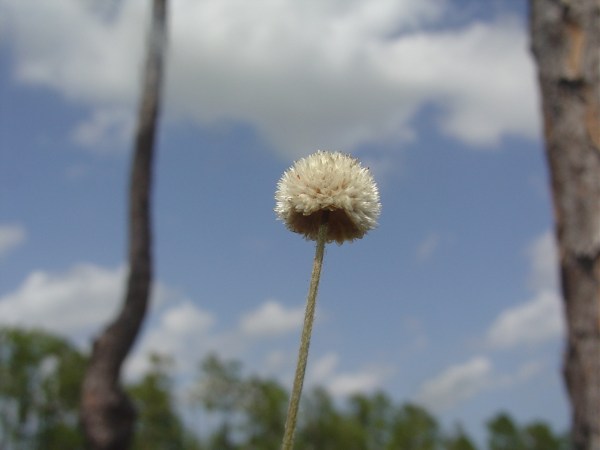
Syngonanthus flavidulus.  All local photos today by John Bradford.

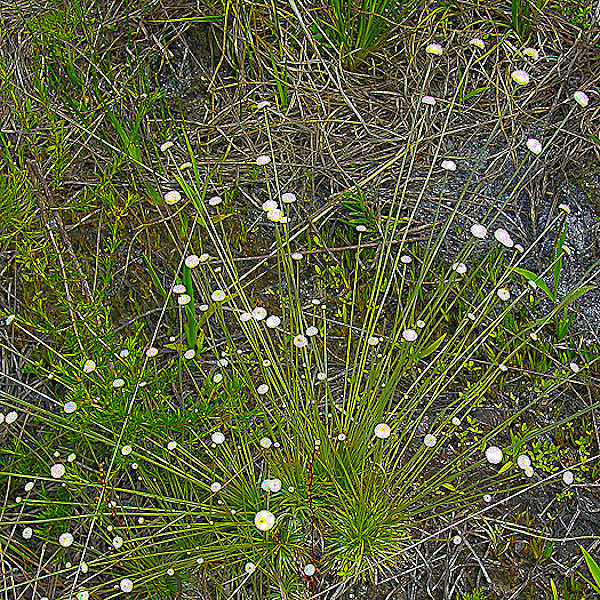
Well, ok, pretty among the beauties is a curious species straight from Mars…Yellow Hatpins.   White shoebutton flower heads glossy yellow beneath on needle-thin straight stalks rising from basal rosettes.    The white flower heads have golden yellow scales coating their undersides.  The ecology of this and related species relative to light, heat, air, and water would fill a book, I’ll bet, if anyone wrote or read it…strange life-form in an extreme habitat.

Syngonanthus flavidulus 1 (1) clump.jpg

Yellow Hatpins favorsthose low damp depressions scattered in the scrub desert.   Syngonanthus is a big group in Africa and South America, dwindling northward to our lone species in Florida and nearby states. (There are additional similar species here in other genera.)

That distinctive golden glow (flavidulus) under the flower heads is the stuff of an industry in Brazil where modern Rumpelstiltskins weave Syngonanthus nitens, Golden-Grass, into gold.
CLICK for gold

Those white heads  resemble those in the Aster Family, but Syngonanthus is about as unrelated to Asters as botanically possible.  The similarity is convergent evolution.  Each head holds hundreds of separate male (pollen) and female (seed) flowers.
Syngonanthus flavidulus closed

The heads closed.   Humid?

Our species has perhaps never been studied in-depth, but similar ones have in Brazil.  Contrary to some earlier assertions, pollination  is mostly by a broad array of tiny insects, including flies, beetles,  and bees.  Doesn’t the fly shown below seem perfectly designed for the job?!  (photo from Carlianne Ramos and collaborators, Annals of Botany 96: 391. 2005.)

syngonanthus fly

A nose for the job

Biologists Aline  Oriani and Vera Scatena studied Syngonanthus elegans.  They found one of those little secrets of nature so easy to overlook.  The flower heads open by day and close at night following the humidity levels.    Those golden scales encupping the head have thick-walled absorbent cells on the undersides.   When it is humid (night) the expandable walls soak in moisture, swell, push the scales inward, and close the head.  When the same cells dry (day) they shrink, pull back, and let the sunshine in.  And now the mystery of nature:  when the head closes it lodges by night little beetles who reportedly pollinate the flowers by day.  Do the beetles get a motel room in exchange for pollination services?   What do they do in that dark room?    Anything like that going on in Jonathan Dickinson Park?

 
11 Comments

Posted by on April 22, 2016 in Uncategorized


Frostweeds  & the Mother Site Advantage

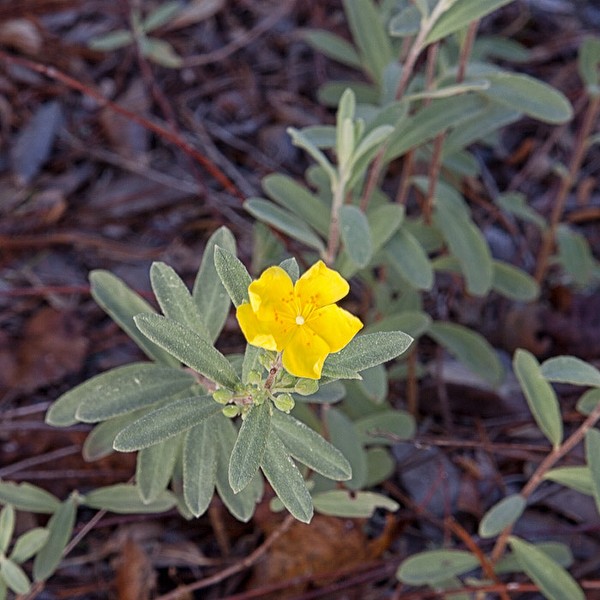
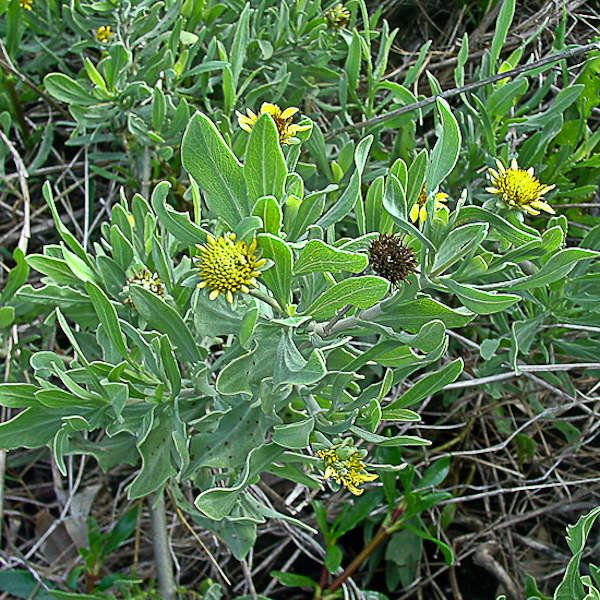
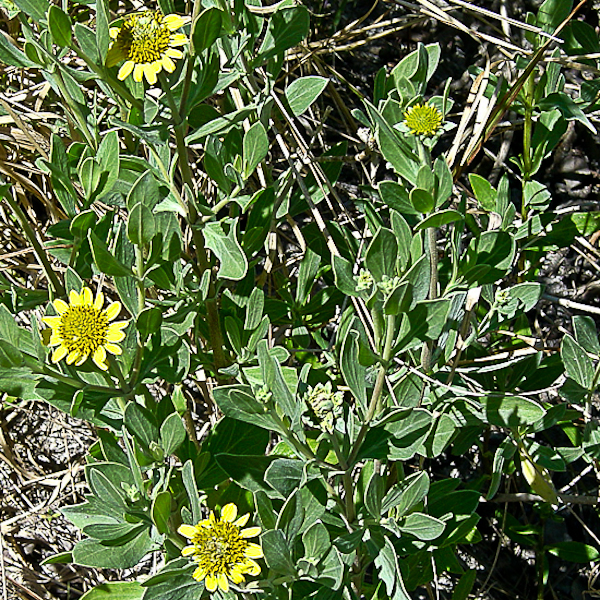
Crocanthemum nashii  (Helianthemum nashii)

Cistaceae

[Useful note:  Helianthemum (Old World) and Crocanthemum (New World) are closely related, traditionally interpreted as a single genus. There are over 100 species.]

Today John (photomaster) and George (umbrella holder) continued a photographic project in Jonathan Dickinson State Park.    John is developing  panoramic images showing highlights of tour beautiful  park.   CLICK   Zoom in, pan around.

helianthemum nashii far

Frosty on the burnin’ sands, as they looked today.  (All photos this week by John Bradford)

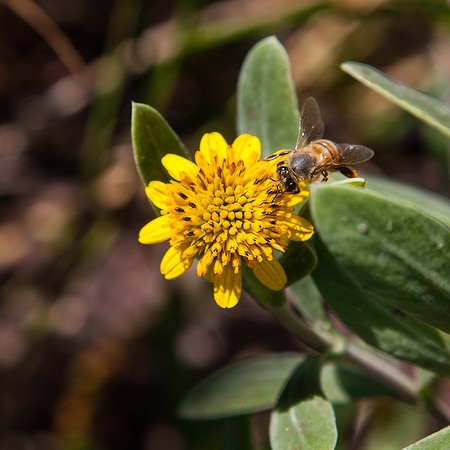
On those fire-scorched sun-baked dunes grows a natural garden of wildflowers, most of them yellow.   Delicate yet bright and vibrant today was Frostweed, Crocanthemum nashii, better known as Helianthemum nashii.   The floral beauty of the “rock-roses, showy species of Helianthemum,  have made them commercial horticultural delights.   Most of the Helianthemums grow in hot, sunny, arid nutrient-poor habitats, making their curious subterranean relationships research-worthy.  Some hook up, for instance, with desert-truffle fungi.   Some  share a fungal internet with oaks, which demonstrably benefit from the linkage.

That’s interesting, given that today’s pretty little flower grows on the world’s most sterile soil, often among oaks.   Some species, perhaps all,  CrocanthemumHelianthemum species have a gelatinous covering on their seed coats. The gel houses fungi, which biologists in the 1950s and 60s interpreted as gifted to the seed from the mother plant to help nourish the youngster, especially with Vitamin B1, thiamin.  Botanists in the 1970s brought that intergenerational fungus-among-us into doubt, although the tagalong fungi could perhaps establish relationships with the roots.    Alternatively the fungi could merely be opportunists digesting the jello; then the main function of the goo could be in seed dispersal, or more likely to help with establishment in the arid habitats.    Perhaps the best interpretation, not original with me, is the Mother Site Advantage, which is:  the safest approach is to “stick around” Mom’s proven safety zone if suitable habitat elsewhere is spotty and widely separated.

Helianthemum nashii close

Now move aboveground.  First of all, the name Frostweed.  Well, with their white hairs the plants look like a frosty mug.   But don’t jump to conclusions!  They also reputedly make “frost flowers,”  i.e.,  pretty ribbons of ice at the stem base on freezing mornings.  So you decide why to call them Frostweeds.  Personally, I suspect the name originated with the hoary-looking foliage, and then the icy handle led writers into over-attributing our plants with frost-flower proclivities?    Many plants do this,   most notably, Verbesina virginica, sometimes dubbed Frostweed itself.  That could engender confusion.

The hairs on the leaves and fruits presumably reflect that killer sand dune sun, although thwarting leaf eaters and maybe even catching/retaining water are possible as well.   (The related and likewise locally native Crocanthemum corymbosum has the leaves notably darker green on top, and the fruit capsules is hairless.)

Crocanthemum nashii is almost restricted to Florida.  Yet those who like to wonder,” how did that happen” might ponder a small geographically isolated population yonder in southern coastal North Carolina, separated from the general population by Georgia and South Carolina.

Helianthemum nashii close 2

One final oddity.  The showy yellow flowers attract diverse pollinators, but that’s not enough.    The plants have a second way to make seeds.   Later in the season (C. nashii) or at the same time (C. corymbosa), in addition to those regular open flowers, come small, closed non-showy (cleistogamous) blossoms that quietly self-pollinate out of sight and out of mind.   Differences, if any,  in the gel-covers and germination characteristics of seeds derived from the two flower types might make an interesting study.

—————–

Note:  To dig in on the oak relationship, start here


6 Comments

Posted by on April 15, 2016 in Uncategorized


Cheating for a Place in the Sun

Epiphytes and Vines Have No Scruples

[Vocabulary help: An epiphyte (EPP-ah-fight) is a plant that grows sitting on another plant.  A so-called “airplant.”  Many aroids, bromeliads, ferns, lichens, liverworts, mosses, orchids, and others can be epiphytes.]


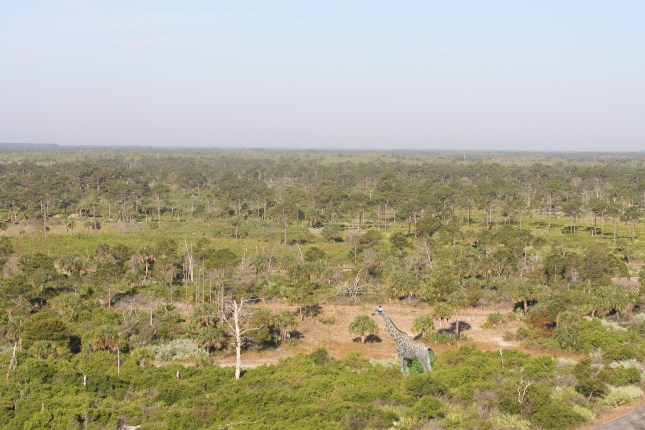
This morning John and George toiled way up high in the sun, on the Hobe Mountain (sand dune) tower in Jonathan Dickinson State Park working on a photo project.   While aloft it was impossible to ignore our similarity to plants perched likewise with a view:  epiphytes and vines.    We were human epiphytes.

tower view giraffe

Epiphyte-eye view, as seen from the JD Hobe Mountain Tower today

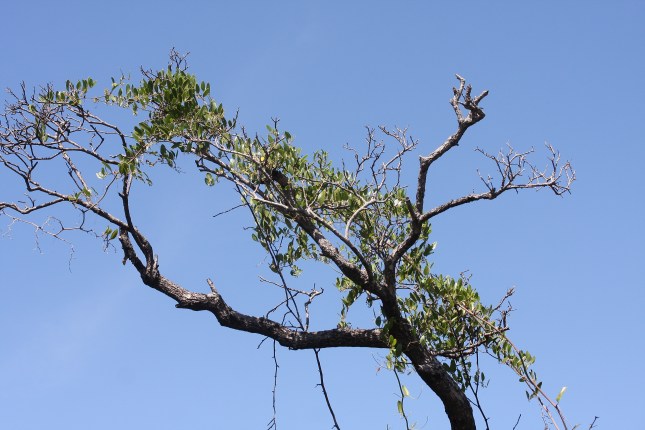
On the dune in the early morning there was perfume in the air.    Fragrance on a burned  sand dune with dead charred trees?   Yes, coming from flowering Cat Briar (Smilax) vines taking advantage of the bare tree skeletons to cover the limbs with replacement foliage, absorbing the orb using someone else’s  woody infrastructure.  That’s how vines roll.

IMG_1942

Smilax repurposing dead tree.

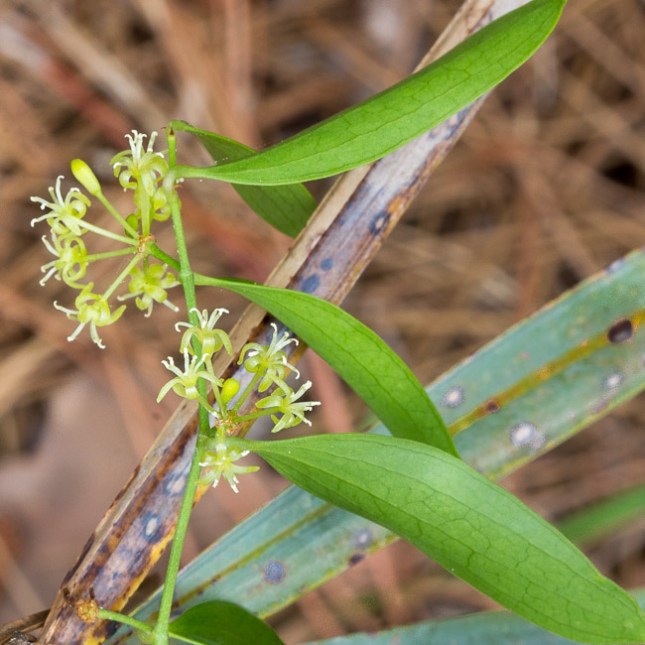
In the event of fire, our Smilax auriculata dies back to a hunky rhizome to rise again…free of competition.   I like the fragrance of our Smilax, although the genus more broadly strikes some sniffers adversely.  Many Smilax species belong to “Section Coprosmanthus,” Latin for outhouse-flower.     Funny thing about Smilax, the individual vines are separately male (pollen producing) or female (fruit-making).    Weird, isn’t it, to “waste” individuals as making pollen but no fruits?    (But come to think of it I’m a wasted human making no babies.)  Perhaps in a massive vine making thousands of crowded flowers the sexual separation is necessary to force crossing where otherwise self-pollination would prevail.

Smilax auriculata 13

Smilax flowers

If you’re going to sprawl all over somebody else, too lazy to build a trunk, why not be even more lazy and quit photosynthesis?   That’s true of several vines, most notably our “Love Vine.”    It is the orange spaghetti all over other plants.   Love Vine sends little suckers into the flesh of its host to help itself to the host’s hard-earned sugary sap.

Some species start out as epiphytes (or as vines) but as their size and needs grow,  send roots to the ground.   Best of both worlds, start out unrooted (or a little rooted) to get going in the sun, and then plant roots with maturity.    This is like getting a car loan…secure the car first (treetop sunshine), then use the car to go to a job and settle down to pay it off (plant roots).  Around here, Strangler Fig is the famous case.  Also guilty can be Rose-Apple and Muscadine Grape.

A more felonious approach is for an otherwise epiphytic species to sink its “roots” right into the host.  Approaching this, a lot of plants grow in the natural flower pots formed by moist debris-filled cabbage palm leaf bases.    Little or no known penetration of the Cabbage Palm’s living flesh.   But  Mistletoe (introduced a little) burrows right on into its host Oak tree.    There’s evidence that it is not totally a taker though.    Instead, it seems to “give back” sugar from its own photosynthesis, although this needs more research.

Cecropia in palm

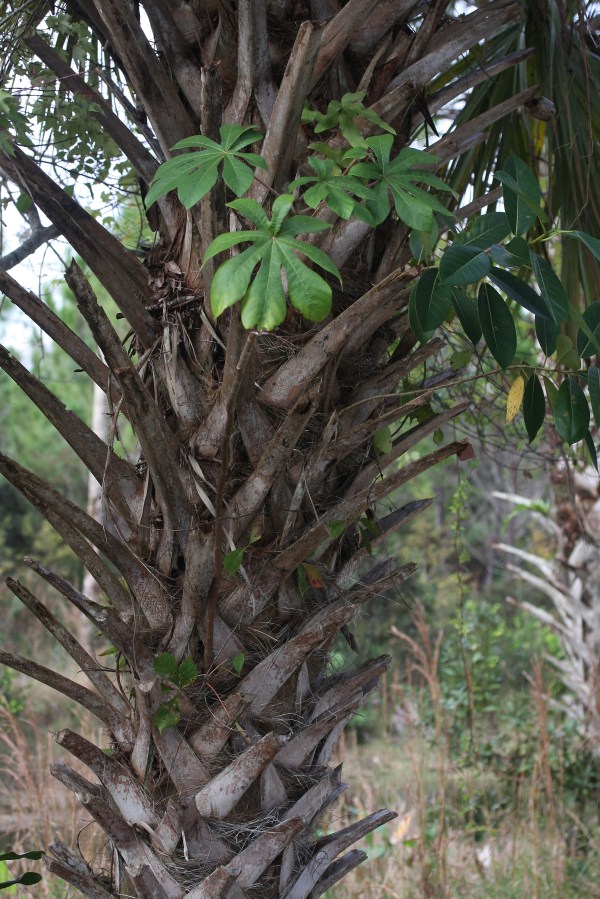
Golden Polypody Fern (top to the right), Cecropia (left with four big fingery leaves), Strangler Fig (far right), and Virginia Creeper (bottom) on Cabbage Palm

Most epiphytes develop their own special tricks for sitting up high and soil-less.    Their main problem is securing water and dissolved nutrients.  Many sidestep dry times by going into suspended animation when thirsty examples including mosses, lichens, liverworts, and resurrection fern.   These conduct business when wet.

Others capture and store rain water, stem wash, and mist.    Orchids have a covering, the velamen, on the roots.   Some have built-in rain barrels, most famously the “tank plant” bromeliads making a vase of their leaf bases.  A couple of these supplement their diet by adding carnivory to the tank, including one Florida native.

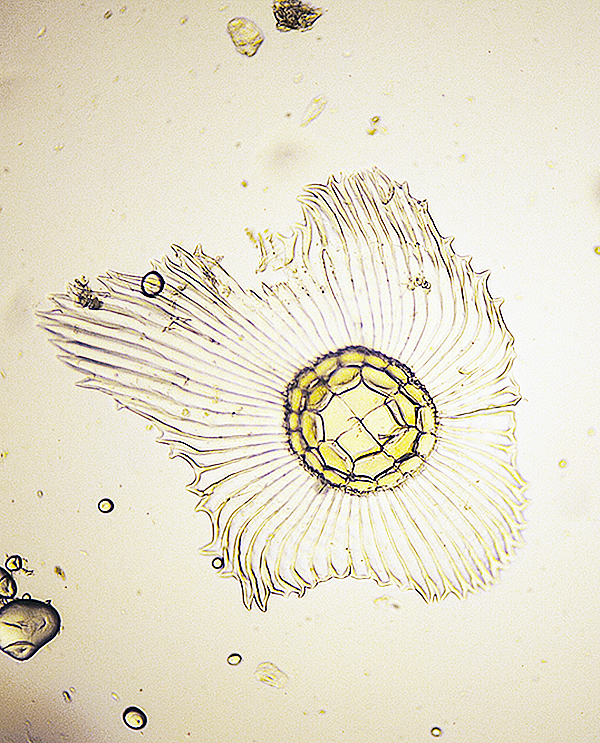
Most of our local Bromeliads, however, are tankless:  species of Tillandsia, including Spanish-Moss, Ball-Moss,” and many more, have a vesture of beautiful umbrella-shaped scales.  Water droplets catch under the scales, and suck into the plant through the central “trunk” of the scale.  Some Tillandsia Bromeliads and additional epiphytes offer living quarters for symbiotic ants in swollen puffy plant bases, or various hollow chambers.  The ants bring and create soil and manure, and certainly also provide guard duties.

Tillandsia recurvata CROPPED

Bromeliad scale under microscope

Who wants to see the pepper dance?  Non sequitor by PBSC student Ben Battat.

 
9 Comments

Posted by on April 8, 2016 in Uncategorized


Myrtle Oak a First Responder

Quercus myrtifolia

Fagaceae

—————————————————–

Scrubby shrubby  Oaks helpful pre-info (and see photos below)

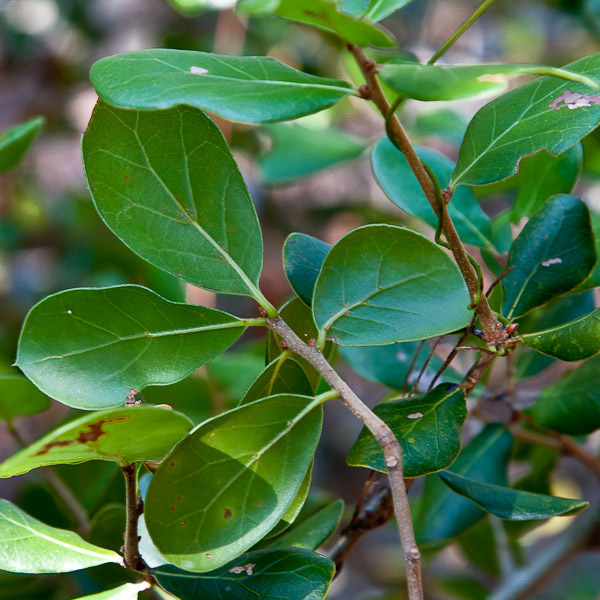
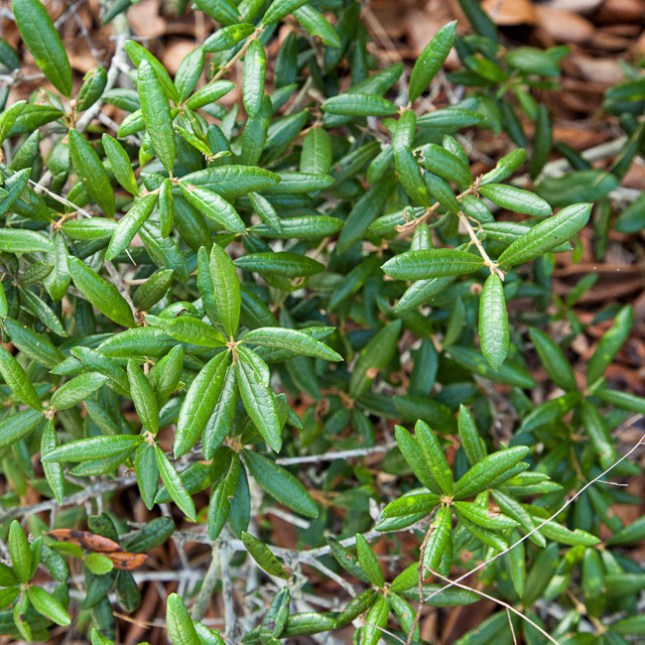
Myrtle Oak (Quercus myrtifolia). Usually small and shrubby, seldom over 15 (30) feet tall, leave almost hairless, shaped like the business end of a spoon,  evergreen.

Quercus myrtifolia 4

Myrtle Oak leaves look like spoons.


Sand-Live Oak (Q. geminata). Usually small and shrubby as encountered in early scrub, although potentially to over 70 feet tall as a full-sized tree. Leaves long and narrow with the margins rolled under, fuzzy beneath, semi-evergreen.

Chapman’s Oak (Q. chapmanii). Shrubby or often a small tree to about 30 feet tall, often encountered taller than Myrtle Oak.  Leaves variable, sometimes 3-lobed, nearly flat, a little hairy beneath,  larger than the other two, dark green and glossy-reflective above, deciduous.

——————————————————-

Quercus myrtifolia 5

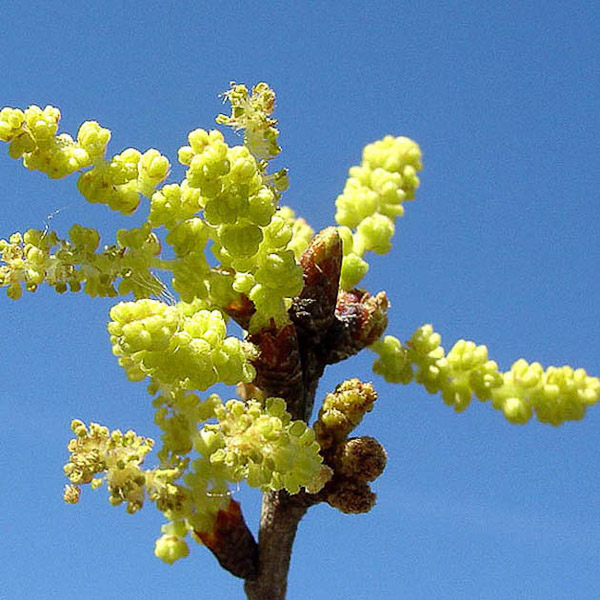
Myrtle Oak male flower clusters. (All photos today except the burned scrub by John Bradford.)

Today John and George climbed the Hobe Mountain (dune) tower in Jonathan Dickinson State Park near Hobe Sound, Florida.   We were up there for a photo project, with the botanical benefit of the best view in Martin County.  The vista sweeps across scrublands  subjected to prescribed burns.  The botanical take-home lesson is that Myrtle Oak is the early come-back kid after scrub fire.     Where all else seems disappeared, stressed,  laying low, or charred, the Myrtle Oak is green, vital, and in charge.

Quercus myrtifolia 6

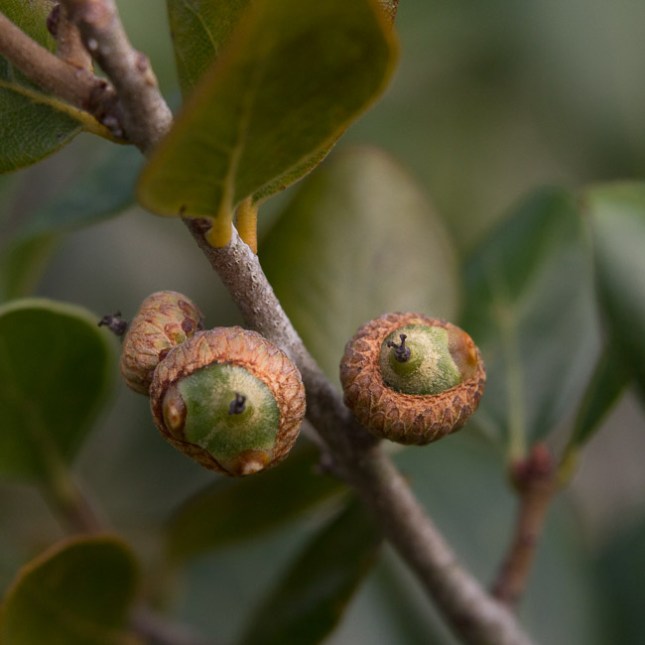
Myrtle Oak acorns

Around here there are three main mostly shrubby scrub oaks, predominantly  Myrtle (Q. myrtifolia),  Chapman’s Oak (Q. chapmanii), and Sand Live Oak (Q. geminata).  Sometimes additional species make cameo roles, but we’ll focus on the main trio.

Quercus myrtifolia 7

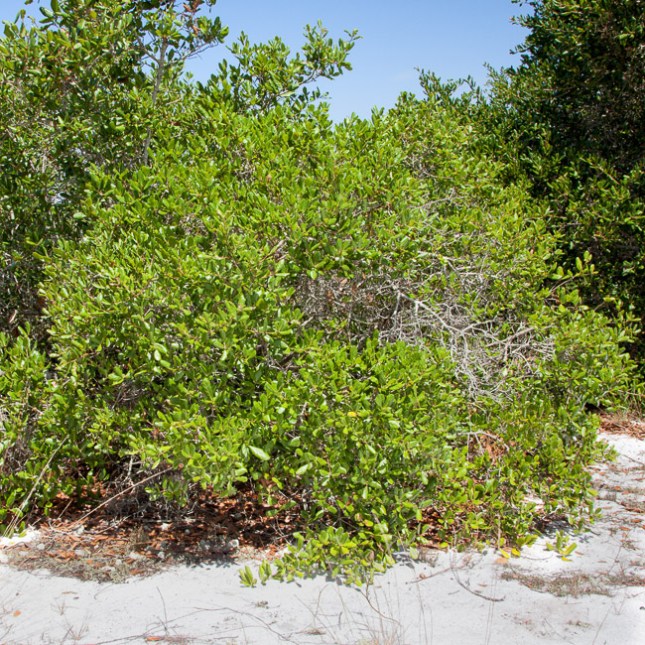
Myrtle Oak on sugar sand

Ecologists have long been interested in succession, which is the parade of communities to occupy a site after disturbance such as flames.  Just like human settlements, pioneer ecological communities alter the conditions paving away for the next stage.    Succession following fire is a special case, because many species have diverse mechanisms  to survive the blaze  and bounce back, and then compete at different phases of succession, some winners early, others winner later.  These are important management questions, many species of conversation interest are best in early-successional environments, scrub jays, as a prominent example.

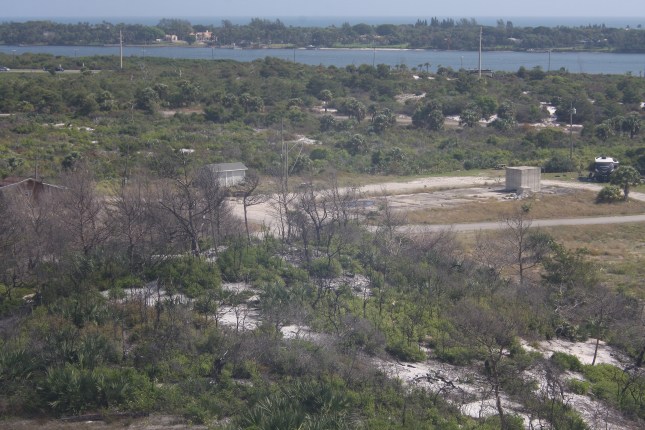
J.E. Freeman and collaborators at the University of Florida recently studied post-fire succession with reference to oaks.    Their data showed that, “Myrtle Oak was the most aggressive colonizer of postfire open space.”   So does the photo below taken this morning.

IMG_1610

Burned scrub. Most of the light green is Myrtle Oak.

Freeman showed dominance to shift toward Sand-Live Oak at later stages.  Sand-Live Oaks, with their tendency to take over later, can grow into substantial trees to 70 feet tall, far larger than Myrtle Oak or Chapman’s.   Chapman’s seems at its best after the initial Myrtle Oak surge but well before late succession.

Quercus chapmanii with gall

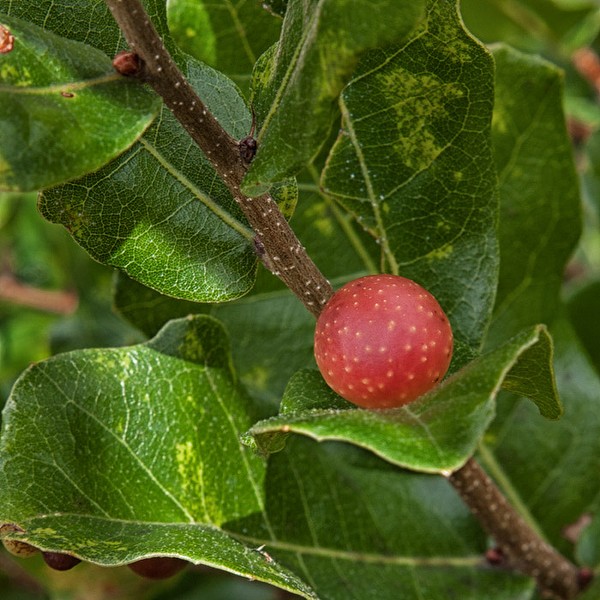
Chapman’s Oak. Reflective leaves.  Red globe is a gall.

Having three oaks (plus sometimes others) commonly found mixed in an extreme habitat begs the question of how they co-exist without one “winner” with the others outcompeted to oblivion.    We have one hint already, they hit their strides at different point in succession.    Botanists have pointed out moreover, that within the world of oaks, they are not close relatives, and thus differ in demands and tolerances, although not often in any conspicuous fashion.  Tammy Foster in a 2014 doctoral dissertation looked into this and found some teaser surprises.  Echoing interests of Florida scrub ecologist Herman Kurz a century earlier, Foster investigated small elevational differences, finding that of our three scrub oaks all preferred high dry habitats.  But wait, one was a little different, Sand-Live Oak, grew also at lower elevations where it showed sensitivity to drought due to extending to a different soil type, underscoring what we already knew…that Sand-Live Oak is the least tied to early succession scrub.

Quercus germinata 8

Sand Live Oak. Narrow rolled leaves.

Foster found also that Chapman’s Oak bravely maintained normal photosynthetic ability during drought when the others closed up shop, a superpower perhaps permitted by its reflective leaves able to shed damaging light and heat.   So it is apparently out-photosynthesizing the others at dry times, but then, as the only deciduous species, concedes the rest of the year.

Tough to draw any big conclusions from all this, and yet eye-opening to catch glimpses of how three inevitable competitors carve out specialized coexistences with a little elbow room for each other.


8 Comments

Posted by on April 2, 2016 in Myrtle Oak, Uncategorized


Dayflower and Camp Murphy—Flowering on the Scrub Sand Today…Gone Tomorrow

Commelina erecta, C. diffusa

Commelinaceae

Today’s trip to Jonathon Dickinson State Park by John and George was to hear Ranger Barry Richardson recount the first life of the park  as U.S. Army Camp Murphy around 1942-43.  CLICK  The camp is lost and almost gone,  with some leavings left to encounter. CLICK CAREFULLY

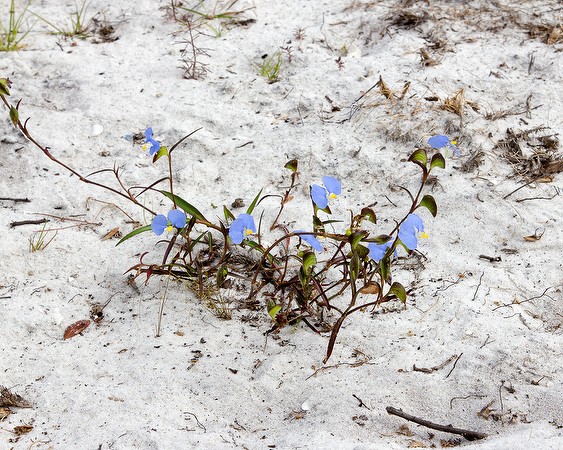
While Ranger Richardson described personnel assigned here from the north, I wondered if any military nature-buffs noticed the unique flora.  The answer came forth when we heard about recruits on their tender bellies under machine gun bullets discovering sand spurs in their navels.  Maybe some also enjoyed little blue wildflowers with the scent of gunsmoke…dayflowers to brighten the outing.

Commelina erecta 3

Observed while dodging hot lead.   All photos today by John Bradford.

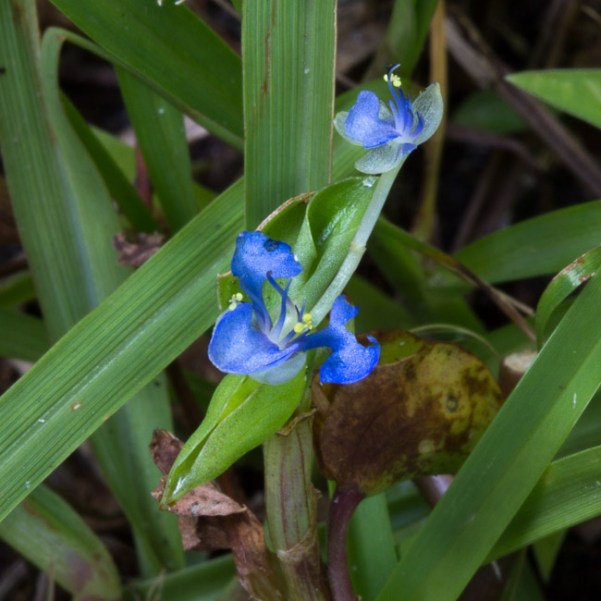
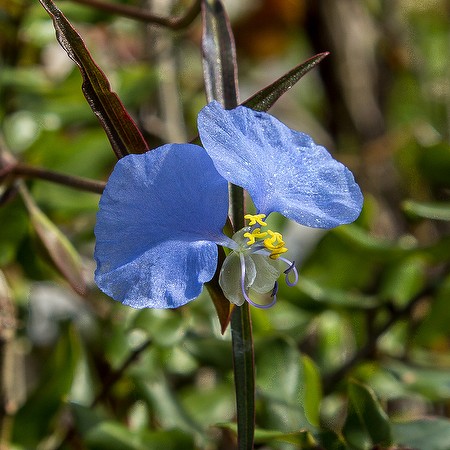
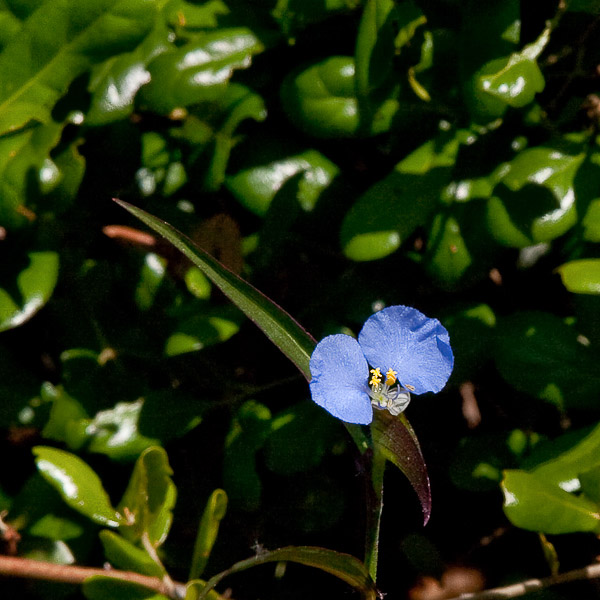
We have two locally, the non-native Commelina diffusa (all three petals blue), and the native Commelina erecta (one petal white).  (Also lurking about, C. gambiae from Africa has all petals white.)  Additional native and non-native species live elsewhere in Florida.

Commelina diffusa 3

C. diffusa

Dayflowers are known for many wonderful things.  Such as:

  1. How Commelina got its name. Linnaeus named the genus for the prominent Dutch botanists Jan and Kaspar Commelijn represented as the two prominent petals, the abbreviated third petal representing a third Commelijn who died young.
  2. Skyblue petals give blue dyes, once useful for paper and printing.
  3. False advertising. There are two types of anthers, bright yellow ones to attract pollinating bees despite having no real pollen, and smaller less conspicuous anthers to dust pollen onto the bees preoccupied with the exciting yellow anthers.
  4. Big easily observed stomates. Wig wup…right? Well if any reader teaches biology and needs to demonstrate stomates, this plant probably grows near the back door.
  5. Day-flowers. The flowers open and self-destruct, all in a day, to be replaced tomorrow by another blue blossom.
Commelina erecta 8

Big yellow come-on anthers, above small purple business anthers.

They don’t call it dayflower for nothing!. CLICK

That brings us back to Linnaeus in a different connection:  He created a floral clock.  Few species flower like “clockwork.  Let’s say you take a 4-pm bloomer from Linnaeus’s clock to Boston, what time does it flower there?   I don’t know—not  4 pm Sweden time. Flowering time is context-specific, responding to different combinations of internal rhythm,  light and dark, night length,  temperature,  water relations, relative humidity (rare),  hormonal status, and more.

When a flower opens at 11 AM, can we say “this flower is wired to open 5 hours after dawn” or is it merely responding to a set of conditions happening around 11 am, say a threshold light intensity or temperature?    Most research seems to show light and temperature as the main factors beyond built-in rhythms.

All that said, dandelions on our campus seem simple: open when warm and bright, otherwise closed.   The Portulaca pilosa in a pot on my patio opens briefly when the sun shines and closes upon shading (or in response to heat?), its fleeting flirtation behind the name Kiss-Me-Quick.   Also on the  porch is the Yellow-Alder (Turnera ulmifolia).   It opens some days with a known contingency:   daytime flowering depends on the length of the prior night.

Certain species open some flowers while others await their moment in reserve.  A local example is Sacramento Burrbark, Triumfetta semitriloba.  It can have some flowers open freshly all day long.

It is useful to recognize flowers that open/close just once with overnight replacement, as opposed to those with same-flower encores.   Species where the same blossoms open and close repeatedly include Bluets (Houstonia, Hedyotis),  Cacti,  Mentzelia, Oxalis, Poppy-Mallows (Callirhoe),  some Portulacas, some Water-Lilies, and diverse Asteraceae.

Watch closely this Oxalis time-lapsed over three nights.  The same flowers open and close, out of sync with the leaves.    CLICK

Many ephemeral flowers, by contrast, are replaced the next morning by identical blossoms.  Here is Puncture-Vine caught in the overnight flower replacement act. CLICK

As many (most?) flowers fade, the plant takes back nutrients.    That is why cut flowers can last longer in a vase freed of the parent-plant’s back-pumping nutrients from aging blossoms.

Perhaps a little different in behavior is Mexican-Clover carpeting the ground in pink blooms by day with each blossom dropping to earth by night.  Ashes to ashes dust to dust.   Not lost altogether though, upon decay they must recycle their nutrients back into their mother plant?    Not studied. Maybe all those falling flowers are allelopathic, suppressing competition, or maybe they somehow improve the soil for Mexican-Clover seedlings.    Just idle speculation.

The main reasons for intricately controlled openings and closings are easy to fathom, presumably to be open for business when conditions are healthy and the correct pollinators are active (or were active in the place and time the species evolved).     A flower when not in service these need protection.     Wet flowers have trouble from rain and dew.  Many stay are clenched during the early morning dew hours, and night flowers may close before dawn for the same reason.  Once a flower is pollinated, it no longer needs to stay open, giving cases of pollination prompting closure.

Flipping that statement around, flower closure can cause pollination.    A lot of flowers have a self-pollination “Plan-B” in case the birds and the bees fail.    Their closure forces pollen-making anthers, or petals with pollen on them, against the pollen-receiving stigma.

Commelina erecta 2

What does Dayflower have in common with Camp Murphy?

 
11 Comments

Posted by on March 26, 2016 in Dayflower, Uncategorized


Tags:

Grass Pink Orchid is a Sex Machine

Calopogon pallidus and additional species

Orchidaceae

John and George checked out today the first day of the new Jonathan Dickinson State Park food truck and alfresco dining facility overlooking the river.  Four thumbs up on the chef.  Then full of hot dogs and Cheetos we wandered into a wet pine savanna for a better look at the zigzag bladderworts featured in last week’s blog for having odd nutritional practices.    So here’s the thing:   other plants in the Bladderwort Meadow eat funny too.   Plentiful also was sundew (Drosera) with its red bug-catching tentacled leaves.

Mixed in with the flesh-eaters were pretty Grass Pink Orchids, which have their own nutritional assistance…symbiotic (mycorrhizal) fungi with one end of the fungal filaments living internally in the orchid root cells, and the other end out in the mud securing sustenance, presumably mostly phosphorus and likely nitrogen.   Mycorrhizae are far from rare;  it just seems likely a little help from its fungal friends goes a long way in this case.

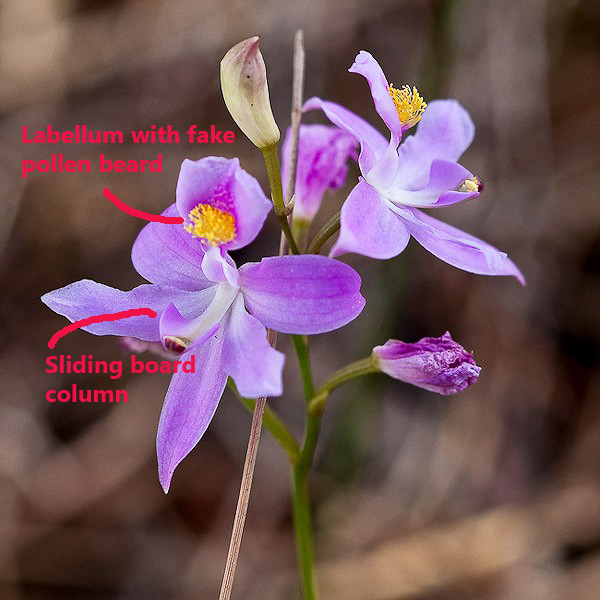
Calopogon has a curious pollination mechanism entomologist Charles Robinson described in rich detail right here in (Orlando) Florida in the Botanical Gazette of 1887.  In Calopogon the fancy third petal, the labellum, rises vertically.  The organ containing the pollen-receptive stigma and pollen-producing anthers, the column,  juts out horizontally below the labellum, with the stigma and anthers facing upward.

calopogon pallidus labels

That vertical labellum has a tuft of yellow hairs giving the genus its name (Calo-pogon = beautiful beard).    Bees go for yellow, the color of pollen, and you could interpret the yellow beard as false anthers offering bogus pollen.   A visiting bee grabs the beard seeking pollen, and surprise! The labellum is hinged and folds downward plopping the bee’s fuzzy back onto the stigma and real anthers with real pollen.

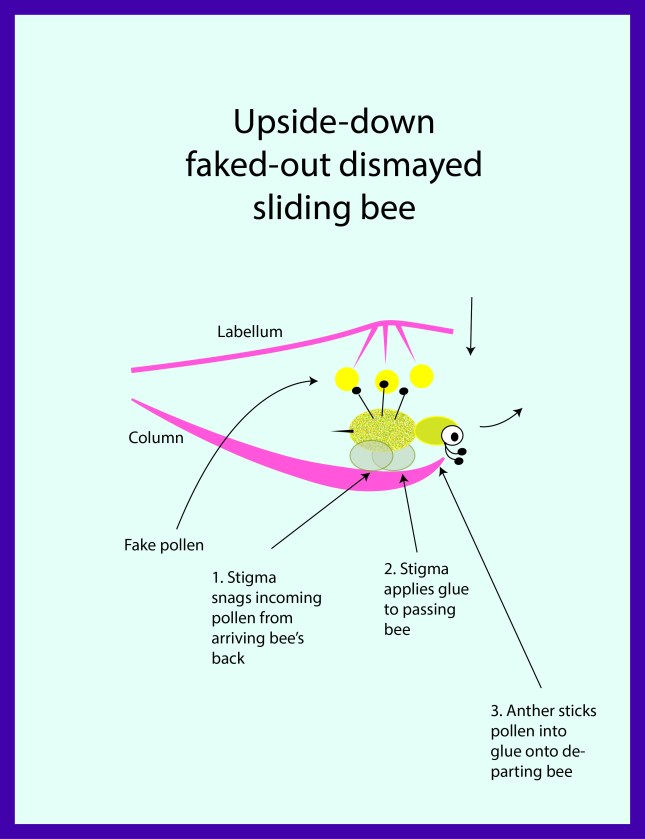
The column has raised sides like a playground sliding board.   The bee on its back slides down the board, first delivering any pollen from its back to the stigma, then the stigma applies glue to the bee’s back, and finally the sticky-backed bee brushes over the anthers where outbound pollen sticks to the glue.  Of it buzzes to flop and slide again in a different flower.  A three-stop assembly line.

calopogon

Orchids usually package the pollen into hard masses called pollinia, but in Calopogon the masses are soft, the grains loosely connected by threads, interpreted by other botanists as an adaptation for snagging to the bee’s fuzzy flipside. The pollen winds up positioned where the bee can’t remove it.  The bee’s stuck with it until its next slip and fall.

 
8 Comments

Posted by on March 18, 2016 in Grass Pink Orchid, Uncategorized


Tags:

Zigzag Bladderwort is Multi-Peculiar

Utricularia subulata (U. cleistogama)

Lentibulariaceae


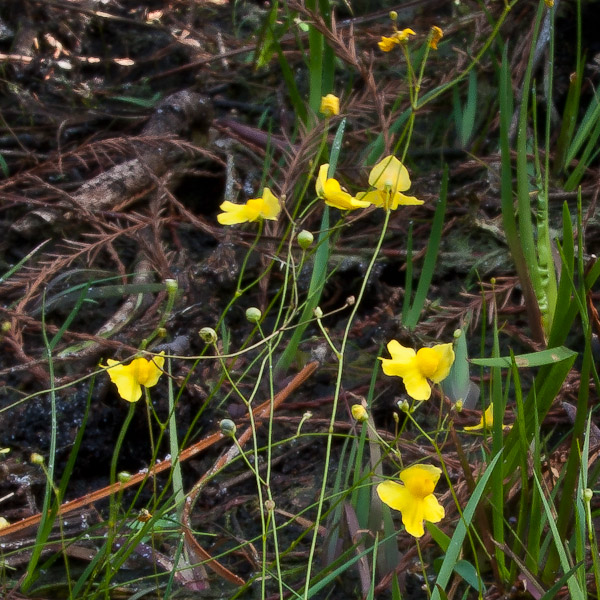
John and George walked in Savannas State Park in Jensen Beach, Florida yesterday.  Birding was the primary agenda.  The botanical treat was the wetland areas all abloom with yellow Ludwigias, Sneezeweeds (Helenium—wow, like a garden),   Tickseeds (Coreopsis),  Xyris, and carnivorous Bladderworts.     Some time ago in this blog we looked at the bladderwort trap so we’ll jump past that now.

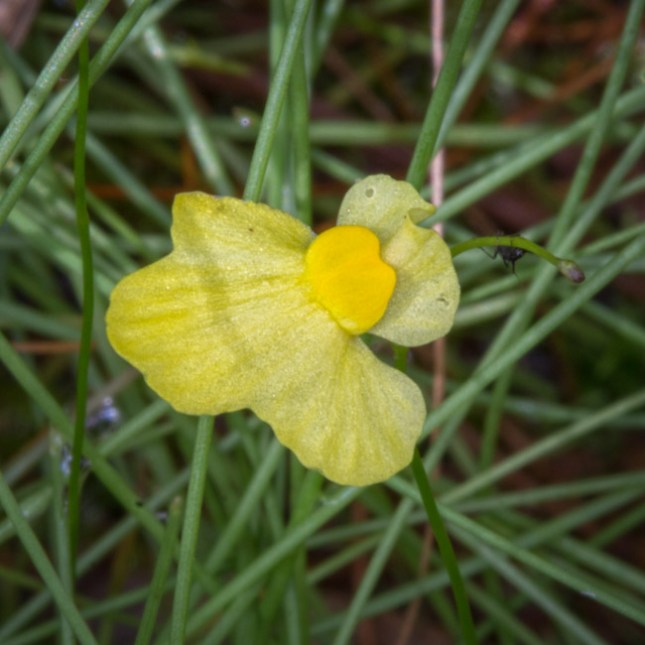
The Zigzag Bladderwort,  presumably named for its zigzag stolon,  is kinky  in several additional ways:

First, it lives, not generally in standing water like the other local Bladderworts, but rather in moist soil, and trends a little weedy.    Look in disturbed moist depressions along wet foot trails.

Utricularia subulata 1

Zigzag Bladderwort as it looked yesterday. (First three photos by John Bradford.)

Second odd feature, Zigzag BW has by far the broadest distribution of any U.S. Utricularia, extending to Nova Scotia, to Lake Michigan, and to Tennessee.   You might ask, how does this delicate little wisp survive cruel ice and snow?    It creates subterranean “buds” able to survive tough times.

Utricularia subulata 3

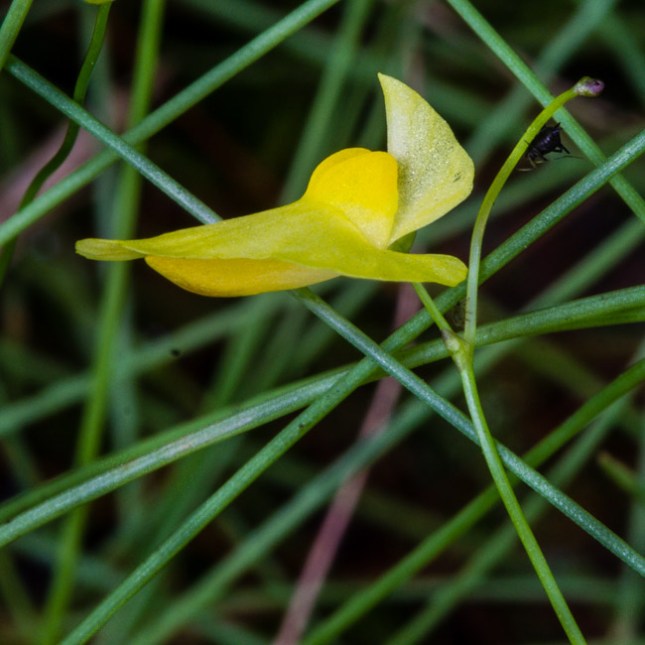
ZZBW resembles a Snapdragon

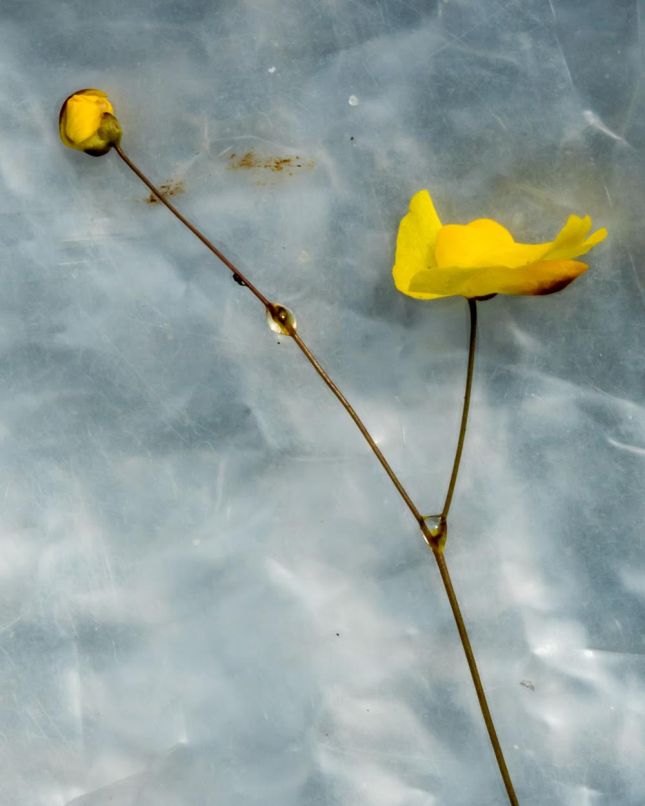
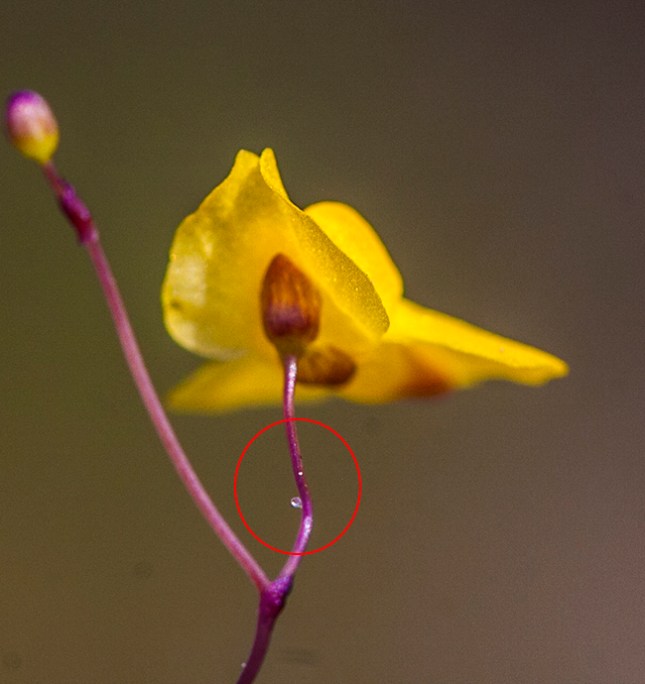
Odd item number three, “sticky dew drops” sometimes at branch points. Why would it do that?    Maybe to prevent ground-dwelling creepy-crawlies from messing with the blossom?    The droplets are super sticky stretchy, natural flypaper.

utricularia droplets

Note the sticky droplet.  These occur sometimes on the stems, where tiny insects (?) can be seen to crawl.  (Photo by John Bradford)

If you touch one and pull your finger away a strand stretch to connect your finger to the stem, like gum on a shoe.  The droplets could be extrafloral nectaries, ant feeders. However, the extreme  tackiness makes me vote for  bug-catcher.  A second level of blossom security is apparent.  Like a Snapdragon, the flower is closed at the mouth until a bee forces the two lips apart.

Utricularia subulata 4

Look closely—cooties!

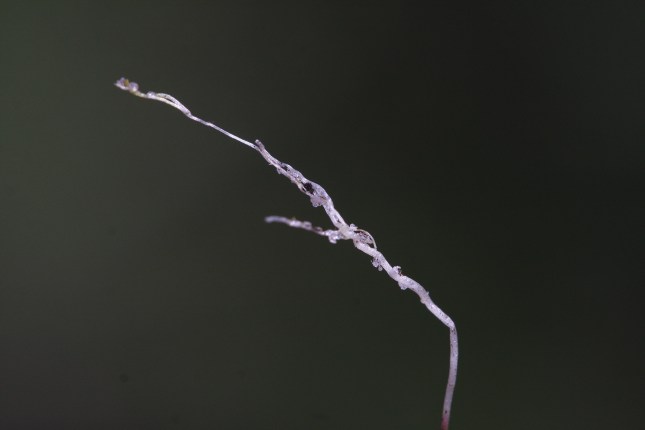
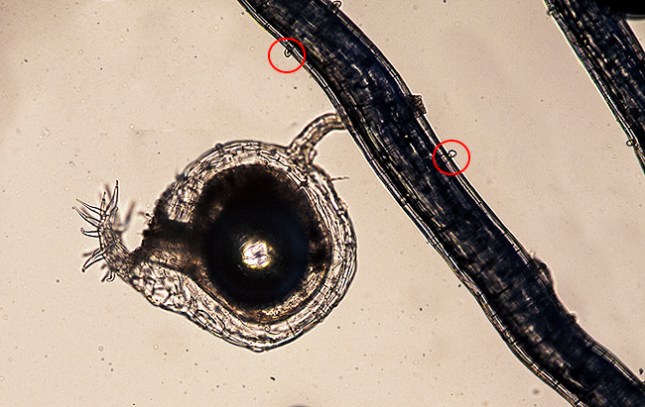
Peculiarity four, along the stem, including the subterranean stolon, there appear tiny polyps.  I don’t know what these are or why they exist.     Other species of Utricularia have gland-tipped hairs, and the bumps on U. subulata  look like eensie weensie plant hairs (marked with red circles in the photos).   Maybe they are glandular.

Utricularia whole plant

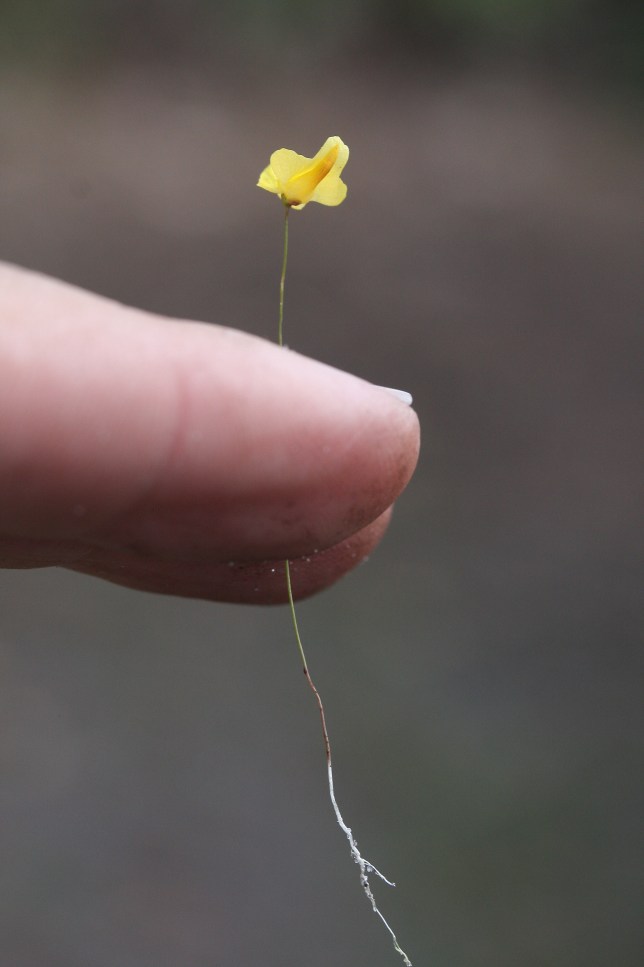
The entire plant.  It’s all flower!

Weird item five, there are not roots.  The underground portion is stem (stolon), and there’s precious little of that.     It has a string of nearly microscopic bladder traps.   The aboveground stems are mere threads usually under 6 inches tall.    The leaves are puny and inconspicuous.  In short,  it is somewhere between awesome and mysterious that a rootless and nearly leafless plant can rustle up enough “fertilizer” nutrients and sufficient photosynthetic nutrition (carbohydrates) to crank out big booming blossoms.   There are factors in this equation we don’t yet know.  So read on to fill the gaps with speculation.

Utricularia underground

Stolon highly magnified, with traps.

Carnivory in plants is generally presumed to supply “fertilizer” nutrients, mostly nitrogen.   The Bladderwort traps do at least this.  Utricularia  traps come with glands to remove excess water from the closed chamber, and different glands to secrete enzymes into the trap and absorb the digested prey back out, like my stomach.  That’s all old-school.

utricularia subulata stem gland

“Hair” on stem.  There is another at the bottom of the picture.  I don’t know what these are about. Similar structures are on the stolon.

New research hints that the traps are complex little microbial ecosystems perhaps making surprise contributions beyond mere nitrogen.   Mainly, carnivory sometimes probably captures and contributes carbohydrate energy to the plant, that is, helps out surprisingly in the “photosynthesis” department beyond the expected “fertilizer” department.  Some Utricularia species actively feed symbiotic trap-dwelling microbes, which may help lure prey,  digest the victims, and  (here’s the stretch) somehow transfer carbohydrate energy stolen from the prey to the plant.  If true, that would help explain how the plant drums up enough carbohydrate-ish energy despite being underendowed photosynthetically.

utricularia subulata trap arrows

The trap under a microscope.  The trap entrance (left side) and its “welcome pricker thing” are to the left.   How the bristly pricker device helps capture victims in not clear.  It may trigger the door and/or attract/entangle tiny creatures?   “Hairs” on the stolon circled in red.

And one last oddity, number 7:  Sometimes obsolete (and current) names give clues about species biology.  The present name subulata, is based on the adjective “sublate,” meaning awl-shaped in reference to those inadequate-looking leaves.     The older name “cleistogama” is more revealing.  Cleistogamous (kliste-OG-ah-mus) flowers remain closed-up and secretly self-pollinate. These occur in today’s species either mixed with normal flowers or exclusively. A form with exclusively cleistogamous flowers was once named as a separate species, Utricularia cleistogama.

 
5 Comments

Posted by on March 13, 2016 in Uncategorized, Zigzag Bladderwort


Tags:

Sea Oxeye

Borrichia frutescens

Asteraceae

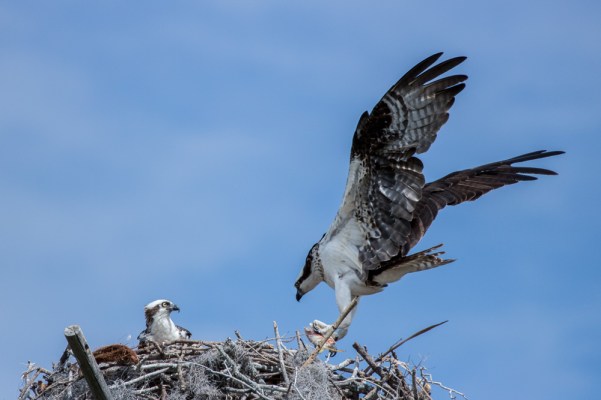
The main goal of John’s and George’s wilderness trip around Jensen Beach, Florida, today was birds.   Here is John’s shot of a handsome Osprey couple enjoying sushi near the Roosevelt Bridge.

borrichia osprey jb

Ospreys (All photos today by John Bradford)

Below the Osprey nest,  blooming in the saline mud was a perennial wildflower favored by native plant landscapers*, for good reason:  spreading yet disciplined growth, compact dimensions, pretty gray-green foliage, and sunshine yellow flower heads.    The leaves are variably more or less succulent, with the puffiness influenced by the saltiness of the soil, apparently because the blades sequester excess salt in their tissues.    The plant is resistant to salinity, poor soils, and immersion, reportedly surviving 7 months under decaying flotsam.

Borrichia frutescens 2

Borrichia has only three species.    One is poorly known and oddly isolated in Peru.  The other two live in Florida and beyond.    Our local Borrichia frutescens differs from the other Florida species by having spine-tipped bracts on the flower head and grayish vs. mostly green leaves.   Where the two Florida species overlap south of here they form a hybrid called B. X cubana.      In general in the plant world hybrids often don’t thrive, unless they reproduce clonally, as in the present case.    Rhizomatous spreading allows B. x cubana to expand like a champ.  Although occurring wild, the hybrid can also arise via artificial crossing.

Borrichia frutescens 1

Members of the Aster Family often have a “medicinal” fragrance and associated bioactivity.  Interestingly, Borrichias have a cluster of related historical medicinal uses, usually as teas, centered on respiratory ailments.  Research has demonstrated antimicrobial powers.  Good thing.  They need an aresenal, as they seem to be more beseiged than Donald Trump.  These plants are hosts to fungi, nematodes, and insects, forming a tight little dinner club of who eats whom.  Let’s see about that.

Borrichia frutescens 5

A gall-forming midge Asphondylia borrichiae—which transmits fungi from stem to stem— is a parasite on Borrichia,*   usually raising just one gall per stem, yet potentially detrimental or lethal.   The severity of gall trouble diminishes with increasing salinity, which may help explain the salty habitats Borrichia favors, as refuges?  The midge has parasites (parasitoids) of its own, with at least four species of wasps laying lethal eggs in its gall-bound larvae.     The parasitoids cause an odd consequence requiring introduction of another plant having parallels to Borrichia frutescens:

Iva frutescens* looks like Borrichia frutescens (except in the flowers), occupies likewise salty habitats, has a similar U.S. geographic distribution, is in the same plant family, has the same last name (meaning shrubby), and  is a co-victim of Asphondylia borrichiae.     And here’s the kicker, as Florida biologist K. Stokes*  has explored.  Iva suffers less midge trouble when associated with Borrichia,  which may seem counterintuitive, since they both draw the pest.    But Borrichia suffers more, and thus spawns and spews the parasitoid pests to attack the midge on the grateful Iva.

————————————-

*Notes:

Where to acquire natives www.afnn.org

Iva frutescens CLICK

Abstract on the midge CLICK

Reference to Stokes CLICK


4 Comments

Posted by on March 4, 2016 in Sea Oxeye, Uncategorized


Tags:

Something Old, Something New, Something Borrowed, Something Blue

Skyblue Lupine

Lupinus diffusus

Fabaceae


[Fertilizer 101:  In descending order of abundance, plants need mostly nitrogen, much phosphorus, potassium, and several “minor” and “micro” nutrients, including prominently iron.  Nitrogen is abundant in the air, but microbes must convert that nitrogen gas to the nitrate and ammonium plants use.   Plants often have trouble acquiring phosphorus, because it does not flow in with water as nitrogen does.   The plant root or fungi associated with the root have to “go get” phosphorus.  Plants in scrub sand have automatic nutrient challenges in that ultra-poor soil.]

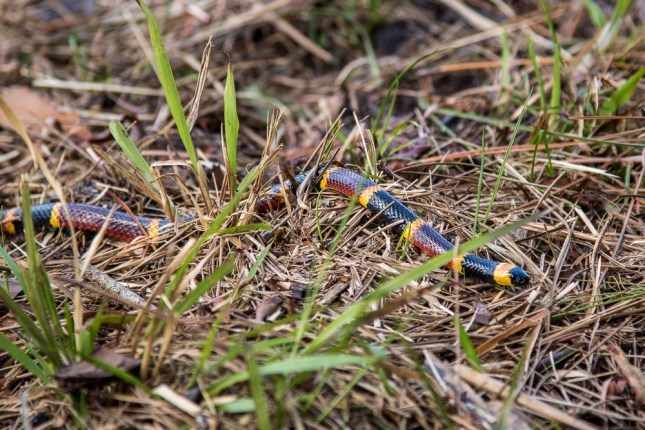
Out seeking eagles today, John jumped about 5 feet into the air, mumbling something about “red touches yellow.”

Eastern Coral Snake 1

Something yellow, something black sneaking up behind your back.  (Except where indicated differently, today’s photos by John Bradford.)

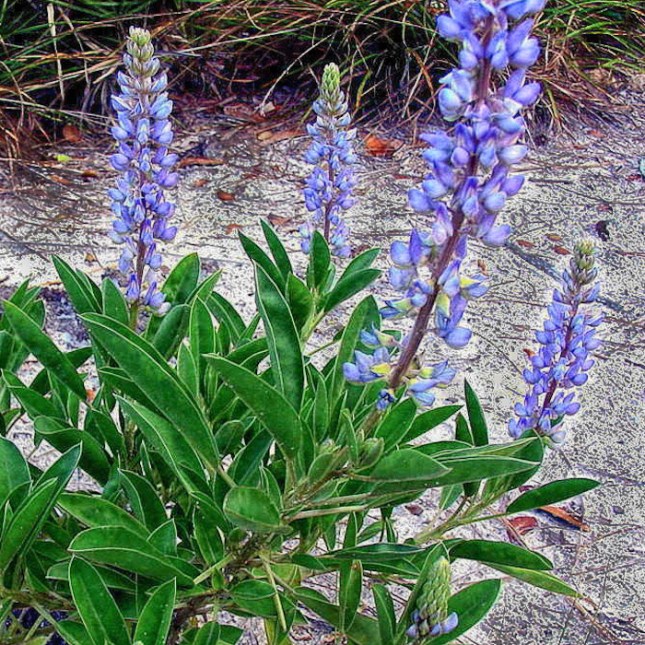
Near the sneaky snake we found the pretty plant of the day…Skyblue Lupine.   And here is its mystery:   out in the sugar sand scrub most plants look like they belong growing in a sun-cooked nutrient-deficient sandbox.    They tend to have tough demeanors.   Their gnarly adaptations are what make scrub fun to photo.   But Lupines, by contrast, look robust, green, lush, and perky.   How does the Lupine do it?    How does a Lupine on the sterile sand look like a Garden Club flower out of a nice fertilized flower pot?

Lupinus diffusus 6

Too spunky for a scrub plant!

There may be an answer or two.   It is a Legume, and Legumes have nitrogen-fixing bacterial root nodules to capture that atmospheric nitrogen   Nitrogen problem solved.   True and  nice,  but just the first chapter in a better story.  How bout the second-most limiting nutrient, phosphorus?

Here we must turn to other Lupine species and extrapolate speculatively.   Multiple hundred Lupinus species color the world, including the length of North and South America along the Rocky Mountains and Andes, and much more.  A handful decorate Florida, some native.  Only one is indigenous to South Florida, L. diffusus.    Now back to phosphorus.

Students from my classes, I hope might say, “symbiotic fungi help plants get phosphorus by digesting soil organic matter and sharing the booty with their host roots.”    But oh yea….that scrub soil has no organic matter, and Lupines do not have (or not much) helpful root fungi.    By the way, Lupines collectively are famous for tolerating terrible soils.   In their sterile ground they need a plan-B to get their P:

Back in the 80s botanists caught on to what were called “Proteoid Roots,” discovered first in the plant family Proteaceae.    Since then such roots have turned up in additional plants, making the newer name “Cluster Roots” better.   Cluster Roots look like a bottlebrush.    Guess what stimulates their formation?  Low phosphorus.   Guess what plants outside of Proteaceae can form them to counter low P?    Some Lupines, although as far as I know, L. diffusus remains unchecked, and we can’t dig it in a state park to see!

lupinus cluser roots ajb 10 263 2013 Michael Shane

Lupine Cluster Roots (Michael Shane, Am. Jour. Bot. 100: 263. 2013)

Cluster Roots are not mere brushes.  They are dynamic chemical factories.  The sorts of chemical activities associated with Cluster Roots occur as expected in Lupines with Cluster Roots.  And a little surprisingly, the “Cluster Root functions” turn up also in Lupines where Cluster Roots are unknown.   What are those magic functions?

First and foremost, they secrete citric acid (aka citrate) and similar compounds able to displace phosphorus from soil particles, busting P loose for the plant.   Reportedly as much as 1/3 of the photosynthetic product of some Lupines winds up as excreted  citric acid.  And it gets better:   Citric acid can free inorganic phosphorus, that is,  from soil minerals themselves, not just from (that absent) decaying organic matter.

Lupine roots release supplemental enzymes called phosphatases that liberate even more phosphorus while additional secretions adjust the soil acidity, probably to support  the phosphatase enzymes and/or to help bring in iron, which is sensitive to soil acidity.  But there’s a problem:

Soil microbes digest citric acid.  No worries, Lupines put out soil antibiotics to thwart the little pests.  That’s doubly useful because citric acid helps chaperone iron into roots.  Citric acid helps so much with iron and phosphorus uptake, some commercial fertilizers include it as an ingredient, sometimes hand-in-hand with potassium as potassium citrate.

lupine fertilizer

Factories put citrate (citric acid) in the bag along with P (the P2O5 on the label above).  Lupines make their own citrate,  and borrow their P from the soil directly.

That’s a lot on nutrients.  So here’s the upshot.  All this helps explain something old, something new, something borrowed, and something blue.

Something old:

Lupines as crops date back thousands of years, valued for growth on poor soils.   Explained!

Something new:

Lupines are future crops precious in a starving world with poor soils to farm and phosphorus fertilizers becoming  expensive.

Something borrowed:

Phosphorus fertilizers are pollutants.   But Lupines merely borrow P from the soil, then give it back when plowed under,  even helping support other crops.  No polluting P added!

Something blue:

How many blue wildflowers are there?  (Few)

Lupinus diffusus 7

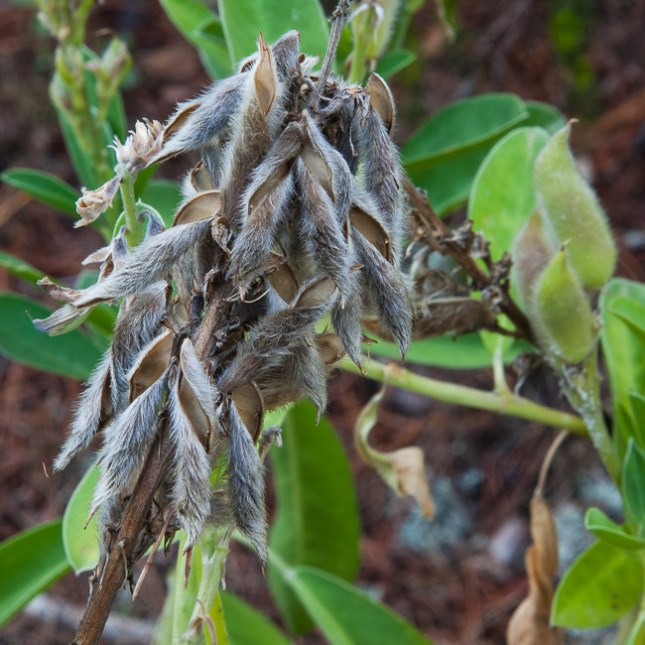
The pods are woolly.

 
14 Comments

Posted by on February 26, 2016 in Skyblue Lupine, Uncategorized


Tags: ,