RSS

Lizard’s Tail

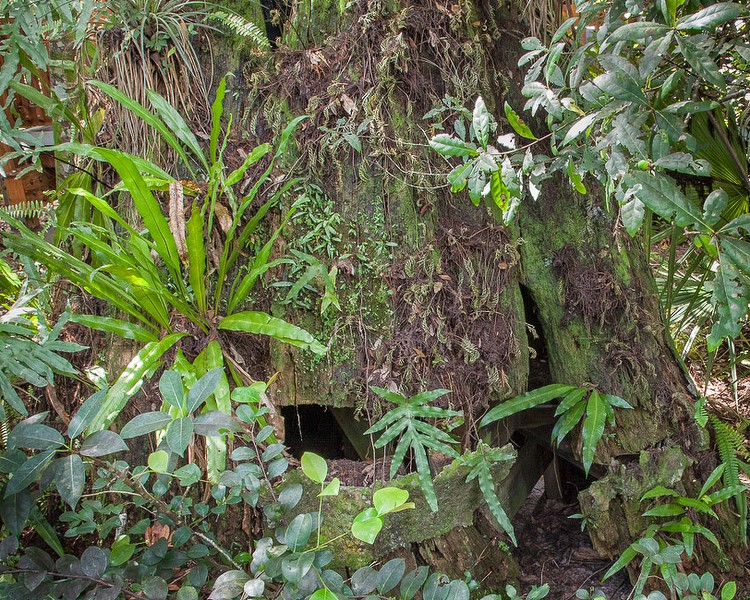
Strap Fern on a big stump (JB)

Strap Fern on a big stump (JB)

Lizards Tail

Saururus cernuus

Saururaceae

Yesterday John and George migrated south to the Fern Forest Nature Center in Pompano Beach to enjoy 250 acres of ferny, rocky, watery, beautiful jungle.  A well named haven for fern enthusiasts, occupied by umpteen different ferns ranging in appearance from the odd-foliaged Strap Fern (Campyloneurum phyllitidis) to the prehistoric-looking so-called Florida Tree-Fern (Ctenitis sloanei), which is the size of half a tree, and has enormous complex  fronds 3 or even 4 times compound.  Merely sorting out the species of Thelypteris ferns might keep a person busy.
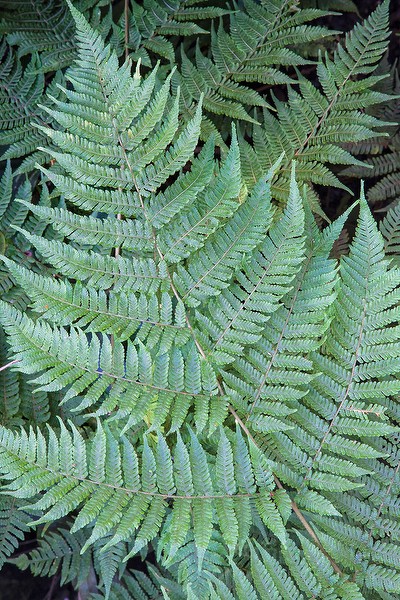
Ctenium sloanei (JB)

Ctenitis sloanei (JB)

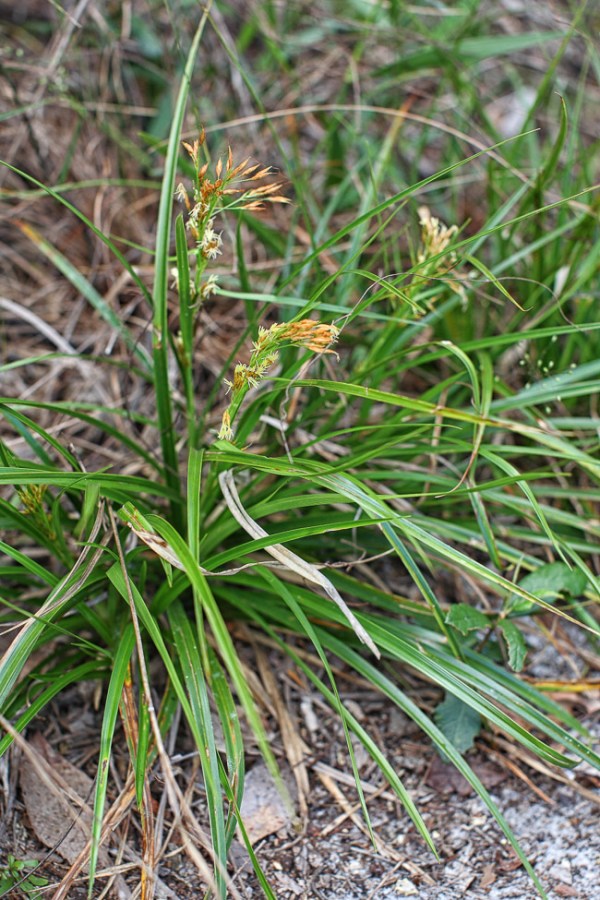
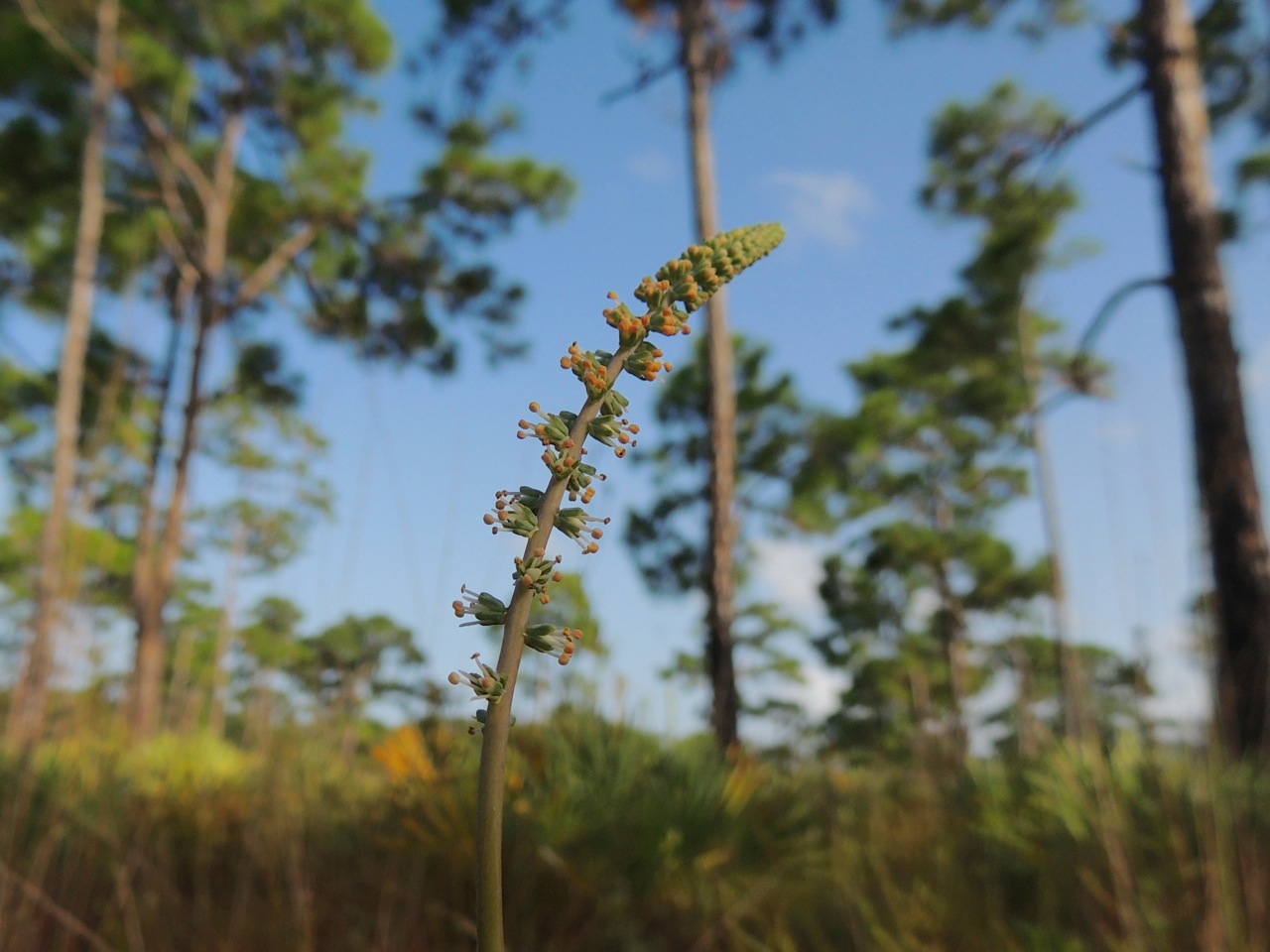
After greeting the ferns and pushing back into the watery swampy shadows a little off the beaten path, there’s another botanical treat:  Lizard’s Tail (Saururus cernuus).  No need to drive too far south for this species, as it extends northward all the way to Quebec.  But Florida is a great place to see this showy, rhizome-spreading, aquatic oddity with its white flower spikes nodding (cernuus) like the tail of a sauros, as in Tyrano-sauros.

Some folks are familiar one way or another with Kava Kava (Piper methysticum), a bioactive member of the Pepper Family with spicy-fragrant heart-shaped leaves and flowers in a narrow rat-tail spike.  Lizard’s Tail is a bioactive relative of the Pepper Family with spicy-fragrant heart-shaped leaves and tiny white flowers in a narrow but showy lizard-tail spike.

You know any plant with pungent bioactive oils has a medicinal history.  A question better than, “what has Lizard’s Tail been used for,” is “what hasn’t it been used for”?  A lot of the historical uses have to do with external applications to relieve pain.  There are even more uses in older China.

Wait a second.  In China?  Yes, the Chinese Lizard’s Tail is a similar sister species, a situation found over and again with plants of eastern North America and eastern Asia.  An ancient Asian practice is to extract the oils with hot water to derive treatments for ailments from  beriberi to urinary complaints.

The Chinese species brings up something more fascinating than poultices:  an apparent evolutionary series.  But do not think the series of photos below is meant to reflect sequential ancestry.  Rather, the photos merely represent present-day  cousin-species that could resemble stages in some ancient evolutionary progression involving ancestors no longer with us.  All of the photos represent Saururus or closely related plants in the Saururaceae Family.   Something else important to emphasize is that the showy floral spike in Saururus and its relatives is a mass of many tiny flowers along a stem. Even in the relatives that have what look like single flowers, those are in fact false flowers, as in some Spurge Family, where the “petals” are bracts (variously modified leaves), and the apparent “flower centers” are spikes with those tiny flowers.   With all that stipulated, let’s move forward.

American Lizard’s Tail has a bright white spike of many flowers, collectively attractive to insect pollinators:
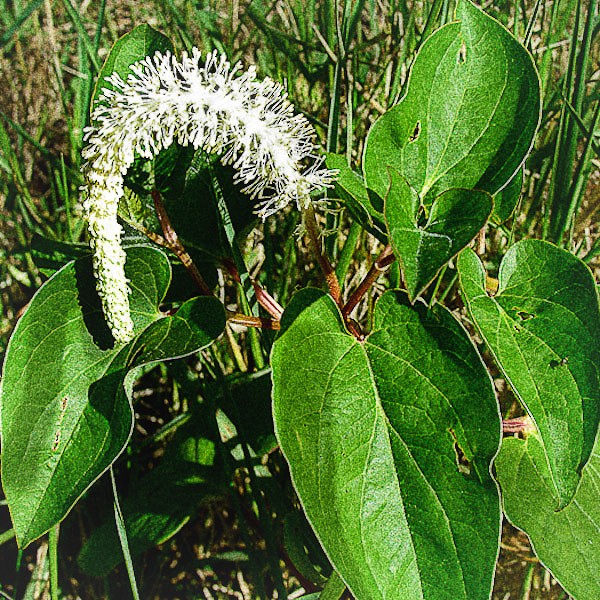
American L.T. (JB)

American L.T. (JB)

Want to up the ante and make the spike more attractive?  In Chinese Lizard’s Tail the white spike is enhanced basally with a dash of white on a nearby leaf (or the entire leaf may be white).  The white leaf-splash is sort of a false petal:
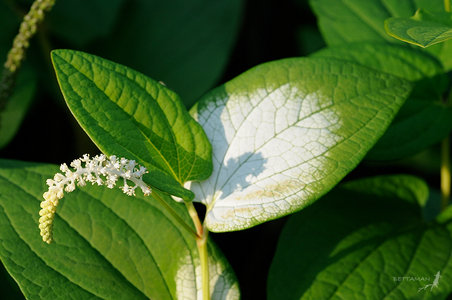
Chinese Lizard's Tail with splash of white on leaf.  (Tree of Life Project, permitted use)

Chinese Lizard’s Tail with splash of white on leaf. (Tree of Life Project, permitted use)

So why not go to a more convincing-looking “petal”?  In the related and very similar Asian Gymnotheca involucrata the leaves below the spike have become almost petal-like:
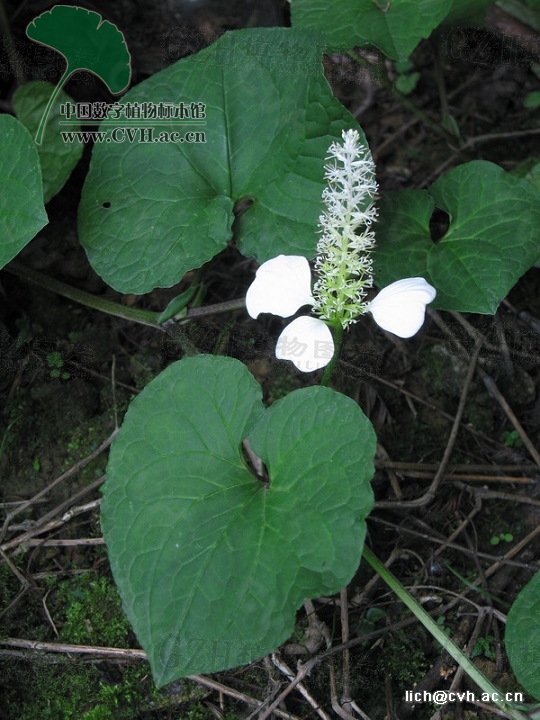
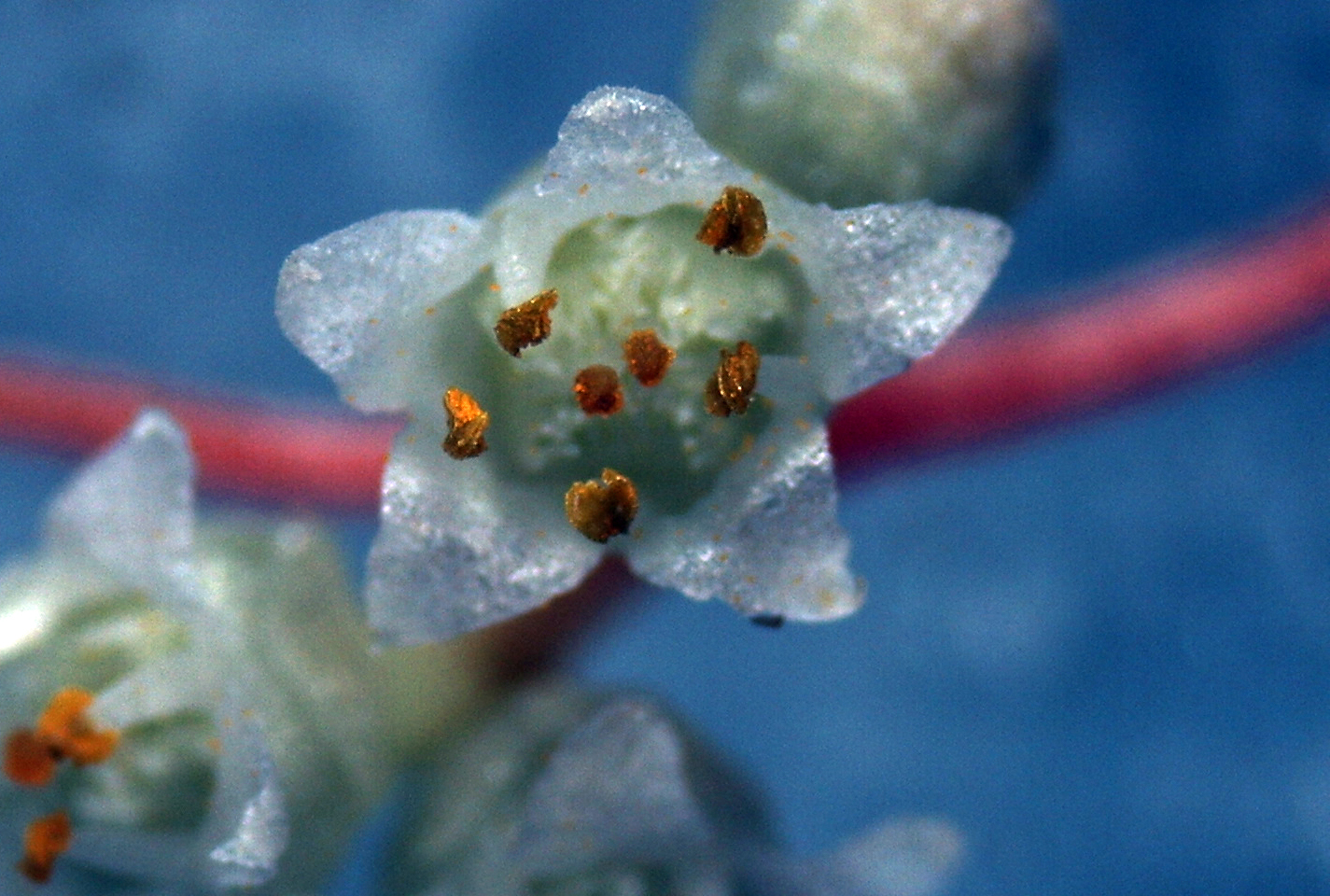
In Gymnotheca the bracts look like petals.  The spike rising above them bears many flowers.

In Gymnotheca the bracts look like petals. The spike rising above them bears many flowers. (Credit in the photo)

And to go a step farther, in the genus Houttynia and its segregate Anemopsis, a wildflower in the Western U.S.,  the spike-bract combo looks convincingly like a single flower:
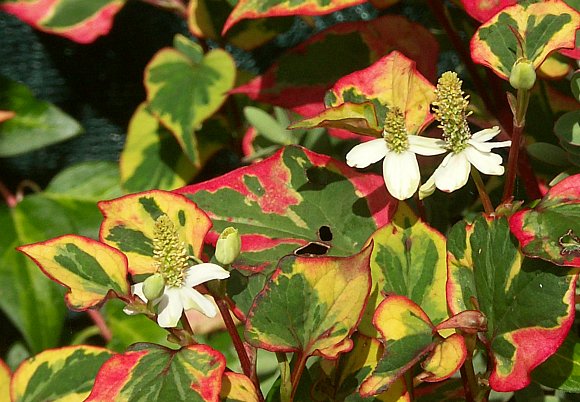
In Houyttonia the bract-spike combos look like flowers (from wildflowerfinder.org)
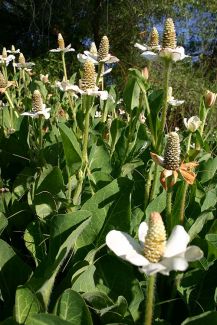
In Houyttonia the bract-spike combos look like flowers (from wildflowerfinder.org)

Anenopsis is a wildflower in the western U.S.  The bract-spike combos look like Anemone flowers (Stephen Laymon BLM).

Anenopsis is a wildflower in the western U.S. The bract-spike combos look like Anemone flowers (Stephen Laymon BLM).

 
2 Comments

Posted by on October 19, 2013 in Lizard's Tail


Tags: , ,

Toothache Grass – The Ctenium Tingle

Ctenium aromaticum

Toothache Grass

Poaceae

Last Friday I served as local helper for visiting researchers at the American Bamboo Society’s Annual Meeting.   Although not a Bamboo, the topic of Toothache Grass came up with interest, and lodged in my thoughts this week.   Ctenium aromaticum is one twisted species that shows how so much ties together oddly in the world of nature.

Image

Don’t say I suggested this, but if you bite Toothache Grass, it numbs the mouth dramatically.  Effects like that do not go unnoticed, and the responsible chemistry is interesting.  The grass contains at least three poor man’s anesthetics: pellitorine, dodecadienamide, and isoaffinin.  (Not need to pronounce them, which would be impossible after biting the Ctenium.)  A term for these odd substances is “tingle molecules,” which are of interest in the flavoring and toiletry industries.  Want an underarm deodorant or scalp shampoo that feels zippy like it really works?  Put in a tingle molecule!

Image

Pellitorine has long served in traditional medicine, but not in today’s grass, which actually has no proven dental history, but rather Mt. Atlas Daisy (Anacyclus pyrethrum), a pretty Composite distributed around the Mediterranean cradle of civilization.  In addition to uses against toothache (really), that ancient medicine plant is reputed to cure low T (in mice), enhance male performance (in people), counter bacteria, bug bugs, and more.  Different plants, different continents, same drug, same presumed use—dental analgesic.

Dodecadienamide and isoaffinin have a more local toothache connection, in species of Zanthoxylum, often called “toothache trees.”   We’ve numbed our brain with these in this blog previously:  CLICK

This stuff gets serious.  My son Martin is a Chemical Engineer and U.S. Patent Examiner.  With his inspiration I occasionally take  an interest in industrial plant-chemistry patents.  A 2013 patent involves processes for manufacturing commercial tingle molecules “to impart flavor and/or a tingling and/or warming sensations in the oral cavity and on skin when used in foodstuffs, chewing gum, oral care products, hair care products, colognes, topical cosmetic products or medicinal products.”  The patent application mentions and illustrates isoaffinin in their preliminary discussion of the relevant chemistry.

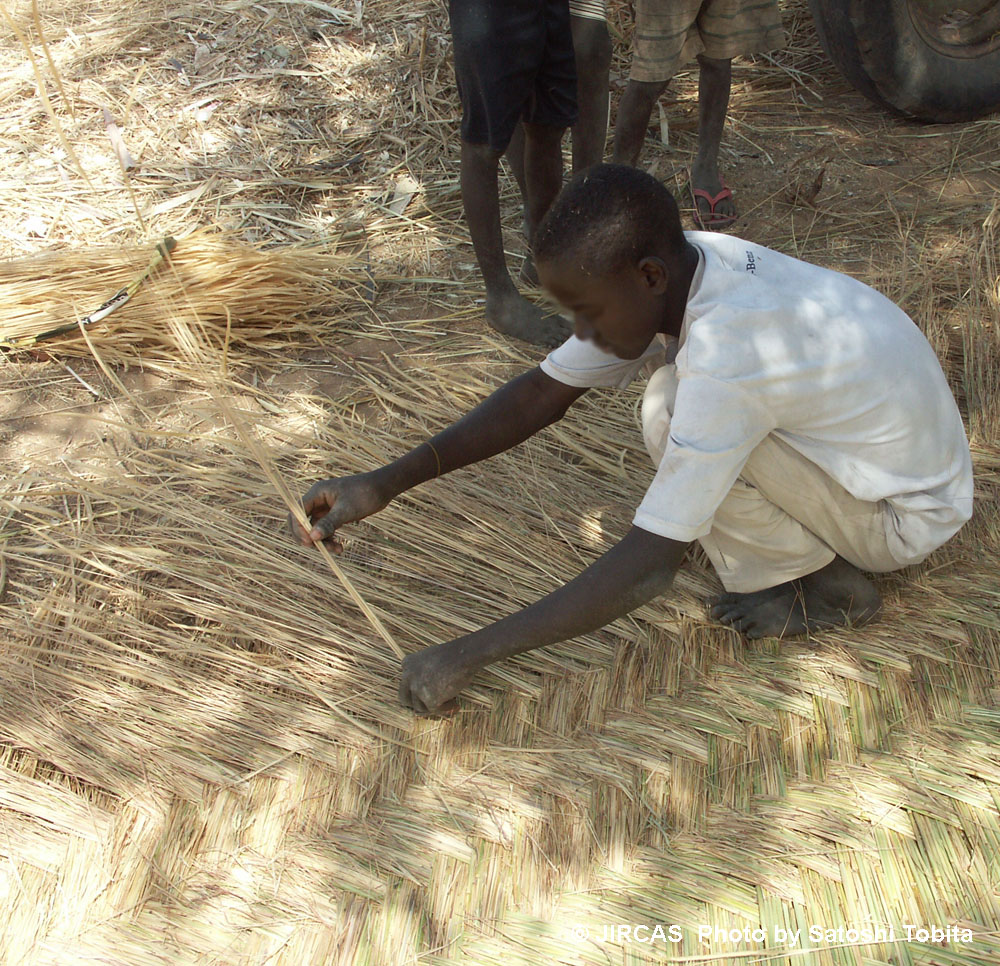
Worldwide there are almost 20 species of Ctenium, in Africa as well as in the New World.  Some of the African species are beautiful with long feathery inflorescences, and serve for thatching and making beehives.  Maybe if the dog bites or the bee stings, a little dab of Ctenium and then it won’t feel so bad.  Also in Africa the livestock do not enjoy tingling tonsils, so an abundance of Ctenium indicates overgrazed pasture in addition to thatching time.

Plaiting with Ctenium in the Sahal (from Fakara Plants).

Plaiting with Ctenium in the Sahel (from Fakara Plants).

 
4 Comments

Posted by on October 17, 2013 in Toothache Grass


Tags: ,

Who Eats Those Beautiful Scrub Fruits?

Sandyfield Beaksedge

Rhynchospora megalocarpa

Cyperaceae

Friday John and George wandered through the several habitats at the Haney Creek Trail in Jensen Beach Florida, where scrub forms a patchwork among depression ponds, streams, pine woods, and weed areas—a rich place to count species, and a pretty place to enjoy Liatris, Polygonella, Goldenrod and much more in colorful autumn bloom.

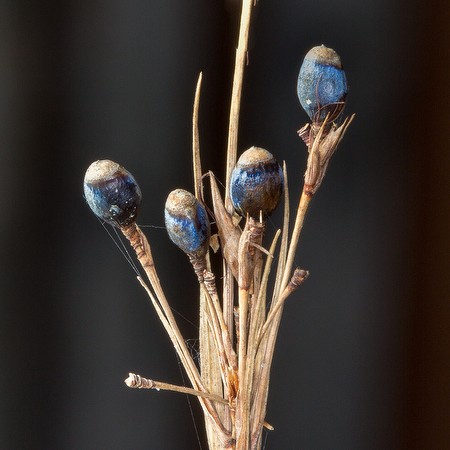
The "seeds" on Rhynchospora megalocarpa are huge, showy, and plump by sedge standards. (By JB)

The “seeds” on Rhynchospora megalocarpa are huge, showy, and plump by sedge standards. (By JB)

All the floral beauty distracts the eye from the more subtle fruiting beauty.   Turning the attention to the fruits and seeds raises the question of who eats what in the scrub.   What are the ecological relationships in the scrubby food chain?  (Many critters visiting the scrub are not restricted to that habitat.  But bear with me.)   Pygmy Mole Crickets eat algae growing in the sand.   Probably most of the smaller reptiles live on scrubby arthropods.  The blueberries look like birdfood to my casual eye.  No doubt the Gopher Tortoise goes for Gopher Apples.  Among the more conspicuous and intermittently abundant fruits are the acorns.  I just read that a single Scrub Jay can store several thousand acorns per year.   The cute Gopher Mouse (Florida Scrub Mouse) is an acorn eater too.   CLICK

But what do they substitute when the acorns are few?

And that is all the lead-in to a puzzling question.  Who eats the big, glossy, showy “seeds” (achenes) on Sandyfield Beaksedge?  This is one of the world’s most under-studied plants.  When you hear discussion of scrub plants you hear all day long of the various oaks, scrub-rosemary, sand-pine, lyonia species, innocence,  and others, but whoever mentions Sandyfield Beaksedge?  A large, tough bright green sedge scitter-scattered abundantly on that sun-baked sugar sand.  Aren’t sedges supposed to prefer wet places?  (Not all of them.)     Sandyfield Beaksdge represents the large, fascinating, locally diverse genus Rhynchospora,  whose name translates loosely as “beak seed.”   (When you have rhynoplasty you have a “beak job.”)   The beak is on the seedlike fruit.  The beak size and shape varies among the local Rhynchospora species, from almost scary to barely visible.  The genus is in every Florida habitat from standing water to the dryiest scrub.  Sandyfield Beaksedge occurs throughout Florida and into other southeastern states.

In Sandyfield Beaksedge the beak looks like the cap on an acorn, making the entire little “mini-nut” resemble a shrunken acorn, enormous and ostentatious by Rhynchospora standards.  Maybe the achenes are oversized due to a simple need to provide the seedling with extra protection and nutrients in the stressful habitat, but they are too colorful and eye-catching, and prominently displayed for merely that.

R. megalocarpa 6

Thus every time I see a cluster of the large, showy, glossy little “acornlets” on the Sandyfield Beaksedge it bugs me wondering who relies on them for food.  I’m ready to go sit in the scrub all night long with night-vision goggles and watch.  Like little nuts, the SFBS achenes are hard and dry, not squishy and sweet.  I wonder if the true scrub acorn-eaters—the Florida Jay, the Gopher Mouse, and other furry little rodents use the mystery fruits  as substitute acorns as a between-meal snack.  Interestingly, the fruits start out elevated on a wand, and as time passes  the wand bends down to ground level, placing the fruits within easy reach of Mickey and Minnie.

 
4 Comments

Posted by on September 30, 2013 in Sandyfield Beaksedge


Tags: , ,

Bracken-Bashing, Gorilla Beds, and Poets

Bracken

Pteridium aquilinum (following some taxonomists in interpreting Pteridium as a single species)

Dennstaedtiaceae

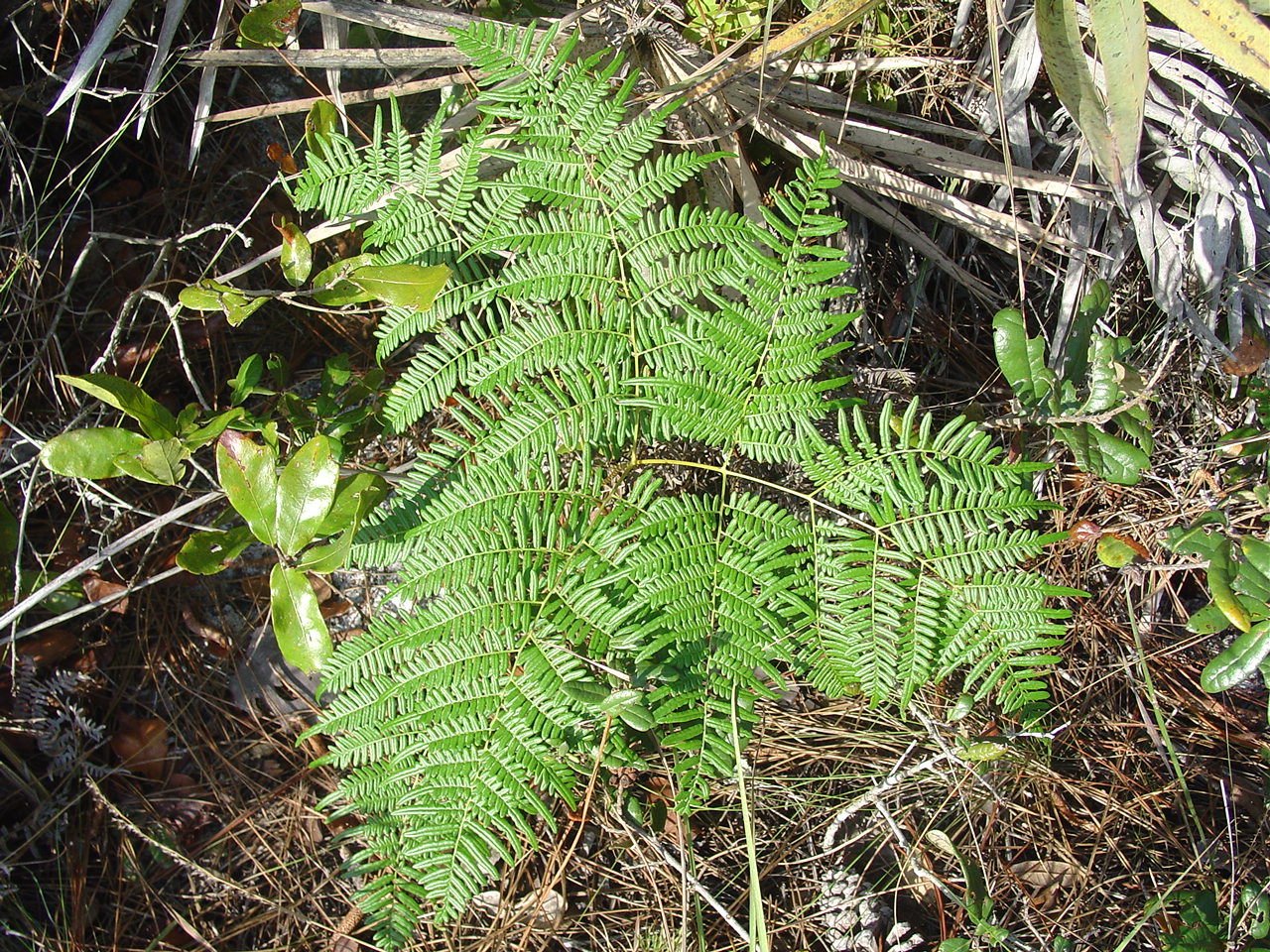
Bracken in Florida

Bracken in Florida

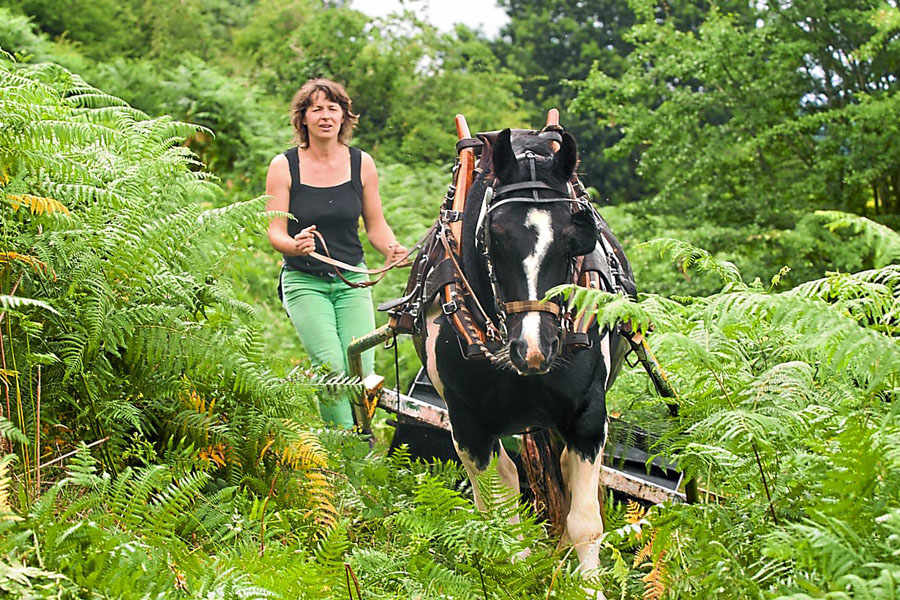
My  botany class this week gathered fern spores to sow and grow, much fun as well as the perfect Florida-U.K. botanical link  I promised our British correspondent Mary Hart in Worcester, England.   Can’t think of a tighter intercontinental tie than Bracken Fern, plentiful on our Palm Beach State College campus, and even more-abundant in the U.K., where the fern has become a pest crowding out native wildflowers.   The nectary photo below is by Rosemary Winnall who manages a wonderful blog on the ancient Wyre Forest near Worcester. And the bracken-bashing horse is at work thereabouts,  in Owsrestry, Shropshire, likewise closeby.    That town is the birthplace of beloved WWI poet Wilfred Owen, whose poetic lights came on in childhood in the midst of those pre-bashing brackens according to his brother Harold:

“It was in Broxton among the ferns and bracken and little hills…that the poetry in Wilfred, with gentle pushings,  without hurt, began to bud, and not on the battlefields of France.” (Wilfred Owen was shot fatally in France toward the end of the war.)

Bracken-bashing in Shropshire, U.K.    For a link, see notes below.

Bracken-bashing in Shropshire, U.K. For a link, see notes below.

Now back to Florida.  Florida boasts the fern scrambling as high as 21 feet into trees as a vine according to Florida botanist J.K. Small (in 1931).     Certain weeds aside, bracken fern is possibly the most widespread vascular plant on Earth,  occurring pretty much everywhere from New Zealand to Siberia to Brazil.  Ferns do get around, often obscuring their “native origins,” by having dust-sized wind-blown spores which sometimes (including in some brackens) grow into self-fertilizing offspring…the perfect colonizers, especially given the ability of bracken to tolerate extremely broad conditions.

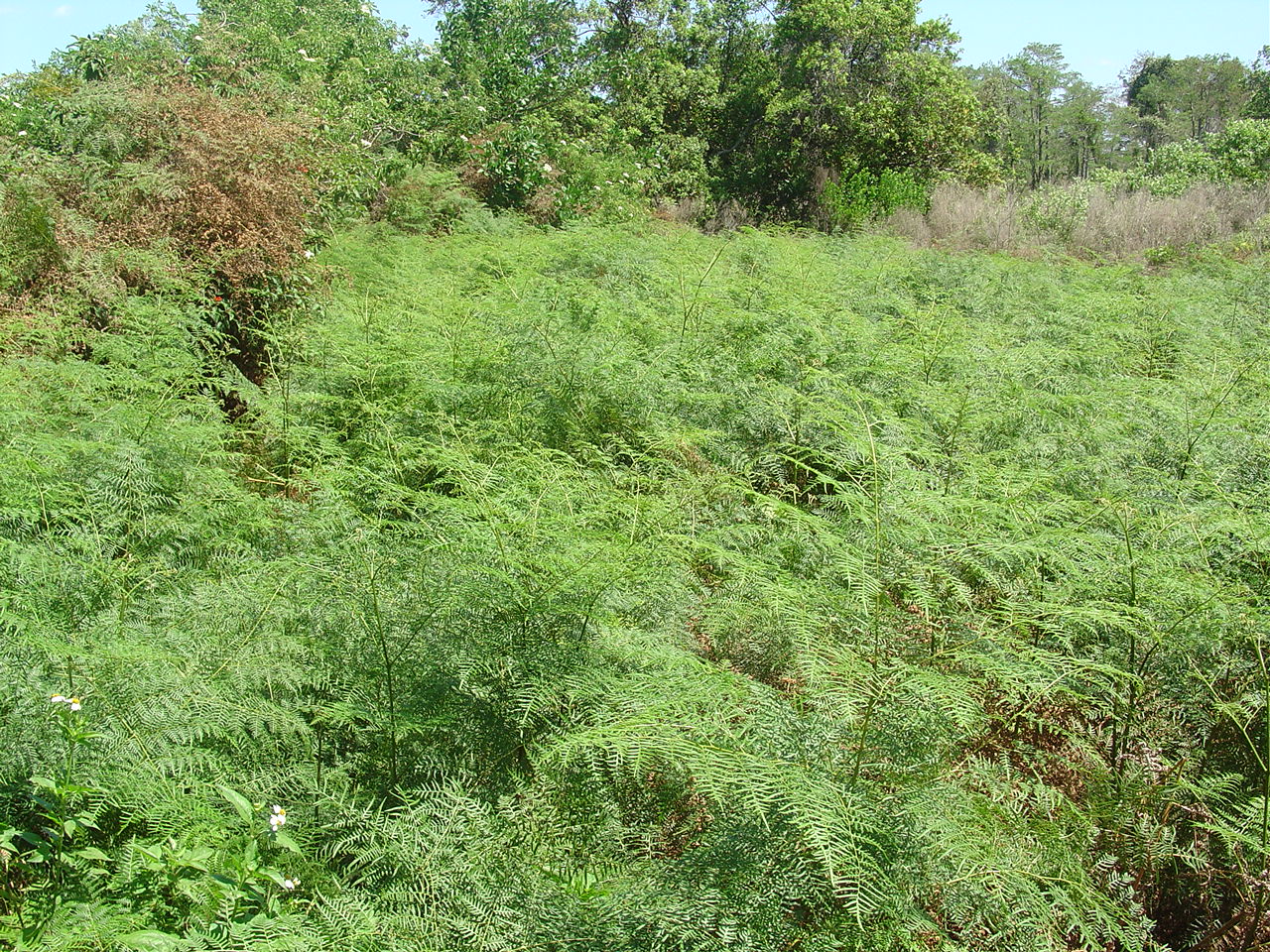
Near the PBSC campus

Near the PBSC campus.  We need a horse!

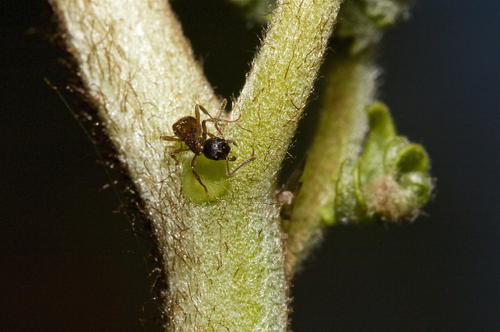
Bracken has some odd features.  Ferns usually cluster their spore cases in round,  kidney-shaped, or linear clusters called sori (SORE-eye) under the leaves.   Try to find these in bracken fern.  The spore cases develop just inside the edge of the leaf margin, which curls under hiding them.     And who ever heard of a non-flowering plant with a nectary?  Young bracken fronds have a nectary near the lowest branch-point on the leaf, probably to feed protective ants.

Nectary with ant on bracken.

Nectary with ant on bracken. (Credit in text)

Any plant as widespread as bracken can be assumed to have loads of roles in historical medicine and other human affairs.  True.  The plants are high in potash, having made them once useful in glassmaking and soap, not to mention fertilizer.   People eat them, but shouldn’t.  Bracken toxicity made it all the way to prominence in The Atlantic Magazine CLICK.

But it’s not all about people.  Recent studies have highlighted an affinity gorillas have for the fern, as bedding as well as nibbling.    If gorillas ever join the ranks of Florida invasive exotic species, they will feel right at home.

Bracken-loving gorilla by artist Kevin Hayler.   Bracken fern near the gorilla's left cheek.

Bracken-loving gorilla by artist Kevin Hayler. Bracken fern frames the picture.

————————

Notes:  Article on bracken at Owsrestry CLICK

Art by Kevin Hayler CLICK

 
2 Comments

Posted by on September 20, 2013 in Bracken


Tags: , ,

Take Your Dodder to Work

Cuscuta species

Convolvulaceae (or Cuscutaceae)

John is on the road so George used the weekly botany trip to reconnoiter Sandhill Crane Park past the west edge of Palm Beach Gardens for an upcoming “Horticultural Taxonomy” class field trip.  This small park set among wet marshy-flatwoods alongside the C-18 Canal has a boat launch, and maybe boat activity adds a little botanical kick, including more different grasses and sedges than you find in other postage stamp parks.  One of the interesting life forms present is Dodder (Cuscuta), a dandy example of convergent evolution.

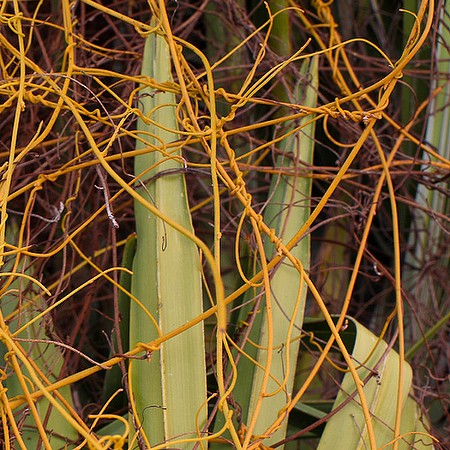
Dodder or Love Vine? (Love Vine, by JB)

Dodder or Love Vine? (Love Vine, by JB)

Convergent evolution occurs when two unrelated plants or animals evolve similarities independently.  For example, porpoises resemble sharks despite absence of relationship, or in our green world, many Euphorbs (Spurges) resemble Cacti to the point of being called “Cacti,” having adapted similarly to harsh desert existence.  Now to the point, South Floridians are accustomed to seeing masses of an orange-yellow-greenish parasitic spaghetti vine festooned over other plants.  This is the native Love Vine (Cassytha filiformis) CLICK  ….(or is it?).  Dodder (species of Cuscuta) can look nearly indistinguishable at a casual glance.  I’m sure I’ve seen Dodder and thought “Love Vine.”

To make up a figure, precisely 99.8703% of the living spaghetti around here is Love Vine, but biomass is not everything.  Dodder is the majority parasite in terms of biodiversity, with at least three species here in Palm Beach County.  These doppelgangers confuse many observers, and would be more confusing if Dodders were more common here. (There are plenty in other regions. Over a hundred species.)    Don’t take this too much to heart, but to my imperfect eye, Love Vines seem to prefer on average larger woodier prey, and Dodder on average tilts toward lower more herbaceous victims, but both have broad tastes, and overlap undermines that feeble distinction.

The two are unrelated.  Love Vine is in the Cinnamon Family (Lauraceae).  Lauraceae  often have a spicy aroma when crushed, and Love Vine crushes a wee bit fragrant, at least to the gullible or to those with super noses.  Flowers of the Lauraceae are unusual for dicots by having flower parts in multiples of 3 (CLICK),  which helps distinguish Love Vine from Dodder with its 5 petals.

Dodder flower with 5 petals and no flaps on the anthers. (GR)

Dodder flower with 5 petals and no flaps on the anthers. (GR)

In the Lauraceae, including Love Vine, the anthers open via little flaps instead of splitting open like garden-variety anthers; the flaps are true of Love Vine, but you need a magnifier to see them.  Try it—you can succeed.  Dodder traditionally resides in the Morning Glory Family (Convolvulaceae).  Like most Morning Glories, its fruits are dry, although otherwise variable depending on the species. (Love Vine has a fleshy fruit.)

Thinking back in evolutionary time, it seems obvious, maybe inevitable, that the Morning Glory Family would spawn parasitic members.  Anyone who has ever weeded gardens knows the intimate twining relationships between various weedy “Morning Glories” and the plants they love.  It is only a small step for the twining vine to discover the easy life by penetrating the host to extract the host’s fluids.  Dodders have not gone completely down that road; some (all?) still retain a slight ability to make their own chlorophyll.

Botany has an “oh my” side:  the Secret Lives of Plants:  bloodthirsty carnivores, terrorist poisons, bombastic  fruits, murdered pollinators, and secret symbioses.  An oh my in the air these days is the ability of plants to “smell.”  Outside the blogosphere and into actual plant physiology, plants can truly use chemical signals in the air.  The more we learn about the fine fine fine aspects of gene control, probably the more of that we’ll sniff out.  For example aspirin was originally derived from the plant hormone salicylic acid, a plant-to-plant airborne hormone.  Dodder has garnered attention as a green bloodhound recently for what seems to be an ability to find and even select a host by sniffing.  Just ask YouTube. CLICK and also CLICK

I wonder what a Dodder does when it smells a Love Vine.

I smell a tomato!

I smell a tomato!

 
4 Comments

Posted by on September 14, 2013 in Dodder, Love Vine


Tags: , , ,

Trojan Horse Herbicides

Red Mangrove (Rhizophora mangle) (CLICK for nice Gigapan Red Mangrove by John Bradford added subsequent to posting this blog)

Black Mangrove (Avicennia germinans)

White Mangrove (Laguncularia racemosa)

Toxic “Algae” (Microcystis aeruginosa)

John and George today worked on our tans portaging camera gear around the Kiplinger Natural Area on the St. Lucie River by Stuart.  John seized the day to capture Gigapan photos of the river shore.

Gigapan photos allow viewers to pan around and to zoom in on details.  Try it after CLICKING HERE to cyber-visit the river.

We had Mangroves on our mind, and they did not look healthy.  The shore is lined with a species jumble, including Brazilian Peppers, and many mangroves (especially red mangroves) are dead or visibly unhealthy.    (As pointed out in the commentary below,  the dead trees in the gigapan seem to be entirely or mostly Brazilian Pepper, although in the vicinity there are miserable mangroves too.  The mangroves at this site look decidedly less healthy than those directly on the Intracoastal where I spend a lot of time.  I have re-edited this post post-publication to reflect the fact that most of the dead trees are not mangroves.  The main point is the water contamination, so read on.)

Now you might say, justifiably, that 10 boat-miles upstream from the St. Lucie Inlet might be marginal mangrove habitat to begin with.  (What killed the Brazilian Peppers is interesting too.)  A possible reason mangroves to be so far upstream is increased salinity due to reduced freshwater flow from upstream thanks to some mix of water-control activities, dams and spillways,  diversion, droughty times, and altered land use patterns. (Or maybe not.)  Maybe that pulls the mangrove yo-yo upstream.

Now, if increased salinity crept up the St. Lucie River over some years, or even if it didn’t, the massive summer releases from Lake Okeechobee push the other way.  The lakewater this summer reduced salinity to almost zero even near the Inlet.  The usually brackish lower river was freshwater.

And that would be freshwater overloaded with nutrients, with nutrient-fed “Algae” (mostly Cyanobacteria), toxins from those Cyanobacteria, sediments, and whatever else enters the Lake and the River from agriculture and suburbia.

Yesterday the river water was dark, opaque, stinky, and lifeless.   A boat went by and you could smell its wake splashing on the marly shore where we saw no Fiddler Crabs, despite John photographing their abundance at exactly the same site not long ago in this very blog.  CLICK to see missing crabs.

I wonder if the missing crabs used to benefit the mangroves by churning and  aerating that watery soil?

(Come to think of it, there weren’t even any mosquitoes.)

Most local readers probably know about the Lake Okeechobee flush disaster this summer and other years.     No need to re-beat that dead horse in general terms.  But specifically, what about the dominant riverbank woody vegetation—those red, black, and white mangroves?

Known or suspected causes of mangrove decline, in addition to storms and freezes, include salinity changes,  excess sediments, excess nutrients, and herbicide contamination.  These all arrive in water from Lake O, on top of everyday watershed abuses.

The last culprit in the list is subtle.  Herbicides?  Studies of mangrove dieback in Australia pinpointed herbicide river contamination as a mangrove-killer, especially the herbicide Diuron, which has an extra- special vengeance for the genus Avicennia (Black Mangroves).

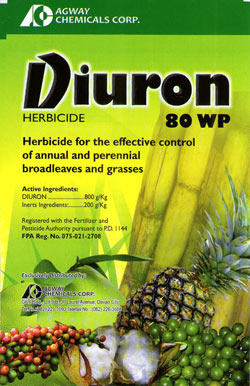
Diuron is toxic false-fertilizer.  It kills mangroves, and yep, we have it in local waters.

Diuron is toxic false-fertilizer. It kills mangroves, and yep, we have it in local waters.

So then, what about Diuron in the St. Lucie River?  Yes, in the notes below is a link to a dated but still-relevant USGS study of pesticides in the St. Lucie River.  The top five pesticides detected were all herbicides, including Diuron, as well as our traditional favorite lawn-weedkiller Atrazine and others.  Diuron is a Sneaky Pete herbicide.  Plants take up natural urea (or the ammonia soil microbes degrade it into).  Diuron is a urea mimic, water soluble, a Trojan Horse false-fertilizer similar to urea but with chlorinated timebombs built into the molecule.

The concentrations were “low,” but how low is low enough, especially in light of the gang-attack of several different herbicides, the probability that concentrations are higher in sediments than in the tested water,  that there is more development now than in the 90’s, and especially that those pulses of agricultural/suburban-lawn  contaminated lake water may have higher pesticide loads than “nice” water on a good day.

Can I say that Diuron killed the mangroves?  No.  Can I say that the Lake O water did it?  No.  But there’s something rotten in the State of Denmark.  Salinity volatility, crud,  N and P in gobs,  natural bacterial toxins,  and the fruits of modern chemistry all attacking a trio of mangrove species, each with specialized and delicate physiology with respect to salt, nutrients,  water transport and the soil ecosystem.

Some time ago in this blog we discussed the reproduction of Black Mangroves.  They drop their bare embryos directly from the fruit into the water.  CLICK

Yep, right into the Diuron-laced stinkwater sloshing around their snorkel roots jutting up to sustain life through the toxic sediment mud where the crabs ain’t no more.

—————————————————————————————————–

Notes:

USGS report on pesticides in St. Lucie River http://fl.water.usgs.gov/PDF_files/wri02_4304_lietz.pdf

Used the same item for both my blogs this week.  Don’t tell anyone.


Tags: , , , ,

Alligators, Lilies, and Sino-American Unity

Catesby’s Lily

Lilium catesbaei

Liliaceae

Yesterday John and George visited a classic wildflower site, the Kitching Creek Trail through wet pinewoods and meadows in Jonathan Dickinson State Park to enjoy the late-summer wildflower display, with three species of purple Carphephorus decorating the trails.

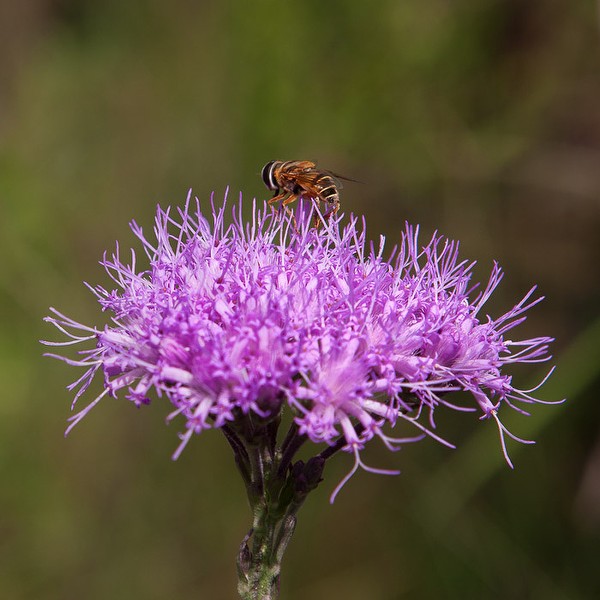
Carphephorus (JB) (Included just for being pretty)

Carphephorus (JB) (Included just for being pretty)

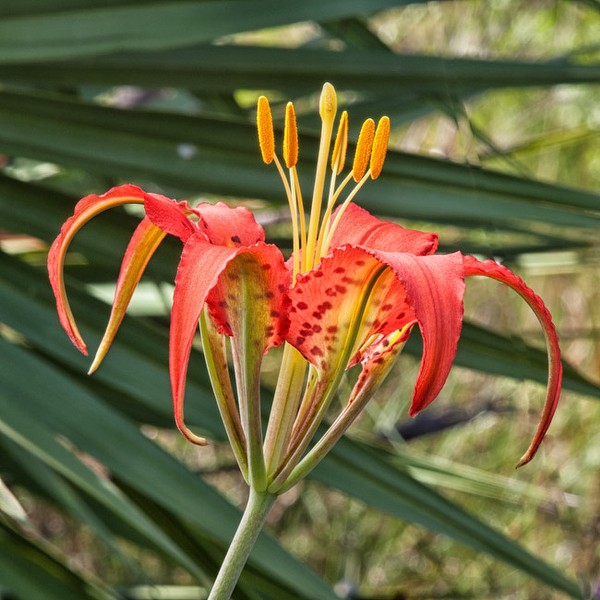
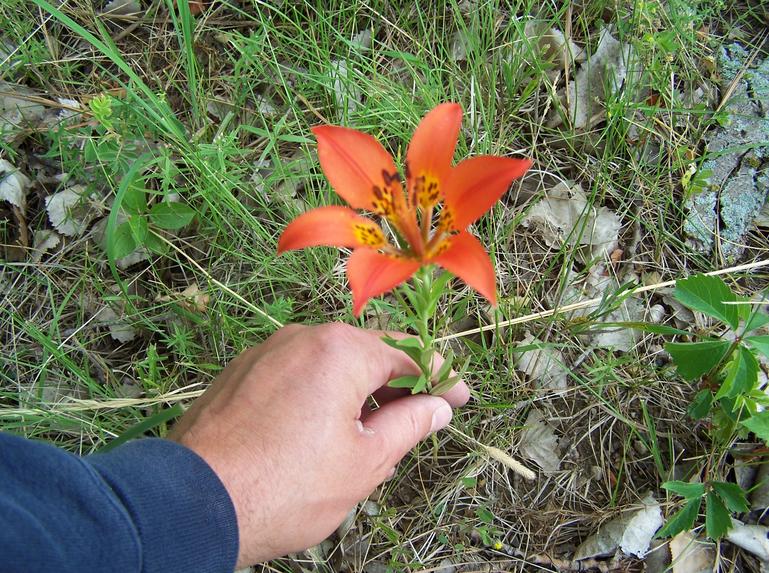
All the flowers in their purples, whites, and yellows were garden-pretty, and top billing goes to the Catesby’s Lilies, with their enormous orange flowers on 2-foot stalks teetering in the wind.  In this blog a year ago we talked about Mark Catesby, the Lily’s habitats, and pollination:  CLICK

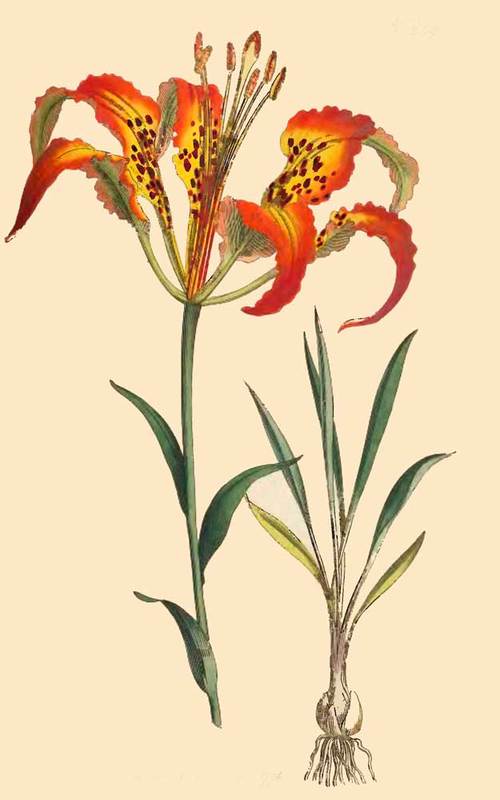
Catesby's Lily from Curtis Botanical Magazine

Catesby’s Lily from Curtis Botanical Magazine

But they are pretty enough to revisit, so here is more on some of the biggest, showiest wildflowers in our area.    Everybody loves lilies.  There are lilies in the Bible (consider the lilies of the field, how they grow:  they neither toil nor spin, yet I tell you, even Solomon in all his glory was not arrayed like one of these), lilies for Easter, lilies for funerals, Lily Tomlin, lily-livered cowards, and lilies in gardens across the Northern Hemisphere.    There exist about a hundred species altogether.  Such simple flowers, yet so successful and diversified.    Lilies have six “petals” (tepals), six stamens, and a central ovary with 3 chambers.  The plant base is usually a bulb similar to an onion which is related.  Most Lily flowers begin activity as predominantly male (pollen-releasing) and then shift to a predominantly female (pollen-receptive) phase.

Catesby's Lily from JB yesterday

Catesby’s Lily from JB yesterday


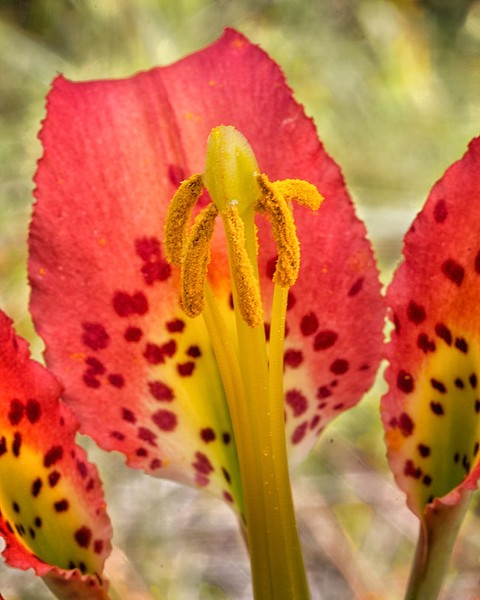
Close-up showing early-phase pollen release.   Stigma probably not yet pollen-receptive. By JB

Close-up showing early-phase pollen release. Stigma probably not yet pollen-receptive. By JB

Something we skipped last time are the distributions of Catesby’s Lily and relatives.  First thing to know,  there is a well known pattern across the botanical (and zoological) spectrum of a close relationship between the flora and fauna of the Eastern U.S. and of eastern Asia.  The alligator is a prime example.  So are lilies.  A DNA study just came out on Lily evolution showing ground zero to be in China, with major diversification some 7-8 million years ago.

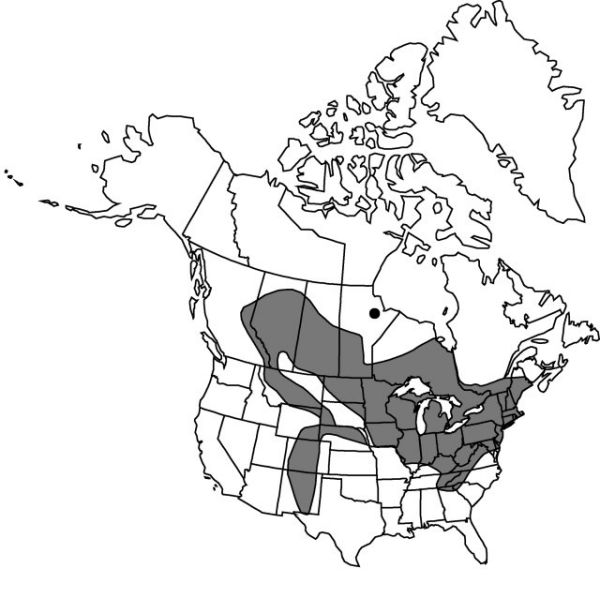
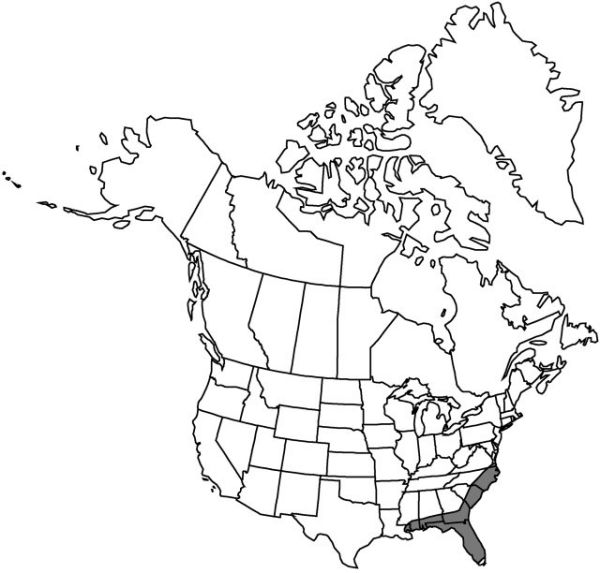
These distribution maps come from the Flora of North America:

Wood Lily distribution (from FNA)

Wood Lily distribution (from FNA)

Catesby's Lily distribution (from FNA).   Catesby's Lily extends the range southward from its probably ancestor (or near=ancestor) Wood Lily.

Catesby’s Lily distribution (from FNA). Catesby’s Lily extends the range southward from its probable ancestor (or near-ancestor) Wood Lily.

Botanists who study lilies think they came to North America at least least twice.  You can divide the North American lilies (about 21 species) into two groups: 1) a big species cluster with nodding flowers, and 2) a species pair with upright flowers.  Botanist Mark Skinner, consistent with DNA studies, feels that the upright flower species pair represents a separate single introduction from the rest of the North American lilies.  The upright flower pair consists of our Catesby’s Lily and the similar Wood Lily (L. philadelphicum).  Wood Lily inhabits much of North America but stops at the Southeastern Coastal Plain, and Catesby’s Lily picks up where the Wood Lily leaves off, covering the Coastal Plain from Louisiana to Virginia, more or less.  Their distributions look like two complementary pieces in a jigsaw puzzle of North America.  A DNA study in 2000 shows the Wood Lily to be related to a cluster of species ranging form Japan westward into Asia.   It looks much like Catesby’s Lily.

Wood Lily (L. philadelphicum) from Resources for Teachers Project).  This species resembles and is probably ancestral to (or nearly so) Catesby's Lily.

Wood Lily (L. philadelphicum) from Resources for Teachers Project. This species resembles and is probably ancestral (or nearly so) to Catesby’s Lily.

Thus it looks in my speculating imagination like the Wood Lily or closely related ancestor came to North America from China, and that Catesby’s Lily is historically a splinter group from the Wood Lily (or similar ancestor) specially adapted to the hot, sandy, often-acid, often-wet, fire-adapted conditions of the coastal Southeastern U.S.  And splintering continues to this day, as Catesby’s Lily is sufficiently varied for its own splinter groups to have caught the eyes of gardeners: CLICK and find Lilium catesbaei to see splinter groups.

It is easy to be Florida-o-centric in our native  species wildflowering, but the broader context so often adds insight and interest.  A lily in a Florida state park appears to be the tail end of a traceable evolutionary trail leading all the way to a mountain range near Tibet.

(I wonder if there is a university in China that refers to itself as the Chinese equivalent of “The Gators.”)

 
10 Comments

Posted by on September 1, 2013 in Catesby's Lily


Tags: ,

PreparationHWeed, and Places that Burn

Burnweed (Fireweed)

Erechtites hieraciifolius

Nice photo link CLICK

Asteraceae

Instead of botanizing Florida, over the last week or so I’ve been fooling around Mt. Vernon near Alexandria VA, the National Zoo in Washington DC hoping to see a Panda baby, and Duke University in Durham, NC.  What do these places have in common with each other and with my back yard?  The weeds.  The more years I spend around  botany, the more fascinated I become with weeds.  Part of the fascination is in their botanically unifying presence.  Anywhere you go, you see shared weed species.  I can see the same weeds in my back yard and  George Washington’s.  Mary, you and I share species between Worcester and Florida, including probably Burnweed (which is in Europe but I do not know about the U.K.)   The same would be true in India, or in Seattle.

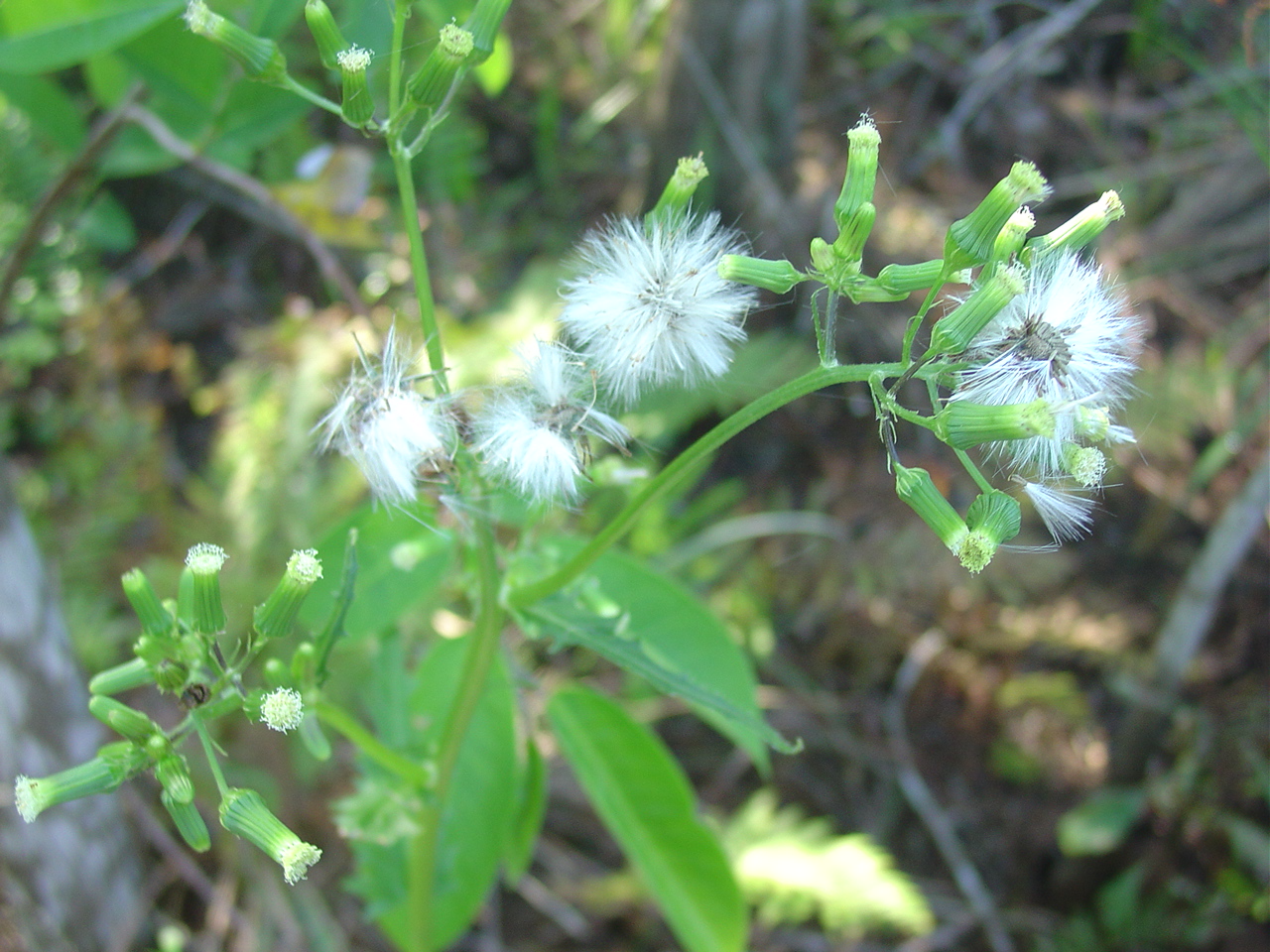
My weedy greeting upon returning home was a Burnweed growing uninvited in the center of a flower pot once occupied by a tomato.  The potted Burnweed looks like it was planted, and is attractive.  I’ll let it grow.

Image

And it was perfectly harmonized with a trip to Duke University and Washington DC, because botanist James Duke in his “Handbook of Edible Weeds” mentioned its abundance in Washington DC, and suggested using it as a free inner city salad.  (Not a good idea, as the plant contains alkaloids toxic to at least the liver, and it stinks.)

The para-fruits.

The para-fruits.

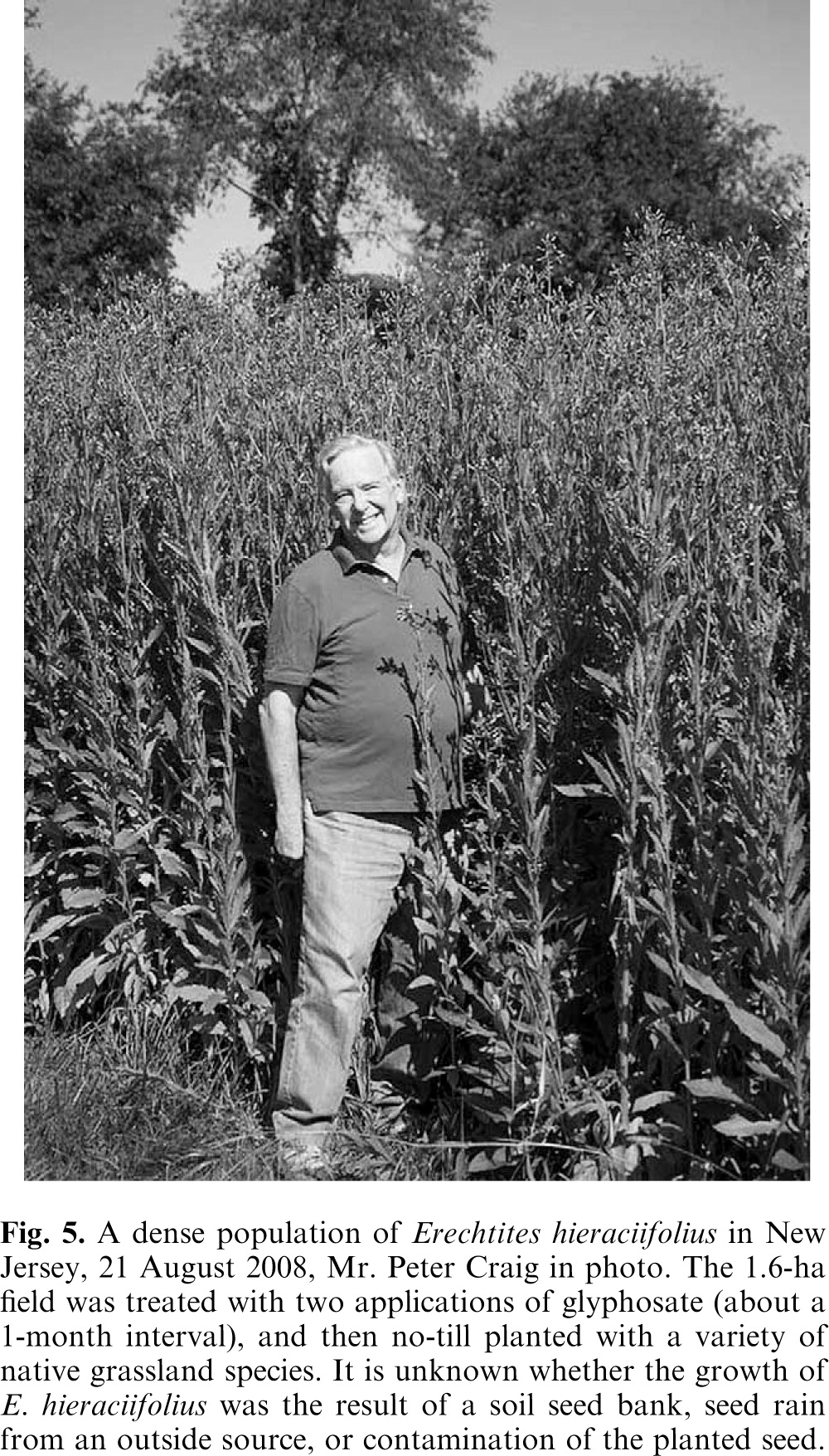
The plant is well named.  Burnweed (aka Firewood, a name applied confusingly to other species) rises up after fires, as well as after other disturbances.  The seeds apparently can lie dormant in the soil for long times, possibly in massive quantities.  The photo below of a Burnweed monoculture after herbicide application (from the Canadian Journal of Plant Science 92: 736. 2012) attests to some colonization abilty.  If I had to bet on a source, I’d put my money on the soil seedbank.  Big populations sometimes appear as ground dries after flooding.  Contrary to reports of wasp pollination,  the plants are probably self-fertilizing, which is handy for pioneer species.

That's a lot of Burnweed.

That’s a lot of Burnweed.

Maybe we have the wrong origin for the name Burnweed.  What about the “burn” and itch of, well, ahhh,  ummm, hemorrhoids.  Another name for our Burnweed is Pileweed, if you know what I mean.  They say the juice is astringent.  Actually, the plant has a wide history of medicinal uses based on its smelly oil (not all “Burnweed oil” comes from Erechtites), and once fetched 2-3 cents per pound in Georgia.

As a Biology teacher, I often tell students, “plants can’t extract nitrogen from the air.”  A lie!  Research in Japan has shown our species to take in air-borne nitrogen dioxide, a pollutant, and to use that nitrogen.  As much as 10% of the plant’s organic nitrogen can enter from the air.  So maybe James Duke’s observation that Burnweed tolerates urban conditions is useful, not for inner city salad, but planted in lush abundance to suck in nitrogenous air pollution, reducing the hot air and hemorrhoids inside the Beltway.

 
2 Comments

Posted by on August 28, 2013 in Burnweed


Tags: ,

Schoenocaulon…a Taste of the (Very) Old West

Feathershank

Schoenocaulon dubium

Melanthiaceae (Liliaceae)

Schoenocaulon (Richard Brownscomb)

Schoenocaulon (Richard Brownscomb)

A combination of back-to-school and family activities has George out of the woods for a week or two, but John had a productive field trip to Jonathan Dickinson State Park this week, and photographed an intriguing species pointed out there by Steve Woodmansee and a photograph by Richard Brownscomb.  Excusing my absence, John gave me permission to add commentary to the photos of Schoenocaulon dubium, a species limited to Florida.

The timing is perfect,  as last week’s topic was plants moved around by pre-Europeans.  Our Florida Schoenocaulon may or may not have experienced that, but in Mexico pre-European movement of at least two Schoenocaulon species is likely as natural pesticides and medications, especially the widespread Schoenocaulon officinale, better known as sabadilla.  As a member of the Horticulture Dept. at Palm Beach State College I work in a context of interest in natural-botanical pest control, not that all natural products are safe!  Sabadilla is a well known old (pre-European after all) pesticide marketed to this day.  CLICK

Schoenocaulon is at heart a Mexican genus with just a couple toes north of the border.  There are 20-some species in Mexico. Two of those extend into Texas and (one of these) into New Mexico, and we have Schoenocaulon dubium all alone here in Florida.

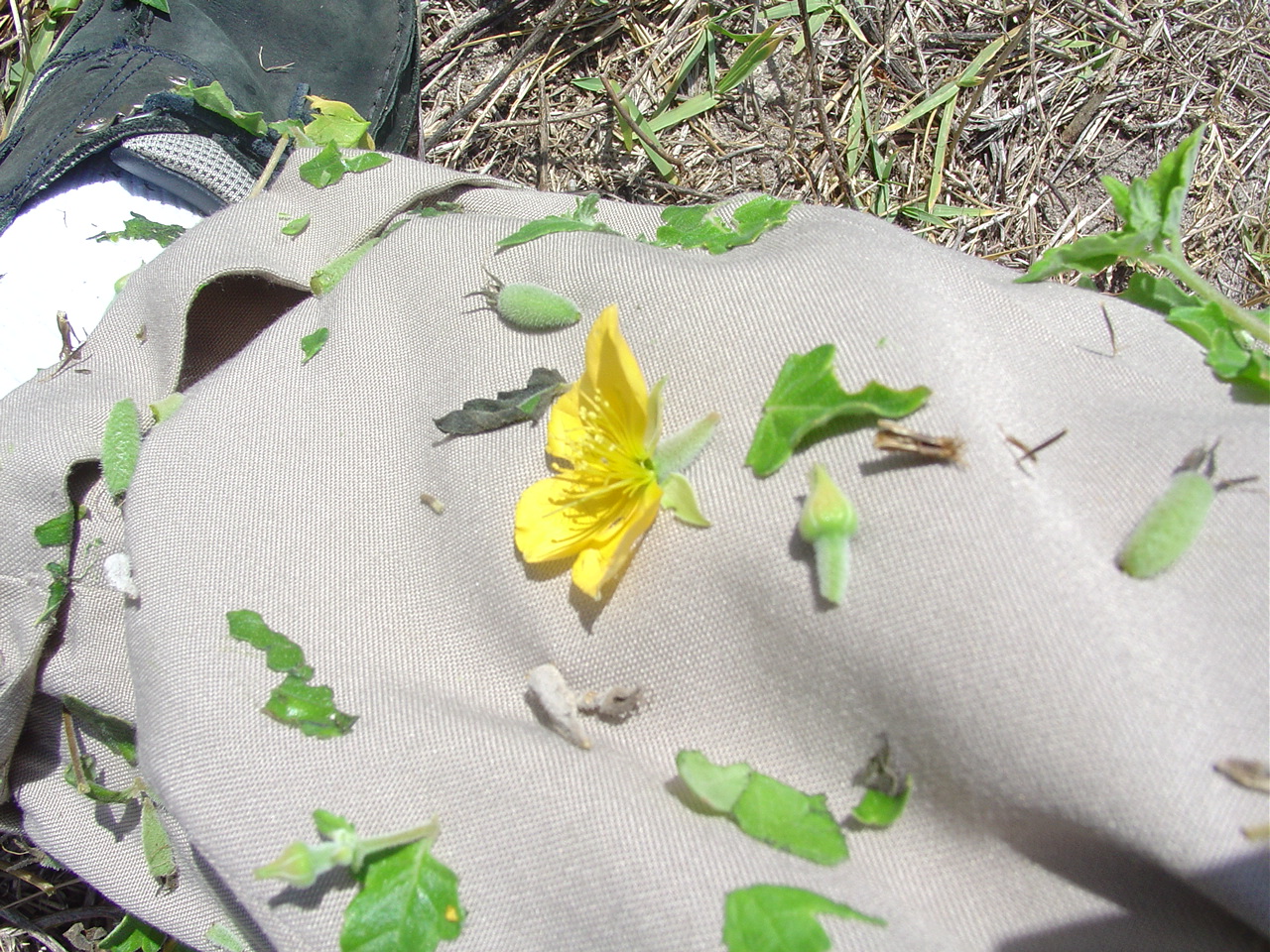
The Florida-Mexico floristic connection would be interesting to study.   Prominent in that study would be the local curiosity “Poor Man’s Patch,” Mentzelia floridana, which fuses with the fabric of your pants if you walk through; it resembles our Schoenocaulon as the isolated Florida representative of the primarily Mesoamerican genus Mentzelia.  Then come those “native” Agaves.  The connections extend to fauna too, as there was once a continuous biological corridor extending from Mexico around the Gulf to scrubby Florida.  The continuity broke apart about a million years ago.

Mentzelia far from its Mexican home (GR)

Mentzelia far from its Mexican home (GR)

Mentzelia, Poor Man's Patch, melts right into fabric.

Mentzelia, Poor Man’s Patch, melts right into fabric.

Schoenocaulon is an apparent wisp of that old Mexican connection.  DNA study shows our S. dubium to have as its closest relative S. texanum, the species in Texas and New Mexico, suggesting a stepwise Florida arrival from Mexico then Texas.  (The second species in Texas is not closely related to the S. texanum/S. dubium pair.)

(Readers interested in exploring the Texas-Mexico link with respect to Schoenocaulon and with examples from other genera might enjoy this article and references cited in it:  CLICK.   See esp. p. 1188.)

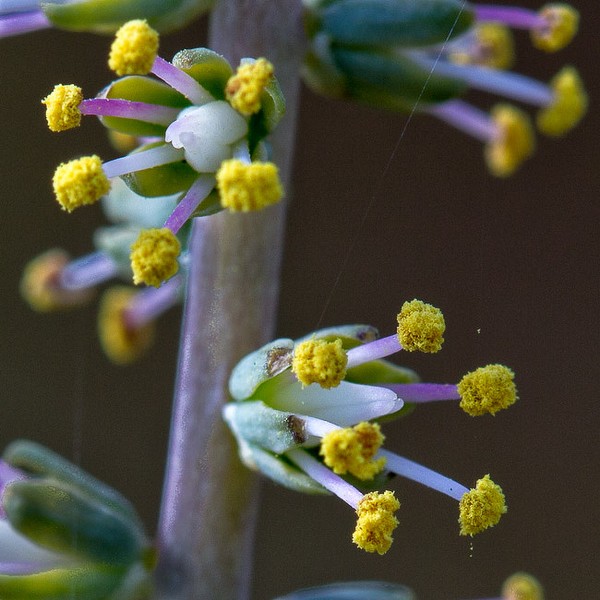
It might be tough to envision Schoenocaulon as a “Lily,” but it is more or less in a broad definition of the Lily Family.  (The Lily Family is variably split into multiple smaller families, including the Melanthiaceae.)  Look at any Lily flower and at Schoenocaulon and see a signature pattern” of 6  “petals” (tepals), no sepals, six stamens, and a pistil with three lobes, although, in a technical sense they are not “true” lilies.

Schoenocaulon is one of several Liliaceous genera with long vertical wands holding small flowers sitting directly on the wand.    Production of natural insecticides and toxins seems widespread in the wand-bearing lilies, given such Halloween names as “Colic Root,”  “Death Camas,” “Flypoison,” and “Crowpoison.”

Schoenocaulon up close showing Lily characteristics (JB)

Schoenocaulon up close showing Lily characteristics (JB)

 
6 Comments

Posted by on August 15, 2013 in Feathershank


Tags: ,

Native Plants and Native Peoples

Smartweeds

Polygonum punctatum (Persicaria punctata)

Polygonaceae

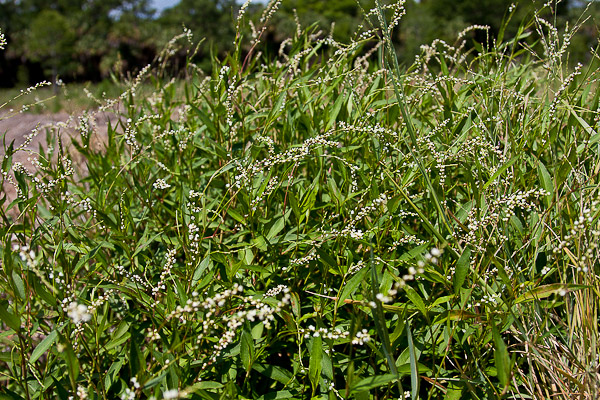
Today John and George got soggy feet exploring a swampy  pine woods along Beeline Highway at the C-18 Canal west of Palm Beach Gardens.  We came upon a grass we seldom see, Leptochloa fusca, a toad, and a diverse display of pretty wetland species, including  lots of Smartweed (Polygonum punctatum).

Perhaps because I started my botanical career in the shadow of the largest Native American settlement north of Mexico, Cahokia in Illinois, whenever I encounter species of Iva, Polygonum, and some other pre-Maize grain genera, my imagination drifts back to when Smartweeds were on the menu.    

  
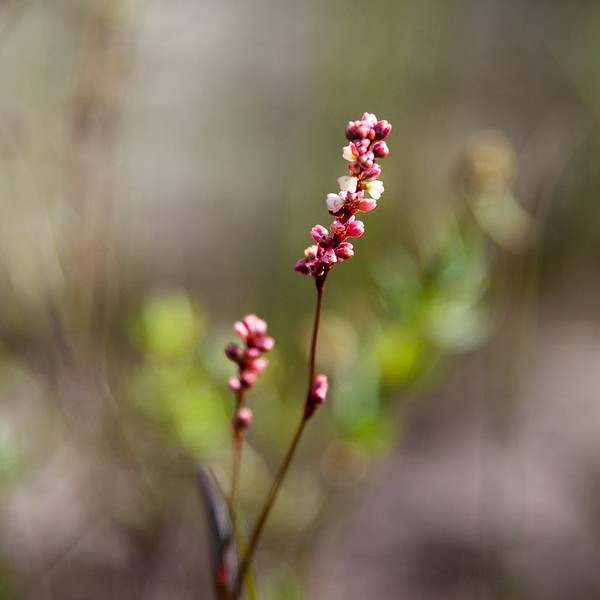
Polygonum punctatum (JB)

Polygonum punctatum (JB)

Something that struck me long ago is how often as botanists we fail to consider richly native peoples in relation to native plants.  Now don’t get me wrong, of course there has always been an awareness that people were here before Europeans and that they mixed it up with plants, and obviously archaeologists and anthropologists ponder native peoples all over the place.  But still, traditional taxonomic botanists tend sometimes to have tunnel vision in this area.

Polygonum punctatum flower Fl TR

Charles C. Mann, in his “1491, New Revelations of the Americas Before Columbus” (Vintage Books, 2006), emphasizes the under-appreciated levels of population, activity, development, longevity, and overall impact of human activity in the New World prior to the mere 500 years of European invasion.

My Second Grade teacher Mrs. McCullough knew all that when she brought to school boxes of arrow points unearthed on her farm near the Ohio River.  My own mother found one in her flower garden.  And in Florida it is hard to forget those who came first in a state dotted with burial mounds and shell middens.

Nobody really knows how many people lived in the pre-Columbian Americas, but a glance at Wikipedia gives a range of 30-100 million.  And nobody really knows how long ago they came.  Definite dates go back over 14,000 years, with less definite evidence of far longer.  No matter how you slice it, many people spanning many millennia.

Florida details are murky.  Archaeological excavations near the St. Johns River show settlement 5000 years ago.  And a lot of pre-Europeans seem to have chosen the active Florida adult lifestyle.  One estimate of the population greeting Ponce de Leon is 350,000.  CLICK  That’s the population of Tampa, and the residents of Tampa have quite an environmental impact!

And that brings us to the gist of today’s post.  The floristic impact of hundreds of thousands of Floridians over 5000 plus years boggles the mind.  Too bad we know so few details, so this is an exercise in imagination, not in precise facts.  Among the many Florida plants probably moved around (or improved horticulturally, or brought from elsewhere) by ancient Native Americans include agaves, bottle gourds, coonties, morning glories, mulberries, papayas, peppers, persimmons, royal palms, squash and gourds, and others.

Polygonum defined broadly is a large complex  genus having many similar species distinguished by subtle characters.  About 11 species are native to Florida, with exotic additions.

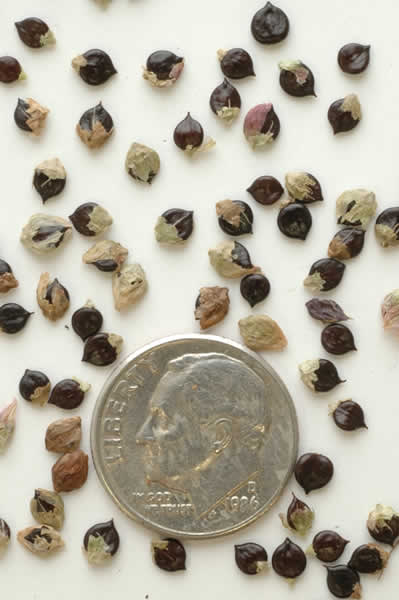
Polygonums make small grainlike “seeds” (achenes) which had prominence in North American cuisine prior to Maize.  We’re not talking side-dishes, but rather staples.  CLICK   Ancient coprolites (fossil dung) from the Fort Center archeological site near Lake Okeechobee bear Smartweed seeds.  (The coprolite seeds are reportedly P. hydropiperoides, which differs from P. punctatum  by having a different distribution of glands on the flowers.  I doubt the ancient seed-gatherers cared about the distinction.)  And they’re not just for porridge:  according to the botanical literature, Polygonum punctatum was in the Native American medicine cabinet for pain relief and related ailments.

Polygonum seeds from Prairie Moon Nursery www.prairiemoon.com

Polygonum seeds from Prairie Moon Nursery http://www.prairiemoon.com

You can take a walk and tromp on a weed searching for the rare and marvelous species.  Just a nasty weed to spray with Round-Up.  Is it an embarrassing discredit to your pristine yard and garden, or is it  a botanical heirloom?  Maybe its indigenous values date back 5000 years.

Sometimes I feel we worry too much about “endangered species” that are not really endangered (but make good attention-getting mechanisms) and maybe too little about endangered appreciation of the species all around us.

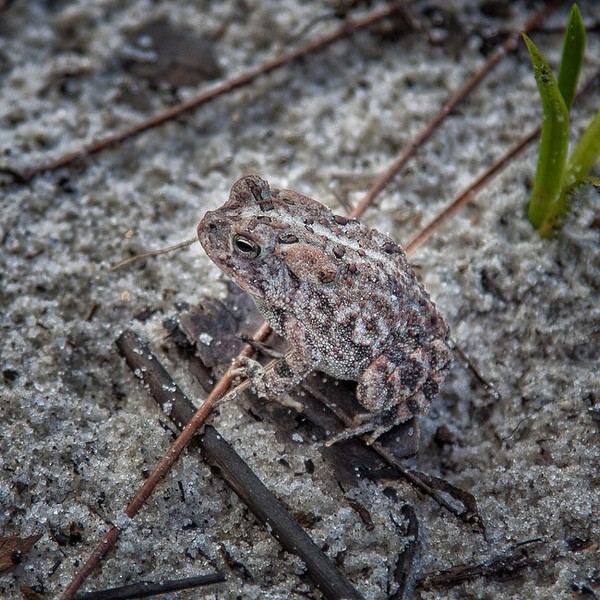
Fried toad legs are not on the menu.

Fried toad legs are not on the menu.

 
8 Comments

Posted by on August 10, 2013 in Smartweed


Tags: , ,