RSS

Category Archives: Uncategorized

Daggerwings, Deadly Darts, and Monkey-Ball Trees

The last week or two has been a good “stretch” for Ruddy Daggerwing Butterflies, something right now must agree with them.   Sometimes you see Daggerwings in a shaded woods way up high bouncing in and out of the tree branch shadows.   Sometimes they come down and say hello, feeding on any of many flowers.   The larvae feed on Strangler Figs, as in my yard, likely the reason Daggerwings visit out the window during sunny morning coffee time.
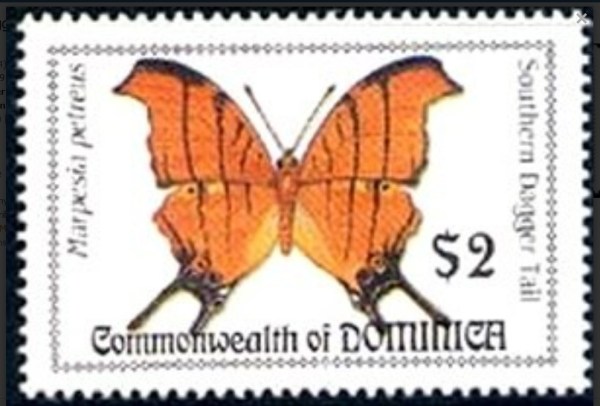
The wings folded up look like leaves,  when open they are orange and tiger-striped.  The wings have a variable “swallowtail” even though Ruddies are not Swallowtail Butterflies in a taxonomic sense. Those “tails” must be useful because they have evolved multiple times.  An idea not original with me, they seem to be false antennae that orient confused predators to the rear (less vulnerable end) of the butterfly.

Movie Feature,  Rudy the ruddy finds bees bothersome:  CLICK 

Count the movie star’s legs.  Insects have 6 legs, right?  Not always; in this family (the brush-footed butterflies), only four legs are leggy, the other two reduced to sensory organs.

For the moment let’s agree with the many websites that state “the” larval host plants of the RDW to be Ficus.  Around here natively that would be mostly Strangler Fig, Ficus aurea, plus some cultivated species.   The butterfly is a “pest” on edible figs.    Fig stems and leavess ooze milky sap, which may be key to an oddity of the caterpillars.  They make a little “nest” of debris and frass probably glued with the milky goo, either fresh or after passing through the caterpillar.  I have no idea why.  As with so much of natural history….what’s up with that?

Everybody knows butterflies render themselves poisonous to predators by taking up toxins from their larval hostplants.   Now in the case of the Daggerwings, that gets interesting.  I don’t know how toxic Strangler Fig sap may be, but the butterfly extends tropically into South America where the larvae feed on a different member of the fig family called  Naucleopsis (now-clee-OP-sis).  Species of Naucleopsis in different regions are the secret sauce in lethal poison arrows and darts.   Don’t eat any Rudder Daggerwings.

The northern range of Daggerwings is of interest too.  Here in South Florida “the” larval foodplant may be strictly Ficus, but the range of the Ruddy Daggerwing extends westward and northward where no Ficus grows.   Ruddy Daggerwings are recorded historically  west beyond Texas and northward through Kansas and, decreasingly, much farther north.  Lucky for us the British Museum of Natural History maintains records, available online, tabulating every known hostplant for every butterfly.  A search there shows for Ruddy Daggerwing, not only Ficus and Naucleopsis, but also “Maclura.”   That may be significant.  When I was a kid growing up in West Virginia we used to throw ”monkey balls,” fruits of the so-called Osage-Orange tree, Maclura pomifera, yep, in the Fig Family.  Osage-Orange wood is arguably the best North American wood for making bows, as in bows and arrows.  For that reason pre-Europeans presumably moved the valuable tree around.  Humans relocating its likely northern host may have extended the range of the Ruddy Daggerwing.   I’ve always been drawn to the suspected influences of thousands and thousands of years of pre-Europeans in the modern ranges of plant species.

 Come to think of it, speaking of  bows and arrows, Daggerwings, and larval hosts the same may be true in South America for Naucleopsis.

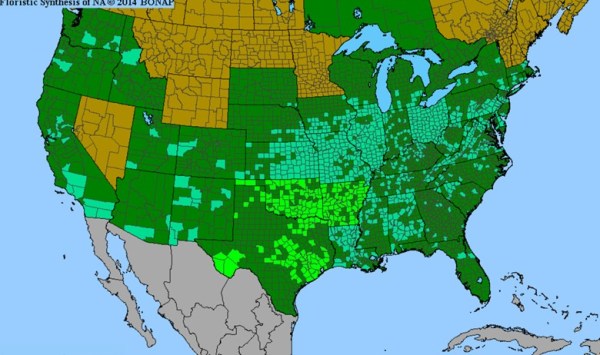
Look at the two maps below.  One is the present range of Osage-Orange, the other is the present and historical range of the Ruddy Daggerwings.   Remember that the southern extensions into the tropics can be based on Ficus (and Naucleopsis).     The northern similarities of the Daggerwing’s present and past range and the range of Osage-Oranges are suggestive.  (The dark green dots are the area where the tree is common, the more widespread lighter dots show where it is spotty.)  Wonder why the butterfly disappeared from part of its historical distribution:  reduction in woodlands with Maclura?  Increased or changing agricultural pesticide use?  Glad we have it here.
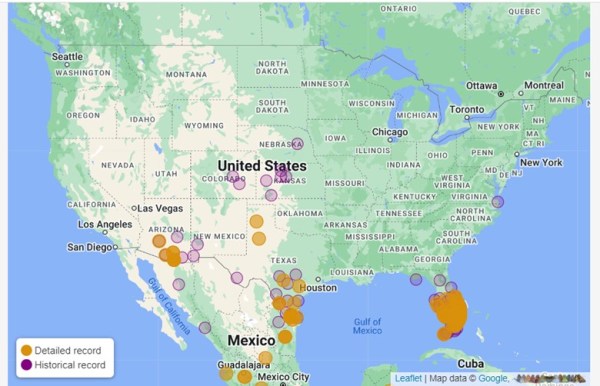
Ruddy Daggerwing present and past distributions

Maclura. Bright green (Texas, Oklahoma, Arkansas = core of the range). Blue-green = counties where recorded but spotty.
 
6 Comments

Posted by on September 9, 2022 in Uncategorized


Narrowleaf Milkweed and the Beautiful Queen of the Waterworld

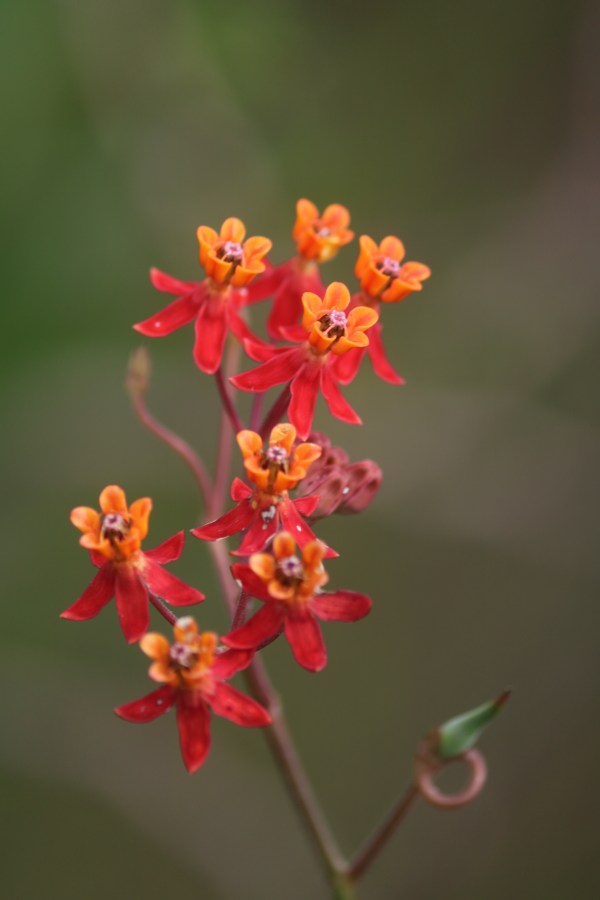
Asclepias lanceolata

Apocynaceae


I spend more time than the average retiree wading in Florida depression marshes.  Messing around out there, a person notices some things.  It is easy to notice widely scattered bright spots of red flowers…Narrowleaf Milkweed rising above the other vegetation.   Another less-conspicuous observation is that far from shores pollinators become comparatively sparse. 

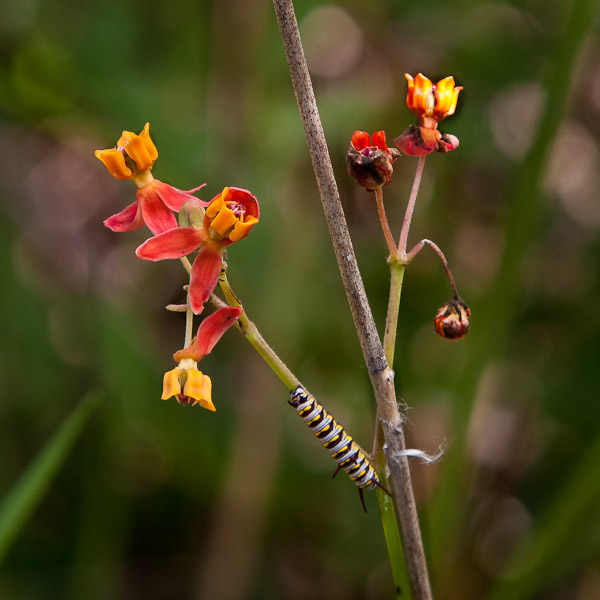
Narrowleaf Milkweed with baby Queen, by John Bradford

Those two observations are no doubt linked.  If you grow scattered and far from shores,  pollinators may be a problem.   And those limited pollinators need to find you, which is where those showy flower clusters pay off.  The pollinators also need to be strong fliers to cover the extended distances.

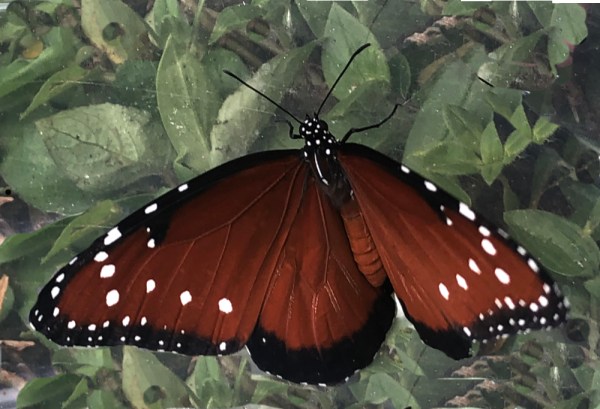
Queen by Donna Rogers

On the second point,  back in 2006 ecologists Derek Artz and Keith Waddington checked out exactly which long-distance visitors pollinate Narrowleaf Milkweed in South Florida.  The three marathon winners were:  Giant Swallowtail Butterflies, Phaon Crescent Butterflies, and Queen Butterflies.  Paper wasps go the distance too but were not great Milkweed pollen carriers.

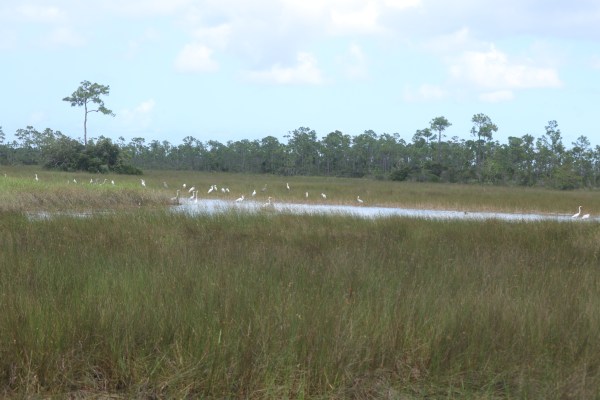
NL Milkweed habitat

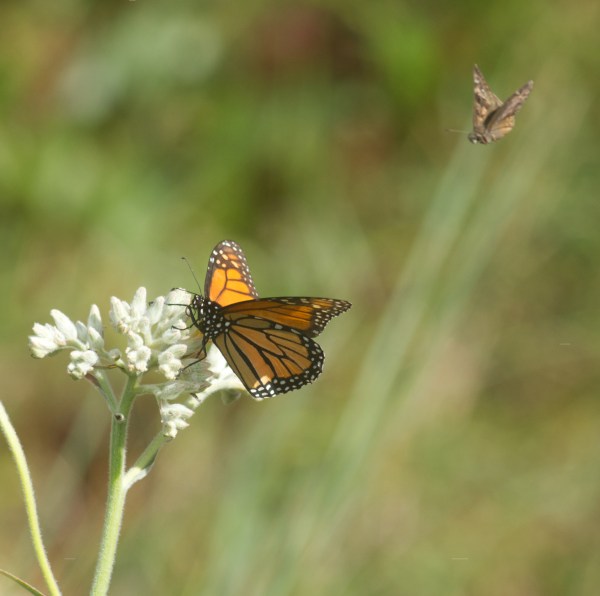
What about the famous linkage between Monarch Butterflies and Milkweeds? I’m not saying that Monarchs never use Narrowleaf Milkweed as larval hosts or as nectar plants, but they were at least not in the long-distance winner’s circle.   Monarchs and Narrowleaf Milkweed may have a slight mismatch with some limitations.  First of all, Narrowleaf Milkweed  is widely scattered and has skinny leaves, both points not optimal for the big voracious Monarch caterpillars that devour more productive crowded leafy Milkweeds.   The skimpy food supply of the shoestring leaves probably disfavor Monarch caterpillars which become cranky and mutually aggressive when food is in short supply.   A shoestring budget is no place for grumpy Monarch babies.  Also, Monarchs  make themselves toxic by ingesting poisons from the Milkweed the caterpillars eat.  But turns out Narrowleaf Milkweed doesn’t offer much bang for your buck.

Encountered in the Milkweed habitat. Hope they ain’t human.

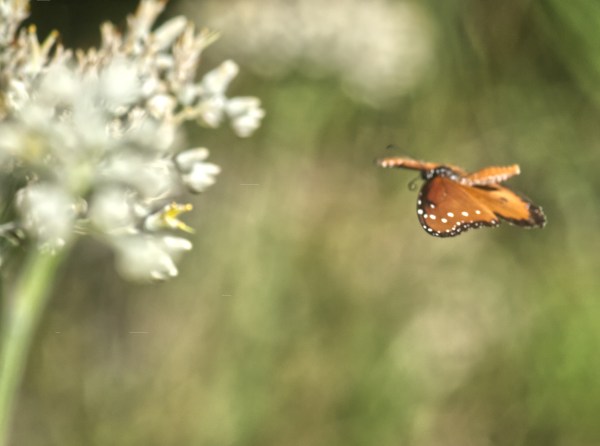
Queen Butterflies are closely related to Monarchs, and differ in ways that might make them a better “fit” with Narrowleaf Milkweed.   Although Queen’s can take up poisons from Milkweeds, they are less likely too, so a relatively non-toxic Milkweed seems ok for them. They are a little smaller on average than Monarchs and may thus fare better on skinny and scattered larval hostplants.  Also, although Queens and Monarchs both favor as larval hosts Milkweeds and close relatives, Queens have broader hostplant tolerances and may thus be less dependent on a rich crop of Milkweed out in the challenging marsh.   The jury is still out somewhat,  but it may be  Queens and monarchs have some tendency at least proportionally to favor different Milkweeds.  More research needed for a verdict.

 
5 Comments

Posted by on September 2, 2022 in Uncategorized


Asparagus-Fern, and the Plumosus Rebellion

Asparagus setaceus (and related species)

Asparagaceae


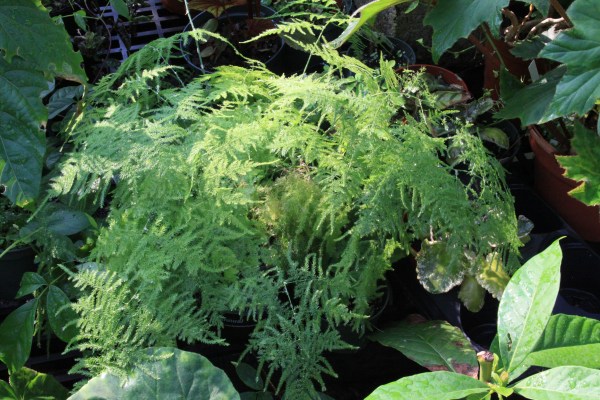
To get the ball rolling, let’s make one thing perfectly clear: Asparagus-Fern (Asparagus setaceus) is not a fern.  It merely has a misleading superficial resemblance to ferns, and the plant world is loaded with such confusing misnomers.  It is, however, truly an Asparagus related to dinner-table Asparagus officinalis, although inedible and probably toxic.

Asparagus-fern is a non-native garden escape with a big historical footprint in northern Palm Beach County.  Also escaped from horticulture are the similar “Sprenger’s Asparagus-Fern” (Asparagus sprengeri) and the “Foxtail-Fern,” usually designated Asparagus densiflorus ‘Myers’.   The boring nomenclature of these ornamental Asparagus representatives is inconsistent.  I’m not interested in sorting out the fine points of all that.  The good stuff is the tie-in with local political strife, so let’s jump to it.

Foxtail “Fern”

Even if you have not found it trespassing in a natural area, you know Asparagus-fern from cut flower arrangements as the stiff durable ferny stuff in a supporting role to the pretty posies.   Florists still use a lot of it.  A whole lot—enough to be a minor industry, where today’s plant is often known as “Plumosus” or “Plumosa.”  Remember that—it is important.

“Plumosus” jutting forth from the left, right, and bottom of the boquet.

Now turn to the Town of Jupiter, Florida, where I live.   If you are a local resident you may know Jupiter as a boring bedroom community of commuters, retirees (such as me), golfers,  a pleasant beach, and big box stores.   But Jupiter has some skeletons in its closet, as documented by the article series, “History: Town of Jupiter,” largely by Kevin Hemstock and originally published in the Jupiter Courier, now accessible through the Town’s web site.  Most of the history outlined in today’s blog comes from those articles, largely dating to ca. 2000.

What is surprising about past Jupiter?  Among other things, it was a funnel for illegal booze arriving on an industrial scale from the Bahamas during Prohibition.   It also in the pre-WWII era had an infamous speed trap shaking down northern tourists, the “take” reportedly funding ¾ of the municipal budget on top of ad hoc bribes and confiscations. As much fun as it would be to explore the dark underbelly of Jupiter,  we better remember this is a botanical blog.   A botanical Jupiter secret is that in between the two World Wars Asparagus setaceus (‘Plumosus’) sparked a small revolution.  Growing ‘Plumosus’ was a serious  industry with at least 30 Jupiter producers tending the “fern” under massive lath sheds,  some covering 6-9 acres.   Jupiter residents will recognize such still-resonant surnames as Carlin and Pennock among the growers.    The plants were packed on ice and expedited by train to florists in northern cities from Detroit to NY.

The big Plumosus industry was the catalyst for a tax revolt resulting in the birth of a whole new city.  For reasons to be explained in a moment, Plumosus City seceded from Jupiter and occupied most of present-day Jupiter.    If you live around here, you  can picture these rough boundaries:  Loxahatchee River, Frederick Small Rd., the RR (more or less ?), and Central Blvd.   To repeat:  most of modern Jupiter.  Here is what went down:

Sprengers Asparagus-Fern and cigarette butts

The “Roaring 20s” in Florida was a fun-fest of wild development, unbridled expansion, real estate speculation, and many failed projects. (My paternal grandparents moved to Florida in the 20s after job trouble in Iowa.)   Local boosters got fancy ideas for big-time Jupiter development, which looked great on paper but required a whole lotta speculative funding, that is, taxation (to supplement that speed trap revenue and presumed municipal contributions from the civic-minded booze shippers).   HOWEVER:  The prominent Plumosus growers had contrary ideas.  Having land and income, they discovered a big tax target on their backs. The growers had no interest in underwriting corrupt politicians’ questionable self-serving schemes.  So they withdrew from Jupiter, incorporating Plumosus City in 1929.  

Plumosus—how many crummy little cultivated species have birthed their own city?

As the Roaring 20s gave way to the dreary 30s,  high-falutin development schemes and Plumosus growing both declined in Jupiter.  [Note : plenty of development eventually came to pass.] Why the decline back in the 30s? Let’s see: The Depression, hurricanes, world warfare, changing land values, and the pestilence you get when cultivating a monoculture.   Can you believe it…Cicadas helped ruin Asparagus-fern growing.  Plumosus City lived on as a nominal municipality until the 1950s when the Florida Legislature lumped most of it back into Jupiter. The last long-abandoned fern shed was torn down in the 1960s, and ‘Plumosus City’ haunted old deeds, surveys, and official documents until at least the 70s.

Three take home lessons.  1.  Next time you encounter an “Asparagus Fern” in a natural area, broaden the grumble from invasive exotics to tourist shakedowns and overreach by corrupt politicians spending other peoples’ money on dubious schemes.   2.  Vive la revolution!  3. Eat your Asparagus.

 
7 Comments

Posted by on August 26, 2022 in Uncategorized


Poisonwood


Metopium toxiferum

(Metopium comes from an ancient name for Ferula.  Toxiferum means “bearing poison.”)

Anacardiaceae, the Cashew Family


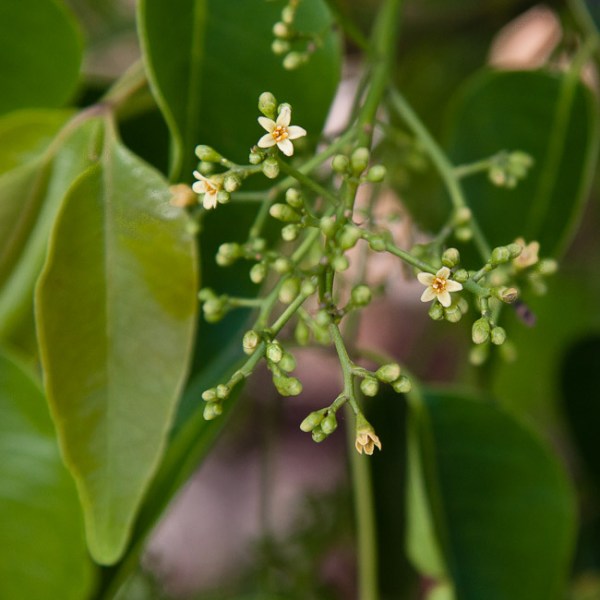
Funny how when a plant, or person, becomes known for a single prominent feature that single feature comes to define them with diminished attention to all else.    Poisonwood’s defining attribute is poison.  It causes dermatitis in some people.  A giveaway recognition feature is ominous black splotches on the foliage and bark.    

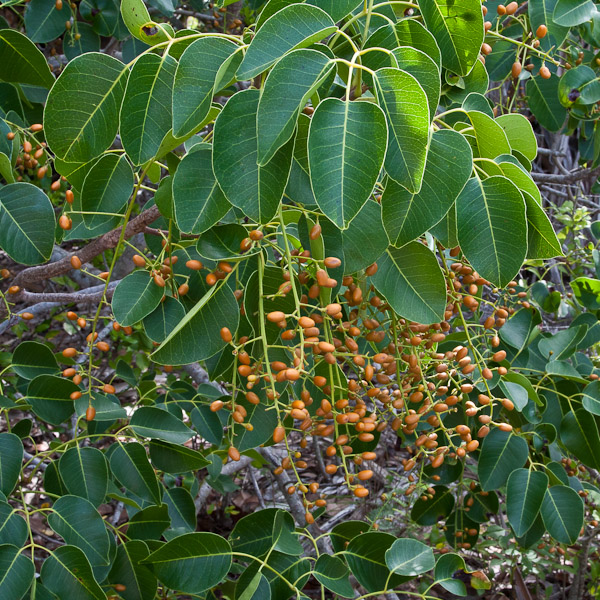
Poisonwood flowers. All plant pictures today by John Bradford.

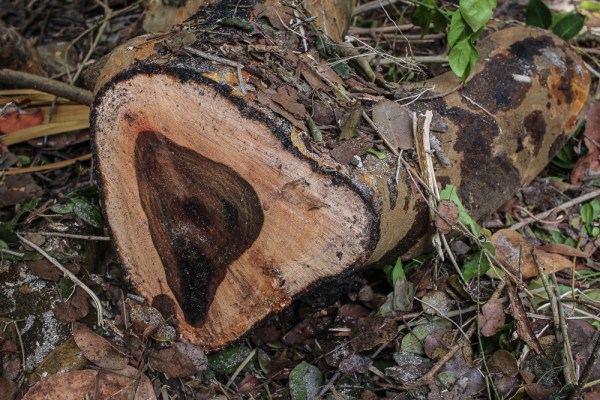
Assuming speculatively that there actually is a relationship between that black staining and toxicity, it is interesting to see how the tree sequesters “black death” in its black inner trunk and in its black inner bark suppressing microbes and  insects.   

Is that black staining a nasty poison protecting the tree from becoming hollow? And look at the inner bark.

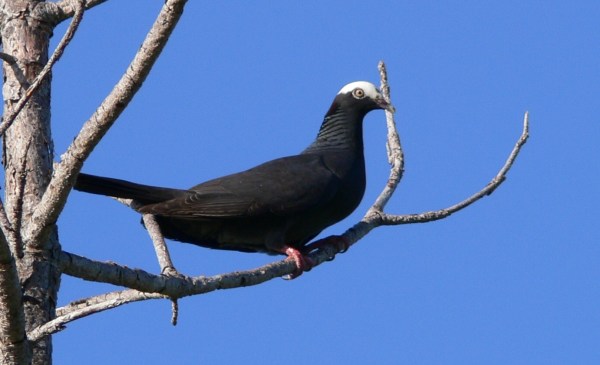
Same itchy family as Poison Ivy, and Mangoes and Cashews.  OK then, that is all we need to know.   But you might feel otherwise if you were a White-Crowned Pigeon.

WCP by Dan O’Malley

If you were a White-Crowned Pigeon there wouldn’t be very much of you in Florida, mostly just the Everglades, the Keys, and here and there around Miami-Dade.    The species ranges from the southern tip of Florida down through the Caribbean.   Guess what has an almost-matching geographic range: Poisonwood.

Turns out Poisonwood berries are the favorite food for the WC Pigeon, to the point that the availability of the berries influences the bird’s distribution, seasonality, nesting behavior, and reproductive success.   And the pigeon undoubtedly helps distribute the seeds. A problem for the pigeons is humans don’t like Poisonwood, which is suppressed in parks and yards.

Pigeon food

That fact ties in with a broader botanical oddity.   Which is:   Woody plants in Florida (and to unclear extent elsewhere)  found in stressful habitats and having pea-sized fruits dispersed by birds have an inordinate tendency to have separate male and female individuals (to be “dioecious”).    Dioecy tends to be unusual in the plant world overall,  yet dominant in Florida bird-dispersed woody plants in certain stressful habitats.   Examples:  Poisonwood, Wax Myrtle, Myrsine, Gallberry,  Dahoon Holly,  Smilax (not truly  woody),  Seagrape, Buttonwood, Wild Lime,  Winged Sumac, and Florida-Privet.   Although noticed variably by different botanists, this vague tendency is not thoroughly explained, the most common interpretation being that in some stressful environments it is advantageous for separate plants to specialize on male or female (fruit-making) functions.    Bird-dispersed species then often are clustered thanks to birds sitting in trees and raining seeds, the resulting clusters containing the male and female individuals needed for the next round of seed-making.   In any given cluster, one male can provide pollen for multiple females.

 
Leave a comment

Posted by on August 19, 2022 in Uncategorized


Sea-Oats

Uniola paniculata

Poaceae, the Grass Family


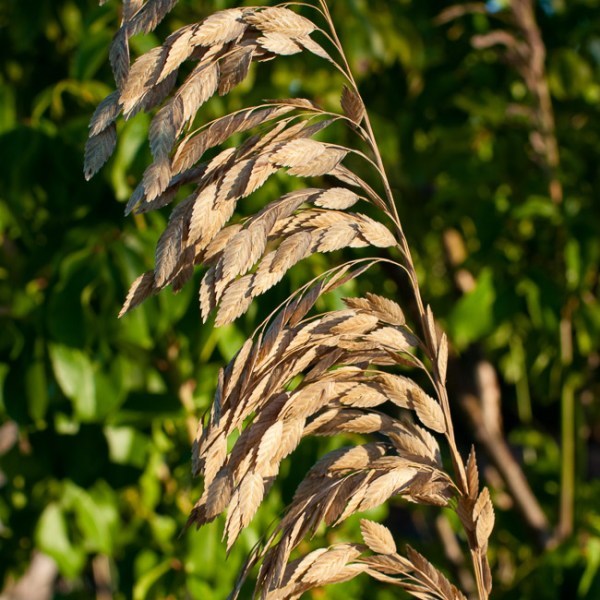
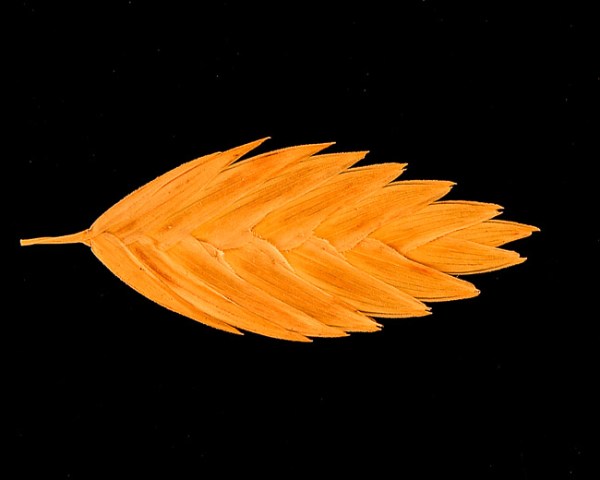
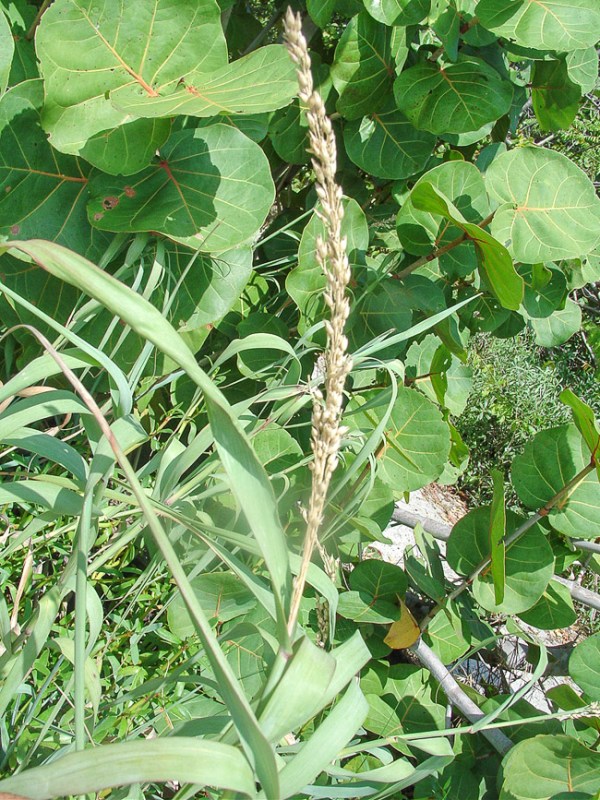
Not many plants out-beauty sea-oats with its fancy flat spikelets aflutter in the ocean breeze.  Location location location. Despite its conspicuousness, and its value for stabilizing coastal dunes naturally or via cultivation, the species has mysteries.  And it is not really an oat.

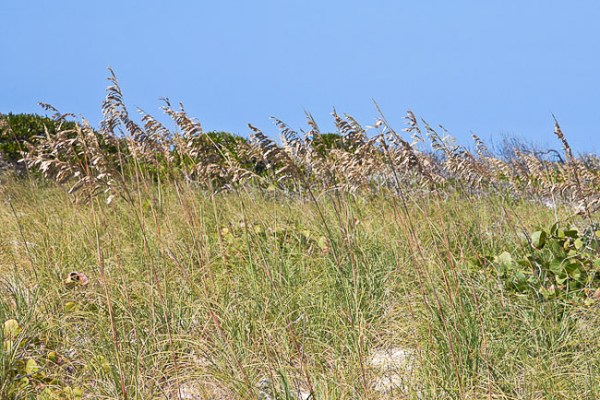
Sea-oats. All photos today by John Bradford.

One mystery is, given that Uniola be cultivated inland, why in the wild is the grass almost always restricted to ocean dune, from the high water line to the windward faces or crests of  dunes?  Inland from those places, it disappears abruptly.

One answer is probably competition.   Sea-oats are so specialized for competing on ocean-facing dunes with salt, intense drying, blazing sun, stingy nutrients, relentless abrasive wind, storms, and shifting sands, it may not compete effectively elsewhere.  Fun fact: the roots reportedly can go down 40 feet.
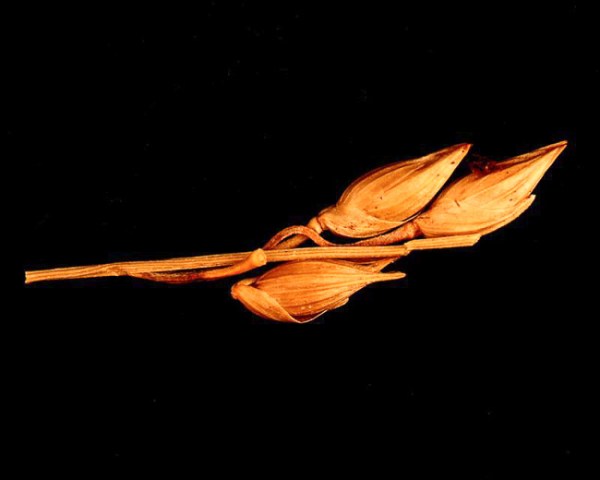
Sea-oats spikelet. Does it contain seeds?

Another sea-oats mystery is reproduction and dispersal.  It makes seeds, but in some places few to none, and often makes empty spikelets.   And when there are seeds, wild mice and other creatures gobble them up.   The big flat spikelets probably blow across the sand to prevent loose seeds from premature burial at the base of the mother plant.    The seed production is influenced by environmental conditions, being correlated with distance from the briny deep.  A big creepy rhizome system is a safeguard from waves and wind, and rhizome segments exposed by shifting sands break free, drift away, and resume existence on new shores.  This ability has served for planting sea-oats where its presence is desired.

Bitter panicum spikelets

Sea-oats has a frenemy called bitter panicum (Panicum amarum).  The two big grasses frequently occur together and have similar seashore distributions up the Eastern Seaboard and down around the Gulf of Mexico.  They are often more or less intermixed on the same beach sites, which raises the question of what ecological differences separate them?   There are some hints of ecological differentiation.   Bitter panicum has broader tastes:  marginally wider range, some “inland” presence (not much),  and less restriction to the windward faces and tops of dunes as sea-oats.  

Bitter panicum

Seems maybe bitter panicum is a little better at competing outside of the narrow sea-oats comfort zone, and sea-oats just a little better at competing in its special place.   They have subtly different nutritional characteristics, and probably have different fungal root associates.   Sea-oats is especially intolerant of waterlogged sand in contrast with bitter panicum extending into swales between dunes and into soggy marshy places.  Bitter panicum is a teeny bit more of a generalist and the “oats” a wee bit more specialist. But then again, the interactions between the two have never been studied so far as I can tell.

 
2 Comments

Posted by on August 5, 2022 in Uncategorized


Asiatic Latherleaf

Colubrina asiatica

Rhamnaceae


Asiatic Latherleaf is a worldwide tropical coastal invader.   This climbing shrub-vine is an aggressive fast-growing pest from Vanuatu to Hobe Sound, Florida.   Its original home is lost to history, but undoubtedly in the Old World Tropics.

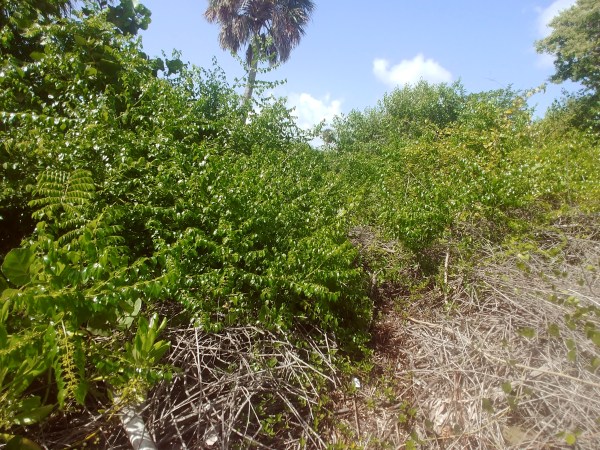
Aggressive Latherleaf at the inland edge of a mangrove stand, Hobe Sound, FL

In the Americas, it probably started out Jamaica in the 1850s,  where the plant was imported as a medicinal asset.  Latherleaf made it to the Keys in the 1930s,  to Miami, the Everglades and Jupiter Island in the 1950s and 60s,  and to Merritt Island no later than 2014.   Those northward steps might reflect Global Warming,  or alternatively may merely be the ripples in the pond spreading from that Jamaican introduction.  

Latherleaf by John Bradford

The species island-hops with ease, starting with the fruit capsule exploding to launch the seeds.  Those bits of reproductive shrapnel have a hollow space for flotation, and withstand multi-month (or more) ocean voyages.   They also can “lay low” buried in mud and sand.   Birds may help with dispersal by using the pebble-sized seeds as crop stones.  The sprawling shrubs can take over large areas by shading out and reportedly even poisoning competitors.    The only species able to survive under a Latherleaf stand is more Latherleaf.  The babies wait patiently in the deep shade of their parents while developing massive root systems, and then rise up when hurricanes create a gap.   

Flower and fruits, JB

The reproductive biology is mildly puzzling because Latherleaf flourishes far from any original pollinators, and has been observed  to be slim on insect visitors despite a big yellow “nectar disk” at the base of the flower.   Botanists have speculated that the flowers may be self-pollinating or even fertile without pollination.  Wind pollination has never been ruled out.   Also the branch tips root upon touching the ground, as do broken stem fragments.

The name Latherleaf comes from suds formed when the crushed leaves are stirred in water, giving it historical uses as a natural soap, shampoo, and massage lotion.   As is commonly the case with lathery plants, extracts are bioactive, with ancient uses as fish poison and in medicines.   The numerous drugs in the foliage may be on the strong side, given such uses as inducing abortions and expelling intestinal worms.   The presence of the species across the Pacific has been attributed speculatively to ancient seafarers taking it along as a portable Walgreens.

The name Colubrina comes from Latin for snake,  referring to the attractive snake-ish branches which have served on Sri Lanka for weaving mats.   The dark tight-grained wood is useful for small ornamental objects such as knife handles.

 
2 Comments

Posted by on July 22, 2022 in Uncategorized


Is the American Bumblebee Buzzing Off?

Bombus pensylvanicus


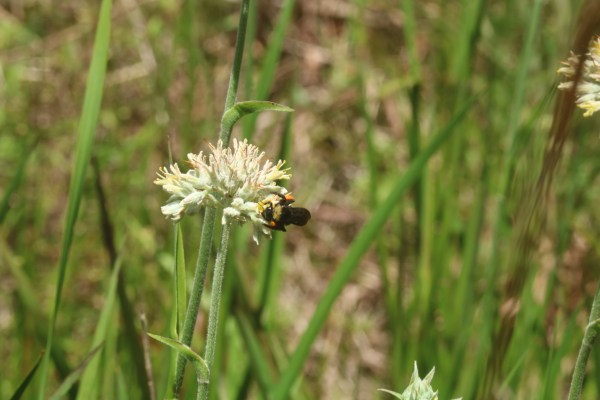
A photo of a bumblebee on a flower.   Camera fun, no big deal, but this particular species is of special interest. 

You can distinguish the “American Bumblebee” from other Florida-occurring Bumblebee species  because the American Bumble has 12 segments in the antenna (good luck with that!), pollen sacs on its hind legs (vs. no sacs anywhere), and its “back” from the wing attachments to the abdomen is black, as opposed to yellow or mixed colors.

American BB: Pollen sac. Black back from shoulders to waist.

Why would a Bumblebee not have pollen-collecting sacs?   Those sac-free species are cheaters.  So-called Cuckoo Bumblebees, they’d rather hijack other Bumblebees’ nests rather than gather their own pollen.  Such not-so-busy bees are unusual in Florida,  one historical cheater here, Bombus variabilis,  may be extinct or nearly so in the U.S.,  surviving still in Tropical America.   A parasite needs a pollen-collecting host, and the host species have problems which brings us back to the American Bumblebee.

I’m not a Bumblebee!

The American Bumblebee has been in decline for decades.   How old and how severe is the problem?  Hard to say, because the data are skimpy.  After all, not many biologists study Bumblebee distributions, and it is tough to gather info over millions of square miles.  Despite holes in the knowledge, it seems the American Bumblebee and some others, but not all bumblebees,  are dwindling.  

What’s particularly odd about the American Bumblebee is that most of the decline has been in the northeastern portion of its historical range from Canada to Florida, Mexico,  to (a little) in California.   It is doing comparatively well in the southern and central states, while disappearing from the northeastern corner of its range.  Recent publications suggest about 20% range loss so far, mostly in and near New England.

There is no consensus on the reasons, especially because any explanation for the decline must take into account its geographic bias.   Searching Goggle turns up with differing degrees of emphasis “the usual suspects” with respect to decline in other living things.   In alphabetical order:

Climate change:

When a wife is murdered, detectives look first at the husband.  When an insect range changes, detectives look first at Global Warming.  But, although an indirect effect is obviously conceivable, it not easy to explain how a warming climate would wipe out a species in the coldest part of its range. So far, no evidence.

Neonicotinoid insecticides:

That the decline seems to have accelerated with the onset of heavy use of neonicotinoid insecticides is suspicious.  And neonicotinoids are prime suspects in related crimes such as honeybee Colony Collapse Disorder, migratory bird disorientation, and more.   But are neonicotinoids a special problem in the Northeast?  As the District Attorney may say to the detectives,  “suspicious, go get me more evidence.”

Parasites:

Bumblebees suffer from mites and microbial infections, most famously a fungus Nosema bombi.   It has been speculated strongly that a deadly strain Nosema invaded native Bumblebee populations from European Bumblebees imported for greenhouse pollination.  Notably, researchers have shown a high instance of the fungus in declining Bumblebee populations.   But association does not prove cause.  It could be that declining Bumblebees are weakened from some other root cause, making them more susceptible to infection.   Molecular studies have failed so far to find a special deadly Nosema associated with commercial bees.  But then again, microbes are many and we don’t know what we don’t know.

Shrinking Habitat:

American Bumblebees are largely meadow species, breeding in low grassy plants.  Shrink the meadows, shrink the BB populations.  Meadows may be a declining “thing.”  Just ask the butterflies!  Meadows don’t have much protection, as opposed to scrub, or wetlands, or old growth forest.  Protected meadows mature into woodlands.    Lots of meadows were roadsides and railroads, or hayfields, or fallow fields, or pastures, or margins around farmlands.   Changing agricultural practices and changing land-use patterns aren’t helping expand meadowy bumblebee habitat.   A changing agricultural practice is massive application of effective herbicides, such as Round-Up.  Many meadow species are “weeds,” and we’ve gotten effective at weed control.    Could it be that open, weedy, semi-neglected meadows have diminished especially in the Northeast?   Maybe so, given that a great deal of former farmland and lumbered land in and around New England has reverted to forest.   Fires that used to return forests to meadows are now better controlled.   Where do you build new subdivisions and big box stores?   Largely in existing open unprotected vacant space. One day meadow “weeds,” next day sprayed turf and parking lot.

So whodunit?   Nobody knows, or if they do, they have not brought other observers into agreement.    In Agatha Christie’s “Murder on the Orient Express” every suspect had a hand in it.   Or then again maybe Global Warming, germs, insecticides, weed control, and dwindling vacant lots are a bunch of red herrings.  Personally, my favorite culprit is habitat loss, but that’s no more than a guess.

 
2 Comments

Posted by on July 15, 2022 in Uncategorized


Little seaweed, big discovery!

Mermaids’ Winecup

Acetabularia species

(ass-ah-tab-you-LAIR-ee-ah)

Greem Algae

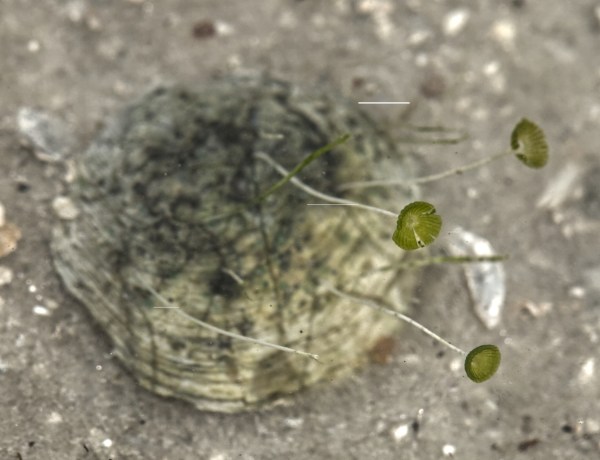
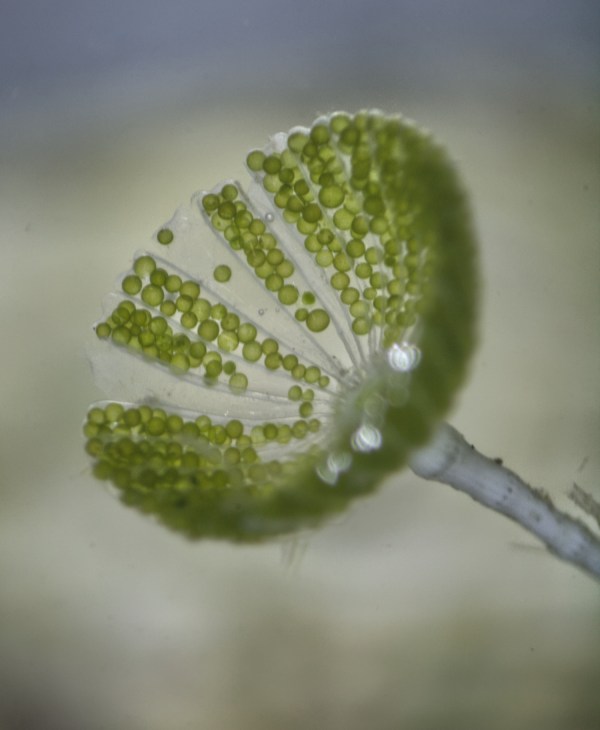
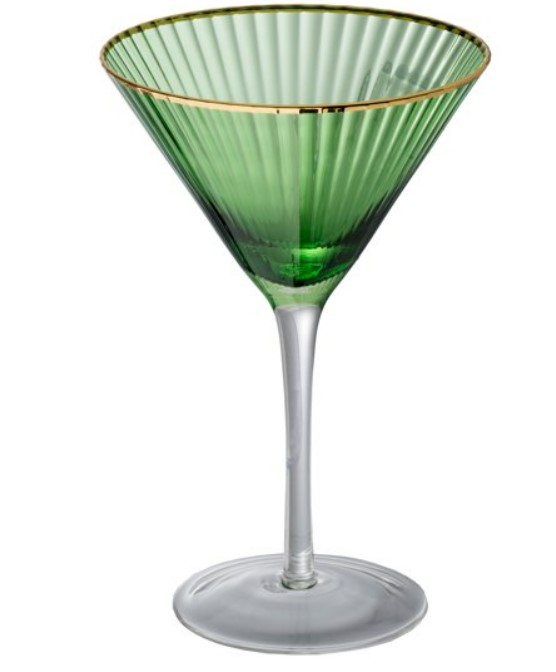
Here’s a pretty life form encountered Wednesday growing on a seashell in the saltwater Intracoastal Waterway near Hobe Sound.   A charming little Green Alga called “Mermaids’ Wineglass’” although it would fit only a Thumbelina-mermaid, and it looks more like a martini glass.  But you get the picture.   I fancy it.

Wineglass on the half-shell.

Acetabularia isn’t just good looking.  It has brains too.  Back in the 1930s and onward, this little alga had a big role in genetics   It showed the nucleus to be the informational center of the cell.  (Genetic research sure has  come a long way since the 1930s!)   Back then it wasn’t exactly clear what part of the cell was the control center.  (Now they can use one gene in your spit to determine if you kissed the Blarneystone.)

Makes me want a martini!

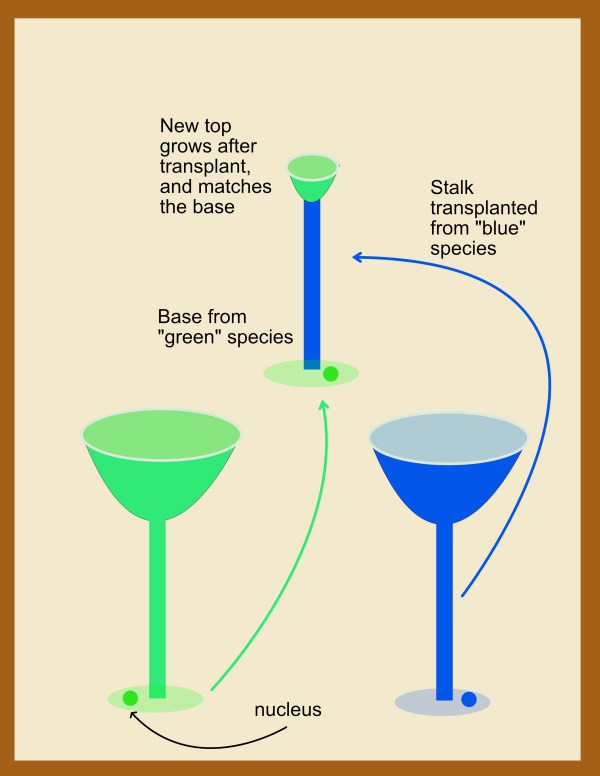
Back in the pre-DNA era why did they choose Acetabularia to find the control center of the cell?  Because the entire plant is just one cell having  just one nucleus.   By cell standards, HUGE, and easy to grow,  plus easy to manipulate.  You can cut the stalk and cup off the base, graft on a new stem from a different individual, and watch it regrow a new cup on the top of the new stem.

That gave biologist Joachim Hämmerling a “Eureka” moment.  He conducted many experiments on Mermaids’s Wineglasses, but  one experiment says it all.   If you remove the stalk and cup of one species (call it the green species) and graft on the beheaded stem of a different species (call it the blue species),  when a new cup grows on top of the transplanted “blue” stem, is the new cup “green” or “blue”?  Answer, it is green, that is, the new cup conforms to the base, not to the new stem even though the new cup grows upon the new stem.   Something in that base, the nucleus, is directing development remotely, and that’s the nucleus.  Hammerling tried combining two nuclei in one plant and got a tweener.

To go one step further for any reader who likes biology,  if the nucleus (in the base) is able to direct formation of a matching cup (at the top) something must go through that transplanted stalk.  Like my computer Bluetoothed to my headphones.   That something passing from the nucleus through the stalk to the tippy top was RNA.  Yep, Acetabularia had a role in the discovery of RNA too.

 
7 Comments

Posted by on July 8, 2022 in Uncategorized


Flower Benefits to Bees:  Nectar, Oil…and pollen for warning coloration?

Flower Benefits to Bees:  Nectar, Oil…and pollen for warning coloration?

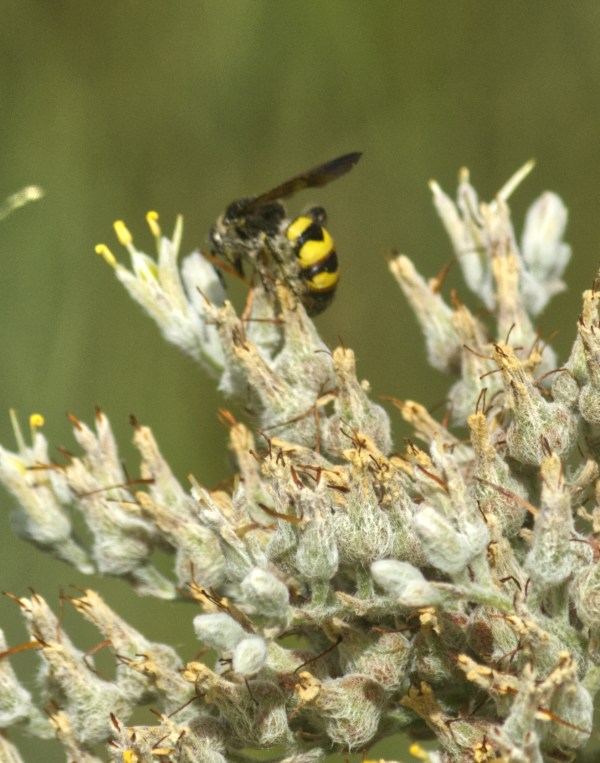
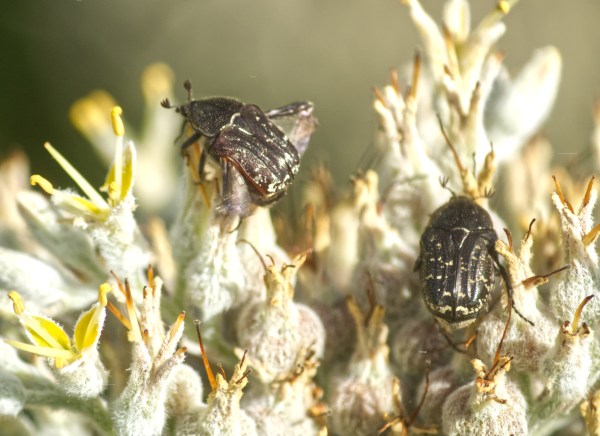
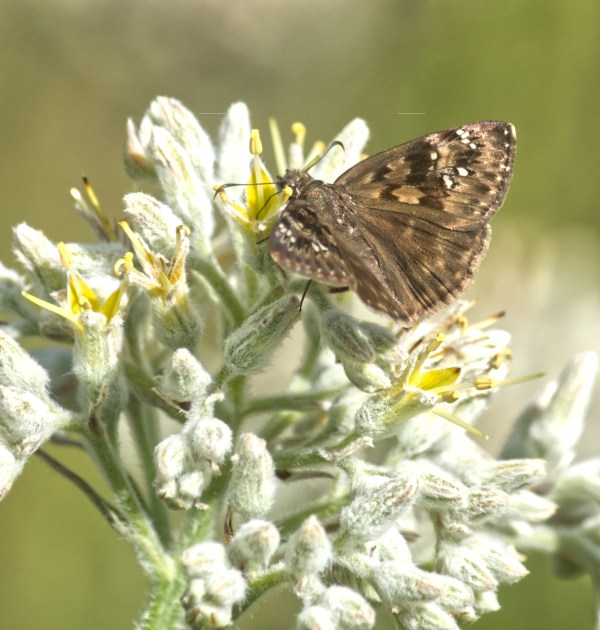
Like to watch flower visitors?  I  do, although other folks may have more exciting hobbies.  A great flower for pollinator-watching is Carolina Redroot (Lachnanthes caroliana).  Everybody comes along:  butterflies, wasps, beetles, bees, and who knows what else.  Here’s a sampler from just today:

I’ve got warning colors!
Who’s your favorite Beatle?
Queen on the way
More warning coloration. Oh look—here comes a Duskywing
Landed safely

When it comes to beautiful bugs, why pick favorites?  But the visitors who piqued my biological curiosity today were bumblebees in connection with their warning coloration.  A few words on that: Creatures and plants benefit from not being eaten, duh.  That’s why, double duh, there are so many defensive mechanisms ranging from stinky skunks to rhinoceros horns.  Now let’s say you’re a well-armed bug, perhaps deadly poisonous or with a wicked sting.   That helps of course, and it helps even more to not be attacked to begin with: thus warning coloration.   Try to eat me, and YOU’LL REGRET IT!   Now let’s say you are harmless and likewise benefit from not being attacked.  If you look like something able to hurt an attacker, warning colors protect the harmless too.      We’ve all seen it:  things that sting and the mere posers use yellow and orange bands and blotches mixed with black to say “let me bee.” Okay, with that obvious foundation, here’s the cool part (as I see it).

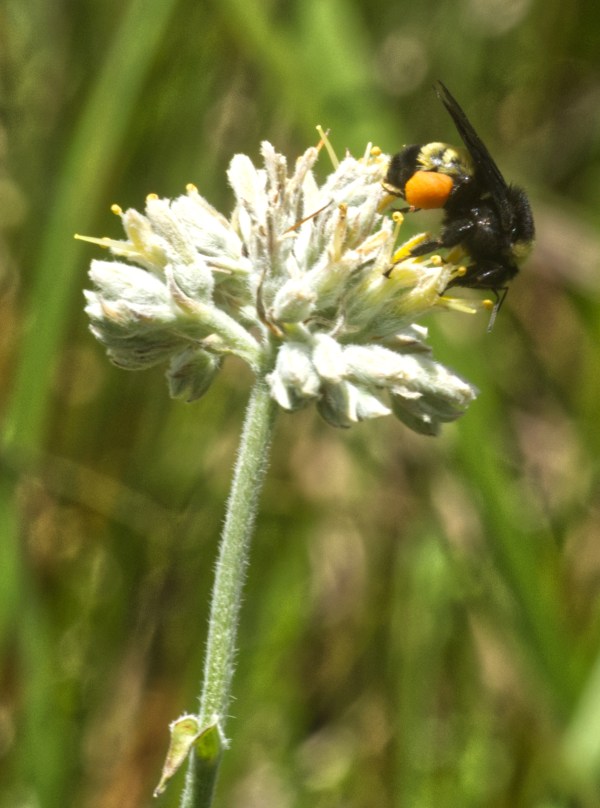
Look at that bright orange basket of pollen on the leg.

Bumblebees have warning coloration mostly in the form of yellow and black bands.   There’s also orange, and that varies in an interesting way.  The showiest coloration on many bumblebees  is an add-on:  big showy baskets filled with colorful pollen on the legs of females.  

That orange pollen sac on the hip HAS to contribute to the warning coloration.

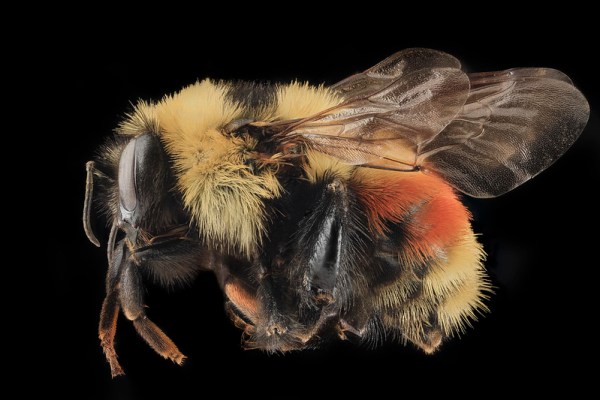
Could it be that a reward for being a busy bee is extra protection?  Not all bumblebees have the baskets of orange pollen.  Unloaded females don’t, and males don’t.  Perhaps some species never do.  In any case, some bumblebees have orange fur near where others have baskets of pollen.  Fake pollen baskets, that is. Examples include the “Tricolor Bumblebee” and the “Red-Belted BB.”  

Orange fur on this red-belted bumblebee looks much like the orange leg basket on others. Photo with public license USGS Bee Inventory.

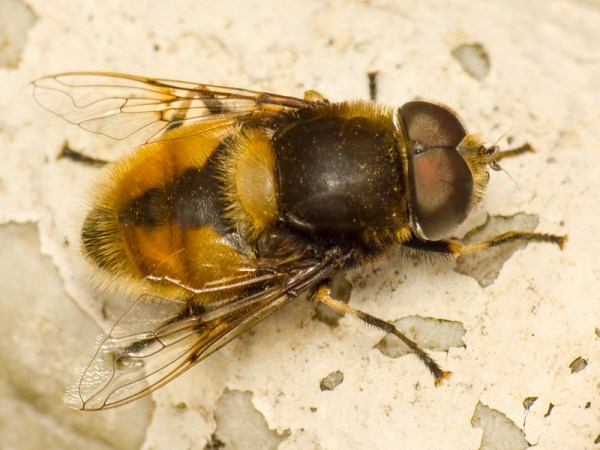
In other words, as I see it, leg baskets full of orange pollen offer enough protection to be worth “mimicking.” Just to thicken the plot, even fly “wanna-bees” often have orange hips resembling the baskets.

Dronefly. I can’t sting, but look at my orange hips. Photo by Martin Cooper.

 
Leave a comment

Posted by on July 1, 2022 in Uncategorized


Nurse trees, seed rains, and arboreal facilitation

Nurse trees, seed rains, and arboreal facilitation

South Florida has expansive open space where sparse trees are isolated or in clusters, or over-abundant in dense single-species stands.    That makes it especially easy and fun to observe the relationships between “big” tree species and their smaller underlings, especially when it is clear that the smaller species benefit (or suffer) under their big green overlords.   

Now of course even a cow knows the benefits of shade.  Still, the obvious can be fun to observe in the way it “turns out,” and not everything about life under trees is as clear as shade vs. sun.   You might say the biological effects of a shady existence range from “duh” to subtle, speculative, and impossible to measure.

Tree roots alter the soil chemistry and associated microbes.  Deep tree roots lift water up to smaller shallow-rooted plants.  Roots from a tree or its leaf litter might generate natural herbicides, or improve the soil, or favor beneficial fungi.   Trees are giant funnels concentrating rain and the nutrients washed down the trunk in it.  Trees and their immediate neighbors may experience fires differently from the surroundings.    Trees may “discourage” their own offspring beneath their boughs in order to minimize “parent-baby” competition, or they may send up root suckers that outcompete other species.

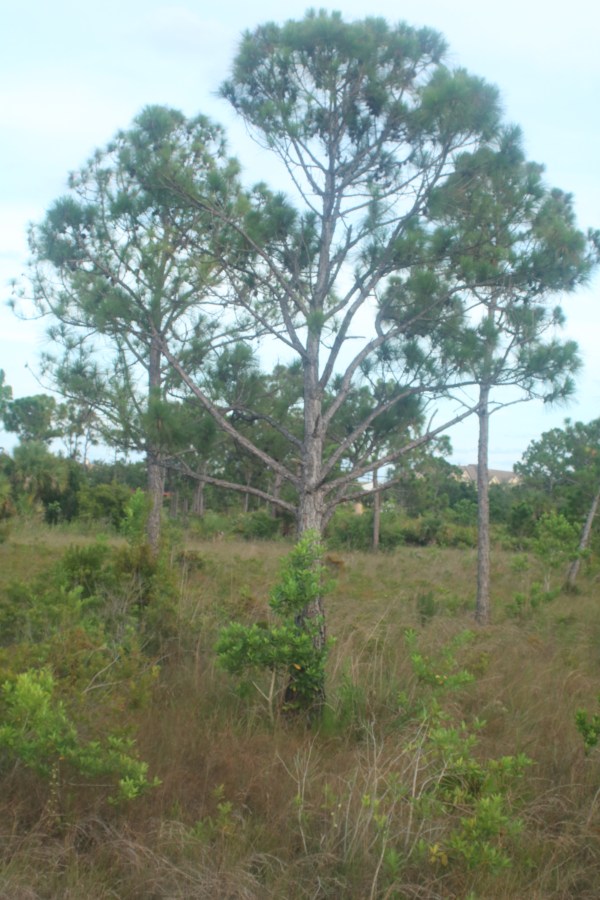
Slash pine and dahoon holly at its feet.

In wet habitats trees often occupy or help create hummocks elevated above the surrounding marsh bottom.   A depression marsh or wet prairie is usually open, with isolated slash pines, pond cypresses, or pond-apples having shrubs and perennials crowded around the trunk bases.    Perched birds raining seeds and guano would account for some of this, especially in the cases of tree-base species characterized by bird-friendly fruits:  myrsine, dahoon holly, and wax myrtle.    But birds are not the whole story.  You’d think the berries would get around within the marsh, even by floating, yet you seldom find myrsine, dahoon holly, and wax myrtle on the deeper non-elevated marsh bottom.  The  deeper marsh bottom is owned by different species, mainly peelbark St. Johnswort,  buttonbush, and corkwood (Stillingia aquatica). 

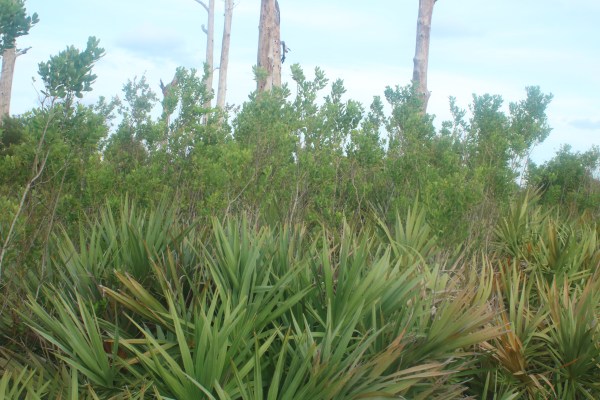
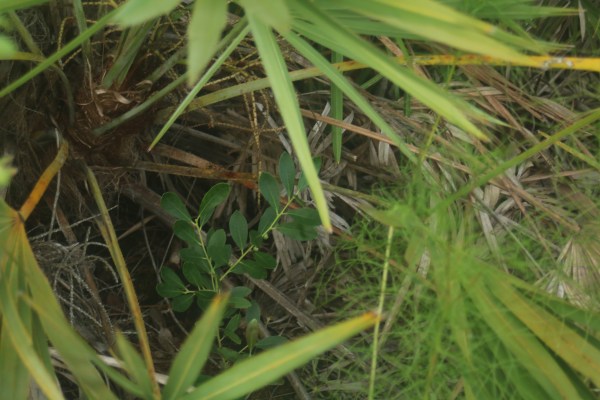
Saw palmetto can form thick impenetrable almost-single-species “carpets” in some open wet (or dry) habitats.  The dense coverage can shade out almost all other vegetation.   A small number of woody species can sprout under the intense palmetto shade and eventually rise up above the smothering fronds.  Champions of this are two related hollies:  dahoon holly and gallberry (holly).    Seedlings of these two have the rare super-ability to tolerate the deep shade, and no doubt benefit from the palmetto suppressing their other competition. 

Hollies overtopping saw palmetto

By the way, staggerbush can achieve the same feat in dry scrub rising from under layers of palmetto fronds there.   Benefiting from protection in severe nasty scrub is understandable.  The endangered  four-petal paw-paw and likewise endangered apple-cactus reportedly need nurse trees in their scrubby  homes.  There is especially room for research on the roles of nurse trees in scrub, given the blazing sun, poor sand soils, deep water tables, and relentless coastal winds.
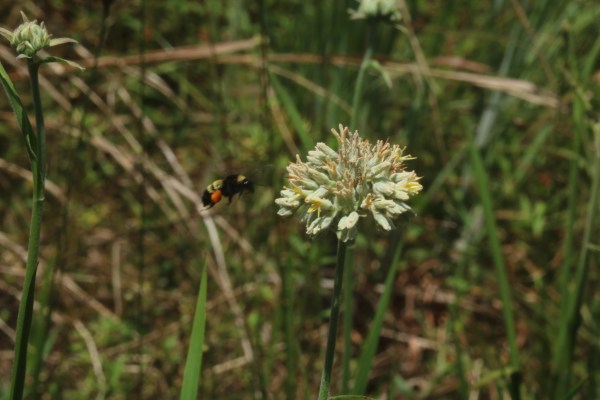
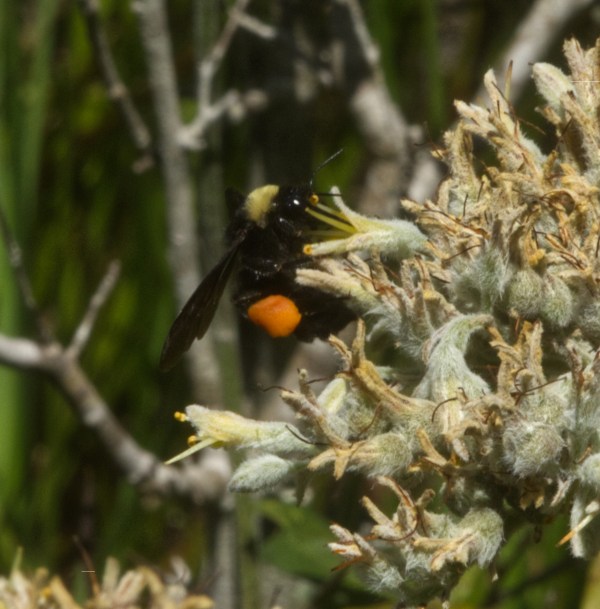
Gallberry holly in the shadows. No saw palmetto can hold me down!

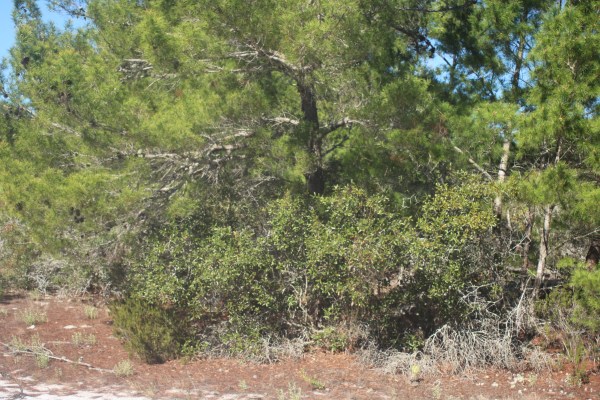
Trees alter wind patterns.   The main scrub oaks locally are sand live oak and myrtle oak.   The two are almost always intimately intermixed around here, but in notably different proportions when tree-sized.   Maturing myrtle oak dominates scrubby zones surrounded by a windbreak of sand pines.  By contrast, larger sand live oaks dominate the open portions of dunes devoid of pine protection.

Myrtle oaks cuddly with sand pine

 
6 Comments

Posted by on June 24, 2022 in Uncategorized