Mermaids’ Winecup
Acetabularia species
(ass-ah-tab-you-LAIR-ee-ah)
Greem Algae
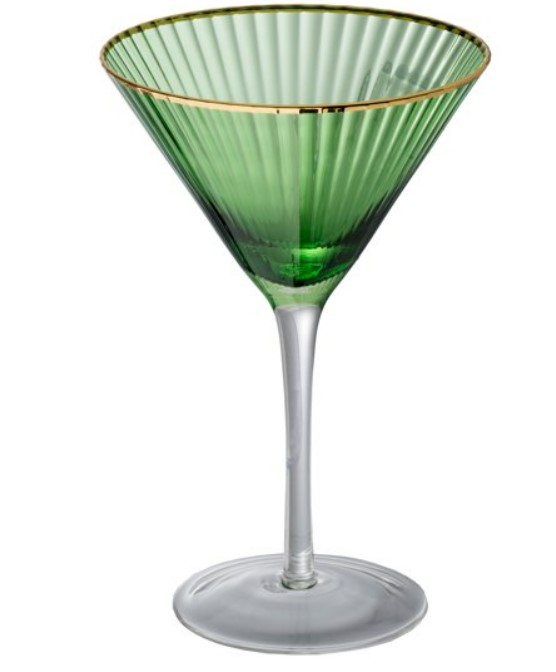
Here’s a pretty life form encountered Wednesday growing on a seashell in the saltwater Intracoastal Waterway near Hobe Sound. A charming little Green Alga called “Mermaids’ Wineglass’” although it would fit only a Thumbelina-mermaid, and it looks more like a martini glass. But you get the picture. I fancy it.
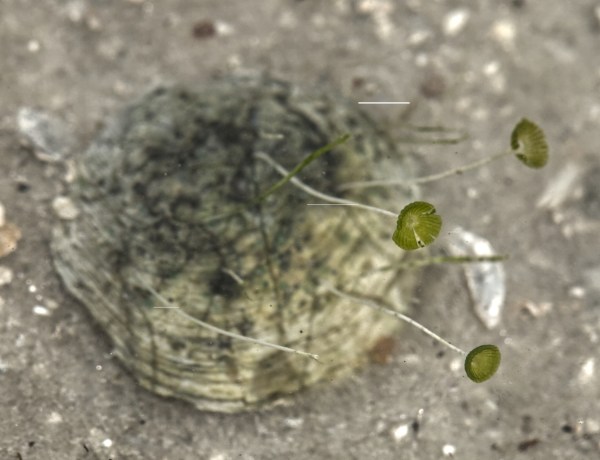
Acetabularia isn’t just good looking. It has brains too. Back in the 1930s and onward, this little alga had a big role in genetics It showed the nucleus to be the informational center of the cell. (Genetic research sure has come a long way since the 1930s!) Back then it wasn’t exactly clear what part of the cell was the control center. (Now they can use one gene in your spit to determine if you kissed the Blarneystone.)
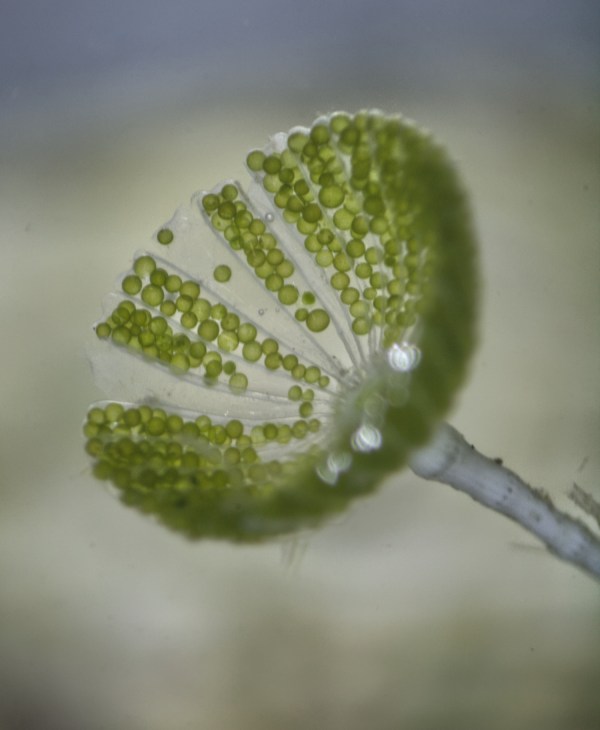
Back in the pre-DNA era why did they choose Acetabularia to find the control center of the cell? Because the entire plant is just one cell having just one nucleus. By cell standards, HUGE, and easy to grow, plus easy to manipulate. You can cut the stalk and cup off the base, graft on a new stem from a different individual, and watch it regrow a new cup on the top of the new stem.
That gave biologist Joachim Hämmerling a “Eureka” moment. He conducted many experiments on Mermaids’s Wineglasses, but one experiment says it all. If you remove the stalk and cup of one species (call it the green species) and graft on the beheaded stem of a different species (call it the blue species), when a new cup grows on top of the transplanted “blue” stem, is the new cup “green” or “blue”? Answer, it is green, that is, the new cup conforms to the base, not to the new stem even though the new cup grows upon the new stem. Something in that base, the nucleus, is directing development remotely, and that’s the nucleus. Hammerling tried combining two nuclei in one plant and got a tweener.
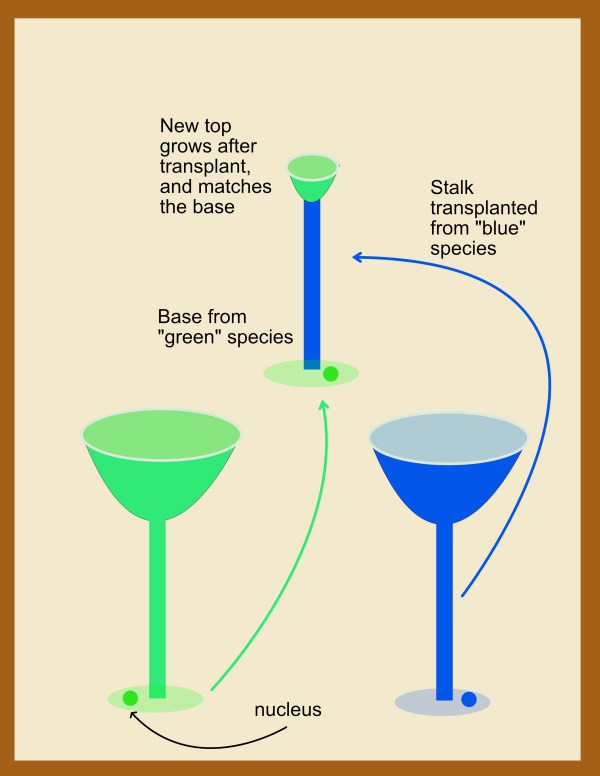
To go one step further for any reader who likes biology, if the nucleus (in the base) is able to direct formation of a matching cup (at the top) something must go through that transplanted stalk. Like my computer Bluetoothed to my headphones. That something passing from the nucleus through the stalk to the tippy top was RNA. Yep, Acetabularia had a role in the discovery of RNA too.
 John Bradford
 George Rogers
 George Rogers
 Dee Staley
 Treasure Coast Natives
HARVEY BERNSTEIN
July 8, 2022 at 3:19 pm
Wow! I’ve heard of Acetabularia, but never knew that it was one enormous cell. Nature’s glory is all around us (maybe too religious-sounding, I dunno).
George Rogers
July 8, 2022 at 4:53 pm
From my standpoint, you can scarcely be too “religious” re. nature.
Linda Grashoff
July 8, 2022 at 3:43 pm
Here’s another wow, George! That’s so cool. Even though it sounds too religious for me, I second Harvey’s sentiment: Nature’s glory is all around us.
Flower Roberts
July 8, 2022 at 3:58 pm
I LOVED this post. It brings back my biology teacher days. Maybe I’ll go back…nope
George Rogers
July 8, 2022 at 4:54 pm
Yup—I love biology. Pretty sure I had enough classroom (and meetings! and paperwork!!) time by the time I collapsed into retirement.
theshrubqueen
July 9, 2022 at 4:55 pm
Love this one, George. I am imagining the mermaid party..
George Rogers
July 9, 2022 at 6:23 pm
Little mer-minnows I guess.