RSS

Category Archives: Uncategorized

Which Came First, the Chicken or the Egg, the Moss or the Vine (Both?)

Which Came First, the Chicken or the Egg, the Moss or the Vine (Both?)

There’s something intriguing about the miniature self-contained ecosystems on swampy shady palm trunks. Lots of pushing and shoving, you know, lichen challenging moss kinda thing.   Who stands their ground, and who gets displaced?   But it’s not all pushin’ and shovin’.   Today’s nice friendly relationship is —so subtle you might question its reality, but I believe. 

Deep in the frog kingdom lives a moss called Syrrhopodon incompletus, which is hard to say but simple to spot as the dark green mats enjoying shaded palm trunks where the dark water is up over your ankles (unless you are on a nice boardwalk in Riverbend Park).   Brush off that spider, and look upward to the vines climbing the trunks.  Largely Virginia Creeper.
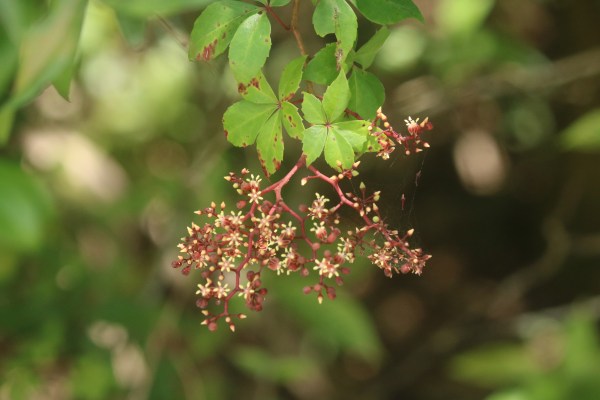
VA Creeper

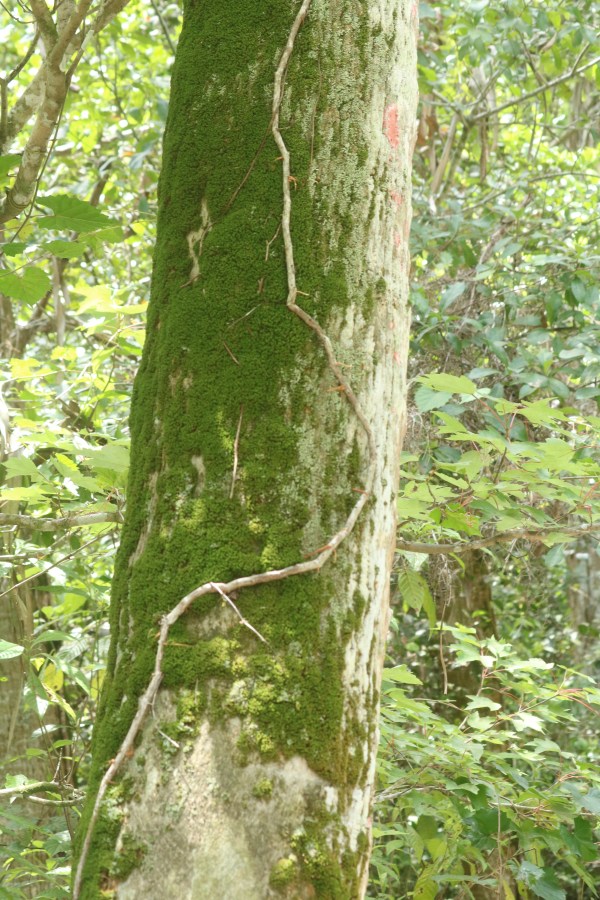
With some luck in the right place you’ll see that the climbing vine and moss tend to hang out together, frequently with the moss flanking the vine as it rises into the tree.   
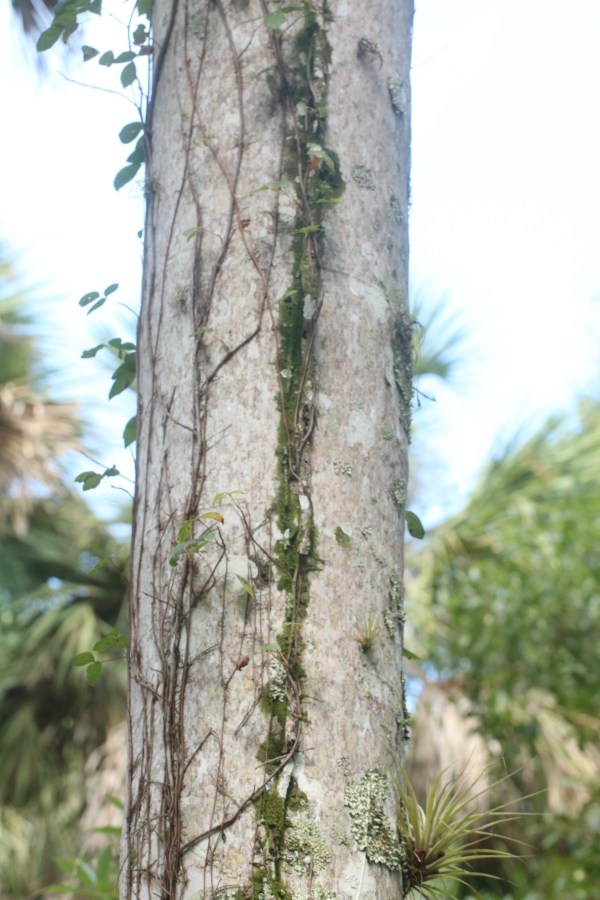
Moss and vine together

How that might come about is easy to imagine:  the moss makes a nice water-retentive substrate for the vine’s thirsty roots high above the moist nutritive ground.

Or:

Maybe the vine is a conduit for water and nutrients washing down the trunk.  You know, like those rain chains you can use in place of a downspout.    Maybe the vine is a “river” and the moss the “fertile floodplain” along the river.
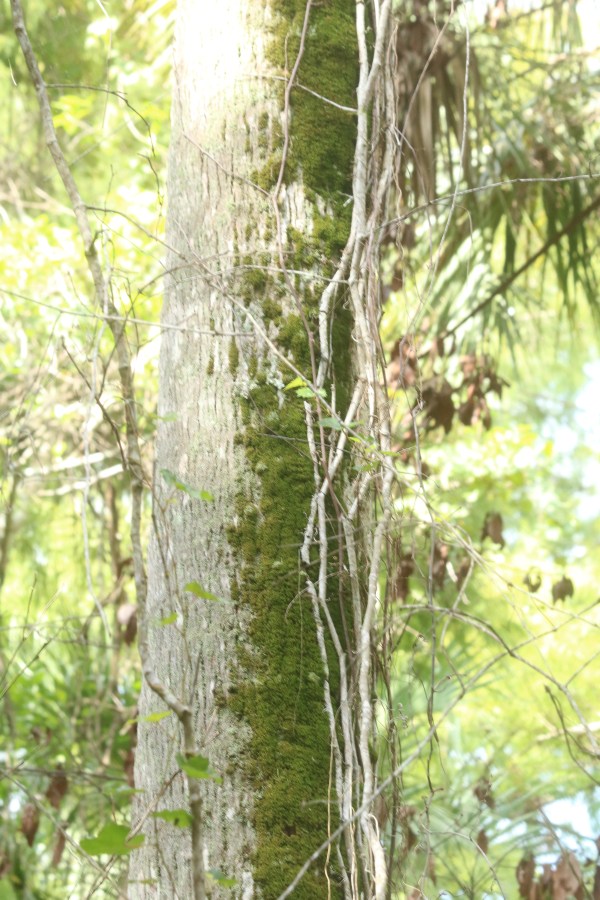
Togetherness

Let’s go to the evidence.   Start with the vine using the moss.  It makes obvious sense.  Vine roots need water and nutrients, and moss is a storehouse. Secondly, studies on other plants in other places have shown epiphyte mats (such as moss) to feed plants with roots penetrating the mats (such as Virginia Creeper).   That is, our narrow case fits a broader known pattern. Third, and this is iffy at best, the Virginia Creeper’s clinging root pads grab the moss so tightly that when you pull the vine from the tree, it takes moss with it.  (A skeptic might say, that shows clinging but not proving extraction of benefits.)  As a final point of evidence, young growing vine tips too small to have been water conduits seem to follow the moss.     Personally, I think the vine uses the moss as a private rooting bed.
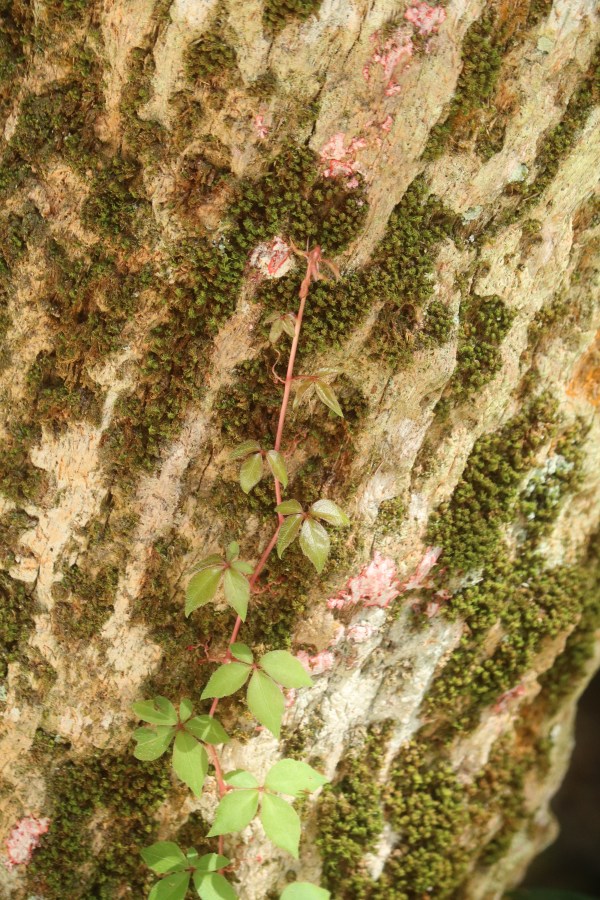
Tiny vine tips seem to follow moss.
Vine pulled free, holding on to moss (technically, liverwort).

What about the reverse:  the moss using the vine?  Again, it makes good sense.  How could water running down the vine not help the adjacent moss?  After all,  you can find examples of moss benefiting from water channels other than vine stems.   For instance, a fork in a tree can funnel a narrow stream of water down the trunk.  The moss likes those “streams.”   Similarly, there are places where a big epiphyte on the trunk, say Cardinal Airplant, catches water and then releases it as a drizzle, like a drippy sponge.   Today’s moss can flourish airplants.  Personally, I think the moss does use the vine as a private irrigation line.
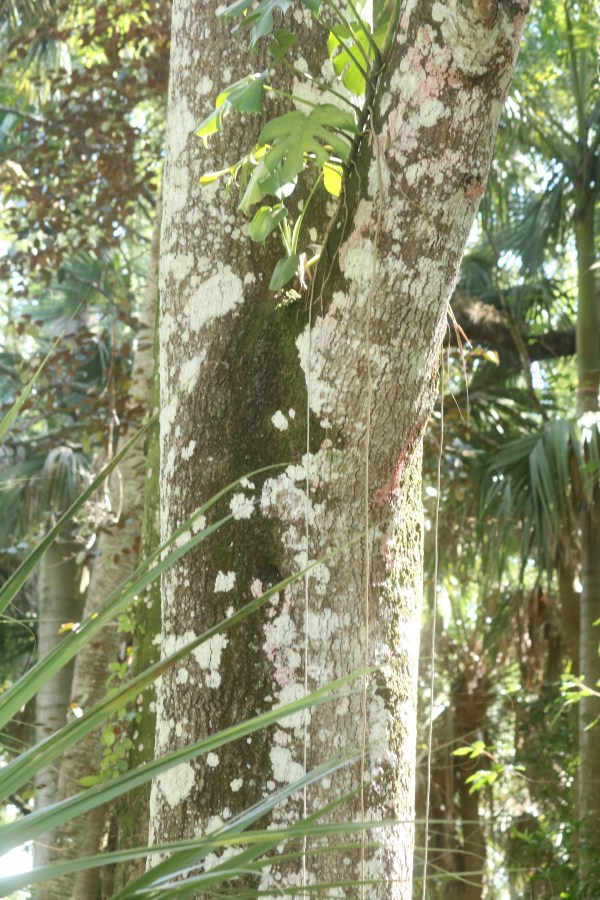
Moss below tree fork.

So then, if this is all true in both directions (!), you have a remarkable situation of mutual facilitation.   I’m not suggesting that the two species have evolved to help each other—that would be “mutualism.”  But here we seem to have a win-win circumstance where two species seem to “luck into” each other, like a man with a pack of cigarettes, meeting a man with a book of matches.
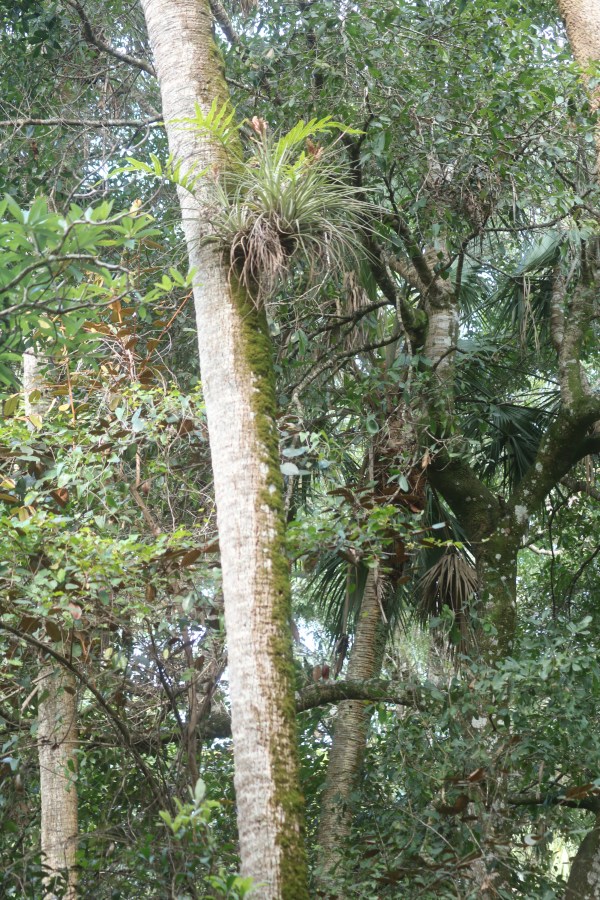
Moss thriving below airplant drippage
Look how the vine “steers.”
 
2 Comments

Posted by on June 17, 2022 in Uncategorized


Clammyweed has Funny Flowers

(Clammy refers to the stickiness of the plants.)

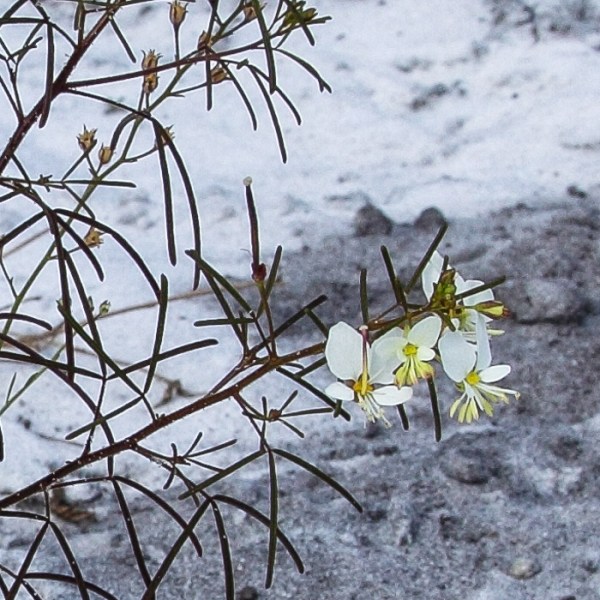
Polanisia tenuifolia

Cleomaceae


Spider-flower, aka Cleome (Cleome hassleriana and relatives), is a garden flower like a friendly ghost haunting my memories of gardens long ago and far away.  That lovely cultivated species has a locally native mini-me, Clammyweed (Polanisia tenuifolia).  The thundering arrival of the rainy season has given Clammyweed a boost, making it a joy to encounter all spunky in scrub habitats.

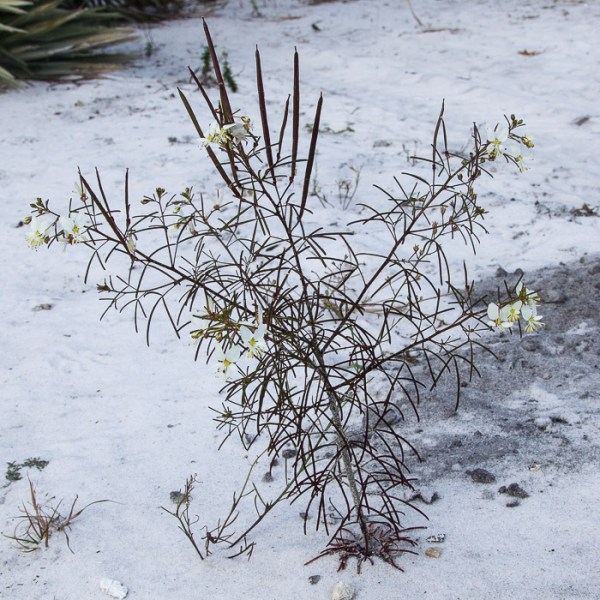
Clammyweed on sterile white sand. The big upright candles are fruit pods. By John Bradford.

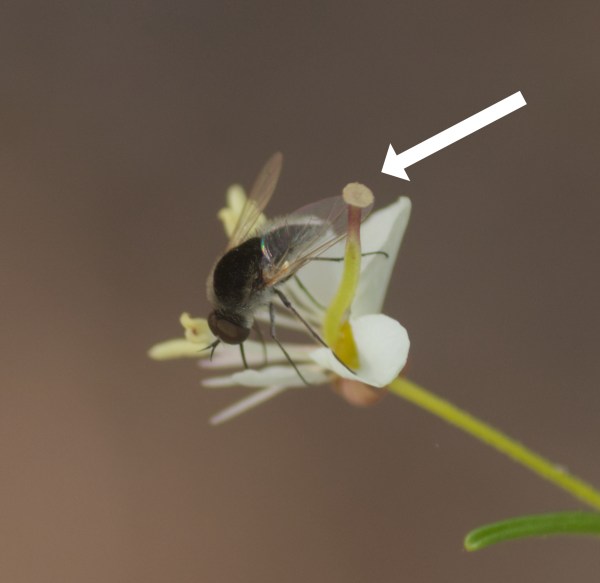
It has a floral oddity.   On any individual the flowers tend to be a mix of bisexual and male-only.   Put differently, all flowers have pollen-producing stamens (“male”), but only some have both stamens and “female” pistils (seed-making organs).    The several stamens are easy to recognize, being bright yellow.  The pistils look like bent fingers curving upward across the face of the flower to become the long skinny pods characteristic of Polanisia, and of Cleome.

Bisexual flower with “bee-fly,” the anthers pale yellow to left. The pistil shown by arrow.

The term for a mix of bisexual and male-only flowers on the same plant is andromonoecy (ANN-dro-MON-ee-cee), a word you’ll forget before the next paragraph.   But before you forget it, what good is andromonoecy?  Why would a species combine bisexual flowers with male-only flowers on the same individuals?   It’s rare.

Over the decades, various botanists have floated possible explanations.   The prevailing thought, laced with some speculation, is that because female flowers are “expensive,” a plant can sustain only a limited number of them, especially in a tough habitat like scrub.   That is, fruits and seeds resulting from a female flower make big demands a parent plant’s limited resources, like too many children in a human family.  In the thirsty nutrient-deprived scrub a stressed plant can afford only so-many plump viable seeds.   And it gets worse:  each fruit contains lots of seeds, with each seed requiring a successful pollen grain delivery.     You need a good bit of pollen even if fruiting is limited.

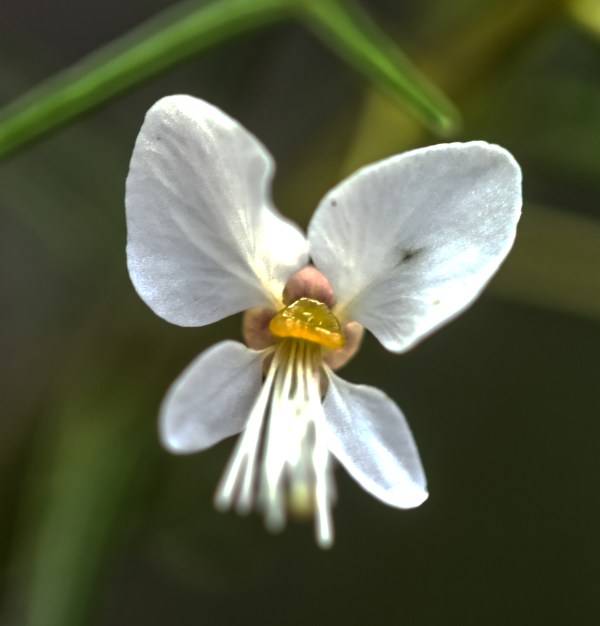
Male-only flower. No pistil. Large yellow nectar gland at center.

So then let’s see, redundantly.  Because the scrub-stressed plant can sustain only “so many” fruits filled with nutrient-demanding seeds, it is counterproductive to make too many bisexual flowers.    But still the plant needs plenty of pollen for even the constrained seed crop,  augmenting the pollen supply by making male-only flowers.   Moreover,  male-only flowers offer the added benefit of adding to the plant’s scent and visual display, and offer nectar and pollen food rewards.    “Hey bugs, get some nectar and pollen, and while you’re here drop off some pollen on that bisexual flower.”

That invites the question of,  is pollen from male-only flowers able or likely to fertilizer bisexual flowers on the same plant?   Neither answer is a “deal breaker,”  and data from similar situations suggests same-fertilization to be possible but unusual, an experiment waiting to be tried on Polanisia tenuifolia.

Both flower types visible. Note the pistil bent upward in the left-most flower. By JB.
 
7 Comments

Posted by on June 10, 2022 in Uncategorized


Torchwood*

Ixora pavetta a rare introduced curiosity in Southeast Florida Scrub


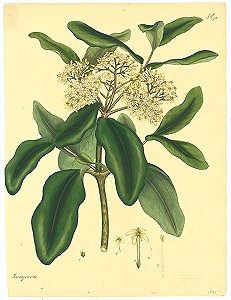
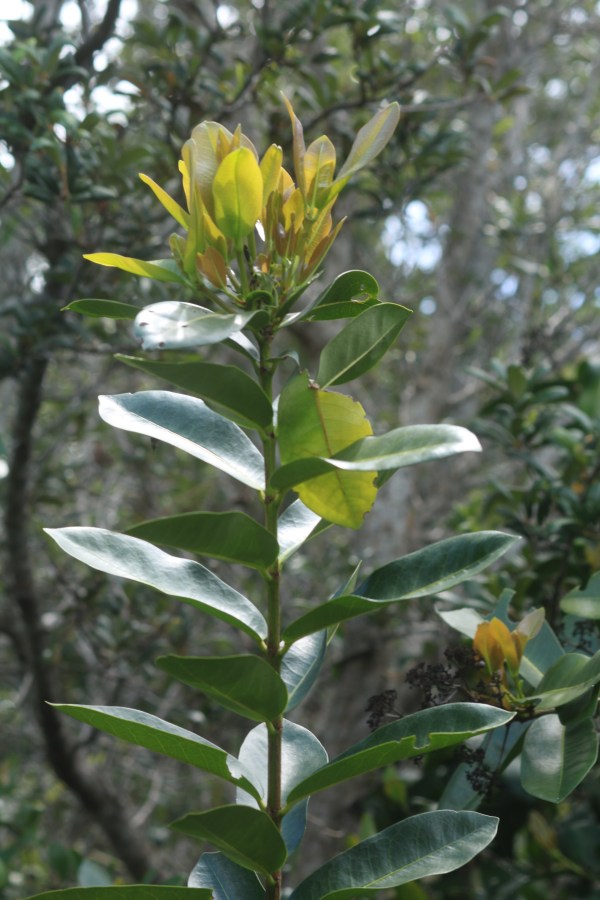
Up and down the coast from around Hobe Sound to Miami an odd non-native small tree makes rare appearances.  Ixora pavetta is a member of the Coffee Family, not the sort of Ixora we think of as nutrient-deficient hedges all over S Florida.  Those are mostly hybrids of I. coccinea

Today’s Ixora has tiny fragrant white flowers in large clusters.  You might say it is an invasive exotic, but it is the best-behaved invasive exotic in town, and you don’t find this tropical oddity much in cultivation either, except maybe around Miami.  So far as is known, its wild Florida occurrences are at  Hobe Sound,  Jupiter (Jupiter Inlet Natural Area where I took the pictures), Boynton Beach,  Ft. Lauderdale,  and Miami.

The species is cultivated a little in Florida, and a lot in and near its native India.  Do the handful of local wild occurrences arise from each other, or from separate cultivated individuals?  What’s puzzling, at least north of Broward County you just don’t have much if it in cultivation.  The pea-sized fleshy fruit is naturally dispersed in India by sloth bears.   We don’t have abundant sloth bears locally, but is a raccoon all that different?   And of course birds probably lend a hand.

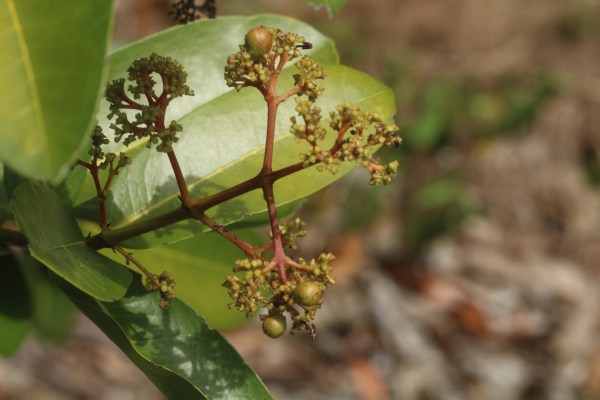
Hundreds of faded flowers, just a couple fruits

At the local wild sites there are a few scattered trees, but it obviously does not spread much or aggressively.  The proper pollinators may not be around.  In India fruit production reportedly varies with pollinator availability. In Florida, at least at Seacrest and Jupiter Inlet,  only a tiny minority of flowers make a fruit.   As an Ixora, Ixora pavetta has what’s known as an “ixoroid” pollination system. The pollen-making anthers deposit the pollen onto the immature non-receptive stigma, to be picked up there by a pollinator and transferred to the ripe stigma of a different flower.  

The pollen-producing anthers have placed their pollen on unripe stigmas (the columns at the flower centers), then bent down.

That may require particular pollinators, perhaps with the time of day mattering, not any ol’ bee that happens along.   Speculate as we will, something inhibits pollination and fruiting.   That may be a “lucky break” in a naturalized exotic species.

The flower clusters attract big red serious-looking ants.  They do not seem to be coming for floral nectar, but the leaf bases have flaps (stipules) covering little secretory glands called colleters, which I’ll bet are the ant bait.

Today’s plant is a member of the coffee family, which is always interesting medicinally, given that the coffee family has a way of producing bioactive compounds, such as, well, coffee.   In India Ixora pavetta has an ancient history of treating a whole bunch of troubles. Here are ten examples dug up fast on Google:  muscle aches, chest pains, dark urine, soft-tissue damage, eye troubles,  fatigue (I like coffee for that), constipation,  whooping cough, anemia, and good fortune from squares of its hard dense wood.  In India that wood is favored by wood-turners.

*Careful: the name “Torchwood” is applied to at least three different shrubs.  Another name for Ixora pavetta is misleadingly Jungleflame.  This may seem weird, given the white flowers encountered in Florida, but the species can make red flowers in certain times and places.

 
3 Comments

Posted by on June 3, 2022 in Uncategorized


Dr. Benjamin Saurman, obscure Fl botanist, and life-saver?

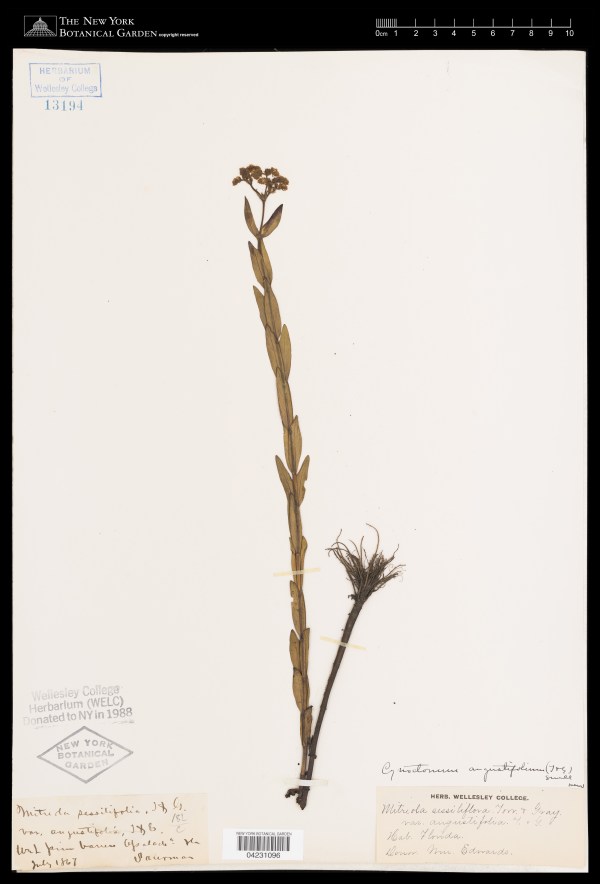
As John and I worked today on our almost-done soon-to-be-printed informal wildflower identification guide based on John’s wildflower photos, the picture sorting ran us past a very odd species, if it is a species at all, Narrowleaf Hornpod, Mitreola angustifolia. For a very long time, I’ve suspected this species is no-good, merely a mutated form of the more common Lax Hornpod, Mitreola petiolata. All that is boring, and we’re not going there. The only reason I mention the problem is to note that, well, if you think a species is fake news, go look at the original specimen(s) used in naming it. Now THAT gets interesting.

Mitreola angustifolia


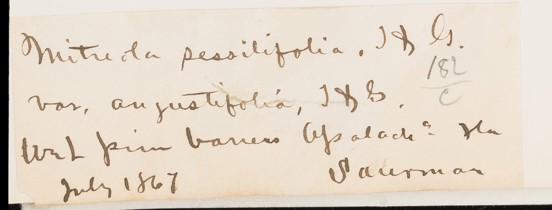
Mitreola “angustifolia” is based on plants preserved before 1841 by the remarkable Alvin Chapman, M.D. and first-ever important Florida botanist living in Florida. He lived in Apalachicola through the Civil War years and discovered a lot. Just like the species problem, it is not my goal now to explore Dr. Chapman’s astounding life and legacy, but rather that of a different M.D., also in Apalachicola at the same time, Dr. Benjamin Saurman. Dr. Saurman gathered more or less the 2nd oldest preserved M. angustifolia in 1867. Wazzup with that?

This is more or less the 2nd collection of Mitreola “angustifolia.” Look at the label in the next photo:

This label is hard to read, but look who collected it (lower right corner). 1867!


Thanks in significant part to the biographies of people who contributed plants to the
Putnam Museum Herbarium and to the Missouri Botanical Garden archives, we know some things about Dr. Saurman.

Dr. Saurman was an 1867 medical school graduate of the Ivy League University of Pennsylvania in Philadelphia. But instead of becoming a fancy Philadelphia physician, Benjamin had other ideas. He answered a Craig’s List ad to migrate to the boondocks in Florida and serve as a botanical (not medical) assistant to Dr. Chapman. While in Florida, Saurman collected a whole lot of plants, even after Dr. Chapman died, including the mysterious “Mitreola angustifolia.”


But that’s not all Saurman did, and now we get to the good stuff. He was beyond multitalented. In 1875 Saurman founded and served as Editor of the Apalachicola Times newspaper, which lives on to this day.
Writing and editing must have agreed with him, as Saurman later went on to edit newspapers in Pennsylvania and in New England and co-wrote a history book.


But B.S. was not merely a physician, botanist, writer, and editor. Add inventor to the list. In 1875, in Florida, he patented a “Lady’s Thread Cabinet.” You can still look up the patent via the U.S. Patent Office website. Apparently its cool innovative feature helped dispense the thread directly from the cabinet, no muss, no fuss, no tangles.


Saurman’s next invention was pretty different. He witnessed a head-on train crash in 1899. He must have been struck with the avoidability of the tragedy, because he patented a new railway signal system.

From a California newspaper…but after all, Saurman was connected in the newspaper world.
 
1 Comment

Posted by on May 20, 2022 in Uncategorized


Figs and Their Wormy Three-Way Symbiosis

Ficus species, Wasp Species, Nematode Species


Amazing thing about figs—they are pollinated by tiny wasps inside the hollow fig entering and leaving by the little hole at the end opposite the stem.   Figs and their pollinator wasps (and their parasitic wasps) are covered abundantly on the Internet, so let’s gloss over wasps today and go a step beyond.  Maybe you are ok with wasps inside figs, but how about squiggly wiggly eel worms (nematodes?).    Thank you Dee Staley for today’s figgy pudding. 

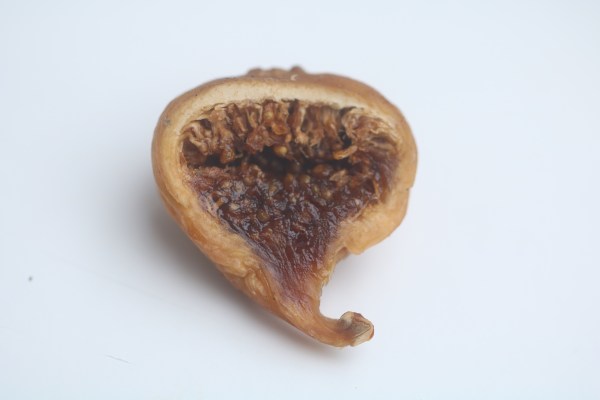
 Figs are built like no other fruit.  A fig is a swollen hollow stem with hundreds of flowers lining the inner cavity.  That hollow space is the wasps’ boudoir, where their social lives produce wasp babies inside the fig.   Each “seed” in the fig (stem) is actually a seed-sized fruit, think of an itsy bitsy nutlet.

Swollen hollow stem with lots of flowers…and squirmy things…on the inside.

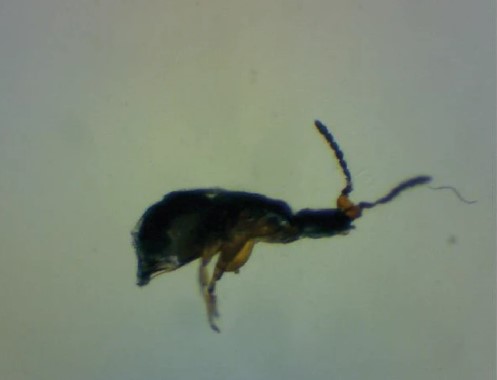
Look closely in the upper right corner and see nematode disembarking from fig wasp. (Photo by G. Woodruff and P. Phillips BMC Ecology Vol. 18)

Some of the research on nematodes in figs occurred on native Strangler Figs and Bearded Figs in Florida.  There are variations and exceptions with respect to fig species, wasp species, and nematode species, but generally speaking the female wasp enters the fig to lay eggs inside the fig flowers lining the chamber.  The female wasp arrives with nematode worm passengers.   After laying eggs, the female dies, and –ugh–the tagalong nematodes come forth into the fig from the wasp cadaver.   The newly arrived nematodes take up residence inside the fig, and just like the wasp, spawn within.   Then as the new generation of hatching female wasps begins departing to go pollinate another fig, the baby nematodes hop aboard and treat the wasps as their little Uber drivers.

Anybody want a fig newton?

 
9 Comments

Posted by on May 13, 2022 in Uncategorized


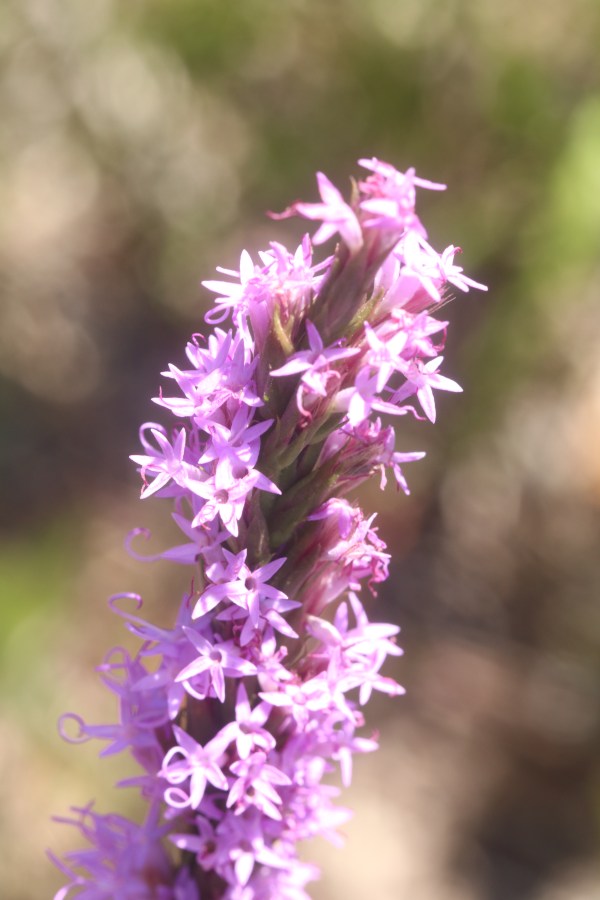
Chapman’s Blazing Star…Lovely Autumn Wildflower (in May?)

Liatris chapmanii

(The origin of “Liatris” is not known, perhaps a very old name.  Alvin Chapman was a physician and seminal Florida botanist.)

Asteraceae


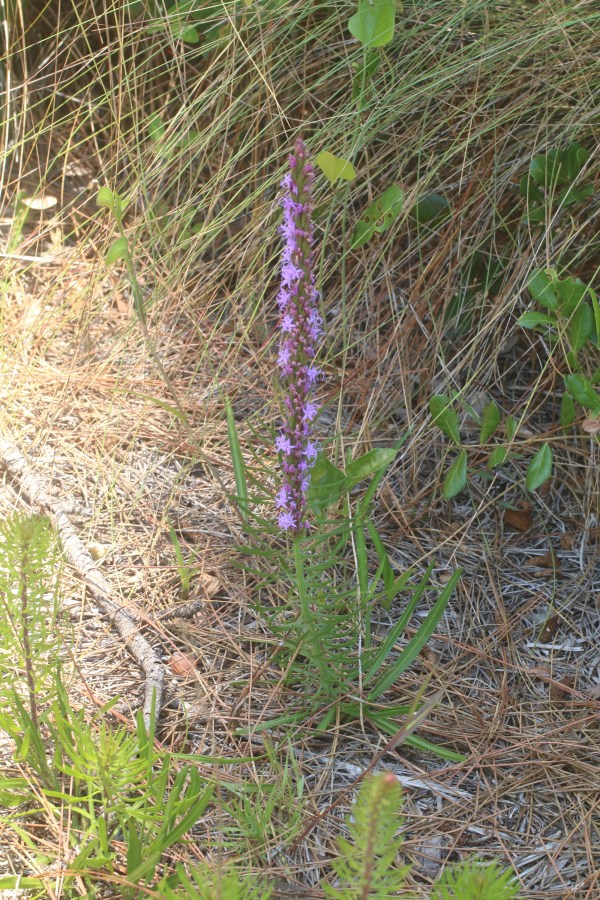
Something’s odd in the Delaware Scrub Natural Area in Jupiter.   Driving by yesterday, what is that tall purple wildflower in the scrubby sand?    Stop, go back and check it out—well, how weird, it is Chapman’s Blazing Star.   Liatris chapmanii, which always blooms late summer and autumn, is in full bloom across one corner of the natural area.   How can that be?   It is one of the earlier-flowering Liatris species,  August-October, but May is absurd.

Chapman’s Blazing Star, yesterday May 5, 2022

The main reason many autumn flowers bloom in the harvest months is a response to the lengthening nights after the June 21 summer solstice, the daylength cue sometimes interacting with temperature.   If the long night is interrupted with artificial light it can throw off the plant’s internal clock.  When horticulturists deliberately break up long nights with artificial light to manipulate flowering, turning on the lights  is called a  “NI” (night interruption).  Researchers Ignacio Espinosa and Will Healy in Maryland, interested in commercial year-round Liatris (L. spicata) production as a cut flower, applied different combinations of temperatures and NI’s to influence the Liatris flowering season in varied ways.  Our L. chapmanii is more “tropical” so its temperature-related behavior would differ from more-northern L. spicata.

All that being so, what triggered flowering in Chapman’s Blazing Star 6 months out of sync?   Looking around the site of the funny flowering, there is “NI” on a pole…a street light (actually two of them) beaming directly onto the Liatris patch.  Wonder if anything else there flowers at the wrong time.

 
6 Comments

Posted by on May 6, 2022 in Uncategorized


Brother Species Chapman’s Oak and Sand Live Oak Bring Different Weapons to the Same Fight


Quercus chapmanii and Quercus geminata

(Dr. Alvin Chapman was an early Florida botanist. Geminata refers to twins because the acorns are often paired.)

Fagaceae


Florida sugar sand scrub is an unforgiving plant environment, with extreme exposure to sun and wind,  sterile over-drained white sand for soil,  intense drought exposure, and overall nasty conditions.  Harsh conditions call for extreme adaptations, which are especially interesting to compare when the adapting plants are closely related.  In human affairs, it is interesting to compare how different siblings adapt to the same upbringings.  In oak affairs, same thing, do two related oaks in the same environment adapt in the same ways, or different?   Chapman’s Oak and Sand Live Oak are both in the White Oak section of the broader category of Oaks (the genus Quercus).   They are fairly closely related, although each has more-closely related species.    They both are abundant in local scrub habitats.

Sand Live Oak with tough thick leaves, and a gall (on the stem, not on a leaf). (Off topic but I’m reminded by the glass, researchers in 2018 showed parasitic love vine to “go for” the galls but not the fuzzy leaf undersides, negatively impacting the wasp larvae inside the galls.) By John Bradford.

Hot, dry, “thirst” is arguably the main “problem,” but look they handle it differently.    Chapman’s Oak avoids facing the driest times by dropping its leaves for about two months and waiting it out, just like trees in northern climates wait out the freezing winter.  It is a drought avoider.   By contrast, Sand Live Oak is a drought tolerator, keeping its leaves all year and toughing out the dry season, drawing more heavily on deep soil water during the thirsty springtime months.

Sand Live Oak by JB

That basic difference in leafiness styles ties in with additional differences.   Chapman’s Oak has to move a lot of water fast when rainy times return to make new leaves, so there’s no surprise it has the more porous stems allowing easy water passage.   Because its leaves are disposable, it can’t invest in the long-lived durable tough leaves found on Sand Live Oak.   The relatively thick heavy Sand Live Oak leaves stand up to  hot dry sun when Chapman’s flimsy foliage is absent.

Acorn twins on SLO, by JB

Failing to make tough leaves creates a problem for Chapman’s, documented by botanists Andrew Tweel and Eric Menges in 2008.   The comparatively delicate leaves on Chapman’s Oak are vulnerable to insect or mite damage, making it necessary for that species to invest in an alternative security system… tannins to poison pests.  

Chapman’s Oak, the galls on the comparatively thin throwaway leaves, by JB.

Studying these two species (and the intermediate “Scrub Oak” Q. inopina) they found a trade-off where each species has one defense or the other, tough or toxic. 

Top chart = tannin for three scrub oaks. Bottom – toughness. Geminata tough but low tannin. Chapmanii wimpy but toxic. (Charts from Tweel and Menges, Florida Scientist Vol. 71. 2008.)
 
3 Comments

Posted by on April 29, 2022 in Uncategorized


Sea-Grape


Coccoloba uvifera

Polygonaceae


Sea-Grape is an historical favorite in tropical horticulture, its cultivation dating back at least into the 1600s.  Makes sense after all, what single tree—besides coconuts—were mariners of yore most likely to encounter?   And enjoy, given the edibility of the sea “grapes”?  When stranded on a desert isle, you might as well have fresh fruit to stave off scurvy, even if the fruits are 99% pit.

The “grapes” (not in season now). By John Bradford.

The Sea-Grapes are in flower now, which is not pure happenstance, given that tropical trees with small flowers pollinated by a wide range of insects blossom in unison as the rainy season arrives coincident with the seasonal surge of bugs.  

April showers bring tree flowers! The trees flower now, and the “grapes” ripen in the autumn.  Around the species’ range from Florida to South America the fruits reportedly are dispersed by bats, by birds, and by sea currents.

Pollination in Sea-Grape has a kink.   From a breeding standpoint, the trees are of three types:  male, or female, or mixed.    The male vs. female division is fairly straightforward, forcing cross-breeding.    Female fruits are more “expensive” for the tree make than is male pollen.  With a division of sexes, individuals can specialize on making pollen or on making grapes, and avoid getting clogged up with their own pollen.   In some other species, separate males and females may occur in different ratios or may occupy different microhabitats, although there is no evidence for that in Sea-Grape. 

Flowers by JB

That today’s species has individuals with mixed male and female flowers is mildly mysterious.  Some botanists reasonably suspect the mixed individuals to represent incomplete separation, with the mixing offering no particular benefit.   But there is another more-interesting possibility:  Given that Sea-Grape is a pioneer on far-flung and harsh seashores, a lone male or female individual could never colonize a new island or dune.   Perhaps the mixed bi-sexual individuals, which are self-compatible, can start the party.   Then their uni-sex offspring  can expand and sustain the established population.

 
5 Comments

Posted by on April 15, 2022 in Uncategorized


Coral-Bean—Nectar Drips and Floral Thrips

Erythrina herbacea

Fabaceae


Erythrina herbacea is sometimes called “Devil in the Bush.”   I’ve heard this explained as being based on the plant’s devilish thorns, but a scarlet flower cluster hiding in the undergrowth looks like a devil in the bush to me.    This perennial, or shrub, or small tree is in flower now.

Mark Catesby 1736


You’d think its flowering period and the presence of hummingbirds who pollinate it should be matched.    So let’s see, a quick look at herbarium specimens from Florida shows the Erythrina blooming February-May, especially March and April.  Snowbird Hummingbirds return northward through Florida mostly February-March, matching the presence of the flowers.   The continued flowering in April and May may sound mildly mysterious, and is probably best explained by the plant’s distribution as far north as the Carolinas and near or into Oklahoma, where the late-spring flowering probably corresponds to progress of the northward migration. 

By John Bradford

Hummingbirds need a lot of nectar, and Coral-Bean produces nectar so abundant it literally can drip from the maturing flowers, much to the delight of visiting ants and bees who do not seem to respect the exclusivity of “hummingbird” flowers.   It would be interesting—and unstudied—to know the contribution to pollination by such unofficial visitors.

Dripping nectar
“I like nectar”, by JB

The weirdest floral visitors are thrips, sometimes found partying abundantly on the flower tubes.  Why?  Not much is known about this, but there are hints.   Although thrips usually consume plant tissues, some flower thrips ingest nectar, so those nectar-drippy flowers may feed their resident thrips. That they are abundant on the red Erythrina flowers may (or may not) be significant.  Research shows thrips to be able to see red, and females of some species congregate preferentially on red flowers for mating.    It would be fun to know if those general observations apply to Coral-Bean.  My bet is on “yes.”

What are these thrips up to?

After pollination by a hummingbird, or however else it may occur, a big bean pod forms containing bright red seeds no doubt attractive to birds.  The pods can persist on the stems for multiple months.

The seeds and other plant parts are dangerously toxic, the poison acting similar to the curare used on poison arrows, and causing paralysis.    They have served as low-budget rat poison, and sadly to murder dogs.   Makes one wonder a bit about even worse applications?

Depending on the habitat and latitude, the plants can be perennial herbs, or shrubs, or trees.  Their massive taproot drills multiple feet down into the soil,  allowing the perennial individuals to withstand fires, floods, storms, and cold, and to live a long long time to feed many many hummingbirds.

 
2 Comments

Posted by on April 8, 2022 in Uncategorized


What Native Flowers Support the Hummingbirds?


Plenty of hummingbirds visiting this winter and so far this spring.   That is itself notable, because, say, back in the 1930s (see dig deeper below) the party line was that hummingbirds migrated seasonally through South Florida, especially in the Spring, but there were not many permanent residents.   With time that changed so that there now seems to be an all-winter (and probably year-round) presence.   The obvious leading thought is that the increased use of exotic garden flowers allowed this, and climate change could be a factor too.

Cardinal Airplant by John Bradford

 That prompts the question of what native flowers supported South Florida hummingbirds before modern horticulture.  Textbooks will tell you hummingbirds go for tubular reddish, orange, or sometimes yellow flowers, although additional colors are on the menu sometimes.   Like most floral visitors, they do not read the textbooks, they can visit “wrong” blossoms.  Hummingbirds are lured visually, not by fragrances.

Photo by Evan Rogers

Problem is, there aren’t that many reddish-orangish-yellowish tubular flowers native to South Florida.    Those sustaining the h-birds must be a small group.    No question is new in nature.  Back in 1975 botanist Dan Austin, then at Florida Atlantic University, wondered about all that and gathered data.  Today’s blog is a review of his research over 40 years ago, so relevant today.

I’m going to re-list the species he listed, with some comments:

1. Twisted Airplant (Tillandsia flexuosa).  One of three bromeliads in the list.  This speciesis not common, a threatened species, although it and any of today’s unusual species might have been more common in pre-European times.

2. Scarlet-Creeper (Ipomoea hederifolia).  One of the morning glories in the list.   Not that abundant.

3. Northern Needleleaf (Tillandsia balbisiana).  Another threatened bromeliad.

4. Leafless Beaked Ladiestresses (Sacoila lanceolata).  A threatened red-flowered ground orchid.  Not common.

Sacoila lanceolata by JB

5. Coral-Honeysuckle (Lonicera sempervirens).   Rare in South Florida.

6. Coral-Bean (Erythrina herbacea).  A small tree in varied habitats.

7. Cardinal Airplant (Tillandsia fasciculata). Another bromeliad.  Common and showy.  This may be the most important species.

8. Red Geiger Tree (Cordia sebestana).  Nativity debatable, and if so, only in the Lower Keys.

9. Man-in-the-Ground (Ipomoea microdactyla). A rare, endangered red morning glory in Miami-Dade County.

10. Firebush (Hamelia pattens).   Shrub or small tree with orange flowers.  Very common in cultivation, although not all cultivated material is strictly native.   Perhaps not very abundant in S. Florida before cultivation.

11. Waxmallow (Malvaviscus arboreus).  Red-flowered shrub, not native as Dr. Austin noted.

12. Scarlet Calamint (Calamintha coccinea).  A red-flowering mint. Almost absent from S. Florida.

Slim pickings for the hummers! Take away the species not native to S. Florida or with only a tiny native toehold (8, 11, 12), and the list gets short.

We have no time machine to look back, but the natives that are rare-to-not-that-abundant in S. Florida (1, 4, 5, 9), and you have as possible hummingbird staples only Scarlet-Creeper, Coral-Bean, Firebush, and two bromeliads:   Northern Needleleaf and Cardinal Airplant.  Wow!  We sure are lucky to have hummingbirds.

Should we be pleased that cultivated species have broadened the menu?    I don’t know.  You can look at it in different ways.   The cultivated species probably allow more hummingbirds to eat, at least in coastal urban-suburban areas, but they also probably interfere with natural migration and nesting patterns.    Thank goodness for natural areas!


Dig deeper CLICK

 
2 Comments

Posted by on March 18, 2022 in Uncategorized