Colubrina asiatica
Rhamnaceae
Asiatic Latherleaf is a worldwide tropical coastal invader. This climbing shrub-vine is an aggressive fast-growing pest from Vanuatu to Hobe Sound, Florida. Its original home is lost to history, but undoubtedly in the Old World Tropics.
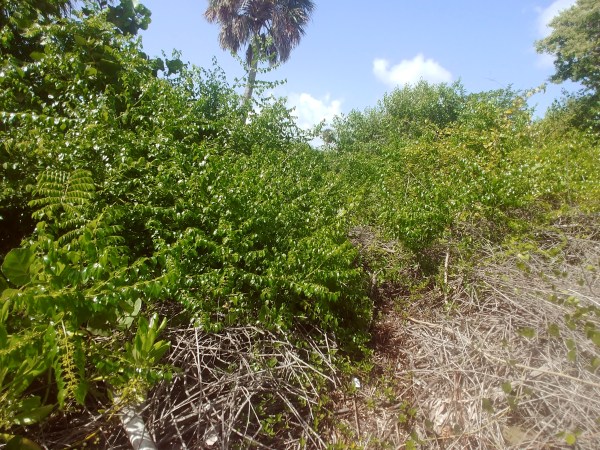
In the Americas, it probably started out Jamaica in the 1850s, where the plant was imported as a medicinal asset. Latherleaf made it to the Keys in the 1930s, to Miami, the Everglades and Jupiter Island in the 1950s and 60s, and to Merritt Island no later than 2014. Those northward steps might reflect Global Warming, or alternatively may merely be the ripples in the pond spreading from that Jamaican introduction.
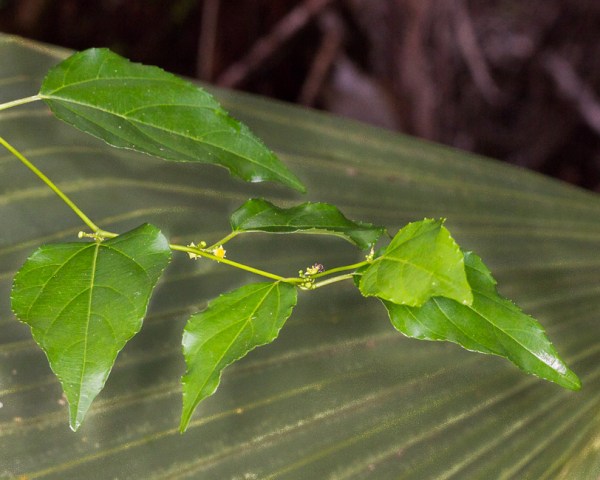
The species island-hops with ease, starting with the fruit capsule exploding to launch the seeds. Those bits of reproductive shrapnel have a hollow space for flotation, and withstand multi-month (or more) ocean voyages. They also can “lay low” buried in mud and sand. Birds may help with dispersal by using the pebble-sized seeds as crop stones. The sprawling shrubs can take over large areas by shading out and reportedly even poisoning competitors. The only species able to survive under a Latherleaf stand is more Latherleaf. The babies wait patiently in the deep shade of their parents while developing massive root systems, and then rise up when hurricanes create a gap.
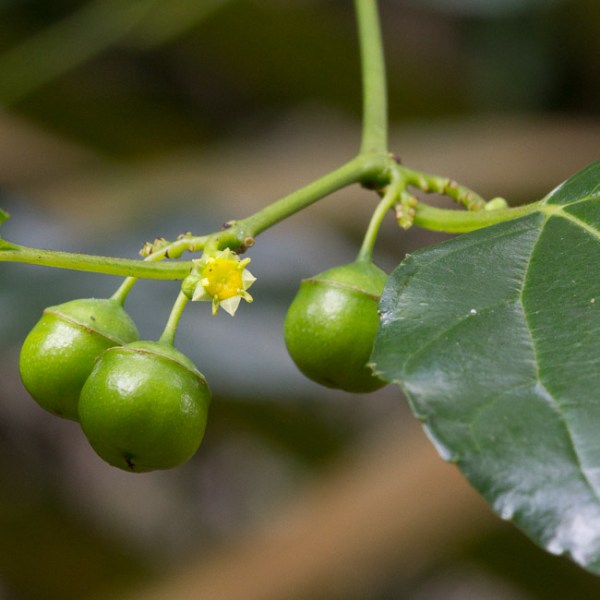
The reproductive biology is mildly puzzling because Latherleaf flourishes far from any original pollinators, and has been observed to be slim on insect visitors despite a big yellow “nectar disk” at the base of the flower. Botanists have speculated that the flowers may be self-pollinating or even fertile without pollination. Wind pollination has never been ruled out. Also the branch tips root upon touching the ground, as do broken stem fragments.
The name Latherleaf comes from suds formed when the crushed leaves are stirred in water, giving it historical uses as a natural soap, shampoo, and massage lotion. As is commonly the case with lathery plants, extracts are bioactive, with ancient uses as fish poison and in medicines. The numerous drugs in the foliage may be on the strong side, given such uses as inducing abortions and expelling intestinal worms. The presence of the species across the Pacific has been attributed speculatively to ancient seafarers taking it along as a portable Walgreens.
The name Colubrina comes from Latin for snake, referring to the attractive snake-ish branches which have served on Sri Lanka for weaving mats. The dark tight-grained wood is useful for small ornamental objects such as knife handles.
 John Bradford
 George Rogers
 George Rogers
 Dee Staley
 Treasure Coast Natives
theshrubqueen
July 22, 2022 at 6:29 pm
Thanks for the ID, I have seen that one around.
Flower Roberts
July 23, 2022 at 12:07 pm
Fascinating post.