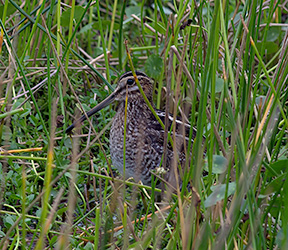
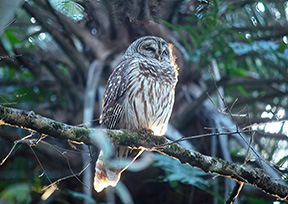
Think I’ll start the year nice and easy. Last few days in this inter-holiday week every botanical site has been better as a bird site. Watching a hummingbird out the window as I type. So glad the preserved fragments of plant world provides big old trees for the owls, and wet marshes for the snipes. Happy new year. Don’t go on a snipe hunt.
That Bladderworts catch mini-prey using trigger-activated suction traps is a famous fact. More interesting in that connection is also, depending on the species and place, algae live in the traps ,apparently more or less symbiotically. But that’s old news.
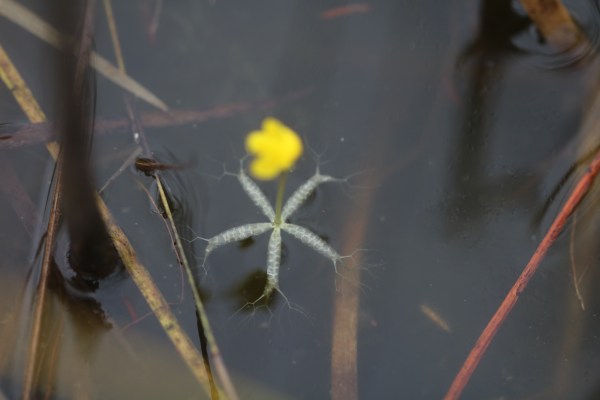
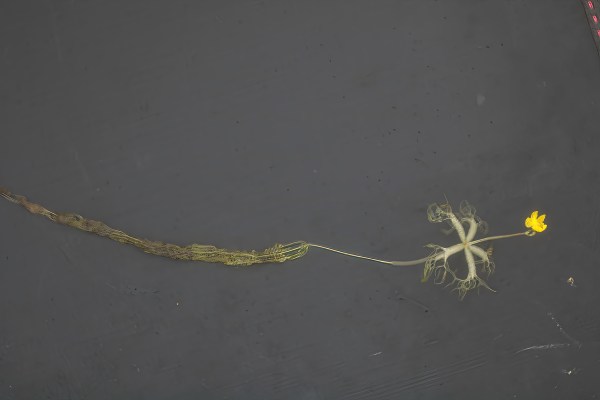
Today, the Cypress Creek Natural Area marshland was holiday-decorated with little yellow candles drifting in the blustery winds on the shallow water: Floating Bladderwort it was. The species is a pretty novelty here, but is expanding its range dramatically northward, in places becoming an invasive pest, such as in the Adirondacks.
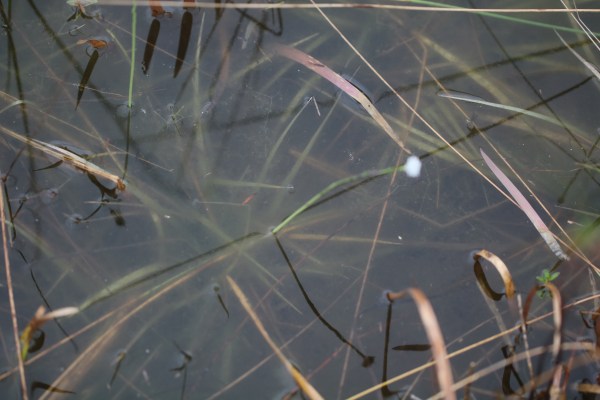
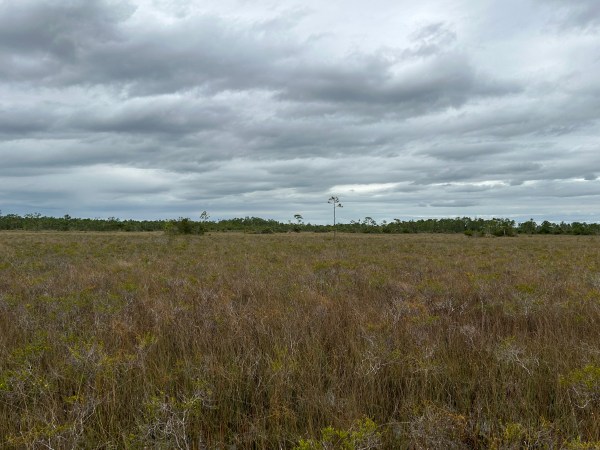
Depression marshes are IMHO the most fascinating local habitats, so rich in odd lifeforms, all of them adapted to the seasonal submerged and then sunbaked conditions, as well as to the thick mat of algal/cyanobacterial periphyton. At the present season much of the water is oh, say, 6 inches deep, containing the periphyton blanket. Fun to see how the different plants cope with such conditions. Emergents, such as Tracy’s Beaksedge (Rhynchospora tracyi) and many others, poke above the water surface. These species usually have puffy porous “aerenchyma” tissue to ventilate the submerged parts. Other plant species can live submerged for long periods, such as Flattened Pipewort (Eriocaulon compressum), in contrast with its larger relative Ten-Angle Pipewort (E. decangulare), which rises above the water. Branched Hedgehyssop (Gratiola ramosa) can toggle: floating freely when flooded, or rooting when times are dry.
Eriocaulon compressum with underwater leaves
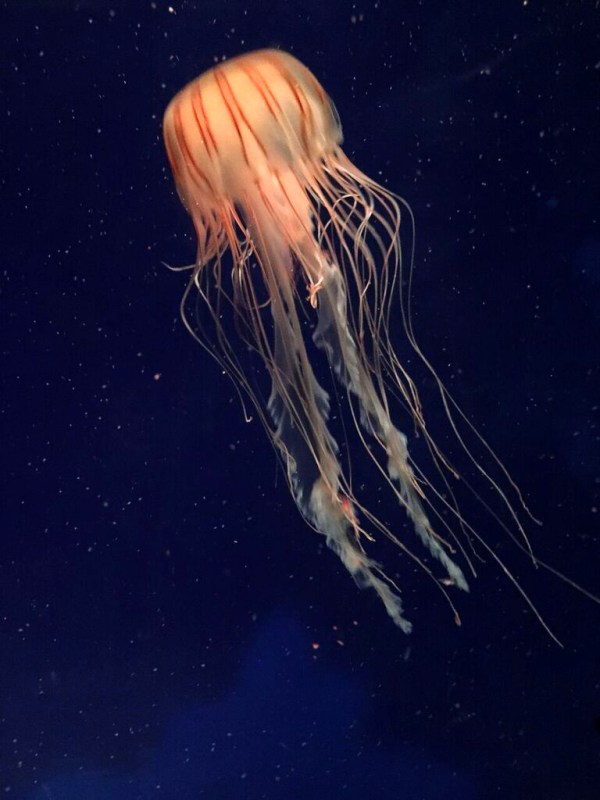
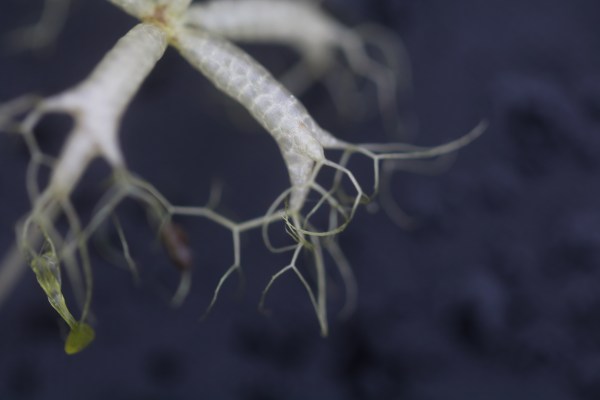
But this is all just a lead-up back to Floating Bladderwort which thinks it is a jellyfish. A jellyfish is free-floating with a floating (or not floating) disk having attached prey-catching tentacles. So is Floating Bladderwort, in a sense. The free-floating disk is the whorl of leaves, looking like horizontal wheel spokes. Now look deeper: its predatory “tentacles” dangle in the water below.
Fills a niche in the shallow brown marsh similar to a jellyfish drifting happily in the deep blue sea.
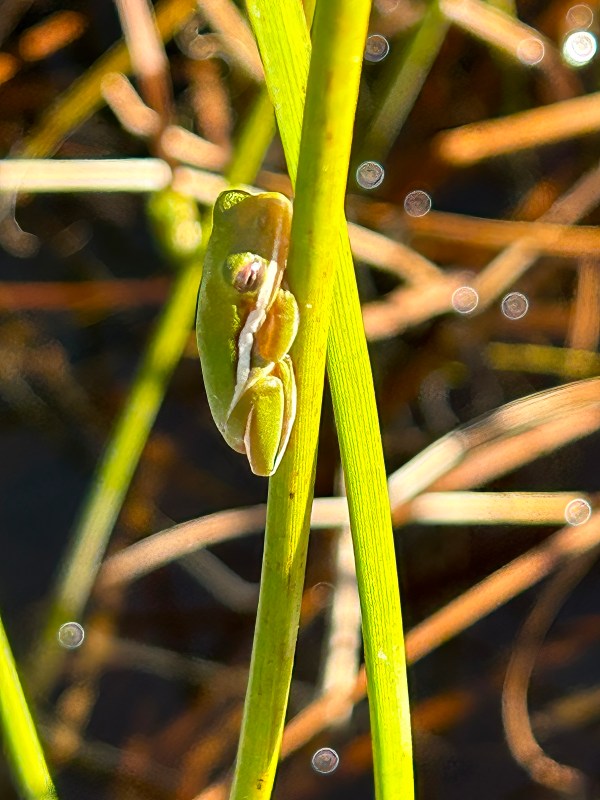
My google book report. Spending much time these days in marshes, I’ve become friendly with marshy critters from hogs to frogs. Although not a plant, the Green Treefrog, being green and living in trees, is sufficiently planty for this botanical blog. They conduct froggy business nocturnally, and pass the day crouched torpidly on vertical emergent marsh plants. Their coloration adjusts within limits to the lightness or darkness of the background, raising the question: do the frogs prefer different species as perch sites? Right place right time you can find a whole bunch of them. Emergent vegetation over open water is a nice place to snooze: camouflaged from angry birds and defended from ground attack by a moat. Black racers enjoy a tasty frog, and preliminary indication suggests the GTF to have some resistance to pygmy rattlesnake venom. No doubt that open water below the perch helps with temperature and humidity.
Being eaten as adults may not be the worst problems green treefrogs experience. They breed in ponds and pools: you know, eggs deposited in water, then tadpoles. The tadpole stages is where it gets interesting, especially to biologists who have looked into tadpole predation and found surprises. (Prominent mention to Margaret Gunzberger comparatively recently, and earlier Michael Blouin among many.) Here’s the surprise, at least to me: The frogs are abundant around shallow seasonally temporary depression marshes locally, but they breed preferentially in permanent year-round ponds, potentially distant from their usually haunts.
Plenty of room for research here, but part of the puzzle, if there is a puzzle, seems to be differential predation. There are a lot of small fish even in temporary pools and ditches where little fish become increasingly crowded as the pools dry, shrink, and even disappear. That’s not good for tadpoles trapped with the crowded hungry fish. And fish are not the only predators, dragonfly larvae too are tadpole eaters, and they tend to share the frog’s need for emergent vegetation, adding to the risk of the frogs breeding at shallow hangouts. That’s all somewhat speculative, if also obvious. What prior researchers have actually demonstrated is that the main tadpole predators in permanent ponds, bluegill have a distaste for Green Treefrogs, making the tadpols perhaps “safer” in a pond than in a temporary pool. (Interestingly, there’s a closely related treefrog with the opposite preferences, but that’s a separate story.)
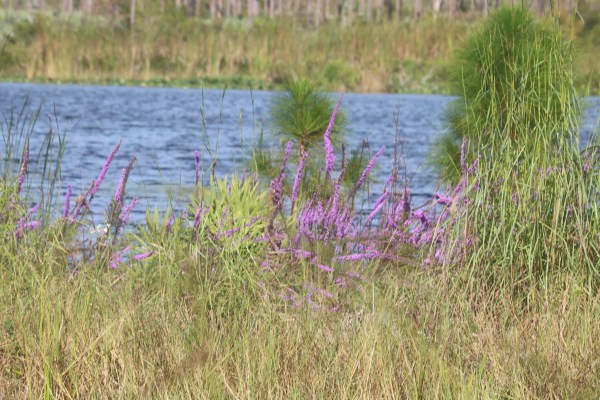
As anybody who goes outdoors knows, South Florida freshwaters suffer from nutrient pollution, chemical contamination, and Bluegreen “Algae” (Cyanobacteria). You might ask, how does that big fact impact today’s little frog? I don’t know,except for one odd little slice of that pie: as recently as 2014 a new species of Bluegreen Alga (Aetokthonos hydrillicola) was discovered associated with invasive hydrilla, and it does not play nice, making trouble mostly a little north of Florida but also in Central Florida. The alga got famous as a suspect in Eagle deaths. It kills frogs too. The GTF appears so far to be immune or resistant, good news for it, if not for the overall balance of nature. Maybe its immunity comes from a long history living in little ponds with high Bluegreen Algae exposures. The frog is expanding its range northward, with the obvious supposition being climate change, although there are alternate possibilities such as uneven parasite or toxin distributions, and aquarium releases.
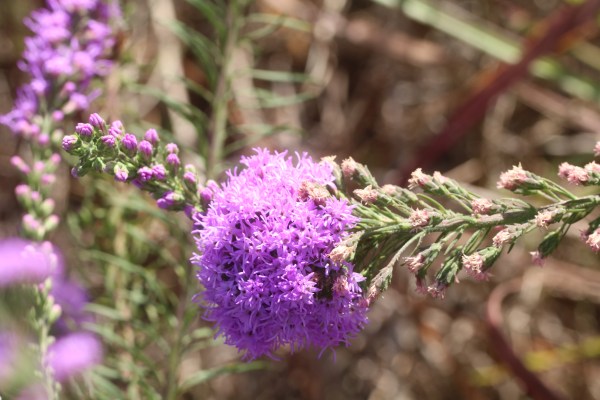
Liatris chapmanii, L. spicata, and several additional species
Asteraceae
Working in the marshlands out to the west of Jupiter, a couple days ago I glanced up from my clipboard upon hearing a grunt behind my back. Found myself within the family circle of a mother hog and her little piglets. Perhaps not a good idea to drift between a mother with tusks and her smelly little cuties, so I migrated promptly. To be fair, the benign sow showed no grumpiness, but I’m a craven coward when it comes to critters with very big teeth.
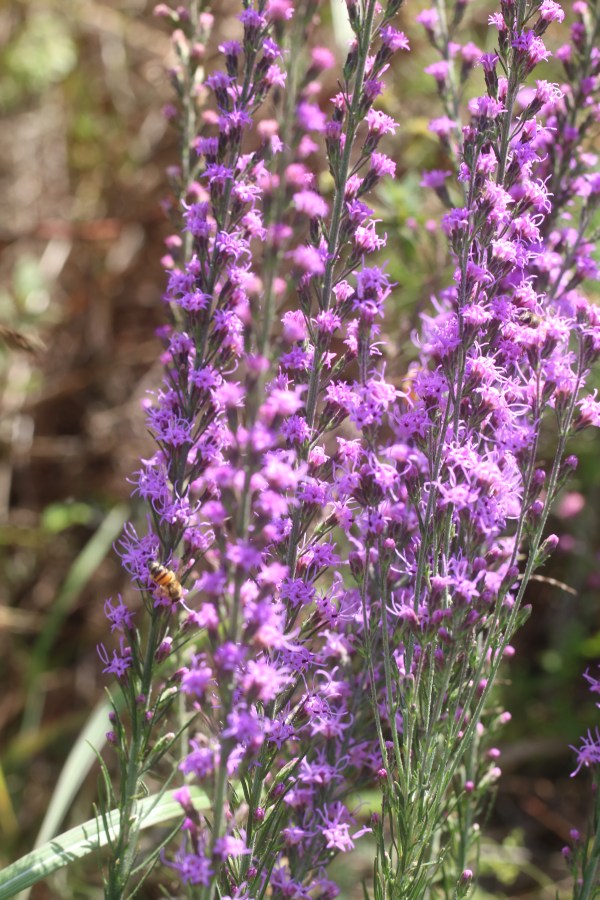
The other thrill of the outing justified the brush with disembowelment because along the drainage canals big showy purple Liatris wands were waving in the wind. As tall as a person. Hundreds of them. Always great fun to find flowers “a-buzz” with pollinators.
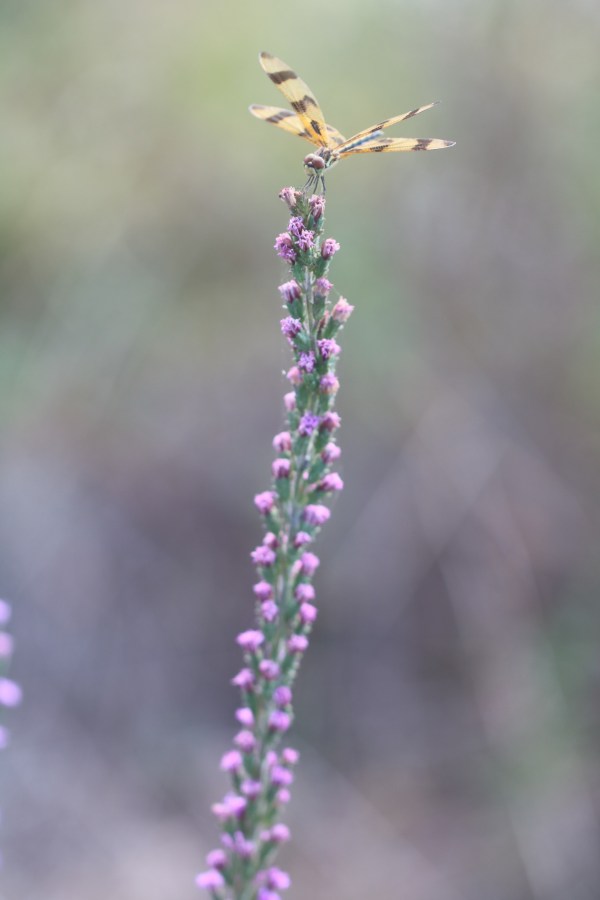
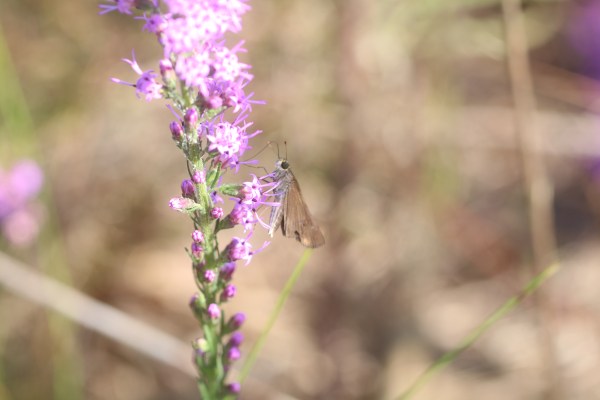
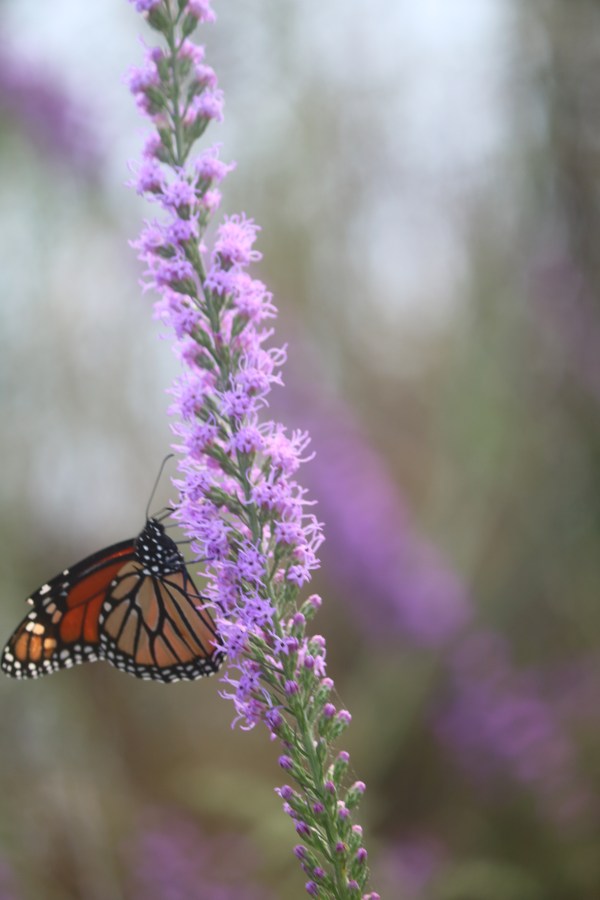
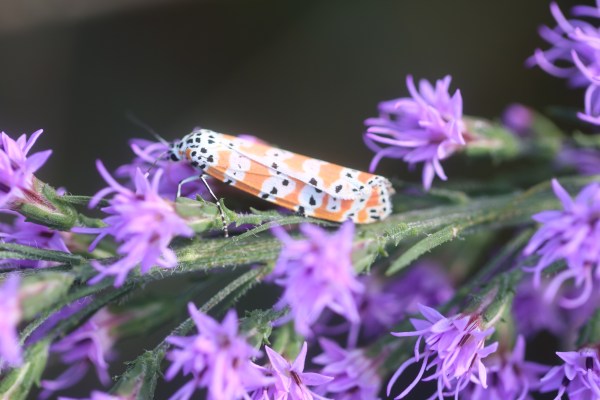
That always feels like “real biology” if that makes sense. Anyhow, the Liatris was hosting honeybees, bumblebees, Monarch Butterflies, Skippers, and the poorly named “Ailanthus Moth.” Poorly named because Ailanthus (Tree of Heaven, a northern urban weed tree) is not native to the U.S., but the moth is. What were absent-to-scarce were native bees other than Bumblebees.
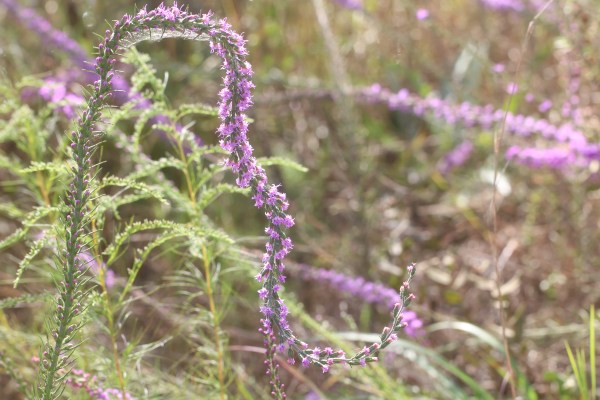
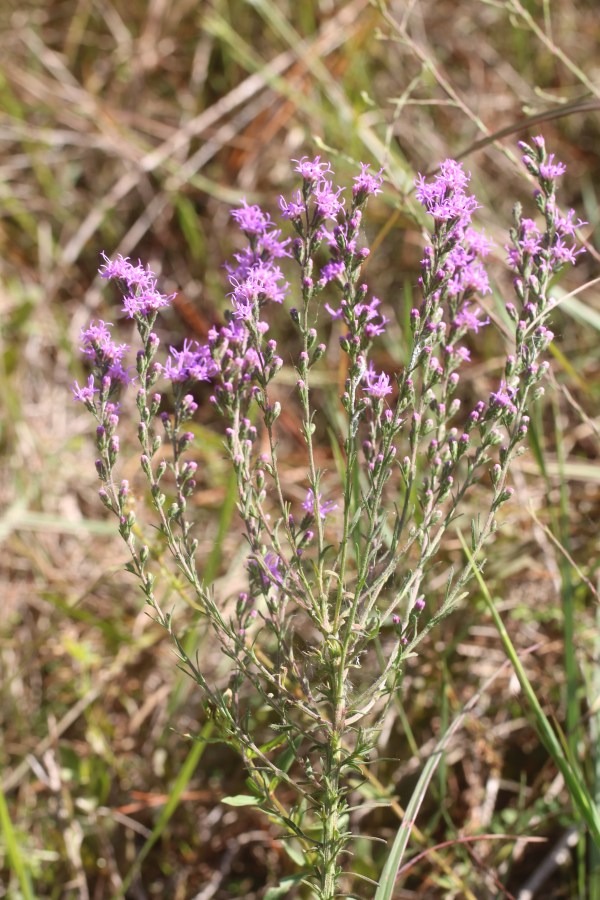
The Liatris inflorescences were oddly diverse, from candle-shaped and erect to baseball-shaped, or branched like a candelabra. Some were twisty-curly, even hanging down. Normal variation? Distorted from herbicides? Something funny in the canal water? Hybridization? (Some Liatris species, including L. spicata, do hybridize.) Got me, but fun to see. All the variants below are in the same clump.
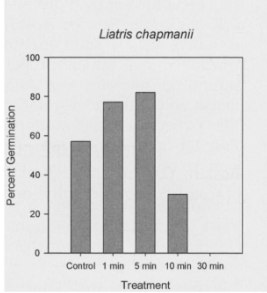
Now here is the weird thing. It is no doubt advantageous for some species in fire-prone habitats to sprout on the freshly cleared, freshly “fertilized” ground after a fire. But how does a seed know when that time has come? Heat—yes, sometimes. But also, where there’s fire, there’s smoke. Florida ecologists Heather Lindon and Eric Menges in 2008 exposed 20 Florida species seeds to smoke, and found enhanced germination in three species, including Liatris chapmanii. The graph below is from their work. It hurts my head to envision smoke being a germination cue for seeds, that’s just weird, but other ecologists in other places have found other examples.
Germination rate vs. minutes of smoke exposure. By H. Lindon and E. Menges.
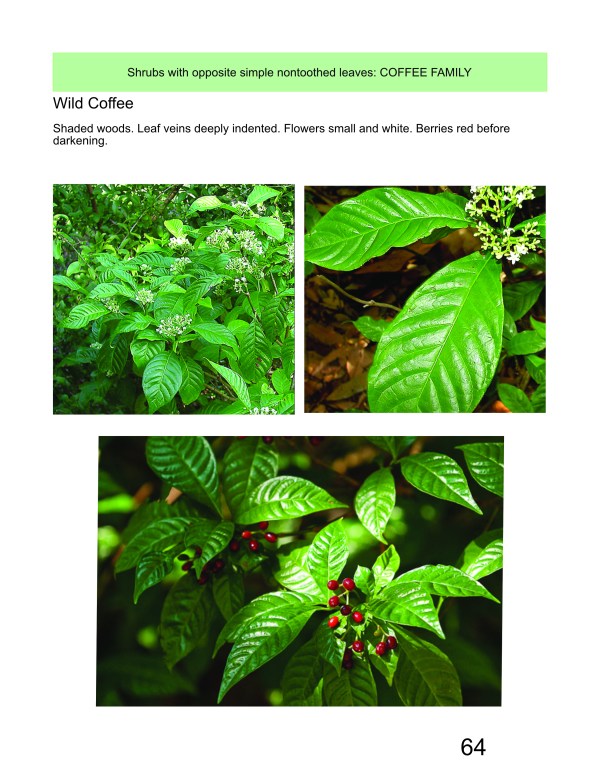
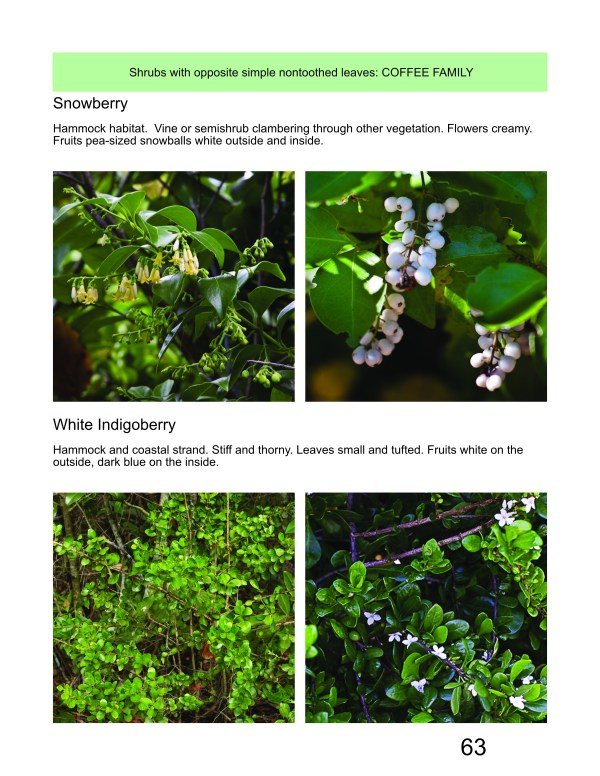
BTW, to folks who ordered the tree book, thank you. It should have reached you by now, and hopefully you enjoy it. If any other reader might still want one, we still have some copies. E-mail George Rogers (rogersg515@gmail.com).
Books will be mailed to everyone who asked for one, Sunday or Monday. Today and tomorrow are the “last chance” for that mailing. Happily (or sadly) we still have some available, so it is not too late. Anyone still wishing to purchase, e-mail rogersg515@gmail.com.
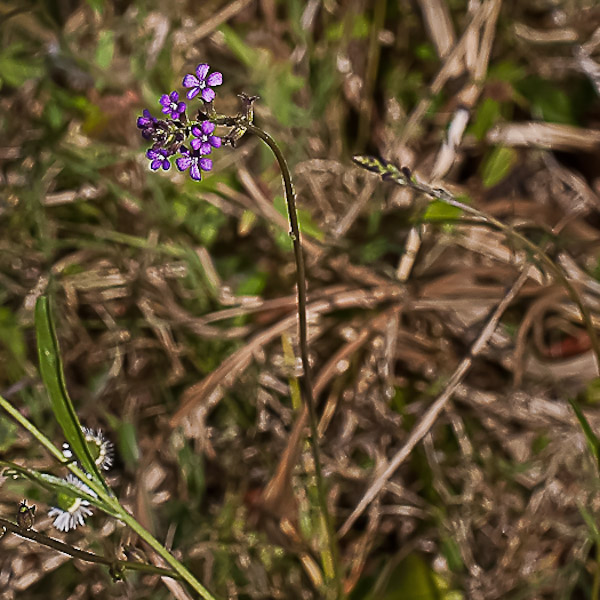
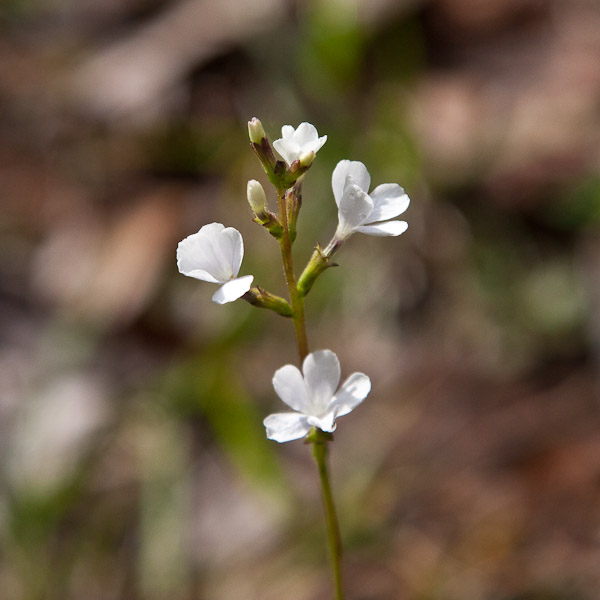
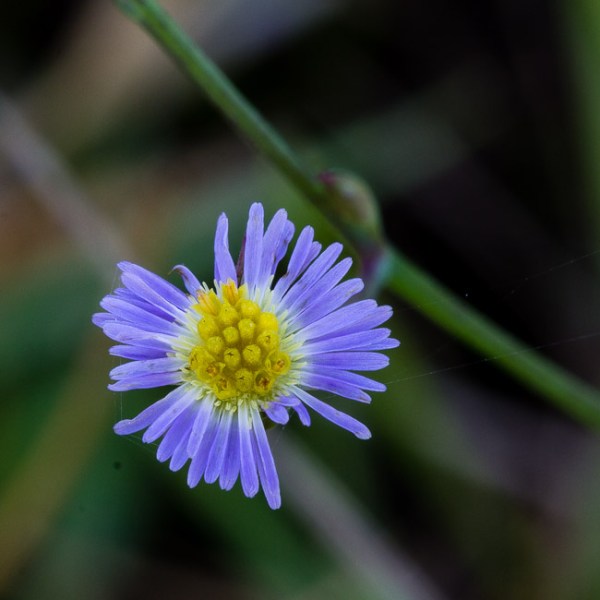
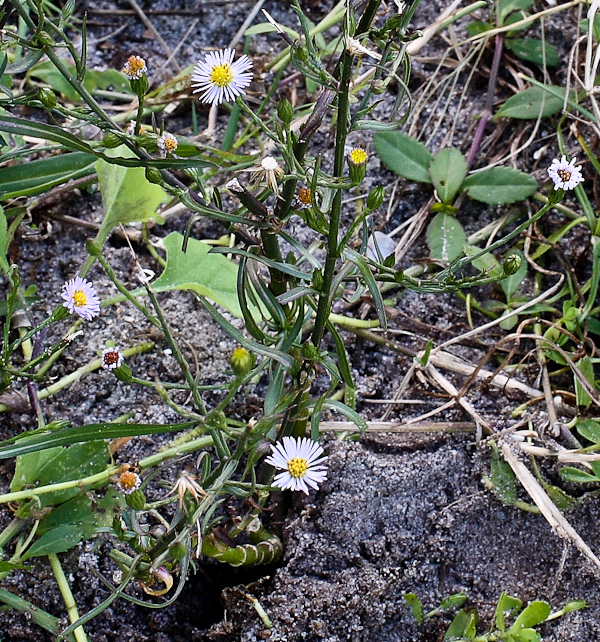
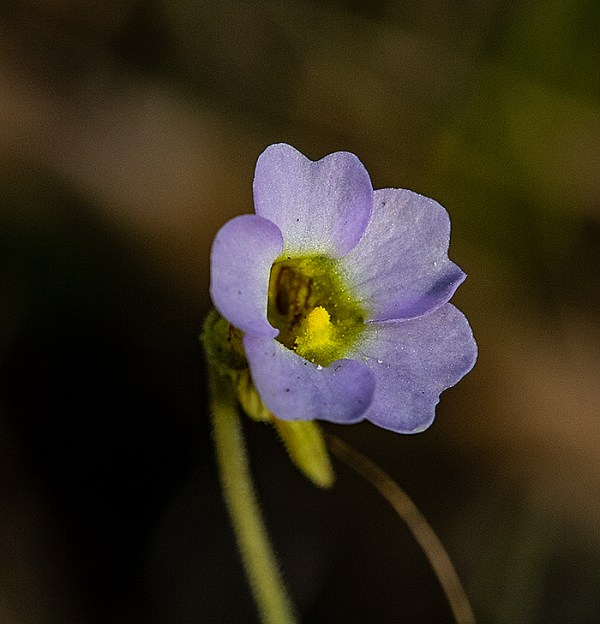
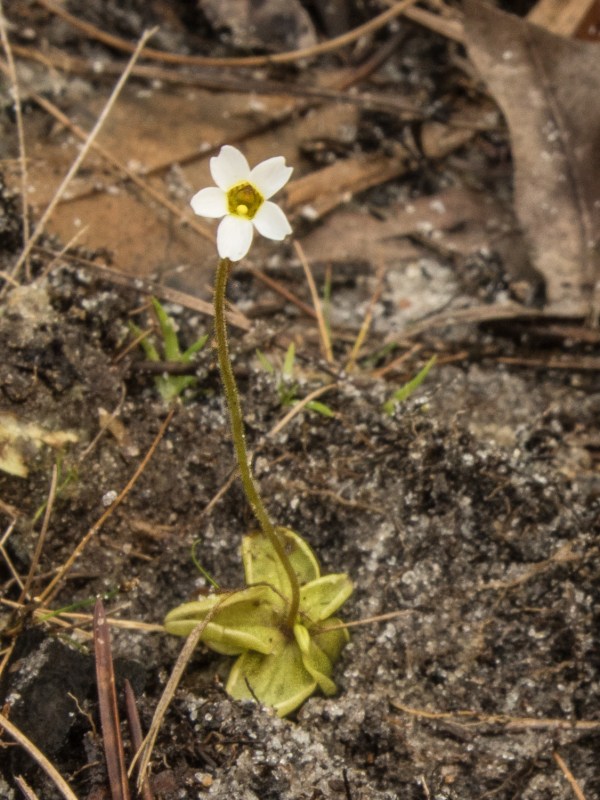
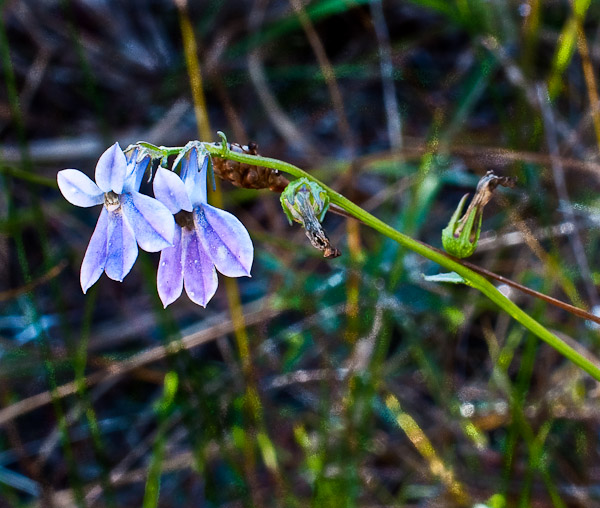
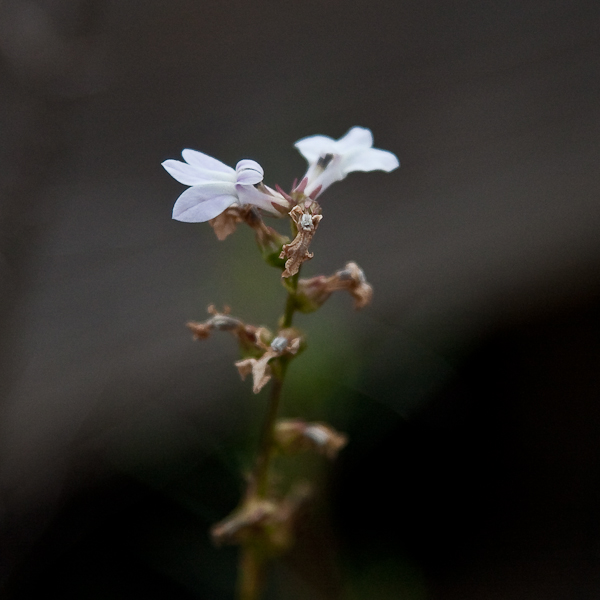
Are wetland plants more likely to have different individuals sporting different flower colors than upland plants? I think so, but am biased by dint of more time in wet places than dry. Whatever happens on the dry side, it is fun to find marsh species where some individuals have violet flowers and other white, or less often other combos. Almost all of today’s photos are by John Bradford. Examples of mixed-color species include:
Alligator Flag (Thalia geniculata)
American Bluehearts (Buchnera americana, not always in wetland)
Asters (Symphiotrichum dumosum)
Bluethreads (Burmannia biflora) rich violet to nearly white
Dwarf Butterwort (Pinguicula pumila) purplish and white, also yellow
Glades Lobelia (Lobelia paludosa)
Grasspink Orchids (Calopogon pallidus)
Manyflower Beardtongue (Penstemon multiflorus) purplish and near-white
Pickerel Weed (Pontederia cordata)
Slender Foxglove (Agalinis linifolia) purplish and white
Pretend for the moment that mixed colors are especially common in wetlands. Why are mixed violet and white so common there? No single answer.
There exist a lot of suggested explanations, not all mutually exclusive:
SIGNALLING. Some flowers start out one color, then change, such as Dwarf Butterwort. That may be a signal to pollinators, or could merely be aging.
SUNSCREEN. In some species, flower color may be more related to UV protection than to insects.
DIVERSIFY YOUR ASSETS. Some parent plants may benefit by producing offspring of mixed colors, attracting different insects. Would be fun to know if different colors experience different visitation.
COLOR TIED TO DIFFERENT TRAITS. Say, for example, a gene that turns on protective darkening in the leaves darkens the flowers incidentally.
MUTATION. My favorite. The purple vs. white toggle switch might be very simple genetically, probably sometimes one gene. A single mutation could probably “flip the switch.” A marsh seems like a good place for mutations (DNA damage), with seeds buried in suffocating mud for years, tender young plantlets growing oxygen-deprived through mud, warm water loaded with natural and unnatural chemicals and with microbes, and blazing sun.
INBREEDING. Way out in a marsh is a tough place to get bug-pollinated. Many wetland plants self-pollinate. That is ultra-inbreeding, and inbreeding has a way of making mutations show up.
RHIZOMES. A lot of marsh plant spread by rhizomes, or by horizontal floating stems, or by breaking apart. If one such plant has a mutation, and it carpets the marsh by vegetative growth that mutation is magnified over a large distance.
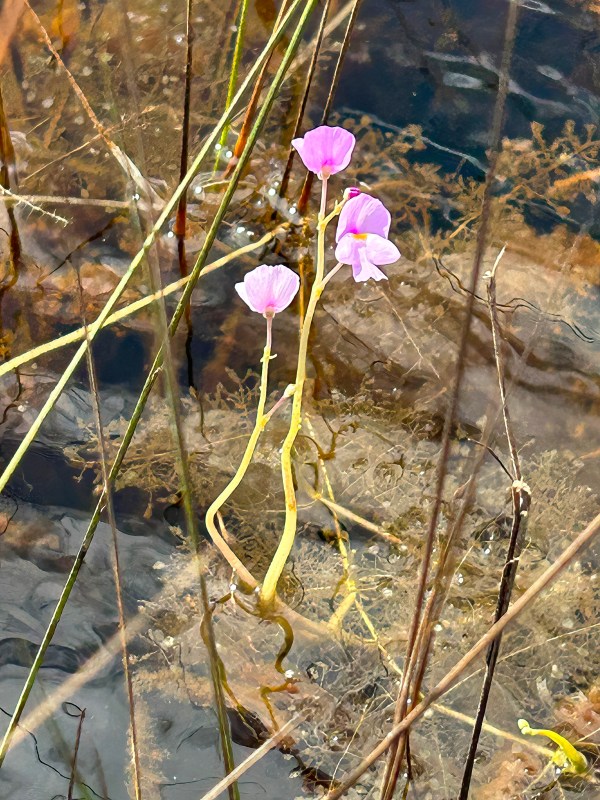
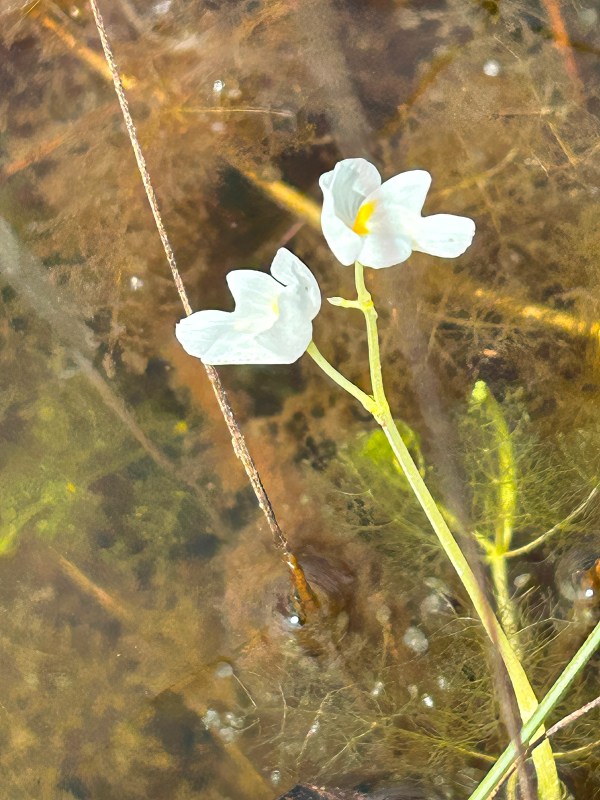
So, next time you’re around wetland plants, or any plants with mixed flower colors, good luck figuring out why! But it is fun to try. And it’s is all about pretty: such as “blue” bladderworts with big white flowers.
Purple Bladderwort (Utricularia purpurascens) purplish and white, yesterday
Plants help each other, not deliberately.. Most helpful facilitations occur no doubt by happenstance, the presence of one species improving conditions for the other. Much like the light over my neighbor’s garage illuminating my driveway for carrying in groceries. As a green example of facilitation, I’ve spent hours working around Lovevine where insect floral visits almost never occurred. That changed, however, when Cassine Holly common in the same habitat came into bloom attracting bees. Suddenly the Lovevine became popular, receiving visits from the bees originally drawn to the Holly.
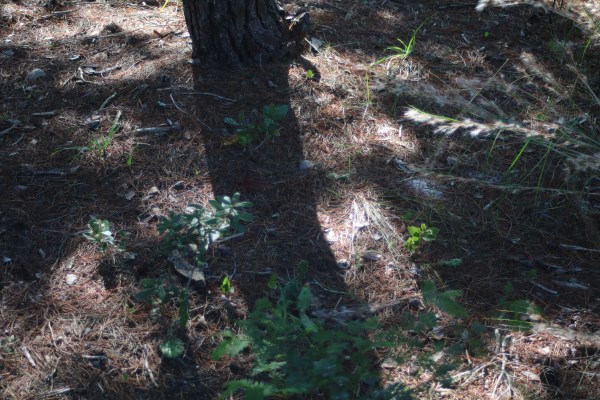
Under a nurse tree
I’ve always “had a thing” for nurse trees, maybe left over from prior life in harsh habitats, such as California. A nurse tree hovers over smaller plants, which may ultimately grow big. The nurse provides shelter and more: fallen leaves as “mulch”, soil-nutrients, broken-off “nurse logs” with baby plants in the decaying bark, perches for seed-dropping and guano-dropping birds, shelter for nitrogen-dropping creatures, rain capture and channeling, support for climbers, and probable benefits concerned with soil chemistry and microbes.
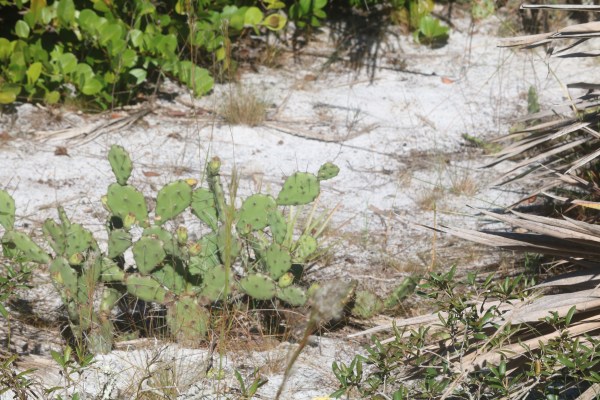
Dry desert where there are no trees.
Walking in the scrub today among “mature” Sand Pines, magical little gardens of young plants were thriving under the boughs surrounded by comparatively sterile parched desert away from the trees. In addition to a naturally short lifespan, Sand Pines grow where the relentless salty winds blow, where hurricanes blow bigger, and where fires and the sun both scorch the earth. Walk through a stand of Sand Pine, and it is easy to find fallen individuals, ones with major limbs broken off, and gaps.
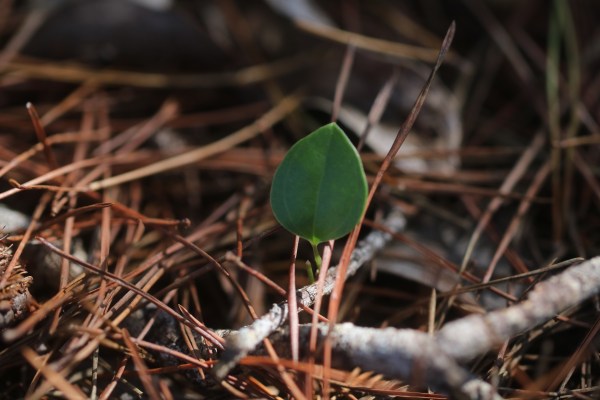
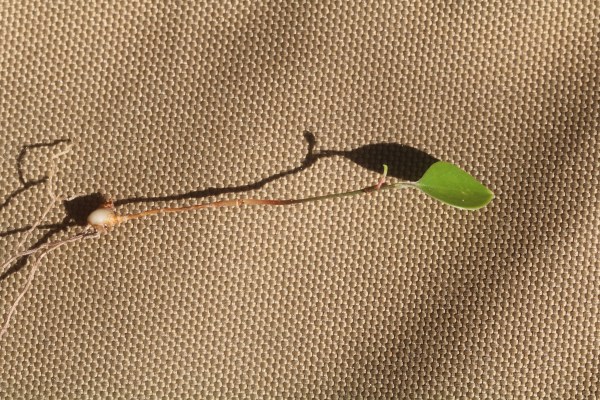
Above: Smilax under the pine. Below: Baby Smilax preparing for growing up—already starting tuber.
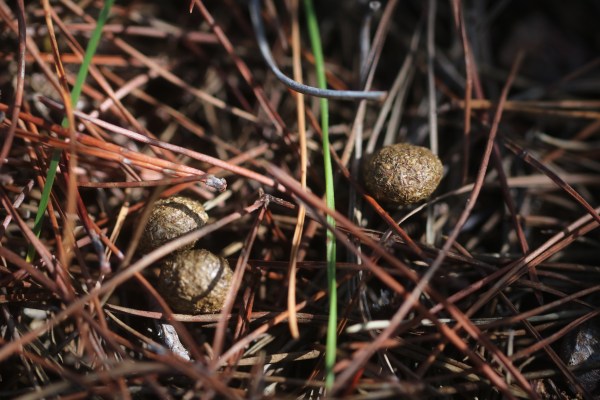
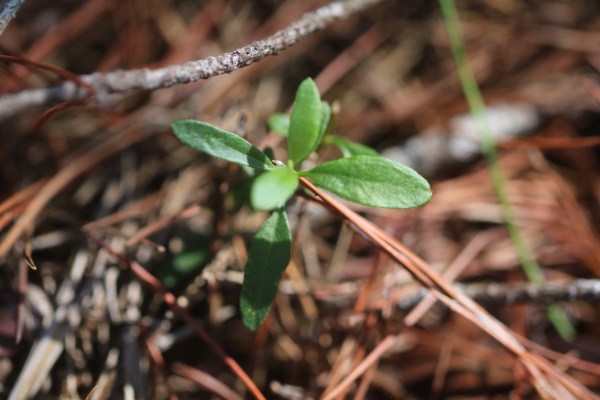
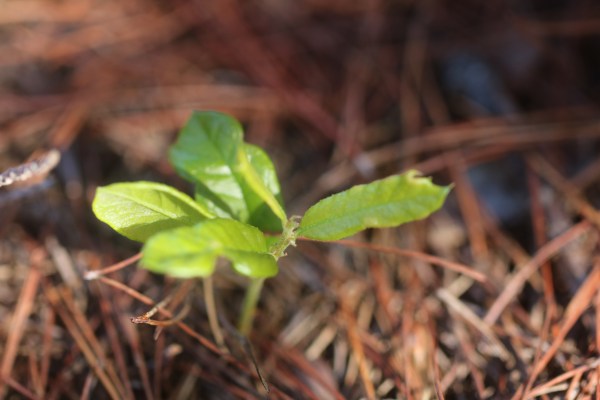
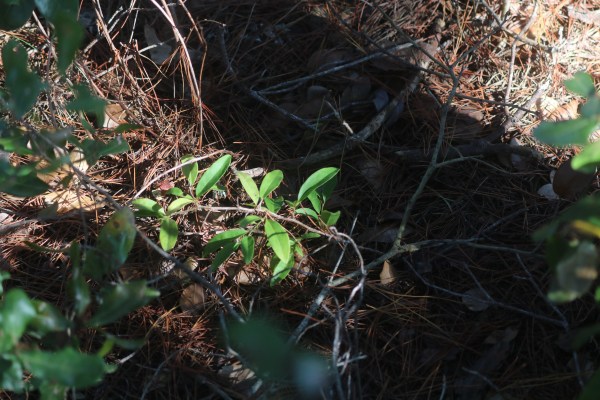
How often do scrub plants start life under a nurse pine, then complete their life cycle after the pine is gone? Literally crawling under a pine today, the youngsters poking through the pine needle mulch included hogplum, myrtle oak, palafox, and smilax—that is, every woody-ish species within a stone’s throw except maybe Sand Live Oak.
A nitrogen contribution
The benefits of nurse plants to their underlings are obvious, but…do the proteges ever benefit their nurses? An intriguing answer, not original with me, is yes, probably in the next generation. What species was missing from the under-the-pine list above? Sand Pine.
Palafox, I think
Never say never but there is an apparent tendency in many species for a tree’s offspring to rise up someplace other than as a competitor under the parental branches. (I dare you to find a baby Hogplum under a large mature parent.)
Oakling
This tendency is not adequately studied, but for the sake of argument let’s pretend it holds. What species serve as nurses to baby Sand Pines? Do the species nursed by pines “return the favor”? The idea of generationally flip-flopping nurse services has raised its head in botanical literature, although has not been demonstrated in the local scrub ecosystems to my knowledge.
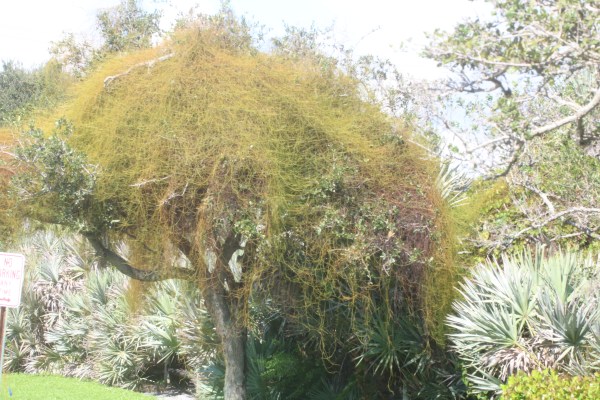
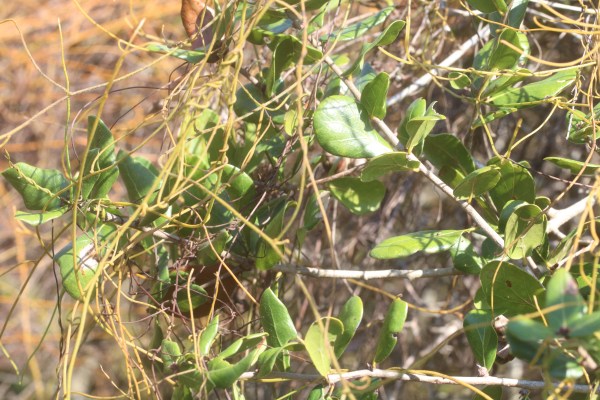
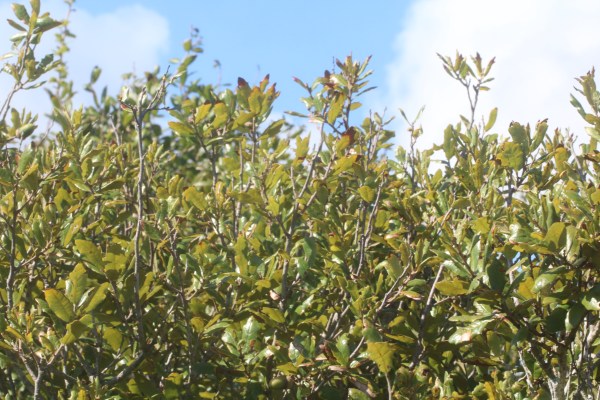
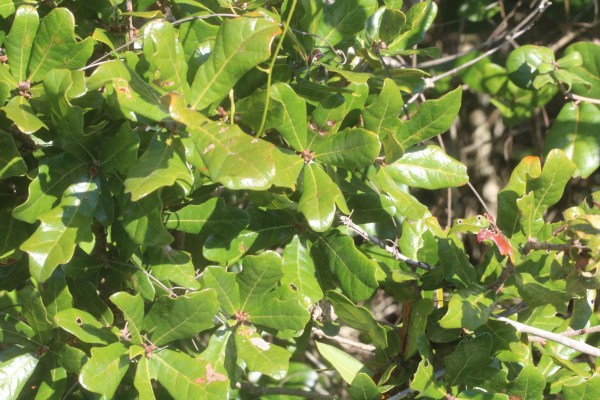
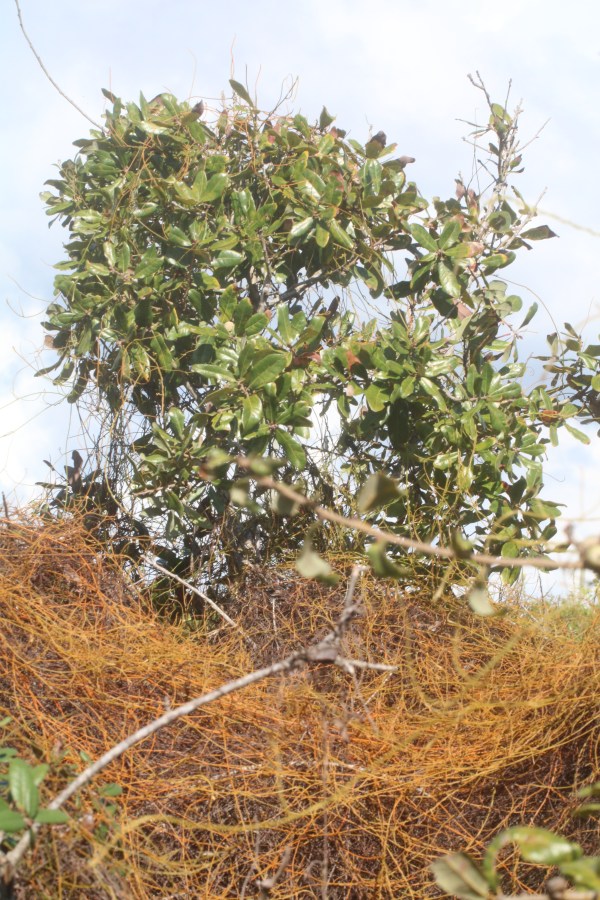
Walking in the Jupiter Inlet Outstanding Natural Area this morning, something new to me became apparent: the Chapman’s Oaks were nearly free of the otherwise rampant parasitic Lovevine (Cassytha filiformis). Caution!, many initial botanical perceptions fail to hold up under scrutiny (sad voice of experience). But at least at this time and place, the other scrubby oaks—Sand Live Oak and Myrtle Oak—were mostly tangled with the parasite. By contrast, none of several Chapman’s Oaks in multiple separate thickets had it. So join me in some speculations.
Above: Sand Live Oak at Jupiter Inlet, festooned with Love Vine.
Above: Myrtle Oak with Love Vine
Chapman’s Oak free of Love Vine
Like most local scrub zones, the area is dominated by a mix or Sand Live Oaks, Myrtle Oaks, and Saw Palmetto, with Chapman’s being a tiny minority. Given that Sand Live Oak and Myrtle Oak blanket vast scrubs in countless numbers, why is Chapman’s Oak not out-competed and gone? An obvious guess is maybe it has a specialized microhabitat, but if so, it must be subtle, given that Chapman’s lives physically intermixed with the other two.
Chapman’s foliage
Another possibility is the site history of fires, hurricanes, and physical management. But that’s unknown so what we see here and now is zillions of Sand Live and Myrtle Oaks, salted here and there with a few Chapman’s. Are the three species as we encounter them giving hints about their relative abundance? Chapman’s Oaks seem to get taller faster than the other two when they all resprout at the same time. Maybe the Chapman’s survive in part by rising up quickly above their competitors, at least when young.
Chapman’s Oaks stand apart by having seasonally deciduous leaves, whereas the other two are evergreen. Maybe Chapman’s Oak can avoid competition being dormant in the dry season, and then have a growth spurt when rain and foliage return. That seasonal pattern might help with resisting Lovevine, giving Chapman’s some advantage in the scrub competition. During its brief seasonal dormancy, Chapman’s probably doesn’t have much water or sugar for the vine to steal in the twigs, and none in the leaves since they are absent. Then later, at the end of the season when leafdrop time comes, any encroaching Lovevine falls away with the falling foliage. Perhaps.
Chapman’s Oak clear of Lovevine, rising above other oaks covered with it.

 John Bradford
 George Rogers
 George Rogers
 Dee Staley
 Treasure Coast Natives