Liatris chapmanii, L. spicata, and several additional species
Asteraceae
Working in the marshlands out to the west of Jupiter, a couple days ago I glanced up from my clipboard upon hearing a grunt behind my back. Found myself within the family circle of a mother hog and her little piglets. Perhaps not a good idea to drift between a mother with tusks and her smelly little cuties, so I migrated promptly. To be fair, the benign sow showed no grumpiness, but I’m a craven coward when it comes to critters with very big teeth.
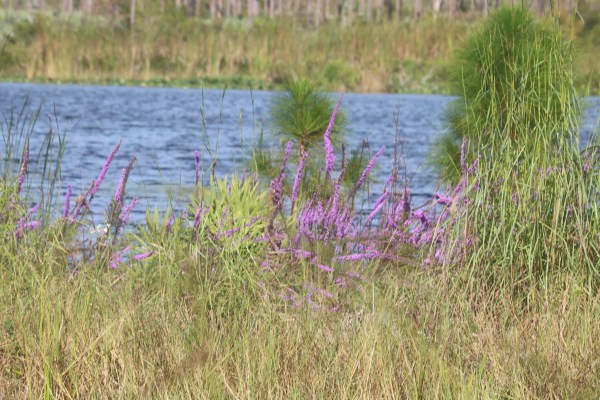
The other thrill of the outing justified the brush with disembowelment because along the drainage canals big showy purple Liatris wands were waving in the wind. As tall as a person. Hundreds of them. Always great fun to find flowers “a-buzz” with pollinators.
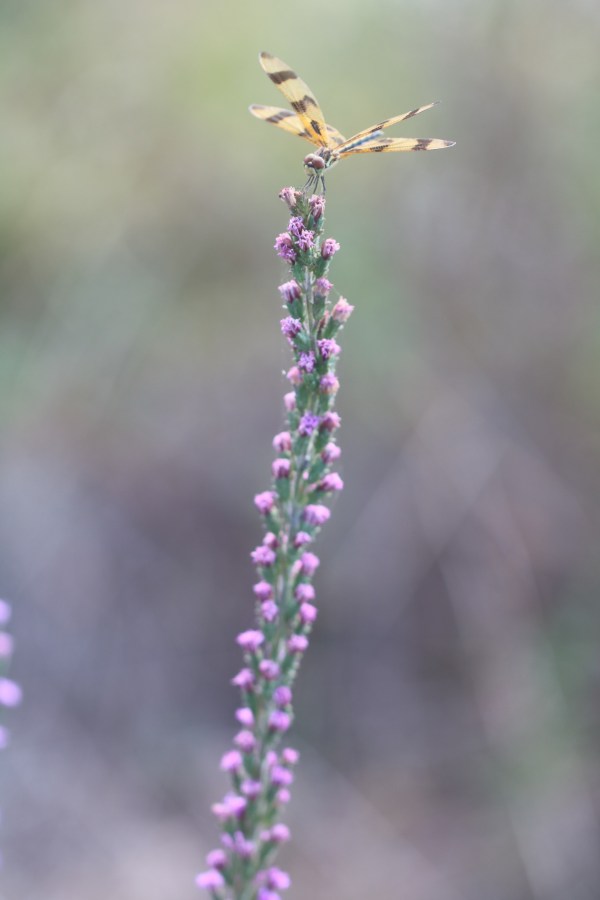
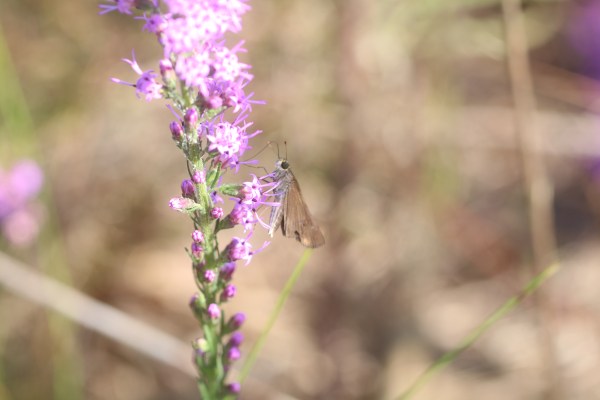
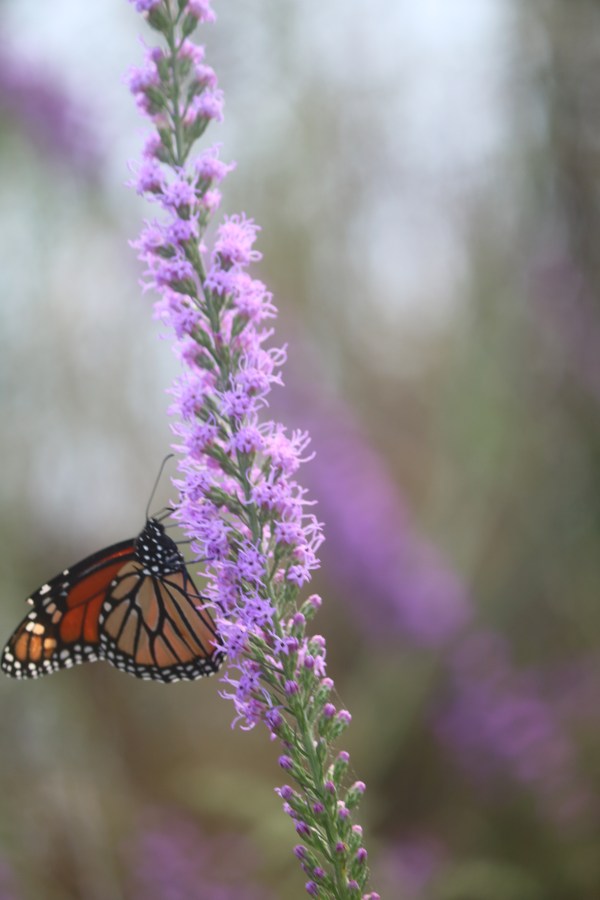
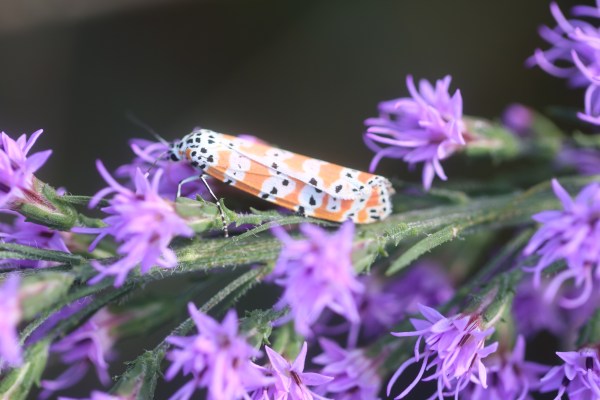
That always feels like “real biology” if that makes sense. Anyhow, the Liatris was hosting honeybees, bumblebees, Monarch Butterflies, Skippers, and the poorly named “Ailanthus Moth.” Poorly named because Ailanthus (Tree of Heaven, a northern urban weed tree) is not native to the U.S., but the moth is. What were absent-to-scarce were native bees other than Bumblebees.
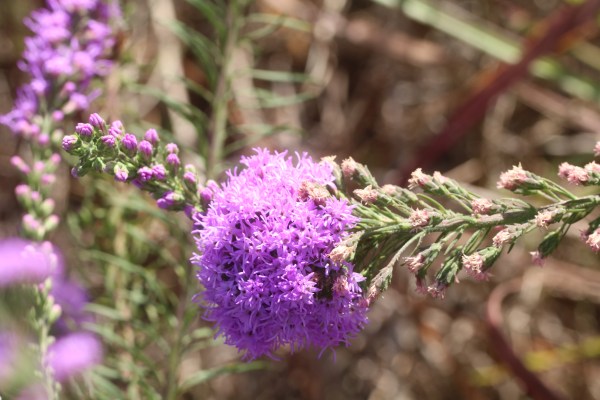
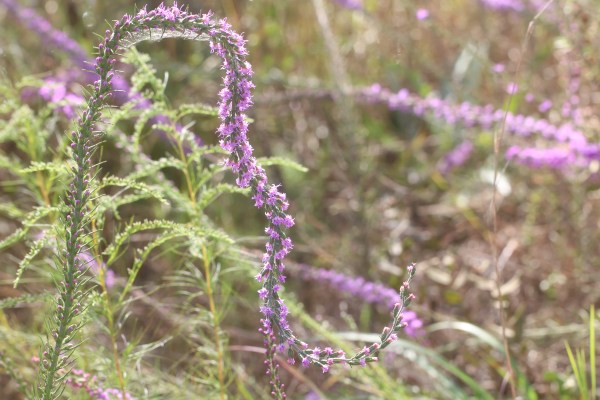
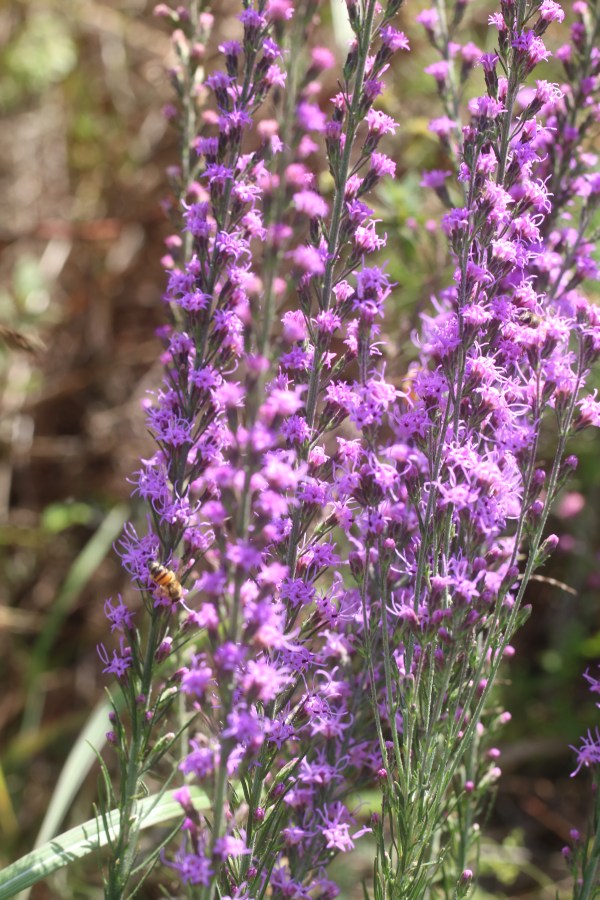
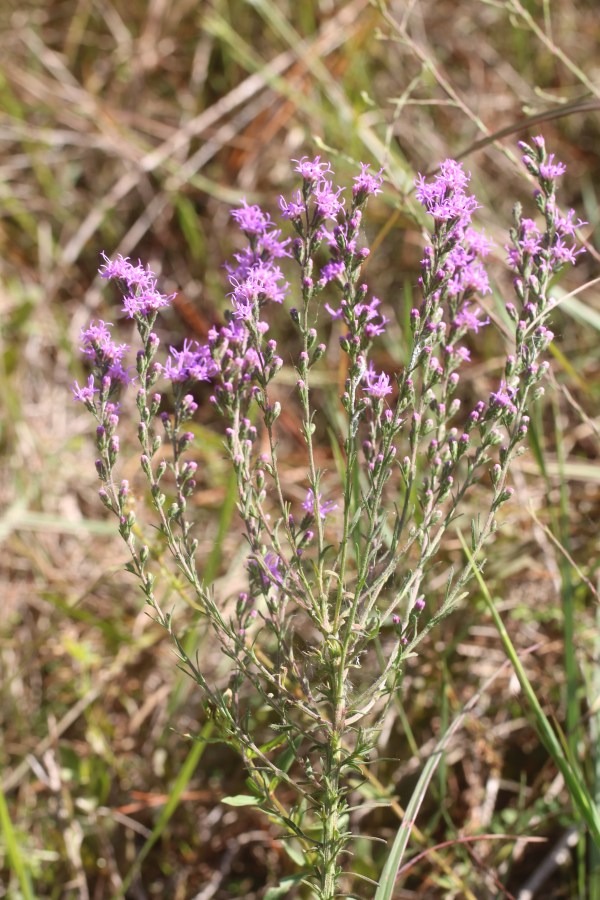
The Liatris inflorescences were oddly diverse, from candle-shaped and erect to baseball-shaped, or branched like a candelabra. Some were twisty-curly, even hanging down. Normal variation? Distorted from herbicides? Something funny in the canal water? Hybridization? (Some Liatris species, including L. spicata, do hybridize.) Got me, but fun to see. All the variants below are in the same clump.
Now here is the weird thing. It is no doubt advantageous for some species in fire-prone habitats to sprout on the freshly cleared, freshly “fertilized” ground after a fire. But how does a seed know when that time has come? Heat—yes, sometimes. But also, where there’s fire, there’s smoke. Florida ecologists Heather Lindon and Eric Menges in 2008 exposed 20 Florida species seeds to smoke, and found enhanced germination in three species, including Liatris chapmanii. The graph below is from their work. It hurts my head to envision smoke being a germination cue for seeds, that’s just weird, but other ecologists in other places have found other examples.
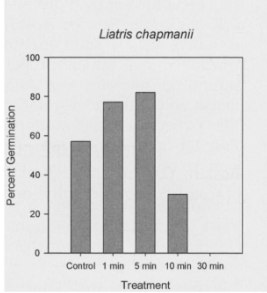
Germination rate vs. minutes of smoke exposure. By H. Lindon and E. Menges.
BTW, to folks who ordered the tree book, thank you. It should have reached you by now, and hopefully you enjoy it. If any other reader might still want one, we still have some copies. E-mail George Rogers (rogersg515@gmail.com).
 John Bradford
 George Rogers
 George Rogers
 Dee Staley
 Treasure Coast Natives
theshrubqueen
November 4, 2023 at 2:46 pm
That is interesting, I have tried to grow liatris chapmanii from seed several times with no luck. Maybe I should try again and get my husband to smoke them alongside the pork butt??