Note about treebook sales:
Books will be mailed to everyone who asked for one, Sunday or Monday. Today and tomorrow are the “last chance” for that mailing. Happily (or sadly) we still have some available, so it is not too late. Anyone still wishing to purchase, e-mail rogersg515@gmail.com.
Are wetland plants more likely to have different individuals sporting different flower colors than upland plants? I think so, but am biased by dint of more time in wet places than dry. Whatever happens on the dry side, it is fun to find marsh species where some individuals have violet flowers and other white, or less often other combos. Almost all of today’s photos are by John Bradford. Examples of mixed-color species include:
Alligator Flag (Thalia geniculata)
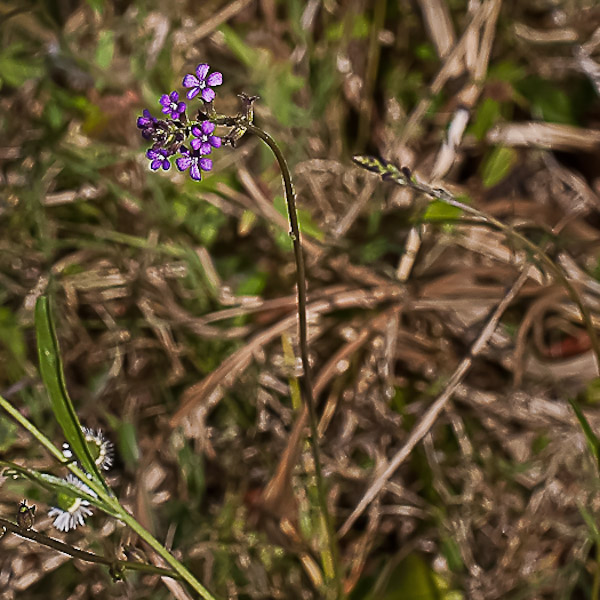
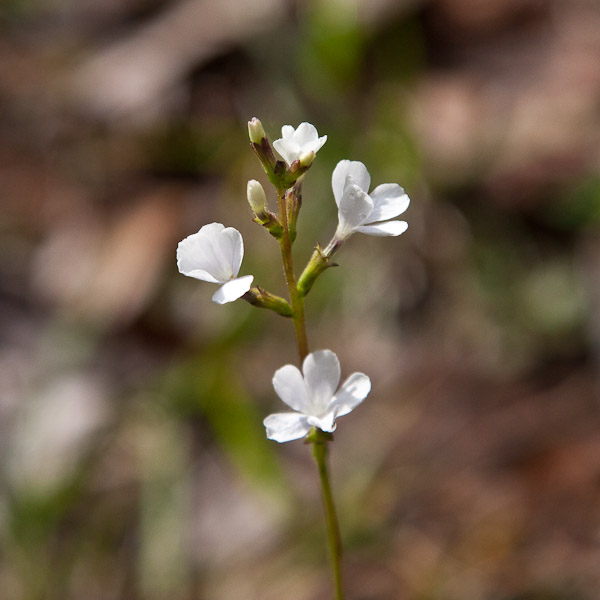
American Bluehearts (Buchnera americana, not always in wetland)
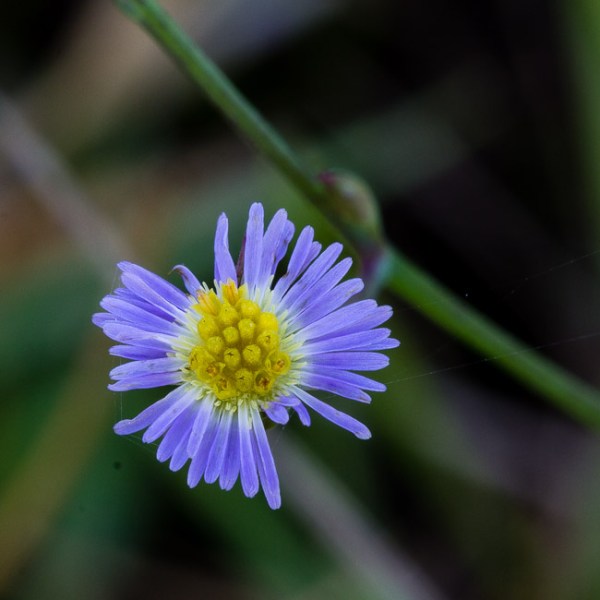
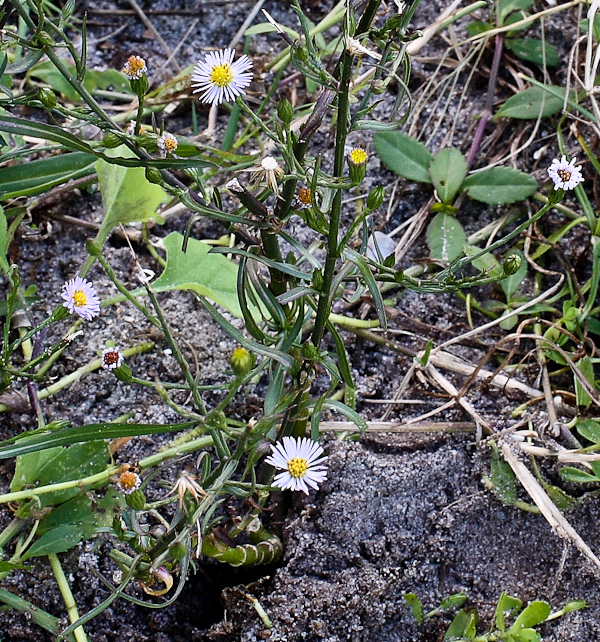
Asters (Symphiotrichum dumosum)
Bluethreads (Burmannia biflora) rich violet to nearly white
Dwarf Butterwort (Pinguicula pumila) purplish and white, also yellow
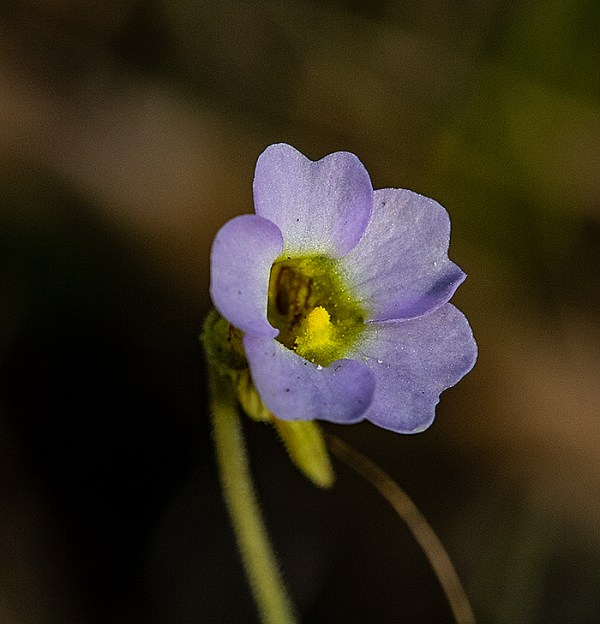
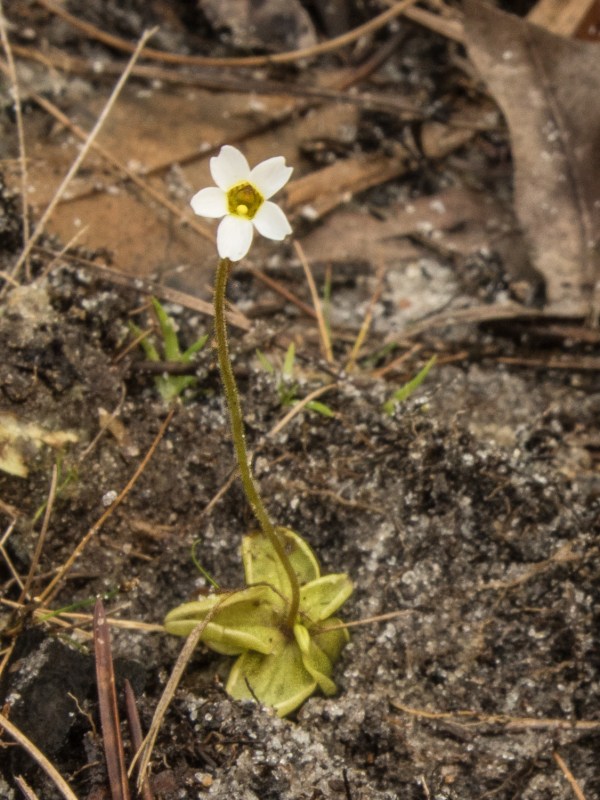
Glades Lobelia (Lobelia paludosa)
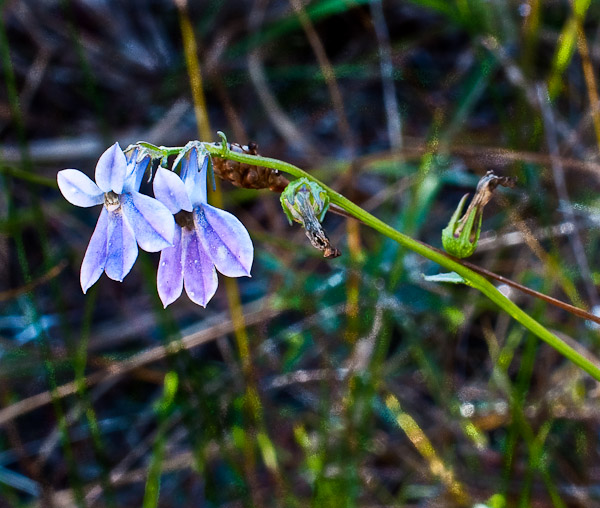
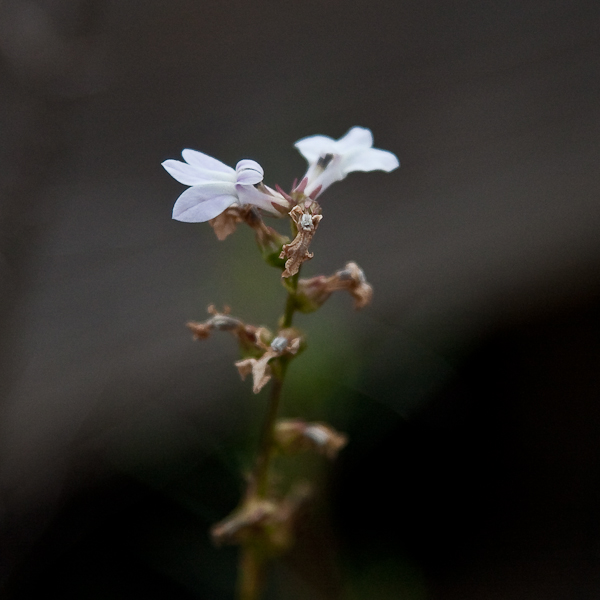
Grasspink Orchids (Calopogon pallidus)
Manyflower Beardtongue (Penstemon multiflorus) purplish and near-white
Pickerel Weed (Pontederia cordata)
Slender Foxglove (Agalinis linifolia) purplish and white
Pretend for the moment that mixed colors are especially common in wetlands. Why are mixed violet and white so common there? No single answer.
There exist a lot of suggested explanations, not all mutually exclusive:
- SIGNALLING. Some flowers start out one color, then change, such as Dwarf Butterwort. That may be a signal to pollinators, or could merely be aging.
- SUNSCREEN. In some species, flower color may be more related to UV protection than to insects.
- DIVERSIFY YOUR ASSETS. Some parent plants may benefit by producing offspring of mixed colors, attracting different insects. Would be fun to know if different colors experience different visitation.
- COLOR TIED TO DIFFERENT TRAITS. Say, for example, a gene that turns on protective darkening in the leaves darkens the flowers incidentally.
- MUTATION. My favorite. The purple vs. white toggle switch might be very simple genetically, probably sometimes one gene. A single mutation could probably “flip the switch.” A marsh seems like a good place for mutations (DNA damage), with seeds buried in suffocating mud for years, tender young plantlets growing oxygen-deprived through mud, warm water loaded with natural and unnatural chemicals and with microbes, and blazing sun.
- INBREEDING. Way out in a marsh is a tough place to get bug-pollinated. Many wetland plants self-pollinate. That is ultra-inbreeding, and inbreeding has a way of making mutations show up.
- RHIZOMES. A lot of marsh plant spread by rhizomes, or by horizontal floating stems, or by breaking apart. If one such plant has a mutation, and it carpets the marsh by vegetative growth that mutation is magnified over a large distance.
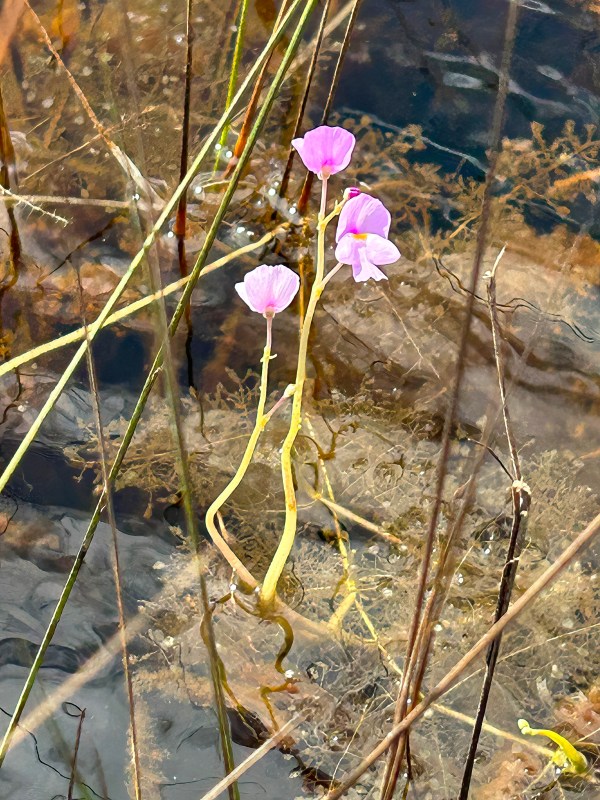
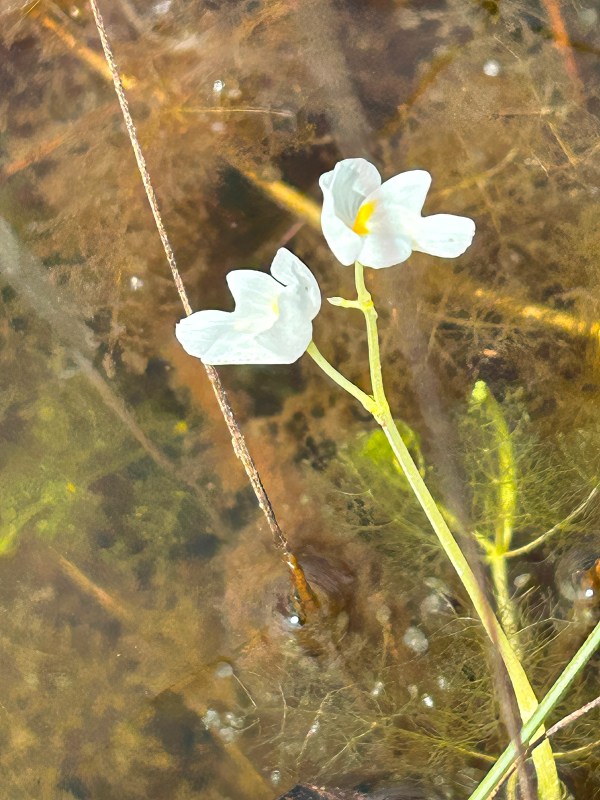
So, next time you’re around wetland plants, or any plants with mixed flower colors, good luck figuring out why! But it is fun to try. And it’s is all about pretty: such as “blue” bladderworts with big white flowers.
Purple Bladderwort (Utricularia purpurascens) purplish and white, yesterday
 John Bradford
 George Rogers
 George Rogers
 Dee Staley
 Treasure Coast Natives
Rufino Osorio
October 27, 2023 at 5:06 pm
Another possibility is that species of plants vary greatly in many traits (height at maturity, leaf width, number of leaves per length of stem, amount and type of pubescence, corolla size, etc.), but, as visually oriented primates with excellent color vision, we notice floral color variation more than variation in other plant organs. In this case, floral color variation would not be particularly special or interesting. The overrepresentation of floral color variation among wetland plants could be due to the overrepresentation of wetlands in Florida. I notice that floral color variation is not exactly rare in upland species and, for example, white-flowered Liatris are fairly common; blue-eyed grasses, both upland and flatwoods species, can vary from pure white to darkest blue; butterfly weed (Asclepias tuberosa) has yellow, orange, red, and even bicolor forms; coastal plain palafox varies from pure white to pink; wild violet (Viola sororia or V. affinis) can vary from pure white to pink to darkest blue, purple, or violet and every color in between; and eastern silver-aster populations in pine rocklands vary from almost white to pink or purple. I note that many-flowered beardtongue occurs in sandhills and pine rocklands as well as flatwoods, so, it applies to both wetland and upland habitats.
The possibility that any given plant species can be extremely variable but that we are more likely to notice floral color variation as opposed to variation in other traits is not meant as an alternative to any of the possible explanations given above. Nor am I suggesting that this possibility excludes any of the seven listed possibilities. Merely, it is an additional, eighth, possibility to the seven already described.
Suzanne Koptur
October 27, 2023 at 9:54 pm
I vote for white flowers being the result of recessive alleles that are expressed now and then when homozygous. It is interesting that visits of pollinators to white flower variants of normally other colored flowers are very rare!
George Rogers
October 28, 2023 at 10:04 am
Suzanne, your opinion on the matter is valuable! I second your vote. My wife and I were just sitting here over coffee wondering if there is differential visitation. Thank you for that observation!
Suzanne Koptur
October 29, 2023 at 9:52 pm
George it is great you two have such cerebral conversations over coffee! We mostly read the comics and do the word puzzles…