RSS

Tag Archives: Sabatia

Bartram’s Rose-Gentian

Sabatia decandra (S. bartramii)

(Sabatia honors Liberato Sabbati,  an Italian botanist.  Decandra refers to 10 stamens. William Bartram was a brilliant 18th Century plant explorer in Florida and other states,  artist, and eloquent writer whose (father’s) garden you can still visit in Philadelphia.)

Gentianaceae
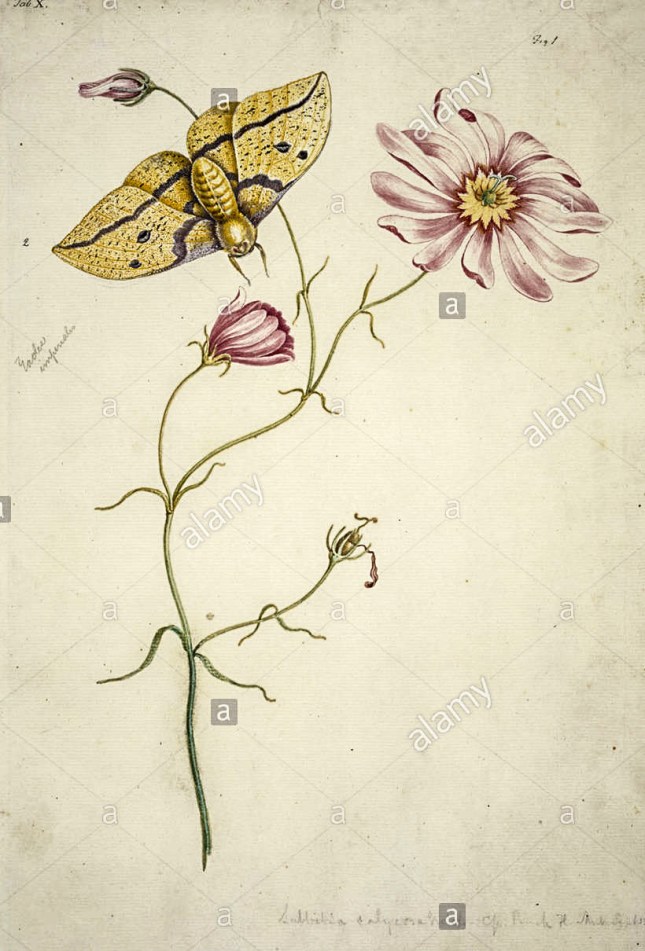
Sa atia drawing

By William Bartram

Sometimes all it takes is good looks.  Try to find a more magnificent wildflower than this.  Shocking pink with a yellow star!   Anyone need a logo?  What pollinator could resist? This floral celebrity has  a web presence bigger than Beyonce!…with the same info over and over, so the trick here is to find something new.  Will do.
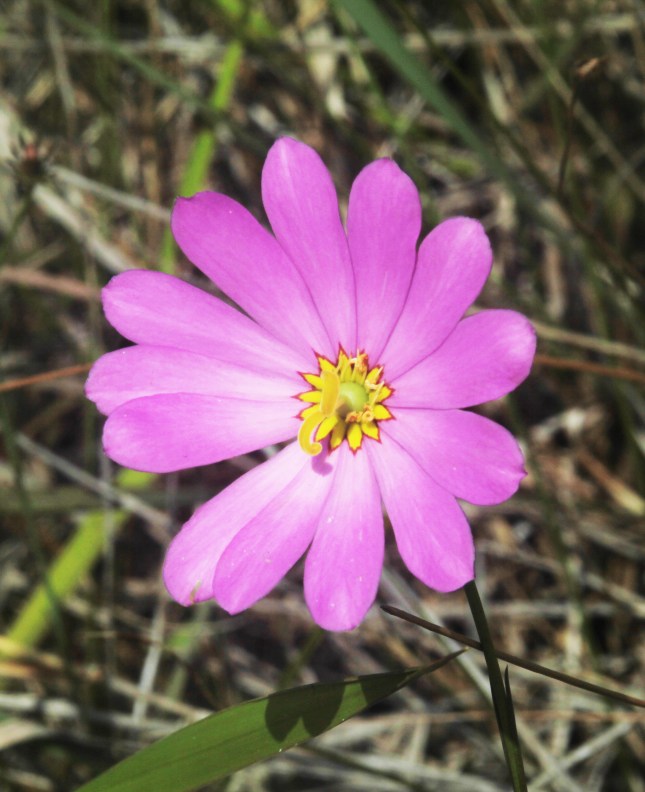
Sabatia fem ale phase JB

By John Bradford

Sabatia is a genus well represented in Florida by a dozen species, all of them pretty, generally not cultivated however, probably due to finicky habitat requirements. Today’s species beautifies wetlands in the Southeastern corner of the U.S. Descriptions call it a biennial, and I’m not saying it isn’t, but I’m not sure that is the whole truth and nothing but the truth.
IMG_4037

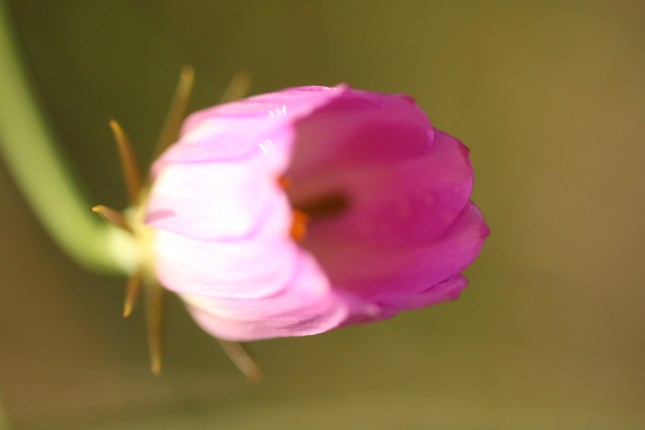
It looks like a biennial in the sense that it rises from a basal rosette like a standard backyard weed biennial.   However,  the species grows in seasonally inundated places so if the rosette sits around a year, it is sitting underwater half the year.  I think the rosette and the flowering top can rise in the same year.  Another wet-dry plant with a similar slightly succulent rosette is Brookweed, Samolus ebracteatus.
sabatia bud

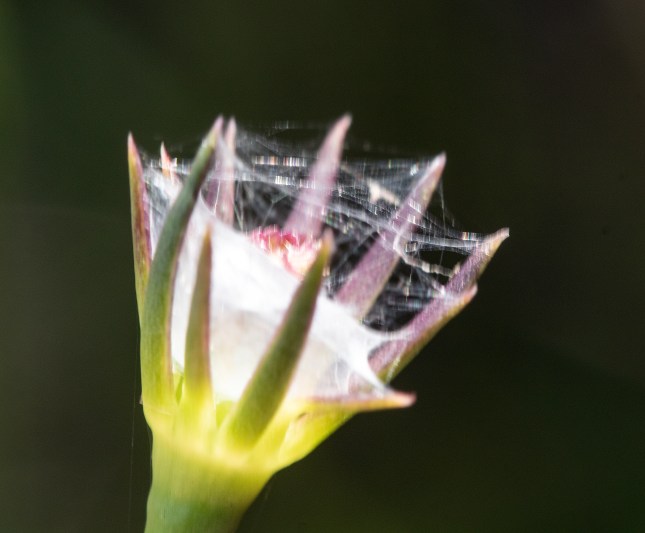
The bud is a perfect frame for a web.  Many of the buds are inhabited.  I wonder if that helps protect the flower.

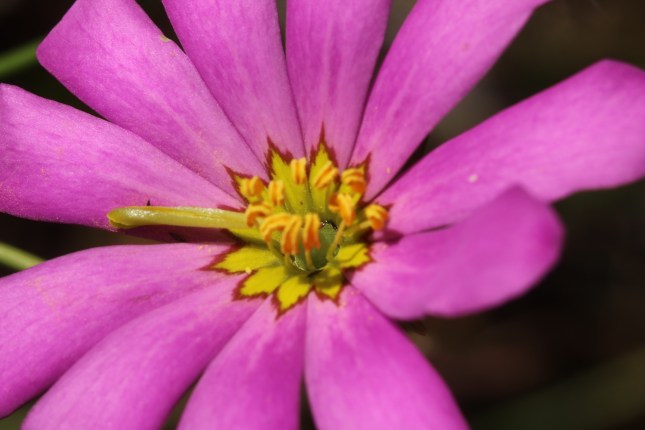
I promised something new and here it is.   Species of Sabatia, and dramatically S. decandra, have a system to force cross-pollination, first functioning as male then  later becoming female. As the flower opens, the pollen-producing (male) stamens get busy dusting pollen onto floral visitors.   At the same time, the pollen-receptive (female) stigma is twisted and flattened horizontally as removed from the pollinator action as possible.
IMG_4058

Male phase…the female stigma and style are flattened out of the way on the left.
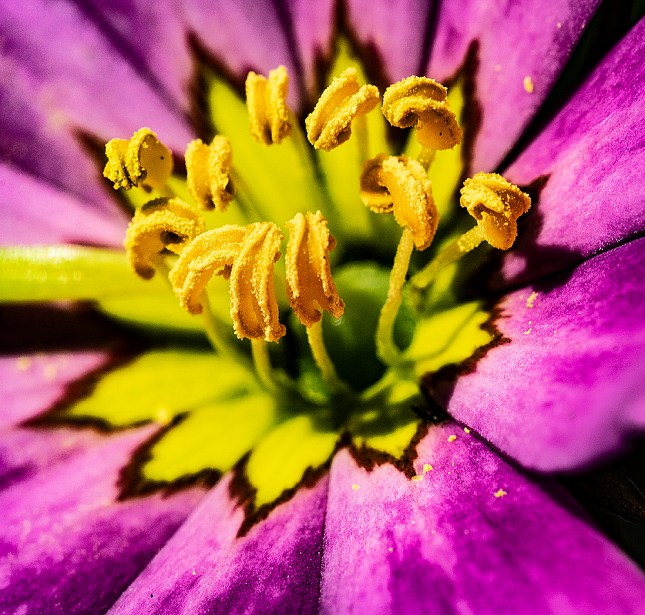
Sabatia anthres

Stamens…male phase

After the pollen release time, the stamens commence senescence.  Then the patient stigma untwists, rises upright, and takes on a Y-shape to celebrate pollen-reception time as the stamens fall apart..
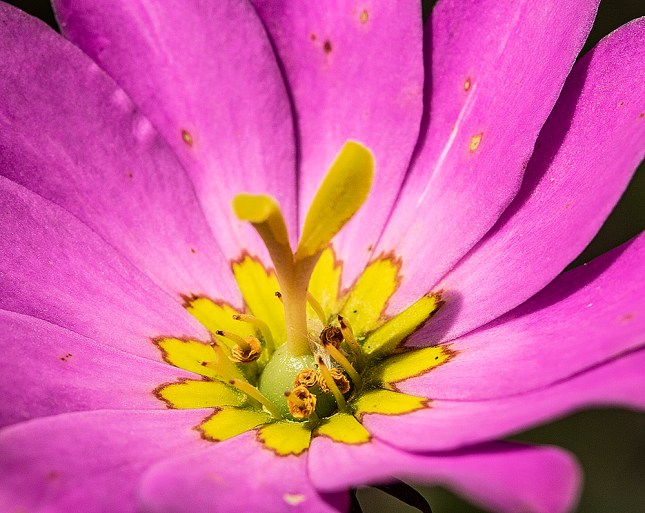
Sabatia female phase3

Female phase…the stigma now upright looking like a Y, the stamens falling away.



Tags: , , , ,

Sabatia grandiflora, about as pretty as they come

Rose-Gentian

Sabatia grandiflora

Gentianaceae

Yesterday Billy, John and George visited the Haney Creek Trail near Stuart.  The site is a scrub-lover’s (and dog-walker’s) delight enhanced aquatically with borrow pits, ponds, marshes, creeks, and mystery regions to reconnoiter.

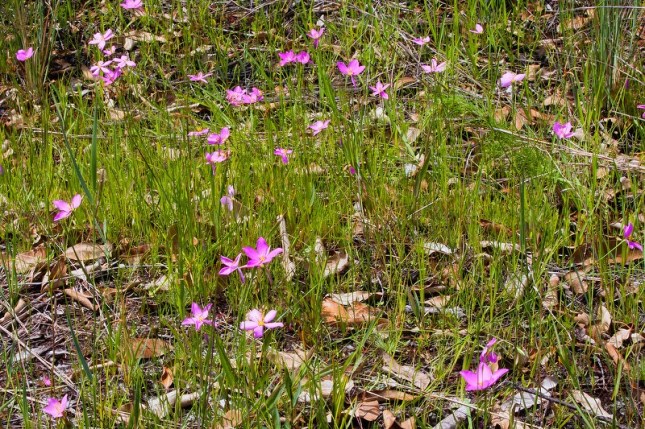
We squished through a flowery marsh which reinforced an old perception.   Now please understand that this perception is a figment of my imagination.  Sometimes wildflowers seem to cluster by color.  A person could make up a reason:  maybe if certain pollinators in a habitat naturally prefer or become “trained” to the color of the predominant flower, other flower species horn in on the action by mimicry.  As a comparable retail scenario,  everybody knows what a Coca Cola can looks like.  Some coke knock-offs use a similar color scheme and fancy-curvy script.  (It would take a little contortion to “floral color mimicry” in terms of evolutionary adaptation but it could be done in a more rigorous blog.)

Floral color mimics (photo borrowed from the Internet)


Possibly different species with similar rose-colored petals add up to a big collective pinkish attraction for pollinators who prefer that color, just as several shoe stores in a mall collectively draw those shoppers seeking footwear.   Who knows?  This is my daydream so I can imagine whatever I dang well please.  Yesterday the wet center of the marsh was all yellow:  Elliott’s Xyris, Yellow Polygalas, St. Johnsworts.  (Okay, the Carolina Redroot flowers don’t quite qualify as yellow but it has a lot of yellow in it.)

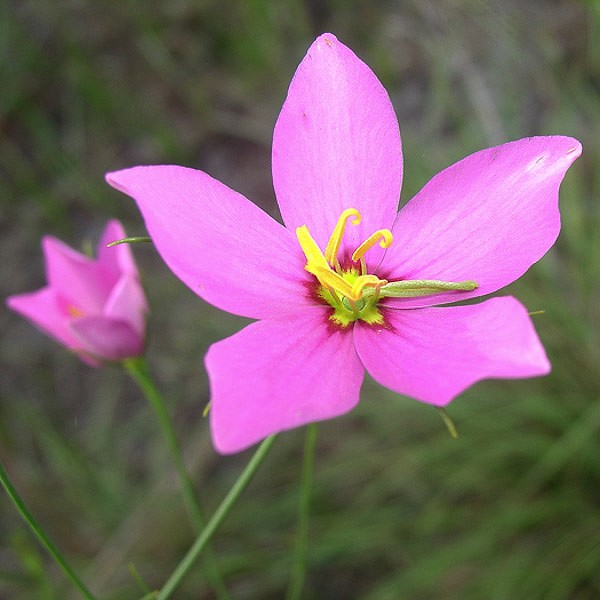
Sabatia grandiflora. The bright yellow pollen-bearing anthers are in the flower center. The two green stigmas are twisted together temporarily sidelined on the right. The flower will need that yellow eye to still imply “yellow pollen” when the yellow anthers fall away as the flower shifts to its female phase. (Photo by JB)


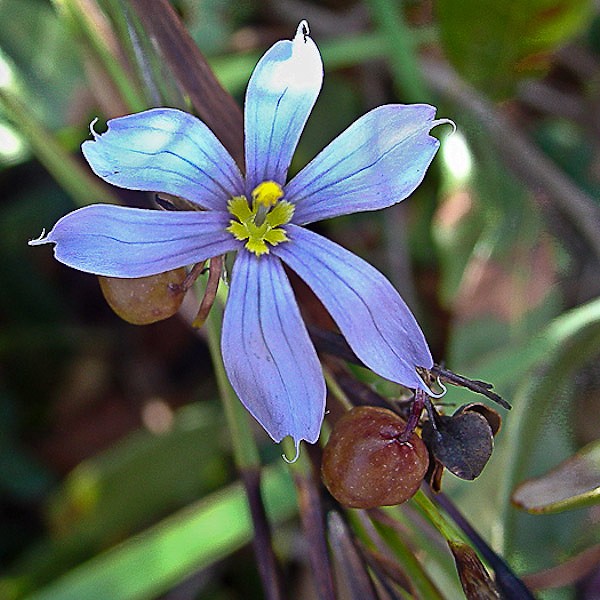
By contrast, the marsh fringe was predominantly pinkish-rosyish:  Meadowbeauties,  Rosy Camphorweed,  Rosegentians (also called Marsh-Pinks).   The last-mentioned were the stars of the show.  These shocking  pinkies (Sabatia grandiflora) were so abundant and crowded they looked like a flower garden, but better, being wild, natural, un-tended, and un-intended.  The petals are power-pink with a jagged yellow central eye rimmed with red.  To linger annoyingly on my daydream of  “floral color mimicry,”  similar starry yellow eyes peep from unrelated flowers.  For instance,  enjoy John’s photo of Sisyrinchium xerophyllum.

Sisyrhinchium xerophyllum (by JB)


Floral beauty runs in the Gentian Family,  with several species of Sabatia and other Gentians in Florida.  Our Sabatia is so purty can you cultivate it in the garden?   Not so readily.  This is a wetland annual.

Another question, how do you pronounce the name?  Some pronounce it as “seh-BAISH-ah.”   Let me suggest, contrarily, saw-BAT-ee-ah, given that the namesake is Italian botanist Libertus Sabbati, not a dermatological cyst.

That today’s species is an annual fits its shallow water lifestyle.  It scatters tiny seeds (with pitted surfaces, as in many wetland species), setting the stage for seedling opportunism where the moisture level and other critical factors may be hospitable at the moment.  A perennial lifestyle would less nimble keeping up with rising and falling waters.   If there was nothing else to do, I’d map the position of the Sabatia patches (and associated pinkish flowers) around a marsh relative to water levels one year and then repeat that comparatively  in following years.   But then again, the boss wouldn’t regard Sabatia mapping as a priority.  (Meetings are such a fruitful use of time.)

Sabatia changes sex dramatically.  The flowers are male first.  Look at John’s beautiful picture of the male phase with the stamens all yellow and assertive;  the stigmas bend off to the side twisted together demurely out of action.   Soon, however, the anthers fall way and the stigmas separate, rise, and take charge.

 
4 Comments

Posted by on June 20, 2012 in Rose-Gentian


Tags: , , , , ,